Connect with us

NewsBeat

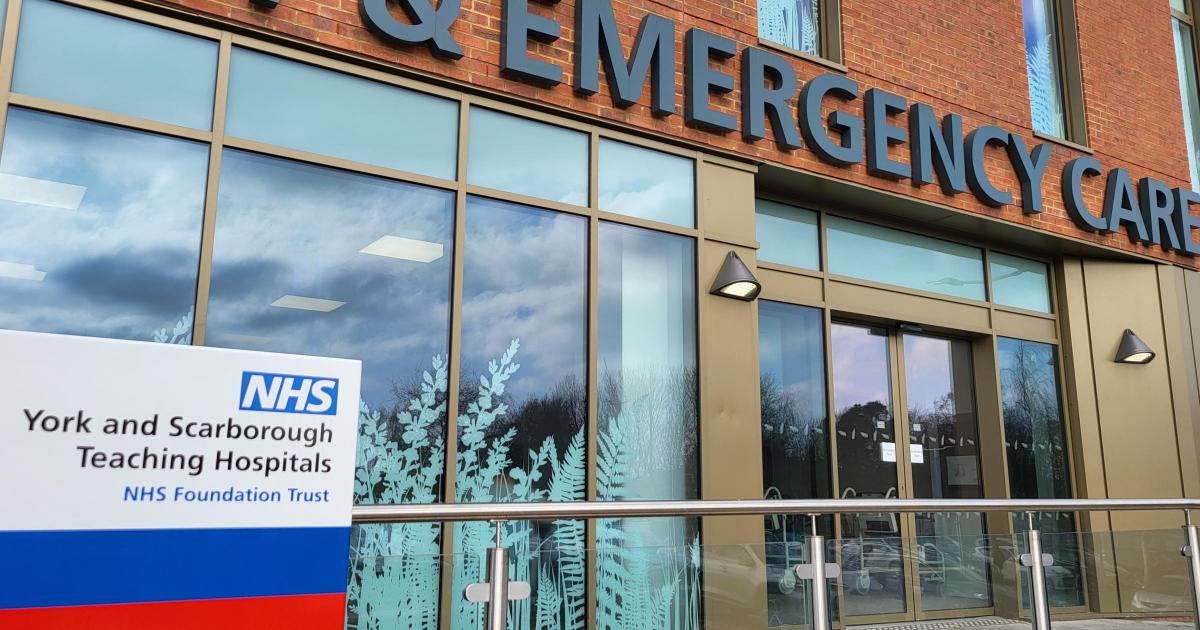
Reaction to ‘really high levels of attendance’ at Scarborough Hospital

Published

on

Reaction to 'really high levels of attendance' at Scarborough Hospital

It comes as health bosses said that the number of attendances at Scarborough Hospital this week “far outstripped anything that has ever been seen before” at this time of year.

Clare Smith, chief executive of the York and Scarborough Teaching Hospitals NHS Foundation Trust, said: “The numbers that were seen on Monday far outstripped anything that we’d ever seen before at Scarborough Hospital, which placed it under significant pressure.”​

Advertisement

“Of course, it’s the time of year where we have a lot more visitors to Scarborough and to Bridlington and those types of areas,” she added at a meeting of the trust’s board of directors on Wednesday, July 29.

She added: “There have been significant challenges across our sites over the last few weeks, with really, really high levels of attendance.”

Advertisement

It comes as the number of 12-hour trolley waits increased in both May and June across the trust’s emergency departments, after figures had fallen between February and April.

Commenting on Facebook, one resident said: “Honestly, I feel for the doctors and nurses – they all look so stressed. I’ve been there over the past four days with a family member who has been unwell, and the staff are doing an amazing job with how they treat the patients.

Advertisement

“But there are so many people who go up to hospital, who could’ve gone to the GP if there was a chance to actually get an appointment.”

They added: “GP surgeries need to be fixed up because the hospital is taking on the strain of multiple services failing people.”

Advertisement

Rachel said: “I work in A&E, and all I can do is apologise to everyone who has had a negative experience; we are so overwhelmed, as you can see.

“We are all working tirelessly to do our clinical jobs that have to be prioritised. If we don’t get back to you it’s definitely not intentional; we are just so so busy.

Advertisement

“But the staff that are on, I promise you, are doing their very best to get to you.”

Scarborough Hospital. Courtesy Numminen/Ldrs

Commenting on social media, a Whitby resident said: “We live in Whitby, but our minor unit shuts at 8pm, so then it’s a trip to Scarborough. Most of the time it’s a minimum of a four-hour wait, but I have often been there until the following morning.”

Advertisement

Mel said: “I don’t know why there isn’t an urgent medical centre in town where people with problems they would usually take to their GP but cannot get appointments can go to.

“It would take so much pressure off the hospital emergency department.”

Advertisement

Last month, Scarborough’s new community diagnostics centre opened in Eastfield, giving people access to faster access to vital tests and scans.

The purpose-built facility provides a range of non-acute diagnostic services closer to home, helping to reduce waiting times, support earlier diagnosis and improve access to care.

Advertisement

Scarborough CDC. York And Scarborough Teaching Hospitals NHS Foundation Trust

Also commenting on Facebook, Glenn said: “I’ve been to Scarborough Hospital many times for myself and my family, and despite the pressure the staff are under, they still manage to have a smile on their faces and do their jobs exceptionally well.”

He added: “If people went when it is absolutely necessary and not just something that can be fixed at the chemist, it would really help.”

Advertisement

The NHS website states: “NHS 111 can help if you think you need medical help right now. 111 can direct you to the best place to get help if you cannot contact your GP during the day, or when your GP is closed (out-of-hours).”

Source link

Advertisement
Continue Reading
Click to comment

You must be logged in to post a comment Login

Leave a Reply

NewsBeat

Unassuming Northumberland restaurant with ‘idyllic views’

Published

on

Unassuming Northumberland restaurant with 'idyllic views'

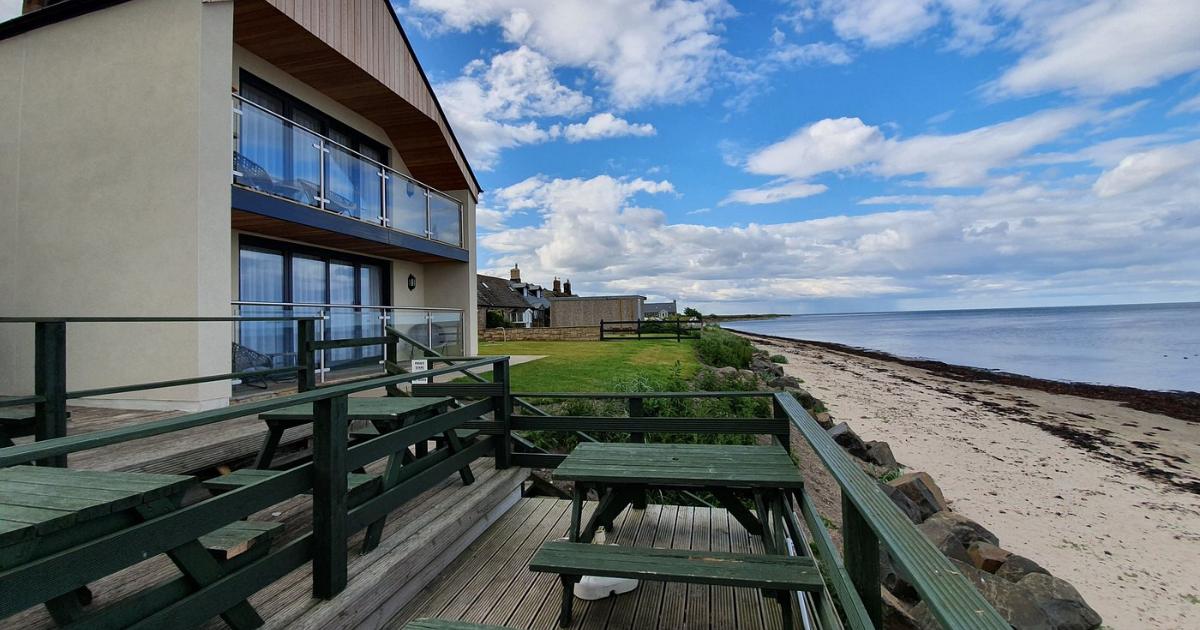
If you are looking for a spot along the Northumberland coast to relax in, you might want to try the Fishing Boat Inn.

Found in the coastal village of Boulmer, the restaurant might look like a normal pub from the outside, but it boasts “idyllic” views at the back.

The restaurant is just steps away from the sea and provides guests with a calming place to stay.

Advertisement

What is the Fishing Boat Inn like?

The Fishing Boat Inn’s website says: “Whether you’re looking for a snack or a full meal, our restaurant is open five days a week, offering a selection of handcrafted dishes.

“Our Catering team is headed up of 2 very talented chefs, George & Alex.

“Together they have created a menu using fresh local ingredients and we include specials everyday, so each day there is something new.

“If you’re not hungry, why not visit our fantastic bar or outside decking area and enjoy one of the finest beer ‘garden’ views on the Northeast coast!”

The restaurant offers a lunch and evening menu with sandwiches, starters, and mains.

Advertisement

The Fishing Boat Inn is known for its fish dishes from classic beer-battered haddock and chips to fillet of salmon and Asian-style sea bass.

There are also a few options for those who are not a fan of fish, including the rack of lamb and fillet steak.

The restaurant also offers a seafood tower featuring three layers of fish including cod goujons, scampi, and smoked salmon.

If you visit on a Sunday, you can enjoy the Sunday roast where you can choose from beef, pork, turkey, or a nut roast to enjoy alongside all of the traditional Sunday trimmings.

Advertisement

The Fishing Boat Inn is not just a restaurant, but it also has a few rooms if you wanted to extend your stay.

There are a few different rooms to choose from with views of the beach where you can watch the sun setting over the coast.

What do visitors think of the Fishing Boat Inn?

Visitors on Tripadvisor have praised the restaurant for its “picturesque location” and “excellent” seafood.

One reviewer said: “This is the fourth time we’ve stayed at The Fishing Boat Inn and it won’t be the last.

Advertisement

“The location and views are exceptional.

“They are matched by the friendliness and service offered by the staff and the food was amazing.


“If the chefs haven’t been recognised for quality, it’s only a matter of time.

“Wonderful place to be.”

Advertisement

Have you ever visited the Fishing Boat Inn? Let us know in the comments.

Source link

Advertisement
Continue Reading

NewsBeat

What to know about the conflict in Mali

Published

on

What to know about the conflict in Mali

LAGOS, Nigeria (AP) — Mali is facing its most serious security crisis in years as al-Qaida-linked militants and separatist rebels join forces to intensify attacks against its military.

The partnership between the JNIM jihadi rebels and the Azawad Liberation Front (FLA) is the latest twist in a decades-long conflict in what is already the world’s most terrorized region.

It has resulted in some of the largest attacks Malian security forces and their partners have seen in years, analysts say.

The rebels and separatists launched massive simultaneous attacks across the country in April for the first time in a decade. Earlier this month, they partnered to ambush a Malian military convoy, capturing or killing dozens of soldiers, and mounting pressure on the ruling junta.

Advertisement

Fatalities from militant attacks increased by 35% to 3,435 in the first seven months of this year, compared with 2,546 in the same period in 2024, according to data from the Armed Conflict Location and Event Data (ACLED), an independent conflict monitor.

“The JNIM and FLA see the benefit of working with each other because they function as force multipliers for each other,” said Heni Nsaibia, a senior analyst for West Africa at ACLED.

Both groups, Nsaibia said, have the same goal of “finishing the common enemy,” which they see as being the Malian armed forces and its partner, Russia’s Africa Corps paramilitary group.

The relationship between the groups is “a form of tactical coordination” focusing on military operations, FLA spokesperson Mohamed Elmaouloud Ramadane told The Associated Press.

Advertisement

He said the groups had agreed that after securing independence of the northern region of Mali the communities would decide what version of sharia is applied.

The latest dimension to the Mali conflict began in 2012 with the northern Tuareg rebellion, which opened the field for jihadis, setting the country and the wider Sahel — a vast strip of semi-arid desert stretching from North Africa to West Africa — on a violent path.

Soldiers took over Mali’s civilian government in 2020, citing the security crisis, setting off a series of coups across the Sahel, which is considered the deadliest region in the world with a record of up to half of all terror-related deaths globally, according to the Institute for Economics and Peace.

The period of military rule has fared worse than previous civilian governments, analysts say, with armed groups increasing their footprint across the country and the Sahel.

Advertisement

Here is a guide to the groups fighting in Mali and their goals:

Jama’at Nusrat al-Islam wal-Muslimin (JNIM)

JNIM is the most potent of the armed groups in the Sahel region and one of the deadliest local affiliates of al-Qaida globally, according to researchers.

Advertisement

It was formed in 2017 after the merger of four separate al-Qaida-affiliated groups in Mali, creating one bigger entity. One of its stated goals was to drive out French forces which, at the time, were helping Malian forces to fight the jihadis.

The group is led by Iyad Ag Ghaly, a veteran of the Tuareg rebel group and a former Malian diplomat. It operates across much of Mali in the north, south, west and central axis. Last year, it imposed a blockade on fuel imports into the country, disrupting fuel supplies to the capital Bamako to date.

JNIM is also active in neighboring Niger and Burkina Faso, and has been expanding its presence to coastal West Africa.

Analysts say JNIM has forced the Malian military to disperse across wider territories, stretching its operational capacity on multiple fronts. Recently, it has been presenting itself as an alternative legitimate authority to the government.

Advertisement

“JNIM has progressively expanded its influence, becoming an increasingly unavoidable interlocutor for some local communities and exercising de facto authority in certain areas where state institutions have only a limited presence,” said Beatrice Bianchi, an adviser for the Sahel-Sahara Security Strategies Centre.

Azawad Liberation Front (FLA)

The FLA, which was formed in 2024, is fighting for the independence of northern Mali. It is the latest iteration of the complex formations of several Tuareg separatist rebel groups that have emerged in the north.

Its roots date back to the 1960s following Mali’s independence from France, when it claimed that the central government marginalized the northern region politically and economically.

In April 2012, a coalition of Tuareg rebel groups under the Coordination of Azawad Movements declared independence and sparked a rebellion alongside Islamic militants.

Advertisement

A 2015 accord signed in Algeria between the Malian government and the rebels led to a cessation of fighting between the group and government forces. In 2024, however, the Malian junta exited the accords as tensions flared between the junta and the rebels, leading to renewed hostilities.

Several officials of multiple rebel groups then came together to form the FLA.

Islamic State Sahel Province (ISSP)

The Sahel-based arm of the Islamic State group, the ISSP was formed by defectors from al-Mourabitoun, one of the four al-Qaida affiliates that came together to form the JNIM.

In Mali, it is considerably less prominent compared to JNIM, and most of its operations are in the Menaka region, which borders Niger.

Advertisement

The Islamic State group acknowledged the ISSP’s allegiance in 2022. Unlike JNIM, which tries to present itself as a better alternative to the government, ISSP’s stated goal is to build an Islamic caliphate in the region, and it’s considered more coercive in its relationship with civilians.

“Both organizations are responsible for significant violence against civilians, but JNIM has generally sought to combine coercion with efforts to build local acceptance, while the Islamic State has relied more heavily on overt violence and intimidation,” Bianchi said.

Both groups are also often at loggerheads as they violently compete for territories and differ on jihadi philosophies, reflecting the global rivalry between al-Qaida and the Islamic State.

Africa Corps

The Africa Corps is a Russian paramilitary group that succeeded the disbanded Wagner Group. After coming into power, the Malian military junta expelled French forces from the country in 2022, citing protection of national sovereignty and a worsening security crisis.

Advertisement

Mali then turned away from its traditional Western partners to Russia — first to the Wagner Group, a private organization that acted as Russia’s diplomatic proxy.

Russia has since replaced Wagner with the Africa Corps, answerable to the Russian Ministry of Defense. The Africa Corps fights alongside the Malian army and has been accused of gross human rights violations.

Other pro-government forces

Other smaller ethnic auxiliary groups support the government.

They include the Dozo militias, former hunters that have become militarized, and some Tuareg groups, such as the Imghad Tuareg Self-Defense Group and Allies (GATIA) and the Movement for the Salvation of Azawad (MSA), in the Menaka region.

Advertisement

The support can also be fluid. Dan Na Ambassagou, a militia group that fights against Fulanis, accusing them of harboring Islamist groups, was once embraced by the government but has now been denounced.

Source link

Advertisement
Continue Reading

NewsBeat

Zendaya Spider-Man Premiere Makeup: How To Get Her Charlotte Tilbury Red Carpet Glow

Published

on

Zendaya Spider-Man Premiere Makeup: How To Get Her Charlotte Tilbury Red Carpet Glow

We hope you love the products we recommend! All of them were independently selected by our editors. Just so you know, HuffPost UK may collect a share of sales or other compensation from the links on this page if you decide to shop from them. Oh, and FYI — prices are accurate and items in stock as of time of publication.

Whatever Zendaya does, the whole world watches. From her acting career, to her relationship with Tom Holland, to the fashion she wears on red carpets, I know I’m certainly not speaking for myself when I say I am tracking her every move with baited breath.

So naturally, when she showed up on the red carpet for the Spider-Man: Brand New Day premiere with the most stunning face of makeup last night (and her new husband on her arm) social media erupted.

Thankfully, there’s no gate keeping here, and celeb makeup artist Ernesto Casillas spilled the tea on the products he used to create the look.

Advertisement

The good news is, you can create it all at home, thanks to the entire look being done in Charlotte Tilbury products.

If you’re after a full face of makeup that’s just as glam – for a night out, or just for funsies – here are all the products you need to recreate Zendaya’s look.

Source link

Advertisement
Continue Reading

NewsBeat

Revealed: Prince Harry and Meghan Markle’s secret escape to a tycoon’s idyllic Scottish isle

Published

on

Harry and Meghan, pictured on a previous holiday, visited the remote Scottish island of Tanera Mor with their children earlier this month

Prince Harry has not yet taken his children to Balmoral, the private royal estate in Aberdeenshire that he has described as ‘simply paradise’.

He has, however, secretly taken them to a remote Scottish island owned by a hedge fund tycoon.

The Daily Mail understands that the Duke and Duchess of Sussex and their children, Prince Archie, seven, and Princess Lilibet, five, stayed earlier this month on Tanera Mor.

The private island is said to have inspired The Wicker Man, the cult 1973 film starring Edward Woodward, Christopher Lee and Britt Ekland.

Advertisement

Harry is thought to have previously visited the island, which was bought for £1.7million in 2017 by billionaire Ian Wace, co-founder of hedge fund giant Marshall Wace.

When Wace, 63, bought Tanera Mor, the largest of the Summer Isles, it had a population of just five, who were outnumbered by crofters’ cottages in various stages of dereliction. 

But the 800-acre island has since been transformed by Wace, who has poured £100million into it, planting 100,000 trees, restoring a dozen properties and laying three miles of roads.

He has also revived skills such as beekeeping. But perhaps the aspect which would have most appealed to Harry is that, by last year, more than half of the 1,000 guests Tanera had hosted were from the Taigh Mor Foundation.

Advertisement

Harry and Meghan, pictured on a previous holiday, visited the remote Scottish island of Tanera Mor with their children earlier this month

Pictured: Ian Wace with his partner Saffron Aldridge. The island was bought for £1.7million in 2017 by billionaire Wace, co-founder of hedge fund giant Marshall Wace

Pictured: Ian Wace with his partner Saffron Aldridge. The island was bought for £1.7million in 2017 by billionaire Wace, co-founder of hedge fund giant Marshall Wace

Harry is thought to have previously visited the island, which as since been transformed by Wace, who has poured £100million into it, planting 100,000 trees, restoring a dozen properties and laying three miles of roads

Harry is thought to have previously visited the island, which as since been transformed by Wace, who has poured £100million into it, planting 100,000 trees, restoring a dozen properties and laying three miles of roads 

Advertisement

It’s a charity which strives to bolster the wellbeing of those serving in the armed forces or emergency services. 

During their time on the isle, they restore buildings, harvest seaweed, fish for mackerel or work in the kitchens or gardens.

A noted philanthropist, Wace has been friendly with Harry and his brother, Prince William, for years. 

Wace’s then wife, former model Saffron Aldridge, 57, bonded with Meghan, 44, after the US actress moved to Britain to live with Harry. 

Advertisement

In 2019, the year after Meghan married the prince, Saffron and Wace joined the couple for a Cirque du Soleil performance at the Royal Albert Hall.

Meghan, it was reported at the time, appreciated that Saffron was ‘a straight talker’. The women’s mutual interest in fashion also helped. 

Wace and Saffron split in 2023 and have since divorced but remain friends.

The Sussexes are believed to have travelled to Scotland from Northamptonshire, where they stayed with Earl and Countess Spencer at his ancestral home, Althorp. 

Advertisement

While there, they laid flowers at the grave of Harry’s mother, Diana. During the family’s trip to Britain, they also had tea with Harry’s father, King Charles, and stepmother, Queen Camilla, at Highgrove in Gloucestershire.

A spokesman for the Duke and Duchess said: ‘This is not something we would comment on.’

A spokesman for Wace also declined to comment.

Source link

Advertisement
Continue Reading

NewsBeat

Fruit Fly May Soon Become A TV Show

Published

on

Fruit Fly May Soon Become A TV Show

On a recent episode of the Inklings Book Club podcast, The Odyssey star Anne Hathaway was given a copy of Josh Silver’s novel, Fruit Fly.

“I know you like Yesteryear,” podcast host Jack Edwards began, referencing the Caro Claire Burke novel about a tradwife influencer who wakes up one day in the 19th century.

“This is a book about a woman who wants to write a bestselling novel,” he continued, explaining that when she looks online and asks how to do that, her searches on the topic suggest, “go sad, go dark, go gay”.

With a huge grin, Anne opened her arms, saying, “Gimme, gimme, gimme! I can’t wait… I’m going to tear through this.”

Advertisement

And now, it seems we might all be able to watch the story unfold on the small screen.

Deadline has shared that A24 has optioned the book for a TV show. They won the rights to adapt the novel after a “competitive” bidding process.

Author Josh Silver will executive produce the pilot, they added.

The story follows Mallory, a well-known literary star, who’s desperate to rekindle her career. Leo, a young homeless man, proves the perfect spark.

Advertisement

“It’s been a surreal few weeks – I’m incredibly grateful and very excited,” Silver shared on his Instagram.

In the comments of his announcement, one Instagram user wrote: “This sounds amazing!! @annehathaway needs to be Mallory!”

“Couldn’t agree more,” a reply reads.

Only time will tell whether the Devil Wears Prada 2 actor really does make an appearance in the adaptation.

Advertisement

Source link

Continue Reading

NewsBeat

‘The beautiful game mattered to Sir Bobby Charlton – but unless we stand up now, we will lose it’

Published

on

Manchester Evening News Icon

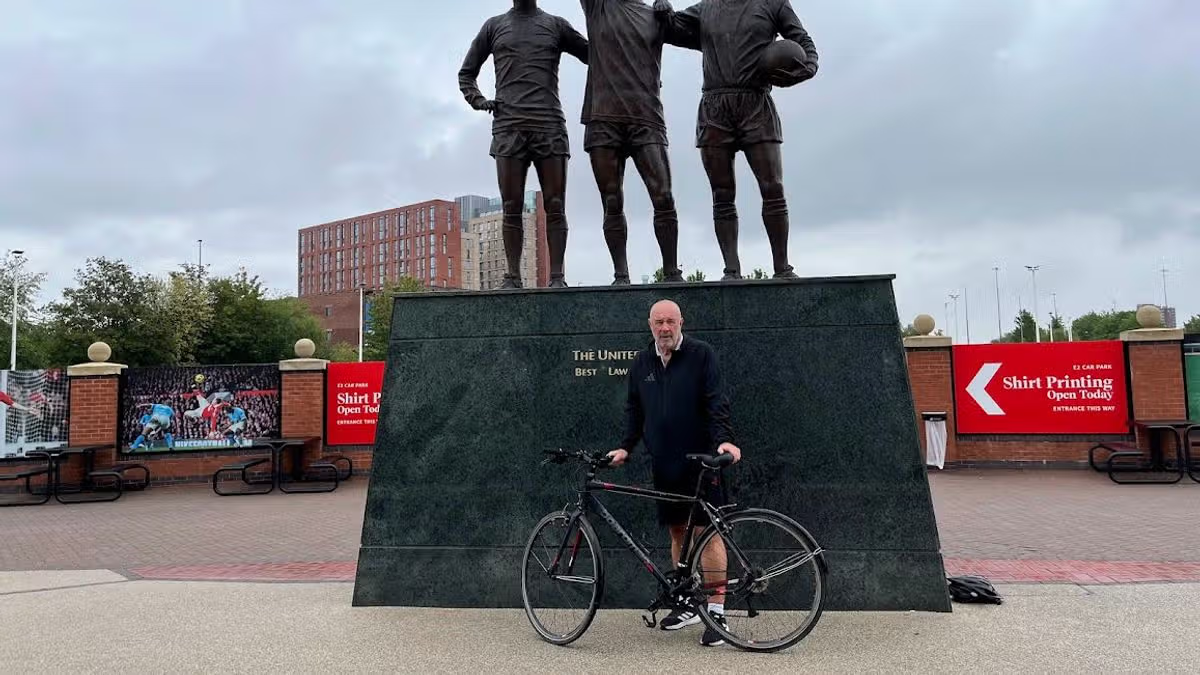
On the 60th anniversary of England’s World Cup win, John Shiels is on the forecourt at Old Trafford talking about why he is riding up and down the country at the age of 67, visiting all 92 Football League clubs, to raise money for a charity started by one of the heroes of ’66.

Shiels is a Nottingham-born lad who moved to Manchester at the age of 18 and never left. Until June, he was the chief executive of the Manchester United Foundation, a position he had held for 16 years and one that matched his passion for football with his passion for helping the community.

He retired from that job on June 10, and on June 11 he set off on his mission to visit every EFL club, raising the profile of the community work they do, and raising funds for the Sir Bobby Charlton Foundation.

Shiels is one of five on the ride, with 70 clubs and 1,316 miles completed so far, and all of them met Sir Bobby through his pioneering soccer schools. Shiels became so close to Sir Bobby, one of Manchester United’s and England’s greatest ever players, that he delivered a eulogy at his funeral three years ago.

For Sir Bobby, despite all he went through with the Munich air disaster, football was the beautiful game, and Shiels believes that it is in danger of being lost. Which is why he started tapping those pedals.

“Having worked with him and knowing him for so long, the beautiful game mattered to him,” said Shiels. “And you look around, things are happening at a right old pace, the stuff from FIFA [selling the World Cup] and, and you think, you know what, we have to fight to keep the beautiful game.

“To some extent, I think he sort of got the role of being the statesman of the game because of what happened, and he stood up to that. But he never lost that love for it, he’d say, “Football is the best toy ever invented.” And the power to play is so important that we have lost.

Advertisement

“You look at what’s happening with FIFA, and you look at what’s happening around, and we are losing that access to the game, unless someone starts standing up and talking about it, we will lose it.”

Sir Bobby’s foundation started as a landmine clearance charity, before shifting its focus on to football, and offering children across the world access to the game he loved.

Now Shiels and his team are raising funds to make sure that can continue, but closer to home. The cost of playing has increased at home, and as the game becomes ever more like a business, he believes it is in danger of losing its essence.

“Shockingly, there are still tens of thousands of young people in England who can’t afford to play affiliated football,” he said. “To play for a team now costs you between £35 and £40 a month. If you’re unfortunate and you’re born in a family that is struggling, they’re not going to pay £35 to £40 a month to let you play football.

Advertisement

“Football wasn’t about kicking a ball. It’s about making lifelong friendships. It’s about keeping yourself fit. It’s about being part of something, belonging to something. If you’ve not got it, your life isn’t the same as it could be. And it costs pennies.”

This is a mission with which Sir Bobby would undoubtedly agree. He founded his soccer schools in 1978 with a clear aim and never stopped wanting others to have the opportunity that he had.

“He just loved it so much,” said Shiels. “To the extent that when we were talking to him about Bobby Charlton Soccer Schools, what did he want that to feel like for a kid? And he’d go, “I want every day to feel like Christmas Day.”

“He came from a working-class background. Football was his way out. He never forgot his roots. He understood the privilege he had, but also the responsibility he had to make sure that it keeps getting passed on.

Advertisement

“Football is the national game; it’s magical. If we’re not careful, it is losing its magic… We are losing that access to the game, which unless someone starts standing up and talking about it, we will lose it.”

Source link

Continue Reading

NewsBeat

Redcar pervert who sexually assaulted young girl put behind bars

Published

on

Redcar pervert who sexually assaulted young girl put behind bars

James Finlay, 38, from Redcar, was sentenced to four years in prison at Teesside Crown Court for sexual assault and inciting a child to engage in sexual activity today (July 30).

The court heard Finlay simulated sexual intercourse against the child over her clothing.

James Findlay from Redcar.James Findlay from Redcar. (Image: CLEVELAND POLICE)

He was found guilty by a jury following a trial.

Detective Constable Bonnie Dowson, from Cleveland Police’s Protecting Vulnerable People unit, said: “Finlay abused his position and took advantage of a child that understandably left her distressed.

Advertisement

“I want to take this opportunity to acknowledge how swiftly the girl informed an adult on what had taken place and the ongoing courage and bravery she has shown to report it to police and see it through the criminal justice system.

“While no sentence will ever undo the harm Finlay caused, I hope it can provide a sense of justice and an opportunity to begin moving forward with the help and support available.”

Cleveland Police have encouraged anyone who has experienced sexual abuse to come forward.

The force said victims of sexual assault, rape or sexual abuse can contact police on 101, or dial 999 in emergencies.

Advertisement

Alternatively, reports can be made anonymously via Crimestoppers on 0800 555 111.

Victims can also seek help from Teesside Sexual Assault Referral Centre (SARC) without involving police.

The centre offers 24-hour crisis intervention and support and can be reached on 0330 223 0099.

SARC can also refer individuals to specialist services including Barnardo’s and Arch.

Advertisement

Source link

Continue Reading

NewsBeat

Airport dad has been crowned Britain’s most common travel personality

Published

on

Airport dad has been crowned Britain’s most common travel personality

The findings are part of Manchester Airport’s Holiday Mode: Activated campaign, which identifies four unique personality types according to how people spend time at the airport before boarding.

After the Airport Dad, the second most common personality is the “Switch-Off Specialist”, the traveller who looks for a quiet spot to relax or people-watch. That’s followed by the “Terminal Foodie”, who says every holiday should start with a meal or drink, and the “Shopaholic”, who browses airport shops before take-off.

More than four in ten Brits see themselves as the Airport Dad, according to a new study by Manchester Airport. (Image: Manchester Airport)

The research suggests airports, with their wide variety of food, drink and shopping options, such as Great Northern Market, Joe & the Juice, Rituals, Boutique Mall and LEGO at Manchester Airport, have become much more than simply somewhere to catch a flight.

More than one in ten people (13%) say their holiday begins the moment they arrive at the airport, while almost a quarter (24%) enjoy food or drink during the hour before boarding. Separately, 14% say shopping forms part of their ideal pre-flight routine.

Advertisement

The poll of 2,000 Brits also found that 42% typically arrive at least three hours before departure, filling their time by people-watching 23%, relaxing with a coffee 22% or browsing shops and World Duty Free 22%.

Manchester Airport’s campaign centres around this, encouraging Brits to switch into holiday mode from the moment they step into the airport, rather than when travellers land at their destination.

Travellers can discover which airport personality type they are thanks to a new interactive Airport Personality Quiz from Manchester Airport. The quiz matches travellers to one of the four personalities while showcasing the variety of places to eat, shop and relax across the airport.

The new departure lounge at Terminal 2 has more than doubled in size since its £1.3 billion transformation. It features six kitchens at Great Northern Market food hall, a premium boutique mall and an airport-first Fever-Tree cocktail and champagne bar, alongside stores like LEGO and Pandora.

Advertisement

To celebrate summer 2026, passengers can also enter a competition to win prizes tailored to their airport personality, ranging from shopping and dining experiences to a dream holiday.

Richard Jackson, Retail Director at Manchester Airport, said: “Everyone experiences the airport in their own unique way. Some people are counting down to boarding from the minute they arrive, while others get straight into holiday mode with a meal or shopping.

“Our new Airport Personality Quiz celebrates those different travel personalities while highlighting just how much there is to enjoy before take-off.

“Whether you’re an Airport Dad, a Terminal Foodie, a Shopaholic or someone who simply likes to switch off, there’s something for everyone at Manchester Airport.”

Advertisement

For more information, please visit the website here: https://www.manchesterairport.co.uk/at-the-airport/airport-facilities/shopping/

https://hosted.pushplanet.com/MAN/AIRPORT-PERSONALITY-COMPETITION

THE FOUR AIRPORT PERSONALITIES:

Airport Dad

Advertisement
  • 52% constantly check departure boards
  • 42% arrive at least three hours early
  • 35% keep everyone’s passports together.

Switch-Off Specialist

  • 41% enjoy people-watching
  • 39% take everything at their own pace
  • 15% immediately put on headphones and relax

Terminal Foodie

  • 39% treat themselves to food or drink
  • 35% browse restaurants before boarding
  • 13% say the celebrations start with cocktails or a meal

Shopaholic

  • 36% browse even without needing anything
  • 20% buy gifts or treats
  • 16% head straight for World Duty Free

Source link

Continue Reading

NewsBeat

Hamas agrees to ‘complete disarmament’ in Gaza after Trump reveals historic deal for peace in Middle East

Published

on

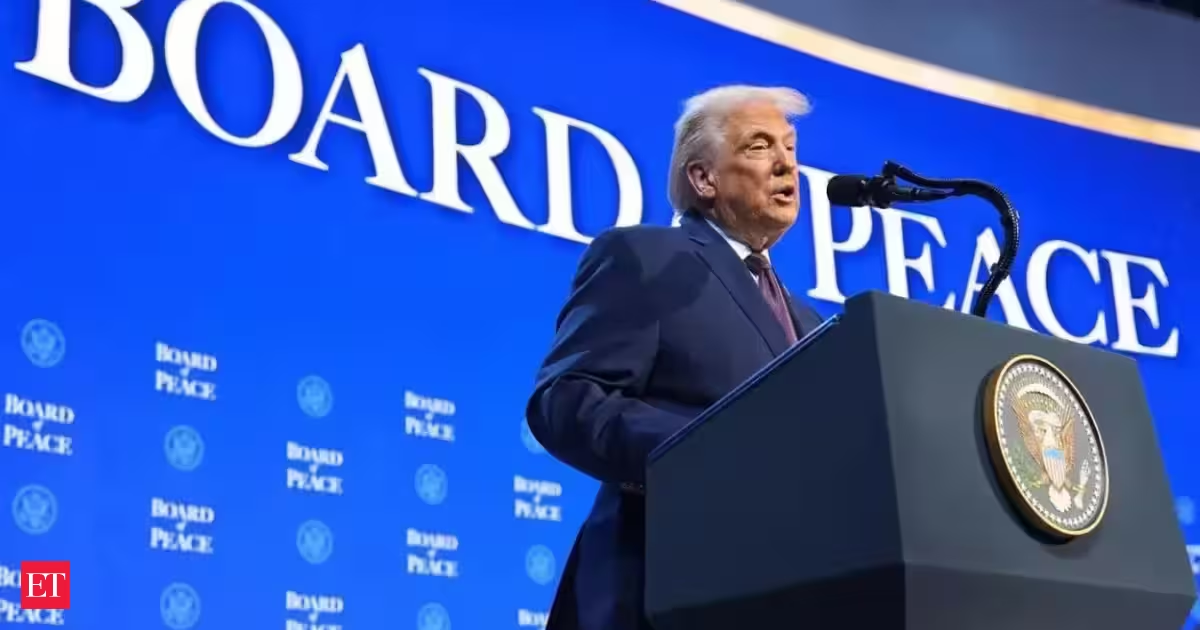
Donald Trump's Board of Peace has made a 'historic deal' that promises 'complete disarmament' of Hamas as part of his 20-point plan to stop the fighting between Israel and the terror group

Donald Trump has struck a ‘historic deal’ that includes the ‘complete disarmament’ of Hamas in Gaza in an effort to end terror attacks on Israel.

Trump said the agreement made by the Board of Peace was part of his 20-point plan to bring peace to the Middle East. Hamas confirmed to the BBC that they have agreed to the deal.

In a Truth Social post Thursday night, Trump celebrated what he called a ‘monumental step toward lasting PEACE and SECURITY’ in the region. 

‘This agreement is a critical step towards Gaza finally being governed by a new Palestinian government that will work closely with the Board of Peace to help the Palestinian people,’ he said. 

Advertisement

Trump added: ‘At the same time, Israel will have the security it deserves, with Gaza no longer used as a base for terror attacks.’

The President said the agreement will be put into place ‘in carefully structured phases’ that will eventually lead to Israeli forces withdrawing from Gaza. 

An International Stabilization Force and new Palestinian police force will work together to keep Gaza ‘safe for its residents and neighbors.’ 

Advertisement

Donald Trump’s Board of Peace has made a ‘historic deal’ that promises ‘complete disarmament’ of Hamas as part of his 20-point plan to stop the fighting between Israel and the terror group

The President said the agreement will be put into place 'in carefully structured phases' that will eventually lead to Israeli forces withdrawing from Gaza

The President said the agreement will be put into place ‘in carefully structured phases’ that will eventually lead to Israeli forces withdrawing from Gaza

Trump thanked mediators on behalf of Egypt, Qatar and Turkey ‘for their important efforts’ alongside his own team. 

‘One year ago there was a violent raging war, humanitarian crisis and hostages kept in brutal captivity. We have made historic progress and there is still much work to do,’ he said.

Advertisement

‘CONGRATULATIONS TO ALL ON THIS AMAZING DEVELOPMENT, THAT EVERYBODY SAID COULD NEVER BE ACHIEVED!’ 

Trump has been meeting with Israeli Prime Minister Benjamin Netanyahu this past week. 

The Daily Mail has reached out to the prime minister for comment. 

In the four-page ‘roadmap’ for the deal, US officials said that both Hamas and Israel will remain at the same phase until both have reached its stated goals.

Advertisement

Smaller Hamas groups in Gaza will be taken apart to start before they get rid of their tunnel infrastructure.

Once the roadmap is complete, a new version of the Palestinian authority will control all weapons in Gaza. 

Earlier this month, Hamas dissolved its government in Gaza and is preparing to transfer power to a technical committee backed by the United Nations as part of the deal.

Last October, Trump outlined the plan to end the war spurred on by the October 7, 2023 terror attack by Hamas

Advertisement

The US President pledged not only an ‘immediate end to the war’ in the Strip but ‘the whole deal’ to stop conflict that has ravaged the entire region for ‘thousands of years’.

Trump has been meeting with Israeli Prime Minister Benjamin Netanyahu this past week

Trump has been meeting with Israeli Prime Minister Benjamin Netanyahu this past week

Palestinians Hamas militants wave their group's flag as they celebrate on the roof of a destroyed synagogue of the former Jewish settlement of Netzarim, in the Gaza Strip

Palestinians Hamas militants wave their group’s flag as they celebrate on the roof of a destroyed synagogue of the former Jewish settlement of Netzarim, in the Gaza Strip

Advertisement

The plan states that on agreement by both sides, ‘the war will immediately end’ with Israeli withdrawals timed to release of the last hostages held by Hamas. During that initial period, there would be a ceasefire.

Existing ‘battle lines’ would be frozen in place and Hamas would lay down its arms with the terror group’s offensive weaponry being destroyed. 

While ‘full aid’ would be immediately sent to the Gaza Strip. 

Key points include the deployment of a ‘temporary international stabilization force’ and creation of a transitional authority headed by Trump.

Advertisement

The deal would demand Hamas militants fully disarm and be excluded from future roles in the government. However, those who agreed to ‘peaceful co-existence’ would be given amnesty.

Following Israeli withdrawal, the borders would be opened to aid and investment. 

In a crucial change from Trump’s earlier apparent goals, Palestinians will not be forced to leave and instead, the document said, ‘we will encourage people to stay and offer them the opportunity to build a better Gaza.’

Police would be ‘nationally recruited’ and ‘professionally vetted’ and be tasked with maintaining public order, investigating crimes and protecting civilians within Gaza.

Advertisement
Smoke from an explosion can be seen after an Israeli attack on July 28, 2026

Smoke from an explosion can be seen after an Israeli attack on July 28, 2026

Smoke rises during an Israeli military bombardment of the northern Gaza Strip on November 15, 2023, amid the ongoing battles between Israel and the Palestinian group Hamas

Smoke rises during an Israeli military bombardment of the northern Gaza Strip on November 15, 2023, amid the ongoing battles between Israel and the Palestinian group Hamas

Meanwhile the ISF – a multinational force – would guard borders, stop weapons smuggling, deter militant resurgence with targeted counter terror raids, and protect reconstruction projects. 

The October 7, 2023, attack by Hamas-led militants that sparked the war killed some 1,200 people in Israel and saw 251 others taken hostage. Israel’s retaliatory offensive in Gaza has killed 73,098 Palestinians, according to Gaza’s Health Ministry.

Advertisement

The ministry, part of the Hamas-led government, is staffed by medical professionals and maintains detailed records viewed as generally reliable by UN agencies and independent experts. 

It does not distinguish between civilians and militants but says women and children make up around half of all fatalities.

Israeli strikes have lessened considerably since the ceasefire took effect on Oct. 10, but they continue almost daily. 

Israel’s military says it targets Hamas and other militants, often asserting they were planning attacks. The strikes have also killed many civilians.

Advertisement
Trump’s 20-point peace plan
  •  Gaza will become a terror-free zone with all militant groups dismantled so it does not pose a threat to its neighbors. 
  • Gaza will be redeveloped for the benefit of the people of Gaza, who have suffered more than enough
  • If both sides accept the deal, hostilities would stop immediately. Israeli forces would halt operations and withdraw to a set line while the truce holds.
  •  Within 72 hours of Israel agreeing, all hostages would be released, alive or deceased. 
  • Once all hostages are returned, Israel would release 250 prisoners serving life sentences and 1,700 Palestinians detained after October 7, 2023. It would also return the remains of 15 Palestinians for every deceased Israeli hostage.
  •  Hamas fighters who commit to peaceful co-existence and to decommission their weapons will be given amnesty once all hostages are returned. Fighters who refuse would be allowed to leave Gaza safely for other countries.
  •  Large-scale aid would enter Gaza immediately after agreement. This would include water, electricity, sewage repair, hospital rehabilitation, and rubble clearance.
  •  Relief would be delivered through the UN, Red Crescent and other neutral international bodies. The Rafah crossing would be reopened under this system.
  •  A transitional technocratic committee made up of Palestinians and international experts would run Gaza. Oversight would be provided by a new international ‘Board of Peace’ chaired by Donald Trump, with other leaders such as former British prime minister Tony Blair suggested as members.
  •  An international panel of experts would create a plan for Gaza’s economic  redevelopment. The plan would draw on experience from major Middle East projects.
  •  A special economic zone will be established, with preferred tariff and access rates to be negotiated with participating countries.
  •  No one will be forced to leave Gaza, and those who wish to leave will be free to do so and free to return. People will be encouraged to stay to help build Gaza.
  •  Hamas and other factions would not take part in Gaza’s governance. Their direct or indirect involvement in running the territory would be banned. All military, terror, and offensive infrastructure, including tunnels will be destroyed and not rebuilt. Independent monitors will supervise the demilitarization of Gaza. 
  •  A guarantee will be provided by regional partners to ensure that Hamas, and the factions, comply with their obligations and that New Gaza poses no threat to its neighbors or its people.
  •  An International Stabilization Force would deploy to Gaza to train vetted Palestinian police. It would also help secure borders with Israel and Egypt in coordination with Jordan and Egypt.
  •  Israel will not occupy or annex Gaza. As the ISF establishes control and stability, the Israel Defense Forces (IDF) will withdraw based on standards, milestones, and timeframes linked to demilitarization that will be agreed upon between the IDF, ISF, the guarantors, and the Unites States, with the objective of a secure Gaza that no longer poses a threat to Israel, Egypt, or its citizens.
  •  In the event Hamas delays or rejects this proposal, the above, including the scaled-up aid operation, will proceed in the terror-free areas handed over from the IDF to the ISF.
  •  An interfaith dialogue process will be established based on the values of tolerance and peaceful co-existence to try and change mindsets and narratives of Palestinians and Israelis by emphasizing the benefits that can be derived from peace.
  •  While Gaza re-development advances and when the PA reform program is faithfully carried out, the conditions may finally be in place for a credible pathway to Palestinian self-determination and statehood, which we recognize as the aspiration of the Palestinian people.
  •  The United States will establish a dialogue between Israel and the Palestinians to agree on a political horizon for peaceful and prosperous co-existence.

Source link

Continue Reading

NewsBeat

diplomacy on the sidelines of Lindsey Graham’s memorial service

Published

on

diplomacy on the sidelines of Lindsey Graham’s memorial service

Summit meetings on the fringes of funerals, diplomacy after death as the British political scientist Geoff Berridge put it, have a long and useful tradition. Not only can such working funerals force a meeting at a time that would not otherwise have happened, but they can remind those assembled of the transience of life, physical as well as political, and the urgency of now.

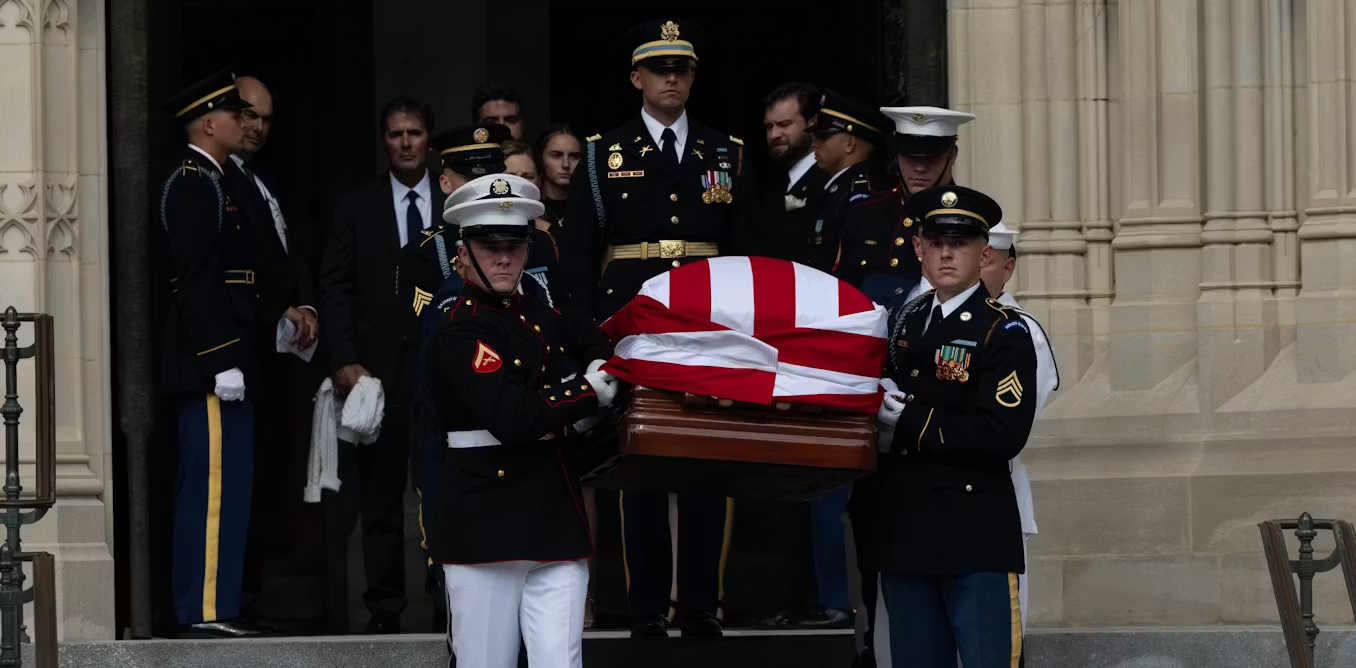
And so it was with the funeral of Senator Lyndsey Graham at Washington National Cathedral. The marking of his death provided the background to carefully choreographed visits to the White House for Ukraine’s president Volodymyr Zelensky and Israel’s prime minister Benjamin Netanyahu.

Each visitor, ostensibly in Washington for Graham’s memorial service, was granted 90 minutes in sequential closed-door meetings with Trump and his advisers. All sides later conveyed that the meetings were, in the words of White House press secretary, Karoline Leavitt, “positive and productive”.

Tale of two meetings

First up was Zelensky. For the Ukrainian president, this is not the first instance of funeral diplomacy with his US counterpart. The two presidents’ meeting at the Vatican in April 2025 for the funeral of Pope Francis provided the opportunity to put their relationship on to a more constructive footing just two months after their infamous clash at the White House.

Advertisement

Far from not having “the cards”, as Trump exclaimed in February 2025, Zelensky arrived at the White House this week in a much stronger position. Ukraine has demonstrated its capacity to strike deep into the Russian heartland causing substantial economic and military damage to the Kremlin’s war machine.

Ukraine is also an increasingly a high value tech partner in drone technology to the US and its allies in the Gulf and Europe.

Zelensky also stressed Ukraine’s usefulness as an intelligence partner to Washington. He reported he had supplied evidence to suggest that Russia has provided Iran with targeting information on US bases in the Middle East. While Trump himself tends to dismiss such allegations, posting recently on his TruthSocial platform that he doesn’t believe either Russia or China are assisting Iran, they almost certainly helped Zelensky in his subsequent meetings on Capitol Hill.

In a rare demonstration of bipartisan consensus, the Senate – in an 86-12 procedural vote – moved forward a sanctions package against countries who continue to trade with Russia and Iran. This was billed as a tribute to Graham, who – together with his Democrat senate colleague Richard Blumenthal – had conducted long and protracted negotiations to obtain approval from the White House.

Advertisement

Trump’s support for the sanctions package is another indication that his calculations on the Russian war against Ukraine are beginning to shift. The US president also repeated his commitments to allowing the manufacture of Patriot missiles in Ukraine and to advocating for the resurrection of the stalled peace talks between the US and Russia.

While Zelensky’s star is, for now at least, clearly on the rise in Washington, Netanyahu arrived for his meeting with Trump in a more precarious position. With Israel heading into crucial parliamentary elections in October, Netanyahu has most to gain domestically from being seen close to Trump.

Their meeting covered several issues where the two leaders’ views differ – from how to prevent Iran from developing a nuclear weapon to US sales of F35 fighter jets to Turkey. No details emerged of any tangible agreements. Netanyahu was nonetheless full of praise, characterising the meeting as: “It was one of the best conversations I’ve had with our friend, US President Trump.”

Israeli prime minister, Benjamin Netanyahu, and Ukrainian president, Volodymyr Zelensky, at the funeral of Senator Lindsey Graham, July 28 2026.
Annabelle Gordon/UPI/Alamy Live News

While mainly aimed at his electorate back home, these hyperbolic statements from the Israeli prime minister were also designed to signal to Iran that Netanyahu still has influence in the White House and that the Iranian nuclear issue has not been abandoned in the new focus on the Strait of Hormuz.

Advertisement

How much influence, however, is debatable. Trump seems undecided, and above all unsure, on how to moved forward on Iran – oscillating between escalation and diplomacy.


À lire aussi :
Is Netanyahu’s star waning in Washington? His latest meeting with Trump suggests it may be


US impotence

As the two wars in Iran and Ukraine are becoming more and more connected, the capacity of the White House to manage them is limited at best.

Critical weapons shortages due to US commitments in the war against Iran are putting Ukraine’s air defences at risk. Russia is emerging as an enabler of Iranian strikes against US bases in the Middle East. Ukrainian strikes on an Iranian ship in the Caspian Sea target a vital supply chain between Moscow and Tehran.

Advertisement

And these are just some of the links between two conflict theatres that are individually growing in complexity. Yet, Trump still uses the same over-extended and under-qualified duo of Steve Witkoff and Jared Kushner to lead US mediation efforts in both.

The best that the US president, therefore, could have hoped for as a result of his back-to-back meetings with Zelensky and Netanyahu was reminding them and everyone else of how the pivotal role of his administration in both wars continues to be. What Trump achieved instead was to highlight that the White House remains unable to bring either, let alone both, wars to a satisfactory conclusion on terms acceptable to Washington and its allies.

Under Trump, it seems, that funeral diplomacy is less about diplomacy after death than the death of diplomacy.

Advertisement

Source link

Continue Reading

Trending

Copyright © 2025