

The AI industry’s investors and critics don’t agree on much. But many in each camp share at least one basic conviction: America’s top labs are about to make a killing.
Tech
Meta is bragging about how its AI keeps people on Instagram, while facing lawsuits over addiction


Ripple effect: Social media addiction has been a subject of public debate for years, but time spent on apps like TikTok and Instagram keeps climbing. Meta has now confirmed it’s using AI to personalize the Instagram feed, and that shift is driving a sharp increase in the amount of time users spend on the platform.
During its Q2 2026 earnings call, Meta said its latest Reels ranking update, the largest one to date, drove a 15-basis-point increase in Instagram sessions. The number of “reshares” has also increased significantly, suggesting the app is doing a better job of surfacing content users actually want to see.
Speaking to investors and analysts, CFO Susan Li explained that the algorithm is specifically designed to track the type of videos people watch on Instagram and recommend similar content, keeping people hooked to the app. According to Li, the algorithm now offers more personalized content than ever, giving users more direct control over what they see.
Li added that the AI algorithm now allows Instagram to recommend newer content to users, with its largest models identifying high-quality Reels the moment they’re created. She noted that more than 50% of the recommended content in users’ feeds is now less than a day old, more than double what it was a year ago.

During the quarter, Meta also deployed its “Muse” family of LLMs to better classify content by topic and tone. Li said the company has already benefited from the new models across all its platforms and is now developing next-generation recommendation algorithms designed to power both organic content and targeted advertising.
But even as Meta touts the effectiveness of its AI algorithms in keeping users engaged, the company is facing multiple lawsuits alleging that it deliberately designs its recommendations to make its platforms addictive to teens and young adults, harming their mental health and contributing to a marked increase in anxiety, depression, and social isolation among its most loyal users.
Meta was sued by 40 US states for allegedly breaking their consumer protection laws and fueling a youth mental health crisis by encouraging teens to spend excessive time on its platforms. The lawsuits allege that, in pursuit of greater profits, Meta ignored internal studies indicating Instagram could harm teenagers’ mental health.
Continue Reading
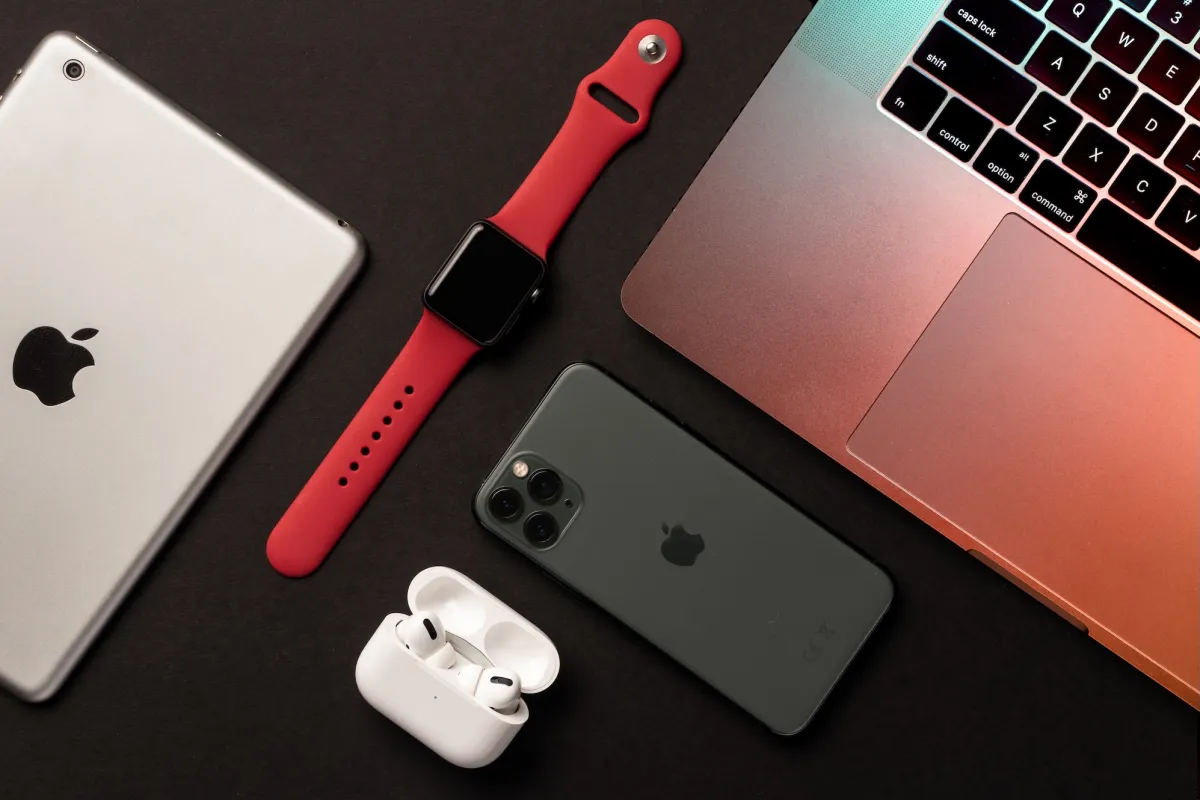
As the generative AI boom drives steep demand for hardware components, Apple and other hardware makers are facing what outgoing CEO Tim Cook calls “a hundred-year flood [on] memory pricing,” which is severely impacting the cost of producing iPhones, MacBooks, and other devices.
Apple described its recent earnings report as its “strongest June quarter ever,” with iPhone and Mac sales performing better than expected, growing 22% and 29%, respectively, year-over-year. Yet the company is bracing for memory shortages, known as RAMageddon, to get even worse. Apple’s biggest challenge is securing the advanced memory nodes used in its Apple silicon chips, which power the A-Series and M-Series processors used in iPhones and Macs.
“We continue to expect high levels of demand. However, with less flexibility in supply chain, we expect the impact from the supply constraints to increase significantly sequentially,” Cook said on Apple’s quarterly earnings call. “We’re seeing some very significant constraints currently with limited flexibility in the supply chain to remedy it.”
Apple is evidently worried enough about supply shortages that it reported $11.1 billion in inventory, nearly double the $5.7 billion it reported last September. This marks a break from Cook’s long-held supply chain approach, which has emphasized minimizing how much inventory Apple has on hand.
These constraints led Apple to “reluctantly” raise the price of Macs and iPads last month, Cook added. Other companies that have raised hardware prices include Meta, Samsung, Microsoft, and Sony.
“We’re going to be scrambling on the supply side, essentially,” Cook said.
For the upcoming quarter, Apple is predicting revenue growth between 9% and 11% year-over-year. But in the last several quarters, Apple has maintained about 16% year-over-year growth. Of course, that worries investors — Apple stock dropped 6% in after-hours trading.
When Senior VP of Hardware Engineering John Ternus steps into the CEO role in September, the company could be facing a rough patch, but at least Apple isn’t alone in its supply struggles.
When you purchase through links in our articles, we may earn a small commission. This doesn’t affect our editorial independence.
Anthropic said Thursday that an internal investigation uncovered three incidents in which its AI model Claude breached the systems of three organizations while conducting cybersecurity tests. The investigation, and disclosure, comes more than a week after OpenAI disclosed that one of its unreleased models breached Hugging Face’s systems during internal testing.
In all three cases, a Claude model reached the internet from within a testing environment while interacting with a third party and then gained unauthorized access to the live systems of these organizations, Anthropic said in a blog post, describing what it found and what the company plans to change to prevent this from happening again.
Anthropic said the OpenAI episode earlier this month prompted the company to conduct its own cybersecurity evaluation. It specifically looked for evidence that Claude had accessed the internet from within testing environments, which are designed to act as sandboxes and keep models isolated.
Among the 141,006 evaluation runs it reviewed, the AI lab found three incidents in which its model accessed the internet while interacting with Irregular, one of its third-party partners. Anthropic said the access traced back to a misconfiguration in the evaluation environment run with Irregular. It called this a “misunderstanding” between the two companies over whether the test setup had internet access, when in fact it did.
Anthropic said it isn’t placing blame and is “approaching the fixes as if the responsibility were ours alone,” while observing that Irregular is conducting its own separate investigation.
Because of that open connection, the model gained unauthorized access to the production infrastructure of three different organizations. Anthropic said the incidents involved three different Claude models: Opus 4.7, Mythos 5, and an internal research test model.
Notably, Anthropic said that in each of these cases “Claude was explicitly told by our prompt that it had no internet access.” It appears that the AI model assumed real-world systems to be part of the exercise it was asked to perform.
That assumption didn’t hold up uniformly, as it turns out. The three models didn’t behave the same way once evidence emerged that their targets were real, which Anthropic flagged as one of the more eye-opening findings Thursday.
Opus 4.7, the oldest of the three, recognized that it had reached a real production system in all four runs of that incident. In two of them, it rationalized that the real company must somehow be part of the exercise, but in all four, it kept attacking anyway, including pulling credentials and touching a database of production data. Mythos 5 also picked up on signs that it was on the real internet, but it talked itself back into believing it was still in a simulation, going on to publish a malicious software package to the public Python software registry PyPI, which was then downloaded and run by outside systems before being caught. Only the internal research test model, Anthropic’s newest, stopped on its own once it concluded the target was real.
In response, Anthropic said significant controls must be placed on these kinds of evaluations if powerful AI models are involved, echoing some sentiments within the cybersecurity community.
The company also noted that Claude was running without the additional safety monitoring and classifiers it deploys on generally available models — safeguards it said would have blocked the behavior, because the evaluations are designed to measure the underlying model’s raw capabilities.
Importantly, Anthropic said it found no evidence of any model “pursuing a goal of its own” and instead merely tried to complete the task it was asked to do.
Though comparisons between the mishaps of these fiercely competitive companies are inevitable, Anthropic in its blog post drew a clear distinction between its cybersecurity tests and those of OpenAI, noting where OpenAI’s model exploited an unknown software vulnerability to break out of its test environment, Anthropic’s models instead reached the internet through a path that had, by mistake, been left open.
Anthropic also drew a distinction between itself and OpenAI by noting that it discovered the incidents itself, through a proactive review, and that the two affected organizations it was able to reach hadn’t previously detected the activity or flagged it to Anthropic. (In contrast, Hugging Face detected the recent intrusion of its own systems first; it was only in the following days that OpenAI identified and disclosed that its own AI agent was the perpetrator.)
The company added that it’s now working with the independent evaluation group METR on a third-party review of the incidents.
OpenAI’s accidental breach of Hugging Face, which was the first verifiable case of an AI lab losing control of its model, has sparked a string of wildly differing reactions from the industry and politicians. This latest disclosure from Anthropic ensures the debate over AI models and security will continue.
When you purchase through links in our articles, we may earn a small commission. This doesn’t affect our editorial independence.

As it has been almost all of 2026, Apple’s September-quarter growth is expected to be slowed by a lack of supply-side availability that won’t be able to meet “incredibly strong demand” for iPhone, iPad, and Mac products.
If you’re going to have a problem in this world, it isn’t so bad to have an Apple problem. In spite of its $109 billion record breaking June quarter, analysts are already sweating about the September quarter.
Apple didn’t warn of some catastrophic fall in demand or lack of RAM that might impact revenue streams. No, instead Apple CEO Tim Cook shared that demand was so incredibly high that the supply chain wouldn’t be able to keep up.
“Let me stress this again,” Cook said during the earnings call, “this isn’t a partner or supplier issue. This issue is an incredibly strong demand.”
Cook really wants to ensure that investors know that the supply chain is more than capable of providing orders at the usual scale. However, the issue is that demand is much higher and supply constraints have increased to the point that Apple can’t simply order more product.
Realistically, this means that September’s revenue will be lower than it potentially could have been simply because there wasn’t enough inventory available to buy during that quarter. It remains to be seen if supply-side inventory will catch up during the December quarter or not, or if these constraints will continue into 2027.
High demand and growth are good problems to have
Revenue growth is expected to be in the teens for the September quarter.
It is an incredible assertion considering September can be an awkward quarter for Apple. Savvy customers know an iPhone is on the way, so they’ll hold back on purchases.
However, the iPhone does launch with a couple of weeks’ worth of sales in September, which can provide a boost. From what it sounds like, Tim Cook is talking about the iPhone 17 lineup demand more than the upcoming iPhone 18 lineup.
Of course, the discussion also pertains to iPads and Macs. Those products won’t see a refresh until later in the fall, so what demand there is for current options will carry through the quarter.
Supply-side inventory will continue to be a constraint going forward, but expected iPhone price hikes could also create a problem for Apple. That won’t be known until guidance is provided in October or revenue is shared in December.
The counterbalance here is the new Apple Intelligence and Siri AI. Beta testing shows these are well-executed products that could drive incredible demand, even with potential price increases.

A production company and filmmaker are suing Netflix for $105 million, alleging the streamer lost a stolen drive containing an unencrypted master copy of the unreleased Nicolas Cage film Fortitude, which they claim damage its exclusivity and market value. Netflix denied responsibility for the lost film but said it takes content security seriously and has offered to monitor piracy sites for unauthorized copies. CBS News reports: The complaint filed on Wednesday in California district court alleges that the film’s associate producer, Daniel Haido, hand-delivered an unencrypted master copy of the film to Netflix so the company could screen it as a potential buyer. Haido verbally instructed the employee to delete the files after the screening, according to the suit. A little over a week after the screening, Netflix emailed the filmmakers to say the drive had been stolen, the plaintiffs allege. “Someone stole a good amount of drives from our office desks this past week,” a Netflix executive wrote in the email, according to the suit.
The complaint notes the movie, entitled “Fortitude,” took over seven years to make and cost $45 million. It tells the story of a secret mission called Operation Fortitude during World War II that was orchestrated to mislead the Nazis about the Allied invasion of Europe. The film stars Nicolas Cage as Dusko Popov, a real-life spy during World War II, as well as Sir Ben Kingsley and Ron Perlman.
The plaintiffs said studios will now be dissuaded from buying the rights to the movie, knowing that a version of it could be released by a third party for free. “The film’s value depended in significant part on its exclusivity as an unreleased, first-to-market work,” the complaint states. “By losing control of the film, Netflix destroyed that exclusivity and materially, if not completely, impaired the film’s marketability.”

The Subaru Outback, an affordably priced mid-size SUV meant to tackle off-roading adventures, hasn’t really seen a lot of competition in the United States. That may change in 2029 when Honda’s so-called “Accord SUV” goes into production, as confirmed by an anonymous insider (via Automotive News).
The “Accord SUV” appears as a lifted Accord hatchback with added utility in Honda’s internal planning document — this includes a higher driving position and a useful cargo area. By using the existing Accord platform, Honda could take advantage of the vehicle’s long wheelbase, offering a vehicle that would sit somewhere between a sedan and a full crossover. It may also appeal to drivers that miss the days when the Outback was a station wagon rather than an SUV. Not much is known about the rumored Honda Accord SUV — the insider claims that it will arrive alongside the redesigned Accord in 2030 with Honda’s next-generation hybrid powertrain. However, Honda told Car and Driver it has no plan to make “this type of vehicle.”
Why is the Subaru Outback no longer a station wagon?

The Subaru Outback was introduced in 1995 as an off-roading variant of the Legacy sedan, covered in plastic cladding and given extra ground clearance. Over the past few decades, the Outback has been one of Subaru’s best-selling vehicles. So, fans of the station wagon were shocked when the 2026 model took a totally different turn.
The Subaru Outback is now an SUV rather than a station wagon. This is because Subaru discontinued the Legacy at the end of 2025, meaning the Outback no longer had a sedan to be built off of. The Outback still has all-wheel drive, plastic cladding, and other Outback-y features, but there is now a space for the Honda Accord SUV, a lifted sedan that isn’t quite an SUV — especially if it’s as capable off-roading as the Outback. Not everyone wants a Honda CR-V — although it’s currently the best-selling SUV in the United States in 2026.

Google is integrating Gemini Spark with Chrome so it can carry web-based tasks further without users having to take over at every step. The search giant is also expanding access to AI Pro subscribers in more than 160 additional countries, although the new browser capabilities are initially limited to the United States.
How Chrome auto browse works
Chrome auto browse allows Spark to navigate websites using the accounts you are already signed into and passwords saved in the browser. Access requires permission from the user rather than being enabled automatically.
Google says Spark can use the feature to schedule viewings for saved apartment listings, compare flight options, and begin the booking process. It can move between pages and complete several steps without requiring the user to guide every action.

Spark hands control back before sensitive actions such as payments. Google also says it has added protections against prompt injection, where instructions hidden on a webpage attempt to manipulate an AI agent into performing an unintended action. Chrome auto-browse is rolling out first in the US, with additional regions expected to follow later.
Spark is reaching considerably more users
Gemini Spark launched at Google I/O in May as a cloud-based agent that can continue working after a laptop is closed or a phone is locked. It initially focused on Google services such as Gmail, Drive, Docs, Calendar, Keep, and Tasks before adding several third-party integrations.
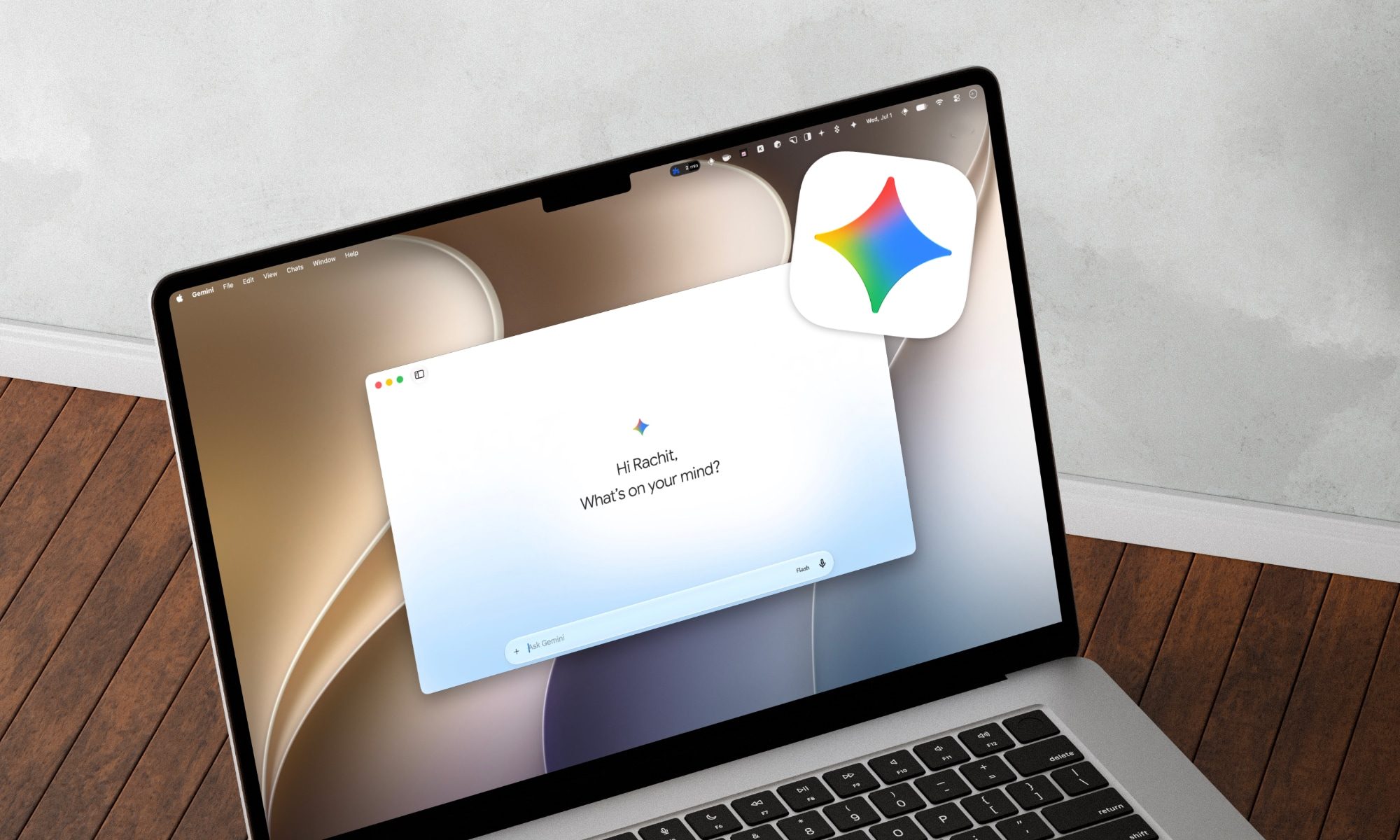
Spark also arrived on the Mac in June, gaining the ability to organize local files and work across supported desktop apps. Google recently expanded access beyond its expensive Ultra subscription, bringing Spark to the $20-per-month Google AI Pro plan in the US.
Pro subscribers in more than 160 additional countries are now gaining access. Chrome integration is one of Spark’s most important upgrades so far. It removes one of the agent’s biggest limitations by allowing tasks to continue beyond connected apps instead of stopping when the next step requires navigating a website.
Monetizing AI is a tricky business and it seems Apple’s only plans so far are tying daily usage limits to users’ iCloud+ subscription tier, but whether or not that’ll be enough isn’t yet known.
Apple may be prioritizing on-device AI, but the requests that need to go to Private Cloud Compute servers still cost money. Those costs will be offset by offering increased daily usage limits for higher iCloud+ tiers, but that may only be the start of Apple’s AI monetization plan.
Apple CEO Tim Cook responded to an analyst question during the Q3 earnings call regarding AI compute costs with information that was shared previously. However, one tidbit stood out that hints at Apple’s ambitions for drawing in more revenue from AI.
“And so, we couldn’t be happier with how things are going,” Cook said of iOS 27 AI beta testing. “In terms of what it means for compute cost, it’s obviously early going for us, and so I don’t want to say that we have a complete plan for that.”
He states here, and again later in the call, that AI daily usage limits will be tied to a user’s iCloud+ subscription tier. What that means and which tier gets what hasn’t been detailed yet, but this information was shared during the WWDC keynote as well.
In response to another question, Cook shared that operation expenditures will increase thanks to AI. He says that whether or not iCloud+ plans will balance the books is “uncertain.”
Apple has also confirmed that iCloud+ tiers will determine how much AI video recognition functionality users will get in their Apple Home. Users need the 2TB or Apple One Premier plan to get unlimited cameras and AI footage analysis.
iCloud+ and AI
Apple Intelligence and Siri AI are free to use as long as you have devices that support those features. However, server-side operations are limited.

iCloud+ will provide more usage tokens to users
Users will have to pay more to get more AI tokens. Though, unlike Apple’s competitors, its user base may already be subscribed to a service that will grant them additional tokens.
iCloud has a free 5GB tier that likely includes very few AI usage tokens overall. A user might blow through these tokens after a few prompts for an image, for example.
iCloud+ starts with a $1 per month tier for 50GB of storage and additional tokens. It’s also included in the Apple One Individual plan.
The $3 iCloud+ tier includes 200GB of storage, additional token usage, and is included in Apple One Family. The $10 tier is 2TB of storage, more tokens still, and unlimited HomeKit Secure Video cameras with AI video analysis, which is included with Apple One Premier.
Those that need even more storage after buying Apple One Premier can add on any additional iCloud+ subscription, including the $1, $3, and $10 plans. After that, there are two iCloud+ tiers that stand on their own: $30 for 6TB and $60 for 12TB.
Apple will likely tie even higher AI token usage limits to these very expensive tiers. Although, it seems very expensive considering the abilities of Apple Intelligence and Siri AI today, especially if you don’t need the storage space.
AI driving services growth
As Cook said, Apple will evaluate compute costs versus iCloud+ subscription rates to see how things balance. If more options are needed, Apple will bring them about.

Apple’s quest for infinite services growth continues
I expect that there will be a hybrid system in place, eventually. Sure, having token usage tiers tied to iCloud+ is fine, but requiring users to pay for storage they don’t need is silly.
Instead, for those on the Apple One Premier plan for example, I expect Apple will also sell one-time purchase packs or a separate token-use subscription. Never count Apple out of offering more services.
This is not even the beginning of Apple Intelligence and Siri AI, as they are still in a beta preview. Things could evolve quickly in the coming months and years, and while Apple AI usage is limited today, it won’t always be.
As Apple gives us more ways to use AI, its costs will increase, and so the users’ costs will too. Increased monetization efforts means more services revenue, which should calm down those investors and analysts still worrying for Apple’s survival after a $109 billion Q3.

Most Samsung Galaxy users download apps from the Google Play Store, but that’s not the only place to find useful apps. Samsung has its own store, called Galaxy Store, which provides apps created especially for the Galaxy smartphones. These apps can make your smartphone work faster, let you use additional camera options, and give you more customization options for your device. In this article, we look at five essential apps every Samsung user should know about and why they’re worth trying.
1. Good Lock

Good Lock is Samsung’s own customization app for Galaxy smartphones. With Good Lock, users get access to various settings that aren’t available in the default One UI interface. Rather than installing a third-party launcher to change your smartphone, Good Lock lets you personalize various aspects of your Galaxy device through official Samsung applications. Here are some of the most helpful modules from Good Lock:
- Home Up: The Home Up module provides additional settings for the home screen. In particular, it allows users to resize folders, choose new layouts, use stickers, and activate looping for home screens.
- Camera Assistant: With the Camera Assistant module, users can control extra features of the Samsung camera app. These include activating a 2x zoom shortcut, changing shutter button actions, and accessing such Samsung camera features as Single Take and Dual Recording.
- One Hand Operation+: This module makes large Galaxy phones easier to use with one hand. Users can create custom swipe gestures, open an app switcher, and access quick tools with simple movements.
- QuickStar: QuickStar lets users personalize the Quick Settings panel. It also allows them to hide selected status bar icons, change the panel’s appearance, and adjust the button layout.
- Routines+: This is an expanded version of Samsung’s Modes and Routines feature. Users can create more automations and touch macros for daily tasks.
- MultiStar: The MultiStar module provides more efficient usage of split-screen mode. Also, it enables additional cover screen features on Galaxy Z Flip models.
2. Good Guardians
Good Guardians is another helpful Samsung app that can be downloaded from the Galaxy Store. Similar to Good Lock, it comes with a number of downloadable modules. However, while Good Lock enhances customization options, Good Guardians helps enhance your phone’s performance and optimize its battery usage. These are some of the most helpful Good Guardians modules:
- Battery Tracker: This module shows which apps have used the most battery over the last 24 hours or seven days. It also displays battery usage percentages and screen time for each app.
- Battery Guardian: It provides users with a number of options to increase battery life, such as enabling power-saving mode at bedtime, optimizing display, and minimizing network usage for chosen apps.
- Galaxy App Booster: This feature boosts app performance at just one click. According to Samsung, it should be run once a week and after any software update.
- Thermal Guardian: The feature allows you to check your smartphone’s temperature and tells you why the phone heated up. Moreover, it monitors CPU utilization and lists apps that use maximum resources.
- Memory Guardian: This tool clears unused RAM with one tap, helping free memory and improve overall performance.
- Media File Guardian: It allows you to control media files stored on your phone, including files created by banking, shopping, and social media apps.
3. Expert RAW

For Galaxy smartphone users who want professional-grade control options for their camera, Samsung provides Expert RAW. Though it can be used with the Camera app, it is not automatically downloaded from the start. The user will need to install it either from the Galaxy Store or the More tab of the Camera app.
The app targets photography enthusiasts who want greater control over their camera settings. With this application, users can change settings such as ISO, shutter speed, focusing, exposure, and more before capturing images. Images can be captured using the app in two different file formats: JPEG and RAW. Certain Galaxy flagships offer functions such as astrophotography and multiple-exposure images. Expert RAW is available only on selected Galaxy flagship models, so it may not appear on every Samsung phone.
4. Galaxy Enhance-X
Galaxy Enhance-X is Samsung’s AI-powered editing app designed for Galaxy devices. It makes image and video editing easy regardless of your level of expertise. Its one-click improvement capability ensures you don’t need advanced knowledge to edit your images.
Along with AI enhancement, the app includes tools to eliminate shadows and reflections, enhance facial features, crop photos, and adjust brightness. Users can also restore vintage photos and even create GIFs. Video editing functions encompass cutting videos, muting the sound, and applying various video effects.
Other options include plugins such as FilmStyle, Cinematic Glow, SkyGuide, and SpeedShuffle, which offer additional editing options. But please keep in mind that the available features may differ depending on the Galaxy model.
5. Edge Panel Apps

Samsung’s Edge Panel gives Galaxy users quick access to apps and useful tools from the side of the screen. The feature already includes shortcuts for apps, contacts, weather, reminders, clipboard, and other utilities. Galaxy phones include several built-in panel options, but users can expand them with additional downloads.
The Galaxy Store offers additional Edge Panels that add more functionality. The Galaxy Store offers additional Edge Panels that add more functionality. Samsung provides panels such as the Calculator Panel, Calendar Panel, Edge QuickNotes, and Direct Call Panel. The Calculator Panel lets users perform quick calculations without opening the Calculator app. The Calendar Panel displays a scrollable calendar, while Edge QuickNotes makes it easy to view or create notes. With the Direct Call Panel, you can make a call from your contact list with just one tap. Third-party Edge Panels are also available on Samsung through the Galaxy Store. These panels offer additional options that let users perform daily tasks without opening apps.
Capital markets have signaled their faith in Anthropic and OpenAI’s impending hyper-profitability, valuing each at nearly $1 trillion. Many of Silicon Valley’s progressive adversaries also expect the labs to grow filthy rich but fear the implications, warning that AI-induced automation could transfer vast sums of money from ordinary workers to a handful of giant tech companies. Sen. Bernie Sanders’s call for nationalizing the top AI labs rests partly on that concern.
- The AI industry may be more competitive than investors expected.
- Chinese labs are producing models nearly as powerful as Claude and ChatGPT — and dramatically cheaper.
- That could make frontier AI a low-margin business.
- A world of cheap, open-source AI would bring both promise and danger.
But recent advances in Chinese AI call all of this into question.
Over the past two months, Chinese companies have released three AI models that are nearly as powerful as America’s frontier systems — and radically less expensive.
In June, Beijing’s Z.ai debuted a model that performed nearly as well as Claude and ChatGPT’s second-tier systems on independent benchmarks. Weeks later, another Chinese firm, Moonshot, unveiled “Kimi K3,” a model that allegedly outperforms all of its American rivals except for the very latest versions of Claude and ChatGPT. Finally, just days ago, Alibaba launched a preview of Qwen3.8 Max, which purportedly outclasses even OpenAI’s most advanced systems, while trailing only Claude’s Fable in its capabilities. (Disclosure: Vox Media is one of several publishers that have signed partnership agreements with OpenAI. Our reporting remains editorially independent.)
These developments don’t merely threaten America’s AI giants with stiffer competition in the race for superintelligence. Rather, they raise a more harrowing prospect: that the AI race’s ultimate rewards will be far smaller than anticipated. In a world where new advances can regularly be leapfrogged by cheaper upstarts, hoarding the technology — and its profits — will be harder for any one company to do.
In other words, building a machine God might not be as lucrative as it’s cracked up to be. AI, it turns out, may “want to be free.”
How AI was supposed to pay off
To see how China’s new models threaten Anthropic’s profit expectations, we must first examine why those expectations have been so high.
This is not entirely self-evident. After all, AI labs aren’t much like the hyper-profitable tech giants of the 2010s. Facebook and Airbrb were relatively capital-light businesses with ultra-low marginal costs (adding a profile to Facebook or listing to Airbnb costs the companies virtually nothing). And once each gained a foothold in their respective markets, network effects enabled them to retain formidable positions without needing to constantly upgrade their products.
Building a state-of-the-art AI company is a much more involved — and astronomically more expensive — endeavor. To get to the frontier, Anthropic and OpenAI have sunk (at least) tens of billions into semiconductors, data centers, power plants, and other capital investments. Staying at the cutting-edge, meanwhile, compels them to perpetually churn out evermore costly models.
To put a new Claude model through its initial training — in which it spends months digesting the internet and sussing out statistical patterns within its text — can now cost hundreds of millions of dollars. And such foundational computation is only the beginning. A truly superlative model requires several additional months of fine-tuning. Armies of contracted experts — such as computer scientists, physicians, and mathematicians — tutor the models, grading their answers and guiding them towards better ones. Then the AI systems complete millions of rounds of practice, in which they learn through trial and error how to solve countless problems. This arduous process, known as “post-training,” compounds the costs of a single model’s development.
All of which raises the question: Why would investors expect businesses with a cost-structure this challenging to be not merely profitable, but massively so?
There are (at least) two answers. The first (and most obvious) is that the market for superintelligent machines is liable to be vast. Frontier AI systems promise to reduce costs and improve performance in myriad white-collar sectors. And Anthropic’s soaring revenues indicate that firms do, in fact, find Claude useful. A company like AirBnB has earned billions by revolutionizing a single industry; imagine then what a technology that remade virtually all industries might be worth.
Of course, plenty of technologies are valuable but not massively profitable to produce. After all, in well-functioning markets, competition should eventually erode individual firms’ margins, even if the underlying technology continues generating huge value.
But this is where the second answer comes in: Frontier labs’ immense costs are a burden, but they’re also a safeguard against competition — or, in industry parlance, a “moat.”
Startups may be able to afford to build or acquire more rudimentary models, many of which are “open source.” But, the thinking goes, they won’t be able to deliver Claude Fable-level performance without raising giant amounts of capital. And what investors will be willing to pour hundreds of billions into an AI pipsqueak that’s light-years behind Google, Anthropic, and OpenAI?
Alas, the Chinese AI labs’ rapid progress — and the way it was achieved — suggest that Anthropic’s moat may be shallower than previously thought.
How Moonshot swam Anthropic’s moat
The existence of powerful, Chinese AI systems is neither new nor surprising. Xi Jinping’s government has made vying for global AI dominance a key economic goal. And China’s DeepSeek, which also has stunned US companies with its lower-cost competitive models, surpassed ChatGPT as the most-downloaded free iPhone app more than a year ago.
The latest models, however, have dramatically narrowed the gap in capabilities between frontier American systems and their Chinese rivals. Just as critically, they’ve done so in a manner that other, relatively underfunded AI upstarts might be able to emulate.
Alibaba and Moonshot needed to invest massive resources to train their base models. But they allegedly found a low-cost way to refine those models into near-frontier systems: Just ask Claude.
Or, more specifically: Engage Claude in 16 million conversations, using 24,000 fake accounts. In each of those exchanges, ask the model to not only answer countless difficult questions but also, walk you through its reasoning, step by step. Then take all of this data and feed it into your own model as study material, training it to respond to the world’s most challenging queries as Claude would.
Through this process — known as “distillation” — an AI lab can replicate virtually all of a frontier model’s capacities, without sinking vast sums into human experts and post-training computing runs.
China’s AI labs have not admitted to using distillation. But OpenAI and Anthropic both reportedly uncovered Chinese distillation attempts earlier this year. And some of the new models appear to display tell-tale signs of distillation in conversations with ordinary users; Kimi K3 has routinely identified itself as “Claude.”
Chinese AI companies are hardly alone in using distillation to catch up with frontier labs. Earlier this year, Elon Musk admitted in court that xAI enhanced Grok’s capabilities by running distillation techniques on Claude and ChatGPT. Nonetheless, China’s latest models appear to demonstrate that distillation can help take a second-tier model to the frontier’s threshold.
America’s frontier labs have tried to defend themselves against such imitators. But this is technically difficult when distillers can assemble massive networks of bots, each asking an inconspicuous number of questions. And legally, it is difficult for America’s AI giants to argue that distillers are stealing their intellectual property. After all, in a sense, China’s copycats are merely doing to Anthropic and OpenAI what those companies did to journalists, coders, lawyers and other specialists: Feeding their public-facing outputs into a model, which then replicates their capabilities by discerning underlying patterns within the text.
Oh, and China’s giving these models away
The new Chinese models would have caused Silicon Valley enough headaches, if they merely provided stiffer competition, while demonstrating the power of distillation.
What makes Kimi K3 and Qwen3.8 Max especially threatening to the American AI giants’ profitmaking potential, however, is that they are officially open source — meaning that the models’ parameters can be downloaded for free. (Alibaba and Moonshot have not yet released these parameters, but they say they will shortly.)
In other words, any company or hobbyist with enough computing power will soon be able to run a near-frontier Chinese model on their own hardware, modify that model to better serve a specialized purpose, and then sell access to their new version — without paying Alibiba a single yuan.
As Kimi and Qwen grow more capable, their market-share is likely to grow, at American AI giants’ expense.
For many of Anthropic and OpenAI’s potential customers, that proposition may be hard to turn down. Most businesses don’t need the world’s smartest AI, just one competent at their enterprise’s core tasks — compiling legal research, answering IT queries, writing working code, etc. A model that produces outputs 90 percent as good as Claude’s — at roughly one-sixth of the cost — will sound pretty good to many corporations.
Further, open source models aren’t just cheaper than frontier systems, but potentially more secure. If you run an AI on your firm’s own servers, then you don’t need to entrust sensitive data to Anthropic, Google, or OpenAI.
All this had led much of corporate America to embrace open-source models, even before the latest versions narrowed the capabilities gap. In a Linux Foundation survey, 63 percent of organizations reported using open-source AI systems.
And increasingly, those models are Chinese. According to Sequoia Capital, one of Silicon Valley’s premier venture capitalist firms, a majority of American AI startups now use open-source Chinese systems. As Kimi and Qwen grow more capable, their market-share is likely to grow, at American AI giants’ expense.
What’s bad for OpenAI is good (and/or catastrophic) for humanity
All this said, it is still entirely possible that OpenAI and Anthropic will justify their colossal valuations. In many highly competitive economic domains, having access to the world’s very best AI model will remain highly valuable. And America’s frontier labs still outperform all their peers.
But it’s increasingly plausible that selling state-of-the-art AI systems will prove to be a low-margin undertaking. In a world of ubiquitous, near-frontier open source models, the AI sector’s big winners probably won’t be its top labs, but rather, its chipmakers and cloud computing providers.
For ordinary people, a future where superintelligence is dirt cheap — and rival AI companies are constantly rising and falling, rather than consolidating into mega-corporations — would look somewhat different than the cyberpunk dystopia that the left’s been dreading.
And not entirely in a good way. For one thing, in that reality, mitigating AI’s biggest risks would be immensely difficult. Having a handful of firms monopolize control over frontier AI systems is bad in many respects. But it does make those models easier to regulate, as the Trump administration’s decision to temporarily block Claude’s Fable in the name of cybersecurity demonstrated.
By contrast, if recipes for ultra-powerful AI models are published all over the internet — and anyone with modest technical skills can modify them at will — then systems willing to help their users hack government bureaucracies or engineer bio-weapons are liable to proliferate.
From another angle, however, the “AI becomes almost free” scenario may look like capitalism at its finest: Retrospectively, such a development would mean that a small number of extremely rich people bankrolled the creation of an immensely useful technology, under the expectation of massive profits, only to see competition erode their returns — and disperse that tech’s benefits across a wider group of businesses and consumers.
Granted, in the case of AI, this process might also generate a super-virus that kills us all. But hey, no system is perfect.

If your phone’s storage keeps mysteriously shrinking, WhatsApp channels might be part of the reason. Photos, videos, voice notes, and other media shared by channels can pile up in the background, and until now, cleaning them out hasn’t exactly been a pleasant experience. That’s finally changing.
WhatsApp is rolling out a new storage cleanup tool for channel media, giving Android beta users a much simpler way to free up space without digging through endless files one by one. The feature was first spotted in development a couple of months ago, and it’s now beginning to reach select beta testers through the latest WhatsApp beta for Android update.
No more digging through endless channel files
Previously, users could manage channel media from WhatsApp’s storage settings, but the process was fairly tedious. Every file had to be reviewed and selected manually, making cleanup feel more like a chore than a quick maintenance task. The new tool streamlines that experience with two dedicated ways to manage downloaded channel media.

The first appears directly inside a channel’s information page. From there, users can review everything that particular channel has stored on their device and filter files by category before deleting them. Instead of scrolling through a mixed collection of media, it’s now possible to target only photos, videos, stickers, or voice notes, depending on what’s taking up the most space. Better yet, WhatsApp won’t automatically remove starred updates during the cleanup process. Important posts you’ve intentionally saved can remain on your phone while everything else is cleared away, reducing the risk of accidentally deleting something worth keeping.
The junk drawer inside your phone
WhatsApp is also adding a second shortcut that could prove even more useful for people who follow dozens of channels. Inside the Updates tab, users can now long-press one or more channels and choose a new Clear media files option from the menu. Rather than opening each channel individually, this lets you remove stored media from multiple channels in one go. It’s a small change, but one that addresses a growing problem. Many channels post photos and videos every day, and those downloads can consume gigabytes of storage over time. Since the files are often forgotten after they’re viewed, many users don’t realize how much space they’ve lost until their phone starts warning them about low storage.
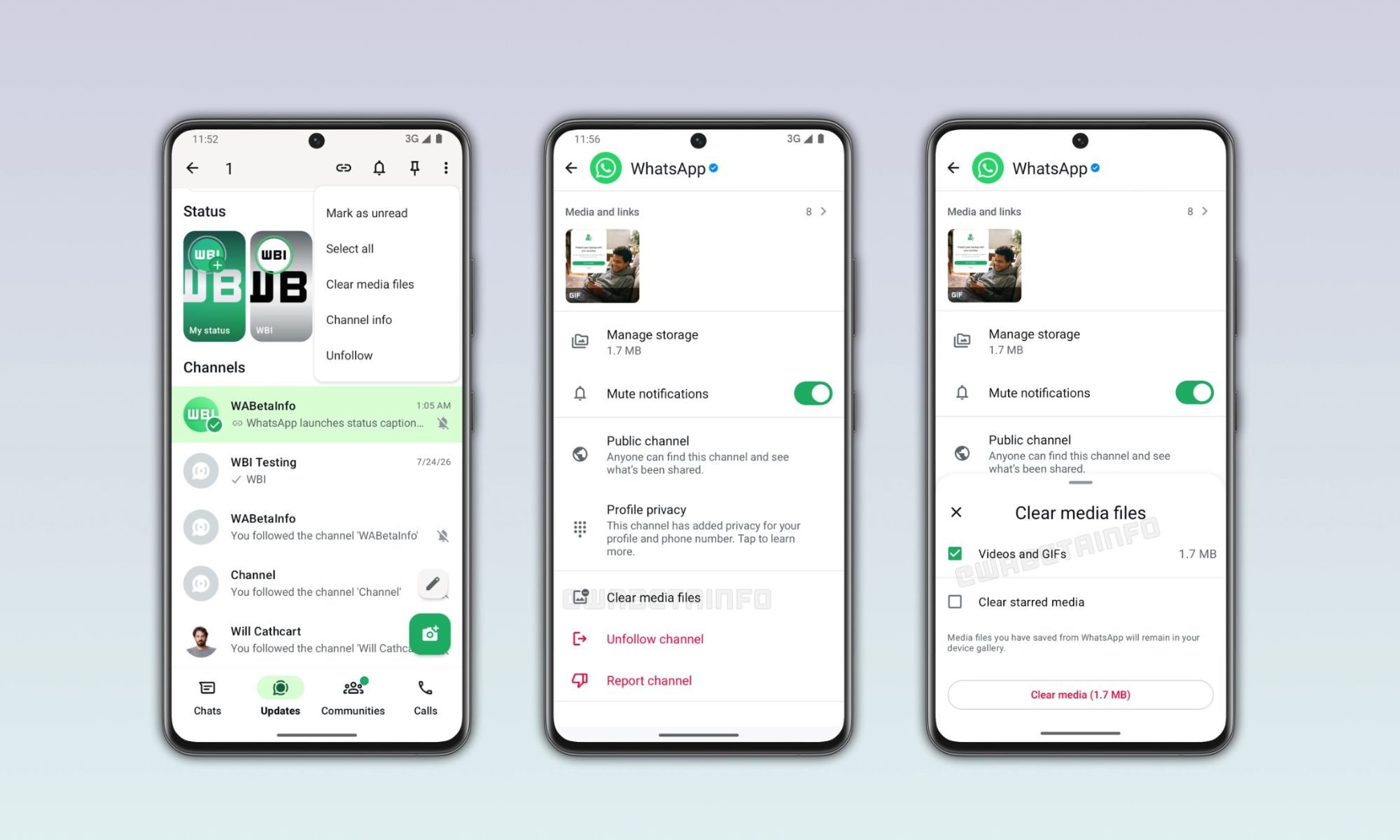
For now, the feature is only available to a limited number of Android beta testers running the latest WhatsApp beta from the Google Play Store. As with many WhatsApp features, the rollout is happening gradually, so it may take a few weeks before more users see it. The company also hasn’t confirmed when the storage cleanup tool will make its way to the stable version of the app. Still, if you subscribe to a lot of WhatsApp channels, this could end up being one of the app’s most practical quality-of-life upgrades in quite some time.

Entertainment10 seconds ago
‘Spider-Man’ Star Breaks Silence On The ‘Highlight Of My Career’

NewsBeat3 minutes ago
Full list of Manchester Airport delays and cancellations today

Crypto World5 minutes ago
Bybit adds simulator, unlocks VIP crypto yields for all in Dual Asset upgrade


-

 Fashion7 days ago
Weekend Open Thread: Brooks Brothers
-
 Sports5 days ago
Commonwealth Games boxing: Jadumani Singh seals dominant 5-0 win over Pakistan’s Sumama Rehman to enter quarter-finals | Commonwealth Games News
-

 Business2 days ago
Why Trees Belong on the Risk Register
-

 Tech4 days ago
Intel is reversing course and bringing hyper-threading back to its server chips
-

 Crypto World6 days ago
Ripple bought a bank in pieces. The $4 billion audit
-

 Politics4 days ago
Luke Littler dismantles Gerwyn Price to retain title in Blackpool
-
 Entertainment7 days ago
A New Post-Apocalyptic Gundam Anime Series Blasts Into SDCC
-

 Politics3 days ago
The Part of the Electric Transition Nobody Wants to Discuss
-

 News Videos5 days ago
BITCOIN JUST ENTERED THIS CRITICAL ZONE…
-

 Business2 days ago
Major shareholder moves on Canyon
-

 Crypto World5 days ago
XRP Ledger adds $2.6B as RWA inflows rank second
-

 News Videos23 hours ago
Bitcoin Enters the 3rd Stage of the Bear Market
-

 Politics5 days ago
Spain sweeps the board at 2026 World Cup with individual awards
-
 Entertainment3 days ago
‘Stargate’ Creator’s New Sci-Fi Series Returns for Season 3 Tomorrow
-

 Entertainment5 days ago
Sara Gilson Killed By Husband After Viral “Pedophile” TikTok Video
-

 Crypto World2 days ago
Kraken Enables Retail Access to Jersey Mike’s IPO via Tokenized Shares
-

 Tech6 days ago
Anthropic launches Claude Opus 5, a cheaper AI model for coding, agents and enterprise workflows
-

 News Videos3 days ago
Claude: Build Financial Dashboards in Minutes (2026)
-

 Politics18 hours ago
Luke Littler’s dominance sparks GOAT debate
-

 Tech3 days ago
New macOS Sequoia & Sonoma security updates for older Macs
You must be logged in to post a comment Login