Q3 revenue for 2026 stood at $109.4bn, up 16pc year-on-year.
Outgoing Apple CEO Tim Cook has warned of potential supply issues for iPhones and other Apple products in the months ahead despite the company reporting what Cook called its “strongest June quarter ever” yesterday (30 July).
A more cautious than anticipated outlook for Q4 – revealed on a conference call with analysts and investors following the publication of Q3 results – forecast growth of between 9pc and 11pc, less than the analyst benchmark of more than 12pc.
Apples shares fell by around 7pc last night on the back of the forecast.
Advertisement
Third fiscal quarter revenue for 2026 stood at $109.4bn, up 16pc year-on-year. Sales for iPhones came in at $54.3bn, Mac computers at $10.4bn, iPads at $6.2bn and wearables at $7.9bn for the three months ending on 27 June.
“We continue to expect high levels of demand. However, with less flexibility in the supply chain, we expect the impact from the supply constraints to increase significantly sequentially,” Cook said on the call.
“The DRAM market has three suppliers. Obviously, if there were more suppliers, that would be good, and it would help us on the supply side and perhaps the pricing side. It’s unclear on the pricing side, but it could help on the supply side. And so we’re evaluating all options.”
He said that beyond September, the market pricing for memory would continue to rise, resulting in “an increasing impact on our business”.
Advertisement
He equated the current surge in the cost of and demand for memory chips to a “100-year flood”, while also noting that demand for Apple’s phones and computers was currently even higher than anticipated.
“It’s an incredibly strong iPhone and Mac product cycle that has really yielded a demand beyond our expectation,” he said.
Last month, Apple raised prices on a variety of its product lines. At the time, a company spokesperson told news publications that “rapid expansion of AI data centres has created an extraordinary surge in demand for memory and storage”, adding that Apple has “never seen a component price increase this much, this quickly”.
Earlier this week, the company launched a new leasing service for devices including iPhones, Macs, iPads and Apple Watches. The company posted its “best March quarter ever” three months ago, driven largely by demand for iPhones.
Advertisement
On 1 September, Tim Cook will be replaced as CEO by John Ternus, the company’s current senior vice-president of hardware engineering.
“There is so much opportunity for us with everything that’s happening in this space, and we’re just really focused on our plans and very excited about it,” Ternus said during yesterday’s earnings call.
Don’t miss out on the knowledge you need to succeed. Sign up for the Daily Brief, Silicon Republic’s digest of need-to-know sci-tech news.
Earlier this week we noted how the Trump administration’s unpopular ban on Chinese drones had become a crony capitalist mess, with Brendan Carr and his FCC struggling to fine or ban companies for violations. The ban is a stupid, protectionist mess that has far more to do with coddling the president’s sons’ drone investments than it does protecting national security or consumer privacy.
Right on queue, The Vergehas an interesting feature on just how easy it has been for some companies to bypass the FCC restrictions. The Trump ban was supposed to encourage drone makers to create devices here in the U.S.; but instead companies are simply setting up the laziest fake companies in the U.S, and the Trump FCC appears too short-handed or incompetent to notice.
So the over-arching impact of the ban has been to create a flood of new companies selling popular DJI-made Chinese drones under a litany of new names. They don’t try very hard to disguise them:
“When software developer and journalist Konrad Iturbe began watching FCC databases for those frequencies, he realized that DJI was preparing to play a grand game of Whac-A-Mole in the United States. Well ahead of the December 2025 drone ban, a host of new companies had suddenly appeared selling barely disguised versions of DJI technology. He dubbed them “DJI front companies.”
To pretend these drones are made in the U.S., the companies use fake U.S. front locations to pretend that the drones are assembled here. Again, they’re not trying very hard to disguise them, and most could have been unearthed with basic Google searches:
Advertisement
“But it’s easier than that. Odyssey Robot declared that its drone was designed, developed, and manufactured at 21 Miller Alley Suite 210 in Pasadena, California. Even a basic Google search can show you that’s not the address of a factory — it’s a coworking space called Industrious that explicitly prohibits members from manufacturing anything onsite.
Odyssey Robot also declared that its drones are assembled at eTak Worldwide Corporation in Grand Prairie, Texas. With 80,000 square feet of warehouse space and 15 loading docks, you could theoretically build drones there. But again, a basic Google search would show you that eTak isn’t an assembler; it’s a recycling company that collects e-waste, including old batteries, then sorts and dismantles them.”
Like most of what Trump does, none of this appears thought out very well, and the administration isn’t competent enough to even do basic investigations to enforce its own restrictions. And like elsewhere in the administration, Trumpism rejoices at the idea of dismantling regulators; then throws these weird sorts of complicated demands in their lap expecting productive outcomes.
Again, in a functional world, you’d allow Chinese companies to do business in the United States, but you’d fund, staff, and legally empower your regulators to strictly enforce competition, labor, environmental, and consumer protections. Because that would result in U.S. companies making less money and having to try harder, we instead get this weird jumbled tangle of corruption and buffoonery.
The primary justification for the Trump Chinese drone ban is that these devices pose meaningful privacy and national security risks. But there’s been absolutely no evidence presented by the administration supporting this allegation. There is, however, ample proof that administration greed, corruption, and incompetence has been indistinguishable from a foreign attack.
Mini-LED TVs that use RGB backlighting are very much a new thing for most TV makers in 2026, but Hisense got an early jump on the tech, shipping a gargantuan 116-inch RGB Mini-LED model back in 2025. The Hisense UR9 is the company’s flagship RGB MiniLED TV series for 2026, and it brings the benefits of RGB backlighting to real-world screen sizes.
The key difference between RGB and regular mini-LED TVs is that the former uses micro-sized red, green and blue LEDs, while the latter employs white or blue mini-LED modules to illuminate the set’s LCD display. Both approaches can yield images with exceptional brightness, but RGB backlighting brings the added benefits of expanded BT.2020 and DCI-P3 color space coverage, both of which are important factors to consider for viewing 4K/high dynamic range sources.
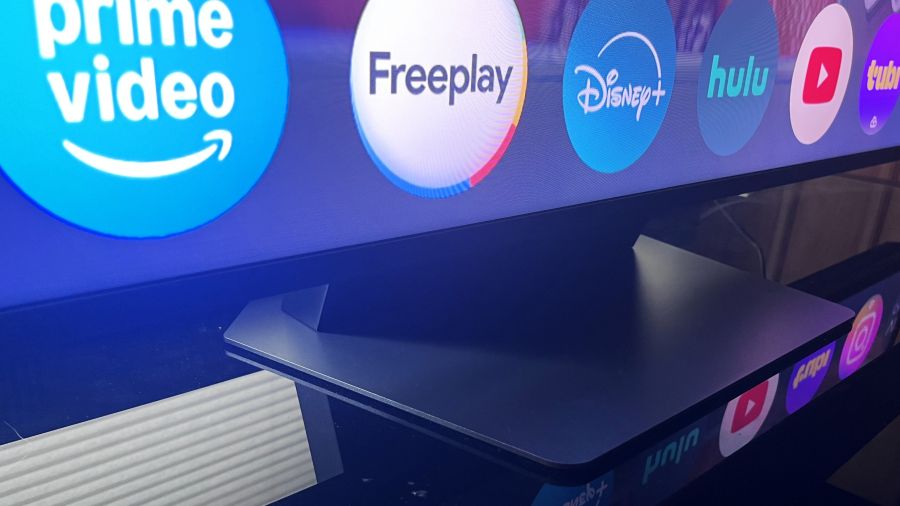
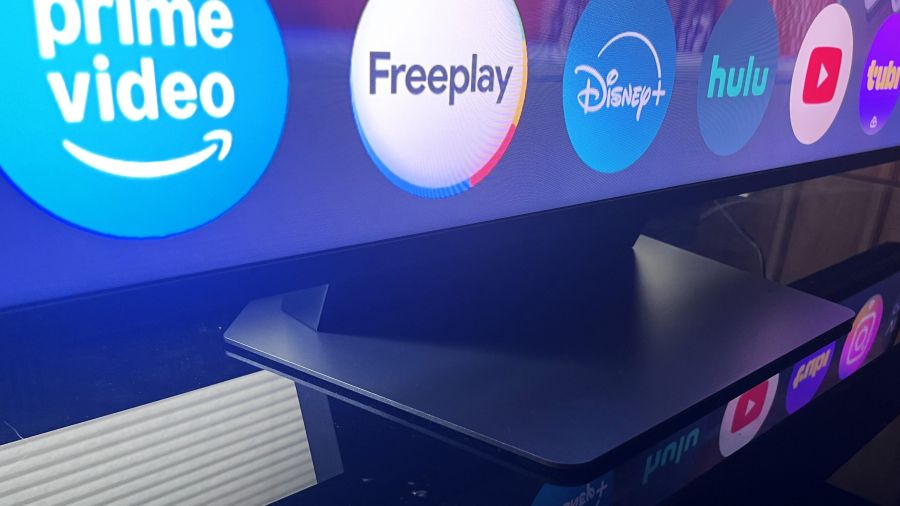
The Hisense UR9’s aluminum pedestal stand has an adjustable height option to clear space for a soundbar.
Related Reviews:
What is it?
The UR9 is one of two new Hisense RGB MiniLED TV series for 2026, with the other being the mid-range UR8 series. UR9 TVs are available in 65-, 75-, 85-, and 100-inch screen sizes. Launch prices for the series range from $2,199.99 to $9,999.99, but the 65-inch model I received for testing was selling for $1,699.99 during my review.
TV makers like to give fancy names to the processors used in their sets, and in the UR9’s case it’s the Hi-View AI Engine RGB processor. Along with carrying out basic picture performance chores such as upscaling and noise reduction, this also makes possible a range of AI enhancements like an Intelligent Scene mode that adapts picture settings based on the content being viewed and Personalized Customization, which generates a custom picture mode based on your viewing preferences.
The UR9’s other picture quality-related features include an Obsidian Panel advanced low-reflection surface to reduce screen glare and Dolby Vision IQ, HDR10+ Adaptive and Filmmaker Mode picture presets.
Advertisement
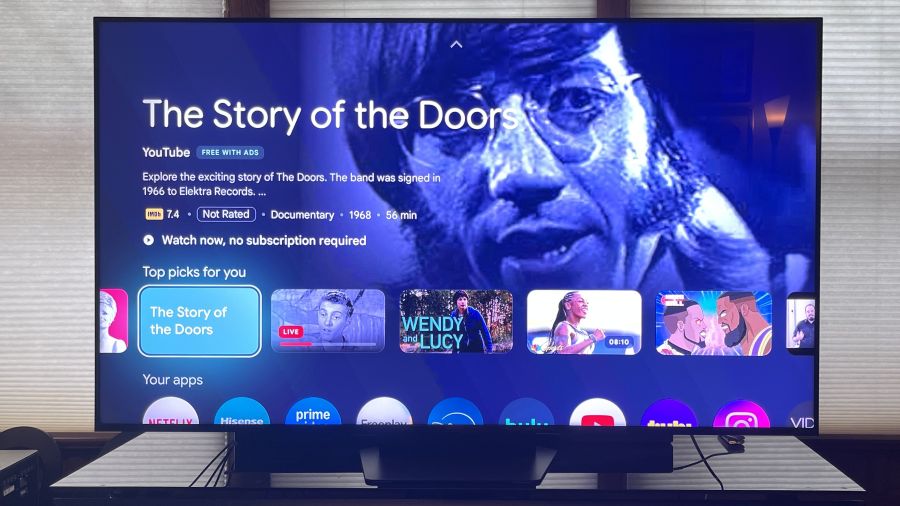
The UR9’s Google TV platform features the Gemini AI assistant.
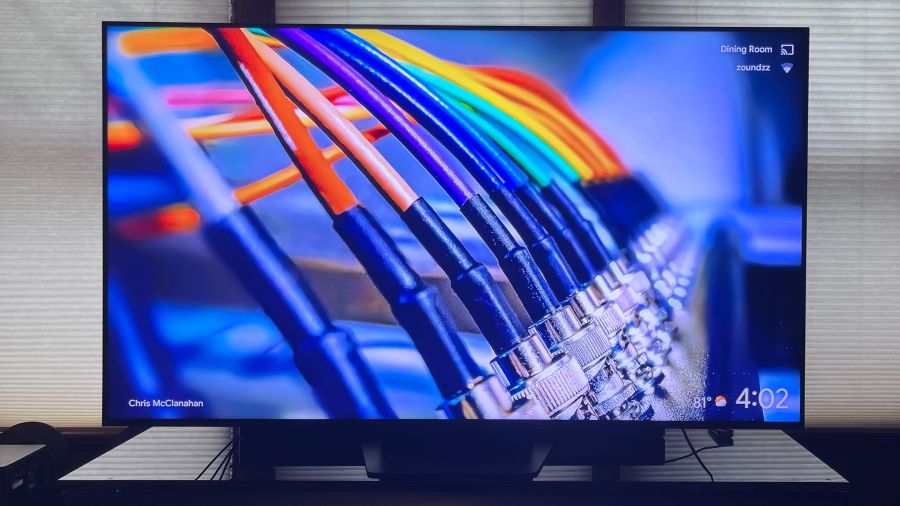
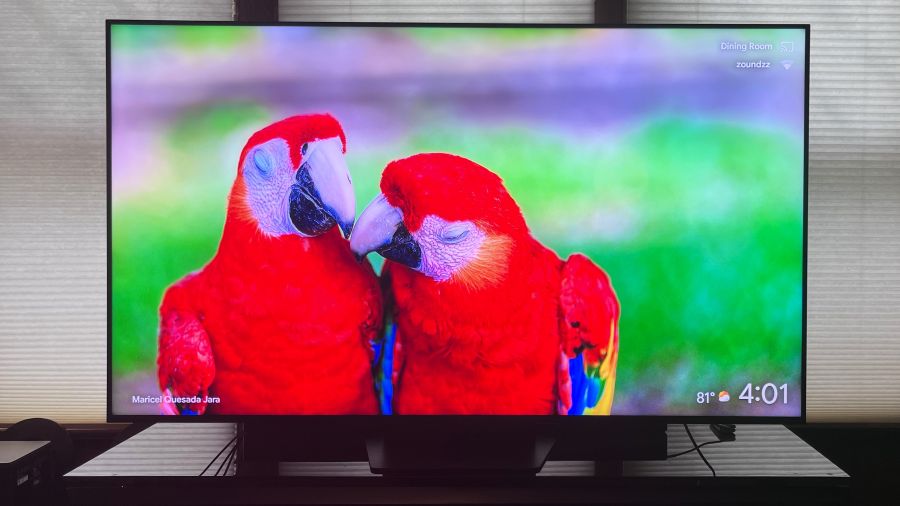
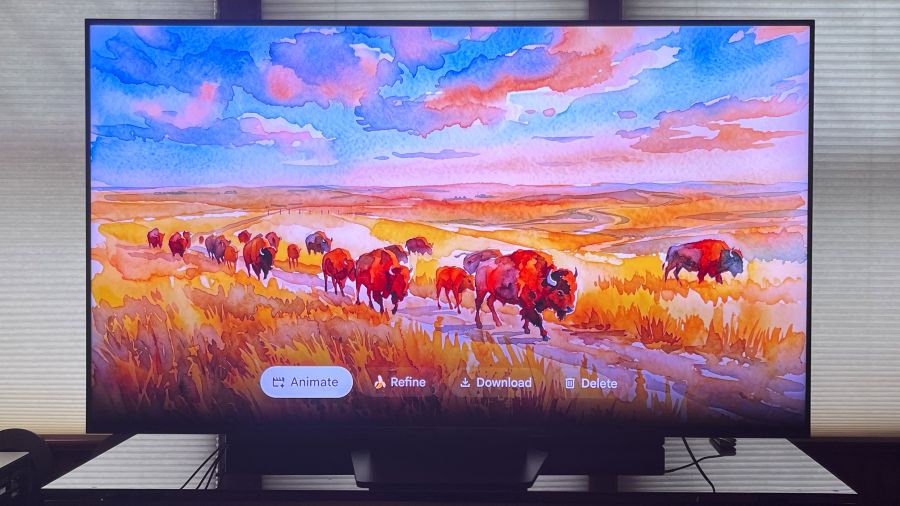
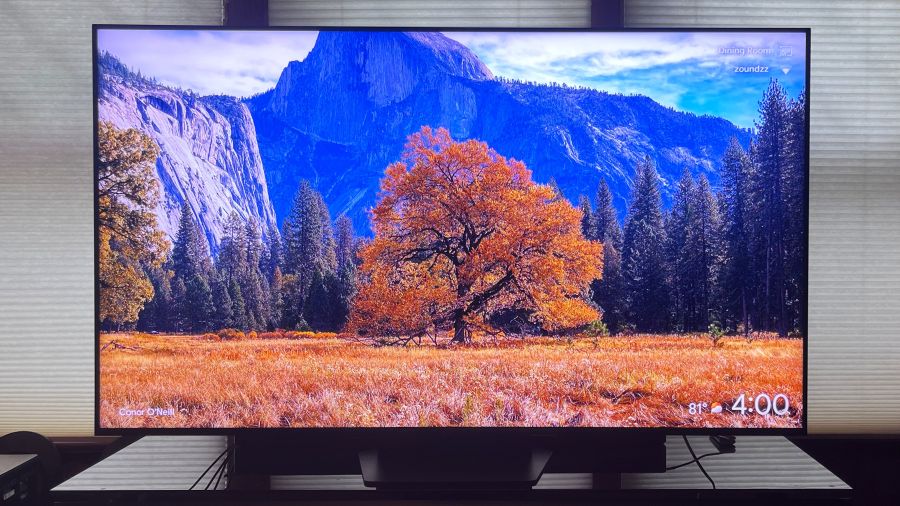
New Hisense TVs for 2026 feature the Google TV smart platform enhanced with the Gemini AI assistant. Google TV has an easy to navigate interface, and it can provide program suggestions based on your Google search history. Some of these can be spot-on, while others strangely miss by a mile (Leave it to Beaver – are you serious, Google?). Gemini AI gets its own separate tab in Google TV, and it allows you to ask questions in a conversational context using the TV’s built-in far-field mic, or, if you don’t want your TV listening in on you full-time, on-demand using the one built into the remote control. For one example of what you can do with Gemini on Google TV, I asked it to create a list of Christopher Nolan films ranked by critical reception (unsurprisingly, The Odyssey and Oppenheimer were at the top of the list) and then after asked for the list to be filtered to sci-fi titles only. Gemini can also be used to generate screensavers via suggested prompts or ones that you come up with on your own.
The Google TV Live TV guideThe UR9’s broadcast TV-only guide
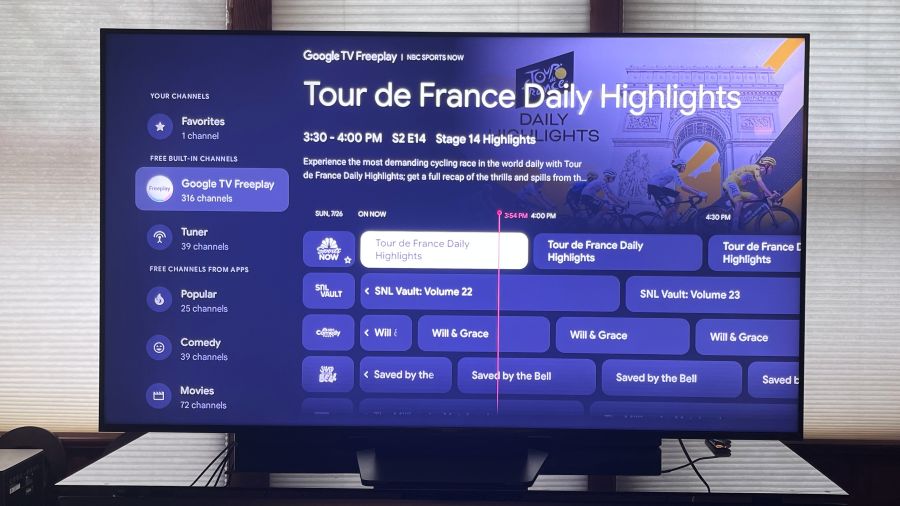
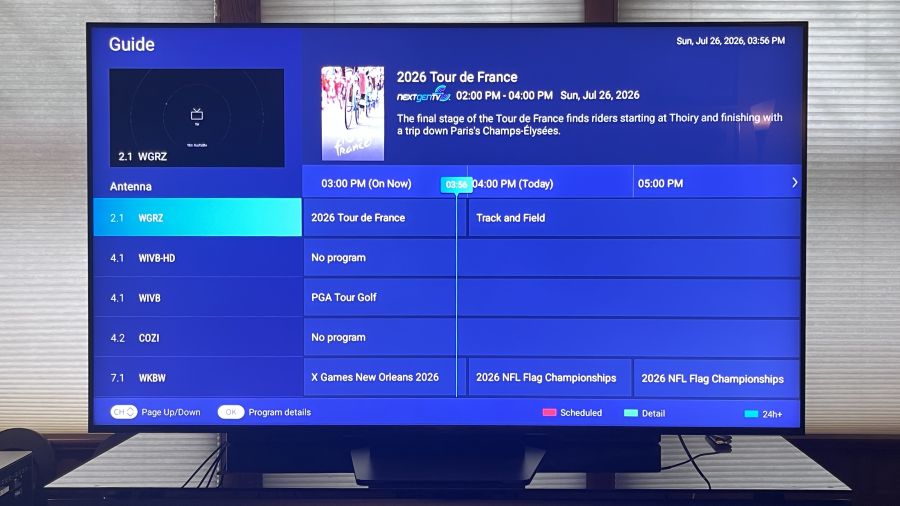
Hisense UR9 series TVs feature a built-in ATSC 3.0 tuner to receive local NextgenTV broadcasts. These can be accessed by pressing the Live tab in the TV’s main interface, where they will show up grouped in the Tuner section of the Google TV Freeplay grid guide. For a more streamlined experience minus Freeplay free streaming channels, you can also access a broadcast channel-only grid guide by pressing a button with a TV icon on the remote control with the tuner input active.
The UR9’s gaming features include a native 180Hz refresh rate supported over three HDMI 2.1 ports. It also supports FreeSync Premium Pro VRR, ALLM (Auto Low Latency Mode), Dolby Vision Gaming and it provides a Game Menu screen overlay that lets you quickly access gaming-related picture adjustments. With the UR9 in its Game picture preset, I measured input lag using a Bodnar 4K meter at 12ms.
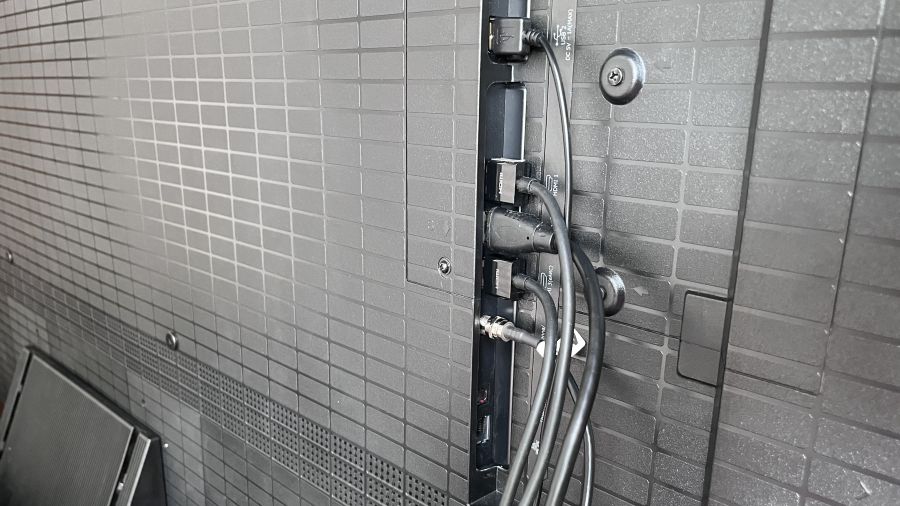
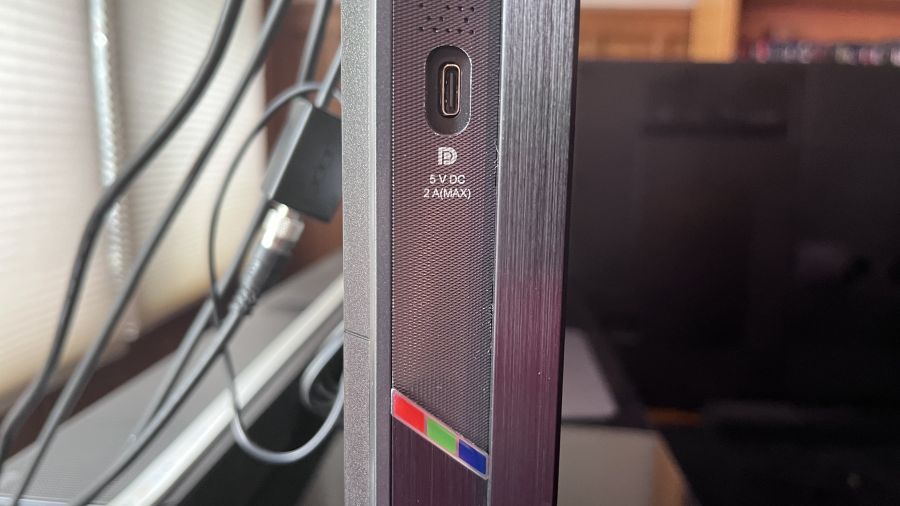
The UR9 features three HDMI 2.1 ports…and a DisplayPort-over-USB-C input
While the UR9 has a relatively slim ⅜-inch bezel, the TV’s panel is thicker than average at 1.75 inches deep. That may have to do with the set’s RGB backlight, but it also has an 80W, 4.1.2-channel speaker system tuned by French audio manufacturer Devialet that provides powerful and relatively immersive sound for a TV and supports both Dolby Atmos and DTS:X. An aluminum pedestal stand provides sturdy support for the TV and has an adjustable height option that elevates the display to a 1.3-inch height – enough to clear space for a typical soundbar.
Along with its trio of HDMI 2.1 ports and ATSC 3.0 tuner input, the UR9 features an optical digital audio output, two USB inputs and an Ethernet port. There’s also a DisplayPort-over-USB-C input located at the bottom left on the TV’s side, and this can be used to connect a computer, tablet or phone.
The Hisense UR9 competes well with other RGB-backlit TVs in terms of peak HDR brightness.
Setup & Viewing Impressions
I ran a basic set of measurements on the Hisense UR9 using Portrait Display’s Calman Color Calibration software. Prior to that, I disabled the TV’s Automatic Light Sensor, a setting located in the Intelligent Settings section of the Display & Sound menu that adapts picture brightness based on ambient lighting conditions. All measurements were otherwise made using the default settings in the UR9’s Filmmaker Mode and Standard picture presets.
Advertisement. Scroll to continue reading.
Peak HDR brightness measured on a white 10% window pattern in Filmmaker Mode was 3,345 nits and 1,137 nits on a 100% (fullscreen) white pattern. In Standard mode, the results on the same tests were 3,206 nits and 1,136 nits, respectively.
Advertisement
The UR9 has impressive BT.2020 color gamut coverage.
Those are impressive brightness numbers, particularly for fullscreen, and the UR9’s standard dynamic range (SDR) peak brightness results were equally good, measuring 1,698 nits on a 10% pattern and 948 nits on a fullscreen pattern in Standard Mode. For the sake of comparison, when I tested the more expensive Samsung R95H Micro RGB TV, peak HDR brightness topped out at 2,039 nits on a 10% window and 642 nits fullscreen (in Filmmaker mode), and peak SDR brightness was 726 and 583 nits, respectively, on the same tests with the TV in Standard mode.
The Hisense UR9’s color gamut coverage in Filmmaker Mode measured 91.5% for BT.2020 and 99.4% for DCI-P3 – both impressive results. Sticking with the Samsung R95H for a comparison, that model topped the Hisense when it came to BT.2020 color gamut coverage, measuring 93.3%, and its P3 coverage clocked in at 147.9%.
In other measurements, the UR9’s Delta-E (the margin of error between the test pattern source and what’s displayed on-screen) in Filmmaker Mode averaged 2.7 for grayscale and 1.5 for color. Both those results are lower than the 3.0 Delta-E considered to be the threshold for what’s indistinguishable from perfect to the human eye, and they represent a big improvement on earlier generations of Hisense mini-LED TVs, which tended to have higher Delta-E results out of the box.
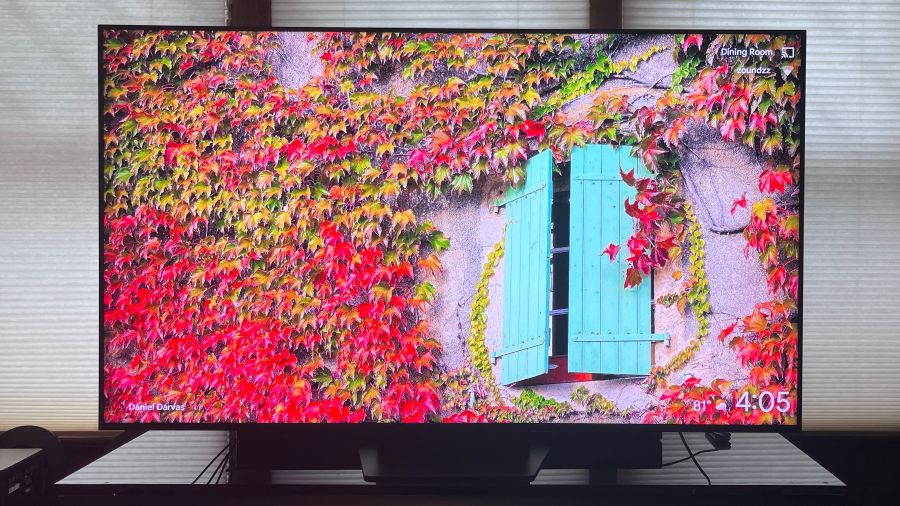
The Gemini AI assistant lets you generate screensavers using voice prompts.
Just because a TV with an RGB backlight measures well doesn’t necessarily mean it’s going to excel with content outside of test patterns. Some models are definitely better than others at using processing to retain color richness and avoid color crosstalk when displaying complex images – something Sony went to great lengths to demonstrate in its Sony Bravia 9 II True RGB TV launch. Even so, I was impressed at how punchy and clean colors looked when watching a 4K Blu-ray of Spider-Man: Into the Spider-Verse (2018). This animated film has a particularly trippy color palette, and the Hisense rendered it every bit as well as the other RGB-backlit TVs I’ve tested in 2026.
Checking out test patterns and demonstration clips from the Spears & Munsil Ultra HD Benchmark disc, the Hisense UR9 continued to display strong color saturation and very limited blooming on test images with animals and objects against solid black backgrounds. HDR tone mapping was also very good, with the UR9 showing only a limited degree of highlight detail loss when displaying content mastered at 10,000 nits brightness. I did note a level of black crush in aerial nighttime shots of urban buildings that I hadn’t noticed on the Samsung R95H Micro RGB and Sony Bravia 7 II True RGB TVs when I tested them. Also, the UR9’s color saturation and contrast faded when viewing at off-center seats – a limitation the Samsung R95H didn’t suffer from. Otherwise, the Hisense sailed through most of the TV torture tests contained on the Spears & Munsildisc.
Watching a scene from the James Bond movie No Time to Die on 4K Blu-ray where Bond walks across a hillside cemetery revealed a degree of judder and motion blur, but I was able to reduce both by setting the judder and blur sliders to the +2 setting in the TV’s Custom motion menu. I typically use this disc to also test a TV’s built-in speakers, and the Hisense’s Devialet-tuned audio system delivered good dialogue clarity and decent bass, along with a fair degree of Atmos immersion in the movie’s motorcycle and car chase scenes.
House of the Dragon on HBO Max has finally found its footing in season 3, and I’ve regularly tuned in to watch every episode as it’s been released. Episode 5, Unbowed and Unbent, is more low-key and expositional than some of the earlier episodes, with plenty of conversations held in the gloomy chambers of dark castles. Given the UR9’s performance on the aerial nighttime shots from the Spears & Munsil demonstration reel, I wasn’t sure how well it would hold up here, but it ended up doing a good job of fleshing out shadow detail in these scenes, and it also performed nicely with reference “dark” movies I watched such as Alien: Romulus.
Advertisement
The Bottom Line
At its discounted price of $1,699 for the 65-inch model, the Hisense UR9 is a solid RGB MiniLED TV value. However, it’s currently selling for $2,199. Its feature set and overall performance lags behind RGB TV competitors such as the Samsung R95H, but when you consider it costs substantially less than Samsung, it becomes a lot easier to overlook any shortcomings.
The UR9 might be a high-value TV, but it still faces strong competition in the form of the TCL QM8L, an SQD (Super Quantum Dot) mini-LED TV that matches the Hisense’s feature set, Gemini AI included, and offers great performance for the money. The 65-inch QM8L is currently selling for $1,499, and is an astonishing value at that price.
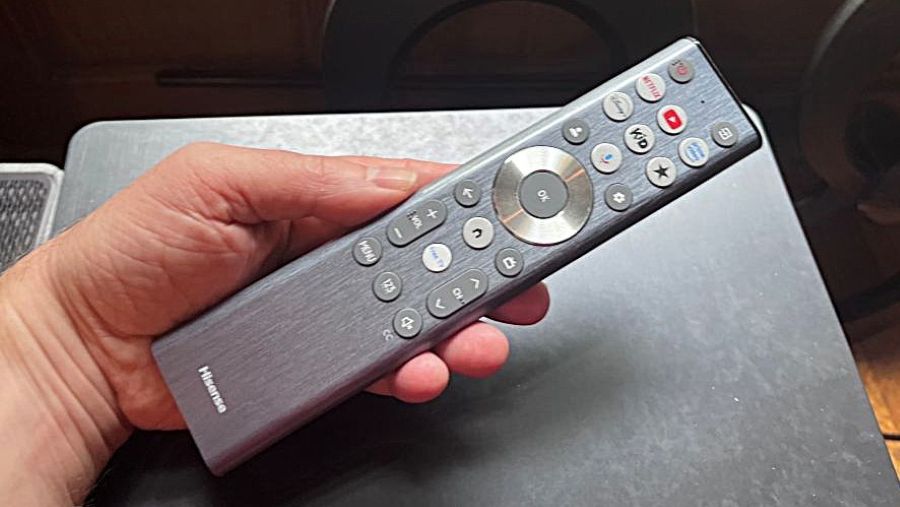
Hisense’s backlit remote control features a built-in mic and an input select button.
There’s also the complication of the Hisense U8QG, a top 2025 mini-LED TV from the company that’s still available, with the 65-inch model priced in the $1,000 range. I found the U8QG to be excellent when I tested it, and outside of its BT.2020 color gamut coverage, it doesn’t trail the new UR9 by that much.
The bottom line: The Hisense UR9 is a strong value, but even high-value TVs face serious competition in 2026.
Advertisement. Scroll to continue reading.
Pros:
High brightness
Vibrant, accurate color
Great value for an RGB mini-LED TV
Native 180Hz Refresh Rate
ATSC 3.0 tuner
Devialet-tuned built-in audio with Dolby Atmos and DTS:X support
Adjustable height stand
Google TV with Gemini AI assistant
Low-reflection screen
Cons:
Poor off-axis picture uniformity
Just average motion handling
Comparatively thick panel design
Only three HDMI 2.1 inputs when competition typically provides four
Oracle has just put its cloud rival’s AI at the heart of the software its customers run their businesses on. Investors cheered.
The company said on Thursday it is expanding its Google Cloud partnership to bring Gemini into Oracle’s enterprise applications. Gemini will slot into Oracle AI Agent Studio for Fusion Applications. It will also power embedded AI across Oracle Fusion apps and NetSuite.
Two models are on the menu. Gemini 3.1 Flash-Lite is tuned for cheap, efficient work. Gemini 3.5 Flash handles heavier reasoning and creative tasks such as video and presentations. Both join models Oracle already offers.
Wall Street liked it. Oracle shares rose as much as 8.4% to $127.64, Bloomberg reported.
Advertisement
Even giants are going multi-model
The logic is choice. Rather than lock customers into its own AI, Oracle is offering Google’s as another option inside tools they already use. It is the enterprise trend of the year: pick the best model for each job, rather than one model for everything.
“Organizations need the flexibility to choose the AI model best suited to each problem,” said Chris Leone, Oracle’s applications-development chief. Oracle Fusion, he added, then turns that reasoning into action “through governed workflows, approvals, and transactions.”
An unlikely alliance, deepening
Oracle and Google compete hard in the cloud, yet their partnership keeps growing, from raw infrastructure to agentic AI. Notably, the model Oracle picked for its app layer is not from OpenAI, its roughly $300bn infrastructure partner, but from Google. Cohere and Meta models were already on offer.
For Google, it is a route into thousands of businesses through software they already run. NetSuite alone claims more than 44,000 customers. For Oracle, it is a fresh selling point as it pours hundreds of billions into AI data centres.
Advertisement
The hard questions are still open
Not everyone is dazzled. The plan “sounds good, but be cautious,” Gartner analyst Balaji Abbabatulla told The Register. “It doesn’t necessarily look as glittery as it sounds. There are challenges under the hood.”
The biggest is accountability. If an autonomous agent makes a bad call at speed, errors can cascade before anyone notices. It is not clear who is liable. Oracle points to monitoring and audit tools. Abbabatulla is not convinced any vendor has answered the question.
For a company wrestling with a heavy AI debt load and a vast OpenAI bet, a stock pop from a model deal is welcome. It also shows where enterprise AI is heading. Even the giants now rent their rivals’ brains, and try to keep a human near the controls.
Our Summer 2026 outdoor entertainment gift guide highlights the best speakers, projectors, and accessories for enjoying music and movies on the deck, at the beach or under the stars.
Summer listening and movie nights no longer have to end at the patio door. Portable speakers are louder and more durable, compact home theater projectors are brighter, and all-weather A/V gear can look and sound much better than you may have thought was possible. Whether you are building an outdoor theater, upgrading the deck or simply trying to hear your playlist over the neighbors, these products can help turn a few warm evenings into something far more memorable.
Andover FreePlay
Andover FreePlay is the one to bring when music is expected to carry the outdoor gathering. Grab it by the handle and take great sound anywhere—from sunset terrace drinks to weekend BBQs. Effortlessly waterproof and elegantly styled, FreePlay brings true home-stereo warmth to outdoor moments that demand great sound.
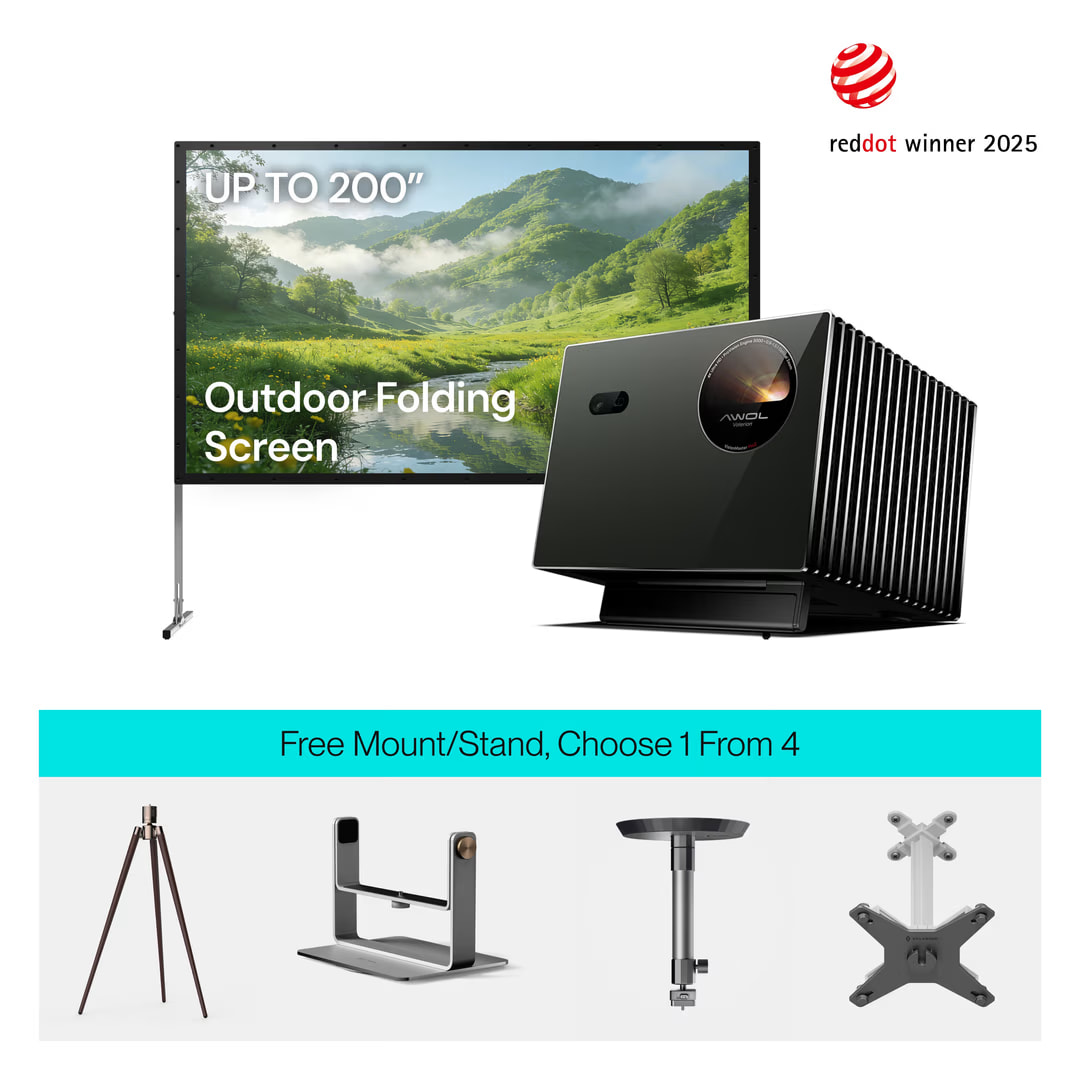
Watch 4K movies, live sports or stream your favorite shows in any outdoor space with AWOL Valerion’s Pro2 4K RGB Triple Laser Projector. It comes with a massive 200-inch screen and your choice of four mounting/stand options, which makes setup convenient.
Take command of your outdoor audio ecosystem. The Anthem MDX-16 multi-zone amplifier distributes 16 channels of efficient, Ultra-Class-D power directly to your speakers. Featuring custom zone-tuning and Advanced Load Monitoring, it lets you seamlessly stream different soundtracks to the pool, patio, and grill simultaneously.
Turn up summer with the Audioengine B2 Home Music System (aka the A2-AIO). Its compact all-in-one design delivers bold, room-filling sound for patios, porches, and backyard gatherings, while the industry-leading 100-foot Bluetooth range keeps the playlist going from across the yard.
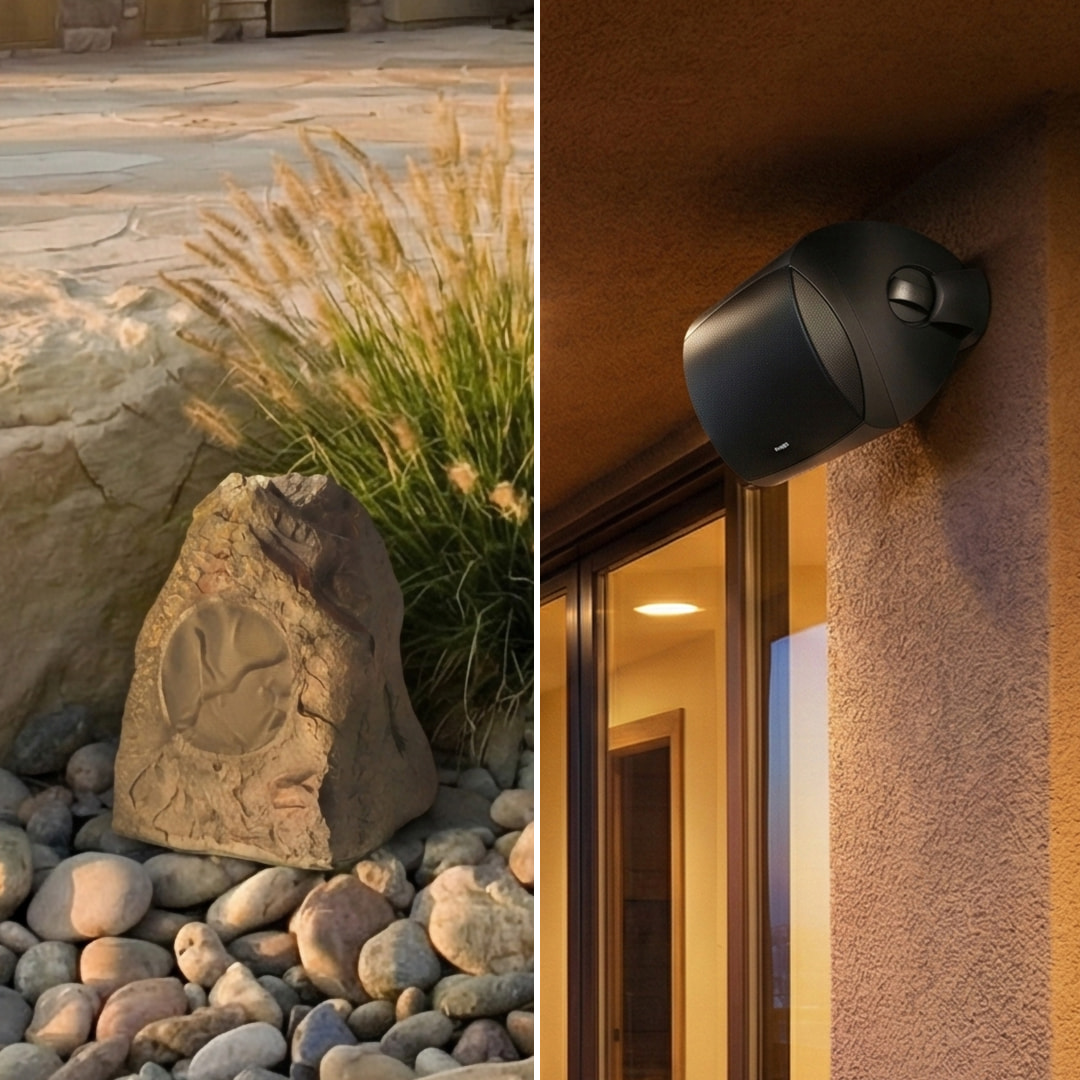
Bring the concert to the patio. Paradigm’s Rock Monitor and Stylus Series blend audiophile performance with weather-resistant designs. Whether you want high-fidelity sound disguised as natural garden stone or sleek, mountable speakers for the deck, these outdoor powerhouses ensure your backyard soundtrack never skips a beat.
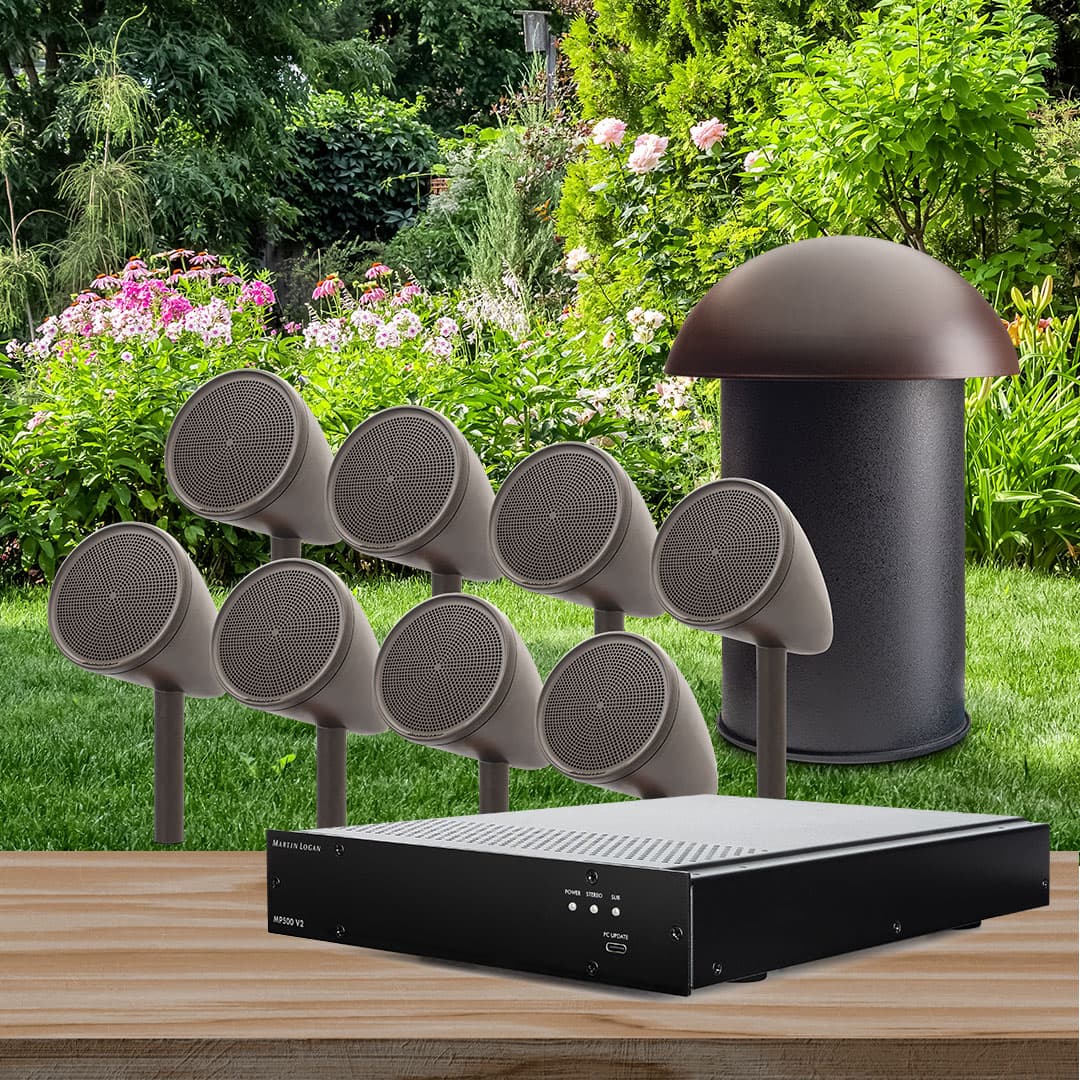
Treat your backyard to a true open-air theater. The MartinLogan Foundation 8.1 system blankets the yard with eight stealth satellite speakers and an in-ground subwoofer, while the robust MP500 V2 DSP amplifier ($799) drives the setup with effortless, customized power. Together, they form an all-weather masterpiece that delivers full, rich sound.
Outdoor TV viewing requires a television built to withstand the elements with a super bright screen to be viewable under the sun. The Terrace by Samsung QLED 4K TVs are now on sale in sizes from 55- to 85-inches.
Disclosure: The products listed above are approved by our Editors, but may be requested by our sponsors. When links to buy are provided, we’ll direct you to the lowest price at time of publication. In doing so, eCoustics may earn a small commission from the associated retailer if purchased.
Google DeepMind released Gemini Robotics ER 2 as the high-level reasoning layer in a new trio of models built for robots that need to move, plan, and work alongside people or other machines. This version sits above the motor-control systems and acts as the coordinator.
Continuous video from the robot’s cameras continues to stream into the model, allowing it to monitor task progress in real time, decide where it is and what it needs to do next, all without freezing. In tests, it did a good job of classifying video frames into five phases of completion approximately 57% of the time, and pinpointing the exact moment something should stop, such as drinking a cup of coffee, with a staggering 91% accuracy and less than one second of average mistake.
Google Fitbit Air is the unbelievably comfortable, exceptionally smart way to transform your health[1]; and Google Health brings together effortless…
Unlock more with Google Health Premium: With a premium membership, get personalized coaching that’s built with Gemini and adapts to your life…
Comfortable fit – One Size Tracker (130-210 mm): The lightweight, micro-adjustable fit sits comfortably and quietly, so you can wear Google Fitbit Air…
That means the model can orchestrate these multi-step tasks, which take minutes to accomplish. Developers can offer lower-level controls, navigation routines, and even remote control tools, which ER 2 can use as needed while maintaining a watch on the scene. If something goes wrong, it can just retry the failed step rather than restarting the entire sequence. The same thing that allows for continual awareness also makes collaboration much easier. Robots can share a common understanding of what is going on in the workplace, allowing a small wheeled robot to hand off to a humanoid one that can handle uneven ground, or two arms to work next to each other without colliding.
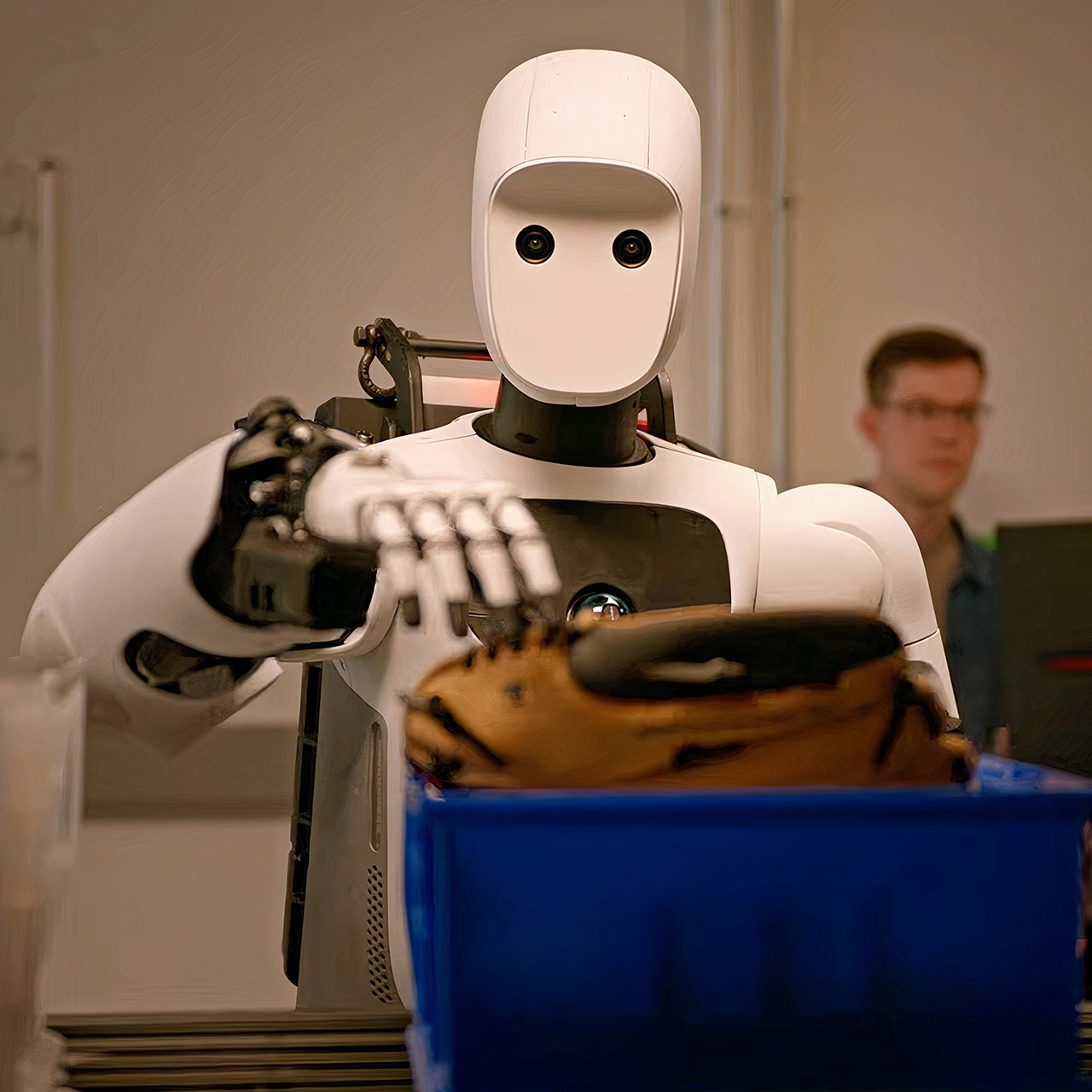
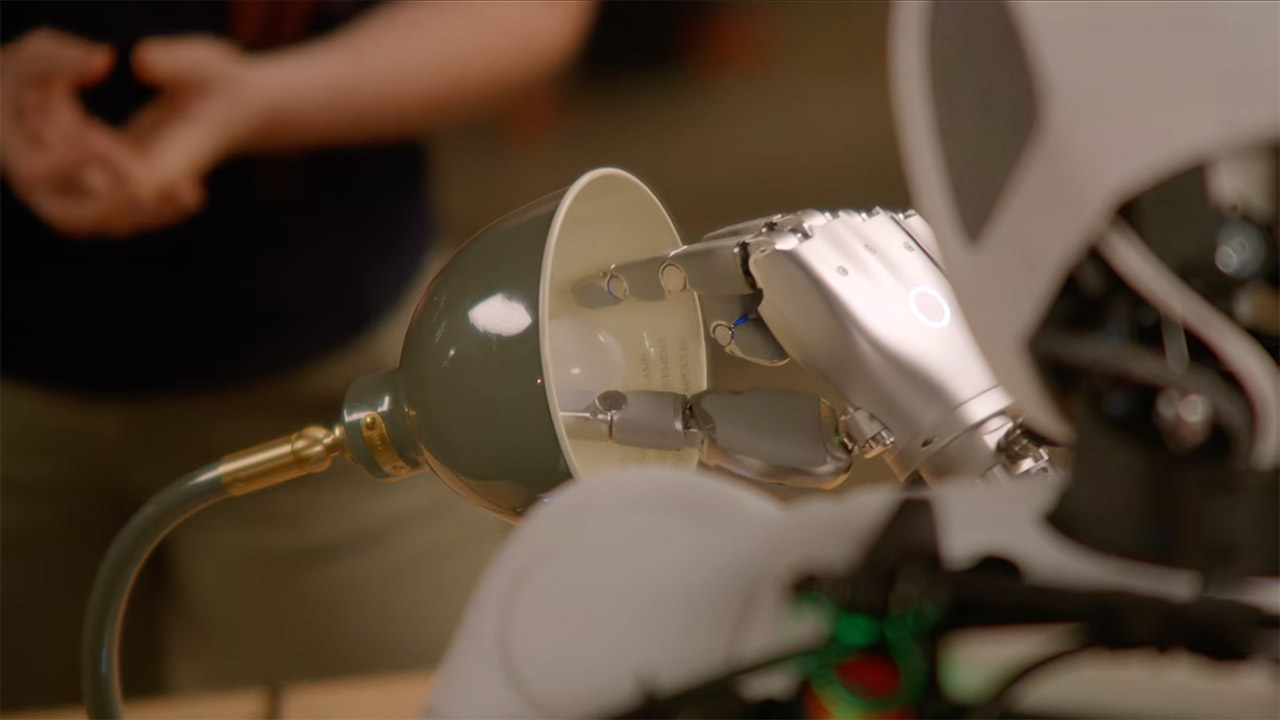
The associated vision-language-action model accounts for the entire body motion. For the first time, this technology can drive a complete humanoid robot from its feet up. On Apptronik’s Apollo 2, a spoken order such as “put the watering can into the green bin on the bottom shelf” can be translated into action. It can move across the room, pick up the can, stroll across the floor, squat or stretch as needed, and place the item exactly where it should be. The model can manage these five-fingered hands with 22 degrees of freedom, which can tie a knot or seal a ziplock bag, as well as the simpler grippers seen on robots for packaging.
Advertisement
It adjusts to unfamiliar hardware in hours rather than weeks. With just 200 samples of motion data, the on-device model may learn skills and apply them to different hardware configurations, sensor layouts, and even joint counts. Early testing included robots from Apptronik, Franka, and a few research arms.
Of course, safety is just as important as any of this, and ER 2 has received great results on these benchmarks, which determine if the model sticks to physical limitations and detects when people are present. They showed a humanoid robot that stops dead in its tracks when a person enters the workstation and does not continue until the area is clear again. They’ve also created a new evaluation called ASIMOV-Agentic, which assesses the model’s willingness to say no to something just unsafe, to judge whether a work is even viable, or to seek human assistance if in doubt. The end result is a system that combines hardware safety with active risk management.
Developers can already access ER 2 via Google AI Studio and a private preview of the Gemini Enterprise Agent Platform. Lower level action models are still only available to a select group of partners. They’ve shared some sample code on GitHub that connects the reasoning layer to live robot feeds, as well as a video of Boston Dynamics’ Spot fetching a bag of popcorn using natural language control, which demonstrates the entire system in action.
Kia has continued to grow in popularity in the United States vehicle market as the automaker pivots from budget backup options to affordable yet stylish and feature-heavy. In 2025, Kia America had record sales of 852,155 units, a 7% increase from 2024.
While pickup trucks and SUVs are the usual go-to for American families, the Kia vehicles that saw their best-ever annual sales in 2025 cover a wide range of vehicle types. This includes the Kia Carnival, a minivan, the Sportage, an SUV, the Telluride, another SUV, and the K4, a compact car.
Advertisement
Kia’s vehicles are still affordable options, but they’re often pushing the limits for their price range. We felt the Kia K4 had a sleek, angular aesthetic you don’t often see in safe daily commuters. The Sportage was called comfortable, fuel efficient, and priced lower than its competitors, with the review ending with “it’s a flat-out good SUV.” Competitiveness in the market has made many Kia models hold their value surprisingly well.
Advertisement
Kia Rio
Despite not having any sales in the United States in 2025, the Kia Rio holds its value more than every other vehicle in the automaker’s lineup. According to iSeeCars, the Kia Rio holds 68.4% of its value after five years. The five-door version has the second-best resale value of the lineup, 67.5%.
Unfortunately, it was discontinued in the United States in 2023 as Kia and other brands continue to back away from affordable small cars in America. Before it disappeared from the market, the Rio was one of the last remaining new cars priced under $20,000. It’s a bummer for families on a budget, but Kia likely saw thin profit margins for this model compared to its bestsellers.
For those that already own a Kia Rio, the discontinuation could have possibly played a part in the Rio holding so much of its value over five years. With fewer small cars on the market, a lot of families could be looking for a used one instead — especially one that has impressive fuel efficiency and a comfortable ride.
Advertisement
Kia Forte
The Kia Forte has a resale value of 65.2%, according to iSeeCars. This is another model that has been discontinued in the U.S., following the Rio in 2024. Priced well under $30,000, the Forte was a compact sedan with a handsome look for the price point. However, you’d need the GT model for a memorable performance — the turbocharged 1.6-liter and six-speed manual option made for a pretty fun ride. We called it a “spicy little treat” in a review, although not as sporty as the K4.
Kia never confirmed exactly why it dropped the Forte from its lineup, but it wouldn’t be a stretch to assume it wasn’t to streamline the lineup and give more focus to the K4. Those that had a Forte before the discontinuation will now enjoy an improved resale value. Those looking for a used car will appreciate the Forte’s spacious interior and impressive technology offerings.
Advertisement
Kia K4
After much discussion, here is the K4’s turn in the spotlight. iSeeCars states this compact sedan has a resale value of 64.5% after five years. The hatchback version follows at 63.9%. Starting at just $23,535, that means the sedan could fetch drivers $15,180.
Advertisement
The K4 has been a popular model after the discontinuation of the Rio and Forte, selling over 107,000 units in 2025. With a 2.0-liter four-cylinder engine producing 147 horsepower and front-wheel drive, the K4 isn’t the most exciting, but it’s smooth, quiet, and comfortable. You can get a turbocharged 1.6-liter four-cylinder engine with the GT-Line Turbo trim, which also includes improved suspension. This makes the K4 quick and fun, which matches its surprisingly sporty appearance. MotorTrend felt the K4 wasn’t very reliable, but it’s an affordable vehicle that holds its value even after years of commuting.
Advertisement
Kia Soul
Teddy Leung/Shutterstock
At 62.5%, the Kia Soul holds its value quite well after five years, according to iSeeCars. And it’s honestly no surprise. The Kia Soul had a very memorable 16-year run in the United States, a boxy tall hatchback that purposefully stood out from the crowd. And you probably remember those hamsters dancing around it. It remained iconic until it was discontinued in 2025, although it had slowly dwindling sales the last few years. By 2024, only 52,397 units sold — compare that to 154,768 sales in 2016.
Still, the Soul went out with a bang. It continued to stand out with its boxy, upright design, offering an array of bright colors. But that design was also practical, making the interior quite spacious while still compact enough to fit into tight parking spots. Its unique design and practicality has very likely allowed it to hold its value after its disappearance.
Advertisement
How we made this list
The models on this list were selected based on iSeeCars’ depreciation data. To get the final rankings for Kia’s models, iSeeCars analyzed over 3 million cars over a five-year time frame. Why five years? Vehicles lose most of their value within those five years — usually 40 to 60% — due to the heavy wear. This is also when most manufacturer warranties end — and when maintenance needs pick up.
A lot of automakers also redesign and upgrade models after five years, which could impact resale value of older models. This also prompts some people to trade in their vehicle for the new version, although Americans are holding on to their vehicles longer these days.
Since most of the Kia models that hold their value the best have been discontinued, we also checked out what has made them a desired used car, which likely impacted the depreciation. However, keep in mind that an individual vehicle’s resale value will depend on a lot of factors, including mileage, condition, and market trends.
As one person, you cannot prevent a data center from being built near your home. Collective action is required, but the good news is that finding like-minded individuals won’t be a challenge. “We’re seeing this as a nonpartisan issue on the ground — I wouldn’t even say bipartisan, I’d say nonpartisan — where folks are showing up regardless of race, regardless of class, learning basic organizing principles so they can fight back at the hyper-local level,” says Conner. Town hall meetings, social media, your local church, all are good places to find those individuals.
Once you’re part of a group, one of the most effective strategies is to advocate for guardrails that ensure a company must consult your community before it ever embarks on a project in your backyard. “One of the first things we advise, even before there’s a live proposal on the table, is to make sure local land use ordinances require notice and input from the community up front,” says Garcia. You and your neighbours should advocate for bylaws that ensure data centers aren’t allowed “by-right” in any zone in your community. By-right permitting means a project can move forward simply because it meets all applicable development standards and use-specific requirements in your state.
Given the secrecy involved with many data center projects, building a coalition as soon as possible is essential. “What we advise is not to start when you first hear about a data center, but really to watch the pipelines being built, and any changes in the utilities or the grid,” says Conner.
In Conner’s experience, companies will often employ what she describes as a “piecemeal” approach to a buildout. For example, the tech giants will often work to secure permitting for a power plant and gas infrastructure long before they do the same for the actual data center they intend to build.
Advertisement
“Try to get as much information as possible, so file public records requests to see what communication or correspondence may have happened related to the data center,” says Conner. Every state has its own set of laws governing how people can request and obtain public records. The National Freedom of Information Coalition provides guidance and resources to help Americans file such requests. The organization also operates hotlines that can answer any questions you might have about the process.
“By the time people find out [that power plant or pipeline] is for a data center, a number of decisions have already been made. So we’re encouraging people to be part of all the environmental permitting decisions, construction permitting decisions, planning and zoning commission meetings, city council meetings — and really ask the hard questions.”
According to Garcia, some communities — like Birmingham, Alabama — have also found success pushing for special-use permitting requirements, which force companies to obtain special authorization to site a data center. “That allows for a front-end conversation about conditions that can be placed to address the community’s concerns about air, water, or whatever’s specific to that project,” says Garcia. “We actually recommend a ‘both-and’ approach: have the specific guardrails in place, and also require a special-use permit, especially for larger data centers — because one size doesn’t fit all. Every community is different, and different concerns come up depending on where a facility is located.”
In March, Birmingham city council passed a six-month moratorium and one of the strongest zoning policies in the country. On July 21, Nashville’s Metro Council voted to establish new regulations for data center development.
Advertisement
According to Data Center Watch, an organization that’s been tracking the growing opposition to data center development, the first quarter of 2026 saw 75 projects across the US worth approximately $130 billion either disrupted or blocked by local opposition. “The quarter reflected a structural shift rather than a cyclical spike: communities have internalized an opposition playbook, legislative sessions introduced formal regulatory uncertainty, and the number of active opposition groups more than doubled across 49 states,” the group writes on its website.
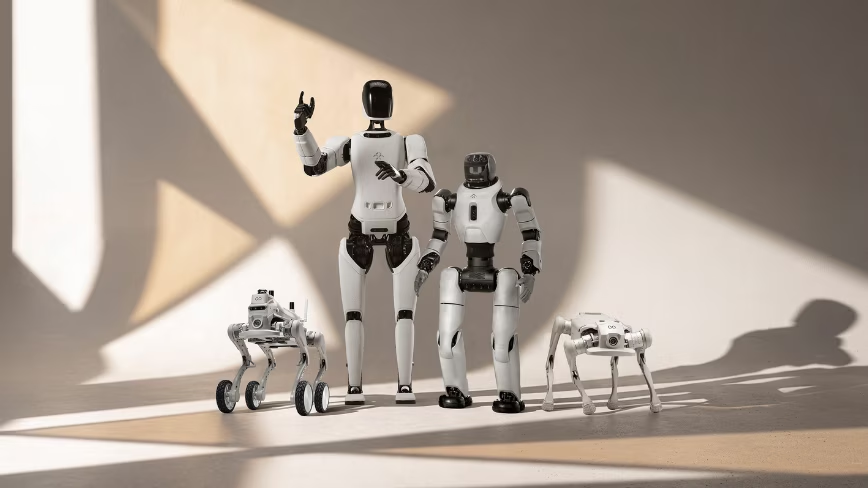
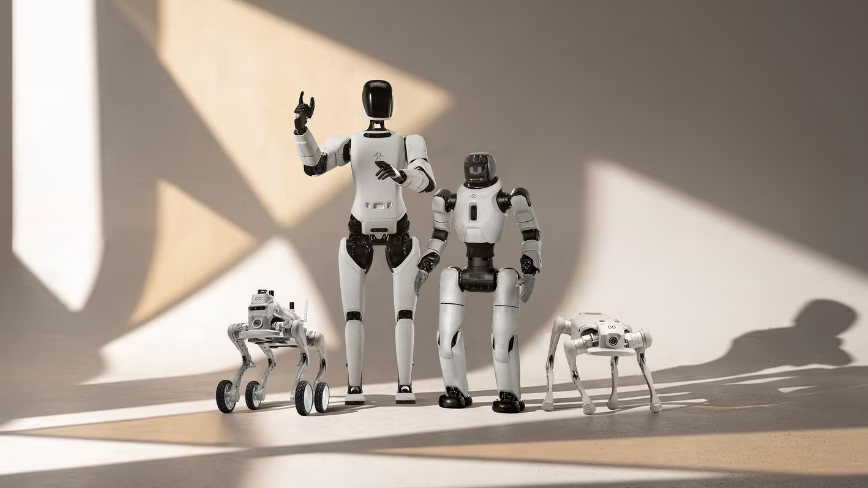
The US wanted to keep Chinese robots out. Beijing’s answer: do this, and we will hit back where it hurts.
China has threatened “resolute” retaliation after Washington moved to bar imports of Chinese-made humanoid robots. Its commerce ministry called the measure discriminatory and warned it “severely” damages trade relations, the New York Times and CNBC reported.
The ministry demanded that the US withdraw the decision, and threatened countermeasures if it does not. It accused Washington of “overstretching the concept of national security” and said the move disrupts global supply chains.
What the US actually banned
The trigger was an FCC order this week adding foreign-made “advanced robotic devices” to its restricted Covered List. It blocks new humanoids and robot dogs from the import approval they need to be sold in the US. Already-approved models can stay.
Advertisement
The rule is broader than it first looked. It sweeps up almost any new wireless, software-controlled robot over 4.4 pounds that can sense its surroundings, from robot lawnmowers to sidewalk delivery bots to Chinese robot vacuums. The FCC did not name China, but Chinese firms dominate the category.
Washington’s case rests on two fears. One is that connected robots could act as Trojan horses for data collection. The other is that robotics is strategically vital in an AI-driven economy. Chinese firm Unitree, one of the leaders, has already been flagged by the Pentagon over alleged military ties.
China’s leverage
The threat carries weight because China holds real cards. Analysts say the two obvious levers are rare earths, where China controls supply, and market access for US giants like Tesla and Nvidia. Both would sting.
The timing is also bad for Chinese robot makers. “This is bad news for Chinese humanoid producers planning their IPOs in the coming months,” said Counterpoint’s Marc Einstein. Unitree and Agibot have filed to go public, and Hong Kong-listed UBTech briefly fell more than 6 per cent.
Advertisement
The awkward truth
There is a catch that makes the ban tricky to enforce. It has become nearly impossible to build a competitive humanoid without Chinese-made parts, such as sensors and joints. China is also miles ahead on robots, running more factory robots than the rest of the world combined.
The clash lands at a delicate moment. Trump is due to host Xi Jinping in September, and tensions are already high. Treasury Secretary Scott Bessent has floated sanctions over AI model “theft”. Trump, for his part, hinted this week at a softer touch on AI controls to keep the US ahead.
Robots are now their own front in the tech war. The US has drawn a line around its market, and China is signalling that it can make that line expensive.
Samsung appears ready to redesign its Galaxy SmartTag again. This time, the makeover could come at the expense of one of the SmartTag 2’s most practical advantages. SamMobile‘s latest report has shared the supposed design of the upcoming Galaxy SmartTag 3.
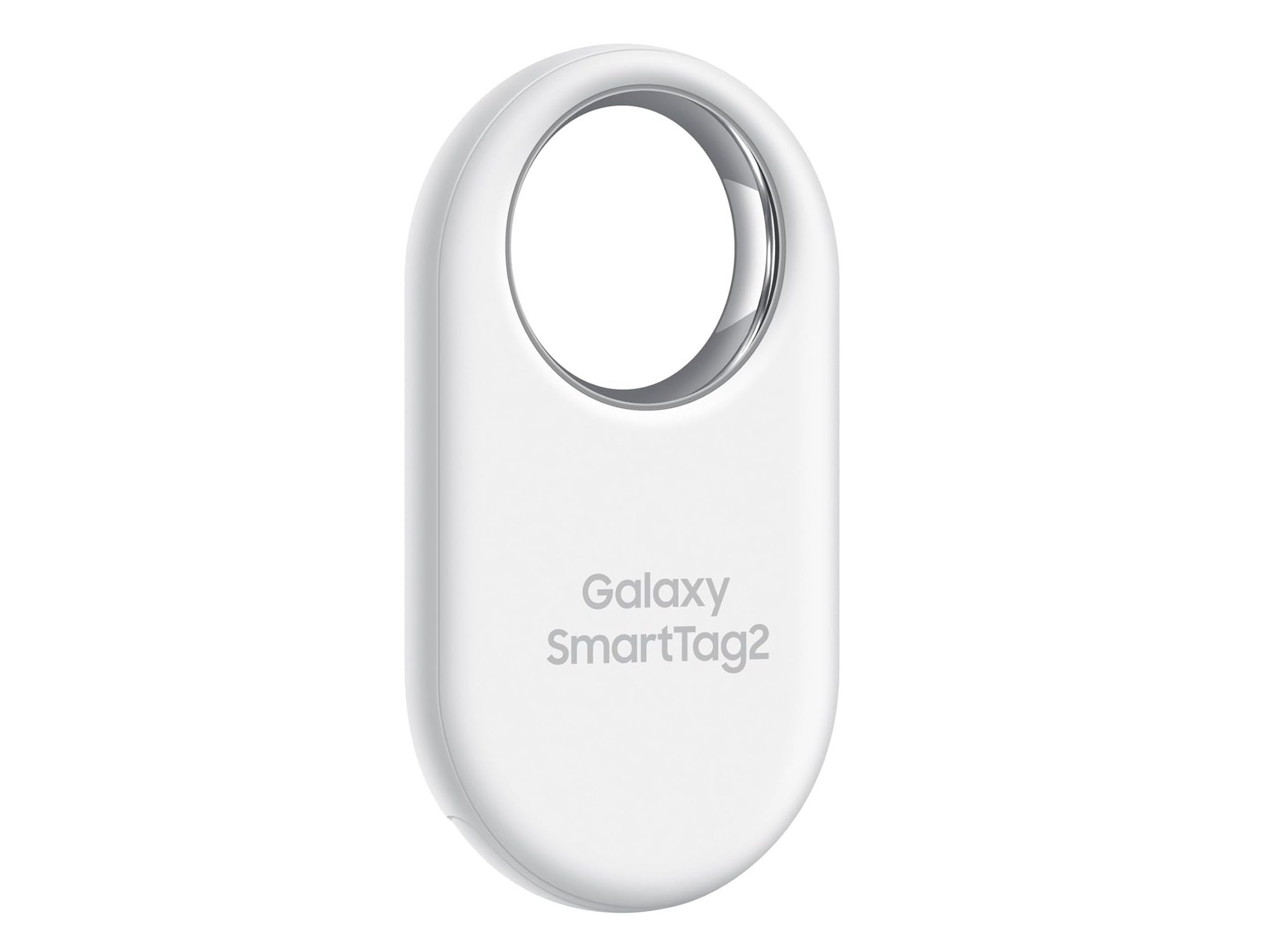
The smart tracker can be seen with a compact squircle-shaped body that resembles Samsung’s recent One UI icons and the shape used around newer Galaxy Watch displays. In comparison, the current SmartTag 2 looks a lot different, with a longer pill-shaped body dominated by a big integrated loop at one end. The leaked SmartTag 3 diagram does away with that loop entirely.
Samsung may remove the part I actually liked
SamMobile
This change could make Samsung’s next tracker look better, but it may also create the same annoyance AirTag owners have dealt with for years. Apple’s trackers require another accessory to attach the tracker to something. SamMobile says there appears to be no built-in lanyard hole on the SmartTag 3, meaning owners may need a separate case for keys, backpacks, or anything else without a pocket for the tracker.
It is an odd regressive change coming from the SmartTag 2. Samsung specifically redesigned its 2023 tracker around a large integrated ring that makes attaching it easy without buying another holder. It measures 28.8 x 52.44 x 8mm and weighs 13.75 grams, while also packing UWB, Bluetooth 5.3, and IP67 water and dust resistance.
The leaked SmartTag 3 also appears to restore a prominent button in the center. SamMobile speculates that it could once again ring a connected Galaxy phone or activate Modes and Routines automations.
Advertisement
The bigger upgrades remain a mystery
Samsung
Samsung has yet to announce the tracker, and most of its internal specifications remain unknown. SamMobile expects Bluetooth, UWB, Samsung Find integration, and some level of water and dust resistance, along with suggesting Bluetooth 6.0 for improved tracking accuracy. But like with any leaks, these features aren’t official.
Battery life will also be worth watching. The SmartTag 2 uses a replaceable CR2032 battery and is rated for up to 500 days, with Samsung claiming up to 40% additional longevity in Power Saving Mode. A smaller squircle body with Ring LED lighting could certainly look smarter, but I’d much rather have that added convenience. With the Galaxy S26 FE and Galaxy Tab S12 series arriving later this year, we might see the tracker debut alongside these devices.
Food poisoning is no fun, which is why people often eye their fruits and smell their milk beforehand. But it’s impossible to detect every germ and toxin in the food you eat. That’s why a research team at UC Berkeley led by Ph.D. student Carla Bassil has been working on an “electric nose” that can “sniff” spoiled food and allergens.
The e-nose has 16 small gas sensors, each one meant to target different compounds and turn them into electric signals. “You can think of it like a set of digital taste buds, where each sensor on this chip responds uniquely to the various gas molecules presented to it,” Bassil explained (via UC Berkeley). The e-nose has been trained with machine learning (which is not the same as AI) to recognize those signals in a wide range of foods, including the smell of raw chicken and milk when they are fresh and when they’ve been left out of the fridge for multiple days. Right now, the e-nose can predict spoilage and allergens with a 92.6% accuracy. Unfortunately, there have been some challenges in getting the e-nose to be fully accurate.
Advertisement
Advertisement
The challenges with an allergen-sensing e-nose
Donnichols/Getty Images
The artificial nose is more powerful than any human nose, able to smell even 0.05 grams of walnut (the equivalent of one hundredth of a shelled walnut). Unfortunately, there are still a lot of difficulties with getting the nose to accurately detect smells. The e-nose’s sensitivity hasn’t been tested in foods that have more than one gas, meaning it may not be able to sense that tiny piece of walnut in a salad or baked good. It’s also unclear if it would be able to consistently sniff out spoiled food that’s in a fridge, where other foods (and their gases) are present.
The e-nose is also still learning how everything smells — detecting one smell is easy, but attempting to detect multiple smells with one chip has proven tricky. It currently gets confused between hazelnuts and peanuts, which means the compounds they produce could trigger the same sensor and be difficult to differentiate. A rotten boiled egg and raw chicken also release similar raised levels of gaseous compounds, making that another challenge for the e-nose.
For now, Bassil plans to keep testing the e-nose in more environments to improve its sensitivity and accuracy. Some day, it could be available as an app on people’s phones. This is not the only time that UC Berkeley researchers have revealed interesting prototypes, like this insect-sized jumping robot or this wearable sweat sensor.



























































You must be logged in to post a comment Login