



Connect with us

Business

RBC Capital raises Amazon stock price target to $330 on AWS growth

Published

on

Continue Reading
Click to comment

You must be logged in to post a comment Login

Leave a Reply

Business

Budget to be held on 28 October, John Healey announces

Published

on

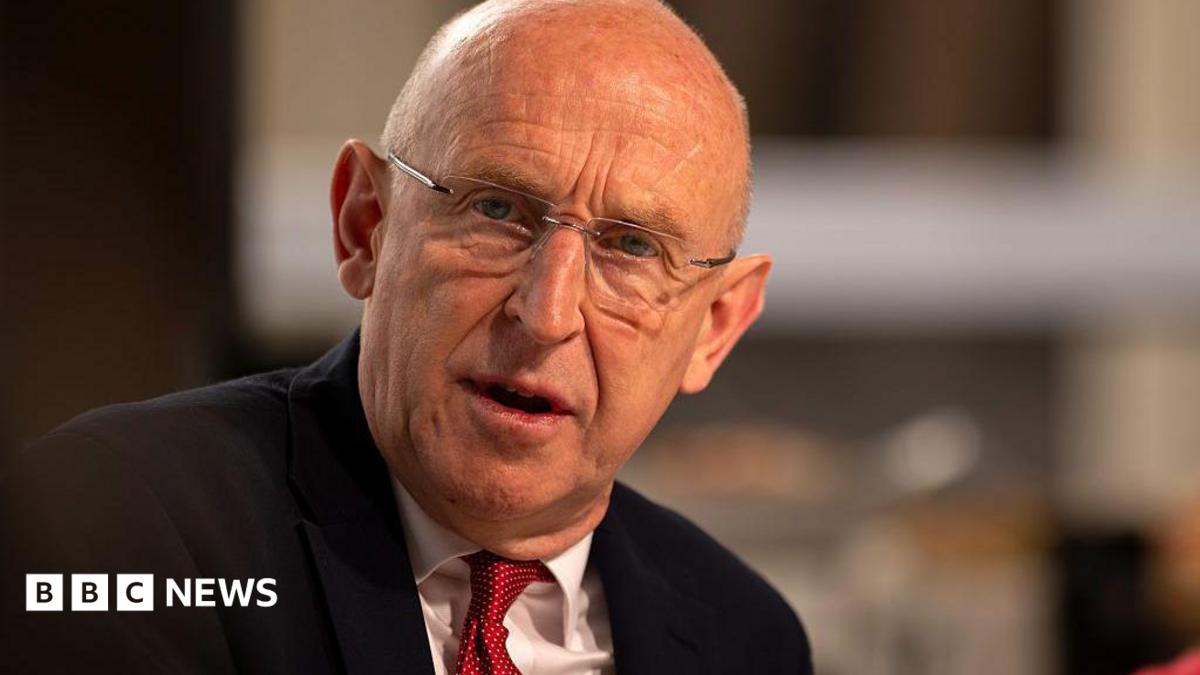
Chancellor John Healey

Chancellor John Healey has announced the date of his first Budget will be Wednesday, 28 October.

In a video message,  he said: “This will be a Budget that moves money and power out of Westminster, and into every postcode around Britain.

“It will be built on fiscal discipline. It will meet our fiscal rules. It’ll give businesses and families some of the stability they need to plan for the future. Now, let’s get on with the job.”

Prime Minister Andy Burnham has said his government will stick to Labour’s fiscal rules on spending and borrowing as well as the party’s 2024 manifesto pledges not to increase income tax, VAT or national insurance contributions.

Advertisement

Burnham also said he will honour the fiscal rules imposed by Healey’s predecessor Rachel Reeves, which include a pledge to balance day-to-day spending with tax revenues by the end of the decade.

An influential think tank said earlier this week that the prime minister only has a small margin of error to do this, and that Healey may have to cut spending or raise taxes to meet Burnham’s policy priorities such as such as extra defence spending and better social care.

Healey was Defence Secretary under Keir Starmer, but resigned after a row over defence spending commitments – saying he was “certain” that Britain shouldl lift its spending to 3% by 2030.

But questioned about funding on Thursday, Burnham’s Defence Secretary Wes Streeting repeatedly refused to commit to that target.

Advertisement

“Before we set out specific spending commitments, we will also set out how we pay for them at the same time,” he said.

Continue Reading

Business

Mark My Words July 31 2026

Published

on

Mark My Words July 31 2026

Mark Pownall is joined by Business News reporters to discuss oil refining, desalination, Northern Star, strike actions, data centres, Golden Sedayu, and the latest in Greg Poland’s defamation action.

Continue Reading

Business

Amazon Shares Soar Nearly 15% After Record AWS Growth Calms Investor Fears Over Massive AI Investments

Published

on

Xperia 1 VIII

NEW YORK — Amazon.com Inc. shares surged nearly 15% on Friday, climbing $34.79 to $270.29, after the company reported second-quarter results that showed its cloud computing division accelerating at the fastest pace in more than four years, easing investor concerns that heavy spending on artificial intelligence infrastructure was not yet generating sufficient returns.

The rally, one of the stock’s strongest single-day performances in years, added roughly $300 billion to Amazon’s market value and helped lift broader technology indexes. Investors focused on robust demand at Amazon Web Services, the company’s most profitable segment, rather than a higher capital expenditure forecast or a swing into negative free cash flow driven by AI investments.

Amazon reported net sales of $200.6 billion for the quarter ended June 30, up 20% from $167.7 billion a year earlier and above analysts’ consensus estimates near $196 billion to $197 billion. Operating income rose 43% to $27.5 billion. Diluted earnings per share reached $5.75, far exceeding the roughly $1.82 Wall Street expected, though the figure included a large non-operating gain primarily from the mark-up of Amazon’s investment in Anthropic.

The standout was Amazon Web Services. AWS revenue jumped 37% to $42.2 billion, or 36.7% on a year-over-year basis, marking the unit’s strongest growth in 18 quarters and its fifth consecutive quarter of acceleration. The cloud business generated an annualized revenue run rate of $169 billion. Operating income for AWS climbed to $16.6 billion, producing a 39.4% operating margin, up substantially from the year-ago period.

Advertisement

Amazon said its AI and custom chips businesses each surpassed annualized revenue run rates of more than $25 billion, both growing at triple-digit percentages. The AWS contract backlog expanded to $496 billion.

“AWS is booming, growing 36.7% year-over-year in Q2 — our fastest growth in 18 quarters — and our AI and Chips businesses each eclipsed run rates of more than $25 billion,” Amazon President and CEO Andy Jassy said in the company’s statement. “In Stores, we again set record delivery speeds for Prime members in the first half of the year — over 40% more items delivered same-day or overnight, with Grocery and Everyday Essentials growing meaningfully faster than the rest of the business. And, Advertising had another strong quarter with 26% year-over-year growth. There’s a lot to be excited about, and we have much more coming for customers in the second half of the year and beyond.”

Jassy told investors on the earnings call that demand for computing capacity remains so strong that Amazon still cannot fully meet customer needs despite raising its 2026 capital expenditure outlook. The company now expects cash capital expenditures of approximately $220 billion for the year, up from a prior estimate of about $200 billion. Higher memory costs contributed to the increase. Much of the spending is directed toward AI infrastructure.

“Even at that amount, we will still not have enough capacity to meet all the demand we have in 2026,” Jassy said. “I believe this dynamic will also be true in 2027 too.” He added that the “lion’s share” of planned AWS capacity for 2027 has already been reserved by customers, with substantial commitments extending into 2028. Jassy has described Amazon as “unusually well-positioned for this AI inflection.”

Advertisement

The results arrived amid intense scrutiny of Big Tech’s AI spending. Microsoft and Alphabet earlier reported strong cloud growth, while some peers saw their shares pressured by higher capital plans and weaker free cash flow. Amazon’s free cash flow turned negative, with a trailing twelve-month outflow of $7.6 billion compared with an $18.2 billion inflow a year earlier, reflecting a $66.1 billion year-over-year rise in equipment purchases tied largely to AI.

Investors largely looked past those figures. Evercore ISI analyst Mark Mahaney called the quarter “the breakout that the stock needed,” noting that AWS delivered its strongest growth in 18 quarters while expanding operating margins. JPMorgan analysts raised their price target to $365 from $330, saying they were “encouraged by the strength in the core AWS business, which has a high correlation with AI revenue,” and that they expect the relationship to strengthen as more AI workloads move into production.

At least a dozen brokerages lifted price targets following the report. Amazon’s price-to-earnings ratio stood near 25, still above some peers but reflecting renewed confidence in the company’s ability to monetize AI investments.

Other parts of the business also contributed. North America sales rose 16% to $116.2 billion. International sales increased 15% to $42.2 billion. Advertising revenue grew 26%. Amazon continued to emphasize faster delivery speeds and expansion in grocery and everyday essentials. The company highlighted progress with its Trainium custom chips, Graviton processors, Amazon Bedrock foundation model platform, and new agentic AI tools.

Advertisement

For the third quarter, Amazon guided net sales between $197 billion and $202 billion, representing 9% to 12% growth, or nearly 400 basis points higher when adjusting for the timing of Prime Day. Operating income is expected between $22.5 billion and $26.5 billion. The guidance incorporates an estimated 80-basis-point headwind from foreign exchange rates.

Amazon’s results underscored a shift in investor focus across the sector. After months of debate over whether vast AI capital outlays would deliver timely returns, the combination of accelerating AWS growth, expanding margins, and visible demand for both AI and core cloud services provided tangible evidence that spending was translating into revenue. The company noted that data centers typically require about two years of lead time before generating revenue but can operate for decades, while AI servers often recover their costs in under three years.

Shares had closed at $235.50 on Thursday before the after-hours and Friday surge. The move ranked among the largest percentage gains for Amazon in recent years and positioned the stock near multi-month highs. Volume was elevated as the company became one of the day’s most actively traded names and a leading contributor to gains in the Nasdaq 100 and S&P 500.

The performance also reflected broader market dynamics. Technology stocks led U.S. equity futures higher, with the Amazon rally offsetting softer moves in other names. Analysts noted that the quarter helped distinguish Amazon’s approach — tying incremental capital spending closely to existing customer demand and backlog — from peers still facing questions about the timeline of AI monetization.

Advertisement

Amazon continues to expand its AI-related offerings, including additional foundation models on Bedrock, new agent capabilities, and infrastructure tailored for agentic workloads. Commitments from major AI labs and enterprise customers for both cloud capacity and custom silicon have reinforced management’s confidence in multi-year demand.

While free cash flow remains under pressure in the near term and third-quarter guidance came in somewhat softer than some estimates on a reported basis, the market’s reaction centered on the acceleration in AWS and the visibility provided by the growing backlog. For investors who have watched Big Tech pour hundreds of billions into AI infrastructure this year, Amazon’s report offered the clearest signal yet that those investments are beginning to show measurable returns in both growth and profitability.

The stock’s sharp advance on Friday closed a volatile stretch for the shares and reinforced Amazon’s central role in the ongoing AI infrastructure build-out.

Advertisement
Continue Reading

Business

Apple Shares Sink Nearly 10% Despite a Record Quarter as China and Services Revenue Disappoint Wall Street

Published

on

Apple Shares Sink Nearly 10% Despite a Record Quarter as

Apple shares fell 9.56% in Friday afternoon trading, dropping $31.88 to $301.55, despite the company reporting a record fiscal third-quarter 2026 performance, as investors focused instead on weaker-than-expected results from Apple’s Services division and its China business.

The decline came just days after Apple had briefly reached a $5 trillion market capitalization for the first time and reclaimed the title of world’s most valuable publicly traded company from Nvidia. Rick Rodda, an analyst quoted by TheStreet, framed the market’s disappointment against that backdrop of elevated expectations. “Its stock was sitting just below record highs going into earnings, having cleared the $5 trillion valuation hurdle again and reclaiming the title of world’s most valuable public company,” Rodda said. “The results appear not quite good enough to justify such lofty valuations.”

Apple’s results themselves showed strength across most major financial metrics, even as the market reaction proved sharply negative. The company beat expectations on the majority of its headline numbers, according to Rodda, but stumbled specifically in its Services division and in China, a market facing intense competitive pressure from domestic smartphone manufacturers. That combination of a broadly strong quarter paired with two notable soft spots proved sufficient to trigger a steep selloff in the stock, even though the underlying fiscal quarter set a company record.

The China weakness comes as Apple continues navigating an increasingly competitive smartphone market in the country, where domestic manufacturers Huawei and other local brands have continued gaining market share. Earlier reporting on China’s broader smartphone market showed Huawei and Apple both extending gains during the second quarter of 2026, even as the overall Chinese smartphone market contracted amid rising memory chip prices that pushed manufacturers toward more conservative production strategies. Despite that broader industry backdrop, Apple’s specific results in China during its own fiscal third quarter fell short of what investors had been expecting heading into Thursday’s earnings release.

Advertisement

Apple’s Services division, which includes revenue from the App Store, Apple Music, iCloud storage subscriptions, Apple TV+ and other subscription-based offerings, has increasingly become a focus for investors given its higher profit margins compared with Apple’s hardware business. A shortfall in that segment specifically raised questions among analysts about the near-term trajectory of one of the company’s most closely watched growth drivers, even as the company’s overall hardware business, including iPhone sales, appeared to hold up reasonably well during the quarter.

Friday’s decline stood in stark contrast to the reaction that greeted Amazon’s own earnings, released the same evening as Apple’s results. Amazon shares surged as much as 12% Friday, according to 24/7 Wall St., after the company delivered a blowout quarter powered substantially by strength in Amazon Web Services, its cloud computing division. The 24/7 Wall St. analysis characterized the split between Apple and Amazon’s earnings reactions as reflecting a single underlying macroeconomic theme playing out in opposite directions: both companies face the same tight global supply of memory chips and advanced semiconductors driven by surging demand tied to artificial intelligence, but Amazon has been able to convert that dynamic into stronger cloud revenue growth, while Apple has faced more direct cost and margin pressure on the hardware side of its business as component prices have climbed.

The Invesco QQQ Trust, an exchange-traded fund tracking the Nasdaq 100 that holds both Apple and Amazon among its largest individual weightings, found itself caught between the two companies’ sharply offsetting moves Friday, according to 24/7 Wall St., muting what would otherwise have been a cleaner overall gain for the technology-focused fund following the mixed earnings reactions.

Apple’s earnings arrived as part of one of the busiest stretches of corporate earnings season for major technology companies, with Amazon, Apple and Coinbase all reporting results after Thursday’s closing bell, following blockbuster results from Microsoft and Meta Platforms earlier in the week. Microsoft’s shares had surged roughly 15% Thursday for the company’s best single-day performance in nearly 18 years, after reporting that its Azure cloud computing division grew 43% during the quarter, a result that had helped fuel broader optimism across technology markets heading into Apple’s and Amazon’s reports.

Advertisement

Despite Friday’s sharp decline, Apple’s stock remains up substantially from levels earlier in the year, reflecting the broader rally that has characterized major technology stocks throughout much of 2026 amid continued investor enthusiasm for companies positioned to benefit from growing artificial intelligence infrastructure spending. Friday’s pullback illustrated, however, that even companies posting record financial results can face sharp market reactions when specific segments of their business fall short of elevated investor expectations, particularly for a company carrying the kind of premium valuation Apple has commanded following its recent run to record highs.

With Apple’s next quarterly earnings report still roughly three months away, investors are likely to watch closely in the interim for any additional commentary from company executives regarding the specific challenges facing its Services division and its competitive position in China, particularly given how directly both factors appeared to drive Friday’s sharp reversal in the stock despite the company’s otherwise record-setting quarterly performance.

Continue Reading

Business

Wales is missing out on billions and it has nothing to do with HS2

Published

on

Business Live

It could secure £3.5bn of funding over the next four years based on its UK population share

Prime Minister Andy Burnham during a visit to Submarine Academy for Skills and Knowledge

Prime Minister Andy Burnham/(Image: Chris Furlong/PA Wire)

What could a more effective relationship with three of the UK’s most powerful economic institutions be worth to Wales? Based on our share of the UK population, the answer could be around £3.5bn over the next four years.

This is not a guaranteed allocation but combines different forms of support, namely research investment from UK Research and Innovation (UKRI), commercially repayable finance backed by the British Business Bank, and the loans, guarantees and insurance provided by UK Export Finance (UKEF). Nevertheless, it demonstrates the scale of the opportunity if Wales were to develop a coherent strategy for working with all three.

For much of the devolution era, political debate has concentrated on the block grant and money controlled directly by the Welsh Government. Far less attention has been paid to UK institutions whose decisions influence where research takes place, which businesses obtain finance, and which companies receive support to win international contracts.

This has become more relevant following Andy Burnham’s commitment to rebalance economic power and investment away from London and his establishment of No. 10 North and revival of a National Economic Council suggest that regional fairness will become an important test of UK economic policy.

Advertisement

That should be welcomed, but rebalancing the economy must also include a re-examination of the geographical impact of UK institutions shaping research, business investment and exports.

UKRI provides the first test as it will control £39bn between 2026-27 and 2029-30 with its new strategy connecting scientific discovery with commercialisation, company formation, private investment and industrial growth. Yet Wales currently receives only around 3 per cent of UKRI expenditure, and in 2023-24 received £168m, equivalent to £53 per person, compared with £134 per person across the UK.

If Wales increased its share of UKRI funding to its share of the UK population, it could generate around £500m to £600m in additional investment over four years. That would strengthen our underfunded universities, attract researchers, develop specialist facilities and help create companies in sectors where Wales has recognised strengths, including compound semiconductors, advanced materials, clean energy and creative technologies.

The second opportunity comes from the British Business Bank, whose permanent financial capacity has increased to £25.6bn and its planned activity between 2026-30 provides the most appropriate basis for estimating what Wales could receive.

Advertisement

During that period, the economic development bank of the UK Government, expects to make approximately £10.2bn of funded commitments and issue £8.4bn of guarantees, producing total financial activity of £18.6bn, and a share by population would be worth approximately £860m. To put that into context, that is around two and a half times the amount of non-property business finance provided by the Development Bank of Wales over the last four years.

The largest, but also the most uncertain, element of the opportunity comes from UKEF, which during 2025-26 provided £11.2bn in loans, guarantees and insurance, supporting 937 businesses and an estimated 85,000 jobs. Its statutory capacity has now doubled from £80bn to £160bn, and a 4.6 per cent share of the Welsh population in its current annual activity would be approximately £515m, or just over £2 billion across four years.

That figure must be treated carefully, as any spend can be transformed by a single major defence, aerospace, or infrastructure contract. Some activity is already taking place in Wales, so the entire amount is a benchmark against which Welsh access should be assessed over several years, not an entitlement.

To put the overall opportunity into perspective, the Welsh Government’s entire Economy, Energy and Planning budget for 2026-27 is approximately £843m and if maintained at that level, it would amount to around £3.4bn over four years. In other words, the potential £3.5bn Welsh share of UKRI, the British Business Bank and UKEF activity over four years is slightly greater than four years of spending through the Welsh Government’s whole economy, energy and planning portfolio.

Advertisement

The comparison is not exact and the Welsh budget finances public programmes, while much of the UK support takes the form of repayable lending, guarantees and insurance, but it demonstrates that securing a fair share of these institutions is not a peripheral issue and it could be as important to the Welsh economy as almost everything the Welsh Government itself spends on the economy.

The scale becomes clearer when compared with two of the most prominent demands in Welsh politics.

Plaid Cymru has campaigned for more than a decade for the devolution of the Crown Estate, while successive Welsh Governments have demanded a fair settlement from HS2. However, the Crown Estate generated an estimated £210m from its Welsh assets during 2025-26 and even if that unusually high level were sustained, four years of revenue would amount to around £840m, less than a quarter of the £3.5bn opportunity identified here.

The latest potential cost of HS2 is £102.7bn, of which a simple 4.6 per cent Welsh population share would be approximately £4.7bn , although that would relate to expenditure over the project’s lifetime rather than four years.

Advertisement

Securing a fair share of UKRI, British Business Bank and UKEF activity could therefore be worth considerably more than four years of current Crown Estate profits and approach the total value of Wales’s disputed share of HS2, and yet it has attracted only a fraction of the same political attention.

And the timing couldn’t be better with a new Prime Minister who has placed fairness between the UK’s nations and regions at the centre of his economic agenda. Indeed, that commitment must mean more than moving Whitehall from London to Manchester, and must instead change how the power of UKRI, the British Business Bank and UKEF is fairly distributed.

That will mean not only does Wales get the prize of £3.5bn of financial activity, but also ensure that research is commercialised, businesses are created and scaled, international orders are won, and well-paid jobs are generated across the nation.


Advertisement
Continue Reading

Business

FIFA World Cup subsidiary tests limits of private equity in sports

Published

on

FIFA World Cup subsidiary tests limits of private equity in sports

The FIFA World Cup Trophy is displayed at MetLife Stadium ahead of the FIFA World Cup Final on July 15, 2026, in East Rutherford, New Jersey.

Jordan Bank – Fifa | Fifa | Getty Images

Global soccer may be finding the limits to private equity’s stampede into sports.

Advertisement

A plan by FIFA to sell a minority stake in a new subsidiary — FIFA Forward Enterprises, or FFE — that would control the business side of the World Cup has faced swift backlash. UEFA, the governing organization of European soccer, and Concacaf, the organization controlling North American soccer, have both rejected the proposal out of concern for outside influence.

FIFA said earlier this week it plans to raise $4.2 billion from third parties, valuing FFE at about $20 billion. Thrive Capital, a private equity firm led by Joshua Kushner, has already backed the plan.

But on Thursday, UEFA threatened to boycott FIFA competitions and the World Cup if the plan moves forward.

“The World Cup cannot be treated as an investment product,” UEFA said in a statement. “No part of it should ever be surrendered to private investors. The World Cup is not for sale.”

Advertisement

Get the CNBC Sport newsletter directly to your inbox

The CNBC Sport newsletter with Alex Sherman brings you the biggest news and exclusive interviews from the worlds of sports business and media, delivered weekly to your inbox.

Subscribe here to get access today.

FIFA defended the proposal late Thursday night, saying it would move forward with a vote among its member associations despite mounting criticism. UEFA and Concacaf together represent 96 of the 211 members of FIFA.

“We respect the feedback and concern aired in public and reaffirm our commitment to an open and democratic consultation,” its statement read. “No single entity can claim to represent all 211 member associations around the world.”

Advertisement

FIFA blamed “incorrect media reports” for the negative response to the plan and said that without the support of a majority of the member associations, its commercial activities would remain unchanged and FFE would not move forward.

Carlos Cordeiro, a senior advisor to FIFA President Gianni Infantino, announced his immediate resignation in protest of the plan.

“Let me be clear: I had no involvement in this proposal, and I oppose it unequivocally. It is a bad deal for FIFA’s Member Associations, a bad deal for football, and a bad deal for the long-term future of the game,” Cordeiro said in a statement posted to LinkedIn Friday.

While there’s no certainty that bringing on institutional capital would affect FIFA operations, it opens the door to outside influence driven by financial gain. While neither UEFA or Concacaf specifically brought up FIFA’s past ties to alleged bribery, UEFA did cite the soft pressure of shareholder influence as one of the reasons for its rejection of FIFA’s plan.

Advertisement

“Football’s future cannot be dictated by the expectations of those whose first duty is to maximise financial return,” UEFA said. “The moment external investors acquire ownership interests in FIFA competitions, football changes forever. Commercial return becomes a permanent obligation. Investor expectations become a daily pressure.”

FIFA pushed back on the characterization of its plan as “selling” the World Cup.

“Nobody is selling football,” FIFA said in a statement. “This is not something FIFA would ever entertain.”

Private equity uneasiness

Private equity has increasingly pushed the envelope to securitize sports. Investors are attracted to their steady cash flows and growth opportunities in part as an anti-artificial intelligence bet.

Advertisement

“I think anywhere where there’s a product that people are turning up for that’s entertainment, and it’s creating an economic environment, I think it’s possible that [private equity investment] will happen,” Apollo Sports Capital Chief Strategy Officer Sam Porter said during a Wall Street Journal Sports conference earlier this month.

Still, the sports world has set limits around private equity’s involvement. While minority stakes often come with limited to no governance, taking on private capital definitionally involves a new incentive — increasing the value of that investment.

The NFL began allowing sales of up to 10% of teams to select private equity firms in 2024. MLB allows a single fund to own up to 15% of a club with total private equity ownership of up to 30%. The NBA and NHL have the same 30% aggregate maximum, but they have even higher individual fund thresholds, capping what any one fund can own at 20%.

The next frontier for private equity may be in college sports, including the potential for investing directly in teams. This hasn’t happened yet, in large part because of a general uneasiness at the collegiate level about the ramifications of taking on private money.

Advertisement

But as more investors pile into sports and drive valuations for major leagues higher, would-be stakeholders have been looking for new ventures.

“People view that sports is pure,” said Marc Lasry, co-founder of private equity firm Avenue Capital Group, in an interview with CNBC Sport last year. “The hurdle is, at the end of the day, always, no one wants to be first.”

Choose CNBC as your preferred source on Google and never miss a moment from the most trusted name in business news.
Continue Reading

Business

Newcastle and Gateshead attracted 31 job-creating businesses last year, figures show

Published

on

Business Live

Invest Newcastle’s annual report shows 31 companies set up operations in Newcastle and Gateshead during 2025/26, creating 1,619 new jobs and safeguarding 611 existing roles, with a further 12 businesses expanding

Newcastle upon Tyne skyline on the day of the local elections, May 7, 2026

A view of Newcastle(Image: Simon Greener/Newcastle Chronicle)

Businesses are continuing to choose Newcastle and Gateshead as their base of operations despite broader economic headwinds, according to the organisation responsible for promoting the area.

Invest Newcastle — the NGI-run agency — has released a summary of its 2025/26 performance, revealing that 31 firms opted to establish operations in the area, with a further 12 choosing to expand.

That activity is reported to have created 1,619 new jobs while safeguarding 611 existing positions. The figures encompass a combination of businesses investing in the region for the first time, alongside relocations from other parts of the region and beyond.

The statistics closely mirror those of the preceding year, when 31 companies similarly set up in Newcastle and Gateshead alongside nine firms expanding. Invest Newcastle’s leadership highlights this consistency as an encouraging sign against a demanding economic backdrop, which has included global conflicts, delayed investment decisions and increasingly cautious expansion strategies.

Advertisement

Among the notable investments, German-owned industrial services company Kaefer relocated to the Live Works building on Newcastle Quayside earlier this year, bringing with it 200 jobs. Meanwhile, fintech firm Modern World Business Solutions outlined its ambitions to generate approximately 100 jobs when it announced plans to establish a base at Hoults Yard last summer.

Arden University launched a new campus on Newcastle Helix to broaden access to higher education, while LMA Newcastle, a fresh creative campus designed to cultivate skills and employment pathways across music, performance and screen-based sectors, also opened its doors. Additionally, towards the end of last year, Pneuma Games Group established Last Arrow Games in Gateshead, reports Chronicle Live.

Coun Owen Burbridge, cabinet member for economy, jobs and skills at Newcastle City Council, said: “While businesses around the world are becoming more cautious about expansion, Newcastle has delivered another year of strong and consistent performance, helping to create jobs, safeguard employment and generate significant economic value for the city. These results highlight Newcastle’s strategic position as the commercial engine of the North East’s economy.

“We are increasingly seeing businesses recognise our strengths as a leading centre for innovation, technology, professional services and talent. Whether companies are entering the market for the first time or consolidating activity from elsewhere in the UK, they are choosing Newcastle because it offers the skills, connectivity and business environment they need to grow.

Advertisement

“Our ambition is clear: to position Newcastle at the heart of the UK’s innovation economy and to attract the investment that will create jobs, drive productivity and support long-term prosperity for our residents.”

Coun Steve Campion, cabinet member for economic development at Gateshead Council, said: “These investment figures highlight the value of the strong partnership between Gateshead and Newcastle, and also reflect the growing confidence businesses have in Gateshead as a destination in its own right. From our thriving digital and creative sector to our advanced manufacturing and engineering industries, Gateshead offers the talent, connectivity and business support that companies need to succeed.

“We’re particularly pleased to see continued growth in our gaming and digital cluster, with businesses such as Pneuma Games Group choosing Gateshead for their development studio. Alongside major regeneration projects, high-quality commercial space and excellent transport links, this demonstrates how Gateshead is creating the right conditions for innovative businesses to start, invest and grow.”

Advertisement
Continue Reading

Business

Lancashire’s ‘significant loss’ as new devolution powers require elected mayor

Published

on

Business Live

Prime Minister Andy Burnham has announced the largest change in local authority funding in over a decade — but the county will miss out on income tax retention powers due to its lack of an elected mayor

The Lancashire Devolution Deal

(Image: Local Democracy Reporting Service)

Large parts of England are poised to benefit from a sweeping devolution of financial power under Prime Minister Andy Burnham, yet Lancashire will miss out for one straightforward reason.

Advertisement

Burnham is set to unveil the most significant overhaul of local authority funding in more than a decade, with certain regions permitted to retain a share of income tax – the single largest revenue-raising tool at the government’s disposal.

However, the former Manchester Mayor’s proposals will do nothing for Lancashire, owing to a number of district councils having rejected the notion of the county having its own elected mayor, despite repeated efforts over the past ten years to establish the role.

Instead, in 2023, councils agreed to form the Lancashire Combined County Authority, but without an elected mayor, as seen in comparable areas across the country. This compromise, however, means that today’s announcement could represent a ‘significant loss’ for Lancashire.

That is because only regions with an elected mayor will be eligible to take advantage of this landmark devolution settlement, enabling them to direct their share of income tax towards essential public services such as transport and housing.

Advertisement

While the new administration stopped short of specifying the precise sum involved, it could prove a considerable fundraising mechanism for Lancashire, which contributes roughly £4bn to the Exchequer through income tax each year. The leader of Blackburn with Darwen Council, Cllr Phil Riley, responded to the announcement by stating: “It’s just another significant loss for Lancashire in the absence of a Mayor.”

Highlighting the shift towards a mayoral model in neighbouring regions such as the Liverpool City Region and West Yorkshire since 2015, he continued: “This is the national direction of travel and we will continue to lose out till we fix it.”

The power for mayoral authorities to retain a share of income tax represents just one element of the broader push to transfer powers from the UK Government to local councils throughout England, with additional authority to keep some business rates revenue also being devolved.

Prime Minister Andy Burnham said: “I said we’d take power out of Westminster and carry it into every postcode in the country. Today, we make good on that promise.

Advertisement

“Under our plans, more of the taxes raised in a community will stay in that community. Soon, every local leader will have the power and resources to improve public transport, build homes and create jobs.

“I know what it’s like to be ignored by politicians in Westminster. I’m not going to make that same mistake now I’m PM.

“The whole of government will now pull together behind the people and places that desperately need our support. This is how we’ll bring back hope and bring power home to you.”

The new Labour government has indicated it intends to devolve power and decision-making closer to communities, fostering more resilient local economies capable of enhancing public services.

Advertisement

Chancellor of the Exchequer John Healey MP said: “The people who best understand what skills employers want, what transport an area needs and where investment can make the biggest difference are those who live there.

“For the first time we’re giving Mayors a share of income tax so communities directly benefit when their economy grows – passing power out of Westminster and driving growth in every postcode.

“This is the way we start to build new hope and advance the working people of this country.”

These measures are anticipated to take effect from spring next year, with a framework for the devolution set to be outlined in this autumn’s Budget.

Advertisement
Continue Reading

Business

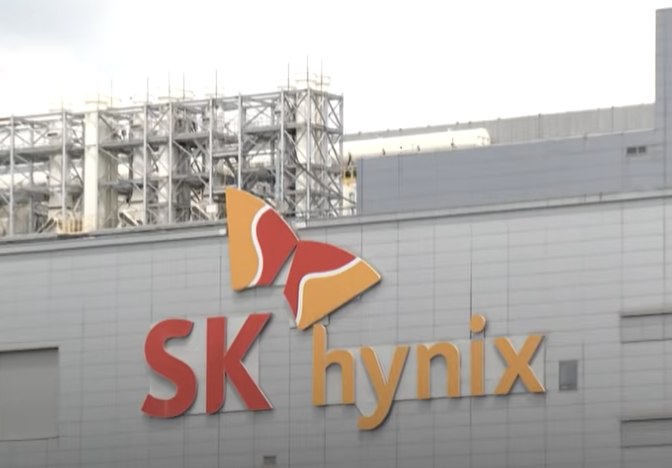
SK Hynix Shares Surge Nearly 30% as Record KOSPI Rally Follows Microsoft’s Blockbuster Earnings Beat

Published

on

SK Hynix ADR Plunges Nearly 8% to $162 as Wild

Shares of SK Hynix surged 29.95% on Friday, climbing 396,000 won to close at 1,718,000 won on the Korea Exchange, effectively hitting the exchange’s daily limit for individual stock price movements as South Korea’s benchmark KOSPI index posted the largest single-day rally in its history.

The KOSPI closed up 17.91% at 6,595.45, marking a record in both point and percentage terms, according to the Korea Herald. Samsung Electronics, SK Hynix’s chief domestic rival in the global memory chip market, surged as much as 26.81% during the same session, according to TradingKey, as both of South Korea’s dominant chipmakers effectively erased much of the ground they had lost during three brutal preceding trading sessions.

Friday’s rally traced its origins directly to a powerful overnight session on Wall Street. Microsoft’s shares soared 15.5% Thursday for the company’s best single-day performance in nearly 18 years, according to the Associated Press, after the technology giant reported that its Azure cloud computing division grew 43% during the quarter, easing broader investor concerns about the sustainability of massive capital spending on artificial intelligence infrastructure. Amazon and Meta Platforms also posted results that exceeded market expectations, reinforcing confidence that AI-related computing demand remains robust, according to CNBC, sending a wave of optimism through Asian technology markets overnight.

SK Hynix’s own recent earnings had already demonstrated the underlying strength driving Friday’s rebound, even though the company’s stock had initially sold off sharply following the results. SK Hynix reported record revenue of 79.3 trillion won for the second quarter, up 51% from the prior quarter and 257% from the same period a year earlier, alongside operating income of 60.5 trillion won. The company said DRAM prices rose approximately 30% during the quarter while NAND flash memory prices surged into the mid-50% range, pushing its operating margin to a record 76%. Despite those record results, SK Hynix shares had initially fallen because the figures came in below the elevated expectations investors had built up around AI-related chip demand, contributing to the broader selloff that gripped the KOSPI over the following days.

Advertisement

Friday’s rebound followed a brutal stretch for Korean equities more broadly. The KOSPI had plummeted more than 17% over the three trading sessions preceding Friday, driven by investor concerns about a potential bubble in artificial intelligence valuations and intensifying competition from Chinese chipmaking rivals, according to the Associated Press. At one point during that selloff, the index had fallen roughly 40% from its June peak, wiping out nearly $2 trillion in market value, according to reporting from the Private Banker.

Foreign investors were the driving force behind Friday’s historic rebound, posting net purchases of 7.25 trillion won, or roughly $5.06 billion, on the KOSPI, according to the Korea Herald. That marked a second consecutive day of net foreign buying, following four straight sessions of net selling that had preceded Thursday.

A separate development specific to SK Hynix appeared to reinforce Friday’s rally. SK Group Chairman Chey Tae-won disclosed personal purchases of SK Hynix shares during the recent selloff, a move that bolstered investor confidence in the world’s second-largest memory chipmaker, according to CNBC, offering a visible signal of leadership confidence at a moment when the stock had come under significant pressure. New cash-deposit requirements for investors using leveraged exchange-traded funds also took effect July 31, a regulatory change some analysts said may have contributed to a broader repositioning among traders active in that segment of the market, while short-covering and mechanical rebalancing tied to leveraged ETFs were also cited as factors amplifying the scale of Friday’s move.

SK Hynix has continued advancing its next-generation memory technology even amid the recent share price volatility. The company said it had begun mass production of its HBM4 high-bandwidth memory chips, with a broader production ramp planned for the second half of 2026, and that it had secured long-term supply agreements with approximately 10 customers as it works toward volume production of its subsequent HBM4E chips in 2027.

Advertisement

Despite the historic single-day gain, market analysts urged caution about reading too much into the rebound. Speaking to CNBC, one analyst identified only as Jung said foreign investors appeared to be the primary force behind Friday’s rally, but cautioned against assuming the gains signal a durable trend reversal. “I would not expect gains of this magnitude to continue,” Jung said, adding that asset prices had become “completely disconnected” from underlying fundamentals during the recent volatility.

Even after Friday’s rally, the KOSPI remained well below its levels from earlier in the year. The index recorded its worst monthly performance since 1997, dropping 22.19% over the course of July, according to TradingKey, underscoring that Friday’s rebound, while historic in scale, only partially offset the scale of losses the index had absorbed over the preceding weeks.

South Korean authorities also announced new measures Friday aimed at supporting the country’s technology and artificial intelligence sector more broadly. The government said it would inject a minimum of 20 trillion won, or approximately $13.9 billion, into the Korea Investment Corporation for strategic investments in artificial intelligence, data centers and broader infrastructure, according to the Private Banker, marking the first time the sovereign wealth fund’s mandate has been expanded to include domestic assets.

With SK Hynix shares having now hit the exchange’s daily trading limit and the broader KOSPI having posted its largest single-day gain on record, investors are likely to watch closely in the sessions ahead for signs of whether Friday’s rebound marks a genuine stabilization in sentiment toward AI-linked technology stocks or another dramatic swing within a period of extraordinary volatility that has gripped South Korea’s chip-heavy equity market throughout the second half of July.

Advertisement
Continue Reading

Business

‘Most extreme’ allegations, Rita Saffioti tells court in Poland, Hedley trial

Published

on

‘Most extreme’ allegations, Rita Saffioti tells court in Poland, Hedley trial

Rita Saffioti claims the allegations made in a secret audio recording were the “most extreme” she’d seen, as the deputy premier takes the witness stand in an ongoing trial.

Continue Reading

Trending

Copyright © 2025