
Business
Texas Stock Exchange officially goes live to rival NYSE and Nasdaq


Check out what’s clicking on FoxBusiness.com.
A new rival to Wall Street officially debuted on Friday as the Texas Stock Exchange went fully live for the first time with trading available for all of its listed tickers.
The Texas Stock Exchange, which is based in Dallas, is the first new major stock exchange to launch in the U.S. in decades. The TXSE, called the “Tex-ee,” is looking to compete with the New York Stock Exchange and Nasdaq Composite for listings.
The exchange boasts several prominent financial backers, including BlackRock, Goldman Sachs and Charles Schwab, among others.
It currently plans to begin corporate listings later this year and intends to facilitate initial public offerings (IPOs) starting in 2027. The TXSE sees the economic rise of Texas and a broader swath of the South that it’s calling the “Boom Belt” as being the “center of gravity for American capitalism” and a market it can tap into for IPOs.
CALIFORNIA LOSES FORTUNE 500 CROWN TO TEXAS AS BILLIONAIRE TAX THREAT LOOMS

The Texas Stock Exchange (TXSE) is based in Dallas and is currently operating out of a temporary headquarters. (Kirby Lee / Getty Images)
“As the only primary corporate and ETP listings venue built and headquartered in the Boom Belt, TXSE is both a product of the region’s rise and a catalyst to accelerate it,” TXSE explained.
The company’s website notes the region has an annualized GDP of $8.9 trillion – more than all world economies other than the U.S. and China. It adds that 40% of American exports pass through the Boom Belt, while 57% of U.S. job growth has occurred in the region in the last five years.
Currently, the exchange is operating from temporary offices in the Uptown neighborhood of Dallas, where it will hold a bell-ringing ceremony Friday afternoon to mark its official launch.
A NEW ECONOMIC IRON CURTAIN IS FALLING ACROSS AMERICA AS TRILLIONS IN WEALTH FLEE TO THE ‘BOOM BELT‘
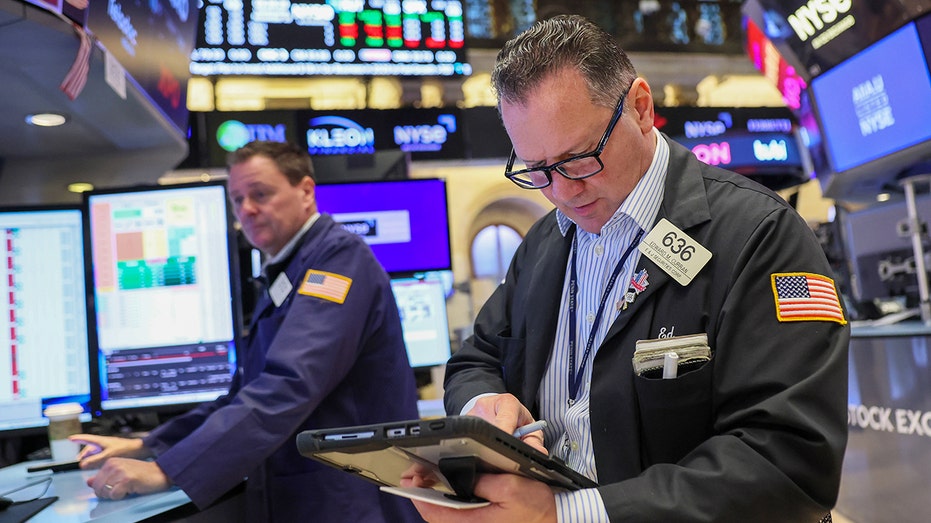
The TXSE hopes that its proximity to the “Boom Belt” will make it a better option among companies in the South that are pursuing IPOs. (Michael M. Santiago/Getty Images)
The exchange plans to move its permanent headquarters to the city’s Bank of America Tower, where it will operate the Texas Market Center.
The tower will be the tallest building in Uptown Dallas when it’s completed. The exchange’s Texas Market Center will include executive offices, a Texas business museum and a broadcast studio.
An announcement by designer KPF from May added that the exchange will take up multiple areas within the building, including ground-floor space and a 12th floor sky lobby.
DELL SHAREHOLDERS APPROVE LEGAL MOVE FROM DELAWARE TO TEXAS
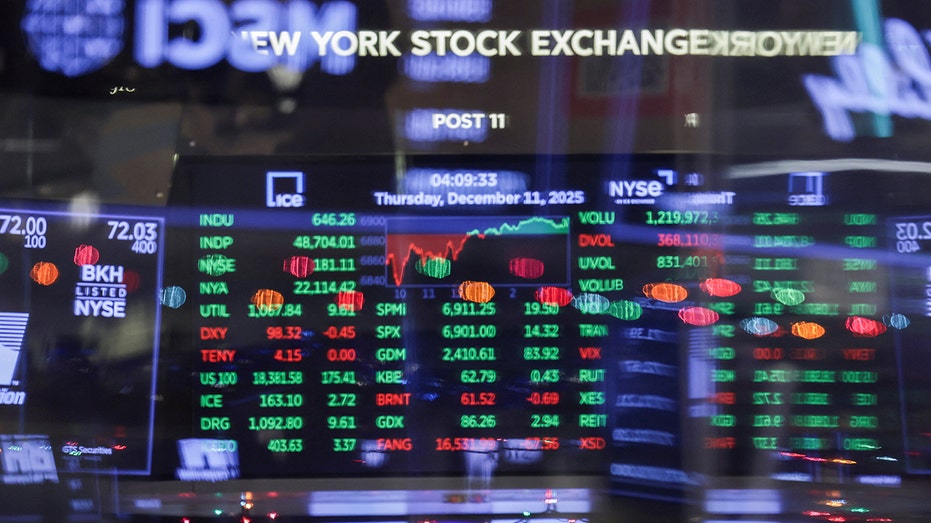
The New York Stock Exchange and Nasdaq have each opened exchanges in Texas to allow dual listings. (Reuters/Jeenah Moon)
The opening of the Texas Stock Exchange comes as the Lone Star State is working to attract businesses looking to relocate their headquarters or change their state of incorporation, touting business-friendly policies and favorable tax regimes in comparison to states like California and New York.
The Texas Stock Exchange’s rivals – the New York Stock Exchange and Nasdaq – have also expanded their footprint in the state of Texas and have enticed companies to dual list on the new duplicate exchanges at no cost.

Worries that heavy investments in AI infrastructure may be taking too long to pay off rattled global markets this month and led to doubts about companies at the center of Wall Street’s rally in recent years.
“There were worries that Amazon’s spending was just moonshot spending, that it’s irresponsible spending, and (CEO) Andy Jassy just put those fears to bed,” said Jake Dollarhide, CEO of Longbow Asset Management in Tulsa, Oklahoma.
The PHLX chip index gained, but it remains down over 20% from its June 22 record high close. Apple tumbled after warning that supply constraints would hurt growth, adding to worries that recent iPhone price hikes would weaken consumer demand.
Apple’s slump kept the S&P 500 technology index down, despite gains in other tech stocks. Microsoft added to gains after surging over 15% on Thursday in its biggest one-day percentage gain since 2008 after it forecast stronger-than-expected cloud growth. Monolithic Power Systems rose after forecasting third-quarter revenue above estimates.

According to preliminary data,
Analysts on average expect S&P 500 aggregate second-quarter earnings to soar 48% from a year ago, with AI-related stocks accounting for much of that growth, according to LSEG I/B/E/S. Strong earnings forecasts and a recent decline in share prices have left the S&P 500 trading at about 20 times expected earnings, just above its 10-year average of 19 times, according to LSEG data.
The S&P 500 is near flat in July while the Nasdaq has fallen about 3%. Both indexes are up about 9% in 2026.
The S&P 500 equal-weighted index was on track for its fourth straight month of gains, thanks to its limited exposure to heavyweight AI-related stocks that have underperformed for much of that time. Three Federal Reserve officials who dissented at the Fed’s policy meeting this week in favor of an interest rate hike called on Friday for immediate action to bring inflation down to the U.S. central bank’s 2% target.
The 2-year U.S. Treasury yield, which typically moves in step with interest rate expectations for the Fed, rose 5.4 basis points to 4.28% but is down slightly for the week. Markets are pricing in a 65% chance of a rate hike at the Fed’s September meeting, according to CME FedWatch, down from 82% a week ago but up slightly from 63% on Thursday. Domain registrar GoDaddy dropped after narrowing its annual revenue forecast.

Horizon Portfolio Management head Zachary Hill and SlateStone Wealth chief market strategist Kenny Polcari discuss how the market will be impacted by the Federal Reserves decision to leave interest rates unchanged on The Claman Countdown.
The Federal Reserve left its benchmark interest rate unchanged this week despite three dissenting votes from Fed governors who would’ve preferred the central bank hike rates to help rein in stubbornly-high inflation, they explained on Friday.
The Federal Open Market Committee (FOMC), the Fed panel responsible for monetary policy moves, on Wednesday voted 9-3 to leave the federal funds rate unchanged at a range of 3.5% to 3.75%, where it has remained throughout 2026 so far.
The three dissenting votes were cast by Cleveland Fed President Beth Hammack, Minneapolis Fed President Neel Kashkari and Dallas Fed President Lorie Logan – each of whom raised concerns about inflation persisting above the central bank’s 2% target and said they would’ve preferred raising the federal funds rate by 25-basis-points.
Inflation trended lower in June but remains elevated from the energy price shock caused by the Iran war earlier this year, with the Fed’s preferred inflation gauge, the personal consumption expenditures (PCE) index, up 3.7% in June compared with a year ago.
FED POLICYMAKERS LEAVE RATES UNCHANGED AMID ELEVATED UNCERTAINTY

Inflation has remained stubbornly above the Fed’s 2% target, with energy prices pushing it higher over the course of this year. (Li Rui/Xinhua via Getty Images)
Federal Reserve Chair Kevin Warsh, who was leading his second FOMC meeting since being confirmed as the central bank’s leader, acknowledged the importance of returning inflation to 2% to restore price stability even as he said that he thinks holding rates steady was “especially prudent at these uncertain times.”
“Not one of my FOMC colleagues is under any illusion, we have begun a new chapter, and we understand that the five-plus years of inflation above target cannot be cured in nine weeks, or by a single month of modest price decreases. This Fed will not waver. Our credibility rests on performing our duties and delivering on our responsibilities,” Warsh said.
Here’s a look at key points made by the three dissenting FOMC members in their explanations of why they would’ve preferred the central bank hike rates at this week’s policy meeting.
FED’S FAVORED INFLATION GAUGE SHOWED PRICES PULLED BACK IN JUNE
Dallas Fed President Lorie Logan
Logan explained that inflation “does not appear to be on course to sustainably achieve” the Fed’s 2% target, adding that, “Every month of above-target inflation compounds the strain on the budgets of American families and businesses.”
“Even after accounting for productivity gains and temporary supply shocks, inflation appears to be trending toward the mid-2’s, not all the way to 2%, and the risks are to the upside,” Logan explained. She also noted the labor market is “solid and perhaps strengthening,” which eases concerns about the maximum employment component of the Fed’s dual mandate.

Dallas Fed President Lorie Logan said that inflation doesn’t seem to be returning to its 2% target. (Shelby Tauber/Bloomberg/Getty Images)
She added that conditions in the labor and financial markets, as well as consumer spending trends, suggest that “monetary policy is not restraining the economy. Without any policy restraint, inflation will likely continue to trend above target until there’s an unanticipated shock.”
“The FOMC cannot count on unanticipated shocks to achieve its goals and can always adjust policy if unanticipated shocks occur. Modest action in the near term would reduce the likelihood of needing to take sharper action later,” Logan said in explaining her preference for a rate hike.
FED CHAIR KEVIN WARSH SAYS CENTRAL BANK HAS ‘NO TOLERANCE’ FOR ELEVATED INFLATION
Minneapolis Fed President Neel Kashkari
Kashkari discussed the similarities and differences between the current inflationary cycle and what the U.S. experienced in the 1970s with a series of successive supply shocks affecting commodities, food and energy markets; to the contemporary inflation caused by the pandemic, wars in Ukraine and the Middle East, and trade tension leading to higher tariffs.
While central bankers half a century ago initially thought they faced a single supply shock that could “look through” because it would pass on its own, they ultimately determined they needed to raise rates to curb the inflationary pressures, Kashkari explained.
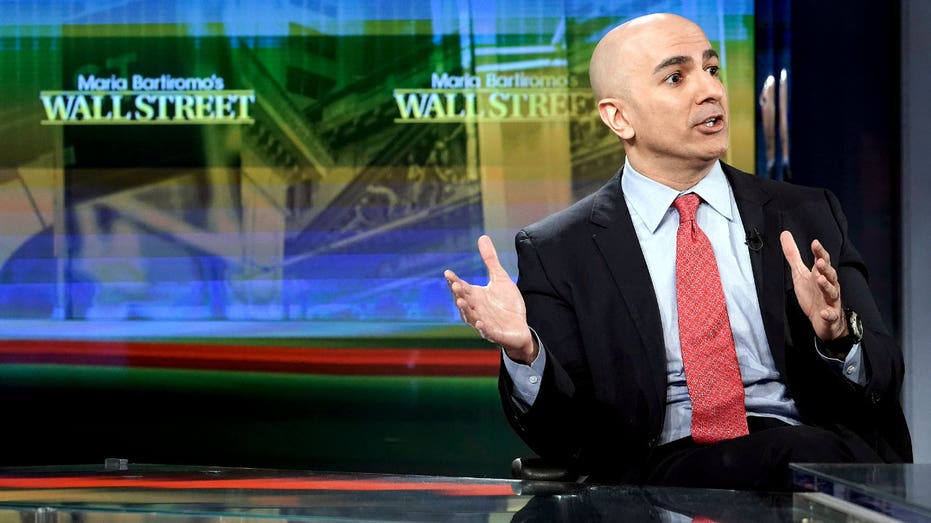
Minneapolis Fed President Neel Kashkari said it wouldn’t be hard to pause or reverse rate hikes if needed. (John Lamparski/Getty Images)
“The economy today is in a much better place than it was then: unemployment is lower and inflation is much lower. But to manage against the risk that high inflation could become entrenched, I would rather tighten policy incrementally as we gather more data on the path of inflation and employment,” he wrote.
“If inflation remains elevated, in my view, a potential series of small policy moves would be better than waiting and eventually concluding that even bolder actions were necessary,” Kashkari said. “On the other hand, if inflation durably fades, a strategy of small policy steps would allow the FOMC to slow or pause subsequent adjustments without unnecessary impact on the real economy.”
BOFA CEO BRIAN MOYNIHAN DISMISSES RECESSION FEARS DESPITE WALL STREET’S MOST HAWKISH FED FORECAST
Cleveland Fed President Beth Hammack
Hammack wrote that she is “not confident” that inflation will return to the Fed’s 2% target on its own, saying that the time is right for the central bank to take action to lower inflation as the “longer that high inflation persists, the more challenging and costly it can be to bring it back down.”
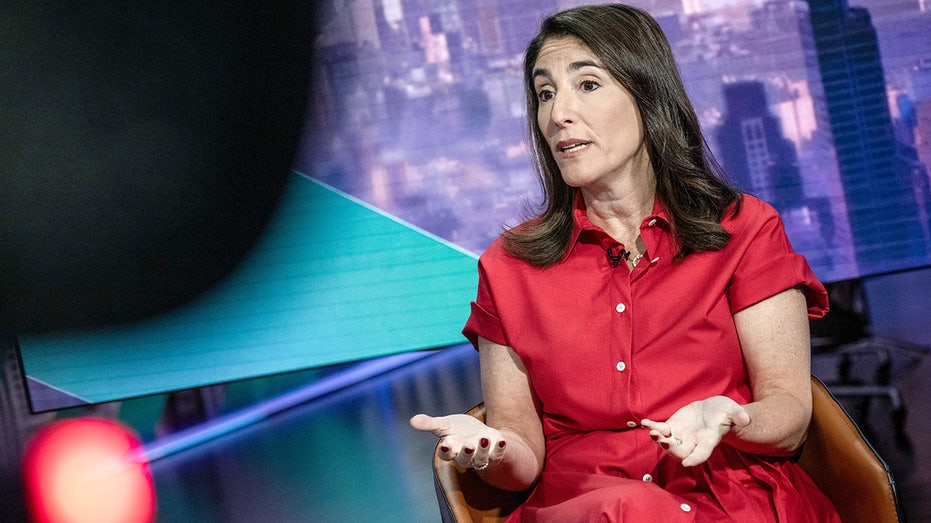
Cleveland Fed President Beth Hammack dissented in favor of a 25-basis-point rate hike. (Victor J. Blue/Bloomberg via Getty Images)
She noted that while energy price shocks have driven much of the inflation this year, she’s hearing from businesses in her Fed district that pricing pressures are “broadening rather than fading, and consumers are expressing despair over persistently higher prices.”
“Given the stability of the labor market, with the unemployment rate near my estimate of maximum employment, I view high inflation as the more pressing problem,” Hammock explained.
GET FOX BUSINESS ON THE GO BY CLICKING HERE
“A higher federal funds rate would help restrain economic activity and reduce inflationary pressures. I preferred to move at our recent meeting because I did not see the current policy stance as appropriately restrictive,” she wrote.
Business
Micron Shares Retreat as Investors Take Profits After Thursday’s Explosive Rally on Chip Supply Fears
Shares of Micron Technology fell 2.82% in Friday morning trading, dropping $24.66 to $850.00, as investors took profits following Thursday’s dramatic rally that had briefly pushed the stock up more than 16% amid renewed optimism about tightening global memory chip supplies.
Friday’s pullback came even as Wall Street’s overall outlook on the stock has remained decisively bullish. According to a report from Benzinga, Micron carries a consensus buy rating with an average analyst price target of $1,548.86. Several firms have issued increasingly aggressive price targets in recent weeks, including KeyBanc Capital Markets, which raised its target to $1,750 on July 14, and Cantor Fitzgerald, which lifted its own target to $2,000 on June 29 after reiterating a $1,500 target just days earlier.
TradingKey attributed the broader correction in Micron shares, which stood at more than 30% below the stock’s all-time high set at the end of June as of Tuesday, to a classic “sell-the-news” pattern following the company’s record third-quarter fiscal 2026 results and fourth-quarter guidance. “Driven by the AI wave, Micron once became one of the strongest-performing semiconductor stocks in 2026, with its stock price achieving a cumulative maximum gain of over 300% this year,” TradingKey reported. “With rapid valuation expansion, some capital chose to lock in profits after the company announced record financial results.”
TradingKey also pointed to a disclosed stock sale by Micron Chief Executive Sanjay Mehrotra as a contributing factor to recent market sentiment. According to filings with the U.S. Securities and Exchange Commission, Mehrotra sold approximately $37.3 million worth of Micron stock in late July under a pre-established 10b5-1 trading plan, a mechanism executives commonly use to sell shares on a predetermined schedule to avoid the appearance of trading on insider information.
Micron’s stock has swung dramatically over the past several weeks even as the broader trend has remained upward. The stock officially entered a bear market in early July, according to CNBC, before rebounding sharply. Shares fell as much as 10.75% during a single session in late July amid broader concerns weighing on memory chip stocks, before staging Thursday’s rally, which one report from CNN described as a jump of up to 18% during the trading day. TipRanks reported that Thursday’s surge was fueled in significant part by Samsung Electronics’ earnings, which hinted at long-term memory chip shortages persisting through 2028, a signal that boosted sentiment across the broader memory sector, including Micron, SanDisk, Nvidia and Advanced Micro Devices.
Benzinga reported that Micron’s technical indicators remain constructive despite Friday’s pullback, noting that the stock’s 50-day moving average continues to trade above its 200-day moving average, a pattern generally viewed as a bullish signal by technical analysts. The stock currently trades at approximately 75% of its 52-week range, according to Benzinga, indicating it remains closer to its highs than its lows even after the recent volatility. Micron’s 52-week range spans from a low of $103.38 to a high of $1,255.00.
Micron reached a $1 trillion market capitalization on May 26, according to company information compiled by Google Finance, becoming the latest U.S. company to cross that valuation threshold amid surging demand for its high-bandwidth memory chips used in artificial intelligence applications. Founded in 1978 in Boise, Idaho, Micron remains the only major American computer memory manufacturer, competing alongside South Korea’s Samsung Electronics and SK Hynix as one of the industry’s so-called Big Three memory producers.
Wall Street analysts expect Micron to report earnings of $31.24 per share on revenue of $50.72 billion when the company next reports quarterly results, according to Benzinga, compared with $3.03 per share and $11.31 billion in the year-ago quarter, reflecting the scale of growth the company has posted amid surging demand for AI-related memory products. Micron’s most recent quarterly results, according to TradingView, showed earnings of $25.11 per share against an estimate of $20.86, a 20.36% surprise, on revenue of $41.46 billion versus an estimated $35.91 billion, with net income reaching $28.24 billion for the period.
CNBC’s Jim Cramer characterized the broader forced selling that has periodically hit Micron and other AI-linked stocks in recent weeks as potentially marking a turning point for the sector. According to CNBC, Cramer described the unwinding of certain hedge fund positions as “a clearing event” that could signal a bottom for the broader artificial intelligence trade, even as individual stocks like Micron continue to experience sharp single-day swings in both directions.
Micron remains a significant holding across multiple semiconductor-focused exchange-traded funds, according to Benzinga, meaning large inflows or outflows tied to those funds can amplify the stock’s price movements during periods of heightened volatility. With the company’s next quarterly earnings report expected around late September, according to various compiled estimates, investors are likely to continue closely watching both the trajectory of global memory chip pricing and any further signals from competitors like Samsung about the durability of the current supply shortage as key factors shaping the stock’s performance in the weeks ahead.
Business
Nebius Group Shares Extend Gains as $1 Billion AI Deal Builds on Thursday’s Historic Rally to New Highs

Shares of Nebius Group climbed 2.89% Friday morning, adding $5.45 to reach $193.88, extending a remarkable two-day rally that has seen the artificial intelligence infrastructure company’s stock swing dramatically as investors reassess both company-specific catalysts and broader sentiment toward the so-called neocloud sector.
Friday’s gains built on a new multiyear computing power agreement with Reflection AI, worth more than $1 billion through 2029, which had already lifted shares more than 4% in premarket trading, according to StocksToTrade. The Netherlands-based Nebius, a “neocloud” provider that sells access to graphics processing unit-based AI computing capacity, has increasingly positioned itself as a key infrastructure supplier to AI-native companies seeking computing power without building out their own data centers.
Thursday’s trading session, however, delivered by far the more dramatic move. Nebius shares surged as much as 31.64% at one point Thursday afternoon, according to TimothySykes.com, before settling with a gain that TipRanks separately clocked at 28.4%. The rally traced back to reporting from The Wall Street Journal that investment firm Citadel had acquired the bulk of hedge fund Situational Awareness’s public equity portfolio, according to TipRanks. That transaction eased fears of a disorderly liquidation of the fund’s heavily AI-weighted holdings, since Situational Awareness, founded by former OpenAI researcher Leopold Aschenbrenner, had disclosed a $2.6 billion stake in Nebius as of the first quarter of the year. The subsequent rally was consistent with a pattern of short sellers rushing to cover their positions as sentiment around the stock rapidly improved.
Nebius’s stock has also benefited from broader momentum across major technology companies’ AI infrastructure spending. Following blockbuster earnings from Microsoft and Meta Platforms, Meta CEO Mark Zuckerberg addressed the tension his company faces in deciding how much internal AI computing capacity to use versus sell externally, saying Meta is “getting a lot of offers for compute at a significant premium over what we paid for it,” according to AOL. Microsoft separately disclosed signing more than $130 billion in new data center leases and outlined plans to double its data center capacity within two years, developments that AOL reported have directly benefited Nebius given its business model of selling access to AI computing capacity.
Not every recent catalyst has worked in Nebius’s favor. Meta’s disclosed plans to sell excess AI computing capacity of its own had earlier triggered a 12% to 15% decline in neocloud stocks including Nebius and rival CoreWeave, according to TimothySykes.com, as traders repriced the competitive threat posed by hyperscale cloud providers potentially competing more directly with smaller, specialized AI infrastructure companies. Separately, a one-year moratorium on new hyperscale data center construction in New York state has introduced regulatory uncertainty, though analysts covering the stock have suggested the restriction could simply redirect infrastructure growth toward other, more accommodating states rather than meaningfully constraining Nebius’s overall expansion plans.
The scale of volatility in Nebius shares over recent weeks has been extraordinary even by the standards of high-momentum artificial intelligence stocks. According to StocksToTrade, the stock has whipped between the mid-$160s and the low-$220s over the course of just several trading sessions, with daily closes ranging from roughly $171 to $221. Robinhood data showed the stock trading between a daily high of $198.56 and a low of $155.00 during Thursday’s session alone, a range StocksToTrade and other trackers have attributed in part to heavy retail trading activity connected to the WallStreetBets community on Reddit.
Nebius has continued to draw institutional validation despite the volatility. Nvidia disclosed owning a 9.3% equity stake in Nebius, valued at roughly $5 billion, through a filing with the U.S. Securities and Exchange Commission revealed publicly on July 20, a disclosure that had sent shares up nearly 19% in a single session when the news first emerged, according to Robinhood. Baird analysts initiated coverage of the stock with an outperform rating on July 22, according to Yahoo Finance compiled data, which also showed an average analyst price target of $258.13 and a range spanning from $120.00 to $410.00, alongside a consensus rating between “strong buy” and “buy.”
Nebius has called an Annual General Meeting for August 25 to approve its 2025 accounts and reshape aspects of its capital structure, according to a company announcement cited by TipRanks, a development that will give investors an additional formal opportunity to review the company’s financial position as its stock continues to attract outsized trading volume and volatility relative to its underlying business fundamentals.
Nebius’s stock has posted extraordinary gains over various time horizons even accounting for its sharp swings, with Yahoo Finance data showing total returns of 125.11% over a recent one-year period and gains as high as 1,218.61% over a longer measurement window, though the company’s premium valuation, with a price-to-earnings multiple of 55.36 according to Robinhood, and debt-heavy growth strategy remain factors some analysts continue to flag as risks even amid the stock’s dramatic recent rally.
With Thursday’s rally driven substantially by the resolution of hedge fund liquidation concerns rather than company-specific operational news, and Friday’s more modest gains tied directly to the new Reflection AI compute agreement, investors are likely to continue watching closely whether Nebius can sustain its current momentum as the broader neocloud sector works through a period of unusually elevated volatility tied to shifting sentiment around artificial intelligence infrastructure spending across the technology industry.
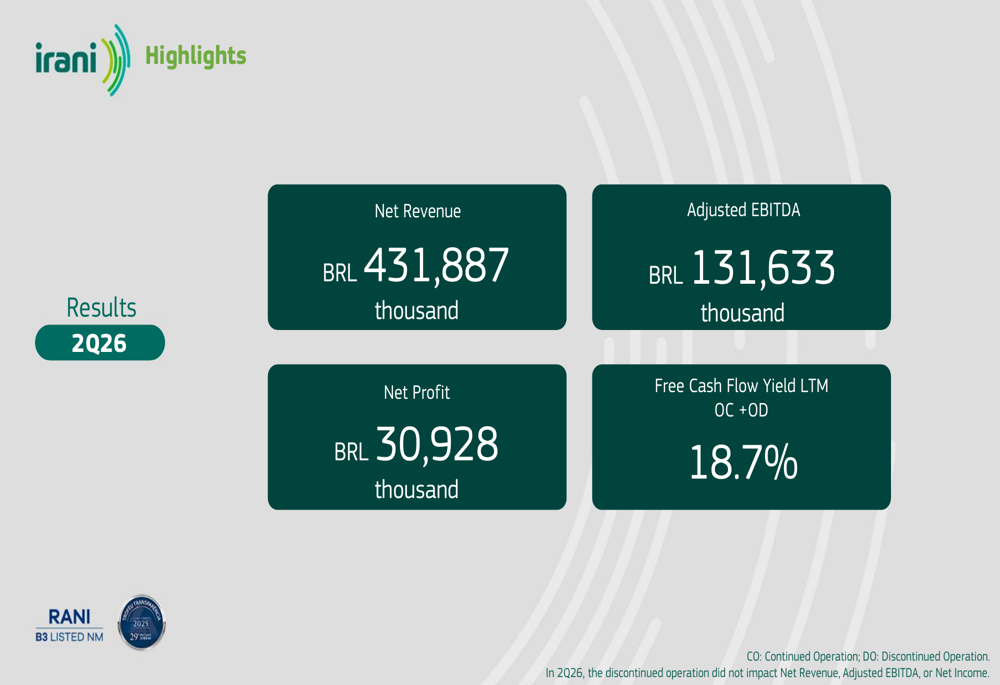
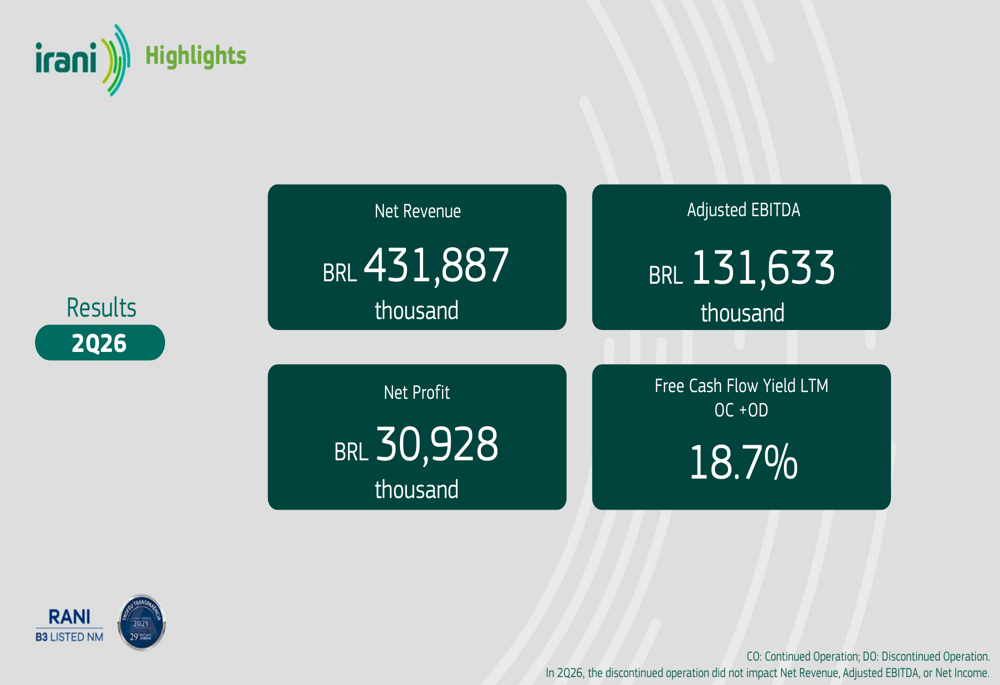
Irani Q2 2026 slides: EBITDA margin hits 30.5%, volume gains accelerate

Credo Stock: What The Market Is Missing
Close-up of Databricks company logo on building facade, Rincon Hill, San Francisco, June 7, 2024.
Smith Collection/ gado | Archive Photos | Getty Images
Clear Street, the prime brokerage startup that recently shelved plans for its own IPO, is now aiming to give investors access to some of Silicon Valley’s hottest private companies before they go public.
The firm is close to announcing a new platform designed to let accredited investors buy interests in late-stage private companies, starting with AI software titan Databricks, valued this month at $188 billion, CNBC is first to report.
“The goal is to remove friction and give more people the ability to invest in more products,” Uri Cohen, CEO and co-founder of Clear Street, said in an interview. “A lot of the wealth creation has been in private markets, and more and more retail investors and smaller investors want to be part of that.”
More startups are staying private for longer, meaning much of their value creation is taking place before an initial public offering. That has fueled growing demand from rich investors seeking exposure to companies like Databricks, Anthropic and OpenAI before they debut on public markets.
Last week, CNBC reported that Goldman Sachs has created a new platform to expand its offerings for wealthy clients and family offices who increasingly want direct stakes in fast-growing private companies.
Clear Street, by handling the asset servicing and risk management internally, can offer margin loans against the pre-IPO holdings, a rarity in private markets, said Cohen.
The fintech firm will have as many as 30 startups on its platform by yearend, mostly tech firms in the $5 billion to $20 billion valuation range that are roughly six months to two years out from an IPO, he said.
To support the push, Clear Street is also launching dedicated private company equity research headed by analyst Owen Lau, in what Cohen called an effort to bring public-market-style transparency to traditionally opaque private markets.
The expansion comes at a key moment for Clear Street, itself.
The firm, which was last valued at nearly $12 billion in a private funding round earlier this year, in February paused its own IPO plans amid broader market volatility that hit broker and fintech multiples.
Despite putting its listing on hold, the firm is cash-flow positive and bolstered its liquidity with a $400 million investment-grade bond offering, giving it the runway to build out its private market infrastructure, Cohen said.
“We’re in a position of strength, so the decision was shelved for better timing,” Cohen said. “We’re definitely going to look towards a ’27 listing, depending on the market conditions.”

Presentation
Operator
Hello, everyone. Thank you for joining us and welcome to the Parex Resources Q2 2026 Operational and Financial Results. [Operator Instructions]
I will now hand the conference over to Mike Kruchten, Senior Vice President of Capital Markets and Corporate Planning. Mike, please go ahead.
Michael Kruchten
Senior Vice President of Capital Markets & Corporate Planning
Thank you. Good morning, everyone, and welcome to Parex Resources’ Second Quarter 2026 Conference Call and Webcast. My name is Mike Kruchten, and on the call with me today are our President and Chief Executive Officer, Imad Mohsen; our Chief Financial Officer, Cameron Grainger; and our Chief Operating Officer, Eric Furlan. [Operator Instructions]
As a reminder, this call includes forward-looking statements as well as non-GAAP and other financial measures, with the associated risks outlined in our news release and MD&A, which can be found on our website or at sedarplus.ca. Note that all amounts discussed today are in U.S. dollars, unless otherwise stated.
I’ll turn the call over to Imad. Please go ahead.
Imad Mohsen
President, CEO & Director
Thank you, Mike, and good morning, everyone. Over the first half of 2026, Parex completed major transactions to become Colombia’s largest independent E&P company. This has resulted in the company nearly doubling its production guidance to roughly 86,000 barrels per day at the midpoint, and expanding our footprint to over 7.9 million acres. With these transactions behind us, our focus shifts to capturing synergy and delivering strong operational performance.
First, the Frontera transaction is officially closed with the integration of — integration
Operator
Welcome to the Invesco Mortgage Capital Second Quarter 2026 Earnings Call. [Operator Instructions] As a reminder, this call is being recorded. I would like to turn the call over to Greg Seals in Investor Relations. Mr. Seals, you may begin the call.
Greg Seals
Investor Relations
Thanks, operator, and to all of you joining us on Invesco Mortgage Capital’s Second Quarter 2026 Earnings Call. In addition to today’s press release, we have provided a presentation that covers the topics we plan to address today.
The press release and presentation are available on our website, invescomortgagecapital.com. This information can be found by going to the Investor Relations section of the website. Our presentation today will include forward-looking statements and certain non-GAAP financial measures. Please review the disclosures on Slide 2 of the presentation regarding these statements and measures as well as the appendix for the appropriate reconciliations to GAAP.
Finally, Invesco Mortgage Capital is not responsible for and does not edit nor guarantee the accuracy of our earnings. Teleconference transcripts provided by third parties. The only authorized webcasts are located on our website.
Again, welcome, and thank you for joining us today. I’ll now turn the call over to IVR’s CEO, Kevin Collins, for his comments.
Kevin Collins
Chief Executive Officer
Good morning, and welcome to Invesco Mortgage Capital’s Second Quarter Earnings
Worst is over and bookings are improving, Amadeus CEO says about Iran war hit

Armed police swoop on Ayrshire home amid ongoing incident as street sealed off
US stocks: US market ends higher as Amazon soothes AI jitters

Tether Q2 profit hits $1.5B as USDT supply grows


-
 Sports5 days ago
Commonwealth Games boxing: Jadumani Singh seals dominant 5-0 win over Pakistan’s Sumama Rehman to enter quarter-finals | Commonwealth Games News
-

 Business2 days ago
Why Trees Belong on the Risk Register
-

 Tech5 days ago
Intel is reversing course and bringing hyper-threading back to its server chips
-

 Fashion4 hours ago
Weekend Open Thread: Wit & Wisdom
-

 Crypto World6 days ago
Ripple bought a bank in pieces. The $4 billion audit
-

 Politics4 days ago
Luke Littler dismantles Gerwyn Price to retain title in Blackpool
-

 Politics4 days ago
The Part of the Electric Transition Nobody Wants to Discuss
-

 News Videos5 days ago
BITCOIN JUST ENTERED THIS CRITICAL ZONE…
-
 Entertainment3 days ago
‘Stargate’ Creator’s New Sci-Fi Series Returns for Season 3 Tomorrow
-

 Crypto World6 days ago
XRP Ledger adds $2.6B as RWA inflows rank second
-

 Business3 days ago
Major shareholder moves on Canyon
-

 News Videos1 day ago
Bitcoin Enters the 3rd Stage of the Bear Market
-

 Politics5 days ago
Spain sweeps the board at 2026 World Cup with individual awards
-

 Entertainment6 days ago
Sara Gilson Killed By Husband After Viral “Pedophile” TikTok Video
-

 Crypto World3 days ago
Kraken Enables Retail Access to Jersey Mike’s IPO via Tokenized Shares
-

 Tech7 days ago
Anthropic launches Claude Opus 5, a cheaper AI model for coding, agents and enterprise workflows
-

 Tech4 days ago
New macOS Sequoia & Sonoma security updates for older Macs
-

 News Videos3 days ago
Claude: Build Financial Dashboards in Minutes (2026)
-

 Politics1 day ago
Luke Littler’s dominance sparks GOAT debate
-

 Crypto World6 days ago
Upbit expands KRW market with two major DeFi token listings
You must be logged in to post a comment Login