Horizon Portfolio Management head Zachary Hill and SlateStone Wealth chief market strategist Kenny Polcari discuss how the market will be impacted by the Federal Reserves decision to leave interest rates unchanged on The Claman Countdown.
The Federal Reserve left its benchmark interest rate unchanged this week despite three dissenting votes from Fed governors who would’ve preferred the central bank hike rates to help rein in stubbornly-high inflation, they explained on Friday.
The Federal Open Market Committee (FOMC), the Fed panel responsible for monetary policy moves, on Wednesday voted 9-3 to leave the federal funds rate unchanged at a range of 3.5% to 3.75%, where it has remained throughout 2026 so far.
The three dissenting votes were cast by Cleveland Fed President Beth Hammack, Minneapolis Fed President Neel Kashkari and Dallas Fed President Lorie Logan – each of whom raised concerns about inflation persisting above the central bank’s 2% target and said they would’ve preferred raising the federal funds rate by 25-basis-points.
Inflation trended lower in June but remains elevated from the energy price shock caused by the Iran war earlier this year, with the Fed’s preferred inflation gauge, the personal consumption expenditures (PCE) index, up 3.7% in June compared with a year ago.
FED POLICYMAKERS LEAVE RATES UNCHANGED AMID ELEVATED UNCERTAINTY
Inflation has remained stubbornly above the Fed’s 2% target, with energy prices pushing it higher over the course of this year. (Li Rui/Xinhua via Getty Images)
Federal Reserve Chair Kevin Warsh, who was leading his second FOMC meeting since being confirmed as the central bank’s leader, acknowledged the importance of returning inflation to 2% to restore price stability even as he said that he thinks holding rates steady was “especially prudent at these uncertain times.”
“Not one of my FOMC colleagues is under any illusion, we have begun a new chapter, and we understand that the five-plus years of inflation above target cannot be cured in nine weeks, or by a single month of modest price decreases. This Fed will not waver. Our credibility rests on performing our duties and delivering on our responsibilities,” Warsh said.
Here’s a look at key points made by the three dissenting FOMC members in their explanations of why they would’ve preferred the central bank hike rates at this week’s policy meeting.
FED’S FAVORED INFLATION GAUGE SHOWED PRICES PULLED BACK IN JUNE
Dallas Fed President Lorie Logan
Logan explained that inflation “does not appear to be on course to sustainably achieve” the Fed’s 2% target, adding that, “Every month of above-target inflation compounds the strain on the budgets of American families and businesses.”
“Even after accounting for productivity gains and temporary supply shocks, inflation appears to be trending toward the mid-2’s, not all the way to 2%, and the risks are to the upside,” Logan explained. She also noted the labor market is “solid and perhaps strengthening,” which eases concerns about the maximum employment component of the Fed’s dual mandate.
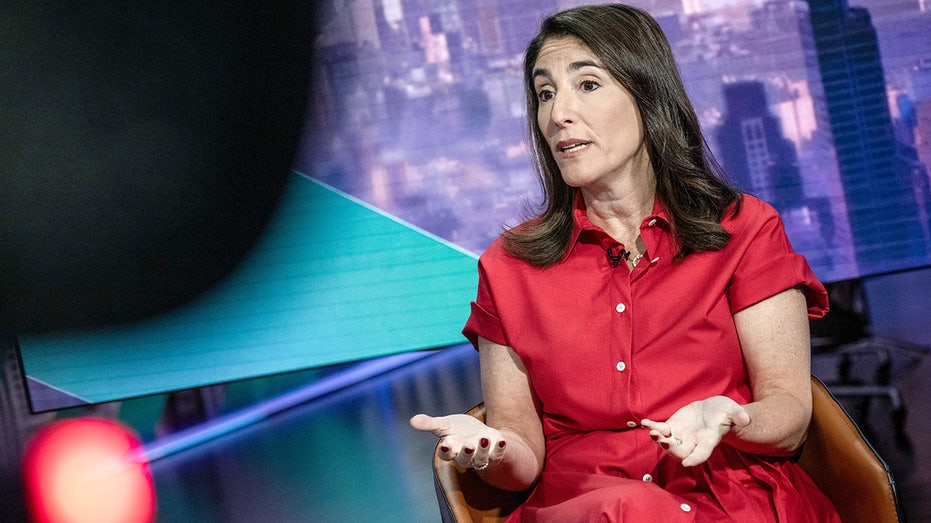
Dallas Fed President Lorie Logan said that inflation doesn’t seem to be returning to its 2% target. (Shelby Tauber/Bloomberg/Getty Images)
She added that conditions in the labor and financial markets, as well as consumer spending trends, suggest that “monetary policy is not restraining the economy. Without any policy restraint, inflation will likely continue to trend above target until there’s an unanticipated shock.”
“The FOMC cannot count on unanticipated shocks to achieve its goals and can always adjust policy if unanticipated shocks occur. Modest action in the near term would reduce the likelihood of needing to take sharper action later,” Logan said in explaining her preference for a rate hike.
FED CHAIR KEVIN WARSH SAYS CENTRAL BANK HAS ‘NO TOLERANCE’ FOR ELEVATED INFLATION
Minneapolis Fed President Neel Kashkari
Kashkari discussed the similarities and differences between the current inflationary cycle and what the U.S. experienced in the 1970s with a series of successive supply shocks affecting commodities, food and energy markets; to the contemporary inflation caused by the pandemic, wars in Ukraine and the Middle East, and trade tension leading to higher tariffs.
While central bankers half a century ago initially thought they faced a single supply shock that could “look through” because it would pass on its own, they ultimately determined they needed to raise rates to curb the inflationary pressures, Kashkari explained.
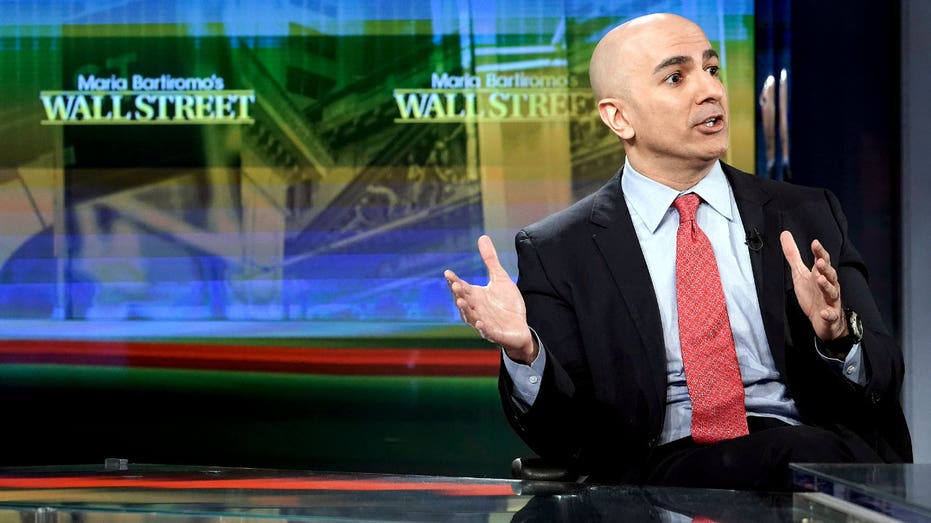
Minneapolis Fed President Neel Kashkari said it wouldn’t be hard to pause or reverse rate hikes if needed. (John Lamparski/Getty Images)
“The economy today is in a much better place than it was then: unemployment is lower and inflation is much lower. But to manage against the risk that high inflation could become entrenched, I would rather tighten policy incrementally as we gather more data on the path of inflation and employment,” he wrote.
“If inflation remains elevated, in my view, a potential series of small policy moves would be better than waiting and eventually concluding that even bolder actions were necessary,” Kashkari said. “On the other hand, if inflation durably fades, a strategy of small policy steps would allow the FOMC to slow or pause subsequent adjustments without unnecessary impact on the real economy.”
BOFA CEO BRIAN MOYNIHAN DISMISSES RECESSION FEARS DESPITE WALL STREET’S MOST HAWKISH FED FORECAST
Cleveland Fed President Beth Hammack
Hammack wrote that she is “not confident” that inflation will return to the Fed’s 2% target on its own, saying that the time is right for the central bank to take action to lower inflation as the “longer that high inflation persists, the more challenging and costly it can be to bring it back down.”
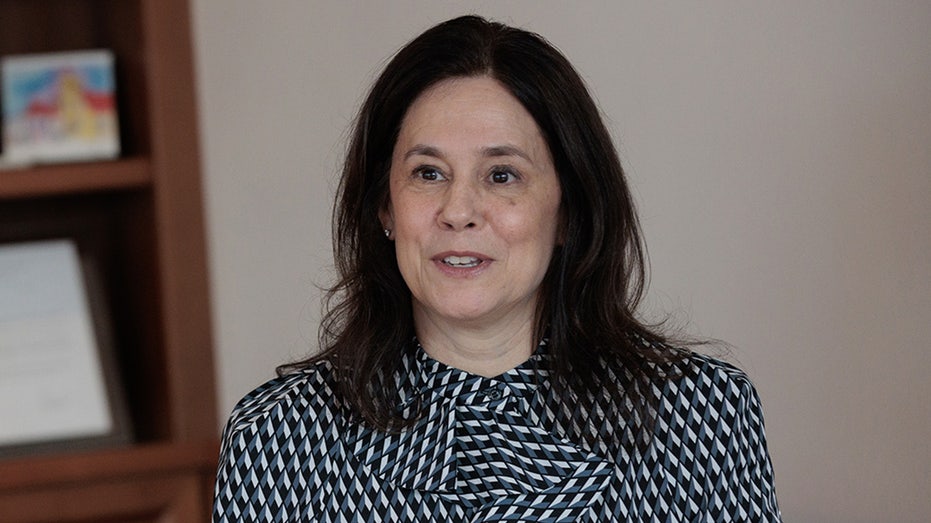
Cleveland Fed President Beth Hammack dissented in favor of a 25-basis-point rate hike. (Victor J. Blue/Bloomberg via Getty Images)
She noted that while energy price shocks have driven much of the inflation this year, she’s hearing from businesses in her Fed district that pricing pressures are “broadening rather than fading, and consumers are expressing despair over persistently higher prices.”
“Given the stability of the labor market, with the unemployment rate near my estimate of maximum employment, I view high inflation as the more pressing problem,” Hammock explained.
GET FOX BUSINESS ON THE GO BY CLICKING HERE
“A higher federal funds rate would help restrain economic activity and reduce inflationary pressures. I preferred to move at our recent meeting because I did not see the current policy stance as appropriately restrictive,” she wrote.
















































You must be logged in to post a comment Login