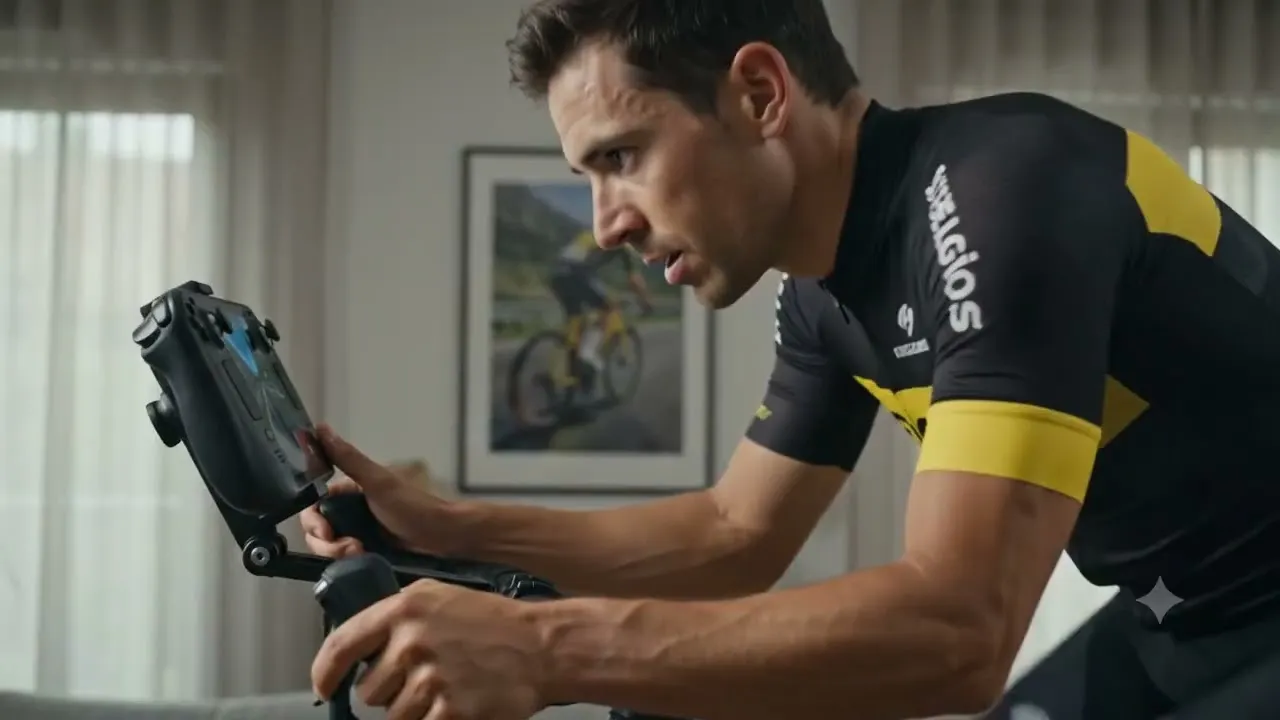
While we’ve largely settled on analog sticks and digital buttons for controlling video games, there’s all sorts of projects to create truly esoteric controllers that allow playing games in unique ways. This one from [sukolupo] lets you use data from standard bike trainers to get your virtual character moving.
Called Deck de France, it maps the data coming from one of the supported bike trainers to a virtual controller which can then be “plugged in” to a gaming console of choice, in this case a Steam Deck mounted to the trainer’s handlebars. Although a bike trainer doesn’t have the same number of inputs as a modern gaming controller, it does have enough to play games like Rocket League. As you might expect, it’s also perfect for biking titles such as the Tour de France series.
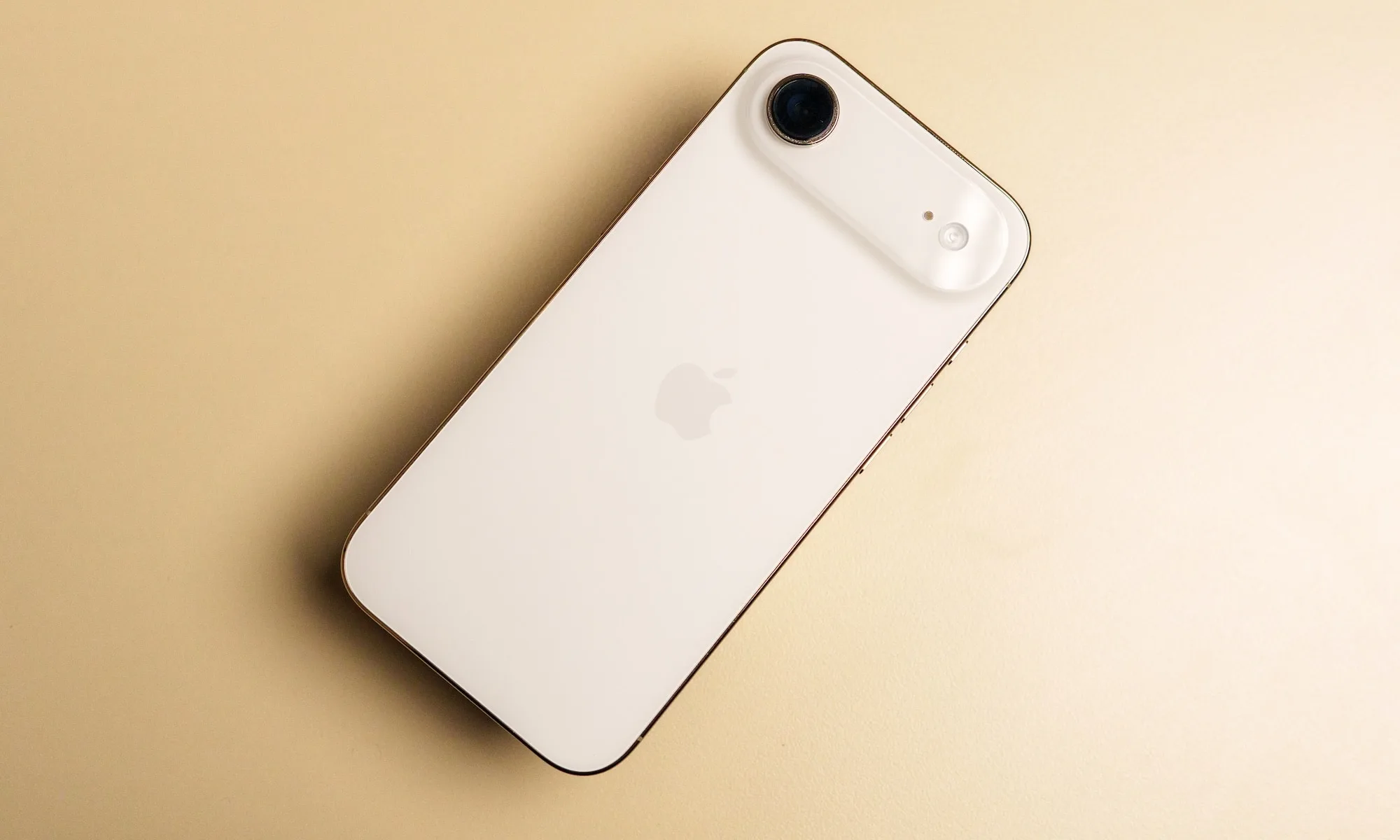
Apple’s second-generation iPhone Air is beginning to take shape, and if the latest supply chain report is accurate, the company isn’t simply refreshing the hardware. Instead, it appears to be refining the formula that made the first iPhone Air stand out. According to analyst Jeff Pu, the iPhone Air 2, expected to launch in early 2027, will retain its slim profile while introducing a smaller Dynamic Island, an upgraded camera system, and Apple’s next-generation silicon.
Unlike the Pro models, which often chase headline-grabbing camera upgrades or new materials, the Air lineup appears to be evolving through careful iteration. None of the rumored changes are individually revolutionary, but together they suggest Apple is addressing some of the biggest compromises of the original device.
Apple appears to be refining, not reinventing, the Air
According to Pu, the iPhone Air 2 will retain the 6.55-inch display found on its predecessor, but Apple is reportedly reducing the size of the Dynamic Island. While the difference may seem subtle on paper, a smaller cutout would free up more usable screen space and make the display feel cleaner during everyday use.
Rachit Agarwal / Digital Trends
The camera system could also receive one of the biggest upgrades in the Air lineup so far. Pu claims the phone will feature the existing 48-megapixel main camera alongside a new 48-megapixel ultra-wide sensor, giving the Air a far more versatile imaging setup than the first-generation model. That addition would narrow one of the biggest gaps between Apple’s premium and mainstream iPhones.
Under the hood, Apple is expected to introduce the A20 Pro, reportedly built on TSMC’s 2nm process using Wafer-Level Multi-Chip Module (WMCM) packaging. The technology integrates memory closer to the processor, which could improve both performance and power efficiency without increasing the chip’s physical footprint. The report also points to 12GB of RAM, a titanium frame, and Apple’s next-generation C2 modem, replacing the original Air’s C1X modem.
Advertisement
Small upgrades could make a meaningful difference
On paper, none of these upgrades dramatically change what the iPhone Air represents. That’s arguably the point. The first-generation iPhone Air established itself as Apple’s answer for users who wanted something lighter and thinner than a Pro model without sacrificing flagship performance. If these reports prove accurate, Apple isn’t trying to reinvent that identity. Instead, it’s strengthening it by fixing practical shortcomings that users notice every day, whether that’s gaining a little more screen real estate, improving ultra-wide photography, or squeezing better efficiency from next-generation silicon.
Rachit Agarwal / Digital Trends
The timeline also fits Apple’s broader roadmap. Pu expects Apple to unveil the iPhone Air 2 alongside the base iPhone 18 during the first quarter of 2027, while the iPhone 18 Pro and Apple’s long-rumored foldable iPhone are expected to arrive several months earlier.
As always, these details remain based on supply chain intelligence rather than official announcements. But if Apple is indeed focusing on refinement over reinvention, the iPhone Air 2 could become a stronger example of something the company often does well: making a familiar product noticeably better through a series of thoughtful, incremental upgrades.
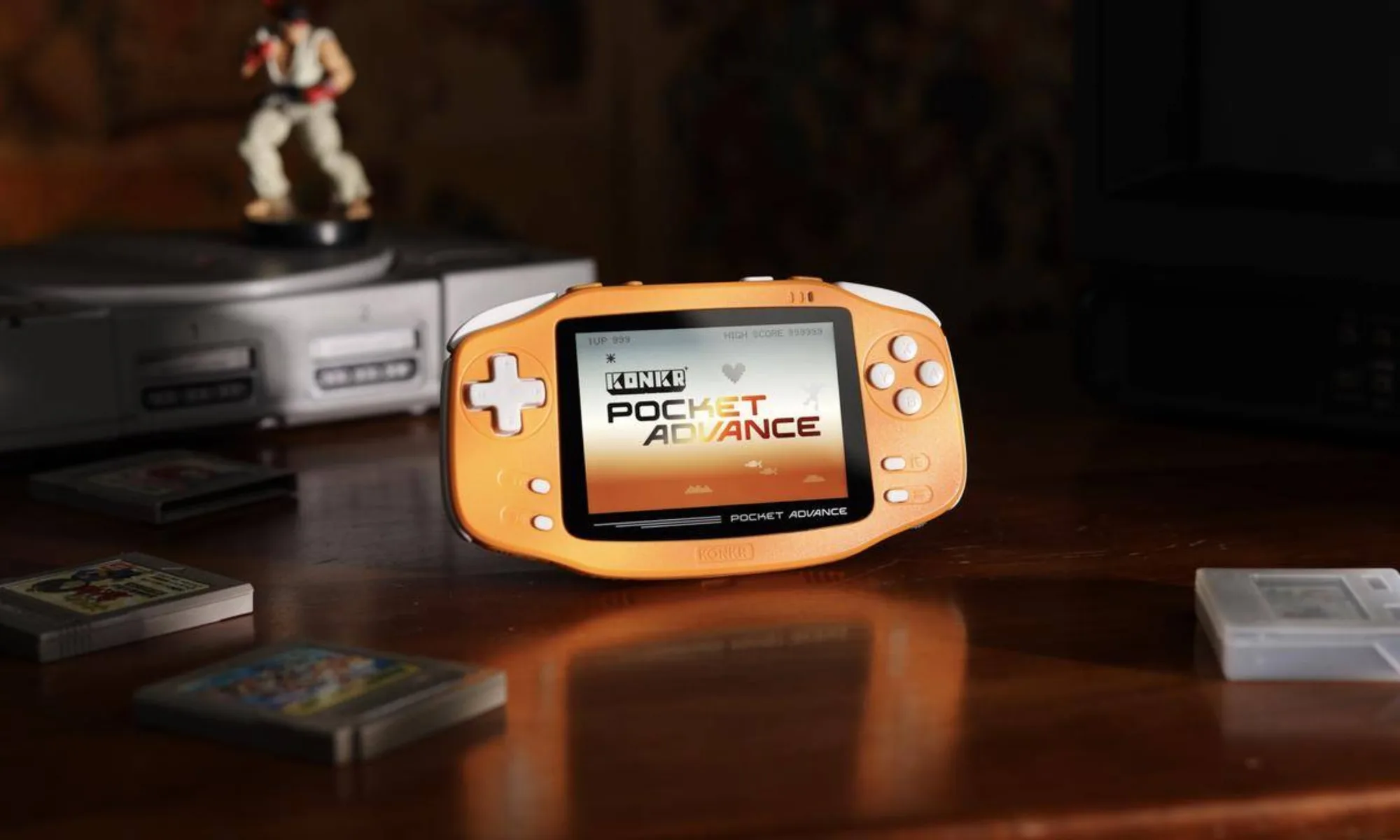
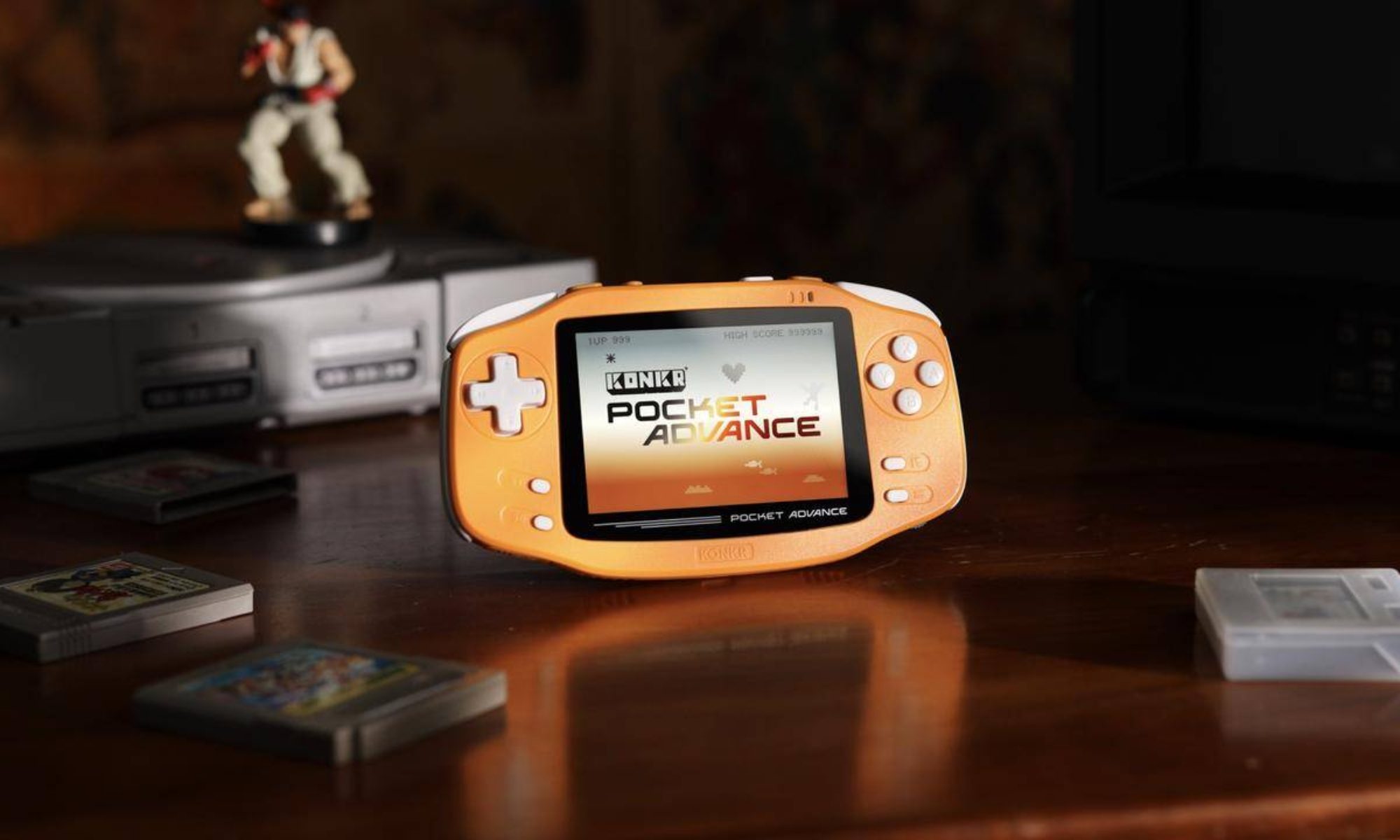
The Game Boy Advance is celebrating its 25th anniversary in the US, and while Nintendo has largely chosen to honor the handheld through its Switch Online library, another company has decided to recreate the hardware itself. Chinese handheld maker Ayaneo has unveiled the Konkr Pocket Advance, a modern reinterpretation of the iconic Game Boy Advance that updates almost every part of the original while preserving the horizontal design that made Nintendo’s console so beloved.
Rather than building a nostalgia piece that simply looks like the original, Ayaneo is targeting the growing retro gaming market with modern hardware. The Konkr Pocket Advance features a higher-resolution display, additional controls, USB-C connectivity and wireless support, making it less of a replica and more of a contemporary handheld inspired by one of gaming’s most influential consoles.
The announcement also arrives at a time when retro handhelds are becoming a serious product category rather than a niche hobby. Companies such as Anbernic, Retroid, Miyoo and Ayaneo have spent the last few years proving that there is sustained demand for devices designed around classic games instead of cutting-edge graphics.
A familiar design with modern hardware underneath
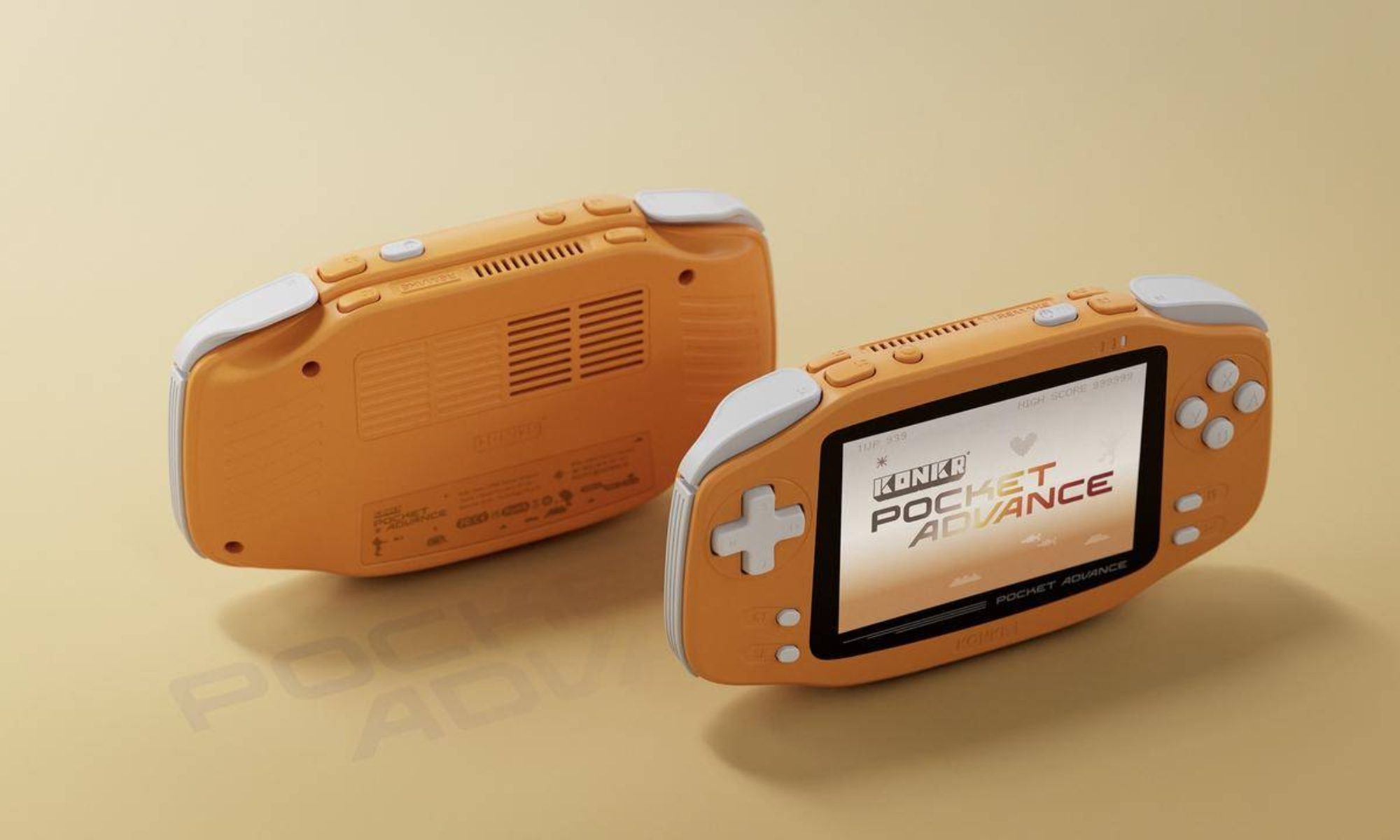
At first glance, the Konkr Pocket Advance is unmistakably inspired by the original Game Boy Advance. It retains the signature horizontal layout while introducing a 3.5-inch display with a 960 × 640 resolution, considerably sharper than Nintendo’s original hardware. Ayaneo has also added a full set of ABXY buttons, additional menu and shoulder buttons, USB-C, microSD expansion, Wi-Fi, Bluetooth, a 3.5mm headphone jack, and even a dedicated volume wheel.
Advertisement
KONKR Pocket AdvanceAyaneo
The handheld will initially launch in two color options: a navy blue inspired by the classic Indigo Game Boy Advance and a coral orange reminiscent of Nintendo’s Spice Orange edition, which was originally exclusive to Japan. Ayaneo has not announced pricing or a release date but says the device will arrive later this year. Unlike some of its earlier limited-production handhelds, the company also expects broader availability for the Pocket Advance.
Retro gaming is no longer just about nostalgia
Ayaneo’s latest handheld highlights a broader trend that Nintendo itself has been surprisingly cautious about. Despite the enduring popularity of the Game Boy Advance and a library that includes classics such as Advance Wars, Golden Sun, Metroid Fusion, Pokémon FireRed and LeafGreen, The Legend of Zelda: The Minish Cap and WarioWare, Nintendo has shown little interest in producing dedicated retro hardware beyond occasional emulation through Switch Online. The accompanying retrospective in Engadget underscores just how influential those games remain two and a half decades later.
KONKR Pocket AdvanceAyaneo
That has created an opportunity for third-party manufacturers. Modern retro handhelds no longer appeal only to collectors; they attract players who want sharper displays, rechargeable batteries, wireless connectivity and ergonomic designs without sacrificing access to classic games.
The Konkr Pocket Advance won’t replace Nintendo’s original hardware in the hearts of longtime fans. But it does reflect something increasingly clear about the gaming industry: while Nintendo owns the memories, companies like Ayaneo are becoming remarkably good at selling the hardware people wish Nintendo still made.
Brazil ordered Jair Bolsonaro to stay silent. Last weekend, a giant AI version of him addressed a campaign rally anyway.
At the launch of his son Flávio’s presidential bid in São Paulo on Saturday, a video avatar of the jailed former president loomed over the crowd. The clever part was the confession. “What you see here is not me,” it said. “This is a simulation of my image and my voice using artificial intelligence.”
Then it campaigned. “As everyone here knows, I am imprisoned and silenced by an unjust and arbitrary decision,” the avatar said, before asking the crowd to back Flávio, “blood of my blood.” Bloomberg timed the clip at 46 seconds, and both Reuters and AFP reported the appearance.
Why this is not a normal deepfake
The debate over AI in elections has focused on lies: fake videos that trick voters into believing something false. This clip does the opposite. It announces that it is synthetic. That honesty is the whole gambit.
Advertisement
Bolsonaro is under house arrest, serving 27 years for plotting a coup after he lost the 2022 election to President Luiz Inácio Lula da Silva. A condition of that arrest is a ban on public communication, on social media or by any other means. He cannot phone, post or speak to a rally.
An avatar can. That is the loophole the courts must now weigh: not whether the video deceived anyone, but whether a disclosed simulation lets a court-silenced man keep campaigning through a screen.
The legal fight
The challenge came fast. On Sunday, a coalition of Lula’s campaign and other left and centre-left parties petitioned the Superior Electoral Court, the TSE. They argued Brazil’s rules bar synthetic content that reproduces a real person to sway voters.
Flávio’s team fired back a day later. The video broke no rule, they said, because it disclosed its use of AI, caused no harm and never mixed fabricated footage with real images. On that reading, it is not a deepfake at all.
Advertisement
Jair Bolsonaro, through his lawyer Paulo Cunha Bueno, denied authorising anything. He “did not authorise the use of his image and voice,” the lawyer wrote, and “could not have done so,” since he is barred from seeing visitors. He added that the former president had never objected to his children using his image.
A court he helped build
The judges are split in tone. The TSE’s president, Justice Kássio Nunes Marques, whom Bolsonaro appointed to the Supreme Court, said using AI to campaign is permissible. What is forbidden, he added, is using it to harm someone.
Supreme Court Justice Alexandre de Moraes was sharper. Authorising the video could be a “serious violation” of the house-arrest terms, he warned, and using Bolsonaro’s image to imply he is campaigning could amount to electoral disinformation.
The stakes are steep. The TSE could disqualify Flávio’s run if it finds the clip broke the rules. Bolsonaro himself is unlikely to be punished, said Insper law professor Ivar Hartmann, because he can argue he neither recorded nor approved it. One Lula coordinator predicted the most heavily litigated election since Brazil returned to democracy.
Advertisement
The rules are already behind
Politicians are reaching for avatars faster than the law can frame them. Malaysia’s prime minister has fielded his own AI stand-in, and regulators are scrambling to respond. France plans to triple the penalties for AI-driven election disinformation.
Most of those rules turn on disclosure. The EU’s AI Act will force a label on synthetic media, and Brazil’s own code targets fabricated content that misleads. The Bolsonaro clip met that bar and marched straight through it. India is wrestling with the flip side, opening a case over altered videos of its prime minister.
That is the gap this stunt exposes. A label tells you a video is fake. It does not tell you whether a jailed politician should be allowed to speak through it. Brazil votes on 4 October. Its court has until then to decide.
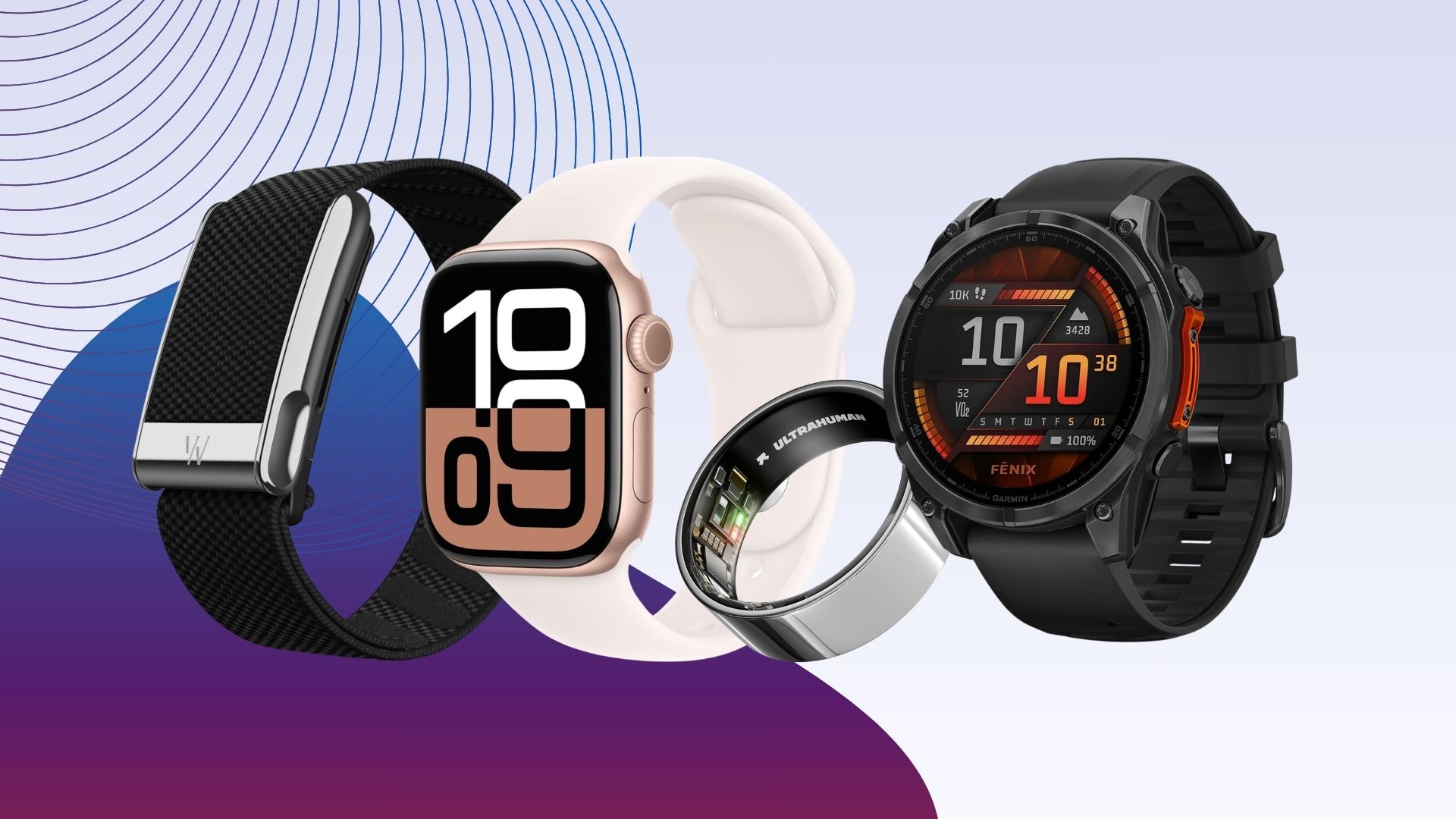
Looking to upgrade your fitness tracker, or even get one for the first time? You’re in the right place with our collection of the best fitness trackers on the market.
One of the best goals you can set for yourself at any point of the year is to lead a healthier lifestyle, but the problem is that unless you’re signing up with a personal trainer, it can be tricky to know where to start or how to keep tabs on your progress. With that in mind, having a dedicated fitness tracker on your wrist is a great place to start.
Not only can these devices track your heart rate and effort during workouts to get a look at how your body reacts to certain exercises, but they can also suggest workouts to try and guide you towards getting a better night’s sleep, which is crucial for recovery. Of course, if you’ve had even a cursory glance at the amount of fitness trackers available, the sheer degree of choice can feel a bit overwhelming.
Luckily for you, we’ve personally tested countless fitness trackers, observed how they perform in the real world, and documented our results. Off the back of that testing, we’ve put together the following list to let you know which fitness trackers impressed us the most, and why they’re worth buying.
We use every fitness tracker we review as our primary wearable for at least a week – or longer, if the battery life lasts beyond that point or we need more time to trial its features.
During that time we will test it on a variety of different activities. These will range from basic step tracking, to how well it tracks runs, swims, cycling and more.
Advertisement
For distance tracking, we assess how accurately the device records runs on tracks we know the length of. We also evaluate the level of battery life lost per hour using features such as built-in or connected GPS. To check heart rate accuracy, we compare the results from the wearable to a dedicated HRM strap.
Next we combine the data recorded with our general experience of using the wearable day-to-day, revealing whether the device proved comfortable to wear, alongside any issues we may have encountered with unexpected bugs over the review period.
We then evaluate key metrics including app support, usability and battery life.
Slim and very comfortable to wear
Goes well beyond claimed seven days of battery
Google Health app is fantastic
Some of the best, most helpful uses of AI yet
Advertisement
No on-wrist charging
No bicep strap accessories
Lacks built-in GPS
If you want a fitness tracker that stays completely out of your way and never pesters you for attention, the Google Fitbit Air is the best screenless option you can buy right now, and the Google Health app is a big reason why.
The screenless design keeps your focus on your day rather than your wrist. It’s genuinely slim, sliding under a shirt cuff without any bulk, and light enough that you’ll forget you’re wearing it overnight. Sleep tracking held up well in our testing, catching the disturbances we remembered and closely matching how rested we actually felt the following morning.
The real draw here isn’t the hardware itself; it’s how the Air connects into the new Google Health app. There are no cluttered dashboards or walls of numbers you’ll never read. The app runs on both iOS and Android and points you toward things you can genuinely act on, largely through Google’s AI-driven Health Coach.
Advertisement
That coach genuinely surprised us during testing. Tell it you work from home, or that Mondays start at 6am, and it shifts its workout and sleep suggestions to match. You can also log meals or extra activity by voice or by snapping a photo, which is a handy shortcut if food tracking is already part of your routine.
There is a catch worth knowing about. Full access to the coaching features requires a Google Health Premium subscription at £7.99/$9.99 a month. Given the Air itself costs £84.99/$99.99, we think that’s a reasonable ask, particularly when you put it next to what a Whoop membership demands. Skip the subscription and you still get the core fundamentals: heart rate, steps, and sleep data.
For workouts, the Air logs heart rate, calories, and steps, but with no screen you’re either reaching for your phone mid-run or going by feel. Some people will prefer that simplicity. Others won’t.
Battery life is a genuine highlight, with close to ten days per charge in our testing, well beyond the seven days Google claims. There’s no bicep strap option, but 5ATM water resistance means swimming is covered, and replacement straps are reasonably priced.
The Garmin Fenix 8 Pro takes everything that has made the Fenix series a firm favourite among endurance athletes and layers on a set of useful additions that push it even further ahead of the competition.
At its core, you get the same multi-band GPS, Elevate Gen 5 heart rate sensor with ECG readings, and Garmin’s mapping and navigation stack that remains the best in the business. The training analysis tools go deep enough to satisfy even the most data-obsessed athletes, with Training Readiness telling you when to push hard and when to ease off, Garmin Coach now extending to strength plans alongside running ones, and Daily Suggested Workouts giving you a structured training week without having to build one yourself.
Preloaded topographic maps are ready straight out of the box, with Up Ahead and Dynamic Round-Trip Routing proving particularly useful on race day or during longer adventures, flagging waypoints and rebuilding routes on the fly.
Where the Pro really distances itself from the standard model is in connectivity. Built-in LTE allows for calls, messages, location sharing, and live tracking without needing a phone in your pocket, while integrated InReach satellite technology picks up coverage the moment you venture properly off-grid. SOS functionality and Garmin Response back everything up if things go wrong.
Advertisement
There is also a 51mm MicroLED variant available which is brighter and sharper than the AMOLED, making maps and data noticeably easier to read in strong sunlight.
For those who want the deepest training tools, the finest mapping available, and the peace of mind that comes from LTE and satellite messaging, the Fenix 8 Pro is exceptionally hard to beat.
Advertisement
Most of that good Garmin sports tracking
Useful big screen for viewing maps
It’s really light to wear
Misses out on Garmin dual-band GPS and ECG
Square design isn’t all that eye-grabbing
Battery life in always-on display mode
It’s taken Garmin a while to embrace the direction of the smartwatch industry at large fully, but the wait has very much been worth it thanks to the brilliance of the Garmin Venu X1.
Unlike the more rugged, adventure-focused Garmins of old, the Venu X1 charts a new path to serve as a more direct competitor to the Apple Watch Ultra 2.
Advertisement
Even just by looking at it, you can tell that the Venu X1 is nothing like Garmin’s usual batch of devices – its square design is straight out of the Apple playbook, and instead of the chunkier frame that you might see on the Fenix 8 or the Enduro 3, this fitness tracker is incredibly slim, being just 7.9mm thick.
Alongside the revamped design is a new screen that really shows off Garmin’s operating system in its best light. This two-inch panel isn’t just massive, with plenty of room to show off the watch face and any workout metrics, it’s also wonderfully bright with a colourful AMOLED panel.
When you are diving into that data, it’s very much the same experience that we’re used to seeing with Garmin’s very best watches. From our testing, heart rate data was largely in sync with a dedicated chest-worn heart rate strap, and you can see exactly which parts of a run had you struggling, giving you insight as to where you need to improve in the future.
All of this is great, but one of the key reasons why you’d want to choose the X1 over the Apple Watch Ultra 2 is the inclusion of an eight-day battery life. That destroys the two-day stint of Apple’s wearable, which also happens to be a fair bit more expensive. Throw in the fact that the watch also has a built-in torch which can be used to find your way on a trail, and it’s easy to see why the Garmin Venu X1 is among our favourite fitness trackers right now.
Advertisement
SQUIRREL_PLAYLIST_10207770
Good overall fitness and sports tracking
Improved user interface
Slimmer than the Vivoactive 5
Advertisement
Largely the same design as Vivoactive 5
Doesn’t include the latest sensor technology
Just one case size option
While the absolute top-tier Garmin wearables will always be worth picking up for those who spend almost all of their time exercising, the company’s entry-level/mid-range options are now so good that they’re a far better buy for the majority of people. With that in mind, if you enjoy going to the gym, attending the local park run or are simply tempted to start making moves towards a healthier lifestyle, the Garmin Vivoactive 6 is the ideal wearable companion.
Even though it packs a relatively affordable price point of £279.99/$299, the Vivoactive 6 still has the same great fitness and sports tracking software that has made Garmin such a mainstay in this industry. Daily step tracking is reliable, as is the Body Battery monitor which gives you an idea of how much energy you have left in the tank so that you can tweak your next workout accordingly.
There’s GPS tracking for when you’re delving into an outdoor workout, letting you see after the fact which parts of your route had you struggling, and there’s even onboard storage so that you can listen to your go-to running playlists offline and without needing your phone with you.
Advertisement
All of this is shown to you via a gorgeous 1.2-inch AMOLED display that not only makes Garmin’s watch faces pop with an eye-catching level of contrast, it’s also incredibly easy to read in darker scenarios, which couldn’t always be said for some of Garmin’s older displays.
Compared to its predecessor, the Vivoactive 6 is now slimmer, so it can sit on your wrist and feel less obtrusive than before. The upgraded UI also feels like a step in the right direction, making the Vivoactive 6 feel far more intuitive and closer In style to what you’d get with more traditional smartwatches. As a final note, the Vivoactive 6 manages to decimate competing devices from Apple and Samsung where battery life is concerned, reaching up to 11-days of use on a single charge.
Advertisement
Comfortable to wear 24/7 with strong quality display
Nice array of features for the price
Gets new mini-workouts feature
More limited app store access
Inconsistent feature support across iOS and Android
Agreeing to consent on every feature
Budget-conscious athletes who can live without the premium extras found on more expensive wearables should put the Huawei Watch Fit 5 near the top of their shortlist.
For something sitting at £149.99, it packs in a great deal. The 1.82-inch AMOLED display is bright and punchy, and it sits alongside two physical buttons that work in tandem with the touchscreen to help you navigate HarmonyOS 6.10 without any fuss.
Advertisement
An optical heart rate sensor handles real-time tracking while also running Pulse Wave Arrhythmia analysis, which can flag serious conditions like atrial fibrillation. Runners and cyclists benefit from deeper workout metrics too, with the added option to pair external sensors such as power meters, which is an impressive inclusion at this price point.
A standout addition is the new mini-workouts feature. These are short, simple sessions that can be completed pretty much anywhere, with each one taking just 30 seconds, making it easy to sneak some movement into your day without a great deal of effort.
Rounding things out, the Watch Fit 5 tracks sleep quality and general wellbeing alongside dual-band GPS, 5 ATM water resistance, and up to 10 days of battery life on a single charge. For those taking their first serious steps into fitness tracking, it’s a compelling package.
Advertisement
Added ceramic case model
Lovely, sharp and vibrant AMOLED display
Good GPS and heart rate tracking accuracy
Remains a button-free band
No Bluetooth calls
Mi Fit app could be slicker
Xiaomi has taken what made the Smart Band 9 Pro a solid budget pick and pushed things noticeably further with the Band 10 Pro.
Advertisement
The design feels more premium this time around, there’s even a ceramic edition for those who want something a bit more special. The AMOLED panel has grown to 1.74 inches with a peak brightness of 2,000 nits, meaning it’s genuinely readable in direct sunlight in a way that cheaper trackers often aren’t.
Like the Smart Band 9 Pro, the Band 10 Pro also brings built-in GPS, so you can head out for a run or ride without your phone in your pocket. A new PPG module and reworked algorithms have sharpened heart rate and sleep tracking, too, which were areas where the Smart Band 9 Pro could be hit-or-miss.
There are over 150 sports modes on board, and 5 ATM water resistance means swimming is no problem, with dedicated pool and open water modes included. If contactless payments matter to you, there’s an NFC version available at a slightly higher cost.
Battery life reaches up to 21 days, though leaning on GPS and the brighter display will bring that figure down. The companion app remains fairly bare-bones, particularly around workout breakdowns and sleep analysis, but it handles the basics without getting in the way.
Advertisement
At £69.99, the Band 10 Pro is one of the strongest cases for spending just a little more than the absolute minimum on a fitness tracker.
Screen is nice and bright
Sapphire glass for added screen protection
Some useful new running metrics
Advertisement
Battery drop from the the 965
The price has increased massively
Garmin heart rate monitor needed for new metrics
The Garmin Forerunner 970 is the best option for cardio tracking on this list, earning that spot by packing a sharp AMOLED display, best-in-class sensor accuracy, and a suite of running-specific tools into one seriously capable sports watch.
Garmin’s shift to AMOLED has been gradual, but the 970 shows the company has fully found its footing with the format. The panel is notably brighter than what you’d find on older Forerunner models, and the addition of sapphire crystal protection means it holds up better against scratches than most rivals in this category.
The software side runs on Garmin’s own operating system, which works smoothly with both iPhones and Android devices. Garmin Connect remains the hub for syncing data and adjusting settings, and a new optional Connect+ subscription adds AI-driven insights on top of the standard experience. The watch itself gets a reworked interface that tries to blend sports and smartwatch functionality more naturally than previous generations managed.
Advertisement
Where the 970 really separates itself is in tracking depth. Multiband GPS and an upgraded sensor array put it near the top of the field for accuracy, and two new running-specific metrics, running economy and running tolerance, give you a clearer picture of how your training is actually affecting your body over time.
The one genuine drawback is battery life. At roughly 4 to 5 days of moderate use, it falls a long way short of the 15 days delivered by its predecessor, the Forerunner 965. If runtime is your main concern, the 965 remains the smarter buy. For anyone else who wants the most advanced cardio tracking on this list, the Forerunner 970 is an outstanding pick; just be prepared for the premium asking price that comes with it.
Advertisement
Fantastically compact, premium design
Great overview of health and fitness
Polished, clutter-free app experience
Excellent battery life and rapid charging
No real changes to the app
New software features are region-locked
Requires a monthly subscription
The Oura Ring 5 is our top pick for the best smart ring you can buy right now, and it earns that spot in large part because of how far Oura has pushed the design.
Where the Ring 4 came close to looking like genuine jewellery, the Ring 5 is the first version that actually pulls it off. At 6.09mm wide and 2.28mm thick, it sits among the slimmest rings available anywhere, and the titanium build not only keeps things lightweight but also offers noticeably better scratch resistance than before. The gold version we tested came across as convincingly premium, which isn’t something you could say about every smart ring out there.
Advertisement
Beneath that refined exterior, the Ring 5 delivers the same sharp sleep and wellness tracking that built Oura’s reputation. The readiness score and sleep breakdowns remain some of the best you can get from any wearable, giving you a clear picture of how your body is recovering and where adjustments are worth making.
The one consideration worth flagging is that, unlike some rivals, Oura still operates on a monthly subscription model. At £5.99/$5.99 per month, you get access to a clean, polished app with smart food tracking and an AI health coach built in, but it is an ongoing cost you will need to factor into your decision before committing.
Advertisement
Attractive and very comfortable design
Bigger display doesn’t feel huge on the wrist
Fun addition of mini-workouts
Not a radical upgrade on the Fit 4 Pro
Android users will enjoy stronger smartwatch support
Huawei Health app is still full of bloatware
The Watch Fit 5 Pro is the best pick on this list for those who want a Huawei fitness tracker with serious stamina and a genuinely useful set of health monitoring tools, even if it doesn’t always steal the spotlight from flashier models in the range.
At first glance, the 44.5mm case bears a resemblance to an Apple Watch, and Huawei has stuck closely to the design language of its previous Pro model. The lug-style connector makes swapping straps a much less fiddly process than the pin mechanisms found on other Huawei smartwatches.
Advertisement
Where the Fit 5 Pro starts to diverge from the competition is in its software. iPhone users will feel boxed in, unable to act on notifications or access the full app library, while Android users get a better deal with a handful of useful extras. That said, Huawei’s own wellness tools are genuinely worth having. Sleep tracking and stress monitoring both performed well during our testing.
Fitness tracking is where the Fit 5 Pro really earns its place on this list. A wide range of sport modes covering walking, running, and hiking are all backed by dual-band GPS for accurate route and pace data.
The 5ATM water resistance rating extends to recreational diving at depths of up to 40 metres, which is a genuinely impressive spec for a fitness tracker at this level. There is also a new mini-workout feature that nudges you into simple exercises during periods of inactivity.
Battery life came in at around a week during our testing, which is a strong showing for stamina among fitness trackers in this category.
Advertisement
Same great swim tracking and AR display
Adds tougher display material
Battery life remains strong
No software differences from Swim 2
Added a process to protect against lens fogging
The hardware and subscription combo still isn’t cheap
Advertisement
Form’s smart swimming goggles have earned a loyal following for good reason, and the second-generation Smart Swim 2 Pro remains one of the most compelling options on the market.
Any swimmer who has tried tracking their sessions with a wrist-based watch will know that glancing down mid-lap is less than ideal, and that is precisely where these goggles carve out their niche. The built-in AR display puts your pace, distance and heart rate directly on the lens, so you can check your metrics without breaking your rhythm for a second.
Stroke detection proved accurate during testing, picking up different techniques without issue, and lap counts stayed reliable throughout. Battery life sits at 14 hours, which is enough to cover several sessions before you need to reach for the proprietary magnetic charging cable, though that is one area where Form asks you to play by its own rules.
The Swim 2 Pro’s tougher Gorilla Glass 3 lenses make it the better choice for swimmers who spend more time in open water or regularly train in more challenging conditions. They should stand up better to knocks and wear than standard plastic lenses, adding extra reassurance for anyone who is harder on their kit.
Advertisement
Comfortable to wear 24/7
Solid heart rate tracking accuracy
Useful for daily activity and sleep tracking
Overly sensitive exercise recognition support
Zepp Health app still needs refining
General sports tracking could be improved
Advertisement
The Amazfit Helio Strap is one of the most compelling subscription-free fitness trackers you can buy right now, and it earns that distinction by delivering a deep feature set without asking for a penny beyond the upfront cost.
There is no screen, which will immediately put some buyers off, but for anyone who finds constant wrist notifications a distraction during training, that absence is actually a selling point rather than a shortcoming.
The feature list is impressive for the price. You get 27 sports modes, 25 strength exercises that the strap detects automatically, and a dedicated Hyrox race mode for tracking combined running and effort. That kind of sports coverage would be noteworthy on a device priced twice as much.
Accuracy is where the Helio Strap really justifies its place on this list. Heart rate tracking held up well throughout testing, and VO2 Max estimates were similarly reliable. BioCharge Wake, Zepp Health’s take on a readiness score, tracked closely with readings from an Oura Ring worn simultaneously, which is no small feat.
Advertisement
Sleep tracking was a highlight too, with wake and sleep times, sleep stages, and overnight heart rate data all consistent with what the Oura Ring recorded on the other wrist. Battery life is rated at up to 10 days by Amazfit, but expect closer to a week once continuous stress monitoring and blood oxygen tracking are switched on.
At £99/$99 with no subscription required, the Helio Strap is an easy pick for anyone who wants capable, out-of-the-way fitness tracking without an ongoing monthly commitment.
Advertisement
FAQs
Do you need in-built GPS for a fitness tracker?
GPS is a key functionality we recommend any buyer who regularly exercises outdoors invest in. The feature uses satellite networks to offer reliable location and distance tracking. This lets most trackers with it provide better analytics on activities like hiking, outdoor running and cycling.
How much should you spend on a fitness tracker?
Advertisement
The answer to this depends largely on what you want to use the tracker for. If you want a top-end multi-sports tracker to help you train for a triathlon, then you’ll want to spend a little more on a tracker with a decent water resistance rating, reliable in-built GPS and lengthy battery life. These tend to cost $400/£400-plus. But if you’re just getting started and only need basic features like step tracking and heart rate zones, there are plenty of decent, affordable trackers, many of which cost less than $150/£150.
Which is better, Fitbit or Garmin?
Whether a Fitbit or a Garmin smartwatch is better for you will depend on your usage. Generally speaking, a Fitbit will likely suffice for beginners, those looking for a more general overview of their health and fitness, and those who don’t necessarily have over £400/$400 to spend on a wearable.
Advertisement
However, if you’re looking for a smartwatch that offers a closer, more in-depth look at your health and fitness and want to benefit from additional features, such as a built-in LED torch or accurate GPS tracking, then a Garmin is likely to suit you better – as long as you have the budget.
Plus, as Garmin offers such a varied range of smartwatches, you’re bound to find a wearable that suits your lifestyle best. Our list of the best Garmin smartwatches offers more insight.
For a closer look at the differences between the two smartwatch brands, visit our Garmin vs Fitbit guide.
Advertisement
Full Specs
Google Fitbit Air Review
Garmin Fenix 8 Pro Review
Garmin Venu X1 Review
Garmin Vivoactive 6 Review
Huawei Watch Fit 5 Review
Xiaomi Smart Band 10 Pro Review
Garmin Forerunner 970 Review
Oura Ring 5 Review
Huawei Watch Fit 5 Pro Review
Form Smart Swim 2 Pro Review
Amazfit Helio Strap Review
Manufacturer
Google
Garmin
Garmin
Garmin
Huawei
Xiaomi
Garmin
–
Huawei
Form
Amazfit
Screen Size
0 inches
1.4 inches
2 inches
1.2 inches
1.82 inches
1.74 inches
1.2 mm
0 mm
1.92 inches
–
–
IP rating
IP68
IP68
Not Disclosed
IP68
IPX6
IP68
Not Disclosed
IP68
IP68
IP68
IP68
Waterproof
5ATM
10ATM
5ATM
5ATM
5ATM
5ATM
5ATM
5ATM
5ATM
5ATM
5ATM
Battery
–
–
–
–
–
350 mAh
–
22 mAh
471 mAh
–
232 mAh
Size (Dimensions)
17 x 34.9 x 8.3 MM
47 x 16 x 47 MM
46 x 7.9 x 41 MM
42.2 x 10.9 x 42.2 MM
42.9 x 9.5 x 38.2 MM
32.2 x 9.7 x 42.8 MM
47 x 12.9 x 47 MM
6.09 x 6.09 x MM
44.5 x 9.5 x 40.8 MM
x x INCHES
34 x 10.6 x 24.3 MM
Weight
12 G
73 G
37 G
36 G
27 G
28 G
56 G
2 G
30 G
70.5 G
20 G
ASIN
–
–
–
B0F38GK1QZ
–
–
B0F8QZ7233
–
–
–
–
Operating System
–
Garmin OS
–
Garmin
HarmonyOS
HyperOS
–
–
–
–
–
Release Date
2026
2025
2025
2025
2026
2026
2025
2026
2026
2025
2025
First Reviewed Date
26/05/2026
06/10/2025
02/07/2025
14/05/2025
23/07/2026
05/06/2026
03/07/2025
08/06/2026
07/05/2026
08/09/2025
15/09/2025
Colours
–
–
Black
Lunar Gold, Slate, Metallic Jasper, Metallic Pink Dawn
Silver, Purple, Green, White, Black
Black, White, Pink, Silver
Black, Green, Purple
Black, Silver, Stealth, Brushed Silver, Gold and Deep Rose
Anyone with a keen interest in the European car market will know that Cupra parted ways with its sister company Seat way back in 2018 to become the high-performance, funky standalone brand to attract the attention of a more youthful buyer.
The gamble paid off, as Cupra now outsells Seat in most regions, thanks to its heady line-up of handsomely styled SUVs and sporty hatchbacks, all with a fine selection of electrified powertrains.
This latest edition to the family, the relatively diminutive Raval, is the first of its kind to sit on parent company VW’s MEB+ platform, which will also underpin the upcoming and equally spicy ID Polo (including the GTI), the ID Cross and Skoda’s more crossover focused Epiq.
Latest Videos FromTechRadar
Advertisement
(Image credit: Cupra)
But Cupra being Cupra has seen fit to endow the Raval with almost comically sporty proportions, a fabulously appointed interior and the sort of electric powertrain that is designed to have true driving fans won over.
Having driven the top spec VZ models out on the beautifully flowing roads of northeastern Spain, it’s clear that there is still room for the compact, agile hot hatch in the often soulless world of modern EVs.
Seriously styled
(Image credit: Cupra)
You only have to take a look at one of the many recent Cupra events to realize that the company approaches new product launches a little differently.
These shindigs are typically held in warehouses and other industrial settings, often involve world-class DJs and incorporate faces from fashion, sports and culture.
Sign up for breaking news, reviews, opinion, top tech deals, and more.
Advertisement
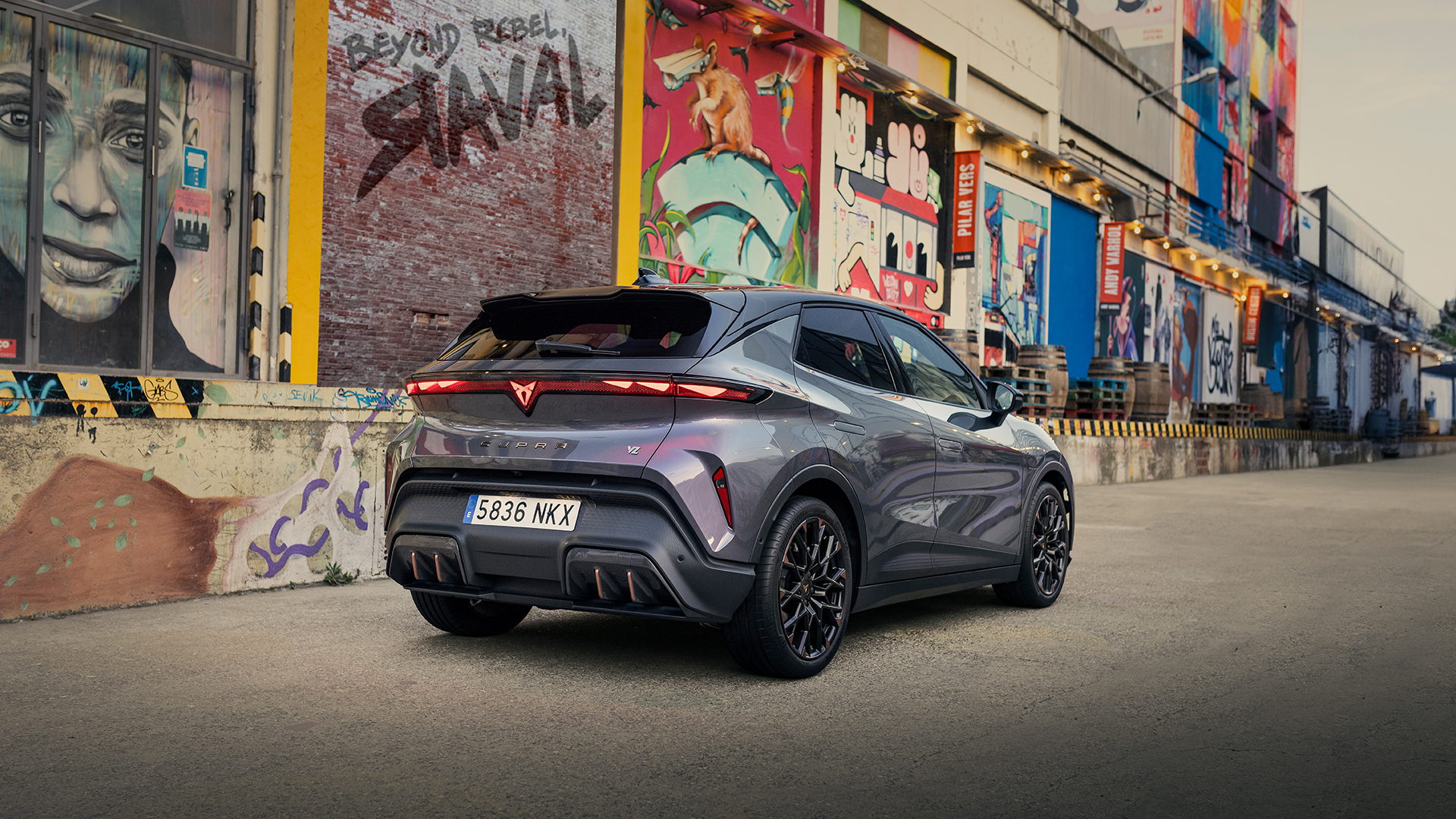
The overemphasized creases on the bonnet, super aggressive front lamps and chunky rear diffuser on this VZ model signal its racy intentions.
The Raval is all of this stuff distilled into a diminutive hatchback, with copper accents and contrast flourishes on the outside, myriad on-trend materials throughout the cockpit and the latest technology taking care of infotainment duties.
On the outside, the Raval rides low to the ground (well, as low as any modern EV can) and wears its squat proportions with pride.
The over-emphasized creases on the bonnet, super aggressive front lamps and chunky rear diffuser on this VZ model signal its racy intentions.
It also rides on 19-inch ‘Rebel’ rims and crams vegan leather bucket seats into the cockpit, as well as a 12.9-inch Android Automotive central display and a separate 10.25-inch digital cockpit that takes care of speed and whatnot.
(Image credit: Cupra)
Considering the Raval VZ starts at £34,9995 in the UK (that’s around $47,000 / AU$65,000), it feels like a generous dose of premium car for the money.
But for those happy with the smaller wheels and smaller battery pack (more on that later), the range actually starts from £23,785 (around $32,000 / AU$45,000) for the 115hp, 37kWh models.
Advertisement
Nice and spicy
(Image credit: Cupra)
Clearly, the VZ version driven here is a little ‘spicier’ when it comes its performance credentials, as it features the larger 52kWh battery pack and a powertrain that delivers 222bhp and 214lb ft to the front wheels in proper hot hatch fashion.
Prod the accelerator and the little Raval wants to move, whisking drivers and passengers from rest to 62mph in a respectable 6.8 seconds.
It even has a quasi launch control mode that sends little shudders and vibrations through the seat to make the process of accelerating feel more exciting.
Prod the accelerator and the little Raval wants to move, whisking drivers and passengers from rest to 62mph in a respectable 6.8 seconds.
Granted, it feels a little gimmicky but Cupra has done an excellent job of making the Raval feel as sprightly as its exterior lines would suggest.
Advertisement
Flick it into Cupra mode via a dedicated button on the steering wheel and, alongside a growling synthesized soundtrack, you’re treated to massive levels of grip.
This results in the ability to round corners with all the thrills of a go-kart, while the dynamic chassis control fitted to this VZ model keeps things flat and firm when the mood takes. Thankfully, it is adjustable through 15 stages, so you can easily get a set up that suits.
But when settling back down into Eco of Comfort modes, the Cupra does its best impression of a sensible, grown-up VW Group product, proving almost perfectly quiet and comfortable when cruising along the highway. The ride quality really is excellent.
Advertisement
Fuel for thought
(Image credit: Cupra)
Having driven almost too many EVs to remember, I have got into the habit of always checking battery efficiency after an event like this.
It’s a great indication of real-world driving, often taking in faster, flowing sections of road (where the regen will help top-up batteries), slower city driving and battery-sapping highway miles.
The Cupra Raval revealed that we averaged around 4.5 miles per kWh after a day of driving, which means we could have happily racked up over 200-miles from a single charge of the relatively small 52kWh NMC battery packs.
Cupra’s official WLTP rating has this pegged at 239-miles, which feels honest and achievable if driving sensibly… which I wasn’t during this particular test.
Advertisement
(Image credit: Cupra)
Raval’s recharging game is strong too, with a 10-80% session taking just 24-minutes from a 105kW DC public charger. It’s slightly longer than close rivals, such as the recent Renault 5 and Kia EV2, but neither of those cars can really be described as feisty.
But perhaps the most striking thing to note from the small, sporty hatchback is that there’s a decent amount of room inside. Two adults can very comfortably sit up front and there’s just enough room in the back for a few friends.
Admittedly, leg room in the rear isn’t exactly generous, but it’s very good in this segment, while the rear trunk is positively cavernous. Mounting the motor at the front results in an impressive amount of space to store bulkier items.
(Image credit: Cupra)
There’s even a clever folding floor that can be set at various levels, making it easier to throw in shopping when space isn’t required or free up a deeper hole for those weekend trips away.
Advertisement
The Cupra Raval offers a beguiling mix of sensible, grown up elements — such as the responsive Android Automotive-based infotainment system, practical interior space and premium-feeling fabrics — and laces it with a hefty dose of fun.
Granted, this isn’t the all-out hot hatch that we might be used to from the ICE era, but it gets very close.
Plus, with VW set to unleash an ID Polo GTI later this year with eerily similar performance figures, it makes you wonder if it’s worth holding out for that revered badge when the Raval VZ is this good.
Virtually every high-end GPU and AI accelerator relies on high bandwidth memory (HBM), which can shuffle data around at multiple terabytes a second but can only reach into the gigabytes, with models often needing to be shared across multiple processors. However, an emerging storage technology could change that, boosting accelerator memory capacity from hundreds of gigabytes to terabytes.
The technology, called high-bandwidth flash (HBF), is being developed by Sandisk and SK Hynix and aims to provide SSD-like capacities at HBM-like speeds.
Peeling back HBF’s layers
Conceptually, high-bandwidth flash looks and sounds a lot like HBM. It’s assembled by stacking multiple layers (16 in the case of Sandisk’s first-gen modules) of memory together, which boosts capacity and bandwidth. But where HBM uses DRAM, HBF aims to use NAND flash.
Sandisk claims its first generation of high-bandwidth flash will supposedly achieve read bandwidths up to 1.6 TB/s [PDF], making it a bit faster than HBM3e but significantly slower than HBM4, which is already hitting 2.5 TB/s per 12-high stack. Future HBF generations are expected to push bandwidth to over 2 TB/s and eventually 3.2 TB/s.
Advertisement
While bandwidth makes HBF interesting as an alternative to HBM, its real party trick is capacity. Because it’s built using NAND, Sandisk says it can achieve capacities up to 256 Gb per die, which translates to 512 GB per 16-high module. That’s more than 14 times the capacity of the HBM4 used in AMD and Nvidia’s latest accelerators.
Continuing with the similarities, HBF modules share similar packaging requirements to HBM, which means you can expect them to be fused to the GPU die using advanced packaging techniques like TSMC’s CoWoS, or Intel’s EMIB and Foveros tech. Nothing particularly exotic as AI accelerators go.
What’s more, the storage vendor doesn’t expect the modules to come at a power or price premium over HBM. And from a bits per dollar standpoint, HBF looks like a stellar option.
If all this sounds a bit too good to be true, that’s because for all of HBF’s benefits, it comes with some rather significant compromises.
Advertisement
NAND still isn’t DRAM
The main trade off, as we understand it, is write endurance and access latency. HBF may perform like HBM on paper, but it’s still using NAND, which has a finite write endurance before it wears out and has access latencies measured in microseconds as opposed to tens of nanoseconds for DRAM.
If you were to swap HBM for HBF, it (probably) wouldn’t perform very well and it’d wear out pretty quickly, rendering that $50,000-plus GPU of yours a paperweight — not ideal for a product that’s being asked to serve longer to suit hyperscalers’ depreciation schedules.
Instead, Sandisk and SK Hynix propose using HBF to supplement HBM to make inference more cost effective. HBM handles all the write intensive stuff while HBF takes care of the read heavy parts of the pipeline.
While we talk about inference as one job, it’s really a collection of many that can broadly be broken into two categories, one that’s compute intensive and another that’s bandwidth bound.
Advertisement
The first of these phases, called prefill, involves tokenizing and embedding prompts, feeding them through the model in one big forward pass, generating the key value caches used to track state, and outputting the first token.
The second, called decode, reads the entirety of the model’s weights, or in the case of a mixture of experts (MoE) models, their active parameters, from memory over and over again for each token generated. Because of this, how quickly an AI system can churn out tokens is directly proportional to how fast its memory is.
Prefill is comparatively write heavy, so it makes sense to do as much of that in HBM as possible. But the decode phase is almost entirely read, which makes HBF an ideal medium for storing model weights as write endurance really isn’t a factor.
It becomes a sort of write-once, read-many scenario, which is perfect for NAND flash since reads are essentially free. You could almost think about HBF a bit like a rewritable ROM cartridge for models. And because HBF is non-volatile, it becomes a bit like Intel’s Optane persistent memory. There is no need to wait for weights to reload from storage into GPU memory; they’re already there and ready to go.
Advertisement
Sandisk’s slides propose a couple of different options including one that would feature 3.12 TB of memory across two stacks of HBM and six stacks of HBF.
Oh the things you can do with all that memory
That much memory has implications for model and inference architectures.
Most frontier models at this point employ a mixture-of-experts (MoE) architecture, which means the model is really a collection of routed sub-models called experts, a small selection of which are used to generate each token.
This has allowed model devs to build models larger than would otherwise be practical to serve due to memory bandwidth constraints.
Advertisement
Because HBM’s capacity is so limited, these experts usually have to be spread across multiple GPUs connected by extremely high-speed interconnects. But with high-bandwidth flash, even multi-trillion-parameter models, like Kimi K3, could be packed into a single accelerator, mitigating any of the performance bottlenecks induced by the chip-to-chip interconnects.
On the flip side, HBF could allow a 72-GPU rack to run some truly massive models measuring hundreds of trillions of parameters.
Training such a model presents its own unique set of challenges, and the number of active experts/parameters would be limited by HBF’s bandwidth, but it could work.
So when?
So when can we expect to see HBF deployed in datacenters? If Sandisk is to be believed, the first samples should go out later this year with the first AI inference devices based on HBF available early next year.
Advertisement
But for a variety of reasons previously highlighted by our sibling site Blocks and Files, we’re not holding our breath.
One of the biggest factors is standardization. Memory is a commodity business and blazing your own trail with a proprietary technology rarely pans out — just look at Optane if you need evidence of that.
Sandisk and SK Hynix officially kicked off this process earlier this year under the auspices of the Open Compute Project.
“The key to AI infrastructure is to go beyond the performance competition of individual technologies and to optimize the entire ecosystem,” Ahn Hyun, president and chief development officer at SK Hynix, said at the time.
Advertisement
There are also manufacturing considerations to be made. HBF is going to require a lot more dies per module than your typical flash storage device. What’s more, from what we understand, the specific kind of NAND used to make these modules is different from the kind used to make SSDs and other flash storage.
Those modules will need to be copackaged with accelerators, which means SK Hynix and Sandisk will need to get buy-in from GPU and ASIC makers, which is going to take time. In fact, it wouldn’t be surprising for these modules to be ready years before the first chips designed to take advantage of them enter production.®
The first half of 2026 shows how attackers continue to improve the efficiency and scalability of their operations. Rather than relying on entirely new methods and tools, they are quickly adapting established techniques to new platforms, technologies, and user behaviors.
Artificial intelligence is playing a growing role in this development. In H1 2026, ESET analyzed nearly 900,000 AI skills – small functional components used by AI agents – and identified tens of thousands of suspicious and thousands of outright malicious instances.
The number of AI skills within this new ecosystem is growing rapidly “as we speak”, further expanding the attack surface.
AI is also beginning to appear within malware itself. Shortly after the emergence of the first AI-powered ransomware in 2025, ESET researchers identified PromptSpy, the first known Android malware to use generative AI in its execution flow.
Advertisement
The malware leverages AI – specifically, Google’s Gemini – to interpret user interface elements and adapt across devices and environments without relying on hardcoded behavior.
While still rare, PromptSpy illustrates the potential for increased flexibility in future threats – although guardrails against abuse included in LLMs are likely slowing down the adoption.
Trust has become one of the most valuable assets for cybercriminals to exploit.
ESET’s H1 2026 Threat Report reveals how attackers are increasingly using AI, social engineering, and ransomware innovations to scale their campaigns and evade detection.
ClickFix – a social engineering technique leveraging fake error messages – has expanded beyond fake CAPTCHA prompts into AI-themed help pages, browser extensions, and cloud authentication scenarios.
ESET detections of this vector more than doubled between H2 2025 and H1 2026, indicating sustained activity and adaptation.
Phishing campaigns are also evolving in response to user behavior. QR code phishing – also known as quishing – has reached record levels in ESET telemetry, with attackers embedding malicious links in QR codes to bypass cursory inspection and shift user interaction to mobile devices, while exploiting the implicit trust many people place in the black-and-white squares.
Last but not least, ransomware activity showed no signs of slowing down, with continued use of EDR killers – tools designed to disable security software during attacks.
Advertisement
ESET Research has documented over 100 EDR killers used in the wild, with new variants appearing regularly.
At the same time, data from multiple sources shows that a declining share of victims are choosing to pay ransoms, suggesting some progress in mitigation and response measures.
Add flair to your conversations and clean up those reactions everyone’s getting tired of seeing
guteksk7/Shutterstock
Emojis and GIFs are great for reactions and conveying emotion, but new emoji offerings arrive slowly and there are only so many of them. GIFs offer lots more options, but you can’t always find the right one to capture exactly how you’re feeling. If you’re looking for something that’s much more personalized to yourself and your friend groups, you need to check out stickers on your iPhone.
Stickers are a much more personal option that are a lot of fun to use in the Messages app (and elsewhere) on your iPhone. If you haven’t tried these custom “stickable” images yet, you’re missing out. Any photo or video from you or your friends can become a hilarious reaction image. And they’re easy to set up, with no photo editing skills required.
You can easily create stickers using your own photos, including animated stickers from Live Photos. A perfectly timed sticker can be funny in a group chat, great for inside jokes or inventing new memes between friends. After you make a sticker, it stays saved to your library for quick reuse later. And managing your stickers is simple too; you’re free to remove any you aren’t happy with or no longer use. Chances are that when you start using stickers, your friends will too, which means more amusing chats for everyone.
Advertisement
How to make stickers on your iPhone
Wachiwit/Getty Images
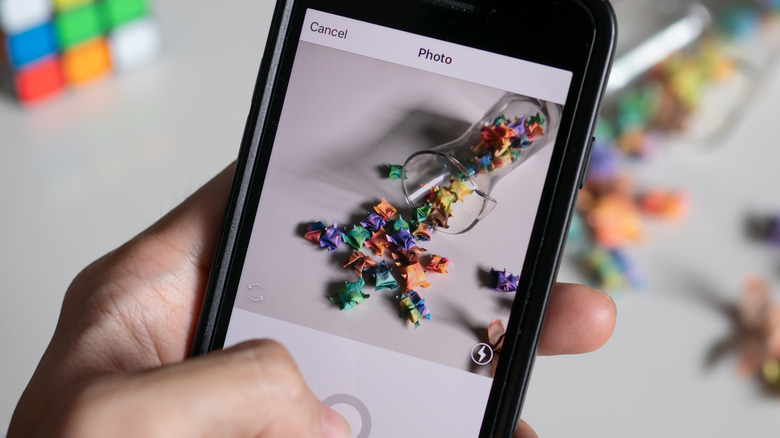
There are two possible routes when you want to create a new sticker: through the Photos app or in the Messages app. For the former, open Photos and find a picture that you want to build a sticker from. The best sticker candidates are images that have a clear subject in the foreground, like a person, animal, hand, or object.
After tapping to view the picture you want to build from, press and hold on the element you want to turn into a sticker. You’ll see it shine for a moment, then a tooltip menu will appear next to it. If this doesn’t happen, try a different element that’s more pronounced against the background (or another photo). Choose Add Sticker to save the sticker to your library. Repeat this to craft as many stickers as you like. You can sometimes even make multiple stickers from the same image. And if you select a Live Photo, your sticker will be animated (toggle off the Live option at the top-left to disable this if you’d rather it stay static).
If you prefer, it’s also possible to create stickers from the same menu you access them from. Open a conversation in the Messages app, select the + (Plus) icon to the left of the area where you type, and choose Stickers. There, hit the + (Plus) icon in your list of stickers. This opens your photo collection with a key difference from earlier: elements that can be converted into stickers appear highlighted without you having to press on them. Tap one, followed by + (Plus) at the bottom, to add it to your library.
Advertisement
Sending and managing stickers on your iPhone
DenPhotos/Shutterstock
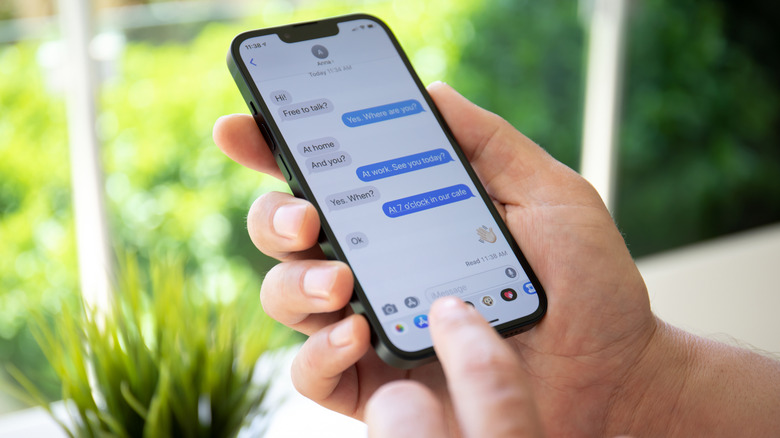
The Messages app is the best place to use stickers. Open the same + (Plus) menu mentioned above to see all the ones you’ve made so far. To manage them, press and hold one, then select Rearrange from the tooltip. This puts the stickers into a “jiggle mode” similar to when customizing the iPhone’s Home screen, allowing you to drag them around or tap the – (Minus) button to delete them in bulk. On the same tooltip menu, select Add Effect to jazz your stickers up a bit. You can pick from a few options like Outline and Shiny; some of these even react as you turn your iPhone, looking like a holographic trading card.
To send a sticker, tap it from your library. This adds it to your message draft just like when you attach a photo. For more fun, press and hold a sticker from your library to “peel” it, then drag it onto the conversation to “stick” it there. Try this to mess with texts and images in funny ways: have your pet photobomb your beautiful landscape shots, use your friend’s goofy face as a reaction, and whatever else you can think of.
Keep in mind that stickers are designed to work in iMessage conversations (those with blue bubbles). They should send in RCS chats with Android users but likely won’t show the “peel and stick” option properly. SMS conversations have strict size limitations, meaning stickers might appear blurry.
Advertisement
Other ways to use iPhone stickers
Hadrian/Shutterstock
Messages isn’t the only app compatible with your stickers. They’re usable in other messaging apps like WhatsApp; just tap the Emoji button at the bottom-left of your keyboard and choose the Stickers tab. You can’t “stick” them on messages like in iMessage, though. Stickers are also available in any iPhone app that features Markup mode. For example, try opening an image in the Photos app, tapping the Edit (sliders) icon at the bottom, then selecting the Markup (marker) icon at the top.
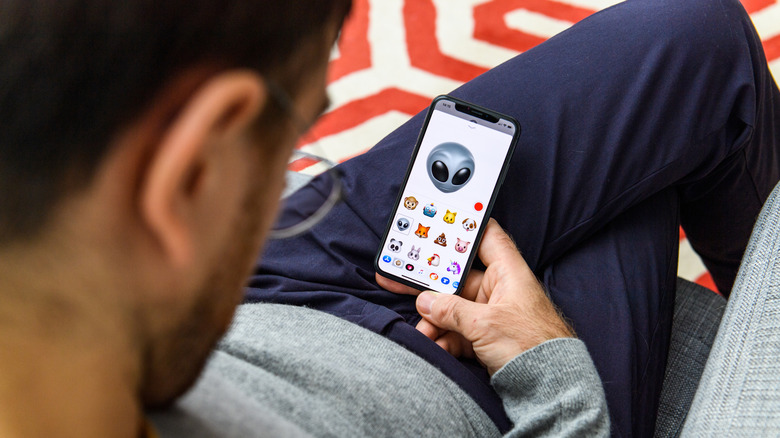
Once you’re in Markup mode, tap + (Plus) on the bottom toolbar and choose Add Sticker. You can move stickers around, change their size, and make copies. Be sure to save the edited image once you’re done. Other apps where Markup is available include Mail and Notes. If you’re feeling uninspired, tons of iPhone apps offer their own sticker packs. Inside the Stickers menu, you’ll see icons for emoji (any emoji can double as a sticker), custom Genmoji, Memoji, and compatible installed apps. On my phone, for instance, the American Airlines, Wikipedia, and Taco Bell apps offer their own stickers. Choose Edit at the far right to rearrange your sticker packs, following Get Sticker Apps on the App Store at the bottom if you’re interested in more.
Your created stickers sync to all devices using your Apple account, so try them out on your iPad and Mac too! They’re a great way to make your reactions more personal. There’s no wrong way to use them, so create a bunch and give them a try.
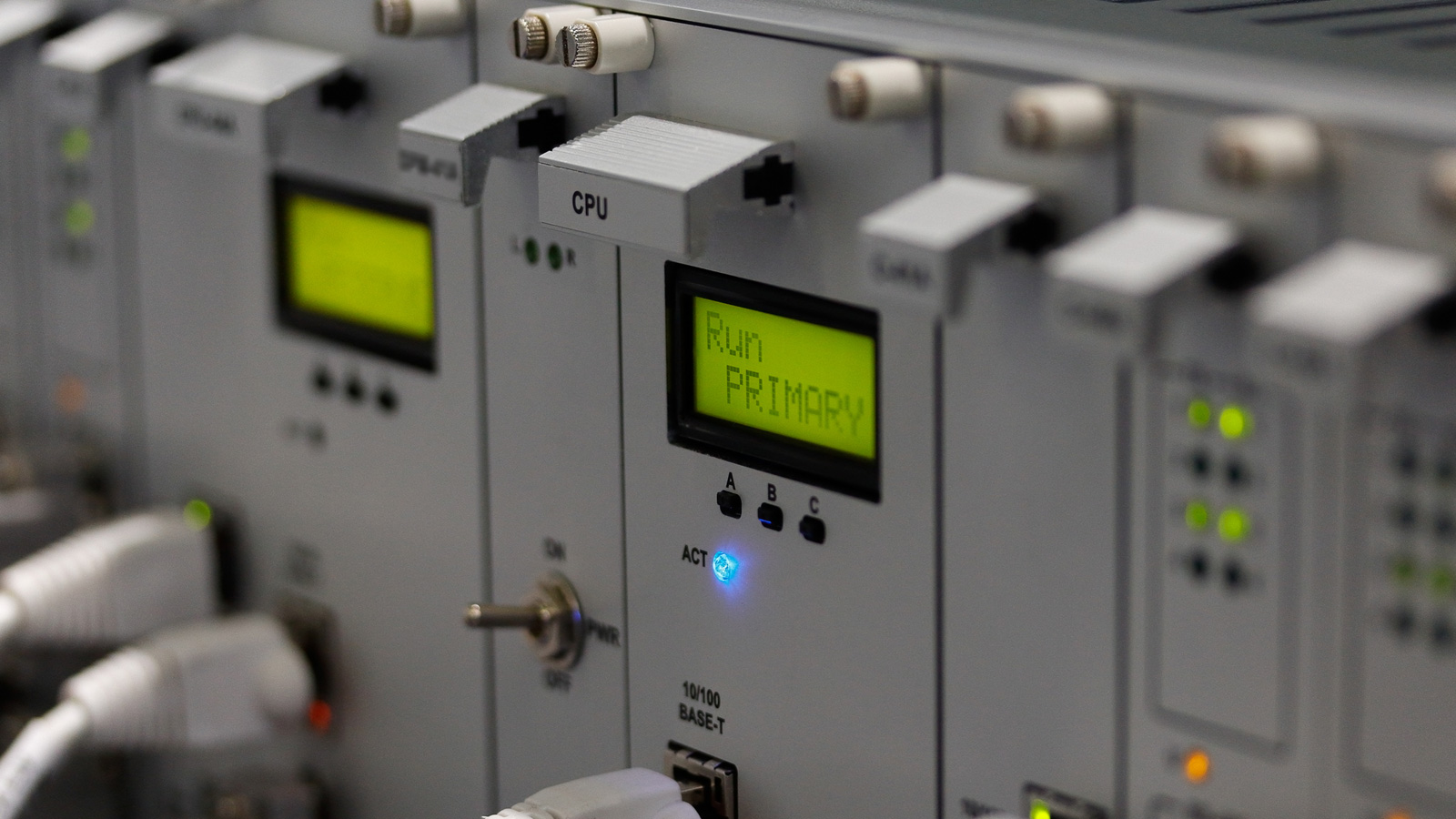
The U.S. Cybersecurity and Infrastructure Security Agency (CISA) is warning of a significant increase in attacks targeting internet-exposed programmable logic controllers (PLCs) in the water and wastewater systems sector.
CISA’s alert refers to threat activity involved hackers targeting exposed programmable logic controllers (PLC) and changing passwords to lock operators out, modifying IP addresses to disconnect devices from the internet, and other actions that disrupted operations.
“CISA urges critical infrastructure owners, operators, and integrators to remove publicly exposed PLCs and other operational technology (OT) from the internet as soon as possible.”
Organizations of all sizes running water and wastewater systems are being targeted, including some with mature cybersecurity programs.
Advertisement
The bulletin notes that exposed operational technology (OT) may include undocumented cellular modems installed by operators, vendors, or system integrators.
Internet-facing assets are exposed to defacement attacks, configuration changes, operational disruptions, and even physical damage, the agency said.
CISA recommends immediately removing these assets from direct internet exposure. If this is not possible, organizations should use a VPN connection or gateway devices for secure access.
Additionally, default passwords should be changed, and access should be limited to an IP address allow-list.
Advertisement
The agency also pointed owners of Rockwell Automation MicroLogix 1400 PLCs to vendor guidance for recovering access if passwords have been changed.
Cybersecurity search company Censys published a blog post where it quantifies internet exposure, estimating that currently there are more than 4,100 internet-exposed Rockwell Automation/Allen-Bradley hosts, 4,100 Siemens hosts, and over 2,000 Schneider Electric hosts.
Exposure map for Rockwell/Allen-Bradley PLCs Source: Censys
However, it should be clarified that the map above shows devices reachable over the public internet, not systems that are necessarily being targeted or compromised.
Regarding the MicroLogix 1400 controllers mentioned in CISA’s bulletin, Censys notes that many appear to be running EoS (end-of-sale) firmware versions.
The cybersecurity company also highlighted the problem of undocumented cellular modems as a common blind spot, reporting that nearly half of the exposed Rockwell devices are reachable via Verizon Business, AT&T, T-Mobile, Comcast, Charter, and Starlink networks.
Censys also provided an expanded set of indicators of compromise (IoCs) in its report, along with threat-hunting guidance.
Earlier this week, the Minnesota IT Services (MNIT) agency activated the state’s cybersecurity incident response plan after identifying what it described as “a coordinated cyberattack targeting operational technology at more than 30 Minnesota community water systems.”
Multiple municipalities reported disruptions caused by the cyberattack, with equipment malfunctions forcing some utilities to temporarily switch to manual operations.
MNIT has shared threat intelligence collected from the affected systems and provided guidance and best practices to help impacted utilities restore normal operations.
Security teams log 54% of successful attacks and alert on just 14%. The rest move through your environment unseen.
The Picus whitepaper shows how breach and attack simulation tests your SIEM and EDR rules so threats stop slipping by detection.
Many drivers turn on the air conditioning in their cars without ever giving much thought to how the system works. That is, unless your A/C starts to smell bad or worse yet stops working properly. Until then, it’s easy to assume that a car’s air conditioning unit is one of those systems that engineers have mostly perfected over the decades. However, behind the scenes, it’s a very different story. Scientists have been working for years to try and cut down the amount of emissions that A/C systems generate, and it turns out that the industry’s previous efforts might not quite have been as successful as it was initially hoped.
The culprit is the refrigerant that’s used in many modern systems. It was supposed to be a more environmentally-friendly alternative to the previously used chemicals, but new studies have cast doubt on that idea. This isn’t the first time that this has happened either; manufacturers have already changed the refrigerant that they used twice before, and now it looks like they’ll have to do it again.
Early automotive A/C systems mostly used a refrigerant called R-12. It was synthesized by researchers who were trying to create a stable, non-toxic substance to replace the litany of potentially hazardous chemicals that the first commercial refrigerators had used. The new chemical proved to be very effective and just as stable as hoped, but scientists later found that it was contributing to the loss of the Earth’s ozone layer. In response, automakers switched to a new refrigerant, R-134a, in the 1990s.
Advertisement
Today’s main refrigerants are still problematic
samoila ionut/Shutterstock
This initial change was seen as an improvement; R-134a, which is also called HFC-134a, didn’t contribute to ozone depletion. However, it was part of the chemical group known as per- and polyfluoroalkyl substances, or PFAS. They’re sometimes referred to as “forever chemicals,” because they can cause long-lasting contamination when they’re released into the environment. Research about the full effects of these chemicals is ongoing, but studies have shown that areas with high levels of PFAS contamination in drinking water have seen higher instances of some types of cancer, as well as other diseases.
R-134a is also a greenhouse gas with a high global warming potential (GWP). As the use of R-134a-based A/C systems increased, so did the concentration of R-134a in the atmosphere. This finding prompted European authorities to ban the use of R-134a refrigerant in new car’s A/C systems in 2017, with manufacturers instead replacing it with R-1234yf (also called HFO-1234yf). This new refrigerant has a much lower GWP, but now new research has suggested that it pollutes the environment in a different way.
Advertisement
A 2026 study published in the journal Environmental Science and Technology Letters found that R-1234yf can break down into trifluoroacetic acid (TFA) in the atmosphere at a significantly higher rate than R-134a. According to the findings, R-1234yf produces between 3.6 and 10.3 times as much TFA as R-134a. TFA is a type of PFAS that scientists are particularly worried about, since it’s been linked to liver disease and developmental issues with unborn children. It’s also extremely long-lasting, with scientists warning that its accumulation in the environment is effectively irreversible.
Advertisement
Some of the newest refrigerants aren’t actually new
With R-1234yf being a lot less eco-friendly than scientists initially thought, the clock is ticking for manufacturers to find alternatives yet again. Some are already beginning to phase out R-1234yf, with several Volkswagen Group brands switching certain models to R-744 instead. This latest refrigerant is more commonly known as carbon dioxide (CO2).
This is far from a new idea — carbon dioxide’s suitability as a refrigerant has been known for decades, and it drew a lot of attention in the late 1990s when researchers were trying to find alternatives to R-134a. At the time, carmakers like GM opted not to use R-744, in part due to the fact that it needs to operate at significantly higher pressure than R-134a.
Volkswagen came across the same problem, but chose to use it anyway because R-744 brings a couple of key benefits when it’s used in EVs. Battery packs can deliver less range when they’re cold, and R-744 is particularly good at transferring heat in colder operating temperatures. In turn, that helps boost the car’s range, which is a big enough benefit to offset the inconvenience of the high-pressure system.
Another refrigerant that’s attracting interest is R-290, which is propane. It has a low GWP and it’s efficient, but the compromise is that it’s flammable. Still, it’s considered less polluting than today’s main refrigerants, and a report by IDTechEx suggests that demand for both of these alternatives is set to increase significantly over the coming years as manufacturers start to make this latest switch.






























































You must be logged in to post a comment Login