
Business
Life after Orban: Hungary Inc digs in as new political era takes hold




A restaurateur friend of mine, who I shall not name because he has to keep serving these people, rang me recently with a tale of woe.
A couple had arrived at his place at one o’clock on Saturday, ordered a burrata to share, one sea bass, a single glass of picpoul and a jug of tap water, and were still there at ten past five. He knows this precisely because in the intervening hours he had turned every other table in the room twice, sent the kitchen home for its break and started laying up for dinner, and there they still were in the window, gazing at each other across the wreckage of a shared crème brûlée.
Four hours. One fish. There is a term in property law for what they were doing, and it is not lunch.
Which brings me to Jeremy King, the man who gave us The Wolseley, Le Caprice in its pomp and the resurrected Simpson’s in the Strand, and the nearest thing British hospitality has to a reigning monarch. Speaking recently on Andy Coulson’s Crisis What Crisis podcast, King observed that the average dwell time at a table in New York is about an hour and a half. In London it is about two and a half hours. In Dublin it is four and a half, at which point you are no longer dining, you are establishing adverse possession. “We have to adapt to keep the lights on,” he said.
He is right, and the numbers are worse than they sound, because somewhere in the last decade the British diner stopped treating a restaurant table as a service and started treating it as an assured shorthold tenancy. We book for eight o’clock and believe we have exchanged contracts. By the main course we have mentally moved in. By the second flat white we are sitting tenants with full security of tenure, and the waiter hovering with the bill is no longer a professional trying to run a business but a rogue landlord attempting an unlawful eviction. Somewhere in Dublin tonight, a table of four is applying for planning permission.
None of this would matter if the table were not the only thing a restaurant actually sells. The food is the excuse. The real product is a few square feet of warm room, rented out in sittings, and a cover is the most perishable stock on earth. An empty chair at seven o’clock cannot be warehoused and sold on Tuesday. It is gone, like an unsold airline seat, except the aeroplane at least gets to fly somewhere nicer.
And the arithmetic has never been tighter. The cost of living squeeze has trimmed what each of us spends when we do go out. The Ozempic brigade order less and the sober-curious drink less, a shift King is too courteous to complain about, though he notes it shortens nobody’s stay. Brexit hollowed out the kitchens and the sector has been tens of thousands of chefs short ever since. Pile on April’s employer National Insurance rise, the living wage and business rates, a combination I have already accused Reeves and Starmer of aiming squarely at the restaurant trade, and you get licensed venues going dark at more than three a day, the fastest contraction since the pandemic.
Business readers will recognise the underlying disease at once: this is an asset utilisation problem, the same arithmetic that governs airlines and hotels. A plane only earns in the air. A hotel room only earns when someone is asleep in it. A restaurant table only earns while plates are landing on it. The metric the smart operators watch is revenue per available seat hour, and when average dwell stretches from two hours to two and a half, that is a 20 per cent cut in capacity with no strike, no new tax and no closure notice. It is the equivalent of every fifth table being removed from the room by customers who think they are being romantic.
Government will not fix this. Its own entrepreneurship adviser recently declared that Britain does not need any more restaurants, which tells you the cavalry is not coming. But here is the cheering part: the utilisation rate is not controlled by the Treasury. It is controlled by us, the diners.
So if you love your local, book the half six sitting. Order like you mean it. Eat well, eat generously, and then, and this is the crucial innovation, leave. Give the table back. The second sitting is where the margin lives, and the most patriotic thing you can do with a Tuesday evening is have a very good dinner in ninety minutes flat.
As for my friend’s window-table couple, the sea bass was excellent, apparently, and he would be delighted to have them back. Just, next time, on a shorter lease.

Richard Alvin
Richard Alvin is a serial entrepreneur, a former advisor to the UK Government about small business and an Honorary Teaching Fellow on Business at Lancaster University.
A winner of the London Chamber of Commerce Business Person of the year and Freeman of the City of London for his services to business and charity. Richard is also Group MD of Capital Business Media and SME business research company Trends Research, regarded as one of the UK’s leading experts in the SME sector and an active angel investor and advisor to new start companies.
Richard is also the host of Save Our Business the U.S. based business advice television show.

AXT Deserves A Higher Valuation Due To Multi-Year Demand Cycle In AI Infrastructure

Fans of The New York Times’ daily word-grouping puzzle can find help here for Sunday’s edition, with hints and the complete solution for Connections game number 1,148.
Connections challenges players to sort 16 seemingly unrelated words into four groups of four, with each group sharing a hidden connection. The puzzle ranks its four categories by difficulty using a color system, from yellow, the most straightforward, through green and blue, up to purple, generally the trickiest and most conceptually layered grouping of the day. Sunday’s puzzle relied heavily on misdirection, with several words appearing to fit obvious travel or conversational themes before revealing a very different underlying pattern, according to coverage from multiple outlets that track the daily game.
Sunday’s 16 words, presented here in alphabetical order so as not to give away any grouping, are: À LA, ACTUALLY, AIRPLANE, ASEA, BEAST, BY, DARK, FLAX, LIKE, LORD, OLGA, PER, SO, THROUGH, VIA and WELL.
Players looking for hints before jumping to the full answer can use the following category descriptions to narrow their thinking. One group gathers common filler words people use in conversation that add little actual meaning beyond padding out a sentence. A second group brings together words and prepositions that all convey a similar idea: accomplishing something by a particular means or method. A third group consists of words that can each precede the same single word to describe a specific setting or state something is in. The fourth and typically most difficult group involves familiar three-letter airport codes with an extra letter added to the front.
For those ready for the complete solution, here are Sunday’s four groups and their associated words.
The yellow category, the most straightforward grouping of the day, gathers common conversational filler words: ACTUALLY, LIKE, SO and WELL. Each word functions as a verbal filler commonly used in everyday speech, adding length to a sentence without necessarily contributing essential meaning, the kind of habitual word choice linguists often study as a feature of natural spoken conversation.
The green category, built around words meaning “by means of” or “through,” includes BY, PER, THROUGH and VIA. Each word can be used to indicate the method or channel through which something is accomplished, as in phrases like “by hand,” “per instructions,” “through the mail” or “via email.”
The blue category, focused on words that can each precede “mode” to describe a specific setting or state, includes À LA, AIRPLANE, BEAST and DARK. The wordplay connects each term to a common compound phrase: à la mode, referring to something served in a particular style, often with ice cream; airplane mode, the smartphone setting that disables wireless connectivity; beast mode, a colloquial phrase for an intensely focused or aggressive state; and dark mode, the display setting many apps and devices offer as an alternative to a standard bright interface.
The purple category, generally the most difficult grouping of the day, gathers familiar U.S. airport codes with an extra letter added at the start: ASEA, FLAX, LORD and OLGA. Each word conceals a well-known three-letter airport code once its first letter is removed: SEA, the code for Seattle-Tacoma International Airport, within ASEA; LAX, the code for Los Angeles International Airport, within FLAX; ORD, the code for Chicago O’Hare International Airport, within LORD; and LGA, the code for LaGuardia Airport in New York, within OLGA.
Puzzle strategy guides commonly advise players to begin with the category they feel most confident about, since locking in an easier group early can help clarify which words remain for the trickier, wordplay-driven categories later in a solve. Guides covering Sunday’s puzzle specifically warned players to watch for red herrings, noting that words like AIRPLANE and BEAST initially appear to fit travel or animal-related themes, while ACTUALLY and LIKE could easily be mistaken for a general conversational category, before the underlying “mode” and filler-word patterns become clear.
Connections remains one of several daily word games published by The New York Times, joining Wordle, Strands, the Mini Crossword and the newer Connections: Sports Edition, a themed spinoff applying the same grouping format to sports-related terminology. All of the Times’ daily puzzle offerings typically reset at midnight local time, giving players a fresh challenge to tackle each day.
Players hoping to protect an ongoing daily streak, a feature Connections uses to track consecutive days of successful puzzle completion, can access Sunday’s puzzle, along with archived puzzles from previous days, directly through the New York Times Games platform. For solvers who become stuck without wanting to reveal the full solution immediately, the Times and various puzzle-focused outlets typically offer tiered levels of hints, ranging from broad category descriptions to more specific clues, before revealing the complete answer for those who have exhausted their guesses or simply prefer to check their work against Sunday’s finished grid.
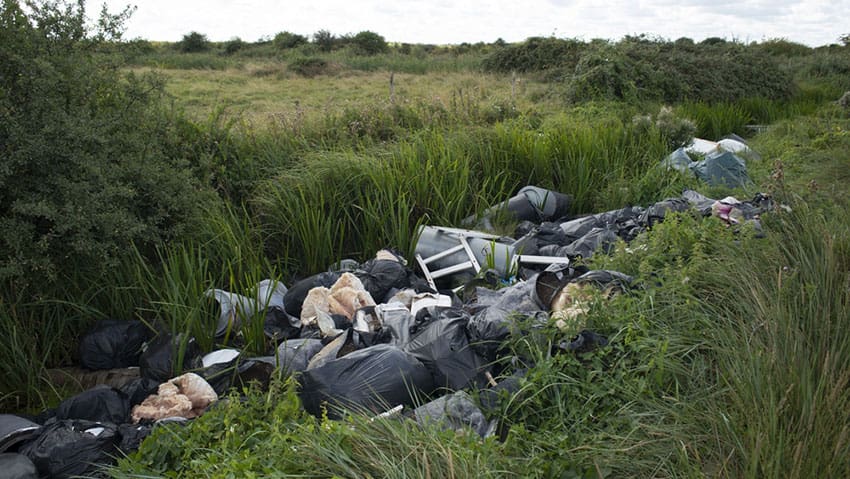
Earl Spencer has said organised fly-tipping forced his family to sell the 310 acres of Northamptonshire farmland it had farmed since 1893.
Writing in the Daily Mail, he claims that a single dumped load cost £40,000 to clear.
The land at Dallington was sold to developers last year and will become 1,800 houses, a secondary school and two primary schools, Spencer wrote.
He said the dumping went far beyond casual littering. It included lorry-loads of construction waste tipped at night, asbestos sheeting left in a hedgerow and, on one occasion, 60 burnt-out cars stacked on former pasture. Three years ago estate staff shovelled away half a ton of plastic bags, thrown over a wall from a local restaurant, containing rotten meat and human waste.
The 250-year-old farmhouse on the land was set on fire last year and had to be demolished, he wrote, after the family struggled to find anyone willing to live there.
Spencer said gates, cameras and warning signs had all failed because the perpetrators are organised. He cited evidence given to a House of Lords inquiry last year that large-scale fly-tipping is run by the same criminal networks involved in money laundering, drug dealing and modern slavery. Business Matters has previously reported calls for fly-tipping to be treated as organised environmental crime.
Councils in England dealt with 1.26 million fly-tipping incidents last year, 9 per cent up on the year before, according to Defra figures that cover reported dumping on public land only. Waste dumped through a farm gate becomes the landowner’s responsibility to clear at their own cost, Spencer wrote, and leaving it in place is itself an offence.
A Country Land and Business Association survey found nearly three-quarters of farmers who responded were hit every year, some several times a month, at roughly £1,000 a time, he said. The Althorp estate runs six full-time skips to deal with dumped waste, with a hazardous load costing tens of thousands of pounds to remove.
Of the 1.26 million incidents, 1,377 led to a prosecution, fewer than one in 900, Spencer wrote. Councils seized 139 vehicles across the whole of England, and the average fine fell to £539 while dumping rose. When the estate handed filmed evidence of one incident to police, he wrote, the accused laughed at the £1,000 fine and said it would not stop their trade.
Waste crime costs the country about £1 billion a year, he said. Last October the House of Lords Environment and Climate Change Committee wrote to the Environment Secretary to say serious waste crime had been critically under-prioritised, calling for an independent review of how it is dealt with. Its chairman said she feared the system was broken, and the committee described a “woeful” lack of successful convictions.
Spencer pointed to Hoads Wood in Kent, an ancient wood and site of special scientific interest, where dumping began in 2020. By the time the Environment Agency closed the site in 2024, some 30,000 tons had been tipped, 25ft deep in places. Clearance is estimated at £10 million. Three people were arrested last February; nobody has been prosecuted.
The Government has announced fines of up to £5,000 and penalty points, and has said it will look at indemnifying landowners, who can currently only recover clearance costs once the dumper is convicted, Spencer wrote.
The scale of the problem is drawing commercial responses. Flytipping Enforcers, a company founded this year by two former rural police officers, offers solar-powered CCTV with AI detection, 24-hour monitoring and deterrent signage for private land, and says fly-tipping fell 95 per cent across its first 30 monitored sites.
“Since I started writing this, I have learned a truckload of garden waste and timber has been dumped at Althorp,” Spencer wrote. “It is never-ending.”

Amy Ingham
Amy Ingham is a reporter at Business Matters, covering UK business news with a focus on breaking news, business policy, late payments and insolvency. She joined the magazine in 2026 after completing the NCTJ Diploma in Journalism at Harlow College’s journalism school. Her recent reporting includes British Steel’s nationalisation and its impact on SME suppliers, the decline in late payments by large firms, and Insolvency Service director disqualifications. Reach her at aingham@cbmeg.co.uk.

Bomb kills three and wounds 21 at central Moscow restaurant

Trendlyne’s consensus estimates identify 10 BSE large-cap stocks with potential upside of 25% to 37% over the next 12 months. HDFC Bank and HDFC Life lead the list, followed by ICICI Prudential, Axis Bank, Reliance Industries, Swiggy and other prominent names.


Robert F. Abbott has been investing his family’s accounts since 1995, and in 2010 added options, mainly covered calls and collars with long stocks. He is a freelance writer, and his projects include a website that provides information for new and intermediate-level mutual fund investors. A resident of Airdrie, Alberta, Canada, Robert has earned Bachelor of Arts and Master of Business Administration (MBA) degrees.
Analyst’s Disclosure: I/we have no stock, option or similar derivative position in any of the companies mentioned, and no plans to initiate any such positions within the next 72 hours. I wrote this article myself, and it expresses my own opinions. I am not receiving compensation for it (other than from Seeking Alpha). I have no business relationship with any company whose stock is mentioned in this article.
Seeking Alpha’s Disclosure: Past performance is no guarantee of future results. No recommendation or advice is being given as to whether any investment is suitable for a particular investor. Any views or opinions expressed above may not reflect those of Seeking Alpha as a whole. Seeking Alpha is not a licensed securities dealer, broker or US investment adviser or investment bank. Our analysts are third party authors that include both professional investors and individual investors who may not be licensed or certified by any institute or regulatory body.

WestJet flight attendants go on strike after talks fall through
Equity mutual funds delivered gains up to six percent in the last week of July. Top performers included technology and transportation sector funds which saw significant returns. SBI Technology Opp Fund and Aditya Birla SL Digital India Fund led the gains. ICICI Pru Transportation and Logistics Fund also performed well during this period. Several other tech and logistics funds also registered positive returns.

Ukrainian drones kill two in Russia, strike Wildberries warehouse, governors say

BBC Sport quiz: Who am I? Guess Premier League footballer No 13

Who Will You Play in D&D’s New World of Warcraft and Star Wars Sets? CNET Answers

Tourist plane crash at Peru’s Nazca Lines kills all 13 on board | News World


-
 Sports7 days ago
Commonwealth Games boxing: Jadumani Singh seals dominant 5-0 win over Pakistan’s Sumama Rehman to enter quarter-finals | Commonwealth Games News
-

 Business4 days ago
Why Trees Belong on the Risk Register
-

 Fashion2 days ago
Weekend Open Thread: Wit & Wisdom
-

 Tech6 days ago
Intel is reversing course and bringing hyper-threading back to its server chips
-

 Politics2 days ago
Meta enters AI-training agreement with far-right ‘propaganda rag’ Newsmax
-

 Politics6 days ago
Luke Littler dismantles Gerwyn Price to retain title in Blackpool
-

 Crypto World18 hours ago
MicroStrategy Post-Earnings CLARITY Act Push Could Add New Catalyst for Its Stock
-

 Politics5 days ago
The Part of the Electric Transition Nobody Wants to Discuss
-
 Entertainment5 days ago
‘Stargate’ Creator’s New Sci-Fi Series Returns for Season 3 Tomorrow
-

 News Videos7 days ago
BITCOIN JUST ENTERED THIS CRITICAL ZONE…
-

 Business4 days ago
Major shareholder moves on Canyon
-

 Politics7 days ago
Spain sweeps the board at 2026 World Cup with individual awards
-

 News Videos3 days ago
Bitcoin Enters the 3rd Stage of the Bear Market
-

 Crypto World1 day ago
XRP Ledger v3.3.0 brings five institutional features
-

 Crypto World4 days ago
Kraken Enables Retail Access to Jersey Mike’s IPO via Tokenized Shares
-

 Tech5 days ago
New macOS Sequoia & Sonoma security updates for older Macs
-

 News Videos5 days ago
Claude: Build Financial Dashboards in Minutes (2026)
-

 Politics3 days ago
Luke Littler’s dominance sparks GOAT debate
-

 Sports2 days ago
Seema Kaliramna Wins Discus Throw Bronze, Takes India’s CWG Medals Tally To 17
-

 Business4 days ago
Johnson & Johnson agrees to $5.5B settlement over talc cancer claims
You must be logged in to post a comment Login