
Tech
These App Store hidden gems prove there’s still room for great software in the AI era

Apps are back, or maybe they never left in the first place.
While some people debate whether people will shift away from apps as AI agents make accessing online services more efficient, we’ve found the App Store to be alive and well, with a recent explosion of fun, creative, and innovative tools, experiences, and other indie efforts.
Some of the more recent launches may be attributed to the rise of AI coding, which has enabled people to ship software more quickly, and allowed novices to participate in the app ecosystem. According to one report, new app launches have soared in 2026, with worldwide new app releases up 60% year-over-year as of the first quarter across both the Apple App Store and Google Play. On Apple’s iOS store alone, that figure was an even higher 80%.
While there’s valid concern that vibe-coded apps in particular could be cluttering the App Store with lower-quality content, there are plenty of interesting apps worth exploring, and those that resonate with consumers will rise to the top. Many also use AI under the hood to perform their magic — they’re just not promoted as being “AI-powered.”
Below is our latest collection of App Store hidden gems, which we’ve added to our Home Screen. You can also visit TechCrunch’s prior app round-ups, like our looks at next-generation social apps, Apple Watch, and iPad productivity tools, and apps for digitally decluttering your life.
Albo

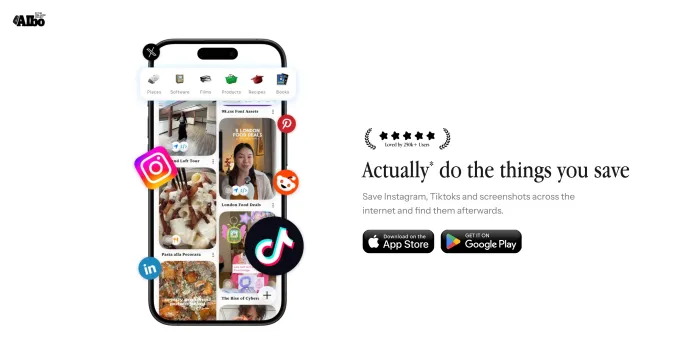
Albo (previously Sortd, but not that Sortd) is an excellent tool for anyone who regularly bookmarks content from social media, then promptly forgets about it. With Albo, the idea is that you’ll instead share the link to the TikTok, Instagram Reel, YouTube video, or other website to the app. Albo will then automatically pull the details from the post and categorize and save the idea for you. That post and its notes will remain available in Albo, even if the original content creator deletes their post or video at some point in the future.
The app works with a variety of social apps, including Pinterest, X, LinkedIn, Threads, Reddit, and Facebook, plus browsers like Chrome and Safari. You can also add screenshots to Albo.
This makes it easy to save any sort of online inspiration for easy access, whether that’s travel ideas, local spots to try, movie or shows to watch, books to read, recipes to cook, or workouts to do. Your collections can also be shared with friends.

Albo hails from the London-based app studio The Feel Good Project, which focuses on tech that makes users feel inspired and satisfied instead of drained by doomscrolling.
The app is free to use with advanced features available via subscription. We didn’t love how heavy-handed it was in pushing the trial subscription during onboarding, however.
Available on iOS and Google Play.
Coop

The recent parasite outbreak in the U.S. has people thinking more carefully about where their food comes from. Buying from local growers and bakers may be the safer option — and better for the community — but not everyone has time to make it to the farmer’s market over the weekend.
Coop‘s app offers an alternative through its neighborhood marketplace, where you can buy real handmade and homegrown items from the people near you, even from the farmhouse down the road that offers fresh eggs, or a neighbor willing to barter their items for yours. The idea is to allow commerce to stay local, while helping people turn their own garden, field, or craft into an additional income stream.
On Coop, you can browse and discover nearby sellers, follow your favorites, see how far they are from you, and purchase from them via the app’s Stripe integration. The seller then receives the order and prepares it for pickup.
Available on iOS and Google Play.
PI.FYI by Perfectly Imperfect

A colorful and somewhat chaotic app, PI.FYI, promises to bring back the “old internet,” where you found recommendations through a network of friends, not algorithms. Having emerged from a cult newsletter, the app has been around for a couple of years, but still feels fresh and modern and very much like the alternative to social media it aims become.
In PI.FYI, you can track what you’re into, share your taste, and browse by category or “scenes,” like music, whimsy, retro, and literature, to find your community, read interesting articles, make lists, gather local recommendations, and play games with friends. The app exudes a retro vibe itself, as if it were built when the internet was a little less polished, too.
Available on iOS and Google Play.
Lettre

OK, it might not be as fun as sharing a letter via pigeon post, but the app for pen pals, Lettre, also embraces the fun of snail mail in a digital format. This letter-writing app lets you start new friendships with pen pals around the world, discovered through the app, or with anyone whose email address you already know. Unfortunately, letters are sent digitally through the app or email for now, but the company’s FAQ suggests it is considering a postal mail option for the future, which would be so much fun.
Available on iOS only.
Sofa Time

While not a brand-new app, Sofa Time is one of several that is picking up where the recently shuttered TV Time app left off. The app has an easy-to-use, uncluttered interface for tracking the movies and TV shows you’re watching, organizing your watchlist, discovering what to stream next, and getting reminders about new releases.
While Sofa Time’s commenting section doesn’t yet rival TV Time’s forums, the app’s social elements leave room for the community to grow, as it supports the ability to react with a GIF or image alongside your text, and includes built-in translation features to support a global audience.
Available on iOS and Google Play.
ThingsBook

ThingsBook, a new writing-focused app from South Korean internet giant Naver’s U.S. subsidiary, is hardly an indie effort, but it’s an interesting premise for what the future of social media could look like. Instead of doomscrolling, ThingsBook offers a flexible space where you can capture what you care about, whether that’s through journaling, logging ideas, or collecting things like books, travels, meals, hobbies, and goals into structured lists you can revisit and expand.
The company explains that the app’s purpose is not to focus on “fleeting trends” but to become a “living record of who you are and what you love.”
Available on iOS and Google Play.
Pressed Petals

App or artistic project? Pressed Petals is both. An indie effort from designer Cynthia Chen, the app turns the photos of flowers you find on your walks into a pressed specimen, like one you’d find in a “vintage botanical journal.” The app automatically saves the location where you spotted the flower, and the date and time, turning your nature walks into interactive experiences. It also identifies the flower by name, both its scientific name and its common name.
You can try the app to press two flowers for free, then pay a one-time fee of $4.99 to unlock the full experience. This could be a fun app for luring your little ones outside, as it gives them something else to do beyond the hike itself.
Available on iOS only.
Moods Faster

We’re suckers for single-purpose apps that are built well. Moods Faster by Nick Leith is a perfect example, as it offers a way to log your moods for tracking in Apple Health in just two taps — one to select the mood and a second to save it.
You can choose between logging your current mood or your overall mood for the day, and can also optionally add information about the context and emotions you’re experiencing at the time of logging. In the settings, you can pick between different color schemes for your moods, though some are paywalled.
At $1.95 per month, it’s a reasonably priced subscription for anyone who regularly tracks their moods and emotions for mental health purposes.
Available on iOS only.
Activate Fitness

Originally pitched as a way to encourage kids to exercise, Activate Fitness has recently expanded its screen-time-earning app to include the whole family, which, frankly, makes it better. (The kids will just hate their parents for using this otherwise. Plus, it could turn outdoor time or exercise into a dreaded chore in kids’ minds, which defeats the purpose.)
For adults, the app could allow you to accomplish your own personal goals, like no doomscrolling until you get your steps in for the day.
Available on iOS only.
This post was originally published on July 28, 2026.
When you purchase through links in our articles, we may earn a small commission. This doesn’t affect our editorial independence.


To test these new ideas, researchers are exploring the infant universe through simulations. “There’s actually been really remarkable progress since Webb launched, really in the last year or so, on numerical simulations,” Somerville told attendees, adding that these new simulations “perhaps are more appropriate and more informative for interpreting observations in the high-redshift universe.”
As these models improve, JWST is documenting more and more galaxies. By comparing what it sees in the early universe to simulations that attempt to explain why, researchers are inching closer to uncovering the true nature of cosmic dawn.
“We can try to match the best analogue of the observed galaxy to the simulated,” said Hakim Atek, an astrophysicist with the Paris Institute of Astrophysics at Sorbonne University. “Once you have this best match, you can look at the star-formation history, because in the simulations you have access to the whole history of the galaxy.”
An intriguing clue has recently emerged from JWST’s Mid-Infrared Instrument (MIRI), a supercooled device that can split apart the light of distant objects. MIRI has revealed that early galaxies do not have the same traits, as scientists assumed.
“The main surprise is the diversity of the properties of galaxies we are seeing at early epochs,” Atek said. “You’re expecting that they would look the same.”
This diversity may be an indication of star formation that occurred in bursts, as galaxies cycled through periods of fusing stars that exploded and expelled gas clouds, halting the creation of stars, only for the gas to gather again and trigger a new wave of stellar birth.
“Some of them, it looks like they cleared all the interstellar medium that is present there, the gas and the dust. It’s like you’re looking only at naked stars,” Atek said. “Another galaxy is the opposite. It has a lot of gas.”
A further clue comes from a group of galaxies with an overabundance of nitrogen. The presence of the element suggests that there may have been a lot of particularly massive stars in the early universe. In simulations, these massive stars generate an excess of nitrogen before exploding in supernovas and scattering the element across their host galaxies.
Someday, researchers may uncover the full picture of galactic formation. Until then, they’ll continue sifting through the traces in new observations and simulations.
The Puzzle of Existence
Once the astral lights switched on, the universe transformed. Radiation from early galaxies and black holes ionized a sea of neutral hydrogen gas, carving out immense bubbles amid the cosmic haze. Researchers call this period reionization, as it was the second time the universe was ionized. It marks the end of the cosmic dark age, when the foggy abyss was devoid of stars.
The first stars, thought to be hundreds or thousands of times more massive than the sun, furiously worked their way through their hydrogen and helium fuel and erupted in powerful supernovas, seeding the universe with new elements such as carbon, nitrogen, oxygen, phosphorus, and iron—the stuff of planets and of life.
Tech
A Coldcard firmware flaw let hackers drain $70 million in Bitcoin in 41 minutes, with losses now topping $88 million
Why it matters: A hardware wallet is supposed to solve one problem: keep your Bitcoin keys somewhere no attacker can reach them. This week showed what happens when the flaw sits inside the wallet itself. A firmware bug that’s been shipping in Coldcard devices since 2021 let an attacker guess supposedly random seed phrases from the outside, no physical access, no phishing, no malware required, and drain funds from thousands of addresses. The running total is already past $88 million, and it’s still climbing.
A flaw in Coldcard’s firmware has put the spotlight on a basic part of wallet security: how the device generates its seed in the first place. The issue came into focus after an attacker drained 1,196 Bitcoin addresses on July 30 in a 41-minute stretch, taking 1,082.65 BTC worth about $70.2 million at the time.
Galaxy Research tied the sweep to Coldcard, the Bitcoin-only hardware wallet line made by Coinkite, and said the pattern matched a firmware problem rather than a random event. Two more waves have surfaced since, and Galaxy’s running total now stands at 1,367.05 BTC, worth about $88.6 million, across 4,585 addresses. The firm describes that as a preliminary observed figure that could still climb as it traces more on-chain activity.
The problem goes back to a March 2021 firmware integration error. Instead of using the STM32 hardware random number generator, affected devices fell back to a deterministic software pseudorandom number generator when creating seeds. That matters because seed generation is supposed to produce output that cannot be guessed or reconstructed.
– Galaxy Research (@glxyresearch) July 31, 2026
In plain terms: a wallet’s seed is the master code, usually a string of 12 or 24 words, that can recreate every address and private key tied to it. That code has to come from a process nobody could predict or reverse-engineer, which is why devices lean on a dedicated randomness chip instead of ordinary software. When that swap happens quietly in reverse, the numbers still look random on screen, but they aren’t, and that gap is what an attacker can exploit.
Block said an attacker who can pin down the device UID, timer state, and earlier random-number calls can reproduce candidate output streams without touching the wallet itself. Those candidate seeds can then be tested by deriving addresses and comparing them with public blockchain data. In other words, the weakness isn’t in the blockchain, but in how the wallet device formed the starting point for key generation.
Put simply, the attacker never had to steal or even see the physical wallet. If you can work out roughly how a device’s internal clock and serial number behaved the moment it powered on, you can recreate the same “random” number it generated on an ordinary computer, then just check whether that guess unlocks a real, funded address.
The bug traces back to a config mismatch in Coldcard’s production code. The firmware defined a hardware RNG setting, but the library that handled it checked whether the setting existed rather than whether it was actually enabled. That sent the build into MicroPython’s Yasmarang fallback, which starts from fixed device data and doesn’t gather fresh entropy after initialization.
In practice, this was a coding oversight rather than a deliberate shortcut. The software was supposed to check whether the hardware randomness generator was switched on, but it only checked whether that setting existed in the code at all, which was true either way. So every device quietly fell back to the weaker method, a backup meant only for rare edge cases, without anyone noticing it had become the default.
Coinkite says the effective entropy is about 40 bits on the Mk3 and about 72 bits on the Mk4, Mk5, and Q. That’s well below the 128 bits expected from a standard 12-word BIP-39 seed.
To translate the bit counts: think of entropy as the size of a combination lock. A 40-bit lock has around a trillion possible combinations, small enough for ordinary hardware to work through in hours. 72 bits is a much bigger lock, out of reach for a hobbyist but not for a well-funded attacker. A proper 128-bit lock, by contrast, would take far longer than the universe has existed to crack by brute force, even at billions of guesses a second.

Coinkite released emergency firmware on July 31 for all affected models and release tracks. That update, however, doesn’t fix seeds that were already created. The company is telling users with exposed seeds to generate a new one on patched firmware and move their coins. Restoring an old seed on a new device or updated firmware doesn’t remove the weakness.
Which devices are exposed depends on the firmware running when the seed was created. Block places Mk2 and Mk3 versions 4.0.0 through 4.1.9 on the vulnerable path, while Coinkite lists Mk3 versions 4.0.1 through 4.1.9 and says the issue was fixed in 4.2.0. For newer models, Mk4 and Mk5 are affected before 5.6.0, the Q before 1.5.0Q, and Edge builds before the later edge-specific fixes.
Coinkite says seeds built with at least 50 fair, independent, private dice rolls aren’t exposed to this bug alone. Users who aren’t sure how their seed was made should migrate anyway, the company says. A strong BIP-39 passphrase creates a separate wallet, but Coinkite still recommends replacing the seed. Multisig only helps if the quorum isn’t made up entirely of affected devices. Tapsigner, Opendime, and Satscard use different codebases and aren’t affected.
– Zynx (@ZynxBTC) August 1, 2026
No one has named the attacker. Galaxy said it found no other Bitcoin transactions in the previous 30 days with the same 30 sat/vB, no-change pattern, but it also warned that the signature identifies the operator, not necessarily the theft. A sweep, the firm said, can look the same as a legitimate move by the owner.
A second wave on July 31 drained another 76.16 BTC from 1,478 addresses, and a third, identified August 1, took 207.73 BTC from 1,912 more – bringing the three-wave total to the current 1,367.05 BTC. Galaxy said the first two waves shared the same transaction fingerprint, but the third used a different output pattern, which the firm said could mean the original attacker changed tools, or that a second party is now exploiting the same flaw.
The failure has landed hardest on exactly the users who took the most care to avoid it. Jonathan Goodman, who says he lost roughly $1.6 million in the exploit, described keeping his Coldcard in a safety deposit box that had never touched the internet, textbook practice for cold storage. “I did everything right,” he wrote in a post that circulated widely on X.
Coldcard’s user base has traditionally skewed toward people who went out of their way to learn self-custody rather than casual holders, which has fed a broader sense among affected users that no publicized best practice fully protects against a flaw built into the hardware itself.
– Jonathan Goodman (@itscoachgoodman) August 1, 2026
This situation has fed a wider debate on Bitcoin forums over what self-custody can realistically promise. If a five-year-old firmware bug could sit undetected in a well-regarded device, some holders are asking what basis there is for treating other hardware wallets as safe simply because they haven’t been caught yet.
Others have pointed to Coinkite’s own acknowledgment that AI tools may have helped surface the flaw as a sign the gap between a bug shipping and someone finding it is likely to keep shrinking.
The incident comes soon after Coinspect’s “Ill Bloom” research in early July, which described a separate weak-PRNG flaw in older software wallets and linked it to more than $5 million in losses across several blockchains since May. The two disclosures point to the same lesson: when randomness is weak, the rest of the cryptography can be perfectly sound and still fail.


A brushed silver body frames a wide transparent panel that puts the circuitry right in front of you. Four automotive-grade cells, inductors, and chips sit visible behind the clear front, while a recessed 2.01-inch color screen sits above them and tracks every watt in real time. This is the Lenovo thinkplus FLUX 140W, a 20,000 mAh power bank, priced at $74.99 (was $100), built to push a laptop hard and look deliberate while doing it.
The casing is constructed of silver grey plastic that forms the outside shell, and it has ergonomic rounded corners that should feel comfortable in your palm. Its 1.5-inch thickness and dimensions of 6.1 by 2.0 by 1.5 inches make it perfect for fitting inside a laptop sleeve or backpack pocket. It still weighs 15 ounces, which is enough to give it some weight but not too heavy to move. The glass pane set low in the front lets you observe what’s going on inside without any needless frills. The rest of the case has a matte finish, which repels fingerprints better than shiny plastic.
Sale

Lenovo Laptop Portable Power Bank, 20,000 mAh 3-Port USB-C 140W Digital Hybrid Charger, TFT Display…
- 20,000mAh Large Capacity Power: The Lenovo 140W laptop power bank is enough to power up the 14″ MacBook Pro 16 to 46% within 30 Minutes.Set off on…
- Charge 3 Devices at Once: With 2 USB-C ports and 1 USB-A port,the Lenovo power bank delivers a total output of 135W, enabling fast charging of up to…
- High Definition TFT Display: Stay informed with a 2.01 inches high definition TFT display that shows real-time data on remaining battery capacity…
Just above that clear pane is a recessed display that indicates how much juice is left and how long it will last before dying totally. Big numbers indicate the percentage left and the projected runtime. You have separate readouts for power going via each port, cell temperature, and the input status when the bank is charging. Below the screen are some touch pads that allow you to navigate through power curves, temperature history, brightness, and screen timeout. You can leave the display on indefinitely if you want, or set it to sleep after a while if you don’t need to keep an eye on it all the time. The UI resembles a small dashboard rather than a simple four-LED battery bar.
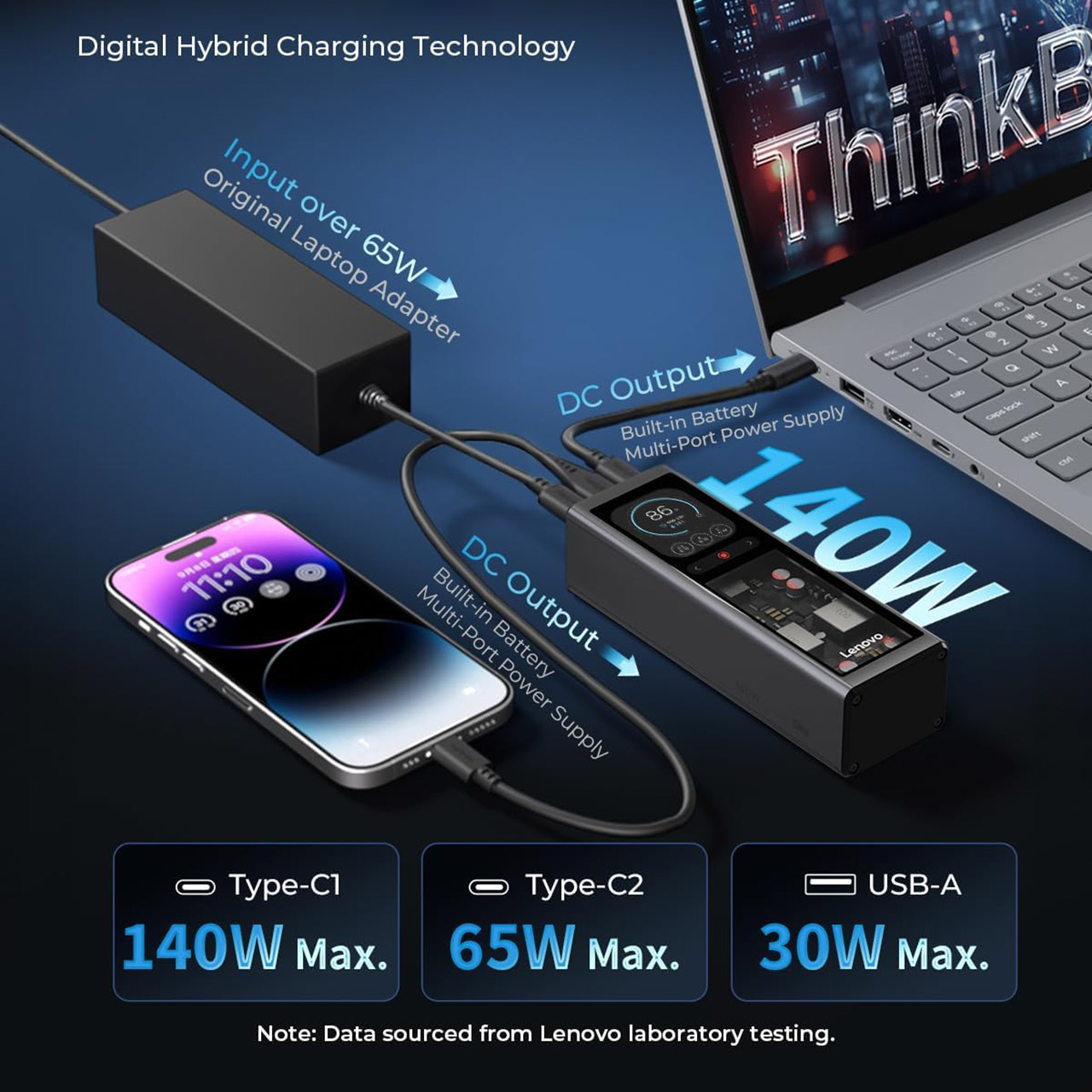
The device has two USB-C ports and one USB-A socket. The primary USB-C port can carry up to 140 watts at 20 volts and 7 amps, which is enough power for many recent laptops, including some Lenovo Legion and ThinkBook models that can manage the greater current. The other USB-C only supports 65 watts, and the USB-A is limited to 30 watts for phones and accessories. Overall, you can get 135 watts across all three ports, and intelligent power sharing ensures that things don’t get out of hand. Both USB-C connections can accommodate up to 100 watts of input, thus the power bank charges quickly. The packaging includes a 1.5-meter 240-watt USB-C cable that supports the full 140-watt output.

The capacity is 20,000 mAh (73 watt-hours), which keeps you within the airline restriction. Real-world statistics will vary depending on the device being used, but Lenovo believes that you can get roughly 3.8 full charges out of this thing on an iPhone 17 Pro Max class phone and slightly more than one complete cycle on a MacBook Air. If you connect a 14-inch MacBook Pro to the high power port, it will charge to approximately 46% in half an hour. Gaming handhelds, tablets, and phones all appear to drain the most power when the various protocols are properly configured. Supports PD, PPS, QC, AFC, SCP, and the higher current profiles seen on select Lenovo and Motorola devices.

Digital hybrid charging is a convenient supplementary function. Plug the bank into a wall adapter, and it will provide power to your device while it recharges. It can even continue to give power to a laptop at around 140 watts as the internal cells charge. When you unplug a device or plug in a new one, multi-port sessions remain stable and simply redistribute power without disconnecting any existing connections. The screen will even alert you if there is a temperature increase that is cause for concern. There are several safeguards in place to prevent overcurrent, short circuits, and ensure that all cells remain balanced.

Get caught up on the latest technology and startup news from the past week. Here are the most popular stories on GeekWire for the week of July 26, 2026.
Sign up to receive these updates every Sunday in your inbox by subscribing to our GeekWire Weekly email newsletter.
Most popular stories on GeekWire

Jeff Bezos says this business is becoming Amazon’s next ‘pillar’
Amazon founder Jeff Bezos says the company’s custom AI chip business is poised to become its next “pillar,” joining Marketplace, Prime, and AWS as one of Amazon’s foundational businesses as the tech giant doubles down on artificial intelligence infrastructure. … Read More

Salesforce hires ex-Microsoft exec to lead Agentforce engineering amid string of departures
After nearly three decades at Microsoft, cybersecurity executive Krishna Kumar Parthasarathy has announced he is joining Salesforce as executive vice president of engineering. … Read More

Seattle lands another $1B startup: Here’s the latest arrival in the industrial AI boom
Los Angeles-based Nominal, whose software helps engineers build, test and validate complex hardware systems, is establishing a permanent Seattle office as it ramps up hiring and looks for a larger home in the region. … Read More

Report: Starbucks scrapped an AI inventory tool and left a Seattle-area startup ‘blindsided’
Known as “Automated Counting,” the tool was built in partnership with NomadGo to scan backroom storage shelves using iPad Pros equipped with computer vision, spatial computing, and augmented reality. … Read More

Anime fans, assemble: Bandai Namco opening ‘Gundam Base’ retail experience south of Seattle
Bandai Namco is opening an official Gundam Base retail store at Westfield Southcenter mall in Tukwila, Wash., this fall, giving Pacific Northwest anime and model-kit fans a permanent flagship destination for all things Gunpla. … Read More

Off the train, into a VW bus: Amazon helps fund free shuttle service for Bellevue light rail riders
Visit Bellevue announced this week that it’s launching a free electric shuttle pilot program on Aug. … Read More

Which Microsoft businesses are growing and shrinking, according to obscure table in regulatory filing
Overall, for the fiscal year ended June 30, Microsoft’s revenue increased 18%, or $50.1 billion, to $331.8 billion. … Read More
Microsoft earnings preview: AI spending, cloud margins, and why the stock keeps falling
Microsoft reports fiscal fourth-quarter and full-year results Wednesday. … Read More

‘World of Warcraft’ meets ‘Dungeons & Dragons,’ and more from Wizards of the Coast at Gen Con
Renton, Wash.-based Wizards of the Coast previewed its D&D plans ahead of Gen Con, including a “World of Warcraft” crossover sourcebook due Nov. … Read More

New map traces Washington state’s tech ‘universe’ to a few key hubs, and shows what’s at risk
The Washington Technology Industry Association’s new “Tech Universe Map” charts the founder lineage of 625 companies, showing that Microsoft and the University of Washington account for the largest share. … Read More

Valve just published the Steam Survey results for July 2026, reports Phoronix, “and they point to a small uptick in Linux gaming use.”
Back in March Steam on Linux hit a record high of 5.33%, dropped to 4.52% in April, landed at 3.99% in May, and then in June was at 3.69%. The just-published numbers for July put Steam on Linux use at 4.01%, as an improvement over the prior two months but still well off the percentage highs of March and April…
The July data puts SteamOS Holo as powering around 22% of Steam on Linux gaming systems. That’s also with the Steam Machine now shipping, in addition to the Steam Deck.

Sonos will reveal its plans for conversational computing and predictive intelligence in September. The larger question is whether customers will receive genuinely useful features, greater privacy concerns, or another reason for hardware prices to rise.
Sonos has spent much of the past two years trying to convince customers that pressing Play should not require an act of faith. Now the company wants its speakers to understand the shape of your home, learn how your family lives and help usher conversational computing into every room.
Nothing could possibly go wrong.
During Sonos’ third-quarter fiscal 2026 earnings call, CEO Tom Conrad confirmed that the company will hold a product launch event in early September. Conrad did not reveal the product, its price or exactly what it will do, but said the event will introduce work centered on “conversational computing and predictive intelligence” inside the home.
This is not simply Sonos preparing another wireless speaker with a slightly larger woofer and a new shade of beige. The company is positioning artificial intelligence as the next major layer of its entire multi-room ecosystem.
Whether Sonos customers asked for that is another question.

What Is Sonos Planning?
Conrad argues that the industry is focusing too heavily on which company has the most powerful AI model. Sonos believes the more important advantage will be the hardware, software, microphones, speakers, services and household context surrounding that model.
According to Conrad, Sonos has already spent 20 years solving four difficult problems inside the home: form, sound, what he calls “systemness,” and intelligence. Its speakers already communicate across rooms, integrate with outside services and adjust their sound through technologies such as Trueplay. The next step is creating a system that can converse naturally and coordinate actions based on an understanding of the household.
Sonos also has scale. The company says more than 53 million connected Sonos devices are currently operating across more than 17 million homes. That installed base gives it something an AI startup cannot purchase overnight: millions of existing microphones, speakers and networked audio systems already sitting in kitchens, bedrooms and living rooms.
The company has not explained whether its new AI features will arrive through new hardware, existing products, a cloud service or some combination of all three. It also has not said whether customers will need a subscription.
Until September, any claim that Sonos is launching a particular kind of AI speaker remains speculation.
Sonos Has the Hardware but Trust Is the Problem
Sonos has legitimate advantages in multi-room synchronization, music-service integration, acoustic design and whole-home control. It also has a recent history that makes phrases such as “predictive intelligence” sound less comforting than management probably intends.
The disastrous 2024 app replacement removed features, disrupted existing systems and damaged confidence in a platform that customers had previously considered unusually reliable. Sonos has spent 2026 restoring functionality and improving navigation, volume control, speaker sorting and system stability.
Asking customers to trust Sonos with a more intimate understanding of their homes therefore requires more than an impressive September demonstration.

Sonos will need to explain what information its system collects, where that information is processed, how long it is retained and whether it is used to improve AI models. Customers also deserve to know whether conversations remain inside the home, which functions require the cloud and whether the intelligence can be disabled without limiting basic speaker operation.
Sonos Voice Control currently offers a useful precedent because its music and system commands are processed locally rather than sending voice recordings outside the home. A more ambitious assistant that remembers routines, coordinates services and predicts household behavior may require substantially more data.
Understanding that someone usually plays jazz in the kitchen at 7 a.m. could be convenient. Constructing a detailed behavioral map of everyone inside the house is something Sonos needs to explain before asking customers to applaud.
Sonos Is Not the Only Company Putting AI in the Living Room

Sonos is entering a market already being reshaped by Amazon, Google, Samsung and potentially OpenAI.
Amazon’s Alexa+ uses generative AI to provide more conversational responses, complete multi-step tasks and operate across compatible Echo, Echo Show and Fire TV products. Google has replaced Google Assistant with Gemini for Home on supported speakers and displays and now sells a $99.99 Google Home Speaker designed specifically around its AI platform.
Samsung is expanding its Vision AI Companion across its 2026 television lineup, offering conversational search, recommendations and contextual information based on what viewers are watching. OpenAI is also reportedly developing a screenless home device built around ChatGPT, microphones, cameras and environmental sensors.
Sonos is therefore not introducing AI to home entertainment. It is trying to convince customers that its version will be more useful because it is built around a mature audio system rather than added to a television, shopping platform or general-purpose chatbot.
That distinction matters, but this should not become another meaningless race over which assistant can produce the longest answer to a question nobody needed to ask their loudspeaker.
Consumers need AI to solve actual problems: finding music without memorizing exact titles, grouping rooms through ordinary speech, fixing connection issues, adjusting playback to suit different listeners and coordinating television, lighting and audio without requiring six apps and a minor in network engineering.
Otherwise, it is merely another feature consuming processing power while the speaker struggles to play the correct album.
AI Is Also Making the Hardware More Expensive
There is an uncomfortable irony surrounding Sonos’ AI announcement.
The same growth in artificial intelligence that manufacturers are using to sell smarter products is consuming enormous quantities of memory and semiconductor capacity, contributing to component shortages and higher hardware costs.
Sonos said rising memory prices reduced its third-quarter adjusted EBITDA by approximately $14 million. The company expects that headwind to reach $35 million during its fiscal fourth quarter and approximately $58 million for the full year. Sonos is attempting to reduce the amount of memory required by its operating system, secure component supply and decide whether pricing changes will eventually be necessary.
Conrad said Sonos has not materially raised prices on existing products in response to the shortage and wants to continue attracting new households. He also acknowledged that if elevated memory prices persist, the broader audio industry will probably move toward higher prices and Sonos will adapt with it.
This problem extends well beyond wireless speakers. IDC says AI data centers are consuming an increasing share of available DRAM and NAND production, while manufacturers shift capacity toward more profitable high-bandwidth memory used in AI infrastructure. That leaves less conventional memory available for consumer electronics and can result in higher prices, reduced specifications and product delays. Micron expects tight DRAM and NAND conditions to persist beyond calendar 2027.
Robert Silva is currently preparing a separate eCoustics report examining how the AI-driven chip and memory shortage could affect delivery times for audio and video equipment, which products are most exposed and how much more consumers may ultimately have to pay.
For Sonos customers, the concern is whether AI features arrive alongside more expensive hardware, subscription charges or both.
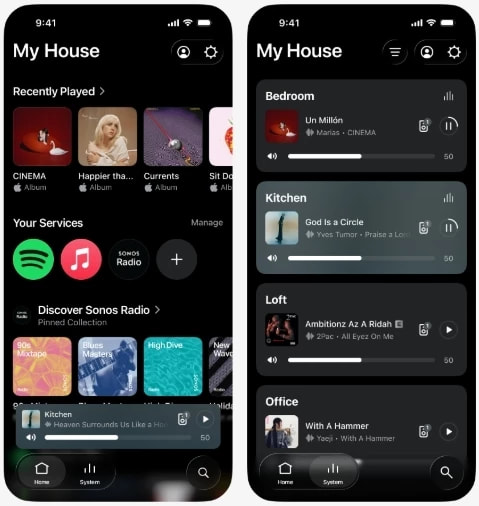
What Sonos Must Answer in September
Sonos needs to demonstrate more than a speaker carrying on a pleasant conversation under controlled lighting.
The company must explain which existing products will support its new intelligence, whether older speakers will be excluded and whether additional hardware will be required. It also needs to clarify local versus cloud processing, privacy controls, supported music and smart-home services, subscription requirements and whether customers can disable AI while retaining normal Sonos functionality.
Reliability matters even more than conversational polish. A system that can recommend dinner music but occasionally loses the living-room speakers is not intelligent. It is merely confident.
Sonos reported third-quarter revenue of $375 million, up 9% year over year, while adjusted EBITDA increased 24% to $44 million. Those results suggest the business is recovering and give the company room to invest in its next platform. They do not erase what customers experienced when the company last attempted a major software transformation.
The Bottom Line
Sonos may be better positioned than most audio manufacturers to make artificial intelligence useful inside the home. It already has the speakers, microphones, network, services and installed customer base required to turn voice requests into coordinated actions across multiple rooms.
That opportunity comes with significant risks.
Customers may be asked to accept greater data collection, increased dependence on cloud services, potential subscription fees and higher hardware prices at a time when many still remember the app collapse. The AI infrastructure boom driving this new strategy is also making memory more expensive, creating precisely the component pressure that Sonos says could eventually influence prices.
The September event therefore needs to answer a question larger than what Sonos is launching.
Can the company use AI to make its system simpler, more reliable and genuinely useful—or is it about to add another complicated layer to products that customers primarily want to play music?
Sonos does not need to prove that it can make a speaker talk.
After the past two years, it needs to prove that it can listen.
Related Reading:
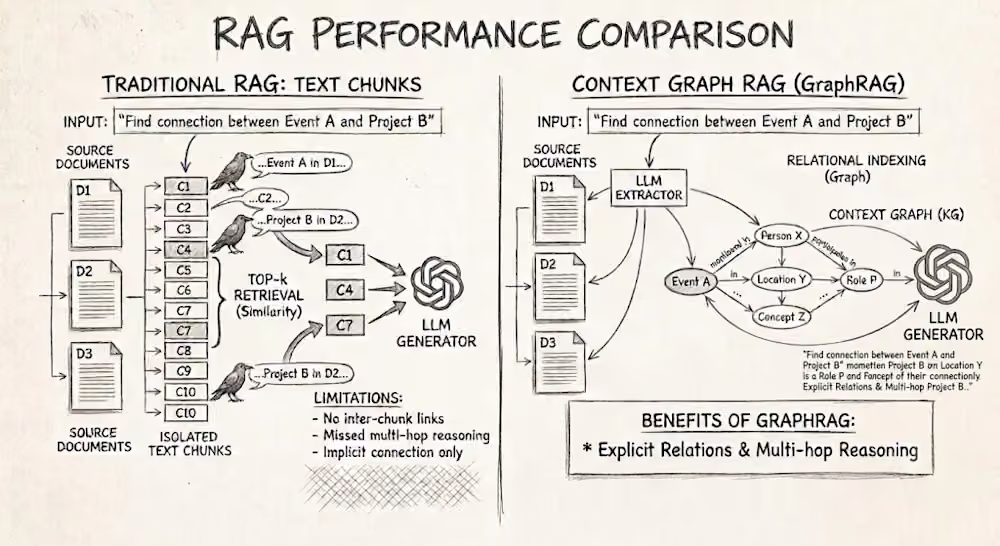

If you have built anything with retrieval-augmented generation (RAG) in the last two years, you have lived its central frustration: You chop your documents into chunks, embed them, retrieve the top few that look similar to the question, and hand them to the model. For “What was our Q3 refund policy?” This works beautifully. For “What are the recurring themes across two years of customer complaints?” it falls flat — because no single chunk contains the answer.
The fashionable fix is GraphRAG: Instead of feeding the model isolated snippets, you first build a knowledge graph of the entities and relationships in your corpus, then use that structure as context. The pitch is seductive. But seductive pitches deserve scrutiny, so I went through the evidence — the original Microsoft paper plus four independent benchmark studies — to answer a simple question: When you swap text chunks for a context graph, do answers actually get better?
The short version: Yes, substantially — but only for the right kind of question, and not for free. Let me show you the receipts.
Why text chunks hit a wall
Standard vector RAG retrieves the k passages most similar to your query. That design has three structural blind spots:
-
It can’t connect the dots. When an answer requires joining facts that live in different passages through a shared entity, chunks embedded in isolation never reveal the link.
-
It’s blind to global questions. “What are the main themes?” needs the whole corpus, but similarity search only returns the handful of chunks that superficially resemble the question.
-
It severs context at chunk boundaries. The relationships and hierarchy that complex reasoning depends on are exactly what chunking throws away.
Microsoft Research framed this crisply when they introduced GraphRAG: Baseline RAG “struggles to connect the dots” and performs poorly when asked to “holistically understand summarized semantic concepts over large data collections.”
What a context graph changes
GraphRAG attacks the problem before any question is asked. During indexing, a large language model (LLM) reads every chunk and extracts entities, relationships, and claims, assembling them into a weighted knowledge graph. It then runs community detection (the Leiden algorithm) to cluster the graph into a hierarchy of related topics, and pre-writes a natural-language summary for each community.
At query time, those summaries do the heavy lifting. Each relevant community drafts a partial answer (the “map” step), the partials are ranked and merged (the “reduce” step), and the model synthesizes a final response grounded in structure rather than in a few cherry-picked snippets. Variants like HippoRAG take a different route, using the graph plus a Personalized PageRank walk to find the right passages — but the core idea is the same: Let relationships, not just cosine similarity, decide what context the model sees.
The evidence: Four studies, one pattern
1. Global sense making: The headline win
Microsoft pitted GraphRAG head-to-head against naïve RAG on global, “make sense of the whole corpus” questions over million-token datasets, with an LLM acting as judge across three axes: Comprehensiveness, diversity, and empowerment.
GraphRAG won 72 to 83% of comprehensiveness comparisons and 62 to 82% of diversity comparisons against vector RAG. Its highest-level summaries used up to 97% fewer tokens than processing the source text directly.
That is not a rounding-error improvement. On exactly the kind of question that breaks text-chunk RAG, the graph wins two out of three times or better.
2. Multi-hop retrieval: The graph finds what chunks miss
The second piece of evidence is about retrieval quality: Does the right supporting passage even make it into the top results? On the standard multi-hop QA benchmarks (MuSiQue, HotpotQA, 2WikiMultiHopQA), graph-guided retrieval lifts Recall@5 dramatically:
-
Average Recall@5 climbs from 73.4% (naïve RAG) to 87.8% (graph-guided), a +19.6 point gain.
-
The biggest jumps come on the hardest, cross-document sets: +31 points on MuSiQue and +28 points on 2Wiki.
-
HippoRAG reports up to a 20% accuracy improvement on multi-hop QA, at 10–20× lower cost and 6–13× faster than iterative retrieval methods.
3. The controlled head-to-head – where it gets honest
Here is where the story gains nuance. A 2025 study from Michigan State and Meta ran RAG against four GraphRAG families under one unified protocol — identical chunking, embeddings, and generation — and found no single winner. The two approaches are complementary:
-
On single-hop, factual lookup (natural questions), plain RAG edged ahead (F1 64.8 vs. 63.0 for the best graph method).
-
On multi-hop reasoning (MultiHop-RAG), graph-guided retrieval pulled in front (70.3 vs. 67.0 overall accuracy).
The lesson: A context graph is not a universal upgrade. It is a specialized one that pays off precisely when questions demand reasoning across pieces.
4. When to use graphs: The task-type verdict
The most recent benchmark, GraphRAG-Bench (ICLR 2026), set out to answer “In which scenarios do graph structures provide measurable benefits?” Its accuracy-by-task numbers map the boundary cleanly:
-
Simple fact retrieval: Text chunks 60.9 vs. graph 60.1 — effectively a tie. The graph’s structure is overhead the query doesn’t need.
-
Complex reasoning: Graph 53.4 vs. chunks 42.9 — a +10 point graph win.
-
Contextual summarization: Graph 64.4 vs. chunks 51.3 — a +13 point graph win.
The scorecard

Read top to bottom, the pattern is unmistakable: The graph’s advantage grows with the reasoning depth of the question, while text chunks hold their ground on isolated facts.
The catch: Cost and the LLM-judge problem
Two caveats keep this from being a slam dunk, and ignoring them is how teams end up disappointed.
Building the graph is expensive. Having an LLM extract entities and relationships from an entire corpus isn’t cheap. One analysis put index construction at roughly $48 against GPT-4o for a moderate corpus, far above a vanilla vector index. (Microsoft’s own follow-up, LazyGraphRAG, defers extraction to query time and cuts that to around 0.1% of the cost – a tacit admission that the original budget is impractical for many deployments.)
Many of the wins are judged by another LLM — and LLM judges are biased. An independent audit found systematic flaws in this evaluation style: position bias (swapping which answer appears first can swing the win-rate by more than 30 points), length bias, and trial bias (identical comparisons disagree across runs). After correction, one popular method’s reported 66.7% win rate fell to about 39% — below the 50% break-even line.
The takeaway is not “the research is wrong.” It is that the large gains — the +20% multi-hop accuracy, the +15-to-30-point recall jumps — are robust, while narrow comprehensiveness margins deserve a skeptical second look with reference-based metrics.
So when should you reach for a context graph?
Strip away the hype and the decision is refreshingly practical.
Use a context graph when: Your questions are multi-hop, global, or sensemaking in nature; you need comprehensive, multi-perspective answers; and your corpus is richly interconnected (research libraries, case files, incident histories, knowledge bases).
Stick with text chunks when: Your queries are mostly single-fact lookups; your corpus is small or flat; and indexing cost, latency, and operational simplicity outweigh a marginal quality bump.
Best of all, go hybrid: The systematic studies converge on the same recommendation: route each query to the right method, or fuse evidence from both. Combining graph and chunk retrieval consistently beats either one alone. You don’t have to choose a religion; you have to build a router.
The bottom line
A context graph is not magic, and it is not snake oil. It is a targeted instrument. Hand it a question that requires connecting scattered facts or synthesizing a whole corpus, and it will outperform text chunks decisively. Hand it “what’s the phone number on page 3,” and you’ve paid for indexing you didn’t need.
The teams that win with GraphRAG in 2026 won’t be the ones who graph everything. They’ll be the ones who know which questions deserve a graph — and build pipelines smart enough to tell the difference.
Dattaraj Rao is an R&D architect at Persistent Systems
Welcome to the VentureBeat community!
Our guest posting program is where technical experts share insights and provide neutral, non-vested deep dives on AI, data infrastructure, cybersecurity and other cutting-edge technologies shaping the future of enterprise.
Read more from our guest post program — and check out our guidelines if you’re interested in contributing an article of your own!
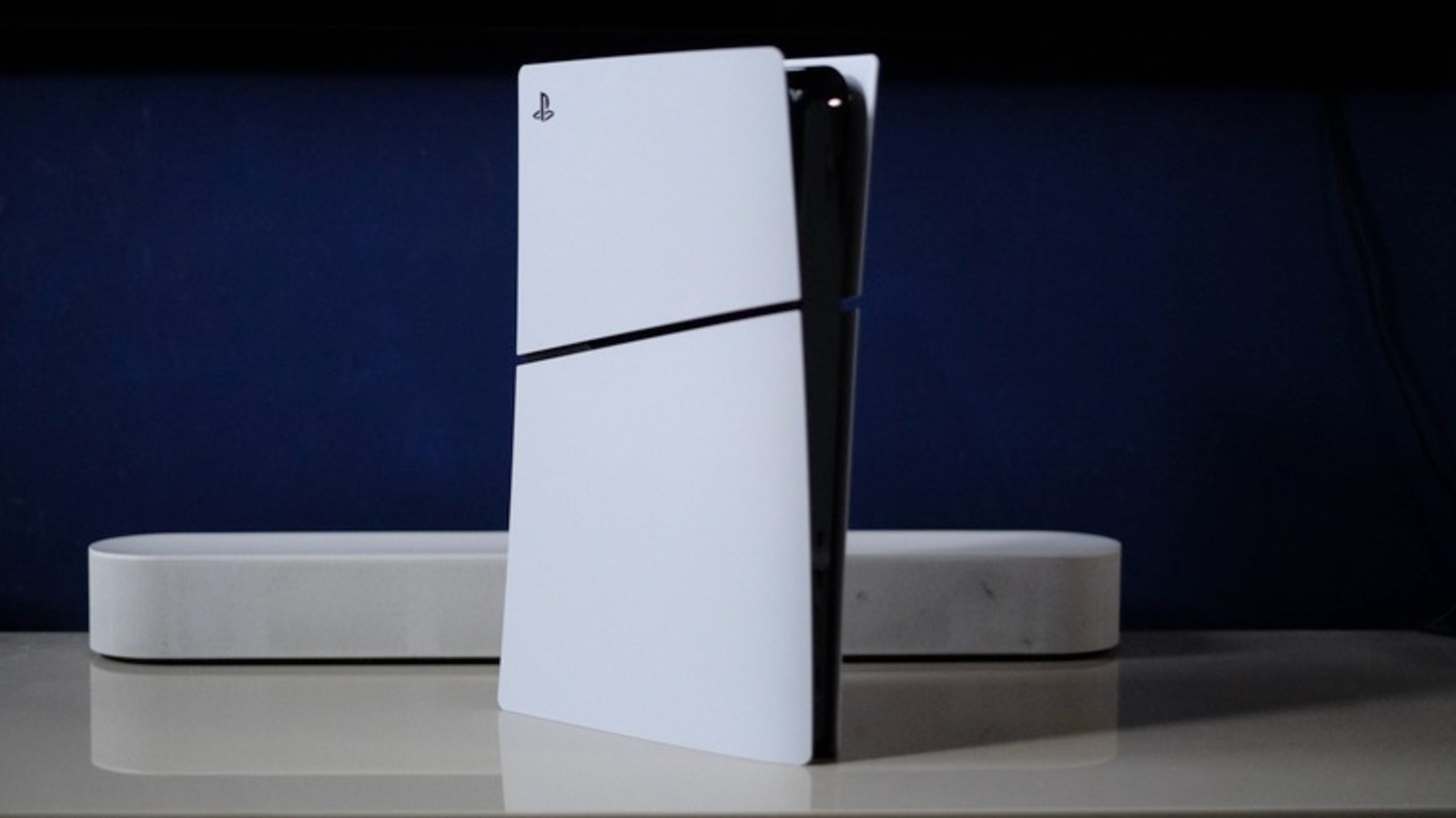
The best way to answer this question is to look at the precedent Sony has already set. The PS4 originally launched in 2013, and to this day the console still semi-regularly receives firmware updates, with the most recent patch rolling out just last month.
Granted, it amounted to little more than a few security fixes, but the fact that Sony still considers a 13-year-old console worth bothering about at all bodes well for the PS5. The PS4 also still functions just as well as it did when the PS5 replaced it in 2020, and despite unconfirmed reports last year that some of the console’s features would be sunsetted in 2026, you can turn on a PS4 today and expect it to work perfectly.
A new console generation replacing an old one almost always involves considerable software overlap for at least the first few years of the newer console’s life. In Sony’s case, this has been true since the very first PlayStation, with a number of PS1 titles still launching well into the PS2’s life, and it’s been the same story with every subsequent console the company has released.
Even today, the PS4 is still getting plenty of new games, even if the AAA side of things moved on a while ago. Incredibly popular games like Fortnite and Roblox still thrive on the last-gen Sony console, and it’s not unusual to see newly released indie games popping up on PS4 either at launch or a little while after.
Nothing lasts forever, though, and at some point those last remaining clingers-on will get a big old nudge towards newer hardware. Call of Duty: Warzone is being shut down on PS4 and Xbox One later this year, and it does feel like 2026 is something of a final twilight year for last-gen machines. And while it has published a few games on the PS4, the last notable first-party release on the console from Sony was probably 2022’s God of War: Ragnarok, which was the final big cross-generation game.
So what does this all mean for the PS5 and eventual PS6? It’s hard to predict Sony right now, as its first-party releases have dramatically decreased this generation. The longer development times and significantly higher cost of developing AAA games mean we haven’t had a single brand new game from Naughty Dog since the PS5 launched, and at this rate it wouldn’t be a huge shock if Intergalactic: The Heretic Prophet skipped the current generation altogether.
In all likelihood, the popularity of the PS5 means Sony will continue to support it in the same way it has done with all of its previous consoles, especially if the PS6 is as obscenely priced as some fear it could be. Just don’t expect any cross-generation releases to come on a disk, as Sony is ending support for physical games in 2027.

“A major scientific review is challenging the idea that more protein is always better,” reports ABC News:
The review, led by pathologist and biomedical researcher Dudley Lamming and published in the journal Cell Press Blue, examined more than 350 studies involving humans, mice, insects, yeast, and other organisms. The review found that eating less protein, or less of certain amino acids that make up protein, may turn on body processes linked to healthier aging, as well as metabolism, the process by which the body turns food and drinks into energy…
For adults who already get enough, eating more protein may offer little benefit, while some research suggests that eating less protein could support healthier aging… Lamming reviewed the effect of reducing protein in many body processes. One of the processes involves a hormone called FGF21. “There’s an increase in a hormone called FGF21 that promotes energy expenditure [when protein intake is reduced],” Lamming said. “It essentially increases thermogenesis in your adipose tissue, so you don’t just store fat, but actually burn it as fuel.” This may help explain why some studies connect lower-protein diets with less body fat, better blood sugar control and a healthier metabolism. Eating less protein may also affect signals that tell cells when to grow, repair damage or recycle old cell parts. These jobs may play a role in aging.
However, protein restriction is not the same as protein deficiency. The goal is not to deprive the body of an essential nutrient. Instead, the research raises the possibility that avoiding unnecessary excess could benefit some people who already consume enough… Before reaching for another high-protein product, a better question may be: How much protein does my body actually need?

A few days ago, Apple introduced a new “Upgrade” program that is essentially a lease program for buying Apple hardware. Instead of paying the full cost up front, you space the monthly installments (12, 24, and 36 month spells), and at the end of the lease period, you can choose to return the device, upgrade to a new one, or pay the remainder cost and keep it forever.
The broad idea is simple. Instead of taking a thousand-dollar hit on the wallet, you space the hit across small monthly payments. For a flagship iPhone, that broadly comes down to a dollar per day, and for budget phones such as the iPhone 17e, it’s just half a dollar each day, if you do the breakdown. At least Apple is looking at it that way.
“It’s a way to get into a product on a fairly affordable basis, particularly for those customers who want to upgrade on some kind of schedule,” outgoing Apple chief Tim Cook said during the company’s recent earnings call. The timing of the launch is no coincidence.

Bloomberg says Apple has been working on the program for years, but only decided to launch it in 2026. You know what else is happening in 2026? A price hike for iPhones. As per analyst estimates, the iPhone 18 Pro duo could see a price hike that’s as generous as $300 for the flagship.
Soften the blow. And make upgrades less taxing.
Imagine paying close to $1400-1500 for an iPhone. And yes, the hikes are imminent, if Apple’s own comments are to be believed. Look no further than the price surge that was announced for the Mac and iPad hardware merely a few weeks ago. And oh, let’s not forget the elephant in the room — the foldable iPhone.
This one is going to cost north of $2,000, as per multiple reports, including reliable sources such as Bloomberg. Samsung already sells its latest Galaxy Z Fold 8 Ultra starting at $2,100, so it won’t be surprising to see Apple crossing that sticker price barrier.

I know half a dozen people in my close circle who own a foldable phone. None of them paid for it in one go. Forking close to two thousand dollars — on a phone — simply doesn’t make sense. Plus, a person who is willing to spend that amount on a phone is clearly a tech-savvy person, and they will most likely switch to a shiny new model in a year, or two.
That’s exactly what Apple is targeting. “If you look at the Apple Upgrade, what it’s all about is making it easier for customers to get their hands on our latest products with a leasing plan that’s right for them,” Cook said during the earnings call.
Apple is not only giving customers a more affordable (in the short-term, at least) option to own an iPhone, but also readying the field for its obviously premium foldable iPhone that arrives this fall.
Even in developing countries like India, a huge majority of iPhone users rely on local financing schemes to buy those devices. And considering the fact that Apple’s Upgrade program offers unlocked devices, the target audience will likely lap it up.
The saving grace.
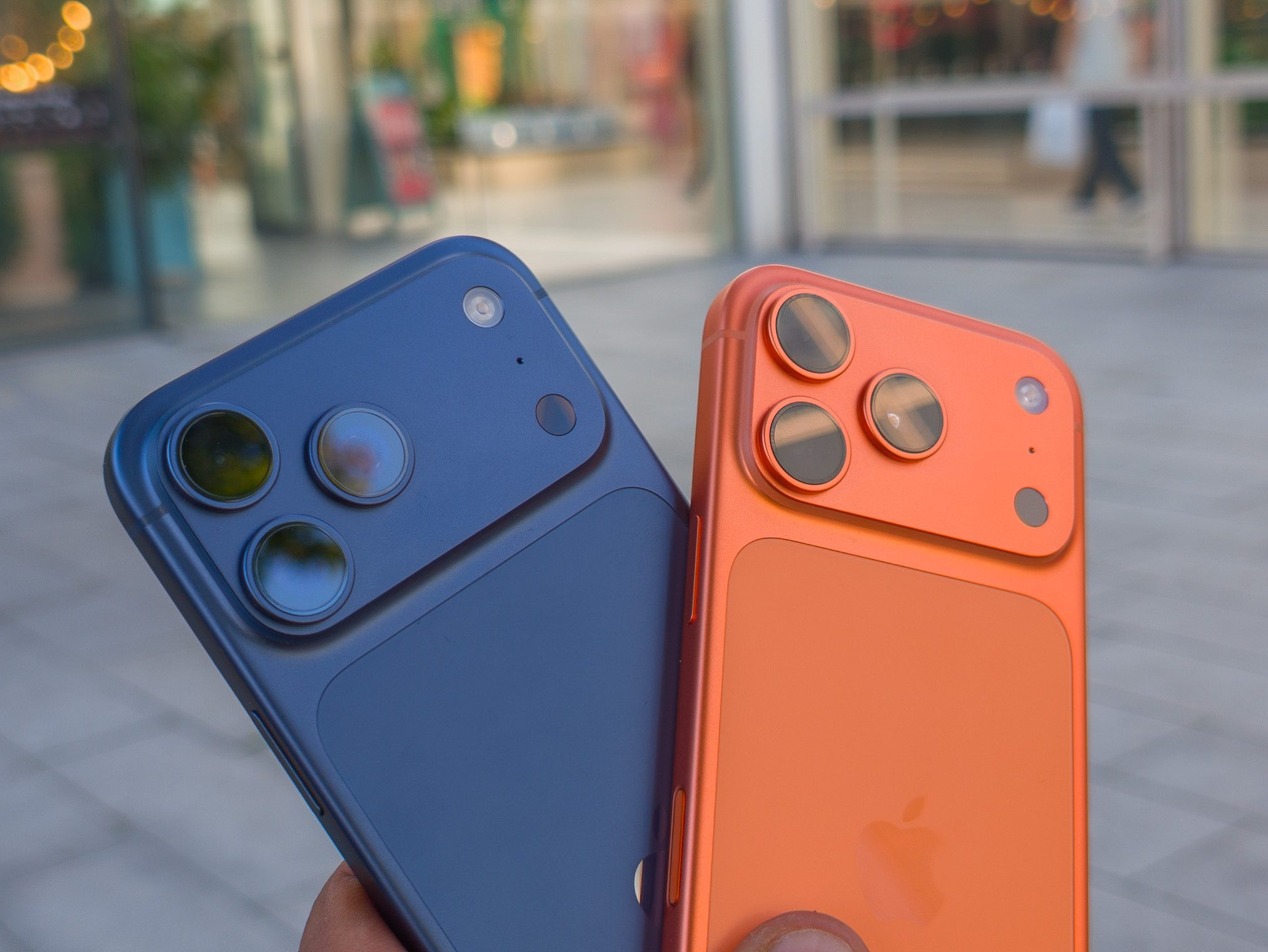
I won’t mince words here. Leasing and owning are entirely different things. With the Upgrade program, Apple essentially wants to trap you in its walled garden. You don’t technically own the device. You either let Apple take it back at the end of the lease period, or you exchange it with a new iPhone. Or Mac. Or Apple Watch. Or iPad.
If you do maths on the back of a napkin, you aren’t really in for a rewarding deal unless you love tech upgrades but don’t want to pay hundreds of dollars each time you want to experience a new iPhone. But there is a third route that can actually be a winning proposition for many.
At the end of the lease period, you can just pay off the remainder amount, convert the lease into full ownership, and subsequently sell the device in the second-hand market. The benefit? The depreciation on iPhones is dramatically lower than that of any rival brand’s competing product out there.
Apple knows that too well, and even its CEO is mildly nudging the target audience to take this route. “Of course, as you know, the residual values on Apple products are generally much higher than the residual value on several of our competition,” Cook was quoted as saying during Apple’s Q2 earnings call.
It’s a reality I’ve witnessed year after year. And it applies not just to iPhones, but also Macs, iPads, and Apple Watches. Apple’s just making the best of a status quo it has built over decades, and it’s finally in a position to reap rewards that are simply not feasible for its rivals.

The James Webb Telescope Is Changing Astronomers’ Understanding of the Ancient Cosmos

Jadon Sancho transfer statement released as Man United flop takes drastic action

Modest Mouse Guitarist Addresses DMs Sent To Underage Fan


-
 Sports7 days ago
Commonwealth Games boxing: Jadumani Singh seals dominant 5-0 win over Pakistan’s Sumama Rehman to enter quarter-finals | Commonwealth Games News
-

 Business4 days ago
Why Trees Belong on the Risk Register
-

 Fashion2 days ago
Weekend Open Thread: Wit & Wisdom
-

 Tech7 days ago
Intel is reversing course and bringing hyper-threading back to its server chips
-

 Politics2 days ago
Meta enters AI-training agreement with far-right ‘propaganda rag’ Newsmax
-

 Politics6 days ago
Luke Littler dismantles Gerwyn Price to retain title in Blackpool
-

 Crypto World1 day ago
MicroStrategy Post-Earnings CLARITY Act Push Could Add New Catalyst for Its Stock
-

 Politics5 days ago
The Part of the Electric Transition Nobody Wants to Discuss
-
 Entertainment5 days ago
‘Stargate’ Creator’s New Sci-Fi Series Returns for Season 3 Tomorrow
-

 News Videos7 days ago
BITCOIN JUST ENTERED THIS CRITICAL ZONE…
-

 Business5 days ago
Major shareholder moves on Canyon
-

 News Videos3 days ago
Bitcoin Enters the 3rd Stage of the Bear Market
-

 Crypto World2 days ago
XRP Ledger v3.3.0 brings five institutional features
-

 Crypto World5 days ago
Kraken Enables Retail Access to Jersey Mike’s IPO via Tokenized Shares
-

 Tech6 days ago
New macOS Sequoia & Sonoma security updates for older Macs
-

 News Videos5 days ago
Claude: Build Financial Dashboards in Minutes (2026)
-

 Politics3 days ago
Luke Littler’s dominance sparks GOAT debate
-

 Business5 days ago
Johnson & Johnson agrees to $5.5B settlement over talc cancer claims
-

 Sports3 days ago
Seema Kaliramna Wins Discus Throw Bronze, Takes India’s CWG Medals Tally To 17
-

 Crypto World11 hours ago
Crypto PAC spending tops $2M in Michigan House race
You must be logged in to post a comment Login