
Politics
Why Collagen, Ceramides, Vitamin C And Creatine Are Good For Skin Health


With new “miracle” skin care ingredients flooding store shelves (and your FYP), it can be hard to know if that gold-tinted endangered snail mucus is really going to do much for your epidermis. If you’re wondering about ingredients that might be worth a try, you might want to focus on one letter: C.
That’s because the four hottest ingredients in skin care right now are collagen, creatine, vitamin C and ceramides. Each one has a unique role in stimulating and supporting healthy skin, which is why you so often see them as a key ingredient in your favorite products.
This powerful foursome should be a top priority when you’re shopping for skin care, said dermatologist Dr. Regine J. Mathieu. “These ingredients are often talked about together because each one supports a core pillar of skin health,” she said. Each one of the C’s brings something beneficial to your skin, said nurse practitioner Mariana Vergara, owner of Beverly Hills medspa Beauty Villa Vergara. “They maintain skin structure, repair mechanisms and protect barrier integrity.”
We talked to experts to find more about how these ingredients work, and followed up with advice on how and when to use them.

Collagen (the topical kind)
Some background: Dermatologist Dr. Geeta Yadav noted that people often get confused about topical collagen vs. collagen supplements. “Topical collagen does not meaningfully increase your skin’s own collagen levels, because the molecules are too large to penetrate the skin barrier,” she said. “Applying collagen to the skin doesn’t replace or rebuild dermal collagen. But it’s still popular for a reason, since skin can look plumper and softer, even though deeper collagen levels are unchanged.”
What it is: “I tell my patients that collagen is the skin’s structural backbone,” said oculoplastic surgeon Dr. Kami Parsa. “It gives skin strength, thickness and resilience.” But starting at around age 30, he said, we lose about 1% of our total collagen every year, making skin thinner, looser and more prone to wrinkles.
Why it works: “Topical collagen provides an immediate cosmetic benefit,” Parsa said. “It helps hold moisture, smooth the skin’s surface and temporarily soften the appearance of fine lines.” Most topical collagen is made from animal sources like cows, pigs and fish, so read labels carefully if you have concerns about non-vegan products. There are also plant-based alternative collagen products that use seaweed or plant protein hydrolysates, which are mixtures created by breaking down plant proteins like soy or wheat. As you’re reading labels, you may also find other ingredients that support collagen production, such as amino acids, vitamin E or botanical extracts.
Who it’s for: “People with dry, sensitive or compromised skin tend to benefit most from topical collagen applications,” Parsa said. “Also, after procedures such as lasers, microneedling or chemical peels, the skin barrier is stressed. Topical collagen can help reduce moisture loss and support the recovery phase.”
Try it in: Olay Regenerist Collagen Peptide Moisturizer, which provides the benefits of collagen peptide and 24 hours of intense hydration.
Creatine
What it is: You may know it as a bodybuilding supplement, but its benefits go beyond building muscle. “This compound helps regenerate ATP (adenosine triphosphate), which cells use as their main energy source,” Yadav said. “It’s starting to appear in skin care formulas because it’s thought that boosting cellular energy might help skin cells function more efficiently, especially under stress. Some brands also suggest it may support firmness or slow visible aging by helping cells maintain normal metabolic activity.”
How it works: “Creatine helps skin cells better withstand stress from UV exposure and inflammation, Vergara said. “By improving energy availability at the cellular level, it helps promote collagen stimulation, skin renewal and overall resilience,” Mathieu added.

Organic Media via Getty Images
Who it’s for: “If anyone might benefit, it would likely be people with stressed or environmentally exposed skin,” Yadav said. She noted that it can be used both preventatively and as a treatment for existing issues.
Cautions: “The upside appears to be that it’s low risk when used topically,” Yadav said. “It’s generally well-tolerated and not known to cause irritation or sensitization. The main downside is not safety, but expectations. In reality, its benefits are unproven and are likely subtle at best.”
Try it in: Nivea’s Q10 products combine creatine with the antioxidant Q10 to boost skin cell energy, reduce wrinkles and smooth skin.
Vitamin C
What it is: “Vitamin C helps stimulate the skin’s own collagen production, helping collagen fibers form and stay strong,” Mathieu said. “When applied topically, it helps improve overall tone and supports long-term firmness.”
How it works: “It’s considered a ‘gold standard ingredient’ because it does more than one important job at once, helping you make new collagen and protecting the collagen you already have,” Yadav said. “It’s best known for its antioxidant properties, helping to brighten the skin’s appearance and minimizing signs of skin aging like fine lines, wrinkles and uneven skin tone,” said dermatologist Dr. Corey L. Hartman.
Who it’s for: “In my practice, vitamin C is the antioxidant I recommend to patients 99% of the time,” Hartman said. “It has so many benefits with little risk of side effects, so really everyone can use it. Serums made with vitamin C are ideal for anyone with sun-damaged skin, anyone with mature skin who is looking to reduce fine lines and wrinkles or those wishing to reduce the appearance of hyperpigmentation.”
Cautions: “Anyone with active eczema or rosacea flare-ups may not be able to use vitamin C, as it can further irritate the skin — but talk to your dermatologist about your interest, as there may be options when you don’t have active flare-ups,” Hartman said. In addition, Vergara noted that you should “avoid pairing strong acids like glycolic or salicylic acid with vitamin C, as these might cause irritation. When pairing vitamin C and niacinamide, the concentration of vitamin C can be reduced.”
Hartman suggested that the best way to use vitamin C serum is as part of your morning routine. “Apply it to clean, dry skin. Five minutes after application, apply a moisturizer and then finish with sunscreen,” he said.
Try it in: Dr. Loretta Anti-Aging Repair Serum, which contains vitamin C, lilac stem cells and marine algae extracts to boost hydration, reduce the appearance of fine lines and protect against the formation of future fine lines. Check out this list of vitamin C serums that dermatologists recommend.
Ceramides
What they are: “These are essential lipids that make up the skin’s barrier, crucial because without a healthy barrier, none of the other ingredients can perform optimally,” Vergara said. Mathieu added, “If skin cells are the bricks, ceramides are the mortar that holds everything together.”
How they work: “They help create a healthy barrier and work to retain moisture in the skin,” said dermatologist Dr. Nada Elbuluk, professor of clinical dermatology at the University of Southern California. “They also keep out irritants like pollution, bacteria, allergens and chemicals.”
Who they’re for: “Everyone can benefit from using them, but ceramides are especially helpful for people with dry, sensitive and eczema-prone skin,” Elbuluk said.
“Most people benefit from using them daily, not just when skin is flaring,” Yadav added. “Because they’re constantly lost through normal skin shedding and cleansing, replenishing them regularly helps maintain barrier health and prevent problems before they start. Using ceramides only when skin feels dry is like only drinking water once you’re already dehydrated.”
Cautions: None. “They can safely be used routinely, and shouldn’t cause any issues even with overuse,” Elbuluk said.
Try them in: All CeraVe products contain a signature blend of three essential, skin-identical ceramides: ceramide 1 (EOS/EOP), which prevents water loss, ceramide 3 (NP), which promotes water retention, and ceramide 6-II (AP), which improves skin suppleness and strengthens the barrier.
How to apply these four ingredients together
As a good rule of thumb, consider applying skin care ingredients based on their consistency, Mathieu said, “Apply products from thinner to thickest. And never forget to finish with sunscreen.”
When it comes to specific ingredients, Vergara said, “Actives like vitamin C and creatine should be applied first, then apply ceramides to seal in hydration and barrier support. Collagen sometimes comes as a serum or moisturizer, and it can go on last.”
And as fun as it is to try the hottest, coolest new products and ingredients, you need to see what works for you and stay with it, Mathieu concluded. “Skin care is most effective when it’s consistent and tailored to the individual. These ingredients are not quick fixes, so they work best as part of a long-term routine that supports skin health over time.”


Jeremy Corbyn has unveiled Your Party plans to target Labour’s heartlands in the upcoming English local elections in May. The start-up party is supporting allied community independent groups at the local elections. And it’s hopeful of several groups winning East London councils, with Labour’s core vote set to collapse in major cities.
It’s worth noting that this follows a period of stasis during which local groups have tried to keep things moving.
Your Party’s local elections campaign will focus on the destructive effects of local government austerity. Councils across the country are squeezed to breaking point, social care is in crisis and services are failing residents.
In contrast to the ‘snake-oil’ alternative of Reform, Your Party will stress the need for public investment and the in-sourcing of services. Local council divestment from Israeli apartheid will also be a key focus.
At Your Party’s founding conference in November 2025, members voted to adopt a targeted strategy. This aims to maximise the party’s seats, rather than standing everywhere. As party structures continue to develop, Your Party will support around 250 candidates across England. The vast majority of these will be standing as Independents or for allied local community parties.
Your Party targets
Key targets for allied groups include:
Allied candidates are also likely to make inroads in Birmingham and the West Midlands. Historic Labour bastions are turning away from the party over its complicity in the Gaza genocide and failure to tackle the cost of living.
The Your Party leadership sees Tower Hamlets as a ‘beacon council’. In recent years, under Rahman’s leadership, the council has rolled out free school meals for all primary and secondary school students. It has re-established the Education Maintenance Allowance which the Tory-Lib Dem coalition cut. And it has reinstated the Winter Fuel Payment which Starmer and Reeves cut.
Hopes are also high for the Redbridge Independents, who have won a series of stunning by-elections from Labour, with Your Party spokesperson Noor Jahan Begum elected to replace slum landlord Jas Athwal MP.
Health secretary Wes Streeting bemoaned the loss in later-published messages with Peter Mandelson, declaring that he was “toast” at the next election. Streeting hung onto his seat by just 500 votes at the last election after a strong challenge from young British-Palestinian Leanne Mohamad.
Corbyn was elected as Your Party parliamentary leader earlier this month after his allies were victorious in the party’s leadership elections. He is expected to tour the country in support of the Your Party-backed independents and groups in the coming weeks, following a first event in Redbridge.
Corbyn said:
These elections are the beginning of the fightback against austerity, privatisation and fear.
All across the country, there will be community independent groups offering an alternative to the despair of Labour and the division of Reform. We are proud to support those candidates and groups standing up for redistribution, inclusion and peace.
People in power underestimate the power of people at their peril – and arrogance in office always comes back to bite you in the end.
Rahman, executive mayor of Tower Hamlets, said:
Labour imposed some of the most severe austerity in the country when they ran Tower Hamlets council, further impoverishing one of Britain’s most deprived areas.
We’ve reversed these cruel cuts and made history as the first council to introduce universal free school meals for all primary and secondary pupils, re-establish the Education Maintenance Allowance scrapped by the Tories, and bring back the Winter Fuel Payments, cut by Starmer.
These are just some of our pioneering policies to provide more cost of living support to our residents than any other local authority, alongside unprecedented investment in frontline services and in affordable and social housing.
The alliance being brought together by Jeremy Corbyn, with Your Party, Aspire, and progressive independent and Green candidates, presents a real opportunity to replace more Labour-led councils with administrations rooted in and accountable to their communities.
In Tower Hamlets, we’ve shown how socialist, redistributive policies can transform lives and provide the hopeful, ambitious alternative needed to take on the far right — something Labour has utterly failed to do.
Noor Jahan Begum, Your Party spokesperson and Redbridge Independent councillor, said:
We are taking the fight to Labour in their heartlands. In Redbridge and across the country, people are telling us that they feel let down and abandoned by Labour, outraged by their complicity in genocide and fed up of the status quo.
We are offering something different: a politics rooted in and accountable to our communities, a politics that campaigns for the social transformation people are crying out for.
Featured image via the Canary
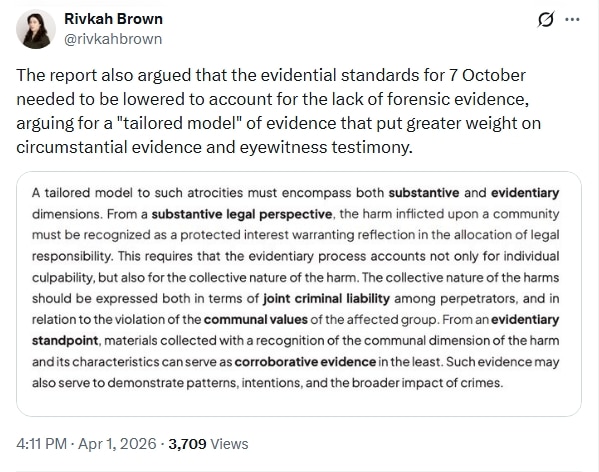
Israel’s Knesset is about to have a second reading of an appalling, and underreported, death penalty bill. This murderous bill will be exclusive to Palestinians, yep, only Palestinians. Due to its criminal dilution of legal norms, it could give authorities a carte blanche to execute thousands of imprisoned Palestinians detained by Israel since October 7.
The bill’s wide-reaching title is: “The Prosecution of Participants in the October 7 Massacre Events.”
If that wasn’t bad enough in times when the rest of the world is moving to abolish the death penalty, Israeli policy makers are defending what they describe as the need to:
deviate from the rules of procedure and the rules of evidence.
According to the bill, this slam-dunk deviation:
is necessary for the purpose of clarifying the truth and doing justice, and does not significantly impair the fairness of the proceeding.
However, cases without evidence trash this argument, which never had legs to begin with. Palestinian defendants will also be tried in Israel’s military courts which have seen an impossible 99.7% conviction rate. This highlights, in the most sadistic way, that when there is a will, there will be a way.
Israeli leaders are drooling at the prospect of more murder—executions by hanging—genocide by alternative means. This bill is likely to be yet another way for Israel to exercise that will, under the sinister veneer of legality, to further its Zionist colonial ambitions.
Novara Media’s Rivkah Brown broke this deadly news on X:
But what’s interesting about this bill is that it proposes lowering the evidential threshold for prosecution. Read this chilling paragraph (from https://t.co/2S1o0UKwE0) pic.twitter.com/hYgbYee1t8
— Rivkah Brown (@rivkahbrown) April 1, 2026
The Dinah Report and UK complicity
Unsurprisingly, this bill becomes even more sickening and nefarious as you dig further into the detail. As Rivkah Brown highlighted on her post, this bill has been a long time in the making and preparatory work completed to make this cruel, collective punishment bill possible.
We wrote about how the UK Foreign, Commonwealth and Development Office (FCDO) gave £90k of taxpayers’ money to put together the Israeli report, representing a whopping 75% of the FCDO’s budget.
This blatant bias and conflict of interest should come as little to no surprise. Ever since October 7th, we have seen a concerted push by Israel and its lobby groups to manipulate data, grief and material facts in their own interest. All whilst conveniently and simultaneously demonising Palestinian resistance. If we have learned anything through this horrific 2.5 years, it is the reminder that every life matters and civilians should not pay the price for the sins of the powerful.
Similarly, Rivkah Brown argues that, since October 7, actors have made a concerted effort to manufacture a “body of literature” portraying this as a conflict unlike any other. They use that framing to claim that the destruction of evidence makes the need for evidence irrelevant.
They have also poured significant funding into producing and amplifying material that supports this narrative for a specific political purpose.
We must see this bill for what it is— a fraudulent crime by those in power who pull the levers at their disposal — including the law— to justify their genocide against Palestinians.
They have the legal right to resist their occupier, with force— a right that is protected by international law.
Nevertheless, that right for Palestinians to resist is being criminalised—no doubt an omen for the rest of the world.
UK officials follow in Israel’s footsteps
Brown further stated:
As I revealed last month, the FCDO gave £90k/120k (so 75% of its funding) to The Dinah Project’s report. The report concluded – against all existing reportage, by Amnesty, the UN and others – that sexual violence on 7 October didn’t just happen, but was “systematic”.
She also revealed the parallels in rhetoric between the Dinah Project report and this legislation working its way through the Knesset:

It is therefore difficult to view it as a coincidence that this heavily UK-funded report uses strikingly similar language and reasoning to the Knesset bill.
This alignment raises serious concerns that some UK officials may have coordinated with Israeli-linked groups in ways that risk criminalising Palestinians on a broader scale.
Such actions, if carried out, would deepen the UK’s complicity in the genocide and betrayal of Palestinian people.
As Rivkah’s subsequent post underscored, huge inferences are being used to prop up collective punishment:
A tailor-made evidence model should, the report added, collectively criminalise those who participated in the attack, not only for their own actions, but for the actions of others in the “collective mob attack”.

Collective criminalisation IS collective punishment
Collective punishment is illegal under multiple bodies of international law. Whether that be article 33 of the Fourth Geneva Convention, or rule 103 of international humanitarian law, collective punishment is a war crime. These international legal rules play a crucial role in maintaining peace and stability, protecting civilians from punishment for acts they did not commit.
It is clear that Israel does not have sufficient evidence to attribute October 7 crimes to individual Palestinians. We have also watched Israel Occupation Forces (IOF) round up Palestinian men, including doctors and rescue workers, and imprison them. Israel has held hostage thousands of men and boys using unproven allegations of involvement in the killing of Israeli citizens and foreign nationals.
For example, Dr Abu Safiya, a Palestinian paediatrician, has been detained since December 2024, and subjected to physical and mental torture, despite having done no wrong. As Clarion India explains, his crime was:
Standing amid the ruins outside Kamal Adwan Hospital, surrounded by destruction, he walked alone in his white coat toward advancing Israeli armoured vehicles — a lone doctor facing a war machine. The image circulated widely because it captured, in a single frame, the reality of Gaza: those who heal standing unarmed before those who destroy.
We must challenge this attempt by the UK and Israel to legally justify the mass killing of innocent, oppressed and traumatised people. If we fail to act, we risk standing by as more atrocities unfold with the backing of our government.
This action constitutes a colossal crime against humanity — one that we must not forgive.
Featured image via the Canary
The National Education Union’s annual conference always provides useful insights into the concerns of the teachers present. And this year’s gathering, held in Brighton this week, was no exception. The four-day jamboree revealed that politics is of far more concern to union members than teaching and learning.
Indeed, questions actually concerning educational standards were dealt with spectacularly quickly – and the consensus was that they should be discarded. With motions passed to ban Ofsted, the schools’ inspection and regulation body, and challenging the planned statutory reading assessment for Year 8 pupils, delegates were then free to discuss the really important stuff.
First up was global conflict. America clearly looms large in the minds of the around 1,500 teachers and school-support workers present. They passed a motion condemning the US attack on Venezuela, the bombing of Iran and Trump’s actions in Cuba, which, they claim, ‘breach international law and will worsen humanitarian conditions’. But Israel got a look in, too: it was criticised for ‘aggression over Lebanon… which has killed many citizens’. Both Donald Trump and Benjamin Netanyahu have no doubt been waiting on instructions from Britain’s teachers, who think ‘there needs to be an urgent de-escalation of conflict and global tensions’.
But it is domestic politics that really gets NEU delegates hot under the collar. One motion, which passed to much applause, stated that NEU members oppose ‘all forms of racism, fascism and far-right extremism’, including ‘the divisive politics promoted by Reform UK’. Teachers, the conference promised, will throw their ‘full weight’ behind ‘stopping a Reform UK government’. Dave Davies, a teacher from east London, who seconded the motion, argued that ‘we have to rip the mask of respectability away from the far right’. ‘Nigel Farage is not a respectable politician’, Davies told the conference floor, ‘he wants to replicate what Donald Trump does in the United States and put ICE on to the streets’ (a reference to the US Immigration and Customs Enforcement agency, which presides over Trump’s deportation policies).
The same motion called on union branches to affiliate with Stand Up To Racism – a campaign group that seeks to fight fascism, but has little to say about the rise of anti-Semitism. Like so many ‘anti-racist’ organisations, it seems more concerned to stop Reform gaining ground at the next election than with actually stopping racism. Delegates also agreed that the union should support ‘school groups, districts and regions to mobilise for anti-fascist demonstrations’ by organising transport to ‘anti-right-wing counter-demonstrations’. Leigh Seedhouse, the executive member who proposed the motion, told the conference floor that ‘parties based on racism are shaping the political agenda’ across Europe and that ‘the rise of Reform UK with its relentless scapegoating of migrants is a warning’.
It is hard not to laugh at the NEU’s delusions. Members leap from an inflated sense of their own importance – dictating Trump’s foreign policy – to paranoid fantasies about fascism and ICE agents patrolling British cities. But what is not funny is the influence NEU members have on Britain’s children. The ‘fighting racism, fascism and far-right extremism’ motion also calls for the creation of anti-racist and anti-fascist teaching materials, as well as ‘literature making the case against the far right’, which would then be distributed to union members who are teachers. In other words, the NEU’s campaign against Reform will not be conducted on teachers’ own time but will also be waged in the classroom.
Another motion that promises to bring politics into the classroom calls on schools to be ‘aware of the need to support trans and nonbinary rights’. Encouraging teachers to ‘treat trans and nonbinary people with dignity and with respect’ may sound nice enough, but, in practice, showing ‘respect’ often turns out to mean forcing children to accept the use of female pronouns for a person who is very obviously male. And safeguarding alarm bells ring with the chilling statement that ‘trans and nonbinary people can regularly face abuse from family members’. The implication is that teachers should collude with gender-confused children to keep their social transition a secret from their parents.
With trans rights, criticism of America and scare-mongering about Reform on the agenda, it is hardly surprising that the conference’s headline speaker, Green Party leader Zack Polanski, received a standing ovation. He backed the abolition of Ofsted and supported the campaign against Year 8 reading tests. Alongside the promise of a ‘serious cash injection’ into schools, Polanski argued that a future Green government would provide an education ‘that genuinely equips children for the world they’re growing up into’. This, he spelt out, means ‘giving them the media literacy they need in a dizzying social-media and fake-news landscape’.
We need to be clear: calls for ‘media literacy’, whether made by Polanski or Labour’s education secretary, Bridget Phillipson, are not a demand that teachers offer a classical curriculum that could prompt knowledgeable critical reflection on the world today. Instead, fake-news spotting means bringing yet more propaganda into the classroom in order to train children to hold only teacher-approved views.
The warm reception given to Polanski reflects a shift in teachers’ voting intentions. As Daniel Kebede explained, ‘I think our membership feels that Zack speaks more for schools and education than Labour does at the moment’. But pity British schoolchildren if NEU members have their way: when it comes to the classroom, standards are out, and politics is in.
Between the Green Party and the NEU, we’ll have children who struggle to read but know to yell ‘fascist’ at Reform voters.
Joanna Williams is a spiked columnist and author of How Woke Won. Follow her on Substack: cieo.substack.com.

Zendaya has fielded countless personal questions while promoting her new film The Drama – thanks in no small part to persistent speculation that she and her long-time partner Tom Holland, recently tied the knot in person.
While she didn’t confirm the rumours during her latest interview, Zendaya did open up about how she wound up falling for her Spider-Man co-star.
The Euphoria star vividly detailed the moment during an episode of The New York Times podcast Modern Love, published on Wednesday.
After fellow The Drama actor Robert Pattinson finished arguing there’s often fear involved during breakups or an initial attraction, Zendaya added: “I think sometimes, at least in my personal experience, I found that, you know sometimes people can get kind of nervous around people? But there’s a certain feeling that I was able to experience when I knew that this is my person, because I didn’t.
“I don’t feel nervous around them, I feel really peaceful and I feel really calm, and I feel like, ‘Oh, I actually feel more nervous when I’m away from you than when I’m with you’. And that’s when I was like, ‘Ah, that’s a good sign, that’s me listening to my intuition or body’.”

Zendaya and Tom were believed to have been dating off and on for around a decade before getting engaged in late 2024.
They first met during a chemistry read for the Marvel movie Spider-Man: Homecoming in 2017, which aptly went on to star Zendaya as the romantic interest of Tom’s titular superhero character.
She also shared during the podcast that Tom had made her “feel calm” during the audition.
When asked how he did it, Zendaya said: “Just by being a nice person, you know? By making me feel comfortable.
“I mean it’s like, having to do a chemistry read for a big movie like that is – you really want the job and all these kinds of things. And yeah, he was really lovely then.”
Whether or not she and Tom have already tied the knot, as her longtime stylist and friend Law Roach alleged last month, remains unconfirmed.
Zendaya did note on the podcast, however, she does try to share her life with fans – but also keeps some things to herself.
“I just feel like for me, there is this level of a parasocial investment in my personal relationship,” she said. “I do know that I’m a public person, and so is he, and I’m also aware that we’ve grown up in front of people, and we’ve done movies where we fall in love with each other.”
“So I really do understand that, and I don’t want to dismiss that like, ‘Stay out of my business’ or whatever,” the Emmy winner continued.
“But in a lot of ways I also am a very private person — and I try my best to be able to have things for myself and for him as well.”

Tyler West is replacing Scott Mills as the host of a new Race Across The World companion podcast.
Last month, the BBC revealed that when the new season of Race Across The World launches, it would be accompanied by a video-podcast series diving into the highs and lows of what’s gone on in the hit reality show.
Race Across The World: The Detour was originally supposed to be co-presented by Mills, who took part in the second season of Celebrity Race Across The World back in 2024 alongside his now-husband, going on to win the show.
However, following the news that he has been fired by the BBC effective immediately, the series will now be hosted by fellow Celebrity Race Across The World alum Tyler West in a last-minute scheduling change.

Tyler will be joined each week by Alfie Watts, who won the regular show in 2024.
A BBC press release previously teased that The Detour would be Race Across The World’s “younger, wilder sibling, charting the ups and downs of the new series.
“Each week the podcast will welcome guests from travel-savvy creators, to comedians and celebrity fans of the show, as they dissect destinations, swap tales of adventure, and celebrate the real life stories and unforgettable journeys of Race Across The World,” the synopsis continued.

Mills’ departure from the BBC was confirmed on Monday, with the national broadcaster later saying: “In recent weeks, we obtained new information relating to Scott and we spoke directly with him. As a result, the BBC acted decisively in line with our culture and values and terminated his contracts.”
“Separately, we can confirm the BBC was made aware in 2017 of the existence of an ongoing police investigation, which was subsequently closed in 2019 with no arrest or charge being made,” a spokesperson continued.
“We are doing more work to understand the detail of what was known by the BBC at this time.”
Mills broke his silence on the matter on Wednesday night, saying: “The recent announcement that I am no longer contracted to the BBC has led to the publication of rumour and speculation. In response to this, the Metropolitan Police has made a statement, which I confirm relates to me.
“An allegation was made against me in 2016 of a historic sexual offence which was the subject of a police investigation in which I fully cooperated and responded to in 2018. As the police have stated, a file of evidence was submitted to the Crown Prosecution Service, which determined that the evidential threshold had not been met to bring charges.
“Since the investigation related to an allegation that dates back nearly 30 years and the police investigation was closed seven years ago, I hope that the public and the media will understand and respect my wish not to make any further public comment on this matter.”
The BBC has also issued an apology for failing to “follow up on” an additional allegation about Mills that was raised by a freelance journalist last year.

Hezbollah have injured at least 48 Israeli officers and soldiers whilst defending Lebanon from Israel’s illegal invasion.
BREAKING: The Israeli army says 48 Israeli officers and soldiers have been wounded in fighting in southern Lebanon over the past 24 hours.
🔴 LIVE updates: https://t.co/1Br1Hzf0B8 pic.twitter.com/iE5VjxDLZA
— Al Jazeera English (@AJEnglish) April 1, 2026
Hezbollah also eliminated four Israeli soldiers in Southern Lebanon:
JUST IN:
Israeli army announced the deaths of 4 soldiers killed by Hezbollah in southern Lebanon. pic.twitter.com/8mN4cZJm5D
— Current Report (@Currentreport1) March 31, 2026
Lebanon fights back
This takes the total number of dead soldiers that Israel has reported to 10, with 309 injured since it launched its illegal attacks.
On March 30, the IOF reported that 5 soldiers had been killed in Lebanon. However, they used 10 helicopters to evacuate those bodies. Seems a little suss?
The IDF just used 10 helicopters moments ago to evacuate dead Israeli soldiers from southern Lebanon.
Remember they only claim 5 are dead.
Hezbollah is kicking their ass.
— Ethan Levins 🇺🇸 (@EthanLevins2) March 30, 2026
Of course, we know that the true number of injured and dead terrorists must be far higher – because we cannot expect a genocidal supremacist army to ever tell the truth.
If that’s what Israel says, then the true figure must be significantly higher.
— Laura Blum (@laura8blum) April 1, 2026
Additionally, Israel is under military censorship. This means that every reporter in Israel, along with every member of the public, is prohibited from:
reporting or broadcasting any material that could reveal sensitive information or pose a threat to the country’s security interests.
This includes things like images and videos of missile strikes, along with the locations of interceptor missiles.
Some estimates suggest that Israel may have lost 1,281 soldiers during the first few weeks of its illegal attacks on Iran and Lebanon.
Not so tough now
Israeli soldiers are not so tough when they’re faced with grown adults with guns, instead of toddlers.
Like most over-confident bullies, whenever the apartheid Epstein army faces actual fighters instead of children and refugees, they get their asses kicked. https://t.co/Snl6MmpUO3
— Thamina Eff 🇵🇸 (@Thamina_F) April 1, 2026
Maybe they should have stayed at home? In Europe and the US.
Should have stayed at home. https://t.co/HG4rLQqdgI
— Dr Iain Darcy 🍉 🇮🇪 💚 (@doctoriaindarcy) April 1, 2026
Importantly, though, Hezbollah are going after Israeli soldiers, who are valid military targets under international law, especially when they are invading a sovereign country.
The IOF fuck about, the IOF find out.
Meanwhile, that same IOF are targeting civilians, medical workers, hospitals, schools, journalists, and UN workers.
Every day, the headline out of Lebanon is the same:
Hezbollah forces kill or injure scores of Israeli soldiers.
Israeli forces kill or injure scores of Lebanese civilians, journalists & medics.
And yet they want us to think Hezbollah are the “terrorists.” ok https://t.co/EHZvFJTnfW
— Zachary Foster (@_ZachFoster) April 1, 2026
Yet they want us to believe that Hezbollah are the bad guys?
‘God’s chosen people’
Why don’t ‘God’s chosen people’ on ‘God’s chosen land’ have some sort of magnetic force-field around them at all times? Where are the superpowers protecting them from these pretend terrorists?
The only thing choosing Israeli soldiers is the bullets in their chests.
I would have thought the bullets and rockets would bounce off of their bodies, similar to Superman, with God acting like a force field. This is what you would expect to happen if they are specially chosen by God, placed above the moral and physical laws governing the universe.
— Piotr Kopylowicz (@PKopylowicz) April 1, 2026
Unless every illegal settler is secretly Iron Man…
The US and Israel will NOT be honest about the number of Jewish settlers and IDF soldiers killed.
The US and Israel consistently lie and only claim “injuries.”
Have all Jewish settlers suddenly turned into ” Iron man ” who only suffer “injuries” when hit by missiles ?
— Ayu Blossom🌸 (@AyuBlossom1) April 2, 2026
Israel deserves to suffer in the same way that it has made Gaza suffer for the last two and a half years.
Not enough, we need more. We want the IDF to suffer in exactly the way they make Palestinians suffer. https://t.co/S1LWvzBu4y
— Bushra Shaikh (@Bushra1Shaikh) April 1, 2026
Israeli soldiers are clearly dropping like flies – and the sooner the better, because Israel should not exist
We may never know how many Israeli soldiers are actually dead because of Israel’s strict censorship rules. But as long as Israel is still starving, maiming, and killing innocent people, then clearly too many of them are still alive.
Featured image via Al Jazeera English/ YouTube

According to the NHS, most adults should consider taking vitamin D supplements from October to early March.
But now that the Easter eggs have been unwrapped and April Fool’s Day has passed, is it time to put the supplements down?
Not always, said Kyle Crowley, a chief product officer and nutritionist at Protein Works.
Who may still need vitamin D supplements in spring?
“It’s suggested that optimal exposure to sunlight is between five and 30 minutes a day. Therefore, if you don’t hit these requirements each day, you may need to consider supplementing,” said Crowley.
That rises to 25 minutes a day for people with darker skin tones.
“In fact, studies show that nearly half of UK adults have below-optimal levels of vitamin D. Most surprisingly, adults aged 18–29 have the lowest average. So, if you’re a student studying indoors or working all day indoors, this lifestyle will limit your daily exposure and taking vitamin D would be recommended.”
The NHS said that “People at high risk of not getting enough vitamin D, all children aged 1 to 4, and all babies (unless they’re having more than 500ml of infant formula a day) should take a daily supplement throughout the year.”
They include people who are not often outdoors (e.g. those in care homes or who are housebound), those who wear clothes that cover most or all of their skin while outdoors, and those with darker skin in that “at-risk” category.
Crowley advised taking vitamin D3 supplements if you choose to, instead of vitamin D2 kinds, as vitamin D3 seems better for our immune systems.
What if I’m not sure whether I need vitamin D?
“It is important to note that there is a difference between having a vitamin D deficiency and being below optimal levels. A deficiency, which is usually a vitamin D level below 25 nmol/L, should be addressed by a medical professional,” Crowley stated.
“The best way to find out about your vitamin D levels is to get a blood test. This is definitely worth it if you tend to get ill often, or generally feel like your health is not at its best.”
The NHS’ vitamin D benchmarks are:
-
below 25 nmol/L – Deficient
-
25-50 nmol/L – Insufficient
-
50-75 nmol/L – Adequate
-
75 nmol/L or above – Optimum.
How much vitamin D should I take?
Don’t take vitamin D supplements if you don’t need them, as too much over a long period of time can lead to hypercalcaemia.
- Babies (0-12 months) – 8.5-10 mcg/day (340-400 IU/day)
- Children (1 year and over) – 10 mcg/day (400 IU/day)
- Adults (including pregnant or breastfeeding people) – 10 mcg/day (400 IU/day).
Politics
CAAT condemns conviction of peaceful protest organisers as part of ongoing assault on civil liberties
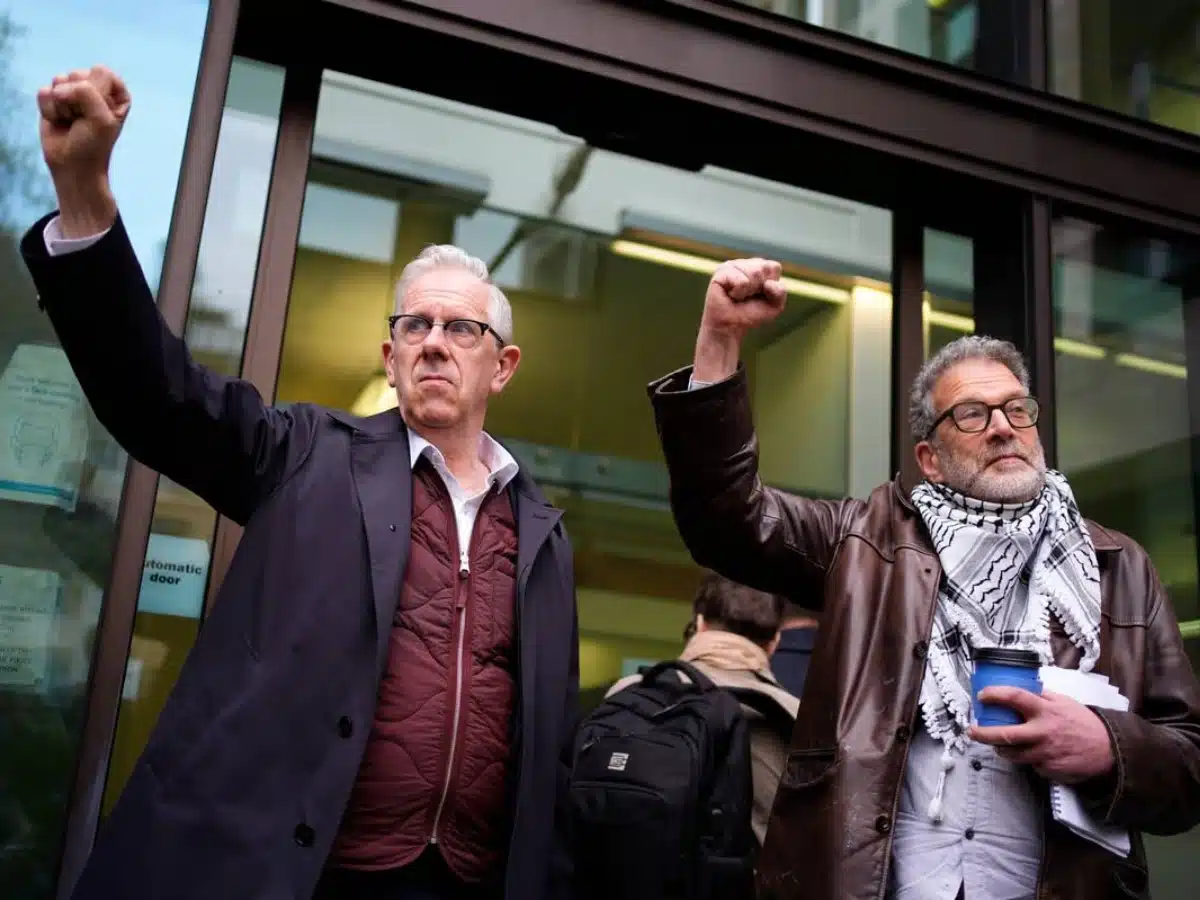
Campaign Against Arms Trade (CAAT) has spoken out following the conviction of Palestine Solidarity Campaign director Ben Jamal and Stop the War Coalition vice-chair Chris Nineham. They were convicted on 1 April of public order offences at Westminster magistrates court. The charges related to a peaceful protest in January.
Additionally, district judge Daniel Sternberg convicted Jamal of ‘incitement’, claiming that his speech at the peaceful protest breached “lawfully imposed conditions”.
The Metropolitan police had originally allowed the 18 January protest to take place but then reversed its decision. It cited spurious claims of “cumulative impact” on Jewish Londoners. The reversal came after lobbying by pro-Israel individuals and groups, including the Jewish Leadership Council.
On the day of the illegal US-Israeli aggression on Iran, the Jewish Leadership Council expressed its support for the unprecedented bombing campaign, claiming it “will make the world a safer place.”
CAAT speaks out on political policing
CAAT notes that the conditions the Met imposed were far from lawful. They prohibited peaceful protesters from gathering outside the BBC’s office to protest its systematic editorialising in favour of Israel.
As Netpol pointed out in a recent report titled How Repression Became Routine, police – specifically, the Met – are exercising powers beyond or ahead of lawful authority. Cumulative disruption powers, for example, have yet to pass through parliament.
Moreover, in reflection of the government’s zeal for suppressing anti-genocide protest, police use of powers to restrict assemblies in 2024–25 rose by 230% across Britain.
As part of the trial against Jamal and Nineham, district judge Sternberg threw out a “no case to answer” defence. However, Sternberg curiously declined to give reasons for doing so.
The 18 January protest was designed to start or end at BBC headquarters in Portland Place to protest against the broadcaster’s coverage of the Israeli genocide in Gaza. The BBC’s systematic bias, which downplays Israeli crimes against humanity, while dehumanising its Palestinian victims, has provoked documented turmoil at the organisation.
CAAT notes that the zeal with which the police and Crown have pursued peaceful protesters demonstrating against the UK-backed Israeli genocide stands in contrast to its gross inaction against UK nationals serving in the Israeli Occupation Forces, as well as executives of companies providing weapons to Israel.
In February the Public Interest Law Centre, supported by CAAT, submitted a detailed complaint to Metropolitan Police Counter Terrorism Command (SO15). This asked it to open a criminal investigation into four current and former British directors of Elbit Systems UK Ltd for possible complicity in war crimes, crimes against humanity and genocide in Gaza. No response, or acknowledgement, has come from the Met.
A spokesperson for CAAT said:
As members of an anti-genocide movement proud to share its platform with Ben Jamal and Chris Nineham, we are dismayed at Westminster magistrate court’s decision to convict them in a trial that should never have taken place.
Jamal and Nineham should be feted for their service to humanity, and opposition to crimes against it. Yet, in this dire state of affairs, our government gets away with supporting Israel’s systematic slaughter of Palestinians, the ongoing theft of their land, and providing a steady stream of murder weapons, while prosecuting those protesting against it. The Met police’s failure to even acknowledge the Public Interest Law Centre complaint against Elbit directors, over possible complicity in war crimes, crimes against humanity and genocide in Gaza, shows just how politicised the police has become.
Featured image via the Canary

Race Across the World returns for its sixth series on Thursday night, with five new intrepid teams taking on the journey of a lifetime in the hopes of getting their hands on a hefty cash prize.
This time around, the pairs must race more than 12,000km across Europe and Asia, taking in the sights of Italy, Greece, Türkiye, Georgia, Kazakhstan, Uzbekistan, Kyrgyzstan and Mongolia. With no smartphones, internet access or bank cards, the duos are armed with nothing but the cash equivalent of flying the same route, in the hopes of reaching the finish point before their time or money runs out.
As fans get ready for the exciting launch show, here are those taking on the challenge of the most extreme race to date in this year’s series of Race Across The World…
Jo and Kush

Childhood best friends from Liverpool, Jo and Kush, are the youngest duo in the race, both aged just 19. Still living at home, and fresh from finishing their A-levels, the pair are taking on independence in the most extreme way.
Both at a crossroads in their lives, the two thought Race Across The World would be a great opportunity to travel before going to uni.
“When the opportunity came up, we thought it would be a fantastic experience and something we could look back on and learn from,” Kush said.
Though they may be young, they have some experience travelling, as Kush has spent three months backpacking through Thailand – although the idea of making their way across Europe and Asia without their phones will no doubt still come as a shock to the duo.
Jo and Kush hope their social skills and ability to talk to strangers will help them on this mammoth journey, although it sounds like they are far more concerned with enjoying new experiences than winning the competition.
“I believe hardship builds personality and this is a very niche but intense situation so coming out of the experience with a bit more maturity and different perspective on life – it’s not just Liverpool,” Kush said.
Katie and Harrison

Katie, a 21-year-old account manager, and her 23-year-old brother, finance assistant Harrison, hope their opposing personalities will help them during the race.
Harrison wanted to join the show to push himself and his sister out of their comfort zones. The competitive siblings have their eyes on the prize and think their money-management skills will help them cross the finish line first.
Their weakness? Harrison might want to blow their limited budget on food.
“I think mine will be hunger, or not even hunger but just wanting to eat,” he claimed when asked about his biggest challenge.
While competitive, neither sibling is very adventurous, so Race Across The World promises to broaden their perspective and build their confidence as travellers.
“The motivation isn’t the money at the end, it’s to try and live a different life for a couple of months and just experience everything, and if we can win it whilst doing it, that is great,” Harrison added.
Hilariously, one of the items Harrison brought on his journey was a list of Man United fixtures, so he knew when to ask people for the football scores on his travels.
Molly and Andrew

Junior doctor Molly wants to prove to her geography teacher dad, Andrew, that she’s more capable than he gives her credit for.
For Andrew, backpacking is a lifelong dream that the 54-year-old has never had the time or money to complete. While travelling on the cheap was his wife’s nightmare, he finally gets to live out his dream with his daughter.
Their strengths and weaknesses on this trip might be the same, as 23-year-old Molly is very sociable and chatty – but her dad worries that he might not be able to keep her quiet!
“I kind of just go and lead by directness, and I need to rein that in every now and then, but Molly is quite good at reining that in for me,” Andrew explained, but admitted that it can balance out his quiet personality.
He added: “I can sometimes get caught in my own world instead of externalising it which in some ways is good, but I need to work on it.”
While the duo are inexperienced travellers, they hope their competitive edge and strong father-daughter relationship will help them take the lead in the competition.
However, Molly does worry about being away from her beloved celebrity gossip and hair-dryer.
Puja and Roshni

Cousins Puja and Roshni spent their twenties building successful careers in London, but are looking for some adventure now they’re in their early 30s.
Puja, a big fan of Race Across The World, was inspired to sign up after hitting a career block and feeling like her life was passing her by too quickly.
“I think living in London and having a job, you kind of live your life in fast forward, and then before you know it, you’re 50 years old,” she admitted.
Doctor Puja had previously backpacked, and her software engineer cousin Roshni has also travelled around Cuba, so both were experienced at visiting a country without fancy hotels or pre-planned itineraries.
Because of their jobs, Puja and Roshni feel confident racing under pressure and think their strengths will be keeping to the tight budget and staying organised.
Although a win would be great for the cousins, the duo are more concerned with making the most of their time off, spending much-needed time together, and learning about new cultures.
Puja explained: “Being able to accomplish that and get to the end, I think is going to be a massive accomplishment and proof to both of us that we can pretty much do anything we set our mind to. The other bits of it are just like what we learn from local people, from different lifestyles, different cultures, and learning more about how life can be a lot slower than what we live at home.”
Mark and Margo

Lastly, there is the unlikely duo of 66-year-old Mark and his 59-year-old sister-in-law, Margo. The retired London-based architect and the Liverpudlian hypnotherapist have had a fractious relationship for the last four decades, but recently became close after the death of Margo’s sister and Mark’s wife.
Margo signed the pair up for Race Across The World to celebrate their late loved one.
“We’ve been through this experience with losing my big sister and him losing his wife,” she said. “It seemed like a celebratory thing that we could do together. This was a new journey that could be exciting and like a renewal.”
Both are adventurous and don’t believe in living life with limits, having interrailed in their youth, as well as skydived, hiked, and done… well… pretty much any other dangerous thing they could think of.
“There isn’t a limit on what we’d have a go at. We’re going to live as dangerously as they’ll allow us,” Margot revealed.
Mark and Margo admit they are in it to win it, with a track record of travelling the world, although the duo do admit they can get a little cranky when hungry and tired, and Mark fears he could crumble under pressure.
Race Across The World airs on Thursday nights at 8pm on BBC One.

On Wednesday 1 April, Donald Trump delivered one of the worst speeches of his career — and this was no April Fool’s.
The White House has removed this video from their social media channels.
But not before we could post it. https://t.co/arlnXPVhc2
— Headquarters (@HQNewsNow) April 2, 2026
The above is really just the tip of the iceberg too.
Bombs not babies
In the clip above, Trump starts talking about daycare but progresses to the national health insurance systems of Medicare and Medicaid (emphasis added):
the United States can’t take care of daycare. That has to be up to a state.
We can’t take care of daycare. We’re a big country. We have 50 states. We have all these other people. We’re fighting wars.
We can’t take care of daycare.
You got to let a state take care of daycare, and they should pay for it too. They should pay. They have to raise their taxes, but they should pay for it. And we could lower our taxes a little bit to them to make up for it.
But it’s not possible for us to take care of daycare. Medicaid, Medicare, all these individual things. They can do it on a state basis. You can’t do it on a federal.
We have to take care of one thing, military protection.
We have to guard the country.
As most people now realise, the US isn’t ‘guarding the homeland’—it’s instead doing the opposite to other countries.
If America stopped waging forever wars, it could easily afford daycare and universal health coverage. It could probably afford to give everyone in the world healthcare with how much they spend on war (set to be $1.5tn by 2027).
Even the administration is starting to realise that its military endeavours aren’t money well spent:
SECRETARY RUBIO: Why are we in NATO? You have to ask that question. Why do we send trillions of dollars and have all of these American forces stationed in the region, if in our time of need, we won’t be allowed to use those bases? pic.twitter.com/DdYahXhli0
— Department of State (@StateDept) April 1, 2026
Trump had more to say too.
Bad to worse
As the Majority Report’s Emma Vigeland sarcastically highlighted, Trump admitted that he basically likes anyone who sucks up to him—no matter how repellant they are (presumably he’s thinking about Benjamin Netanyahu):
This is so moving https://t.co/NG3QuaQOcF
— Emma Vigeland (@EmmaVigeland) April 1, 2026
Having failed to achieve any of his objectives in the Iran war, Trump is now asking his allies to clean up his mess:
Trump on re-opening the Strait of Hormuz: “Let France do it, they get a lot of oil from the strait. Let the Europeans do it. Let South Korea, who is not helpful to us, by the way…Let South Korea do it. Let Japan do it… This was not part of what I wanted to do.” pic.twitter.com/yOcweaBOcW
— The Bulwark (@BulwarkOnline) April 1, 2026
Trump gave an idea of why the war has gone so badly:
Absolute bombshell confession! Trump casually admits on camera that he assassinated 88 Iranian leaders “by accident” while they were voting for a new regime. He is openly bragging about mass murder and illegal regime change. This is a blatant war crime! pic.twitter.com/uBR8sKpogu
— Furkan Gözükara (@FurkanGozukara) April 1, 2026
Trump also did some race science:
This would have been an impeachably scandalous thing for a president to say even a decade ago. https://t.co/rM56hI8cjL
— Aaron Reichlin-Melnick (@ReichlinMelnick) April 1, 2026
This is the same guy who has repeatedly bragged about passing cognition tests because he thinks they’re testing his intelligence — not whether he has dementia.
Shocking but not unsurprising
While the things Trump says are constantly unprecedented, we’re at a point now where nothing really shocks.
Of course he’d launch a stupid war and then bail when it got too much.
Of course he’d be the politician to finally admit the US prioritises death over health.
Of course he’d go off on some racist tangent that has nothing to do with the speech at hand.
As grim as this all is, hopefully it makes Americans realise their country is not a force for good, and that this is a situation it can’t keep repeating.
Featured image via the Canary

Adversaries Exploit Vacant Homes to Intercept Mail in Hybrid Cybercrime

Crypto Trading LIVE: BTC Live Trading Bitcoin Analysis | 01 APR #crypto #bitcoin #btc

Four Belfast men rushed to hospital after 70mph crash as harrowing doc returns tonight


-

 Business7 days ago
Instagram, YouTube Found Responsible for Teen’s Mental Health Struggle in Historic Ruling
-

 NewsBeat6 days ago
The Story hosts event on Durham’s historic registers
-
 Tech7 days ago
Intercom’s new post-trained Fin Apex 1.0 beats GPT-5.4 and Claude Sonnet 4.6 at customer service resolutions
-

 Sports6 days ago
Sweet Sixteen Game Thread: Tide vs Michigan
-
Entertainment3 days ago
Fans slam 'heartbreaking' Barbie Dream Fest convention debacle with 'cardboard cutout' experience
-
 Entertainment5 days ago
Lana Del Rey Celebrates Her Husband’s 51st Birthday In New Post
-
Crypto World2 days ago
Dems press CFTC, ethics board on prediction-market insider trades
-

 Crypto World18 hours ago
Gold Price Prediction: Worst Month in 17 Years fo Save Haven Rock
-

 Tech4 days ago
The Pixel 10a doesn’t have a camera bump, and it’s great
-

 Sports2 days ago
Tallest college basketball player ever, standing at 7-foot-9, entering transfer portal
-

 Tech2 days ago
EE TV is using AI to help you find something to watch
-

 Fashion4 days ago
Amazon Sundays: Soft Spring Layers
-

 Tech3 days ago
Apple will hide your email address from apps and websites, but not cops
-

 Tech2 days ago
Flipsnack and the shift toward motion-first business content with living visuals
-

 Tech2 days ago
How to back up your iPhone & iPad to your Mac before something goes wrong
-

 Politics3 days ago
Should Trump Be Scared Strait?
-

 Crypto World3 days ago
U.S. rule change may open trillions in 401(k) funds to crypto
-

 Fashion7 days ago
En Vogue in Brown Leather and Tailored Neutrals by Atelier Savoir, Styled by J Bolin
-

 Fashion7 days ago
What Are Your Favorite T-Shirts for the Weekend?
-

 Business6 days ago
Chinese universities with military links bought Super Micro servers with restricted AI chips
You must be logged in to post a comment Login