




Apple’s next major iPhone update may quietly deliver one of the most practical upgrades users have been asking for: better battery life. While much of the spotlight this year is expected to shine on artificial intelligence, iOS 27 is shaping up to be just as much about cleaning house as it is about adding flashy new features, as revealed by Mark Gurman in the latest edition of Bloomberg Power On Newsletter.
A smarter, leaner iPhone experience
When Apple rolls out its operating system updates this fall, it will be juggling two major priorities. The first is the integration of AI across the platform, led by a revamped, chatbot-style Siri designed to compete more aggressively with generative AI offerings from rivals. The second – and arguably more foundational – is an internal overhaul of iOS itself.
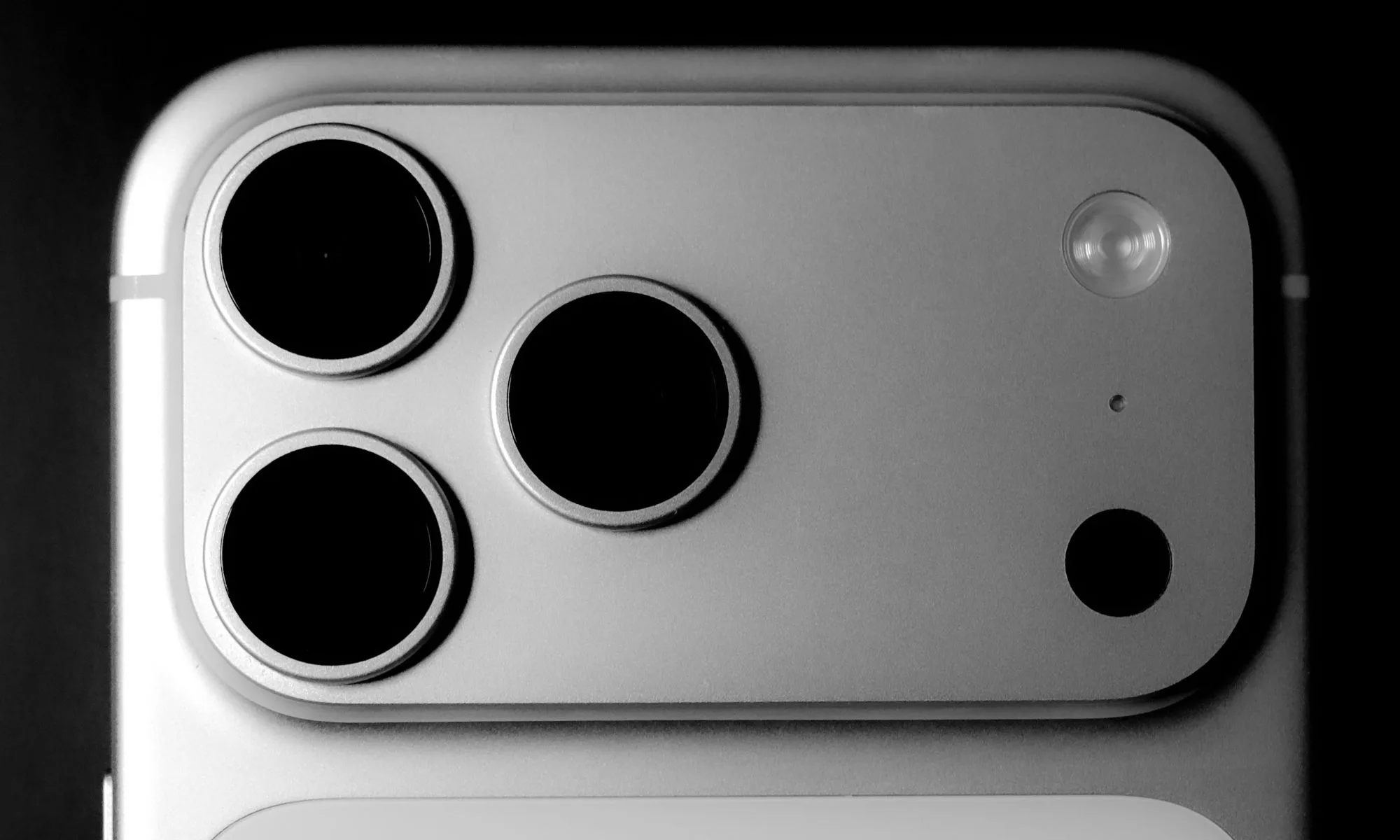
iPhone 17 ProUnsplash
Over the years, iOS has grown increasingly complex, layered with legacy code and feature additions that have made the system heavier under the hood. With iOS 27, Apple is attempting a reset of sorts. The effort has been compared to the company’s Snow Leopard era on the Mac, when it focused less on new features and more on refining performance and stability.
Engineers are removing scraps of old code
They are rewriting existing features and subtly upgrading apps to improve efficiency. The goal is a snappier, more responsive operating system. Apple is also planning minor interface tweaks, though they won’t be as dramatic as last year’s “Liquid Glass” redesign.
The project, internally code-named “Rave,” is also expected to bring efficiency improvements that could translate into better battery life. Rather than relying on bigger batteries or new hardware, Apple is aiming to squeeze more endurance out of existing devices through smarter code. If successful, these optimizations could reduce background activity, improve power management and extend daily usage time.
Advertisement
Battery life remains one of the biggest pain points for smartphone users. Even incremental gains can make a noticeable difference – whether it’s making it through a full workday without reaching for a charger or squeezing in extra streaming time during travel.
iPhone 17 ProUnsplash
Importantly, these improvements would benefit a wide range of existing iPhone users, not just those upgrading to new hardware. Software-level optimizations can extend the practical lifespan of devices, something that aligns with Apple’s broader messaging around sustainability and long-term support.
At the same time, Apple’s AI push risks increasing system demands. More advanced on-device processing and contextual awareness features could strain performance and battery if not carefully managed. By cleaning up the operating system in parallel, Apple appears to be preparing a stronger foundation for heavier AI workloads.
The timing of iOS 27’s overhaul is also strategic
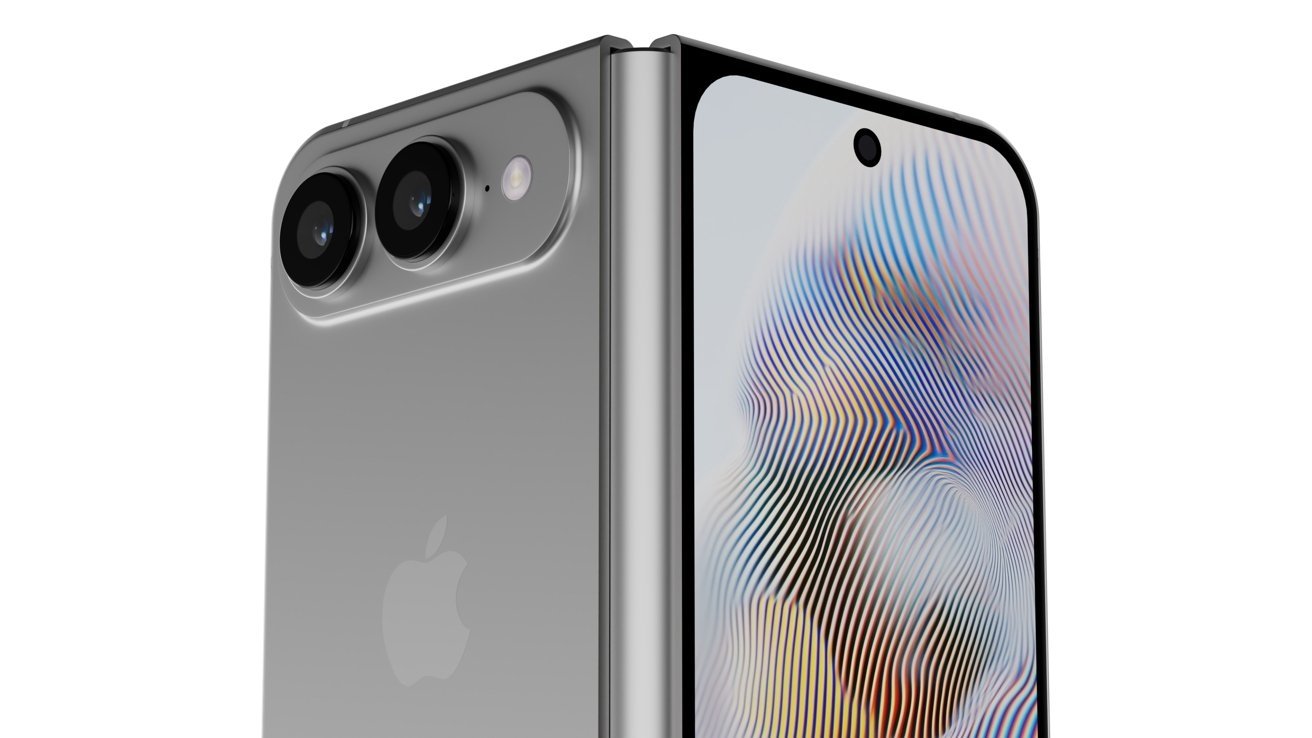
Apple is reportedly preparing to debut new device categories, including a touch-screen MacBook Pro and its first foldable iPhone. A leaner, more stable operating system will be critical to ensuring those products deliver a smooth experience from day one.
Beyond performance, Apple needs iOS 27 to help restore confidence in its AI roadmap. The company has been playing catch-up in the generative AI race, and delivering a more intelligent yet reliable operating system will be key to regaining ground.
Advertisement
Whether Apple markets battery gains as a headline feature or treats them as a quiet bonus remains unclear. But if iOS 27 succeeds in trimming excess code while enhancing AI capabilities, users may find their iPhones not only smarter – but longer-lasting, too.
David Greene, the longtime host of NPR’s “Morning Edition,” is suing Google, alleging that the male podcast voice in the company’s NotebookLM tool is based on Greene, according to The Washington Post.
Greene said that after friends, family members, and coworkers began emailing him about the resemblance, he became convinced that the voice was replicating his cadence, intonation, and use of filler words like “uh.”
Among other features, Google’s NotebookLM allows users to generate a podcast with AI hosts. A company spokesperson told the Post that the voice used in this product is unrelated to Greene’s: “The sound of the male voice in NotebookLM’s Audio Overviews is based on a paid professional actor Google hired.”
Advertisement
This isn’t the first dispute over AI voices resembling real people. In one notable example, OpenAI removed a ChatGPT voice after actress Scarlett Johansson complained that it was an imitation of her own.
Looking for the most recent Wordle answer? Click here for today’s Wordle hints, as well as our daily answers and hints for The New York Times Mini Crossword, Connections, Connections: Sports Edition and Strands puzzles.
There’s something off in the audiophile world right now, and it’s not just coming from Denmark. Between audiophile media excess that feels increasingly detached from reality, a long overdue Qobuz CarPlay update that finally fixes a daily annoyance, and a reminder from Wes Montgomery that timeless music outlasts every format war, this week’s news cuts in a few different directions. Add in the Marantz M1 earning an Editors’ Choice nod for doing the sensible thing exceptionally well, and the picture gets clearer: good engineering and good music still matter more than hype cycles, press junkets, or how many zeros are on the invoice.
This coming weekend marks the beginning of the silly season I mentioned last week. The calendar fills quickly with hi-fi shows that will get covered whether anyone really needs another one or not. FLAX arrives next weekend in Tampa, and the press will enjoy the warmth while it lasts. The Olympics are still underway, which means no Tampa Bay Lightning NHL games, still the best show in town. Shows are work, not vacations, and covering them costs money. Airfare, taxis, meals, and the quiet expenses nobody lists on a receipt add up fast.
It is also worth being clear with readers about how this works. Some shows cover hotel costs for media because without coverage there is no visibility, no buzz, and no record of what actually happened. Transparency matters. The media business is under real pressure right now. Publications are shrinking, budgets are tight, and layoffs have been widespread over the past year. Ask the people at the Washington Post, Tech Radar, Digital Trends, Sound & Vision, and others. We have been fortunate to add experienced talent because of that reality, but nobody should assume that publications are rolling in money. Even the biggest names are watching every dollar.
When it comes to press junkets, not everyone gets invited. These trips are usually reserved for high profile journalists from mainstream outlets like Forbes, T3, Wall Street Journal, and the New York Times, along with editors from specialist publications. We are not excluded from that group, which likely reflects our growing influence. I have been invited on overseas trips for product launches, factory tours, listening sessions, luxury car drives, and early looks at new TV technology in Asia, but illness, family emergencies, or other obligations have always gotten in the way. I have never been able to go.
Advertisement
Domestically, the rules are simple. We pay our own way. That has always been policy at eCoustics, with reimbursement handled later. Overseas press junkets are where things start to feel off, when necessary access blurs into hospitality and the line between reporting and obligation gets harder to see. Audio Group Denmark’s recent introduction in Aalborg of its $1.1 million flagship loudspeakers and $115,000 mono block power amplifiers for a very select group of the press sharpened that concern and has become a topic online in recent days.
When you are flown overseas, wined and dined, there is an unspoken expectation that coverage will reflect the experience. They are hardly alone in this practice, and it says nothing about the quality of what was introduced. By every account I have heard from those who were there, the experience was out of body phenomenal. The harder truth is that entry into this level of audio now borders on the absurd. One might need to sell off body parts just to get in the door, and even that feels optimistic given the general condition of most of the audiophile press.
Audiophile Excess Runs Wild in Denmark
Back in October at T.H.E. Show New York, which was held in New Jersey despite the branding gymnastics, I had my first real exposure to Audio Group Denmark. Calling it New York clearly sounds better on a banner, even if the venue landed nowhere near the part of the Garden State where I actually live. Still, it was enough to make one thing clear: Danish high-end audio is having a moment, and it is not subtle.
That moment extends well beyond Audio Group Denmark. Denmark has been quietly exporting serious audio thinking for decades, with brands like Gryphon, Dynaudio, Buchardt, DALI, Bang & Olufsen, Audiovector, Lyngdorf, Ortofon, and Raidho all contributing to Denmark’s oversized footprint in the high end. Different philosophies, different price brackets, same national tendency to push engineering harder than the market sometimes expects.
Audio Group Denmark sits firmly in that conversation but plays its own game. Its core brands Ansuz, Børresen, and Aavik were out in force, supported by their North American team and HiFi Loft, their dealer with locations on West 44th Street in Manhattan and in Glens Falls, just north of Saratoga Springs and not far from Lake George. It is a part of upstate New York where the term summer home tends to mean something very specific and very expensive.
What stood out was not just the technical ambition on display, but the pricing ambition as well. Danish brands across the board are pushing boundaries right now, both in how far they are willing to go technologically and how unapologetic they are about cost. Audio Group Denmark, in particular, has no interest in playing it safe. My first real exposure to them will not be my last. That was clear before I left the room.
Advertisement
Anyone thinking about a system designed to stay under $30,000 should stop reading now. Even a modest configuration built around their stand mount speakers, an integrated amplifier with streaming, and the required cabling clears that threshold quickly, before analog sources or outboard stages even enter the conversation.
Advertisement. Scroll to continue reading.
At T.H.E. Show New York 2025, the two Danish systems on display occupied a very different financial lane, landing between $90,000 and $360,000 USD. Those figures are real. From a listening standpoint, the lower cost $90,000 system was far more compelling to me, but both already lived well beyond what most listeners would consider attainable.
2026 flagship Aavik components powering system including M-880 amps
What was introduced last week, however, makes those show systems look almost entry-level. When you factor in the Børresen M8 Gold Signature loudspeakers at roughly $1.15 million per pair and the Aavik M-880 monoblock amplifiers at $115,000 each, the scale shifts entirely. These are not conceptual exercises or dressed up prototypes.
Advertisement
The Aavik M-880 uses a reworked Class A amplification stage that maintains its bias 0.63 volts above the required current level at all times. The goal is continuous Class A operation regardless of load or signal conditions, while keeping operating temperatures lower than traditional Class A designs to improve long term stability and reliability; which is a good plan when you consider the “rated” power output and size of these amplifiers.
Aavik M-880 Amplifier
Power delivery is equally unapologetic. Each M-880 is rated at 400 watts into 8 ohms, 800 watts into 4 ohms, and approximately 1,300 watts into 2 ohms. Add sources, cabling, and the supporting ecosystem that inevitably comes with systems at this level, and it is very likely that the total system cost is approaching $2 million at its peak.
The Aavik M-880 mono amplifier measures 794.02 mm high, 342.00 mm wide, and 509.68 mm deep, which translates to 31.26 inches in height, 13.46 inches in width, and 20.07 inches in depth. Each amplifier weighs 70.0 kilograms, or 154.3 pounds.
The Gold Standard?
Børresen M8 Gold Signature Loudspeaker
At the heart of the Børresen M8 Gold Signature is a folded dipole bass architecture that defines both its scale and its intent. Each loudspeaker uses two dedicated bass modules populated by twelve 8-inch drivers, firing forward and backward in opposing polarity. The idea is not brute force but control, managing low frequency energy before the room gets a chance to do what rooms usually do.
Every pair is built and calibrated in Denmark, with final measurements and listening sessions completed before the speakers leave the factory. The look is unapologetically serious: black high gloss lacquer, carbon accents, and zero attempt to disguise the mass.
Audio Group Denmark co-founders, Michael Børresen (left) and Lars Kristensen (right) standing in front of M8 Gold Signature loudspeakers.
That mass is substantial. Each speaker stands just over 87 inches tall, spans roughly 25 inches in width, and reaches more than 32 inches deep. At 325 kilograms per cabinet, or about 716.5 pounds, placement is a commitment, not a casual decision. The specified frequency range stretches from 20 Hz to 50 kHz, with a sensitivity rating of 87 dB.
Advertisement
The system is effectively tri sectional. Bass impedance is rated at 5 ohms, while the midrange and treble sections sit at 8 ohms, with each section requiring more than 100 watts of amplification.
The crossover between mid bass and tweeter is set at 2,400 Hz, while bass integration is handled externally via an active crossover that is not included. High frequencies are delivered by Børresen’s RP94 Gold Signature ribbon planar tweeter, supported by two IronFree5 Gold Signature drivers for midrange and upper bass duties, while twelve IronFree8 Gold Signature drivers handle the low end.
This is not a loudspeaker designed to coexist quietly in a room. The fact that it was demonstrated in an auditorium sized performance hall, elevated on a stage, says a lot about the assumptions baked into the design. Context matters here. These are loudspeakers that expect space, structural support, and a listening environment that can accommodate their scale and output without compromise.
We shall miss the children.
Advertisement
Advertisement. Scroll to continue reading.
Craft Recordings Revives Wes Montgomery’s Full House for the OJC Series
This Craft Recordings OJC pressing of Full House ($38.98 at Amazon) is all analog from the original tapes, cut by Kevin Gray at Cohearent Audio and pressed on 180 gram vinyl at RTI. A 24-bit/192kHz high resolution digital edition is available for those who want it. Recorded live on June 25, 1962 at Tsubo in Berkeley, the album captures Wes Montgomery at a point where restraint and intensity exist side by side. He can sound smooth and measured one moment, then suddenly lean in hard enough to make you sit up and pay attention.
Johnny Griffin is on tenor sax, backed by the Wynton Kelly Trio with Wynton Kelly, Paul Chambers, and Jimmy Cobb, all fresh from their time with Miles Davis and fully locked in. The pressing itself is clean and well executed, with excellent clarity through the guitar and horns and a sense of presence that feels natural rather than hyped. It is the kind of record that makes you wish you had been in the room that night, even if only for a set.
An audiophile once told me, back in my twenties, that Wes Montgomery was mostly hype and not all that impressive. This came from the same guy who shushed me so we could sit through yet another Eagles demo on speakers neither of us could afford. I left the show, walked into Sam the Record Man, bought two Wes Montgomery records, and learned something useful very quickly. Some audiophiles know as little about jazz guitar as I know about the inner workings of nuclear propulsion, which is saying something considering my college roommate went on to become a USN captain running submarines and carriers.
Advertisement
Wes Montgomery was not hype. He was about feel, timing, touch, and control, with the ability to shift from calm to confrontation without losing the thread. Records like Full House make that obvious within minutes. Call it whatever you want, but the playing still holds up, and it still exposes bad takes just as efficiently as it did back then.
Marantz M1 Streaming Amplifier Is Hiding in Plain Sight
The Marantz M1 was released well over a year ago, but in a category that moves quickly, time can be useful. With so many network amplifiers competing on features alone, it is easy to miss products that take a more measured approach. The M1 does not try to dominate on paper. It focuses on stable performance, sensible design choices, and an emphasis on sound quality over spectacle.
The M1 is rated at 100 watts per channel with a specified distortion figure of 0.005 percent THD. It includes HDMI eARC for television integration and provides a dedicated subwoofer output with adjustable crossover points and a plus or minus 15 dB level trim. That allows for proper configuration of a 2.1 system rather than a fixed one size approach. The amplifier operates fully in the digital domain and supports hi resolution PCM up to 24-bit/192 kHz as well as DSD playback.
Streaming and connectivity are well covered. Bluetooth, Spotify Connect, Qobuz Connect, AirPlay 2, and HEOS are all supported, with HEOS also enabling multi room playback and integration with control systems such as Control4, URC, and Crestron. There is no built in phono stage, so analog playback requires an external solution.
If you use Qobuz at home, great. If you use it in the car through Apple CarPlay, the experience until now has been less convincing. Scrolling through playlists while driving was awkward, the interface was not doing anyone any favors, and asking Siri to find a specific track or playlist went nowhere. That is the kind of thing that earns looks from the passenger seat that suggest you should keep both hands on the wheel.
For anyone who spends real time behind the wheel, those small frustrations add up. I average 30,000 to 40,000 miles a year, and there are only so many times you can give up and start jabbing at the dashboard while the NHL Network blares on SiriusXM before it becomes a pattern. The latest Qobuz CarPlay update tackles those pain points in a practical way, improving day to day usability and finally making Siri a functional part of the experience. It does not reinvent in car listening, but it makes Qobuz far more livable where many of us use it the most.
Advertisement
Advertisement. Scroll to continue reading.
So what did Qobuz actually change, and why does it matter. The CarPlay experience has been rebuilt from the ground up, with a cleaner interface and features that users have been asking for since CarPlay support first arrived. The biggest day to day fix is simple but overdue: shuffle is now available directly from the player, exactly where it should have been all along.
Just as important, Siri finally works the way it should. You can now search, browse, and control playback entirely by voice without poking at the screen. That includes asking Siri to play a specific playlist, artist, or favorite track, turning shuffle or repeat on and off, adding the current song to a playlist or your library, and even asking what is currently playing. The full Discover experience is also available in CarPlay, including personalized playlists, Release Watch, and Radio, all accessible safely while driving.
It is also a cosmetic update, and that part matters more than it sounds. You can now actually see things you could not before, with a cleaner layout that makes sense at a glance. Scrolling through your own playlists or Qobuz’s curated ones no longer frustrates, and discovery is finally usable on a CarPlay screen. The interface is clearer, more logical, and far easier to navigate, unlike the backseat of my car, which remains a lost cause thanks to kids and a dog.
Advertisement
More importantly, this cleanup makes Qobuz’s strengths visible. Hi-res playlists and editorial content are no longer buried or awkward to access, which means the stuff audio dorks and editors actually care about is front and center where it belongs. It does not just look better. It makes the service easier to live with, especially if you spend serious time behind the wheel.
David Solomon can relax. The Facebook messages will stop. Qobuz finally fixed what needed fixing, and for those of us who live in the car as much as the listening room, that actually matters. Long live Qobuz.
If you’ve only played racing games with a controller, a proper wheel is one of the most dramatic “oh, this is different” upgrades you can make. Braking feels more natural, steering gets more precise, and even older racing games become more fun because you’re actually driving instead of tapping sticks. Right now, the Logitech G29 Driving Force wheel and pedals are $199.99, down from $329.99 for 39% off. The important detail is the countdown: this discount is shown with a timer and is set to end soon.
What you’re getting
The G29 bundle includes a steering wheel and floor pedals with real force feedback, which is the feature that adds weight and road feel instead of just vibration. You also get stainless steel paddle shifters and a leather steering wheel cover, which gives the wheel a more “real gear” feel than the plasticky entry-level stuff.
Compatibility is a big part of the appeal here, too: it’s designed for PS5, PS4, PC, and Mac, so it can move with you across setups.
Why it’s worth it
The main reason to buy a wheel is immersion, but the second reason is control. Once you get used to it, you can be smoother and more consistent with steering and throttle, which helps in everything from casual cruising to competitive lap times.
Advertisement
This is also a great purchase for anyone who rotates between racing genres. It works for arcade-style racers, but it’s especially satisfying for sim-leaning games where throttle control and braking really matter. And because it’s a wheel + pedal kit, you’re not piecing together an expensive setup one part at a time just to get started.
The bottom line
At $199.99, the Logitech G29 is a solid deal for anyone who wants to make racing games feel more physical and more precise on PS5 or PC. If you’ve been waiting for a price drop, the timer matters here, because once the deal ends, this is the kind of accessory that tends to bounce back up quickly.
Get caught up on the latest technology and startup news from the past week. Here are the most popular stories on GeekWire for the week of Feb. 8, 2026.
Civic complacency, strained relations between government and tech, and a lack of focus on future industries could put Seattle’s long-term prosperity at risk. … Read More
Microsoft has permanently closed the Visitor Center in Building 92, a hands-on tech showcase and historical exhibit that was a destination for guests and employees for many years. … Read More
Cleveland Mayor Justin Bibb responded to a GeekWire guest column by Charles Fitzgerald warning Seattle not to repeat the Ohio city’s mistakes — but they may agree more than the headline suggests. … Read More
Amazon says its Gen 2 network will be important for big enterprise and government customers; FCC still has to rule on Amazon’s request for more time to put Gen 1 satellites in orbit. … Read More
Helion announced two milestones: hitting a record temperature of 150 million degrees Celsius and being the first private venture to use radioactive tritium. … Read More
Elon Musk’s xAI is setting up shop in downtown Bellevue, with job listings showing the office will go beyond infrastructure to serve as a hub for core AI model development. … Read More
Clearly AI, a Seattle startup that helps companies review security and privacy risks before shipping new products, has raised $8.4 million in seed funding. … Read More
In many places, municipal water from a utility is something that’s often taken for granted. A local government or water utility will employ a water tower or pumping facility to ensure that there’s always water available to every home and business connected to it, all day, every day, and at a relatively constant pressure. This isn’t true the world over, though, and in [Sameer]’s home of Rajasthan he has to deal with a particularly onerous problem with the local water supply. Although he is connected to a utility, there is only water available at certain times of day, and not on a reliable schedule or at a particularly high pressure. This causes all kinds of problems, but he was able to employ an ESP32 to solve some of the headaches.
Most of [Sameer]’s neighbors install small pumps on the water main to pull water into reservoirs when it’s available. This creates two major problems, the first of which is that with all these pumps running, they can sometimes pull a vacuum on the water main, which can draw in contaminants and cause cavitation in the pumps. The second is that, if these pumps are on a timer and run when there’s no water available, they can damage themselves. [Sameer]’s solution pairs a flow sensor with a pump that is controllable via an automation tool like Home Assistant. He also includes a hydraulic analysis of this particular situation, such as placing the sensor on the output side of the pump rather than the inlet, as well as making sure that there is a laminar flow of water in the pipe it is installed on to ensure that it is taking valid measurements.
With everything set up and running, the water pump can automatically detect if there is water available, pump it to the reservoir as long as it lasts, and then automatically turn off the pump to avoid any thermal damage from running dry. [Sameer] even includes a complete Home Assistant setup for those who would like to replicate his work. We also think that this has utility outside of household water supplies as well, perhaps those watering their gardens with stored rainwater or those using other unique, semi-automated water catchment systems.
This is a boon for Sky customers (new and existing), as it keeps hold of the Warner Bros. content that’s not just legendary but become synonymous with Sky for decades now.
Its partnership with Warners brought the likes of Game of Thrones, Boardwalk Empire, Entourage (remember that?) and Girls to the UK, and this new deal makes it easier for Sky customers to access that content in one place.
But, and there always is a but with me, I do have an issue.
Advertisement
Why can’t we have it all in 4K as standard?
Advertisement
Ultimate TV subscription in name only
I expect, at the very least, that when you call a subscription ‘Ultimate’, you’re getting all the bells and whistles that come with it. The (new) Ultimate TV sub, will have Netflix, Disney+, HBO Max, and Sky’s own content all included as standard, but read the small print, and the versions of these services and apps that you get come with ads, and, they’re only available in HD.
I can’t help feel a little disappointed that watching on my 4K TV, it’s actually having to upscale this legion of content because 4K and HDR (and Atmos) are an optional extra.
Advertisement
This is not strictly Sky’s fault, though it does play into the issue by offering an optional UHD/Atmos pack that you have to buy to unlock access to 4K HDR content. Streaming services themselves have secreted away all their 4K goodness to their premium tiers, in the hopes that you’ll pay more money for higher quality.
Except it doesn’t feel like people are doing that.
After an initial explosion of 4K live broadcasts, it’s mostly been watered down to HD HDR. The last Euros were shown in just HDR, and I honestly can’t remember the last time the BBC showed the FA Cup Final in anything but HD – it feels like it was aeons ago now.
This is partly down to the expense of broadcasting in 4K HDR (especially live), but also that viewers didn’t seem to be watching in 4K either, preferring to catch the action on their mobile devices instead.
Advertisement
Advertisement
To get HBO Max, Netflix, and Disney+ in 4K HDR; you’ll have to pay more, which makes the Ultimate TV subscription, which initially looks like a steal, a little less appetising if you want the best quality in your home.
I’ve always advocated for streamers and broadcasters to bring 4K to more people by making it the standard. Instead, we’re still locked into HD, which has been around for 20 years now. I think it’s time to give up the ghost, stop trying to entice people to pay extra for 4K and give them the best experience from the outset.
I doubt that Sky would love my thoughts on it, but the word Ultimate implies an experience that you’re getting the best. You are in a way, but it comes with a caveat. I do wish that barrier to 4K was taken down, not just with Sky but with every streaming service. Though many are embracing the streaming future, it still feels like we’re locked in the past.
A spool of filament rests calmly on a shelf, looking exactly like the usual orange Prusament roll found in numerous 3D printers, yet it hides a little secret. Prusa wanted a one-of-a-kind gift and asked Matt Denton to transform a regular 2kg spool of filament into an out-of-the-ordinary remote-controlled robot dubbed SpoolBot, which you’d be hard-pressed to tell is actually a robot going for a little roll on its own power.
Denton started from scratch with a genuine Prusament spool and simply retained the outward appearance the same, which means it still has the orange filament wrapped around a center drum in a sloppy, but highly realistic pattern. One side of the spool is fixed, but the other side detaches with magnets to allow you to go in and make changes. Those black plastic ends are actually the pieces that move the spool; they are the driving wheels. Inside, everything is held together by an internal frame that prevents the entire structure from looking out of place.
High-Speed Precision: Experience unparalleled speed and precision with the Bambu Lab A1 3D Printer. With an impressive acceleration of 10,000 mm/s…
Multi-Color Printing with AMS lite: Unlock your creativity with vibrant and multi-colored 3D prints. The Bambu Lab A1 3D printers make multi-color…
Full-Auto Calibration: Say goodbye to manual calibration hassles. The A1 3D printer takes care of all the calibration processes automatically…
The whole device is powered by two geared DC motors from Pololu, each equipped with an encoder that tells the bot exactly what it’s doing and causes the drive wheels at the spool’s edges to turn. Batteries are put low to function as a counterbalance, ensuring that the entire assembly remains upright when the spool spins around its center. A DFRobot Romeo Mini ESP32-C3 board handles all of the control, and it works in tandem with a BNO085 IMU sensor to keep an eye on things and ensure the spool remains upright and stable. An RC receiver links to a simple handheld controller.
Movement is accomplished by a technique known as differential drive; in order to travel in a straight path, both motors must be moving at the same speed; however, varying the speeds results in pleasant smooth bends. The IMU monitors how far up and down and side to side it moves, and if it becomes unsteady, it slows down the motors to keep the whole thing from toppling over. Then there’s the gyro feedback, which effectively keeps the spool on track even when it’s on an uneven surface like a carpet. Several operating modes are available, allowing you to choose how the bot behaves. For example, you can keep it sitting in one location, have it follow a trail back to where it began, cruise along at a given speed, or even perform some beautiful spins at full or half speed.
The entire assembly required a lot of meticulous planning and engineering to get right; as you can see, the outer shell must be able to spin freely on the center hub, so it’s all about getting the bearings perfect so it travels smoothly. The insides of the spool are made up of 3D-printed elements in black PETG and orange PLA, which are held in place by a variety of ingenious components such as heat-set inlays and precision bolts. The wiring is neatly tucked away so that it does not interfere with the movement of the various components. It took around five weeks to complete the project, from designing it in CAD to printing the pieces and writing the code.
Matt Denton chose to be generous and share all of the build files and code with the world. You can get them on Printables and on GitHub, and there is even a video guide that shows you how to create one yourself, from installing the bearings to wrapping the filament around the central drum and calibrating the controller. Of course, like any decent robot, SpoolBot includes a couple googly eyes and a small indication to give it some personality as it rolls around the floor. [Source]
The hardest choice to make for building your next MacBook might be selecting a color. According to Bloomberg‘s Mark Gurman, Apple has tested colors including light yellow, light green, blue and pink for its next entry-level MacBook that’s aimed at students and enterprise users.
Beyond the more vibrant colors, Gurman said that Apple has also trialed its classic silver and dark gray colorways for its cheaper laptop. Gurman added that not all of these six colors will make it to the final product, but Apple has recently shown it’s not afraid to dip into flashier options. Apple refreshed the iMac in 2024 with a total of seven colors and swapped out the space gray option for sky blue for the latest MacBook Air.
Color choices aside, the latest rumors point to the upcoming MacBook having a price tag that’s anywhere between $699 and $799. To achieve that lower price point, Apple is expected to port over its chips designed for iPhones, like the A18 Pro that we first saw with the iPhone 16 Pro Max. We’re also anticipating Apple will compromise on specs, ports, or even the display, but Gurman reported that the company won’t be skimping when it comes to the shell. According to Gurman, Apple will employ a new manufacturing process to craft aluminum shells for the affordable MacBook, instead of opting for a cheaper material like plastic to cut costs. We may not have to wait long to see the official colors of the budget MacBook, as Gurman reported that it will be announced during an event in March.
Welcome back to TechCrunch Mobility — your central hub for news and insights on the future of transportation. To get this in your inbox, sign up here for free — just click TechCrunch Mobility!
We are in the midst of one of my four favorite times of year — earnings season. And it’s not just that I like numbers. These required filings cut through a lot of the marketing noise presented by companies the rest of the year. They also help me assess the short- and long-term stakes the companies face.
Rivian’s fourth-quarter and full-year earnings did precisely that. My takeaway: Software, and specifically its technology joint venture with Volkswagen Group, was the company’s savior in 2025. It will also buoy the company into 2026 (another $2 billion is expected from VW Group) as Rivian launches its most important product to date: the lower-cost R2 SUV.
The company’s earnings also provided a progress report on its bid to lower the cost of goods sold per unit. The TL;DR is that the cogs per unit for its current portfolio is still high but dropping, meaning it’s losing less on each vehicle it sells. According to Rivian, the company’s automotive cogs per unit delivered was $100,900 in 2025, down from $110,400 in 2024.
Advertisement
The upcoming R2, which is supposed to be considerably cheaper (both in production cost and price tag) than its flagship R1T truck and R1S SUV, will be the next big test. We’ll get some insight into the results of that later this year.
The R2 is expected to go into production in the first half of the year (we’re hearing June), and based on its guidance for 2026, Rivian is confident it has the demand and the ability to ramp production. The company expects to deliver between 62,000 and 67,000 vehicles in 2026 — which could provide up to a 59% bump from last year. Rivian delivered 42,247 vehicles in 2025, which includes its two R1 consumer vehicles and the electric delivery van (EDV).
The market loved that guidance, btw. Rivian stock shot up 27% in the day after it reported earnings.
Techcrunch event
Advertisement
Boston, MA | June 23, 2026
A little bird
Image Credits:Bryce Durbin
Over the past 18 months, I’ve noticed a divergence in how Uber and Lyft are approaching AVs. Uber is locking up AV partnerships with every player it can. Lyft is trailing behind. Turns out, I am not alone in this observation.
Insiders have shared their puzzlement about why Lyft hasn’t been more aggressive on this front. They noted that Lyft is sitting on about $1.8 billion in cash, cash equivalents, and restricted cash, and recently announced a new $1 billion share repurchase program that represents about 15% of its market cap, per CNBC. That has some wondering why Lyft did not invest in parts of the AV value chain like Uber is doing versus buying shares back.
Advertisement
Meanwhile, these little birds also pointed to a few top executives who have departed over the past year. Aurélien Nolf left his position as VP of financial planning and analysis and investor relations to become CFO of Navan. Audrey Liu, who was an executive VP and head of rider and community safety, is now at Adobe. Ameena Gill, who was VP of safety and customer care just took a job at rival Uber.
Close followers of the mobility-crazed years, between 2015 and 2019, might recall how many lidar companies popped up during that time. Many of the dominant and buzziest ones have since shuttered, while some of the smallest players have hung on and expanded.
Take Ouster, for instance. I remember way back when Ouster had this tiny little booth in the jam-packed startups area (Eureka Park) at CES. Today, the company is much bigger — thanks to scale, its 2022 merger with rival Velodyne, and its acquisition of Sense Photonics in 2021. And it doesn’t appear to be finished.
The company most recently acquiredStereolabs, a company that makes vision-based perception systems for robotics and industrial applications, for a combination of $35 million and 1.8 million shares.
Advertisement
As TechCrunch senior reporter Sean O’Kane notes in his article, the deal is the latest in a march toward consolidation among perception sensor suppliers. (Just last month, MicroVision bought the lidar assets of the buzzy-but-now-bankrupt Luminar for $33 million.)
So why all the activity? It’s complicated, as they say. From my POV, the frenzy around “physical AI” has reignited interest and investment in sensor technologies, particularly cameras.
Other deals that got my attention …
Ever, the EV-only marketplace, raised $31 million in a Series A funding round led by Eclipse. Other backers include Ibex Investors, Lifeline Ventures, and JIMCO — the investment arm of the Saudi Arabian Jameel family (an early investor in Rivian).
Advertisement
Natilus, the San Diego-based startup developing blended-wing aircraft, raised $28 million in a Series A funding round led by Draper Associates. Other investors include Type One Ventures, The Veteran Fund, and Flexport, as well as new backers New Vista Capital, Soma Capital, Liquid 2 VC, VU Venture Partners, and Wave FX.
Notable reads and other tidbits
Image Credits:Bryce Durbin
Aurora shared in its Q4 and full-year earnings report that its self-driving trucks can now travel nonstop on a 1,000-mile route between Fort Worth and Phoenix — exceeding what a human driver can legally accomplish. The company shared a number of other tidbits, and financials, which you can read about here.
The U.S. Securities and Exchange Commissionclosed its investigation into Fisker last year, TechCrunch was able to learn, thanks to a Freedom of Information Act request.
Lyft has launched teen accounts, a product that allows minors as young as 13 to hail a ride without an adult in 200 U.S. cities, including Atlanta, Boston, Chicago, and New York.
A fresh batch of videos gives us the best look at how Rivian has changed the rear door manual release on its upcoming R2 SUV. This seemingly minor design detail has life-or-death stakes and comes as the EV industry, and particularly Tesla, is getting pressure to change concealed, electronic door handles.
Advertisement
The Trump administration officially repealed the EPA’s 2009 “endangerment finding,” which found that greenhouse gases such as carbon dioxide and methane were a threat to human health and welfare. This change would only affect tailpipe emissions for cars and trucks — if the EPA makes it through the lengthy process of repealing the law, which will certainly include numerous lawsuits aimed at stopping it.
Uber has locked in a couple dozen AV partnerships, and we’re starting to see the results of those deals. China’s Baidu and Uber plan to launch robotaxis in Dubai in the next month, starting with select locations within the Jumeirah area. Meanwhile, Chinese robotaxi company WeRide and Uber announced a “major expansion of their strategic partnership” to deploy at least 1,200 robotaxis across the Middle East through 2027, according to the companies. As part of this, WeRide and Uber have launched a robotaxi service in downtown Abu Dhabi.
Waymo pulled the human safety driver from its autonomous test vehicles in Nashville as the Alphabet-owned company moves closer to launching a robotaxi service in the city. Meanwhile, this tech-forward company is wrestling with the analog problem of ensuring the doors of its robotaxis are properly shut. Its solution? Pay DoorDash gig workers to shut Waymo robotaxi doors. Waymo tells us this is a pilot program in Atlanta to enhance its AV fleet efficiency.
One final Waymo item: The company is starting to roll out its sixth-generation “Waymo Driver,” which is integrated into the Zeekr RT (rebranded Ojai) and will eventually be in the Hyundai Ioniq 5. Waymo has started “fully autonomous operations” in the Ojai vehicle in San Francisco and Los Angeles and is giving access to employees. The public will have to wait for a bit.
Advertisement
One more thing …
Rivian has pitched its upcoming R2 SUV as a more affordable model. What does “more affordable” mean? The company has thrown around $45,000 and $50,000 as a base price. The company’s launch version of the R2, which will be a dual-mode and all-wheel-drive premium trim, will undoubtedly be more expensive. In our newsletter this week, we asked readers, “What’s your guess on the cost of the launch edition?”