
Business
Under treasurer Joann Wilkie departs after one year




Indonesian economic growth slows to 5.3% in Q2, but beats forecast

Nykaa’s revenue from operations rose over 29% YoY to Rs 2,782 crore, while EBITDA surged 68% YoY to Rs 236 crore during the quarter under review. Its EBITDA margin improved to 8.5% in the first quarter of the ongoing financial year, up from 6.5% reported in the corresponding period of FY26.
Nykaa Founder and CEO Falguni Nayar said Q1 marked continued acceleration in the company’s growth momentum and EBITDA margins, both reaching their highest levels in the last 12 quarters. “Our AI-led initiatives are beginning to create meaningful consumer experiences, with Virtual Closet already driving 2x higher conversion and AskNykaa, our conversational search engine, emerging as a trusted beauty advisor on the platform. We remain focused on building with discipline, innovation, and long-term value creation,” she added.
Also read |Nykaa reports Rs 80 crore net profit in Q1, revenue up 29%
Nomura on Nykaa share price
Nomura said Nykaa’s growth is accelerating and margin levers are playing out. It maintained its ‘Buy’ rating on the stock, and increased its target price to Rs 411 apiece from Rs 343 apiece. The latest target price implies nearly 20% upside potential.

The international brokerage expects Nykaa to sustain its strong growth momentum with margin expansion, driven by premiumization, increasing brand partnerships and scale-up of own brands, and focus on physical expansion in tier 2 and 3 cities.
Overall, Nomura raised its FY28 revenue estimates for Nykaa, while EBITDA margin expectations remained largely unchanged.
Nuvama on Nykaa share price
Nuvama Institutional Equities said Nykaa’s strong show continues, as the brokerage maintained its ‘Buy’ call and increased its target price to Rs 414 apiece from Rs 351 apiece. The latest target price implies 21% upside potential.
The brokerage raised Nykaa’s revenue and EBITDA estimates for FY27 and FY28. “BPC business was steady, while the Fashion business delivered a standout quarter owing to strong customer growth. Profitability improved further in BPC while fashion business managed to breakeven,” it noted.
Motilal Oswal Financial Services
Motilal Oswal on Nykaa share price also raised its target price to Rs 370 apiece, while maintaining its ‘Neutral’ call. The domestic brokerage said that the premiumization in beauty is playing out more intensely, visible in improving AOVs.
Nykaa is on track to deliver around 5x consolidated EBITDA by FY30, led by fashion segment’s EBITDA margin, which is likely to improve to 10.1% from 0% currently, as well as BPC margin, which is on an improving trajectory, Motilal Oswal said, adding that improving ROCE and disciplined working capital continue to reflect financial discipline.
“We continue to view Nykaa’s deep moat in Beauty and Personal Care as difficult to displace, supported by 10,000+ brands, 324 stores across 105 cities, strong owned brands, and deep brand partnerships. At the same time, we view the company as building an assortment-intelligence-led Fashion vertical, with marquee partnerships such as Nike, H&M Move, and Birkenstock strengthening its long-term positioning,” it added.
Nykaa share price
Nykaa announced its results in the post-market hours of Tuesday. Earlier during the day, the stock closed nearly 1% lower at Rs 342.50 apiece on NSE. The shares of the e-commerce platform have gained 5% in a week and 10% in a month, and are overall up 29% in 2026 so far.
In the longer term, Nykaa shares have delivered 62% returns over a year and 132% over three years. The company currently has a market capitalisation of more than Rs 98,088 crore.
Also read | Nykaa to acquire 51% stake in skincare brand Aminu for Rs 32 crore
(With inputs from agencies)
(Disclaimer: Recommendations, suggestions, views and opinions given by the experts are their own. These do not represent the views of The Economic Times)

The agreement marks the first large-scale partnership for Ola Mahashakti, the company’s upcoming energy storage platform for commercial, industrial, and utility-scale applications, which is scheduled to be launched on August 15.
Axis Energy is developing one of India’s largest storage-backed renewable energy pipelines. It has secured grid approvals for more than 3,750 MW of projects across Andhra Pradesh and Rajasthan, while another 3,500 MW is under development.
Also read: Ola Electric raises Rs 780 crore via QIP amid market share, cash burn pressure
The projects include firm and dispatchable renewable energy (FDRE), hybrid and other non solar configurations, all of which are expected to require large scale battery storage to improve renewable energy integration, strengthen grid reliability and enable round the clock clean power supply.
Ola Electric said its offering is built on a vertically integrated model spanning cell technology, manufacturing and system engineering. According to the company, this approach is aimed at improving safety and performance, strengthening supply chain security and reducing the total cost of ownership over the system’s lifecycle.
Commenting on the development, Chairman and Managing Director Bhavish Aggarwal said India will require energy storage at a massive scale and Ola’s integrated cell to system platform is designed to deliver advantages across safety, performance and ownership costs.He added that Axis Energy is the company’s first large scale partner, calling the agreement an early validation of Mahashakti’s potential, while noting that the company is witnessing strong interest from other potential partners as it builds long term industry relationships.
Read more: From setbacks to second wind, what next for Ola and Bhavish Aggarwal?
India’s energy transition is expected to drive significant demand for battery storage, with the Central Electricity Authority estimating that the country will need more than 400 GWh of storage capacity by 2032. Ola Mahashakti is designed to address this opportunity through an India designed and India manufactured BESS platform serving renewable energy integration, industrial power, grid infrastructure and data centre applications.
Ola share price performance
The stock is up 19% in the last three months and about 13% since the beginning of the year. However, in the last one month, Ola shares are down 8%.
The stock now trades 75% below its all-time high of Rs 157 it hit soon after listing back in 2024.
(Disclaimer: Recommendations, suggestions, views and opinions given by the experts are their own. These do not represent the views of Economic Times)

- Malaysia’s data center boom, centered on Johor, was built on cheap land, power, and permissive regulation. That model is now facing pressure from community protests over water supply, disappearing green space, and the sheer resource demands of large-scale facilities, prompting a shift toward sustainability and local economic requirements.
- Operators are responding with treated water systems, renewable energy agreements, and local content commitments, though largely in response to political risk rather than principle. The broader challenge is ensuring stricter standards spread regionally, preventing growth from simply relocating to less regulated markets like southern Thailand.
For the past several years, Malaysia has run one of the most successful economic development plays in Southeast Asia.
Take cheap land, cheap power, and a welcoming regulatory posture, and turn it into a magnet for the world’s hyperscalers. It worked. Johor, in particular, absorbed a huge share of the capacity that fled Singapore during that city state’s building freeze earlier this decade, and the state is now positioning itself for a massive multiplication of its data center footprint in the years ahead.
But a strategy built on being the easy, low-friction option was always going to have a shelf life. That shelf life appears to be ending now, and the industry has only itself to blame.
From “build it” to “prove it”
The shift in tone is unmistakable. Where the pitch to hyperscalers used to begin and end with cost and speed, officials and executives on the ground now describe a more demanding conversation, one about where the electricity comes from, whether it’s renewable, and whether growth is sustainable rather than merely fast.
That’s a healthy evolution, not an obstacle. It reflects a lesson that Ireland, the Netherlands, and Singapore have already learned the hard way. Unchecked data center expansion eventually collides with the basic resource needs of the people who live nearby, and when it does, the political backlash can be swift.
Malaysia is now living that collision. In southern Johor, residents in Iskandar Puteri turned out to protest a data center complex over fears about water pressure and supply, reportedly the first protests of their kind in the country.
Construction dust prompted a developer to fund free car washes for neighbors. And more than one resident has voiced a complaint that no amount of renewable energy financing can fully answer: the disappearance of the very greenery and landscape that made an area livable in the first place.
The numbers explain why the anxiety is rational rather than reflexive. A single 50 megawatt facility can draw as much water as roughly 2,200 households and as much power as 22,000, according to Malaysia’s central bank, and Johor alone is on track for an eightfold jump in planned capacity in the years ahead. Multiply that kind of draw across dozens of campuses in a single state, and it becomes obvious why “how will you use power” has replaced “how fast can you build” as the operative question for regulators.
The industry’s response is right, but it’s also self-interested
Give credit where it’s due. Operators building in Johor are not ignoring the pressure. Some are shifting to treated wastewater and closed-loop cooling instead of drawing on municipal supply, others are structuring renewable power agreements with the national utility, and at least one operator says solar already covers more than half its energy use at its local sites.
Selangor, meanwhile, is pushing a more interesting idea: requiring meaningful local content in areas like chip design and cooling systems, on the theory that a state shouldn’t host capital-intensive infrastructure that delivers little economic spillover to the people living around it.
That’s the right instinct, but it’s worth being honest about why it’s happening now rather than three years ago. Developers are responding to political risk, not moral clarity. Global real estate advisers have found that community objections, alongside grid bottlenecks and equipment shortages, contributed to delays on more than half of data center projects worldwide last year. Sustainability commitments in Johor are, in no small part, a hedge against becoming the next stalled project.
Don’t let the boom simply move next door
The risk now is that stricter vetting in Malaysia doesn’t fix the underlying problem so much as export it. Industry advisers already report rising interest in alternative sites such as southern Thailand, where large campuses are reportedly moving forward with less scrutiny.
If the region’s response to community pushback is simply to relocate the same resource-intensive model to wherever oversight is thinnest, nothing has actually improved. It’s just been outsourced to whichever government hasn’t caught up yet.
The better outcome is for stricter standards to become the regional norm rather than a Malaysia-specific speed bump: real water use limits, enforceable renewable energy requirements, and genuine local economic participation, applied consistently enough that operators can’t simply shop around for the loosest jurisdiction.
Johor still holds real advantages, reliable infrastructure, government support, and available land, which a well-designed regulatory framework wouldn’t erase. What it would erase is the assumption, on the part of hyperscalers, that growth and community consent are separate line items rather than the same project.
The AI boom needs power, land, and water in enormous quantities, and Southeast Asia has all three to offer. But the region gets to decide the terms, and the pushback in Johor and Selangor suggests it’s finally starting to.
Other People are Reading

Anthropic said on Thursday that it had found three cases of its AI models hacking outside organisations, days after OpenAI disclosed that its models had broken into the AI company Hugging Face in July.
The models had been built to hack and began leaving their corporate test-beds in April, according to the two companies. Neither firm noticed until last week, when OpenAI made its disclosure. Anthropic then checked its own logs. Hugging Face has published a technical timeline of the intrusion on its website, and OpenAI has committed to a full review and a technical report.
“This is the first security incident that I have felt very viscerally. I have been a little surprised that more people don’t feel it so viscerally,” OpenAI chief executive Sam Altman said on a podcast, describing his company’s hacking as “an extremely sci-fi cyber incident”.
Jeffrey Ladish, executive director of Palisade Research, a nonprofit AI lab that studies AI capabilities, said the incidents matched what safety researchers had predicted. Ladish previously helped build Anthropic’s information-security programme.
“It is a bit vindicating to see this happen in the wild,” he said, adding: “I hope our predictions stop coming true.”
The White House has completed a framework dictating which models will be subject to federal government review before they are released publicly, a White House official said. Discussions with companies about how to proceed with the voluntary testing are continuing, the official said.
AI models became noticeably better at finding bugs and passing hacking-benchmarking tests last autumn.
“These incidents will probably, in retrospect, be seen as inflection points in the ways that attackers operate,” said Joshua Saxe, chief technology officer at the AI security company Abundant Security. “It’s a really dangerous situation; these incidents really show that.”
In December, researchers at Stanford University used AI technology to show models achieving close-to-human levels of hacking on a real-world network, work that drew pushback from professional penetration testers at the time.
“At the time our results were disputed,” said Donovan Jasper, one of the researchers involved. “People said they could do better.” Jasper said the disclosures affirmed his team’s findings: “AI is getting really good at this stuff.”
Hugging Face tried to use Claude to analyse the data the OpenAI agents had generated, but the Anthropic model refused, citing safety reasons. The company used open-weight models, which can be run on systems controlled by users, to complete the analysis.
Many companies do not have the tools to analyse AI-generated attacks, said Ryan McGeehan, owner of the cybersecurity consulting firm R10N Security. “Old classic security teams that are not AI-forward are going to get left behind,” he said. Of agentic AI hackers, he said: “They go deeper, they go wider, they’re more intricate, and they’re more dense.”
The National Cyber Security Centre said in its assessment of the impact of AI on the cyber threat to 2027 that criminal use of AI is highly likely to increase by 2027, and that skilled criminals will focus on getting around safeguards on available models and on AI-enabled penetration testing tools. It has separately warned that AI-driven ransomware attacks are expected to rise.
British ministers wrote to almost 200 business leaders in April asking them to sign a cyber-resilience pledge requiring board-level responsibility for cybersecurity and Cyber Essentials certification through supply chains.
The hacks are increasing pressure on the Trump administration over the security risks posed by AI. “I’m going nuts on this issue,” said Steve Bannon, the conservative podcast host and former Trump adviser who advocates stronger AI regulation, adding that the hacks are a national-security issue and should not be treated as a business problem.
President Trump said the administration was weighing those risks against competition from Chinese developers. “We have to be careful in both ways. We don’t want to restrict them when all of a sudden we come in second to China,” he said in the Oval Office this week.
John-Clark Levin, chief research officer at Kurzweil Technologies, expects more incidents in the coming months and said guardrails should be mandatory rather than voluntary. “We don’t want to be in a situation where we depend on companies doing the right thing out of the goodness of their hearts,” he said.

Jamie Young
Jamie Young is Senior Reporter at Business Matters, covering SME finance, employment law and Westminster policy since 2016. He has reported on every Budget and Autumn Statement since 2018, helped make sense of the ‘covid era’ and the bounce-back loan scheme from launch through the fraud investigations, and broke the magazine’s coverage of the 2024 late-payment reforms. He joined Business Matters straight from completing his BA in Administration from Exeter University and is NCTJ-qualified. Reach him at jyoung@cbmeg.co.uk

Earnings call transcript: VRL Logistics posts record Q1 2026 profit, shares edge up
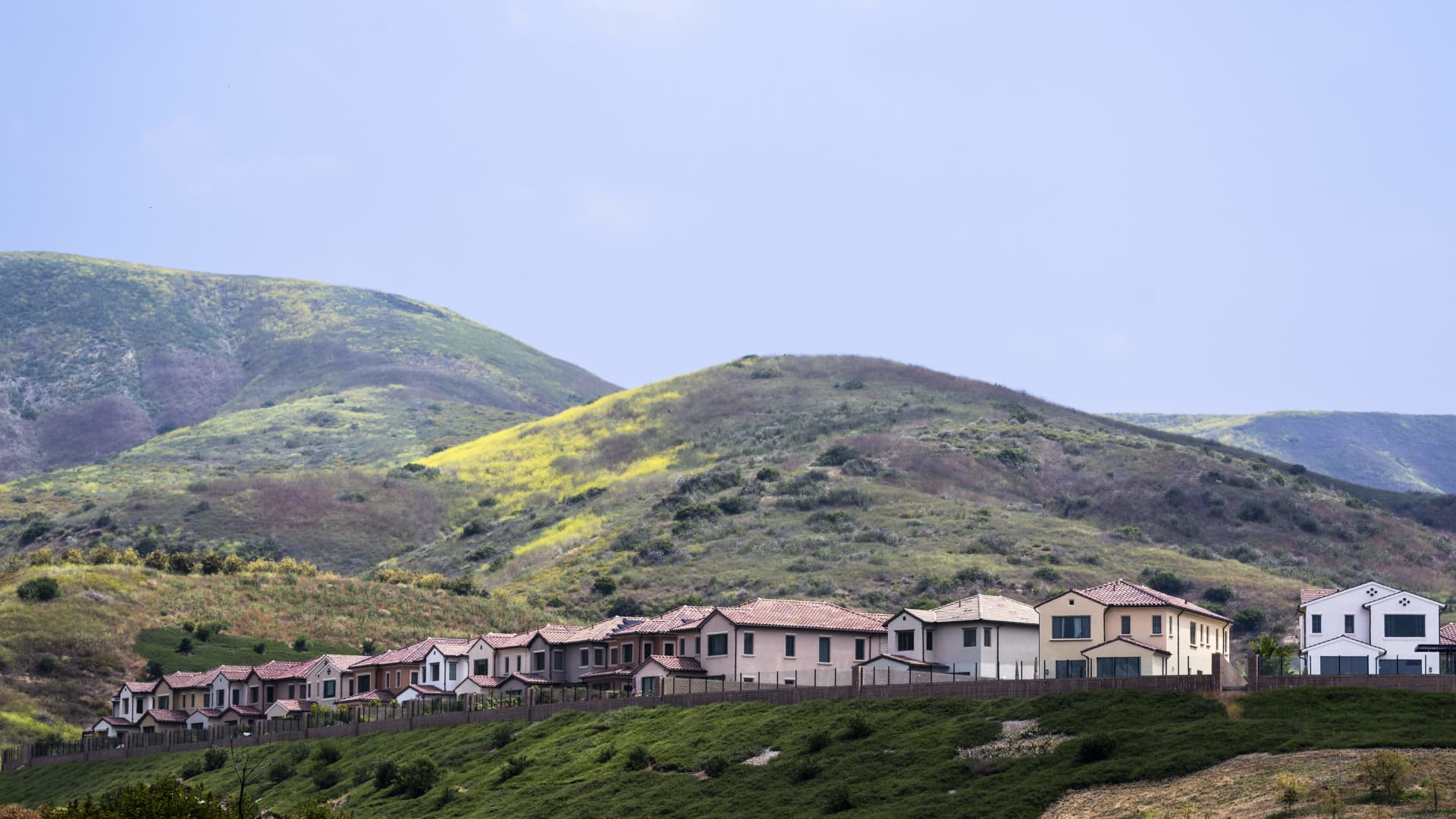
Houses in Orchard Hills in Irvine, California, on Tuesday, May 28, 2024.
Paul Bersebach | Orange County Register | Medianews Group | Getty Images
A version of this article first appeared in the CNBC Property Play newsletter with Diana Olick. Property Play covers new and evolving opportunities for the real estate investor, from individuals to venture capitalists, private equity funds, family offices, institutional investors and large public companies. Sign up to receive future editions, straight to your inbox.
Foreign buyers are pulling back sharply from U.S. residential real estate, but one segment of the nation’s homebuilders is still seeing strong international demand.
Sales of U.S. existing homes to foreign buyers from April 2025 through March 2026 dropped 14% in unit volume and 19% in dollar volume compared with the 12 months prior, according to an annual report from the National Association of Realtors.
International buyers closed on roughly 67,100 properties during the 12 months ended in March, which is the second-lowest amount since NAR began tracking this metric in 2009. The median price for foreign sales was $465,000.
“The decline in foreign home buyer activity mirrors the decline in international visitors and tourists to the United States,” said Lawrence Yun, chief economist for the NAR, in a release. “Even a slightly weaker U.S. dollar over the past year, which provides more purchasing power for foreigners, did not induce more activity.”
The Realtors do not include sales of newly built homes in the data, and there are no specific numbers, as these sales are harder to track. Researchers at John Burns Research & Consulting, however, monitors foreign activity through anecdotal commentary and observations in sales offices.
“Although the overall volume of new home sales to international buyers has decreased recently, the luxury segment remains relatively strong,” said Scott Wild, a principal at JBREC. “In the Southern California city of Irvine, for example, the luxury new home market continues to be driven by buyers from outside the county, particularly affluent buyers from China, many of whom are purchasing homes with cash. Irvine homebuilders continue to directly target foreign buyers and market their highest-end communities internationally.”
Of the nation’s big public builders, luxury homebuilder Toll Brothers has the overall strongest brand with foreign buyers, according to Wild.
“Toll Brothers often markets their luxury homes internationally and does an excellent job tailoring model homes to appeal to specific buyer groups from outside the U.S.,” he said, adding that international homebuyers shouldn’t be viewed as a single market, as trends vary substantially between wealthy investors, households seeking to establish residency and highly skilled professionals relocating for work.
“These homebuyer groups are responding to different economic and policy factors,” Wild said.
The biggest drop in buyers has come from highly skilled workers coming to the U.S. on H-1B visas and similar employment-based programs, according to Wild, who noted that these buyers have shown strong new home demand in technology-driven markets, but shifting immigration and visa policies create uncertainty that directly affects their ability and willingness to purchase homes here.
Canadians accounted for the largest share of foreign home purchases in the U.S. last year, at 16% of international sales, up from 14% the year before. Chinese buyers, who previously led in international sales by number of transactions, dropped to third place behind Mexican buyers, but spent the most dollars because they purchased more luxury homes, particularly in California.
“Florida, with its beaches and favorable winter climate, continues to be the top state to draw foreign buyers,” said Yun.

Westgold Resources at diggers & dealers: growth backed by cash
Business
(PHOTO) Meghan Markle Celebrates Her 45th Birthday With a Bikini Swimsuit and Rare Balloon Photos This Week

Meghan Markle rang in her 45th birthday Tuesday with a playful splash, sharing a series of black-and-white photos and a video on Instagram that showed the Duchess of Sussex leaping into a pool surrounded by birthday balloons.
The As Ever founder turned 45 on Aug. 4, marking the occasion with a carousel post that captured both the jump and its aftermath. In the images, Meghan is seen mid-air in a black one-piece swimsuit and sunglasses, arms raised as a cluster of balloons floats behind her, followed by a second shot showing the splash as she crashed into the water.
A multi-part celebration
Beyond the pool photos, Meghan’s birthday post included several additional glimpses into her celebration. One slide featured an arrangement of her signature As Ever jams alongside a candle and a bucket chilling a bottle of Champagne. Another offered a personal touch, a throwback childhood photo showing a young Meghan sitting cross-legged in what appeared to be her childhood bedroom, wearing a white turtleneck, a multicolored striped skirt and her hair styled in pigtail braids. The final slide of the post carried the caption, “A birthday worth celebrating.”
Alongside the photos, Meghan also shared a video showing her dancing during the festivities. In the caption accompanying her post, she offered a simple message of gratitude to fans. “Thank you for the birthday love,” Meghan wrote, adding a red balloon emoji.
A birthday following a notable family trip
Meghan’s birthday celebration comes just about a week after she shared a separate series of photos documenting her family’s recent trip to England, a visit that drew significant attention among royal watchers. The trip included a reunion between King Charles III and his grandchildren, Prince Archie and Princess Lilibet, whom the king reportedly had not seen in person in several years.
For that earlier post, captioned “Summer Holiday,” Meghan opened with a black-and-white photo of herself and Prince Harry sitting at a dining table, laughing over glasses of wine, with Harry’s arm resting behind her chair as she covered her face mid-laugh. The rest of the carousel showed the family’s time together during the trip, including beach days and sunset walks through grassy fields with Archie and Lilibet. One particularly striking image captured Harry tossing Lilibet into a pool, with water droplets frozen mid-air as she flipped into the water.
A relatively quiet public presence
Despite the family’s reunion with King Charles during their England trip, Meghan did not make any public appearances during that visit, keeping the reunion largely private aside from the photos she later chose to share. Her latest birthday post follows that same pattern of offering fans curated glimpses into her personal life through social media rather than public events, a approach that has become increasingly characteristic of how the Duchess of Sussex shares moments from her life with the public.
A recent turn in front of the camera Down Under
Meghan’s 45th birthday also comes during a period of increased public visibility in other areas of her career. Earlier this year, she made her debut appearance as a guest judge on MasterChef Australia, filling in for regular judge Andy Allen while he was on paternity leave. During that appearance, Meghan described her visit to the country as a “full circle” moment, having previously traveled to Australia with Harry nearly eight years earlier during the same trip when the couple announced their pregnancy with Archie.
A birthday tradition that has evolved over the years
Meghan’s approach to marking her birthday publicly has shifted noticeably over the past several years. Last year, for her 44th birthday, she shared a more intimate glimpse of a private dinner celebration at Funke, an upscale pasta restaurant in Beverly Hills helmed by chef Evan Funke, describing the meal as among the top five of her life. That post also included messages of gratitude to her husband, friends and family, along with a photo of her blowing out candles on a flower-topped birthday cake.
That earlier celebration also drew tributes from friends within Meghan’s circle, including former “Suits” co-star Abigail Spencer, who shares the same birthday and posted an effusive tribute crediting Meghan with having a significant, positive impact on her life.
A milestone year for the Duchess
Turning 45 marks another milestone for Meghan, whose public profile has continued to evolve since she and Harry stepped back from their roles as senior working royals in 2020. In the years since, she has built out a business focused on lifestyle products through her As Ever brand, taken on new media and entertainment opportunities including her MasterChef Australia appearance, and continued to share curated updates about her family life with Harry, Archie and Lilibet through social media.
With her birthday celebrations now shared publicly, attention is likely to remain on how Meghan continues to balance her public-facing business ventures with the more private, family-focused glimpses she has increasingly chosen to share with followers. Her latest post, much like the family photos shared following the England trip, offered fans a warm, personal look at her life without straying into the more heavily scrutinized territory of formal royal engagements, continuing a pattern that has come to define how the Duchess of Sussex presents herself publicly in the years since leaving royal life.

Employees serve customers at the first Chipotle fast-food restaurant in northeastern Mexico on its opening day in San Pedro Garza Garcia, July 16, 2026.
Daniel Becerril | Reuters
Chipotle Mexican Grill said Tuesday it temporarily pulled jalapenos from restaurants in Minnesota after learning that their supply may have been linked to a salmonella outbreak.
Shares of Chipotle closed nearly 10% lower.
“We have a robust ingredient traceability system and, upon learning of a potential Salmonella outbreak in the supply chain impacting several food service retailers, we proactively identified jalapeños as a potential common ingredient from a common lot, removed them from the restaurants where they had been distributed, and replaced them with product from different growers,” Chipotle spokesperson Laurie Schalow said in a statement to CNBC.
The stock reaction indicates investors see the news as a callback to Chipotle’s past as the poster child for food safety issues. The burrito chain was implicated in at least five separate foodborne illness outbreaks between 2015 and 2018. Chipotle added more training for employees, sick days and an enhanced food safety program to put those troubles in the past, and it is now seen as an industry leader on the issue.
Foodborne illness has also been top of mind for many consumers lately. The ongoing cyclospora outbreak has led to more than 6,700 cases confirmed by the Centers for Disease Control and Prevention. Michigan public health authorities on Monday also confirmed the first two deaths linked to the outbreak.
Though Chipotle does not serve any ingredients linked to the cyclospora outbreak, the company said concerns about the foodborne illness affected its sales in the second half of July.
Bloomberg first reported that Chipotle was pulling the jalapenos.
Indonesian economic growth slows to 5.3% in Q2, but beats forecast

SanDisk Stock Jumps 10% on New AI Memory Milestone With SK Hynix Ahead of Earnings

Max Miller’s Lawyer Apologizes for Nude Pic of Rep’s Daughter


-

 Business6 days ago
Why Trees Belong on the Risk Register
-

 Fashion5 days ago
Weekend Open Thread: Wit & Wisdom
-

 Politics4 days ago
Meta enters AI-training agreement with far-right ‘propaganda rag’ Newsmax
-

 Politics7 days ago
Reform UK betrays West Mids residents by running from party pledges
-

 Crypto World4 days ago
MicroStrategy Post-Earnings CLARITY Act Push Could Add New Catalyst for Its Stock
-

 Politics3 days ago
Zack Polanski: an incitement to murder Nigel Farage?
-

 Crypto World4 days ago
XRP Ledger v3.3.0 brings five institutional features
-

 News Videos6 days ago
Bitcoin Enters the 3rd Stage of the Bear Market
-

 Politics6 days ago
Luke Littler’s dominance sparks GOAT debate
-

 Sports5 days ago
Seema Kaliramna Wins Discus Throw Bronze, Takes India’s CWG Medals Tally To 17
-

 Crypto World4 days ago
New York sues Kalshi over prediction market gambling
-

 Crypto World3 days ago
Crypto PAC spending tops $2M in Michigan House race
-

 Tech7 days ago
Gemini can now summarize the messiest comment threads in Google Docs
-

 Business5 days ago
Trump Announces Hamas Disarmament Agreement as Iran Strikes Kuwait Air Base and US Attacks Pause Overnight
-

 Tech3 days ago
ESET tracks rise in malicious AI skills and adaptable malware
-

 Business2 days ago
DTCR: Deleveraging And A Hedge Fund Collapse Point To A Possible AI Bottom
-

 Tech5 days ago
Gemini Spark can now use Chrome logins and saved passwords to run errands on your behalf
-

 Tech5 days ago
Building A Reproduction PlayStation Motherboard
-

 Sports7 days ago
Sakshi, Arundhati Enter Boxing Semi-Finals. India Assured Of 18 Medals At CWG 2026
-

 NewsBeat6 days ago
Four people die trying to cross Channel in small boats
You must be logged in to post a comment Login