This week Jonathan chats with Jonathan Pallant about embedded Rust! Learn about the growing Rust driver library, the different ways to build a Rust stack on an embedded device, and how the opinionated tooling can make you a better programmer!
Did you know you can watch the live recording of the show right on our YouTube Channel? Have someone you’d like us to interview? Let us know, or have the guest contact us! Take a look at the schedule here.
“It’s a place of diverse communities living side by side, a place that loves the arts, loves creativity, and isn’t afraid of change.” She also noted the city’s history of rebelliousness and innovation.
“I love that San Francisco has always stood up for values and the things it believes in,” Wintour wrote. “Vogue World will support San Francisco’s creative minds and strengthen the entire ecosystem — and it will offer another opportunity to show San Francisco is on the rise.”
Advertisement
There were rumors that Vogue World would head to San Francisco after Winter was seen having meetings with the city’s mayor, Daniel Lurie.
Plus, in the past year, Wintour has cozied up to the most powerful names in tech, culminating in this year’s Met Gala, which saw Jeff Bezos and his wife, Lauren Sanchez, serve as lead sponsors for the event. Google’s Sergey Brin and Meta’s Mark Zuckerberg were also spotted at the event (the latter’s first, that is). In fact, OpenAI bought a table, as did Meta and Snap (for $350,000 a pop). It’s true that TikTok, Apple, and Instagram previously sponsored the event, but the presence of the tech crowd was so considerable that the Met Gala this year was dubbed the “tech gala” in some places.
Last year, Vogue put Lauren Sanchez on the cover of the magazine after her wedding to the Amazon founder. To the fashion world, this was Wintour’s stamp of approval — not just for Sanchez’s ascent into the fashion world, but that tech and its leaders were worthy of cultural recognition.
Though Bezos and Sanchez reportedly live in Florida (and Amazon is, of course, headquartered in the Seattle area), there is no city more associated with tech than San Francisco. By locating Vogue World there, this is another indication of Wintour’s approval.
Advertisement
Vogue, as a media publication, is always following the money, and as a cultural bible, is always looking for ways to stay relevant. Turning toward the worldwide headquarters of AI, good or bad, is brilliant for business (and Wintour is nothing if not brilliant).
But Vogue World was previously held in New York, London, Paris, and this year, Milan. Maybe because I live in an East Coast bubble, but I’ve not heard anyone in recent years refer to San Francisco as a beacon of style to rank alongside these other cities.
While the city has a reputation as the land of the free-spirited bohemian, tech and its workers have a reputation for hoodies, Patagonia vests, and expensive athletic shoes, if they even dress up that much.
For instance, billionaire Alexandr Wang, who is now running Meta’s all-important Superintelligence Labs, just did an interview with Y Combinator’s Garry Tan in front of a packed stadium wearing a faded Nintendo T-shirt and what looked like a pair of Crocs. Comfy? Yes. High fashion? Decidedly no.
Advertisement
But maybe that’s changing. Wang’s boss, Mark Zuckerberg, who once always appeared in a plain gray T-shirt and jeans, has made efforts in recent years to become more fashionable. Zuck and his wife Priscilla Chan were spotted front row at a Prada show this season. The new campaign for Meta Glasses has a slew of celeb ambassadors and looks like it could be a Saint Laurent or Balenciaga ad.
OpenAI and Palantir have recently released merch collabs, playing on the minimalist style of tech workers (the merch line of the latter, I would argue, looks inspired by Virgil Abloh’s Off-White).
I concede that creatively there is much to be done with the understated, Northern California style. Surrounded by beautiful nature and cooler temperatures, plenty of fashion designers could be motivated by San Francisco’s tech industry. I look forward to seeing Claude-inspired terra cotta-colored gowns and Vogue-emblazoned quarter-zips soon.
When you purchase through links in our articles, we may earn a small commission. This doesn’t affect our editorial independence.
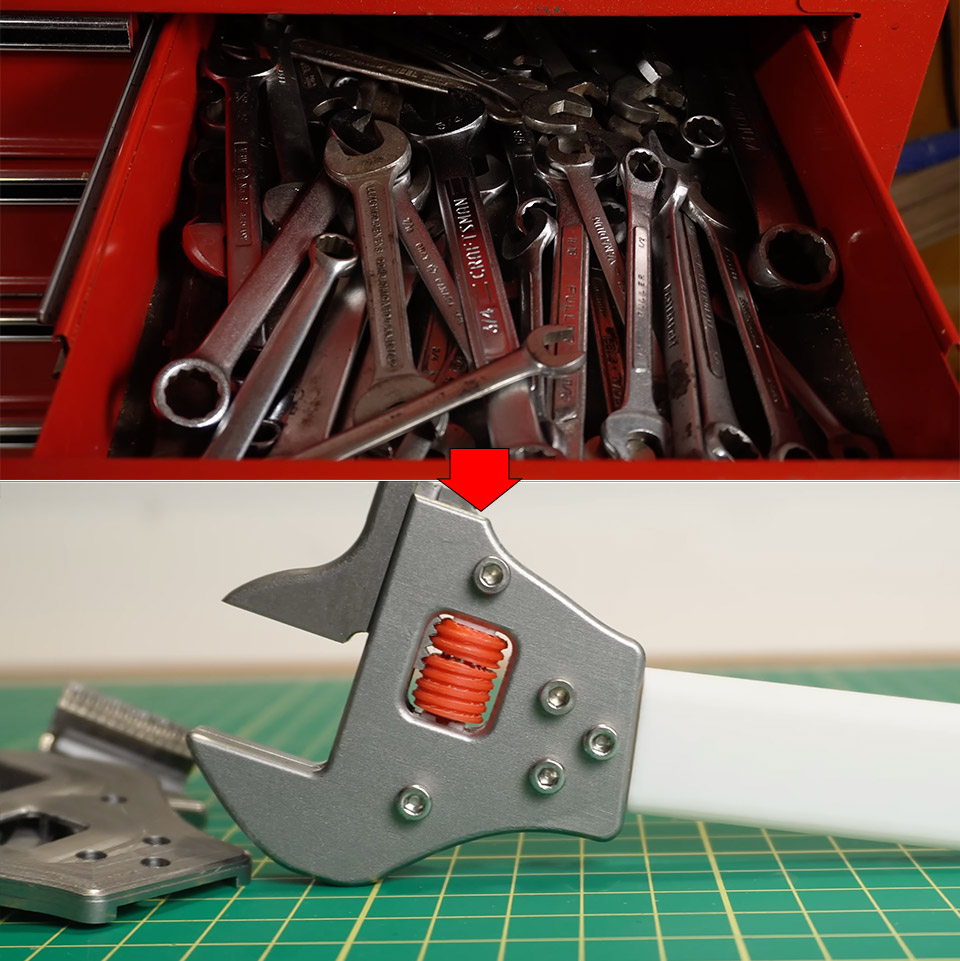
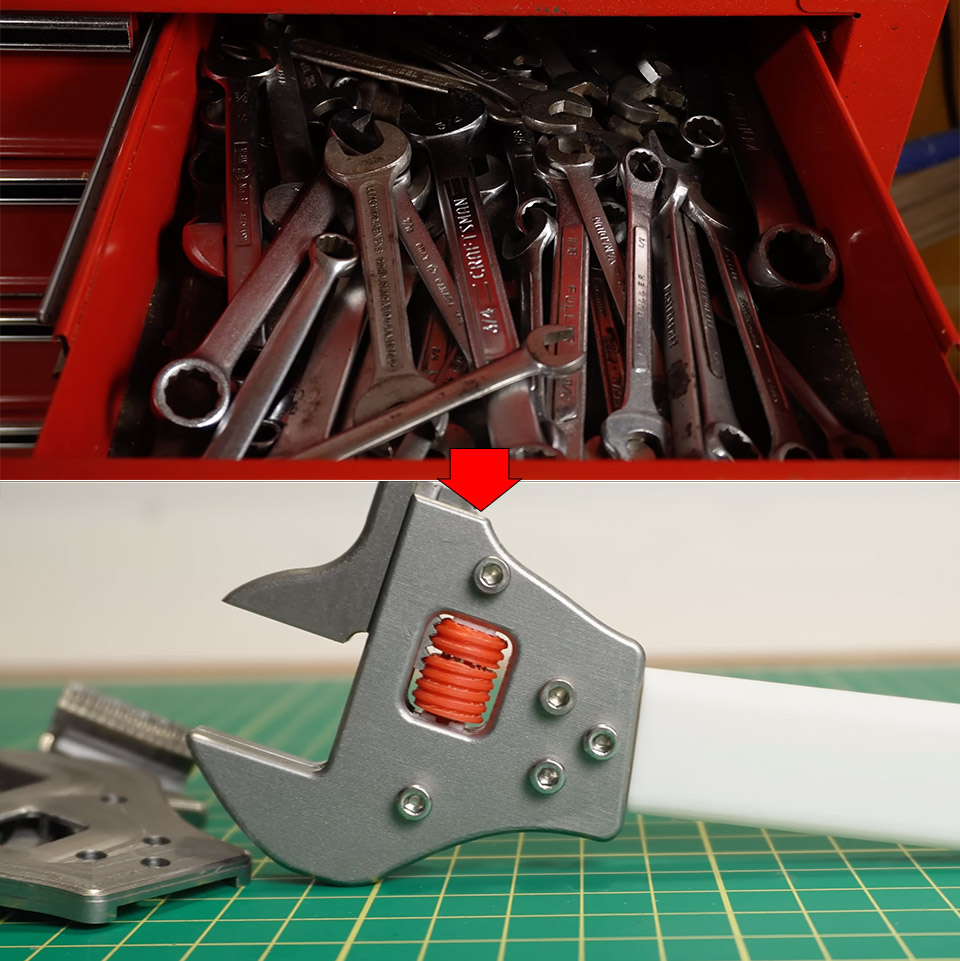
Most of us keep one of those adjustable wrenches around even when we know better. It sits in the toolbox because it covers a range of sizes without forcing a full set of fixed wrenches onto the job. Then the jaws shift just enough during use, the head of the bolt loses its sharp edges, and a five-minute task stretches into a longer recovery session. Someone Should Make That decided enough was enough. He walks through the exact problem that turns ordinary fasteners into rounded messes and the method he used to solve it on a small CNC mill.
The difficulty stems from the interaction between the moving jaw and its adjustment screw. When you apply some force to the wrench to get things started, the flexibility in the jaw allows it to flex, and the contact transfers from the flat sides of the hex to the corners. Try to get a good grasp on the bolt with the wrench, and it’ll be a coin flip whether it’s snug or loose again. Eventually, many people simply push their thumb against the adjustment wheel to keep things from slipping, which typically works until it doesn’t.
High-Speed Precision: Experience unparalleled speed and precision with the Bambu Lab A1 3D Printer. With an impressive acceleration of 10,000 mm/s…
Multi-Color Printing with AMS lite: Unlock your creativity with vibrant and multi-colored 3D prints. The Bambu Lab A1 3D printers make multi-color…
Full-Auto Calibration: Say goodbye to manual calibration hassles. The A1 3D printer takes care of all the calibration processes automatically…
He tested his first idea, preloading the moving jaw with a spring to keep the threads engaged at all times. He created a few plastic prototypes to test it out, but it only underlined the problem. As the jaws closed, the spring compressed harder, giving the sensation of struggling against a brick wall when attempting to make exact adjustments. A softer spring was only a temporary remedy, not a permanent solution.
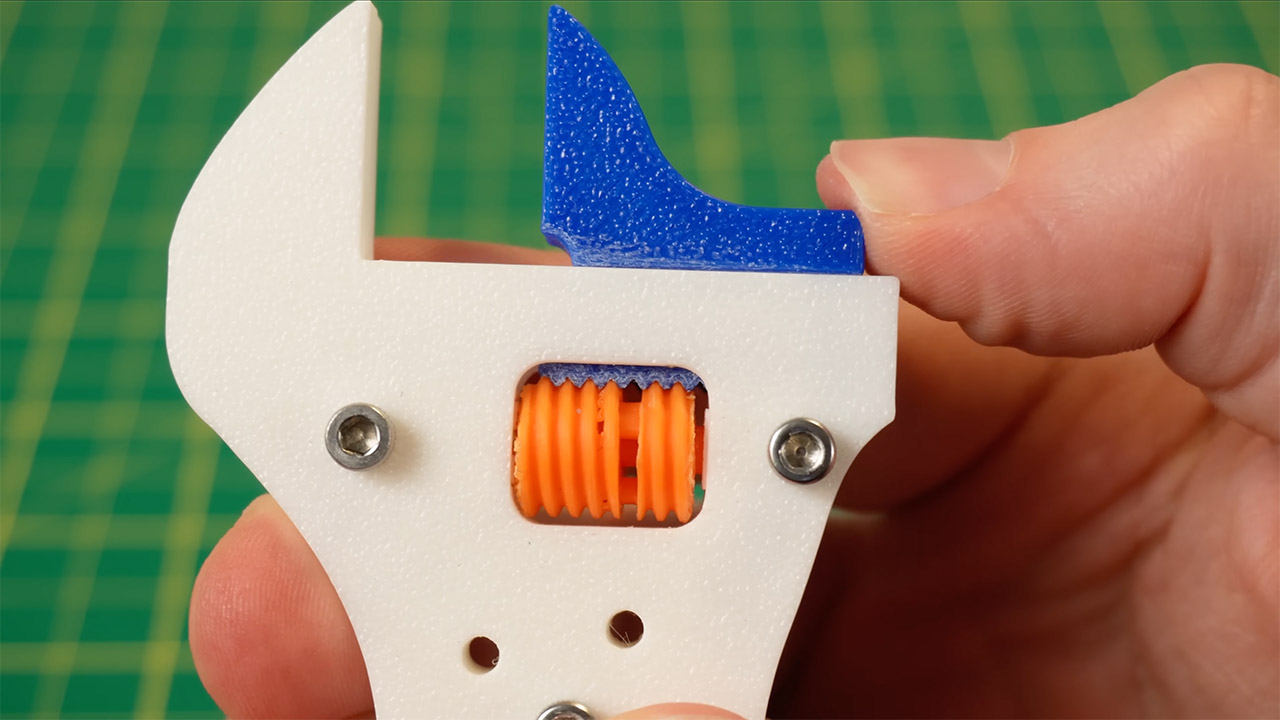
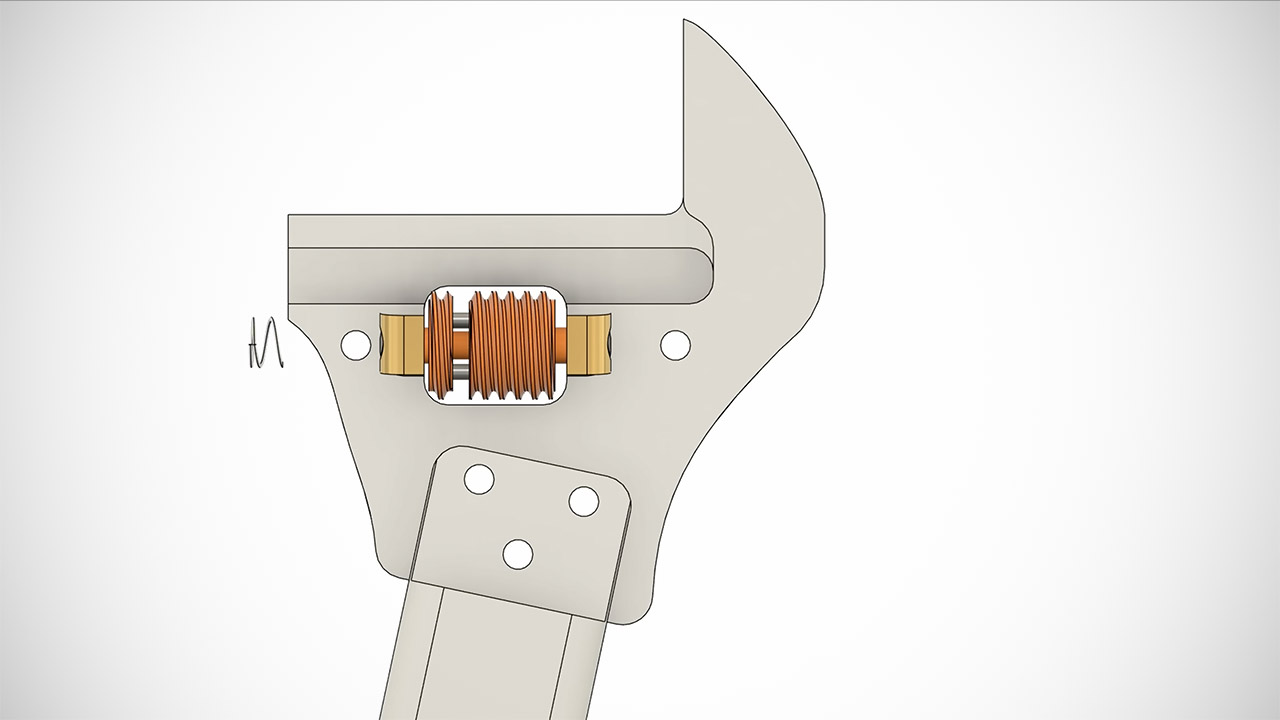
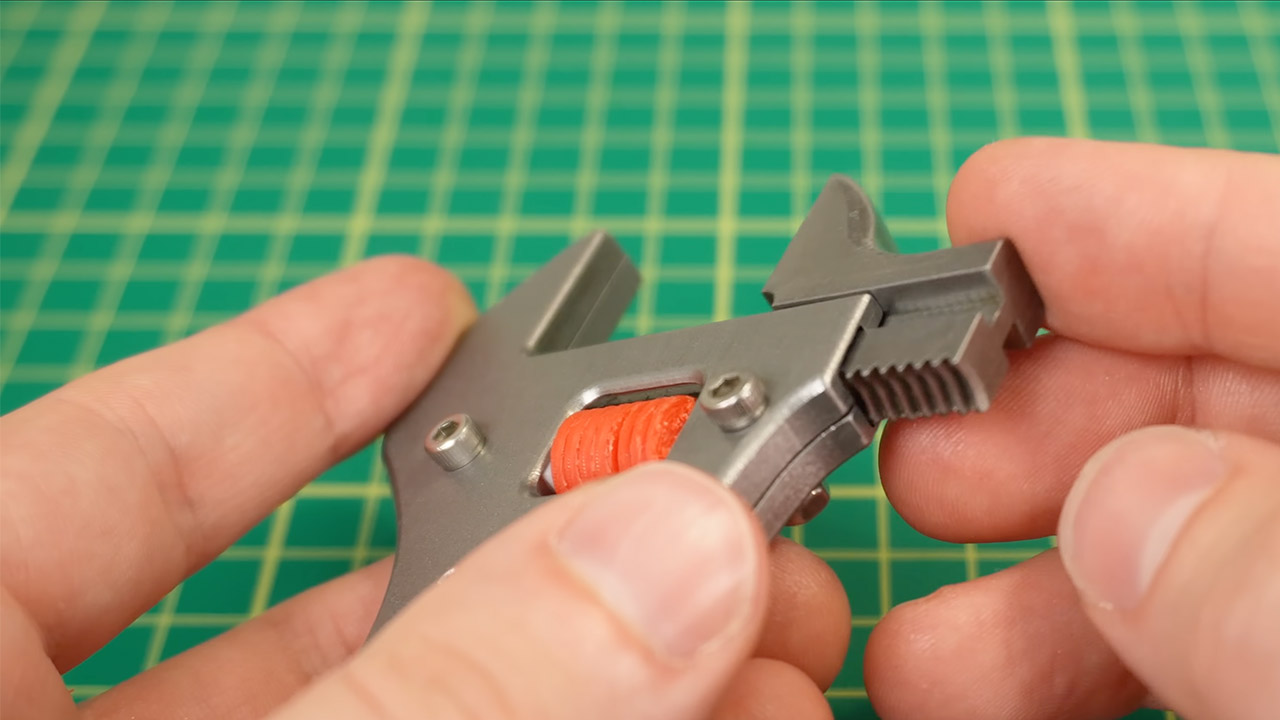
The better approach comes from machines that would later be used to cut metal parts, namely anti-backlash nuts found in CNC mills and 3D printers. These nuts use a spring to keep the driving threads under constant strain, preventing free play. He tried the same technique with his wrench, splitting the adjustment screw in half and attaching a spring between them. One half of the screw threads are forced into the moving jaw, while the other half is pushed into the bushing by the jaw. As a result, the preload remains constant regardless of the jaw opening size.
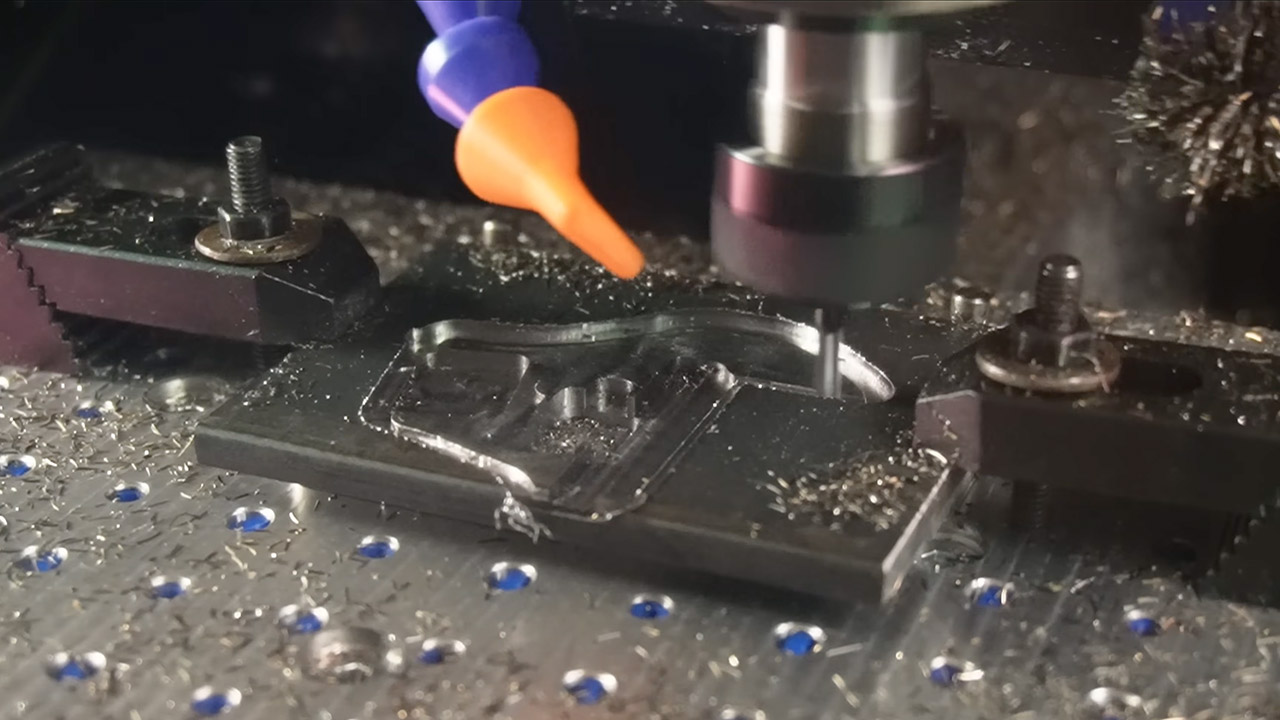
A second plastic prototype of his design proved that it functioned. Then he built a steel version with a DMC2 micro mill. After a lot of fixture work, tool path changes, and probing adjustments, he successfully removed the housing, screw halves, and moving jaw from the machine. His early runs were troubled by uneven height readings using conductive pucks, so he moved to an optical tool setter and built bespoke Mach3 procedures to handle offsets. He had to be careful with material removal when the threads were too tight, and a lathe attempt on the thumb screw failed miserably, so he settled on a 3D printed plastic version.
When all of the components were finally put together, they fit perfectly without any filing. Once adjusted, the spring holds the jaws firmly attached to the bolt, removing any play. You no longer need to press your thumb on the adjustment wheel to keep everything in line, and the fastener’s flats take the load rather than the corners. The plastic screw still has some flex, but it holds up well under daily use. [Source]
Every four years, football’s best players are tested on the world’s biggest stage.
Less visible is the test taking place behind the scenes.
As billions tune in, broadcasters and streaming platforms face their own high-stakes challenge: delivering seamless live experiences at a scale few events can match.
Advertisement
Latest Videos FromTechRadar
Phil Green
VP Media & Strategic Accounts, Brightcove.
Advertisement
FIFA estimates that around 5 billion people engaged with the 2022 World Cup, with the final alone reaching nearly 1.5 billion viewers worldwide.
In 2026, that audience has been presented with an even bigger tournament: 48 teams playing 104 matches across Canada, Mexico and the United States.
More than 54 million viewers across the three host countries watched their national teams’ opening matches, while the United States’ game against Paraguay drew a combined 27.5 million across FOX and Telemundo, the most-watched FIFA World Cup match ever broadcast in the country.
Advertisement
By the end of the group stage, 4.64 million spectators had filled 99.7% of available seats. That scale is a real-time stress test for every part of the live-video ecosystem.
Sign up to the TechRadar Pro newsletter to get all the top news, opinion, features and guidance your business needs to succeed!
From passive viewing to active participation
Beyond sheer audience size, the difference lies in how fans consume it. They no longer simply watch. They move between platforms, share highlights, expect instant access to key moments and want experiences tailored to their own interests.
Advertisement
Streaming is no longer just a distribution channel; it’s a product in its own right. Brazil’s group-stage match against Haiti reached 51.3 million viewers across Globo’s wider media ecosystem, while CazéTV set a worldwide YouTube record for the most-watched football match streamed on the platform.
World Cup content generated 11 billion video views across social media platforms during the group stage alone, and official broadcasters published more than 44,000 pieces of content on TikTok.
A modern match is simultaneously a live program, a source of social clips, a statistics feed and a second-screen experience.
Advertisement
Rethinking the production workflow
That shift starts with the production workflow. The same match is now produced simultaneously for stadium scoreboards, connected TVs, mobile apps and global streaming platforms, with capture, ingestion, encoding and delivery all part of a single content pipeline.
Sixteen optical tracking cameras installed in each stadium can produce more than 150 million data points per match, helping officials review incidents and giving media partners new ways to produce highlights.
The real challenge is bringing together live delivery, audience data, advertising, captions, multi-language audio, and interactive experiences alongside tracking, commentary, graphics, and officiating data.
Advertisement
What fans expect: reliability, personalization, speed
For viewers, success comes down to three things: reliability at scale, personalization and speed. Fans will tolerate a lot, but they won’t forgive a stream that buffers during a decisive goal or runs so far behind live play that social media spoils the moment.
Personalization must happen without undermining performance, delivering different recommendations, languages, statistics, camera feeds and advertising while maintaining the resilience of a mass broadcast.
Advertisement
AI is reshaping live sports production
Artificial intelligence is central to delivering those expectations. Rather than replacing production teams, AI is enabling rights holders to produce and distribute content at a scale that would previously have required far larger operations. Automated highlight clipping is one of the clearest examples: AI can identify key moments, package them and distribute them within minutes.
For rights holders, the difference between publishing a goal two minutes after it’s scored rather than twenty is the difference between leading the conversation and chasing it. Match summaries, commentary, captions and translations can also be generated automatically, and platforms can match each fan with the content they are most likely to watch next.
A glimpse of the future: personalized sports at scale
The broader ambition is visible at the top of the game. The PGA TOUR now turns each week’s action into roughly 7,000 AI-generated highlight clips across dozens of markets, so a fan can follow one player or catch up on key moments without waiting for the main broadcast. The 2026 World Cup has produced a similarly vast library of stories. A record 215 goals were scored during the group stage, an average of three per match.
Advertisement
Tournament debutants Cabo Verde went undefeated, with Kevin Pina scoring the country’s first World Cup goal, while Japan’s 4-0 victory over Tunisia was both the 1,000th match in World Cup history and the biggest ever by an Asian team. These are exactly the kinds of stories that automated tagging, rapid clipping and intelligent recommendations can bring to the right audience.
Immersive viewing and accessibility
The next generation of live sports streaming will be defined by richer viewing experiences. Multi-view streaming allows fans to follow simultaneous matches, while alternative camera angles and player-specific feeds provide greater control over how the action is consumed.
Real-time data integration can bring live statistics directly into the viewing experience without interrupting the match. AI is also making captioning, translation, and audio description production-ready at scale, allowing broadcasters to localize live coverage without a proportional increase in costs.
Advertisement
However, human oversight remains essential for names, sporting terminology, and cultural context.
The technology behind global scale
Supporting all of this requires resilient IT infrastructure and scalable delivery platforms capable of broadcast-quality reliability and low latency, even as millions connect simultaneously. It also requires organizations to move beyond fragmented technology stacks.
A unified architecture makes content easier to reuse: one live signal can support a full broadcast, mobile highlights, social clips, advertising inventory, archive content and personalized recommendations.
Advertisement
Furthermore, protecting that content is just as important as delivering it. Live sport is uniquely vulnerable to piracy because its commercial value exists almost entirely during the match. Digital Rights Management remains the foundation, but forensic watermarking is becoming increasingly important, embedding invisible identifiers so pirated feeds can be traced and removed while the event is still live.
What’s next: The future of live sport at scale
The World Cup ultimately highlights that live video has become a complex, data-driven product where success is no longer defined solely by picture quality or reach, but by how effectively AI, unified content workflows. and scalable technology work together under pressure.
The challenge for the industry is not understanding what works at World Cup scale, but applying those lessons consistently across every live event.
This article was produced as part of TechRadar Pro Perspectives, our channel to feature the best and brightest minds in the technology industry today.
The views expressed here are those of the author and are not necessarily those of TechRadarPro or Future plc. If you are interested in contributing find out more here: https://www.techradar.com/pro/perspectives-how-to-submit
Artificial Intelligence (AI) is rapidly evolving. Across industries, many organizations are increasingly deploying AI into systems that must run continuously, securely, and at scale.
As AI adoption accelerates, one thing is becoming clear: infrastructure planning cannot wait.
Maggie Anderson
Public Sector Account Manager at AMD.
AI workloads are becoming more interconnected, distributed, and operationally integrated across cloud, data center, and edge environments. Infrastructure planning now requires organizations to align compute, networking, software, memory, and operational requirements across increasingly complex environments.
Latest Videos FromTechRadar
Advertisement
As a result, many enterprises are beginning infrastructure planning sooner rather than later.
The cost of waiting
As AI becomes more integrated into everyday business operations through continuous inference and agentic AI systems, infrastructure demands are evolving significantly.
Modern AI deployments increasingly require:
Continuous inference running around the clock
Multi-agent systems coordinating across applications and databases
Real-time orchestration across cloud, data center, and edge environments
Strong governance, security, and operational efficiency
These workloads require more than raw compute performance. They require balanced infrastructure where compute, networking, software, memory, and operational workflows work cohesively at scale.
Sign up to the TechRadar Pro newsletter to get all the top news, opinion, features and guidance your business needs to succeed!
Because of this, enterprises are beginning AI infrastructure planning earlier, recognizing that planning, testing, and Proof of Concepts (PoCs) for complex systems like this take time.
At the same time, the cost of delaying AI infrastructure planning is becoming more apparent. Delays can slow deployment readiness and postpone AI-driven benefits such as productivity gains and operational automation. As AI demand continues to rise, organizations are prioritizing earlier planning to secure the compute capacity needed to support long-term AI growth.
Advertisement
As AI infrastructure becomes more complex, infrastructure planning needs to begin earlier than traditional IT upgrade cycles. Evaluating workloads, validating deployment models, and ensuring scalability across environments takes time and time is of the essence if we want to be ahead of our competitors.
AI is now a systems challenge
The conversation around AI infrastructure often begins with Graphics Processing Units (GPUs). But as deployments scale, AI performance depends not on individual components, but on how the entire system operates together.
Advertisement
Modern AI infrastructure relies on Central Processing Units (CPUs) for orchestration and data movement, GPUs for large-scale parallel compute, high-speed networking for low-latency communication across systems, and open software platforms for portability and scalability.
As AI systems become more distributed and inference-driven, orchestration and system balance become critical. CPUs play a pivotal role in managing workload coordination, memory access, and GPU utilization, ensuring infrastructure operates efficiently under sustained demand.
This shift reflects a broader industry reality: AI is no longer just a GPU problem. It is a full-stack infrastructure challenge that organization must tackle early on.
Advertisement
Planning for distributed AI
AI is also scaling in multiple directions at once.
Some workloads are expanding into large, centralized clusters, while others are moving closer to where data is generated – including edge deployments such as in factories or hospitals, and AI-enabled endpoints like the PCs.
For organizations, this creates unique infrastructure considerations around hybrid cloud, on-premises deployments, edge AI, compliance, and latency-sensitive applications.
This diversity underscores the importance of infrastructure strategies designed for modularity, portability, and adaptability that necessitates upfront planning.
Advertisement
Openness and flexibility matter more than ever
As AI innovation accelerates, organizations are prioritizing infrastructure flexibility to support rapidly evolving models, frameworks, and deployment environments.
Open ecosystems can reduce integration complexity while supporting broader compatibility across software frameworks, cloud environments, and deployment architectures. They also provide greater flexibility to evolve infrastructure strategies over time while helping avoid the migration costs that can come with highly closed or single-vendor environments.
For many organizations, openness is no longer just a developer preference. It is becoming an important consideration for balancing performance, operational efficiency, cost optimization, and long-term infrastructure investment.
Advertisement
This is another reason infrastructure planning must happen early. Building AI environments that remain scalable, portable, and adaptable over time require long-term thinking around openness and interoperability from the beginning.
Infrastructure readiness will define the next phase of AI
The next phase of AI growth will reward organizations that take a proactive approach to infrastructure planning.
Organizations that delay infrastructure planning may find it more challenging to deploy AI tools down the road, not only due to not having ample time to plan and test, but not securing the compute resources needed early on.
Advertisement
The cost of waiting is becoming ever clearer.
Ultimately, the companies that succeed in the next phase of AI will not necessarily be those with the largest clusters, but those that plan early and build balanced, scalable, and open infrastructure designed to support continuous innovation in an increasingly AI-driven economy.
This article was produced as part of TechRadar Pro Perspectives, our channel to feature the best and brightest minds in the technology industry today.
Advertisement
The views expressed here are those of the author and are not necessarily those of TechRadarPro or Future plc. If you are interested in contributing find out more here: https://www.techradar.com/pro/perspectives-how-to-submit
It would be an ambitiously high price for the AI-powered hardware pivot.
Justin Sullivan/Getty Images
We typically expect Mark Gurman at Bloomberg to have the latest tips on Apple tech, but today he’s sharing info about OpenAI’s planned move into hardware. After reporting a wave of details last month about the smart speaker in development at the AI company, today he’s got additional insights about the device.
Sources told Gurman that the product would have a ring-shaped design about the size of a hockey puck. The form factor is meant to be battery-powered and portable, so a user could easily carry it around with them. It reportedly has components that will be able to move on their own, which seem intended to make the product more lifelike and engaging. Although this inaugural piece of hardware does not appear to be equipped with a screen, it will have a camera system and sensors to monitor the environment.
As one might expect after OpenAI shelled out $6.5 billion for Jony Ive-helmed startup io to spark this hardware pivot, the price point reportedly being discussed is high. Sources told Gurman that the OpenAI device might retail for $300 to $400. That’s notably more than most other smart speakers on the market, even high-end ones. We already foresaw this hardware experiment potentially becoming an expensive side quest that ultimately fails if consumers aren’t willing to pay whatever price the company does eventually set. Having a chance to gauge buyers’ reactions to this rumored price before the anticipated launch in 2027 could see OpenAI attempt to revise its cost plans.
When was the last time you met your newest hire in person?
For many organizations, particularly those operating remotely, the answer is increasingly never. With one in five companies worldwide adopting a fully remote model, hiring virtually has become increasingly popular, enabling businesses to access global talent pools and scale faster than ever before.
But in removing geography as a constraint, it has also stripped away one of the most fundamental layers of trust: the ability to verify, face-to-face, who you are actually employing.
Advertisement
Latest Videos FromTechRadar
Clive Summerfield
Founder and CEO of FARx Group Limited.
Advertisement
This shift is giving rise to a new and largely under-recognized threat, the “deepfake employee”, where threat actors use synthetic identities, voice cloning, and real-time deepfake video to pass interviews and secure legitimate employment.
Accelerated by advancements in AI, it is now possible to create convincing digital personas at scale, lowering the barrier to entry for fraud and enabling highly organized operations to target corporate hiring pipelines.
In practice, these attacks can be surprisingly difficult to detect. A candidate may appear on a video interview with a natural-looking face and voice, answer questions fluently, and provide what seem to be legitimate credentials. Behind the scenes, however, AI tools can subtly alter facial expressions, sync lip movements to a cloned voice, or even feed real-time responses.
Advertisement
To the hiring manager, there is little reason to suspect anything is wrong. The deception often only becomes apparent much later, if at all, when activity inside the organization begins to raise concerns.
Sign up to the TechRadar Pro newsletter to get all the top news, opinion, features and guidance your business needs to succeed!
This risk is already playing out in the real world. In a recent experiment, a cybersecurity expert used AI to create deepfake personas – one a white man similar to himself and another of an Asian woman, and successfully secured two separate tech roles, beating hundreds of other candidates.
Using AI-generated credentials, real-time voice modulation and live deepfake video, both synthetic identities progressed through interview stages undetected, with employers unaware they were interacting with an entirely fabricated candidate.
Advertisement
Cloudflare’s latest threat research highlights the scale and sophistication of this activity. Organized “remote worker” fraud operations are using fabricated identities, deepfake-assisted interviews and remote access “laptop farms” to infiltrate payrolls. In some cases, multiple individuals operate behind a single employee identity, maintaining persistent access while appearing as one consistent, legitimate user.
Once hired, these actors are no longer external attackers. They become insider threats with valid credentials, company-issued devices and trusted access to systems. As Cloudflare notes, by the time these individuals are identified, they are already operating inside the perimeter, often blending in with normal business activity.
Advertisement
What needs to change
With nearly 60% of organizations having experienced deepfake-driven incidents, and 48% reporting damage from AI-generated impersonation or misinformation, it is clear that identity infrastructure has become a primary attack surface. Attackers are shifting away from “breaking in” to “logging in” using legitimate credentials obtained through deception.
At the heat of this issue is the flawed assumption that identity can be verified once and then trusted indefinitely.
In physical environments, identity is rarely in doubt. You can see who walks through the door, recognize familiar faces and detect inconsistencies in behavior. In virtual environments, however, organizations rely almost entirely on screen names, login credentials and video, none of which reliably confirm who is actually behind the screen.
Accounts can be shared, credentials can be compromised, and even live video can be manipulated.
Advertisement
This creates a critical vulnerability at the point of hire. A candidate may present documentation, pass background checks and complete onboarding, but in a world of synthetic identities, that initial verification is no longer enough.
Building continuous identity assurance
To address this challenge, organizations need to move beyond static identity checks and towards continuous identity verification. This means verifying not only who someone is who they say they are and that they are a real human at the point of hire, but ensuring that the same individual remains present and authentic throughout their interactions with the organization.
The strongest form of defense lies in continuous biometric verification of the user’s identity. Rather than relying on a single factor, such as facial recognition or voice authentication alone, fused biometrics combines multiple identity signals, such as facial characteristics, voice patterns and behavioral cues, into a single, layered verification process, verifying directly that a real, live human is there.
Advertisement
It is no longer enough to confirm a person’s identity at a single moment in time. Organizations need confidence that the same individual is consistently present across every critical interaction, from interviews and onboarding, through to system access and sensitive transactions. Without this continuity, identities can be shared, replaced or hijacked without detection.
Fused biometric verification can create layered validation that is significantly harder to replicate or manipulate, enabling it to detect and block attempts to impersonate users through synthetic voices, deepfakes, or recorded audio and video.
While a single modality might be fooled by a sophisticated synthetic input, combining biometric modalities; facial recognition, voice recognition, and speech pattern recognition, it becomes significantly harder for fraudsters to mimic an identity.
Advanced biometric verification technologies are trained on large datasets of both genuine and synthetic voice samples, enabling them to recognize subtle acoustic differences between natural and deepfake voices. This helps organizations detect voice-cloning attempts, even when the audio sounds convincing to human listeners.
Advertisement
Crucially, fused biometric verification can operate passively in the background, consistently verifying that the right person is accessing systems, enabling smoother, lower-friction experiences and reduces the need for frustrating repeated verification attempts.
As organizations continue to embrace remote work and digital-first operations, cybercriminals will increasingly find new vulnerabilities to exploit. The question is no longer just how to keep threats out, but also how to ensure that those already inside are truly who they claim to be.
In a world where identities can be fabricated, cloned and manipulated with ease, trust cannot remain static. It must be continuously proven.
This article was produced as part of TechRadar Pro Perspectives, our channel to feature the best and brightest minds in the technology industry today.
The views expressed here are those of the author and are not necessarily those of TechRadarPro or Future plc. If you are interested in contributing find out more here: https://www.techradar.com/pro/perspectives-how-to-submit
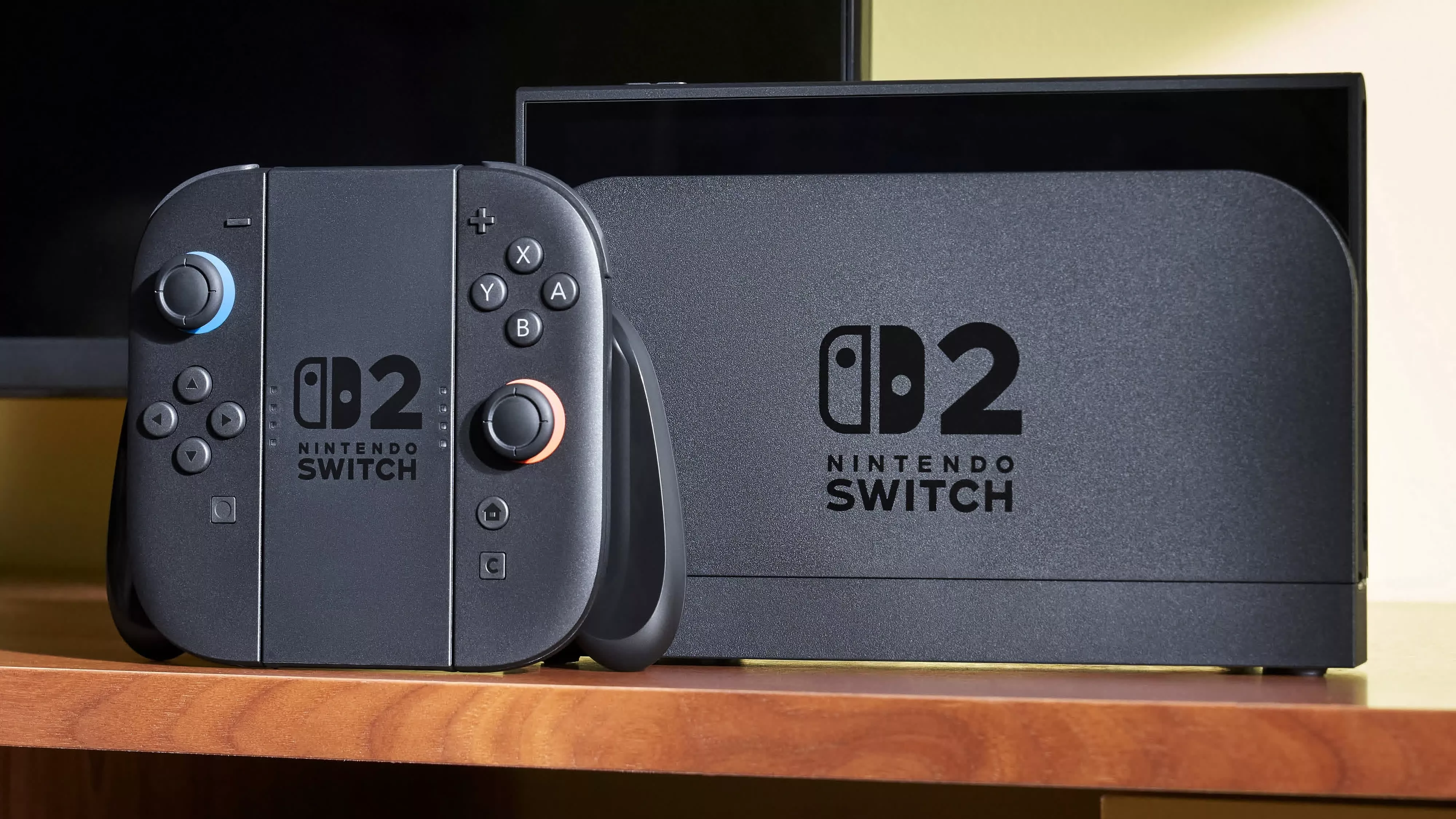
In brief: As doubt lingers over the future of Microsoft’s console business, and controversy over the end of physical media clouds Sony’s, Nintendo wants investors to know its hardware division is still growing. The company’s Q1 fiscal 2027 report points to strong mainstream software sales, a hit tie-in movie, and $300 million in tariff refunds that customers will never see.
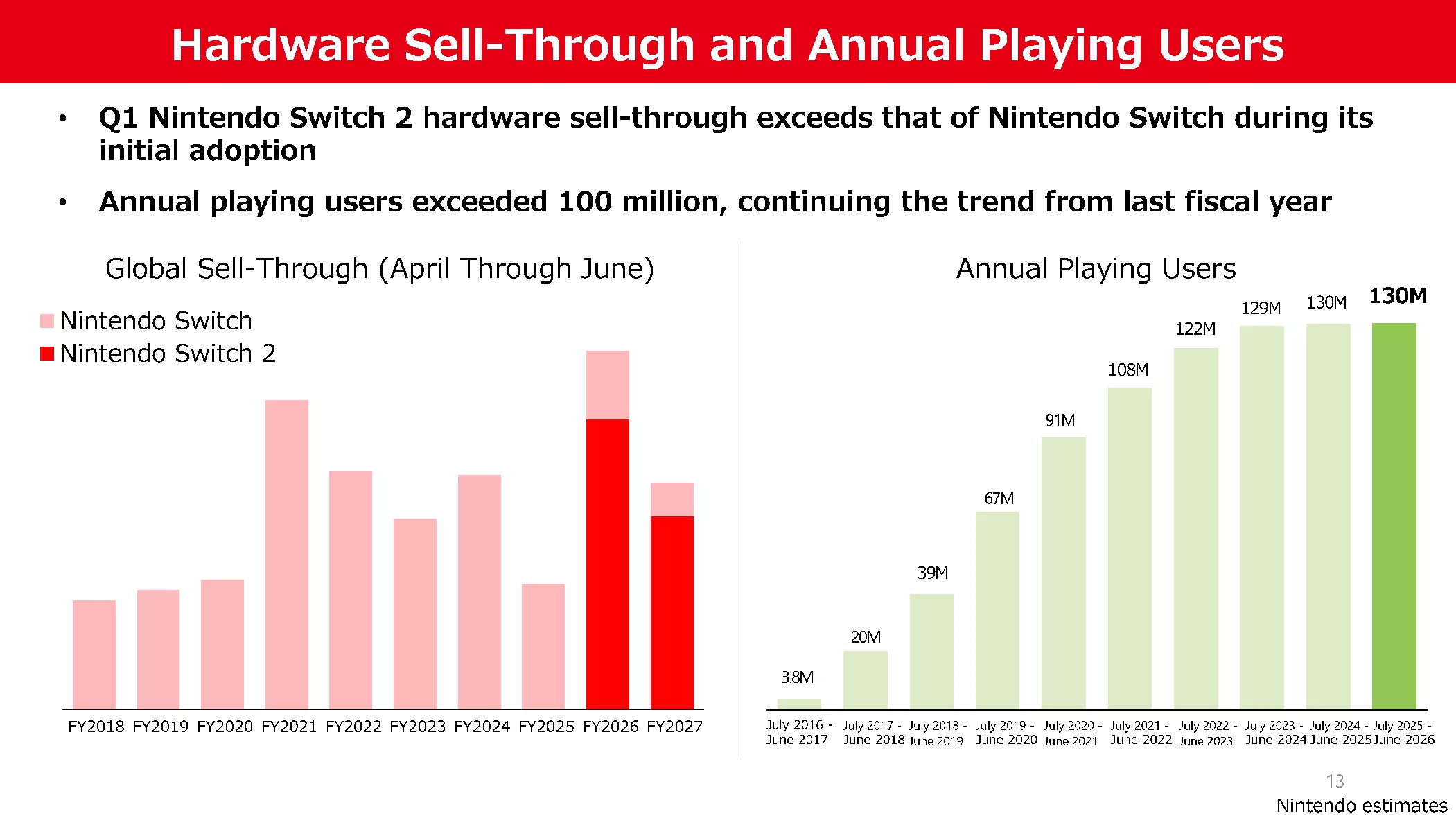
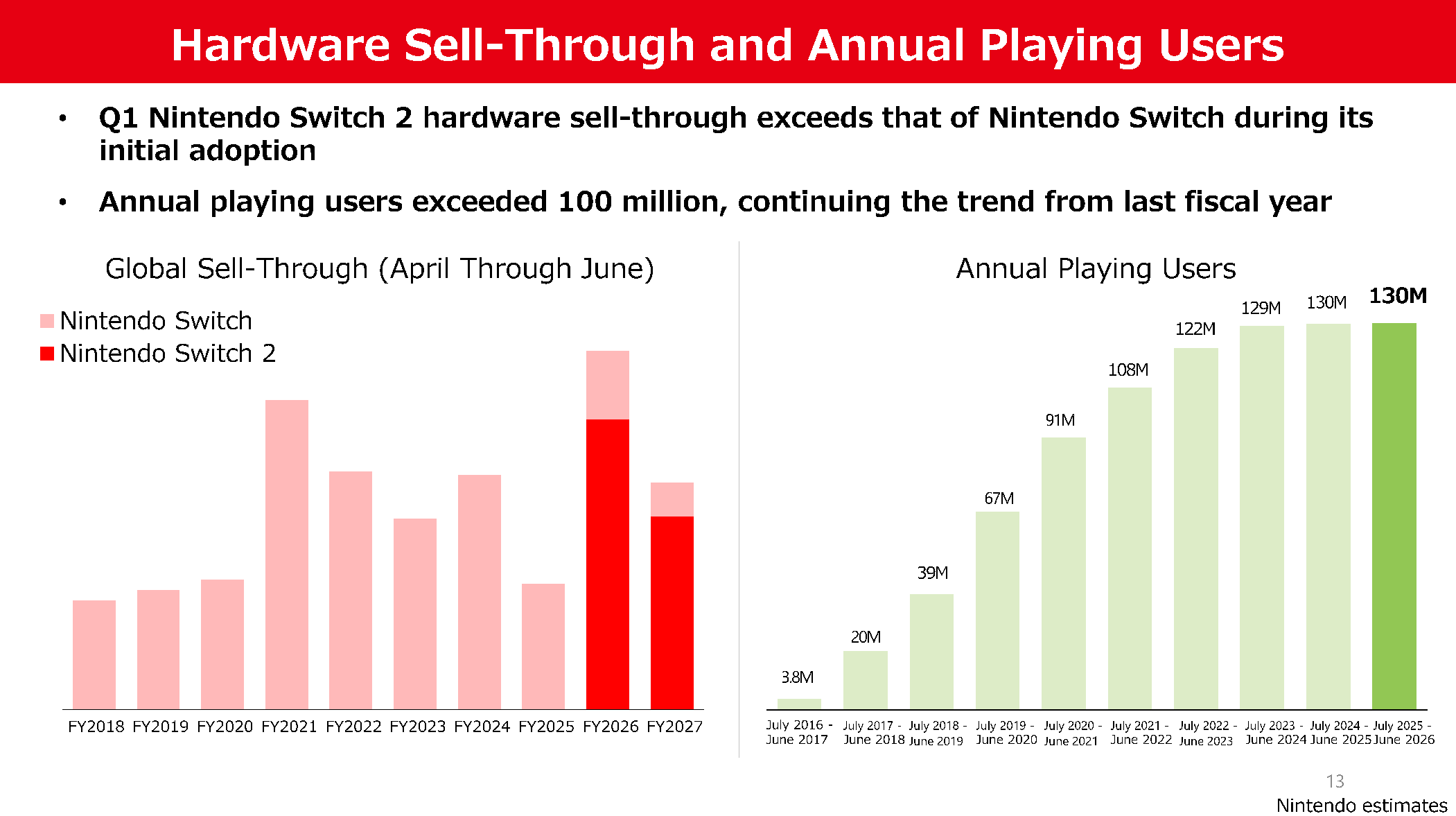
The Switch 2 has sold more than 23 million units in its first year on the market, well ahead of its predecessor’s roughly 17 million over the same span. The hybrid console has now also outsold the GameCube’s entire five-year run in a single year – a reminder of how far Nintendo’s hardware business has come over the past two decades.
The quarter ending June 2026 did show a more than 30% YoY drop in hardware sales, but that’s expected: the year-ago quarter included the Switch 2’s explosive launch.
Software tells us a different story. Switch 2 game sales rose 9% YoY, while the original Switch’s software sales jumped 38%. Tomodachi Life was likely the driver, selling more than 8 million copies between its April launch and early August. Net profit, meanwhile, climbed 53% YoY.
Advertisement
Nintendo also disclosed $300 million in refunds after the US Supreme Court ruled the Trump administration’s 2025 tariffs illegal. The government has paid out more than $80 billion of the roughly $166 billion it owes manufacturers and retailers, Nintendo among them, alongside Amazon, Walmart, Sony, and Apple.
Still, Nintendo is fighting a lawsuit from customers demanding a cut of those refunds, arguing it has no obligation to compensate buyers who willingly paid tariff-era prices.
The company kept the Switch 2’s $450 launch price intact despite steep tariffs on its Vietnamese manufacturing – even after Vietnam was briefly hit with a proposed 46% rate. Apple, by contrast, plans to funnel its $2.2 billion refund into domestic manufacturing, while Amazon, Walmart, BJ’s, and Arctic have said they’ll return some of the money to consumers in various forms.
Nintendo also touted The Super Mario Galaxy Movie, which opened in April and has since crossed $1 billion at the box office. Up next: a live-action The Legend of Zelda movie, due in 2027.
OpenAI is rolling out a more reliable version of ChatGPT GPT-5.6 Sol for Plus and Pro users, while Free users are getting unlimited text chats with GPT-5.6 Luna.
The changes are focused on making ChatGPT more direct, factually accurate, and consistent across quick questions and deeper reasoning tasks.
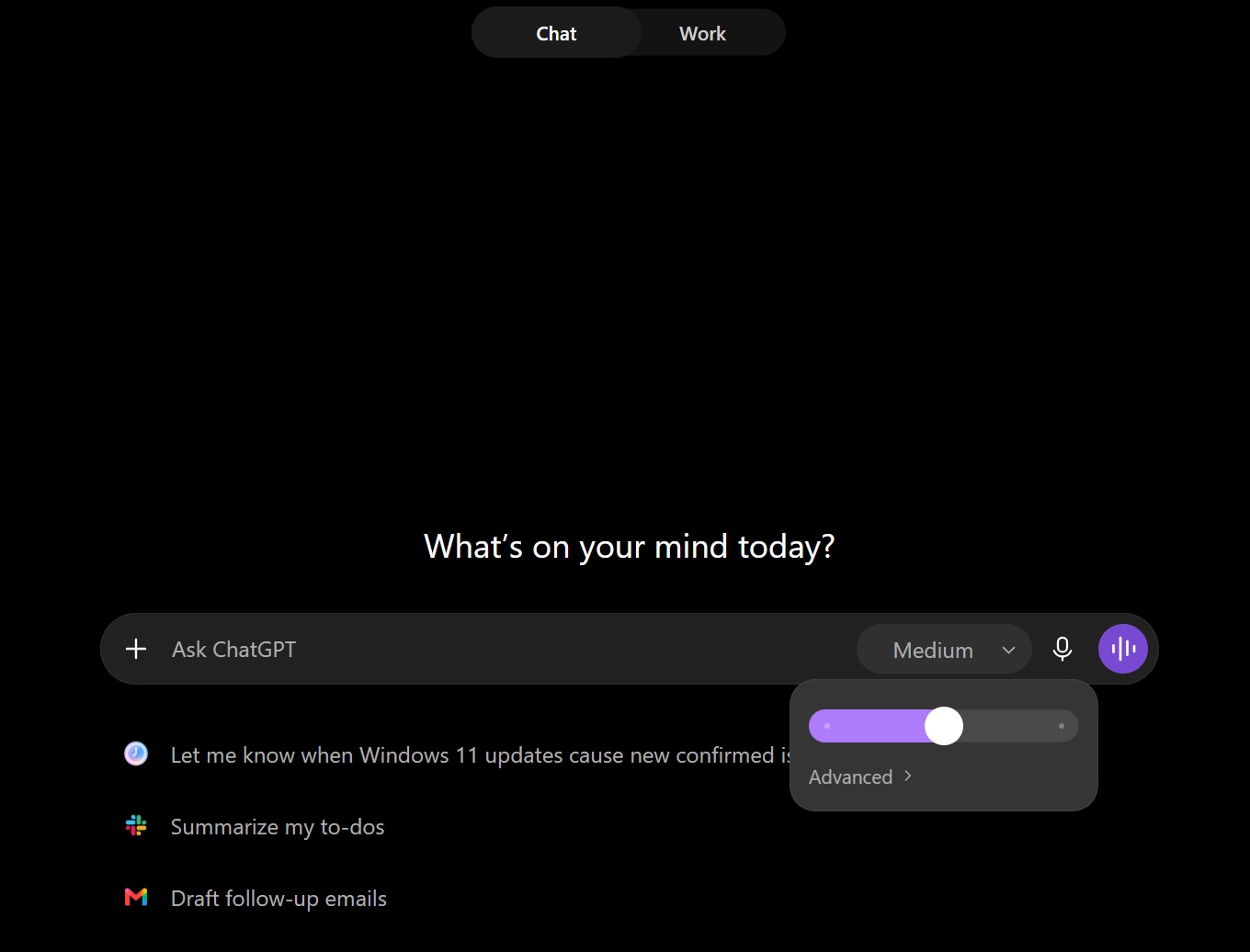
In our tests, BleepingComputer observed that GPT now gives you greater control over the model’s reasoning and intelligence with a new slider.
ChatGPT’s intelligence slider
Source: BleepingComputer
As you can see in the screenshot, you can slide GPT’s reasoning from Instant to High. Instant would respond almost immediately, while High reasoning could take several minutes.
You can keep the slider low for everyday questions or increase the reasoning effort for tasks such as research, coding, writing, planning, and complex decisions.
Advertisement
GPT-5.6 Sol is getting more focused and reliable answers
OpenAI says the updated GPT-5.6 Sol has been tuned specifically for how people use ChatGPT, rather than for the longer-running agentic workflows found in Codex and ChatGPT Work.
“It delivers more focused answers, adapts its level of detail to the question, avoids unnecessary formatting, and offers a helpful correction when simply agreeing wouldn’t be useful,” OpenAI said.
For example, if you ask simple questions, GPT should answer directly without adding unnecessary background. For more complicated work, it should provide enough detail while keeping the main recommendation easy to identify.
A question like “Who is the president of the United States?” will have a single-line answer, but a question like “How are elections held in the US?” will have a longer answer with background information.
Advertisement
OpenAI also claims that GPT-5.6 Sol is less likely to make factual mistakes when handling dates, numbers, sources, legal rules, medical information, financial questions, or assumptions.
In internal tests, OpenAI found that responses containing at least one factual error were 68% less common with GPT-5.6 Sol than with GPT-5.5 Instant.
Moreover, GPT-5.6 Luna reduced such responses by 62% in the same evaluation.
Free users are getting unlimited GPT-5.6 Luna chats
GPT-5.6 Luna will become the default model for Free and Go users this week, and some users are already seeing the change. I spotted it in my OpenAI account with a Go subscription that costs approximately $10.
Advertisement
Smarter ChatGPT
Source: OpenAI
Starting next week, OpenAI also plans to remove the rate limit for text chats on those plans, although usage will remain subject to abuse protections. However, limits will still apply to file uploads, image generation, and other ChatGPT tools.
With a free account, you will still receive a new Think button that gives GPT-5.6 Luna additional time to reason through harder questions.
“For questions that require deeper reasoning, Free users can tap the new Think button to give GPT-5.6 Luna more time to work through the answer,” OpenAI noted.
The update does not affect GPT-5.6 Sol in Codex or Work
The revised version of GPT-5.6 Sol is designed for everyday conversations and will only be available through ChatGPT’s regular Chat experience.
OpenAI is also introducing additional protections for users believed to be under 18.
Advertisement
These include stricter boundaries around romantic roleplay, sexual content, dangerous activities, eating disorders, body-image risks, age-restricted goods, and graphic violence.
Today’s changes are rolling out gradually.
Security teams log 54% of successful attacks and alert on just 14%. The rest move through your environment unseen.
The Picus whitepaper shows how breach and attack simulation tests your SIEM and EDR rules so threats stop slipping by detection.
Another option worth checking out is Samsung’s current trade-in offer, which could work out cheaper if you have an eligible tablet. Samsung is selling the 256GB Galaxy Tab S11 Ultra for AU$1,599 and, until 26 August, is adding a guaranteed AU$500 bonus credit on top of your device’s assessed trade-in value.
But, I hear you ask, what makes the Galaxy Tab S11 Ultra truly worth the rather large price tag?
In our Samsung Galaxy Tab S11 Ultra review, we said we’d be “hard-pressed to find a bigger and better display on an Android tablet”. The 14.6-inch AMOLED screen earned a full 5/5 in our testing, with enough brightness for outdoor use, while the included S Pen and expansive display make it particularly well suited to watching movies, gaming and drawing.
Our reviewer also found Samsung’s One UI software made excellent use of the big screen for multitasking, with the tablet handling a video call, game and floating YouTube window at the same time without slowing down.
Battery life impressed too, lasting 11 hours while streaming 1080p video at full brightness, helping explain why the S11 Ultra remains our best premium Android tablet pick in our buying guide.
Advertisement
No tablet is perfect, and the main caveat for the S11 Ultra from our testing is the MediaTek Dimensity 9400+ chipset, which we found disappointing considering the RRP is over AU$2,000.
Yes, it’s a clear improvement over the Tab S10 Ultra and handles games well, but it falls well short of competitors like the M5 iPad Pro for outright processing power.
That said, while the current AU$502 discount does not fix the performance shortfall, at AU$1,597 rather than AU$2,099, it makes our review criticisms considerably easier to swallow. Especially when the closest equivalent iPad Pro is AU$2,599.
So overall, I think that at the current discount, the S11 Ultra is an easy recommendation for those who want the biggest possible screen for movies, games, drawing and multitasking.
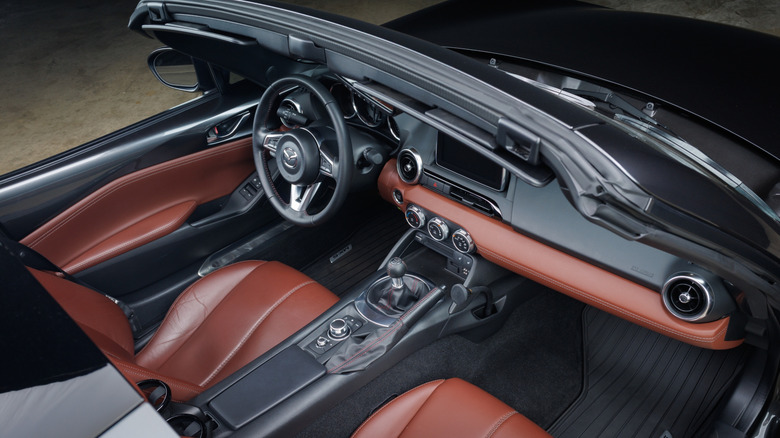
The Mazda MX-5 Miata has remained the most popular sports car for decades thanks to its affordable price point, cute looks, and fun, responsive handling. You know what they say: Miata is always the answer. However, this may not be the case for taller people.
There’s a reason the Miata has sold over one million cars. The minimal driver-focused car is great for commuting and the track, all while being sleek and adorable. However, the interior is where it falls a bit short. Our review of the 2025 model admitted that the cabin lacks storage, and the trunk isn’t the most useful. The cabin is also not the best for tall drivers, with 37.4 inches of head room and 43.1 inches of leg room.
Advertisement
Who can comfortably fit in that cabin? The answer is not so straightforward. But check this out — Ruler of London states the average height for a man in the U.K. is about 70 inches, or 5’8″. According to First in Architecture, the average head height for a seated man (also in the U.K.) is 35.4 inches, which is 50.6% of their overall height. If you extrapolate these numbers to the headroom of the Miata, this means it can accommodate a person up to 6′ 4″ if they don’t mind their head being uncomfortably pressed against the roof.
Meanwhile, a person around 5’9″ generally needs 39″ of leg room to be comfortable. If you bring those measurements back to the same 6′ 4″ person attempting to sit in a Miata, they are at the very limit. While torso and leg length varies person to person, it seems like anyone above six feet tall could be pretty cramped in a stock Miata without the top down.
Advertisement
How to fit in a Miata comfortably if you’re a taller driver
JoshBryan/Shutterstock
If you’re on the taller side and want to fit in a Miata, there are some modifications you can make to comfortably drive one. First, you may want to lower and recline the seat as much as possible. To go further than the stock options, you can find lowering brackets and adapter rails that will allow you to adjust it even further away from the steering wheel and pedals. This will provide you with more leg room.
If you still need more room, you could also remove the seat padding — although this could make the ride feel a bit stiff and unsupportive. Instead, you could replace the seat altogether. Switch them out for bucket seats, which are thinner while providing more support for spirited driving.
Consumer Reports listed the Miata as one of the worst cars for tall people, likely due to the Miata’s cramped leg room. This makes it a car to avoid if you’re a taller driver, especially when there are plenty of comfortable cars for tall people. But if you really want to experience that go-kart-like driving experience, the modifications could very well be worth it.




























































You must be logged in to post a comment Login