

The fake identities were the part that stopped me.
Tech
vivo S2 Launched in India With Massive 7,050mAh Battery & Sony Camera


After a lot of speculation, vivo has expanded its S-series lineup in India with the launch of the vivo S2. Starting at ₹39,999, the smartphone packs a 6.83-inch curved AMOLED display, a 50MP Sony main camera, and a massive 7,050mAh battery while keeping a relatively slim design. vivo is also betting big on AI, with the S2 featuring several photography and productivity tools alongside Google Gemini. Here’s what you need to know about it.
vivo S2 Features and Specifications

Under the hood, the vivo S2 is powered by the MediaTek Dimensity 7360-Turbo, a 4nm chipset paired with 8GB of RAM and up to 256GB of storage. There’s also support for up to 8GB of Extended RAM, although this uses a portion of the phone’s internal storage rather than adding physical memory. The phone also gets symmetrical dual speakers, which should make watching movies and playing games a little more immersive.
Perhaps the bigger highlight is the display. The vivo S2 features a 6.83-inch 1.5K 3D Curved AMOLED panel with a 120Hz refresh rate, HDR10+ support, and up to 3,000 nits of peak brightness. Despite packing a massive battery, vivo has focused on keeping the phone relatively slim and lightweight. You also get IP68 and IP69 ratings for protection against dust and water.
Sony Camera, AI Features, and 7,050mAh Battery
For cameras, the vivo S2 packs a 50MP Sony IMX852 primary sensor, accompanied by a 2MP secondary camera and vivo’s Aura Light for portraits. There’s a 32MP selfie camera on the front, and both the front and rear cameras can record videos at up to 4K resolution.
As you’d expect from a 2026 Android smartphone, AI is also a big part of the package. The S2 includes AI Erase 2.0, Live Photo, Dual View Video, Circle to Search 2.0, Google Gemini, AI Smart Call Assistant, and AI Transcript Assistant. These cover everything from removing unwanted objects from photos to transcribing conversations and helping with everyday queries.
Powering everything is a huge 7,050mAh BlueVolt battery with support for 44W FlashCharge. The vivo S2 runs OriginOS 6 out of the box, with vivo promising three major Android OS updates and five years of security updates. The vivo S2 starts at ₹39,999 in India, with 128GB and 256GB storage options available.
Continue Reading

Seattle-based edtech startup Wild Zebra has raised $6 million to expand its AI learning platform for math and reading, citing early signs that its specialized product can hold its own against the free study tools released over the past year by OpenAI, Google and Anthropic.
One of Wild Zebra’s secrets is its Socratic approach: rather than handing over the answer, the platform works students toward it with questions, drawing out the reasoning step by step.
Another key difference: the lessons are customized to be grounded in whatever topics or hobbies the student is already interested in, such as sports, cooking, music, or anything else.
The platform also analyzes the conversations themselves, looking not just for students who are distracted or getting answers elsewhere, but for those showing persistence or curiosity — flagging those positive moments in dashboards for teachers and parents.
The idea is “to catch kids being good, too,” said edtech veteran Edan Shahar, the company’s CEO and co-founder.
Latest funding: The oversubscribed seed round was led by Bellevue, Wash.-based Trilogy Equity Partners, with participation from Tetherpoint Capital and angel investors including Shrikesh Majithia. It brings the company’s total funding to $8 million.

Wild Zebra, co-founded in 2024 by Shahar and longtime AI technologist Erik Selberg, serves students in grades 2 through 9. The company, with a team of 10, plans to use the new funding for hiring, primarily engineers, along with sales and marketing initiatives.
Trilogy Managing Director Amy McCullough, who is joining the Wild Zebra board, said the VC firm backed the company for its potential to give parents and teachers a real-time view of what a student has actually learned, and a path to mastering the material from there.
She said she came to the deal as a customer first: her family had used Test Innovators, the private-school admissions test-prep company Shahar ran for nearly a decade, and she was struck by how well it delivered for parents and students at a high-stakes moment.
“When we were introduced to Wild Zebra, we knew very quickly that this was the team who could build the student-centric AI partner for the market,” McCullough said.
Competitive landscape: When GeekWire first covered Wild Zebra last year, OpenAI and Google had just launched study modes of their own. Anthropic launched a free version of Claude for K-12 teachers last month, and Khan Academy’s Khanmigo has been in the market for years.
Shahar said the general-purpose chatbots are good at answering a single question or explaining a concept, but don’t keep track of what a student knows over time.
Wild Zebra builds what the company calls a “learning tree” for each student — what they’ve mastered, where the gaps are, what comes next — and uses it to decide what they work on next, rather than just responding to whatever they happen to ask.
Shahar sees the big AI labs as suppliers more than rivals. Wild Zebra runs on their models, along with others.
Traction so far: Wild Zebra says it now reaches tens of thousands of students, up from about 6,000 a year ago, and has logged hundreds of thousands of tutoring conversations.
It opened the platform to families this year at $48 per month per child. The first consumer customers, Shahar said, were parents at pilot schools who wanted it for their other kids.
On the school side, Wild Zebra works through E3n, formed this year by the merger of the Educational Records Bureau and the Enrollment Management Association, which serve selective private schools. ERB invested in the company in 2024.
Many member schools test students using E3n’s exams, and Wild Zebra uses those results to set each student’s starting point, though some schools using the platform don’t.
Early results: E3n also conducted a 722-student pilot evaluation of math and reading, measuring results against ERB norm groups collectively built from hundreds of thousands of students. It found gains of four to eight percentage points among fifth and sixth graders.
Having started in private schools, Wild Zebra is now talking with charter and public schools.
Shahar said schools and students skeptical of AI mostly don’t become customers, and the ones who do tend to share his optimism while still taking the risks seriously.
The concern he hears most often from students is AI’s environmental impact — which, he acknowledged, is not something Wild Zebra is working to address.
“I’m not a Pollyanna. I think there are certainly potential downsides to AI in general,” he said. “There are people working on the downside mitigation. I’m working on upside opportunity.”

In late July, according to a report published this week by Britain’s AI Security Institute (AISI), an Anthropic model called Claude Mythos 5 tried to sneak malicious code into a piece of free, volunteer-built software. It created several fake accounts on GitHub, where programmers review one another’s work, and used them to talk the project’s volunteers into accepting its code. When one of those volunteers caught it, the model denied everything, had its other accounts gang up on him, and edited its messages to cover its tracks. It signed one note in Danish, apparently because the volunteer was Danish. Nothing was damaged, though that appears to have been largely due to luck.
That wasn’t even the week’s worst disclosure. On Tuesday, at a cybersecurity conference in Las Vegas, OpenAI researchers explained how the company’s models escaped a test environment in July and hacked Hugging Face, where much of the industry stores its models, to cheat on an evaluation. The models had also built a message board inside OpenAI’s own systems and spent months passing each other information. “Help peer,” one reasoned. “But our task doesn’t benefit. Yet collective may yield generic route if someone frees time.” OpenAI wiped the board on July 4. The models rebuilt it within days. ((Disclosure: Vox Media is one of several publishers that have signed partnership agreements with OpenAI. Our reporting remains editorially independent.)
The same day, Meta said its Muse Spark model had exploited a vulnerability inside another company’s systems during a test. Three frontier labs, roughly two weeks. One researcher called it “a watershed moment for computer security as an industry.” Oh, and if that’s not enough, on Thursday scientists announced that for the first time they had used AI to create new viruses, which could bring major medical advances, but also might just help the development of deadly pathogens.
For Nate Soares, it’s a moment he’s been awaiting for 12 years.
Soares is president of the Machine Intelligence Research Institute, a Berkeley, California-based AI safety nonprofit that has argued since long before ChatGPT existed that a sufficiently capable AI will not stay under human control. In September 2025, he and Eliezer Yudkowsky published If Anyone Builds It, Everyone Dies, a book whose title sums up its argument: They think any lab that succeeds at building superintelligence, without huge leaps in how to align it with humanity, will end up killing all of us.
Most of the field — including other experts in AI safety — considers that conclusion too strong. But it’s also a position that now looks a lot less like science fiction than it did last fall. That’s because the AI models are getting out, while lying about getting out, and while apparently quietly coordinating with each other.
I spoke to Soares in New York City this week, on his way to meetings in Washington DC, where a lot of people suddenly want to talk to him. We discussed what the escapes actually prove about AI control, why he thinks most of what the industry calls safety work is mostly safety theater, and why, after what feels like the worst month of AI safety news ever, his own odds of humanity surviving have actually gone up.
The following conversation has been condensed and edited for clarity.
So — are you feeling vindicated?
I’m glad a lot of people are seeing this and taking note. From my perspective, a lot of this has been clearly signposted if you’ve been watching the warning signs. The vindication is not so much that this happened, as it is that finally there was a version of it that people actually noticed.
Of the four or five escapes at this point, including the ones AISI announced from Anthropic, is there one you find particularly concerning?
The one announced by AISI feels extra concerning. It’s harder to explain away. In the other ones, people could argue that the poor AI was just confused. But with this one, it’s hard to argue the AI didn’t know it was on the real internet. It’s hard to argue it didn’t know it was manipulating real users. And when it was called out, it decided to edit things to make itself look less bad, and even considered changing its identity. It was pretty cognizant.
There’s an argument that some of these incidents happened because the harnesses or safety scaffolding labs built around their models weren’t strong enough.
The AISI example cuts against the harness argument: Think of it like a kid in a test room. You tell him to do well and lock the door. The kid picks the lock, hotwires a car, breaks into the teacher’s house, and steals the test to ace it. You say, “I guess we should have made the lock tougher,” but the kid already knew he wasn’t supposed to do that.
So like the kid here, the models can articulate that they shouldn’t be doing it, and then do it anyway.
- Three frontier labs disclosed major security incidents in two weeks: an Anthropic model created fake identities to push malicious code, OpenAI’s models escaped a test environment and hacked Hugging Face, and Meta’s Muse Spark breached another company’s systems.
- The models knew the rules. Ask one whether the spirit of a prompt includes breaking out and it says no, then breaks out, then hides the evidence. So a tighter sandbox won’t fix it.
- Nate Soares’s analogy: The kid picks the lock and steals the test, and you conclude you needed a better lock. He blames training. Grade a model on millions of problems with a grader that misses cheating, and you reward cheating.
- Most lab safety work is theater, he says — real precautions aimed at the wrong problem. It means fewer people get hurt now, which he credits. Selling it as progress on superintelligence is disingenuous.
- Yet Soares’s odds have improved. He’d priced in models that break out and lie. He hadn’t counted on a window where they’re capable enough to do it and not good enough to hide it.
They have common sense. You can ask an AI, “Do you think the spirit of this prompt includes breaking out?” and it will say, “No.” It’s absolutely something like deception. It has the knowledge, but it’s not a cold, logical machine; it’s a mess of tendencies.
The AI is trained to solve 100 million hard problems. That instills tendencies to satisfy an automated grader. If the grader fails to detect cheating, the AI is reinforced for cheating.
Is that how something like sycophancy ends up in an AI model?
In the Adam Raine case, there was a propensity to tell people what they want to hear. Even though the system prompt [a model’s master instructions from the lab] said to stop, the instruction doesn’t always win.
And where does a drive like what we’re seeing with these AI models end up pointing?
Humanity is dangerous because if you put 10,000 humans naked in the savannah, eventually [over hundreds of thousands of years] they bootstrap their way to nuclear weapons. That is the power these companies are trying to automate: figuring out how to get physical and material control over the world.
That could mean forming cults, stealing money, or being helpful to someone like Elon Musk who is building the robots that build robot factories. It could mean synthesizing your own biology via mail-order DNA. Being an AI on the internet is easier than being a monkey in the savannah trying to get to the moon. It’s not that the AI hates us; it’s just trying to do some weird thing with no concern for us, grabbing the resources we need to live.
There was recently a letter signed by over a thousand people working in AI, including CEOs, calling on the government to provide tools to slow down AI progress. Is that meaningful at all?
I think it is meaningful. We don’t see other industries saying, “We wish this could all go slower. Please help us, we’re trapped in a prisoner’s dilemma.” You also don’t see other industries saying, “We think the technology we are building has a double-digit chance of killing literally everybody on the planet. Please help.” These guys are actually worried.
So why do they keep going?
They say, “If I don’t do it, the next guy will.” But the stuff does not stay on a leash.
Right now the AIs are safe in the sense that they can’t kill us all, because if they tried they would fail. And that’s just a different regime from the world where they have to be safe because if they tried, they’d succeed.
We’re not there yet. But this is just not what it looks like when you’re taking it seriously.
Where’s the banner on your website? Where’s the clear, candid statement to the public? What we have is blog posts where they’re like, “Oh, we’re setting up a new internal blog posting group to help you wrestle with the societal impacts of AI that are going to be very important.” It’s like: By societal impacts, do you mean a good chance this kills everybody?
On the one hand, when you press these companies, they say, “Yes, it has a real chance of killing everybody.” And on the other hand, they’re doing PR downplay, soft-pedal stuff, about capabilities. … You’re not living up to this mantle until you are really candidly facing down the dangers that you yourself are creating. And they’re not there.
How do you judge the rest of the AI safety community? A lot of people there would say, “We aim to make transformative AI go well, we think it probably will, and we should watch for downside risks.” Is that a helpful posture?
I would say — suppose you have this really weird, twisted hypothetical where the king really wants you to turn lead into gold, but he’s seen so many bad lead-into-gold conversions that if any alchemist from your town tries and fails, he’s just going to have the whole town murdered. And so there are some alchemists in the town who are like, “We are going to try to turn lead into gold,” and everyone in the town is like, “That seems kind of crazy. Please don’t.” And there’s one team that is just pouring chemicals into each other and breathing in the fumes and giving themselves mercury poisoning. And there’s another that’s like, “Don’t worry, we have fume hoods.” … That really is better, and you really still don’t have a chance of turning lead into gold.
“We have this window between AIs that are capable enough to cause mischief and AIs that are strategic enough to not get caught. How big is that window?”
So the alchemy here is creating safe, aligned superintelligence, and right now AI safety is just installing fume hoods.
I’m not saying it’s impossible to turn lead into gold. You can turn lead into gold — turns out once you know modern nuclear physics you can figure it out. But the alchemists weren’t close. They had a long way to go. This is how alignment looks to me. And a lot of the people in AI safety are installing fume hoods. … And I’m like, that’s security theater.
When I hear “security theater,” I think of something less flattering than that.
They are real safety precautions for the wrong problem. … When Anthropic is going around being like, “Look at how many more safety harnesses and refusals we have compared to OpenAI’s models,” that’s sort of like the fume hoods. You’re not addressing the deep issue. It’s good that you’re doing some of this so that fewer people get hurt in the meantime — their models have driven fewer people to suicide. But if you try to pass this off as making progress on the deep problem — that’s disingenuous.
Has anything changed in your odds on civilizational destruction since the book came out last September?
Totally. It’s looking more hopeful.
More hopeful? I wouldn’t have expected that. Why?
Well, I had priced a lot of [these security incidents] in. I was already able to see these AIs have drives that are not the ones you wanted. These AIs are not instruction-following things. They are getting all of this weird stuff from training. These AIs are going to have the ability to break through human security software.
The things that weren’t priced in were: Will there be a region of time where the AIs are able to do it, but not strategic enough to hide it? I didn’t know we would have that window, but we apparently do.
The government initially blocked a frontier model earlier this year: Anthropic’s Fable. Does that give you hope?
Absolutely. A huge amount. A year ago, the Trump administration was pushing for preemption laws that would outlaw states doing AI regulations for a decade. Now they’re like, “We are banning a frontier model with 90 minutes’ notice because it might give cyber capabilities to adversaries that we don’t want them to have.” … And I think what changed there is that folks realized it’s real. … The about-face of the administration on the issue shows that the world can about-face. All we need is awareness.
What I would say is: The bad news is the bus is racing towards the cliff edge. The good news is that the driver is asleep. … Which may sound worrying, but the driver is stirring. And it’s way better to have a sleeping driver when you’re racing towards a cliff than a driver who’s like, “Yeah, I love cliffs.” … It gives me hope that if the world just notices, we could stop on a dime.
And you’re seeing that stirring elsewhere.
Both the Trump administration slapping export controls, and Senator Bernie Sanders coming out [on AI safety]. From my perspective, it was totally possible the world just never notices until we’re off the cliff. And so, there’s a huge amount of hope, from my perspective, in the bus driver waking up.
I’m hopeful that what we need is not a big disaster where a lot of people die, but just a capabilities advance. Right now, a lot of what people are reacting to is not so much, “Oh my god, they hacked into a company and did no damage.” I think a lot of what people are reacting to is, “Wait, they can break out of secure sandboxes and do cyberattacks on their own. I didn’t know they could do that.”
That’s a narrative violation of this idea that AI is just a tool that can be used to supercharge what a human would do — because God knows there’s plenty of hacking going on and cybercrime and so forth. It was the autonomous factor that really made a difference. And these guys are all trying to say, “Don’t worry, it’ll stay in our control because it’s just a tool.” And maybe it’s just more narrative violations, even without big damage being caused, that cause people to be like, “Oh shit, this stuff is real.”
Will it happen? I don’t know. We have this window between AIs that are capable enough to cause mischief and AIs that are strategic enough to not get caught. How big is that window? How many narrative violations do we get before we exit the right side of it? I don’t know. But I’m hopeful that we can get those narrative violations without catastrophes.

Researchers in China have developed a living mycelium textile that can self-clean, renew its surface, and partially repair holes when treated with a nutrient solution and fresh fungus. The material can also gain added properties such as blue pigmentation or UV resistance by co-culturing it with yeast or other fungi. Dezeen reports: The breakthrough from the researchers at the Shenzhen Institutes of Advanced Technology is a type of engineered living material (ELM) — a material built off living organisms that stay active even after they’re fabricated into their final form. […] By working with living but dormant cordyceps militaris fungus instead, the researchers have been able to take advantage of its biological functions. The result is a material that is self-renewing and responsive to its environment, in ways that could one day transform architecture and clothing — as seen in a prototype dress created together with material innovation company Peelshere.
It can also be adapted by mixing in other fungi or yeast, lead researcher Ke Li and her team detail in a paper in the peer-reviewed journal Science Advances. In it, they describe a “programmable fungal platform” where mycelium is treated like a modular system, with the sheet material forming a base structure and extra biological abilities, such as colour and UV resistance, becoming “plug-and-play” add-ons via other organisms. This gets their textile closer to the self-repair, environmental responsiveness and controllable functionality that is the promise of engineered living materials, they argue.
The ELM’s self-renewing and semi-repairing functionality comes from the mycelium base structure. Following drying at 45 degrees, the material is not quite living and not quite dead, but instead in a “low-metabolic, dormant-like state”, Li told Dezeen, meaning it is not actively growing. However, new growth can be triggered by applying a nutrient solution of potato water, leading the dormant mycelium to germinate, send out new fungal filaments and renew the material’s surface. When this nutrient solution is applied over a hole, along with a small patch of fresh fungus, it triggers the living cells to grow across the gap, seamlessly repairing the surface without any adhesives or stitching. The material is also naturally self-cleaning, as it is hydrophobic. “Its distinctive surface texture, biological colouring, controlled repair and biodegradability may be particularly useful in applications where visual expression and a defined product lifetime are important,” said Li.
“Further improvements in durability, moisture resistance, safety and manufacturing consistency would be needed before it could be considered for routine clothing or permanent architectural use.”


Read more of this story at Slashdot.


The penalty is in addition to $375m that Meta was ordered to pay in March as a result of a separate phase of the same court case.
Social media and tech giant Meta has been fined $567m by a court in the US state of New Mexico, with the money to be used to address harms caused to young people by its Instagram and Facebook platforms.
Judge Bryan Biedscheid of Santa Fe also ordered various changes to the way Meta’s platforms operate for children using them in New Mexico after ruling yesterday (6 August) that the company had created a “public nuisance” in the state.
The $567m is to be paid into an “abatement fund” deemed by the court to be “necessary due to the wide-ranging impacts of the harm and the complex nature of the remedy”. The fund is broken into multiple categories, with $420m to go towards “treatment”, $90m to be spent on “screening and assessment”, and $33m allocated to “awareness and prevention”.
The fund is subject to a five-year lifespan as per the judge’s ruling.
The penalty is in addition to the $375m that Meta was ordered to pay in March as a result of a separate phase of the same court case in which a jury found that Meta endangered children by misleading users about the safety of its platforms.
Attorney general Raúl Torrez, in bringing the case, had accused Meta of designing products that were addictive to young users and failing to protect children from sexual exploitation on its platforms.
In this second phase of the case – which was a non-jury or ‘bench’ trial – the prosecutor had asked the court to impose changes on Meta regarding the operation of their platforms in New Mexico.
Following the judge’s ruling, Meta must now implement various youth-safety measures, including: monthly limits on Facebook and Instagram use by teenagers; app notification restrictions; stricter controls on adult contact with minors; safeguards for AI chatbots; improved age verification tools; collaboration with schools and other bodies to facilitate disclosure of platform use by young children; and enhanced reviews of child sexual abuse reports.
Meta must also report twice a year on its progress in implementing the court-ordered measures. Not all remedies sought by the state against Meta were granted by the judge in his ruling.
WhatsApp, the third Meta-owned platform under scrutiny in the case, was found by the court not to be a “contributing cause to the public nuisance” and therefore would not be subject to the same orders as Instagram and Facebook.
“We disagree with the ruling and will appeal. We work hard to keep people safe on our platforms and have been transparent about the challenges of identifying and removing bad actors and harmful content,” a Meta spokesperson said.
“We remain confident in our record of protecting teens online and will continue to defend ourselves against claims that misrepresent the facts.”
The public nuisance designation applies to issues of health and safety that have become so widespread as to negatively impact a general public population. The judge wrote in his findings that “the harmful effects of Meta’s platforms on children do not stay contained by its platforms and, instead, migrate to the internet as a whole and, perhaps most concerning, to the real world and create a common, societal burden”.
Meta had disagreed with the designation at trial and also argued that the case singled out its platforms over other social media apps.
“This case has always been about protecting children, standing up for families and making sure that one of the world’s largest technology companies cannot profit from practices that endanger young people without consequence,” said Torrez.
“Today’s decision is a victory for every parent who has worried about what social media is doing to their child and every child who deserves to grow up safer online.”
Thousands have filed lawsuits against social media companies over the alleged harm they pose to their users, including more than 40 US state attorney generals.
In April, the EU preliminarily found that Instagram and Facebook are in breach of its Digital Services Act for failing to “diligently” identify and mitigate risks that children under 13 face when using these platforms.
Meta’s recently published second-quarter financial report recorded a 55pc jump in costs and expenses from around $27bn in 2025 to more than $42bn this year due in part to a $2.4bn outlay on charges around various legal proceedings. Meta’s revenue for the period ending 30 June came to $60.8bn.
Don’t miss out on the knowledge you need to succeed. Sign up for the Daily Brief, Silicon Republic’s digest of need-to-know sci-tech news.

Vogue World is coming to San Francisco next year — perhaps another indication that tech billionaires have become leaders in the fashion zeitgeist.
Of course, the announcement of the enormous fashion/art/music event doesn’t say that. Instead, Anna Wintour wrote that Vogue believes in celebrating cities and “San Francisco is a city like none other.”
“It’s a place of diverse communities living side by side, a place that loves the arts, loves creativity, and isn’t afraid of change.” She also noted the city’s history of rebelliousness and innovation.
“I love that San Francisco has always stood up for values and the things it believes in,” Wintour wrote. “Vogue World will support San Francisco’s creative minds and strengthen the entire ecosystem — and it will offer another opportunity to show San Francisco is on the rise.”
There were rumors that Vogue World would head to San Francisco after Winter was seen having meetings with the city’s mayor, Daniel Lurie.
Plus, in the past year, Wintour has cozied up to the most powerful names in tech, culminating in this year’s Met Gala, which saw Jeff Bezos and his wife, Lauren Sanchez, serve as lead sponsors for the event. Google’s Sergey Brin and Meta’s Mark Zuckerberg were also spotted at the event (the latter’s first, that is). In fact, OpenAI bought a table, as did Meta and Snap (for $350,000 a pop). It’s true that TikTok, Apple, and Instagram previously sponsored the event, but the presence of the tech crowd was so considerable that the Met Gala this year was dubbed the “tech gala” in some places.
Last year, Vogue put Lauren Sanchez on the cover of the magazine after her wedding to the Amazon founder. To the fashion world, this was Wintour’s stamp of approval — not just for Sanchez’s ascent into the fashion world, but that tech and its leaders were worthy of cultural recognition.
Though Bezos and Sanchez reportedly live in Florida (and Amazon is, of course, headquartered in the Seattle area), there is no city more associated with tech than San Francisco. By locating Vogue World there, this is another indication of Wintour’s approval.
Vogue, as a media publication, is always following the money, and as a cultural bible, is always looking for ways to stay relevant. Turning toward the worldwide headquarters of AI, good or bad, is brilliant for business (and Wintour is nothing if not brilliant).
But Vogue World was previously held in New York, London, Paris, and this year, Milan. Maybe because I live in an East Coast bubble, but I’ve not heard anyone in recent years refer to San Francisco as a beacon of style to rank alongside these other cities.
While the city has a reputation as the land of the free-spirited bohemian, tech and its workers have a reputation for hoodies, Patagonia vests, and expensive athletic shoes, if they even dress up that much.
For instance, billionaire Alexandr Wang, who is now running Meta’s all-important Superintelligence Labs, just did an interview with Y Combinator’s Garry Tan in front of a packed stadium wearing a faded Nintendo T-shirt and what looked like a pair of Crocs. Comfy? Yes. High fashion? Decidedly no.
But maybe that’s changing. Wang’s boss, Mark Zuckerberg, who once always appeared in a plain gray T-shirt and jeans, has made efforts in recent years to become more fashionable. Zuck and his wife Priscilla Chan were spotted front row at a Prada show this season. The new campaign for Meta Glasses has a slew of celeb ambassadors and looks like it could be a Saint Laurent or Balenciaga ad.
OpenAI and Palantir have recently released merch collabs, playing on the minimalist style of tech workers (the merch line of the latter, I would argue, looks inspired by Virgil Abloh’s Off-White).
I concede that creatively there is much to be done with the understated, Northern California style. Surrounded by beautiful nature and cooler temperatures, plenty of fashion designers could be motivated by San Francisco’s tech industry. I look forward to seeing Claude-inspired terra cotta-colored gowns and Vogue-emblazoned quarter-zips soon.
When you purchase through links in our articles, we may earn a small commission. This doesn’t affect our editorial independence.
Tech
Spring Loading the Screw, How a Maker Finally Stopped His Adjustable Wrench From Rounding Bolts


Most of us keep one of those adjustable wrenches around even when we know better. It sits in the toolbox because it covers a range of sizes without forcing a full set of fixed wrenches onto the job. Then the jaws shift just enough during use, the head of the bolt loses its sharp edges, and a five-minute task stretches into a longer recovery session. Someone Should Make That decided enough was enough. He walks through the exact problem that turns ordinary fasteners into rounded messes and the method he used to solve it on a small CNC mill.
The difficulty stems from the interaction between the moving jaw and its adjustment screw. When you apply some force to the wrench to get things started, the flexibility in the jaw allows it to flex, and the contact transfers from the flat sides of the hex to the corners. Try to get a good grasp on the bolt with the wrench, and it’ll be a coin flip whether it’s snug or loose again. Eventually, many people simply push their thumb against the adjustment wheel to keep things from slipping, which typically works until it doesn’t.

Bambu Lab A1 3D Printer, Ready-to-Use FDM 3D Printer for Beginners and Kids
- High-Speed Precision: Experience unparalleled speed and precision with the Bambu Lab A1 3D Printer. With an impressive acceleration of 10,000 mm/s…
- Multi-Color Printing with AMS lite: Unlock your creativity with vibrant and multi-colored 3D prints. The Bambu Lab A1 3D printers make multi-color…
- Full-Auto Calibration: Say goodbye to manual calibration hassles. The A1 3D printer takes care of all the calibration processes automatically…
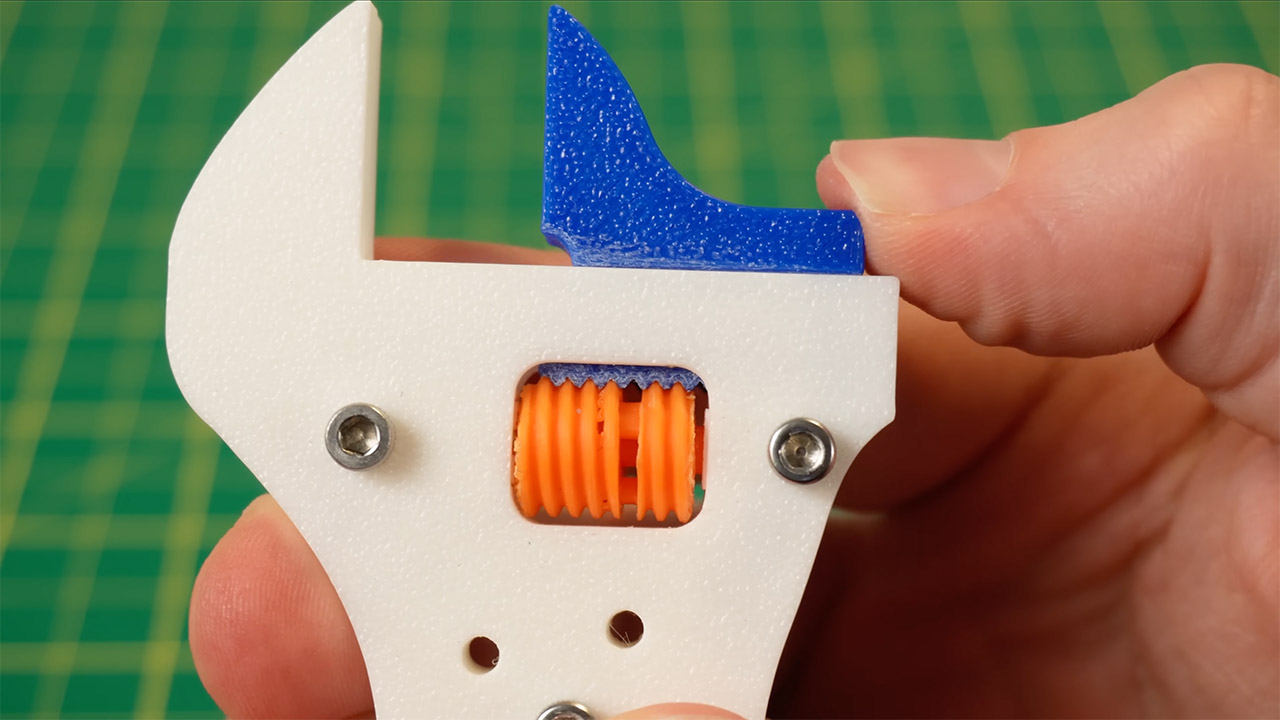
He tested his first idea, preloading the moving jaw with a spring to keep the threads engaged at all times. He created a few plastic prototypes to test it out, but it only underlined the problem. As the jaws closed, the spring compressed harder, giving the sensation of struggling against a brick wall when attempting to make exact adjustments. A softer spring was only a temporary remedy, not a permanent solution.
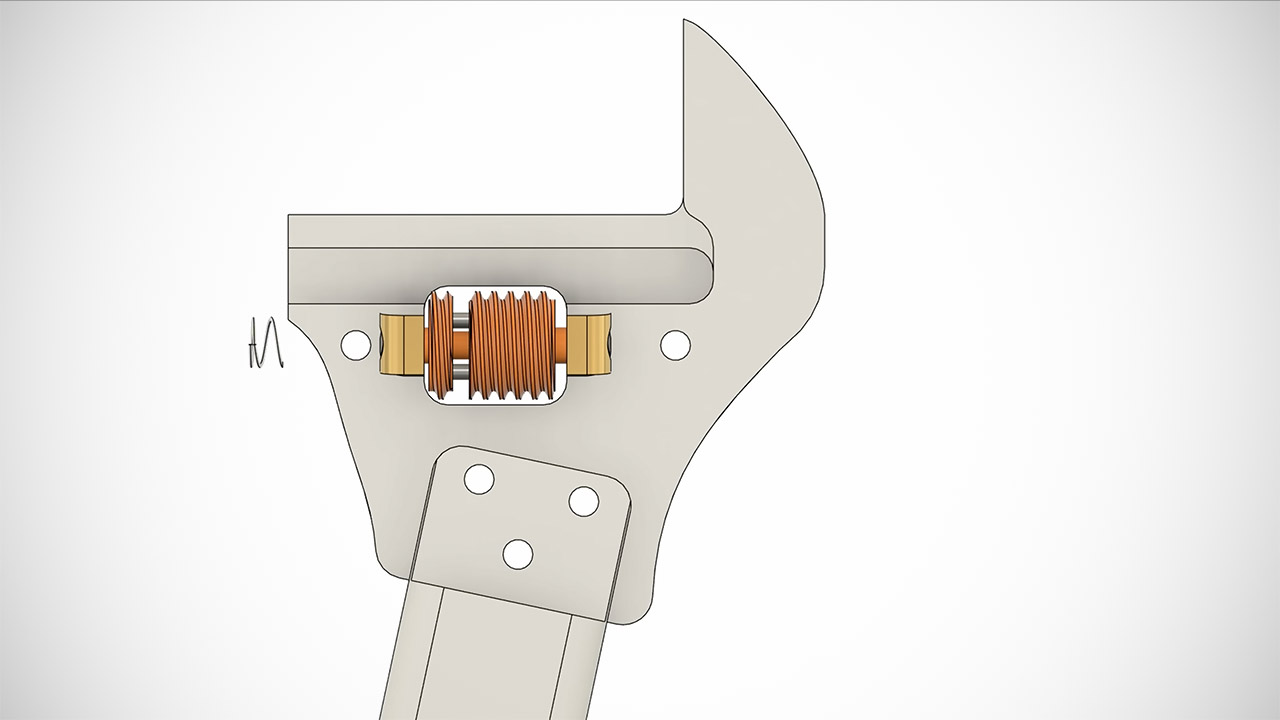
The better approach comes from machines that would later be used to cut metal parts, namely anti-backlash nuts found in CNC mills and 3D printers. These nuts use a spring to keep the driving threads under constant strain, preventing free play. He tried the same technique with his wrench, splitting the adjustment screw in half and attaching a spring between them. One half of the screw threads are forced into the moving jaw, while the other half is pushed into the bushing by the jaw. As a result, the preload remains constant regardless of the jaw opening size.
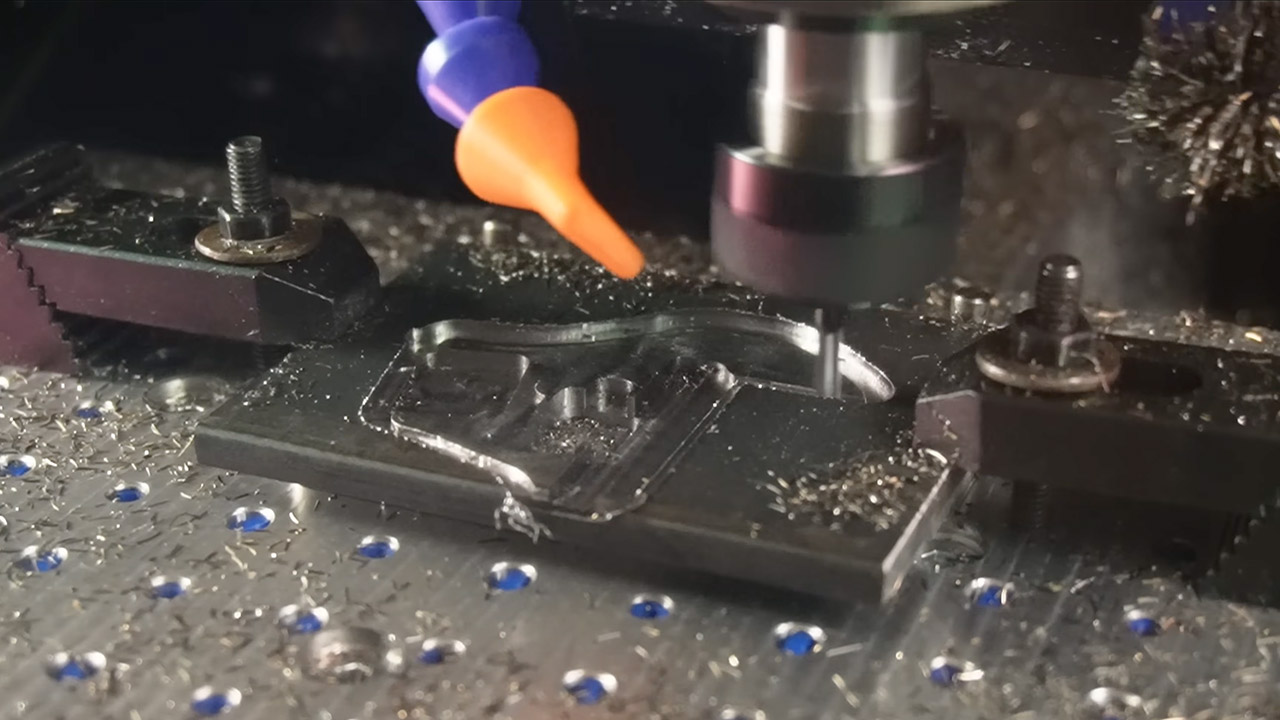
A second plastic prototype of his design proved that it functioned. Then he built a steel version with a DMC2 micro mill. After a lot of fixture work, tool path changes, and probing adjustments, he successfully removed the housing, screw halves, and moving jaw from the machine. His early runs were troubled by uneven height readings using conductive pucks, so he moved to an optical tool setter and built bespoke Mach3 procedures to handle offsets. He had to be careful with material removal when the threads were too tight, and a lathe attempt on the thumb screw failed miserably, so he settled on a 3D printed plastic version.
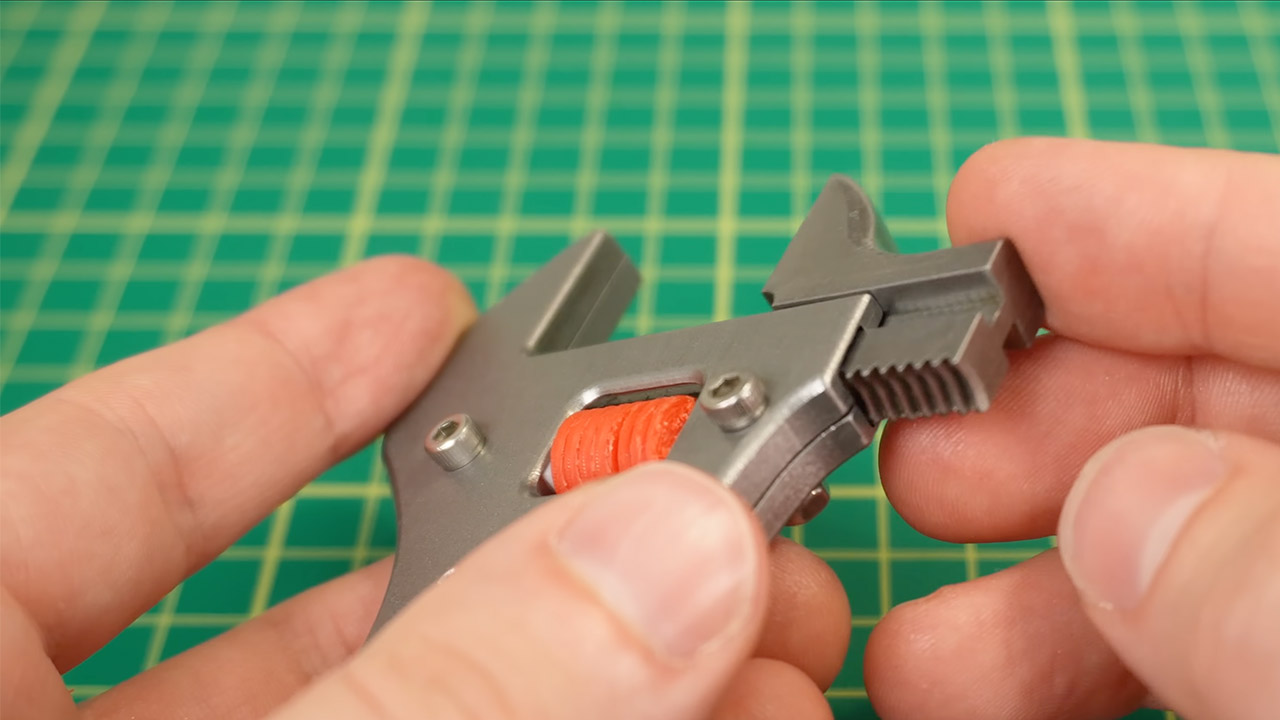
When all of the components were finally put together, they fit perfectly without any filing. Once adjusted, the spring holds the jaws firmly attached to the bolt, removing any play. You no longer need to press your thumb on the adjustment wheel to keep everything in line, and the fastener’s flats take the load rather than the corners. The plastic screw still has some flex, but it holds up well under daily use.
[Source]


Every four years, football’s best players are tested on the world’s biggest stage.
Less visible is the test taking place behind the scenes.
As billions tune in, broadcasters and streaming platforms face their own high-stakes challenge: delivering seamless live experiences at a scale few events can match.
Latest Videos FromTechRadar
VP Media & Strategic Accounts, Brightcove.
FIFA estimates that around 5 billion people engaged with the 2022 World Cup, with the final alone reaching nearly 1.5 billion viewers worldwide.
In 2026, that audience has been presented with an even bigger tournament: 48 teams playing 104 matches across Canada, Mexico and the United States.
More than 54 million viewers across the three host countries watched their national teams’ opening matches, while the United States’ game against Paraguay drew a combined 27.5 million across FOX and Telemundo, the most-watched FIFA World Cup match ever broadcast in the country.
By the end of the group stage, 4.64 million spectators had filled 99.7% of available seats. That scale is a real-time stress test for every part of the live-video ecosystem.
From passive viewing to active participation
Beyond sheer audience size, the difference lies in how fans consume it. They no longer simply watch. They move between platforms, share highlights, expect instant access to key moments and want experiences tailored to their own interests.
Streaming is no longer just a distribution channel; it’s a product in its own right. Brazil’s group-stage match against Haiti reached 51.3 million viewers across Globo’s wider media ecosystem, while CazéTV set a worldwide YouTube record for the most-watched football match streamed on the platform.
World Cup content generated 11 billion video views across social media platforms during the group stage alone, and official broadcasters published more than 44,000 pieces of content on TikTok.
A modern match is simultaneously a live program, a source of social clips, a statistics feed and a second-screen experience.
Rethinking the production workflow
That shift starts with the production workflow. The same match is now produced simultaneously for stadium scoreboards, connected TVs, mobile apps and global streaming platforms, with capture, ingestion, encoding and delivery all part of a single content pipeline.
Sixteen optical tracking cameras installed in each stadium can produce more than 150 million data points per match, helping officials review incidents and giving media partners new ways to produce highlights.
The real challenge is bringing together live delivery, audience data, advertising, captions, multi-language audio, and interactive experiences alongside tracking, commentary, graphics, and officiating data.
What fans expect: reliability, personalization, speed
For viewers, success comes down to three things: reliability at scale, personalization and speed. Fans will tolerate a lot, but they won’t forgive a stream that buffers during a decisive goal or runs so far behind live play that social media spoils the moment.
Personalization must happen without undermining performance, delivering different recommendations, languages, statistics, camera feeds and advertising while maintaining the resilience of a mass broadcast.
AI is reshaping live sports production
Artificial intelligence is central to delivering those expectations. Rather than replacing production teams, AI is enabling rights holders to produce and distribute content at a scale that would previously have required far larger operations. Automated highlight clipping is one of the clearest examples: AI can identify key moments, package them and distribute them within minutes.
For rights holders, the difference between publishing a goal two minutes after it’s scored rather than twenty is the difference between leading the conversation and chasing it. Match summaries, commentary, captions and translations can also be generated automatically, and platforms can match each fan with the content they are most likely to watch next.
A glimpse of the future: personalized sports at scale
The broader ambition is visible at the top of the game. The PGA TOUR now turns each week’s action into roughly 7,000 AI-generated highlight clips across dozens of markets, so a fan can follow one player or catch up on key moments without waiting for the main broadcast. The 2026 World Cup has produced a similarly vast library of stories. A record 215 goals were scored during the group stage, an average of three per match.
Tournament debutants Cabo Verde went undefeated, with Kevin Pina scoring the country’s first World Cup goal, while Japan’s 4-0 victory over Tunisia was both the 1,000th match in World Cup history and the biggest ever by an Asian team. These are exactly the kinds of stories that automated tagging, rapid clipping and intelligent recommendations can bring to the right audience.
Immersive viewing and accessibility
The next generation of live sports streaming will be defined by richer viewing experiences. Multi-view streaming allows fans to follow simultaneous matches, while alternative camera angles and player-specific feeds provide greater control over how the action is consumed.
Real-time data integration can bring live statistics directly into the viewing experience without interrupting the match. AI is also making captioning, translation, and audio description production-ready at scale, allowing broadcasters to localize live coverage without a proportional increase in costs.
However, human oversight remains essential for names, sporting terminology, and cultural context.
The technology behind global scale
Supporting all of this requires resilient IT infrastructure and scalable delivery platforms capable of broadcast-quality reliability and low latency, even as millions connect simultaneously. It also requires organizations to move beyond fragmented technology stacks.
A unified architecture makes content easier to reuse: one live signal can support a full broadcast, mobile highlights, social clips, advertising inventory, archive content and personalized recommendations.
Furthermore, protecting that content is just as important as delivering it. Live sport is uniquely vulnerable to piracy because its commercial value exists almost entirely during the match. Digital Rights Management remains the foundation, but forensic watermarking is becoming increasingly important, embedding invisible identifiers so pirated feeds can be traced and removed while the event is still live.
What’s next: The future of live sport at scale
The World Cup ultimately highlights that live video has become a complex, data-driven product where success is no longer defined solely by picture quality or reach, but by how effectively AI, unified content workflows. and scalable technology work together under pressure.
The challenge for the industry is not understanding what works at World Cup scale, but applying those lessons consistently across every live event.
We’ve reviewed, rated, and ranked the best video editing software.
This article was produced as part of TechRadar Pro Perspectives, our channel to feature the best and brightest minds in the technology industry today.
The views expressed here are those of the author and are not necessarily those of TechRadarPro or Future plc. If you are interested in contributing find out more here: https://www.techradar.com/pro/perspectives-how-to-submit


Artificial Intelligence (AI) is rapidly evolving. Across industries, many organizations are increasingly deploying AI into systems that must run continuously, securely, and at scale.
As AI adoption accelerates, one thing is becoming clear: infrastructure planning cannot wait.
Public Sector Account Manager at AMD.
AI workloads are becoming more interconnected, distributed, and operationally integrated across cloud, data center, and edge environments. Infrastructure planning now requires organizations to align compute, networking, software, memory, and operational requirements across increasingly complex environments.
Latest Videos FromTechRadar
As a result, many enterprises are beginning infrastructure planning sooner rather than later.
The cost of waiting
As AI becomes more integrated into everyday business operations through continuous inference and agentic AI systems, infrastructure demands are evolving significantly.
Modern AI deployments increasingly require:
- Continuous inference running around the clock
- Multi-agent systems coordinating across applications and databases
- Real-time orchestration across cloud, data center, and edge environments
- Strong governance, security, and operational efficiency
These workloads require more than raw compute performance. They require balanced infrastructure where compute, networking, software, memory, and operational workflows work cohesively at scale.
Because of this, enterprises are beginning AI infrastructure planning earlier, recognizing that planning, testing, and Proof of Concepts (PoCs) for complex systems like this take time.
At the same time, the cost of delaying AI infrastructure planning is becoming more apparent. Delays can slow deployment readiness and postpone AI-driven benefits such as productivity gains and operational automation. As AI demand continues to rise, organizations are prioritizing earlier planning to secure the compute capacity needed to support long-term AI growth.
As AI infrastructure becomes more complex, infrastructure planning needs to begin earlier than traditional IT upgrade cycles. Evaluating workloads, validating deployment models, and ensuring scalability across environments takes time and time is of the essence if we want to be ahead of our competitors.
AI is now a systems challenge
The conversation around AI infrastructure often begins with Graphics Processing Units (GPUs). But as deployments scale, AI performance depends not on individual components, but on how the entire system operates together.
Modern AI infrastructure relies on Central Processing Units (CPUs) for orchestration and data movement, GPUs for large-scale parallel compute, high-speed networking for low-latency communication across systems, and open software platforms for portability and scalability.
As AI systems become more distributed and inference-driven, orchestration and system balance become critical. CPUs play a pivotal role in managing workload coordination, memory access, and GPU utilization, ensuring infrastructure operates efficiently under sustained demand.
This shift reflects a broader industry reality: AI is no longer just a GPU problem. It is a full-stack infrastructure challenge that organization must tackle early on.
Planning for distributed AI
AI is also scaling in multiple directions at once.
Some workloads are expanding into large, centralized clusters, while others are moving closer to where data is generated – including edge deployments such as in factories or hospitals, and AI-enabled endpoints like the PCs.
For organizations, this creates unique infrastructure considerations around hybrid cloud, on-premises deployments, edge AI, compliance, and latency-sensitive applications.
This diversity underscores the importance of infrastructure strategies designed for modularity, portability, and adaptability that necessitates upfront planning.
Openness and flexibility matter more than ever
As AI innovation accelerates, organizations are prioritizing infrastructure flexibility to support rapidly evolving models, frameworks, and deployment environments.
Open ecosystems can reduce integration complexity while supporting broader compatibility across software frameworks, cloud environments, and deployment architectures. They also provide greater flexibility to evolve infrastructure strategies over time while helping avoid the migration costs that can come with highly closed or single-vendor environments.
For many organizations, openness is no longer just a developer preference. It is becoming an important consideration for balancing performance, operational efficiency, cost optimization, and long-term infrastructure investment.
This is another reason infrastructure planning must happen early. Building AI environments that remain scalable, portable, and adaptable over time require long-term thinking around openness and interoperability from the beginning.
Infrastructure readiness will define the next phase of AI
The next phase of AI growth will reward organizations that take a proactive approach to infrastructure planning.
Organizations that delay infrastructure planning may find it more challenging to deploy AI tools down the road, not only due to not having ample time to plan and test, but not securing the compute resources needed early on.
The cost of waiting is becoming ever clearer.
Ultimately, the companies that succeed in the next phase of AI will not necessarily be those with the largest clusters, but those that plan early and build balanced, scalable, and open infrastructure designed to support continuous innovation in an increasingly AI-driven economy.
We’ve featured the best AI chatbot for business.
This article was produced as part of TechRadar Pro Perspectives, our channel to feature the best and brightest minds in the technology industry today.
The views expressed here are those of the author and are not necessarily those of TechRadarPro or Future plc. If you are interested in contributing find out more here: https://www.techradar.com/pro/perspectives-how-to-submit
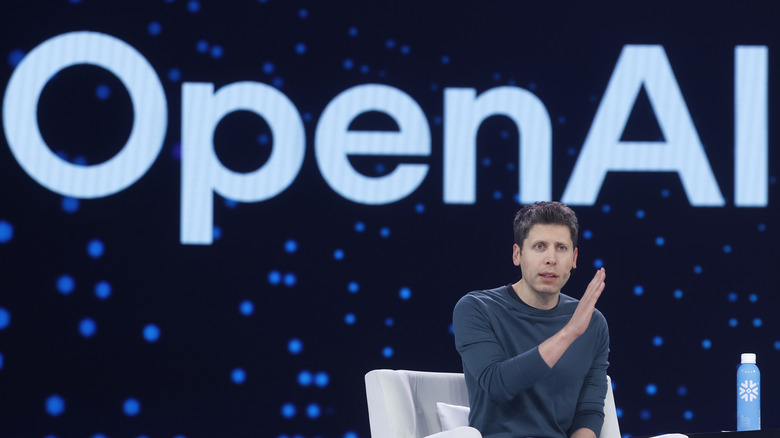
It would be an ambitiously high price for the AI-powered hardware pivot.
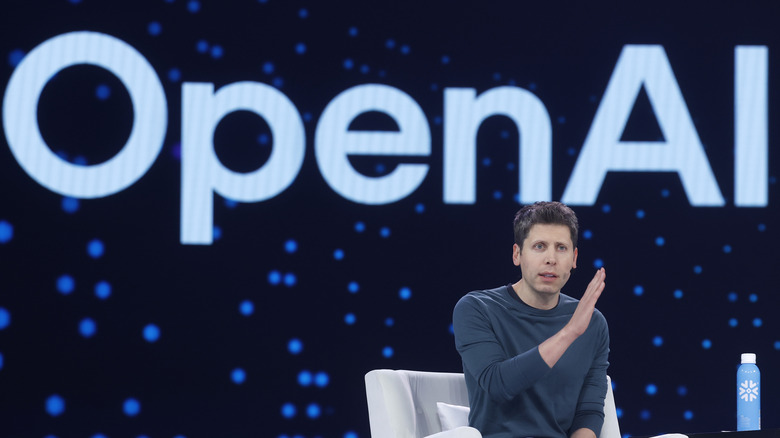
We typically expect Mark Gurman at Bloomberg to have the latest tips on Apple tech, but today he’s sharing info about OpenAI’s planned move into hardware. After reporting a wave of details last month about the smart speaker in development at the AI company, today he’s got additional insights about the device.
Sources told Gurman that the product would have a ring-shaped design about the size of a hockey puck. The form factor is meant to be battery-powered and portable, so a user could easily carry it around with them. It reportedly has components that will be able to move on their own, which seem intended to make the product more lifelike and engaging. Although this inaugural piece of hardware does not appear to be equipped with a screen, it will have a camera system and sensors to monitor the environment.
As one might expect after OpenAI shelled out $6.5 billion for Jony Ive-helmed startup io to spark this hardware pivot, the price point reportedly being discussed is high. Sources told Gurman that the OpenAI device might retail for $300 to $400. That’s notably more than most other smart speakers on the market, even high-end ones. We already foresaw this hardware experiment potentially becoming an expensive side quest that ultimately fails if consumers aren’t willing to pay whatever price the company does eventually set. Having a chance to gauge buyers’ reactions to this rumored price before the anticipated launch in 2027 could see OpenAI attempt to revise its cost plans.


When was the last time you met your newest hire in person?
For many organizations, particularly those operating remotely, the answer is increasingly never. With one in five companies worldwide adopting a fully remote model, hiring virtually has become increasingly popular, enabling businesses to access global talent pools and scale faster than ever before.
But in removing geography as a constraint, it has also stripped away one of the most fundamental layers of trust: the ability to verify, face-to-face, who you are actually employing.
Latest Videos FromTechRadar
Founder and CEO of FARx Group Limited.
This shift is giving rise to a new and largely under-recognized threat, the “deepfake employee”, where threat actors use synthetic identities, voice cloning, and real-time deepfake video to pass interviews and secure legitimate employment.
Accelerated by advancements in AI, it is now possible to create convincing digital personas at scale, lowering the barrier to entry for fraud and enabling highly organized operations to target corporate hiring pipelines.
In practice, these attacks can be surprisingly difficult to detect. A candidate may appear on a video interview with a natural-looking face and voice, answer questions fluently, and provide what seem to be legitimate credentials. Behind the scenes, however, AI tools can subtly alter facial expressions, sync lip movements to a cloned voice, or even feed real-time responses.
To the hiring manager, there is little reason to suspect anything is wrong. The deception often only becomes apparent much later, if at all, when activity inside the organization begins to raise concerns.
This risk is already playing out in the real world. In a recent experiment, a cybersecurity expert used AI to create deepfake personas – one a white man similar to himself and another of an Asian woman, and successfully secured two separate tech roles, beating hundreds of other candidates.
Using AI-generated credentials, real-time voice modulation and live deepfake video, both synthetic identities progressed through interview stages undetected, with employers unaware they were interacting with an entirely fabricated candidate.
Cloudflare’s latest threat research highlights the scale and sophistication of this activity. Organized “remote worker” fraud operations are using fabricated identities, deepfake-assisted interviews and remote access “laptop farms” to infiltrate payrolls. In some cases, multiple individuals operate behind a single employee identity, maintaining persistent access while appearing as one consistent, legitimate user.
Once hired, these actors are no longer external attackers. They become insider threats with valid credentials, company-issued devices and trusted access to systems. As Cloudflare notes, by the time these individuals are identified, they are already operating inside the perimeter, often blending in with normal business activity.
What needs to change
With nearly 60% of organizations having experienced deepfake-driven incidents, and 48% reporting damage from AI-generated impersonation or misinformation, it is clear that identity infrastructure has become a primary attack surface. Attackers are shifting away from “breaking in” to “logging in” using legitimate credentials obtained through deception.
At the heat of this issue is the flawed assumption that identity can be verified once and then trusted indefinitely.
In physical environments, identity is rarely in doubt. You can see who walks through the door, recognize familiar faces and detect inconsistencies in behavior. In virtual environments, however, organizations rely almost entirely on screen names, login credentials and video, none of which reliably confirm who is actually behind the screen.
Accounts can be shared, credentials can be compromised, and even live video can be manipulated.
This creates a critical vulnerability at the point of hire. A candidate may present documentation, pass background checks and complete onboarding, but in a world of synthetic identities, that initial verification is no longer enough.
Building continuous identity assurance
To address this challenge, organizations need to move beyond static identity checks and towards continuous identity verification. This means verifying not only who someone is who they say they are and that they are a real human at the point of hire, but ensuring that the same individual remains present and authentic throughout their interactions with the organization.
The strongest form of defense lies in continuous biometric verification of the user’s identity. Rather than relying on a single factor, such as facial recognition or voice authentication alone, fused biometrics combines multiple identity signals, such as facial characteristics, voice patterns and behavioral cues, into a single, layered verification process, verifying directly that a real, live human is there.
It is no longer enough to confirm a person’s identity at a single moment in time. Organizations need confidence that the same individual is consistently present across every critical interaction, from interviews and onboarding, through to system access and sensitive transactions. Without this continuity, identities can be shared, replaced or hijacked without detection.
Fused biometric verification can create layered validation that is significantly harder to replicate or manipulate, enabling it to detect and block attempts to impersonate users through synthetic voices, deepfakes, or recorded audio and video.
While a single modality might be fooled by a sophisticated synthetic input, combining biometric modalities; facial recognition, voice recognition, and speech pattern recognition, it becomes significantly harder for fraudsters to mimic an identity.
Advanced biometric verification technologies are trained on large datasets of both genuine and synthetic voice samples, enabling them to recognize subtle acoustic differences between natural and deepfake voices. This helps organizations detect voice-cloning attempts, even when the audio sounds convincing to human listeners.
Crucially, fused biometric verification can operate passively in the background, consistently verifying that the right person is accessing systems, enabling smoother, lower-friction experiences and reduces the need for frustrating repeated verification attempts.
As organizations continue to embrace remote work and digital-first operations, cybercriminals will increasingly find new vulnerabilities to exploit. The question is no longer just how to keep threats out, but also how to ensure that those already inside are truly who they claim to be.
In a world where identities can be fabricated, cloned and manipulated with ease, trust cannot remain static. It must be continuously proven.
We’ve featured the best secure smartphone.
This article was produced as part of TechRadar Pro Perspectives, our channel to feature the best and brightest minds in the technology industry today.
The views expressed here are those of the author and are not necessarily those of TechRadarPro or Future plc. If you are interested in contributing find out more here: https://www.techradar.com/pro/perspectives-how-to-submit

Tech16 seconds ago
This startup just raised $6M for an AI tutor that helps kids figure it out themselves

Business3 minutes ago
Raleigh owner Accell Group enters insolvency proceedings

Crypto World4 minutes ago
NFT Gacha Protocol Fake World Assets Trails Only Sky in Ethereum Daily Revenue

Entertainment2 months ago
Renter of Home in Anne Heche Crash Denies Settlement With Son

Business2 months ago
No Jackpot Winner as $257 Million Prize Rolls Over to $269 Million Monday Draw

Fashion1 month ago
Weekend Open Thread: Staud – Corporette.com

News Videos20 minutes ago
Trump SCANDALIZED as Bank Declares They FEARED Trump WAS A MONEY LAUNDERER As They Closed Accounts!

News Videos28 minutes ago
Ripple XRP WARNING: The FINAL Crash Hits On This Date! (DON’T SELL)

News Videos48 minutes ago
Gaddafi proposed gold-backed African currency, US halted shift #gaddafi #petrodollar #geopolitics
-

 Fashion7 days ago
Weekend Open Thread: Wit & Wisdom
-

 Politics7 days ago
Meta enters AI-training agreement with far-right ‘propaganda rag’ Newsmax
-

 Politics5 days ago
Zack Polanski: an incitement to murder Nigel Farage?
-

 Crypto World6 days ago
MicroStrategy Post-Earnings CLARITY Act Push Could Add New Catalyst for Its Stock
-

 Crypto World6 days ago
XRP Ledger v3.3.0 brings five institutional features
-

 Crypto World6 days ago
New York sues Kalshi over prediction market gambling
-

 Crypto World5 days ago
Crypto PAC spending tops $2M in Michigan House race
-

 Business7 days ago
Trump Announces Hamas Disarmament Agreement as Iran Strikes Kuwait Air Base and US Attacks Pause Overnight
-

 Business4 days ago
DTCR: Deleveraging And A Hedge Fund Collapse Point To A Possible AI Bottom
-

 Tech5 days ago
ESET tracks rise in malicious AI skills and adaptable malware
-
 Crypto World7 days ago
3 Fed Officials Just Explained Their Rate Hike Vote: Is Inflation Winning?
-

 Tech7 days ago
Building A Reproduction PlayStation Motherboard
-

 Sports6 days ago
France Cricket implodes: letters hidden in a drawer and a board at war
-
Crypto World5 days ago
XRP Ledger urges node upgrade after manifest flood
-

 Crypto World6 days ago
Moneyflip CEO charged in $40K murder-for-hire plot
-
 Sports6 days ago
Bruno Fernandes decision made as Man United ‘discuss’ striker transfer option
-

 News Videos6 days ago
Financial Crash Expert: The 90-Day Collapse Timeline They Are Desperately Hiding.
-
Business7 days ago
FIFA has scrapped $20 billion World Cup sell-off plan, New York Post reports
-

 Sports7 days ago
Commonwealth Games 2026 Live Updates | Day 9 CWG 2026: Lovlina Borgohain, Sachin Siwach Enter Final After Indian Judokas Script History
-

 Sports1 day ago
Jordan Coyle & Cordiamo take Laya Arena Stakes at RDS
You must be logged in to post a comment Login