
Crypto World
Hyperliquid ETF demand cools as competition heats up: JPMorgan



Inflows into Hyperliquid (HYPE) exchange-traded funds (ETFs) have largely ground to a halt after surging in May and June, reflecting growing concerns over the protocol’s competitive outlook, according to Wall Street bank JPMorgan (JPM).
The bank said Hyperliquid ETFs led non-bitcoin crypto funds in inflows relative to assets under management in May and June, though that momentum faded in July and early August.
“We see significant challenges to the market share of decentralized platforms such as Hyperliquid,” analysts led by Nikolaos Panigirtzoglou said in a Thursday report.
Hyperliquid has been one of crypto’s biggest breakout stories this year, with its HYPE token surging as traders flocked to the protocol’s decentralized perpetual futures exchange.
The rapid growth has turned Hyperliquid into one of the largest crypto ecosystems outside bitcoin and ether, attracting institutional capital, corporate treasury buyers and ETF issuers.
According to JPMorgan analysts, the cooling demand comes as decentralized derivatives platforms face mounting competition from regulated centralized exchanges.
The report said the rollout of U.S.-regulated crypto perpetual futures products could shift trading activity away from offshore decentralized venues such as Hyperliquid, which remain exposed to concerns around licensing, compliance and investor protections.



Users of MOACT, the rewards app run by a wholly owned subsidiary of Japanese utility Kansai Electric Power, can now convert their loyalty points into JPYC, the yen stablecoin, on Polygon, wallet developer HashPort said in a press release published Thursday. The feature, live as of July 30, lets… Read the full story at The Defiant


Labour Defence Secretary Wes Streeting reportedly received £37,000 ($50,000) from a Labour-supporting think tank whose founder was gifted $610,000 by notorious crypto fraudster Sam Bankman-Fried.
The Telegraph reports that David Lawrence, founder of the Labour for the Long Term (LLT) think tank, was gifted the sum by Bankman-Fried in June 2022.
This gift was made one month before his think tank donated £30,000 ($40,300) to Streeting, who used the funds to pay for policy advisor Dr. Thomas Gardiner. A year later, LLT would donate another £7,000 ($9,400) to Streeting.
Lawrence reportedly created his think tank’s website on June 20 and it was only 10 days later that Bankman-Fried gave the money to Lawrence.
The Telegraph reports that “it is thought” that Lawrence and Bankman-Fried were introduced to each other through William MacAskill, one of the founders of the effective altruism movement.
This movement was a central part of Bankman-Fried’s spree of donations that took place across 2020 and 2022 when he became one of the largest donors to the US democrats.
Read more: Sam Bankman-Fried needs favor from Trump after failed appeal
Bankman-Fried was charged in December 2022 with a variety of financial crimes. He was sentenced two years later and handed 25 years in prison after he was found guilty of misappropriating billions of dollars worth of customer funds deposited into his exchange.
Unnamed senior Labour officials reportedly claim the shadow ministers were being advised to avoid accepting donations from LLT.
Lawrence, however, denies this. He told the Telegraph that Bankman-Fried’s gift was donated to UK charities, and that LLT’s donation to Streeting was instead funded by a city investor.
However, the Telegraph found that this investor was recorded as starting their donations to Streeting in February 2023, not around the time of the £30,000 donation in 2022.
A Labour spokesperson said the party “carried out due diligence checks ahead of these donations being received, through which no issues were identified.”
Meanwhile, a spokesperson for Streeting said all due diligence processes were followed, and that a list of donors to LLT did not name Bankman-Fried.
The Telegraph’s report comes amid scrutiny of Nigel Farage’s Reform UK party, and the funding it’s received from those in the crypto industry.
Got a tip? Send us an email securely via Protos Leaks. For more informed news and investigations, follow us on X, Bluesky, and Google News, or subscribe to our YouTube channel.


DNA Holdings Venture co-founders Brock Pierce and Scott Walker are named in an explosive, albeit quietly filed, lawsuit, which accuses them of “running pump and dump schemes between drug and alcohol induced benders and illegal high stakes poker games.”
Filed back in March, the suit, which requests a jury trial, is just another bit of bad news for Pierce, who in recent months has been heavily linked to infamous pedophile Jeffrey Epstein, and took part in an interview with a pro-Putin doomsday cult.
Among the suit’s most startling claims are those concerning Pierce and Walker’s hosting of two illegal poker games in Puerto Rico — or more accurately, the aftermath of said games.
According to the lawsuit, the games, held in October and December of 2021, “had a minimum buy in of $100,000” and a one BTC entrance fee.
A portion of the proceeds was supposed to be donated to a Puerto Rican charity called Integro.
The day after the event, however, a participant “reported that his iPhone had been hacked through the wifi network created for game participants and his sim was ‘swapped,’ giving the hackers access to his email and social media accounts.”
It’s also alleged that winners weren’t paid out, while another individual going by “Jacob” admitted to “stealing all of the money and said he was giving it to his family and committing suicide.”
Despite the players being skeptical of this story, millions of dollars have never been recovered, “Jacob” has never been identified, and Integro never received a donation.
Read more: Brock Pierce’s dark and disturbing friendship with Jeffrey Epstein
DNA Holdings washed out
Despite Pierce and Walker’s promises about their crypto connections, near-guaranteed profits, and unimaginable gains, claimants state that for every dollar invested in the funds, only $0.70 was ever returned.
To bring in more investors and keep those who were invested from demanding out, Walker apparently strung them along with talk of a “reverse merge transaction with a company called SRAX,” and promises of “immense value.”
Needless to say, the merger never materialized.
However, numerous new funds were spun up in its absence, with Pierce and Walker presenting them as a way for investors to “focus on ‘early stage VC investments.’”
Instead, the money was invested into a publicly listed company called White Fiber, which is majority owned by Bit Digital, which Pierce sits on the board of.
To convince investors that DNA Holdings would be well capitalized, Pierce and Walker also promised that a small stake they held in Tether, supposedly worth $300 million, would be put into DNA Holdings’ coffers.
While a portion of this stake was injected into the funds, Pierce and Walker have since either encumbered the Tether equity or made it unavailable to those at DNA Holdings.
Pump and dump, spelled out in fine print
In a shocking example of caveat emptor, the plaintiffs acknowledge that Pierce and Walker warned them of what is tantamount to a pump and dump, but buried it in the DNA website.
While buried may be an exaggeration, the disclaimer page is one of the most bizarre attempts to write-off pump and dumping as normal, reasonable and fair.
The page asks, “What will happen to the shares that we hold during the campaign?” It answers, “We will sell the shares we hold while we tell investors to purchase during the campaign.”
It also states that “investors should consider the Information to be one-sided and not balanced, complete, accurate, truthful or reliable.”
It concludes, “If an investor relies on the information in making an investment decision it is highly probable that the investor will lose most, if not all, of his or her investment. Investors should not rely on the information to make an investment decision.”
In all, the suit brings 11 different counts against Pierce and Walker, including, but not limited to, RICO violations, breach of fiduciary duties, and breach of the duty of candor and full disclosure.
On August 3, Pierce and Walker’s legal representatives filed a motion to dismiss and plaintiffs have yet to respond.
Got a tip? Send us an email securely via Protos Leaks. For more informed news and investigations, follow us on X, Bluesky, and Google News, or subscribe to our YouTube channel.
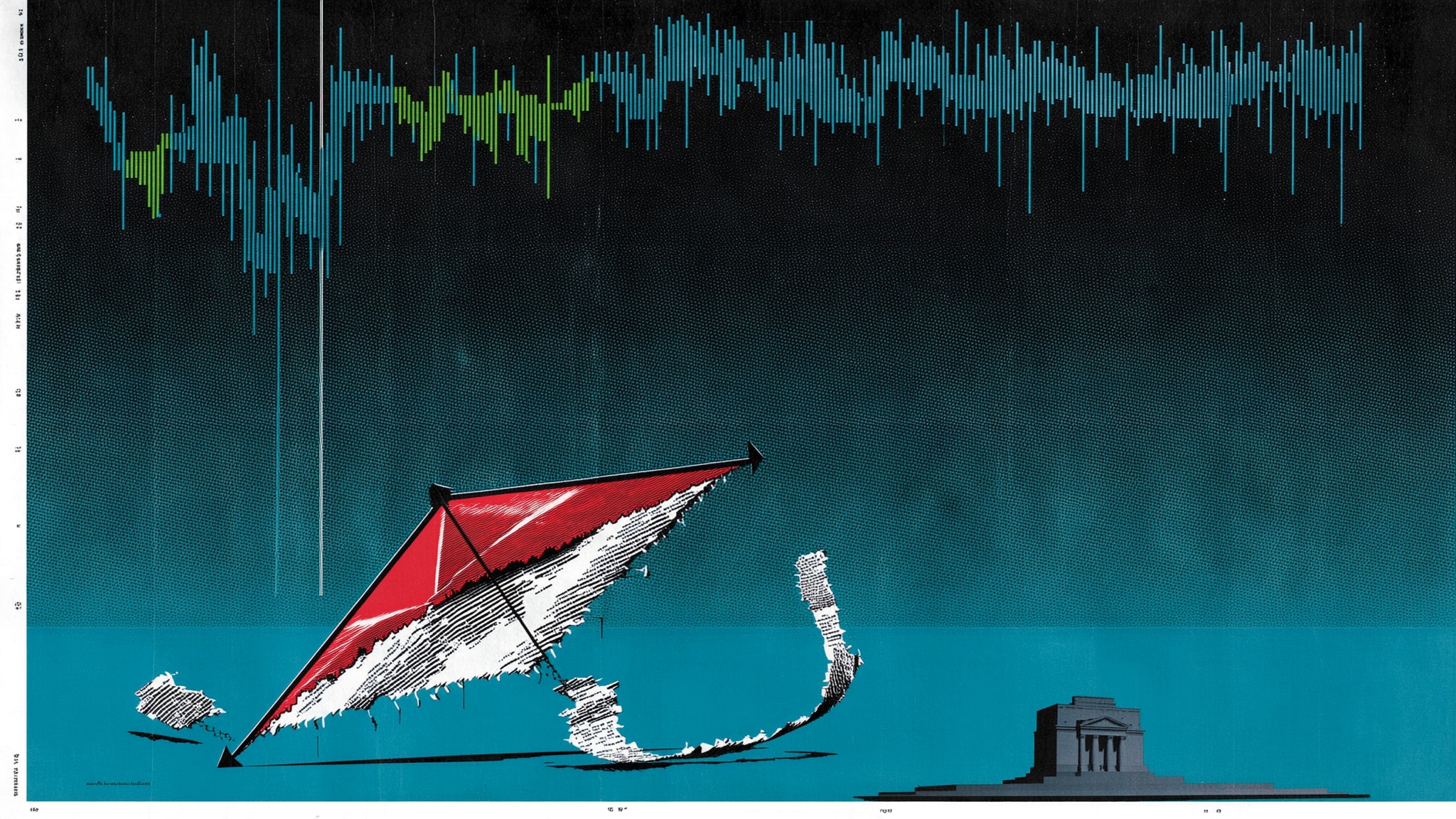
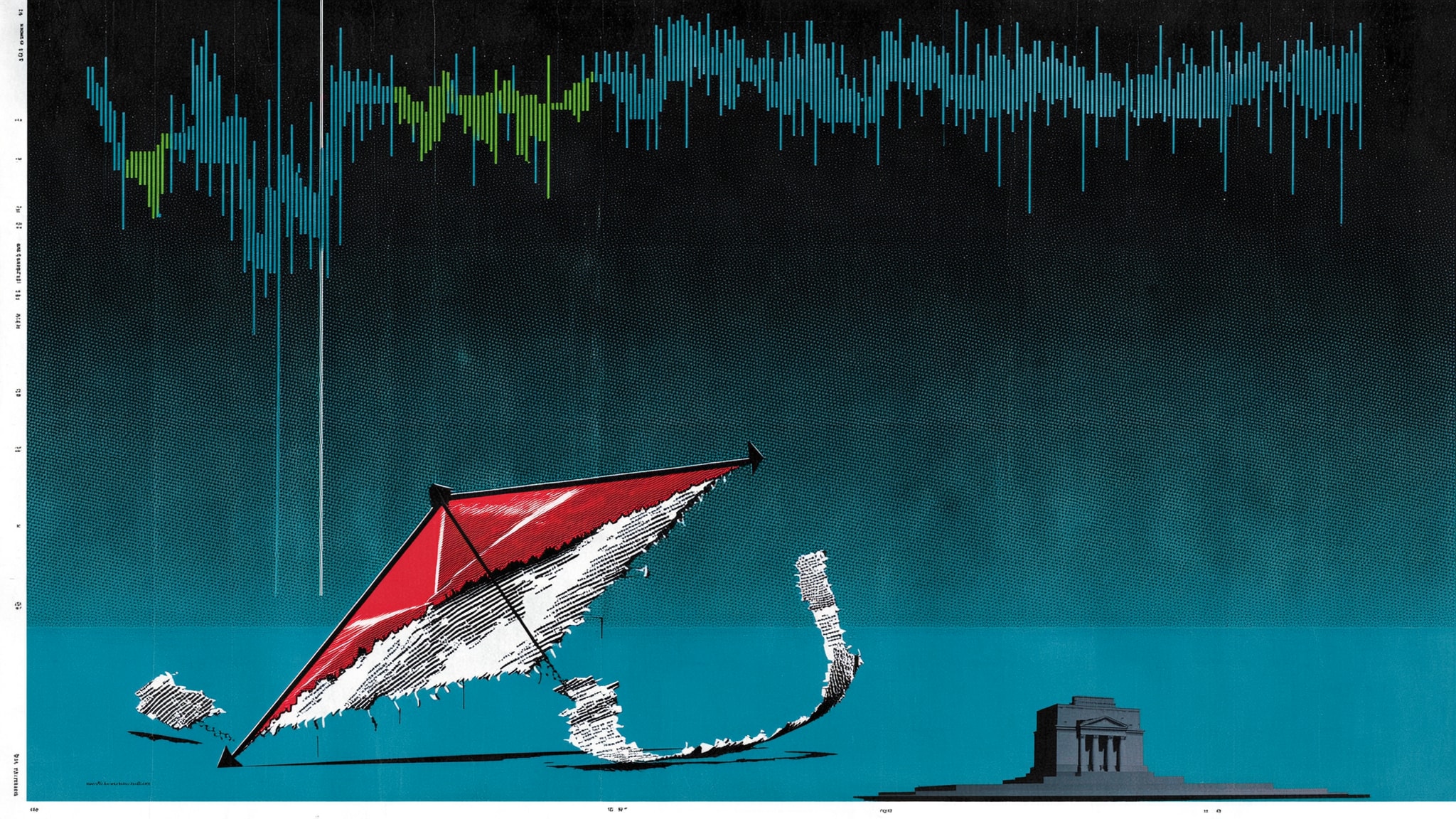
Crypto closed out July on the back foot, sitting out Friday's stock rally as the Federal Reserve's hawkish stance and stubbornly high inflation pushed the rate cut that bulls were counting on further out of reach. Bitcoin fell 3.5% over 24 hours to $62,464, CoinGecko data shows, while the S&P 500… Read the full story at The Defiant


Blockchain.com has secured a definitive Virtual Asset Service Provider custody licence from the Cayman Islands Monetary Authority, expanding its regulated crypto services after meeting all licensing conditions on July 22.
Summary
- Blockchain.com has secured a full VASP custody licence from the Cayman Islands Monetary Authority.
- The approval allows the company to offer regulated custody, staking and exchange services in the Cayman Islands.
- The company has also partnered with TechCayman and plans to hire its first employee in the jurisdiction.
- The licence follows Blockchain.com’s recent MiCA approval in Europe and FCA registration in the UK.
According to a Thursday announcement from Blockchain.com, the approval grants the company a full Virtual Asset Service Provider (VASP) custody services licence through its Cayman Islands subsidiary, replacing the conditional approval issued by the Cayman Islands Monetary Authority (CIMA) in December 2025. The company said it had satisfied all of the regulator’s conditions before receiving the definitive licence.
Alongside custody services, the licence authorizes Blockchain.com to offer exchanges between virtual assets and fiat currencies as well as exchanges between one or more convertible virtual assets. Before obtaining the licence, the company had operated under a VASP registration in the Cayman Islands since May 2022.
The latest approval adds to a series of regulatory milestones for Blockchain.com over the past year. The company recently obtained a Markets in Crypto-Assets (MiCA) licence in Europe and completed registration with the UK Financial Conduct Authority, developments that co-CEO Lane Kasselman said strengthen its regulated presence across multiple jurisdictions.
Blockchain.com expands regulated services in the Cayman Islands
With the definitive licence now in place, Blockchain.com said it can offer a regulated suite of institutional and retail services from the Cayman Islands. The company identified institutional custody as a core offering, providing secure digital asset storage for organizations managing crypto holdings.
The licence also supports institutional staking infrastructure, allowing organizations to participate in blockchain network validation while earning staking rewards. Retail staking has also been included under the regulated framework, giving eligible users access to staking services within a compliant environment, according to the company.
Lane Kasselman said the CIMA approval builds on the company’s recent regulatory progress in Europe and the United Kingdom.
“Our VASP custody services licence builds on the regulatory momentum we’ve established with our recent MiCA and FCA approvals,” Kasselman said. “We believe strong regulation is essential to the long-term development of digital assets, and these approvals further strengthen our ability to serve customers across the region.”
The company described the approval as the final stage of its licensing process in the Cayman Islands, moving its local operations from conditional authorization to full regulatory status.
The Cayman Islands Monetary Authority had granted Blockchain.com conditional approval for the licence in December 2025. The company said all licensing requirements were fulfilled before the regulator issued the definitive approval on July 22, 2026.
The licence authorizes Blockchain.com to provide regulated custody services together with crypto-to-fiat and crypto-to-crypto exchange services in the Cayman Islands.
Cayman licence follows local expansion plans
Beyond regulatory approvals, Blockchain.com said it is increasing its presence in the Cayman Islands through a partnership announced in June with TechCayman, an organization that helps international technology companies establish operations in the territory.
According to the announcement, the partnership will support Blockchain.com’s first local employee, who will join the company’s Cayman Islands operations as it expands its presence in the jurisdiction. TechCayman will provide sponsorship, operational support and access to its local business network as part of the arrangement.
The company said local hiring forms part of its effort to establish a permanent operating presence rather than maintaining only a regulatory registration.
Founded in 2011, Blockchain.com said it has processed more than $1.1 trillion in transactions and serves over 43 million verified users worldwide.
Regulatory expansion has continued across multiple markets
The Cayman licence follows several operational and regulatory initiatives undertaken by Blockchain.com during 2026.
In May, the company confidentially submitted a draft registration statement to the U.S. Securities and Exchange Commission for a potential initial public offering. The filing started the SEC’s review process but did not disclose the proposed offering size or valuation. Blockchain.com said at the time that any public listing would proceed only after regulatory review and subject to market conditions.
Earlier in April, the company introduced perpetual futures trading within its non-custodial DeFi wallet through Hyperliquid. The feature allows users to trade more than 190 cryptocurrency markets with leverage of up to 40 times while keeping control of their private keys instead of transferring assets to a centralized exchange. Blockchain.com also said it intends to add forex, stock, and commodity markets to the platform over time.
Geographic expansion has also continued this year. In March, Blockchain.com launched retail operations in Ghana after reporting significant user growth in the country, while describing Nigeria as one of its fastest-growing markets following the establishment of local operations in Lagos.
Brazil’s B3 has taken tokenization from concept to cattle pen. Earlier coverage of the exchange’s pilot highlighted how a farmer in southern Brazil used 10 tokenized cows as collateral to secure a loan of 100,000 Brazilian reais (about $19,600), effectively “herding” the animals into a blockchain-based custody arrangement.
The stunt went viral because it sounded absurd at first glance. But the broader implication is serious: if ownership and claims over physical assets can be expressed onchain—along with the permissions and verification needed to back financing—then tokenization can move beyond collectibles and test whether real-world collateral can be made more programmable.
Key takeaways
- B3’s tokenized-cattle collateral deal is positioned as a practical proof-of-concept for livestock-backed lending, even if the initial ticket size was relatively small.
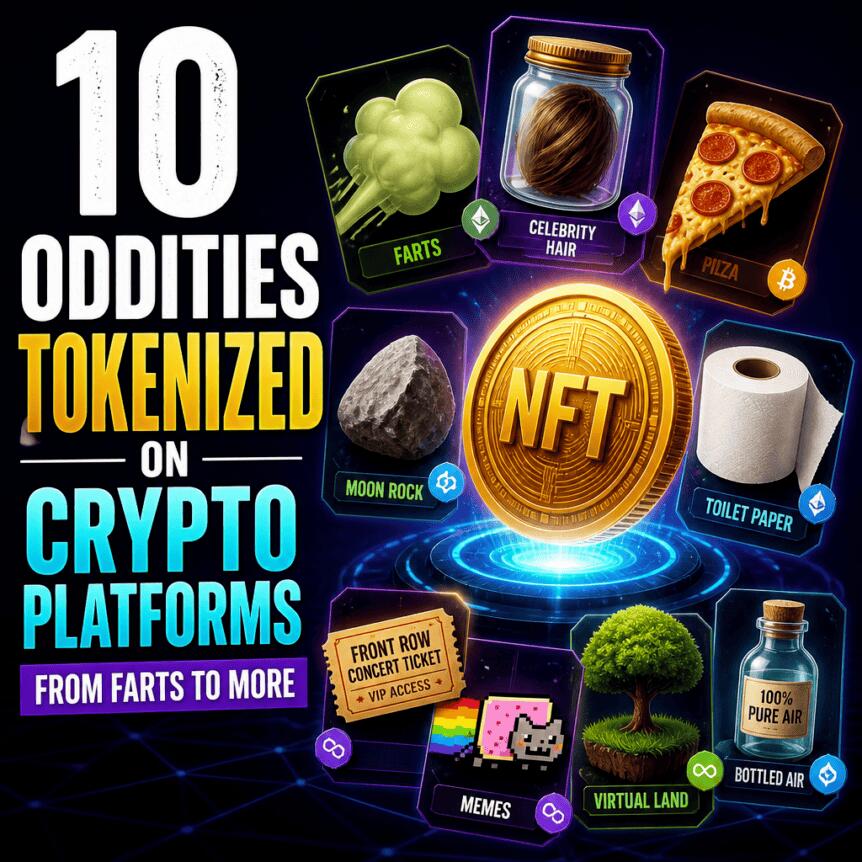
- The strangest tokenization experiments—from onchain farts to burned art—show that the “token” can represent nearly any claim, but market liquidity depends on the legal and commercial layer.
- Projects that tie token value to auditable real-world data (such as sales performance or commodity trading rails) highlight what tokenization still needs: reliable verification and enforceable rights.
- Well-known cases like music royalty tokens and the first-ever tweet NFT illustrate that cultural novelty doesn’t automatically translate into durable investor returns.
Tokenization’s viral edge: when the asset sounds ridiculous
Not every tokenized asset is designed for institutional adoption. During the NFT boom, a filmmaker recorded his own farts during the pandemic and minted each sound as an NFT. He sold the pieces for 0.05 ETH apiece (around $85 at the time), turning something deliberately un-serious into a transaction with a clear price and buyer demand.
The point isn’t that flatulence will power mainstream finance. It’s that tokenization can package almost any item—or measurable event—into a transferable digital unit. The real question for investors and users is what that unit means legally and economically once the novelty fades.
Cows and the hard part: connecting blockchain claims to enforceable collateral
The B3 cattle story stands out because it wasn’t just a token minted for entertainment. The loan structure relied on a Brazilian investment fund, Target FIDC, which provided each cow with its own digital token linked to an encrypted digital identity. In effect, the tokens acted as an onchain representation of the collateral, while the real-world animal custody and contractual terms underpinned the financing.
Initial lending volumes cited in reporting pointed to a proof-of-concept that could scale: the first loan was about $19,600, and the pilot was framed as potentially supporting significantly larger livestock-backed financing if the model holds. Broader context also matters for future scope; agriculture is a major global economic sector, so the asset universe for collateral tokenization is far larger than cattle alone.
Still, this type of deal underscores a recurring constraint in real-world asset tokenization. Tokenizing an asset is not the hard part—building a system where rights are enforceable, transfer rules are clear, and the underlying data remains verifiable across counterparties is.
From whiskey and horses to uranium: the range of “real” claims
Some tokenization efforts target assets where scarcity and ownership transfer are familiar concepts—whiskey casks, for example. With whisky often increasing in value over time, projects have experimented with putting casks onchain so investors can buy whole units or fractional stakes, while the physical inventory sits in bonded warehouses. The appeal is straightforward: the token can simplify how ownership is divided and administered, even though investors still depend on the performance of the underlying market and storage arrangements.
Racehorses present a similar complexity. Tokenization can break ownership into shares, allowing investors to participate in prize money, breeding income, or proceeds from future sales without buying an entire animal. But luxury asset tokenization also invites skepticism about liquidity and legal continuity. As one comment attributed to Chris Turner, co-founder of impact investment firm KULA, put it: placing an item on a blockchain doesn’t automatically make it more liquid or valuable if the legal rights, transfer processes, and market structure stay the same.
Even commodities are being explored in this broader spectrum. Tezos-backed metals platform metals.io is described as targeting uranium by building “financial rails” for technology-flavored commodities, with reported trading activity between November 2024 and July 2026 totaling $21.5 million across roughly 18,200 trades and about 7,400 unique wallets. The reporting also suggested that institutional interest exists, but tokenized rails remain cautious—an important reminder that adoption can lag even when the infrastructure works.
When cash flows meet verification: fish revenue, royalties, and burned art
Some of the most instructive experiments are those that attempt to tie token value to verifiable real-world performance. Brickken, for instance, received an unusual proposal from a Chilean fish-processing company: issuing tokenized debt where interest payments would adjust based on verified fish sales. Brickken’s executive Edwin Mata described the concept as a tokenized, revenue-linked instrument where the token represents the lender’s contractual claim and the returns depend on independently verified sales performance.
In the end, the fish never moved fully onchain. The obstacle, as explained in the reporting, was that fish sales still depended on audits, commercial reporting, and legal agreements that could not yet be automated. That outcome highlights a crucial reality for tokenization: the bottleneck is often not the blockchain itself, but the reliability and operational readiness of the data and rights it depends on.
Music royalties followed a similar “promising but not mainstream yet” pattern. The earliest examples cited include 3LAU’s 2021 Royal platform initiative, and later use of Royal for selling streaming royalty rights involving rapper Nas. While onchain royalty concepts gained attention during the NFT boom, coverage noted that tokenized music royalties have not become a widely adopted asset class—an observation consistent with how streaming economics and distribution incentives can be misaligned with tokenholder returns.
Then there are the cases that make a philosophical point rather than a financial one. Burnt Banksy reportedly involved the purchase of a Banksy print, livestreamed destruction, and minting of NFTs to preserve the “ownership record” on-chain. In parallel, the broader debate around whether burning a physical asset destroys value or merely transforms the meaning of ownership became part of the story itself. Regardless of where readers land, these examples show that tokenization can outlive the underlying object—although that does not guarantee investor outcomes.
The NFT era’s headline assets: and what happened after the hype
The first tweet NFT is one of the clearest reminders that scarcity narratives alone don’t ensure strong performance. In 2021, Jack Dorsey tokenized and sold his first-ever tweet (“just setting up my twttr”) to Sina Estavi for $2.9 million, later becoming a symbol of the NFT boom. A year later, reporting noted Estavi attempted to resell it for $48 million but reportedly received bids far below the asking price, with an offered figure cited as $6,800.
That contrast—between blockbuster initial sales and much weaker subsequent bids—reflects what many market participants eventually learned: the ability to tokenize a claim doesn’t eliminate valuation risk. Tokenization can improve access, administration, settlement, and transferability, but it cannot turn a poor purchase into a good investment.
As tokenization continues to move from novelty to structured lending pilots like B3’s cattle collateral, readers should watch whether these systems can scale verification and legal enforceability without sacrificing usability. The next test will be less about what can be tokenized and more about what tokenized claims can reliably support in real financing and real secondary markets.


Move-to-earn project Step App will wind down services by Aug. 21 after four years, while its FITFI token trades 99.9% below its all-time high.
“I think this is a historic event and incredibly exciting, both scientifically and from a public-health standpoint,” says Dr. Jeanne Marrazzo, CEO of the Infectious Diseases Society of America.
“Flu remains a significant public health challenge, and mFlusiva provides an important new option for America’s seniors,” said Stéphane Bancel, Moderna’s CEO.
Marrazzo says the mRNA-based flu vaccine is a gamechanger when it comes to matching influenza strains circulating at a given time and in a given region to the flu vaccine. The better the match, the more effective the shot in preventing flu and some of its serious consequences, including pneumonia, respiratory distress, and even organ failure in those who are most vulnerable to infections, which include older people, young children, and those with weakened immune systems.
Because the mRNA technology relies on a genetic plug-and-play model, in which different genetic sequences for any virus or pathogen can be switched into the vaccine, the shot takes around six weeks to develop. Current flu vaccines, on the other hand, take up to six months to create because they require growing the influenza virus in eggs before the virus is processed into the vaccine to activate the proper immune response.
Coinbase says Base is processing more stablecoin volume than any other blockchain — and the company is earning less from the network each quarter. In its second-quarter earnings presentation filed Thursday, the exchange said "other" transaction revenue fell 11% quarter-over-quarter to $47.4… Read the full story at The Defiant
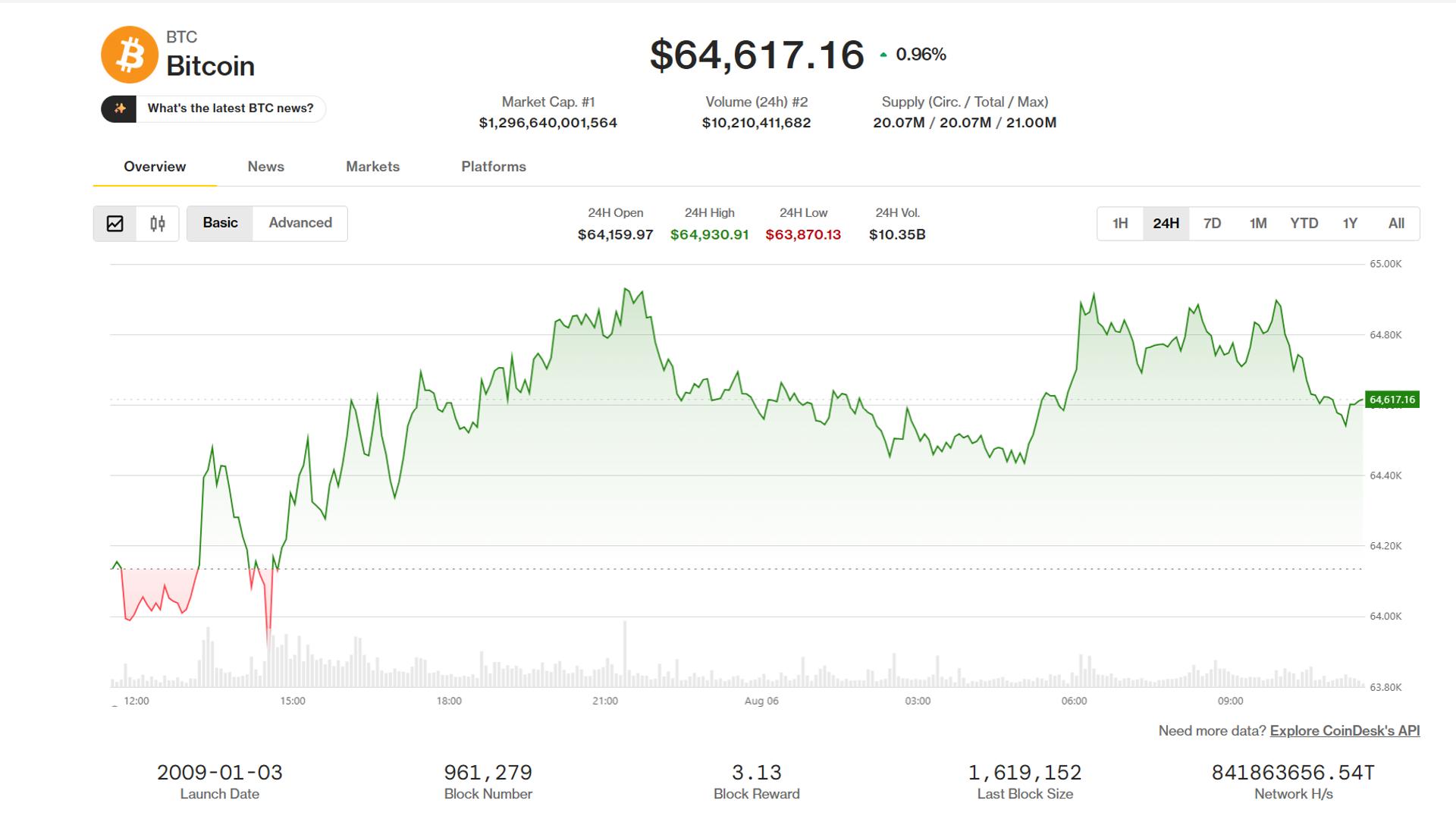
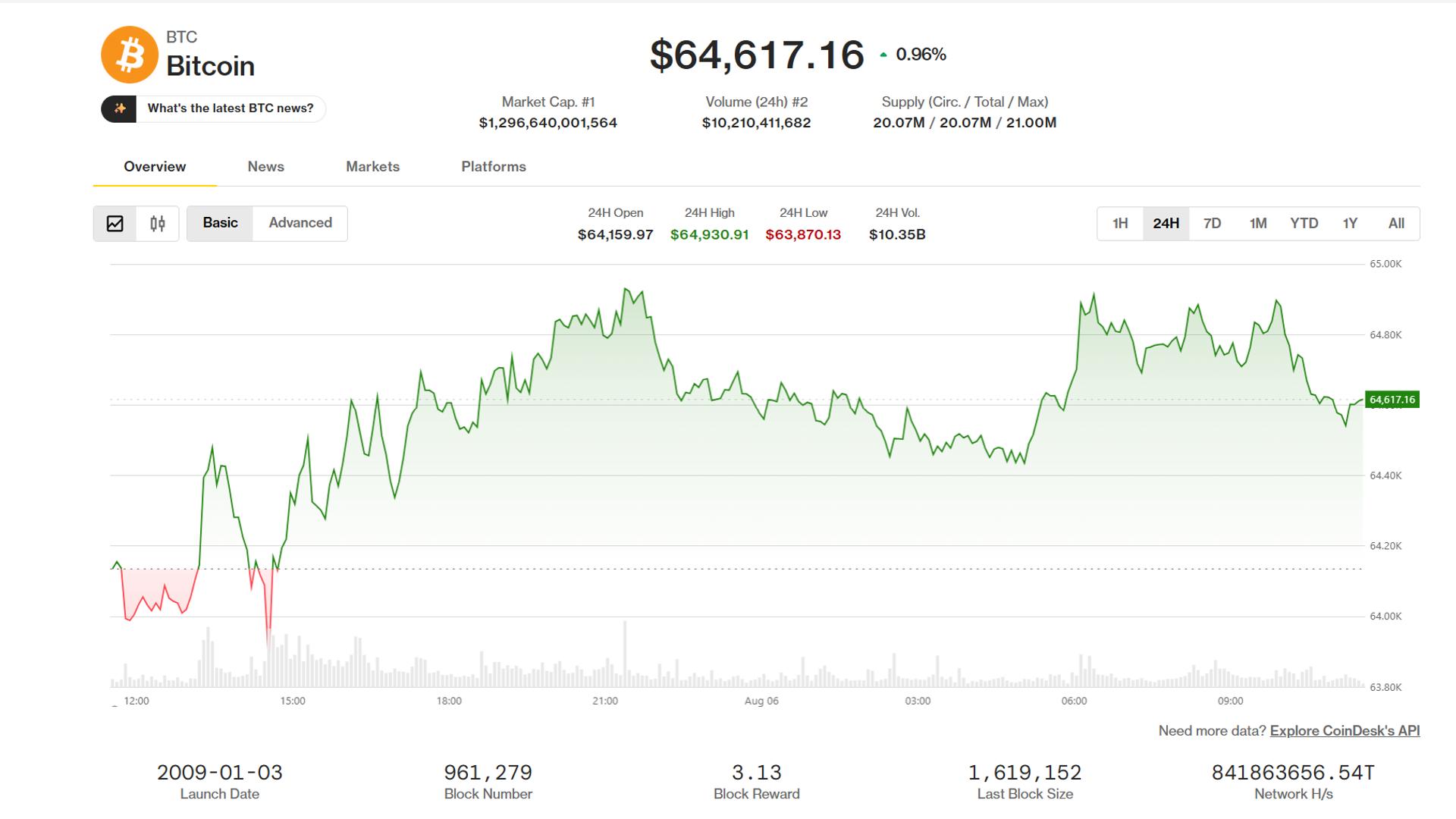
Bitcoin has added around 0.9% in the past 24 hours to $64,700, while the broader CoinDesk 20 (CD20) is up just 0.16%. Strength in equity markets, which have climbed to record highs, appears to leave the crypto sector unperturbed.
Crypto appears to be moving to the perceived safety of the biggest tokens, with bitcoin and ether the only CD20 members in positive territory. Zaheer Ebtikar, the chief strategy officer at crypto neobank Plasma, told CoinDesk altcoins are struggling “without aggressive support from bitcoin momentum.”
Altcoin open interest has fallen about 15% over the past month while bitcoin has gained roughly 8%, Ebtikar said. CoinMarketCap’s Altcoin Season index fell one point from Wednesday to 42/100.
“Because Bitcoin has moved into capital markets plumbing with ETFs, basis trading, institutional hedging, and collateral, that flow doesn’t need a rally to justify itself. However, most of the altcoin market hasn’t made that transition yet,” Ebtikar said.
The divergence, according to Ebtikar, results from projects failing to clearly define how value accrues, making them unable to justify investors’ exposure to their tokens during market declines.

Muslim healthcare worker sued NHS for racism after being told she had to wear uniform instead of Islamic dress

Raise your credit score in 30 days: Expert shares quick fixes to cut stress

Polygon Turns Kansai Electric Loyalty Points Into JPYC Spending


-

 Fashion6 days ago
Weekend Open Thread: Wit & Wisdom
-

 Politics6 days ago
Meta enters AI-training agreement with far-right ‘propaganda rag’ Newsmax
-

 Politics4 days ago
Zack Polanski: an incitement to murder Nigel Farage?
-

 Crypto World5 days ago
MicroStrategy Post-Earnings CLARITY Act Push Could Add New Catalyst for Its Stock
-

 Crypto World5 days ago
XRP Ledger v3.3.0 brings five institutional features
-

 Politics7 days ago
Luke Littler’s dominance sparks GOAT debate
-

 Crypto World6 days ago
New York sues Kalshi over prediction market gambling
-

 Sports7 days ago
Seema Kaliramna Wins Discus Throw Bronze, Takes India’s CWG Medals Tally To 17
-

 Crypto World4 days ago
Crypto PAC spending tops $2M in Michigan House race
-

 Business4 days ago
DTCR: Deleveraging And A Hedge Fund Collapse Point To A Possible AI Bottom
-

 Business6 days ago
Trump Announces Hamas Disarmament Agreement as Iran Strikes Kuwait Air Base and US Attacks Pause Overnight
-

 Tech4 days ago
ESET tracks rise in malicious AI skills and adaptable malware
-
 Crypto World6 days ago
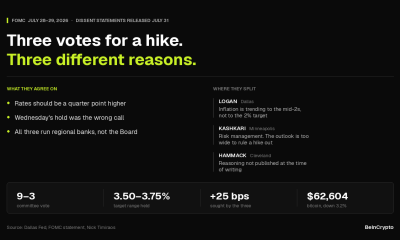
3 Fed Officials Just Explained Their Rate Hike Vote: Is Inflation Winning?
-

 Tech6 days ago
Gemini Spark can now use Chrome logins and saved passwords to run errands on your behalf
-

 Sports5 days ago
France Cricket implodes: letters hidden in a drawer and a board at war
-
Crypto World4 days ago
XRP Ledger urges node upgrade after manifest flood
-
 Tech6 days ago
Building A Reproduction PlayStation Motherboard
-

 Crypto World5 days ago
Moneyflip CEO charged in $40K murder-for-hire plot
-
 Sports6 days ago
Bruno Fernandes decision made as Man United ‘discuss’ striker transfer option
-

 News Videos5 days ago
Financial Crash Expert: The 90-Day Collapse Timeline They Are Desperately Hiding.
You must be logged in to post a comment Login