
Politics
Sleep Apnoea May Be Linked To Hypothyroidism, Study Finds

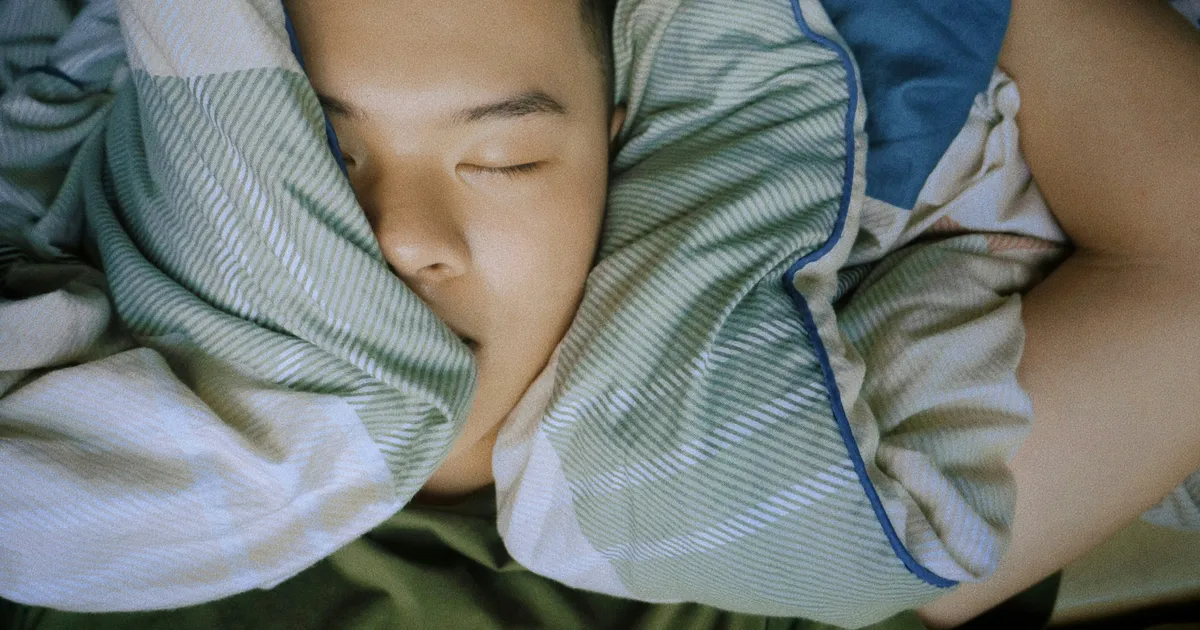
Obstructive sleep apnoea (OSA) is estimated to affect up to 10 million people in the UK, with about four million of those with the condition believed to have moderate to severe cases.
Untreated OSA, which can manifest as very loud snoring, pausing breathing during sleep, and daytime fatigue, has been linked to higher blood pressure and increased risk of stroke, type 2 diabetes, and even depression.
And now, researchers think it could be associated with hypothyroidism too.
What is hypothyroidism?
This is the medical term for an underactive thyroid.
The thyroid is a butterfly-shaped gland in your neck that produces some hormones, particularly those that influence your metabolism (how your body uses fuel), energy levels, temperature, and heart rate.
And when the thyroid isn’t as active as it should be, those with the issue can experience symptoms like weight gain and fatigue. But these signs aren’t always easy to notice.
However if left untreated, hypothyroidism could eventually harm the heart and bones.
If you suspect you might have an underactive thyroid, it’s best to see your GP who can run blood tests.
What’s that got to do with sleep apnoea?
A paper published in the journal Sleep looked at data from 761 São Paulo participants. They underwent laboratory tests and polysomnography (a sleep test).
After observation, scientists found that about 12.6% of participants had OSA. And among those with it, almost half (49.5%) had hypothyroidism, too.
Only an estimated 5% of the general population is believed to have the thyroid issue.
Ellen Maria Sampaio Xerfan, the study’s lead author, said: “We expected the prevalence of sleep apnoea to be considerable among people with hypothyroidism, but the result was higher than we’d imagined.
“Studies in the literature typically report figures averaging between 30% and 40%, but we found that nearly half of our participants had both conditions.”
This study didn’t explain why the two might co-occur, though it did show that people with hypothyroidism who took the appropriate medication slept better and more deeply.
Xerfan added: “Sleep and the thyroid are linked to fundamental mechanisms of homeostasis.
“There’s a complex interaction between the two systems, and sleep disturbances can influence hormonal regulation just as thyroid dysfunction can affect sleep quality.”
The study concluded: “These findings underscore the importance of incorporating early thyroid function screening into the care of individuals with OSA and, conversely, evaluating patients with thyroid dysfunction for OSA.”



A December 2024 report from Unipol and HEPI confirmed something students already knew but universities were slow to acknowledge: the maximum student loan in England is now less than the average student rent. You read that right. The government’s own financial support package doesn’t cover your highest single cost.
That reality is changing how students choose universities. And if you’re currently deciding where to study, it should change how you think about it too.
The Numbers That Are Actually Driving the Decision
Student rents in university-owned accommodation rose an average of 12% across UK cities between 2021/22 and 2023/24, with private housing used by universities rising 13% over the same period. Those aren’t anomalies. They’re a consistent trend that hasn’t reversed.
London now averages around £13,600 per year for student accommodation alone, according to HESA data from 2024. Split across twelve months, that’s over £1,133 a month on rent before you’ve bought a single meal or paid a transport fare.
And the supply side isn’t catching up. Purpose-built student accommodation in prime locations consistently exceeds 97% occupancy, with many properties in high-demand cities fully booked by spring, months before the September intake. If you’re applying to a London university and you haven’t started your housing search by February, you’re already late.
How Students Are Voting With Their Feet
Here’s the shift that’s happening quietly but clearly. Students are increasingly factoring total cost of living into university choice, not just league table position or course quality.
One in two students reported fears about the student housing shortage in the 2024 National Student Accommodation Survey by Save the Student. That’s not a niche concern. That’s half of all students actively worried about where they’ll live, which is exactly the kind of anxiety that influences where prospective students decide to apply in the first place.
The result is growing interest in regional universities in cities where housing costs are significantly lower. Lincoln, Bolton, and Cardiff consistently appear in affordability comparisons precisely because their total student cost of living sits well below London, Manchester, or Bristol. The degree at the end looks the same on a CV. The debt at the end does not.
The London Premium Is Real and Worth Calculating
Total monthly costs in London run £300 to £500 higher than in most other UK cities, driven by rent that sits 30 to 60% above the national student average, higher transport costs, and higher general spending.
Over three years, that premium compounds to between £10,800 and £18,000 in additional living costs compared to studying somewhere like Sheffield or Nottingham. For many students, that’s the difference between graduating with manageable debt and graduating with debt that follows them for a decade.
The counterintuitive truth: choosing a lower-ranked university in a cheaper city often produces better financial outcomes than choosing a higher-ranked one in London, especially if you’re in a field where the degree classification matters more than the institution name. Law and medicine are exceptions. Most humanities, social sciences, and business degrees are not.
What This Means If You’re Set on London
London’s universities aren’t going to get cheaper. The demand is too high and the housing supply too constrained for that to change in any timeframe relevant to your degree.
So if London is where your course, your career, or your personal circumstances require you to be, the decision isn’t whether to accept the cost. It’s how to manage it as intelligently as possible.
Student apartments in London vary more than most students realise before they start searching. Zone 2 and Zone 3 locations with good Tube access can run £150 to £250 per month cheaper than equivalent rooms in Zone 1, with commutes that add fifteen to twenty minutes to your journey. For most students, that trade-off makes financial sense across a full academic year.
Bills-included accommodation is worth prioritising in London specifically. University halls and PBSA almost always include bills, while shared houses frequently don’t. In a city where energy costs are higher and winter bills spike, an unexpected £80 utility bill on top of already stretched rent is the kind of thing that tips students into arrears. 10% of students were in rent arrears at the time of the Save the Student 2026 survey, up from 7% in 2025, with the average amount owed sitting at £621.
Check amberstudent for verified student apartments in London across different zones and price points. Searching through a platform that lists bills-included options clearly saves you the maths of comparing headline rents that don’t include utilities, which makes genuine cost comparison significantly faster.
The Contract Length Problem Nobody Warns You About
This affects students in every UK city but hits hardest in London, where the base rent is already high.
Most private rental contracts run 51 to 52 weeks. Your academic year runs 38 to 40 weeks. The gap between those two numbers is weeks of rent you pay for a room you’re not living in. In London, at £1,100 per month, ten weeks of unused rent costs you £2,750.
University halls and most PBSA providers offer 40- to 44-week contracts aligned to the academic year. That alignment alone can save you more than the difference in weekly rent between accommodation types. Run the annual total, not the weekly headline, before you sign anything.
The One Comparison Most Students Don’t Make
Before you commit to a university and city, build a simple spreadsheet. Put the annual rent for realistic accommodation in each city you’re considering in one column. Add estimated transport costs. Add average food costs. Then subtract any scholarship or bursary income specific to that institution.
That number, the real annual cost of attending each university, tells you more than any open day ever will. Several institutions in northern England and the Midlands now actively market their lower total cost of attendance as a competitive advantage precisely because students are finally doing this comparison and choosing accordingly.
The universities know the housing crisis is reshaping their intake. Now you know it too, and you can use that information before you make a decision that affects your finances for years after graduation.


No one starts a relationship expecting it to end. When it does, the practical questions arrive fast. Who stays in the home. How the bills get paid. What happens with the children. What you are actually entitled to.
The answers depend far more on your legal status than most people expect, and the gap between what people assume and what the law provides causes real financial harm every year. Understanding where you stand early gives you a far better chance of a fair outcome. Speaking to Family Law Partners or another family law specialist at the outset can help you avoid decisions that are difficult to undo later.
This guide covers the position in England and Wales. Scotland and Northern Ireland have separate family law systems, and some of the rules below work differently there.
Your rights depend on your legal status
There is no such thing as a common law marriage. It does not exist in England and Wales and never has, no matter how long you have lived together, whether you have children, or whether you share a bank account.
This matters because married couples and civil partners have access to a broad set of financial claims when they separate. Cohabiting couples do not. Two people in outwardly identical situations can end up with completely different outcomes purely because one couple signed a marriage register and the other did not.
So the first question to answer is not what feels fair. It is what legal category you fall into.
If you are married or in a civil partnership
Since April 2022, England and Wales has operated a no-fault divorce system. Neither of you has to prove wrongdoing or blame the other. There is a minimum period of 20 weeks between applying and being able to apply for a conditional order, then a further 6 weeks and 1 day before the final order.
Separately from the divorce itself, you have the right to apply for a financial order. That can cover:
- The family home and any other property
- Savings, investments and business interests
- Pensions, including pension sharing orders
- Maintenance for you and for your children
The court works through a list of factors set out in the Matrimonial Causes Act 1973, including the length of the marriage, each person’s income and earning capacity, contributions made to the family, and future needs. The welfare of any child under 18 comes first.
One point is routinely missed. Getting divorced does not, by itself, end your financial claims against each other. Without a financial order approved by the court, a claim can in principle be brought years later. If you want a clean break, it has to be documented properly.
If you are living together
Cohabiting couples are the fastest-growing family type in the UK, with more than 3.5 million cohabiting couple families. The law has not kept pace.
If you separate, you have no automatic right to a share of your partner’s property, savings, income or pension, regardless of how long you were together. What you may have instead:
- A property claim. If you contributed to a home held in your partner’s sole name, you may be able to establish a beneficial interest under the Trusts of Land and Appointment of Trustees Act 1996. These claims turn on evidence of what was agreed and what was paid, and they are harder and more expensive to run than a divorce financial claim.
- Claims for your children. Schedule 1 of the Children Act 1989 allows a parent to seek financial provision for a child, which can include a lump sum or the use of a property until the child reaches adulthood. This is provision for the child, not for you.
- Child maintenance. Available through the Child Maintenance Service regardless of marital status.
If you are currently living together and not planning to marry, a cohabitation agreement or a declaration of trust recording who owns what is far cheaper than litigating the question later.
Your rights as a parent
Parental responsibility gives you a say in major decisions about your child, including schooling, medical treatment and where they live. Mothers have it automatically. Fathers have it if they were married to the mother, or if they are named on the birth certificate for a birth registered from 1 December 2003 onwards.
There is no legal presumption that children’s time should be split equally. The court’s guiding principle is the welfare of the child, and there is a separate presumption that involving both parents benefits the child unless there is a risk of harm.
Most parents never need a court. If you cannot agree, you will usually be required to attend a Mediation Information and Assessment Meeting before you can apply for a child arrangements order. Exemptions apply, including where there has been domestic abuse.
Everything the original guidance says about protecting children still holds. Keep arguments away from them. Do not ask them to take sides. Hold routines, meals and school activities steady where you can. None of that is a legal right, but courts do look at which parent has supported the child’s relationship with the other.
The family home
If you are married or in a civil partnership and the home is in your partner’s sole name, you have home rights. You can occupy the property and you can register a notice against the title at HM Land Registry, which prevents a sale going through without your knowledge. This is worth doing early if you have any concern about it.
If you are not married, your position depends on whether you are on the title and, if not, whether you can establish a beneficial interest. Being on the mortgage, paying towards it or paying for renovations does not automatically give you ownership, though it can form part of the evidence.
Looking Ahead
The end of a relationship is difficult, but it does not have to leave you powerless. Find out which legal category you are in, get advice before you make irreversible decisions, and keep your paperwork in order. Every situation is different, and early advice usually costs far less than fixing a rushed agreement afterwards.
Disclaimer
This article is for general information only and does not constitute legal advice. If you are facing separation or divorce, please seek advice from a qualified family law solicitor about your own circumstances.

Spice Girls star Melanie C celebrated her marriage to husband Chris Dingwall last month in front of her friends and family. But there was one major person from the singer’s life absent from celebrations.
While bandmates Mel B, Geri Halliwell and Emma Bunton were all in attendance, Victoria Beckham was notably absent from the guestlist.
During a new interview on the Australian radio station KIIS 1065, Melanie was asked about the reason for Victoria having missed the ceremony, which took place at Country House Cumbria in the Lake District but
“Victoria was very disappointed to not be there,” the I Turn To You singer insisted, pointing out that “she was with David in New York and it was the football final, the World Cup”.
Indeed, Victoria was pictured that evening attending the 2026 FIFA World Cup third-place game alongside her husband, Sir David Beckham, where they watched England beat France 6-4.
Melanie added that Victoria “tried to get out of” the game, noting that the singer-turned-fashion-designer “isn’t the biggest football fan” (as anyone who saw her looking rather stoic in the crowd earlier in the World Cup can attest).
“She won’t mind me telling you that,” she continued. “But the family were there and David had commitments being an ambassador for Fifa.”
However, the fashion icon managed to be there in spirit, thanks to making a “dream dress” for Melanie’s big day. The bride wore an ivory slip dress with hand-stitched floral lace appliqués, designed by Victoria.
“Of course she made my gorgeous dress, and she was messaging me on the day,” Melanie recalled. “And I actually saw her when I was in Ibiza [after the wedding] so we had a little catch-up. So yeah, we were giving her updates and sending her pictures.”
Victoria also provided the “something borrowed” by lending Melanie a dress for the couple’s earlier legal ceremony in the groom’s native Australia.
She told British Vogue last month how the borrowed dress came about: “I was actually having dinner with Melanie and asked her what she was up to. She very casually told me she was leaving for Australia in two days and getting married!
“When I asked what she was wearing, she mentioned she had actually ordered one of my dresses but that it didn’t quite fit, and she didn’t have time to get it altered before leaving. I happened to have that exact dress in my own wardrobe and offered to lend it to her.”
Melanie told the crew at KIIS that her wedding to her partner of two and a half years was “amazing” and “perfect.”
“My feet haven’t touched the ground, really, because we had a beautiful weekend with all our families and friends,” she told the radio station.
The last time the Spice Girls were together as a five-piece was two years ago, when they delivered an impromptu performance at Victoria’s 50th birthday.
Since then, the group have been together at numerous private and public engagements, although it has never been all five of them.


South Korean police searched the headquarters of the Korea Football Association (KFA) on 6 August as part of a criminal investigation into the appointment of national team manager Hong Myung-bo. This investigation comes a month after the country’s participation in the 2026 World Cup. Investigators are examining allegations of administrative irregularities and unlawful interference in the 2024 hiring process.
The raids follow South Korea’s shock group-stage exit at the 2026 World Cup. This result reignited criticism of Hong’s appointment and intensified public and political demands for accountability. This came after one of the national team’s worst tournament performances.
Inside the criminal investigation
According to Reuters, Seoul Police Financial Crimes Unit is investigating allegations of obstruction of business linked to Hong Myung-bo’s appointment. The inquiry centres on whether the Korea Football Association followed its own rules and coach selection procedures.
Police are now reviewing documents seized from the association’s headquarters to determine whether anyone improperly interfered with the selection committee. In addition, they are checking if anyone breached the approved hiring process in July 2024.
The controversy predates the World Cup
The controversy predates the World Cup. Hong Myung-bo’s appointment drew widespread criticism from the outset after he was selected following a brief meeting with Korea Football Association officials. At the same time, the selection committee was still considering several foreign candidates.
The South Korean Ministry of Culture, Sports and Tourism later found that the association had breached its own procedures when appointing Hong and former coach Jürgen Klinsmann.
While it found no evidence of criminal wrongdoing or grounds to cancel either contract, the current police investigation marks the first criminal inquiry into the appointment process.
The World Cup fall out
South Korea’s group-stage exit at the 2026 World Cup has piled further pressure on the Korea Football Association (KFA).
Tipped as one of the favourites to reach the knockout stages, the team instead suffered an early exit. This prompted Hong Myung-bo’s resignation and triggered a series of parliamentary and administrative inquiries. Those investigations have now escalated into a criminal probe.
No charges have been brought against Hong Myung-bo or any KFA officials, and the association has yet to comment on the police searches.
Investigators are continuing to examine whether the appointment process involved irregularities that could warrant legal action.
Featured image via the Canary
By Alaa Shamali
The SNP’s latest accounts are out.

And the zombie shambles on for another year.
The headline figures sound reasonable – the party has turned a 2024 deficit of nearly £400,000 into a surplus of just over £500,000. Unfortunately that’s only had the effect of increasing its bank balance by around £110,000 to £384,320.

And that should be a big worry, because 2025 was a “fallow year”, with no general election to contest. Spending figures for this year’s Holyrood vote won’t be out for a while yet, but the SNP spent £1.5m on the last one and anything remotely similar in scale will have blown a huge hole in the coffers.
And there’s no safety net left to fall back on. The party has emptied every last piggy bank, cupboard and cardboard box under the bed to survive to this point, rummaged down the back of every sofa and used up its best tricks. It’s slashed the staff budget by a third, for example, saving half a million quid a year.

The unfortunate branch offices, which have been plundered for the last few years to the tune of hundreds of thousands of pounds, have taken another couple of sucker punches, with the “branch dividend” (membership fees returned from the central party to local branches) slashed by 40% and insult added to injury with the imposition of a £56,000 levy to unsuccessfully fight the Hamilton by-election.


The average SNP branch now looks like Aberdeen FC at the turn of the century.

The “Miscellaneous income” table above shows that the party is also still heavily reliant on the Grim Reaper – almost 60% of its £500K surplus was thanks to legacies from the deceased. Rumours that national treasurer Peter Grant, desperate to ensure a continuing income stream, has been seen skulking around the back of the Queen Elizabeth University Hospital (aka The Death Star) in a dark cloak are unconfirmed at time of writing.

The party could certainly do with a bunch of wealthy supporters popping their clogs, because significant support from the living was all but non-existent. The below is the entirety of reportable donations in 2025.

There was £132,000 from the ever-generous UK taxpayer, but less than £10,000 in total in reportable donations from anyone else: £7,200 (in non-cash, premises-based contributions) from Cor Unum Ltd – a company which is itself deceased – and £2,600 to the Portobello branch from an Andrew Mackie, and that was it.

(Cor Unum appears to have been owned by lottery winners Chris and Colin Weir, although the nature of its business is somewhat opaque.)
Smaller contributions which don’t have to be individually recorded under electoral law provided rather more, but still well under half 2024’s figure.

There were some poignant notes. The infamous campervan is now as invisible to the accounts as it was to Nicola Sturgeon when she visited Peter Murrell’s mum.

But it’s the underlying story that’s really bleak, because ultimately the SNP is a party that just can’t afford to live. With Westminster, Holyrood and council elections three years out of every five (Brexit was actually a life-saver for the party, sparing the cost of European elections), and membership still falling steadily, the arithmetic is merciless.
(The figures for 2025 were given only as “around 51,000” in the accounts, a decline of around 10%, with the precise number apparently being too painful to relate and Humza Yousaf’s promise of six-monthly updates long forgotten.)

Averaged out over the five-year political cycle, the SNP is intrinsically a money-losing business and it’s running out of Hail Mary plays. Losses are bigger, and more frequent, than profits. Gravity is irresistible. Its plaintive cries about recovery of the money stolen by Peter Murrell would at best represent a stay of execution.

It’s been quite conspicuous that the party’s been uncharacteristically quiet on the subject of Andy Burnham’s coup against Keir Starmer. Normally when a new Prime Minister takes office without there having been a general election, opposition parties make a big song and dance about a vote being required in order to give the new PM a proper mandate.
But as far as we’ve noticed there hasn’t been a peep from the SNP on that subject, because if Burnham – the UK’s seventh PM in the last decade – reneged on his pledge NOT to hold a snap election it’d be a financial disaster of cataclysmic proportions.
Absent that, unfortunately, the independence movement must wait patiently for the slow erosion of time to do its work before there’s any hope of the SNP shuffling off this mortal coil and a vacancy for a serious indy party opening up. The good news is that on these numbers, that shouldn’t be too many years off now.


This summer of heatwaves has made the climate crisis impossible to avoid for most Brits as temperatures continue to break records.
Andy Burnham’s government has pledged to help bring down the cost of living, but ministers have been remarkably quiet over the consequences of this excessively hot summer.
A spate of record-breaking heatwaves have swept across Europe and the UK is currently in the middle of its third drought in five years.
The Green Party has urged the prime minister to hold an emergency COBRA meeting on how to meet this challenge – and it’s far from the only voice calling for action.
Here’s a look at what’s at stake as the stifling summer continues.
1. Food Shortages
The National Farmers’ Union (NFU) warned on Sunday that food shortages could be on the horizon following periods of extreme weather.
NFU president Tom Bradshaw told the BBC the government should give farmers tax breaks to build water storage systems on their lands.
Winter floods made it difficult to sow seeds and the current drought means any crops which were planted are struggling to grow.
Wheat is growing to just half its normal height and farmers across England have been forced to harvest earlier in the year to salvage what remains.
The climate impacts, together with the loss of EU-derived subsidies which protected farming, means that a third of British farmers are now making a loss or narrowly breaking even.
Livestock farmers are struggling as well due to low grass growth, and are resorting to using their winter supplies.
The issue stretches to farms around the world. Bradshaw warned the countries which we rely on for food are also facing changing climates.
These pressures have driven the price of fresh food up. Wholesale tomatoes have risen in price by more than 60%, iceberg lettuce by 90%, and potatoes by more than 40%.
2. Water Supply
The Met Office reported England had just 8% of its average July rainfall last month.
It is expected to be recorded as the driest July to date. In some parts of the country, it has not rained in more than a month.
Approximately 23 million people across England and Wales are under a hosepipe ban now, and to top it off, there’s also been a surge of wildfires, particularly in Suffolk.
Habitats are being destroyed as a result, and there are fears of irreversible ecological collapse, according to Natural England.
The water policy manager at Wildlife Trusts, Ali Morse, told the Guardian: “This week we’ve seen drought declared across half of England, but even under normal conditions, water scarcity is emerging as an urgent issue.
“If we don’t secure new water supplies and become more efficient with our use, it’s clear that, under a changing climate, we won’t have enough water to meet the needs of both society and the environment in future … but what most don’t realise is that across large parts of the country, we’re already reaching this limit.”

BROOK MITCHELL via AFP via Getty Images
3. Energy Concerns
Electricity demand typically goes up during extreme heatwaves, as people turn to air conditioning and fans, while their fridges go into overdrive to stay cool, putting further pressure on the system.
The very equipment controlling the grid might also struggle as power lines and insulators expand in high temperatures.
Overhead lines and underground cables can droop in hot weather too, bringing them close to surrounding environments with trees, buildings and the ground.
National Grid warned this week that “power cuts may be more common than usual”, as hot weather slows down the network.
The system told the Mirror: “Sustained heat like this puts extra pressure on our network. Equipment doesn’t get the chance to cool down overnight, and demand for cooling during the day adds to the strain.
“Longer heatwaves increase the risk of heat-related faults, which can cause power cuts for our customers.”
National Grid also advised Brits to keep a torch nearby with a spare set of batteries in case of unexpected power cuts.
4. Transport Strains
London bus drivers plan to strike later this month over working conditions with cab temperatures reaching almost 40C lately.
Soil shrinkage has disrupted rail services as well, while heat can warp rails, forcing operators to lower speed limits for safety.
The International Transport Forum warned that heatwaves are putting passengers at risk across Europe.
It said: “High temperatures can buckle railway tracks, strain power and cooling systems, and make buses, trains and stations unsafe or uncomfortable.
“Heat also increases the risk of heat exhaustion and heat stroke among transport workers, with implications for operational safety.”
The intergovernmental organisation called for vehicles to be modernised with effective cooling systems and more reflective materials to be used to reduce heat absorption, too.
5. Homes And Workspaces
UK buildings are built to retain warmth with thick walls and small windows but that means during heatwaves, it can feel impossible to cool down.
Most properties do not have air conditioning installed, either.
Not only are current homes and offices struggling to cope with the extreme weather, there’s a consequence for new homes, too.
Many of the areas in England where the government was hoping to build more homes are now facing major water shortages.
That means ministers may struggle to achieve their promise to build 1.5 million homes by the end of this parliament.
Secretary general of the TUC Paul Nowak told the Guardian: “As heatwaves become our new normal, we need to find ways to work and live with hot weather.
“That means new laws on maximum working temperatures, adapting buildings and workplaces to keep them cool, and ambitious climate action to tackle the problem at its root.”
Labour said last month it was considering making it illegal to work when it is “too hot”.
6. Health Fears
England is heading for its highest number of heat-related deaths this summer with an estimated 2,877 people who died in the May and June heatwaves.
The UK’s Health Security Agency (UKHSA) released heat health alerts for eight regions of England this week, amid particular concern for the elderly.
UKHSA’s Polly Ashmore said: “We are urging health and social care services in affected regions to ensure they are prepared, and reminding people to look out for elderly relatives, neighbours and those with underlying health conditions, making sure they are aware of the forecast and following the necessary advice.
“Simple steps such as staying hydrated, avoiding the sun during the hottest part of the day and keeping your home cool are some of the key ways to help keep yourself and others safe during periods of hot weather.”
The NHS has also been urged to adapt to the rising temperatures.
Health secretary Yvette Cooper said this week that A&E pressures during summer will end up being as intense as those during the winter flu season.
The Royal College of GPs also advised doctors to cancel surgeries in extreme weather.
Radiotherapy machines and NRI scanners have failed in the heat too.
Listen to Commons People, the podcast that makes politics easy. Every week, Kevin Schofield and Kate Nicholson unpack the week’s biggest stories to keep you informed. Join us for straightforward analysis of what’s going on at Westminster.
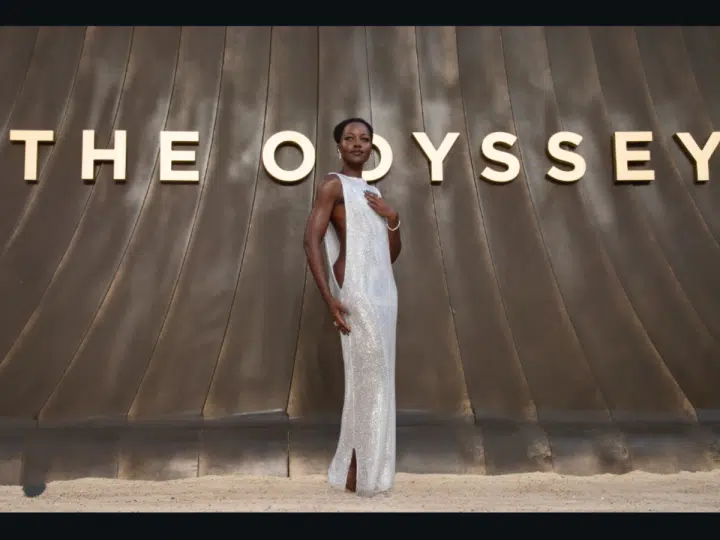

The furore surrounding the film the Odyssey exposes, again, how right-wing media discourse, tinged with overt racism, can be weaponised to fuel culture wars. Furthermore, it is used to score political points.
Amid the cacophony of praise surrounding Christopher Nolan’s Hollywood retelling of the Homer epic, it’s easy to forget that the controversy erupted long before its release. Not long after casting was made public, Nolan’s film was drawn into a wider right-wing cultural war battleground. The official trailer received the highest number of dislikes of any Nolan release. Even Elon Musk jumped on the bandwagon, bringing his familiar inflammatory culture-war commentary to the ‘discussion’ (because at this point and we expect nothing less).
The media pile-on
Before audiences had even seen the film, Nolan’s the Odyssey had been subject to a media pile-on.
Content farms and multimillion-dollar news networks churned out derogatory coverage. They confidently predicted the film would flop, however, inconveniently for them, the Odyssey has since become Nolan’s highest-grossing film.
This was predictably met with denial from some of the same pundits who helped manufacture the very outrage. Their rage-bait content exposes a fundamental misunderstanding of film history. In addition, it reveals a lack of knowledge about the Odyssey and Greek mythology. In other words, this is culture-war bluster masquerading as meaningful engagement. Much of the shallow discourse rests on the view of the Odyssey as a sacred text. They suggest it can be corrupted through reinterpretation.
This view refuses to acknowledge that Nolan’s Odyssey itself is a retelling. Yet it’s this belief that, ‘reinterpretation represents erasure’, which has driven much of the outrage so far. The expectation that adaptations must remain “untouched” fundamentally misunderstands the Odyssey’s legacy.
The Critical Drinker subreddit is having a meltdown over THE ODYSSEY having an 8.4 on IMDb.
If Rotten Tomatoes and IMDb are invalid, what’s next? Letterboxd? — Duhlorean (@Duhlorean98) July 19, 2026
 pic.twitter.com/8qoSQbve5r
Or. The reality is we live in this time, and not in Ancient Greece, and Homer himself wrote his story 400 to 500 years after the Trojan War. Homer’s work isn’t a documentary. He didn’t know Agamemnon, he didn’t know a single person in his story. He wrote it thematic to…
— JR — (@JRGhaddar) August 2, 2026
The right-wing race card
The backlash also revealed clear racism overtones. Lupita Nyong’o’s casting as Helen of Troy, a mythical character from Ancient Greek literature, was met with vitriolic backlash.
Critics disguised their racist objections behind claims that the actress wasn’t “attractive enough.” Meanwhile, others nakedly expressed their racist “offence” at the decision to cast a Black woman.
Helen of Troy actress Lupita Nyong'o promotes ‘The Odyssey’ with bizarre Instagram dance video.
In Greek mythology, Helen of Troy is described as ‘the most beautiful woman in the world’ and ‘the face that launched a thousand ships.’ pic.twitter.com/QsnyM1XDl1 — Oli London (@OliLondonTV) July 25, 2026
The casting of trans actor Elliot Page was another target of the backlash. Rampant misinformation falsely claimed he had been cast as Achilles at the time. In reality, he was actually cast as Sinon, a Greek soldier.
Others took aim at Travis Scott’s casting, while critics argued — often without basis — that Nolan’s inclusion of minority actors erased Greek culture and betrayed the “original text”.
As discussed earlier, the Odyssey has been shaped by generations of storytellers before being attributed to the enigmatic Homer. As such, the story cannot be understood as the work of a single author.
‘Defenders of representation’ get it wrong
Although the film’s casting decisions have been rightly defended against racist backlash, the wider conversation exposed another limitation of shallow media discourse.
As the Canary has previously reported, during the pre-release period, revelations emerged that several scenes had been filmed in occupied Western Sahara without the input or permission of the Sahrawi people. Despite Sahrawi communities expressing their hurt, condemning the theft of their land, and calling for a boycott, their concerns were drowned out. The far louder debate surrounding ‘casting’ continues to dominate the conversation.
Parts of "The Odyssey" were filmed in occupied Western Sahara, defying requests from the Sahawari people.
Advocates are now calling for a boycott of the film and what they say is its complicity with Morocco's occupation and cultural genocide. pic.twitter.com/DEGSItsdS8
— Democracy Now! (@democracynow) July 17, 2026
Notwithstanding progressive commentators positioning themselves as ‘defenders of representation’ against the right-wing, much of the attention remained trapped in a manufactured debate, leaving little space for the marginalised communities actually affected by Hollywood’s practices. Ultimately, profit over people remains the order of the day.
This demonstrates not only the limits of progressive Hollywood discourse, but how media attention is often directed towards shallow culture-war debates instead of meaningful political conversation.
Therefore, Christopher Nolan’s the Odyssey reveals the wider harm of these controversies — a media ecosystem that rewards profitable outrage. Rather than amplifying culture-war outrage, any counter-discourse must examine Hollywood’s deeper harms, its colonial history, and the voices it continues to overlook.
Featured image via the Odyssey movie / Instagram
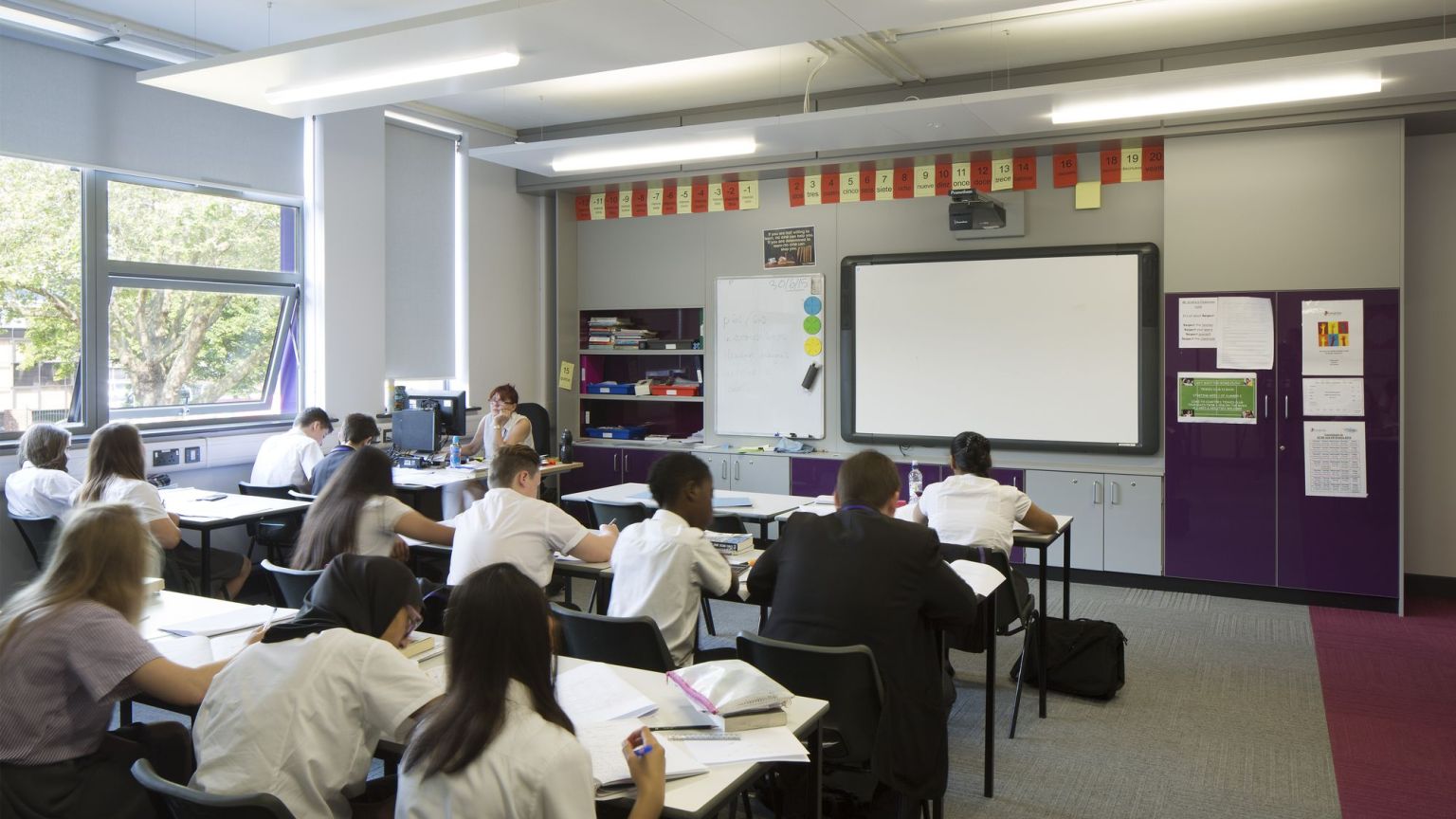
The Times reported last month that Liverpool Walton now has the highest proportion of pupils identified as having special educational needs in England, with 32 per cent of children recorded as requiring additional support. This includes both pupils with formal education, health and care plans (EHCPs) and those identified by schools as needing extra provision. This striking development forms just part of the backdrop to Dave Clements’ timely and thought-provoking new book, The Crisis in the Classroom: How the Special Needs Explosion is Destroying Education.
The debate over the rapidly growing special educational needs and disabilities (SEND) provision has become increasingly polarised. On one side are those who attribute the sharp rise in conditions requiring special educational support, such as autism and ADHD, to improved awareness and better understanding of neurodevelopmental conditions. On the other are those who dismiss the trend as evidence of parental opportunism and / or system abuse. Clements’ book is valuable because it rejects both of these simplistic positions.
Clements acknowledges that diagnoses of conditions classified as a special educational need have risen dramatically and that schools are struggling to cope. But he also highlights a system of support that is slow, bureaucratic and poorly designed, leaving families to navigate complex assessments and appeals in search of support that is often delayed or inadequate. As a father of an autistic child, Clements brings his own experience to bear on this complex problem. As he observes, children too often receive labels without receiving meaningful help, and the support eventually offered frequently bears little relation to their actual needs.
Importantly, Clements rejects the idea that parents are manipulating the system. Most are simply trying to understand their child’s difficulties and secure appropriate assistance. The deeper problem, he suggests, lies in a system that confuses diagnosis with intervention.
The more difficult question the book raises is why diagnoses have increased so sharply in such a short period. Neurology or psychiatry cannot explain the scale of change. Cultural factors must also be considered. Clements cautiously explores whether shifts in how childhood is understood have played a role, with behaviours once seen as part of normal variation now increasingly interpreted through a medical lens. Educational struggles are seen as symptoms, and difference as a sign of a disorder.
This does not mean the conditions are invented. Rather, it suggests a growing tendency to medicalise aspects of childhood that were previously understood as part of its natural diversity. Alongside this, diagnostic labels have taken on a broader social function, offering a sense of identity, an explanation for one’s struggles and a feeling of community. In some cases, as Clements notes, a SEND label becomes ‘a badge of pride’.
A further cultural shift lies in the educational establishment’s growing discomfort with academic excellence. Over the past two decades, schools have increasingly absorbed the assumptions of therapeutic culture, in which academic difficulty is framed less as a challenge to be overcome and more as a potential threat to wellbeing.
One telling example is the abolition of the Gifted and Talented register in 2011. Once intended to identify and stretch high-achieving pupils, it fell out of favour as concerns about elitism grew. At the same time, the identification of additional needs expanded rapidly. Educational priorities shifted from cultivating excellence to managing vulnerability.
As a result, SEND has become more than a framework for supporting a minority of pupils with significant needs. It has become an organising principle for schools themselves. Ofsted, England’s school inspectorate, expects schools to have systems in place for identifying and tracking SEND provision. While well-intentioned, this emphasis can encourage schools to prioritise documentation and categorisation of pupils’ special educational needs over imparting subject knowledge, no matter how difficult.
Moreover, SEND provision often falls short of its promise. Support is frequently reduced to superficial adjustments, such as providing laptops, which may do little to address underlying difficulties and can sometimes introduce new distractions. More fundamental needs – such as developing organisational skills, managing cognitive load, or building independent learning habits – are often less effectively addressed.
This reflects one of Clements’ key arguments: the problem is not excessive support, but poorly designed support shaped by bureaucracy rather than educational judgement. Compliance too often replaces meaningful intervention.
The consequences extend beyond those formally identified as having special education needs. When teachers are required to tailor every lesson according to individual pupils’ requirements, and individualise every target and evidence every adjustment, the nature of teaching itself changes. Teachers become administrators of SEND provision rather than subject specialists. They concern themselves less with what pupils should learn than with ensuring their every special need and requirement is accommodated.
The result is a gradual lowering of expectations across the system. Clements argues that greater investment in specialist provision may be more effective than expecting mainstream schools to meet an ever-widening range of needs. In practice, universal academic expectations are increasingly replaced by personalised entitlement.
The broader implication is that the rise in SEND reflects not only administrative pressures but also a deeper shift in how policymakers and educators conceive of the purpose of education. Schools are increasingly encouraged to define pupils in terms of their vulnerability rather than their potential. While this approach is motivated by care, it risks reshaping education in ways that are ultimately limiting.
None of this is an argument against supporting children with genuine disabilities. On the contrary, the concern is that the expansion of the SEND regime risks diluting the support available to those who need it most. When too many difficulties are classified as special educational needs, it becomes harder to identify and respond effectively to severe cases.
The Crisis in the Classroom is a timely and important intervention. At a moment when questioning the rise in diagnoses is often seen as controversial, Clements manages to combine empathy for families with a willingness to examine the cultural and institutional forces shaping the system. If there is a crisis in the classroom, it’s about not only resources or diagnosis, but also how education understands children, learning and potential.
Neil Davenport is a writer based in London.
The Crisis in the Classroom: How the Special Educational Needs Explosion is Destroying Education, by Dave Clements, is published by Luath Press.
There’s nothing the digital left loves more than an untimely death. And if it’s a violent one, even better. Charlie Kirk’s body was barely cold before his haters were chortling: ‘Bye, Nazi bitch.’ ‘Good riddance’, tweeted batshit hack Ana Kasparian following the death of US Senator Lindsey Graham. Even the revelation that Tory grand dame turned Reform UK spokeswoman, Ann Widdecombe, had been beaten to death with a hammer was insufficient to stem the glee of the death-laughers. ‘Racist old bitch’, said the madder ones. ‘Bigot’, said the more ‘moderate’ ones.
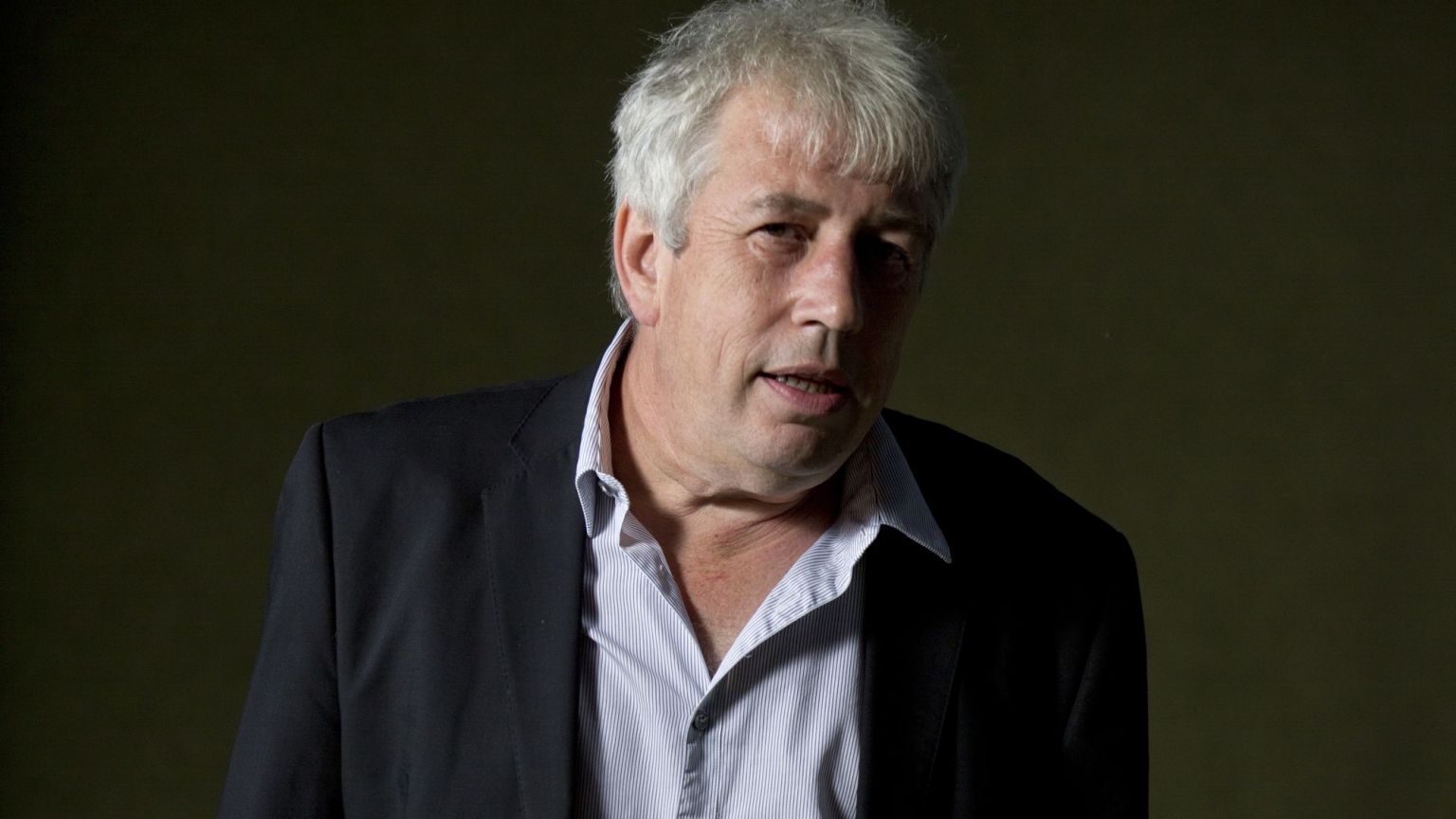
And now the ghouls are coming for Rod Liddle, the brilliant, contrary columnist who died on Sunday at just 66 years of age. Even before his grave is dug, they’re dancing on it. He was a nonce-defender, a racist and a raging ‘Islamophobe’, wail the humourless tossers of the prick left. That none of this is true, and that defaming the freshly dead is about as scuzzy as human behaviour can get, matters not one jot to the Liddle vultures. They’ve got virtue to display, and if they must do it from the soapbox of a beloved writer’s corpse, so be it.
It really has been gross. It’s been particularly bad over on Bluesky. That’s the social-media sewer to which liberals and leftists decamped en masse after X finally permitted women to say ‘he’ about cocks in frocks and the ‘gammon’ masses to say ‘I don’t like mass immigration’. As Joanna Williams reports, Bluesky’s riff-raff-dodging wankers have been posting laughing emojis and images of champagne corks popping. Imagine the depthless narcissism it must require to celebrate a man’s death because he said things you disagree with. ‘Nothing human is alien to me’ and all that, but I do struggle to fathom such industrial-scale self-regard that cheers the sudden passing of a much-loved husband and father because it means you and your piss-weak constitution will be spared his hurty words.
Liddle hate swiftly became the bloodsport of the bourgeois left. It descended into a dark arms race of digital cruelty, each lowlife trying to outdo the other. Don’t forget his ‘galloping racism’ and his ‘repeated defences of paedophilia’, said one author. He ‘relentlessly promoted racism’, said some yapping leftist. He was a ‘bloviating bully’, said a blogger. He wasn’t. If the fainthearts of the coddled middle classes felt bullied by his columns, that’s on them. What’s more, at least he ‘bullied’ people who were alive, and could defend themselves, unlike his own shame-free posthumous persecutors.
Mehdi Hasan joined in. Of course he did. That muppet’s never seen a digital mob he didn’t want to join. ‘The outpouring of love for Rod Liddle’s offensiveness’ is a ‘reminder of how mainstreamed and even encouraged Islamophobia is in UK political and media discourse’, he said. Jesus, the ethno-narcissism. Liddle wasn’t a fan of Islam – get over it. Not everyone has to like your religion. Hasan’s Zeteo published a piece titled: ‘Rod Liddle has died. Here he is in his own words.’ Every quote was cynically yanked out of context in a bid to depict Liddle as a horrible bloke. It was tantamount to misinformation.
It’s the humourlessness of Liddle’s frenzied critics that is most striking. These prissy midwits wouldn’t know a joke if it slapped them in the face. (Calm down, lads, that’s not an incitement to violence – it’s just a saying.) Consider the claim that Liddle was a defender of paedophilia. This stems from a self-mocking column in which he said he could never have been a teacher because he’d have been too tempted to shag the pupils. They never quote from the rest of the column, in which he clearly states that teachers having sexual relationships with pupils is ‘wrong’, ‘imbecilic’ and ‘exploitative’. Why leave that out, liars?
Then there’s the line that gets quoted all the time. It’s from the Spectator. ‘My own view is that there is not nearly enough Islamophobia within the Tory Party’, he wrote. Bigot! Racist! Oh keep your knickers on. He makes it crystal clear in that piece that he’s using the term ‘Islamophobia’ to mean criticism of Islam. People should be permitted, he said, to call Islam an ‘oppressive ideology’ that sometimes grates against the ideals of ‘secular democracy and equal rights’.
The arrogance of people who make up a bullshit term like ‘Islamophobia’ to police and crush criticism of Islam and then clutch their pearls when a writer uses ‘Islamophobia’ to mean criticism of Islam. As Liddle said, having ‘misgivings’ about an ideology is ‘not racism’. Yep. He also said in that column that Boris Johnson was wrong to say women in burqas look like postboxes, because ‘postboxes are bright red’. ‘They look more like Darth Vader.’ Oh shit, a joke. Ready the fainting couch. Call the police.
I know, to explain a joke is to kill it. But what else are we to do in the face of such inane scoldery? All this Liddle hate is proof that university now makes you dumb. A whole new generation has been trained to cherish their self-esteem above all else, including the hard-won right of others to speak freely and blasphemously. The self-idolatry of the credentialled classes has birthed a public realm that is violently allergic to humour. Liddle was a devil to these god-children who prize their own feelings more highly than freedom.
Wokeness has become a death cult. Hundreds of public-sector workers in the US were reprimanded for celebrating the murder of Charlie Kirk. Social-media posts ‘rejoiced’ over the death of Lindsey Graham. Even national-treasure status could not protect Ann Widdecombe from the macabre elation of leftish whackjobs. I hope her death was ‘extremely painful’, said one academic. Add this grave-dancing to the fact that trans activists frequently wish death on ‘TERFs’, and that the keffiyeh classes are horrifically chill about the rape and murder of Jews, and it becomes undeniable: the crazier sections of the left see death as a righteous comeuppance for ‘right-wingers’.
To my mind, this death-chuckling is a cancerous outgrowth of cancel culture itself. An activist class that considers brutish cancellation to be a just punishment for wrongthink will soon look upon that most brutish cancellation of all – death – as something just or funny or at least as an opportunity to remind everyone about the dead person’s horribleness. The shameless glee with which the ‘progressive’ mob speaks ill of the dead is a testament to the savagery of neo-censorship. Convinced they should have the right to glide through life without ever hearing a sore word about their BS trans identity or their daft Islamic beliefs, they come to feel almost relief when a ‘hater’ snuffs it. The cult of narcissism is the midwife to truly cruel ways of thinking.
Brendan O’Neill is spiked’s chief political writer and host of the spiked podcast, The Brendan O’Neill Show. Subscribe to the podcast here. His latest book – After the Pogrom: 7 October, Israel and the Crisis of Civilisation – is available to order on Amazon UK and Amazon US now. And find Brendan on Instagram: @burntoakboy.


May 2026: Julian Barnes in Barcelona | Image: David Zorrakino / Associated Press / Alamy
6 min read
His exceptional writing is always challenging – but is Julian Barnes’ last work a novel or a memoir? Who now cares? I don’t
In 1984 to my surprise I was invited to be a judge of the Booker Prize for Fiction, to be among a distinguished group of literati chaired by Professor Richard Cobb whose groundbreaking study of the French Revolution I had avidly read as a history undergraduate. Miraculously, we had agreed on a shortlist out of more than 120 entries.
Among them there was someone whom I had never read: Julian Barnes and his Flaubert’s Parrot, sometimes a bemusing but mesmerising read. It, in my mind, stood out as the exceptional entry only to find I was in a minority of one, the rest deeming that it wasn’t really a novel more a biography. I, also, found myself in a minority in my fallback choice JG Ballard’s Empire of the Sun, the panel preferring what I thought was the least inspiring, Anita Brookner’s Hotel du Lac.
But I became a Barnes devotee devouring his subsequent shortlisted novels – England, England, Arthur & George – until he finally won the prize with The Sense of an Ending. Fast forward: 2026. I eagerly purchase his latest, Departure(s), to find his declaration that this was to be his last.
One is driven to reach for a medical dictionary to try to understand
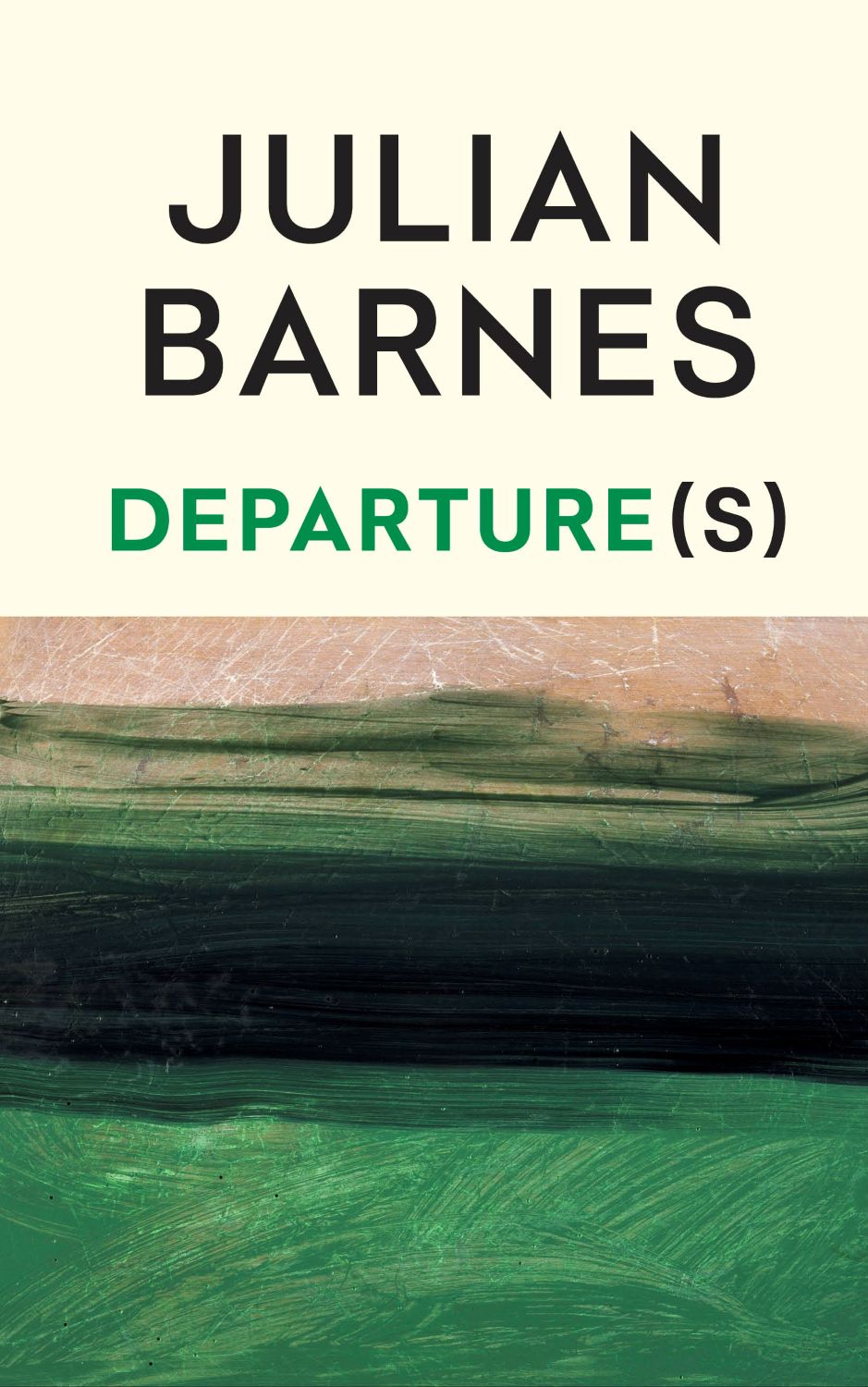
Rather hauntingly, I find that this last novel raises the same query as Flaubert’s Parrot: is it a novel? Frankly, it reads like a memoir and there’s almost an admission to that in the ‘blurb’: “Departure (s) is a work of fiction but that doesn’t mean it’s not true.” However, who now cares? I don’t. It’s a book of five parts (Barnes doesn’t call them chapters).
The first is enigmatically called, “The Great I AM” – certainly not a reference to the Christian God but an acronym of ‘Involuntary Autobiographical Memory’. There follows what seems to be his ultimate challenge – to a lay reader like me – to comprehend his detailed discourse of neurological concepts of memory and mind. One is driven to reach for a medical dictionary to try to understand. (We are confronted with a mind-boggling thought. While we imagine that we tell our brains in which direction to go, our brains have more on us than we have on them. They know all that we know, whereas we only know some of what they do. We sleep but the brain doesn’t. At this point I gave up…)
At least part two, “The Beginning Of The Story”, and part four, “The End of the Story”, are an easier read – an account of a particularly special relationship with two friends, Stephen and Jean, who had met first as college students. Decades later there is a grand reunion partly engineered by Barnes himself and which leads to their marriage, at which Barnes is best man at their church wedding.
Sadly he subsequently becomes a confidant to both as they describe a deteriorating relationship and, ultimately, a breakdown of the marriage. As he explains Stephen’s tragedy is that “he can love but his love cannot be accepted” and “her tragedy is that she cannot love, but that what she does offer is accepted as love”.
What he has done is provoke me to think
Here Barnes is seeking to explore the nature of love, claiming that the great novelists understand love and most aspects of human behaviour better than the psychiatrists, scientists, philosophers, priests or lonely-heart columnists. As he reminds us, he has written about love many times in his novels and few of his characters have been granted a happy ending.
The chapter in between (part three, “Manageable”) will resonate with so many readers for Barnes chooses to describe in considerable detail his own personal experience of being diagnosed with a rare kind of blood cancer. He is told bluntly that isn’t curable but, with various drugs, should be “manageable”. It prompts reflections upon the prospect of dying, claiming that he had “a lifelong engagement with death, both theoretical and actual and have written about it many times”. But he “hadn’t received a death sentence… instead a life sentence: sentenced to live with my cancer until I died”.
The final part, “Going Nowhere”, is the author’s valedictory message to his readers of more than a generation. The title immediately acknowledges his atheism. He doesn’t belief in an afterlife. He identifies himself as a supporter of the charity Dignity in Dying, “The Church and the Law have enforced indignity for far too long.”
Barnes, then explains the significance of his book’s title Departure(s). He, inevitably, reflects on those who have been close to him, the tragic death of his wife and other friends and – perhaps intriguingly – the news of the imminent death of a long-standing friend, Martin Amis in 2023, though there is deafening silence about the violent rupture of that friendship when Amis had left their mutual agent, Barnes’ wife Pat Kavanagh.
Central to his conclusion are observations on the characteristics of ageing and how to approach the prospect of dying. Hopefully, he writes, “the head and heart are still working as the body declines”. He identifies a familiar set of symptoms which most fellow octogenarians like myself certainly share – an increasing fickle memory, and a much slower recognition of people you know and have met. But, more absorbingly, how does one address the thought of dying?
 Barnes recalls an interview when he was asked that – as he was now 76 and would never win the Nobel prize – was he raging against the dying of the light? (Though not acknowledged, it is of course a refrain from one of Dylan Thomas’ most famous poems.) He admits that he did rage against his wife’s traumatic death, the dying of her light, but on further reflection he accepted that it was just the universe doing its stuff.
Barnes’ final paragraph is a personal address to his readers (like me) of over more than 40 years. He tells us that he has no “grand pronouncements, no famous last words”, though he is unable to resist telling us he had one good example: Lord Grimsthorpe’s urgent, dying message to his wife, “We are low on marmalade.”
Barnes justifiably claims that he has never been a didactic writer telling us what to think or how to live. in my case certainly not – but what he has done is provoke me to think. At times it has been an exasperating read, sometimes unnecessarily complicated and an over indulgence in literary references. Yet he has made me to think of the fundamentals in his writings: the nature of life, love, memory, mortality.
Lord Rowlands is a Labour peer
Departure(s)
By: Julian Barnes
Publisher: Jonathan Cape

Can XRP Save Japan?
Muslim healthcare worker sued NHS for racism after being told she had to wear uniform instead of Islamic dress

Raise your credit score in 30 days: Expert shares quick fixes to cut stress


-

 Fashion6 days ago
Weekend Open Thread: Wit & Wisdom
-

 Politics6 days ago
Meta enters AI-training agreement with far-right ‘propaganda rag’ Newsmax
-

 Politics4 days ago
Zack Polanski: an incitement to murder Nigel Farage?
-

 Crypto World5 days ago
MicroStrategy Post-Earnings CLARITY Act Push Could Add New Catalyst for Its Stock
-

 Crypto World5 days ago
XRP Ledger v3.3.0 brings five institutional features
-

 Politics7 days ago
Luke Littler’s dominance sparks GOAT debate
-

 Crypto World6 days ago
New York sues Kalshi over prediction market gambling
-

 Sports7 days ago
Seema Kaliramna Wins Discus Throw Bronze, Takes India’s CWG Medals Tally To 17
-

 Crypto World4 days ago
Crypto PAC spending tops $2M in Michigan House race
-

 Business4 days ago
DTCR: Deleveraging And A Hedge Fund Collapse Point To A Possible AI Bottom
-

 Business6 days ago
Trump Announces Hamas Disarmament Agreement as Iran Strikes Kuwait Air Base and US Attacks Pause Overnight
-

 Tech4 days ago
ESET tracks rise in malicious AI skills and adaptable malware
-

 Crypto World6 days ago
3 Fed Officials Just Explained Their Rate Hike Vote: Is Inflation Winning?
-

 Tech6 days ago
Gemini Spark can now use Chrome logins and saved passwords to run errands on your behalf
-

 Sports5 days ago
France Cricket implodes: letters hidden in a drawer and a board at war
-
Crypto World4 days ago
XRP Ledger urges node upgrade after manifest flood
-

 Tech6 days ago
Building A Reproduction PlayStation Motherboard
-

 Crypto World5 days ago
Moneyflip CEO charged in $40K murder-for-hire plot
-
 Sports6 days ago
Bruno Fernandes decision made as Man United ‘discuss’ striker transfer option
-

 News Videos5 days ago
Financial Crash Expert: The 90-Day Collapse Timeline They Are Desperately Hiding.
You must be logged in to post a comment Login