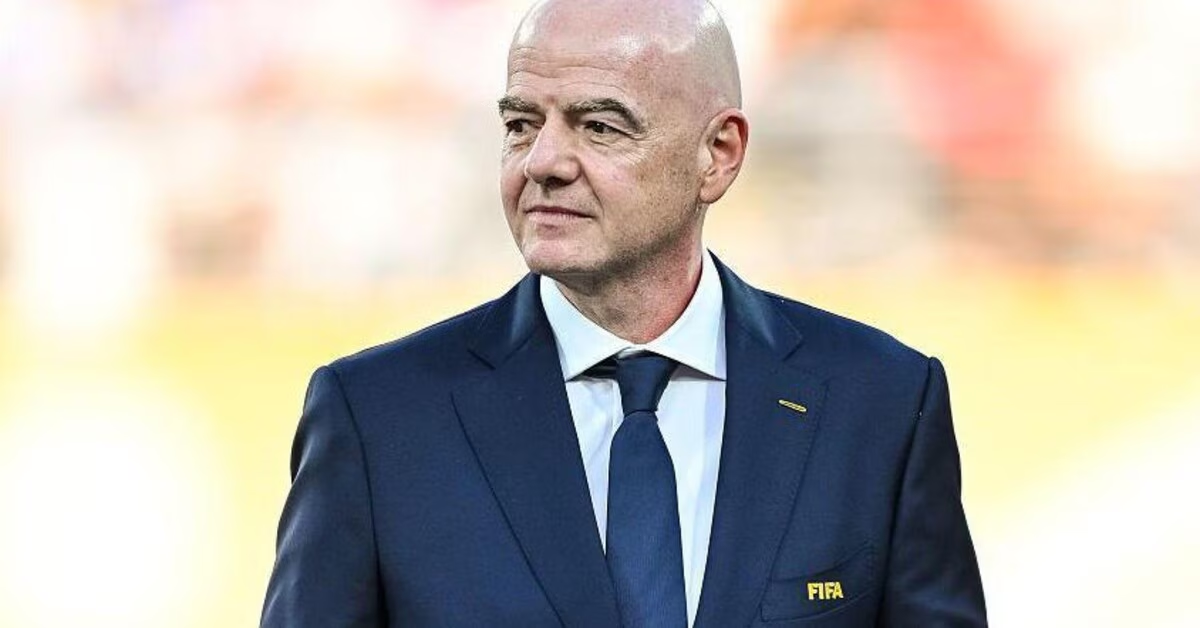
The pressure on FIFA president Gianni Infantino continues to intensify after the Association of European Leagues called for major governance reforms, describing the governing body’s recent decision-making as deeply concerning following the collapse of its controversial World Cup investment proposal.
The latest criticism comes amid one of the most turbulent periods of Infantino’s presidency, with UEFA, CONCACAF and several influential football stakeholders openly questioning FIFA’s leadership ahead of next year’s presidential election.
European leagues call FIFA’s approach ‘dangerous’
In a strongly-worded statement, European Leagues, whose members include the Premier League, La Liga, Serie A and several other domestic competitions, criticised FIFA’s governance structure and warned against unilateral decision-making.
The organisation argued that the failed proposal to sell minority stakes in future FIFA World Cups through a commercial entity highlighted deeper institutional problems.
“Now more than ever, FIFA requires governance reform that ensures that all relevant stakeholders have a formal role in decisions that shape the future of our game.”
The body also rejected any further expansion of FIFA competitions, including discussions around a potential 64-team World Cup, insisting that football’s governing body cannot continue making decisions without broader consultation.
Until governance reforms are implemented, European Leagues said it would oppose any further expansion or creation of FIFA competitions.
Failed World Cup investment plan sparks backlash
The controversy erupted after Infantino attempted to push through plans to commercialise future FIFA World Cups by selling minority stakes in tournament revenues through a proposed subsidiary known as FIFA Forward Enterprise (FFE).
The proposal was met with widespread resistance from member associations and football authorities, ultimately forcing FIFA to abandon the project. The fallout has exposed divisions within FIFA itself.
Senior adviser Carlos Cordeiro resigned last week, while chief operating officer Kevin Lamour reportedly accused the president of failing to keep senior executives informed throughout the process.
FIFA secretary-general Mattias Grafstrom and chief of global football development Arsène Wenger also publicly distanced themselves from the proposal before it was formally withdrawn.
UEFA and CONCACAF lose confidence
UEFA has emerged as the strongest opponent of Infantino’s plans.
European football’s governing body reportedly warned it would boycott future World Cups if FIFA proceeded with the commercial restructuring.
Although FIFA eventually abandoned the proposal, UEFA has maintained that it has lost confidence in the current leadership, raising the prospect of a serious challenge to Infantino when FIFA heads to presidential elections next year.
CONCACAF has also criticised FIFA, stating that the organisation had “stopped putting football first.”
Morocco final report denied by FIFA
Adding to the controversy, reports claimed Infantino privately promised Morocco the right to host the 2030 FIFA World Cup final in return for political backing ahead of the presidential election.
According to the reports, the final would be staged at the under-construction Hassan II Stadium near Casablanca, despite Spain and Portugal also co-hosting the tournament.
FIFA has categorically denied the allegations.
“It is false and misleading to claim the FIFA President has made any promise in relation to hosting the FIFA World Cup 2030 final. A decision will be made by FIFA in due course,” a FIFA spokesperson said.
FIFA attempts to present united front
Following what several media outlets described as a crisis meeting in Rabat, FIFA insisted its senior leadership remained firmly behind Infantino.
In an official statement, the governing body confirmed that secretary-general Mattias Grafstrom and members of the management board had reaffirmed their support for the president.
FIFA also admitted mistakes had been made during the handling of the FFE proposal.
The organisation revealed that letters had been sent to member associations apologising for the process and acknowledging that it “should have been handled differently.”
It also confirmed the commercial restructuring proposal had now been permanently abandoned.
“There are always lessons to be learned, and FIFA will continue to improve its processes in light of this experience,” the statement read.
Election battle on the horizon
Despite FIFA’s efforts to restore unity, the controversy has significantly weakened Infantino’s standing.
With influential organisations now openly demanding governance reforms and questioning FIFA’s decision-making processes, attention is rapidly shifting towards next year’s presidential election, where the Swiss-Italian could face the strongest challenge of his tenure.
Whether the recent apology succeeds in calming tensions or merely delays a wider power struggle remains one of football’s biggest stories heading into 2027.















































You must be logged in to post a comment Login