
Crypto World
SBF gave $610K to founder of left-wing UK think tank



Labour Defence Secretary Wes Streeting reportedly received £37,000 ($50,000) from a Labour-supporting think tank whose founder was gifted $610,000 by notorious crypto fraudster Sam Bankman-Fried.
The Telegraph reports that David Lawrence, founder of the Labour for the Long Term (LLT) think tank, was gifted the sum by Bankman-Fried in June 2022.
This gift was made one month before his think tank donated £30,000 ($40,300) to Streeting, who used the funds to pay for policy advisor Dr. Thomas Gardiner. A year later, LLT would donate another £7,000 ($9,400) to Streeting.
Lawrence reportedly created his think tank’s website on June 20 and it was only 10 days later that Bankman-Fried gave the money to Lawrence.
The Telegraph reports that “it is thought” that Lawrence and Bankman-Fried were introduced to each other through William MacAskill, one of the founders of the effective altruism movement.
This movement was a central part of Bankman-Fried’s spree of donations that took place across 2020 and 2022 when he became one of the largest donors to the US democrats.
Read more: Sam Bankman-Fried needs favor from Trump after failed appeal
Bankman-Fried was charged in December 2022 with a variety of financial crimes. He was sentenced two years later and handed 25 years in prison after he was found guilty of misappropriating billions of dollars worth of customer funds deposited into his exchange.
Unnamed senior Labour officials reportedly claim the shadow ministers were being advised to avoid accepting donations from LLT.
Lawrence, however, denies this. He told the Telegraph that Bankman-Fried’s gift was donated to UK charities, and that LLT’s donation to Streeting was instead funded by a city investor.
However, the Telegraph found that this investor was recorded as starting their donations to Streeting in February 2023, not around the time of the £30,000 donation in 2022.
A Labour spokesperson said the party “carried out due diligence checks ahead of these donations being received, through which no issues were identified.”
Meanwhile, a spokesperson for Streeting said all due diligence processes were followed, and that a list of donors to LLT did not name Bankman-Fried.
The Telegraph’s report comes amid scrutiny of Nigel Farage’s Reform UK party, and the funding it’s received from those in the crypto industry.
Got a tip? Send us an email securely via Protos Leaks. For more informed news and investigations, follow us on X, Bluesky, and Google News, or subscribe to our YouTube channel.

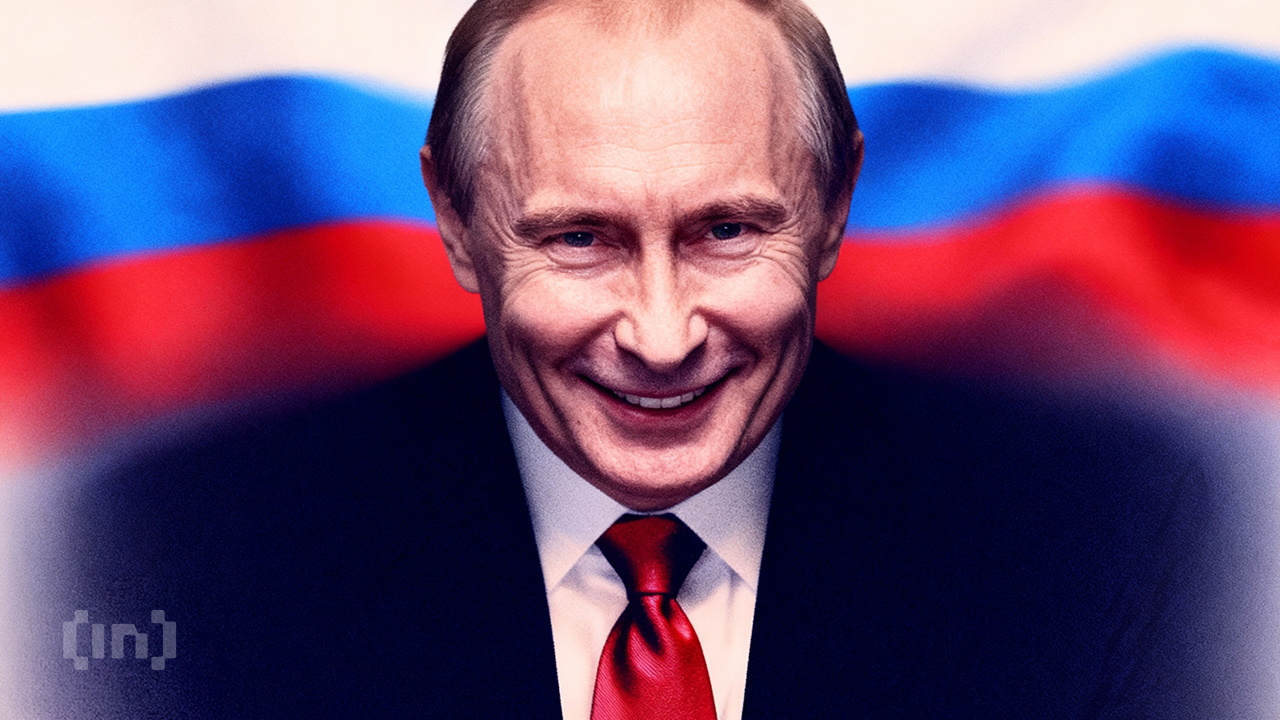
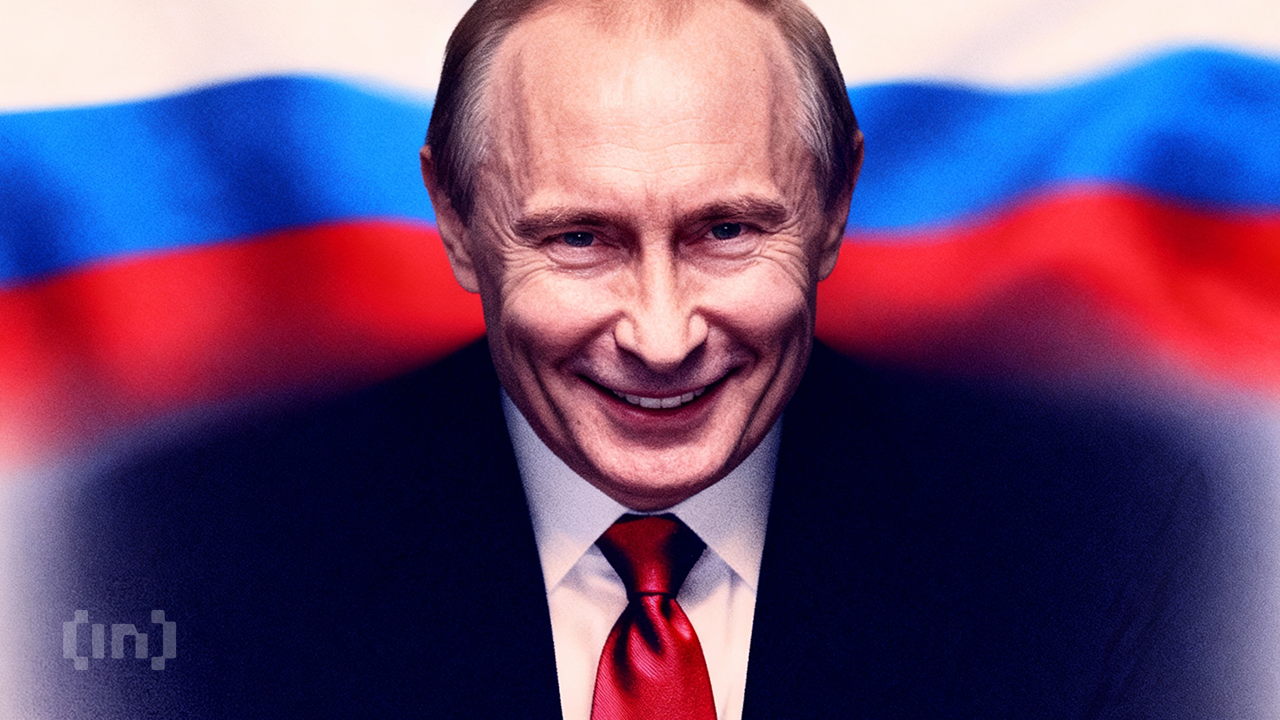
Russian President Vladimir Putin has signed a sweeping crypto regulation law, creating a licensed framework for digital asset trading. The law permits bitcoin (BTC) and other digital assets for cross-border trade starting September 1, 2026.
The measure gives Russia its first comprehensive legal structure for digital currencies. Regulators previously left crypto activity in a legal gray area with little oversight.
How the New Russia Crypto Regulation Works
Crypto exchanges, brokers, and custodians operating inside Russia must register with the central bank, known as the Bank of Russia, according to TASS. Registered platforms need at least 15 million rubles in minimum capital. They must also join a self-regulatory organization for the financial market. The Bank of Russia will phase in full registration requirements through July 1, 2027, giving existing platforms time to comply.
The requirement follows the passage of a sweeping crypto bill in July. Russia’s lower house of parliament, the State Duma, cleared the bill’s final readings the same day.
The law also defines what counts as active trading. Regulators set the bar at two or more transactions in a month worth a combined 3.5 million rubles or more. The threshold separates licensed market makers from occasional, one-off sellers.
Only select cryptocurrencies qualify for public trading under the law. Assets need an average market capitalization above 5 trillion rubles. Daily trading volume must also exceed 1 trillion rubles over two years. Bitcoin, Ethereum (ETH), and the stablecoin USDT currently meet that bar.
Anatoly Aksakov, chairman of the Duma’s Financial Markets Committee, defended the licensing rules ahead of the signing.
“Mass use of anonymous wallets and the gray circulation of cryptocurrencies contradict the idea of a legal market,” — Aksakov said.
The law builds on a narrower measure that already let companies settle foreign trade crypto payments starting July 1. The new statute consequently widens that channel into a full licensing regime rather than a temporary workaround.
Retail Limits and the Domestic Payments Ban
Retail access comes with tighter conditions than institutional trading. Non-qualified investors, essentially anyone who has not passed a required knowledge test, face annual purchase limits. The law caps each investor at 300,000 rubles, worth roughly $3,690, per licensed intermediary, every year. Non-qualified investors make up an estimated 98% of Russia’s retail investor base.
Domestic payments for goods and services remain banned. Officials argue the restriction protects the ruble’s stability. Wider domestic crypto use, they say, could weaken demand for the national currency.
The push toward legal crypto exchange also reflects sanctions pressure. European Union sanctions packages have progressively squeezed Russian access to global finance.
Russian experts remain split on how the domestic industry should respond. Meanwhile, new EU sanctions have made crypto services harder for Russian users to access. An earlier package specifically targeted Russia’s crypto sector.
The new law, therefore, positions state-licensed crypto rails as a controlled outlet. It offers a channel for trade that Western sanctions have otherwise restricted.
The comparison with Washington is stark. The Senate Banking Committee advanced the CLARITY Act, a market structure bill for US crypto exchanges, by a 15-9 vote in May. That bill still needs full Senate floor passage, reconciliation with a competing House version, and a presidential signature, and several roadblocks remain before it takes effect. Russia’s crypto regulation, by contrast, is already signed and takes effect on September 1.
The post Russia Outpaces US in Crypto Regulation: What the New Law Mandates appeared first on BeInCrypto.
Bitcoin (BTC) stayed motionless at Thursday’s Wall Street open as analysis saw signs of reemergent US “stagflation.”
Key points:
- Bitcoin stays below $65,000 as Iran tempers expectations over the Strait of Hormuz oil route reopening.
- US PMI data analysis sees “stagflation” return as a potential future risk.
- BTC price indecisiveness means that the market still lacks a “genuine breakdown,” says Bitfinex.
Iran cools market hopes of Hormuz deal
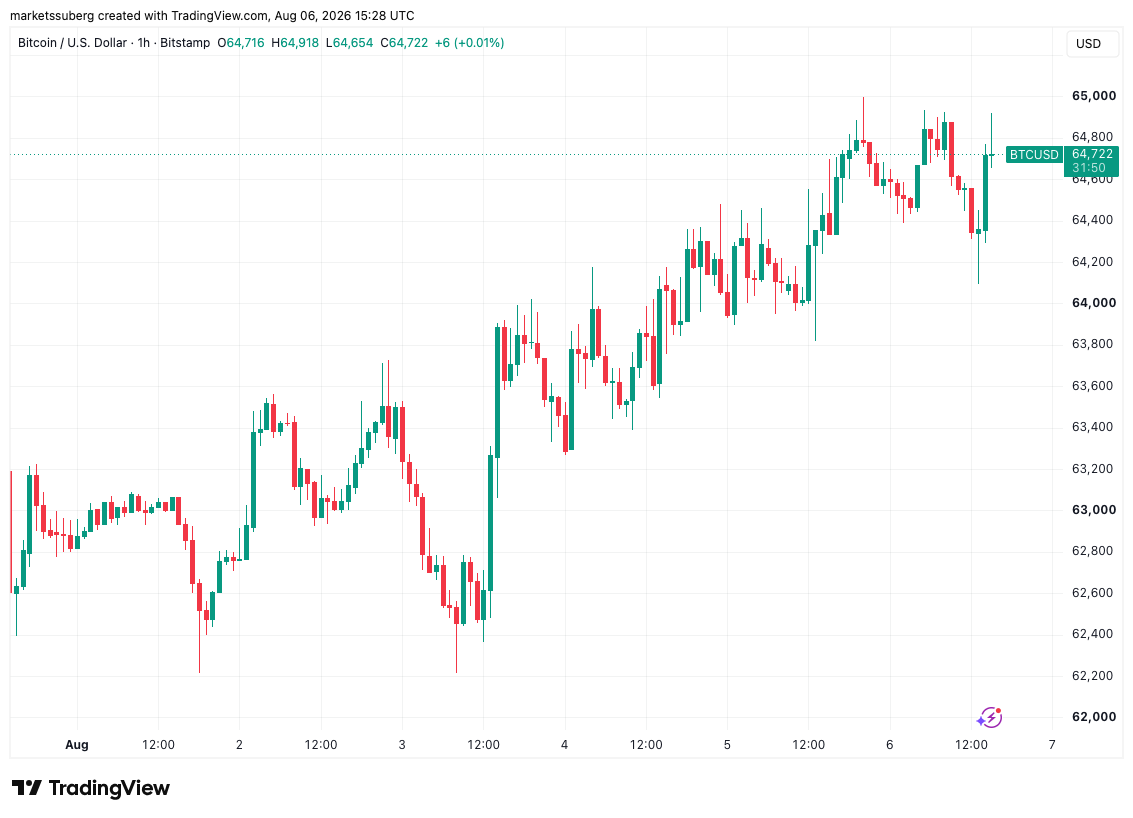
Data from TradingView showed BTC/USD hovering above $64,000, down around 0.5% on the day, while US stocks opened flat.
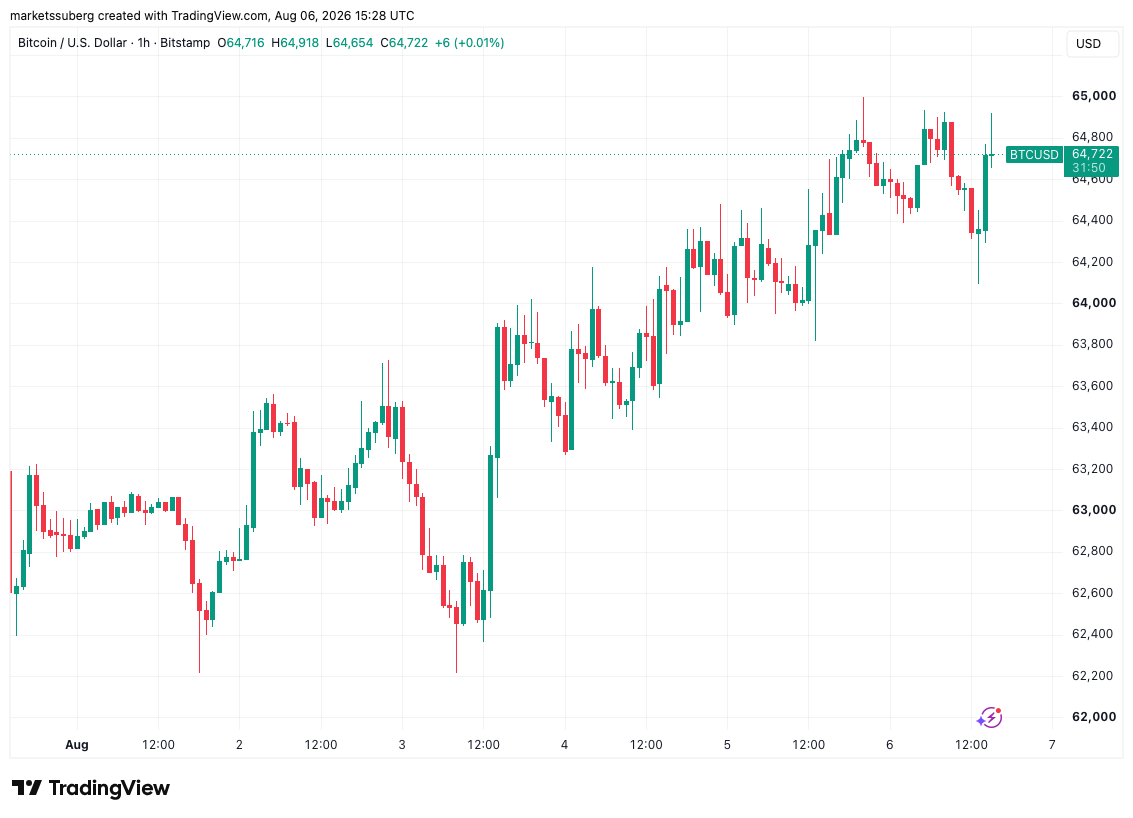
BTC/USD one-hour chart. Source: Cointelegraph/TradingView
Anticipation of a deal between Iran and Oman to reopen the Strait of Hormuz oil route did little to spark volatility — in the absence of US participation, it remained uncertain whether international shipping would fully resume.
“This understanding does not, in itself, mean that the Strait of Hormuz will reopen,” Iran’s Deputy Foreign Minister Kazem Gharibabadi said in an interview with the state-run Islamic Republic News Agency (IRNA), quoted by CNN.
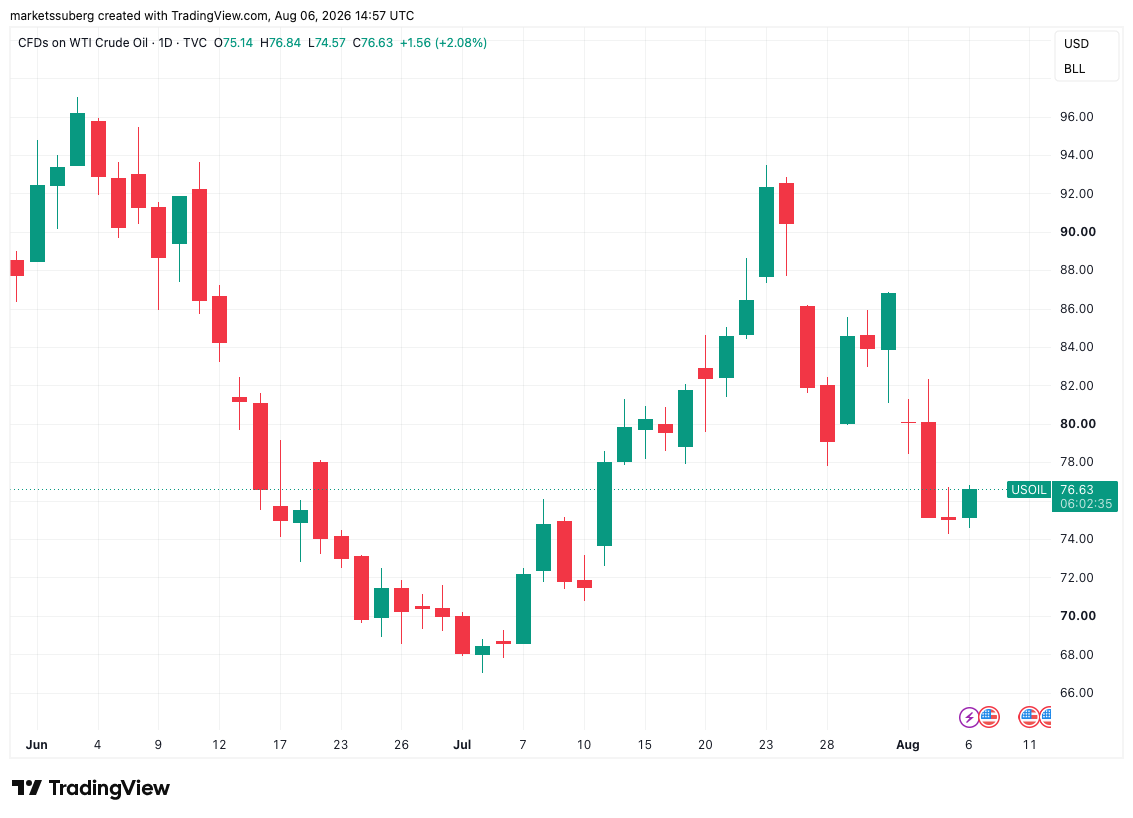
US WTI crude oil was little changed on the day at $76 per barrel, having hit three-week lows of $74.30 the day prior.
CFDs on WTI crude oil one-day chart. Source: Cointelegraph/TradingView
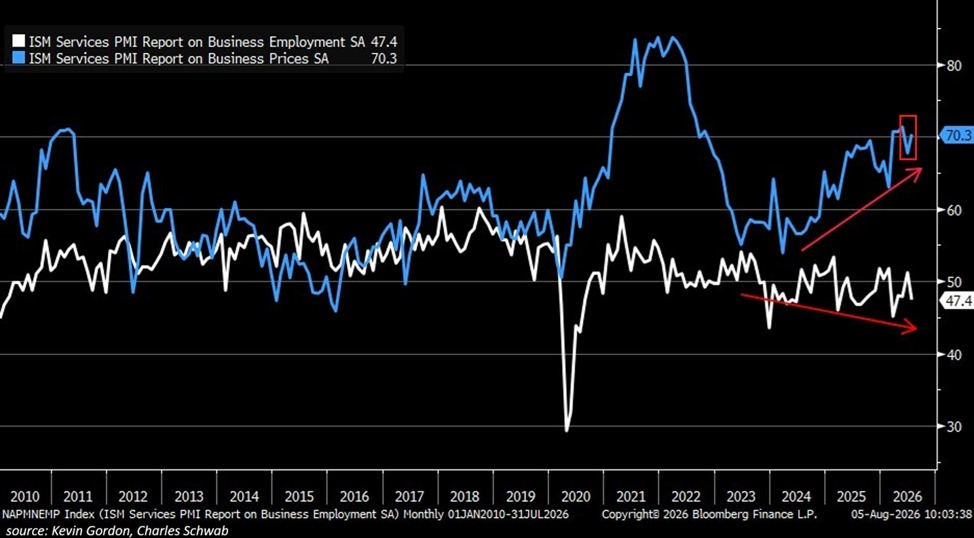
As markets awaited further geopolitical cues, trading resource The Kobeissi Letter turned to the latest US Institute for Supply Management (ISM) Services PMI and employment data. Released on Wednesday, this showed a divergence continuing, with PMI rising 0.1 point in July to 54.1, while employment dropped 3.6 points to 47.4, its lowest reading since March.
“At the same time, the prices paid index surged +2.6 points, to 70.3, near the highest since October 2022. Prices paid have now trended higher for over 2 years, rising +16.9 points since March 2024. In other words, the economy is increasingly under pressure from both rising prices and a weakening labor market,” it reported on X.
Kobeissi added that the odds of stagflation was thus “intensifying” based on the combined PMI readings.
US services PMI data. Source: The Kobeissi Letter on X.com
Analysis debates solution to BTC price paralysis
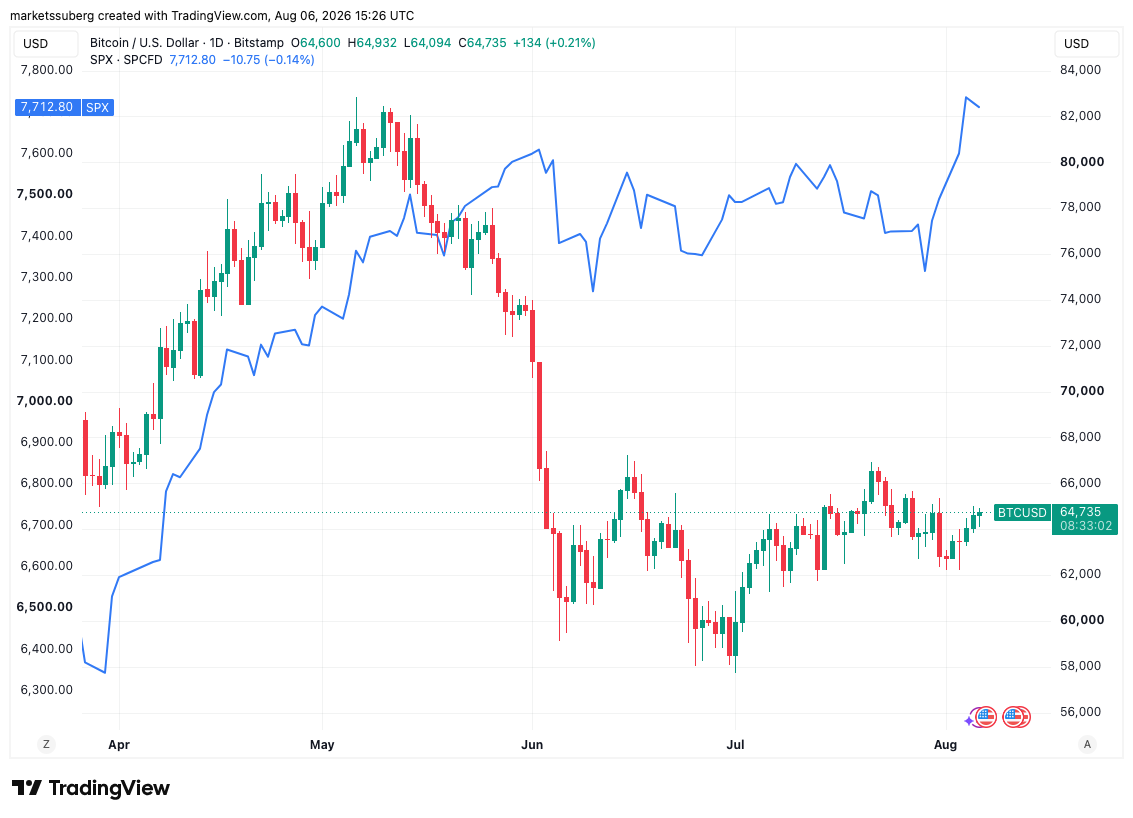
With Bitcoin failing to break beyond a local range in place since the start of June, onchain analytics platform Glassnode described BTC/USD as showing “boredom rather than capitulation.”
Related: Bitcoin treasury trade ‘breaking’ and fund holdings drop 10%: Analysis
In its latest analysis on Thursday, Glassnode noted Bitcoin’s lack of reaction as gold hit its highest levels in six weeks and the S&P 500 reached all-time highs.
“The regime in one line: a compressed, under-owned market that global risk appetite has left behind, with bottom conditions assembling but incomplete,” it summarized.
BTC/USD vs. S&P 500 one-day chart. Source: Cointelegraph/TradingView
Previously, Cointelegraph reported on bear-market comparisons seeing history repeating itself in 2026, with Bitcoin slowly eroding support before dropping to the cycle’s next macro floor.
Echoing Glassnode’s sentiment, Bitfinex Research, the analytics arm of crypto exchange Bitfinex, also saw the need for a more decisive macro bottom trigger than current conditions could produce.
“While macro developments and bitcoin’s underperformance compared with the Nasdaq and S&P 500 signal underlying stress, a genuine breakdown requires something more forceful, followed by volume-supportive price action,” it wrote in an update on Wednesday.
Eric Trump defended Elon Musk on Thursday, rejecting a Bloomberg column that cast the SpaceX founder as a serial overpromiser. His comment comes the same day 911 million restricted SpaceX shares become free to trade.
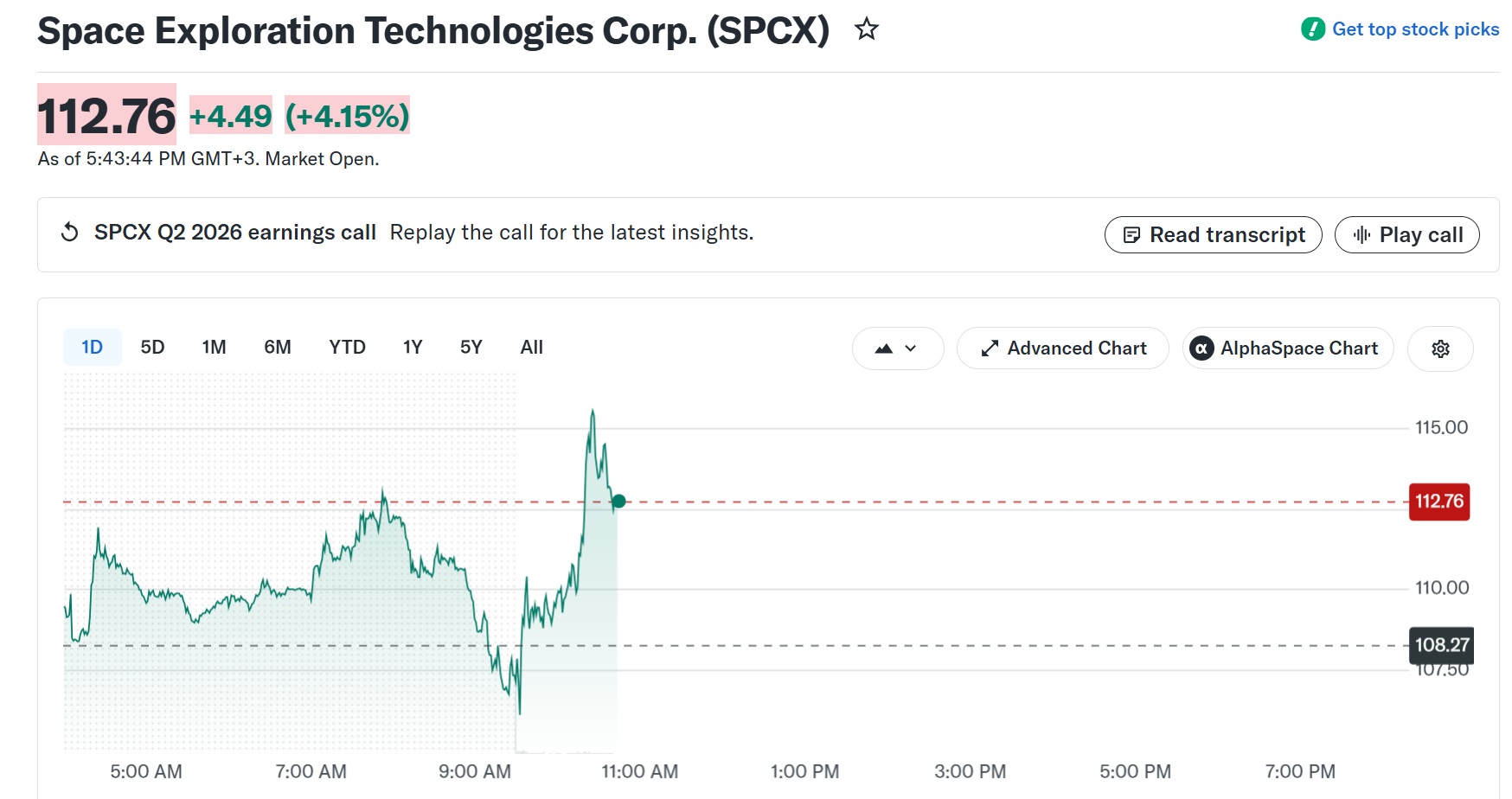
SpaceX (SPCX) stock climbed anyway. Shares changed hands near $112.76 late in Thursday morning in New York, up 4.15%. That bounce means less than it appears.

Eric Trump Answers Bloomberg With SpaceX Launch Numbers
In the report, Bloomberg credited Falcon 9 reliability and Starlink profits, but warns that a full mobile phone network could stretch the company too far.
One line did the damage, indicating that Musk has a long history of overpromising and underdelivering.
Eric Trump quoted that line back and answered it with launch data.
Follow us on X to get the latest news as it happens
The flight count holds up. SpaceX flew 165 Falcon 9 missions during 2025. That was roughly 85% of all United States orbital launches and close to double China’s output. One booster flew 32 times.
His mass figure is shakier. Public trackers count launches rather than payload weight, so the 80% to 85% claim is hard to test. Musk reposted the thread and called Bloomberg garbage.
The $18 Billion Number Behind the SpaceX Stock Slide
Neither man named the actual cause of the selloff. SpaceX reported earnings on Tuesday. Revenue hit $7.8 billion, up 92% and ahead of the $6.8 billion analysts expected.
Capital spending broke the story. SpaceX spent $18.4 billion in the quarter, against forecasts near $13 billion. That is more than twice what it earned in revenue.
Shares fell 13.61% on Wednesday to $108.27. Bloomberg had nothing to do with it. Jim Cramer had already flagged the unlock as a reason to wait.
Supply is the second problem. Roughly 911.5 million shares cleared their first lock-up on Thursday. That batch was worth close to $98.7 billion at Wednesday’s close.
The tradable float now roughly doubles. It moves from about 5% of the company to 12%, reviving an older thin float valuation debate.
Short sellers had crowded in first. Exchange data showed 165 million shares sold short at the July 15 settlement date, near 26% of the float. Later filings put the number around 219 million by July 29.
That detail explains Thursday. Heavy short interest hands any rally fuel, since bears must buy stock back to close out.
What Facebook’s 2012 Unlock Says About SpaceX Stock
History offers a clean test. Facebook walked into the same setup in 2012.
Its first lock-up freed 271 million shares on Aug. 16. The stock closed that day at $19.87, down more than 6%, a record low at the time. Volume ran five times normal.
The larger release went the other way. When 773 million shares came free on Nov. 14, Facebook gained 12.6%. Mark Zuckerberg held 504 million of them and said he would not sell.
Valuation professor Aswath Damodaran later studied the pattern across many listings. He found expiries shave 2% to 5% off a stock on average, yet about a third of them end higher. Volume jumps every time.
Thursday therefore looks ordinary rather than bullish. Bulls still see a floor here. Musk has called the slump an obvious entry point. One trader placed a $20 million options bet on a rebound.
Eight more tranches follow through December, and Musk’s own stake stays locked until 2027.
The post SpaceX Stock Price Recovers As Eric Trump Rallies Behind Elon Musk, Will It Hold? appeared first on BeInCrypto.

The BeInCrypto Stage returned to Píer Mauá for the fourth year in a row at Rio Innovation Week 2026, turning Wednesday morning into a showcase of the agenda now drawing banks, exchanges, and card issuers closer together.
Executives from companies including Binance, Visa, Nubank, BNY, Crypto.com, Mercado Bitcoin, and Bitso, among others, shared the stage to discuss stablecoins, financial superapps, prediction markets, and the infrastructure underpinning the next phase of digital assets in the country.
BeInCrypto launches “The Exodus Economy” report
BeInCrypto opened its own chapter of the day by unveiling “The Exodus Economy,” the first edition of a research effort by BeInCrypto Intelligence that maps how Latin American money finds a new financial home. The study followed 12 years of dollar flows on-chain, wallet by wallet, and audited 60 billionaire addresses against their Forbes profiles.
The report puts hard numbers behind a phenomenon usually told through headlines about departing millionaires. According to the study, Brazilians hold US$ 654 billion abroad, by their own central bank’s count, and 26.9 million Latin Americans already live outside their home countries. It also shows that roughly US$ 63.2 billion was sent home to Mexico over the last 12 months, with a crypto rail beside it already running at about half that size. One of its more counterintuitive findings is that all 14 Mexican billionaires tracked still live at home, evidence that the exodus is real but far from uniform.
The edition was reviewed alongside a Latin American Finance Council that includes Caio Fasanella, Head of Investments at Nomad, Antônia Souza, Director of Digital Currencies for Latin America and the Caribbean at Visa, Michael Rihani, Director of Crypto at Nubank, and Bruno Grossi, Head of Emerging Technologies at Banco Inter.
Binance unveils its first Brazil-only yield product on stage
The tone was set in the opening keynote. Thiago Sarandy, general manager of Binance in Brazil, took the stage to announce Binance Rende+, the platform’s first yield product built exclusively for the Brazilian market. It is a real-denominated investment yielding 120% of the CDI, backed by Treasury bonds, allowing deposits of up to R$ 100,000 and delivering daily returns that include Saturdays, Sundays, and holidays.
“Binance Rende+ combines features Brazilians already know, such as CDI-linked yield, with the advantages of digital assets, like earning 7 days a week, 24 hours a day, with the ability to redeem at any time. This significantly improves the potential of investors’ portfolios. People’s money can no longer be limited to business hours,” Sarandy said during the keynote “Everything Your Money Wants to Be: The Financial Superapps.”
The executive used the stage to reveal another line of expansion. Still in August, Binance will launch a tool in the Brazilian market that will let users buy stocks listed in the United States directly from the platform’s app, with access to more than 7,000 shares of U.S. companies.
According to Sarandy, the move consolidates Binance’s evolution beyond the crypto market, gathering into a single ecosystem solutions such as Binance Card, Pix integration, the new Binance Rende+ and, soon, investment in foreign equities.
The global figures he presented helped frame the scale behind the strategy. Binance today counts more than 325 million users, moved over US$ 34 trillion in trading volume throughout 2025, holds roughly US$ 160 billion in assets under custody, and can process up to 4.4 million transactions per second.
Sarandy also stressed that the company is currently the crypto platform with the largest number of regulatory licenses across different jurisdictions worldwide. Those interested in Binance Rende+ can already sign up for the pre-launch list on the company’s website.
Stablecoins and the tension between access and protection
If the Binance keynote placed the financial superapp at the center of the conversation, the panel “Money Never Sleeps Again: Stablecoins and the New Global Financial Infrastructure” brought the regulatory temperature into the debate. The table gathered Nelson Leite, from Binance, Eduardo Abreu, vice president of Visa in Brazil, and Sabrina Zaparroli, Public Policy Senior Expert at Nubank, moderated by Luís de Magalhães, BeInCrypto’s Latin America lead.

Sabrina Zaparroli, from Nubank, offered one of the morning’s densest reflections when she addressed the supposed democratization of the dollar through stablecoins. For her, ease of access cannot be confused with the absence of risk.
“I see this democratization as an important reduction of barriers. For many people, especially in lower-value international transactions, the possibility of accessing a virtual asset referenced to a strong currency and moving it at any time can mean more predictability, more speed and less friction. But it is important not to confuse access with the absence of risk,” she said.
Zaparroli argued that democratizing access also means democratizing information and protection. She contended that a stablecoin does not automatically become equivalent to a dollar in a bank account merely because it maintains a value reference, and that users need to understand the issuer’s obligations, how reserves are held, and what protection exists in the event of a failure.
“The simplicity of the interface cannot hide the nature of the product. We need to combine innovation with transparency, controls proportional to risk and communication that allows the client to make an informed decision,” she added.
The executive said she prefers to speak of more efficient access to dollar-denominated services, rather than an automatic replacement of the local currency.
Eduardo Abreu, from Visa, highlighted the collaborative nature of the debate, which brought together companies from different links of the chain.
“It was a great experience to be in a place where you see innovation, content and networking with high-level people. And to be on a panel with companies from different sectors, right? Us as Visa, the bank as issuer, Binance as exchange. It is really cool and it shows how this world has to be collaborative,” said the vice president.
BNY and the infrastructure argument
The institutional view gained reinforcement in the remarks of Carlos Xirau, Head of Latin America at BNY, who tied the debate to the idea that mass adoption depends less on technology and more on solid foundations.
“We are living through the convergence between traditional finance and the digital economy. The mass adoption of digital assets will depend less on technology and more on the ability to create a robust and reliable infrastructure, capable of meeting the demands of investors, companies and financial institutions. That is the path to changing the market’s scalability,” Xirau said.
Prediction markets enter the agenda
Another block that energized the stage was the one dedicated to prediction markets, a theme gaining ground in discussions about new financial primitives. The CEO of Rain Protocol summed up the stance he believes the sector must adopt toward a tool still under construction.
“Prediction markets are a new frontier. We need to understand how they work before jumping in. There are new and exciting possibilities ahead. To block this new tool is not the answer, to understand is,” the executive said.
He described prediction markets as a completely new market primitive, in which probabilities themselves become tradable assets, unlocking entirely new ways to price risk, coordinate information, and build financial products.
For the Rain Protocol CEO, Brazil embraced innovation throughout the event and holds the talent, curiosity, and entrepreneurial spirit to become one of the global leaders in shaping the future of the sector.
“The quality of the discussion reflected the energy and openness of the Brazilian ecosystem,” he noted.
An agenda that cements the convergence
The fourth edition of the BeInCrypto Stage at Rio Innovation Week confirmed the movement running through every panel: the border between traditional finance and digital assets is growing ever thinner. On one side, exchanges such as Binance are advancing into fixed-income products and equities. On the other hand, banks and issuers like Nubank and Visa are folding stablecoins and onchain rails into their operations, while institutions such as BNY defend infrastructure as the precondition for scale.
To read “The Exodus Economy” report, click here.
The message that emerged from Píer Mauá is that the conversation is no longer about whether convergence will happen, but about how to build it with transparency, user protection, and rules proportional to risk.
The post BeInCrypto Stage at Rio Innovation Week: Where TradFi and Crypto Meet appeared first on BeInCrypto.

Boerse Stuttgart Digital and institutional crypto trading firm Tradias have officially completed their merger, forming a combined digital-asset infrastructure business with roughly 300 employees. The deal follows the clearance of an ownership control process, clearing the final regulatory hurdle needed to proceed with the combination.
The merger was originally announced in February, when the two companies said they would unite their regulated crypto operations and broaden services for banks, brokers, and other financial institutions across Europe. With the transaction now closed, the combined entity will aim to deepen its platform of trading and custody-related offerings under a single corporate structure.
Key takeaways
- Boerse Stuttgart Digital and Tradias have completed their merger after clearing the required ownership control procedure.
- The combined company will operate under the Boerse Stuttgart Digital name, while Tradias remains the brand for trading services.
- The unit will offer trading, custody, staking, and tokenization, targeting institutional clients across multiple regions.
- Co-CEOs will be Tradias founder Christopher Beck and Boerse Stuttgart Digital managing director Ulli Spankowski.
- The firms’ infrastructure will be headquartered in Frankfurt and Stuttgart, with additional offices in several European and Middle Eastern locations.
Merger closes after ownership control step
According to the companies’ announcement, Boerse Stuttgart Digital and Tradias finalized the merger after completing the ownership control procedure required for the transaction. The closing marks a shift from dealmaking to execution—an important distinction for institutions that often require stability and regulatory certainty before committing new capital or operational workflows.
Earlier coverage of the planned combination noted that the companies intended to consolidate their regulated crypto businesses to build what they described as a European crypto hub. The close of the merger suggests that the integration can now proceed without further corporate-structure uncertainty, allowing customers to plan around a single provider for multiple components of institutional digital-asset operations.
How the merged business will be structured
Under the terms communicated at the time of closing, the merged operation will use the Boerse Stuttgart Digital name. However, Tradias will continue to be used as the brand for the trading services. This dual-brand approach may be designed to preserve existing market recognition for trading while aligning other infrastructure services under the Boerse Stuttgart Digital umbrella.
The announcement also details the leadership appointments. Tradias founder Christopher Beck and Boerse Stuttgart Digital managing director Ulli Spankowski will serve as co-CEOs, reflecting a shared governance model rather than a full leadership replacement. For institutional clients, continuity at the executive level can matter as processes related to market-making, custody operations, and settlement workflows are integrated.
Services and footprint: trading, custody, staking, tokenization
The combined unit will provide a broad suite of digital-asset services, including trading, custody, staking, and tokenization. This menu targets core institutional needs that frequently sit behind larger on-chain or tokenization strategies—where organizations require regulated access, operational controls, and well-established service delivery.
Geographically, the business will be headquartered in Frankfurt and Stuttgart, and will also maintain locations in Athens, Beirut, Berlin, Dubai, Madrid, Milan, and Ljubljana. That footprint indicates an effort to support clients across different jurisdictions and market environments, particularly as banks and investment firms look for providers capable of operating in multiple regulatory contexts.
Institutional client base and market coverage
Boerse Stuttgart Digital lists a number of established institutional clients, including DZ Bank, DekaBank, Intesa Sanpaolo, and Société Générale-FORGE. Tradias, for its part, supports clients including flatexDEGIRO, dwpbank, and European government institutions, according to the merger announcement.
On the market side, Tradias provides trading and market-making services for more than 150 cryptocurrencies and other digital assets. Financial terms of the merger were not disclosed. While the lack of deal pricing limits how outsiders can assess valuation, the operational details—service scope, leadership, and footprint—offer a clearer picture of what the combined company intends to deliver after the integration.
Importantly for market participants, scale in market-making and asset coverage can influence how institutional clients access liquidity across many tokens, especially for firms that need both execution and ongoing custody or settlement support. The merged structure—pairing trading capability with custody and additional services—could streamline workflows for institutions that previously had to coordinate across separate providers.
What to watch next
With the merger closed and leadership in place, customers and investors should watch how the companies integrate operations across trading, custody, staking, and tokenization—and whether the combined footprint and branding accelerate uptake among banks and brokers across Europe. The key open question is how quickly service delivery and coverage will unify under the new structure without disrupting existing client operations.


Tether, best known for issuing USDT, the world’s most widely used stablecoin, is expanding its push into real-world asset tokenization to bring institutional-grade real estate asset onchain in Saudi Arabia.
The company said Thursday that its tokenization platform, dubbed Hadron, will provide the technology to issue and manage tokenized real estate assets for institutional investors in the country. Tether is teaming up with Saudi partners First Data and fintech company BKN301 on the effort.
The operating model could later expand beyond real estate into energy, infrastructure finance and other real-world assets, the firms said.
The announcement marks Tether’s latest effort to expand beyond stablecoins into tokenization, a fast-growing application of blockchain rails in finance. The firm launched Hadron in 2024 to simplify asset tokenization and is also the issuer of the largest tokenized gold offering, the $2.6 billion XAUT.
Banks and asset managers have increasingly turned to tokenization to represent traditional assets such as money market funds, private credit, real estate and equities on blockchains, arguing the technology can streamline settlement, broaden investor access and improve capital efficiency. Citi projected that the tokenized securities market could reach $5.5 trillion by 2030.
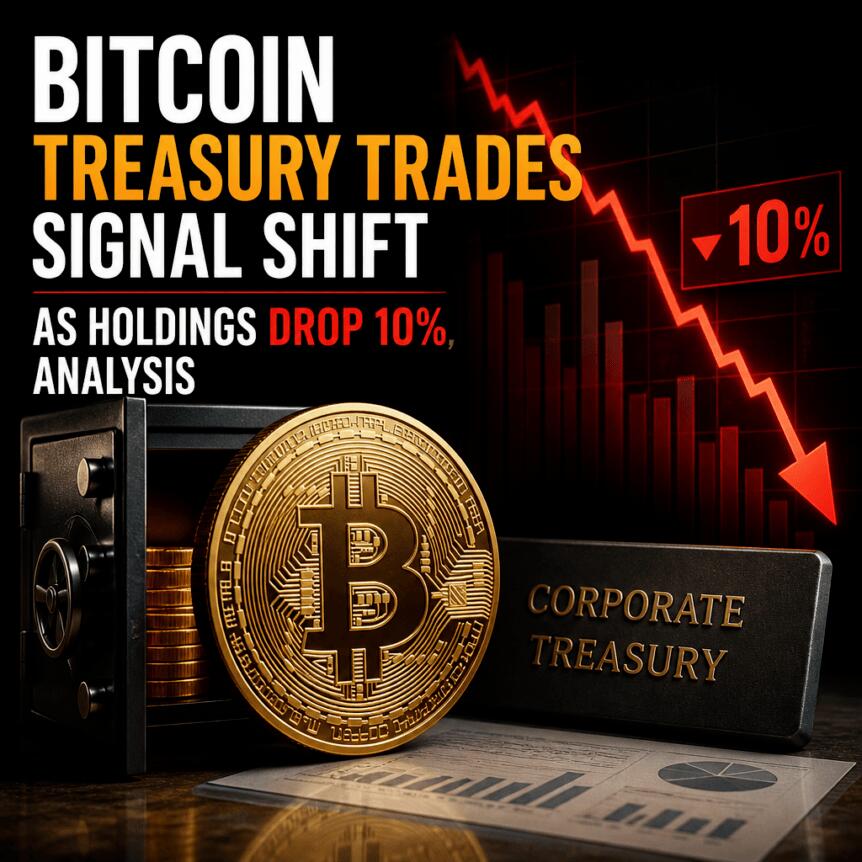
Bitcoin’s institutional footprint appears to be shrinking again, with on-chain and market metrics pointing to weaker demand from the category of holders that typically amplifies price through financial engineering and “treasury” models. According to data compiled by CryptoQuant, combined exposure across institutional Bitcoin vehicles has dropped from 1.33 million BTC to 1.20 million BTC over the past three months—an approximate 10% reduction since May.
The pullback is occurring alongside a prolonged dislocation in exchange pricing. CryptoQuant also highlights a Coinbase Premium streak that has turned persistently negative for a record 93 days, a pattern analysts often associate with muted institutional buying—particularly from U.S. participants—until the premium meaningfully improves.
Key takeaways
- CryptoQuant data shows combined holdings across institutional Bitcoin vehicles fell from 1.33 million BTC to 1.20 million BTC over three months (about 10%).
- CryptoQuant links the broader decline to pressure on “Bitcoin treasury” companies when their equity trades below the value of their BTC holdings.
- Strategy, the largest publicly held Bitcoin treasury company, reportedly sold 1,638 BTC last week.
- The Coinbase Premium index has remained negative for 93 days, reaching a record streak since early May.
Institutional exposure declines as treasury models weaken
CryptoQuant’s analysis attributes part of the institutional drawdown to the changing economics of Bitcoin treasury companies—public firms that hold significant BTC and often rely on their market valuations to finance additional purchases. In CryptoQuant’s framing, when those firms’ share prices trade above the net asset value (NAV) of their Bitcoin holdings, the market can function like a “reflexive” loop: companies issue equity or debt, buy more Bitcoin, and reinforce the premium.
That loop, however, weakens when market capitalisations fall below NAV and new financing becomes dilutive. As Novaque Research put it, the mechanism “weakens when market capitalisations fall below net asset value, and financing becomes dilutive.” In that environment, the treasury story can shift from growth-by-capital-market access to a more constrained model where additional BTC purchases become harder to justify.
CryptoQuant notes that on-chain evidence supports a loss of institutional demand, though it also cautions that the data cannot directly isolate treasury companies as the sole driver. Still, the company points to the valuation pressure facing several Bitcoin treasury names that trade at a discount to the NAV of their BTC holdings.
Strategy’s recent BTC sale spotlights the discount dilemma
The drawdown theme is reinforced by recent activity from Strategy. Business intelligence software company Strategy, which holds the largest Bitcoin treasury among public corporations, sold 1,638 BTC last week, according to earlier reporting.
CryptoQuant’s discussion centers on how market valuation discounts can distort the treasury thesis. It highlights that in Strategy’s case, a discount disappears depending on the valuation methodology used. CryptoQuant provides an additional view: on a basic share-count basis, the discount is 0.7 as of Thursday. But after taking into account Strategy’s $8 billion debt and the liquidation preference tied to its STRC preferred stock, CryptoQuant reports an mNAV of 1.03.
In practical terms, this kind of accounting sensitivity matters because treasury strategies often rely on the market’s willingness to value the BTC pile at or above the company’s implied “Bitcoin NAV.” When that valuation wobbles—or flips into a discount—capital-market support can weaken, which can show up in reduced net accumulation.
Coinbase Premium hits a record negative streak
The institutional exposure slide is happening at the same time as a separate market signal: Coinbase Premium. CryptoQuant states that the index has recorded a record 93 days of negative readings.
The Coinbase Premium measures the difference in price between Coinbase and Binance for BTC/USDT pairs. A negative reading implies Coinbase’s pricing is lower relative to Binance’s, a divergence that often aligns with lower U.S.-centric demand and/or constraints in how quickly capital moves into regulated venues.
Cointelegraph previously reported that the premium has been negative since the start of May, and that this period represents the longest run of negative readings in its observed history. A visual on CryptoQuant’s charts accompanies the analysis in the current report, showing the prolonged downside drift.
For some analysts, the record streak is more consistent with a demand shortage than with heavy, persistent selling pressure. In a post shared via X, Web3 marketing platform FOUR argued that the genesis of the months-long negative reading “did not lie in blanket US selling pressure,” adding that as long as the premium stays negative, institutional buying from U.S. investors appears muted. FOUR’s message, as captured in the reporting, is that the market should watch for when the premium flips positive as a potential prerequisite for a stronger recovery.
Why the premium, treasury valuations, and ETF flows are linked
Although the on-chain holding changes and the Coinbase Premium signal don’t automatically prove a single cause, they point in the same direction: institutional behavior appears less supportive than it was earlier in the year. Reuters previously reported on Citi’s view that ETF flows are an “important driver of prices,” and that the bank had cut its BTC price forecast to $53,000 through 2027 while ETF flow dynamics turned less favorable.
That matters because ETFs and other regulated U.S. access points are often central to institutional participation narratives. If ETF flows weaken, the pressure can show up first in exchange-relative indicators like Coinbase Premium. Then, as treasury companies face less supportive market pricing versus NAV, their ability—or willingness—to add BTC via equity and debt financing can become more limited. The result may be exactly what CryptoQuant is observing: institutional exposure falling across trusts, ETFs, and closed-end vehicles.
At the same time, CryptoQuant’s analysis is careful about causality. It states that the on-chain evidence supports a loss of institutional demand but cannot directly isolate the role of treasury companies. That uncertainty is important for readers: the data suggests direction and correlation, but investors should avoid assuming a single entity or single mechanism is responsible for the full change.
Going forward, the key watch-items are straightforward: whether Coinbase Premium eventually turns positive after the 93-day negative streak, whether institutional vehicles stabilize their BTC holdings after the approximate 10% decline since May, and whether treasury companies return to a valuation environment that makes incremental financing less dilutive. Those signals together can help clarify if the current institutional cooling is temporary or part of a longer reset in how Bitcoin is funded and accumulated.

Physical theft targeting crypto holders is escalating, according to a new Chainalysis report that tracks “wrench attacks” — kidnappings, home invasions, and hostage scenarios designed to force victims to hand over digital assets. In the first half of this year, criminals stole more than $30 million through these violent robberies, putting 2026 on course to exceed the $58 million record reported for 2025.
Chainalysis said it documented 46 violent crypto-related incidents globally through late June, up from 40 during the same period in 2025. The report highlights a key shift for crypto security: the risk is no longer limited to custody and account access, but increasingly extends to victims’ homes, families, and personal safety.
Key takeaways
- $30M+ was reportedly stolen in wrench attacks in the first half of 2026, suggesting the year could surpass $58M stolen in all of 2025.
- 46 incidents were recorded worldwide through late June, up from 40 in the same period of 2025.
- Payment outcomes remain limited: only 12 of 46 attacks led to a payment, for a 26% success rate.
- Success appears down: the reported payment rate fell from 49% in 2025.
- France is a hotspot: the report lists 30 public incidents by midyear, versus 19 across all of 2025.
A rise in violence, even as payment rates fall
Chainalysis’ figures point to wrench attacks becoming more frequent, even though the percentage of cases that result in payments has declined. In its analysis, the firm found that just 12 of the 46 documented incidents through late June ended in attackers receiving payment, translating to a 26% success rate.
That rate is lower than in 2025, when Chainalysis reported a 49% success rate for similar incidents. The discrepancy matters for investors and users because it implies criminals may be scaling up the number of attempts to offset lower yields, increasing aggregate harm even if individual attacks are less likely to pay out.
At the same time, Chainalysis cautioned that the real scale is likely understated. The firm noted that many attacks may go unreported, meaning the measured success rate could be distorted by incomplete visibility into outcomes.
The report also describes a troubling operating model: “tradecraft tends to be amateur at the point of violence, but professional at both ends.” In other words, some attackers executing the physical threat appear less sophisticated, while the selection and planning of targets may be more systematic — often involving victims identified through data leaks, social media, or insider information.
France’s surge and the role of leaked or misused data
While wrench attacks are global, the report indicates a particularly sharp concentration in France. Chainalysis said France logged 30 publicly known incidents by midyear, compared with 19 throughout 2025. Crucially, Chainalysis also pointed to the possibility that the visible number is a fraction of the true total: French authorities have reportedly counted more than 70 incidents.
In July, French Interior Minister Laurent Nuñez put the first-half figure at 77 kidnappings, extortions, or attempted extortions — up from 45 for all of 2025. (Earlier coverage from Cointelegraph noted the government’s response alongside those figures.) Spain arrests suspect in 2025 kidnapping of Ledger co-founder is unrelated to the French count, but it underscores how reported incidents are being closely followed across jurisdictions.
The French government response, according to the report, includes a rapid-alert and protection system, with promises of expanded intelligence-sharing and coordination with the crypto industry. The implied investor takeaway is that regulators and law enforcement are treating physical targeting as a broader security issue, not merely an isolated criminal pattern.
Chainalysis also identified what it called the likeliest driver of the surge: alleged misuse of French tax records. The report describes an allegation that a French tax official accessed and sold information about crypto investors to criminals. In addition, it reports a separate breach at crypto tax-reporting company Waltio that reportedly exposed data for about 50,000 users.
For crypto holders, these details emphasize why personal data hygiene and source integrity are increasingly relevant to safety. If criminals can identify likely crypto owners with prior knowledge, the attack risk can rise regardless of whether a victim’s coins are securely held in a formal wallet setup.
How stolen funds move after the violence
The Chainalysis report also examined what happens after the physical threat — specifically, how attackers convert coercion into onchain value. The firm said tactics varied across cases.
In some incidents, attackers allegedly sent stolen funds directly to centralized exchanges. Other attackers reportedly used a sequence of tools and venues, including bridges, decentralized exchanges, and laundering services. Chainalysis noted that the most advanced cases showed links to broader criminal networks, suggesting that violence is only one part of an ecosystem that may include professional financial facilitation.
That multi-stage behavior is important for readers trying to understand both risk and recovery. Even when the physical incident does not end in payment, the attempt itself can still be informed by data gathering and may be followed by financial workflows designed to reduce traceability.
Earlier editorial conversations in the ecosystem have also focused on how hardware wallet compromises and operational security failures can expose holders to theft. However, Chainalysis’ wrench attack analysis is distinct: it centers on physical coercion and the data pathways used to identify victims, not on whether a particular device type is broadly insecure.
For those tracking broader security trends, the wrench attack pattern may be best understood as an extension of cybercrime into real-world harm — where leaks and compromised records help criminals select targets, and where execution ranges from amateur violence to more professional money movement.
What to watch next
As reporting continues and law enforcement in high-incidence regions refines alerts, protection, and data-sharing efforts, the key unknown will be whether the decline in payment success rates translates into fewer total victims—or whether attackers will keep increasing attempts to maintain revenue. Crypto holders should also watch for further disclosures about data exposure pathways, particularly involving personal records that could make individuals easier to target.


In 2021, during the height of NFT-mania, an angel investor and macroeconomist named Tascha Che (aka Tascha Labs) announced her plan to buy a $5,000 diamond, create an NFT of it, then smash it to pieces.
The stunt, intended to prove that, while physical objects can be destroyed, digital footprints can forever retain value, was widely criticized by most outside of cryptocurrency and NFT circles.
But since the complete collapse of the NFT markets and liquidity falling to near all-time lows, how has the shattered diamond NFT performed?
Diamond background
Che came up with the idea after posting a hypothesis to Twitter:
Once the tweet got enough traction, she pursued the concept. In August of 2021 she purchased a 1.3 carat diamond online, had it delivered, and then started to work on ways she could destroy it.
Her initial plan — to hit the diamond with a hammer — failed miserably, but she was eventually able to go to a mechanic who used some type of drill to obliterate it for free.
The next step was to mint the now-destroyed gem on an NFT marketplace so that people could bid on it.
This proved to be successful.
In September of 2021 a user purchased the NFT for 5.5 ETH, valued at +$17,000 at the time and over three times the price Che paid for the diamond.
While Che instantly took to social media to proclaim that her hypothesis had been proved correct, the reality was that a single sale couldn’t possibly prove that all digitized assets could retain value in spite of their destruction.
Read more: NFT firm founder indicted for using treasury to support ‘DJ hobby’
Diamond hands
After purchasing the NFT, Ivan Zhang, a decentralized finance proponent and investor, held it until finally selling in October of 2025 — for an astounding 11 ETH, or $43,000 at the time.
The destroyed diamond NFT had once again nearly tripled in value, despite one carat diamond prices plummeting in value nearly 40% over that same time period.
So, was Che’s hypothesis correct after all?
Not at all.
Not value retention, an internet artifact
As admitted to by Zhang when posting about the sale, diamond prices will continue to go down as synthetics become easier to make and demand from retail dries up.
But somehow the NFT has continued to gain value.
If the NFT was simply designed to retain the value of a destroyed physical good, one would expect to see an equal rise or decline in value.
However, a similar 1.3 carat diamond available for purchase on the same website that Che purchased hers from is now worth between $3,500-$4,000, a decline of over 20%.
Over that time period, the destroyed diamond’s value has ballooned to $43,000, or an increase of 760%.
If anything, Che’s experiment has proven positively that there’s little to no expectation of value retention of real world, physical goods that are digitized and made into an NFT. One just has to be lucky and hope that their idea goes viral.
Got a tip? Send us an email securely via Protos Leaks. For more informed news and investigations, follow us on X, Bluesky, and Google News, or subscribe to our YouTube channel.


Katherine Wu, chief operating officer of ENS Labs, posted an executable draft Thursday of the proposal to establish an ENS Foundation, dropping a plan to shift the DAO's operational wallet to the new entity after weeks of delegate opposition to an earlier version of the plan. The draft, "[Draft]… Read the full story at The Defiant

Sydney Swans vs Port Adelaide Power Tips, Odds and Teams – AFL Round 22 2026

US mortgage rates rise again, hitting another 52-week high

Cotswold towns and villages oppose ‘flawed’ housing target

Renter of Home in Anne Heche Crash Denies Settlement With Son

No Jackpot Winner as $257 Million Prize Rolls Over to $269 Million Monday Draw

Weekend Open Thread: Staud – Corporette.com

XRP It’s Official! i got urgent CLARITY ACT NEWS for xrp holders

“Bitcoin CRASHES to $60k! Something Bigger Is Coming…” – Raoul Pal

Decoding Revenue Streams of Daily Finance Businesses || See How it Works || Revenue Decoding Series
-

 Fashion6 days ago
Weekend Open Thread: Wit & Wisdom
-

 Politics6 days ago
Meta enters AI-training agreement with far-right ‘propaganda rag’ Newsmax
-

 Politics4 days ago
Zack Polanski: an incitement to murder Nigel Farage?
-

 Crypto World5 days ago
MicroStrategy Post-Earnings CLARITY Act Push Could Add New Catalyst for Its Stock
-

 Crypto World5 days ago
XRP Ledger v3.3.0 brings five institutional features
-

 Sports7 days ago
Seema Kaliramna Wins Discus Throw Bronze, Takes India’s CWG Medals Tally To 17
-

 Crypto World6 days ago
New York sues Kalshi over prediction market gambling
-

 Crypto World4 days ago
Crypto PAC spending tops $2M in Michigan House race
-

 Business4 days ago
DTCR: Deleveraging And A Hedge Fund Collapse Point To A Possible AI Bottom
-

 Business6 days ago
Trump Announces Hamas Disarmament Agreement as Iran Strikes Kuwait Air Base and US Attacks Pause Overnight
-

 Tech4 days ago
ESET tracks rise in malicious AI skills and adaptable malware
-
 Crypto World6 days ago
3 Fed Officials Just Explained Their Rate Hike Vote: Is Inflation Winning?
-

 Tech6 days ago
Gemini Spark can now use Chrome logins and saved passwords to run errands on your behalf
-

 Sports5 days ago
France Cricket implodes: letters hidden in a drawer and a board at war
-
Crypto World4 days ago
XRP Ledger urges node upgrade after manifest flood
-

 Tech6 days ago
Building A Reproduction PlayStation Motherboard
-

 Crypto World5 days ago
Moneyflip CEO charged in $40K murder-for-hire plot
-
 Sports6 days ago
Bruno Fernandes decision made as Man United ‘discuss’ striker transfer option
-

 News Videos5 days ago
Financial Crash Expert: The 90-Day Collapse Timeline They Are Desperately Hiding.
-

 NewsBeat7 days ago
Spain sending troops as thousands enter enclave of Ceuta from Morocco
You must be logged in to post a comment Login