
Business
Gender pay gap won’t close until 2056 at current pace, warns TUC


The UK’s gender pay gap will not close for another three decades if progress continues at its current rate, according to the Trades Union Congress (TUC).
Analysis of official earnings data by the union body shows that the average disparity between men’s and women’s pay stands at 12.8%, equivalent to £2,548 a year. At that pace of improvement, the gap would not be eliminated until 2056, the TUC said.
The gap varies sharply by sector. In finance and insurance it is widest at 27.2%, while in leisure services it is just 1.5%. Even in female-dominated sectors such as education and health and social care, the pay gap remains significant at 17% and 12.8% respectively.
The gender pay gap reflects the difference in average earnings between men and women across organisations and industries. Companies with more than 250 UK employees are legally required to publish gender pay data.
The TUC said the disparity means the average woman “effectively works for 47 days of the year for free” compared with male colleagues.
“Women have effectively been working for free for the first month and a half of the year compared to men,” said TUC general secretary Paul Nowak. “With the cost of living still biting hard, women simply can’t afford to keep losing out.”
The pay gap is largest among workers aged 50 to 59, a trend the TUC attributes partly to the long-term impact of women pausing or scaling back careers to take on caring responsibilities.
The union federation is calling for improved access to flexible working, expanded childcare provision and stronger parental leave policies to help narrow the gap. Nowak described the government’s recent Employment Rights Act as “an important step forward”, but argued further action was needed so parents could better share caring duties.
Business groups have previously warned that additional employment rights and benefits could increase costs for employers. Matthew Percival, director of the future of work and skills at the Confederation of British Industry (CBI), said firms were already facing significant pressures.
“The cost of doing business is leading to job cuts,” he said. “With major changes to employment laws coming, the government must take care not to add further strain.”
Under new rules, employers will be required to publish action plans setting out how they intend to reduce their gender pay gap.
A government spokesperson said ministers were “tackling the root causes of the gender pay gap” through measures including expanded childcare entitlements, strengthened protections for new mothers and changes to flexible working rights.
Despite incremental progress in recent years, the latest figures suggest that without faster reform and structural change, pay parity remains a distant prospect.

Amy Ingham
Amy is a newly qualified journalist specialising in business journalism at Business Matters with responsibility for news content for what is now the UK’s largest print and online source of current business news.


Asia stocks: S.Korea, Japan stocks rise on tech gains; US jobs data awaited
Business
Bank of Baroda Q4 update: PSU lender reports 14% YoY growth in global business; deposits rise 12%

These figures are provisional and part of the PSU bank’s quarterly business update. The final numbers will be announced along with its earnings.
Domestic deposits rose 13% YoY to Rs 14 lakh crore in the quarter under review, compared with Rs 12.42 lakh crore in Q4FY25.
Global advances grew over 16% to Rs 14.30 lakh crore during the January-March quarter, up from Rs 12.30 lakh crore in the year-ago period.
Domestic advances grew 15% YoY to Rs 11.69 lakh crore, compared with Rs 10.21 lakh crore in the year-ago period. Within this, domestic retail advances surged 18% to Rs 3 lakh crore from Rs 2.56 lakh crore in Q4FY25.

The state-owned bank announced its Q4 updates late Thursday. Its shares settled 0.80% lower at Rs 250 on the NSE in the previous session.
In the third quarter of FY26 ended December 2025, BoB reported credit growth of 15% to Rs 13.44 lakh crore, compared with Rs 11.73 lakh crore at the end of the same quarter last fiscal.The lender also posted a 10% increase in total deposits to Rs 15.47 lakh crore, up from Rs 14.03 lakh crore in the year-ago period.
As a result, the bank’s total business (credit and deposits) rose 12.22% to Rs 28.91 lakh crore as of December 31, 2025, compared with Rs 25.76 lakh crore a year earlier.
Also read: PNB Q4 updates: Global business rises 11% YoY to Rs 29.72 lakh crore; advances jump 13%
(Disclaimer: The recommendations, suggestions, views, and opinions given by the experts are their own. These do not represent the views of The Economic Times)


Gold Mining Bull is a gold analyst with more than a decade of investing experience in commodities, hard assets (gold and silver miners), exploration companies, oil and gas producers, MLPs, and more.
Analyst’s Disclosure: I/we have a beneficial long position in the shares of BTG either through stock ownership, options, or other derivatives. I wrote this article myself, and it expresses my own opinions. I am not receiving compensation for it (other than from Seeking Alpha). I have no business relationship with any company whose stock is mentioned in this article.
I may buy shares of EGO this week
Seeking Alpha’s Disclosure: Past performance is no guarantee of future results. No recommendation or advice is being given as to whether any investment is suitable for a particular investor. Any views or opinions expressed above may not reflect those of Seeking Alpha as a whole. Seeking Alpha is not a licensed securities dealer, broker or US investment adviser or investment bank. Our analysts are third party authors that include both professional investors and individual investors who may not be licensed or certified by any institute or regulatory body.

Operator
Good afternoon, good morning, everybody, ladies and gentlemen. Welcome to the EuroEyes 2025 Annual Results Presentation. It’s our pleasure to introduce to you the management joining us today. They are Dr. Jorg Slot Jorgensen, Chairman, Executive Director and Chief Executive Officer; and Mr. Marcus Huascar Bracklo, Executive Director and Chief Financial Officer; [Operator Instructions] May I now pass the time to Dr. Jorgensen to start the presentation, please.
Jörn Jörgensen
Founder, CEO & Executive Chairman
Yes. Hello, everybody. Good morning here from Hamburg in Germany. I’m going today to present you 2025 annual results. I’m sitting in Hamburg and our CFO, Mr. Bracklo is sitting in Frankfurt, and we will let you through the different parts of the annual result. Please, the next thing — the next slide, please.
Okay. This year, we did 2 major transition and one of them was in Switzerland and the other one in Holland. I wish to start with that today that you have a little feeling about what was going on, on this front before I come to the results. As you know, we have — we were listed in 2019. So we had proceeds from the listing. And this year, we have been looking for that a long time. We until now did two, one in London, one in Manheim. So we have been very selective there.
But this year, we found 2 at the sphere. The one was in Switzerland. And Switzerland is a very important market for our high-end products here in Europe. And also with the competition landscape is very favorable. And we managed to get a company with

The New York Times Connections puzzle for Friday, April 3, 2026 — Connections No. 1,027 — challenged players with clever word groupings that tested vocabulary nuance, drink knowledge and compound phrases, as thousands of daily solvers across the globe logged in to test their pattern-recognition skills on the popular word game.

The 16 words presented were: MEAN, PETTY, SMALL, SNIDE, JONES, LONG, LUST, THIRST, COLLINS, HURRICANE, ROCKS, ZOMBIE, CRUISE, DAMAGE, GROUND, MISSION.
According to official solutions and multiple puzzle companion sites, the four categories broke down as follows, ordered from easiest (yellow) to hardest (purple) as ranked by the game itself.
Yellow category (easiest): Catty — MEAN, PETTY, SMALL, SNIDE. These adjectives all describe subtly malicious or spiteful behavior, often associated with gossip or passive-aggressive remarks. Solvers who spotted the “catty” theme early gained quick momentum, as the words share a clear semantic overlap in everyday English usage for describing petty criticism.
Green category: Hanker (For) — JONES, LONG, LUST, THIRST. This grouping captures verbs meaning to crave or desire something intensely. “Jones” as in “jonesing for,” “long for,” “lust after” and “thirst for” all convey strong yearning. The category required recognizing less common slang like “jones” alongside more straightforward synonyms, making it a satisfying middle-difficulty solve for many.
Blue category: Cocktail Glasses — COLLINS, HURRICANE, ROCKS, ZOMBIE. These refer to specific types of glasses or serving styles used in mixology. A Tom Collins glass, Hurricane glass (famous for the New Orleans drink), rocks glass (for spirits on the rocks) and Zombie glass (for the potent tiki cocktail) form a neat set of barware terms. Drink enthusiasts and trivia fans often nailed this group quickly, while others needed to think beyond literal glass shapes to bar terminology.
Purple category (hardest): _____ Control — CRUISE, DAMAGE, GROUND, MISSION. These complete common compound phrases or titles: cruise control, damage control, ground control and mission control. The purple category, traditionally the trickiest, rewarded solvers who considered idiomatic expressions and technical terms from aviation, space exploration and emergency response. Many players reported this as the final group they cracked after eliminating other possibilities.
The puzzle’s design showcased the signature Connections style: overlapping red herrings and clever misdirection. Words like “small” could tempt players toward size-related themes, while “rocks” and “hurricane” might initially suggest weather or geology before the cocktail angle emerged. “Mission” and “ground” could evoke space themes, but pairing them correctly with “cruise” and “damage” required the precise “control” connector.
How Players Performed and Community Reaction
Early data from the New York Times Games team and community forums indicated the April 3 puzzle rated as moderately challenging for most solvers. Many achieved perfect or near-perfect scores by starting with the obvious “catty” synonyms or the cocktail glasses. Others struggled longest with the purple “_____ control” category, mistaking it for space-related terms or military phrases.
On social media platforms and Reddit’s r/NYTConnections, players shared their grid sequences, with common paths including yellow-blue-green-purple or mixed orders depending on personal strengths. Some celebrated streak extensions, while others lamented a rare miss on the tricky purple group. “The cocktail glasses were my savior today — I’m not usually a drinker but those jumped out,” one solver posted.
The Connections Companion on the New York Times site featured hints and post-puzzle discussion, encouraging players to reflect on their solving process. Editor notes often highlight how everyday language and cultural references collide in the game, as seen with the mix of slang, bar terms and technical phrases in today’s edition.
Broader Popularity of NYT Connections
Since its launch, Connections has become one of the New York Times’ most popular daily games alongside Wordle and the Mini Crossword. Released each morning at midnight Eastern Time (with the previous day’s puzzle archived), it attracts a dedicated global audience that appreciates its balance of accessibility and brain-teasing difficulty.
The game presents 16 words in a 4×4 grid. Players must sort them into four groups of four, each sharing a common theme. Correct groups earn colored tiles — yellow for the simplest, then green, blue and purple for the most obscure. Streaks, statistics and shareable emoji grids add social and competitive elements that keep players returning daily.
For April 3, 2026, puzzle No. 1,027 continued the tradition of blending linguistic nuance with pop culture and practical knowledge. Previous days featured themes ranging from rock bands and beer brands to movie titles and city nicknames, demonstrating the game’s broad appeal.
Tips for Mastering Connections
Experienced players recommend starting with the most obvious category to build confidence and eliminate words. Looking for synonyms, shared prefixes/suffixes, double meanings or cultural references often unlocks groups. Avoiding tunnel vision on one theme helps spot cross-category misdirections.
For beginners, the official hints provided in the companion article or third-party sites like TheGamer and DazePuzzle offer gentle nudges without spoiling the full solution. Practicing consistently improves pattern recognition and vocabulary agility over time.
The April 3 puzzle particularly rewarded knowledge of cocktail culture and idiomatic English, while testing emotional intelligence through the “catty” descriptors. Its mix made it representative of why Connections resonates: it feels both familiar and freshly challenging each day.
Looking Ahead in the NYT Games Universe
As Connections continues its steady growth, the New York Times Games team occasionally experiments with theme variations or difficulty curves while preserving the core mechanic that has hooked millions. Friday’s edition aligned with typical end-of-week engagement, providing a satisfying mental workout for commuters, coffee-break solvers and evening wind-down players alike.
For those who missed the April 3, 2026 puzzle or want to revisit it, archived versions remain available through the New York Times Games app and website. Future puzzles promise more inventive groupings that blend language, trivia and lateral thinking.
Whether you solved today’s Connections in record time or needed multiple attempts, the game’s enduring charm lies in its ability to unite strangers in shared frustration and triumph over 16 carefully chosen words. On April 3, the winning connections — from snide remarks to mission control — offered another reminder of the playful complexity hidden in ordinary language.
Solvers who nailed all four categories on the first try earned bragging rights, while others gained new appreciation for the subtle links between craving verbs, barware and control phrases. As the weekend approaches, many will return Saturday for the next challenge, eager to extend their streaks and sharpen their minds one puzzle at a time.

Thailand is positioning itself as a premier regional leader in artificial intelligence through a strategic partnership with Microsoft, which has committed to a $1 billion investment over the next two years.
This collaboration focuses on expanding digital infrastructure and enhancing human capital to boost the nation’s digital competitiveness and public service efficiency. Ultimately, the initiative aims to transform Thailand into an “AI-first nation” and a central technological hub for Southeast Asia.
Key Points
- Microsoft will invest $1 billion over two years to develop cloud and AI infrastructure and enhance digital skills within the Thai workforce.
- The investment aims to leverage Thailand’s strategic geographic location to establish it as a digital hub for the Southeast Asian region.
- A major pillar of the agreement is human capital development, focusing on upskilling teachers, public officials, and new talent in the technology sector.
- Prime Minister Anutin Charnvirakul and Microsoft President Brad Smith emphasized that the partnership will improve the efficiency of public services and drive local innovation.
- The collaboration includes initiatives to improve AI literacy and provide training programs for NGOs and government workers.
- The commitment is expected to strengthen Thailand’s digital economy and ensure long-term growth through close cooperation between the government and the private sector.
Bridging the digital skills divide
Microsoft’s $1 billion investment plan addresses the digital skills gap among Thai public officials and educators through a dedicated focus on Human Capital Development .
The plan specifically outlines the following initiatives and goals:
- Targeted Training Programs: A significant portion of the $1 billion initiative is allocated to upskilling the workforce. Microsoft is already implementing training programs specifically designed for teachers and government officials (alongside NGOs) to increase their access to AI skills.
- Enhancing AI Literacy: The investment aims to improve national AI literacy. By training educators and public officials, the initiative seeks to ensure that those responsible for public service and education are equipped to handle an “AI-first” development strategy.
- Modernization of Public Services: One of the primary goals of upskilling public officials is to improve the efficiency of public services. This is part of a broader government commitment to strengthen Thailand’s digital competitiveness through cooperation with Microsoft.
- Nurturing Future Talent: Beyond current officials and teachers, the human capital pillar focuses on nurturing the next generation of digital professionals. This involves creating a pipeline of talent for data centers and technology sectors, which is supported by the training provided to current educators.
The investment bridges the gap by incorporating public officials and educators into a comprehensive framework of regional hub initiatives, equipping them with the essential skills to advance Thailand’s ambition of becoming a leading digital hub in the region.
Other People are Reading


I focus on a rigorous fundamentals-foremost equity and credit research. I currently work as a financial advisor/planner, and do analysis in my free time. I have an undergrad in business administration, an MBA in finance, and currently am a doctoral candidate (a DBA with a concentration in Finance and Investment Management). My research style typically involves process-driven research, followed by blending several valuation models together to get a blended, 12 month price target. I enjoy utilizing full DCF analysis in conjunction with SOTP, peer/multiples analysis, and risk-adjusted approaches. I thoroughly enjoy reading filings, technical documentation relevant to the sector, and then translating that data into conclusions with actionable insights. I enjoy learning about the various sectors and companies I find myself researching, and always feel like there is something to learn. As a curious individual, equity and credit research is very fulfilling, and even fun!I always try to find 2-4 variables that drive value or hinder growth, stress test them, and then let fundamental evidence incorporated with book-value set my viewpoint for the research project. I enjoy the energy sector, commodities, tech, and financial sectors the most. I joined Seeking Alpha to share my thoughts with a wide audience. I originally started with sharing my analysis with a few of my friends who are also advisors and/or analysts. I am always open to a myriad of viewpoints, as I feel the most accurate viewpoints and research is made through a collection of great minds working together to figure something out. If you appreciate thorough research, and want to learn more about a company beyond just what is inside of their books, then I believe you will enjoy the research that I work on.
Analyst’s Disclosure: I/we have a beneficial long position in the shares of JAAA either through stock ownership, options, or other derivatives. I wrote this article myself, and it expresses my own opinions. I am not receiving compensation for it (other than from Seeking Alpha). I have no business relationship with any company whose stock is mentioned in this article.
The views expressed in this article are solely the author’s own and do not represent the opinions or recommendations of an SRO or broker-dealer. This article is for informational purposes only and does not constitute investment advice, a solicitation, or a recommendation to buy or sell any security. Readers should consult their own financial advisor before making investment decisions. As a reminder, Investment products: Are NOT FDIC insured. Not deposits of, or obligations of a bank, and may be subject to investment risk, including a possible loss of principal.
Structured Credit Risk Disclosure:
Collateralized loan obligations (CLOs), collateralized debt obligations (CDOs), and mortgage-backed securities (MBS) are complex structured finance instruments that carry risks beyond those of traditional fixed-income securities. These risks include but are not limited to: credit risk of the underlying loan or mortgage pools; prepayment and extension risk that may alter expected cash flows and duration; liquidity risk, as secondary markets for structured credit instruments may become illiquid during periods of market stress, potentially resulting in significant price dislocations relative to net asset value; structural subordination risk, whereby losses in the underlying collateral pool are allocated according to a payment waterfall that may differ across tranches and vintages; concentration risk in underlying loan portfolios, which may have material exposure to specific sectors, industries, or borrowers; interest rate risk, particularly for fixed-rate tranches or during periods of rapid monetary policy change; and mark-to-market volatility that may substantially exceed the realized credit losses of the underlying collateral. Past performance of any CLO tranche, rating category, or structured credit index, including historical default rates, is not indicative of future results. Credit ratings assigned by nationally recognized statistical rating organizations reflect opinions of creditworthiness at a point in time and are subject to revision, suspension, or withdrawal. Investors should carefully consider their risk tolerance, investment horizon, and liquidity needs before investing in structured credit products.
Seeking Alpha’s Disclosure: Past performance is no guarantee of future results. No recommendation or advice is being given as to whether any investment is suitable for a particular investor. Any views or opinions expressed above may not reflect those of Seeking Alpha as a whole. Seeking Alpha is not a licensed securities dealer, broker or US investment adviser or investment bank. Our analysts are third party authors that include both professional investors and individual investors who may not be licensed or certified by any institute or regulatory body.

Los Angeles Lakers star Luka Doncic left Thursday night’s game against the Oklahoma City Thunder in the first quarter with an apparent left hamstring strain, the latest injury setback for the Slovenian superstar and a significant blow to a Lakers team fighting for Western Conference positioning as the 2025-26 NBA regular season winds down.

Doncic, who has been the focal point of the Lakers’ offense since his arrival in Los Angeles, limped off the court after grabbing at his left hamstring during a defensive sequence. He was visibly in discomfort and headed directly to the locker room, with the team later ruling him out for the remainder of the contest. The Thunder ultimately won the high-stakes matchup, further tightening the playoff race in a loaded Western Conference.
Lakers head coach JJ Redick confirmed postgame that the team would evaluate Doncic further, with imaging likely scheduled in the coming days. “He felt it on that end and we didn’t want to push it,” Redick said. “We’ll get a better sense tomorrow, but hamstring issues need to be taken seriously.”
The incident revives concerns about Doncic’s durability after he missed several games earlier in the season with a similar left hamstring strain. That previous injury sidelined him for multiple contests in February, forcing the Lakers to lean heavily on LeBron James, Austin Reaves and supporting cast members during his absence. Dončić returned and posted strong performances, including a 42-point outing in one of his first games back, but the recurring nature of lower-body issues has become a talking point around the franchise.
Impact on Lakers’ Playoff Push
The Lakers entered the game in Oklahoma City sitting in solid playoff position but well aware that every game matters in a conference where the top seeds are separated by few wins. Without Doncic, the offense lacked its primary creator and scorer. James shouldered more responsibility, but the Thunder’s athleticism and depth proved too much on their home court.
Doncic has been averaging career-like numbers in his first full season with the Lakers, contributing elite scoring, playmaking and rebounding. His partnership with the 41-year-old James has been one of the league’s most compelling storylines, blending veteran leadership with generational talent. However, health questions have shadowed the duo at times this season.
Team officials have emphasized caution with soft-tissue injuries like hamstring strains, which can linger and worsen if rushed. Recovery timelines vary widely — some players return in a week or two with proper management, while others miss several weeks. The Lakers’ medical staff will likely take a conservative approach given the importance of the postseason.
Doncic’s Injury History and Resilience
This is not the first time Doncic has dealt with hamstring or lower-leg soreness since joining the Lakers. Earlier in the campaign, he missed time with the same left hamstring issue, prompting the team to implement stricter load management. Dončić has spoken openly about the physical demands of the NBA schedule and the adjustments required after his trade from the Dallas Mavericks.
Despite the setbacks, the 27-year-old has shown remarkable resilience. He has consistently returned stronger and more efficient, using rest periods to refine his game and maintain conditioning. Fans and analysts alike have praised his work ethic and basketball IQ, qualities that have helped the Lakers remain competitive even when dealing with injuries across the roster.
The timing of this latest exit is particularly frustrating for Los Angeles. With key games remaining against strong opponents, the team needs all its stars healthy to secure favorable playoff seeding and avoid a grueling first-round matchup. The Thunder, led by MVP candidate Shai Gilgeous-Alexander, represent one of the toughest tests in the league.
Broader Context for the Lakers
The Lakers have navigated a season filled with injury challenges, yet they have remained in the playoff picture thanks to James’ longevity and contributions from role players. Reaves has emerged as a reliable secondary option, while younger pieces have stepped up when called upon. Still, the absence of Doncic shifts the offensive burden significantly and exposes vulnerabilities in spacing and creation.
League-wide, hamstring strains remain one of the more common soft-tissue injuries, often linked to fatigue, explosive movements and incomplete recovery from previous ailments. Modern NBA training staffs use advanced monitoring tools, including wearable technology and force plates, to detect early warning signs, but the unpredictable nature of these injuries continues to frustrate teams and players.
For the Thunder, the win over the shorthanded Lakers reinforced their status as Western Conference frontrunners. Oklahoma City’s depth and defensive versatility allowed them to capitalize on Los Angeles’ missing star power.
What’s Next for Doncic and the Lakers
The Lakers will provide daily updates on Doncic’s status as they prepare for upcoming games. Fans hope for a short absence, but realistic expectations point toward at least a few games missed while the hamstring heals. The team’s medical team will focus on reducing inflammation, strengthening surrounding muscles and gradually reintroducing basketball activities.
Doncic himself has remained positive in past injury situations, often emphasizing the importance of listening to his body and returning at full strength rather than risking a more serious setback. His leadership off the court has also been noted, as he continues to support teammates even when sidelined.
As the regular season enters its final stretch, every healthy minute counts for contenders like the Lakers. A prolonged absence for Doncic could alter their seeding and playoff path, making the coming days critical for the franchise.
League observers will watch closely for the official diagnosis and expected timeline. In the meantime, the Lakers must find ways to generate offense and maintain defensive intensity without their primary ball-handler. James, Reaves and the supporting cast will be asked to do more, testing the depth that has been both a strength and a vulnerability this season.
The NBA postseason remains the ultimate goal, and health will likely determine how far any team — including the Lakers — can advance. For now, all eyes remain on Luka Doncic’s left hamstring and how quickly he can return to the court that has defined his superstar career.


I’m just one man with a Robinhood account, a laptop, and seven years’ experience as a financial analyst, journalist, and writer, looking to demystify the stock market for the everyday investor. I’m also a contributing analyst over at The Motley Fool and you can check out more of my analysis there if you’re so inclined. I like a good value and favor a conservative steady-growth portfolio strategy. My interests are primarily the energy, tech, and industrial sectors but I will write about anything that strikes my fancy. Follow me on X for updates and my other writing projects.
Analyst’s Disclosure: I/we have no stock, option or similar derivative position in any of the companies mentioned, and no plans to initiate any such positions within the next 72 hours. I wrote this article myself, and it expresses my own opinions. I am not receiving compensation for it (other than from Seeking Alpha). I have no business relationship with any company whose stock is mentioned in this article.
Seeking Alpha’s Disclosure: Past performance is no guarantee of future results. No recommendation or advice is being given as to whether any investment is suitable for a particular investor. Any views or opinions expressed above may not reflect those of Seeking Alpha as a whole. Seeking Alpha is not a licensed securities dealer, broker or US investment adviser or investment bank. Our analysts are third party authors that include both professional investors and individual investors who may not be licensed or certified by any institute or regulatory body.
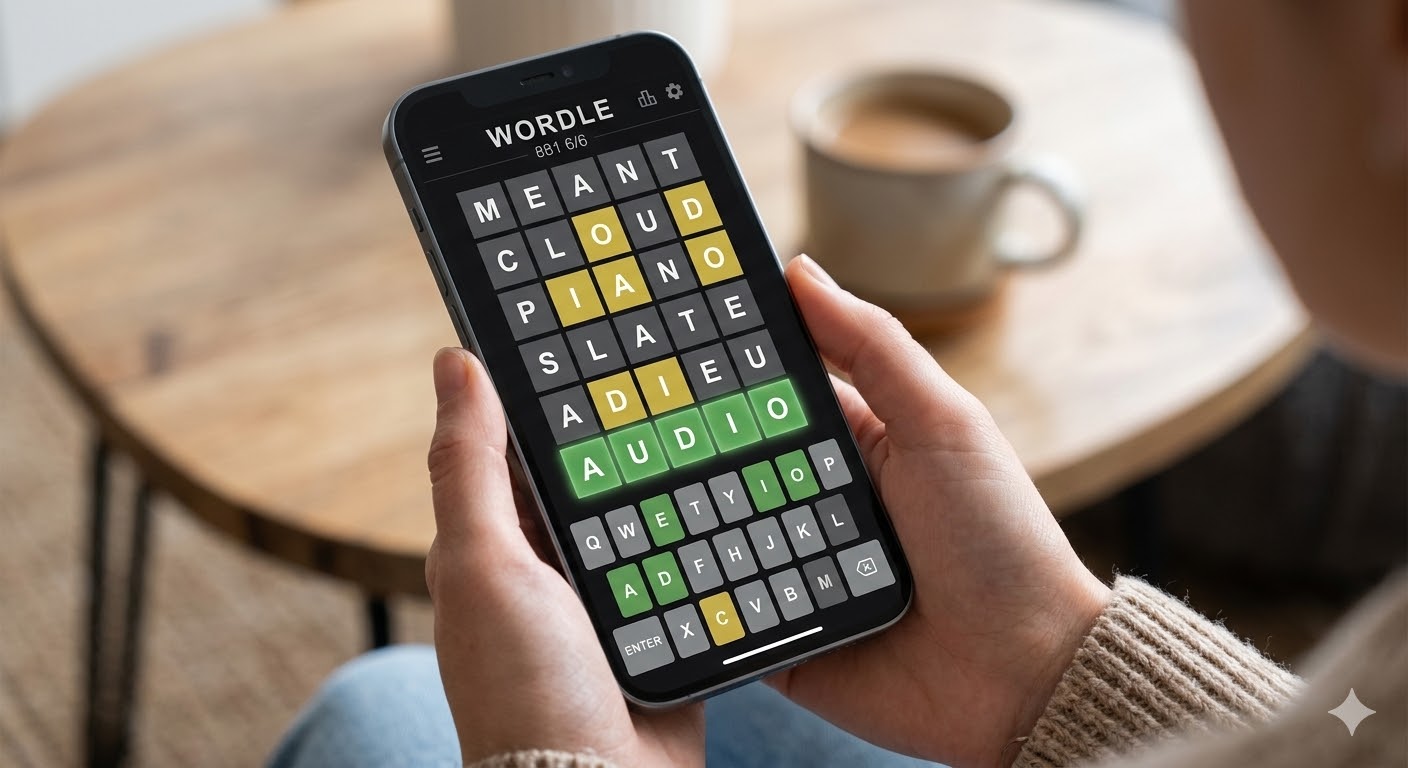
The New York Times Wordle puzzle for Friday, April 3, 2026 — puzzle No. 1,749 — offered players a fresh five-letter challenge that tested vocabulary, deduction and a bit of luck as millions logged in for their daily word-guessing ritual.

While exact details of today’s solution remain under embargo until the puzzle rolls over at midnight Eastern Time, the streak of recent Wordle answers and community patterns provide helpful context for solvers preparing to tackle puzzle 1749. Yesterday’s Wordle No. 1,748 on April 2 had the answer SOBER, an adjective meaning temperate in the use of alcohol or serious and solemn in demeanor, according to Webster’s New World College Dictionary.
The sequence of recent solutions shows the game’s editors continue to favor common yet interesting words that balance accessibility with moderate challenge. Puzzle 1748 featured no repeated letters, began with S and included two vowels — characteristics that often guide early guesses.
Wordle, created by Josh Wardle and acquired by The New York Times in 2022, presents players with six attempts to guess a hidden five-letter word. After each guess, colored tiles provide feedback: green for correct letter in the correct position, yellow for correct letter in the wrong position, and gray for letters not in the word at all. The simple yet addictive format has sustained massive popularity years after launch.
Typical Solving Strategies for April 3 Puzzle
For today’s puzzle No. 1,749, experienced players recommend starting with strong opening words that maximize vowel and common consonant coverage. Popular starters such as “SLATE,” “CRANE,” “TRACE” or “AUDIO” help eliminate or confirm multiple letters quickly. Yesterday’s answer “SOBER” reinforced the value of testing common consonants like S, B and R early.
Solvers should pay close attention to vowel placement and possible double letters. Recent puzzles have varied between words with repeated letters and those without, keeping players alert. If early guesses yield several yellow or green tiles, narrowing possibilities through process of elimination becomes key.
Community sites and the official Wordle Review often provide post-puzzle analysis, including the word’s part of speech, definition and any interesting etymology. For instance, “SOBER” carries both literal meanings related to sobriety and figurative senses of gravity or restraint.
Wordle’s Enduring Cultural Impact
Since its humble beginnings as a private game for Wardle and his partner, Wordle has grown into a global phenomenon shared across social media, workplace chats and family groups. Players proudly post their emoji grids — sequences of green, yellow and black squares — to celebrate streaks or commiserate over tough losses.
The New York Times has maintained the game’s daily rhythm while adding features such as statistics tracking, optional hard mode and integration with other Games offerings like Connections and the Mini Crossword. Puzzle numbers have climbed steadily, with No. 1,749 marking another milestone in the game’s long run.
Many players have turned Wordle into a morning or evening routine, using it as a quick mental warm-up or relaxing wind-down. The game’s accessibility — no downloads required beyond a web browser or the NYT app — has helped it reach audiences of all ages and backgrounds.
Tips to Improve Your Wordle Game
Veteran solvers suggest building a mental or physical list of high-frequency five-letter words. Focusing on words that contain multiple vowels or common letter combinations improves first-guess efficiency. When only a few letters remain, considering alphabetical order or phonetic patterns can help narrow options.
Hard mode, which forces players to use confirmed letters in subsequent guesses, sharpens skills for those seeking extra challenge. Sharing results without spoilers respects friends still working on the puzzle while fostering friendly competition over longest streaks or fewest guesses.
For those who occasionally miss a day, archived puzzles and community discussions allow catching up without breaking streaks in some tracking tools. The official NYT Wordle Review page provides in-depth hints, conversation and gentle nudges for players who want support without full spoilers.
Broader NYT Games Ecosystem
Wordle sits alongside other popular daily games from The New York Times, including Connections (which on April 3 featured themes around catty synonyms, verbs meaning to crave, cocktail glasses and “_____ control” phrases), the Mini Crossword, Spelling Bee and Letter Boxed. Together they create an engaging ecosystem that keeps players returning for fresh mental exercise.
As April 3, 2026, dawned, solvers worldwide prepared for puzzle 1,749 with varying strategies — some sticking to favorite starter words, others experimenting based on recent answer patterns. Whether today’s word relates to everyday objects, emotions, actions or abstract concepts remains to be seen once the puzzle unlocks.
For players who solve quickly, the satisfaction of a green row on the first or second guess brings a small daily victory. For those who need all six attempts, the learning process and eventual reveal still deliver reward. Even missed puzzles become opportunities to discuss tricky words with fellow enthusiasts online.
The simplicity of Wordle — one word, six tries, universal rules — continues to explain its staying power in an era of complex digital entertainment. It requires no special knowledge beyond basic English vocabulary yet rewards pattern recognition, logical deduction and a touch of intuition.
As the day progresses, social media will likely fill with discussions, shared strategies and light-hearted reactions to puzzle 1749. Some will celebrate extended streaks, while others will reset and aim to rebuild. All will appreciate the daily ritual that brings a moment of focus and fun.
The New York Times Games team curates each puzzle to maintain an approachable yet stimulating difficulty curve, ensuring Wordle remains welcoming for newcomers while offering depth for dedicated fans. With thousands of possible five-letter words in the English language, the variety keeps the game feeling fresh even after more than 1,700 editions.
For those still working on today’s puzzle, good luck — and remember that tomorrow brings another chance with Wordle No. 1,750. Whether you are a casual player or a streak-chasing expert, the game continues to unite people through the simple joy of cracking a hidden word one letter at a time.
Asia stocks: S.Korea, Japan stocks rise on tech gains; US jobs data awaited
Japanese Gen Z Fears Crypto Scams More Than Any Other Generation

The Greatest Action Franchise of All Time Is a Must-Watch on Netflix This Weekend


-

 NewsBeat6 days ago
The Story hosts event on Durham’s historic registers
-

 NewsBeat10 hours ago
Steven Gerrard disagrees with Gary Neville over ‘shock’ Chelsea and Arsenal claim | Football
-

 Sports6 days ago
Sweet Sixteen Game Thread: Tide vs Michigan
-
Entertainment4 days ago
Fans slam 'heartbreaking' Barbie Dream Fest convention debacle with 'cardboard cutout' experience
-
 Entertainment5 days ago
Lana Del Rey Celebrates Her Husband’s 51st Birthday In New Post
-
Crypto World3 days ago
Dems press CFTC, ethics board on prediction-market insider trades
-

 Crypto World1 day ago
Gold Price Prediction: Worst Month in 17 Years fo Save Haven Rock
-

 Tech4 days ago
The Pixel 10a doesn’t have a camera bump, and it’s great
-

 Sports3 days ago
Tallest college basketball player ever, standing at 7-foot-9, entering transfer portal
-

 Tech3 days ago
EE TV is using AI to help you find something to watch
-

 Business5 hours ago
No Jackpot Winner and $194 Million Prize Rolls Over
-

 Fashion5 days ago
Amazon Sundays: Soft Spring Layers
-

 Business1 day ago
Login and Checkout Issues Spark Merchant Frustration
-

 Tech3 days ago
How to back up your iPhone & iPad to your Mac before something goes wrong
-

 Tech4 days ago
Apple will hide your email address from apps and websites, but not cops
-

 Politics3 days ago
Should Trump Be Scared Strait?
-

 Crypto World3 days ago
U.S. rule change may open trillions in 401(k) funds to crypto
-

 Tech3 days ago
Flipsnack and the shift toward motion-first business content with living visuals
-

 Tech4 days ago
Avatar Legends: The Fighting Game comes out in July and it looks pretty slick
-

 Tech5 days ago
Elon Musk’s last co-founder reportedly leaves xAI
You must be logged in to post a comment Login