
Business
Racing Ahead While Struggling to Monetize


Southeast Asia stands at a fascinating inflection point in the global AI revolution. While hyperscalers pour over $50 billion into regional infrastructure and adoption rates outpace global averages, a troubling paradox emerges from McKinsey’s latest research: companies are moving fast, but they’re not making money from it.
The Paradox
- Southeast Asia is rapidly adopting AI, with 46% of companies scaling implementations — above global averages.
- Despite heavy investment (over $50 billion from hyperscalers), 67% of firms report <5% EBIT impact.
- The issue isn’t technology, but execution and monetization.
The newly released “AI in Southeast Asia: An era of opportunity” report reveals a region sprinting toward an AI-powered future yet stumbling over the chasm between deployment and profitability. This disconnect should concern every C-suite executive, policymaker, and investor betting on Southeast Asia’s digital transformation.
The Adoption Illusion
The headlines look impressive. Nearly half (46%) of Southeast Asian companies have moved beyond AI pilots to scaling implementations, edging ahead of the global average and outperforming most of Asia-Pacific excluding China and India. With 680 million consumers, a population of 380 million under age 35, and mobile penetration reaching 930 million connections, the region appears primed for AI dominance.
Singapore alone hosts over 60 AI centers of excellence. AWS, Google, Alibaba Cloud, and Tencent have collectively committed tens of billions to data centers across Indonesia, Malaysia, Thailand, and Vietnam. The Southeast Asia-Japan Cable 2 went live in 2025, promising the low-latency connectivity that AI applications demand.
Yet beneath this glittering surface lies an uncomfortable truth: 67% of surveyed organizations report that AI has delivered less than 5% impact on their earnings before interest and taxes.
This is not a technology problem. It’s an execution crisis.
The Value Capture Gap
The McKinsey research identifies three structural barriers preventing Southeast Asian firms from monetizing their AI investments:
Barriers to Value Capture
- Talent shortage — lack of skilled AI professionals.
- Integration complexity — legacy IT and fragmented data hinder scalability.
- Unclear ROI — companies spend boldly but measure poorly.
First, the talent drought is real and worsening. Twenty percent of respondents cite lack of internal AI expertise as their primary obstacle, not budget constraints, not regulatory concerns, but the simple inability to find people who can make AI work. As Alexandro Seminiano, CTO at Bank of the Philippine Islands, notes: “We need people who understand the business and the context of the data being generated.”
Second, integration complexity is killing scalability. Sixteen percent of companies struggle to embed AI into existing systems, a problem compounded by legacy IT infrastructure and fragmented data environments that plague the region. AI isn’t plug-and-play; it requires fundamental workflow redesign that most organizations resist.
Third, the ROI remains unclear. Despite 64% of organizations allocating more than 11% of their technology budgets to AI initiatives, the business case for transformation remains murky. Companies are spending boldly but measuring poorly.
What High Performers Do Differently
The report’s most valuable insights come from studying the outliers, the 8% of Southeast Asian companies that have achieved full-scale AI deployment. These high performers share three distinguishing characteristics:
They redesign workflows fundamentally rather than layering AI onto existing processes. High performers are twice as likely to integrate AI at the core of operations, not the periphery. Grab exemplifies this approach: their merchant AI assistant, deployed to over 1.2 million merchants, has driven 10% business growth by embedding intelligence directly into seller workflows.
They invest boldly and consistently. High performers are 2.2 times more likely to expect enterprise-wide transformative change from AI, not incremental improvements. This isn’t about pilot projects; it’s about business model reinvention.
They embed rigorous AI governance. Nearly half of high-performing organizations demonstrate senior leadership ownership and commitment to AI initiatives, with formal governance structures that balance innovation with risk management.
The Agentic AI Wildcard
Perhaps most intriguing is the emergence of agentic AI, autonomous systems that act on behalf of users with minimal human intervention. Ninety percent of surveyed companies plan to experiment with AI agents in 2026, with IT (37%), software engineering (35%), and knowledge management (32%) leading adoption.
This represents a quantum leap beyond today’s generative AI applications. Yet scaling agentic systems beyond technical functions will require precisely the custom development and MLOps expertise that the region currently lacks. The companies that solve this capability gap first will dominate the next competitive cycle.
The Geopolitical Advantage and Risk
Southeast Asia enjoys a unique strategic position as the battleground where Chinese and American tech giants compete for influence. AWS’s $9 billion Singapore commitment, Google’s $2 billion Malaysian data center, Alibaba Cloud’s expansion across the region, and Tencent’s Jakarta operations create a competitive ecosystem that benefits local enterprises through choice, pricing pressure, and accelerated innovation.
As Mayank Wadhwa, President of Microsoft ASEAN, observes: “Southeast Asia is not just a consumer of AI; it’s become a massive co creator.”
Yet this geopolitical dividend comes with risks. International hyperscalers could inadvertently marginalize local innovation if governments fail to support domestic AI development. With over 1,200 languages spoken across the region, culturally-aware, locally-developed AI systems remain essential for inclusive growth.
The concerning reality: Southeast Asia’s AI start-ups received only $1.7 billion of the $20 billion in venture investment across Asia-Pacific in 2024, representing just 122 of 1,845 AI funding deals. While Q2 2025 saw venture investment jump to $172 million (the highest in three years), the capital gap remains dramatic compared to the scale of infrastructure investment by foreign tech giants.
The Micro, Small, and Medium Enterprise Challenge
The region’s economic backbone, MSMEs that contribute 44.8% to GDP and employ 85% of the workforce, face acute challenges in the AI transition. While platforms like Grab, Sea, and Shopee are democratizing access, smaller enterprises struggle with pricing pressures and capability gaps that threaten to create a two-tier economy of AI haves and have-nots.
Singapore’s minister for digital development and information, Josephine Teo, emphasizes the importance of leadership: “For AI to truly be transformative, leadership must drive the change. The CEO, C-suite, and board members all play a critical role.”
The Path Forward
The McKinsey report proposes a collaborative framework across five pillars: enabling trusted data flows, strengthening infrastructure and inclusion, expanding regional talent pipelines, catalyzing sector collaborations, and promoting responsible AI at scale.
These recommendations are sensible but insufficient without confronting hard truths:
Companies must stop confusing activity with progress. Piloting 50 AI projects doesn’t create value; scaling three transformative applications does. The discipline to kill experiments and double down on winners separates leaders from laggards.
Governments must balance openness with strategic autonomy. Attracting hyperscaler investment is necessary but not sufficient. Malaysia’s and Singapore’s investments in sovereign AI infrastructure represent the right instinct, retaining local capability while benefiting from global capital.
The talent crisis requires radical solutions. Traditional upskilling programs won’t close the gap fast enough. Singapore’s National AI Strategy 2.0 points the way, but the region needs aggressive immigration policies, stronger university-industry partnerships, and incentives for AI practitioners to relocate to Southeast Asia.
Value measurement must improve dramatically. If two-thirds of companies can’t quantify AI’s business impact, they’re measuring the wrong things. High performers obsess over outcome metrics, revenue growth, cost reduction, customer satisfaction, not deployment statistics.
A Region at the Crossroads
Southeast Asia’s AI moment is unfolding against a backdrop of genuine opportunity and legitimate concern. The fundamentals are strong: young populations comfortable with technology, competitive infrastructure investments, and healthy competition among global tech powers creating optionality for local enterprises.
But momentum without execution is just motion. The region’s 73% adoption rate means nothing if it doesn’t translate into the productivity gains, new business models, and inclusive growth that AI promises.
As Vivek Lath, McKinsey Partner, frames it: “Leading the AI charge in Southeast Asia requires bold, transformative ambition. It’s about moving beyond isolated use cases to fundamentally reinventing business models with AI at their core.”
The question isn’t whether Southeast Asia will adopt AI, the data shows it already is. The question is whether the region can close the gap between adoption and impact before competitors elsewhere figure out the formula first. With $4.12 trillion in GDP and 4.1% annual growth, Southeast Asia has too much at stake to settle for being fast followers who never capture the value they create.
Other People are Reading


The regulator said the revised taxation framework has addressed issues of unequal shareholder participation and tax distortions that had led to the discontinuation of the route.Sebi had phased out the stock exchange route in a staggered manner, eliminating it completely from April 1, 2025. At the time, it had flagged that the price-time matching mechanism could allow a few shareholders to corner buyback benefits, leaving others without participation. Additionally, under the earlier tax regime, companies bore the buyback tax while shareholders paid none, leading to uneven outcomes.
“In light of the amendments in the taxation framework introduced by the Income Tax Act, the then concerns for the discontinuation of buy-back of shares or other specified securities from open market through stock exchange, i.e. tax-induced inequity among public shareholders, now stands addressed,” Sebi said in a consultation paper on Thursday.
Under the new buyback taxation framework, public shareholders will be taxed on their actual capital gains when shares are tendered in a buyback, similar to a normal market sale. “Consequently, the differential tax advantage that existed earlier between shareholders who were able to participate in the buy-back and those who were not, would not exist any longer,” Sebi said.
Buybacks through the stock exchange are conducted via an order-driven mechanism, where execution is determined by price-time matching and all public shareholders have an equal opportunity to participate under uniform conditions. The shift in tax liability — from companies to participating shareholders — has effectively aligned buyback transactions with normal market trades, the regulator said, while seeking public comments by April 23.

The proposed framework retains existing safeguards, including a separate buyback window on exchanges, limits on price and volume, restrictions on promoter participation, and enhanced disclosure requirements.
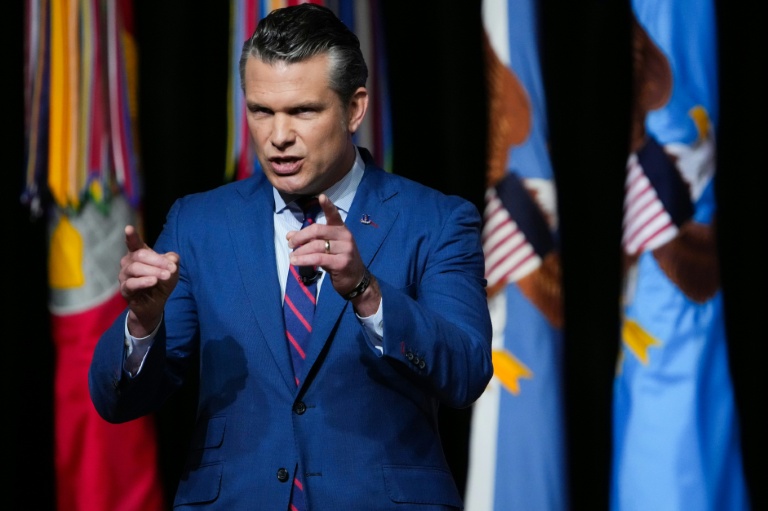
Defense Secretary Pete Hegseth has asked the U.S. Army’s top uniformed officer to step down and retire immediately, the Pentagon announced Thursday, in a surprise leadership shake-up as American forces continue airstrikes and other operations against Iran in a conflict now in its fifth week.

Gen. Randy George, who has served as Army chief of staff since August 2023, “will be retiring from his position as the 41st Chief of Staff of the Army effective immediately,” Pentagon spokesman Sean Parnell said in a statement. No reason was provided for the move.
The ouster comes as the United States wages an intensifying military campaign against Iran, launched in late February 2026 with large-scale strikes under Operation Epic Fury. U.S. and Israeli forces have targeted Iranian missile sites, air defenses, nuclear-related facilities and military infrastructure in a bid to degrade Tehran’s capabilities and prevent it from developing nuclear weapons. President Donald Trump has described the objectives as nearly complete but warned of intensified action in the coming weeks if Iran does not comply with demands to open the Strait of Hormuz and cease threats.
Hegseth also removed two other senior Army officers Thursday: Gen. David Hodne, head of the Army’s Transformation and Training Command, and Maj. Gen. William Green, the chief of Army chaplains, according to Pentagon officials who spoke on condition of anonymity to discuss sensitive personnel matters. The moves mark the latest in a broader purge of top generals and admirals under Hegseth, who has ousted more than a dozen senior officers since taking office last year.
Pentagon officials declined to elaborate on the reasons for George’s departure or the other firings. Some defense analysts and congressional sources suggested the changes reflect Hegseth’s push to install leaders more aligned with the Trump administration’s vision for a leaner, more aggressive military posture focused on great-power competition and rapid modernization.
George, a career infantryman with nearly four decades of service, previously commanded forces in Iraq and Afghanistan and oversaw Army modernization efforts under the Biden administration. His removal mid-conflict has drawn concern from some lawmakers and military observers, who worry about stability in the chain of command during active operations.
Rep. Richard McCormick, R-Ga., a Marine veteran, expressed surprise when informed of the firing during a Newsmax appearance, saying he would “look into it immediately” and describing George as a “brilliant” officer. Other Republicans have been more muted, with some praising Hegseth’s efforts to reform what they call a bloated and politicized senior military leadership.
The timing of the shake-up has raised eyebrows in Washington and among allies. The war against Iran, involving hundreds of U.S. and Israeli airstrikes, has entered its fifth week with CENTCOM releasing footage of recent attacks on drone facilities, tanks and missile launchers in central Iran. Explosions were reported near Esfahan and other sites, while Iran has responded with missile barrages toward Israel and U.S. interests in the Gulf, though many have been intercepted.
Casualty figures from Iranian sources and monitoring groups indicate at least 2,000 killed and tens of thousands wounded in Iran from the campaign, though independent verification remains difficult amid the fog of war. U.S. officials have reported limited American casualties, including several service members killed in an Iranian drone attack on a facility in Kuwait earlier in the conflict. Hegseth has criticized media coverage focusing on U.S. losses, calling it an attempt to undermine the mission.
Trump addressed the nation Wednesday evening, stating the U.S. is “on track to complete all of America’s military objectives shortly” and projecting possible wind-down in two to three weeks. He threatened to hit Iran “extremely hard” or even “back to the Stone Ages” if Tehran does not reopen the Strait of Hormuz, a critical chokepoint for global oil shipments that has seen disruptions from Iranian actions. International efforts, including a meeting of more than 40 countries convened by the UK, are pressing Iran to restore free navigation.
Hegseth has been a vocal proponent of the operation, emphasizing “no stupid rules of engagement” and a focus on decisive strikes without nation-building. In briefings, he and Joint Chiefs Chairman Gen. Dan Caine have highlighted progress in degrading Iran’s missile stockpiles and navy while stressing the campaign’s limited scope.
The Army plays a supporting but critical role in the current phase, providing logistics, air defense assets, special operations forces and readiness for potential ground contingencies, though officials insist there are no plans for a large-scale invasion. George’s office had been involved in ensuring Army units deployed in the region maintained high readiness amid the broader Middle East tensions.
With George’s exit, Lt. Gen. Christopher LaNeve has been named acting chief of staff, according to reports. LaNeve previously served as vice chief and has experience in transformation initiatives.
The firings fit a pattern under Hegseth, who earlier removed the previous chairman of the Joint Chiefs, the Navy’s top officer and other high-ranking figures shortly after assuming the role. Supporters argue the changes are necessary to root out “woke” influences and refocus the military on warfighting. Critics, including some retired officers and Democrats, call it a politicization that risks eroding morale and expertise at a dangerous time.
“Leadership transitions in wartime are always challenging,” said one former senior Army official who spoke on background. “The key is ensuring continuity in ongoing operations and clear guidance to the force.”
The Pentagon has not detailed how the changes will affect day-to-day management of Army contributions to the Iran campaign or other global commitments, including deterrence in the Indo-Pacific and support for Ukraine.
Iranian officials have denounced the U.S. and Israeli strikes as aggression and vowed continued resistance, claiming their forces retain significant capabilities despite losses. Tehran has denied seeking an immediate ceasefire on U.S. terms and accused Washington of economic warfare through disruptions in energy markets.
Global oil prices have fluctuated with news from the region, and shipping companies have rerouted vessels to avoid the Strait of Hormuz amid threats.
In Congress, reactions split along partisan lines. Some Republicans praised Hegseth for bold reforms, while Democrats questioned the wisdom of major personnel shifts during active combat.
“This is not the time for a wholesale housecleaning at the top of the Army,” said one Democratic lawmaker familiar with military issues. “Our troops deserve stable leadership when they’re supporting operations overseas.”
Hegseth, a former Fox News host and Army National Guard veteran, was confirmed as defense secretary after a contentious process. He has made reshaping the Pentagon a priority, including reversing certain diversity initiatives and emphasizing traditional warfighting skills.
The Army chief of staff position is one of the most influential in the service, overseeing training, equipping and doctrinal development for nearly 500,000 active-duty soldiers. George had been expected to serve a full four-year term.
As news of the ouster spread Thursday, senior Army officers expressed private frustration, according to multiple reports, viewing it as another sign of tension between civilian leadership and uniformed ranks.
The White House has not commented directly on the firings, deferring to the Pentagon. Trump has previously signaled support for Hegseth’s aggressive approach to national security.
With the conflict showing no immediate end despite Trump’s optimistic timeline, the leadership change adds another layer of uncertainty. Pentagon officials said operations continue without interruption, and acting leaders have been directed to maintain focus on mission requirements.
Further details on a permanent replacement for George are expected in coming days. In the meantime, the U.S. military remains engaged in what officials describe as a limited but high-intensity campaign to neutralize threats from Iran while avoiding a wider regional war.
Hegseth’s spokesman Parnell said only that the secretary continues to work closely with the president and military commanders “to ensure America’s armed forces remain the most lethal fighting force in the world.”
The developments come as diplomats explore possible off-ramps, though both sides appear dug in. Trump has said no deal is required to end U.S. involvement if objectives are met, but pressure on the Strait of Hormuz remains a flashpoint.
As the war grinds on, the sudden removal of the Army’s senior leader underscores the high-stakes environment inside the Pentagon and the administration’s determination to align senior ranks with its strategic priorities.
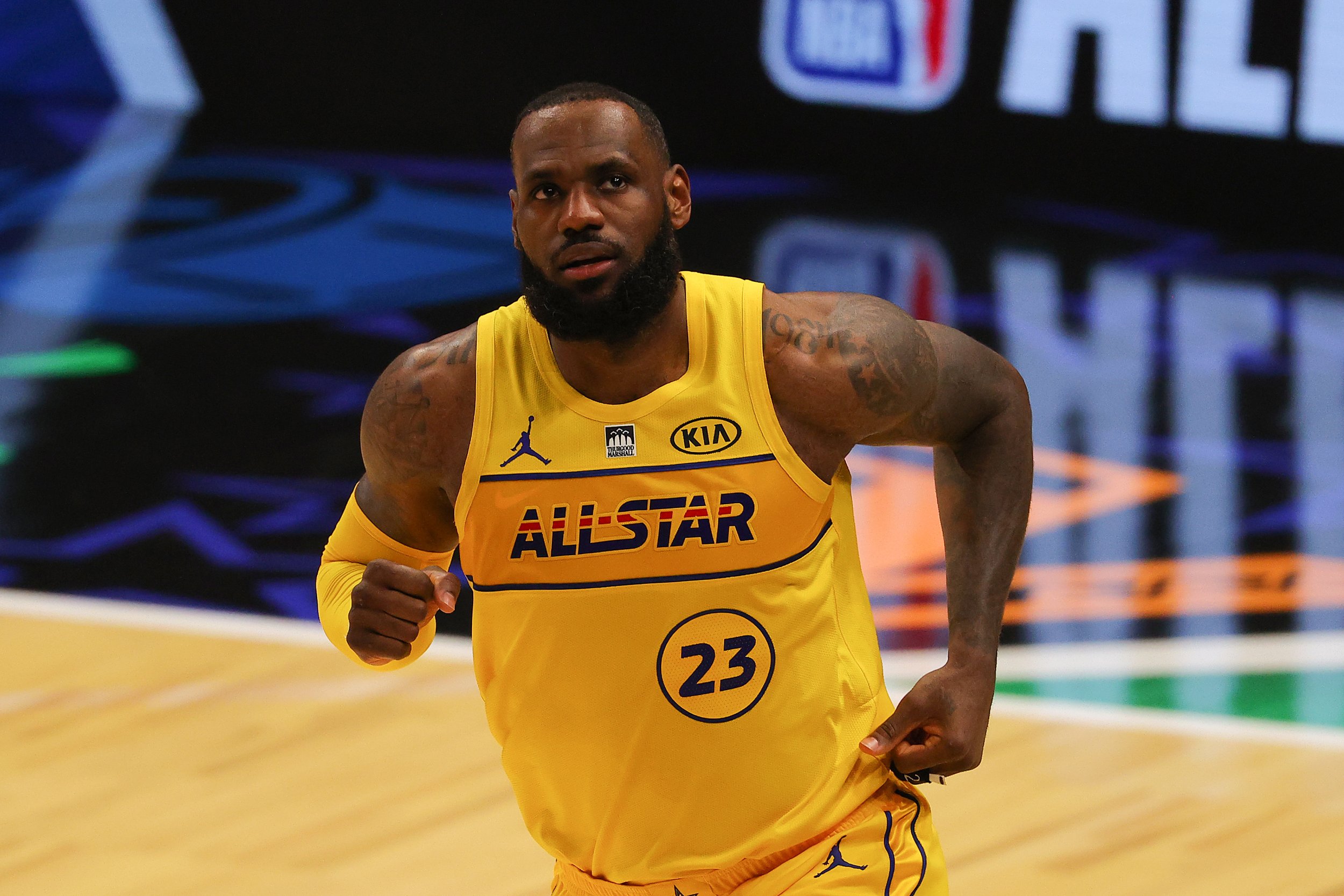
LOS ANGELES — LeBron James has seen plenty of injuries in his 23 NBA seasons, but the sight of teammate Luka Doncic grabbing his left hamstring and limping off the court still hit hard.

“The last thing you want to see is one of your brothers go down like that,” James said after the Los Angeles Lakers’ 139-96 blowout loss to the Oklahoma City Thunder on Thursday night. “It’s tough, man. You hate to see it.”
Doncic, the Lakers’ star guard acquired in a blockbuster trade earlier in the season, suffered an apparent non-contact left hamstring injury in the third quarter of the lopsided defeat at Paycom Center in Oklahoma City. He had already been dealing with nagging hamstring soreness in recent weeks and was listed questionable for several games in late March before returning to action.
The Slovenian superstar finished with 12 points, four rebounds and seven assists in limited minutes before exiting. He was seen grimacing in pain and appeared devastated as he headed to the locker room. The Lakers ruled him out for the remainder of the game shortly after.
James, who has formed a dynamic partnership with Doncic since the guard joined the purple and gold, expressed immediate concern for his younger teammate.
“You never want to see a guy like that, who carries so much of the load for us, go down,” James told reporters. “Luka is our franchise player. He’s been unbelievable since he got here. We’re all pulling for him to be OK.”
The 41-year-old James, in his 23rd season and playing alongside his son Bronny James, logged heavy minutes in the blowout and finished with 13 points, six rebounds and two assists. Austin Reaves added 15 points, while rookie Bronny James chipped in 10 points in garbage time. The Lakers were without several rotation players, exacerbating their struggles against the Western Conference-leading Thunder.
The injury occurred amid a dismal performance for Los Angeles. The Thunder led by double digits for most of the night, punishing the Lakers on both ends of the floor. Shai Gilgeous-Alexander and the OKC stars dominated, turning what was expected to be a competitive matchup into a rout. The Lakers dropped to third in the West with the loss, highlighting ongoing roster and injury concerns.
This isn’t the first time Doncic has battled lower-body issues this season. He previously missed time with hamstring soreness, a groin injury and other leg ailments, though he has powered through to post impressive numbers overall. In recent games, including a 42-point outburst against the Cleveland Cavaliers on March 31, Doncic looked healthy and explosive, reminding fans why he was a leading MVP candidate before the latest setback.
Lakers coach JJ Redick provided a brief update postgame but declined to speculate on the severity.
“We’ll get imaging and evaluations tomorrow,” Redick said. “Luka is a tough competitor. He’s been dealing with some soreness, but we’ll know more in the next 24 to 48 hours. The priority is his long-term health.”
The timing couldn’t be worse for the Lakers, who are fighting for playoff positioning in a loaded Western Conference. With the regular season winding down, any extended absence for Doncic could derail their momentum. The team has leaned heavily on the James-Doncic-Reaves trio to shoulder the scoring and playmaking load, especially amid other injuries to the supporting cast.
James, who has missed time himself this season with various ailments including elbow and groin issues, emphasized the importance of depth and health.
“We’ve had to play a lot of guys big minutes because of injuries and absences,” James said. “It catches up to you. But this is the NBA. Next man up. We’ve got to find a way to get stops and compete regardless.”
Fans and analysts immediately took to social media expressing worry for Doncic, who has transformed the Lakers’ offense since arriving. His pick-and-roll mastery and vision have meshed well with James’ experience, creating one of the league’s most potent duos when both are healthy. Earlier in the season, James publicly stated that the team must “bend our game around” Doncic, calling the 27-year-old the franchise cornerstone.
Doncic’s absence would place even more burden on James, who continues to defy Father Time but has acknowledged the physical toll of a long career. The four-time NBA champion and all-time scoring leader has spoken often this season about living in the moment, especially during emotional returns like his recent trip to Cleveland.
In that January game against the Cavaliers, a video tribute to James brought him to tears as Doncic suffered a leg scare on the Lakers’ bench. James later wiped his eyes under his jersey while supporting his new teammate. The two have developed a close bond, with James offering guidance to the younger star both on and off the court.
League-wide, the reaction was one of sympathy. NBA fans and players alike know the fragility of a season can turn on one awkward step. Hamstring injuries, in particular, can linger and require careful management to avoid recurrence.
As of Friday morning, no official timeline had been released for Doncic’s return. The Lakers face a quick turnaround with upcoming games, including matchups that could impact seeding. Team officials are expected to provide daily updates as medical staff assess the extent of the damage — whether it’s a strain, tweak or something more significant.
For James, the moment served as a reminder of basketball’s physical demands.
“I’ve been in this league a long time,” he said. “You see guys go down, and it’s never easy. Especially when it’s someone who means so much to your team like Luka does. We’re a family here. We’ll rally around him and whoever steps up next.”
The Lakers’ front office, led by Rob Pelinka, faces questions about roster construction after investing heavily in star power. Critics have pointed to a lack of depth contributing to the team’s vulnerability when injuries strike. With the trade deadline passed, the focus shifts to internal development and health management.
Doncic, a perennial All-Star and former MVP finalist with the Dallas Mavericks before the trade, has averaged strong numbers in his Lakers tenure despite the bumps. His ability to score from all three levels, facilitate and rebound makes him indispensable in Los Angeles’ system.
As the team awaits further news, optimism remains that the injury is minor given Doncic’s history of playing through discomfort. However, caution is the watchword in the final stretch of the regular season.
James summed up the sentiment shared by many in the Lakers organization: “We just want him back healthy and doing what he does best. The game needs guys like Luka.”
The Lakers will monitor Doncic closely over the weekend. Fans can expect more details on his status before the team’s next contest. In the meantime, Los Angeles must regroup without its dynamic guard and prove its resilience.
This latest setback underscores the unpredictable nature of the NBA grind. For a team built around aging veterans and high-usage stars, staying healthy has been the biggest challenge of the 2025-26 campaign.
James, ever the leader, called for focus.
“We control what we can control,” he said. “Get the next one. Support our brother. That’s it.”
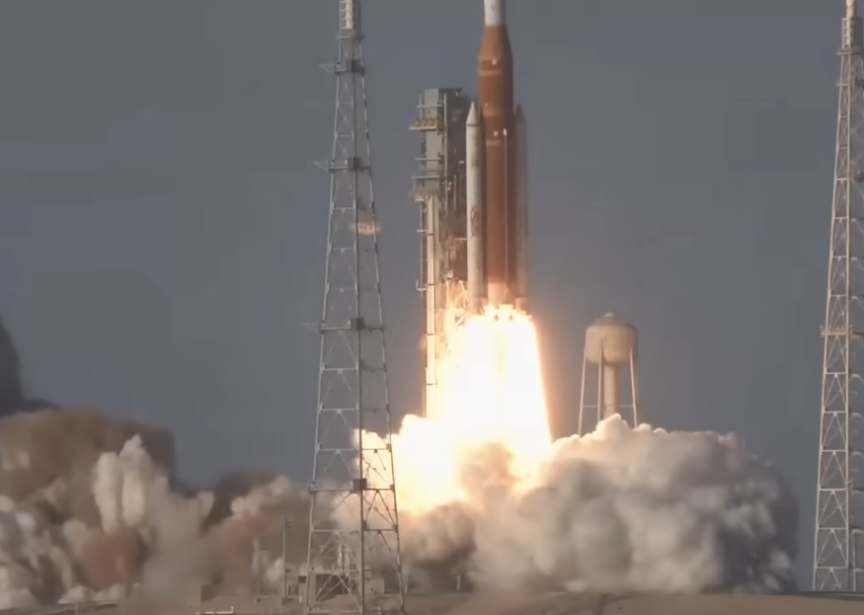
HOUSTON — NASA’s Artemis II mission hit a major milestone Thursday as the four-person crew aboard the Orion spacecraft successfully completed the critical translunar injection burn, sending them out of Earth orbit and on a trajectory toward the Moon for the first time in more than five decades.

The burn, which lasted five minutes and 50 seconds, began at 7:49 p.m. EDT after mission managers in Houston polled “Go” for the maneuver. Orion’s main engine, powered by the European Service Module, fired flawlessly, accelerating the spacecraft to escape velocity and committing the astronauts to a free-return trajectory around the Moon and back to Earth.
Commander Reid Wiseman, Pilot Victor Glover, Mission Specialist Christina Koch and Canadian Space Agency astronaut Jeremy Hansen are now hurtling through space at nearly 40,000 kilometers per hour (about 25,000 mph) on their approximately 10-day test flight. The mission, launched Wednesday evening atop NASA’s powerful Space Launch System rocket from Kennedy Space Center in Florida, marks the first crewed journey beyond low Earth orbit since Apollo 17 in 1972.
Flight controllers confirmed the burn’s success shortly after completion, with Orion now on course for a lunar flyby expected early next week. At closest approach, the crew will pass roughly 4,000 to 6,000 miles (6,400 to 9,700 kilometers) from the lunar surface, skimming past the far side before the Moon’s gravity slings them back toward home. The spacecraft is projected to reach a maximum distance of more than 230,000 miles from Earth, surpassing the record set by Apollo 13.
Earlier on Flight Day 2, the crew focused on routine but essential tasks while still in high Earth orbit. Wiseman and Glover started their day by setting up and checking out Orion’s flywheel exercise device, completing the mission’s first workouts to help maintain muscle and bone density in microgravity. Koch and Hansen followed with their own exercise sessions later in the day. These activities also served as an important test of the spacecraft’s life support systems ahead of the long journey.
Koch spent part of her morning preparing the vehicle for the translunar injection burn, configuring systems on the European-built service module that provides propulsion, power and thermal control for Orion. The crew also continued monitoring spacecraft health, communicating with Mission Control and acclimating to the weightless environment after their dramatic launch the previous evening.
Launch on April 1 occurred at 6:35 p.m. EDT from Launch Complex 39B, with the SLS delivering more than 8.8 million pounds of thrust at liftoff. The rocket performed flawlessly through its major phases: solid rocket booster separation, core stage burnout and separation, and interim cryogenic propulsion stage operations. Orion’s solar array wings fully deployed shortly after spacecraft separation, locking into place and beginning to generate power.
The crew spent much of Flight Day 1 becoming familiar with Orion — nicknamed “Integrity” — checking life support systems, practicing manual piloting and conducting a proximity operations demonstration. They maneuvered close to the spent upper stage, approaching within about 10 meters (33 feet) in a rehearsal of future docking maneuvers needed for Artemis missions that will land astronauts on the lunar surface.
NASA officials described the early mission as proceeding smoothly, with only minor, non-critical issues noted and quickly resolved. “This is a flight test,” one NASA leader emphasized during a post-launch briefing, adding that true success will be declared only when the crew safely splashes down in the Pacific Ocean around April 10.
The Artemis II mission serves as a crucial dress rehearsal for future lunar exploration under NASA’s Artemis program, which aims to return humans to the Moon’s surface as early as 2028 and establish a long-term presence there. Unlike Apollo, Artemis emphasizes sustainable exploration, international partnerships and eventual crewed missions to Mars. Canada’s contribution of astronaut Hansen and the European Service Module underscores the collaborative nature of the effort.
Throughout the day, mission managers highlighted the crew’s health and the spacecraft’s performance. All four astronauts are experienced: Wiseman has flown on the International Space Station, Glover became the first Black astronaut to pilot a spacecraft during a Crew Dragon mission, Koch holds the record for the longest single spaceflight by a woman, and Hansen is making his first trip to space.
After the TLI burn, the crew’s schedule lightened somewhat, giving them time to adjust to the deep-space environment. Over the next several days, they will perform additional system checks, practice emergency procedures such as rapid suit donning, and conduct observations of Earth and the receding Moon. Small trajectory correction burns may be needed to fine-tune the path.
Flight controllers noted that once past a certain point, a direct abort back to Earth becomes less feasible, and the mission will rely on the free-return trajectory that uses the Moon’s gravity for the return leg. This profile provides a built-in safety margin for the test flight.
Public interest in the mission has been intense, with live streams from NASA+ and YouTube drawing large audiences. Views from Orion’s cameras have offered stunning perspectives of Earth shrinking in the distance and the vastness of space. The crew has shared brief messages of excitement and gratitude, describing the launch as “a great day for the team” and the view as breathtaking.
As Orion continues its outbound journey, NASA will hold daily status briefings from Johnson Space Center in Houston, except for the day of the lunar flyby when the focus shifts to real-time operations. The agency has invited global audiences to follow along via multiple platforms.
Looking ahead, the mission will test Orion’s deep-space capabilities in ways never before attempted with this new generation of hardware. Engineers are particularly interested in how the spacecraft handles thermal extremes, radiation exposure and long-duration life support far from Earth’s protective magnetosphere.
Artemis II builds directly on the uncrewed Artemis I test flight completed in 2022, which successfully sent Orion around the Moon and back. With humans now aboard, the stakes are higher, but so is the potential payoff in data and experience.
The international aspect adds another layer of significance. Hansen’s participation represents Canada’s growing role in lunar exploration, including contributions to the future Lunar Gateway station. The European Space Agency’s service module has performed as designed, providing reliable propulsion that will be essential for later missions.
Back on Earth, recovery teams are already preparing for splashdown in the Pacific, with U.S. Navy and Department of Defense assets on standby to assist the astronauts once Orion parachutes into the ocean.
NASA Administrator and other officials have stressed that every phase of the mission — from launch through the flyby and return — is being scrutinized to inform the design and operations of Artemis III, the first crewed lunar landing in the new era.
For now, the four astronauts are focused on the journey ahead. With the TLI burn behind them, they are truly “on the way to the Moon,” as NASA succinctly put it in its mission updates. The coming days will bring more system demonstrations, scientific observations and the historic sight of the lunar far side up close — a view only 24 Apollo astronauts have previously experienced.
As the crew settles into their routine among the stars, the world watches a pivotal step in humanity’s return to deep space. Artemis II is not just a test flight; it is a bridge to a future where humans live and work on the Moon and venture farther into the solar system.
Business
ASX 200 Slumps 1.06% as Trump’s Hawkish Iran Remarks Trigger Oil Spike and Risk-Off Selloff

SYDNEY — Australian shares retreated Thursday, with the benchmark S&P/ASX 200 closing down 92.3 points, or 1.06%, at 8,579.5 after erasing early gains in a volatile session driven by renewed geopolitical tensions in the Middle East.

The drop came after U.S. President Donald Trump signaled in a national address that American forces would continue striking Iran “very hard” and “finish the job,” dashing hopes for a quick resolution to the conflict that has roiled global markets for weeks. Oil prices surged on the comments, with Brent crude jumping about 5-6% toward US$107 a barrel, while U.S. futures weakened and risk assets came under pressure across Asia and beyond.
Trading on the ASX was bumpy. The index opened higher, briefly climbing above 8,700 in morning trade as it rode momentum from Wednesday’s strong 2.24% rebound to 8,671.8. But sentiment flipped sharply after Trump’s midday remarks, sending the S&P/ASX 200 into negative territory and closing near session lows at 8,579.5. Volume reached 879.84 million shares, according to market data.
Nine of the 11 sectors finished in the red. Information technology led decliners, tumbling 3.93%, followed by materials, which shed 2.77% amid mixed commodity signals. Consumer staples and utilities were the only bright spots, gaining 1.32% and 0.92% respectively as defensive plays attracted some buying.
Energy stocks showed resilience in spots thanks to the oil rally. Karoon Energy jumped 6.53% to $2.12, while some gold miners also found support even as the broader gold price eased slightly. Alcoa rose 4.72%, Greatland Resources gained 4.68%, and Northern Star Resources added 3.85%. On the losing side, technology and mining names weighed heaviest, with notable decliners including HUB24, Mineral Resources and several IT firms.
The pullback erased roughly half of Wednesday’s gains, which had been fueled by optimism that the Iran conflict might wind down. That session marked the ASX 200’s strongest performance in a year, adding about $68 billion in market value as 10 of 11 sectors advanced.
Broader context points to ongoing strain. The index has now given back significant ground since hitting an all-time high near 9,202 in late February. March delivered one of the worst monthly performances in years, with the ASX 200 falling around 7.5-7.8% — its steepest drop since June 2022 — as escalating Middle East hostilities, surging oil prices and inflation worries rattled investors. Roughly $190-300 billion in market value has been wiped out since the conflict intensified.
Analysts pointed to multiple headwinds. Higher oil threatens to stoke inflation in Australia, where the Reserve Bank of Australia (RBA) is already monitoring sticky price pressures. Markets have priced in a higher chance of RBA rate hikes if energy costs keep climbing, adding pressure to rate-sensitive sectors such as banks and property. Westpac Strategy noted that escalation risks remain “explicit,” while Morgan Stanley has warned that sustained oil above US$100 could add around 70 basis points to headline inflation.
Locally, weaker trade data added to the cautious mood. Australia’s imports fell 3.2% month-on-month in February to a seven-month low, reflecting softer demand and trade uncertainty amid global disruptions.
The All Ordinaries index fared worse, dropping 1.25% to 8,774.9. The small ordinaries fell 2.50%, and the tech-heavy All Tech index slid 3.51%. Resources dropped 2.42%.
Geopolitical developments dominated the narrative. The U.S.-Iran conflict, which escalated with strikes in recent weeks, has disrupted shipping through the Strait of Hormuz — a critical chokepoint carrying about one-fifth of global oil supply. Shipping companies including Maersk have suspended routes, and oil prices have remained elevated, creating a classic stagflationary risk mix of higher energy costs and slower growth.
Trump’s remarks provided no clear de-escalation timeline, prompting investors to lock in profits and reduce exposure to growth-oriented stocks. Tech names suffered as rising bond yields weighed on future earnings valuations. Miners faced pressure from uncertainty over China’s energy security and demand outlook, even as some iron ore and base metal signals showed resilience.
Defensive and commodity-linked plays offered limited insulation. Gold traded near elevated levels but eased modestly during the session, supporting select gold producers such as Newmont and Evolution Mining earlier in the week. Energy firms with exposure to oil benefited from the price spike, though broader market nerves capped gains.
Looking ahead, the ASX will be closed Friday for Good Friday and Monday for the Easter public holiday, reopening Tuesday. That lull gives investors time to digest any further developments from Washington or Tehran. Markets will watch for signs of diplomatic progress or further military action, as well as upcoming Chinese economic data and any RBA commentary on inflation risks.
Economists remain divided on the near-term outlook. Some see selective buying opportunities in undervalued resource and energy names if the conflict stabilizes, while others warn of more downside if oil sustains above US$100-105 and forces central banks to tighten or hold rates higher for longer. The OECD has flagged Australia as potentially facing one of the higher inflation readings among advanced economies.
Year-to-date, the S&P/ASX 200 is down about 1.55%, with a one-year return still positive at around 8.13% despite recent volatility. The 52-week range spans from roughly 7,169 to 9,202.
Corporate highlights were muted amid the macro focus, though PEXA continued to face pressure from a regulatory review, and other individual stocks moved on company-specific news.
Investors will also monitor Wall Street’s reaction when U.S. markets reopen, along with any fresh comments from the Trump administration. Asian markets, including Hong Kong’s Hang Seng, also closed lower Thursday as the risk-off mood spread.
The Australian dollar was little changed near 69 U.S. cents, reflecting mixed signals from commodities and rates.
While the session highlighted the ASX’s sensitivity to global events — particularly energy shocks and U.S. policy — analysts caution that prolonged Middle East instability could weigh on consumer confidence, business investment and household spending in Australia. Prime Minister Anthony Albanese announced up to A$693 million in cheap loans to help ease fuel costs for households and businesses, offering a small domestic buffer.
For now, the market appears to be pricing in heightened uncertainty rather than outright panic. But with oil volatile and central banks on alert, the path forward for the ASX 200 in April remains clouded by geopolitical crosscurrents.

The search for Nancy Guthrie, the 84-year-old mother of NBC “Today” show co-anchor Savannah Guthrie, has entered its third month with no arrests, no identified suspect and no confirmed trace of the widow since she was abducted from her Catalina Foothills home in late January, authorities said Friday.

Nancy Guthrie was last seen around 9 p.m. on Jan. 31, 2026, when a family member dropped her off at her residence. She failed to appear the next morning for a virtual church service, prompting her family to report her missing around noon on Feb. 1. Pima County Sheriff’s investigators quickly classified the case as an abduction after security camera footage captured a masked, armed individual approaching the home around 2 a.m. Her pacemaker app disconnected from her phone at approximately 2:28 a.m., and a doorbell camera went offline shortly before.
Sheriff Chris Nanos has repeatedly described the incident as a targeted home invasion and abduction, with drops of blood found on the front porch suggesting possible violence. The family has been fully cleared of involvement, and Sheriff Nanos has praised their cooperation while calling them victims in the case.
As of early April 2026, the investigation remains active but has shifted from broad public appeals and large-scale desert searches to more focused forensic work, tip verification and evidence analysis. The FBI and Pima County Sheriff’s Department have received tens of thousands of tips, conducted extensive neighborhood canvassing, used drones and cadaver dogs, and pursued leads involving possible ransom notes demanding Bitcoin payments sent to media outlets. Officials have not confirmed the authenticity of those notes.
Recent developments include recovery of additional images from motion-triggered security cameras monitoring the pool, backyard and side yard areas. While authorities say nothing immediately suspicious was captured, investigators continue to examine timeline gaps, including potential pre-abduction activity on dates such as Jan. 11 and Jan. 24. Forensic testing of biological material and DNA from the home is ongoing, along with genetic genealogy efforts.
A Pima County Sheriff’s deputy, Travis Reynolds, 22, was arrested in late March on an unrelated kidnapping charge and subsequently fired. Officials and former FBI agents have stated there is no connection between Reynolds and the Guthrie case, despite some online speculation.
Family’s Emotional Plea and Savannah Guthrie’s Return
The Guthrie family has issued multiple public appeals, most recently in late March, urging Tucson residents and others to review home security footage, text messages, journal notes or any memories from late January or early February. “No detail is too small. It may be the key,” the family stated. Savannah Guthrie, who has been absent from the “Today” show since the disappearance, described the ordeal as “unbearable agony” in her first public interview. She expressed sorrow, wondering if her high-profile role might have made her mother a target, and said simply, “I just want to say I’m so sorry, mommy.”
Savannah is scheduled to return to the “Today” show on Monday, April 6, telling viewers that continuing her work is her “purpose right now” while the search continues. The family offered a $1 million private reward in February, supplementing the FBI’s $100,000 reward, which generated a surge of tips.
Nancy Guthrie, a widow whose husband Charles died in 1988, was known as a devoted mother, grandmother and active member of her church community. She lived a quiet life in an affluent Tucson suburb and relied on daily medication, raising concerns about her health if she remains missing.
Challenges in the Investigation
The case has highlighted difficulties in solving stranger abductions of elderly victims. Abductions of seniors are statistically rare, and the apparent targeted nature of the home invasion in a relatively safe neighborhood has puzzled investigators. No clear motive — financial, personal or otherwise — has been publicly established.
Sheriff Nanos has said the department is “closer” to identifying a suspect or suspects as the probe moves into more clinical evidence consolidation, but he cautioned that progress can be slow. Resources have been refocused on dedicated detectives, though patrol presence continues in the neighborhood. Some former investigators have speculated about possible accomplices, while others note the investigation has entered a phase of exhaustive verification rather than broad searches.
Mental health experts have spoken about the profound trauma the prolonged uncertainty inflicts on families, describing a constant emotional roller coaster of hope mixed with despair.
Broader Implications
The intense national attention on the Guthrie case, driven largely by Savannah’s prominence on “Today,” has spotlighted missing persons cases in general and renewed focus on vulnerabilities in home security even in upscale areas. Yellow ribbons tied to trees in the neighborhood serve as symbols of ongoing hope and community support.
Neighbors have reported increased vigilance, and some have questioned whether the abduction points to broader security gaps. The case has also drawn scrutiny to the handling of the crime scene, with some commentators, including legal analyst Nancy Grace, criticizing aspects of the initial response.
As the search surpasses 60 days with no resolution, the family’s renewed pleas underscore a simple message: someone may hold the missing piece — whether through overlooked footage, a suspicious vehicle sighting or a seemingly minor recollection.
Authorities urge anyone with information, no matter how insignificant it may seem, to contact the Pima County Sheriff’s Department or the FBI tip line at 1-800-CALL-FBI.
The disappearance has transformed a quiet residential street into a focal point of national curiosity and concern. For the Guthrie family and investigators alike, the priority remains bringing Nancy home safely or providing answers that allow closure.
While the investigation continues without a major public breakthrough, officials stress it remains very much active. Forensic work, digital analysis and tip follow-ups persist as the community and nation watch for any development that could finally resolve the mystery of what happened to Nancy Guthrie on that early February morning.

Knot Offshore Partners LP Common: Focus On The Expected Recovery

Equity mutual funds lost up to 14% in March, with all 299 schemes in the category ending in the red. As many as 224 funds posted double-digit losses during the month. Here’s a detailed break-up (Source: ACE MF).
Domestic brokerage firm Axis Direct has pegged the Nifty target for December 2026 at 29,480, implying a 30% upside from current levels. Indian equities have underperformed the US market and other emerging markets by a notable margin in 2025, leading to a meaningful moderation in valuations. The brokerage is bullish on nine largecap stocks that have the potential to rally up to 57%. Here is the full list.

Asia stocks: S.Korea, Japan stocks rise on tech gains; US jobs data awaited

City school to get new unit dedicated to children with learning difficulties
Concerns settled, share buybacks could flow via exchanges again

Salah begins farewell tour with Liverpool at Man City in FA Cup clash | Football News

Smart energy pays enters the US market, targeting scalable financial infrastructure

Why Israel is blocking foreign journalists from entering

Bitcoin: We’re Entering The Most Dangerous Phase

Tom Lee Just Warned That Bitcoin Will Crash Before It Does Something Nobody Has Ever Seen Before

Next Financial Crisis WORSE Than 2008 – $3T Private Credit Collapsing, $4.6B TRAPPED

IF YOU HOLD XRP ONDO & XLM YOU BETTER SEE THIS (HUGE MOVES MADE)
-

 NewsBeat6 days ago
The Story hosts event on Durham’s historic registers
-

 NewsBeat11 hours ago
Steven Gerrard disagrees with Gary Neville over ‘shock’ Chelsea and Arsenal claim | Football
-

 Sports6 days ago
Sweet Sixteen Game Thread: Tide vs Michigan
-
Entertainment4 days ago
Fans slam 'heartbreaking' Barbie Dream Fest convention debacle with 'cardboard cutout' experience
-
 Entertainment5 days ago
Lana Del Rey Celebrates Her Husband’s 51st Birthday In New Post
-
Crypto World3 days ago
Dems press CFTC, ethics board on prediction-market insider trades
-

 Crypto World1 day ago
Gold Price Prediction: Worst Month in 17 Years fo Save Haven Rock
-

 Tech4 days ago
The Pixel 10a doesn’t have a camera bump, and it’s great
-

 Sports3 days ago
Tallest college basketball player ever, standing at 7-foot-9, entering transfer portal
-

 Tech3 days ago
EE TV is using AI to help you find something to watch
-

 Business6 hours ago
No Jackpot Winner and $194 Million Prize Rolls Over
-

 Fashion5 days ago
Amazon Sundays: Soft Spring Layers
-

 Business1 day ago
Login and Checkout Issues Spark Merchant Frustration
-

 Tech3 days ago
How to back up your iPhone & iPad to your Mac before something goes wrong
-

 Tech4 days ago
Apple will hide your email address from apps and websites, but not cops
-

 Politics3 days ago
Should Trump Be Scared Strait?
-

 Crypto World3 days ago
U.S. rule change may open trillions in 401(k) funds to crypto
-

 Tech3 days ago
Flipsnack and the shift toward motion-first business content with living visuals
-

 Tech4 days ago
Avatar Legends: The Fighting Game comes out in July and it looks pretty slick
-

 Tech5 days ago
Elon Musk’s last co-founder reportedly leaves xAI
You must be logged in to post a comment Login