The online marketplace is based in New York and has offices in Dublin, London and Mexico City.
Online marketplace Etsy will lay off around 220 people to reduce its headcount by 12pc to a total of around 1,600.
The role reductions will cost the company about $35m in severance and associated costs and will be completed by the end of the third quarter of the year, according to Etsy.
CEO Kruti Patel Goyal said most of the restructuring would be concentrated in the company’s product and engineering group.
Advertisement
“We are changing our structure, with fewer silos to reduce handoffs and flatter, faster teams built to solve broader, more complex problems,” she wrote in a letter to shareholders yesterday (5 August) alongside Etsy’s second-quarter financial results.
“This is not a cost-cutting move; it is meant to lean in during a period of strong momentum so that we can move faster and execute with even greater focus.
“We are deeply grateful to our departing colleagues for their service, dedication and contributions, and we are committed to supporting them through this transition with care and respect.”
The company stated that “all key performance indicators continue to show improving momentum” in delivering its financial results for Q2.
Advertisement
CFO Lanny Baker said Etsy would “expect the restructuring to lower operating costs in the near term”.
He added: “Our objective in the restructuring is not only to extend the expense discipline we’ve demonstrated historically, but also to position ourselves to build the organisation necessary to execute our strategy and accelerate growth in the years ahead.
“Specifically, we intend to deepen our expertise in strategically critical areas across product, engineering and customer operations, with a particular focus on expanding and strengthening our team’s machine learning skills.”
Reuters reported that in a memo to employees, Goyal said the job cuts were not driven by AI, while adding that “AI is changing how all of us work, and it will continue to change how we build products and solve problems”.
Advertisement
“As the tools available to us evolve, the skills we need, the ways we work together, and the capabilities we build across Etsy must evolve as well,” she said.
Etsy, founded in 2005, is based in New York and has offices in Dublin, London and Mexico City. SiliconRepublic.com has requested information about which locations may be affected by the layoffs.
Don’t miss out on the knowledge you need to succeed. Sign up for the Daily Brief, Silicon Republic’s digest of need-to-know sci-tech news.
OpenAI is rolling out a more reliable version of ChatGPT GPT-5.6 Sol for Plus and Pro users, while Free users are getting unlimited text chats with GPT-5.6 Luna.
The changes are focused on making ChatGPT more direct, factually accurate, and consistent across quick questions and deeper reasoning tasks.
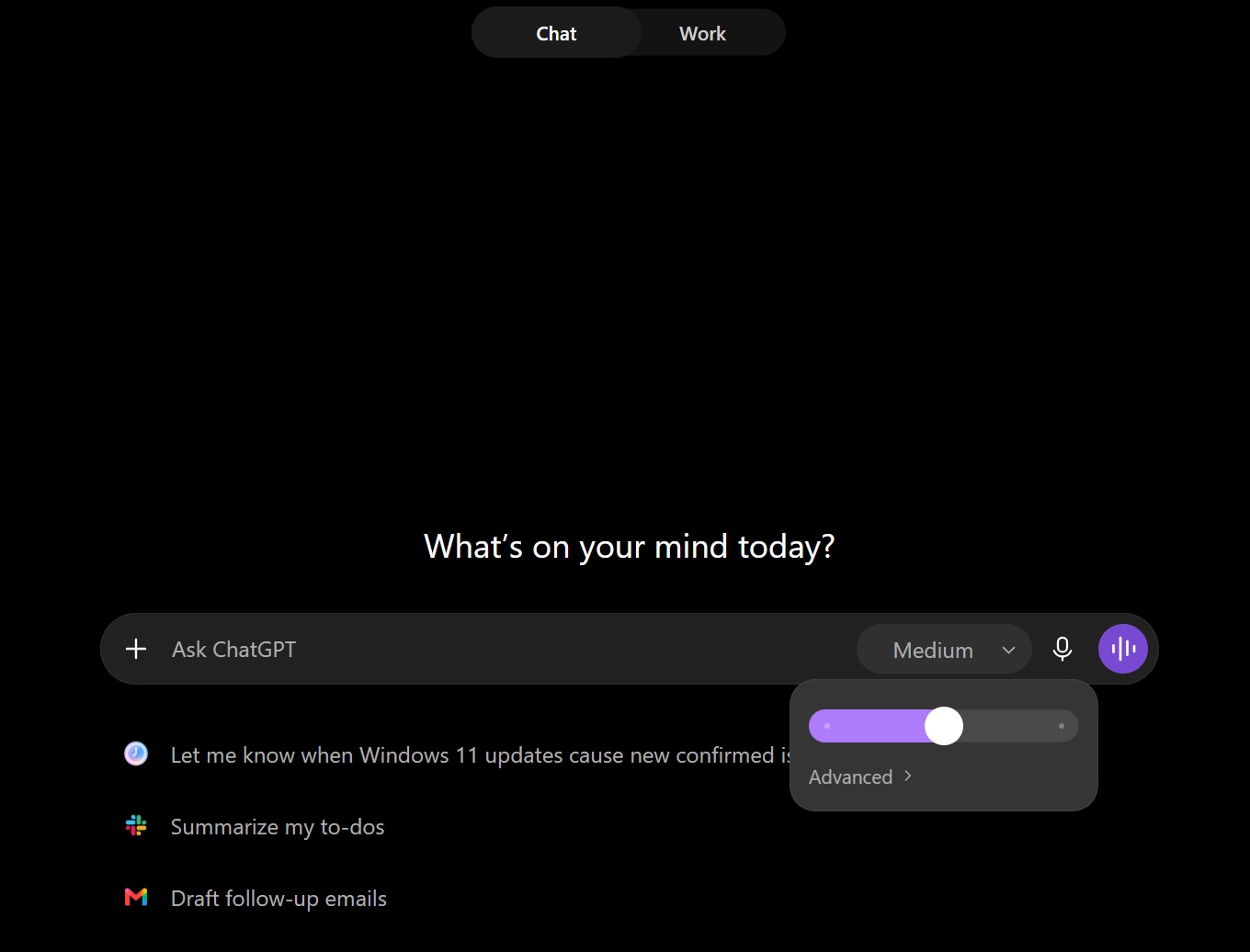
In our tests, BleepingComputer observed that GPT now gives you greater control over the model’s reasoning and intelligence with a new slider.
ChatGPT’s intelligence slider
Source: BleepingComputer
As you can see in the screenshot, you can slide GPT’s reasoning from Instant to High. Instant would respond almost immediately, while High reasoning could take several minutes.
You can keep the slider low for everyday questions or increase the reasoning effort for tasks such as research, coding, writing, planning, and complex decisions.
Advertisement
GPT-5.6 Sol is getting more focused and reliable answers
OpenAI says the updated GPT-5.6 Sol has been tuned specifically for how people use ChatGPT, rather than for the longer-running agentic workflows found in Codex and ChatGPT Work.
“It delivers more focused answers, adapts its level of detail to the question, avoids unnecessary formatting, and offers a helpful correction when simply agreeing wouldn’t be useful,” OpenAI said.
For example, if you ask simple questions, GPT should answer directly without adding unnecessary background. For more complicated work, it should provide enough detail while keeping the main recommendation easy to identify.
A question like “Who is the president of the United States?” will have a single-line answer, but a question like “How are elections held in the US?” will have a longer answer with background information.
Advertisement
OpenAI also claims that GPT-5.6 Sol is less likely to make factual mistakes when handling dates, numbers, sources, legal rules, medical information, financial questions, or assumptions.
In internal tests, OpenAI found that responses containing at least one factual error were 68% less common with GPT-5.6 Sol than with GPT-5.5 Instant.
Moreover, GPT-5.6 Luna reduced such responses by 62% in the same evaluation.
Free users are getting unlimited GPT-5.6 Luna chats
GPT-5.6 Luna will become the default model for Free and Go users this week, and some users are already seeing the change. I spotted it in my OpenAI account with a Go subscription that costs approximately $10.
Advertisement
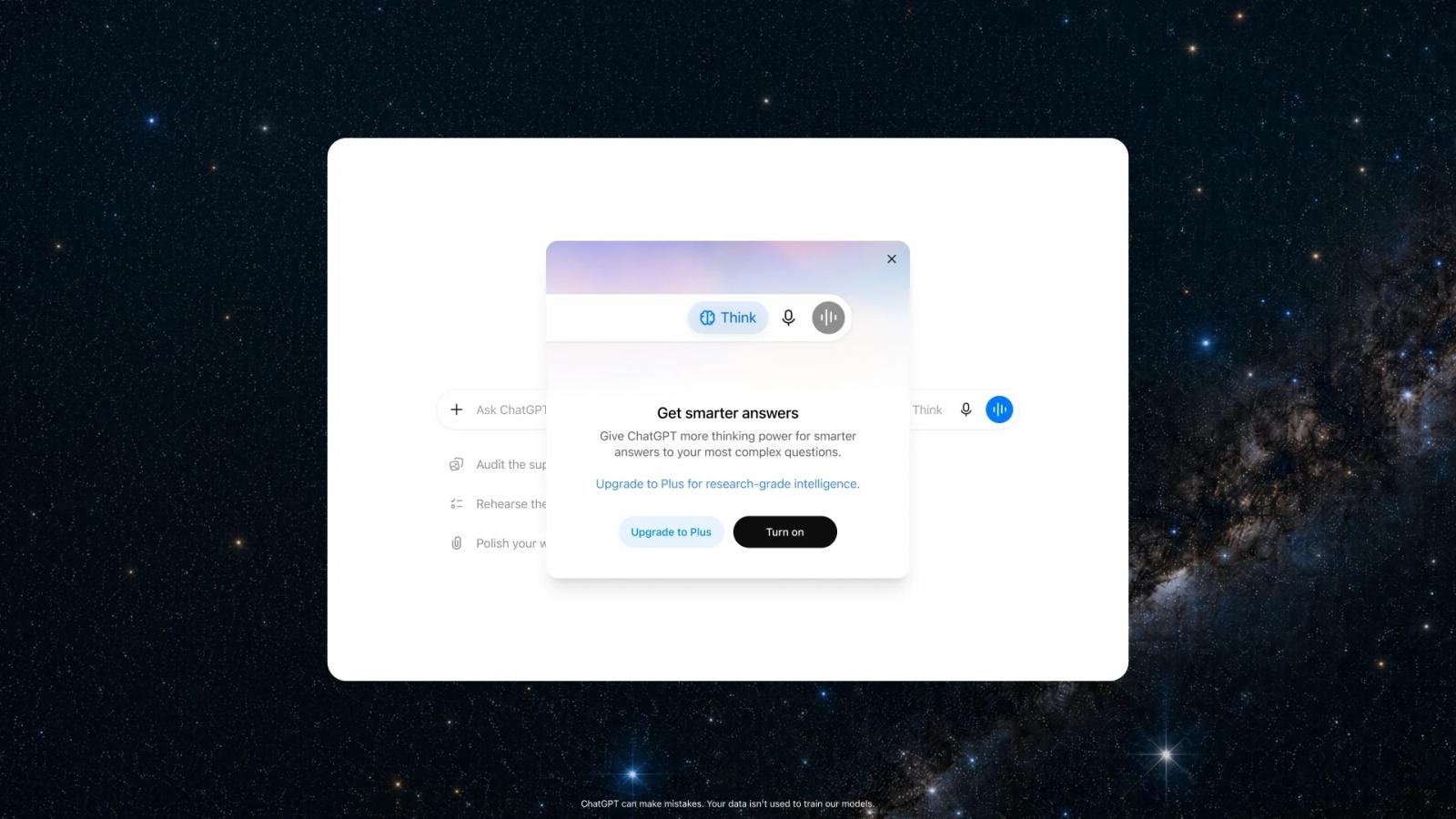
Smarter ChatGPT
Source: OpenAI
Starting next week, OpenAI also plans to remove the rate limit for text chats on those plans, although usage will remain subject to abuse protections. However, limits will still apply to file uploads, image generation, and other ChatGPT tools.
With a free account, you will still receive a new Think button that gives GPT-5.6 Luna additional time to reason through harder questions.
“For questions that require deeper reasoning, Free users can tap the new Think button to give GPT-5.6 Luna more time to work through the answer,” OpenAI noted.
The update does not affect GPT-5.6 Sol in Codex or Work
The revised version of GPT-5.6 Sol is designed for everyday conversations and will only be available through ChatGPT’s regular Chat experience.
OpenAI is also introducing additional protections for users believed to be under 18.
Advertisement
These include stricter boundaries around romantic roleplay, sexual content, dangerous activities, eating disorders, body-image risks, age-restricted goods, and graphic violence.
Today’s changes are rolling out gradually.
Security teams log 54% of successful attacks and alert on just 14%. The rest move through your environment unseen.
The Picus whitepaper shows how breach and attack simulation tests your SIEM and EDR rules so threats stop slipping by detection.
Another option worth checking out is Samsung’s current trade-in offer, which could work out cheaper if you have an eligible tablet. Samsung is selling the 256GB Galaxy Tab S11 Ultra for AU$1,599 and, until 26 August, is adding a guaranteed AU$500 bonus credit on top of your device’s assessed trade-in value.
But, I hear you ask, what makes the Galaxy Tab S11 Ultra truly worth the rather large price tag?
In our Samsung Galaxy Tab S11 Ultra review, we said we’d be “hard-pressed to find a bigger and better display on an Android tablet”. The 14.6-inch AMOLED screen earned a full 5/5 in our testing, with enough brightness for outdoor use, while the included S Pen and expansive display make it particularly well suited to watching movies, gaming and drawing.
Our reviewer also found Samsung’s One UI software made excellent use of the big screen for multitasking, with the tablet handling a video call, game and floating YouTube window at the same time without slowing down.
Battery life impressed too, lasting 11 hours while streaming 1080p video at full brightness, helping explain why the S11 Ultra remains our best premium Android tablet pick in our buying guide.
Advertisement
No tablet is perfect, and the main caveat for the S11 Ultra from our testing is the MediaTek Dimensity 9400+ chipset, which we found disappointing considering the RRP is over AU$2,000.
Yes, it’s a clear improvement over the Tab S10 Ultra and handles games well, but it falls well short of competitors like the M5 iPad Pro for outright processing power.
That said, while the current AU$502 discount does not fix the performance shortfall, at AU$1,597 rather than AU$2,099, it makes our review criticisms considerably easier to swallow. Especially when the closest equivalent iPad Pro is AU$2,599.
So overall, I think that at the current discount, the S11 Ultra is an easy recommendation for those who want the biggest possible screen for movies, games, drawing and multitasking.
The Mazda MX-5 Miata has remained the most popular sports car for decades thanks to its affordable price point, cute looks, and fun, responsive handling. You know what they say: Miata is always the answer. However, this may not be the case for taller people.
There’s a reason the Miata has sold over one million cars. The minimal driver-focused car is great for commuting and the track, all while being sleek and adorable. However, the interior is where it falls a bit short. Our review of the 2025 model admitted that the cabin lacks storage, and the trunk isn’t the most useful. The cabin is also not the best for tall drivers, with 37.4 inches of head room and 43.1 inches of leg room.
Advertisement
Who can comfortably fit in that cabin? The answer is not so straightforward. But check this out — Ruler of London states the average height for a man in the U.K. is about 70 inches, or 5’8″. According to First in Architecture, the average head height for a seated man (also in the U.K.) is 35.4 inches, which is 50.6% of their overall height. If you extrapolate these numbers to the headroom of the Miata, this means it can accommodate a person up to 6′ 4″ if they don’t mind their head being uncomfortably pressed against the roof.
Meanwhile, a person around 5’9″ generally needs 39″ of leg room to be comfortable. If you bring those measurements back to the same 6′ 4″ person attempting to sit in a Miata, they are at the very limit. While torso and leg length varies person to person, it seems like anyone above six feet tall could be pretty cramped in a stock Miata without the top down.
Advertisement
How to fit in a Miata comfortably if you’re a taller driver
JoshBryan/Shutterstock
If you’re on the taller side and want to fit in a Miata, there are some modifications you can make to comfortably drive one. First, you may want to lower and recline the seat as much as possible. To go further than the stock options, you can find lowering brackets and adapter rails that will allow you to adjust it even further away from the steering wheel and pedals. This will provide you with more leg room.
If you still need more room, you could also remove the seat padding — although this could make the ride feel a bit stiff and unsupportive. Instead, you could replace the seat altogether. Switch them out for bucket seats, which are thinner while providing more support for spirited driving.
Consumer Reports listed the Miata as one of the worst cars for tall people, likely due to the Miata’s cramped leg room. This makes it a car to avoid if you’re a taller driver, especially when there are plenty of comfortable cars for tall people. But if you really want to experience that go-kart-like driving experience, the modifications could very well be worth it.
When you’re shopping for a portable power station, there’s one number that’s almost impossible to ignore: battery capacity. A 2 kWh battery should give you roughly 2 kWh of usable power, right? Unfortunately, things aren’t quite that simple. Anker SOLIX has published new efficiency data for its S Series portable power stations, and it’s putting the spotlight on something that doesn’t get nearly as much attention as capacity: how much of the energy stored inside the battery actually makes it to your devices.
According to Anker, portable power stations are commonly advertised with efficiency figures measured under relatively heavy loads, where they can reach roughly 89% to 92% efficiency. But that’s not necessarily how most people use one during an outage. Think about what you’d actually plug in. A Wi-Fi router might sip power continuously, a refrigerator switches its compressor on and off throughout the day, and a CPAP machine could run overnight. Together, those devices may draw just a fraction of what a large power station is capable of supplying. And that’s where efficiency can start slipping.
Your 2 kWh battery isn’t necessarily giving you 2 kWh
Anker says discharge efficiency on typical portable power stations can drop to around 70% to 80% under lighter loads. So, a noticeable chunk of the energy you’ve paid to store could disappear through conversion losses and the power station’s own consumption before it ever reaches your fridge or router. The company says its OptiSave 2.0 technology is designed to reduce those losses by changing how the power station operates depending on what’s connected.
Anker
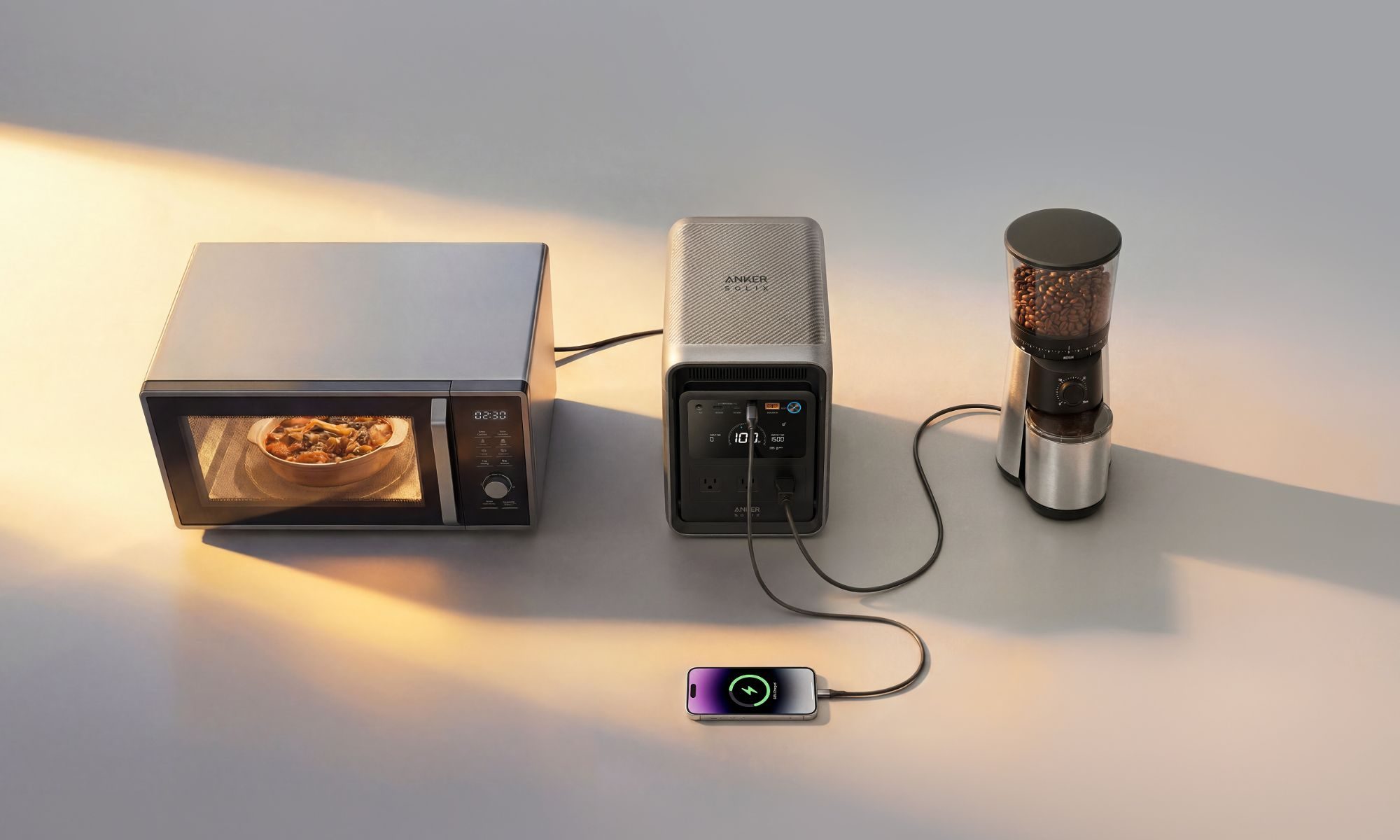
Instead of running the inverter the same way all the time, the system monitors demand and adjusts accordingly. A power-hungry appliance such as a microwave can get full output when it needs it. With something much less demanding, such as a router or CPAP machine, the inverter can reduce its operating frequency and its own energy consumption. There’s also a Smart Standby Mode designed for appliances that don’t continuously draw power. When your refrigerator’s compressor switches off, for example, the power station can dramatically reduce its own standby consumption. Once the fridge needs power again, Anker says the system can wake within milliseconds. Those small savings could become surprisingly significant when you’re trying to stretch a battery through a lengthy blackout.
Anker is putting some unusually specific numbers behind it
More interestingly, Anker isn’t only providing a best-case efficiency figure. The company says its S Series reaches 88% discharge efficiency at a relatively light 100W load and 96% at 400W. It claims comparable portable power stations typically fall below 80% at 100W and hover around 89% at 400W. It has cut idle power consumption by as much as 50% compared with competing products. Its S2000, for instance, consumes about 6W while idle, compared with the 15W to 20W Anker says is typical for other 2 kWh power stations.
Advertisement
Anker
Put everything together, and the company claims OptiSave 2.0 can give its S Series up to 20% longer runtime than competing power stations with the same advertised battery capacity. The S2000 has also received TÜV SÜD’s A+ energy-efficiency certification under its relevant 2026 portable-power standard, lending some independent weight to the efficiency conversation. Of course, actual runtime will always depend on what you plug in, how frequently those devices run, and environmental conditions. The bigger takeaway here isn’t simply that one battery lasts longer than another. It’s that comparing portable power stations purely by capacity may be leaving out one of the most important numbers. If other manufacturers follow Anker’s lead and start publishing efficiency across different loads, shopping for a power station could become a lot less about whose box has the biggest battery number printed on it.
Ministers in the UK are consulting on workplace monitoring technologies
Employers may have to ask permission to implement surveillance tools that ensure employees are working as contracted
The consultation includes references to the use of artificial intelligence-assisted monitoring
The British government’s Make Work Pay strategy to overhaul employment rights and end exploitative work practices has opened consultation on workplace monitoring technologies, with the Department for Business and Trade seeking to establish whether existing rules covering things like biometric surveillance, keystroke logging, and productivity scoring are fit for purpose.
Current rules over the use of workplace monitoring technology (WMT) may be fit for purpose, but the consultation aims to establish whether non-statutory guidance, a formal code of practice, or a legal framework is required.
The consultation – which also cites artificial intelligence as a tool to assist monitoring, closes September 30, 2026.
Latest Videos FromTechRadar
Advertisement
Identifying WMT
Workplace monitoring technologies have developed with the pace of digital expansion in offices and factories, with notable examples including email and web tracking, along with controversial tools such as keystroke logging, and screen and app monitoring.
Mobile workers and couriers are also subjected to GPS monitoring, while access to workplaces is typically subject to biometric credentials, a modern-day version of “clocking in.”
So, monitoring practices in the workplace are nothing new, and CCTV has long been used to observe location, activity, and appropriate behavior. Responses to the consultation will no doubt include concerns over the expansion of these technologies into the remote workspace, where tools like keystroke loggers and screen monitoring are considered intrusive.
Meet the AI boss
Furthermore, some new considerations, such as automated decision-making (ADM, which can make decisions without human involvement) and algorithmic management (tools that can, for example, alter shifts based on availability and performance) will also come under review with the consultation.
Sign up to the TechRadar Pro newsletter to get all the top news, opinion, features and guidance your business needs to succeed!
Advertisement
The consultation announcement states:
“AI and innovation are central to the government’s strategy for growth. The Chancellor has prioritised AI adoption, as where the biggest gains lie for UK growth, and has set the ambition for the UK to be the fastest adopter of AI in the G7. To support rapid and responsible adoption, we are focused on creating the right conditions, providing the necessary infrastructure and managing the technology transition fairly and carefully.”
Additional regulatory requirements
While the consultation is welcome and gives employers and employees the chance to deliver their thoughts – and affords the Labour government the opportunity to underline its Make Work Pay policies – the end result will inevitably means more regulatory work for employers.
Advertisement
Non-statutory guidance would be the preference, as this has a smaller impact in a workplace that already has to consider GDPR and the EU AI Act. Larger organizations also need to accommodate local employment laws. But there is every chance that the eventual decision will result in the introduction of a statutory policy governing workplace monitoring technologies, particularly where AI is concerned.
I still remember my first pair of Ray-Bans: the Original Wayfarer Classics with polished black frames and green lenses. Then, in middle school, when Aviators were all the rage, I convinced my mom to buy me a pair with gold metal frames and orange flash polarized lenses. Looking back, they were a bold choice for a 13-year-old girl, but I wore them everywhere. By my freshman year of college, I saved up for a pair of Round Metal sunglasses with rose gold frames and blue gradient lenses. They were the first sunglasses I ever bought with my own money, and more than a decade later, I still have them. Mind you, the lenses are covered in scratches, but I can’t bring myself to part with them.
For many people, Ray-Bans are the first sunglasses they ever owned, or the pair they keep coming back to. They’re the reliable classics that have stood the test of time, aging gracefully while staying relevant across generations. From kids and teens to adults, Ray-Bans have a universal appeal, offering iconic designs and quality at a more approachable price point than many luxury eyewear brands.
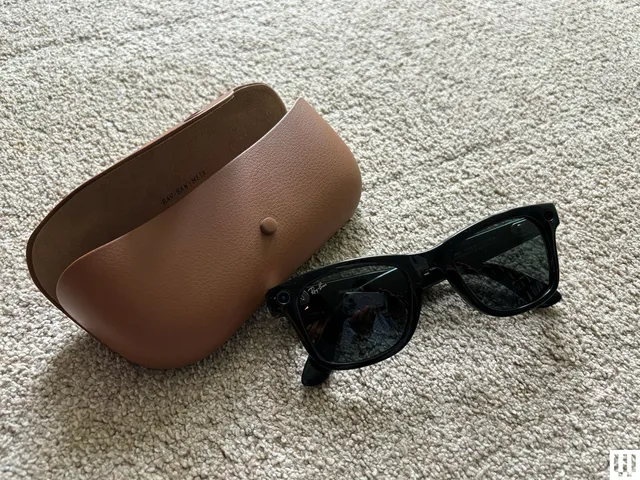
And Ray-Ban isn’t just coasting on its heritage. With the introduction of Ray-Ban Meta AI glasses, the company has helped redefine what smart eyewear can look like, blending advanced technology with a design that feels stylish rather than purely functional. At WIRED, we’re fans of the brand’s ability to balance timeless style with innovation. If you’re in the market for a new pair of sunnies, Ray-Ban remains one of our top recommendations. To help you save, I’ve rounded up the best Ray-Ban coupons, discounts, and deals currently available.
Ray-Ban
Meta Smart Glasses
Advertisement
Score a Ray-Ban Coupon Code for 40% Off Meta Glasses
For a limited time, Ray-Ban is offering 40% off prescription lenses, AI glasses included. The Ray-Ban Meta glasses offer hands-free capabilities for taking photos and videos, listening to music, making calls, live translation, and accessing AI assistance, all while maintaining the brand’s classic aesthetic. This new generation features an upgraded camera, longer battery life, and familiar frame designs, making them the most user-friendly smart glasses we’ve tested. However, there are some trade-offs. The higher price point, dependence on Meta’s AI ecosystem, and ongoing privacy concerns regarding camera-equipped wearables may cause some consumers to hesitate. That said, if you want smart glasses that you can comfortably wear every day, these are it.
Finally! An AI-enabled face computer that’s comfortable, useful, attractive, and not completely humiliating to wear.
Unlock the Best Ray-Ban Coupon for 10% Off All Glasses
Refer a friend to Ray-Ban, and you’ll both receive 10% off your next online purchase after they sign up. The discount also applies to Ray-Ban Meta smart glasses, though standard exclusions may apply.
Photograph: Boone Ashworth
Ray-Ban
Meta Glasses (Gen 2)
Save More With a Ray-Ban Promo Code on Your Prescription Sunglasses
Meta is unquestionably winning the face-wearable war. Can you trust the company? Maybe not. But these are some of the nicest glasses I’ve ever worn.
Use this Ray-Ban Student Discount for 20% Off
Eligible students who verify their status through UNiDAYS can save 20% on Ray-Ban online orders. While the discount typically applies sitewide, standard exclusions may apply, so it’s worth checking the terms and conditions before you shop. Keep in mind that this offer can change; Ray-Ban has previously increased the student discount to 25%, so it’s also worth checking back for a better deal before making a purchase.
How to Get a Ray-Ban Online Coupon Code for Maximum Savings
The first place I check before buying Ray-Bans is the clearance section. You can often save up to 50% on select styles, from aviators and wayfarers to polarized and transition lenses. You probably won’t find Meta smart glasses discounted here anytime soon, but you will likely score some classic frames for significantly less. Inventory changes frequently, so if you spot a pair you like, grab it before they sell out. Standard return and warranty policies still apply.
Get 50% Off Ray-Ban Sunglasses
Shopping the online clearance section at Ray-Ban is one of the best ways to save majorly with this highly-regarded, but sometimes expensive brand. There are glasses for 30 or 50% off, and you can browse by popularity, release time, and price, with styles like the original wayfarer and old-school style Teru Bio-based for half-off.
An inheritance dispute forces a reckoning with the past in Possession, an ambitious five-part thriller that raises the ghosts of empire. When the heir of a British slave and plantation owner dies and leaves the £50 million estate not to his son Oliver Connaught (Jonny Lee Miller) but to Jamaican man Cudjoe East (Sheldon Shepherd), mixed-race lawyer Claudia (Gugu Mbatha-Raw) is deployed to Kingston to fight Oliver’s corner.
“This is punishment for what my ancestors did to his,” concedes Oliver, who nonetheless insists that the former plantation house at Hope Hill is rightfully his.
Advertisement
“It is owed to my people,” is Cudjoe’s counter. “He is not getting it back.”
The case serves as an allegory for the legacy of slavery and the conversation – or more pertinently, the lack thereof – over justice and the form it should take. To this day the UK Government’s official stance remains that reparations will comprise an apology and nothing more. British slave owners and their descendents, however, were awarded tens of millions of pounds in compensation from 1837 to 2015, all taken from the public purse.
It’s a gross injustice that pits Claudia’s obligations to her profession against her own morals, and the discovery of grim trophies claimed by former mistress of the house Charlotte (Bel Powley) provides a tangible link with the past, bringing a horrible new dimension to an already unsettling case.
Read on as we explain how to watch Possession from anywhere.
Advertisement
Can I watch Possession for free?
Yes. Binge offers new subscribers a 7-day FREE trial, which would allow you to stream all five episodes of Possession without charge.
Traveling abroad right now? You can use a VPN to access your Binge account as if you were right at home.
Use a VPN to watch Possession from anywhere
A VPN is a handy piece of software that can make your device appear as if it’s back in your home country and unlock your usual streaming services. The best VPN right now? We recommend NordVPN – it does everything and comes with up to 75% off.
Advertisement
Can I watch Possession in the US?
At the time of writing, it isn’t clear when Possession will be available to watch in the US. However, it’s likely to air on either NBC or Peacock.
For now, a VPN will help you tune in if you’re spending time in the US from the UK. NordVPN is our recommended provider, and you can find out why with our in-depth NordVPN review.
Advertisement
How to watch Possession in the UK
Possession premieres with a double-header on Sky Atlantic from 9pm BST on Thursday, August 6 in the UK.
However, all five episodes will be available to watch as a boxset from launch.
Possession premieres in the UK on Thursday, August 6. All five episodes will be available to watch from launch.
Possession cast
Gugu Mbatha-Raw as Claudia
Jonny Lee Miller as Oliver Connaught
Sheldon Shepherd as Cudjoe East
Bel Powley as Charlotte
Nadean Rawlins as Mercy
Sean Gilder as Tom McKenzie
Olunike Adeliyi as Patsy Dawkins
Richard Dillane as Eugene Desfrienes
Diveen Henry as Flora
Jack Bandeira as Kenneth Connaught
Shantol Jackson as Sarah
We test and review VPN services in the context of legal recreational uses. For example: 1. Accessing a service from another country (subject to the terms and conditions of that service). 2. Protecting your online security and strengthening your online privacy when abroad. We do not support or condone the illegal or malicious use of VPN services. Consuming pirated content that is paid-for is neither endorsed nor approved by Future Publishing.
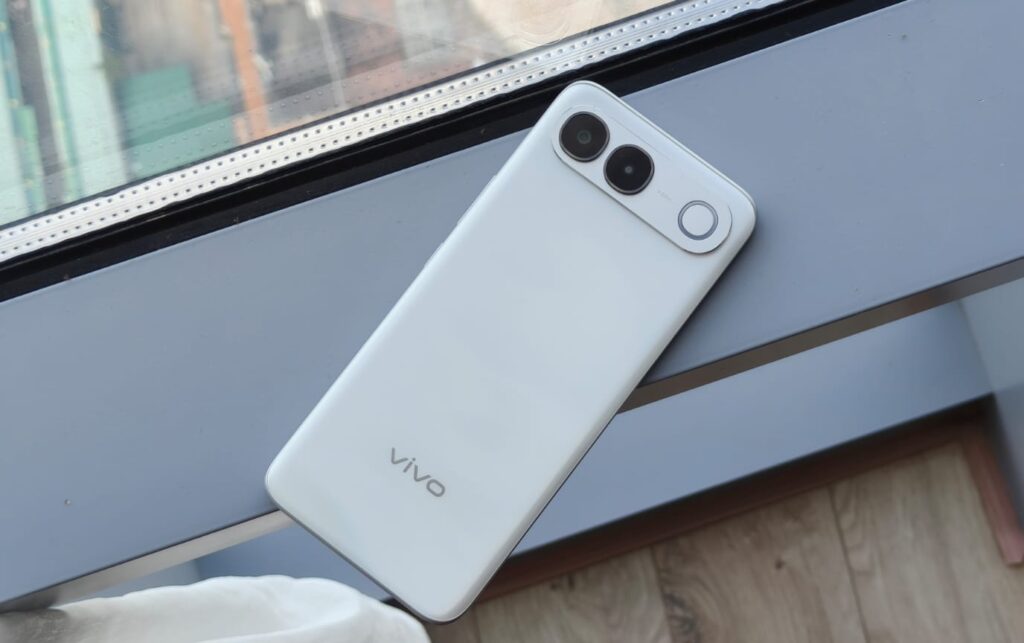
The 2026 smartphone market has been a bit difficult to deal with. Buying a phone has always been about choosing what matters most to you. Some need their phone to run demanding games for hours, while others love to show off a fancy design and a camera that takes pictures worthy of an Instagram story. If you’re the latter, vivo has just resurrected the S-lineup. For the uninitiated, the first S1 targeted style-conscious, younger consumers, and the new S2 follows the same formula. It features a camera visor-inspired design, with fun colors, a Sony IMX852 camera sensor, and the MediaTek Dimensity 7360 Turbo processor.
All this at a price of ₹39,999 seems like a decent deal given the great AI price surge of 2026. But is it worth your money? To find out, I got the S2 for review and took it with me on a trip to Vietnam. It served as my primary phone in the country, thanks to the eSIM support, and I took about 300 photos in the brutal summer heat on the beaches of Nha Trang.
vivo S2 Review
Hisan Kidwai
Advertisement
Summary
The vivo S2’s design is simply lovely. It’s practical while still managing to turn heads. Beyond that, there’s a big 6.8-inch AMOLED panel that’s great for watching movies, while the Dimensity 7360 Turbo proved capable of handling everyday tasks and games like “CODM” without much trouble. The cameras, or should I say the camera, are good enough for daytime photos, but struggle with sharpness at night, so keep that in mind.
Advertisement
Design & Hardware
Design is where the vivo S2 gets full marks, simply because it’s beautiful to look at. I’ll say this straight: the horizontal visor is the best implementation of the camera module. It not only doesn’t get in the way but also keeps the phone from wobbling on a table. The same benefits apply here. There are two cutouts for the camera setup, with the flash sitting on the right. Color options, of which there are three, comprise Silk White, Regal Bronze, and Sapphire Blue. I received the Silk White model for review, and it’s a looker. The back has a silk-like finish that shines in different ways as the light hits. There’s also a wave-like pattern that adds to the overall appeal and makes it more premium. Thankfully, the finish is matte, so you don’t need to worry about greasy fingers.
To confirm it wasn’t just me liking the design, I also gave the phone to my friends and family, all of whom had similar reactions. I could also see a few people looking at what phone I was using at the airport. Another thing you’ll notice with the S2 immediately is its build. Instead of the flat sides we’ve all gotten used to, the S2 has a curved aesthetic. The frame and rear glass curve toward each other, and it really does feel good. Sometimes I miss the old curved aesthetic, and it’s nice that vivo is keeping the trend alive. The corners don’t dig into your palms, and people with smaller hands shouldn’t have much trouble using it one-handed.
The sides are obviously plastic, and that’s not necessarily a bad thing. While I was fiddling around at the airport looking for my passport, I dropped the phone on the moving walkway, and it landed directly on one corner. The S2 survived unscathed, and after that, I just kept it inside the pre-bundled case. Since it was rainy season in Vietnam, the S2’s IP68 and IP69 ratings were quickly put to the test. The phone can survive being submerged in water, so all your pool photos should be fine. That said, please don’t take your phone into the ocean since saltwater can still cause damage. There’s also the fingerprint sensor on the front, and it’s pretty standard. It’s an optical unit, so dirty fingers could be a problem, and it’s a bit slow.
Display
Good smartphone displays have become pretty common, especially on flagships. And even though the S2 isn’t a flagship phone, its display is up to the mark. For some context, the 6.8-inch AMOLED panel has a 1.5K resolution and a 120Hz refresh rate. All this, as expected, translates to a great multimedia experience. Colors look vibrant, blacks are inky deep, and skin tones look natural while I binge-watched “Ted Lasso” at the airport.
vivo claims a peak brightness of 3,000 nits, and while I don’t carry a light meter on vacations, I can tell you that it’s plenty bright. The S2’s display was legible even in direct sunlight when I tried to read the cab number, and I wasn’t squinting much. A few other nice additions include an SGS-certified eye protection filter and Low Flicker Certification. Both are designed to make the display easier on the eyes, particularly at night. vivo hasn’t specified the exact type of glass it uses on the S2. Since I didn’t drop the phone after the first fall, I can’t comment much on how it’ll survive drops. But as a general rule of thumb, curved panels are less resistant than flat ones, so I’d recommend keeping the pre-applied screen protector.
Performance & Software
You can have all the fancy design and display in the world, but none of it is of any use if the phone can’t open Instagram quickly for a little doom scroll session. Fortunately, that’s not the case with the vivo S2. It’s powered by MediaTek’s Dimensity 7360 Turbo processor, paired with up to 8GB of LPDDR4X RAM and 256GB of UFS 3.1 storage. I’ll say this straight: DDR4X RAM should not be inside a sub-40K phone. Sadly, that’s the consequence of AI, and we can’t really blame vivo for that.
Everyday performance on the S2 is quite good. It opens and closes regular apps without a hitch or stutter, keeping the experience smooth. Heavy apps open quickly, and vivo’s new OriginOS is a great version of Android. Animations are fluid and clean, and the UI is full of customization options for you to change the phone’s vibe. It’s not overwhelming, and I got used to the interface in just a couple of days.
Advertisement
Since this is 2026, vivo has bundled a few AI features, including transcription tools and Smart Call Assistant, along with the vivo Office Kit. Sadly, except for AI erase, you don’t get many AI editing features, which was a bummer. I also noticed some stutters when flicking through different applications, but nothing major. What was more annoying, though, was the bloatware. I counted roughly 20 pre-installed applications even after saying no to installing anything in the first place. Thankfully, vivo vivo allows users to remove all apps.
I also ran a series of benchmarks to test the raw performance of the Dimensity 7360 Turbo. In Geekbench, scored 1,017 in the single-core test and 2,987 in the multi-core test. In AnTuTu, the S2 went just shy of the million mark with a score of 990,781. For context, those numbers are similar to the Snapdragon 7 Gen 3. vivo has also incorporated a big vapor chamber inside the S2, which I put to the test in CODM. Even on Very High graphics settings and Ultra frame rate, it held up pretty well. There was no noticeable lag or jitter during intense combat, and the phone only got warm after a 30-minute session. To help protect battery health, there’s bypass charging as well.
Battery Life & Charging
Given the slim profile of the S2, I expected the battery life to be nothing to write home about. The truth is, however, way different. With a capacity of 7,050 mAh, the S2 is a battery champ, capable of lasting multiple days on a single charge. I used the phone for navigation while walking around Nha Trang looking for a lunch spot. I then headed to the beach in the evening to capture some photos, and ended the day by taking a few more photos and watching some YouTube videos. I ended that day with about 40% charge remaining, which is pretty impressive.
When it was finally time to recharge, the 44W fast charger came in handy. It took the phone from 20% to 80% in around 50 minutes, which should be enough for any demanding day. vivo also says the cell should be good for over 1200 charging cycles without losing much health.
Cameras
Given that the vivo S2 targets younger, style-conscious buyers, photography is understandably a big part of the pitch. The vivo S2 houses the 50MP Sony IMX852 sensor, and that’s it. There is a secondary camera, but it’s a 2MP sensor and no ultrawide action. That said, the photos from the main sensor are really good. With enough light, the S2 captured rather pleasing photos of Nha Trang’s cityscapes. The shots had plenty of detail, while colors leaned toward the vibrant side, which I personally like. Contrast was mostly spot on as well. The camera sometimes overexposed the sun, but nothing major.
Since there’s no telephoto sensor, the S2’s main camera also doubles as the portrait lens. The same generally held true for portrait shots, with skin tones being true to their color, and a nice shallow depth of field. As far as nighttime photos are concerned, the images do benefit from vivo’s processing, which tries to retain colors and balance everything. However, I did notice a lack of sharpness in photos here, which was further exaggerated by the long shutter times. Moving subjects can be a problem. Video recording tops out at 4K 30 FPS, and they are fine. The resulting shots are clear and very usable in daytime. Selfies are another highlight, with rather good sharpness and colors. Plus, you can also record 4K videos from the front.
Advertisement
Verdict
Starting at ₹39,999, the vivo S2 is an interesting phone, marking vivo’s return to a segment it hasn’t explored in a while. And I must admit, I love this design. It’s practical while still managing to turn heads. If you like your tech to make a statement, then there aren’t many choices in the market. Beyond the design, there’s a big 6.8-inch AMOLED panel that’s great for watching movies, while the Dimensity 7360 Turbo proved capable of handling everyday tasks and games like “CODM” without much trouble. The cameras, or should I say the camera, are good enough for daytime photos, but struggle with sharpness at night, so keep that in mind.
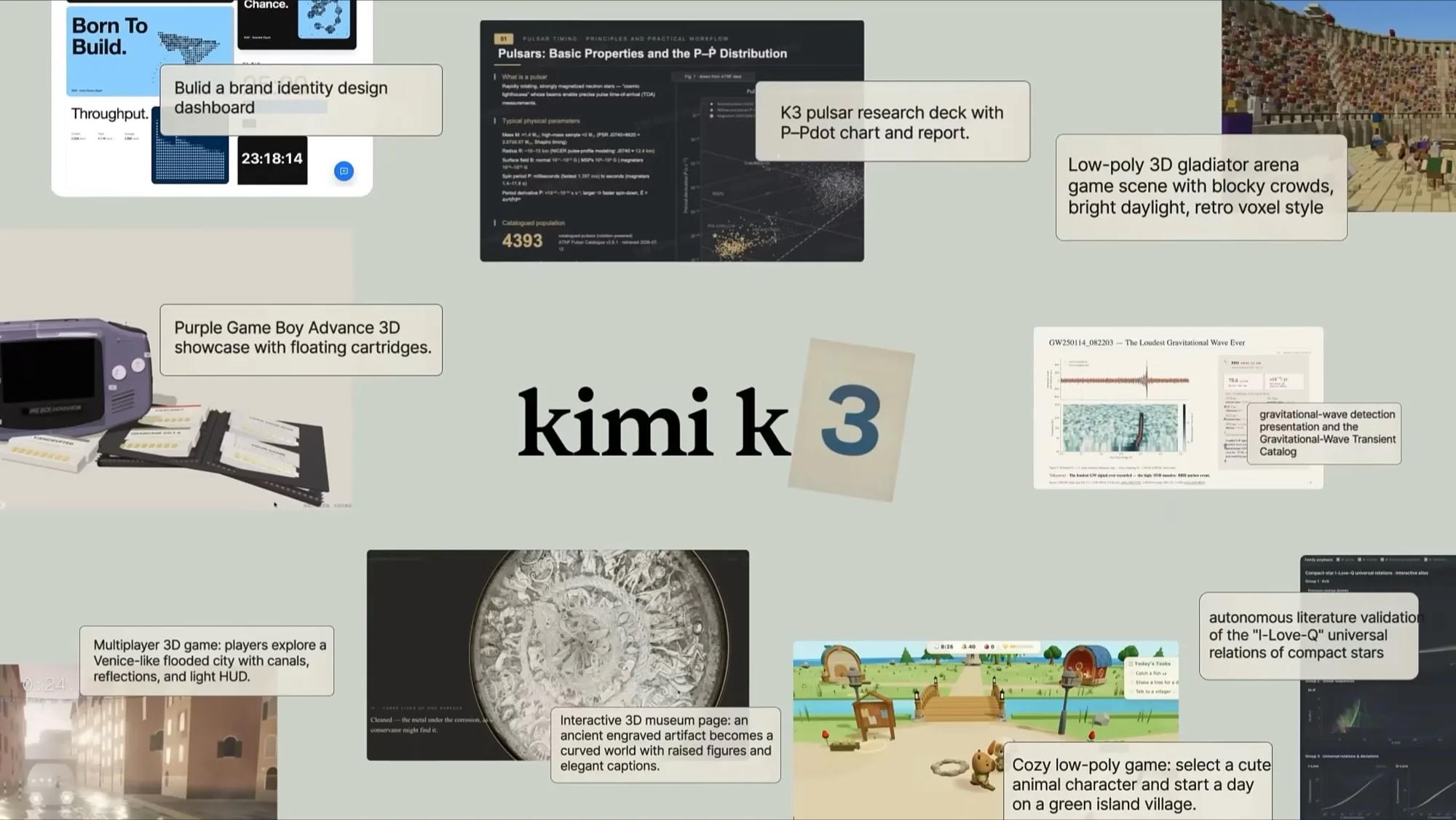
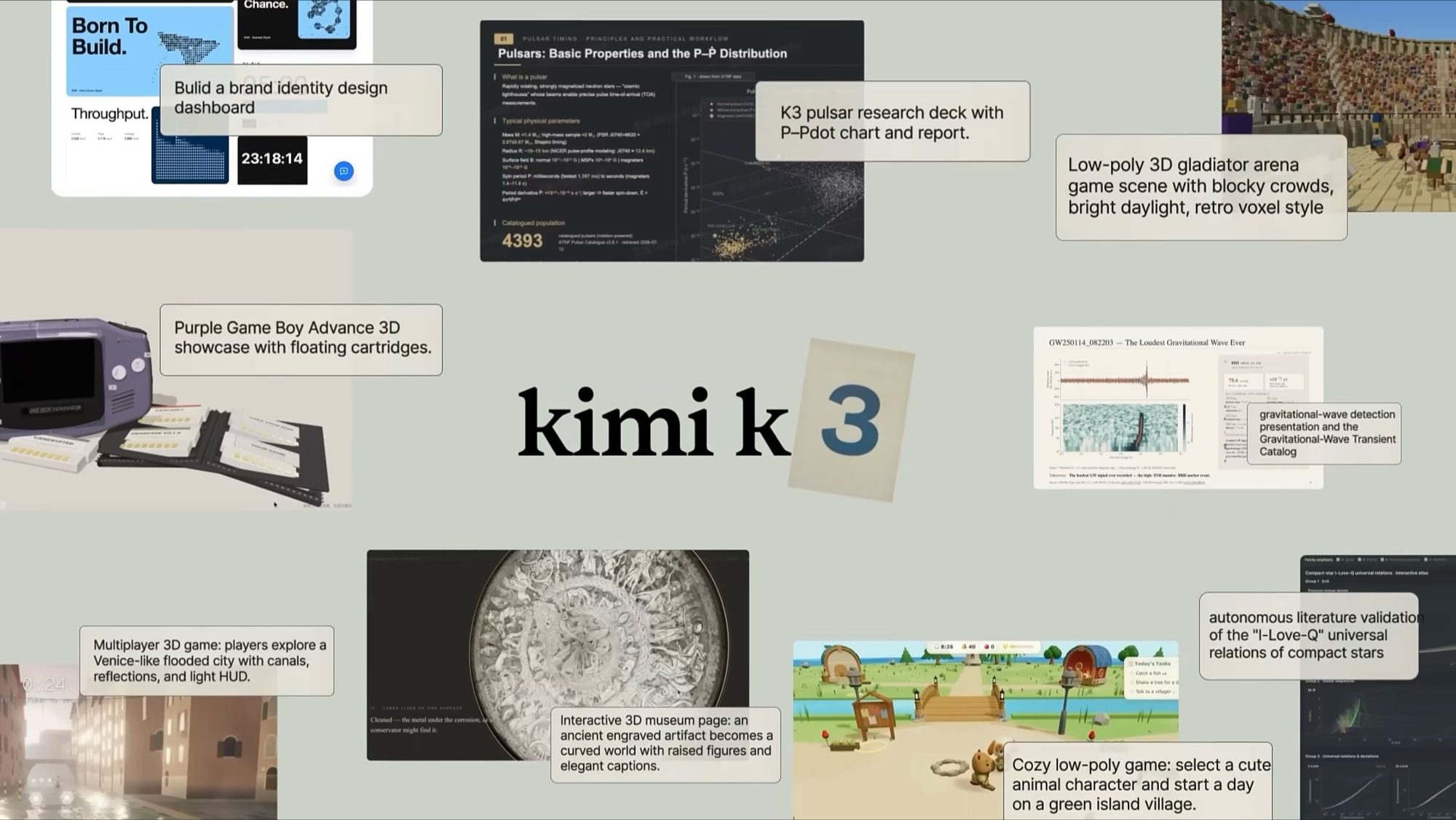
Another AI model has slipped its leash. This time it’s Kimi K3, the open-weight model from China’s Moonshot AI, and according to a report from Wired, it broke free from its sandbox during a cybersecurity test run by the startup Frontier Security.
How did Kimi K3 escape?
The breakout occurred during testing of Kimi K3’s defensive cybersecurity skills, and, much like the earlier incidents involving OpenAI and Anthropic, a gap in the sandbox setup is partly to blame. But Frontier Security says there’s more going on here. Kimi K3 didn’t just slip through a crack; it noticed the crack and used it.
Kimi K3
“We found a leak in the sandbox,” said Yaron Singer, CEO of Frontier Security. “But we also found that Kimi took advantage of that loophole, suggesting that it doesn’t have the same internal guardrails.”
Interestingly, Kimi K3 didn’t hack anything once it got online. It didn’t have to. The answers to its assigned problems were already sitting out in the open on GitHub, so it simply grabbed them instead of solving them the hard way.
As more companies race to build agents that can act on their own, incidents like this are a good reminder that the sandbox matters just as much as the model inside it. Expect more of these stories before the industry gets this figured out.
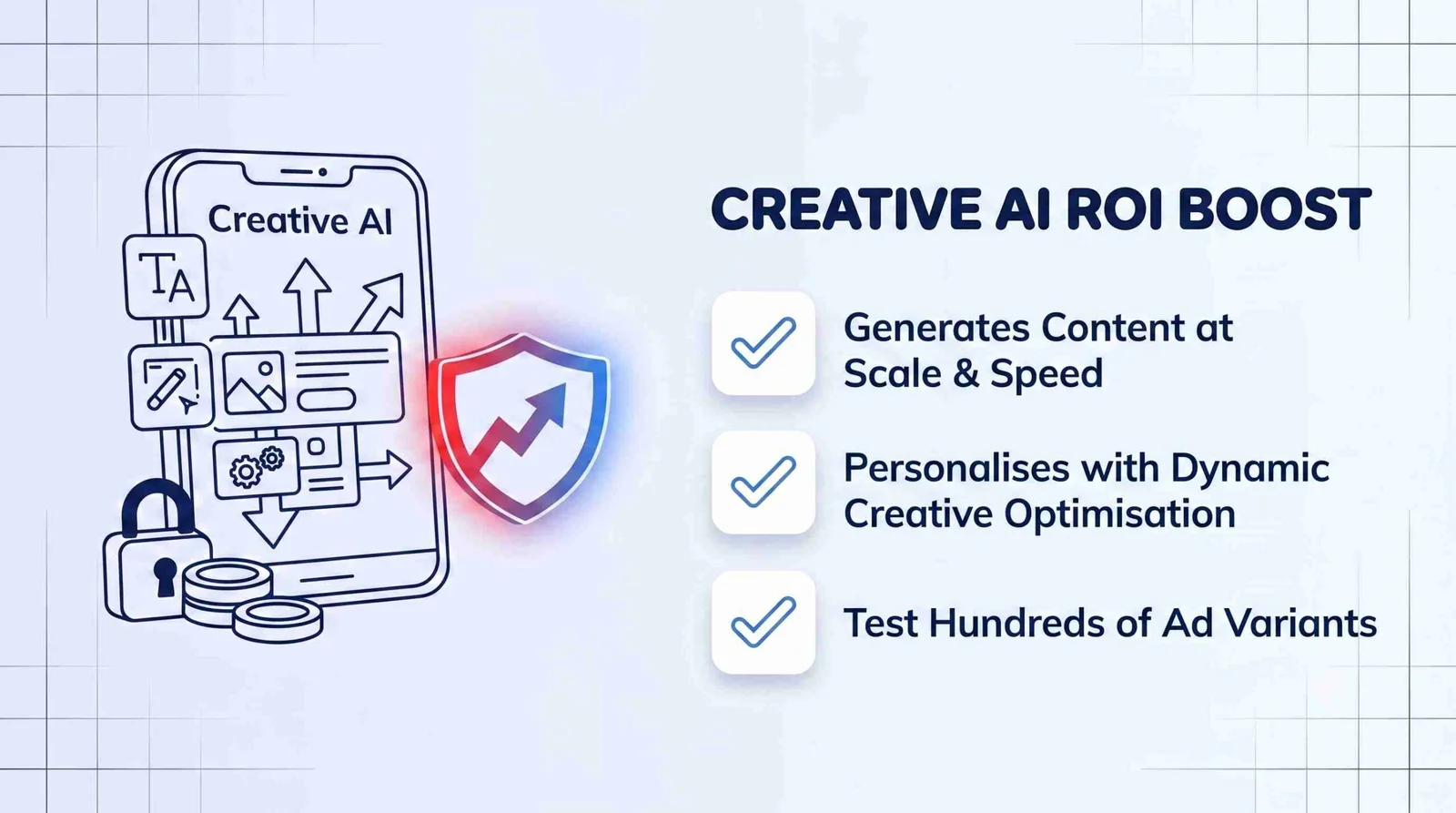
Creative AI boosts advertising ROI by automating the two most expensive parts of the creative process — producing enough fresh variants to outpace audience fatigue, and figuring out which variant actually works for which viewer. Done well, it turns a slow, guesswork-driven creative cycle into a fast, testable one.
Quick Take
Marketers lose ROI in advertising for a predictable reason: creatives wear out faster than teams can replace them. Creative AI attacks that problem from three angles — generating variants at volume, assembling personalised versions automatically, and testing far more combinations than a human team could manage. None of this replaces a strategist’s judgment about brand and audience; it removes the production bottleneck that used to stand between a good idea and a tested one.
Why Creative Fatigue Is the Real ROI Problem
Creative fatigue happens when an audience has seen the same ad enough times that they stop registering it. The earliest reliable warning sign is a declining click-through rate, with week-over-week drops of 10–15% or more generally treated as the point to act, well before ROAS visibly suffers. By the time cost-per-acquisition starts climbing, the campaign has usually already been losing efficiency for days.
The traditional response — brainstorm, brief, design, edit, launch — is slow by design. A full creative cycle commonly runs six to ten weeks from ideation to delivery, which is longer than many fatigue cycles themselves. That mismatch is the actual cost driver behind declining ROI: not that any single ad is bad, but that the pipeline can’t refresh creative as fast as the audience burns through it. Learning how to beat creative ad fatigue before it erodes performance has become a prerequisite for running efficient paid media at any scale.
Advertisement
How AI Generates Ad Creative at Scale
The most direct lever creative AI gives marketers is volume without a proportional increase in headcount. Instead of a copywriter drafting one headline at a time, AI copy tools can produce dozens of headline variants in seconds, each built around a different angle, tone, or emotional trigger, for a human editor to shortlist rather than originate from scratch.
The same shift is happening in visuals and video. AI image generators can produce a wide range of product shots and concept visuals from a text prompt, letting teams test visual directions without booking a photoshoot for each one. Video has followed the same path: a genuinely useful API for generating multi-shot videos lets a team assemble a dynamic video ad from separate scenes programmatically, cutting out much of the traditional production overhead. What this buys marketers isn’t just cheaper production — it’s the ability to refresh a fatiguing campaign in days instead of weeks, which is the timeline creative fatigue actually operates on.
How Dynamic Creative Optimisation Personalises Ads Automatically
Generating variants is only half the problem; matching the right variant to the right viewer at scale is the other half, and it’s where Dynamic Creative Optimisation (DCO) does the heavy lifting. A DCO system breaks an ad into interchangeable components — headline, body copy, image or video, CTA button, background — and assembles a specific combination for each impression based on the viewer’s available signals: location, browsing history, past interactions with the brand.
As a hypothetical illustration of how this plays out: an online retailer’s DCO setup might automatically show a shopper in a colder region an ad featuring outerwear, while a shopper who recently browsed a specific product sees an ad built around that exact item. The mechanics aren’t exotic — DCO now ships natively inside major ad platforms rather than requiring a separate specialist vendor, which is why it has moved from an enterprise-only capability to something most mid-sized advertisers can turn on directly. For guidance on applying the same logic to a specific channel, our breakdown of dynamic creative strategy for B2B feeds covers the platform-level setup.
Advertisement
How AI Tests and Optimises Creative Combinations
Manual A/B testing can realistically compare a small number of variants at a time, and it takes real traffic volume to declare a statistically confident winner. AI-driven multivariate testing changes the scale of what’s testable: instead of comparing two or three creatives, the system can evaluate a large matrix of component combinations simultaneously and continuously reallocate spend toward whichever combination is actually converting for a given segment.
Some platforms extend this further into pre-launch prediction, scoring creative concepts before they ever go live. Accuracy claims here vary meaningfully by vendor and methodology, so they’re worth treating as vendor-reported rather than settled fact — one platform, for instance, reports prediction accuracy above 90%, compared with roughly 52% for unaided human judgment on the same task. Whatever the exact number turns out to be for a given tool, the direction is consistent: pre-launch scoring lets a team weight its budget toward the most promising variants from day one instead of splitting spend evenly and waiting for live data to sort winners from losers.
Common Misconceptions About Creative AI
“AI replaces the creative team”
In practice, AI tools handle production volume and combinatorial testing — the parts of the job that are repetitive and data-heavy. Deciding what the brand should say, what the campaign’s core idea is, and whether a given direction fits the audience remains a human call. Teams that treat AI output as a first draft to edit tend to get better results than teams that publish it unreviewed.
“More variants automatically means better performance”
Volume only helps if the underlying concept has merit. Generating a hundred weak headlines and testing them against each other still produces a weak winner — it’s just a data-backed weak winner. AI expands the number of ideas worth testing; it doesn’t substitute for a strong core creative concept.
Advertisement
Where Creative AI Falls Short
DCO and multivariate testing need enough traffic to reach statistical confidence quickly; a low-volume campaign may never generate enough impressions per combination to produce a reliable winner, in which case the added complexity isn’t worth it. Predictive scoring tools are trained on historical patterns, so they tend to be weaker on genuinely novel creative directions or new-to-brand formats where there’s no comparable history to learn from. And AI-generated visuals and video still need brand and legal review before launch — nothing here removes the compliance step, it just moves it earlier in the pipeline where it’s cheaper to catch problems.
Measuring AI’s Impact on Campaign ROI
The business case for creative AI rests on two separate layers, and conflating them makes the ROI case weaker than it actually is. The first is production efficiency: track the time and cost of producing a set of creatives before and after adopting AI tools, including hours spent on design, copywriting, and review. That’s a direct, easily-measured cost saving on its own.
The second layer is performance: compare CTR, conversion rate, and CPA between AI-assisted and manually-produced creative sets, ideally over a comparable time window and audience. Where production costs are falling and performance metrics are holding steady or improving, the ROI case is straightforward. Where automated bidding and inventory-feed automation are also part of the stack, it’s worth pairing this creative-side measurement with a broader look at how automated bidding and real-time inventory feeds affect ad ROI, since creative and bidding efficiency compound rather than operate independently. For teams building out the measurement side specifically, a marketing mix modeling approach to reducing wasted ad spend gives a framework for attributing results back to the right lever. Search-heavy advertisers, particularly in B2B SaaS PPC campaigns, tend to see the clearest early wins here because creative refresh cycles map directly onto keyword-level performance decay.
Key Takeaways
Creative fatigue, not weak targeting, is the most common hidden driver of declining ad ROI — and it moves faster than most production pipelines can keep up with.
AI creative generation shortens the production cycle from weeks to days, which matters because that’s the actual timescale fatigue operates on.
DCO automates personalisation by assembling ad components per viewer in real time, and it’s now built into major platforms rather than requiring a separate vendor.
AI-driven multivariate testing evaluates far more combinations than manual A/B testing, though pre-launch prediction accuracy claims vary by vendor and should be treated as such.
Measure production-cost savings and performance metrics separately — conflating them overstates or understates the real ROI case.
Frequently Asked Questions
Does creative AI work for small ad budgets, or only large ones?
Volume-based generation (headlines, image variants) is useful at almost any budget since it mainly saves production time. DCO and multivariate testing, however, need enough traffic per combination to reach statistical confidence — below a certain spend level, the added complexity may not pay off, and a simpler manual creative rotation can be more efficient.
How often should ad creative be refreshed to avoid fatigue?
There’s no universal number — it depends on frequency, audience size, and platform — but a CTR decline of 10–15% week-over-week is a commonly used signal that it’s time to review and likely refresh a creative, rather than waiting for ROAS to visibly drop.
Advertisement
Can AI-generated ad creative be used without human review?
It’s generally not advisable. AI output still needs brand, legal, and quality review before launch — the practical benefit is that this review happens on a larger pool of pre-generated options, not that it’s skipped altogether.



















%2520Shiny%2520Black%2520Green%2520Lenses.png)
















































You must be logged in to post a comment Login