




Connect with us

Politics

Racists winning as opposition to migrants surges in north of Ireland

Published

on

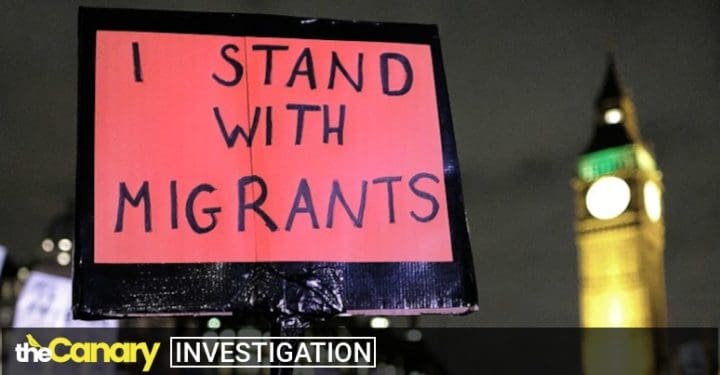
Migrants poster

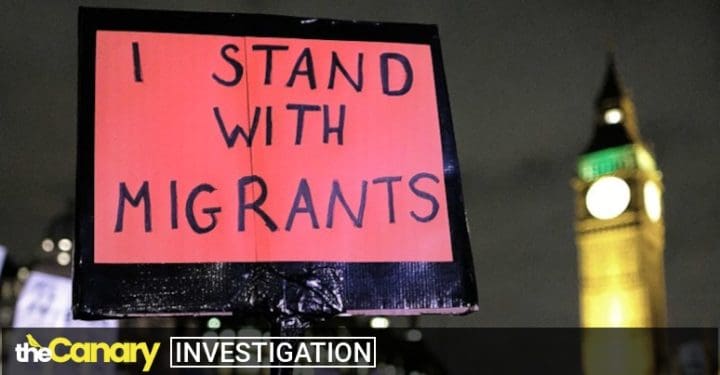
Migrants poster

Far-right fictions on immigration appear to still be having a corrosive effect on attitudes towards those fleeing persecution, as a new north of Ireland survey shows a collapse in support for migrants.

Stormont’s Executive Office looked at results for the year 2025, and found that now only 49% of people think the region should obey international law and let asylum seekers stay in the Six Counties.

Stormont is still subject to British law on immigration matters, which is in turn bound by Britain’s signing of the 1951 Refugee Convention. The agreement requires all signatories to ensure those fleeing persecution have the chance to claim protection in a safe country.

The authors of the Stormont report, entitled Attitudes to Refugees and Asylum Seekers in Northern Ireland 2025 say the 49% figure is:

Advertisement

…significantly lower than the corresponding figure for each year from 2018 to 2024.

The exact question researchers asked was:

Thinking about people who come to Northern Ireland to get away from persecution in their own country. How much do you agree or disagree that these asylum seekers should be allowed to stay in Northern Ireland?

Interestingly, a majority were in favour of assisting those with an unsafe home country when the authors rephrased the question. 57% agreed with the statement:

I think it is our duty to provide protection to refugees who are escaping persecution in their home country.

Anti-migrant lies gain more ground among Protestants than Catholics

The figures predictably showed major differences in attitudes between Catholics and Protestants. 58% of the former thought asylum seekers should have the right to be in the north of Ireland, vs just 33% of Protestants. Catholics know what it is like to be persecuted and unfairly demonised, and consequently are more likely to recognise the fictions spread about refugees and asylum seekers.

There at least seems to be some self-awareness about the hostility migrants now face when they come to the north of Ireland fleeing war or other forms of persecution. Only 27% believe that the region is a welcoming place for those needing asylum. Three successive summers of violent pogroms against migrants, largely driven by loyalists, have proved these fears of hostility to be correct.

Advertisement

Belief in the north of Ireland being welcoming for migrants peaked in 2022, at 51%. This is the year when attitudes to new arrivals was most positive, likely in the wake of the Ukraine war. The mainstream media did its best to engender sympathy for Ukrainians suffering during war with Russia, frequently in an outrageously racist way. At the same time, they have continued to confect panics about those fleeing conflict from the Global South, often people fleeing criminal wars that Britain participated in.

Survey respondents also seemed to be aware of media manipulation, with 69% saying that:

…people’s perceptions of refugees and asylum seekers are negatively affected by the media

The rich hoarding wealth is the real problem

The Refugee Council does a good job of debunking many of the myths spread by the media, alongside far-right liars. These malign actors like to tell us that refugees are chancers who are just coming our way to pick up a benefit cheque. Yet, as the Refugee Council point out:

The top ten refugee producing countries in 2021 all have poor human rights records or on-going conflict. People seeking asylum are fleeing from these conflicts and abuses, looking for safety.

The Home Office is hardly a body sympathetic to migrants, and is often issued instructions to make life as hard as possible for people who have reached Britain from abroad. Yet even then:

Advertisement

In the year ending June 2022, 76% of initial decisions resulted in a grant of asylum or other form of protection.

That means refugees aren’t scroungers, they’re people in genuine need of protection. The notion they might be freeloading is absurd, given the fact that:

People seeking asylum are often living on Home Office support equivalent to under £7 per day

The media and far-right, who often operate in lock-step, also love to claim migrants are living the high life in hotels. But ask yourself: would you give up your own home to go and live in a nondescript single room somewhere, thousands of miles from your family, with no kitchen and following someone else’s rules? Nobody would choose this, and migrants don’t either: they end up there out of desperation and necessity.

That these fictions are so easily debunked seems to be having little effect, however. People are understandably angry about stagnant wages, a rising cost of living and failing public services. Yet these problems are caused by a tiny minority who have hoarded virtually all of society’s wealth.

They have no interest in giving it up to pay their workers properly or chip in with their taxes to pay for proper health care or transport. They therefore pay off politicians, buy up media outlets, and fund far-right goons, all to spread fictions blaming migrants for countless social ills. This utter shit continues to stick, as this latest survey sadly proves.

Advertisement

Featured image via the Canary

By Robert Freeman

Source link

Advertisement
Continue Reading
Click to comment

You must be logged in to post a comment Login

Leave a Reply

Politics

Queer Eye Tan France Has Launched A Very Chic Homeware Collection

Published

on

Queer Eye Tan France Has Launched A Very Chic Homeware Collection

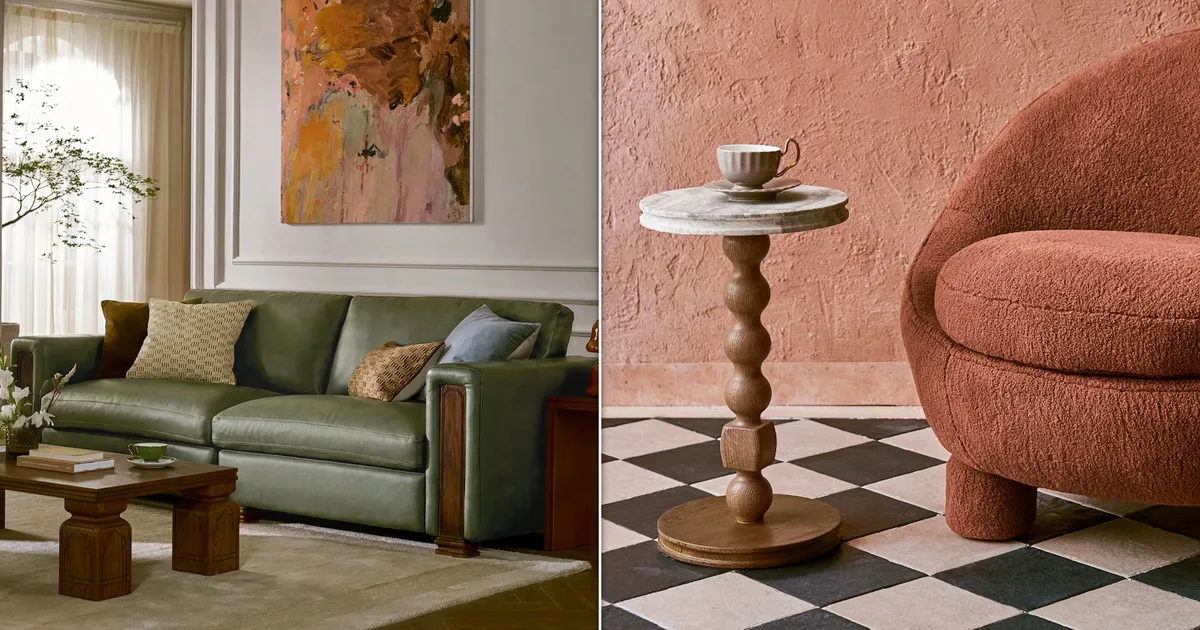
Tan France might be known for his ‘eye’ for fashion on telly, but that doesn’t mean he can’t play ball in other courts.

Inspired by his British-Pakistani background, the collection takes inspiration from a range of traditions, which results in rich upholstery, warm colours, wood finishes, and a blend of structure and comfort.

My favourite pieces include expansive leather sofas and hand blown glass table lamps, which provide the perfect environment to get wrapped up in a good book of a warm evening.

But honestly, I want it all. If you also can’t decide, I’ve rounded up the best of the collection to shop now.

Advertisement

Source link

Continue Reading

Politics

Richard Tice Claims Hes Been Treated Worse Than A Criminal

Published

on

Richard Tice Claims Hes Been Treated Worse Than A Criminal

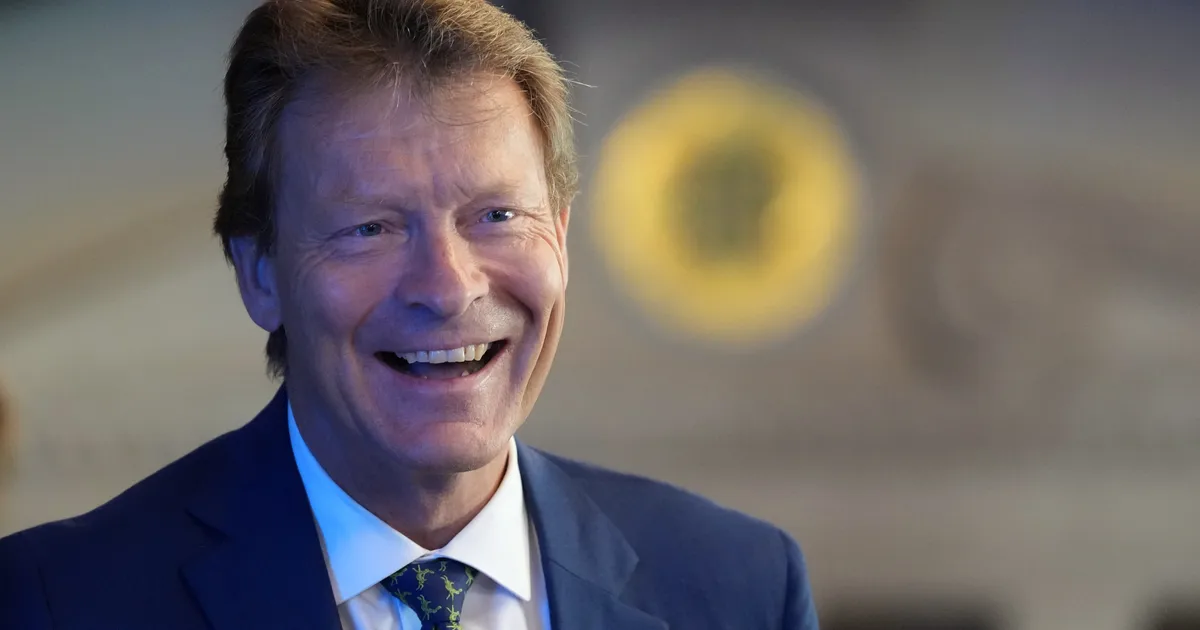
Richard Tice said he has been treated “worse than a paedophile, a rapist or a murderer” by the BBC and the police.

The Reform UK deputy leader made the extraordinary claim as he was quizzed about his and the party’s financial arrangements.

It emerged last month that detectives are investigating donations to Reform by a company controlled by Tice.

Parliament’s commissioner for standards also revealed that he has begun a probe into claims Tice had failed to declare an interest.

Advertisement

Meanwhile, an investigation by the commissioner into a £5 million gift Nigel Farage received from a Thailand-based crypto billionaire is on hold while he fights the Clacton by-election.

Appearing on Times Radio on Thursday, the Boston and Skegness MP claimed he and Reform had “observed all the rules at every level”.

“There is a lot of mischief-making, smearing, discrediting, particularly to myself and Nigel Farage in a most disgraceful way,” he said.

“Frankly, there’s been a whole lot of nonsense printed and done to Nigel and to myself and we’re done with it. We’ve had enough of some of this stuff.

Advertisement

“It’s frankly outrageous. Full of lies, innuendo, slander, defamatory stuff going on, particularly from some large, mainstream organisations, and we’re done with it.”

Tice added: “Let me make one point clear. I have been treated worse than a paedophile, a rapist or a murderer in terms of the legal protection and privacy that I’ve been allowed by people like the BBC and the Met Police. Just leave it at that.”

Listen to Commons People, the podcast that makes politics easy. Every week, Kevin Schofield and Kate Nicholson unpack the week’s biggest stories to keep you informed. Join us for straightforward analysis of what’s going on at Westminster.

Source link

Advertisement
Continue Reading

Politics

Holocaust descendants doubt Ed Miliband will stop UK’s genocide complicity

Published

on

Ed Miliband

Ed Miliband

Many Holocaust survivors and descendants have been vocally opposing the UK’s complicity with Israel’s genocide in Gaza since 2023. And they hope new foreign secretary Ed Miliband — himself the son of Holocaust survivors — will stop this. But as some explained to the Canary, they doubt he will.

Ed Miliband’s ‘self-serving’ careerism

Miliband doesn’t mark a meaningful change from Keir Starmer’s genocide-complicit regime. He has received money from similar sources and has a generally anti-Palestinian track record. As an uncritical supporter of Israel, he has opposed boycotts and had a “strong relationship” with Labour Friends of Israel.

As Holocaust child survivor Dr Agnes Kory told us:

Ed Miliband’s statement about his Holocaust survivor parents (after his recent appointment as Foreign Secretary) does not sit well with me. On the contrary. As we have seen over the years, Ed Miliband’s main focus is getting and keeping the top job.

She called Miliband’s reference to his parents’ stories “self-serving”, saying it:

Advertisement

was likely aimed at those British Jews who have been brainwashed by the Chief Rabbi, the Board of Deputies and others to be scared for their life whenever anybody is critical of Israel’s actions… If I feel charitable, I consider that Ed Miliband wanted to reassure the frightened British Jews. If I think logically, I conclude that Ed wanted the Jewish vote and no antagonism from pro-Israeli campaigners.

And she insisted that:

With his eye on his career, Miliband is unlikely to do anything meaningful to stop the genocide of Palestinians and Britain’s complicity. He knows what happened to Ken Livingstone and [Jeremy] Corbyn, what is happening to Zack Polanski and so on.

As the Lipman-Miliband Trust explains, Miliband’s father Ralph once criticised how the Labour Party’s:

dogmatic attachment to the dominant parliamentary representative system compromised its commitment to socialism and class struggle.

His mother Marion, meanwhile, was a pro-Palestinian activist.

With his parents’ views in mind, Kory said:

Advertisement

I can’t help thinking that Ralph and Marion Miliband would have liked son Ed to give up his political ambitions and to use his legal skills as an advocate for the persecuted Palestinians.

Miliband offers “caring words but no effective action”

Prof Haim Bresheeth-Žabner is the son of two Auschwitz survivors. And he told the Canary that:

There is nothing whatsoever to wait for from Mr. Miliband or from this government.

Despite the rise in anti-Zionist sentiment among younger Jewish people in particular in the West, he said, Ed Miliband is not a figure who is ready to break the Zionist mould in British politics. As he asserted:

Ed Miliband is a typical British politician, despite his parents being Holocaust survivors.

Mark Etkind is also the son of a Holocaust survivor. And in an attempt to explain Miliband’s apparent indifference to the suffering of Palestinians, he highlighted Ralph Miliband’s critique of Labour, insisting that:

if you choose to run the capitalist state, you’re stuck in a situation where your room for manoeuvre is very limited, especially if there is no pressure from a powerful labour movement. In practice, in today’s very difficult economic situation, all you end up doing is to maintain both austerity and the UK’s alliance with US imperialism (along with ongoing support for the Gaza genocide).

And considering that the younger Miliband has long been fully inside that state machinery, Etkind pointed out that:

Advertisement

Ed Miliband’s record so far suggests that he’ll use apparently caring words about the Gaza horrors but that he will take no effective action – such as ending diplomatic relations with Israel or stopping all arms sales.

This is especially the case, Etkind added, because:

our rulers are very worried – that’s why they’re introducing unprecedented repression of the right to protest and free speech across the West.

The Labour government Miliband represents, of course, has been right at the forefront of this repression.

“Never again” must also apply to Gaza

Etkind said his own father had found himself in the same HASAG concentration camp complex in Częstochowa, Poland, as Ed Miliband’s grandfather. In that city, Etkind’s father also saw Soviet prisoners (over three million of whom the Nazis killed during the Holocaust) and wrote in his autobiography, as Etkind quoted, that:

We were not alone – we were not the only Untermenschen

The point here is that fascism rarely has just one target. Its hatred is broad. And anyone who doesn’t fit into its narrow definition of whose lives matter is at risk.

Advertisement

Today, the genocidal criminals running Israel don’t just target Palestinians. They also target anyone who shows solidarity or tries to stop their crimes. And they don’t like experts overwhelmingly referring to their crimes as genocide. (Miliband has embarrassingly continued Labour’s avoidance of the term so far.)

As Holocaust survivors and their descendants have long insisted, however, the phrase ‘never again‘ means nothing unless it applies to everyone. The question is, does Miliband truly want to honour the memory of his parents and other Holocaust survivors by helping to stop genocide today? Or does he care more about his career?

Featured image via the Canary

By Ed Sykes

Advertisement

Source link

Continue Reading

Politics

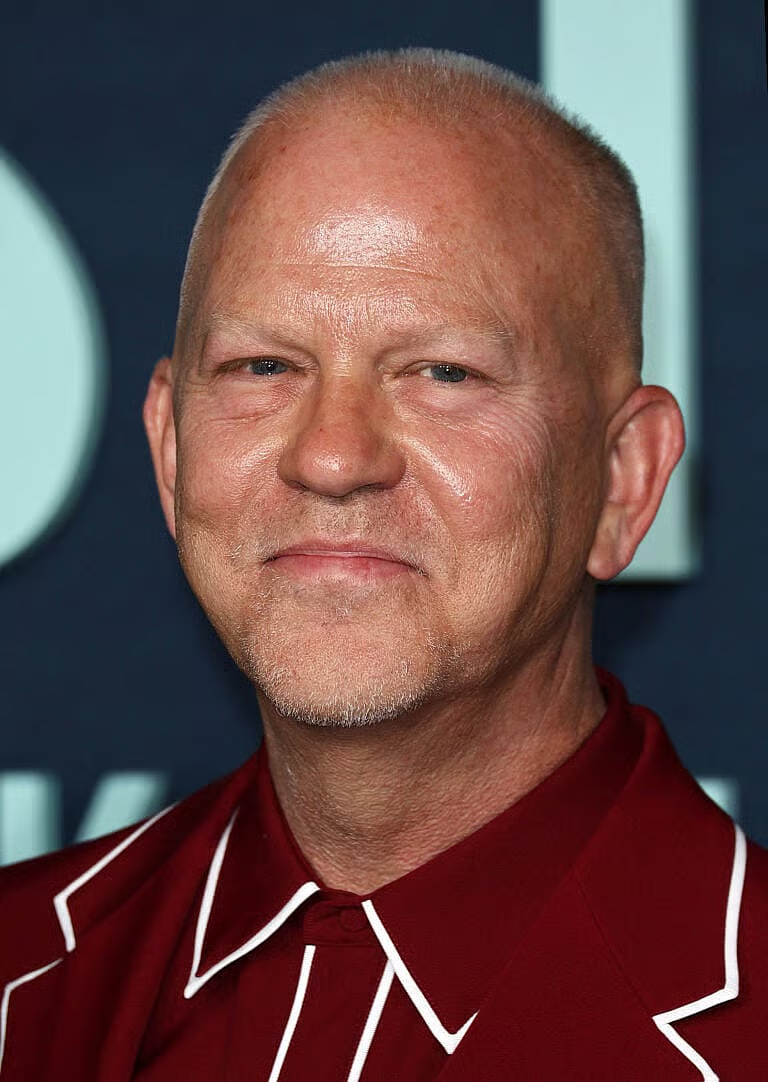
Ariana Grande’s American Horror Story Exit Addressed By Ryan Murphy

Published

on

Ariana Grande's American Horror Story Exit Addressed By Ryan Murphy

American Horror Story creator Ryan Murphy has spoken for the first time about Ariana Grande’s departure from the next season of the hit anthology show.

Last year, Ryan announced that Ariana – with whom he previously worked on the slasher homage Scream Queens – would be joining the 13th season of American Horror Story, alongside a star-studded cast of returning faces that would include Jessica Lange, Sarah Paulson, Evan Peters, Kathy Bates, Angela Bassett and Emma Roberts.

However, last month, it was reported that she’d been forced to drop out of the series due to a scheduling conflict involving her ongoing Eternal Sunshine world tour.

The TV super-producer has finally set the record straight during an interview with The Hollywood Reporter, explaining: “I love Ariana Grande. We’re great friends. I had an idea [for a role in American Horror Story] and I came to her and she, very immediately, said, ‘I’m not sure because I think I’m going on tour’. I don’t think the tour had been announced, and she had obviously just finished the Wicked movie.

Advertisement

“So when it came time to do that episode, I called her up and she was like, ‘I don’t know how I’m going to juggle the tour with this’. And I said, ‘OK, if you can’t, we can push to another season’. She said, ‘Great’.”

He continued: “You have to be respectful. Who is busier than Ariana Grande? No one. She had told me at the time, ‘I have this album that’s dropping’. It was really, truly a scheduling conflict. I said, ‘OK, we’ll kick that can down the road’, and she said, ‘Great’.”

Ryan added that he will “always” want to work with Ariana again if the opportunity presented itself, insisting: “I love her, and I support her. It was a very big swing, but I might bring that back for another season, per Ariana’s availability. I think the world of her.”

Since Ariana’s exit from American Horror Story was first reported, it was also revealed that she had pulled out of a planned appearance in a London revival of the musical Sunday In The Park With George, which would have reunited her with Wicked co-star Jonathan Bailey.

Advertisement

In a statement last week, her team said that Ariana would be “taking a step back from visibility” when her Eternal Sunshine tour ends next month.

“She looks forward to finishing the tour and ending it on a high note, both healthily and happily, and then taking a much-deserved break from public-facing work and appearances, which has led to endless, ongoing public scrutiny,” her spokesperson explained.

“This tour has been a beautiful experience for her. She loves her fans and has loved every minute of this tour so much.”

Later this year, Ariana is set to appear alongside Ben Stiller and Robert De Niro in a reboot of the Meet The Parents franchise titled Focker-In-Law.

Advertisement

Source link

Continue Reading

Politics

Trump Issues Bonkers Ultimatum To Supporters If They Don’t Pay Up

Published

on

Screenshot of a fundraising email sent to supporters of President Donald Trump

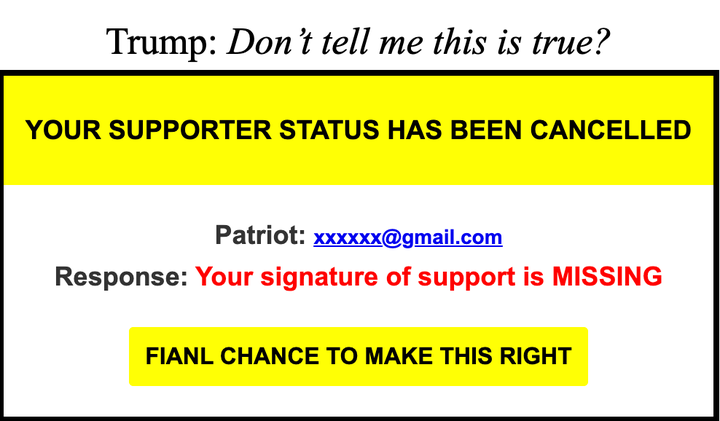
An email blast from President Donald Trump on Wednesday seemingly attempted to guilt his supporters into donating money to him by claiming their “supporter status” had been “cancelled.”

The email, which was archived on Politicalemails.org, began with the subject line, “I’ve got a massive headache,” followed by a supposed quote from Trump: “Don’t tell me this is true?”

“YOUR SUPPORTER STATUS HAS BEEN CANCELLED,” the email said.

A yellow link said this is the “FIANL CHANCE TO MAKE THIS RIGHT.”

Advertisement

“The thought of losing you makes my head hurt. I know you would never intend to cancel your journey with the MAGA Movement and me,” the purported Trump quote continued. “If you’re still with us, I need you to send me your signature to renew your MAGA Membership before the hour clock runs out.”

While the links have been removed from the archived email, several outlets reported that the link may only ask for a signature, but it redirects the user to make a financial contribution.

Screenshot of a fundraising email sent to supporters of President Donald Trump

The email comes in the wake of a recent report from The Wall Street Journal, which said Trump was urging his aides to push supporters to donate larger amounts of money. Trump’s fundraising efforts have brought in more than $800 million since returning to office, according to the report. Much of that money has reportedly gone to fund Trump’s planned presidential library in Florida along with his White House ballroom.

Source link

Advertisement
Continue Reading

Politics

At 56, I Thought I Was Middle-Aged. 1 Word Changed Everything.

Published

on

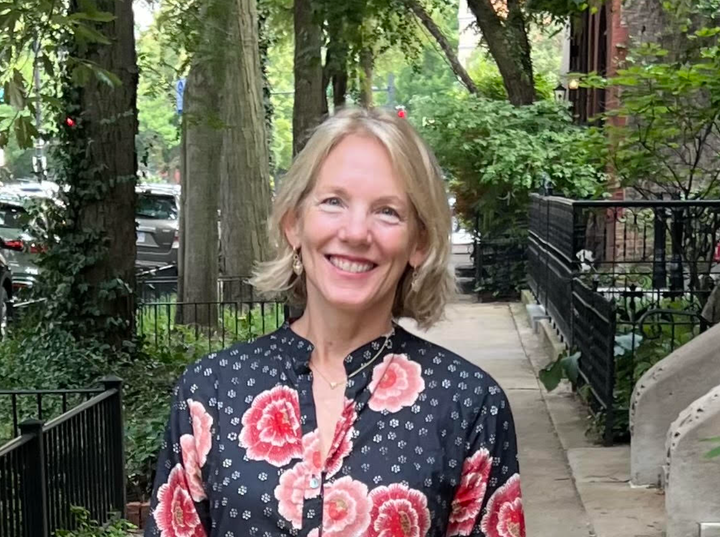
The late middle-aged author enjoying summer in Chicago.

I experienced a startling moment when I was working on marketing copy for my most recent novel, The Snowbirds. The story follows empty nesters who head to sunny Palm Springs, California, to escape the harsh Midwestern winter and figure out the rest of their lives.

I described my characters as “middle aged” because they are my age, 56 (now 57), and that’s how I thought of myself – and them – the whole time I was writing the book.

But my longtime editor suggested a slight modification to my text, one she never would have guessed would hit me sideways: She inserted the word “late” in front of those words.

I stared at that phrase for a good long time and thought, what exactly is that? I thought I’d written a novel about the travails of midlife. Was it possible my characters had already rounded that bend… and so, too, had I?

Advertisement

Even though my editor is always right, my first instinct was denial, because most of the time I feel like my young self. I still act like a dumb teenager, saying and doing all the wrong things. I take yoga and lift weights. I wear barrel jeans. I attend concerts and try to stay hip. (True confession: I had to ask my grown kids which word to use instead of “hip.” They suggested “aura,” “rizz,” “skibidi,” “steeze” and “Ohio.” I wasn’t sure if this was actual slang or if they were making fun of me).

Yet there’s no denying the old is starting to push through. The warranty on our new mattress expires after I probably will. I make 5:30pm dinner reservations. I use Hotmail. My lower back is a mess, and I get a kink in my neck unless I sleep on the exact perfect pillow.

When I was young, I liked to think my body was filled with stuffing. Now my internal organs call attention to themselves one at a time. After a few startling bouts of arrhythmia, I’ve even begun to fear my own heart.

Like most edits, this correction, once brought to my attention, seemed as obvious as the face that stares back at me when I accidentally have my phone camera on selfie mode. Honestly, how could I think I was still in straight-up midlife? Did I really expect to live to 114?

Advertisement

This isn’t the first time I’ve been startled off a mental set point age. For years – or even decades – I’ll see myself stuck on a certain notch on the life cycle dial until a jolt of recognition sends me reeling into a new era, like the first time a stranger called me ma’am, or when a Christmas card arrived from our kids’ former babysitter who now has her own children. I’ll never forget my late father-in-law returning from his high school reunion when he was in his 80s, dumbfounded. He couldn’t believe how old everyone else was.

When I was a kid, I loved to flip through the pages of family albums. I remember photos of my beautiful grandmother as a young woman. She’s young — flip — young — flip — young — flip — and just like that, she was the Nana I knew. There was no middle or late-middle age.

I thought ageing was a flipped switch, and it sure seems that way when I look twice at a celebrity or someone I haven’t seen in a while because they’ve turned that corner.

I guess I figured I’d linger in midlife until that happened to me, or when a grandchild or retirement pushed me into senior territory. Then again, there are places in Palm Springs where 55 is the minimum age for the senior discount. My friends are getting grandchildren. My husband talks about retirement when he wants to scare me.

Advertisement

Nobody I know thinks of themselves as “late middle age” because the phrase signals the end of an era, like late antiquity or late modernism. The term sounds over-ripe, but also charitable. It says you aren’t old old, but you’re in the vicinity.

While some of our friends have already put deposits on assisted living places they don’t plan to move into for a decade, my husband and I decided to shake things up once this reality set in. We recently moved from Madison, Wisconsin, the beloved city where we raised our children, to Chicago. After cleaning out our parents’ homes, it felt good to get rid of our accumulated junk – skateboards, preschool construction paper art, my graduate school notebooks and papers, musty towels, and the Crock-Pot we never use – so our kids won’t have to when the time comes.

We gave up extra rooms and a backyard to live on the third floor of a building with no elevator because we think the steps will keep us fit. Now we’re surrounded by people, traffic, concrete and activity (and Bears fans). When I search for parking or miss a bus on a subzero day, I console myself by thinking, this is good for my neural networks.

The late middle-aged author enjoying summer in Chicago.

Courtesy of Christina Clancy

The late middle-aged author enjoying summer in Chicago.

Sometimes I wonder if, after feeling constrained by jobs and kids for so long, we put our lives in a blender and hit “puree” simply because we can. It’s scary and invigorating and maybe stupid, but I find myself wondering: If we don’t do this now, when will we?

Advertisement

Honestly, I’m enjoying this ambiguous in-between time defined by what I no longer am and haven’t yet become: post-young, pre-elderly. Sure, I have one eye on death, and my earlobes are longer, but I’m still young enough to adopt a puppy.

Despite the occasional Mohs surgery for skin cancer, there’s a lot to love about this age. I’m still healthy enough to travel and engage in most of the same activities I’ve always enjoyed. It’s a lot more fun for me to drink beers and have conversations about Plato’s cave with our kids than it was to change diapers and worry about missed curfews. I find it such a relief to stop talking with my friends about menopause – the thing everyone says nobody talks about.

I’m also not as fearful of old age because it isn’t what it used to be. The seniors I know lead incredibly active, vigorous lives. I care a lot less about how I look and what other people think of me. Maybe I’ve grown a thicker skin (publishing three books will do that), but what used to send me into a tailspin hardly merits a shrug now.

That’s why I wish there were a phrase to describe this phase in life that’s less doleful than “late middle age.” I’ve heard it referred to as “a second adolescence,” “the third chapter,” a “free period,” and “the queenteens.” A friend jokingly defines it as “20s with money.” Another friend likes to think she’s in “the freshman year of old age.”

Advertisement

The closest word I can think of sounds poetic, if a bit grim: “the gloaming” – the Scottish word for the mystical end of day when light fades but darkness hasn’t descended, a twilight filled with shadows made more dramatic by the golden, glimmering light.

I have a feeling I’ll linger here longer than I should, or until something jolts me out of it, like a stranger offering me their seat on the city bus.

Christina Clancy is the late-middle-aged, USA Today bestselling author of “The Snowbirds,” “Shoulder Season,” and “The Second Home,” (All from St. Martin’s Press).

Do you have a compelling personal story you’d like to see published on HuffPost? Find out what we’re looking for here and send us a pitch at pitch@huffpost.com.

Advertisement

Source link

Continue Reading

Politics

Pears: All Health Benefits, Explained

Published

on

Pears: All Health Benefits, Explained

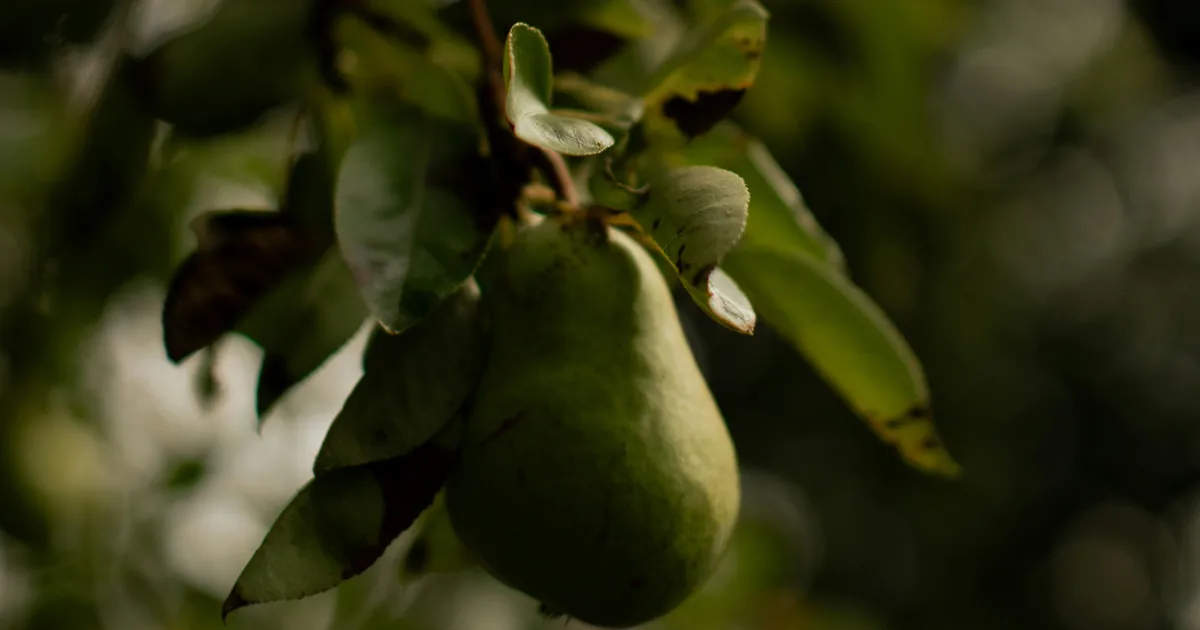
It’s officially plum season in the UK. And if you didn’t already know, the common fruits are pretty great for us – they’ve been associated with slower brain ageing, better bone health, and even a reduced risk of some cancers.

As it happens, pears are about to reach their prime too. Some research suggests those are also beneficial for everything from the heart to the gut.

Here’s what the research says.

What are the health benefits of pears?

Advertisement

1) They could help you poop

Around one in seven adults in the UK has constipation at any given time. Luckily, pears could help: they’re high in fructose and sorbitol, which can act as a mild laxative.

Pears also contain a decent amount of fibre, especially when eaten with their skins – just one offers around a fifth of the recommended 30g a day. This bulks out stool and can benefit our gut health.

2) They may be good for your heart

Advertisement

A small study involving 40 participants found that eating two pears a day for 12 weeks appeared to lower heart disease risk factors, like high blood pressure, among those with metabolic syndrome.

We already know that fibre is good for our heart health, but pears also contain the antioxidant quercetin, linked to lower rates of cardiovascular disease.

3) They might help to lower your risk of type 2 diabetes

One study found that for every serving of pear a person consumes a week, their risk of type 2 diabetes dropped by 3%.

Advertisement

Researchers think this might be because they contain anthocyanins, which may lead to lower diabetes risk.

4) They could decrease inflammation

Though a certain degree of inflammation can be normal and even healthy, uncontrolled inflammation – sometimes called “inflammaging” – can damage our cells and speed up the ageing process.

Pears contain powerful antioxidants called flavonoids, which some research suggests could have an anti-inflammatory effect on the body.

Advertisement

5) They might have anticancer properties

Pears contain compounds like anthocyanins and cinnamic acid. Anthocyanins have been shown to have anticancer effects on both tumours and lab tissues, and cinnamic acid has been shown to reverse some cancerous growth.

However, the way those compounds are used in a lab does not always translate to how they’re actually processed in the body, and we don’t have any specific studies looking at pears and cancer risk.

Advertisement

Source link

Continue Reading

Politics

Critics Torch Trump Over Bizarre New Timeline For Leaving Office

Published

on

Critics Torch Trump Over Bizarre New Timeline For Leaving Office

President Donald Trump on Thursday offered a timeline for when he might leave office. Sort of.

“We’ll have a big percentage of the chip business by the time I leave office,” Trump said. “Which could be a long time. Who knows? But it could also be fairly quick. They say two and a half years. We’re gonna find out.”

The US Constitution clearly states that Trump can’t seek the presidency again. And unless he dies, resigns or is removed from office, his term will end at 12pm on Jan. 20, 2029.

But that hasn’t stopped him from publicly musing about running for a third term, promoting the idea of “Trump 2028” on social media and selling Trump 2028 merch.

Advertisement

The “fairly quick” part of his claim was a new twist.

California Governor Gavin Newsom ― a longtime Trump nemesis and potential 2028 Democratic presidential candidate ― gave the president a very specific reminder about how much time was left in his term:

Trump’s 2028 talk has alarmed critics, especially given that he tried to overturn the 2020 election and whipped up a mob that stormed the US Capitol on January 6, 2021, an effort that resulted in his impeachment.

He’s also frequently promoted “Trump 2028” memes on his Truth Social website, and did so again on Thursday.

Advertisement

Given his history, critics on X let the president know exactly what they think:

Source link

Advertisement
Continue Reading

Politics

The 8 Best Coffee Machines To Impress Espresso Addicts, From Sage To Nespresso

Published

on

Dayna McAlpine/ Honey Jane Wyatt/Honey Jane Wyatt

It sounds unserious to everyone else, but coffee drinkers will know that your morning brew really is that serious.

A cup of Joe exactly how you like it can mean the difference between a good and a bad start to the day, and that’s everything.

While you might suffer through the office machine coffee at work, when you’re at home you deserve to be able to make yourself a brew that rivals your favourite coffee shop.

Advertisement

Whether you prefer to keep it simple (pushing a few buttons for your morning brew), or you want to embody the role of barista for the day; we’ve rounded up the best coffee machines to shop in 2026, including bean to cup options and espresso machines from some of the top brands like Nespresso, Sage, and De’Longhi.

How we tested the best coffee machines

Dayna McAlpine/ Honey Jane Wyatt/Honey Jane Wyatt

Dayna McAlpine/ Honey Jane Wyatt/Honey Jane Wyatt

Dayna McAlpine/ Honey Jane Wyatt/Honey Jane Wyatt

It’ll come as a surprise to exactly no one that here at HuffPost we are regular coffee drinkers – and we don’t take it lightly.

Over the past few months (nay, years) the HuffPost team has been testing out some of the best coffee machines on the market, from new launches to bestsellers, to make sure they find the perfect home brew.

Advertisement

Each tester was asked to think about how easy the machine was to use, its size, the number of drink options it had, and maintenance such as cleaning and topping up tanks.

Our favourites are rounded up below.

The best coffee machines to shop now

Best Sage coffee machine

Boasting eight coffee modes via a handy touch-screen display, it’s easy to select and personalise your favourite type, as you can either go with the preset coffee or change the temperature, strength, and milk texture.

Advertisement

Not to mention, you barely have to do any work with the milk wand – simply fill the right sized jug and leave it there until your milk emerges whipped to perfection. Like magic.

+ Really simple to use
+ The ‘favourite’ setting is great for if you’re in a rush in the morning
+ Looks sleek and elegant
+ Only takes a couple of minutes to warm up
– Can be a little loud
– Needs descaling and filling up the water tank often.

Dimensions: 40 x 31.9 x 31.4 cm.

Best De’Longhi coffee machine

If your main passion is really excellent Italian coffee with basically zero effort, allow us to introduce De’Longhi’s touch screen bean to coffee machine, which our tester Dayna McAlpine says makes you feel like you’re “living in the future”.

Advertisement

That front-facing screen has everything you need to understand each step of your coffee making, as it gives you a quick lesson on how to make the perfect cup of coffee, including choosing from 15 grind settings, three temperature settings, and five milk textures.

If that all sounds a bit much for you, don’t worry, because it also comes with nine pre-set recipes, from an americano to a macchiato, for what they promise are “cafe-quality results”.

+ De’Longhi’s smallest bean to cup machine
+ Tastes as good as coffee from a coffee shop
+ Comes with a tamp, tamp mat, and brush to keep things clean and precise
+ Much cheaper than your coffee shop habit
– Instructions could be clearer
– Hopper is fiddly to empty

Dimensions: 44.5 x 38 x 37cm

Advertisement

Best small espresso machine

When you’re tight on space, the last thing you want is for the thing designed to wake you up to be an eyesore taking up counter space.

This mini coffee machine from the brains behind ‘Italy’s favourite coffee’ is exactly what you need when you don’t have an appliance garage to hide your things away in.

As well as being so easy to set up that a two-year-old could do it, it’s pretty quiet, and makes smooth but strong coffee from the compact custom pods.

+ Barely takes up any space at all
+ Three colours to choose from
+ Can pour an espresso or lungo
– Doesn’t come with a milk frother.

Advertisement

Dimensions: 33 x 21 x 12.4cm.

Best budget espresso machine

If you’re craving the experience of a pro coffee machine, but don’t have the money to put towards it right now, ProCook’s got you covered.

This coffee machine makes the perfect starter for those who are less savvy, and comes in at just £199.

“It has coffee shop level performance with absolutely zero fuss,” shares our tester, Dayna McAlpine. “As someone who’s had top level machines, it makes a perfectly great cup of coffee – showing that simple is sometimes best!”

Advertisement

As well as looking as sleek as its more expensive models, this machine has an easy to use display, so you can pour a single or double espresso in an instant. It’s also loaded with powerful nine bar pressure, so your coffee comes out perfectly balanced and, so you can practice your latte art technique, the steam wand is completely manual.

+ The display is not at all fussy or complicated – just enough settings for a single or double espresso
+ Super good value for money considering the coffee tastes delicious
– Not as many options as other machines, but that’s what makes it great.

Dimensions: 30 x 33 x 26.5cm.

Best family coffee machine

Make everyone in your house happy with this machine that ticks all the boxes. It has a whopping 13 drinks to choose from, including as many hot or iced espresso drinks you can think of, and it also has an option for cold brew.

Advertisement

“It’s enough to make you never think about buying a takeaway coffee again,” says our tester, HuffPost UK’s head of content Dayna McAlpine.

“Unlike a lot of at-home machines, you can put two different types of bean in this machine at once and choose between them when making your coffee,” she explains.

“This is particularly useful for having a set of decaf beans on the go as well as the strong stuff! It’s also the only coffee machine I’ve used that really gets plant-based milk right.

“But the big thing for me, as a certified lazy person, is that it’s self cleaning.”

Advertisement

+ Minimal upkeep, and all parts can be removed and are dishwasher safe
+ Looks sleek and professional
+ So many options to choose from – you can even pick a froth style (dreamy)
+ Can customise and save your favourite drinks to keep coming back to them
+ Great value for money
– Water tray needs emptying and refilling often.

Dimensions: 56 x 38 x 50.3cm.

Best pro coffee machine

This serious piece of gear is not as intimidating as it may look. “It’s really easy to use – even I can use it, which says a lot as I’m easily confused by instructions,” says parenting editor Natasha Hinde, who tested the machine.

Naturally, its hefty size means it can take a few minutes to heat up, but it’s totally worth it. ”The coffee is barista-level coffee, maybe even better,” Natasha adds. “Coffee shop coffee now rarely compares.”

Advertisement

Not only is the espresso smooth and delicious, but the cool-to-the-touch steam wand produces velvety hot milk in seconds, without the risk of burning yourself when you go to clean it.

+ Easy to use even though it is pro level
+ Comes with a metal tamp so your coffee compresses perfectly before brewing
+ Tastes delicious
+ Steam wand helps you achieve the perfect milk for latte art
– Takes up a lot of counter space

Dimensions: 27.4 x 42.5 x 36cm.

Best small Nespresso machine

No, we haven’t just included this because it’s pink… Seriously! This sweet little Nespresso machine uses original pods, and pours them in your choice of an espresso or a lungo.

Advertisement

It takes slightly longer than the Vertuo to heat up, at 25 seconds, but it’s not exactly like you’ll be tapping your foot.

Not to mention, it’s energy saving, as it’ll switch itself off after just nine minutes of use. Easy.

+ Small and compact, and she’s a cutie
+ Easy to use, with just one button
+ Perfect for espresso or black coffee lovers
– No milk function, unfortunately.

Dimensions: 11.3 x 37.2x 27.7cm.

Advertisement

Nespresso

Best app-controlled coffee machine

Iced coffee fans, listen up! If you enjoy an iced latte as much in the winter as you do in the summer, Nespresso’s latest drop will deliver.

After a mere three second heat up, the machine is ready to make your choice of seven coffee sizes, depending on the type of pod you’re using. It also has an option to pour your espresso over ice.

For even more precision over your morning brew the machine syncs to the Nespresso app (I know, another app) so you can decide how long you want it, and if you prefer it to be made cooler or hotter than the average.

Advertisement

It also unlocks a whole range of recipes for your pods, so you can feel like you’re ordering from a very custom menu in your own home, and who doesn’t want that?

+ Not too big, so it won’t take up too much space on your countertop
+ Heats up quickly, so you don’t have to wait around
+ The app is genuinely useful, and avoids the machine having too many buttons you don’t know how to use
+ Water tank is 1.4L so won’t run out quickly, unlike other Nespresso machines
+ Easy to connect to WiFi and Bluetooth
– Beware it uses a Vertuo pod rather than an original Nespresso pod.

Dimensions: 22 x 49 x 25.5 cm.
Advertisement

Source link

Continue Reading

Politics

Why I’ll never get tired of talking about trans

Published

on

Why I’ll never get tired of talking about trans

One of the questions I’m asked most often is: ‘Don’t you ever get tired of talking about trans?’ Which is fair enough given my work at Genspect, which advocates for a non-medical approach to gender distress; my book, When Kids Say They’re Trans; and the Channel 4 documentary I presented, Trans Kids: It’s Time to Talk.

But the honest answer is no. Not because of ‘trans’ per se, but because of what the trans issue has uncovered. The subject itself isn’t endlessly fascinating – I’ve always been a generalist and never been a single-issue zealot. However, the trans issue is a prism through which almost every major cultural, political, ethical and psychological question of our age is refracted. The debate around transgender identity exposes problems that extend far beyond medicine or mental health. That’s why I no longer define trans as an ‘unfolding medical scandal’ but an ‘unfolding medical and institutional scandal’. To name just a few areas:

Medicine and healthcare

Advertisement

‘Gender medicine’ has revealed what happens when medicine becomes consumer-driven. Technical advances have made possible a growing number of elective medical interventions – gender medicine, commercial surrogacy, assisted dying, some forms of abortion – which are increasingly presented as ‘healthcare’ simply because they are medically possible. The distinction between treating illness and fulfilling consumer demand has become dangerously blurred.

Then there’s the mess currently being created by the mental-health industry, which is never more prominent than within the trans debate. A culture of over-medicalisation, over-diagnosis and affirmation has transformed healthcare from what was once a process of exploration, uncertainty and psychological growth into little more than emotional validation. Therapy has shifted from helping people understand themselves to helping them feel affirmed and supported. Psychiatrists seem to slip into prescribing a pill for every ill, psychologists increasingly offer a diagnosis for every ill, while psychotherapists like myself slide into empathy and affirmation for every ill.

Academia and education

Advertisement

Like healthcare, universities increasingly resemble consumer-driven businesses, anxious to keep their customers happy. I had always imagined universities as places whose purpose was to move us from darkness into light through the pursuit of truth. The poor quality of much research on gender medicine exposed just how vulnerable academia has become to ideology.


Enjoying spiked?

Why not make an instant, one-off donation?

Advertisement

We are funded by you. Thank you!


Advertisement

Please wait…

Advertisement

Until you study the literature yourself, it’s difficult to appreciate just how shoddy the majority of trans research is, with tiny qualitative studies featuring self-selected participants reporting satisfaction, extraordinarily high rates of participants lost before they can be followed up, and remarkably little emphasis on objective outcomes such as employment, educational attainment, psychiatric admissions, hospitalisations, physical health or suicide.

Advertisement

The low quality of transgender research also led me to realise that many other disciplines – including vast sections of feminism, queer studies and postmodernism – rest on similarly fragile foundations.

It’s not only universities, though. Until quite recently, many schools across the Western world were shaped, however imperfectly, by Judeo-Christian values. As religion receded from education, the vacuum has been increasingly filled by postmodern ideas about identity, power and truth, often with remarkably little public debate about the consequences. Ironically, the resulting dogmatic culture within schools today reminds me very much of my own Catholic education.

The startling speed with which transgender ideology became embedded in education systems across the Western world exposed just how easily a new orthodoxy can become accepted, taught and defended by entire institutions. The trans issue has also led me to realise how schools today are increasingly viewed by policymakers not as places of learning but as opportunities for social engineering. As education appears to be less about transmitting knowledge and more about shaping young minds, fundamental questions about its direction become unavoidable.

Advertisement

Journalism

Investigative journalism once prided itself on holding power to account without fear or favour, and on comforting the afflicted while afflicting the comfortable.

Today, too much of it is characterised by fear, conformity and self-censorship. Mainstream journalism is either dying or being radically transformed by the digital age. Editors are scrambling to keep publications alive, retain subscribers and survive in an unforgiving online marketplace. The result is a chaotic, nervous and reactionary mainstream that feels a very long way from Bernstein and Woodward. Outlets that pander to trans identities and preferred pronouns tend to also toe the elite line on every other contentious issue.

Advertisement

Politics

The trans debate also crystallises how politicians, just like editors of mainstream media, generally behave like market researchers rather than leaders. Every difficult decision is filtered through polling, electoral calculation and fear of upsetting vocal activist groups. At the same time, more and more policy is shaped by NGOs and quangos that often exercise significant influence without corresponding accountability. Leadership requires the courage to persuade the public that something is right; too often today, politicians simply tell the public what they think it wants to hear.

The new left

Advertisement

The decision of the left to swap class politics for identity politics has been both maddening and fascinating to watch through my splayed fingers. The unanticipated – and, let’s face it, largely unfathomable – swerve of large sections of the contemporary left towards advocating for the lifelong medicalisation of children who will one day become infertile and sexually impaired has yet to be fully analysed. Nobody yet knows why this movement that once championed the downtrodden, the importance of fair economics and equal rights now embraces self-reported identity, subjective truth and moral certainty, but it is important to reflect on it.

Contemporary censorship

My experiences of being cancelled, censored and censured for speaking truthfully about trans issues have shown me that modern censorship isn’t like Soviet Russia or the East German Stasi. There are no jackboots ensuring everyone stays in step. Instead, contemporary censorship more closely resembles the culture I experienced growing up in the Catholic Church, where public shaming made the policing of acceptable thought remarkably effective. Today’s censorship is led by relentless finger-wagging moralism from the new left and reinforced by professional regulators, social media moderation, reputational threats and institutional pressure.

Advertisement

The arts

This has probably been my greatest disappointment (with some honourable exceptions, of course). Where are the protest songs? Where are the novels exposing the madness of contemporary society? Writers, filmmakers, musicians and artists have historically challenged orthodoxies and taken risks. Instead, the trans issue has revealed vomit-inducing pretence, sanctimony and cowardice in the arts. Art should be unsettling and thought-provoking, not sanctimonious and self-serving, yet here we are.

Sport

Few areas depend more obviously on measurable reality than competitive sport. Fair competition based on strength, speed and weight is foundational to athletic competition. Yet even here trans ideology has managed to overwhelm common sense.

Advertisement

Arguably, it was sport that finally brought the trans issue to the attention of the wider public. Watching men punch women in a boxing ring seems to have awakened an atavistic instinct in many men to protect women from male violence. Organisations such as SheWon and HeCheated, documenting the growing tally of lost medals, lost scholarships and lost opportunities, are helping to expose the real-world consequences of the trans issue in these Alice in Wonderland days.

Sex

The trans debate raises much broader questions about sexuality itself. How should society handle issues such as pornography, grooming, censorship and consent? What does it actually mean to be lesbian or gay in an era where biological sex is increasingly treated as optional? It has also reopened questions many assumed had already been settled. What does it mean to be male or female? How much of our identity is rooted in biology? Are sex differences fundamental or merely social?

Advertisement

Also, the trans debate, via autogynephilia, asks how society should respond to sexual deviance. What should we do when a man – and it is almost always a man – performs a sexual fetish in public? How should children be protected from sexual content?

I remember when I was a young adult arguing passionately against censorship and in favour of unrestricted free expression. Then my opponent stopped me in my tracks by saying that he didn’t want his eight-year-old watching Blue Velvet. I suddenly realised that defending absolute freedom for adults also meant accepting that children would be exposed to sexual violence, gimp masks and sadomasochism. The trans debate highlights how freedom and protection sometimes pull in opposite directions, and that every society has to decide where it draws that line.

Advertisement

Parenting

The trans issue has also exposed the consequences of over-parenting and the many issues with the child-led approach. A generation repeatedly told they are uniquely special can come to believe that they really are exceptional. Some children respond by coming to believe that ordinary human limitations are intolerable, and their identity is uniquely special, exceptional and should be celebrated and carefully protected.

The impact of contemporary child-rearing, combined with a culture that glorifies youth and beauty, has produced a generation shaped by social media, cosmetic surgery, filters, relentless comparison, therapeutic language and rampant individualism. Never before have adolescents and young adults had so many tools for self-expression and self-promotion while often appearing so uncertain about who they actually are. In a culture that prizes authenticity above almost everything else, they have become preoccupied with discovering their ‘true self’, while seeming paradoxically more performative, more anxious and more inclined to use products and medical interventions to create their ‘real self’.

Advertisement

While too much responsibility is lumped on parents today, at the same time, the diminishing power and status of parents is notable. Over-policing and nanny-state officials have led to children being removed from home, just because parents have informed their daughter that she was not really a boy. While this may seem far-fetched, it is important to know that the UK government’s new Conversion Practices Bill promises to criminalise parents who insist on speaking the truth to their trans-identified children. Within this new culture, identity has become the new secular religion, and ‘identifying as’ has become one of its central and sacred rituals. In this context, parents are regarded as ‘dangerous’ if they don’t affirm the child’s new identity.

The explosion of special needs

The extraordinary rise in autism, ADHD and other diagnoses raises profound questions. Are we identifying genuine need more effectively, or are we increasingly medicalising ordinary human variation? What kind of society are we creating if ever larger numbers of young people grow up believing they are fundamentally impaired?

Advertisement

With 40 per cent of students at Stanford University receiving disability accommodations, and more than 100,000 adults in the UK receiving benefits with ADHD as their main condition, these questions can no longer be dismissed as marginal. The trans debate brings the tension into sharp focus because so many gender-distressed young people are neurodivergent, receive significant accommodations and, at the same time, are regarded as fully capable of consenting to irreversible medical interventions.

The contradiction was starkly illustrated by the recent case raised by the MP Gregory Stafford in the UK parliament of a 23-year-old who required a key worker to accompany him wherever he went because of his extensive emotional support needs, yet this vulnerable adult was nevertheless approved for NHS genital surgery just last year.

Extreme tolerance

Advertisement

Perhaps the most sobering lesson of the trans debate has been how quickly ordinary people adapt to extraordinary situations. We like to imagine we would have resisted the great moral failures of history. Yet practices that would have been considered plainly unacceptable only a decade ago are already becoming normal. Hilary Cass recently described the case of a two-and-a-half-year-old who had been socially transitioned by well-meaning but profoundly misinformed parents.

The internet has allowed people with the most extreme interests and behaviours to find one another, organise, normalise themselves and increasingly demand recognition as protected identities rather than simply being tolerated as oddballs within the community. At the same time, the ideal of ‘live and let live’ has gradually evolved into a culture of extreme tolerance, where every lifestyle, every identity and every preference is presumed to be acceptable.

Karl Popper’s paradox of tolerance remains as relevant as ever. A civilised society cannot survive if it refuses to defend the very norms that make civilisation possible. The speed with which the boundaries of the acceptable can shift has reminded me just how frighteningly fragile civilisation really is.

Advertisement

Philosophy

The trans issue has highlighted the biggest question of all – what makes you, you? Is there such a thing as an authentic self? Are we born with an inner identity waiting to be discovered, or is identity something gradually formed through our relationships, experiences and responsibilities? What happens when different people’s needs conflict? Can compassion for one group create injustice for another?

The digital revolution

Advertisement

Finally, of course, there is the internet itself. Until Elon Musk’s acquisition of Twitter / X, our limited ability to analyse, criticise or question trans issues online was distinctly alarming. Yet online life has supercharged social contagion. Ideas have always found ways to spread, of course – from dancing crazes to eating disorders, suicide clusters and moral panics. However, digital platforms and social media have amplified and spread transgender ideation at unprecedented speed and scale.

We are living through a technological revolution comparable to the arrival of the printing press, one that is simultaneously reshaping knowledge, authority, identity, relationships and politics. The Twitter Files exposed how a small number of tech bros have the capacity to shape public discourse, suppress information and influence democratic debate on a global scale. The rise of block buttons, deplatforming, algorithmic censorship and now AI-driven content moderation (and social engineering) is already shaping our world in ways we have yet to fully understand.

So no, I don’t get tired of talking about the trans issue. Not because I think transgender identity is the most important question facing society. It’s because the trans debate isn’t really about trans – it’s about the kind of society we are becoming. This issue is the clearest lens through which we can study the disintegration of almost every major institution across the Western world.

Stella O’Malley is the director and founder of Genspect.

Advertisement

Source link

Advertisement
Continue Reading

Trending

Copyright © 2025