
Business
European allies say Navalny was poisoned by dart frog toxin; Russia rejects claims




Business
US Stock Market Closed Today April 3 2026 for Good Friday as Strong March Jobs Data Looms Over Iran War

NEW YORK — U.S. stock markets were closed Friday, April 3, in observance of Good Friday, leaving investors to digest the latest economic signals without the ability to trade as geopolitical tensions from the ongoing conflict with Iran continued to cast a shadow over Wall Street.

The New York Stock Exchange and Nasdaq remained shuttered for the Christian holiday commemorating the crucifixion of Jesus Christ, a longstanding tradition in the U.S. financial calendar. Trading will resume Monday, April 6, at 9:30 a.m. Eastern Time. The bond market closed early at noon Friday, while some futures trading was also halted.
Ahead of the closure, markets showed resilience in recent sessions despite volatility sparked by the Middle East conflict. On Thursday, April 2, the Dow Jones Industrial Average slipped modestly while the S&P 500 and Nasdaq posted small gains, reflecting a tug-of-war between strong domestic economic data and worries over prolonged war impacts.
The Labor Department released its March employment report Friday morning, revealing the U.S. economy added 178,000 nonfarm payroll jobs — significantly beating economists’ expectations of around 65,000. The unemployment rate dropped to 4.3%, with average hourly earnings rising 0.2% from the previous month and 3.5% year-over-year.
This stronger-than-anticipated jobs figure highlighted the labor market’s underlying robustness even as higher oil prices from the Iran conflict threatened to fuel inflation and slow business investment. Analysts noted that the full effects of the war may take time to appear in hiring data, but the report provided a positive note heading into the long weekend.
“Markets are closed today, but this jobs number suggests the economy isn’t cracking yet under the pressure of geopolitical risks,” said one Wall Street economist who requested anonymity to discuss internal views. “Still, sustained high energy costs could change that picture quickly if the conflict drags on.”
The Iran war has dominated market narratives since late February and intensified in March. Oil prices have surged, with Brent crude climbing sharply at times amid fears of disruptions in the Strait of Hormuz. Energy stocks have benefited while sectors like airlines and consumer discretionary companies faced headwinds from elevated fuel costs.
Recent trading showed wild swings. Late March brought a sharp “V-bottom” recovery, with the Dow surging more than 1,100 points in a single session as hopes for a quicker resolution briefly lifted sentiment. The S&P 500 and Nasdaq posted their strongest daily gains in nearly a year during that relief rally.
However, comments from President Donald Trump indicating the conflict could continue for weeks tempered optimism. Stocks pulled back modestly early in the week before stabilizing. By April 1 and 2, the major indexes showed mixed but generally positive closes amid easing oil prices and diplomatic signals.
Thursday’s session, the last before the holiday, saw the Dow fall about 0.13% while the S&P 500 rose 0.11% and the Nasdaq gained 0.18%. Volume was lighter than average as traders positioned for the three-day weekend.
Sector performance remained uneven. Energy and utilities advanced on continued oil strength and safe-haven buying. Technology shares found modest support from big-cap names less exposed to immediate energy shocks. Financial stocks were mixed as bond yields reacted to the strong jobs data, which reduced near-term expectations for aggressive Federal Reserve rate cuts.
Smaller companies, tracked by the Russell 2000, lagged somewhat behind large-cap benchmarks, reflecting caution among investors favoring more established firms during uncertain times.
The strong March jobs report complicates the Federal Reserve’s policy path. Officials had left the door open for rate reductions if growth showed signs of slowing, but robust employment numbers suggest the economy retains momentum despite external shocks. Higher-for-longer interest rates could pressure stock valuations, especially in growth-oriented sectors.
Looking ahead, next week’s data calendar includes inflation readings that may reflect rising energy costs. Corporate earnings from major banks and industrial firms will also provide insight into how companies are navigating higher input prices and potential supply-chain issues tied to the Middle East conflict.
International markets offered mixed signals recently. European shares fluctuated while Asian indexes showed caution overnight amid global growth concerns if energy supplies remain constrained. Safe-haven assets like the Japanese yen strengthened against the dollar at times.
Individual stock movers in recent sessions underscored the themes at play. Oil majors such as Exxon Mobil and Chevron gained on higher crude prices. Defense contractors also saw interest. Meanwhile, airline stocks faced pressure from fuel surcharges and demand worries.
Retail investors appeared split. Some viewed dips as buying opportunities, citing the economy’s resilience and long-term growth potential in technology and other innovative sectors. Others reduced exposure, citing risks from a prolonged war, potential inflation spikes and uncertainty around monetary policy.
Market breadth in recent days was generally balanced, though advancing stocks slightly outnumbered decliners on some sessions. Overall trading volume tapered ahead of the holiday, consistent with typical pre-Good Friday patterns.
Economists cautioned that while the March jobs report beat forecasts, the labor market’s health could face tests in coming months. Initial unemployment claims and other weekly indicators will be watched closely when markets reopen. Any escalation in the Iran conflict or further oil price spikes could weigh on hiring and consumer spending.
For now, Wall Street enters the weekend in a wait-and-see posture. The Good Friday closure provides traders time to assess developments in the Middle East, digest the employment data and prepare for next week’s focus on inflation and corporate results.
The S&P 500 remains below its early 2026 peak, having weathered a volatile quarter marked by the onset of the Iran conflict. The Nasdaq sits roughly 3% off its high, while the Dow has recovered much of its recent losses but trades below pre-escalation levels.
Any positive diplomatic breakthroughs could spark a sharp relief rally similar to late March. Conversely, further escalation, supply disruptions or signs of economic softening from higher energy costs could reignite selling pressure and push oil toward new highs.
In bond markets, yields edged higher recently on the strong jobs data, reflecting reduced bets on imminent Fed easing. Gold and other precious metals saw interest as safe-haven plays amid geopolitical risks.
Cryptocurrency markets, which trade 24/7, showed their own volatility but offered limited direct correlation to traditional stock moves this week.
As trading resumes Monday, focus will quickly shift to whether the robust employment numbers support a soft-landing narrative or if oil-driven inflation fears dominate. President Trump’s administration continues to navigate both the military situation abroad and economic pressures at home.
The broader picture remains one of cautious optimism tempered by real risks. The U.S. economy has demonstrated resilience, with hiring rebounding in March despite earlier weakness. Yet the Iran conflict introduces variables that could reshape growth, inflation and corporate profits in unpredictable ways.
Investors will monitor any weekend developments from the Middle East closely. With no stock trading Friday, attention turns to futures markets where limited activity may hint at Monday’s open, though full reaction awaits the cash session.
In summary, while U.S. stock exchanges stood still on Good Friday, the release of better-than-expected jobs data provided a backdrop of economic strength heading into the weekend. The ongoing Iran war and its ripple effects on energy markets continue to be the dominant risk factor for Wall Street as April trading begins in earnest next week.
Markets have shown remarkable swings in recent weeks, from sharp sell-offs to rapid recoveries. This volatility underscores the challenges of investing amid geopolitical upheaval. Long-term investors may find opportunities in quality companies with strong balance sheets, while shorter-term traders must navigate headline-driven moves.
As always, diversification and a clear risk tolerance remain key. With the holiday behind them, market participants will look for clarity on the conflict’s duration, inflation trends and the Fed’s next moves to set the tone for the remainder of 2026.
Business
What Day Is Easter Going to Be on in 2026? Christians Prepare for Holy Week Amid Spring Celebrations

Easter Sunday in 2026 will be celebrated on April 5, marking the resurrection of Jesus Christ for millions of Christians worldwide and capping a week of solemn observances that include Good Friday on April 3. The date, determined by ancient ecclesiastical rules tying the holiday to the spring equinox and lunar cycle, arrives relatively early this year and coincides with a busy spring calendar in the United States.

For Western Christian denominations, including Roman Catholics and most Protestants, Easter falls on the first Sunday after the first full moon following the spring equinox. In 2026, the astronomical spring equinox occurred around March 20, with the Paschal full moon — also known as the Passover moon — appearing on April 1. That placed Easter on the following Sunday, April 5.
The calculation dates back to the Council of Nicaea in 325 A.D., which sought to standardize the observance across the Christian world while linking it to the Jewish Passover, during which Jesus’ crucifixion and resurrection are traditionally placed. While the formula produces a movable feast that can fall anywhere between March 22 and April 25, this year’s early April timing offers a pleasant backdrop of blooming flowers and milder weather in many parts of the country.
Holy Week, the most sacred period in the Christian liturgical calendar, begins with Palm Sunday on March 29, 2026, commemorating Jesus’ triumphal entry into Jerusalem. It continues through Holy Thursday (April 2), which recalls the Last Supper, and reaches its somber peak on Good Friday (April 3), when many churches hold services reflecting on the crucifixion. Easter Vigil services often take place Saturday evening, leading into the joyous celebrations of Easter Sunday.
In the United States, Easter is not a federal holiday, so government offices, banks and the stock market remain open on Easter Sunday itself. However, many businesses adjust hours, and several states observe Good Friday as a holiday for public schools or government workers. The New York Stock Exchange and Nasdaq were closed Friday, April 3, for Good Friday, giving traders a long weekend to reflect before resuming activity Monday, April 6.
Religious leaders across the country are preparing special services and community events. In cities like New York, Chicago and Los Angeles, cathedrals plan elaborate Easter liturgies featuring choral music, processions and baptisms. Many Protestant congregations will host sunrise services, a tradition that dates back centuries and symbolizes the empty tomb at dawn.
Families are expected to gather for traditional Easter meals, egg hunts and church activities. Retailers have already stocked shelves with chocolate bunnies, jelly beans and pastel-colored baskets, while greeting card companies report strong sales in the weeks leading up to the holiday. Travel bookings show many Americans planning visits to family or short getaways, taking advantage of the spring timing.
Eastern Orthodox Christians, who follow the Julian calendar for calculating Easter, will observe the holiday later this year on April 12. The difference arises because the Orthodox Church uses a different computus that can shift the date by up to five weeks from the Western observance. In 2026, the two Easters fall relatively close together compared to some years when they are separated by nearly a month.
The movable nature of Easter has long fascinated historians and astronomers. It blends solar and lunar calendars, requiring precise astronomical observations or established ecclesiastical tables. Some years produce dramatic contrasts; in 2025, Easter fell on April 20, while 2027 will see it arrive earlier on March 28.
This year’s April 5 date also overlaps with other spring observances. Passover begins in the evening of April 1 for Jewish families, creating opportunities for interfaith dialogue and shared seasonal themes of renewal and liberation. Other cultural events in early April include Earth Day preparations and the approach of tax season deadlines, though Easter tends to dominate family calendars.
Economically, the holiday provides a boost to several sectors. The National Retail Federation estimates Americans spend billions annually on Easter-related purchases, from candy and clothing to gifts and travel. Restaurants, hotels and tourism destinations in resort areas often see increased activity as families celebrate.
Churches emphasize the spiritual significance over commercial aspects. “Easter is not about bunnies and eggs, though those traditions bring joy to children,” said one pastor at a large Midwest congregation. “It’s about hope, redemption and the promise of new life that transcends our daily struggles.”
In schools, many districts schedule spring breaks around Holy Week or Easter, allowing students and teachers time for family observances. Colleges and universities often have lighter academic calendars during this period.
Weather plays a role in outdoor Easter activities. With April 5 falling in early spring, forecasts will be closely watched for egg hunts and community parades. In southern states, warmer temperatures may encourage more outdoor worship, while northern regions could still see lingering chill or even late-season snow in some areas.
Cultural traditions vary widely across the United States. In the South, elaborate Easter egg rolls and church suppers remain popular. In the Northeast, some communities continue old-world customs brought by European immigrants, including processions and special baked goods. Western states often blend Easter with outdoor festivals celebrating the arrival of spring.
For many families, the holiday also serves as a time for reflection amid a busy modern life. With global events and domestic challenges in the news, religious leaders note increased interest in messages of peace, forgiveness and renewal that Easter embodies.
As April 5 approaches, communities are finalizing plans. Volunteer groups organize food drives and outreach programs to ensure those in need can participate in the celebrations. Hospitals and nursing homes prepare special visitations and services for patients and residents.
In the business world, companies with significant Christian workforces often accommodate time off or adjusted schedules around Good Friday and Easter. Retailers extending hours on Saturday anticipate last-minute shoppers seeking outfits or gifts for Sunday services and family gatherings.
Travel experts advise booking early for popular destinations, as Easter weekend frequently ranks among busy travel periods. Airports and highways see increased traffic as relatives converge for reunions.
Looking beyond 2026, Easter dates will continue their annual migration. The following year brings Easter on March 28, 2027, one of the earlier possible dates. Long-term calendars show the holiday cycling through the spring months according to the complex but consistent rules established centuries ago.
Astronomers and calendar enthusiasts enjoy tracking these dates, noting how they occasionally align with other celestial events. In 2026, the proximity of the full moon to the equinox creates a classic example of the computus in action.
For those planning ahead, resources from churches, almanacs and official calendars provide exact timings for services and related observances. Many apps and websites now offer personalized reminders and explanations of the traditions.
As the nation prepares for Easter on April 5, 2026, the focus remains on faith, family and the enduring message of resurrection. Whether attending solemn vigils or joyful sunrise gatherings, Christians across denominations will unite in celebration of hope and renewal that defines the season.
In a world that often feels divided, Easter offers a moment of shared reflection on themes that transcend individual circumstances. Communities large and small will mark the day with prayer, song and acts of kindness, carrying forward traditions that have shaped Western culture for nearly two millennia.
With Good Friday closures already in the rearview and markets set to reopen, the long weekend provides space for both spiritual renewal and practical rest. As daffodils and tulips bloom in gardens nationwide, the arrival of Easter 2026 on April 5 promises to bring warmth, color and meaning to the start of spring.
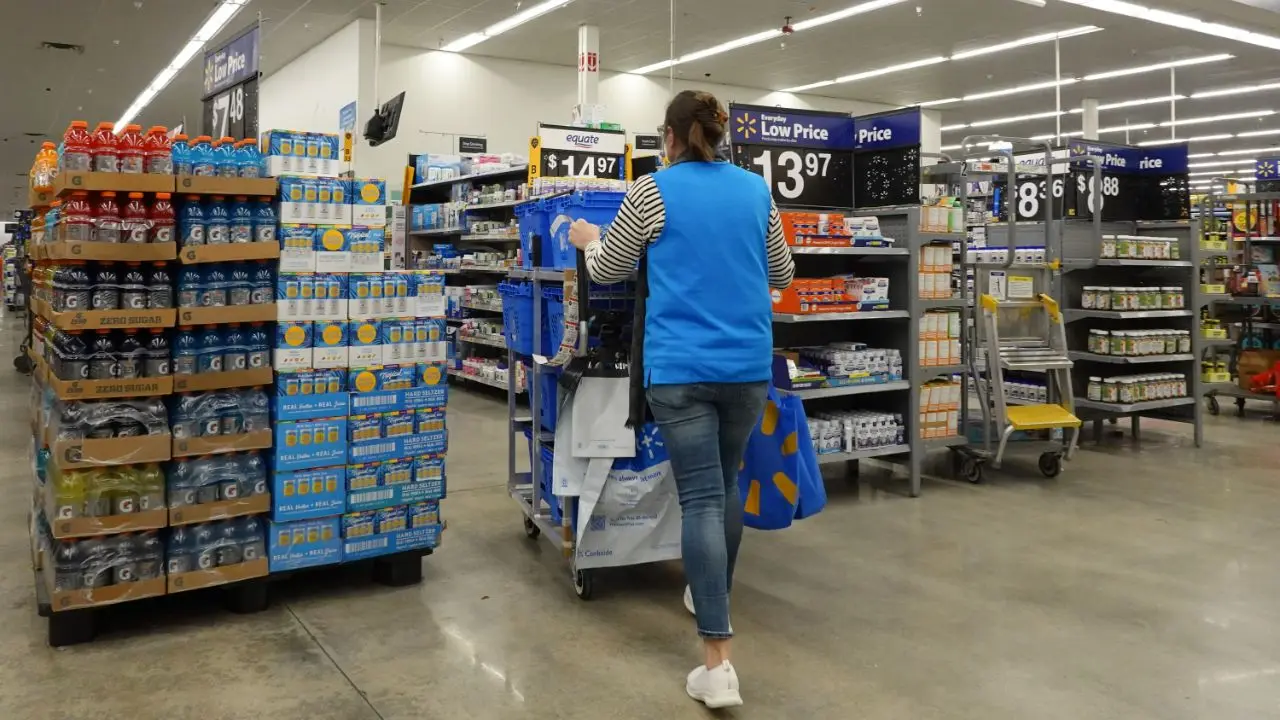
Mornings with Maria jobs panel reacts to the blowout March report as hiring crushes expectations, unemployment dips to 4.3%, and experts weigh what it means for inflation, Fed policy and the path of the U.S. economy.
American workers saw rising wages in March, though the increases were lighter than expected and represented a deceleration from the prior month’s readings.
The Bureau of Labor Statistics on Friday released the March jobs report, which showed the U.S. economy added 178,000 jobs for the month – beating the expectations of economists polled by LSEG who anticipated a gain of 60,000 jobs.
The report found that average earnings increased 0.2% on a monthly basis and are 3.5% higher than a year ago. Those figures were both lower than expected, as the LSEG poll estimated earnings would be up 0.3% from the prior month and 3.7% compared with last year.
Those readings represented a slowdown in wage growth from the figures reported in February, when wages were up 0.4% from the previous month and 3.8% year over year.
US ECONOMY ADDED 178,000 JOBS IN MARCH, WELL ABOVE EXPECTATIONS
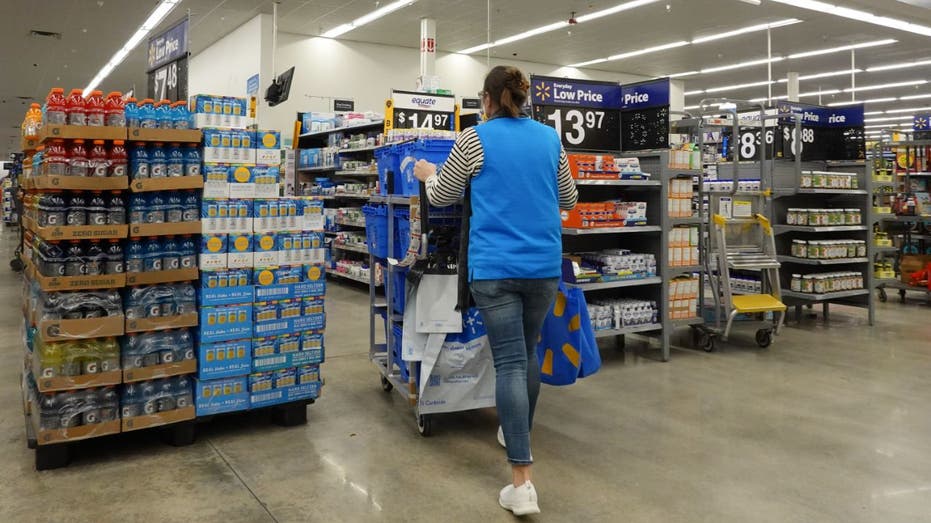
Wage growth slowed more than expected in March, while the average work week also declined. (Joe Raedle/Getty Images / Getty Images)
Additionally, the report found that the average work week was shorter than expected at 34.2 hours, below the 34.3 reading in February that economists polled by LSEG expected would prevail in March as well.
The average hourly wage for private sector employees was $37.38 in March, up from $37.29 in February and $36.11 in March 2025.
MORE AMERICAN WORKERS ARE STRUGGLING THAN THRIVING FOR FIRST TIME: POLL
EToro U.S. investment analyst Bret Kenwell noted that while the overall jobs report was “encouraging” and offered some reassurance about the labor market, he noted that wages were one of “a few softer details beneath the surface.”
“Average hourly earnings and hours worked both came in a bit light, arriving at a time when surging energy prices are effectively acting as an immediate gas-pump tax on consumers,” Kenwell said.
IRAN WAR COULD PUSH INFLATION HIGHER THIS YEAR, GOLDMAN SACHS SAYS

Wage growth slowed in March and came in lower than expected. (Allison Joyce/Bloomberg via Getty Images)
EY-Parthenon senior economist Lydia Boussour noted that average hourly earnings “lost momentum” in what was a “softer than expected outcome.”
“As wage and job gains moderate, rising gasoline prices are compounding the pressure by squeezing disposable incomes and further reducing household spending power. With labor market support already softer, this leaves the consumer outlook more fragile,” Boussour said.
GET FOX BUSINESS ON THE GO BY CLICKING HERE
She added that the firm expects “a largely frozen labor market in 2026, characterized by selective hiring, compressed wage growth and strategic workforce resizing as labor supply remains historically strained.”

Closings slated for Jessup, Md., and West Chester, Ohio.


Company investing $30 million in pork processing plant.


M2Brew is tailored for drip, pod, pour-over and foodservice formats.

Operator
So much appreciate for everyone’s patience. We should get started.
Thank you for joining us today for OSL Group 2025 Annual Results Presentation. My name is Kenrick, Director of Corporate Development, and I will be your moderator for today’s session. Today’s call will begin with remarks from our senior management team. I’m pleased to have with us Kevin Cui, Executive Director and CEO; Ivan Wong, CFO; and Gary Tiu, our Executive Director and Head of Regulatory Affairs. [Operator Instructions] In the first half of the call, our management team will provide an overview and update on our annual results. This will then follow with a Q&A session. [Operator Instructions]
As a disclaimer, this presentation is for informational purposes only and do not constitute any financial advice or offer to buy or sell a security. During the presentation, we will cover 3 key areas, including the OSL Opportunity, the business highlight, financial and operational update. So without further ado, I’m pleased to introduce Kevin, our CEO, to start presenting the OSL Opportunity. Kevin, please go ahead. Kevin, I think you might just unmute yourself first? I think you might be muted. Sorry about that.
Song Cui
CEO & Executive Director
Okay. Sorry about that. Thank you, Garrant. Good morning, everyone. Let’s start with the OSL Opportunity. Our mission is to take — sorry, our mission is to make money move as freely as information. To achieve this, we are scaling OSL into a global stable coin payment and trading platform. Guided by being open, secure and licensed, we will continue to provide the essential payment rails for our partners and users, bridging

It appears to be the first ship owned by a major European firm to go through the strait since the conflict began.

Non-Farm Payrolls For March Large Beat On Expectations; Markets Closed For Good Friday

Financial influencer Taylor Price joins ‘Varney & Co.’ to break down how shifting your mindset can help Americans grow wealth and achieve the American Dream.
A growing number of financial influencers are shifting the conversation away from spreadsheets and toward psychology, arguing that mindset, not math, may be the biggest barrier to building wealth.
Financial influencer Taylor Price joined FOX Business’ Ashley Webster on “Varney & Co.” to discuss how reframing financial habits can change long-term outcomes.
RETIREMENT ‘MAGIC NUMBER’ JUMPS AS AMERICANS GROW ANXIOUS ABOUT THEIR FINANCIAL FUTURES
Price said many Americans are held back not by a lack of knowledge, but by how they think about money in the first place.
“Money is more mental than it is mathematical,” Price said.
‘Mornings with Maria’ jobs panel reacts to the blowout March report as hiring crushes expectations, unemployment dips to 4.3%, and experts weigh what it means for inflation, Fed policy and the path of the U.S. economy.
Her framework uses a “money tree” concept to simplify how wealth is built over time. She explained that each part of the tree represents a different financial layer, from income to savings to investing, helping people better understand how their decisions compound.
“We start by planting the seed, the scarcity mindset versus the growth mindset,” Price said. “It’s the difference between I can’t get ahead to I know my choices are gonna compound over time.”
LABOR DEPARTMENT’S PROPOSAL IS A ‘HUGE STEP’ FOR YOUR 401(K), BLACKROCK’S NEFOUSE SAYS
She added that building stability starts with a strong foundation, especially during uncertain economic conditions.
“When it comes to bad weather in the economy, especially today, guess what? That tree holds us together within the roots, our savings accounts, our emergency funds,” Price said.
Summit Global Investments CIO Dave Harden discusses the market amid the conflict in the Middle East and his top picks on ‘The Claman Countdown.’
Price also pointed to mindset as a key driver of behavior, arguing that belief systems can directly shape financial outcomes.
“Thinking that they can’t when, yes, if you believe you can’t, you won’t. But if you believed you can, you will,” she said.
Drawing on behavioral science, Price said people tend to notice more opportunities once they shift their thinking.

TikTok finance influencer Taylor Price says “Money is more mental than it is mathematical” on Stuart Varney’s “Varney & Co.” (FOX Business/Getty Images / FOXBusiness)
“You’re gonna find opportunities because your brain is now trained to see how can I make more money,” Price said.

M61 employment park planned for green land

US Stock Market Closed Today April 3 2026 for Good Friday as Strong March Jobs Data Looms Over Iran War
Why a Gold Price Dip Could Be More Bullish Than Its Current 17% Rally


-

 NewsBeat7 days ago
The Story hosts event on Durham’s historic registers
-

 NewsBeat1 day ago
Steven Gerrard disagrees with Gary Neville over ‘shock’ Chelsea and Arsenal claim | Football
-

 Sports7 days ago
Sweet Sixteen Game Thread: Tide vs Michigan
-
Entertainment4 days ago
Fans slam 'heartbreaking' Barbie Dream Fest convention debacle with 'cardboard cutout' experience
-

 Business20 hours ago
No Jackpot Winner and $194 Million Prize Rolls Over
-

 Crypto World2 days ago
Gold Price Prediction: Worst Month in 17 Years fo Save Haven Rock
-
 Entertainment6 days ago
Lana Del Rey Celebrates Her Husband’s 51st Birthday In New Post
-
Crypto World3 days ago
Dems press CFTC, ethics board on prediction-market insider trades
-

 Tech5 days ago
The Pixel 10a doesn’t have a camera bump, and it’s great
-

 Tech5 days ago
Avatar Legends: The Fighting Game comes out in July and it looks pretty slick
-

 Sports3 days ago
Tallest college basketball player ever, standing at 7-foot-9, entering transfer portal
-

 Tech3 days ago
EE TV is using AI to help you find something to watch
-

 Fashion6 days ago
Amazon Sundays: Soft Spring Layers
-

 Business2 days ago
Login and Checkout Issues Spark Merchant Frustration
-

 Tech5 days ago
Elon Musk’s last co-founder reportedly leaves xAI
-

 Fashion7 days ago
When Evening Dressing Gets Colorful for Spring
-

 Tech3 days ago
How to back up your iPhone & iPad to your Mac before something goes wrong
-

 Tech4 days ago
Apple will hide your email address from apps and websites, but not cops
-

 Politics4 days ago
Should Trump Be Scared Strait?
-

 Crypto World4 days ago
U.S. rule change may open trillions in 401(k) funds to crypto
You must be logged in to post a comment Login