Connect with us

Business

Dow Jones Hits New Record High Above 54,400 as Earnings Season and Iran Deal Hopes Continue

Published

on

FTSE 100 Surges 0.8% Today as Oil Eases and Markets

NEW YORK — The Dow Jones Industrial Average traded at a fresh record high Thursday morning, changing hands at 54,488.23, up roughly 0.20%, as the blue-chip index extended a remarkable win streak even as a busy stretch of corporate earnings produced sharply divergent reactions across individual stocks and sectors.

Thursday’s gain built on Wednesday’s session, when the Dow closed at a record high for a fifth straight positive session, even as the S&P 500 and Nasdaq Composite both finished lower, weighed down by weakness in technology shares following the prior day’s rally to record levels. Kyle Rodda, senior financial market analyst at Capital.com, described Wednesday’s pullback in tech shares as reflecting a lack of fresh catalysts for the market to work with, leading some investors to lock in profits following the sharp gains of recent sessions.

A Market Driven by Iran Diplomacy and Corporate Earnings

Much of this week’s overall market momentum has continued to track developments in ongoing talks aimed at reopening the Strait of Hormuz to commercial shipping. Rodda noted that a breakthrough in U.S.-Iran negotiations could provide the next catalyst for markets, with reports suggesting an agreement may be close at hand. That optimism has helped support broader risk appetite even as individual sectors have shown notable divergence in their reaction to the latest round of corporate earnings.

Advertisement

Thursday’s trading session arrived amid a particularly dense stretch of earnings reports, prospects for an imminent Hormuz deal, and freshly released labor market data, all of which investors were working to digest in early trading. Futures on the Dow rose 0.2% ahead of the opening bell, extending the index’s record-setting run, while S&P 500 futures ticked up a more modest 0.1% and Nasdaq-100 futures slipped 0.6%, reflecting continued softness concentrated specifically in technology and semiconductor shares.

Chip and Memory Stocks Under Pressure

The divergence between the Dow’s continued strength and weakness elsewhere in the market was driven largely by a sharp selloff in memory chip and storage companies following earnings releases from SanDisk and Western Digital late Wednesday. Both companies posted quarterly results that beat expectations but issued forward guidance that fell short of Wall Street’s elevated forecasts, triggering steep declines in their shares. SanDisk shares were down more than 13% in early Thursday trading, while AMD, which had also reported earnings this week, fell more than 2%. A broader gauge of chipmaker stocks fell 1.4% in overnight trading, even as Nvidia shares managed to climb against that broader sector weakness.

Investors have remained intensely focused on questions surrounding artificial intelligence capital spending and monetization throughout this earnings season, a dynamic that analysts say has contributed to unusually punishing stock reactions whenever a high-profile AI-linked company’s results or guidance fall even modestly short of expectations, regardless of how strong the underlying quarterly performance may otherwise be.

Advertisement

SpaceX Faces a Major Test

Among the companies facing particular scrutiny Thursday was SpaceX, whose stock tumbled 14% Wednesday despite reporting strong second-quarter earnings, as roughly $101 billion worth of shares became eligible for trading following the expiration of a post-IPO lockup period. SpaceX shares remained near their all-time lows heading into Thursday’s session, as investors weighed the potential for a wave of new selling pressure tied to the lockup expiration against the company’s underlying revenue growth and continued heavy investment in artificial intelligence infrastructure.

A Warning From Wall Street’s Biggest Bank

Amid the market’s continued run to record territory, JPMorgan Chief Executive Jamie Dimon offered a note of caution this week, warning that leverage across financial markets remains historically elevated. In an interview with CNBC, Dimon said margin debt, the amount investors borrow against their portfolios to purchase additional securities, is currently the highest it has ever been, and cautioned that such hidden borrowing could amplify the impact of any future market disruption. Dimon’s comments add to a broader set of concerns some strategists have raised about the sustainability of markets’ rapid climb to record levels in recent weeks, even as the underlying macro backdrop, including cooling oil prices and continued corporate earnings strength, has remained broadly supportive.

Advertisement

A Strong Start to the Week

Thursday’s record extends a pattern that has held for much of the past week. The Dow closed at an all-time high Monday, settling at 53,178.41 after advancing 693.38 points, or 1.32%, in a session driven by broad market strength following President Donald Trump’s decision to call off planned strikes against Iran, a move that sent oil prices sharply lower. That rally continued into Tuesday, when the Dow surged a further 907.47 points, or 1.71%, to close at 54,085.88, alongside similarly strong gains for the S&P 500 and Nasdaq Composite, with the latter boosted in part by a 29% rally in Palantir Technologies shares. Monday’s session also saw Amazon briefly surpass a $3 trillion market capitalization for the first time, before the stock pulled back roughly 2% Tuesday after founder Jeff Bezos filed to sell approximately $4 billion worth of shares.

Global Markets React to the Same Currents

The themes driving U.S. markets this week have echoed across global exchanges as well. Asia-Pacific markets broadly rose Wednesday, with South Korea’s KOSPI climbing 3.8% to close at 6,598.26 amid strong regional risk appetite, though sentiment shifted considerably by Thursday, when memory chip weakness tied to the SanDisk and Western Digital guidance miss triggered a sharp reversal across South Korean and Japanese technology shares specifically.

Advertisement

With Thursday’s session continuing to balance the Dow’s steady climb to new records against pronounced weakness in technology and chip-related names, investors are likely to remain focused on two parallel storylines in the days ahead: further developments in the effort to finalize a deal reopening the Strait of Hormuz, and the continued flow of corporate earnings reports, which have produced some of the most divergent stock reactions of the year so far, rewarding companies that clear elevated expectations while punishing even modest guidance shortfalls among high-profile AI and technology names.

Continue Reading
Click to comment

You must be logged in to post a comment Login

Leave a Reply

Business

Logistics firm FSEW launches first sector electric charging hub in Wales

Published

on

Business Live

The new hub is see a further 50 new drivers being recruited.

Manging director of FSEW Geoff Tomlinson at the firm’s new e-freight hub in Cardiff.

Leading logistics venture FSEW has launched Wales’ first dedicated electric charging hub for heavy good vehicles.

In a major investment the UK market leader in global logistics decarbonisation has unveiled its new e-freight hub on a 2.5 acre site at the Old Ely Transport Yard at the Lamby Way Industrial Estate in Cardiff.

The development features high-powered charging infrastructure capable of supporting the heaviest electric trucks on the market. The site will also lead to a recruitment drive for up to 50 new drivers as FSEW aims to expand its electric fleet to 70 vehicles by 2027.

The hub has eight initial charging points, financed, designed and installed by electric vehicle fleet and battery storage specialist Zenobe. The 480kW chargers can power vehicles up with 190 miles of range in just one hour. While primarily powering FSEW’s own fleet the hub will also be available for third party charging by agreed external van and arctic truck operators with compatible vehicles.

Advertisement

The hub development has been supported with a grant from the UK Government’s depot charging scheme.

FSEW was launched in July 2002 after managing director Geoff Tomlinson identified a gap in the market for a customer orientated global freight forwarding company. The firm, which in 2005 was named the fastest-growing indigenous firm in the Wales Fast Growth 50 index, now employs 90 with a fleet of 40 plus trucks.

In December 2024 it officially became diesel free. As the UK’s only freight FSEW was the first company to launch the UK’s first commercial use electric HGVs in partnership with Tesco in 2021.

Mr Tomlinson said: “The e-freight hub is a personal and professional milestone. We are proving that the electrification of heavy freight is not just possible, but commercially viable. By providing accessible, high-power charging, we are removing one of the biggest barriers facing operators today, ‘range and charging anxiety.’

“This hub isn’t just about trucks, it’s about better air quality for our communities and a complete shift in how the industry thinks about energy. Up until this point everything we have done has been self-funded, but we have now secured a grant from the UK Government’s depot charging scheme which is accelerating our plans.”

Advertisement

The project follows the launch of FSEW’s GreenFlow service, an industry first framework that allows clients to achieve international net-zero shipping across road, rail, air, and sea, supporting their path to net zero freight.

Maesteg-based firm Siderise has already used GreenFlow to export containers from Wales to Dubai with a zero-carbon footprint. FSEW’s new Cardiff hub will serve as the physical heart of the GreenFlow service.

Continue Reading

Business

AppLovin Stock Drops After Revenue Misses Estimates

Published

on

AppLovin Stock Drops After Revenue Misses Estimates

AppLovin’s APP profit and revenue growth continued in the latest quarter but the advertising company said the results weren’t quite up to par with its standards.

The company, which provides software and AI solutions aimed at improving marketing and monetization of mobile apps, reported second-quarter revenue of $1.92 billion, up 53% year over year but toward the bottom end of the guidance range it had provided in May.

Copyright ©2026 Dow Jones & Company, Inc. All Rights Reserved. 87990cbe856818d5eddac44c7b1cdeb8

Continue Reading

Business

Verastem, Inc. 2026 Q2 – Results – Earnings Call Presentation

Published

on

OneWater Marine Inc. (ONEW) Q1 2026 Earnings Call Transcript

Verastem, Inc. 2026 Q2 – Results – Earnings Call Presentation

Continue Reading

Business

HYMB: Muni ETF Good For High-Yield Dividend Capture

Published

on

Western Asset Managed Municipals Fund Q1 2026 Commentary

HYMB: Muni ETF Good For High-Yield Dividend Capture

Continue Reading

Business

Circle’s Q2: Arc Token Presale Lifts Guidance And Bridges The Crypto Downturn

Published

on

Circle's Q2: Arc Token Presale Lifts Guidance And Bridges The Crypto Downturn

Close up shot of Bitcoin and alt coins cryptocurrency standing over a Hundred Dollar Bill. High angle view, no people

ozgurdonmaz/iStock Unreleased via Getty Images

In its Q2 earnings release, management raised guidance for both other revenue and RLDC margin, which surprised us. A closer look shows that the increase is driven by one-time Arc token presale revenue. This buys Circle time through

Continue Reading

Business

Global Talent visa expanded to over 100 UK research firms

Published

on

Global Talent visa expanded to over 100 UK research firms

More than 100 research-intensive UK businesses, including AstraZeneca and Jaguar Land Rover, can now support international scientists and engineers to live and work in the UK through the Global Talent visa, under an expansion of the route announced by the government on Thursday 6 August.

For the first time, commercial research businesses can host researchers working on funded projects through the visa’s endorsed funder pathway, which was previously limited to universities, academic institutions and independent research institutes. The government said the pathway has already helped more than 12,500 people from over 130 countries build their research careers in Britain.

The newly approved companies range from global names, including AstraZeneca, which set out a £650 million UK investment plan in 2024, to fast-growing firms such as Added Value Solutions, Denroy Plastics and Ffilm Cymru. Each falls within the eight high-growth sectors identified in the government’s Modern Industrial Strategy, which include advanced manufacturing, digital and technologies, clean energy, life sciences and the creative industries.

Researchers whose expertise is recognised through a research grant will also be able to switch to a new firm or start their own spin-out under the route, the government said.

Jonathan Reynolds, Secretary of State for Business, Innovation, Science and Trade, said: “By expanding the Global Talent visa to more than 100 businesses, we’re making it easier than ever for our most innovative companies to recruit eligible researchers who will develop the medicines, technologies and industries of the future right here in the UK, underpinning our industrial strategy, creating skilled jobs and driving growth in the process.”

Advertisement

Professor Christopher Smith, UKRI’s International, Talent and Skills Champion, said the change “will ensure these benefits are felt across more of the country and in a wide range of sectors, from medicines and AI to the creative and cultural economy”.

The full list of approved host organisations is published on GOV.UK. The expansion follows a change in May that extended the pathway to the remaining members of the Association for Innovation, Research and Technology Organisations, including IBM, and an April simplification of the Global Talent visa’s fast-track academic appointments route, a commitment from the Immigration White Paper.

The government is also preparing to broaden the Future Technology Research and Innovation scheme, a UKRI-run programme under the Government Authorised Exchange visa route that lets eligible companies working on critical technologies host international researchers, interns and technical specialists for placements of up to two years. That expansion will open the scheme to a wider range of R&D-focused businesses in sectors such as AI, quantum and engineering biology.

Alongside the visa changes, the government said the £54 million Global Talent Fund has brought 18 research group leaders to the UK so far, while the Global Talent Taskforce offers a concierge service to attract top international talent.

Advertisement

Oliver Buckley-Mellor, UK competitiveness senior policy manager at the Association of the British Pharmaceutical Industry, said the visa was “one of the most globally competitive routes of its kind, but its potential to boost British science and economic growth was not being fully realised”. He described the change as “a welcome first step”.

The ABPI reported in September that foreign direct investment in UK life sciences fell to £795 million in 2023, 58 per cent below 2017 levels.

Steve Brierley, chief executive and founder of the Cambridge quantum computing company Riverlane, said: “The Global Talent visa gives us a fast, flexible route to bring the best people to the UK, and that speed matters when the field is moving as quickly as quantum is right now.”


Amy Ingham

Amy Ingham

Amy Ingham is a reporter at Business Matters, covering UK business news with a focus on breaking news, business policy, late payments and insolvency. She joined the magazine in 2026 after completing the NCTJ Diploma in Journalism at Harlow College’s journalism school. Her recent reporting includes British Steel’s nationalisation and its impact on SME suppliers, the decline in late payments by large firms, and Insolvency Service director disqualifications. Reach her at aingham@cbmeg.co.uk.

Advertisement

Continue Reading

Business

Sprouts Farmers Market: Sales Rebound Underpins Cheap Multiples

Published

on

Sprouts Farmers Market: My Faith In The Value And Upside Is Unshaken - Rating Upgrade

Sprouts Farmers Market: Sales Rebound Underpins Cheap Multiples

Continue Reading

Business

A home is where opportunity begins

Published

on

A home is where opportunity begins

OPINION: West Australians understand the value of a home. Not simply as a roof over our heads, but as the place where families gather. Yet somewhere along the way, we’ve lost this message.

Continue Reading

Business

Raleigh owner Accell Group enters insolvency proceedings

Published

on

Raleigh owner Accell Group enters insolvency proceedings

Accell Group, the Dutch owner of Raleigh bicycles, has entered court-supervised insolvency proceedings in the Netherlands after takeover talks collapsed, while Accell UK and Ireland has filed a notice of intention to appoint administrators.

The group, whose brands also include Haibike, Lapierre, Ghost and Babboe, said in a statement that Dutch courts had granted a provisional suspension of payments for its Dutch entities with effect from 5 August, and that court-appointed administrators would now work alongside its board.

Jonas Nilsson, Accell’s chief executive, said it was a “deeply sad and frustrating situation” and that the company had “tirelessly explored” every option for the future of the cycling business.

A prospective takeover by the Singapore-based DuTech Group fell through recently, despite the deal having received regulatory approvals in Germany, Austria and Poland.

KKR, the US private equity firm, acquired Accell in 2022 for €1.56 billion, using a mix of equity and debt. In February, the group completed a restructuring that delivered a substantial reduction in debt and transferred majority control from KKR to its syndicate of lenders. In January, Accell sold its titanium specialist brand Van Nicholas to the Italian manufacturer Velo-ce.

Advertisement

Accell said it had since “explored every possible avenue” for its future, including discussions with potential buyers, but that it had not been possible to find a solution that would allow the group to continue in its current form.

Raleigh was founded in Nottingham in 1887 and grew to become the largest bicycle manufacturer in the world. It created the Chopper, with its extended handlebars and backrest seat, in the 1970s. Accell bought the brand in 2012 for about $100 million.

The company no longer makes bikes in Nottingham. Its head office has moved to Eastwood, Nottinghamshire, and it has shifted to selling electric bikes.

Accounts filed at Companies House in January 2025 show Raleigh made a pre-tax loss of £30.1 million in 2023, against a £6.8 million loss in 2022, despite turnover rising 3.5 per cent to £57.7 million.

Advertisement

Several European bicycle businesses have failed or restructured since the pandemic cycling boom ended, as demand weakened and the industry was left with excess stock. They include the Dutch e-bike maker VanMoof, the brand group 7Anna, the power-meter maker Stages Cycling and the online retailer Wiggle Chain Reaction Cycles, whose brand was bought out of administration by Frasers Group in 2024.

Molly Monks, an insolvency specialist at Parker Walsh, said the case showed that a well-known brand could still fail if its cash flow and debts became unmanageable.

She said: “The Raleigh name carries enormous affection and recognition, but nostalgia does not pay wages, suppliers or interest. A company can be known and loved by millions and still reach a point where it cannot meet its financial obligations.”

Monks said restructuring could buy a struggling company time but could not save a business unless its underlying commercial problems were tackled.

Advertisement

She said: “Reducing debt or securing emergency funding may provide breathing space, but it does not restore demand, clear surplus stock or suddenly make an unprofitable operation sustainable.”

She added that insolvency proceedings did not necessarily mean Raleigh would disappear, as valuable brands could be sold, restructured or continue trading under new ownership.

Nilsson said: “This is a deeply sad and frustrating situation given all the hard work and everything we have achieved, with the support of shareholders and lenders, to restructure Accell’s operations and finances. It is an especially difficult moment for our employees, creditors, customers, suppliers and partners.”


Amy Ingham

Amy Ingham

Amy Ingham is a reporter at Business Matters, covering UK business news with a focus on breaking news, business policy, late payments and insolvency. She joined the magazine in 2026 after completing the NCTJ Diploma in Journalism at Harlow College’s journalism school. Her recent reporting includes British Steel’s nationalisation and its impact on SME suppliers, the decline in late payments by large firms, and Insolvency Service director disqualifications. Reach her at aingham@cbmeg.co.uk.

Advertisement

Continue Reading

Business

SK Hynix Shares Plunge 10% as Weak SanDisk, Western Digital Guidance Rattles Memory Chip Stocks

Published

on

SK Hynix ADR Plunges Nearly 8% to $162 as Wild

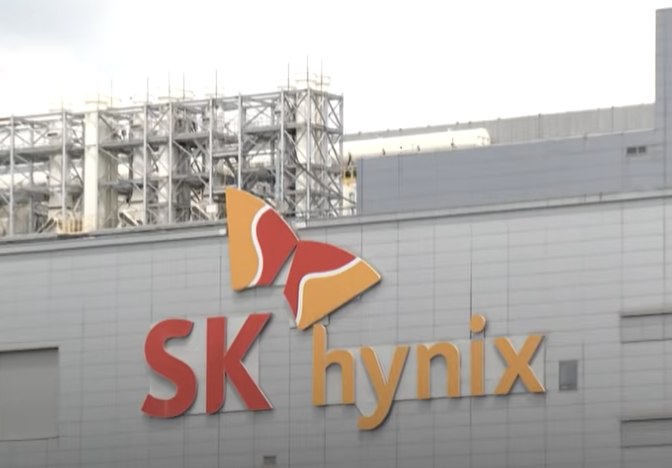
SEOUL — Shares of SK Hynix Inc plunged Thursday, falling 10.37%, or 173,000 won, to close at 1,495,000 won, as disappointing forward guidance from two major U.S. memory chip companies triggered a broad selloff across the global semiconductor sector and rattled South Korea’s benchmark stock index.

The decline made SK Hynix, one of the world’s largest producers of memory chips and a key supplier for artificial intelligence infrastructure, the worst-performing major stock within a broader selloff that briefly pushed South Korea’s KOSPI index down as much as 5% during Thursday’s trading session, triggering the exchange’s automatic “sidecar” mechanism, which temporarily halts programmatic sell orders once futures decline sharply within a short window.

The Trigger: Disappointing US Guidance

Thursday’s selloff traces directly back to earnings reports released after Wednesday’s close by two major U.S. storage and memory companies, SanDisk and Western Digital. Both companies posted results that exceeded Wall Street’s expectations for the quarter just completed. SanDisk reported fiscal fourth-quarter revenue that surged 372% year over year to $8.96 billion, with adjusted earnings per share of $39.25, both figures beating analyst forecasts. Western Digital similarly posted strong results, with fourth-quarter revenue climbing 44% year over year to $3.747 billion and GAAP net income surging 1,215% from a year earlier to $3.195 billion.

Advertisement

Despite those strong headline numbers, both companies issued forward guidance that fell short of the market’s elevated expectations. SanDisk projected first-quarter fiscal 2027 revenue in a range of $10.3 billion to $10.8 billion, with a midpoint of approximately $10.55 billion, below the roughly $10.8 billion analysts had anticipated. That guidance miss, paired with a similarly underwhelming outlook from Western Digital, was enough to trigger sharp declines in both companies’ shares in after-hours and premarket trading, with Western Digital falling as much as 13% to 14% and SanDisk dropping roughly 8% to 9% at various points.

A Selloff That Spread Across Asia

The disappointing U.S. guidance quickly rippled into Asian trading Thursday morning, hitting memory chip producers across the region particularly hard given their central role in the same global supply chain. Samsung Electronics, South Korea’s largest company and SK Hynix’s primary domestic rival, fell alongside SK Hynix, with declines ranging from roughly 5.7% to 6.3% across various points in the session. In Japan, memory chipmaker Kioxia slumped more than 10%, while broader technology indexes across the region also came under pressure, with Hong Kong’s Hang Seng Tech Index falling more than 2%.

The pressure extended back to U.S. markets as well. Micron Technology, another major memory chip producer, fell more than 3% in premarket trading Thursday, while the broader Roundhill Memory ETF, which tracks a basket of memory and storage-related stocks, also declined sharply as investors reassessed valuations across the sector following the guidance misses.

Advertisement

A Sector Already Prone to Sharp Swings

Thursday’s decline extended a pattern of extreme volatility that has characterized memory chip stocks throughout 2026. SK Hynix alone has experienced several dramatic single-session moves this year, including a 15% single-day plunge in mid-July, its largest ever at the time, after a South Korean brokerage published a second-quarter profit estimate for the company that came in 8% below consensus, citing concerns over slower-than-expected shipments of high-bandwidth memory chips used in AI applications.

That volatility has cut in both directions. Despite Thursday’s steep decline, SK Hynix and its memory sector peers have posted extraordinary gains for the year overall, driven by surging demand for the high-bandwidth memory chips that power artificial intelligence data centers. SanDisk shares, for instance, had climbed as much as 640% year-to-date as of a session earlier this week, before Thursday’s guidance-driven pullback, illustrating just how dramatically sentiment toward the memory sector has swung across 2026.

Analysts Divided on What Comes Next

Advertisement

Despite Thursday’s sharp selloff, not all analysts have turned bearish on the sector’s longer-term prospects. Analysts at Goldman Sachs and JPMorgan have maintained buy ratings on memory chip stocks even amid the volatility, pointing to forward price-to-earnings ratios in the range of 3.5 to 3.6 times as evidence that current valuations appear detached from the sector’s underlying fundamentals. Some institutional investors have characterized the current pullback as a potential buying opportunity, provided the broader thesis around sustained AI-driven memory demand remains intact.

Other market observers have expressed more caution, noting that the sector’s heightened sensitivity to even modest guidance misses reflects how aggressively investors had priced in continued exponential growth across the memory chip industry. Analysts tracking the space have noted that any performance falling even slightly below elevated market expectations has been enough to trigger rapid, outsized selloffs in recent months, a dynamic that played out again with Thursday’s reaction to the SanDisk and Western Digital reports.

A Broader Test for South Korea’s Market

Thursday’s decline also arrived alongside separate corporate news involving SK Hynix’s operations. According to a report from the Korea Economic Daily, Solidigm, a wholly owned subsidiary of SK Hynix, has formally begun a pre-IPO financing process ahead of a planned Nasdaq listing, targeting a valuation of approximately 50 trillion won, or roughly $35.15 billion, and aiming to raise between 5 trillion and 10 trillion won, or roughly $3.5 billion to $7 billion, in the process.

Advertisement

Even with that separate corporate development in progress, Thursday’s trading was dominated by the broader memory chip selloff, which analysts characterized as reflecting sector-specific concerns tied to the pace of near-term AI memory demand rather than a systemic risk-off event across markets more broadly.

With SK Hynix and its peers continuing to exhibit some of the sharpest single-session volatility in the global technology sector this year, investors are likely to remain closely focused on upcoming earnings and guidance updates from other major memory producers, including Micron, for further signals on whether Thursday’s pullback reflects a temporary reassessment or a more sustained shift in sentiment toward the artificial intelligence-driven memory chip boom that has defined much of the sector’s performance throughout 2026.

Continue Reading

Trending

Copyright © 2025