




Connect with us

NewsBeat

Why celebrities from Zendaya to Kylie Jenner are wearing Fecal Matter

Published

on

Why celebrities from Zendaya to Kylie Jenner are wearing Fecal Matter

The brand name behind recent showstopping fashion moments isn’t quite as delicate as their romantic and otherworldly looks. When asked what an ethereal Zendaya was wearing for the “Odyssey” premiere in New York, her stylist Law Roach responded: “Fecal Matter.”

Zendaya’s angelic strapless gown with feathered white wings was the work of Matières Fécales — yes, in English, Fecal Matter — the Paris-based, high-end fashion house founded in Montreal over a decade ago that’s, seemingly suddenly, everywhere.

Why Matières Fécales is called … that

The design duo behind Matières Fécales, Steven Raj Bhaskaran and Hannah Rose Dalton, have aimed to subvert beauty with their own alien-like personal style, including dramatic white makeup, shaved heads and eyebrows, and skin boots made to look like realistic feet.

Bhaskaran and Dalton started the brand as students at Collège LaSalle Montréal, going from selling designs on the secondhand shopping platform Depop to showcasing collections at Paris Fashion Week. The designers have said the name reflects their view of the fashion industry, a perspective they initially summed up with a more vulgar word.

Advertisement

“There’s no other word for it, but how can we say it in a glamorous way? So we’re like, ‘fecal matter’ is the scientific word for it,” Dalton recalled to Vogue last year, adding they translated it into French, which “sounds way more glamorous.” Bhaskaran told the “Fashion Neurosis” podcast in March that the name was also intended to “challenge the wasteful side of fashion.”

A representative for Matières Fécales said the designers were not available for comment.

Despite the visceral name, tastemakers from Lady Gaga to Kylie Jenner are embracing their designs.

“There is this beautiful tension in their work between the finesse and the decaying, and the strong and the soft,” celebrity stylist Brad Goreski told The Associated Press.

Advertisement

And after years of building a cult following, they were taken under the wings of Dover Street Market in 2024, after first meeting its president, Adrian Joffe, backstage at a Madonna show. The global retail and concept stores offer emerging brands development support, from production and distribution to sales.

Kristen Bateman, a longtime fashion and culture writer who has attended all three of the designers’ Paris Fashion Week shows, said their rise is driven by the industry’s desire to see something new.

“If you’re looking at the high-fashion brands like Chanel and Dior, it all sort of starts to blend together,” she said. “And this feels like it’s in its own category. … You can’t replicate it.”

From cult status to Paris Fashion Week

Milan Tanedjikov, a Collège LaSalle Montréal design teacher, had a front-row seat to Dalton and Bhaskaran’s rise and says they have finally found the balance between their art and fashion.

Advertisement

“They have created this, like, very interesting organism together,” he said.

The designers were invited onto the official calendar for Paris Fashion Week last year, debuting “The Other,” a collection they described as an ode to being fearless with identity. It featured a collaboration pairing their striking curved-heel design with Christian Louboutin’s signature red sole.

“At their very core, what drives them is absolute freedom of expression, and they want to push the boundaries of what is human,” Tanedjikov said.

In March, during Paris Fashion Week, the duo unveiled “The One Percent,” with models theatrically strutting with red paint on white opera gloves and wearing eye masks made of dollar bills. The collection showcased how “power affects us all,” they wrote on Instagram.

Advertisement

“What they were able to build in such a small amount of time is really insane in terms of world building and creating their world,” Augustin Maunier, Dover Street Market’s director of brand development, said. “There’s real storytelling behind it.”

The show’s theme was a stark contrast to the billionaires who had been sitting front row at other fashion week shows. At this year’s Met Gala, where Jeff Bezos was an honorary chair, actor Sarah Paulson wore a voluminous, gray, distressed ball gown from the collection, paired with the eye-covering money mask.

Goreski pulled from “The One Percent” for Demi Moore’s wardrobe as a Cannes Film Festival jury member, telling the AP he wanted something new for Moore. Moore’s frayed, full-volume, Barbie-pink ball gown with a distressed bow was a break from her usual structured looks. In 20 years of dressing Moore, Goreski said she hardly ever chooses a full-skirt “cupcake” shape, but that she fell for the designers’ artistic vision and storytelling.

“They’re designing clothes for themselves,” he said. “That’s authentically them, but they’re bringing it to like a whole other audience.”

Advertisement

Find their clothes on Lady Gaga and a Dunkin’ ad

Early supporters of the brand fittingly included boundary-breaking performers Madonna and Lady Gaga. Madonna even invited them to DJ on her tour in 2023 and they’ve designed custom looks for Gaga’s live performances, including Coachella. At this year’s Grammys, Gaga wore a high-neck, feathered, black gown from the designers, a dark angel to Zendaya’s heavenly “Odyssey” look.

Now, though, their bold designs are going beyond red carpets. In a television ad for Dunkin’, Kylie Jenner wore a blush-pink, satin, structured blazer with over-the-top shoulder pads, a designer choice that generated some amusement online from those previously unfamiliar with the brand’s name.

The designers created a distressed Victorian-style dress for model Gabbriette Bechtel’s wedding to musician Matty Healy, a first for the brand. With their next Paris Fashion Week show set for September, fashion connoisseurs are eagerly waiting to see what’s next.

“We’re rooting for them because they’re younger designers who have something to say,” fashion commentator Hanan Besovic, who posts online as @Ideservecouture, said.

Advertisement

Source link

Advertisement
Continue Reading
Click to comment

You must be logged in to post a comment Login

Leave a Reply

NewsBeat

Eat capsules containing human faeces to reduce peanut allergies, study suggests

Published

on

Eat capsules containing human faeces to reduce peanut allergies, study suggests

Swallowing capsules containing human faeces from someone with no food allergies could help people with peanut allergies become more tolerant to the nut, a new study has suggested.

The trial, conducted by researchers at Boston Children’s Hospital, is the first evidence that faecal transplants – transferring gut bacteria from faecal samples of healthy donors – can be used to treat allergies.

The findings will be a boost to peanut allergy sufferers, with around two per cent of children in the UK believed to be affected.

Six people who were highly allergic to peanuts found that their reactions improved after a trial that used frozen “poop pills”, donated by people with healthy gut microbiomes to transfer good bacterialstrains into 10 young adults with severe peanut allergies who reacted to traces of the allergen.

Advertisement
A study by King’s College London in 2024 found regularly feeding children peanuts from infancy until the age of five reduced the rate of peanut allergy by 71 per cent (Katie Collins/PA)
A study by King’s College London in 2024 found regularly feeding children peanuts from infancy until the age of five reduced the rate of peanut allergy by 71 per cent (Katie Collins/PA) (PA Archive)

After a one-time treatment of 36 pills taken each over few hours, three participants improved when tested four months later tolerating eating multiple peanuts.

In the next round of the study, participants took antibiotics before the fecal transplant to see if the donor bacteria transferred more successfully when it didn’t have to compete with the participants’ own resident gut microbes. Three of these five participants improved in peanut tolerance and ingested more than four peanuts before reacting, suggesting that the antibiotics did increase the efficiency of the microbiome transfer.

Researchers analysed blood samples from the research participants and found those who responded to the therapy had increased levels of bile salts, which break down fats for the small intestine to absorb, when compared to the people who didn’t respond. They suggested that the good bacteria from the faecal transplants was more adept at metabolising bile salts than the original bacteria, and it increased levels of immune regulatory cells that protect from allergic reactions.

Dr Talal Chatila, MD, director of translational immunology, explained that the right bacteria can help make the gut immune system of those with allergies more tolerant.

“Food allergy reflects a failure of oral tolerance, the process by which the gut immune system learns to accept food, and what this study shows is that the right bacteria can help restore that process, working through bile acid metabolites to promote the immune cells that enforce tolerance,” they said. “Knowing how the bacteria restore tolerance to food in allergic individuals allows us to optimize the therapy for more effective outcomes.”

Advertisement
The prevalence of peanut allergies in young children has been increasing over decades

Dr Rima Rachid, director of the Food Allergy Program and the Allergen Immunotherapy Program, said: “This landmark study was the first to demonstrate that a microbiome-based therapy may improve food allergy in people while also revealing how gut bacteria, their metabolites, and the immune system work together to influence treatment response.”

“Larger studies of fecal and microbiota transplantation are now essential to confirm these findings, identify the patients most likely to benefit, and discover beneficial bacteria that could be developed into targeted probiotic therapies for food allergy.”

Peanut and tree nut allergies are the most commonly known foods to cause anaphylaxis, often developing in early childhood. In the past, certain antibody medications or small dose exposure immunotherapy were found to raise tolerance to a sensitive food, but allergic reactions soon returned once the therapy stops, meaning patents could still experience life-threatening reactions.

Dr Rachid hopes to lead a new study where teens will receive microbe transplantation therapy in collaboration with Alexander Khoruts, MD, of the University of Minnesota.

This newer therapy uses a purified concentrated form of microbes than the faecal pills that can be stored in a home refrigerator. Patients will take the capsules from home under medical supervision and undergo food challenges to evaluate for changes in their tolerance to peanut.

Advertisement

Source link

Continue Reading

NewsBeat

Noel Edmonds admits the lobsters he freed may now be dead after he suffered backlash over viral clip – and says he loves living on the Isle of Man because it’s ‘how England used to be’

Published

on

Noel Edmonds has posted a lengthy response after suffering backlash over a viral video which showed him buying live lobsters from a farm shop to release into the sea

Noel Edmonds has posted a lengthy response after suffering backlash over a viral video which showed him buying live lobsters from a farm shop to release into the sea.

The former Deal Or No Deal host, 77, found himself in hot water this week after he shared a clip of himself and his wife Liz returning the crustaceans to the water at Peel Harbour on the Isle of Man after purchasing them from a tank at a local shop.

Noel’s move sparked backlash from his followers, as stressed lobsters are rarely equipped to survive in the wild, and releasing them can introduce foreign diseases.

Four days on, Noel has tried to explain his actions and ‘elbow out the lies’ in a new Instagram video captioned ‘lobsters and pork pies are on the menu today.”

Advertisement

Conceding that he ‘probably only delayed the inevitable’ and the lobsters could now be dead, Noel explained how the incident all started when he and Liz were shopping at his friend Matt Harrison’s farm shop on the Isle of Man and Liz saw two lobsters in a tank.

‘She said “Oh I feel sorry for them in the tank” and Matt said “you’re not the first person to say that actually,”‘ Noel told his followers.

Noel Edmonds has posted a lengthy response after suffering backlash over a viral video which showed him buying live lobsters from a farm shop to release into the sea

Advertisement
The star, 77, found himself in hot water this week after he shared a clip of himself and his wife Liz returning the crustaceans to the water at on the Isle of Man after purchasing them

The star, 77, found himself in hot water this week after he shared a clip of himself and his wife Liz returning the crustaceans to the water at on the Isle of Man after purchasing them

‘She said “I’d like to buy them and release them.” And Matt said “you’re not the first person to say that.” But do you know what he then did? He offered us the lobsters for nothing as a gift. We actually paid for them because we felt that was really important.’

Noel continued, explaining how Matt ‘gave us a box to put the lobsters in and he said the temperature of the tank is very similar to where they came from, which is Peel on the west coast of the Isle of Man. And he told us how to release them.’

‘And that is the absolute truth,’ insisted Noel. ‘At that point those lobsters were ours and it was our choice to return them to their natural environment as best we could, I mean we had to do it in the harbour because we don’t have a boat.’

Advertisement

Noel then did admit that the freed lobsters could now be dead, saying ‘I concede we probably only delayed the inevitable but hey maybe those two lobsters are still out there, well I don’t know what lobsters do, but having a wonderful time. So there you have it.’

Noel was also keen to stress his love for the Isle of Man, where he owns a holiday home, heaping praise on his neighbours and local businesses like Matt’s.  

‘I really like the Isle of Man, it’s how England used to be before it became what it is now,’ he said. ‘There’s a real sense of community, we know all of our neighbours and they’re lovely.’

‘People on the Isle of Man are really proud of the island and they really like people who like their island.’

Advertisement
Noel's move sparked backlash from his followers, as stressed lobsters are rarely equipped to survive in the wild, and releasing them can introduce foreign diseases

Noel’s move sparked backlash from his followers, as stressed lobsters are rarely equipped to survive in the wild, and releasing them can introduce foreign diseases 

Releasing a supermarket or restaurant lobster is generally discouraged due to low survival rates. 

Handled and stressed lobsters are rarely equipped to survive in the wild, and releasing them can introduce foreign diseases or disrupt local marine ecosystems 

In response to Noel’s original video on Tuesday, Matt, the owner of the farm shop said he’d be moving its lobster tank to a less prominent position and was considering removing it completely.

Advertisement

He said: ‘At the moment the tank is still in the shop but we’ve moved it.

‘I’m sensitive to people’s feelings.

‘But the vast majority of people want us to keep it and for us to keep supporting local businesses, which is the whole point of the shop.

‘I’m still mulling over whether to keep it. There are still lobsters in there; they’re really healthy. We’re just going to see what happens.

Advertisement

‘But customers will be able to buy it in plenty of other places along the Peel seafront.’

He said the lobsters were caught near Peel by a local, young shellfish fisherman, who he had wanted to support. 

Harrison said the tank was charcoal-filtered, maintained weekly and kept at salinity levels matching the surrounding sea.

And the water was maintained at between 7.1C and 7.4C.

Advertisement

He said the lobsters were delivered approximately every one to two weeks and were rotated through the tank, meaning they were not normally kept there for more than a fortnight.

Source link

Continue Reading

NewsBeat

Catterick man banned for drug driving in Darlington

Published

on

County Durham man banned for drug driving on the A167

Knile Albertson-Prescott, 60, of Noels Court, Catterick, appeared at Newton Aycliffe Magistrates’ Court on August 4.

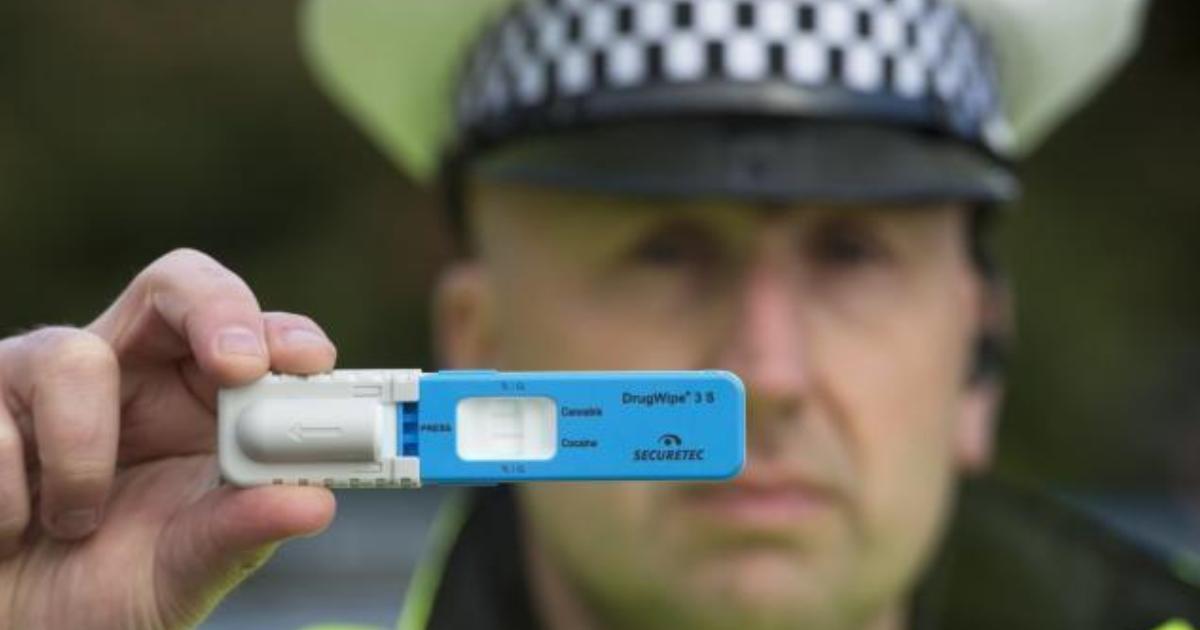
He was sentenced after pleading guilty to driving with a proportion of Delta-9-tetrahydrocannabinol (THC) in his blood above the specified limit.

The incident took place on Parkside, Darlington, on August 11, 2025, when Albertson-Prescott was driving his MG.

Advertisement

A blood test confirmed Albertson-Prescott had at least 3.9 micrograms of THC per litre of blood, exceeding the legal limit.

The court imposed a 12-month driving disqualification and fined Albertson-Prescott £460.

He was also ordered to pay £85 in costs to the Crown Prosecution Service and a £184 surcharge.

The fine will be paid in monthly instalments of £150, starting September 1.

Advertisement

Source link

Continue Reading

NewsBeat

NHS GP urgent warning for anyone going to Italy as all 27 cities ‘on alert’

Published

on

Daily Mirror

The alerts have triggered health warnings for millions of people, including tourists

Anyone going on holiday to certain parts of Europe has been issued a health warning from an NHS GP. It comes as numerous alerts have been issued in several well-known areas due to severe heat across many popular tourist destinations.

All 27 of Italy’s major cities are now under extreme heat alerts as a blistering heatwave hits Europe. The severe weather has caused temperatures to exceed 40 degrees Celsius in multiple countries, prompting health alerts for millions of people, including tourists and families going abroad during the six-week holiday.

On Thursday, Italy’s Health Ministry issued a red alert for all 27 cities in its national heat surveillance system. This marks the first time this year that the entire network has reached the highest warning level simultaneously. The red alert network spans key areas, starting in Trieste in the northeast and extending to Palermo in Sicily – including Rome, Milan, Venice, Florence, Naples, Turin, and Bologna.

Advertisement

In response to this, NHS GP Dr John Akinjolire is urging travellers not to underestimate the risks. He is warning that soaring temperatures can quickly lead to heat exhaustion and heatstroke.

The GP has shared the simple steps holidaymakers should take before and during their trip to stay safe in the heat. He’s also shared the key warning signs to watch for and how to access healthcare if they become ill while abroad.

NHS GP Dr John Akinjolire, working with travel insurance company PayingTooMuch, explained how you can avoid heatstroke when travelling during a heatwave in Europe. He said: “With temperatures reaching 40°C in parts of France, Spain and Portugal, alongside active wildfires across these countries and Greece, travellers should be aware that this is more than a typical summer heatwave.”

Advertisement

In an important reminder, he said: “Extreme heat can pose serious health risks, particularly for people with underlying medical conditions.” The health expert says people with heart disease, diabetes or respiratory conditions may find that high temperatures place extra strain on their health.

“If you’re travelling near the ongoing wildfires, the smoke can also worsen breathing problems, even in those who do not usually experience respiratory issues,” he warned. “Before travelling, it’s important to store temperature-sensitive medication such as insulin correctly, check air quality forecasts as well as the weather, and be aware that some medications like certain antibiotics, acne treatments and antidepressants, can increase sensitivity to the sun.”

He says staying well hydrated is important and it’s worth remembering that alcohol accelerates dehydration, so drinking more than usual in the heat can increase risk significantly. He added: “It is advisable to avoid prolonged periods in direct sunlight during the hottest part of the day typically between 11am and 3pm, wearing lightweight clothing and seeking shade wherever possible can all help reduce the risk of heat exhaustion and heatstroke.”

Advertisement

The NHS GP says it is important to know the difference between the two. “Heat exhaustion can usually be managed with rest, shade and fluids, but heatstroke, where the body can no longer regulate its own temperature, is a medical emergency requiring urgent attention,” he said. “Signs to watch for include confusion, a lack of sweating despite the heat, and a rapid or irregular heartbeat.”

Travellers should also familiarise themselves with how healthcare works in their destination. Unlike the NHS, many European countries require patients to pay for treatment upfront before claiming costs back even if you have a GHIC.

Access to care can also vary, particularly in more remote areas such as the smaller Greek islands. Serious medical emergencies in these parts may require transfer to a larger island or the mainland.

“These risks should not discourage people from travelling, but they do highlight the importance of preparation,” the NHS GP said “Having comprehensive travel insurance that accurately reflects any pre-existing medical conditions, alongside the right medication, lightweight clothing and other essentials for extreme heat, can protect you in case you find yourself becoming unwell while abroad.”

Advertisement

Source link

Continue Reading

NewsBeat

Springside Avenue, Walkden house partially shut down

Published

on

Springside Avenue, Walkden house partially shut down

This comes after a partial closure order was granted for a house on Springside Avenue, Walkden, for Greater Manchester Police working with housing association ForHousing.

Residents had been raising concerns about anti-social behaviour linked to the house for several months.

A GMP spokesperson said: “The address had become a source of ongoing community concerns, attracting numerous unwanted visitors, including drug users and individuals involved in violent behaviour.

Residents had been complaining about the house for several months (Image: GMP)

“The impact on neighbouring residents has been considerable, and positive action has now been taken to address these issues.

Advertisement

“Under the terms of the order, only the occupant, their next of kin, and professional workers acting in an official capacity are permitted to enter the property.

“Any other person found inside the address will be in breach of the Closure Order, liable to arrest, and may be brought before the courts.

“The order is currently in place for three months and will be reviewed closer to the expiry date, with consideration being given to an extension if necessary.

“This result demonstrates the continued commitment of Greater Manchester Police and ForHousing to tackling anti-social behaviour and protecting our communities.

Advertisement

“We would like to thank local residents who have continued to report issues and provide information.”

Source link

Advertisement
Continue Reading

NewsBeat

Girl, 11, found dead in a river at Gore Glen Woodland Park after search | News UK

Published

on

Girl, 11, found dead in a river at Gore Glen Woodland Park after search | News UK
Police were called just after noon yesterday (Picture: Google)

An 11-year-old girl has died after emergency services found her in a river at a woodland park in Midlothian.

A search operation had earlier taken place after reports of concern for a young girl in Gore Glen Woodland Park, near Gorebridge.

Police confirmed the schoolgirl was found at around 4.25pm on Thursday and she was pronounced dead at the scene.

Her family are aware and being supported by police.

Advertisement

A Police Scotland spokesperson said: ‘We were made aware of concern for an 11-year-old girl in the Gore Glen area, near Gorebridge, around 12.40pm on Thursday, August 6.

Sign up for all of the latest stories

Start your day informed with Metro’s News Updates newsletter or get Breaking News alerts the moment it happens.

Advertisement

‘The body of the girl was found in the Gore Water near Shanks Bridge around 4.25pm.

‘She was pronounced dead at the scene, and her family are aware. Her death is being treated as unexplained and inquiries are ongoing to establish the full circumstances.’

A small river runs through the park, which is a beauty spot with views of the Pentland Hills to the south of Edinburgh.

Advertisement

Get in touch with our news team by emailing us at webnews@metro.co.uk.

For more stories like this, check our news page.

Advertisement

Source link

Advertisement
Continue Reading

NewsBeat

Putin could ‘send armed group to occupy NATO territory within weeks’, warns US intelligence

Published

on

Putin could 'send armed group to occupy NATO territory within weeks', warns US intelligence

Russia could send an armed group to occupy NATO territory in Europe, US intelligence said this week. 

The warning comes despite Vladimir Putin facing fresh humiliation as Ukraine‘s strikes intensify and move further into Russia. 

Until now, US intelligence believed the Kremlin dictator would not risk provoking NATO while fighting in Ukraine.

But this assessment changed this year, according to The Wall Street Journal.

Advertisement

NATO members believe Putin is already conducting probing attacks to test and fracture the alliance. 

Western fighter jets have been scrambled three times in the last few weeks to shoot down drones, while Ukraine recently intercepted a drone that had earlier crossed into Romanian airspace.

And fighter jets were scrambled over 250 per cent more in July compared with a year ago as Russia continues to probe the West’s defences. 

The sharp increase in the monthly figure for July compared with the same month in 2025 highlights Putin’s aggressive stance. 

Advertisement

Russia could send an armed group to occupy NATO territory within weeks, US intelligence has warned

File image: A still image taken from a handout video provided by the Russian Defence Ministry press service on 07 August 2026 shows a Russian self-propelled gun firing at an undisclosed location in Ukraine

File image: A still image taken from a handout video provided by the Russian Defence Ministry press service on 07 August 2026 shows a Russian self-propelled gun firing at an undisclosed location in Ukraine

NATO members believe Putin is already conducting probing attacks to test and fracture the alliance. Pictured: A Russian 220mm heavy multiple launch rocket system firing at an undisclosed location in Ukraine

NATO members believe Putin is already conducting probing attacks to test and fracture the alliance. Pictured: A Russian 220mm heavy multiple launch rocket system firing at an undisclosed location in Ukraine

Advertisement

‘The numbers do not lie,’ said a post by NATO’s Allied Joint Force Command Brunssum.

‘The possible threats range from a cyberattack on a NATO country or sending unmarked armed groups to occupy territory to a limited incursion on the alliance’s eastern flank,’ said the WSJ report.

The time frame for a Russian move is between this autumn and 2029, according to US intelligence assessments.

‘We are always thinking through and preparing for any number of scenarios,’ said NATO spokesman Col. Martin O’Donnell.

Advertisement

‘NATO is watching and we are ready to deter and defend as necessary.’

The warnings come amid US concern about a shortfall of munitions after supplies to Ukraine and use in the Middle East conflict.

One theory is Putin could grab a city or region in Poland or one of the three Baltic states – Estonia, Latvia and Lithuania, all NATO members which have strongly backed Ukraine.

Lithuanian President Gitanas Nausėda warned recently: ‘I cannot deny that we have such information and that it concerns kinetic operations.

Advertisement

‘Not on a large scale, but targeted kinetic operations that are very likely to be directed against critical infrastructure.’

Russian opposition politician and chess grandmaster Garry Kasparov said: ‘I think the chances [are] that he’ll cross NATO borders — Estonia, Latvia, Lithuania, Poland, just a small incursion using drones.

‘I think the chances are growing because Putin needs a winning narrative and Ukraine doesn’t offer it.’

All three Baltic states have strengthened their border defences against Russia and close ally Belarus.

Advertisement

The Baltic states have some of the highest defence spending in all of NATO in relative terms – Lithuania directs 5.3 percent of GDP to defence, the most of NATO’s 32 members. 

Last month, Washington warned the Kremlin could be planning an armed incursion on Polish land to test Nato‘s response.

The provocation could see Putin‘s troops cross over into Poland, and vital infrastructure could be targeted by missiles and drones.

Sources close to Polish President Karol Nawrocki told news outlet Onet that the US had been warning Warsaw about the plan for a while.

Advertisement

Russia’s plan aims to start a crisis to scare Western nations into stopping their support for Ukraine

Polish security experts also warned that Russia and Belarus might send a small number of troops across the Nato border.

Until now, US intelligence believed the Kremlin dictator would not risk provoking NATO while fighting in Ukraine. File image shows a Russian soldier in an unknown location in Ukraine

Until now, US intelligence believed the Kremlin dictator would not risk provoking NATO while fighting in Ukraine. File image shows a Russian soldier in an unknown location in Ukraine

A Russian serviceman intercepting Ukraine drones with a machine-gun at an undisclosed location in Ukraine on August 7

A Russian serviceman intercepting Ukraine drones with a machine-gun at an undisclosed location in Ukraine on August 7

Advertisement

Power stations could also be targeted in the incursion, through air strikes that would force Poland to activate its air defence systems.

Moscow’s strategy relies on the assumption that the US would compel Poland to negotiate rather than engage militarily. 

It comes as Ukrainian long-range drones hit a warehouse in the Ural Mountains belonging to Russia’s biggest online retailer, more than 2,000 kilometers (1,200 miles) from the two countries’ border, local officials and the company said Friday.

Ukraine has regularly hit targets in the distant Urals this year and has even struck a Russian oil refinery in western Siberia, nearly 2,500 kilometers (1,550 miles) from the border. 

Advertisement

The attacks are examples of how Kyiv has used drone innovation as a key part of its response to the invasion by its much bigger enemy more than four years ago.

Its successes have drawn international interest and drone cooperation agreements with nine countries, with further deals being negotiated with 15 other countries, according to Kyiv officials.

A Wildberries warehouse in Yekaterinburg, Russia’s fourth-largest city, was set ablaze by the attack, the company said. 

Most merchandise wasn’t damaged, it said, unlike at some of the more than a dozen other Wildberries depots struck by Ukraine in recent weeks that have burned down. Kyiv is trying to rattle the Russian public and the Kremlin with the attacks.

Advertisement
File image: A fire breaks out following massive Russian ballistic missile strikes in the Ukrainian capital of Kyiv on August 5, 2026, amid the Russian invasion in Ukraine

File image: A fire breaks out following massive Russian ballistic missile strikes in the Ukrainian capital of Kyiv on August 5, 2026, amid the Russian invasion in Ukraine

File image: Smoke billows from a warehouse, after deadly Ukrainian drone attacks, as per regional governors, in Elektrostal, Moscow Region, Russia

File image: Smoke billows from a warehouse, after deadly Ukrainian drone attacks, as per regional governors, in Elektrostal, Moscow Region, Russia

File image: A man walks past burned-out cars and a residential building that went up in flames during a recent Russian strike are scattered in a residential area, amid Russia's attack on Ukraine, in Zaporizhzhia, Ukraine, July 30, 2026

File image: A man walks past burned-out cars and a residential building that went up in flames during a recent Russian strike are scattered in a residential area, amid Russia’s attack on Ukraine, in Zaporizhzhia, Ukraine, July 30, 2026

The regional governor, Denis Pasler, said three drones hit the warehouse’s roof. Artyom Zhoga, the Kremlin’s representative in the region, said that 800 people were evacuated from the warehouse and nobody was hurt.

Advertisement

And Ukrainian President Volodymyr Zelenskyy is pushing for his country to keep up the pace of technological development, especially in air defense systems to help stop Russian ballistic missiles that are exploiting Ukraine’s shortage of American-made Patriot interceptor missiles and battering civilian areas.

A joint European anti-ballistic development program is already underway, Zelenskyy said late Thursday, with 10 countries engaged in developing an anti-ballistic shield. Europe is concerned about Moscow’s ambitions on the continent beyond Ukraine.

‘Ukraine is capable of producing its (anti-ballistic) missile and launcher, while our partners will provide the necessary components and critical elements – radars, sensors, and everything else required,’ Zelenskyy said on social media.

‘An anti-ballistic program of our own – one that is truly large-scale – will greatly benefit everyone in Europe.’

Advertisement

At the same time, Ukraine is working on manufacturing its own ballistic missiles to use against Russia. ‘The tests have shown strong potential. We need to turn this into a real weapon,’ Zelenskyy said.

Ukrainian front-line defenses in eastern regions, meanwhile, remain under strain as Russia’s bigger army looks for a breakthrough after months of minimal advances that Western analysts and official says have had a high cost for Moscow in troop casualties.

Ukraine has been evacuating children from Kramatorsk, one of the four eastern Donetsk region cities that make up Ukraine’s so-called Fortress Belt. 

The line of four large and heavily defended cities, about 50 kilometers (30 miles) long, has been key to denying Moscow its goal of seizing Ukraine’s industrial heartland.

Advertisement

The head of the Donetsk region’s regional military administration, Vadym Filashkin, said Friday that more than 800 people, including 91 children, were evacuated over the previous 24 hours.

Ukraine has been deploying midrange strike drones to disrupt Russia’s supply lines and slow it advance.

Russia and Ukraine sustain nightly drone attacks

Russia’s air defenses downed 203 Ukrainian drones from late Thursday through early Friday, the Defense Ministry in Moscow said.

Advertisement

Meanwhile, Russia attacked Ukraine with 147 long-range strike drones, according to the country’s air force.

In Ukraine’s northern Sumy region, a Russian drone struck a busy market Friday morning, wounding 10 people, authorities said.

Russia also launched glide bombs and drones of various types at the regional capital, according to the head of regional administration, Oleh Hryhorov.

The attack targeted residential buildings, transport and infrastructure, wounding two people, he said.

Advertisement

Source link

Continue Reading

NewsBeat

QVC Guest’s Live TV ‘Blow Job’ Blunder Is Our New Favourite Moment Of 2026

Published

on

QVC Guest's Live TV 'Blow Job' Blunder Is Our New Favourite Moment Of 2026

Most of us aren’t tuning into networks like QVC hoping for a laugh – but viewers certainly got more than they bargained for during one recent broadcast.

In a viral scene that’s now already been viewed almost 16 million times on Instagram alone, QVC regular Terri Conn was joined by Toni Brattin, promoting her line of wigs and hairpieces.

During the segment, Toni assured viewers that her piece will make them look like they “went out and got a blow job”, before correcting that comment to “blow out”.

It’s then that the wheels started to come off, with Toni whispering “oh my god” under her breath, and struggling to get her words out for laughing.

Advertisement

Fortunately, Terri was on hand to keep things moving and get the show back on the road, as Toni was seen sniggering to herself in the background, before eventually crouching down and disappearing from the shot completely.

“The show must go on,” she later wrote on Instagram, declaring: “Love you, Toni Brattin!”

Shortly afterwards, the video caught the attention of US late night host Jimmy Fallon, who quipped: “By the way, the wigs are totally sold out. Note to all the married men out there, the wig is only available to you on your birthday.”

“Gotta love live TV!” Toni then wrote after reposting Jimmy’s comment.

Advertisement

Toni later told TMZ: “I had to laugh at him as much as I had to laugh at myself. At that time, I’m just hoping that the camera gets off me, but I can’t really see from behind me. So, I’m talking, and I just want to get this [done], shut it down and hopefully Terri saves my butt.”

“I’ve been doing television and the shopping channels for almost 30 years now, [and] it’s live television! And, you know, we all make mistakes, right,” she claimed.

She added: “I happened to save one of those wigs just for Jimmy. And I would love to see what this wig would look like on Jimmy.

“So Jimmy, you just tell me when your birthday is, and I’ll hand-deliver this, and we’ll see how cute you look.”

Advertisement

Source link

Continue Reading

NewsBeat

Emmerdale and Coronation Street axed from TV tonight

Published

on

Emmerdale and Coronation Street axed from TV tonight

While the FIFA World Cup has now come to an end, it’s almost time for the new football season to start.

There’ll be plenty of matches coming up, which can sometimes result in schedule changes for the soaps.

This week though, it’s an EFL Cup match that disrupts the scheduling.

Advertisement

Here’s what we know about the TV schedule shake-up and which episodes the changes affect.

Emmerdale and Coronation Street axed from ITV tonight

Emmerdale and Coronation Street usually air 30-minute episodes on ITV1 at 8pm and 8.30pm respectively, Monday to Friday, in what is known as the “soaps power hour” (introduced in January 2026).

However, there will be no new episodes airing this evening as an EFL Cup match, which will see Middlesbrough take on Wrexham, airs at the same time as the usual soap slots on ITV1.

Coverage of the match starts from 7.30pm and runs until ITV News at 10 begins at the later time of 10.25pm.

Advertisement

ITV1 will instead air an Emmerdale episode at 7pm on Sunday, August 9 followed by Corrie at 7.30pm.

Apart from the schedule changes for Friday, Emmerdale and Coronation Street has aired as normal this week.

Former Corrie star describes career as “famine” as he’s not been paid in 6 months

Actor John Thomson has revealed he hasn’t done a single acting job for six months.

The Cold Feet and Fast Show star is best known for roles such as Pete Gifford in the romantic drama Cold Feet, Jesse Chadwick in Coronation Street, and the dim-witted barman Ken in the sitcom Men Behaving Badly.

Advertisement

The 57-year-old also appeared in the Fast Show for character sketches.

Although 2025 was busy with his appearances in Art Detectives and The Madame Blanc Mysteries, he said this year has brought “famine” in his acting career – part of what he believes is a wider trend affecting traditional broadcasters.

In a recent interview on the Scarred For Life podcast, John said: “Last year was feast, this year famine.

“I haven’t done a single acting job for six months.

Advertisement

“It’s hard now.

“No one has got any money.

“The thing is that commercial stations that rely on advertising everybody has switched to platforms where just pay subscriptions.

“If you want to advertise your product why would you pick a commercial station that people are kind of tuning out of?

Advertisement

“You’re not getting the views.”

Are you a big soap fan? Tell us your best Corrie and Emmerdale moments in the comments below.

Source link

Advertisement
Continue Reading

NewsBeat

why excessive self-belief is often a successful strategy in life

Published

on

why excessive self-belief is often a successful strategy in life

People are overconfident, on the whole. Most of us believe we are more intelligent, more skilful or better drivers than the average person. But we can’t all be right.

Such beliefs are not harmless. Overconfidence – and the self-deception that drives this excessive self-belief – can contribute to extreme risk-taking, failed businesses, disastrous investments, dangerous driving and political miscalculations. Why then have so many of us retained this trait?

According to the late evolutionary biologist Robert Trivers, self-deception evolved in humans because it also helps us deceive others more effectively. He argued that when people genuinely believe in a lie or falsehood, they suppress the subtle cues that betray deception – such as nervousness, hesitation, vocal strain or a forced expression.

But we think something is missing from Trivers’s account. When overconfidence is such a common trait, why should anyone believe your hype simply because you believe it yourself? This is the question our latest research set out to answer.

Advertisement

Our approach was based on the handicap principle developed by Israeli biologists Amotz and Avishag Zahavi. The classic example is the peacock’s tail, which demands enormous metabolic energy to grow and maintain, and makes flying, running and escaping from predators harder.

Only an unusually healthy, capable bird can grow such plumage and survive while dragging it around. Because the tail is so costly, it works as an “honest signal” of these attributes. Our claim is that self-belief is a peacock’s tail for people, signalling attributes that are hard to observe directly.

Self-belief can be a peacock’s tail for people.
Kikku33 via Wikimedia Commons, CC BY-SA

The signal works because the cost of high self-belief is lower for more capable people. Think of it this way: if a complete novice driver has a self-belief rating of ten out of ten, they are very likely to crash with potentially disastrous results. A near-expert driver with extreme self-belief is, of course, much less likely to crash.

Advertisement

Moreover, the benefit of high self-belief is generally greater for more able people. While self-belief opens doors, ability dictates how far someone goes as a result.

But because self-belief is an effective signal of ability, a confidence “arms race” ensues that culminates in the widespread overconfidence among people that we described earlier. Beliefs become excessive – yet even then, we argue that they remain informative. And that’s why overconfidence is such a common condition.

Reappraising the Dunning-Kruger effect

In an influential 1999 paper, US psychologists David Dunning and Justin Kruger stated that the least competent people tend to be the most confident.

According to their original interpretation, most people who are bad at a task lack the awareness needed to recognise how badly they are doing it. They are “unskilled and unaware of it”.

Advertisement

The original study followed a simple design. Participants completed tests of humour, grammar or logical reasoning. Before receiving feedback, they estimated how well they had performed. Researchers then examined whether the expectations of high scorers were more accurate than those of low scorers – and found they were. Less skilled participants overestimated their performance more egregiously.

However, there is a fundamental flaw in this methodology that even Dunning and Kruger recognised. Test performance depends heavily on random factors like luck. As forecasts cannot take these factors into account, low scorers appear more overconfident to a large degree because they were simply unlucky on the test.

To overcome this statistical illusion, the procedure can be flipped. Instead of sorting people by their test scores, they are grouped by their expectations. Asking whether those with high expectations overestimate by more or less than those with low expectations eliminates the “unlucky” measurement bias.

For our study, we revisited data from one of the largest modern replications of the original Dunning-Kruger experiments, involving several thousand participants. Building on the flipping logic to treat randomness in both test scores and predictions equally, we found that those with high expectations performed better and overall exhibit greater overconfidence – exactly as the signalling theory implies.

Advertisement

Loss aversion – a complicating factor?

The same signalling logic, we think, also illuminates another common human trait: loss aversion. It is sensible to dislike losses, but the evidence shows we dislike them too much.

While loss aversion is easily confused with standard risk aversion, the two are fundamentally different. Risk aversion arises because gaining £300 isn’t twice as joyful as gaining £150, so it is rational to prefer a guaranteed £150 over a 50-50 opportunity to gain £300 or nothing.

The evidence is, though, that many choices cannot be explained by this framework. Instead, it is loss aversion, our excessive aversion to losing, that is now the dominant explanation for our excessive rejection of risks.

Overweighting the downside pulls in the opposite direction to overconfidence: it makes us cautious, wary of risky investments, speculative trades and uncertain ventures.

Advertisement

At first glance, this looks like a problem for the whole story. If loss aversion makes us too cautious to ever act on our confident claims, then surely big talk would cost – and mean – nothing? In which case, why has caution not simply cancelled out overconfidence, leaving us with accurate beliefs and no signal value at all?

We argue there are two reasons it has not. The first is that caution cannot be tuned precisely enough to neutralise overconfidence. Doing so would require a different, finely judged level of loss aversion for every situation we face – entrepreneurship, trading, courtship, competition – and that degree of case-by-case calibration is cognitively far too demanding.

So, on a population-wide level, our estimates of caution offset overconfidence only imperfectly. While this balance varies significantly from person to person, enough average cost survives across the population for the signal to remain credible.

In addition, while confidence must be displayed to be effective, there is obviously no need to brag about your timidity – and no gain to be had from doing so. This means that overconfidence remains a costly, and thus credible, signal for many people.

Advertisement

So, we think former US president Franklin D. Roosevelt had a point when he said of his army general, Douglas MacArthur: “Never underestimate a man who overestimates himself.”

Source link

Advertisement
Continue Reading

Trending

Copyright © 2025