
Security teams log 54% of successful attacks and alert on just 14%. The rest move through your environment unseen.
The Picus whitepaper shows how breach and attack simulation tests your SIEM and EDR rules so threats stop slipping by detection.


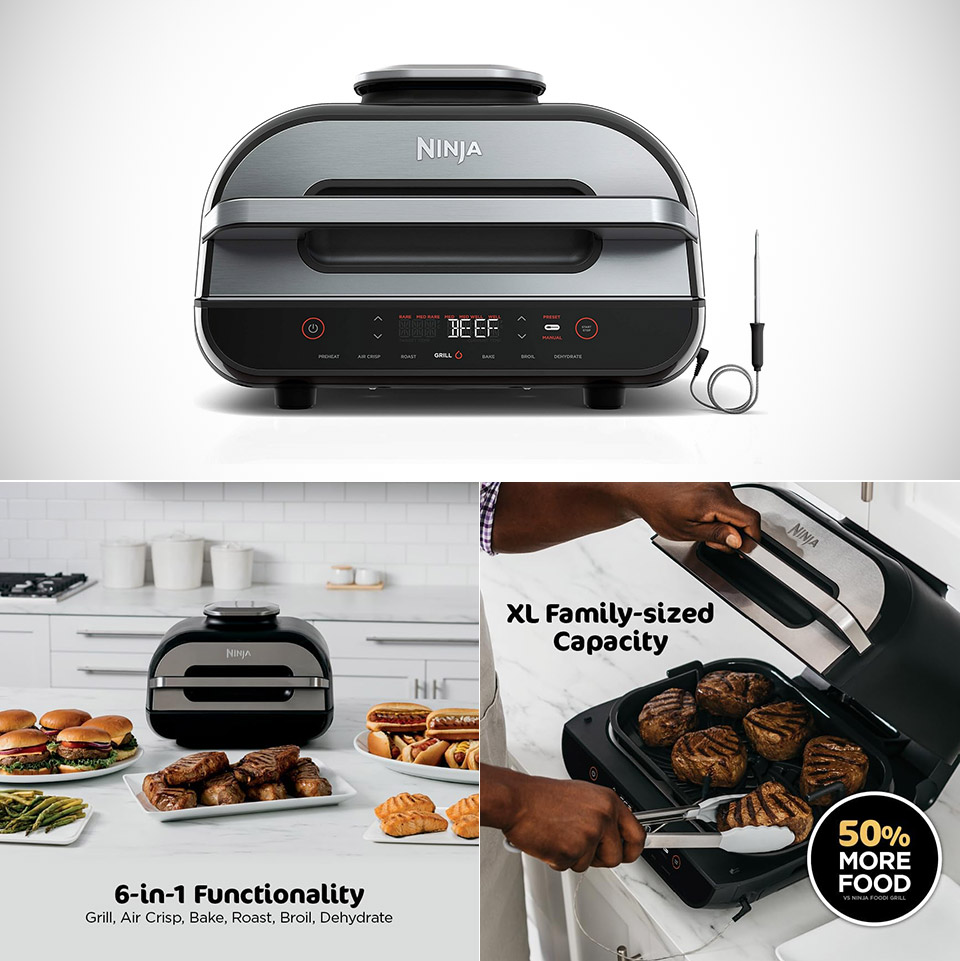
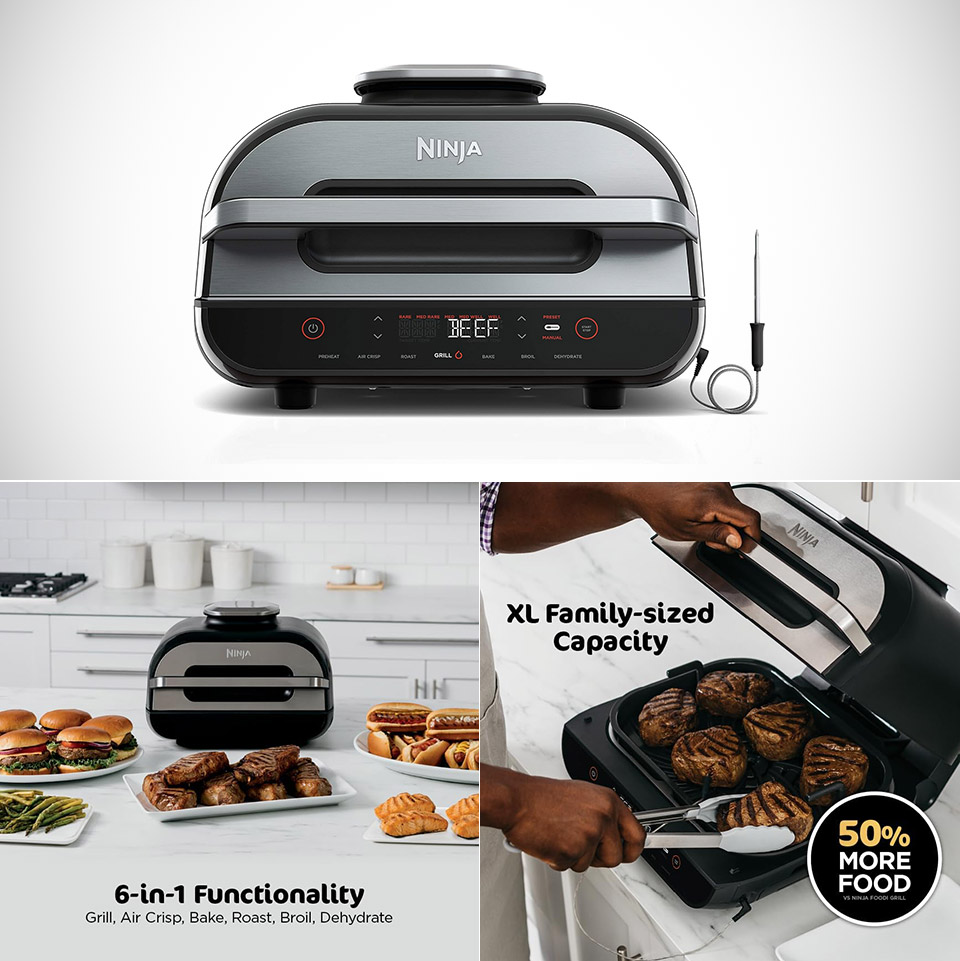
Summer heat has a way of pushing cooking indoors, and few appliances handle that shift as completely as the Ninja Foodi Smart XL 6-in-1 Indoor Grill and Air Fryer, priced at $229.99 (was $280). This countertop machine combines high-heat grilling with air frying, roasting, baking, broiling, and dehydrating in one unit, all while keeping smoke to a minimum and taking much of the guesswork out of cooking meat.
At the heart of this machine is a strong high-density grill grate capable of blasting food at 500 degrees Fahrenheit. The air around the meal is just as hot, and the grate produces the typical black char marks. You’ll get steaks, burgers, poultry, and even vegetables that taste like they’ve been grilled, without needing to light up your backyard. The temperature-controlled grate, spatter barrier, and cool air zone all work together to keep smoke to a minimum, preventing your kitchen from becoming congested like it would with most electric grills.
Sale

The family-sized design is no joke, as the 9 by 12 inch grill offers capacity for six good-sized steaks or twelve hot dogs all at once. Swap in the supplied 4 quart crisper basket and suddenly you’ve got an air fryer that can get crisper fries, poultry or veggies than you can get with traditional deep frying, using up to 75% less oil in the process. With a matching 4 quart cooking pot, you can prepare both the main course and the side dishes at once.
The Foodi Smart Thermometer and Smart Cook System are responsible for the overall dependability of this system. Simply insert the dual probe into your piece of meat, select the type of meat and desired doneness level, and the machine will do the rest. It monitors the temperature and alerts you when your food is ready, even switching off to prevent you from having to keep an eye on it. Rare, medium-rare, medium, and well done can all be done correctly every time.
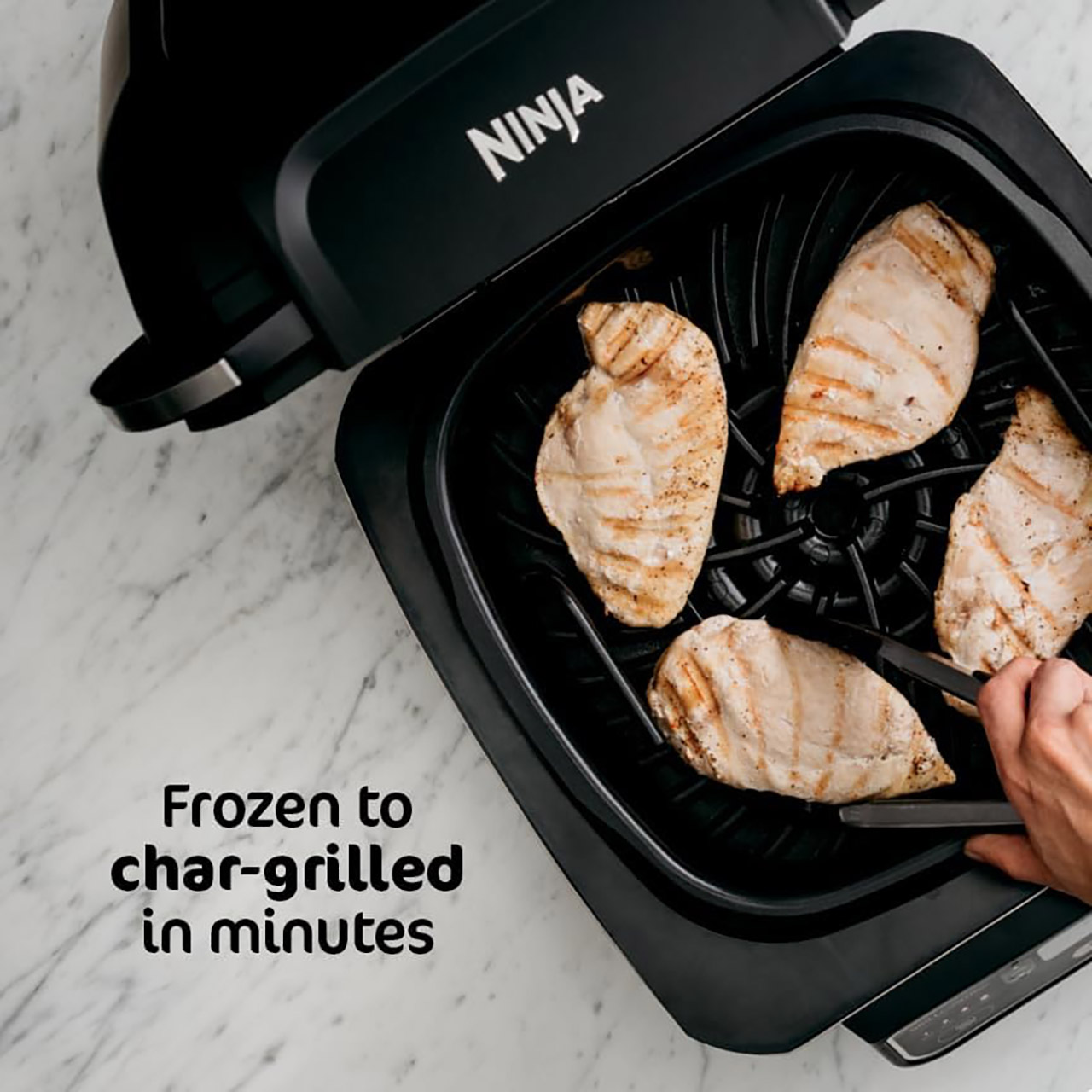
Preheating times are really short here, with the grill ready to go in 7 to 8 minutes and the air fryer reaching 400 in only 3. Once you’re cooked, the 1760 watts of power can keep up with outside cooking for most everyday cuts. You can even cook frozen goods faster than you imagine, and the temperature range spans from delicate fruit dehydration all the way up to a high heat sear.

Cleaning is a snap because the majority of the parts are dishwasher safe, and the nonstick coatings on the grill grate, crisper basket, and cooking pot are free of harmful substances. A cleaning brush is included in the package to remove any stubborn particles, and the entire device measures 15.75 by 16.54 by 11.1 inches deep and weighs just over 22 pounds, making it large enough to feel robust yet compact enough to fit on most countertops with some forethought.
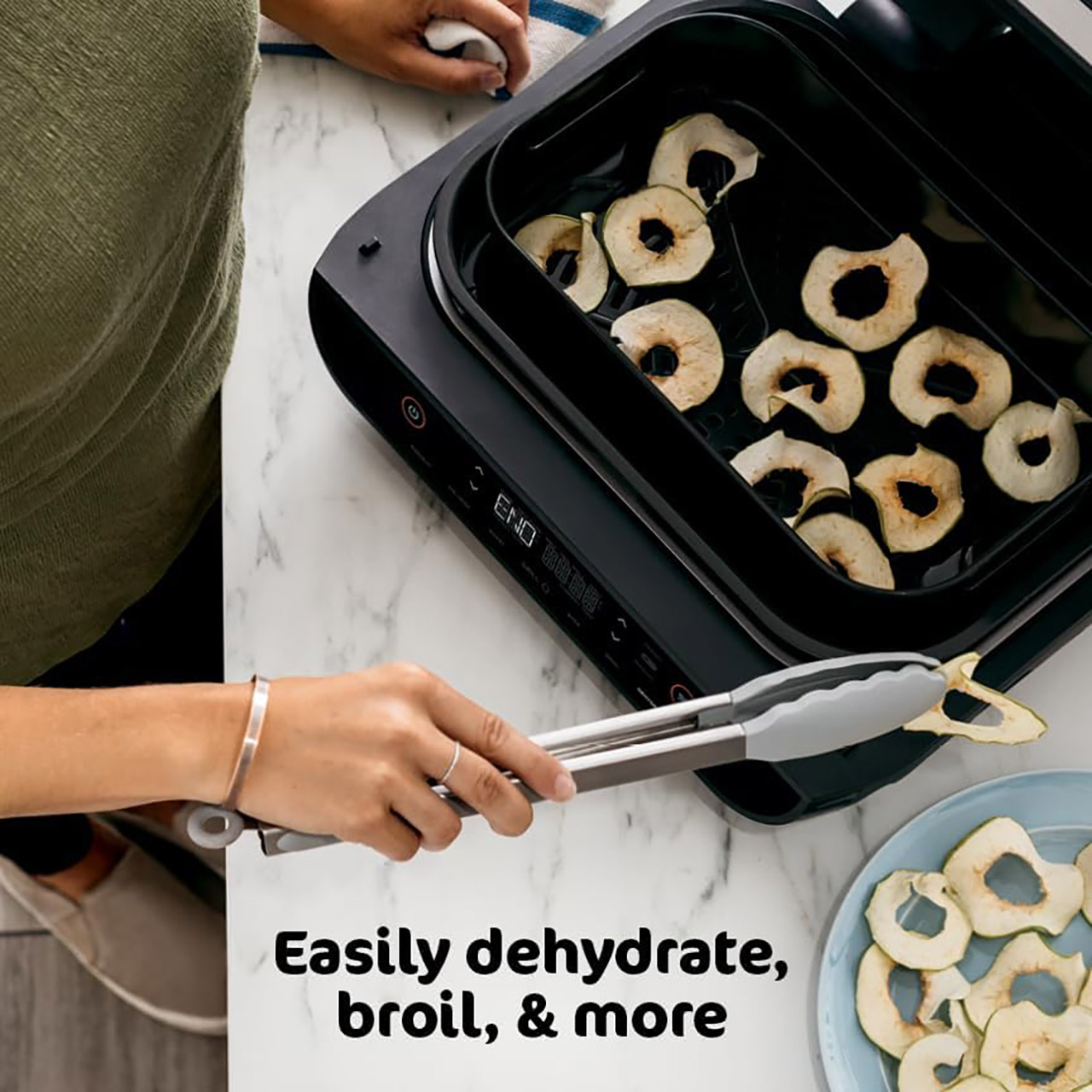
The box includes the main unit, the grill grate, the crisper basket, the cooking pot, the Foodi Smart Thermometer, a cleaning brush, and a recipe booklet with 15 recipes to get you started. The design is quite simple, in black and stainless steel, and is intended to be used every day rather than as a showpiece.

The National Rural Water Association has partnered with DEF CON Franklin to launch the Water Watch Center, which will provide threat intelligence and cybersecurity services to smaller U.S. water utilities serving fewer than 10,000 people. The initiative comes amid a growing wave of cyberattacks on water systems across multiple states. The Record reports: The program will see five managed detection and response providers work with DEF CON Franklin and the NRWA to offer cyber services for water utilities serving fewer than 10,000 people. There are over 50,000 community water systems across the U.S. and 91% of them serve fewer than 10,000 people. “These leading cyber firms and NRWA are architecting a scalable cyber delivery model that has eluded water industry and national security officials to date,” said Jake Braun, the co-founder of DEF CON Franklin and former cyber official in the Biden administration.
“Our incredible Franklin volunteers will support the effort to keep costs down for cash-strapped utilities fending off adversaries like the Iranian Red Guard or Chinese Military,” Braun said. “To further accelerate the effort, we hand-picked cyber providers who already support water utilities. These folks walk in the door knowing the intricacies of cybersecurity in a water utility environment.” The providers include Rapid7, Defendify, Legato Security, L1 Secure and Sentinel Technologies. The companies will share threat information and data on vulnerability patches with the NRWA, which will operate as a hub.


Read more of this story at Slashdot.
Modern-day homes consist of a wide array of gadgets and devices. Some of these are smart, featuring lots of built-in functionalities, while others are rather simple. Either way, every device benefits from a quick reboot. When you restart a device, you clear the built-up cache and eliminate idle processes, both of which can have a major impact on the device’s performance. While the more powerful devices like your laptop or smartphone can run plenty of processes at once without showing signs of slowdown, ones that come with fewer resources like your smart TV can feel noticeably faster after a restart.
The biggest benefit of restarting devices periodically is that it helps prevent common problems from showing up. Through regular reboots, you are effectively nipping problems in the bud instead of troubleshooting them later, saving you time and effort.
Keep in mind that restarting and resetting a device are entirely different concepts, and we are specifically discussing the former. A restart entails power cycling the device, which is basically cutting off power for a short period. A reset, on the other hand, involves completely wiping the device, which reverts it to a new-like state. While a reset can help at times, it should preferably be used as a last resort.
Smartphones are among the devices we use the most. Whether you’re browsing the web, shopping online, playing games, or any number of things, it’s the first device we usually go to. That’s why it’s important to restart smartphones from time to time, preferably once a week. The same idea applies to tablets. Even if you don’t use it as frequently as a smartphone, a tablet will ultimately benefit from a quick reboot, improving your overall experience. On smartphones and tablets, the restart process can vary based on the phone maker, but usually the easiest way is to press and hold the side button and the volume down button at the same time. Some phones will also have a power button in the notification shade.
As surprising as it may sound, restarting smartphones also has a security-related benefit. Some malware will run entirely in your phone’s RAM to avoid detection, since antivirus systems typically scan the storage for threats, not the memory. During the restart or power cycle, the RAM is cleared, and any threat that was lingering on it is effectively eliminated. However, if you are seeing signs of malware infection on a smartphone, it’s best to run a system-wide virus scan or reset the device.
Just like smartphones, your computer, whether it’s a desktop or a laptop, should be restarted regularly, ideally once every week. This applies to all PC operating systems, whether it’s Windows, macOS, Linux, or ChromeOS. However, among the more popular options, macOS is significantly better at memory management. This means you may not have to restart your MacBook as frequently as a Windows laptop. While Microsoft suggests restarting Windows PCs at least once every week, Apple recommends doing so only when you notice an impact on your MacBook’s performance. Still, weekly restarts are the best option for most users.
To restart your PC, you can utilize the built-in options. Windows has a Restart option in the Start menu, while macOS has the same in the Apple menu. Additionally, you can configure your Windows PC or MacBook to restart automatically. For Windows, you can create a dedicated task within the natively available Task Scheduler utility, while on macOS, you can do the same via Terminal.
Regular reboots also have another benefit — they allow the device to install any pending updates. Some of these updates add new features, others patch known bugs, and a few are aimed at improving the system’s security.
In the past decade, the number of devices that require uninterrupted connectivity has been on the rise, making the often-ignored router the most important device in almost every home. In addition to smartphones, tablets, gaming consoles, and computers, you now have smart plugs, TVs, refrigerators, washing machines, security cameras, thermostats, and a wide range of similar devices competing for the same bandwidth. As the number of connected devices increases, your router naturally has to work harder, making restarts all the more important. Remember, periodic restarts also help if your home network feels relatively unstable.
As for the frequency, you should restart your router once every month if it’s a modern one, and seven to fifteen days if it’s fairly old. You can also restart the router if you are facing issues with connectivity. This is often the most effective fix. To restart a router, simply unplug it from the power source, wait for 30-45 seconds, and then plug the router back in.
To streamline the process, you can automate these restarts. Some routers come with a built-in auto-reboot feature that allows you to set a preferred schedule. It’s usually accessible through the admin panel or the companion app. If your router doesn’t have this feature, another convenient option is to use a smart plug. Instead of the router, you can configure the smart plug to automatically cut off power and then resume it after 30-60 seconds. Keep in mind that this only works with smart plugs that have built-in memory, which most — but not all — do.
When it comes to smart TVs, there’s no definite answer as to how often these should be rebooted. That’s because there are no detailed guidelines from manufacturers on the subject. But given the fact that smart TVs now run a host of background processes, you should restart your smart TV once a month. This will clear out the memory and restart the OS and background processes. In most cases, the TV should run faster after a reboot.
Remember, restarting the TV is not the same as pressing the power button on the remote, since that only turns off the display and puts the TV into a low-power state. For a full restart, turn off the TV, unplug it from the power source, wait for 30-60 seconds, and then plug the smart TV back into the power outlet.
Of course, you can always restart smart TVs at a shorter interval or when problems show up. Examples of common smart TV problems that can be fixed with a quick restart include random slowdowns, apps failing to launch, and software glitches triggering issues with Wi-Fi connectivity.
Smartwatches have become increasingly popular in recent years, and they are another device you should restart more frequently than you probably do. But as surprising as it may sound, many people never restart their smartwatch. It just keeps running for weeks and months at a stretch, and the only time it reboots is when the battery runs out. However, for the best performance and a seamless experience, you should restart the smartwatch once every week.
Like smartphones and computers, your smartwatch has a dedicated operating system and a wide array of active background processes. So, it makes sense to restart it every once in a while, even if you can’t do it weekly. As for the steps to reboot a smartwatch, pressing and holding the power button does the trick in most cases. If that doesn’t work, check the watch’s manual or the manufacturer’s website for the exact steps.
Remember, the list isn’t exhaustive, and there are so many other household gadgets and devices that benefit from regular reboots. This includes speakers, streaming devices and sticks, gaming consoles, printers, and smart bulbs, among others. So, if you have any of these, consider rebooting them at least once a month or according to the manufacturer’s recommendations.
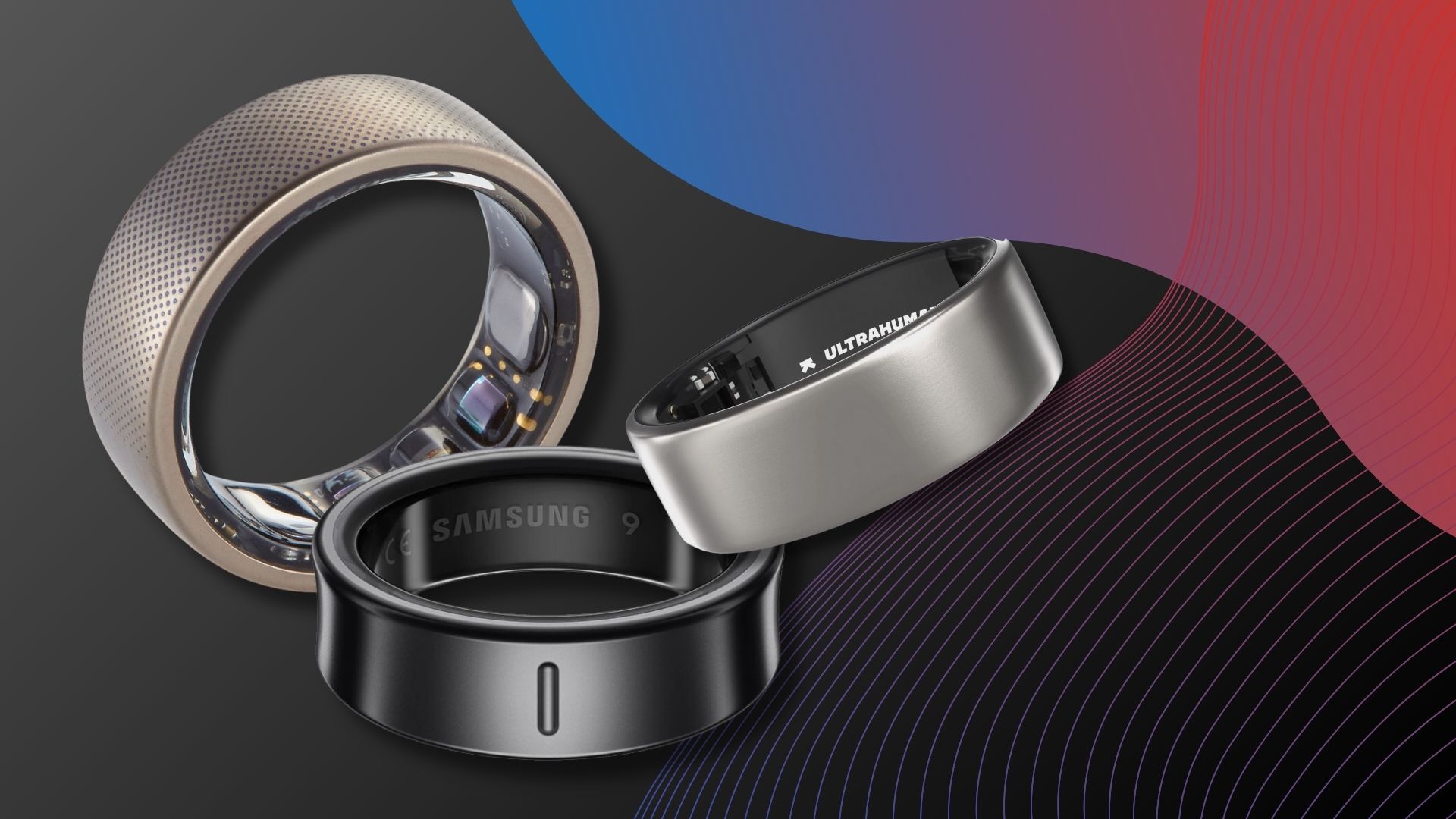
Although tracking your workouts and health metrics from your wrist isn’t new, in recent years the industry has moved towards a more discreet option for consumers: one that can be worn on your finger like a piece of jewellery. If you’re ready to see what the best smart rings have to offer, then you’re in the right place.
Whether it be the best smartwatch, best fitness tracker or the best running watch, the wearables industry at large has very much adopted wrist-based tech as the norm, but if you’re someone who doesn’t like to wear a watch, or you haven’t found one that complements your style, then you may be the exact person who would get on much better with a smart ring.
Our experts have rigorously tested and reviewed countless smart rings, with only the top-rated making it into our best list. These compact trackers can be worn, usually on a finger of your choosing, just like a typical ring, and while they lack a display that’d let you dive into their smarts on the spot, they are far more discreet but no less powerful.
Of course, if you are the type of person who enjoys having certain smart features like Google Maps directions on your wrist, then you may get along better with one of the best Apple Watches or the best Samsung Galaxy Watches.
On a similar note, marathon runners who rely on detailed GPS tracking to reach the finish line will likely find that the best Garmin Watches are designed with their needs in mind.
For everyone else, however, who simply wants to keep tabs on their core health and exercise metrics to make more positive moves towards a healthier lifestyle, a smart ring can be just the ticket. But where do you start when looking for a smart ring? That’s where we come in.
If you need more help choosing a new smart ring, scroll down to our FAQs section, where we’ve answered the most common questions about the wearable, from any required subscriptions to the best finger to wear a smart ring on.
SQUIRREL_ANCHOR_LIST
Much like how we test smartches, any smart rings we come across are used by one of our experts for at least a week to give you an in-depth understanding of how they work day to day, the accuracy of their data and more. All of that information is then fed into this very list so that you can make an informed decision every time.
Fantastically compact, premium design
Great overview of health and fitness
Polished, clutter-free app experience
Excellent battery life and rapid charging
No real changes to the app
New software features are region-locked
Requires a monthly subscription
Oura has been making some of the best smart rings on the market for years now, and with the Oura Ring 5, the company has taken a significant step forward in just about every area that matters.
If you’re after the best all-round smart ring available right now, this is the one to beat.
The headline change is a design overhaul that makes the Ring 5 40% smaller than its predecessor. That means it’s thinner, lighter and narrower than before, which makes for a ring that sits comfortably on any finger and genuinely looks and feels like a piece of jewellery rather than a fitness gadget. It’s the kind of design leap that could push smart rings firmly into the mainstream.
Where the Ring 5 truly earns its place at the top of this list is in its tracking accuracy. Sleep monitoring is arguably the strongest you’ll find in any smart ring right now, picking up sleep stages and disturbances with impressive precision so that you can get a clear picture of how rested your body actually is. Workout tracking can’t quite match a smartwatch for live data, but the Ring 5 auto-detects exercise sessions and logs them, with noticeably improved movement accuracy over the previous generation. The Oura app remains a real highlight too. Key information, including a readiness score, sleep and activity scores and a stress monitor, is all laid out clearly on the main screen. If you want to dig deeper, the Vitals tab breaks down individual metrics while the My Health tab lets you keep tabs on longer-term trends.
The one thing to be aware of going in is that, just like the Ring 4, this is a subscription product. Full access to the features will cost you £5.99/$5.99 a month on top of the upfront hardware cost. Competitors like the Samsung Galaxy Ring and RingConn give you everything for a one-time fee, so the ongoing cost is worth factoring in. Battery life, at least, is genuinely impressive, with Oura claiming six to nine days per charge and our testing landing closer to eight. A full charge takes around 80 minutes.
If you want the most refined, best-looking smart ring with class-leading sleep and health tracking, the Oura Ring 5 is the one to go for. Just make sure you’re comfortable with the subscription before you commit.
SQUIRREL_PLAYLIST_10208548
Lightweight, understated design
Great health and fitness tracking
Consistent 4-day battery life
No automatic workout detection
Features can differ between iOS & Android apps
Takes a while to charge
Ultrahuman has emerged in the last few years to stake its claim in the smart ring market, taking more established brands like Oura to task. What’s impressive is that, in spite of its relative ‘newcomer’ status, Ultrahuman has managed to hit the ground running with its Ultrahuman Ring Air, which really impressed our team of experts.
In terms of the design, Ultrahuman absolutely understood the assignment here. With its very minimalist look, the Ring Air could easily be mistaken for a traditional piece of jewellery until further inspection, which is exactly why smart rings are so appealing compared to smartwatches in the first place. There are quite a few colour options available, including Raw Titanium, Matte Grey and the more recent Brushed Rose Gold edition.
Of course, the Ring Air wouldn’t have made it to this list if it had only stuck the landing where the design was concerned. When it comes to fitness tracking, there’s a lot to love here. The ring can discreetly track your effort throughout the day, using its sensors to monitor your heart rate levels, blood oxygen and more, so that, much like the Whoop MG, you can better understand how much rest you need to get in to accommodate your routine.
Speaking of rest, the sleep tracking on the Ultrahuman Ring Air is also excellent. You can clearly see how much time your body is spending in the different sleep zones, which gives you an idea of what you can do throughout the day to try to accommodate a better night’s sleep. The sleep index score is great in this regard, providing a quick understanding of whether your body is fully rested and ready for a challenging workout. The accompanying Ultrahuman app is well built, with a modern aesthetic that makes the process of monitoring your health feel a bit more exciting. In what is sure to please more budget-conscious buyers, the Ring Air has no subscription fees whatsoever, so you’ll only have to part with the initial £329/$349 asking price for the pleasure of using it.
SQUIRREL_PLAYLIST_10208056
Battery life beats the competition
Attractive look
Delivers strong fitness and sleep tracking
Battery drop when using sleep apnea monitoring
Companion app isn’t the prettiest or most helpful
As much as we love the Oura Ring 4, its subscription model can make it a bit too costly over time. To that end, the RingConn Gen 2 is the ideal alternative, offering much of the same features as Oura, but for just £349/$359 and with no subscription in sight.
Even though RingConn is a lesser-known entity in this market than Oura, the Gen 2 smart ring is still an excellent option for general workout and sleep tracking. It can pick up on all of the key metrics that you’d want to know about, including SpO2 level, your heart rate variability (which signals how well rested you are) and your stress levels. It’s all fairly comprehensive and well laid out in the accompanying app. What really separates the RingConn Gen 2 from the Oura Ring and all other competitors on the market is that it absolutely reigns supreme when it comes to battery life. Given how small smart rings are, most of them tend to suffer from lacklustre longevity, but this pick can run for up to 12 days on a single charge. That’s more than most smartwatches, and it means you won’t have to worry quite so often about crucial data being missed.
Circling back to sleep tracking, another ace up the Gen 2’s sleeve is the addition of sleep apnea detection. Given just how damaging sleep apnea can be in reducing your chance of having a solid night’s sleep, it’s no wonder that plenty of wearables have started to accommodate for it in their tracking, and it’s great to see RingConn do the same.
As you may have already noticed, RingConn’s wearable is also a stylish bit of kit. You can buy the ring in four unique colours, with a total of nine size options available for each. This makes it easy to find the right combination that’s both comfortable for daily use and fashionable enough to complement your wardrobe.
SQUIRREL_PLAYLIST_10208057
Great smart ring look
Solid tracking performance
Over a week of battery life
Some familiar software quirks with companion app
RingConn has ditched the portable charging case
The standard RingConn Gen 2 is already a bit of a bargain compared to the Oura Ring 4, but if the £349/$359 asking price was still just a bit too far out of your remit, then you’ll be glad to know that the company has a more affordable alternative in the RingConn Gen 2 Air. Despite its more affordable £239/$199 price tag, the Gen 2 Air still packs all of the key features that you’d want from a smart ring.
When it comes to the core fitness and sleep tracking experience, there’s very little that differentiates the Gen 2 Air from the full-fat Gen 2. For instance, these smart rings share the same sensors, which means that on the Gen 2 Air, you’re still getting access to your heart rate, blood oxygen levels, stress and more.
The only major feature that’s missing from the Gen 2 Air is sleep apnea tracking. While we won’t deny that it’s a useful feature to have, it’s far from being essential if you’re someone who has either already gone through the necessary steps to determine whether you have sleep apnea, or doesn’t have any major issues with getting to sleep, which would otherwise indicate that you don’t have sleep apnea.
Given that this is a more budget pick within RingConn’s range, we would have understood if the materials for the Gen 2 Air needed to be scaled back quite a bit to help reduce the price, but that isn’t the case here. Instead of a titanium build, the Gen 2 Air uses stainless steel, a significant improvement over plastic, which is more commonly associated with fitness wearables. You needn’t worry about durability either, as the watch can survive being submerged in depths of up to 10ATM, which means that it’s more than ready for a dip at the local pool.
RingConn hasn’t skimped on its greatest offering of battery life either. The Gen 2 Air can run for a total of up to 10 days on a single charge, which runs rings about the five-day longevity of the Oura Ring 4.
SQUIRREL_PLAYLIST_10208058
Colourful design
Approachable AI Coach
Nicely designed companion app
Cudis Store rewards only available in some countries
Heart rate data looked high at times
Limited app integration currently
The Cudis 002 Sporty Ring is unlike anything else on this list, and that’s very much the point. Where most smart rings lean into understated jewellery aesthetics, this one goes in the opposite direction entirely, with a chunky titanium body wrapped in a textured silicone band that you can swap out across 12 colour options. It’s a smart ring that actually looks like it belongs at the gym, which makes it a natural fit for anyone who wants their wearable to reflect a more active identity.
If you’re after a smart ring that actively tries to push you towards your fitness goals rather than simply recording what you’ve already done, this is the one to consider.
The customisable band does more than just look the part. It acts as a protective layer for the titanium body underneath, helping to keep scuffs at bay during daily wear. Sizing runs from 6 to 13, and while fit was comfortable in our testing, the ring does sit a little taller on the finger than most competitors on this list. A 5ATM water resistance rating means swimming is no problem, so you can keep it on without a second thought during pool sessions.
Core tracking covers the fundamentals well enough. Optical sensors handle sleep monitoring, resting heart rate, blood oxygen and step count, with readings landing in the right ballpark across most metrics. Heart rate did read a touch high compared to our reference devices, so it’s worth keeping that in mind if precision is a priority for you. Where the Cudis 002 genuinely stands out, and the main reason it earns its place on this list, is in its approach to motivation. The built-in AI coach works as a proper chatbot, letting you ask questions about your stats and receive contextual suggestions in return. It feels far more conversational and less scripted than the AI-driven insights you tend to find on rivals.
Alongside this, a Health Points rewards scheme dishes out points for hitting goals, which can then be redeemed for perks like free fitness classes or coupons. That said, the scheme is currently only available in a limited number of countries, which is a frustrating restriction for anyone outside those regions.
Battery life is a genuine strong suit. Expect around 10 days of regular use, or closer to two weeks with lighter day-to-day use. Charging is handled through a portable case, with a full top-up taking just under an hour.
If you want a smart ring that brings a genuine sense of fun and encouragement to your fitness routine, this is the most distinctive option available right now.
Excellent sleep tracking accuracy
Emphasizes practical sleep coaching
Energy Score is user-friendly and insightful
Sleek design and very comfortable to wear
Offers fewer features than competitors and the Galaxy Watch
High price (but no subscription fee)
Inconsistent heart rate data and unreliable SpO2 readings
Although Samsung was far from the first company to dive into the smart ring market, the Galaxy Ring has shown that it’s still a force to be reckoned with, offering up a genuine alternative to more established picks from the likes of Oura and Ultrahuman.
As much as we love those other smart rings, the Samsung Galaxy Ring is easily the go-to pick for anyone who currently uses one of the best Samsung Galaxy smartphones.
Because this is a Samsung device, the Galaxy Ring is designed with the company’s ecosystem in mind, and if you already use the Samsung Health App as a means of keeping tabs on your fitness levels, then bringing the Ring into the mix is a no-brainer. Even if you already use a Samsung Galaxy Watch, having the ring in tow means that you can leave your watch at home on occasion when you want to travel light (or would just prefer not to wear a watch to bed).
In fact, we’d argue that weaning the Galaxy Ring overnight is a smart idea given just how great its sleep tracking actually is. Far too often, we see sleep data collected and then simply regurgitated as a series of numbers and charts that don’t really mean all that much to most people – Samsung’s Ring, on the other hand, goes down a more practical route by offering tangible advice. The sleep coaching will offer actionable ways to improve the quality of your rest, and you’ll also be assigned a sleep animal, which is a fun way to better understand your nighttime habits. The data is also funnelled into an Energy Score so you can know right away whether or not your body is ready to take on a more challenging day.
Because the Samsung Galaxy Ring doesn’t work with iPhones, Apple users will need to check out the other options on this list if they are set on buying a smart ring. For Android users, it’s a great option, especially since it doesn’t require a subscription like the Oura Ring 4, and the ring itself is often available at a discount. The catch is that some features require a Samsung phone to work.
SQUIRREL_PLAYLIST_10208059
Unique smart ring design
Handy for tracking steps, sleep and daily heart rate
Data nicely presented in companion app
Just the one colour option
Battery life isn’t best in class
Comes in fewer sizes than other smart rings
Anyone who’s been reading our coverage of fitness trackers for some time will no doubt be familiar with the brand Amazit. The company has already released many great yet affordable smartwatches, including the Amazfit Active 2. Now, with the Amazfit Helio Ring, it has finally entered the world of smart rings, offering a more budget-friendly alternative to the competition. With an original launch price of £269/$199, the Helio Ring was already cheaper than most other smart rings, but in the time since it came to market, the device has seen several price cuts making it easy to find at around the £110/$150 mark. When compared to the mounting costs of the Oura Ring 4, which features both an upfront cost and a monthly subscription, Amazfit’s Helio Ring packs astonishing value.
In spite of its affordable price tag, the Helio Ring still packs a punch where it counts. The optical sensor is capable of tracking your heart rate and sleep cycle, while the EDA sensor can keep tabs on your emotions and stress levels (always handy if you find yourself getting overwhelmed at work and need some guidance).
The ring can also track your skin temperature, which is crucial for women’s health and keeping tabs on the menstrual cycle. Again, for a budget upfront cost, it’s incredible what Amazfit can provide here, and it’s hard to imagine that any adopters of the Helio Ring will feel shortchanged on the value.
All of the health data that’s collected can be easily read in the accompanying Amazfit app, and it’ll tell you right away if any of your baseline metrics are off course, which could signal a broader issue at play. The only reason why you might opt for the RingConn Gen 2 Air instead is that it provides a longer battery life than the up to four-day stint offered by Amazfit. Still, given just how much money you’re saving at the checkout, having to charge the ring a little more often is hardly a major trade-off.
Although some brands offer slightly different guidance, generally speaking, you can wear a smart ring on either your ring, middle or index finger. The choice between the fingers essentially boils down to what feels most comfortable for you. Even so, it’s recommended that you avoid fingers where your knuckle is much wider than the base.
However, Oura suggests that while the middle or ring finger should also work well for accurate tracking, the index finger offers the “best accuracy”. Even so, it’s recommended that, regardless of the smart ring you choose, you try it on both hands and different fingers to see what’s most comfortable and fits best for you.
At the time of writing, we’ve crowned the Oura Ring 5 as the best smart ring, thanks to its accuracy, well-presented data and overall comfortable design.
Some smart rings, like the Oura Ring 4, require either a monthly or yearly subscription for full access to their data and advanced features. However, there are a good number of smart rings on our list that don’t require any additional subscription fees, including the RingConn Gen 2, Gen 2 Air and the Samsung Galaxy Ring. We’d especially recommend the Ultrahuman Ring Air, which is currently our best subscription-free smart ring.
How we test smart rings
Full Specs
Oura Ring 5 Review
Ultrahuman Ring Air Review
RingConn Gen 2 Review
RingConn Gen 2 Air Review
Cudis 002 Sporty Ring Review
Samsung Galaxy Ring Review
Amazfit Helio Ring Review
Manufacturer
–
Ultra Products
–
–
–
Samsung
Amazfit
Screen Size
0 mm
–
–
–
–
–
–
IP rating
IP68
IP68
IP68
IP68
IP68
IP68
IP68
Waterproof
5ATM
N/A
10ATM
10ATM
5ATM
10ATM
10ATM
Battery
22 mAh
24 mAh
–
–
–
–
20.5 mAh
Size (Dimensions)
6.09 x 6.09 x MM
8.1 x x 8.1 MM
x x INCHES
x x INCHES
x x INCHES
x x INCHES
2.6 x x 8 MM
Weight
2 G
2.4 G
–
2.5 G
3 G
–
3.75 G
Release Date
2026
2023
2025
2025
2026
2024
2025
First Reviewed Date
08/06/2026
–
13/08/2025
12/08/2025
08/04/2026
–
14/08/2025
Colours
Black, Silver, Stealth, Brushed Silver, Gold and Deep Rose
Matte Black, Aster Black, Gold, Silver
Future Silver, Matte Black, Royal Gold, Rose Gold
Dune Gold, Galaxy Silver
–
–
Titanium
UK RRP
£399
–
–
£185
–
£399
£149.9
USA RRP
$399
$349
$359
$238.8
$399
$399
$199.99
What is the best finger to wear a smart ring on?
Which smart ring is best?
What is the best smart ring without a subscription?
Longtime Slashdot reader schwit1 shares an opinion piece from the Washington Post, written by Virginia Governor Abigail Spanberger: NextEra Energy, a Florida-based utility company, has filed paperwork to buy Dominion Energy for about $67 billion, creating the largest regulated electric utility in the world. Virginia’s State Corporation Commission is the regulatory body tasked with reviewing the application, and the SCC’s commissioners will ultimately decide whether to approve, deny or impose new conditions on any potential merger.
As a Virginian, I am deeply skeptical about whether selling our primary state-regulated utility to an out-of-state company is good for the commonwealth. I have serious questions about what this deal would mean for us. And as governor, I intend to get answers and be a voice for Virginians in the process. That is why I will be taking the legal step of “intervening” in this proposed merger, which means that as governor, I will formally request to be a party to the case.
I know this action is unprecedented by a Virginia governor — but so, too, is the size of this proposed merger and its potential impact on the commonwealth. Virginians deserve to know that their leaders are laser-focused on ensuring that their needs are part of the SCC review. “If two large corporations stand to benefit financially from this merger, so, too, should the Virginians who pay the bills,” said Spanberger. “That is why any potential deal must deliver a more affordable energy bill with sustained, long-term energy cost savings.”
By formally intervening in the merger review, Spanberger’s administration would gain legal standing to participate directly in the case, request detailed information, raise concerns, and advocate for conditions that benefit people in the state. She says the goal is to push for lower long-term energy costs, protect utility jobs, and ensure any new owner continues investing in reliable, affordable and cleaner power.
Read more of this story at Slashdot.

Looking ahead: As the RAM crisis makes high-end hardware increasingly unaffordable, it’s unsurprising to hear companies float streaming as a possible alternative for gaming. Despite the technology’s past failures, the head of Grand Theft Auto publisher Take-Two is bullish on its future.
During Take-Two’s first-quarter fiscal 2027 earnings call, CEO Strauss Zelnick put a number on it: he expects cloud gaming to reach commercial, low-latency viability within three years, potentially multiplying the effective installed base tenfold. He made the comments while addressing the rising cost of gaming hardware.
Due to tariffs, rising costs of TSMC’s semiconductors, and memory shortages stemming from AI data center construction, game consoles and PC components have gotten more expensive rather than cheaper over the past several years. The Xbox Series consoles and the PlayStation 5 launched at $500, but their successors might double that price.
Zelnick believes the popularity of Take-Two’s major franchises, likely referring to Grand Theft Auto and NBA 2K, will cushion the impact of hardware price hikes, though he acknowledged the price hikes could still limit the company’s addressable market.

Cloud gaming, meanwhile, has long been floated as a route for bringing high-end games to low-cost devices, and Zelnick believes its moment is finally near.
The CEO argued that advances in networking technology and infrastructure will make cloud gaming more viable than ever for a wider swath of users, potentially growing the installed base by an order of magnitude. While he doesn’t expect revenue to climb by a similar amount, he sees it as a way to reach players beyond Take-Two’s traditional core market.
According to Zelnick, those advances are what will separate this next wave from the technology’s most spectacular recent failure, Google Stadia. The major cloud gaming players today are Amazon’s Luna, Nvidia’s GeForce Now, Microsoft’s cloud functionality for Xbox Game Pass, and Sony’s PS5 cloud streaming through PlayStation Plus Premium.
The latter two have proven that streaming can succeed as a complementary feature for games users already own, but success via other business models remains elusive.
Strauss Zelnick noted that 90% of Take-Two’s business is already digital, though he left the door open for occasional physical releases going forward, comparing the practice to the enduring demand for vinyl records.
Zelnick also weighed in on Grand Theft Auto VI’s upcoming digital-only launch and the broader industry shift away from physical disc games on PlayStation. He noted that 90% of Take-Two’s business is already digital, though he left the door open for occasional physical releases going forward, comparing the practice to the enduring demand for vinyl records.
Unlike vinyl (and music CDs), though, no single company controls the pressing of physical games; console manufacturers alone manufacture their platforms’ discs, which makes a comparable resurgence less likely.
Grand Theft Auto VI is set to launch on November 19 for PlayStation 5 and Xbox Series consoles, with a PC version expected sometime later. An extended early look at the game will premiere exclusively on Netflix on August 27.
A critical Metabase SQL injection vulnerability was exploited in zero-day attacks to breach customer instances in data theft attacks, known to impact Framework and Tally.
Metabase disclosed the attacks on Thursday, warning that its Metabase Cloud SaaS platform was compromised through a previously unknown vulnerability affecting versions 1.58 and above. The company warns that self-hosted installations are also vulnerable.
“We recently identified that Metabase Cloud was attacked by someone utilizing an unknown (“0-day”) security vulnerability in versions 1.58 and above,” Metabase CEO Sameer Al-Sakran warned in a blog post.

Metabase confirmed it blocked the endpoints used for the attack and immediately rolled out a fix for the vulnerability.
“The vulnerability is an unauthenticated SQL injection flaw in Metabase that can ultimately give a remote attacker administrator access to a customer’s instance.”
While Metabase has not assigned the vulnerability a CVE identifier, its security advisory rates it as Critical with a CVSS score of 10.0 and confirms that it has been actively exploited.
“This is a CRITICAL vulnerability that allows an unauthenticated remote attacker to inject arbitrary SQL into the Metabase application database, which can give them administrator access to the instance,” reads an associated security advisory.
“From there, the attacker could change the application configuration, steal stored credentials for the connected databases, read any data accessible through those connections, and export data. Metabase has confirmed active exploitation of this vulnerability.”
Metabase is available both as software that organizations can host themselves and through Metabase Cloud, the company’s managed SaaS offering.
Metabase says its Cloud customers have already been upgraded and patched, while organizations running vulnerable self-hosted installations must update manually.
The SQLi vulnerability has been fixed in patched versions for all affected branches from 0.58 through 0.63, with the minimum safe releases being 0.58.24, 0.59.21, 0.60.17, 0.61.11, 0.62.9, and 0.63.5.
Organizations unable to upgrade immediately are advised to temporarily block access to the ‘/api/session/reset_password‘ endpoint until the update can be applied.
Metabase recommends that self-hosted customers immediately upgrade, revoke all active user sessions, review API keys and administrator accounts for unauthorized changes, rotate credentials for connected databases, and inspect logs and query history for signs of compromise.
The company says attacks can be identified by a POST request to /api/session/reset_password returning a 400 status code, followed by a successful GET request to /api/user/current.
Metabase warns that system logs showing these entries have likely been compromised.
Laptop maker Framework is one of the companies that has confirmed customer information was stolen after attackers compromised its Metabase instance.
In a breach notification sent to customers and shared with BleepingComputer, Framework said the incident allowed the attackers to steal customer information. The stolen data includes full names, email addresses, login IP addresses, billing and shipping address information, phone number, and company name.
For Framework for Business customers, the data may also include the company name, phone number, VAT, EIN, and billing email address.
Framework said Metabase notified the company on August 6 that its instance had been vulnerable to the zero-day and accessed by the attacker on August 3.
Tally, the popular online form builder, has also notified users that its Metabase analytics environment was compromised on August 3.
“Through that they reached your email address, and your password as a cryptographic hash. A hash is one-way, so it can’t be turned back into your password. They didn’t reach your forms, or the answers people submitted to them. Those are stored separately.”
BleepingComputer asked Tally which password hashing algorithm was used and whether the exposed password hashes were salted, but had not received a response at the time of publication.
In an email shared with BleepingComputer, LexisNexis is warning customers that it was impacted by a cyberattack at one of its third-party vendors.
While the company did not specifically state it was linked to the Metabase API, it did say its Metabase API was impacted by the attack.
“We are writing to provide an update on the service disruption affecting Diligence, Metabase API and Newsdesk,” reads the LexisNexis email.
“Earlier this week, we identified unusual activity on servers that are hosted and managed by a third-party vendor. To protect our customers and contain the issue at its source, we made the immediate decision to disconnect from those third-party systems.”
LexisNexis said taking the systems offline caused the affected applications to become unavailable, but it was necessary while the company investigated.
It is unclear whether customer data was exposed during the attack, but the company says it is working with a cybersecurity forensic firm to investigate the incident.

Security teams log 54% of successful attacks and alert on just 14%. The rest move through your environment unseen.
The Picus whitepaper shows how breach and attack simulation tests your SIEM and EDR rules so threats stop slipping by detection.
The company says payment details weren’t exposed.
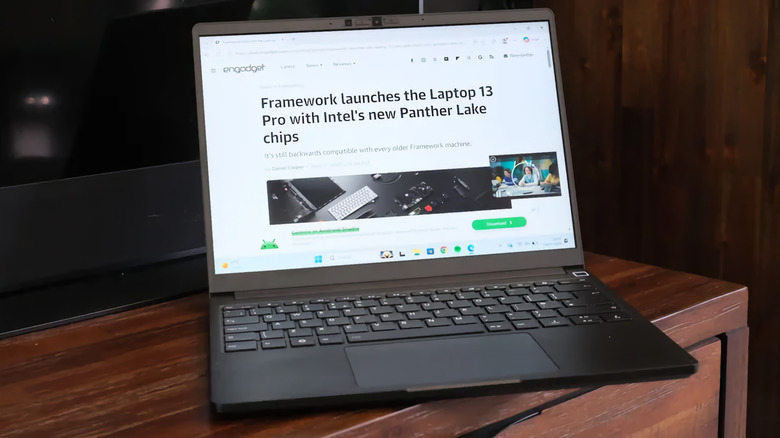
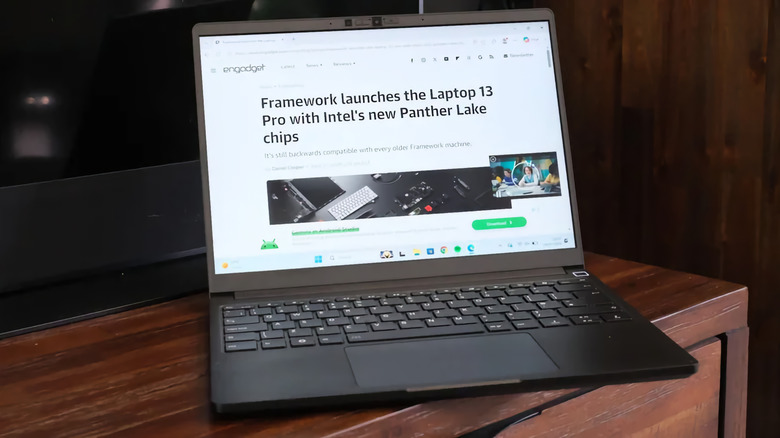
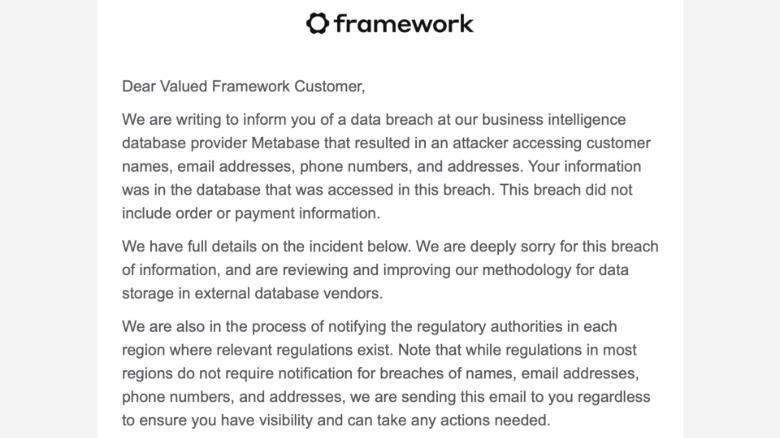
Framework, maker of deliberately repairable and upgradeable computers, has notified all of its customers that their data was exposed in a breach. According to an email the company sent late Thursday, August 6, customer names, login IPs, addresses, phone numbers and emails were accessed during a hack of the company’s business database provider Metabase. Payment information was not included in the breach.
The company included Metabase’s explanation in its own email, which details when the provider identified the attack on August 3 and the actions Metabase took to address it. According to a blog on Metabase’s own website, someone used an “unknown (0-day) vulnerability” to access data, which Metabase has now identified and patched. The provider’s findings and security recommendations are “preliminary” as of now. “We are working with a third-party forensic investigation firm to understand the full nature and scope of the event,” Metabase shared in an email to Framework.
 Ian Carlos Campbell for Engadget
Framework, for its part, says it rotated its credentials after it was notified of the breach and “confirmed that there were no changes in admin access or access to systems outside of Metabase.” The company says it’s also “reviewing and improving [its] methodology for data storage in external database vendors.”
A data breach couldn’t have come at a worse time for Framework. Despite announcing an exciting lineup of new products earlier this year, the company has struggled with the ongoing memory shortage more than most. Framework first announced it was raising prices in January, and then raised them again in March. Not long after collecting preorders for the new Framework Laptop Pro, the company was also forced to include less RAM than advertised in some preorders to account for the growing cost of components and extend a full refund to customers who weren’t willing to pay.

Sandboxing a Linux process usually means spending a lot of effort deciding what it isn’t allowed to see. You might put it in a mount namespace, bind-mount a few directories into place, hide some others, add a chroot, and generally construct a carefully restricted version of the filesystem. But a new Linux kernel feature is about to change all of that. Instead of carefully hiding most of the filesystem, why not just take the filesystem away?
That’s essentially the idea behind FailFS, a tiny pseudo-filesystem expected to land in Linux 7.3. As the name suggests, it doesn’t do very much. In fact, that’s the point: every operation that reaches FailFS returns EOPNOTSUPP, meaning “operation not supported.”
The interesting bit is what happens when a process uses FailFS as its root or current working directory. At that point, normal pathname lookup essentially ceases to work. Absolute paths fail. Absolute symbolic links fail. Relative paths using the normal current-directory mechanism fail. If the application tries to open /etc/passwd, there simply isn’t a useful /etc to find.
Instead, the process has to start filesystem operations from an explicit file descriptor it already owns. For example, a sandbox manager could open a directory, hand that descriptor to the application, and the application could access files below it using calls such as openat(). Anything not reachable from one of those deliberately supplied descriptors might as well not exist.
Instead of starting with an entire filesystem and constructing rules that say, “not that, not that, not that,” you start with nothing and explicitly hand over the pieces the program needs.
There are some interesting consequences. At present, putting a process completely inside FailFS also prevents it from launching ordinary dynamically linked executables. ELF binaries generally specify their dynamic loader using an absolute pathname such as /lib64/ld-linux-x86-64.so.2. Absolute paths don’t work, so neither does the loader.
FailFS also has an interesting sibling called NULLFS, introduced earlier. NULLFS is another deliberately useless filesystem, but it behaves slightly differently: it contains a permanently empty directory and failed lookups return ENOENT, as though the requested file simply doesn’t exist. It was originally introduced to provide an immutable bottom layer beneath the real root filesystem and make operations such as pivot_root() cleaner.
Neither replaces all the other pieces needed for a secure sandbox. Processes still have system calls, networking, IPC, inherited descriptors, and plenty of other ways to cause trouble. But for controlling filesystem access, FailFS has a nice, simple philosophy.
Of course, if your file system is unwritable, that works, too.

When the Chernobyl Nuclear Power Plant’s #4 reactor experienced an extreme criticality event on that infamous day in 1986, the resulting steam explosion and lack of any kind of containment building meant that parts of the core were scattered throughout the site. In an extensive update to the original 2023 video, the [Chornobyl Family] covers the mad scramble to design robots to perform on-the-ground measurements, and ultimately remove all this debris for safe disposal.
This essentially took the form of a hackathon, involving teams from all over the USSR and allied nations, creating the most diverse range of robots that 1980s Soviet technology and later Western technology could muster.
Many of these robots didn’t perform very well, or at all, mostly due to the bypassing of any kind of testing before deployment. Especially at the beginning of the clean-up the robots were being pushed into the high-radiation zones as soon as they were finished, with not only mechanical issues being a problem, but also with e.g. inaccurate radiation measurements by the RR-1 robot, that overstated measurements by more than a factor of ten. Meanwhile the RR-2 and RR-3 were too top-heavy and after deployment by helicopter simply tipped over. Eventually manual measurements proved to be faster and safer.
Early debris removal robots like the TR-1A were rather simplistic, with successive generations of robots over the next weeks and months improving on it. The use of a combustion engine instead of batteries provided to be a boon, as combustion engines are far less affected by radiation.
The BAER Beloyarets used an airport cart as the basis, with its electronics relying on vacuum tube technology and relays, with an internal combustion engine. This proved to be one of the most reliable designs and it’s been largely preserved on display in the Chornobyl Exclusion Zone, with many others of these robots also being on display around the nuclear plant or in the city of Chornobyl.
Overall an absolutely dizzying number of robotic designs were invented on the spot, adapted from existing designs or repurposed for operation in a high-radiation zone. Eventually bulldozer designs like the STR-1 helped to push radioactive debris off the roofs into containers, massively reducing the radioactive contamination of the area.
The fact that following #4’s RUD the other three RBMK units were able to keep operating safely without risks to its operators, and with the zone now safe for tourists, is a real testament to the success of the worst hackathon imaginable. Many of the lessons learned are relevant today, including during the decommissioning of Fukushima Daiichi’s melted-down cores.
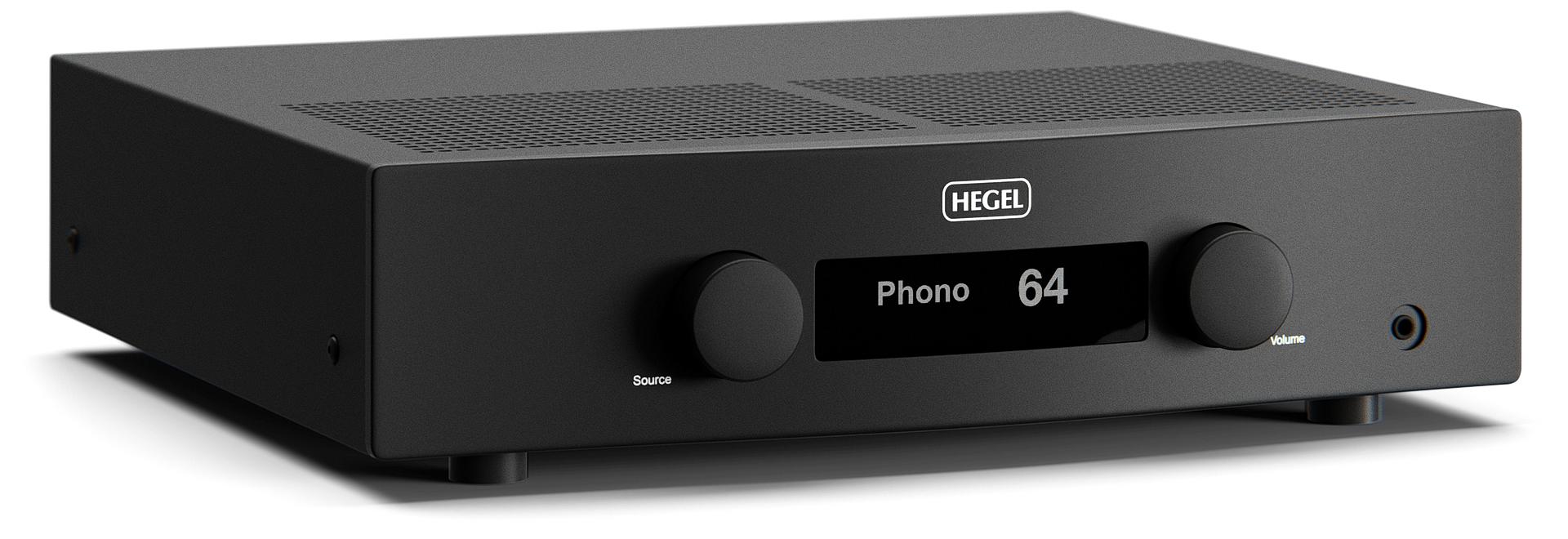
Hegel has spent nearly four decades quietly producing some of the best high-end electronics in Scandinavia, yet the Norwegian manufacturer still manages to fly under the radar compared with louder brands from Denmark, the United Kingdom, Japan, and North America.
That feels increasingly strange.
Founded in 1988 by Bent Holter, Hegel has built its reputation around high-current amplification, unusually high damping factors, minimalist industrial design, and its proprietary SoundEngine distortion-reduction technology. Its products are now sold through dealers in 63 countries, so this is hardly three engineers working beside a frozen fjord while waiting for the fishing boats to return with Lord Erling and his supply of cowboy hats.
The new Hegel H200 and A200 integrated amplifiers are unlikely to change the company’s preference for visual understatement, but they offer one of its clearest product choices yet.
Both use the same 150-watt-per-channel Class AB output stage. The $4,995 H200 adds an internal DAC, network streaming, USB playback, and digital connectivity. The $3,995 A200 removes all of that and focuses exclusively on analog sources and external components.
Same engine. Two different roads.
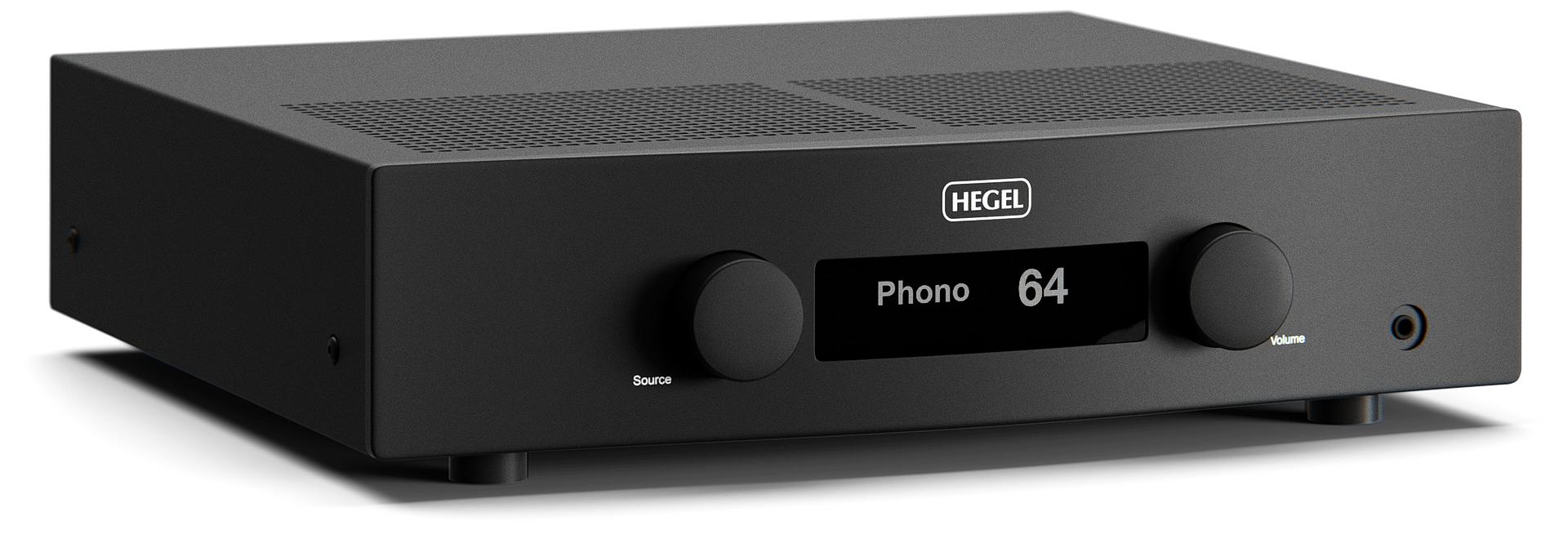
The H200 and A200 deliver 150 watts per channel into 8 ohms and are rated to remain stable with loudspeaker loads down to 2 ohms. Both use Hegel’s SoundEngine2 circuitry, which is designed to identify and reduce distortion as it occurs rather than relying on large amounts of conventional global feedback afterward.
Hegel also claims a damping factor greater than 4,000, giving both amplifiers considerable electrical control over loudspeaker drivers. That figure does not guarantee great sound by itself, but it helps explain why Hegel amplifiers have developed a reputation for controlled bass, strong dynamics, and an ability to drive more demanding loudspeakers without becoming flustered.
Both models include a Moving Magnet phono stage derived from the MM section of Hegel’s standalone V10 phono preamplifier. The circuit uses hand-matched FET gain stages and selected operational amplifiers rather than the inexpensive phono board that sometimes gets tossed into an integrated amplifier so the marketing department can check another box.
A front-panel headphone output, fixed RCA output, variable RCA output, configurable input levels, home-theater bypass functionality, TV remote learning, automatic standby, and adjustable display brightness are also included on both models.
The real difference is everything that happens before the analog amplifier stage.
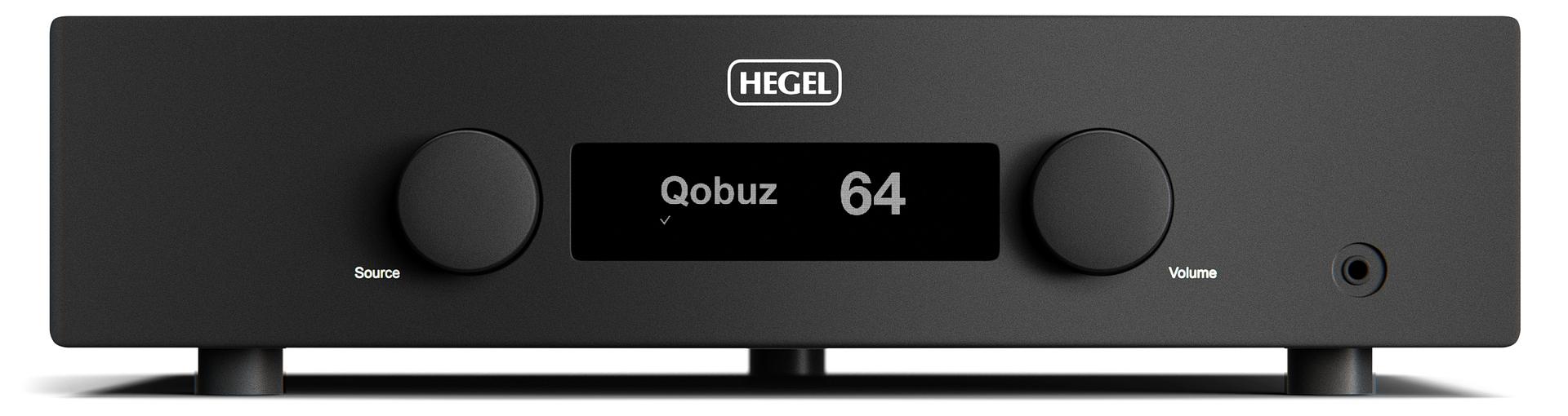
The H200 is designed to function as the center of a complete two-channel system.
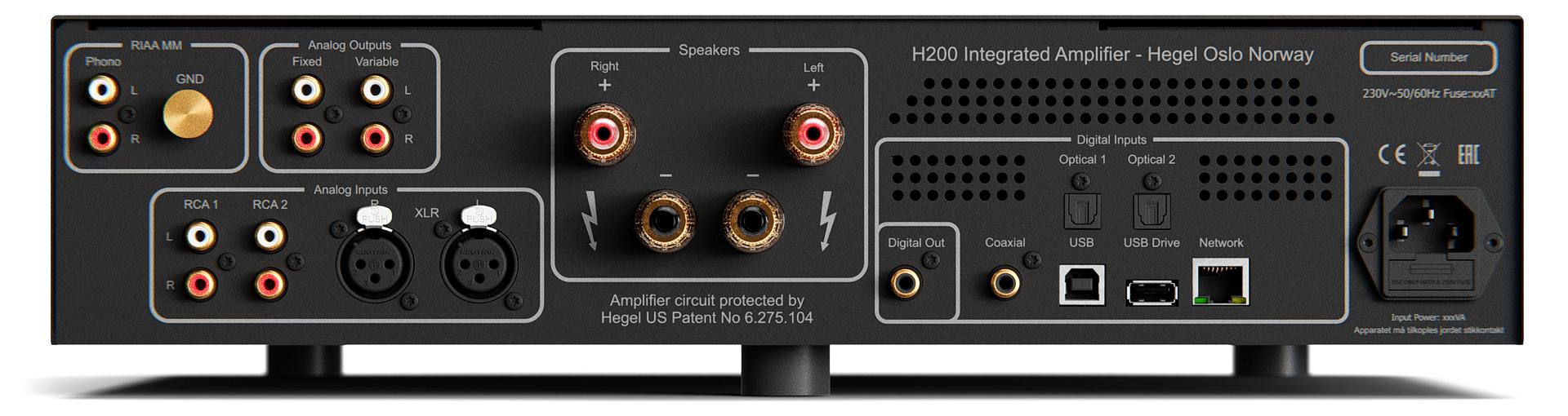
Its internal DAC supports coaxial, optical, USB-B, USB-A, and network sources. Resolution reaches 24-bit/192kHz through coaxial, USB-B, and network playback, while the two optical inputs support up to 24-bit/96kHz.
The USB-A port can play music directly from storage devices containing libraries of up to 10,000 songs. Supported streaming formats include FLAC, WAV, ALAC, AIFF, AAC, MP3, PCM, and Ogg.
Streaming support includes Spotify Connect Lossless, TIDAL Connect, Qobuz Connect, Apple AirPlay, Google Cast, UPnP, Roon Ready, and airable internet radio and podcasts. The Hegel Control app handles volume, source selection, playback, and browsing of compatible network and USB libraries.
The H200 also includes a coaxial digital output and Hegel’s DAC Loop feature. This allows owners to send a digital signal to an external DAC and route its analog output back into the amplifier, providing an upgrade path without abandoning the H200’s streaming platform, source control, or power amplifier.
That is a smart addition. Buying an all-in-one amplifier should not require swearing lifelong allegiance to its internal DAC.
There is no HDMI eARC input, which feels increasingly conspicuous on a $4,995 connected amplifier. Television audio can still be handled through optical or coaxial digital inputs, and the amplifier can learn commands from many TV remotes, but buyers looking for HDMI switching or automatic eARC integration will need to look elsewhere.
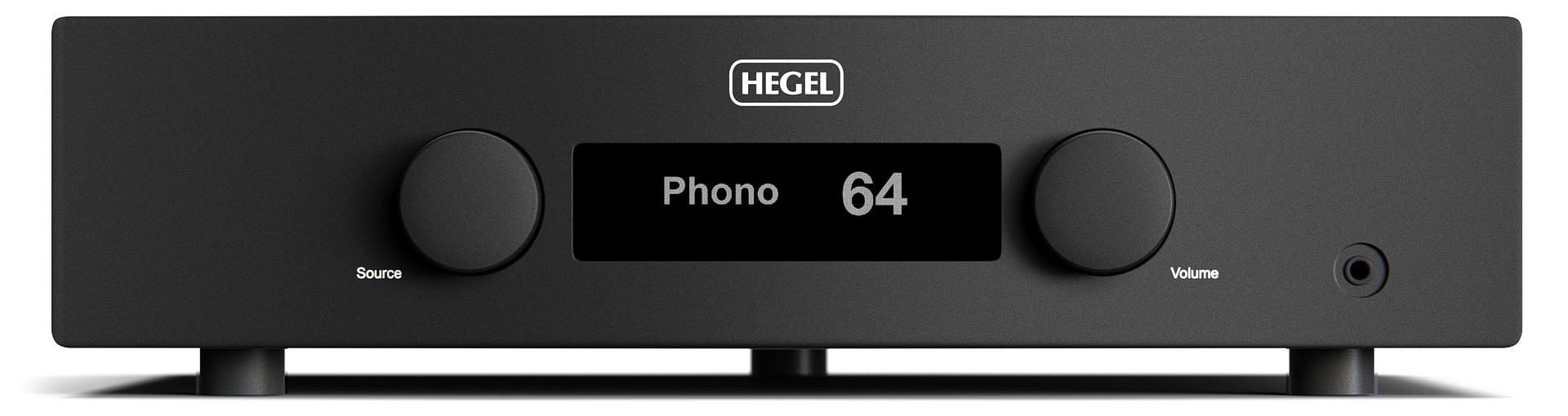
The A200 uses the same core amplifier platform but removes the DAC, streamer, network connection, USB ports, and every other digital input.
That will sound backward to some buyers and entirely sensible to others.
Many audiophiles already own a DAC or network streamer they prefer. Others upgrade digital components more frequently than amplification or build systems around turntables, CD players, tuners, tape decks, and other analog sources. For those listeners, paying extra for a digital section they have no intention of using makes very little sense.
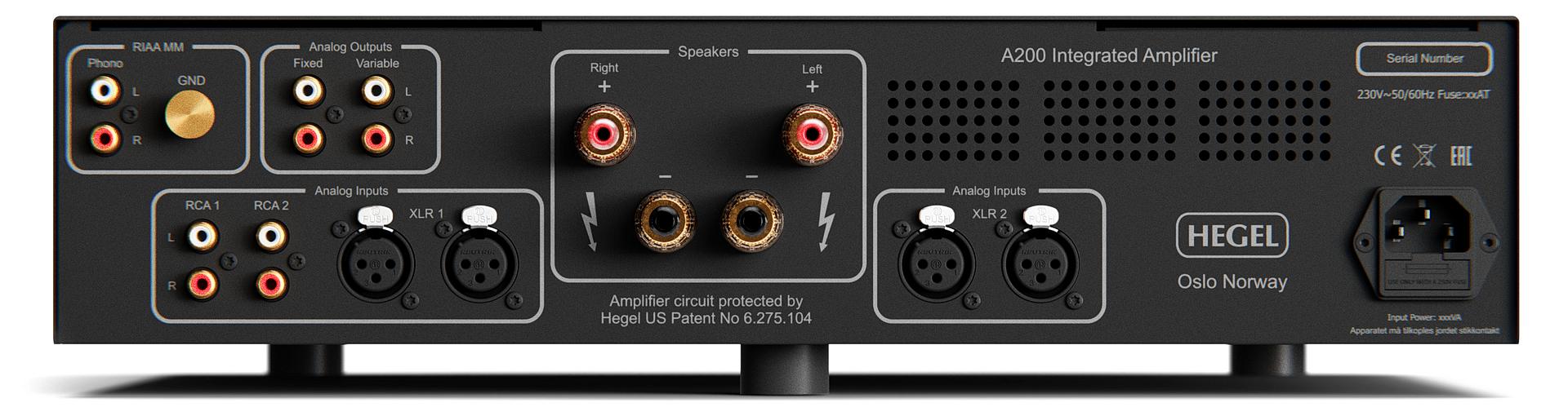
The removal of the H200’s digital circuitry also makes room for a second balanced XLR input. The A200 therefore offers two balanced inputs, two unbalanced RCA inputs, the MM phono stage, headphone output, and fixed and variable RCA outputs.
It is not the cheaper H200. It is the same amplifier aimed at someone who has already chosen the rest of the system.
| H200 | A200 | |
|---|---|---|
| MSRP | $4,995 | $3,995 |
| Type | Network streaming integrated amplifier | Analog integrated amplifier |
| Amplifier | Class AB with SoundEngine2 | Class AB with SoundEngine2 |
| Power output | 2x150W into 8 Ohms @ 1kHz 1% THD, 100/120/230V AC | 2x150W into 8 Ohms @ 1kHz 1% THD , 100/120/230V AC |
| Minimum load | 2 ohms | 2 ohms |
| Analog inputs | 1x Balanced (XLR), 2x Unbalanced (RCA) |
2x Balanced (XLR), 2x Unbalanced (RCA) |
| Phono input | 1 x Unbalanced (RCA) for Moving Magnet (MM) | 1 x Unbalanced (RCA) for Moving Magnet (MM) |
| Digital outputs | 1x Coaxial S/PDIF – 24/192 | – |
| Digital inputs | 1x Coaxial (RCA) S/PDIF – 24/192, 2x Optical S/PDIF – 24/96, 1x USB B- 24/192, 1x USB A 2.0 – USB Drives (10,000 songs), 1x Network – 24/192 |
– |
| Line level outputs | 1x Unbalanced variable (RCA), 1x Unbalanced fixed (RCA) |
1x Unbalanced variable (RCA), 1x Unbalanced fixed (RCA) |
| Streaming | Spotify Connect (Lossless), Tidal Connect, Qobuz Connect, Apple AirPlay, Google Cast, airable Internet Radio and Podcast, UPnP | – |
| Streaming formats | MP3, WAV, FLAC, ALAC, AIFF, AAC, PCM, Ogg | – |
| Smart Home | Control4, Crestron Home, Crestron SIMPL | – |
| Frequency response | 5Hz-100kHz | 5Hz-100kHz |
| Signal-to-noise ratio | More than 100dB | More than 100dB |
| Crosstalk | Less than -100dB | Less than -100dB |
| Distortion | Less than 0.01% @ 50W 8 Ohms 1kHz | Less than 0.01% @ 50W 8 Ohms 1kHz |
| Intermodulation | Less than 0.01% (19kHz + 20kHz) | Less than 0.01% (19kHz + 20kHz) |
| Damping factor | More than 4000 (main power output stage) | More than 4000 (main power output stage) |
| Dimensions (WxDxH) | 43 x 41 x 12 cm (17 x 16.2 x 4.7″) |
43 x 41 x 12 cm (17 x 16.2 x 4.7″) |
| Weight | 13.6 kg (30 lbs) | 13.5 kg (29.8 lbs) |
| Finishes | Black, White | Black |
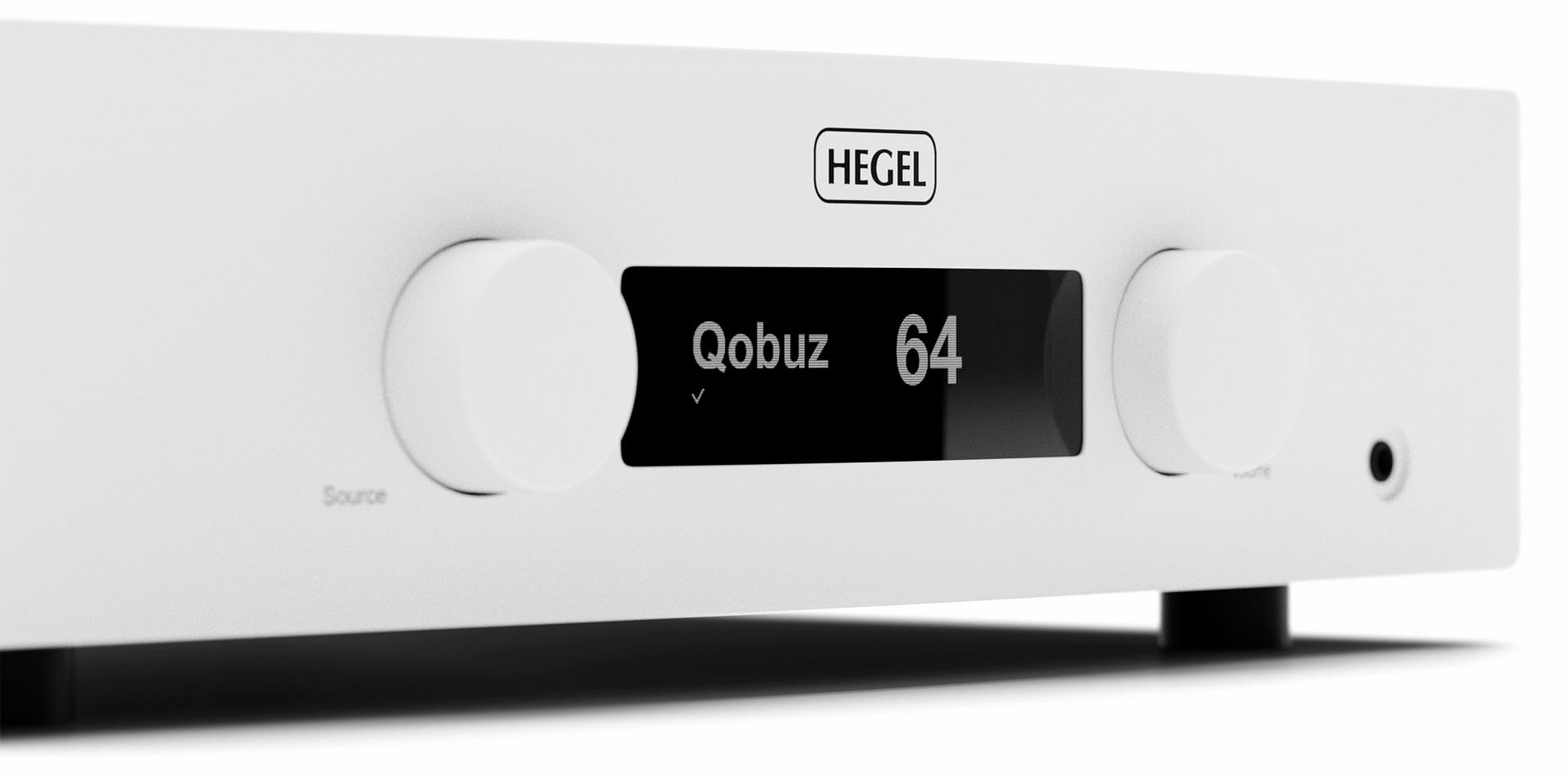
Hegel’s decision to offer the same amplifier in connected and fully analog versions makes more sense than forcing every buyer into the same configuration.
The H200 is the obvious choice for listeners who want streaming, digital playback, vinyl, headphones, and loudspeaker amplification consolidated into one component. The A200 is aimed at owners who already have a preferred DAC, streamer, or collection of analog sources and would rather spend $1,000 less than pay for duplicated circuitry.
Neither model looks designed to attract attention from across the room. That has never been Hegel’s game. The company builds understated amplifiers that frequently outperform flashier competitors and then seems mildly surprised when someone notices.
Perhaps Norway needs to work on its bragging.
For more information: hegel.com





Zack Polanski: an incitement to murder Nigel Farage?


MicroStrategy Post-Earnings CLARITY Act Push Could Add New Catalyst for Its Stock


XRP Ledger v3.3.0 brings five institutional features


Crypto PAC spending tops $2M in Michigan House race


DTCR: Deleveraging And A Hedge Fund Collapse Point To A Possible AI Bottom


ESET tracks rise in malicious AI skills and adaptable malware


France Cricket implodes: letters hidden in a drawer and a board at war
XRP Ledger urges node upgrade after manifest flood


Moneyflip CEO charged in $40K murder-for-hire plot


Financial Crash Expert: The 90-Day Collapse Timeline They Are Desperately Hiding.


Jordan Coyle & Cordiamo take Laya Arena Stakes at RDS

US Tech Stocks See Largest 5-Week Inflow in History: Can Nasdaq Break Its Downtrend?

Tourist plane on sightseeing flight in Peru crashes into a field, killing all 13 people on board


Frugal Friday’s Workwear Report: Cap-Sleeve Pointelle Crewneck Sweater


Arsenal reach full agreement with Newcastle over Bruno Guimaraes transfer | Football


Page Not Found | WIRED

Bikini-clad Jennifer Aniston, 57, kisses hypnotist boyfriend Jim Curtis as they enjoy a romantic getaway aboard a luxury yacht in Spain


Reform UK And Greens Sink To Lowest Favourability Ratings To Date


Polymarket targets $20 billion valuation as competition heats up in prediction market sector


Trump says he is cancelling strikes on Iran subject to ‘rapidly’ making deal


You must be logged in to post a comment Login