
Politics
David Gauke: Labour will go left and lose those people whose lukewarm vote was for something else

David Gauke is a former Justice Secretary and was an independent candidate in South-West Hertfordshire at the 2019 general election.
The Labour government is moving leftwards.
Whether Keir Starmer survives as Prime Minister or not, a shift in direction is inevitable.
It has been evident ever since the retreat on welfare cuts that the Parliamentary Labour Party was to the left of its frontbench and – given a fight between the two – the PLP was capable of prevailing. Abolition of the two child benefit gap was to follow, as was a second autumn budget with hefty tax increases, necessary in part to pay for higher welfare spending.
Since then, of course, Starmer’s position has weakened. When a Prime Minister is on the brink, the expedient approach is to focus on party management, and Starmer is nothing if not expedient. He is often dismissed as being remarkably unpolitical, which is true, but he has also demonstrated repeatedly a very political willingness to be ruthless and flexible.
These characteristics were to the fore in the departure of Morgan McSweeney as his chief of staff. McSweeney was central to Labour’s election campaign and to the operation of the government. In both roles, he pursued a political strategy – adopted tentatively by Starmer – which involved resisting a drift towards the left. Even with McSweeney, the Government has drifted leftwards, without him the current will be irresistible for Starmer.
This all assumes that Starmer stays. If he does not, a Labour leadership race will focus on a membership who thinks that the problem is that the Government is too right-wing. There will be calls for bigger government, wealth taxes, a more generous welfare state, and nationalisations. Whereas recent Conservative leadership elections involved members asking themselves who was best placed to beat Nigel Farage, Labour members will worry more about losing votes to Zack Polanski. It would be a brave and unsuccessful Labour leadership candidate who will set forward a manifesto focused on making the country more economically dynamic, competitive, and business-friendly.
All of this can be contrasted with how Labour fought the last election and, as a consequence, the mandate they received. It is true to say that Labour’s campaign was deliberately unmemorable and risk-free in the manner, to use Roy Jenkins’ phrase, of ‘a man carrying a priceless Ming vase across a highly polished floor’. It is also true to say that the media put Labour under little scrutiny, reflecting the public’s sentiment that it was time for a change but with a weary incuriosity as to what that change may involve. Nonetheless, Labour went to great lengths to demonstrate that it was not going to be a government of the left.
There were promises not to increase the rates of income tax, VAT, and national insurance.
There was also a promise to keep the corporation tax rate at 25 per cent, part of an energetic effort to keep business opinion onside. Fiscal responsibility was at the heart of Rachel Reeves’ pitch to the electorate. There were some totemic tax increases on the wealthy (VAT on school fees, reforms on the tax treatment of non-doms and private equity bosses) but if higher spending on public services was going to be necessary, it would come from higher levels of growth. How this was going to happen was kept vague (it turned out that this was not because they had a secret plan but that they did not know themselves) but the impression was left that the answer would be more about pragmatism and competence than the implementation of socialism.
Party management also demonstrated that Labour had moved on from its recent history.
Jeremy Corbyn had been thrown out of the party he had only recently led and was forced to run as an independent. The early days of the campaign were full of stories of how Team Starmer had determinedly excluded Corbynistas from standing as candidates, giving the impression that the future PLP would be made up of centrist loyalists. The splits and factions of the Tory years would be put behind us. Starmer might not be charismatic but he had command of his Parliamentary colleagues. At last, we would have a grown-up in charge that could worry about the concerns of the country, not his party.
It worked.
Even though Labour lost votes and a handful of seats to the Greens and the Gaza independents, it won votes from former Conservatives and Liberal Democrats, higher earners and older and middle-aged voters that had been wary of the party in 2019. It also succeeded in making the General Election a referendum on the Tories, which helped encourage tactical voting that made the anti-Tory vote remarkably efficient. Many centrists voted against the Conservatives rather than against Labour. Tory-minded voters – disillusioned with their traditional party but who could not bring themselves to vote Labour or Liberal Democrat – were sufficiently reassured to stay at home. Starmer had discovered that there were electoral advantages in stirring up apathy.
This reality is likely to be forgotten in the next few weeks.
The internal Labour debate is all about the disappointment within the electorate about Labour’s lack of boldness and radicalism and that if only that could be corrected the Government would be more popular. There are certainly left-wing voters who feel betrayed by the realities of a Labour government, but these are generally the same left-wing voters who feel constantly betrayed by reality. If Starmer goes, how will they feel in a couple of years about Rayner, Miliband or Burnham or whoever they get as his successor? Betrayed, I would wager. Only one Labour Prime Minister has ever won a second workable majority, and he did not do so relying heavily on flaky left-wing voters.
What Labour should worry about more are those voters who had been reassured that Labour would govern sensibly enough, solve problems, tread lightly on their lives and unite the country. Business opinion – open to Labour in 2024 and encouraged by the focus on economic growth – has moved decisively away from them. There is no sign of the Labour Party, in its current frame of mind, is making much of an effort to win that support back.
For those of us that want a country that is well-placed to succeed in a highly uncertain world, there is nothing to celebrate here. Hard-headed decisions are needed to control public spending, reform public services, and improve competitiveness. The Labour left is incapable of delivering on any of those fronts. If Labour fails dismally, the country might react by taking a punt on the populist right, even more woefully prepared for the rigours of government.
The better option for the country is that the Conservative Party fills the breach; that it offers an attractive alternative to those reluctant 2024 Labour voters and Tory abstainers that had been reassured that the left had been repelled and that Starmer could be trusted. Business opinion – dismayed at Boris Johnson’s hostility over the costs of Brexit and Liz Truss’s fiscal irresponsibility – is open to being wooed by the Conservatives once again and should be the first priority.
For the rest of this Parliament, Labour is going to govern as a different party to the one that was elected in 2024. Part of their 2024 coalition of support will be lost as a consequence. It will be that part of its coalition which is more focused on economic growth, more supportive of the private sector, and more sceptical of socialism. In other words, a move to the left will mean that more centrist voters will be up for grabs. It is a huge opportunity that the Conservative Party cannot afford to miss.
Whether Keir Starmer survives as Prime Minister or not, a shift in direction is inevitable. It has been evident ever since the retreat on welfare cuts that the Parliamentary Labour Party was to the left of its frontbench and – given a fight between the two – the PLP was capable of prevailing. Abolition of the two child benefit gap was to follow, as was a second autumn budget with hefty tax increases, necessary in part to pay for higher welfare spending.
Since then, of course, Starmer’s position has weakened. When a Prime Minister is on the brink, the expedient approach is to focus on party management, and Starmer is nothing if not expedient. He is often dismissed as being remarkably unpolitical, which is true, but he has also demonstrated repeatedly a very political willingness to be ruthless and flexible.
These characteristics were to the fore in the departure of Morgan McSweeney as his chief of staff. McSweeney was central to Labour’s election campaign and to the operation of the government. In both roles, he pursued a political strategy – adopted tentatively by Starmer – which involved resisting a drift towards the left. Even with McSweeney, the Government has drifted leftwards, without him the current will be irresistible for Starmer.
This all assumes that Starmer stays.
If he does not, a Labour leadership race will focus on a membership who thinks that the problem is that the Government is too right-wing. There will be calls for bigger government, wealth taxes, a more generous welfare state, and nationalisations. Whereas recent Conservative leadership elections involved members asking themselves who was best placed to beat Nigel Farage, Labour members will worry more about losing votes to Zack Polanski. It would be a brave and unsuccessful Labour leadership candidate who will set forward a manifesto focused on making the country more economically dynamic, competitive, and business-friendly.
All of this can be contrasted with how Labour fought the last election and, as a consequence, the mandate they received. It is true to say that Labour’s campaign was deliberately unmemorable and risk-free in the manner, to use Roy Jenkins’ phrase, of ‘a man carrying a priceless Ming vase across a highly polished floor’. It is also true to say that the media put Labour under little scrutiny, reflecting the public’s sentiment that it was time for a change but with a weary incuriosity as to what that change may involve. Nonetheless, Labour went to great lengths to demonstrate that it was not going to be a government of the left.
There were promises not to increase the rates of income tax, VAT, and national insurance. There was also a promise to keep the corporation tax rate at 25%, part of an energetic effort to keep business opinion onside. Fiscal responsibility was at the heart of Rachel Reeves’ pitch to the electorate. There were some totemic tax increases on the wealthy (VAT on school fees, reforms on the tax treatment of non-doms and private equity bosses) but if higher spending on public services was going to be necessary, it would come from higher levels of growth. How this was going to happen was kept vague (it turned out that this was not because they had a secret plan but that they did not know themselves) but the impression was left that the answer would be more about pragmatism and competence than the implementation of socialism.
Party management also demonstrated that Labour had moved on from its recent history. Jeremy Corbyn had been thrown out of the party he had only recently led and was forced to run as an independent. The early days of the campaign were full of stories of how Team Starmer had determinedly excluded Corbynistas from standing as candidates, giving the impression that the future PLP would be made up of centrist loyalists. The splits and factions of the Tory years would be put behind us. Starmer might not be charismatic but he had command of his Parliamentary colleagues. At last, we would have a grown-up in charge that could worry about the concerns of the country, not his party.
It worked. Even though Labour lost votes and a handful of seats to the Greens and the Gaza independents, it won votes from former Conservatives and Liberal Democrats, higher earners and older and middle-aged voters that had been wary of the party in 2019. It also succeeded in making the General Election a referendum on the Tories, which helped encourage tactical voting that made the anti-Tory vote remarkably efficient. Many centrists voted against the Conservatives rather than against Labour. Tory-minded voters – disillusioned with their traditional party but who could not bring themselves to vote Labour or Liberal Democrat – were sufficiently reassured to stay at home. Starmer had discovered that there were electoral advantages in stirring up apathy.
This reality is likely to be forgotten in the next few weeks. The internal Labour debate is all about the disappointment within the electorate about Labour’s lack of boldness and radicalism and that if only that could be corrected the Government would be more popular. There are certainly left-wing voters who feel betrayed by the realities of a Labour government, but these are generally the same left-wing voters who feel constantly betrayed by reality. If Starmer goes, how will they feel in a couple of years about Rayner, Miliband or Burnham or whoever they get as his successor? Betrayed, I would wager. Only one Labour Prime Minister has ever won a second workable majority, and he did not do so relying heavily on flaky left-wing voters.
What Labour should worry about more are those voters who had been reassured that Labour would govern sensibly enough, solve problems, tread lightly on their lives and unite the country. Business opinion – open to Labour in 2024 and encouraged by the focus on economic growth – has moved decisively away from them. There is no sign of the Labour Party, in its current frame of mind, is making much of an effort to win that support back.
For those of us that want a country that is well-placed to succeed in a highly uncertain world, there is nothing to celebrate here. Hard-headed decisions are needed to control public spending, reform public services, and improve competitiveness. The Labour left is incapable of delivering on any of those fronts. If Labour fails dismally, the country might react by taking a punt on the populist right, even more woefully prepared for the rigours of government.
The better option for the country is that the Conservative Party fills the breach; that it offers an attractive alternative to those reluctant 2024 Labour voters and Tory abstainers that had been reassured that the left had been repelled and that Starmer could be trusted. Business opinion – dismayed at Boris Johnson’s hostility over the costs of Brexit and Liz Truss’s fiscal irresponsibility – is open to being wooed by the Conservatives once again and should be the first priority.
For the rest of this Parliament, Labour is going to govern as a different party to the one that was elected in 2024. Part of their 2024 coalition of support will be lost as a consequence. It will be that part of its coalition which is more focused on economic growth, more supportive of the private sector, and more sceptical of socialism. In other words, a move to the left will mean that more centrist voters will be up for grabs.
It is a huge opportunity that the Conservative Party cannot afford to miss.

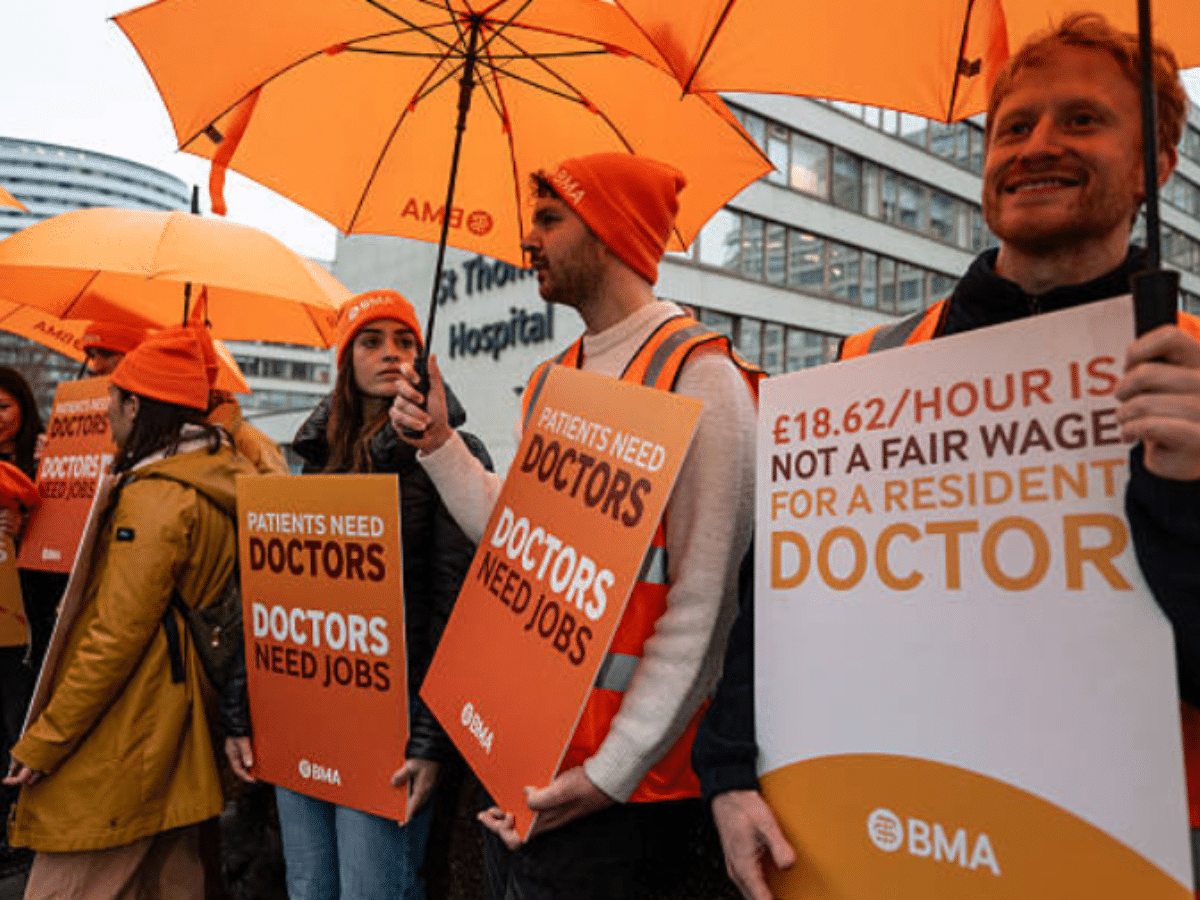
The British Medical Association (BMA) is scheduled to begin six days of industrial action on 7 April 2026. The NHS strike was announced after the government attempted to play resident doctors off against their union. This occurred during a strike of their own.
Now, in response to the further strike action, the government has withdrawn part of its offer to resolve its previous dispute with resident doctors. Meanwhile, the NHS will be directly affected by these ongoing negotiations.
Residents without residency
In 2024, the term ‘resident doctors’ replaced the previous designation of ‘junior doctors’. ‘Junior’ was felt to be demeaning and misleading by members of the BMA. For many, including the general public, the term suggested a lack of training or expertise. On the contrary, resident doctors are fully qualified and are either in postgraduate training toward a particular area of specialised expertise. Alternatively, they may be employed in a non-training post within the NHS.
The idea was to choose a new name that better reflected the skills and responsibilities of resident doctors, but as far as the government is concerned, they may as well have kept their old name. Many are left on low pay, without enrollment in training, or without work all together in the NHS system.
The training undertaken by resident doctors is essential as it enables them to further improve the care they are employed to provide. The Canary‘s Alex/Rose Cocker explained:
To be clear, the BMA wants those training positions, but they’re not a bonus or luxury — it’s training for NHS doctors. Starmer is risking jeopardising the NHS for a fucking bargaining chip.
The government had threatened that it would cancel the 1,000 training posts offered to resident doctors unless the BMA cancelled its strike action. It gave the BMA 48 hours to respond. With the BMA unwilling to back down, the government has now made good on its threat.
‘Genuinely disheartening’
Speaking to the BBC, Dr Jack Fletcher, chair of the resident doctors committee, said:
It is genuinely disheartening to be at this point after what had been constructive talks up until a few weeks ago when the government moved the goalposts.
It is simply wrong that the development of the doctors of the future is being used as a pawn like this.
We have consistently maintained that we are willing to postpone industrial action should a genuinely credible offer be provided.
The announcement from the government follows the resolution with separate disputes with pharmaceutical companies and corporations. These groups already have the NHS and its patients over a barrel. The Canary‘s Jack Wright recently highlighted how there is one rule for capital, and another for workers.
pharmaceutical giants have been demanding that the NHS pay them more, or they will withhold investment. Labour agreed to a 25% increase in payments for essential drugs in December 2025.
Meanwhile, resident doctors are asking for real-terms pay restoration to 2008 levels, at 21%. The government is offering a 7.1% increase … However, it isn’t sufficient for a doctor’s pay.
Strike to go ahead as planned
The doctors’ strike is scheduled to go ahead as planned, beginning at 7:00am on 7 April. Patients have been warned that non-emergency appointments and procedures may be disrupted by the industrial action across the NHS.
Featured image via the Canary

For some people, it’s filtered, airbrushed social media pictures. For others, it’s unrealistic romantic expectations set by movies and TV.
For me, though, my greatest source of insecurity was the r/sourdough forum.
It’s nobody’s fault: if I had created a tall, fluffy masterpiece with a perfect golden crust, I, too, would want to share a shot. If my first-ever loaf looked like it belonged in an ad for artisanal butter, I would indeed want the world to know.
And people share their less successful loaves – a gummy rise, a burnt base – as well.
Still, I couldn’t help it. After a while, I began judging my slightly gummy, slightly deflated loaves a little too harshly. Then, the inevitable turn towards The Product That Solves It All: if I just owned one of these twisty little starter whisks, or a proper starter jar, or a bigger banneton, I’d be (grid) worthy!! I thought.
It sounds silly, because it is. But according to a post shared by u/good-things_ in the group, I’m not alone.
“I don’t use any of the equipment everyone talks about for sourdough. I mix my dough in any bowl available that’s big enough, and I eyeball the rise. Sometimes my bowls are solid and plastic, so I can’t see if there are bubbles,” the poster confessed (mine is metal).
Still, they pointed out, loads of the recommended gear and science-backed rules are relatively new (especially compared to sourdough’s thousands of years of history). Which means my great-great-great-grandma probably didn’t give a hoot about whether the ear of her every loaf curled up like a cowlick.
“I love that people get obsessed and get into the nitty-gritty of how to make a beautiful, perfect loaf. But I also want everyone to know ugly, imperfect loaves are still delicious,” the post continued.
Underneath was a swarm of agreement. “I also admit that my loaves are a bit substandard, but that’s okay with me in the long run. By not stressing about it, I can manage to keep making bread regularly for sandwiches, etc., and not lose enthusiasm,” u/bajajoaquin replied.
“I gave up chasing the perfect loaf with huge holes and a perfect ear, etc. I decided I just wanted to make bread for my own enjoyment… It works for me, and that’s what really matters,” u/dearmax added.
I’ve been through a similar process recently.

For a couple of months, I stopped making bread entirely. It wasn’t just because I felt mine was subpar, but that was part of it: I felt I was spending so long on something so far from perfect that I got frustrated.
But recently, I’ve fallen back in love with the craft. My new starter (Gluton Airport, if you want her government name) doesn’t have a super-strict feeding schedule, and probably would bubble more enthusiastically if she did.
I’m 99% sure I’m leaving my overnight sourdough out to prove for about two hours too long (I don’t go to sleep immediately after mixing it, and I sleep too late to bake it on time).

Probably as a result, my loaves are somewhat limp, a little gummy, and nowhere near as photogenic as I’d like.
Nonetheless, they’re still delicious. I haven’t splashed out on a pricier shop-bought loaf – a lot of which isn’t technically sourdough – since.
It’s a bit like half-assing my workouts. I don’t give 100% every single time, and it’s made me enjoy the hobby so much more.
Now, I’m more in love with making sourdough – meh as it may be – than ever. Most of all, I’m having fun again (and isn’t that the point of a hobby?).
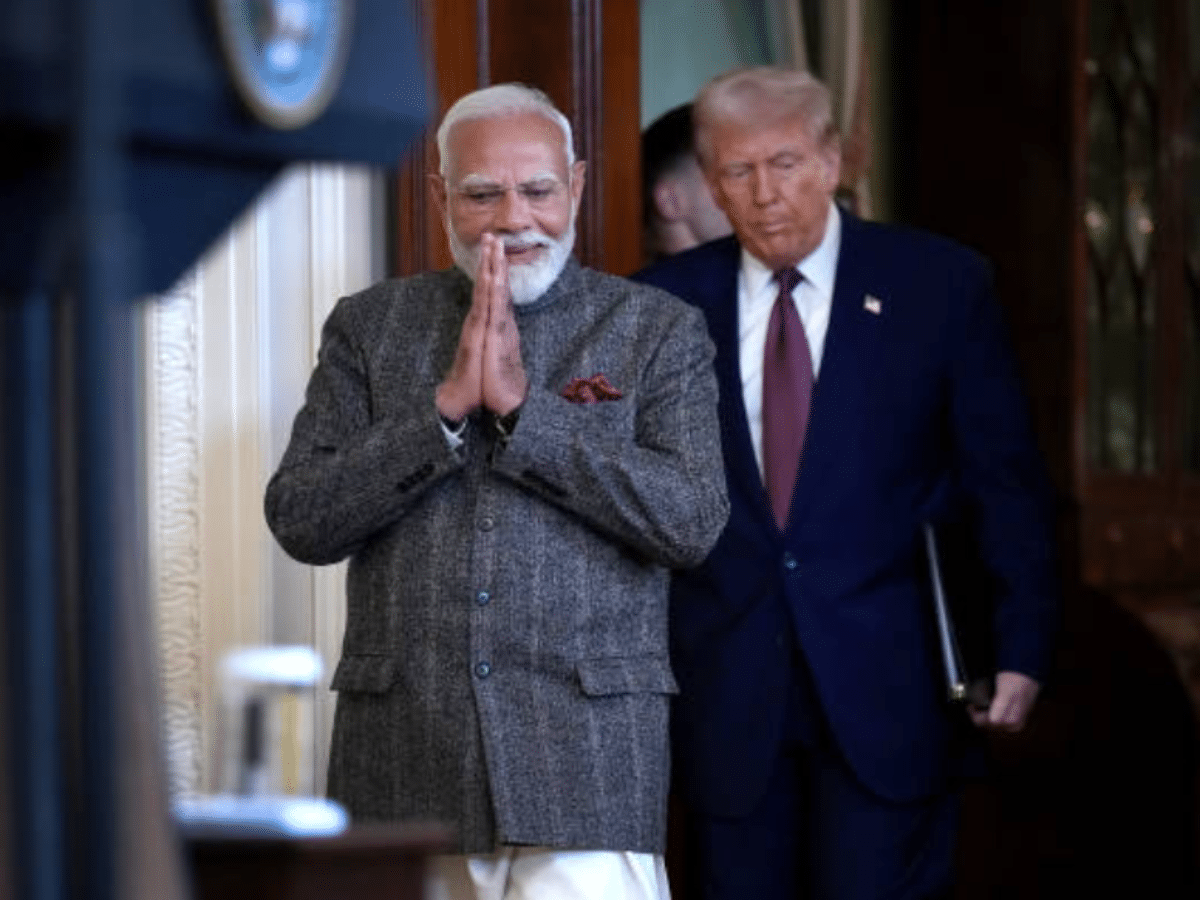
The Defence Minister of India – Bharatiya Janata Party’s (BJP’s) Rajnath Singh – celebrated that Indian defence exports had touched a new all-time high with a record 38,424 crore rupees ($4.4 billion), an 63% annual increase.
The BJP’s defence boast is meant to ease concerns about India’s ballooning current account deficit, particularly as Modi’s western pivot to Trump and Netanyahu faces growing opposition from the public.
Under the inspiring leadership of PM Shri @narendramodi, India is scripting an impressive defence exports success story!
India defence exports have touched a new all time high with a record ₹38,424 crore in FY 2025-26. It marks a robust 62.66% growth over the previous fiscal.… pic.twitter.com/eAAh1PYX7e
— Rajnath Singh (@rajnathsingh) April 2, 2026
According to the BJP, Indian defence exports are now reaching the United States, Israel, the UAE, Australia, and Japan. Indian-made defence electronics are being exported to the US, UK, and France. Bulletproof jackets from India are being supplied to Australia, Japan, Israel, and Brazil. Ammunition is reaching the UAE, Egypt, Indonesia, and Thailand.
A
recent report by KPMG India pushed India to adopt Israel’s approach to defence exports if it wants to sustain the momentum and break into the global top tier. It suggested India should have a similar centralised export agency like Israel’s SIBAT.
Israel, with a much lower annual defence spend compared to India, has emerged as one of the key defence export hubs of the world and as per the SIPRI report of 2019, it ranks 8 in terms of defence exports. A major reason for its emergence as a defence manufacturing and export hub has been the establishment of SIBAT, a dedicated directorate under the Israeli Ministry of Defence (IMoD), that looks after promotion of defence exports and participates in the formulation of Israel’s defence export policy.
India is still mostly importing
India is still the world’s second-largest arms importer, but its imports have dropped slightly by 4 per cent. Russia used to supply 70 per cent of India’s weapons a decade ago. That has now fallen to 40 per cent, according to SIPRI.
Ukraine is the world’s largest arms importer.
India is now buying more from Western countries instead, given Modi’s capitulation to Netanyahu and Trump.
Israel’s Jerusalem Post recently featured a segment on India’s ties with Israel. Dr Lauren Dagan Amos said that “they want to learn lessons from that because what Israel did in Gaza, they want to do in Pakistan. That is the rationale.”
She explained that the relationship started with urgent operational needs and mutual interests. Over time, it moved beyond simple sales into co-development, co-production, and long-term maintenance within India.
She added that the Indian industry is now treated as a full partner, not just a customer.
BJP’s defence boast is to assuage underlying tensions
With oil prices rising due to the Iran war, India’s current account deficit is widening. It could reach 2.5 per cent of GDP in the coming fiscal year, according to Bloomberg.
Despite Modi’s western lurch, there are people in India who are on Iran’s side against “Yankee imperialism and zionist criminality.”
Mani Shankar Aiyar, a former Indian diplomat, said:
I am sure Iran can give a befitting answer to the needless aggression to which they have been subjected by a combination of Yankee imperialism and zionist criminality.
India voices support for Iran amid US-Israeli aggression
Press TV’s @aadilmir21 reports from New Delhi
Follow Press TV on Telegram: https://t.co/LWoNSpkc2J pic.twitter.com/DLwzjcUVJx
— Press TV 🔻 (@PressTV) April 1, 2026
Modi’s Trump connection is being questioned in South Asia, similar to the blowback being experienced by other right-wing leaders like Starmer and Italy’s Meloni.
VIDEO | Assam: Addressing a public gathering in Jorhat, Lok Sabha LoP and Congress MP Rahul Gandhi says, “N.”
(Full video available on PTI Videos – https://t.co/n147TvrpG7) pic.twitter.com/nPAgXTmDpU
— Press Trust of India (@PTI_News) April 2, 2026
As Rahul Gandhi recently noted, Narendra Modi’s future is in Trump’s hands.
Featured image via the Canary

Iran’s president, Masoud Pezeshkian, has officially released a four-page “open letter” to the American people.
To the people of the United States of America pic.twitter.com/3uAL4FZgY7
— Masoud Pezeshkian (@drpezeshkian) April 1, 2026
However, many social media users have pointed out that if the average American were as well educated as the average Iranian, perhaps the US would not have started so many illegal wars.
If Americans could read 4 whole pages of text, we wouldn’t be in this situation in the first place. https://t.co/20RHi4N4JZ
— Siddharth (@DearthOfSid) April 1, 2026
The letter lays out, in a calm and reasoned manner, why the world is currently in the state it’s in.
Unlike most of Trump’s unhinged rants on Truth Social, which may as well have been transcribed from a toddler’s ramble.
Iran responding to aggression
The letter starts by explaining that Iran has never initiated a war in its modern history – it has only responded to “aggression, expansion, colonialism, or domination”. Even after occupation, invasion, and sustained pressure from global superpowers, and despite having a military that is far superior to many of its neighbours.
It then goes on to say that, unlike what the US wants us to believe, Iran harbours no hatred towards other countries, including the US and Europe. It reads:
The Iranian people harbor no enmity toward other nations, including the people of America, Europe, or neighboring countries. Even in the face of repeated foreign interventions and pressures throughout their proud history, Iranians have consistently drawn a clear distinction between governments and the peoples they govern. This is a deeply rooted principle in Iranian culture and collective consciousness—not a temporary political stance
Which is why portraying Iran as a threat is:
neither consistent with historical reality nor with present-day observable facts.
US manufacturing an enemy
It adds that the perception is purely a product of “political and economic whims” of the powerful. The US needs to “manufacture an enemy” to justify its illegal wars and colonialism, whilst sustaining its arms industry.
If a threat does not exist, it’s invented.
He adds:
What Iran has done and continues to do-is a measured response grounded in legitimate self-defense, and by no means an initiation of war or aggression
The letter also guides readers back to 1953, when the US (and the UK) engineered an illegal coup against Mohammad Mosaddegh, Iran’s democratically elected prime minister.
Why? Because Mossadegh decided to nationalise the operations of the Anglo-Iranian Oil Company (later British Petroleum) in 1951.
Of course, nationalisation was a threat to both the US and UK’s strategic and economic interests, i.e., they would lose money.
That coup disrupted Iran’s democratic process, reinstated dictatorship, and sowed deep distrust among Iranians toward U.S. policies. This distrust deepened further with America’s support for the Shah’s regime, its backing of Saddam Hussein during the imposed war of 1980s, the imposition of the longest and most comprehensive sanctions in modern history, and ultimately, unprovoked military aggression-twice, in the midst of negotiations— against Iran.
But these pressures have not weakened Iran. Literacy rates have tripled, higher education has rapidly expanded, and modern technology and healthcare have advanced.
Of course, the impact of the destructive and inhumane sanctions from war and aggression cannot be underestimated:
This reflects a fundamental human truth: when war inflicts irreparable harm on lives, homes, cities, and futures, people will not remain indifferent toward those responsible
The letter asks:
Exactly which of the American people’s interests are truly being served by this war? Was there any objective threat from Iran to justify such behavior? Does the massacre of innocent children, the destruction of cancer-treatment pharmaceutical facilities, or boasting about bombing a country “back to the stone ages” serve any purpose other than further damaging the United States’ global standing?
‘Strategic bewilderment’
Pezeshkian writes:
Iran pursued negotiations, reached an agreement, and fulfilled all its commitments. The decision to withdraw from that agreement, escalate toward confrontation, and launch two acts of aggression in the midst of negotiations were destructive choices made by the U.S. government-choices that served the delusions of a foreign aggressor.
He then talks about the US targeting Iran’s energy infrastructure and industrial facilities. Obviously, this directly targets the Iranian people. He adds:
Beyond constituting a war crime, such actions carry consequences that extend far beyond Iran’s borders. They generate instability, increase human and economic costs, and perpetuate cycles of tension, planting seeds of resentment that will endure for years. This is not a demonstration of strength; it is a sign of strategic bewilderment and an inability to achieve a sustainable solution
Finally, he points out that America has entered this illegal war as a proxy for Israel. The Israeli machine has influenced and manipulated it by manufacturing an Iranian ‘threat’.
Of course, this is purely an effort to divert attention away from Israel’s war crimes against Palestinians.
He ends the letter with:
I invite you to look beyond the machinery of misinformation, an integral part of this aggression, and instead speak with those who have visited Iran. Observe the many accomplished Iranian immigrants educated in Iran-who now teach and conduct research at the world’s most prestigious universities, or contribute to the most advanced technology firms in the West. Do these realities align with the distortions you are being told about Iran and its people?
Featured image via HG
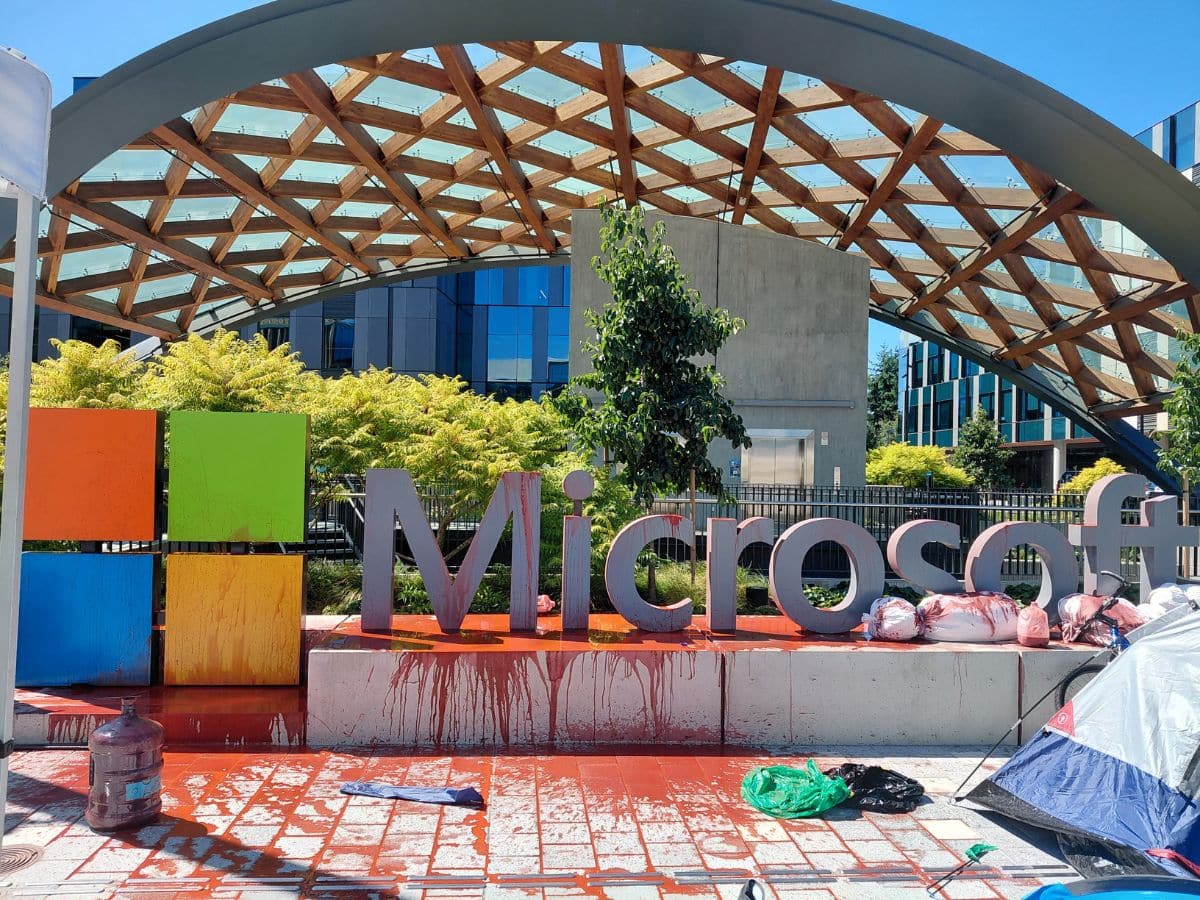
A Microsoft employee has quit over the company’s involvement in Israel’s war crimes and published a video calling on other Microsoft workers to join the movement.
Jenni is part of No Azure for Apartheid, a growing tech movement that is demanding that Microsoft live up to its own purported ethical values – by ending its direct and indirect complicity in Israeli apartheid and genocide.
Their website states:
We will not be cogs in the Israeli genocidal machine: a call for a Worker Intifada
The group has four demands:
- IOF off Azure – End Microsoft’s complicity in Israeli genocide and apartheid by terminating all Azure contracts and partnerships with the Israeli military and government.
- Disclose all ties – Make all ties to the Israeli state, military, and tech industry publicly known, including weapons manufacturers and contractors. Conduct a transparent and independent audit of Microsoft’s technology contracts, services, and investments.
- Call for a ceasefire – Honor the demands of over 1,000 employees who signed a petition calling on Microsoft’s leadership to publicly endorse an immediate and permanent ceasefire.
- Protect employees – Ensure the safety of Palestinian, Arab, Muslim, and allied employees by protecting pro-Palestinian speech, actions, and fundraising initiatives on internal company platforms.
Jenni has been an AI transcription writer at Microsoft for the past three and a half years. She was working on a product for doctors and nurses to take notes.
In an exclusive statement, Jenni told the Canary:
Dual-use technology means that the same Al systems we use to summarize meetings and write emails can be used to surveil the phone calls of Palestinian citizens or flag a children’s school as a military target. This is why as tech workers we have a critical responsibility to reclaim our labor when we see it being repackaged and re-sold as an accessory to crimes against humanity.
I resigned today to make this message clear to Microsoft – that Microsoft workers refuse to be complicit in the company’s war crimes, and that we are not afraid to withhold our labor in order to refuse being exploited to power this Al-assisted genocide.
In the video shared online, Jenni said:
If you work for one of these companies your work could be sold to a hospital one day and then to ICE or detention services the following day or maybe even a foreign government who’s carrying out a genocide. This has already happened.
A year ago, former Microsoft employees Ibtihal Aboussad and Vaniya Agrawal protested Microsoft’s fiftieth anniversary celebration. Ibtihal worked on an AI transcription service for accessibility, which, of course, was very useful and did not involve war crimes. Microsoft fired both of them.
However, it then sold that product to the Israeli military, which used it to spy on and murder innocent Palestinians.
Participating in war crimes
Microsoft has been working with Israel for decades. It insists on continuing their relationship despite international bodies recognising that Israel is committing a genocide in Gaza. Israel has committed a very long list of war crimes, which Microsoft is choosing to ignore.
As the Canary previously reported, leaked documents show that after October 7, Microsoft significantly increased its operations with Israel’s military.
The files showed that Microsoft was supplying the IOF with greater computing and storage services, and:
striking at least $10m in deals to provide thousands of hours of technical support.
Now, the Israeli military continues to bomb, blockade, and starve Gaza whilst claiming to be adhering to the “ceasefire”. Similarly, in Lebanon, Israel is destroying historic buildings and communities, while murdering thousands of civilians.
The Guardian found that the leaked documents:
illustrate how the US tech behemoth supported a range of sensitive activities.
This includes managing the movement of Palestinians in Gaza and the occupied West Bank.
Additionally, Microsoft engineers have been providing support to Israel through their analysis of “visual intelligence”. This is likely to be the innumerable drones used by the Israeli military. Essentially, Microsoft’s support is providing the technological infrastructure for genocide.
Forcing their hand
Last summer, Microsoft staff protesters set up the Liberated Zone on the Martyred Palestinian Children’s Plaza and the Mai Ubeid Building. This was to draw attention to the company’s involvement in Israel’s genocide.
It was only then, coupled with journalists proving how much Israel was relying on Microsoft’s technology to commit war crimes, that Microsoft took action.
However, it only cut a few services to Israel’s Unit 8200 — just one of the IOF’s elite military intelligence units. Obviously, this is nowhere near enough.
Since then, Israel’s war crimes have only intensified, alongside its reliance on big tech, AI, and companies such as Microsoft.
Only last month, the US military double-tapped a girls’ primary school in Minab, Iran. Reports suggest that AI identified the school as a target. Big Tech is aiding and abetting war crimes all over the world.
Jenni ended the video by saying:
This and more is why I am leaving Microsoft. I am very lucky that I am able to do so. I’m very lucky that I get to speak out in this way. If you work at Microsoft, please join No Azure for Apartheid. Sign their pledge
We’ve got thousands of people who are now saying that we don’t want our work to be used for war crimes.
You can stay anonymous. You can stay risk-free. Everyone is welcome. For everyone else – Do what you can. Keep all eyes on Gaza. Free Palestine
Feature image via No Azure for Apartheid

According to the National, someone has called the police on ex-MSP Tommy Sheridan and the reason is because Sheridan called the US and Israel “evil”.
Which they objectively are.
Because of all the evil shit they keep doing.
NEW: Police have received a complaint against former MSP Tommy Sheridan over a speech he gave in which he called Israel and the USA ‘evil’ https://t.co/5Xnluj4C0H
— The National (@ScotNational) April 1, 2026
Israel ARE evil
Sheridan is running in this year’s Holyrood elections for the Alliance to Liberate Scotland. He’s previously been a member of Alba, and was the leader of the Scottish Socialist Party.
In the offending video, Sheridan addressed a hall full of people, saying:
Brothers and sisters, we were on the side of the IRA because they were doing the resistance.
We’re on the side of Hamas in Palestine because they’re doing the resistance.
We’re on the side of Hezbollah in Lebanon because they’re doing the resistance.
And we’re on the side today of the Iranians and Yemen because they’re standing up against the twin pillars of evil in our society today, the United States of America and Israel.
They epitomise evil in our planet.
Increasingly, it isn’t an uncommon opinion to support whoever the Yanks are invading.
During the Invasion of Iraq, there was considerable support in the West despite the obvious criminality of the war. Now, most people recognise that America and its attack dog Israel are the aggressors.
People also recognise their lives keep getting worse because our governments have pissed money up the wall on immoral wars of aggression.
Sheridan also said:
If somebody says to me, Tommy, whose side are you on?
I say I am not on the side of those that murder children, that torture children, that steal their land that belongs to the Palestinians.
I’m on the side of those who resist repression and if that means you don’t vote for me, then tough fucking titty.
And as reported by the National, Sheridan branded:
the USA and Israel “evil” and [said] he is not on the side of “those who murder children”.
Sheridan has since provided the following quote from Trump to backup his argument:
Yet I’m reported to the police for calling out these evil bastards 🤦😡🇮🇱🤮🇺🇸🤮 https://t.co/jLwy7duomP pic.twitter.com/pgQgMr5YPW
— Tommy Sheridan (@citizentommy) April 2, 2026
In terms of Israel, doctors provided evidence that Israeli snipers were “systematically targeting Gaza’s children” – the very definition of evil by anyone’s standards.
Responding to the police report, Sheridan said:
This is obviously someone with a lot of time on their hands.
There is zero criminality in the comments. I was merely expressing the side of the fence I am on in relation to these resistance fighters.
Any suggestion of criminality is mythical. I think the police have more to do than deal with this.
Differences
As you’d expect given his links to Alba, Sheridan has transphobic views:
👏👏👏♀️
Women are born not certificated. That statement of fact is not bigotry or discriminatory it is a biological fact. It is truth no matter how many transactivists shout loud or scream transphobia. Transgender people deserve kindness & consideration but not false recognition https://t.co/B9DAGIFWhr— Tommy Sheridan (@citizentommy) April 24, 2025
In case you don’t follow, Sheridan is saying that he’s willing to be polite to trans people but won’t recognise them by their identified gender.
We certainly don’t agree with this, but we’re not calling the police on Sheridan because he said something we don’t like.
The fact that the US and Israel’s defenders can’t say the same shows what snowflakes they are.
Featured image via Raw Pixel
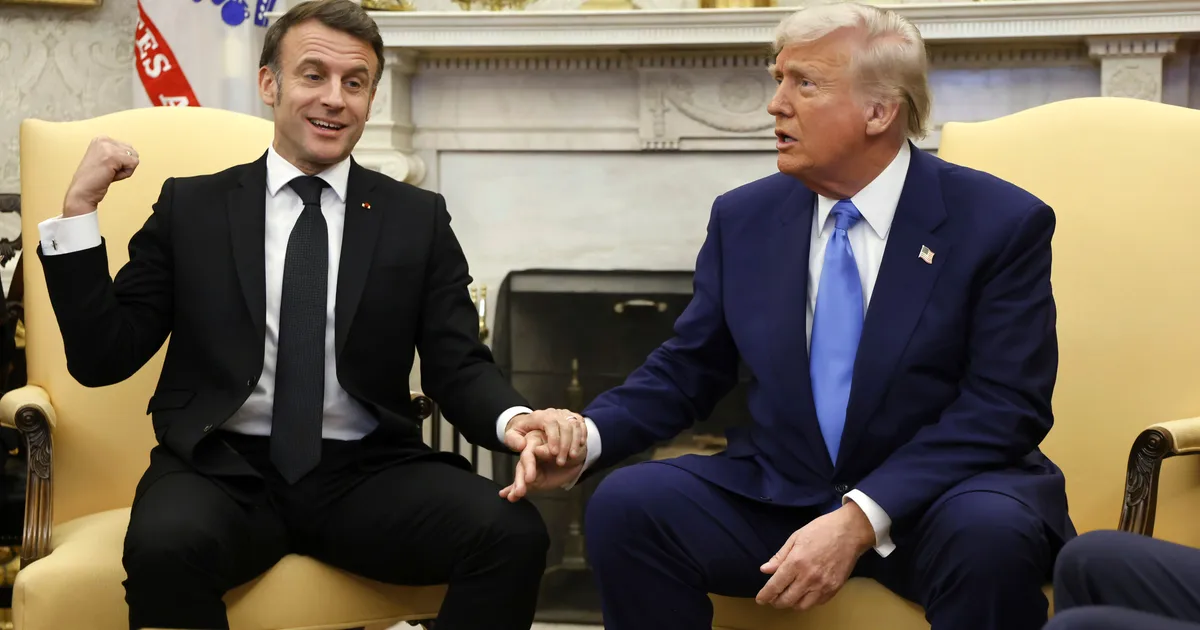
Emmanuel Macron has hit back at Donald Trump after he mocked the French president over an altercation he appeared to have with his wife.
The US president said Macron was “still recovering from the right to the jaw” after the incident last year.
Bridgette Macron was filmed apparently pushing her husband in the face shortly before they disembarked from his presidential plane.
In a speech in Washington on Wednesday, Trump referred to the incident as he criticised the French for not getting involved in the Iran war.
He said: “Macron, whose wife treats him extremely badly. He’s still recovering the right to the jaw.”
Speaking during a state visit to South Korea, Macron said: “The remarks I have heard are neither elegant nor up to standard.
“So I am not going to respond to them. They do not merit a response.”
The French president said Trump’s previous suggestion that the international community use force to re-open the Strait of Hormuz was “unrealistic”.
He also condemned Trump’s criticism of Nato and hints that America could leave the military alliance.
Macron said: “I believe that organisations and alliances like Nato are defined by what is left unsaid – that is, the trust that underpins them, and that has often been the case, incidentally, with military and strategic matters.
“If you cast doubt on your commitment every day, you erode its very substance.”
He added: “We need to be serious, and if you want to be serious, you don’t go around saying the opposite of what you said the day before.
“I think there is too much talk.”
Subscribe to Commons People, the podcast that makes politics easy. Every week, Kevin Schofield and Kate Nicholson unpack the week’s biggest stories to keep you informed. Join us for straightforward analysis of what’s going on at Westminster.
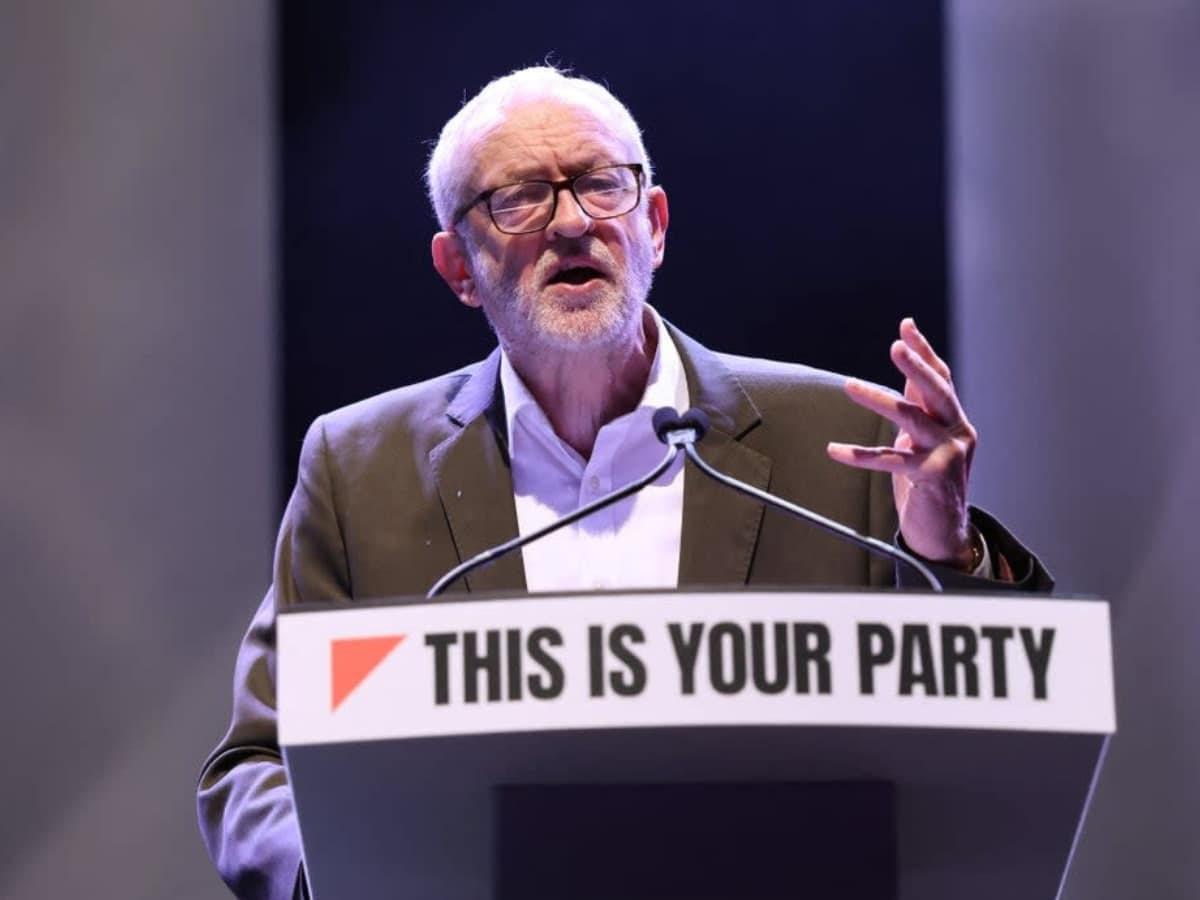
Jeremy Corbyn has unveiled Your Party plans to target Labour’s heartlands in the upcoming English local elections in May. The start-up party is supporting allied community independent groups at the local elections. And it’s hopeful of several groups winning East London councils, with Labour’s core vote set to collapse in major cities.
It’s worth noting that this follows a period of stasis during which local groups have tried to keep things moving.
Your Party’s local elections campaign will focus on the destructive effects of local government austerity. Councils across the country are squeezed to breaking point, social care is in crisis and services are failing residents.
In contrast to the ‘snake-oil’ alternative of Reform, Your Party will stress the need for public investment and the in-sourcing of services. Local council divestment from Israeli apartheid will also be a key focus.
At Your Party’s founding conference in November 2025, members voted to adopt a targeted strategy. This aims to maximise the party’s seats, rather than standing everywhere. As party structures continue to develop, Your Party will support around 250 candidates across England. The vast majority of these will be standing as Independents or for allied local community parties.
Your Party targets
Key targets for allied groups include:
Allied candidates are also likely to make inroads in Birmingham and the West Midlands. Historic Labour bastions are turning away from the party over its complicity in the Gaza genocide and failure to tackle the cost of living.
The Your Party leadership sees Tower Hamlets as a ‘beacon council’. In recent years, under Rahman’s leadership, the council has rolled out free school meals for all primary and secondary school students. It has re-established the Education Maintenance Allowance which the Tory-Lib Dem coalition cut. And it has reinstated the Winter Fuel Payment which Starmer and Reeves cut.
Hopes are also high for the Redbridge Independents, who have won a series of stunning by-elections from Labour, with Your Party spokesperson Noor Jahan Begum elected to replace slum landlord Jas Athwal MP.
Health secretary Wes Streeting bemoaned the loss in later-published messages with Peter Mandelson, declaring that he was “toast” at the next election. Streeting hung onto his seat by just 500 votes at the last election after a strong challenge from young British-Palestinian Leanne Mohamad.
Corbyn was elected as Your Party parliamentary leader earlier this month after his allies were victorious in the party’s leadership elections. He is expected to tour the country in support of the Your Party-backed independents and groups in the coming weeks, following a first event in Redbridge.
Corbyn said:
These elections are the beginning of the fightback against austerity, privatisation and fear.
All across the country, there will be community independent groups offering an alternative to the despair of Labour and the division of Reform. We are proud to support those candidates and groups standing up for redistribution, inclusion and peace.
People in power underestimate the power of people at their peril – and arrogance in office always comes back to bite you in the end.
Rahman, executive mayor of Tower Hamlets, said:
Labour imposed some of the most severe austerity in the country when they ran Tower Hamlets council, further impoverishing one of Britain’s most deprived areas.
We’ve reversed these cruel cuts and made history as the first council to introduce universal free school meals for all primary and secondary pupils, re-establish the Education Maintenance Allowance scrapped by the Tories, and bring back the Winter Fuel Payments, cut by Starmer.
These are just some of our pioneering policies to provide more cost of living support to our residents than any other local authority, alongside unprecedented investment in frontline services and in affordable and social housing.
The alliance being brought together by Jeremy Corbyn, with Your Party, Aspire, and progressive independent and Green candidates, presents a real opportunity to replace more Labour-led councils with administrations rooted in and accountable to their communities.
In Tower Hamlets, we’ve shown how socialist, redistributive policies can transform lives and provide the hopeful, ambitious alternative needed to take on the far right — something Labour has utterly failed to do.
Noor Jahan Begum, Your Party spokesperson and Redbridge Independent councillor, said:
We are taking the fight to Labour in their heartlands. In Redbridge and across the country, people are telling us that they feel let down and abandoned by Labour, outraged by their complicity in genocide and fed up of the status quo.
We are offering something different: a politics rooted in and accountable to our communities, a politics that campaigns for the social transformation people are crying out for.
Featured image via the Canary
Israel’s Knesset is about to have a second reading of an appalling, and underreported, death penalty bill. This murderous bill will be exclusive to Palestinians, yep, only Palestinians. Due to its criminal dilution of legal norms, it could give authorities a carte blanche to execute thousands of imprisoned Palestinians detained by Israel since October 7.
The bill’s wide-reaching title is: “The Prosecution of Participants in the October 7 Massacre Events.”
If that wasn’t bad enough in times when the rest of the world is moving to abolish the death penalty, Israeli policy makers are defending what they describe as the need to:
deviate from the rules of procedure and the rules of evidence.
According to the bill, this slam-dunk deviation:
is necessary for the purpose of clarifying the truth and doing justice, and does not significantly impair the fairness of the proceeding.
However, cases without evidence trash this argument, which never had legs to begin with. Palestinian defendants will also be tried in Israel’s military courts which have seen an impossible 99.7% conviction rate. This highlights, in the most sadistic way, that when there is a will, there will be a way.
Israeli leaders are drooling at the prospect of more murder—executions by hanging—genocide by alternative means. This bill is likely to be yet another way for Israel to exercise that will, under the sinister veneer of legality, to further its Zionist colonial ambitions.
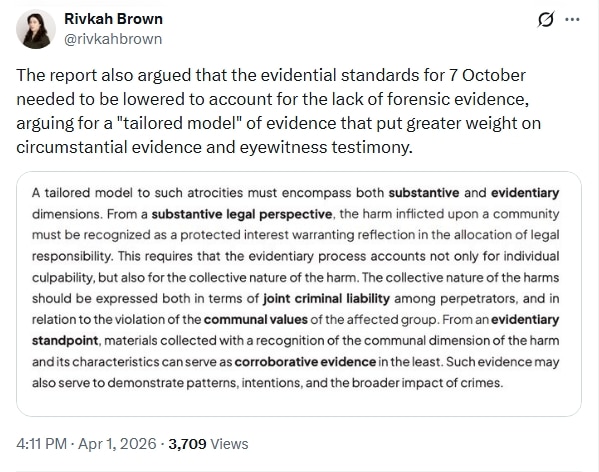
Novara Media’s Rivkah Brown broke this deadly news on X:
But what’s interesting about this bill is that it proposes lowering the evidential threshold for prosecution. Read this chilling paragraph (from https://t.co/2S1o0UKwE0) pic.twitter.com/hYgbYee1t8
— Rivkah Brown (@rivkahbrown) April 1, 2026
The Dinah Report and UK complicity
Unsurprisingly, this bill becomes even more sickening and nefarious as you dig further into the detail. As Rivkah Brown highlighted on her post, this bill has been a long time in the making and preparatory work completed to make this cruel, collective punishment bill possible.
We wrote about how the UK Foreign, Commonwealth and Development Office (FCDO) gave £90k of taxpayers’ money to put together the Israeli report, representing a whopping 75% of the FCDO’s budget.
This blatant bias and conflict of interest should come as little to no surprise. Ever since October 7th, we have seen a concerted push by Israel and its lobby groups to manipulate data, grief and material facts in their own interest. All whilst conveniently and simultaneously demonising Palestinian resistance. If we have learned anything through this horrific 2.5 years, it is the reminder that every life matters and civilians should not pay the price for the sins of the powerful.
Similarly, Rivkah Brown argues that, since October 7, actors have made a concerted effort to manufacture a “body of literature” portraying this as a conflict unlike any other. They use that framing to claim that the destruction of evidence makes the need for evidence irrelevant.
They have also poured significant funding into producing and amplifying material that supports this narrative for a specific political purpose.
We must see this bill for what it is— a fraudulent crime by those in power who pull the levers at their disposal — including the law— to justify their genocide against Palestinians.
They have the legal right to resist their occupier, with force— a right that is protected by international law.
Nevertheless, that right for Palestinians to resist is being criminalised—no doubt an omen for the rest of the world.
UK officials follow in Israel’s footsteps
Brown further stated:
As I revealed last month, the FCDO gave £90k/120k (so 75% of its funding) to The Dinah Project’s report. The report concluded – against all existing reportage, by Amnesty, the UN and others – that sexual violence on 7 October didn’t just happen, but was “systematic”.
She also revealed the parallels in rhetoric between the Dinah Project report and this legislation working its way through the Knesset:

It is therefore difficult to view it as a coincidence that this heavily UK-funded report uses strikingly similar language and reasoning to the Knesset bill.
This alignment raises serious concerns that some UK officials may have coordinated with Israeli-linked groups in ways that risk criminalising Palestinians on a broader scale.
Such actions, if carried out, would deepen the UK’s complicity in the genocide and betrayal of Palestinian people.
As Rivkah’s subsequent post underscored, huge inferences are being used to prop up collective punishment:
A tailor-made evidence model should, the report added, collectively criminalise those who participated in the attack, not only for their own actions, but for the actions of others in the “collective mob attack”.

Collective criminalisation IS collective punishment
Collective punishment is illegal under multiple bodies of international law. Whether that be article 33 of the Fourth Geneva Convention, or rule 103 of international humanitarian law, collective punishment is a war crime. These international legal rules play a crucial role in maintaining peace and stability, protecting civilians from punishment for acts they did not commit.
It is clear that Israel does not have sufficient evidence to attribute October 7 crimes to individual Palestinians. We have also watched Israel Occupation Forces (IOF) round up Palestinian men, including doctors and rescue workers, and imprison them. Israel has held hostage thousands of men and boys using unproven allegations of involvement in the killing of Israeli citizens and foreign nationals.
For example, Dr Abu Safiya, a Palestinian paediatrician, has been detained since December 2024, and subjected to physical and mental torture, despite having done no wrong. As Clarion India explains, his crime was:
Standing amid the ruins outside Kamal Adwan Hospital, surrounded by destruction, he walked alone in his white coat toward advancing Israeli armoured vehicles — a lone doctor facing a war machine. The image circulated widely because it captured, in a single frame, the reality of Gaza: those who heal standing unarmed before those who destroy.
We must challenge this attempt by the UK and Israel to legally justify the mass killing of innocent, oppressed and traumatised people. If we fail to act, we risk standing by as more atrocities unfold with the backing of our government.
This action constitutes a colossal crime against humanity — one that we must not forgive.
Featured image via the Canary
The National Education Union’s annual conference always provides useful insights into the concerns of the teachers present. And this year’s gathering, held in Brighton this week, was no exception. The four-day jamboree revealed that politics is of far more concern to union members than teaching and learning.
Indeed, questions actually concerning educational standards were dealt with spectacularly quickly – and the consensus was that they should be discarded. With motions passed to ban Ofsted, the schools’ inspection and regulation body, and challenging the planned statutory reading assessment for Year 8 pupils, delegates were then free to discuss the really important stuff.
First up was global conflict. America clearly looms large in the minds of the around 1,500 teachers and school-support workers present. They passed a motion condemning the US attack on Venezuela, the bombing of Iran and Trump’s actions in Cuba, which, they claim, ‘breach international law and will worsen humanitarian conditions’. But Israel got a look in, too: it was criticised for ‘aggression over Lebanon… which has killed many citizens’. Both Donald Trump and Benjamin Netanyahu have no doubt been waiting on instructions from Britain’s teachers, who think ‘there needs to be an urgent de-escalation of conflict and global tensions’.
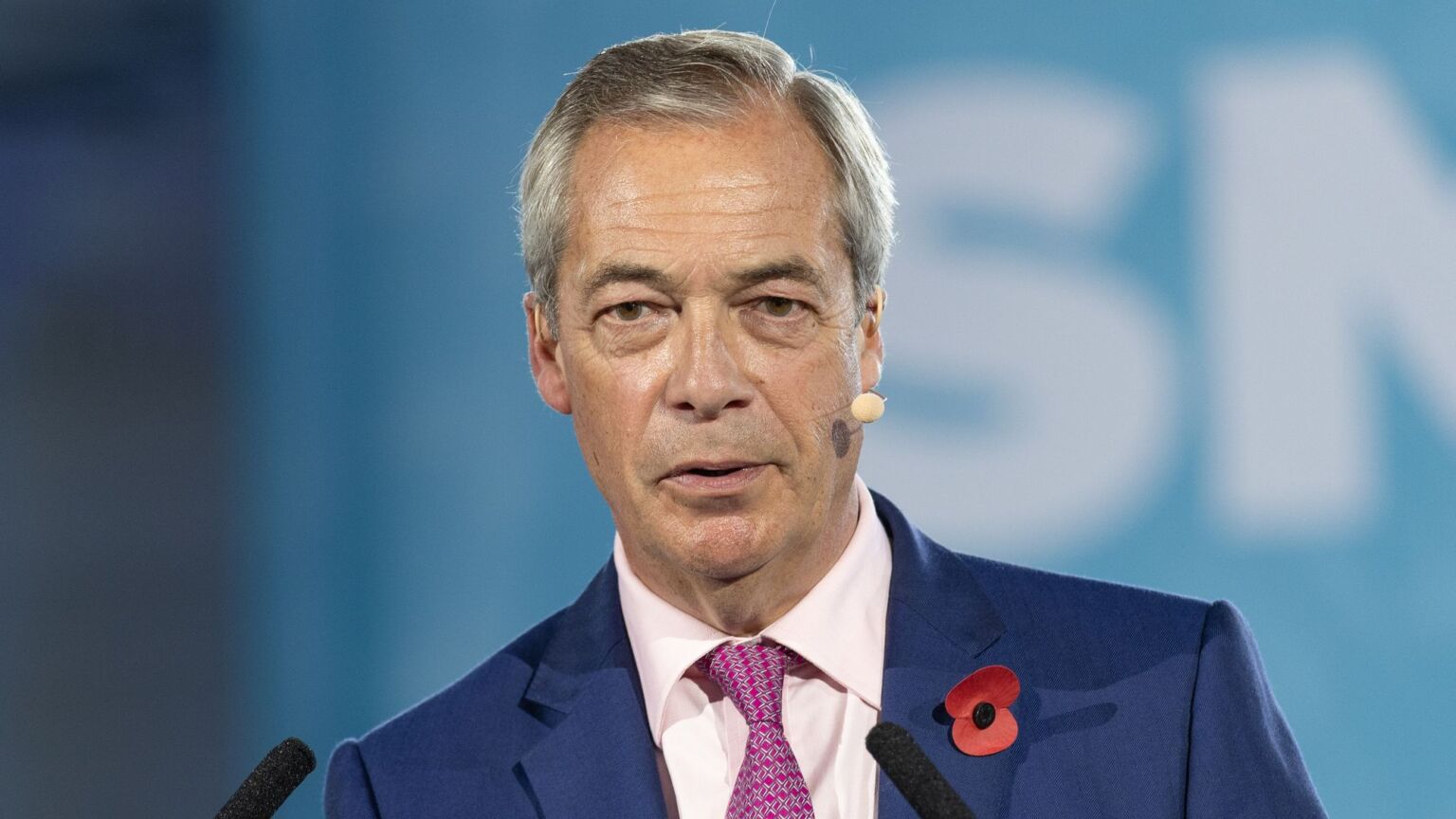
But it is domestic politics that really gets NEU delegates hot under the collar. One motion, which passed to much applause, stated that NEU members oppose ‘all forms of racism, fascism and far-right extremism’, including ‘the divisive politics promoted by Reform UK’. Teachers, the conference promised, will throw their ‘full weight’ behind ‘stopping a Reform UK government’. Dave Davies, a teacher from east London, who seconded the motion, argued that ‘we have to rip the mask of respectability away from the far right’. ‘Nigel Farage is not a respectable politician’, Davies told the conference floor, ‘he wants to replicate what Donald Trump does in the United States and put ICE on to the streets’ (a reference to the US Immigration and Customs Enforcement agency, which presides over Trump’s deportation policies).
The same motion called on union branches to affiliate with Stand Up To Racism – a campaign group that seeks to fight fascism, but has little to say about the rise of anti-Semitism. Like so many ‘anti-racist’ organisations, it seems more concerned to stop Reform gaining ground at the next election than with actually stopping racism. Delegates also agreed that the union should support ‘school groups, districts and regions to mobilise for anti-fascist demonstrations’ by organising transport to ‘anti-right-wing counter-demonstrations’. Leigh Seedhouse, the executive member who proposed the motion, told the conference floor that ‘parties based on racism are shaping the political agenda’ across Europe and that ‘the rise of Reform UK with its relentless scapegoating of migrants is a warning’.
It is hard not to laugh at the NEU’s delusions. Members leap from an inflated sense of their own importance – dictating Trump’s foreign policy – to paranoid fantasies about fascism and ICE agents patrolling British cities. But what is not funny is the influence NEU members have on Britain’s children. The ‘fighting racism, fascism and far-right extremism’ motion also calls for the creation of anti-racist and anti-fascist teaching materials, as well as ‘literature making the case against the far right’, which would then be distributed to union members who are teachers. In other words, the NEU’s campaign against Reform will not be conducted on teachers’ own time but will also be waged in the classroom.
Another motion that promises to bring politics into the classroom calls on schools to be ‘aware of the need to support trans and nonbinary rights’. Encouraging teachers to ‘treat trans and nonbinary people with dignity and with respect’ may sound nice enough, but, in practice, showing ‘respect’ often turns out to mean forcing children to accept the use of female pronouns for a person who is very obviously male. And safeguarding alarm bells ring with the chilling statement that ‘trans and nonbinary people can regularly face abuse from family members’. The implication is that teachers should collude with gender-confused children to keep their social transition a secret from their parents.
With trans rights, criticism of America and scare-mongering about Reform on the agenda, it is hardly surprising that the conference’s headline speaker, Green Party leader Zack Polanski, received a standing ovation. He backed the abolition of Ofsted and supported the campaign against Year 8 reading tests. Alongside the promise of a ‘serious cash injection’ into schools, Polanski argued that a future Green government would provide an education ‘that genuinely equips children for the world they’re growing up into’. This, he spelt out, means ‘giving them the media literacy they need in a dizzying social-media and fake-news landscape’.
We need to be clear: calls for ‘media literacy’, whether made by Polanski or Labour’s education secretary, Bridget Phillipson, are not a demand that teachers offer a classical curriculum that could prompt knowledgeable critical reflection on the world today. Instead, fake-news spotting means bringing yet more propaganda into the classroom in order to train children to hold only teacher-approved views.
The warm reception given to Polanski reflects a shift in teachers’ voting intentions. As Daniel Kebede explained, ‘I think our membership feels that Zack speaks more for schools and education than Labour does at the moment’. But pity British schoolchildren if NEU members have their way: when it comes to the classroom, standards are out, and politics is in.
Between the Green Party and the NEU, we’ll have children who struggle to read but know to yell ‘fascist’ at Reform voters.
Joanna Williams is a spiked columnist and author of How Woke Won. Follow her on Substack: cieo.substack.com.

Simple 77p item that can help reduce blood pressure in eight weeks

Trump prepares pharmaceutical tariffs of up to 100%

Elon Musk’s X to deploy scam kill switch by auto-locking first-time crypto mentioners


-

 Business7 days ago
Instagram, YouTube Found Responsible for Teen’s Mental Health Struggle in Historic Ruling
-

 NewsBeat6 days ago
The Story hosts event on Durham’s historic registers
-
 Tech7 days ago
Intercom’s new post-trained Fin Apex 1.0 beats GPT-5.4 and Claude Sonnet 4.6 at customer service resolutions
-

 Sports6 days ago
Sweet Sixteen Game Thread: Tide vs Michigan
-
Entertainment3 days ago
Fans slam 'heartbreaking' Barbie Dream Fest convention debacle with 'cardboard cutout' experience
-
 Entertainment5 days ago
Lana Del Rey Celebrates Her Husband’s 51st Birthday In New Post
-
Crypto World2 days ago
Dems press CFTC, ethics board on prediction-market insider trades
-

 Crypto World19 hours ago
Gold Price Prediction: Worst Month in 17 Years fo Save Haven Rock
-

 Tech4 days ago
The Pixel 10a doesn’t have a camera bump, and it’s great
-

 Sports2 days ago
Tallest college basketball player ever, standing at 7-foot-9, entering transfer portal
-

 Tech2 days ago
EE TV is using AI to help you find something to watch
-

 Fashion4 days ago
Amazon Sundays: Soft Spring Layers
-

 Tech3 days ago
Apple will hide your email address from apps and websites, but not cops
-

 Tech2 days ago
Flipsnack and the shift toward motion-first business content with living visuals
-

 Tech2 days ago
How to back up your iPhone & iPad to your Mac before something goes wrong
-

 Politics3 days ago
Should Trump Be Scared Strait?
-

 Crypto World3 days ago
U.S. rule change may open trillions in 401(k) funds to crypto
-

 Fashion7 days ago
En Vogue in Brown Leather and Tailored Neutrals by Atelier Savoir, Styled by J Bolin
-

 Fashion7 days ago
What Are Your Favorite T-Shirts for the Weekend?
-

 Business6 days ago
Chinese universities with military links bought Super Micro servers with restricted AI chips
You must be logged in to post a comment Login