Connect with us

NewsBeat

Public warned ‘avoid area’ as firefighters rush to blaze at Cambridgeshire nature reserve

Published

on

Cambridgeshire Live

It comes after a previous fire at the same nature reserve at the end of July

Firefighters have been called to a blaze at a Cambridgeshire nature reserve, less than two weeks after a separate fire. Cambridgeshire Fire and Rescue are tackling a fire in the Holme Fen Nature Reserve on Saturday, August 8.

The fire service is receiving multiple calls regarding reports of the blaze. A spokesperson has urged the public to avoid the area so crews can carry out their work.

A spokesperson for Cambridgeshire Fire and Rescue said: “We currently have crews in attendance at a fire in the open on Holme Fen in Holme.”

Advertisement

On Monday, July 27, more than 40 firefighters were called to a blaze in the Holme Fen Nature Reserve at around 3.22pm. Firefighters arrived at a blaze in the woodland. A fire spokesperson said: “At 3.22pm on Monday, crews were called to a fire in the open on Holme Fen in Holme.

“More than 40 firefighters, including crews from Stanground, Chatteris, Dogsthorpe, Whittlesey, Huntingdon, Thorney and Manea, along with a specialist 4×4 vehicle from Thorney, the water carrier from Ramsey and a crew from Oundle in Northamptonshire, attended the incident.”

The cause of the fire that started on July 27 was confirmed as deliberate. Firefighters spent five days tackling the huge blaze.

Source link

Advertisement
Continue Reading
Click to comment

You must be logged in to post a comment Login

Leave a Reply

NewsBeat

A Tibetan cooperative weaves Zeter to keep a centuries-old tradition alive

Published

on

A Tibetan cooperative weaves Zeter to keep a centuries-old tradition alive

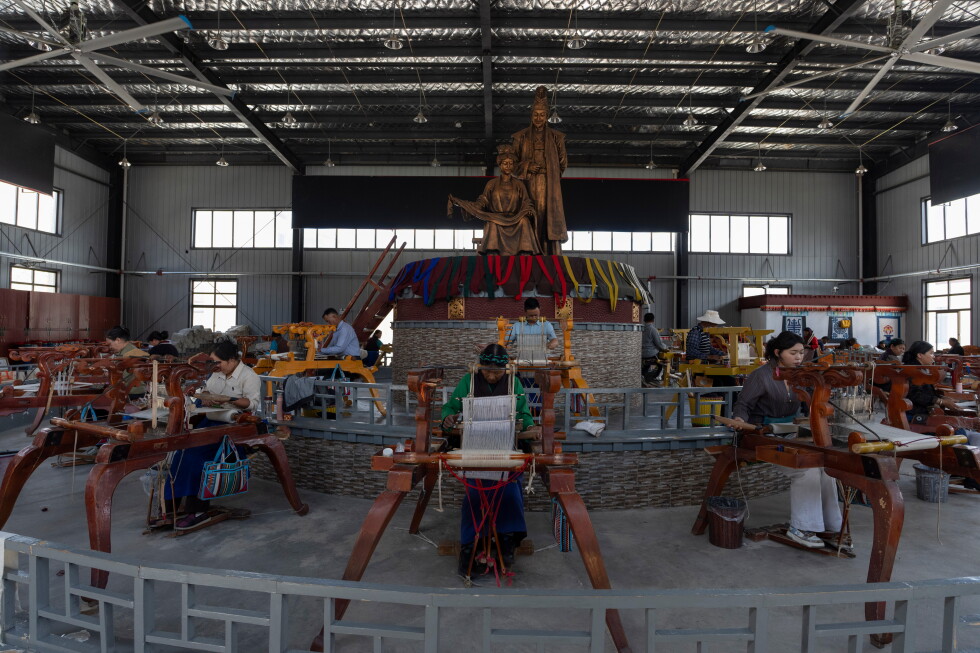
SHANNAN, Tibet (AP) — More than a dozen men and women sit at wooden looms, sliding shuttles through rows of wool yarn before pulling each thread tight. They repeat it again and again as they weave Pulu, the traditional woolen fabric that has clothed people on the Tibetan plateau for centuries.

They work at the Ethnic Huaji Handwoven Cooperative in Shannan, where artisans are trying to preserve one of Tibet’s oldest weaving traditions while creating jobs for local residents.

Founded in 2008 by Tibetan artisan Pasang, the cooperative employs more than 100 local residents, including some people with disabilities, while teaching younger Tibetans a craft that he feared was disappearing.

The cooperative specializes in Zeter, a finer variety of Pulu made from especially soft wool from the necks and backs of sheep. He said the finer wool makes the yarn more difficult to spin than that used for ordinary Pulu.

Advertisement

Pasang said that because Zeter is lighter, softer and more delicate than ordinary Pulu, it was presented as a tribute from Tibet to the Chinese imperial court during the Ming dynasty.

Pasang said he learned the craft from his parents at a time when fewer than 10 people still knew how to weave Zeter.

He added that the craft has been recognized as part of China’s national intangible cultural heritage, and that he hopes younger generations will continue practicing it.

The wool comes from sheep raised around Shannan, about 3,700 meters (12,100 feet) above sea level.

Advertisement

Statues of Tibet’s 7th century King Songtsen Gampo and his Chinese bride, Princess Wencheng, stand at the center of the workshop, surrounded by wooden looms. According to local tradition, the weaving craft dates to when Princess Wencheng introduced weaving techniques to Tibet after marrying the king.

In Chinese official history, their marriage symbolizes the historical ties between Tibet and China. “It integrated Tibetan and Chinese cultures,” Pasang said about the fabric’s history.

The Associated Press joined a government-organized trip to Lhasa and Shannan last month, which included visits to the cooperative, palaces, Buddhist temples, tourist sites, an eldercare center and local businesses.

Next to the workshop, a small showroom displays scarves, shawls, jackets, bags and other products made from Pulu and Zeter. Pasang said most sales are in Tibet, although customers also come from elsewhere in China.

Advertisement

Tsering Yangchen has been working for seven years in the cooperative. The 80-year-old woman moved from another county and said she struggled to find work before joining the workshop, where instructors taught her and others how to weave.

She said Pulu is more than just a product she weaves.

Advertisement

“We usually wear them,” she added. “They are made from pure wool.”

____

Associated Press video producer Olivia Zhang contributed.

Advertisement

Source link

Continue Reading

NewsBeat

National Trust accused of ripping off parents with toddlers by charging 80p for a babyccino

Published

on

A Babyccino made with whipped milk or cream with cocoa or cinnamon powder and marshmallow

Advertisement

The National Trust has been accused of ripping off parents with toddlers by charging for small cups of foamed milk at its cafes.

In stark contrast to High Street chains which supply the so-called ‘babyccinos’ for free, the Trust charges 80p.

The Babyccinos – hot foamed milk in a small cup – have become popular with toddlers wanting to mimic the cappuccinos or lattes that their mums and dads are drinking. 

High Street coffee chains, including Costa Coffee, Starbucks and Caffe Nero, all provide the fun drink free of charge.

Advertisement

The charge has infuriated parents across the country, and comes as the Trust is under fire for escalating membership fees.

They have risen from £63 for an adult a decade ago to just over £100 now, with family membership rising from £111 to £176.

Parents visiting the Trust’s historic attractions, including Emmetts Gardens, an Edwardian hillside garden in Kent, and Chartwell in Kent, the former home of Winston Churchill, were amazed to be charged 80p for a babyccino at their cafes.

One mum who took her toddler to visit Emmetts Garden, which charges up to £16.50 each for adult entry, told The Mail on Sunday: ‘I ordered one for my daughter and couldn’t believe they were charging for it when it was just a little bit of frothed milk in a cup!’

Advertisement

A Babyccino made with whipped milk or cream with cocoa or cinnamon powder and marshmallow

A barista, pictured, dusting cocoa powder on to a babyccino in an espresso cup

A barista, pictured, dusting cocoa powder on to a babyccino in an espresso cup

At the National Trust cafe in Lacock, Wiltshire – which dates from Saxon times and has been a filming location for the BBC’s Pride And Prejudice and the film Harry Potter And The Half-Blood Prince – a babyccino was also 80p.

Advertisement

When The Mail on Sunday visited the cafe and ordered a babyccino alongside a standard coffee, our reporter was served a few mouthfuls of hot foamed milk – under 100ml – in an espresso cup.

When asked why there was a charge for the tiny drink, the barista said they charged for cold milk so ‘it was the same’.

But in nearby Chippenham, Wiltshire, coffee chains Costa Coffee, Caffe Nero and Starbucks, all provided a babyccino free of charge when an adult was buying a drink.

While none of them had a babyccino on the menu, all of them offered one upon request. In Caffe Nero the server said they were always happy to provide babyccinos when adults were buying other drinks.

Advertisement

In Costa Coffee, the babyccino was nearly double the size of the National Trust version at just under 200ml, while in Starbucks, the server offered a small (100 ml) or large (around 200ml) size, both free of charge.

A spokesman for the National Trust said: ‘As a charity, we regularly review our pricing to ensure we can cover our costs and support the long-term future of the organisation, while still offering value for money to our members and visitors.

‘We benchmark our food and beverage pricing against similar attractions and high street operators to ensure it remains broadly in line with industry standards.

‘Given other outlets’ pricing and some visitor feedback we’ve received, we are reviewing our babyccino pricing as part of our normal review cycle.’

Advertisement

Advertisement

Source link

Continue Reading

NewsBeat

Booze problem in Westminster? No, MPs don’t drink enough of the stuff. If only they did, they might be more honest, says QUENTIN LETTS

Published

on

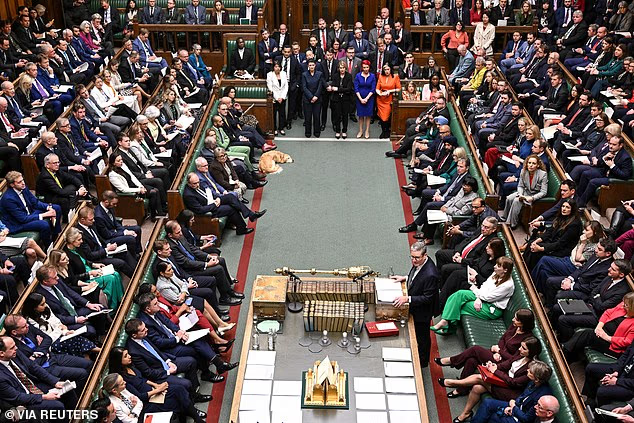
Quentin Letts contends that today's Parliament has become overly sober, sterile, and hyper-regulated, leading to overly energetic ministers pushing unnecessary policies

This arid, fly-blown August has been interrupted by a sermon from something called the Institute of Alcohol Studies. 

It claims Parliament is an ‘alcohol-soaked workplace’ where all-day boozing is ‘embedded’ and alcohol has been ‘a driver of harmful behaviours and poor conduct among politicians‘.

The institute, an offshoot of the old Total Abstinence League, may be on to something, although not in the way it imagines.

Westminster does indeed have a hooch problem: In my opinion it does not drink enough.

Advertisement

That, naturally, is not the gist of the report Under the Influence? 38 pages of tight-lipped prose in which the institute denounces our legislature as a soaks’ paradise. 

It alleges that recent MPs have had to have their stomachs pumped, such was their inebriation. No names are given.

The report complains that ‘individuals are responsible for self-regulating their alcohol consumption’, as if some clipboard-wielding Rosa Klebb should constantly hover nearby to tell backbenchers not to have another sherry.

The report – a dry read, yet drippy – is aghast that alcohol is ‘linked to a networking culture deemed essential to career progression’. Networking in politics? Whatever next? Footballers who cheat?

Advertisement

Quentin Letts contends that today’s Parliament has become overly sober, sterile, and hyper-regulated, leading to overly energetic ministers pushing unnecessary policies

Let us first admit that some people hate politicians and want them to have a miserable time. Why should there be any bars at Parliament? And why do companies and charities lay on free drink at Westminster receptions? Free wine for MPs and peers? The blighters!

The answer to this charge is that politics is a people business. ‘The Devil’s buttermilk’ (as the Rev Ian Paisley used to call alcohol) can make it more honest, as I will explain presently.

Advertisement

Westminster used to be considerably more liquid. The 19th-century Commons was often plastered. 

The mighty Norway debate of 1940, when the Chamberlain government was undone, was held amid the whiff of drink. What a night that must have been: The nerves, the tension, the surging emotions. My goodness, just thinking about it you can almost smell the whisky and the sheer urgency of the hour.

In the late 1960s the Commons Speaker was Horace King, a drinker. One evening he teetered into the chamber at 9.25pm and took more than one go at clambering into his chair. He fell across the clerks’ table, his ceremonial wig at a 45-degree angle.

Bob Mellish, government chief whip, snapped: ‘You’re a disgrace, Horace, and I’ll have you out of that chair in three months.’ Speaker King, suppressing a burp: ‘How can you get me out of the chair, Bob, when I can’t get myself into it?’

Advertisement

BBC political reporter Ben Wright, in his entertaining book about parliamentary drinking, claims that in 1983 a Labour MP, Edwin Wainwright, was escorted to a taxi after overdoing it in Strangers’ Bar.

The Green party's Zack Polanski is known for not drinking alcohol

The Green party’s Zack Polanski is known for not drinking alcohol

Wainwright was not, however, ready to conclude his day.

He stumbled back into the Commons and made a speech so slurred that Hansard’s stenographers were unable to discern what he was saying. Instead of a verbatim account of his speech they simply noted: ‘Mr Wainwright made a number of observations.’

Advertisement

That most languid of Conservatives, Alan Clark, was made a junior employment minister in the same year. He was told to make a front-bench speech about equal opportunities. It did not start until after 10pm, and Clark had spent the first part of the evening at a wine tasting.

As he started reading the speech he realised it was polluted by civil-service jargon. To spare the House he spoke at ’78rpm rather than 33rpm’, i.e, a ridiculously high speed.

Labour’s Clare Short did not see the joke and complained. Clark was undoubtedly naughty but did he not have something of a point? Why should anyone be exposed to officialdom’s cliches after supper?

As for Ms Short, five years later I was drinking in the Imperial Hotel, Blackpool, on the first afternoon of Labour’s party conference. Clare was at our table. I used to think I could drink a lot. Next to her I felt a puny amateur.

Advertisement

The past often shimmered on booze fumes. George Brown was a stocious economics minister and Foreign Secretary in the 1960s. The public warmed to him.

Ernie Bevin, most serious and capable of 1940s statesmen, ran on drink in the way ‘a car uses petrol’. Roy Jenkins was nicknamed ‘Old Beaujolais’.

Politics is not, as the Institute for Alcohol Studies claims, a ‘profession’. You do not need to pass exams to become an MP.

The one piece of paper you need is the returning officer’s confirmation that you won your constituency’s election.

Advertisement
Letts highlights how Parliament has a long, colourful history of heavy drinking, suggesting it humanised politicians and fueled bold decision-making

Letts highlights how Parliament has a long, colourful history of heavy drinking, suggesting it humanised politicians and fueled bold decision-making

Parliamentary politics is about life, and life can sometimes be drunken, particularly when under the sort of stress that MPs must endure. I am no longer a big drinker. I can quite see that alcohol, in excess, is a poison. But it is something much enjoyed by millions of voters. Politicians are citizens, not saints.

In recent times we had poor Charles Kennedy, who was killed by drink, and there have been one or two cases of MPs bouncing off the corridors; but we have also had Nigel Farage, whose beery image helped liberate us from the European Union. 

He was more popular when he radiated that pubby bonhomie. Politics is as much the art of conviviality as debate.

Advertisement

The Green party’s Zack Polanski does not drink alcohol. Maybe he would seem less fanatical, and therefore more persuasive, if he did.

The late David Lipsey, a political adviser in the Wilson years, told Ben Wright: ‘Drink stopped the manic compulsion to do something every single day.’

Today’s ministers, Lipsey suspected, were ‘too sober and too energetic, thinking up wheezes they’d forget about if only they had a couple of large drinks’.

I would offer a more positive case for drink, namely as a truth drug. Ministers are more likely to learn what backbench MPs and their constituents think if they mingle with them over a pint.

Advertisement

One of the criticisms of Sir Keir Starmer as PM was that he seldom mixed with his MPs. The celebrated lawyer did not spend enough time at the bar.

Not that today’s Commons is dissolute. Despite those horror stories of stomach-pumping in the institute’s report, today’s MPs strike me as a clean-livered lot.

A few snifters might make them more prepared to disagree with party whips and wake up to the ridiculousness of regulatory over-reach and much welfare spending.

The institute suggests that arguments in bars are a bad thing. If they help MPs work out what they honestly think about bad Bills, I’d say that was a good thing.

Advertisement

Fainthearts will say ‘but it’s a workplace and you shouldn’t drink at work’. Parliament is much more than a workplace. It is the cockpit of our politics, an arena for debate and awkward truths. In recent times those truths have been tamed by too much sobriety.

Winston Churchill said: ‘I have taken more out of alcohol than alcohol has taken out of me.’ If Boris Yeltsin had not been so keen on vodka, would he have risked his life by standing on that tank and resisting Soviet hardliners in 1991?

One of the best backbenchers in the Blair years was Labour’s Bob Marshall-Andrews, no stranger to the Garrick bar at lunchtime.

It was Marshall-Andrews who in the Commons came up with the winning description of David Miliband’s tenure as Foreign Secretary. 

Advertisement

‘A pillock on his gap year,’ drawled the magnificent Bob. The only surprise was that he did not follow it by crying, ‘and another bottle of club red, please!’

Source link

Continue Reading

NewsBeat

ADHD diagnoses and prescriptions have increased globally across all age groups, our review shows

Published

on

ADHD diagnoses and prescriptions have increased globally across all age groups, our review shows

Diagnoses for attention deficit hyperactivity disorder (ADHD) have increased in many countries across all age groups, our latest review has found. We have also shown that prescriptions for ADHD treatments have seen similar increases across all age groups.

Our latest review, published in the Journal of Psychopharmacology, drew together the recently published research on ADHD diagnoses and prescriptions across the world.

We found that in the UK, increases in recorded ADHD diagnoses and treatment prescriptions occurred across all age groups between 2000 and 2018.

The greatest rise in ADHD diagnoses across this period was among children. However, there was also a distinct increase in adults. For example, among men aged 18-29 there was an approximately 20-fold increase in diagnoses and an almost 50-fold increase in prescriptions.

Advertisement

The sex ratio of ADHD diagnoses in childhood and adolescence was approximately 4:1 male to female. However, the ratio of diagnoses in adulthood is nearly 1:1. This shift may partly reflect increased recognition of how ADHD presents in girls and adults – groups that have historically been underdiagnosed.

Alongside these increases in ADHD diagnoses, there has also been an increase in prescriptions for ADHD treatments.

In England, prescriptions of central nervous system stimulants (the main prescription treatments for ADHD) increased by 32% in adults over 18 in 2021-22. In children under 17, prescriptions increased by 12% from 2022-23. This was also the first time that more adults were prescribed these drugs than children since records started in 2015.

A retrospective study of over 154 million people from 13 countries, including in North America, Europe and Asia, demonstrated that use of ADHD medication prescriptions had increased in these regions as well.

Advertisement

Why diagnoses and prescriptions are increasing

A few key factors can largely explain the increase in both ADHD diagnoses and prescriptions that we’ve seen. This includes increased public awareness of the condition, better understanding by doctors of the way symptoms present and the availability of new and improved medications.

Additionally, there is better awareness of how ADHD manifests in groups who may have previously been missed because their symptoms did not match with those typically exhibited in boys and adolescents. This includes women and girls and people with predominantly inattentive symptoms.

However, these factors may only tell part of the story. Our review also revealed other drivers may deserve careful consideration.

Prescriptions for ADHD treatments have also seen an increase globally.
Photoroyalty/ Shutterstock

For instance, there has been much debate over whether there is an issue of overdiagnosis and over-prescribing. Legitimate questions about whether some attention difficulties might be over-medicalised have also been raised. On the other hand, some authors have argued that there is no evidence to suggest overdiagnosis is occurring in the UK.

Advertisement

Understanding the full picture requires looking beyond the obvious explanations to examine cultural, economic, social and technological pressures in a globally competitive environment that may be influencing both diagnosis rates and treatment choices.

Looking forward

The rising rates of ADHD diagnoses and treatment represent a complex picture. There have been genuine improvements in recognising a real disorder that was historically overlooked (particularly in adult men and women), better clinical awareness and perhaps also some degree of over-identification in certain environments.

What seems clear is that ADHD, long thought of as a children’s disorder, is now being treated as what it truly is: a lifelong neurodevelopmental disorder affecting millions of people across the globe.

As awareness continues to grow, the challenge ahead lies in preserving limited NHS resources, while ensuring those who genuinely need these resources have improved access.

Advertisement

The wait time for an ADHD diagnosis in England currently ranges from two to 15 years. With increasing rates of diagnoses and prescriptions to manage ADHD, there are concerns that demand will soon outstrip NHS capacity entirely.

What could be a solution is the discovery of ADHD biomarkers – an objectively measurable indicator of a biological state or condition that can be detected in signatures in the brain. Currently, ADHD is diagnosed by a doctor who often has to rely on self-reported symptoms. Having biomarkers could improve the accuracy of diagnoses, ensuring those who have the condition get the support they need earlier on.

Source link

Advertisement
Continue Reading

NewsBeat

Theme park to close rollercoaster forever after ‘last hurrah’ – opened in 1959

Published

on

Daily Mirror

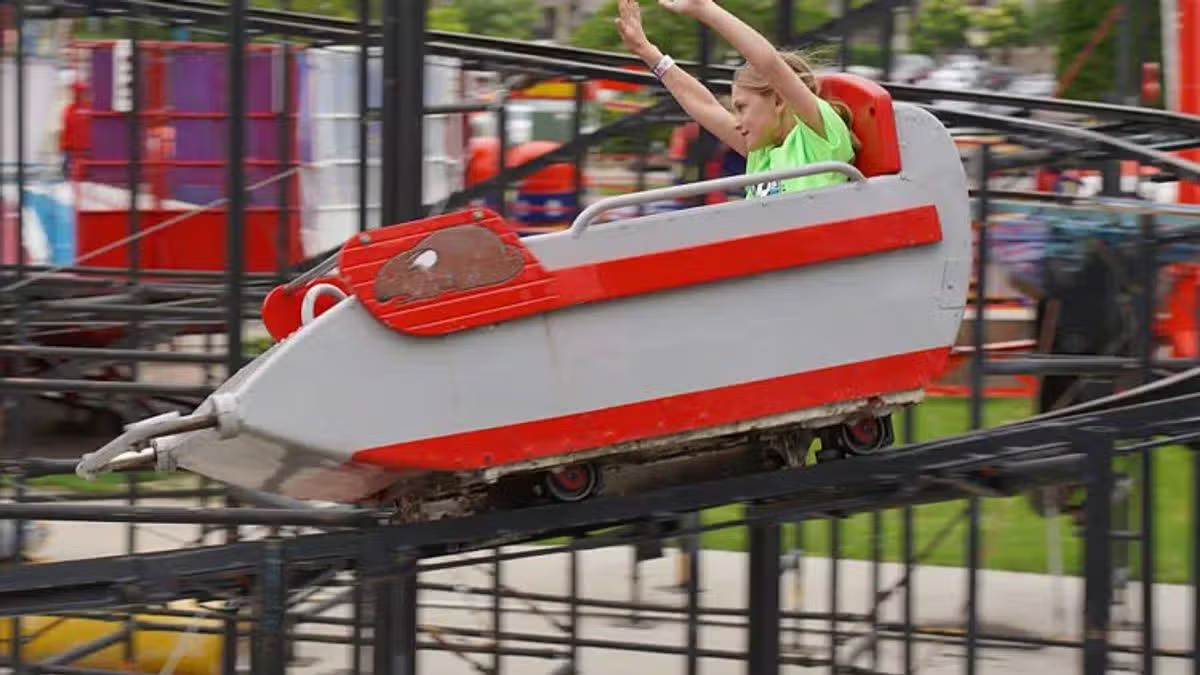
A beloved rollercoaster has taken its final riders after nearly seven decades of operation.

The Mad Mouse at Arnolds Park Amusement Park in Iowa, US, officially retired on Wednesday, July 29, bringing an end to the attraction’s remarkable 67-year history.

The theme park paid tribute to the classic ride in a Facebook post, thanking it for the “laughs, thrills and memories” it had provided generations of visitors.

Advertisement

“Over the years, this classic ride has created countless memories for generations of guests and kept our maintenance team busy with plenty of repairs along the way,” park officials wrote. “Thank you, Mad Mouse, for the ride.”

The rollercoaster first opened in 1959 at Bell’s Amusement Park in Tulsa, Oklahoma, before being moved to Joyland Amusement Park in Lubbock, Texas, in 1976.

Arnolds Park acquired the ride in 2019, giving it what CEO Jon Pausley described as a “last hurrah”.

The compact coaster became known for its sharp hairpin turns and intense thrills, with Pausley saying riders tended to either love it and ride repeatedly or decide once was enough.

Advertisement

But keeping the ageing attraction running had become increasingly difficult.

Natural wear and tear meant the Mad Mouse required frequent repairs, maintenance and welding. Each welding job also required inspection and certification, sometimes forcing the ride to close for several days.

Park bosses ultimately decided that the ride’s footprint and frequent downtime no longer made sense during its short, 100-day operating season.

Advertisement

As the attraction is dismantled, at least one of its cars will be preserved at the Arnolds Park Museum. Other parts will be sent to Little Amerricka Amusement Park in Wisconsin, home to the last remaining Mad Mouse of its type.

The ride’s removal will make way for a new attraction scheduled to open at Arnolds Park in 2027.

Source link

Advertisement
Continue Reading

NewsBeat

Will GTA 6 save the video games industry or destroy it? – Reader’s Feature

Published

on

Will GTA 6 save the video games industry or destroy it? - Reader’s Feature
GTA 6 is going to be massive (Rockstar Games)

With its Netflix extended look coming up, a reader ponders how GTA 6 will affect the rest of the games industry and if it’ll be for good or ill.

After years of rumours and trailers, that look amazing but don’t really tell you anything, we’re finally getting to get a proper look at GTA 6 with the Netflix show they just announced for later in the month. Obviously, I’m going to watch it, and I imagine it’ll be mind-blowing and pre-orders will go up by one trillion percent. GTA 6 is going to make more money than any other video game before it’s even out.

I don’t know whether it’s going to deserve that level of success, it’s hard to imagine that anything could, but that hardly matters now. People are hyped and money is already changing hands.

We already know that every other publisher (except maybe Nintendo) is terrified of releasing anytime close to GTA 6 but what I’m wondering is what happens afterwards? There’s plenty of games scheduled for January and February, including some big name ones, but do they really think the coast will be clear by then?

Advertisement

I see two ways that the launch of GTA 6 can go. The good one (for everyone and not just Rockstar) is that it’s a big hit, it’s a good game, and it raises up the profile of video games in general. Everyone is reminded how fun single-player games are (because I think that’s what it’s going to be at first, before the online is turned on).

Gaming seems to have been on a downward spiral ever since Covid, especially with all the layoffs and the total lack of new IP. So my hope is that GTA 6 makes gaming seem exciting again, not just for ordinary people but the moneymen that seem to have abandoned it recently.

Expert, exclusive gaming analysis

Sign up to the GameCentral newsletter for a unique take on the week in gaming, alongside the latest reviews and more. Delivered to your inbox every Saturday morning.

Advertisement

That’s the best case scenario, as far as I see it, while the alternative, or at least one of them, is that only GTA 6 is successful. GTA 5 is already massively more successful than any other game ever made, except Minecraft and Roblox, but the rumour is that GTA 6 will also have fan-made content as well. And if it doesn’t it should do and I bet they put it in eventually anyway.

At that point you’re looking at a game that’s going to be so massive that most casual gamers would never even consider the idea of buying or playing anything else again. After all, that’s almost the point we’re at already with live service games.

To view this video please enable JavaScript, and consider upgrading to a web
browser that
supports HTML5
video

Advertisement

If you can make a survival horror or a racing game or whatever within the tools of GTA 6 then what’s the point of making, or people buying, Resident Evil or Forza Horizon? That’s what publishers are already worried about with Roblox and they’re only lucky there that it looks so janky and it’s mostly used by kids.

Given how good the graphics are on GTA 6, if you’re able to make anything you want in it – or even just a wide variety of things with a modern day setting – then the whole concept of there being other video games, as we’ve always known, it could be risk.

Advertisement

Maybe the worst thing here is you can’t really blame anyone. Rockstar is being greedy not supporting physical discs (something I bet they organised with Sony) but it’s not their fault GTA 6 is so popular or the graphics are so good. They haven’t achieved their success in any kind of unfair way. Other publishers have had 13 years to make a rival to GTA 5 and no one’s even tried.

Even so, I don’t think anyone could pretend that having GTA 6 become the only game anyone ever plays is anything but a bad thing. Even if that’s an exaggeration, and older gamers still play other games, it seems a very unhealthy situation. Sometimes you can be just too successful.

By reader Si

GTA 6 screenshot of Lucia and Jason
All we be revealed later this month (Rockstar Games)

The reader’s features do not necessarily represent the views of GameCentral or Metro.

You can submit your own 500 to 600-word reader feature at any time, which if used will be published in the next appropriate weekend slot.

Advertisement

Just contact us at gamecentral@metro.co.uk or use our Submit Stuff page and you won’t need to send an email.

Advertisement
Advertisement

Source link

Continue Reading

NewsBeat

Police probe ‘threats made’ to Sainsbury’s shop worker

Published

on

Police probe ‘threats made’ to Sainsbury's shop worker

The incident reportedly happened at the Sainsbury’s in Ramshill Road, Scarborough, at about 10.20pm on Thursday, July 30, North Yorkshire Police said.

A force spokesperson said officers want to identify a member of the public “who is believed to have intervened during an incident after a suspect allegedly made threats towards members of staff at the location”.

“The individual may have important information that could assist our enquiries, and we would like to speak with them about what they witnessed,” they said.

Advertisement

The police spokesperson said it is “also believed they [the witness] might be a victim of a crime”.

They urged anyone with information to email nabiel.galab@northyorkshire.police.uk or phone 101.

Information can be passed anonymously to Crimestoppers on 0800 555 111 or via its website.

Quote reference 12260146831 when providing information to police or to Crimestoppers.

Advertisement

Source link

Continue Reading

NewsBeat

Dozens of homes in Sutton-on-the-Forest hit by power cut

Published

on

Dozens of homes in Sutton-on-the-Forest hit by power cut

Forty-two properties in Sutton-on-the-Forest are without power due to the unplanned outage on Saturday (August 8), Northern Powergrid said.

The company said its team has identified what caused the outage and expects power to be back on for most of its customers by 5.30pm to 6.30pm.


Read next:

Advertisement

Louise Lowes, Northern Powergrid’s director of customer service, said its teams will work “as quickly as possible to get your power back on”.

“We know that power cuts can be really difficult,” she said, adding: “We’ll do our best to support you and get your power back on as soon as we can.

“In the meantime, if you need help, tell us – we are here to listen and support our customers whenever they need us.”

She urged anyone who needs further support to phone Northern Powergrid on 105.

Advertisement

Source link

Continue Reading

NewsBeat

Lionel Messi lands back in Rosario after father Jorge’s death at 68… as Inter Miami teammate pays heartfelt tribute during game

Published

on

Lionel Messi has returned to his hometown of Rosario following the death of his father, Jorge

Advertisement

Lionel Messi has returned to his hometown of Rosario following the death of his father, Jorge.

Messi missed Inter Miami’s Leagues Cup clash with Monterrey to fly back to Argentina where, according to reports in South America, the 39-year-old will attend a private memorial service. 

Jorge Messi – who also served as his son’s agent and business manager – died at the age of 68, two months on from the family revealing he had been rushed to hospital with an ongoing ‘health situation’.

He reportedly passed away in a hospital in Rosario, close to the family home, at around 10pm local time on Friday August 7.

Advertisement

In the absence of their captain, Inter Miami players honored Jorge Messi by wearing black armbands, while fans paused for a moment of silence before kickoff. Earlier on Saturday, the team had posted a tribute which read: ‘Our hearts are with our captain, Leo, and the entire Messi family.’

Against Monterrey, stand-in captain Rodrigo De Paul – Messi’s international teammate – scored the opening goal and then pulled off his jersey to reveal another which read: ‘Messi 10’

Lionel Messi has returned to his hometown of Rosario following the death of his father, Jorge

Advertisement
The soccer legend's father, pictured at the 2022 World Cup final, died at the age of 68

The soccer legend’s father, pictured at the 2022 World Cup final, died at the age of 68 

Rodrigo De Paul paid tribute to the Inter Miami captain during Saturday's clash with Monterrey

Rodrigo De Paul paid tribute to the Inter Miami captain during Saturday’s clash with Monterrey

In the first official statement, Messi’s first team Newell’s Old Boys wrote in Spanish: ‘Club Atletico Newell’s Old Boys bids farewell with deep sorrow and grief to Jorge Messi, who passed away at the age of 68 in the city of Rosario.’ 

The club continued: ‘Jorge was the pillar and the person who supported with vision, rigor, and affection the career of the greatest player of all time alongside his wife, Celia Cuccittini.

Advertisement

‘His constant companionship and behind-the-scenes leadership were essential in backing every step of Lionel, from his beginnings at Malvinas to the pinnacle of world football glory. Thank you for teaching him to love these colors.’

Later on Saturday, both Barcelona and the Argentina national team added their own tributes.

‘Stay strong, Leo Messi and family. We are with you in this difficult moment. We send you our most heartfelt embrace,’ Argentina wrote on X.

A spokesperson for FC Barcelona, meanwhile, said in a statement: ‘The President and the Board of Directors of FC Barcelona express their deepest condolences on the passing of Jorge Messi, the father of former Barca player and legend Lionel Messi, and, on behalf of the entire Barca family, extend their condolences to the Messi family.

Advertisement

‘FC Barcelona thanks Jorge Messi for his commitment to our Club, for entrusting us with the beginnings and the most glorious years of his son Leo’s football career. May he rest in peace.’ 

Advertisement

Source link

Advertisement
Continue Reading

NewsBeat

University opens government-funded lab to help train biomedical scientists

Published

on

University opens government-funded lab to help train biomedical scientists

A UK university has opened a new government-funded laboratory to help train the next generation of biomedical scientists to work in the NHS and life sciences sector.

The £2.5 million facility at the University of Essex, which includes a dedicated cancer diagnostics laboratory, was funded by the Office for Students.

The investment aims to strengthen training in subjects critical to the UK’s future workforce.

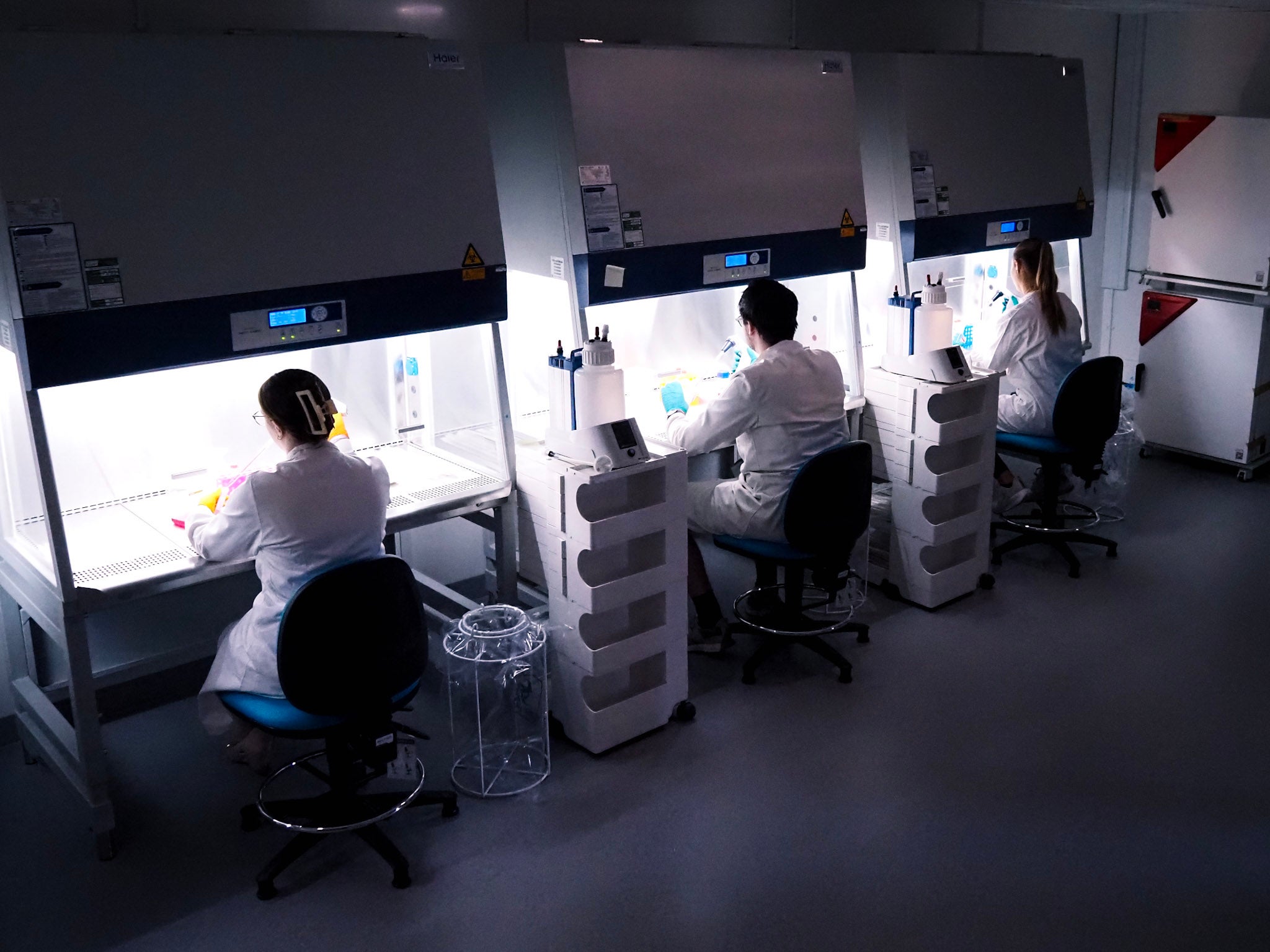
The Bioscience Skills Training and Research Laboratory (BioSTAR-Lab) aims to give students hands-on experience with equipment and techniques used in modern healthcare and life sciences laboratories.

Advertisement

Students studying biomedical science, biotechnology, cancer biology and related degrees will use the laboratories to carry out their research projects.

The facility also includes specialist microbiology and molecular biology laboratories where students will analyse tissue samples, study infectious diseases and use molecular techniques.

The cancer diagnostics laboratory at the University of Essex. (University of Essex/ PA)

Professor Terry McGenity, head of the School of Life Sciences, said: “Here at Essex, we are dedicated to providing a rounded education that is inspired by our world-leading research, which equips our students with the understanding, skills and experience they need to launch their careers in nationally important sectors.

“Hands-on, lab-based research projects provide a transformative experience for our final-year undergraduates and masters students.

“They allow all our students to become part of the research process by carrying out their project alongside experts, where they apply what they’ve learned, and develop critical understanding of a particular area, as well as new technical and analytical skills.

Advertisement

“This new facility will place us at the forefront of training students to be skilled and versatile critical thinkers, who will be ready to work in the NHS and life-sciences sectors.”

The university said the investment comes at a time of growing demand for skilled life scientists, with more than 300,000 people already employed in the sector in the UK.

The lab’s opening comes as the University of Essex launches its first undergraduate biotechnology degree, reflecting growing demand for graduates in a sector that develops vaccines, medicines and diagnostic technologies.

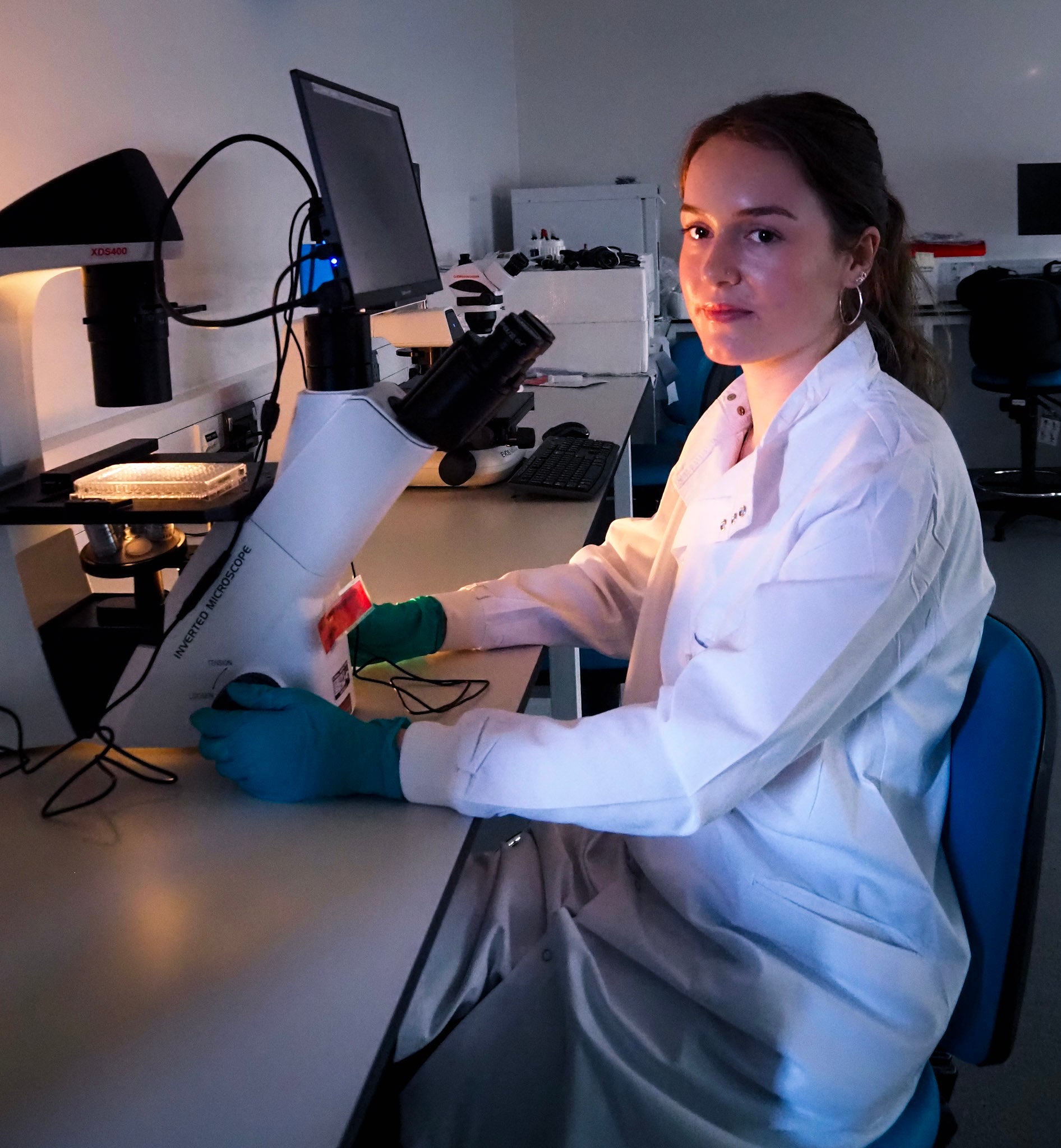
A student examining cancer cells in the lab at the University of Essex. (University of Essex/ PA)

Professor Silke Paulmann, executive dean of the Faculty of Science and Health, said the lab “brings together education, research and real-world application, creating opportunities for students to develop the expertise that will drive future advances in diagnostics, treatments and public health”.

“It will help strengthen the talent pipeline that underpins innovation, economic growth and better health outcomes for communities across the UK,” she said.

Advertisement

Source link

Continue Reading

Trending

Copyright © 2025