




Connect with us

Tech

Microsoft tosses Teams Live chat into its feature graveyard

Published

on

APPLICATIONS

Website support widget lasted 18 months before Redmond ended the conversation

Microsoft is killing Live chat in Teams about 18 months after launch as it seeks to “focus investments on newer customer engagement and communication experiences.”

The service will be retired on October 5, when customer messages will stop reaching Teams. Microsoft blocked new setups on August 6 and told users to remove the widget from their websites before retirement. Any remaining instances will be hidden afterward.

Advertisement

Live chat was a relatively simple feature available with the Teams versions of Microsoft 365 Business Basic, Standard, and Premium. Companies embedded a chat widget on their websites, and messages from visitors were routed to a support team in Teams. Administrators could specify business hours and assign up to 25 users to handle conversations.

Existing customer data and Teams channels will remain available, but no new conversations, escalations, or interactions will be possible.

Microsoft pointed customers toward Dynamics 365 Contact Center with Live Chat and Copilot Studio’s contact center AI tools instead.

In March 2025, it was all going to be very different as Microsoft trumpeted the service’s arrival. Brenna Robinson, General Manager, Microsoft 365 & Copilot, Small and Medium Business, wrote: “Today we’re excited to take that customer experience to a new level with the introduction of live chat in Microsoft Teams – a faster and more engaging way for you to connect with your customers.”

Advertisement

Robinson has since become Microsoft’s General Manager for AI Business Solutions. Live chat, meanwhile, has been wheeled into the Raiders of the Lost Ark-style warehouse where Microsoft stores everything that once seemed like a good idea.

Microsoft has axed several Teams services over the last few months. In February, it announced the end of Teams live events, replaced by a Teams “events experience.” The Teams Together mode, which placed users in a virtual meeting space, was also ditched

Live chat is another casualty of Microsoft’s efforts to tidy Teams’ unwieldy collection of features. The company has not elaborated on those “newer customer engagement and communication experiences,” although its recommendation of Copilot Studio means AI is already waiting in the wings. ®

Source link

Advertisement
Continue Reading
Click to comment

You must be logged in to post a comment Login

Leave a Reply

Tech

A Falling Weight Just Broke the Sound Barrier with Tom Stanton’s Supersonic Trebuchet

Published

on

Tom Stanton Supersonic Trebuchet
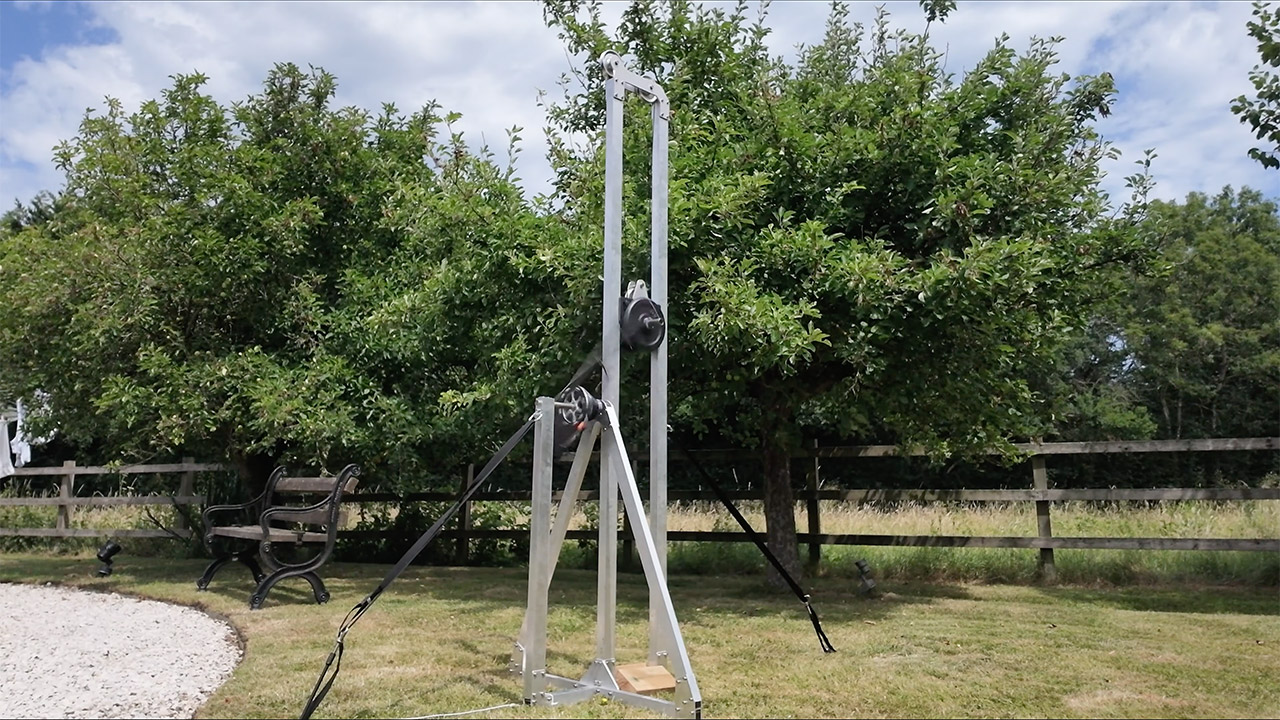
Tom Stanton has spent years chasing a number that gravity itself seemed to forbid. On a quiet field somewhere in the UK, a 40-kilogram mass dropped a short distance, spun a carbon-fiber arm past 2,300 revolutions per minute, and sent a 4-gram projectile into the air at 776 miles per hour. That is nine miles per hour past the speed of sound. For the first time, a purely gravity-powered trebuchet crossed the barrier.


Medieval engineers created these machines to fling huge stones at castle walls. The basic idea is to hoist a large heavy weight, let it fall down, and then use the lever and sling to redirect that energy into a much lighter projectile. Unfortunately, physics gets in the way. A weight in free fall accelerates at a maximum of 9.81 meters per second squared; drop one from 2 meters and it smacks into the ground at around 6 meters per second. No matter how heavy you make the weight, the speed remains constant, and a typical arm is like a car with a bike chain stuck in first gear, with lots of torque at first but just enough to get it moving by the end.

Tom Stanton Supersonic Trebuchet
Stanton devised a creative engineering solution to the speed problem. The counterweight is suspended from a pulley system with a 3:1 ratio, as a large diameter at the beginning propels the arm with plenty of force, and as it winds down, the smaller diameter end provides a significant jump in rotational speed. In the end, the drum was redesigned so that weight could be lifted up to 1.9 meters, storing more power in the system than previous iterations.

Tom Stanton Supersonic Trebuchet
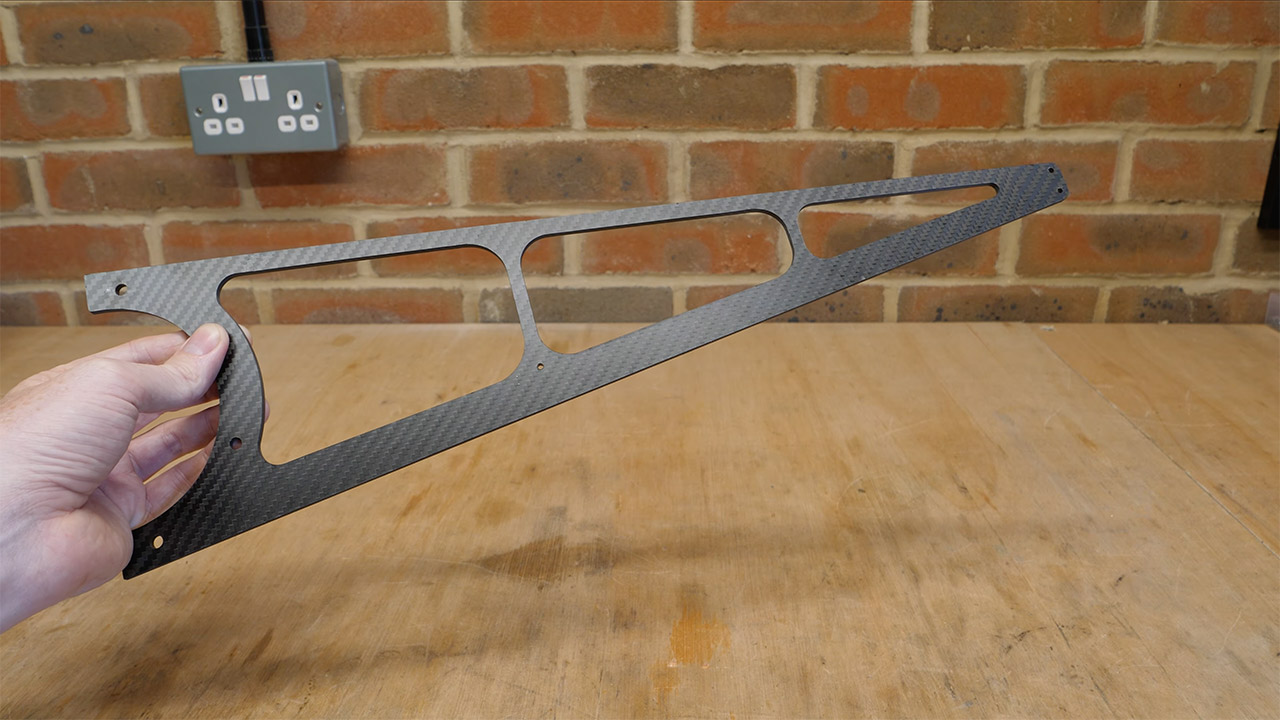
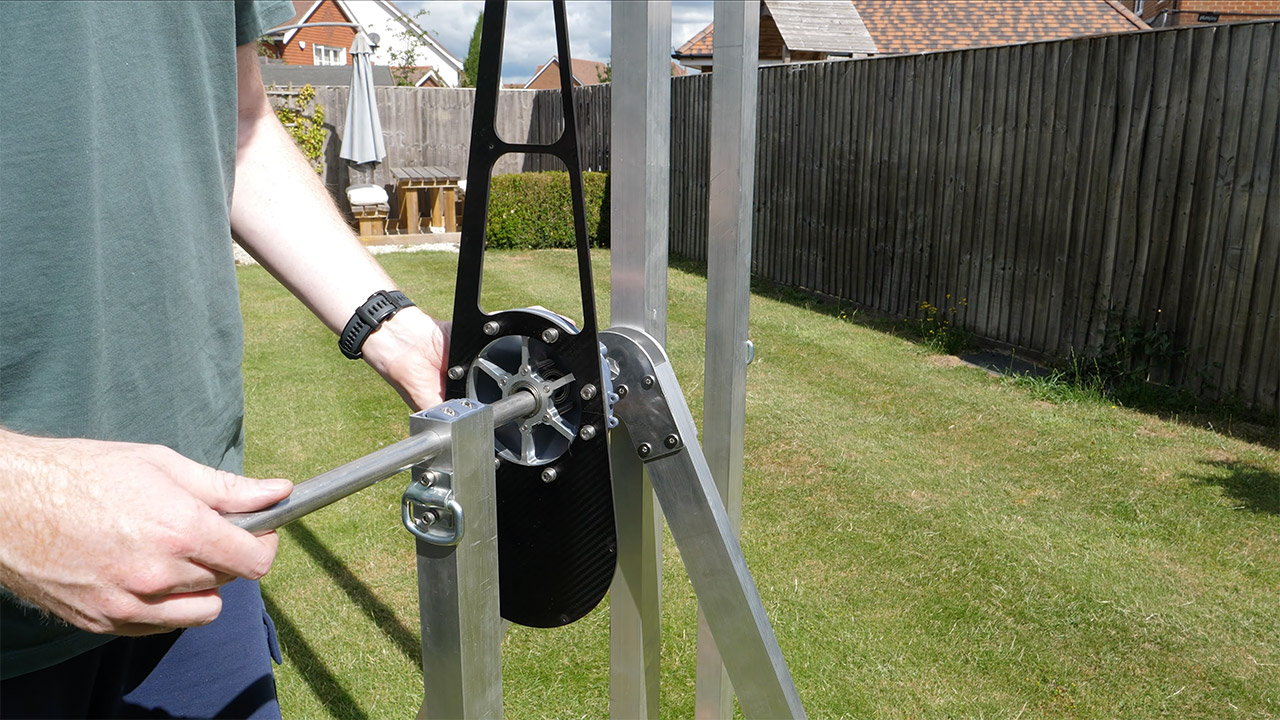
The arm has to be both incredibly light and super rigid. Carbon fiber was really the only option because it isn’t heavy enough to weigh down the entire system while yet being able to withstand punishment. Stanton used his homemade CNC mill to carve the piece, keeping the dust under control with a HEPA vacuum and a good spray of water. It weighs only 116 grams. Stress tests and numerous defective 3D printed prototypes revealed that it would buckle under the sling’s pressure, so he modified the design to compensate, removed material from the tensioned side, toughened up the opposite side, and added some extra bracing for good measure. Aluminum hubs connect the arm to a short counter-arm, keeping the spinning bit as balanced as possible.

Tom Stanton Supersonic Trebuchet
The projectile now starts near the axle, wrapped firmly in a sling that unwraps at just the right moment. The entire system is mechanically released, using a spring-loaded catch that opens after a certain number of rope rotations. The release window is only a few milliseconds long, which is plenty of time to complete the task. Early iterations failed under stress, but the final pin-and-loop structure held up.

Tom Stanton Supersonic Trebuchet
Testing was carefully increased, and he began with a 10 kg weight. The modified aerodynamic arm reached a respectable 1248 rpm and launched at 394 mph with an incredible 43.7% efficiency. Twenty and thirty kilograms passed thru without a hitch. 40 kg, on the other hand, sped the arm to 2336 rpm and the missile to a blistering 716 mph, falling only 51 mph short of the magic barrier. The machine eventually snapped, and the clasp shattered beneath the weight of 50 kg. Stanton reduced the projectile weight to approximately 4 grams, changed the drum taper once more, and returned to the test area with the 40 kilogram setup.

Tom Stanton Supersonic Trebuchet
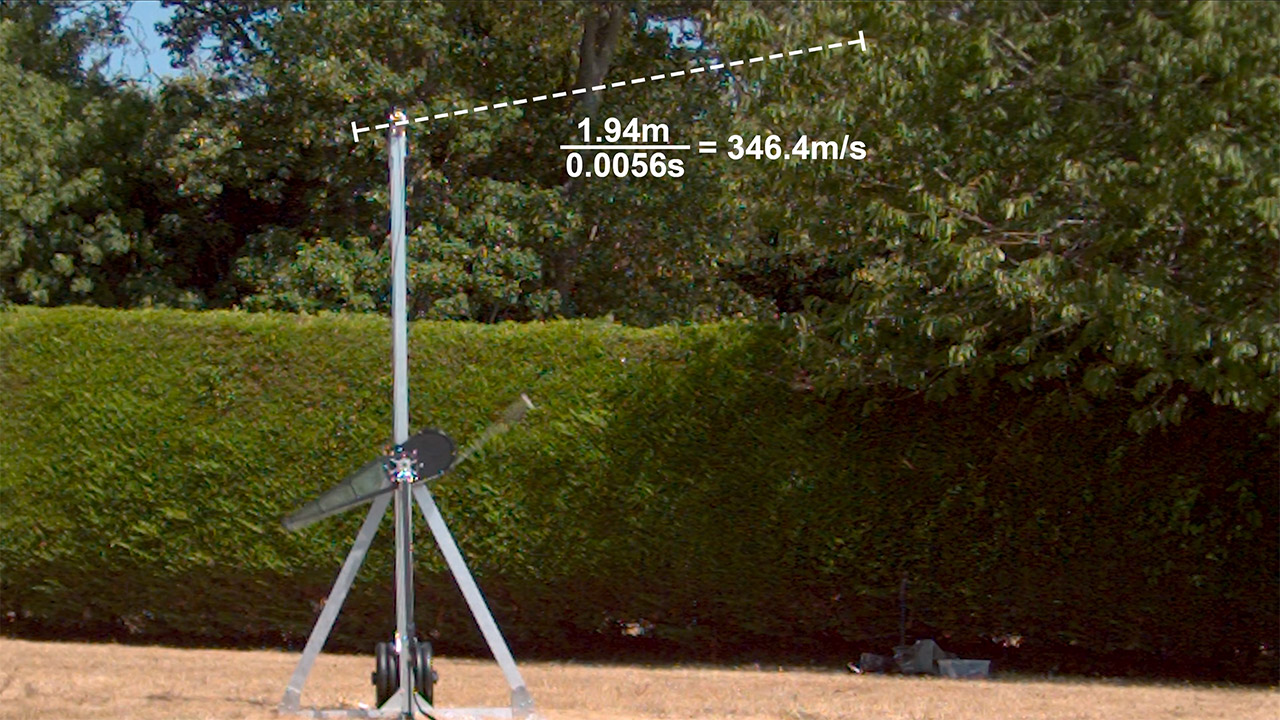
The final test is obviously the most important, since the arm spun up to 2342 rpm. Tip speed reached a staggering 274 mph. The high-speed footage was truly eye-opening, as the missile traveled 1.94 meters in 5.6 milliseconds. Crunching those statistics yields 346.4 meters per second, or a more than respectable 776 mph. To top it all off, there was a loud crack followed by a pleasant echo, confirming the sonic boom to everyone within earshot. Not one aspect of the machine came close to failing, or so we’d like to think.

Source link

Advertisement
Continue Reading

Tech

Xiaomi Sound Play review: a great-looking JBL rival, but it could sound a little better

Published

on

Why you can trust TechRadar


We spend hours testing every product or service we review, so you can be sure you’re buying the best. Find out more about how we test.

Xiaomi Sound Play review

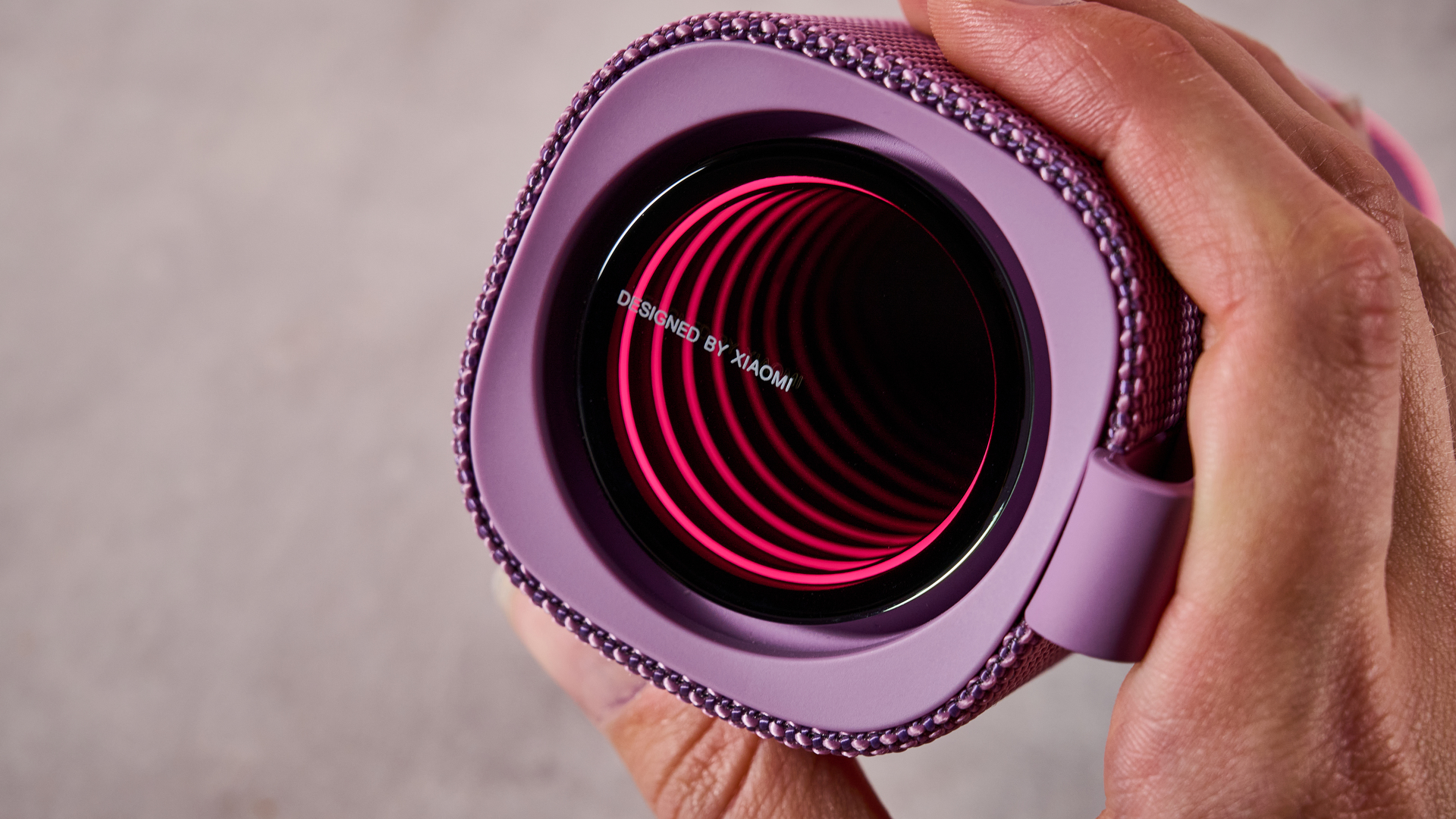
It turns out that major mobile manufacturer Xiaomi also makes Bluetooth speakers, and its latest model, the Xiaomi Sound Play, is aiming to deliver “immersive, powerful sound” as well as a “stylish and versatile” design.

But that’s not all. The tech giant is doing all of this while keeping its speaker nice and cheap. It comes in at just £49.90 (about $67 / AU$95) — which is refreshingly affordable for an 18W model with features such as smart lighting, Auracast, and IP68 waterproofing.

Advertisement

Source link

Continue Reading

Tech

Interview: Zoner Studio on skipping AI photo editing gimmicks

Published

on

I’ve been a fan of Zoner Studio since first reviewing it in 2025 – it’s a fusion of Lightroom and Photoshop-style tools for photographers, with some compelling advantages over both.

My team recently re-reviewed the photo editing and organizing software, complete with its big summer updates roll-out, where it earned an even higher score for 2026 (read our Zoner Studio review).

Source link

Continue Reading

Tech

Watch British Grand Prix 2026 MotoGP for FREE: Live streams

Published

on

The 2026 MotoGP season returns from its summer break as a fascinating riders’ championship battle resumes at Silverstone, the home of UK motorsport, for the British Grand Prix 2026.

Just 24 points separates the top five riders in the standings, with 2024 champion Jorge Martin (Aprilia Racing) leading SuperFile Trackhouse’s Ai Ogura by 14. However, the duo will be nervously looking over their shoulders after seven-time world champion Marc Marquez (Ducati Lenovo) roared back into contention with three wins in the past four grands prix having recovered from a fractured foot. He is only 18 points off the summit, while Martin’s Aprilia teammate Marco Bezzecchi is a further four adrift with Fabio Di Giannantonio of Pertamina Enduro VR46 Racing in fifth following a consistent first half of the season.

Source link

Advertisement
Continue Reading

Tech

Are USB Flash Drives Still Worth Using In 2026?

Published

on


The humble flash drive has come a long way over the years, yet there’s no shortage of internet experts telling you to stop using them, or that there’s no need for them anymore. You’ve been told to throw them out and stop buying them; you’ve been told they’re obsolete, or have gone extinct. If that old story sounds familiar, it’s because it is — the same things were said about CDs and vinyl records. Neither of those formats ever died. Vinyl has been enjoying increased sales since 2008 and hit $1 billion in sales for the first time in history in 2025. CDs and other physical formats, despite never leaving, are also part of a bigger shift back towards physical media. There are still a surprising number of new cars that offer CD players.

I bring this up because it’s a recognizable pattern in technology — a new format will supersede and displace the last. CDs displaced vinyl, MP3s took over after CDs, and streaming now dominates everything. You can trace the same pattern throughout the history of computer storage, from magnetic tape all the way to cloud storage. While older USB flash drives have declined in use in favor of portable SSDs or cloud storage, flash-based storage has not disappeared. And just because you have some older flash drives lying around, that doesn’t mean they’re not worth using — unless they’re very old, to the tune of USB 1.x or USB 2.0, in which case you should probably opt for newer ones.

Despite being overshadowed by the cloud, Wi-Fi 6E/7, and wireless file sharing like AirDrop or Quick Share, flash drives refuse to die. That’s because certain use cases still make them worth using in 2026, and they still tend to be more portable than external SSDs. 

Advertisement

Flash drives are dead; long live flash drives

The term flash drive in 2026 is murky; in the days of yore, before the advent of consumer SSDs, a flash drive only meant one thing, and that was the little thumb drive with an exposed USB-A connector. Nowadays, anything that uses NAND flash can technically be considered flash storage, although “USB flash drive” still usually refers to a small removable USB device. Just as HDDs have faded in use in favor of SSDs but still have their place, the same is true of flash drives.

In a world where everything is cloud-connected, powered by data centers, and requires user accounts, flash drives are the opposite — you plug them in, and they work. This makes them immune to the increasingly disruptive internet and cloud-service outages that can take down chunks of the web and the services that rely on it. Sometimes, simple is better. They are also reliable for large file transfers or one-time file transfers, especially in cases where internet service is slow or unreliable. Flash drives now come with USB 3.2 Gen 2 interfaces; certain flash drives can approach read-write speeds of 1,000 MB/s, which is several times faster than older USB 2.0 and 3.0 drives.

Advertisement

There is also the aspect of physical possession of local data, meaning the data isn’t sitting on a server where third parties have access to it. That data can also be shared or printed without having to upload or email it somewhere. USB drives are still handy for bootable OS media, so you can reformat and install an OS without an internet connection. You can also use USB drives for portable apps that you can use across different computers, without having to install them.

Advertisement

The line between flash drives and SSDs is becoming blurred

It needs to be said that in some cases, there is very little separating a flash drive from an external SSD — some flash drives are SSDs in all but name and form. In fact, there are a growing number of SSDs that are coming in the thumb drive form factor. Products like Adata SC750 and SK Hynix Tube T31 are actually SSDs that are roughly in the form of a USB stick. Many USB 3.2 Gen 2 flash drives now come in USB-C, but the presence of USB-C doesn’t necessarily mean it’s an SSD housed in a thumb drive. You can check out our picks for USB-C flash drives that are fast and worth the price.

The key differences that separate a flash drive from a proper SSD are usually the sophistication of the controller, the type and quality of flash used, and features like wear-leveling, which balances write activity across NAND cells and extends the drive’s longevity. Some SSDs also include DRAM cache. These are all things that a traditional USB thumb drive may not have or may implement in a much simpler form. With USB4 Version 2.0, we’re bound to see even more innovation in flash storage, but whether or not we can actually get USB4 Version 2.0 speeds in a flash drive remains to be seen.


Advertisement

Source link

Continue Reading

Tech

RPCS3 – Sony PlayStation 3 Emulator Download Free – 0.0.42-19699

Published

on

RPCS3 is a multi-platform open-source Sony PlayStation 3 emulator and debugger written in C++ for Windows, Linux, macOS and FreeBSD. The purpose of the project is to completely and accurately emulate the Sony PlayStation 3 Computer Entertainment System in its entirety with the power of open-source community and reverse engineering.

Our goal is to preserve the legacy of the PlayStation 3 hardware and its vast library by bringing it and its exclusives to the PC platform. We want to achieve this by targeting and supporting multiple operating systems as well as being compatible with a wide range of computer hardware with realistic requirements.

What input devices can I use with RPCS3?

We currently support keyboard / mouse inputs and native DualShock 3, DualShock 4 and DualSense controllers. We plan to add additional input methods in the future as we implement more meaningful features to the emulator.

What PlayStation 3 peripherals can I use with RPCS3?

We currently have support for the PlayStation Eye Camera, however PlayStation 3 Move controller support is still under development.

Can I just insert a PlayStation 3 game disc and start playing games?

In its current state, RPCS3 does not support reading game data directly from PlayStation 3 format discs. PlayStation 3 discs are formatted in a very special way that can only be read with an actual PlayStation 3 system, or a compatible Blu-ray drive from select manufacturers. For more information on what Blu-ray drives are capable of reading games, please refer to the Quickstart Guide.

Advertisement

Where do I get PlayStation 3 games and software?

Typically, you want to dump your own PlayStation 3 games and software from your own console. We believe that this is the most efficient and safest way to migrate your disc-based games and digital games from your console to your PC.

You can also dump games using select compatible Blu-ray drives. Not every Blu-ray drive will recognize PlayStation 3 games due to how data is formatted on the disc. For more information on what Blu-ray drives are capable of reading games, please refer to the Quickstart Guide.

RPCS3 uses the GNU General Public License Version 2 (June 1991). According to the license, you are welcome to use RPCS3 and its source code for any purpose, but distributing RPCS3 requires that the source code be released and attribution given. For more details on how the GNU General Public License system works, please refer to GNU.org

High Resolution Rendering

Advertisement

One of the most anticipated features has just been added to RPCS3! High resolution rendering allows users to play at resolutions far exceeding what the PS3 could handle. If you thought your favourite PS3 games were starting to look a bit dated, just wait until you get to experience them in up to 10k! Although, we doubt many users will have the setup necessary to benefit from 10k today, emulation is all about preserving for tomorrow.

Performance

Rendering a modern PC game in high resolutions such as 4k, while beautiful, is quite taxing on your hardware and there is often a massive hit in performance. However, since most of the workload for RPCS3 is on the CPU and GPU usage is low, there is a lot of untapped performance just waiting to be used. All processing is done CPU side, and as far as the GPU is concerned it is simply rendering 2006 era graphics (yes, the PS3 is 11 years old now). We’re happy to report that anyone with a dedicated graphics card that has Vulkan support can expect identical performance at 4k.

Anisotropic Filtering (AF)

Advertisement

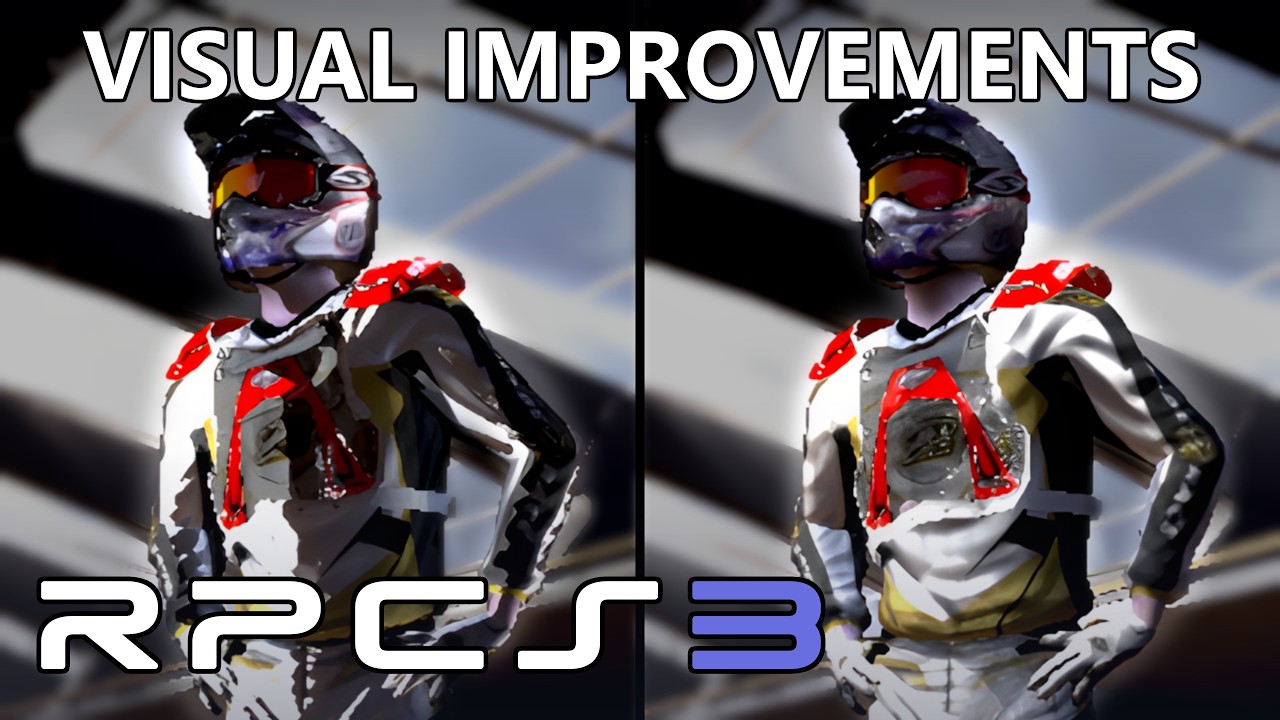
High resolution support wasn’t the only thing that was added in this update! Another reason for such a massive upgrade in visual fidelity is having full 16x AF support. This greatly improves how textures can look, especially when viewed at an angle. Take a look at the below screenshots of Ni no Kuni as an example of the default AF vs forced 16x. The difference is especially noticeable on the ground inside the gate.

RPCS3 Compatibility List

These are the current compatible games that have been tested with the emulator. This list is subject to change frequently.

What’s New

  • Remove duplicated code in VKShaderInterpreter.cpp by @digant73 in #18832
  • Add “Enable Mouse-based Gyro” setting to I/O config by @Windsurf7 in #18835
  • SPU LLVM: Use 128-bit SVE2 for FMS by @Whatcookie in #18837
  • SPU LLVM: Idiomatic FSM implementation for ARM64 by @Whatcookie in #18806
  • SPU LLVM: SVE multiply optimizations (ARM) by @Whatcookie in #18789
  • vk: Autogrow descriptor pools based on demand by @kd-11 in #18844
  • Initialize rtmidi async by @Megamouse in #18843
  • Make FFB direction encoding for emulated G27 configurable by @ZerNico in #18776
  • usb_device: present wii instruments as PS3 instruments by @sanjay900 in #18796
  • SPU LLVM: Use I8MM for GBH and GBB by @Whatcookie in #18833
  • Update Submodules by @Megamouse in #18840
  • HOTFIX: JIT/AArch64: advertise +i8mm to the LLVM target machine by @Rad0van in #18846
  • SPU LLVM: Use TBL for AArch64 ROTQBY shuffles by @Whatcookie in #18818
  • cellAudio: fix _mxr000 surmixer event-queue key constant by @Rad0van in #18850
  • RSX: Add hardware spin_wait helper, use it in flush requests by @Whatcookie in #18830
  • rsx: Handle mipmap sampling edge case when SNORM emulation is active by @kd-11 in #18860
  • cellAudio: Fix _mxr000 event queue hack by @elad335 in #18857
  • SPU/PPU: Implement PPU reservation priority over SPUs by @elad335 in #18854
  • rsx: Use mip0 resolution scale when computing mipmap scaling factors by @kd-11 in #18866
  • Qt: Add exit game shortcut by @Megamouse in #18869
  • SaveStates: Fix lv2_timer serialization by @elad335 in #18878
  • ffmpeg: remove directshow backend by @Megamouse in #18879
  • Fix drag & drop of files on main window by @digant73 in #18885
  • gui: Move download database actions from game list to Manage -> Database submenu by @Vishrut2403 in #18870
  • rsxaudio: fix some VS warnings by @Megamouse in #18886
  • gui: Play preview videos on row selection, not just hover by @thephilcoulson in #18721
  • Use more std::move by @Megamouse in #18868
  • Add integrity check to PSN Content, DLC and Game Update files by @digant73 in #18669
  • Fix visual studio projects by @Megamouse in #18889
  • Do not throw on hex_to_bytes error in iso get_key by @Megamouse in #18891
  • Optimise PNGs across the repo by @Chubercik in #18831
  • Use more std::string_view (Part 1) by @Megamouse in #18890
  • gl: Maintenance fixes by @kd-11 in #18874
  • Use opengl renderer in game window title by @Megamouse in #18895
  • Use more fmt::split_sv by @Megamouse in #18898
  • Stop playing gamelist movies when the window loses focus by @Megamouse in #18899
  • Use more std::string_view (Part 2) by @Megamouse in #18901
  • [SPU] Optimize CLZ on targets without AVX512 by @WalterKruger in #18900
  • sys_rsx: Fix IOMAP syscalls argument types by @elad335 in #18909
  • Fix std::string_view regressions by @Megamouse in #18908
  • Qt: use readable strings for window visibility in gui settings by @Megamouse in #18907
  • [macOS] Update runners to OS 15, raise minimum deployment target accordingly by @schm1dtmac in #18897
  • Add user agent to curl requests by @Megamouse in #18912
  • [SPU] Calculate FRSQEST exponent using arithmetic by @WalterKruger in #18905
  • Add missing sanity check in savedata_op by @Megamouse in #18918
  • Update pugixml to 1.16 by @Megamouse in #18904
  • fix double path delimiter by @digant73 in #18923
  • Use more std::string_view (Part 3) by @Megamouse in #18903
  • [SPU LLVM] Calculate FREST fraction using vperm2d for AVX512 by @WalterKruger in #18931
  • SPU Analyzer: Giga Block Crash Fix for Skylanders Giants by @chotchki in #18935
  • SPU LLVM: Use SVE2 XAR for constant rotates by @Whatcookie in #18849
  • [SPU LLVM] Refactor SHUFB to improve readability by @WalterKruger in #18937
  • Update wolfssl to 5.9.2 by @Megamouse in #18946
  • Update 7zip to 26.02 by @Megamouse in #18947
  • [SPU LLVM] Additional SHUFB splat/special-index fast paths by @WalterKruger in #18945
  • emulated turntable: allow to map motion sensors by @Megamouse in #18958
  • Add more motion control mappings to turntable and ghltar by @Megamouse in #18961
  • Fix consteval read_from_ptr and add sanity checks if possible by @Megamouse in #18963
  • Propagate src_loc in write_to_ptr and read_from_ptr by @Megamouse in #18967
  • SPU Precompilation: Add support for unaligned segments by @elad335 in #18968
  • Fix TTY UTF-8 logging by @Megamouse in #18969
  • settings: Default async with shader interpreter with no shader compilation hint by @AniLeo in #18956
  • Fix cellKb when using key modifiers on linux by @Megamouse in #18938
  • macOS: DJ Hero Turntable support (deck buttons, passthrough conflict) by @silvatyrant in #18957
  • Fix out of bounds read in Dimensions by @Megamouse in #18972
  • cellSysmodule implementation by @capriots in #18962
  • [SPU ASMJIT] Vectorized 16-bit variable shifts for SSE2 targets by @WalterKruger in #18911
  • SPU LLVM: Use ARM USHL for masked infinite shifts by @Whatcookie in #18816
  • PPU LLVM: Fix core_lock locking by @elad335 in #18774
  • SPU: Comparisons via multiplications for ARM, checksums via absolute difference, and rolled loops by @Whatcookie in #18824
  • Fallback unsupported database SPU decoder on ARM64 by @cicerohellmann in #18651
  • sysinfo.cpp: Relax TSC calibration constraints by @elad335 in #17909
  • cellSysmodule: fixup by @capriots in #18977
  • Fix VSH on ARM64: Memory management fixes by @elad335 in #18707
  • cellSysmodule: fixup (part 2) by @capriots in #18978
  • Move unsafe raw pointer write_to_ptr and read_from_ptr to write_to_ptr_unsafe and read_from_ptr_unsafe by @Megamouse in #18975
  • Update Submodules by @Megamouse in #18980
  • Extra logging for GUI notifications by @RipleyTom in #18988
  • input: fix arrow key mapping roundtrip on macOS ARM by @Icnopandaz in #18920
  • Bump global savestate version by @capriots in #18989
  • VK: fix video_out_calibration_pass::get_fragment_inputs by @Megamouse in #18952
  • Add OpenCV 5 Support by @hcorion in #18998
  • Update fusion to 1.3.0 by @Megamouse in #19008
  • Update curl to 8.21.0 by @Megamouse in #18943
  • Fix PS1 classics shortcuts by @Megamouse in #19012
  • [SPU LLVM] Refactor SELB to improve readability by @WalterKruger in #19002
  • [SPU ASMJIT] Optimize xfloat compares and multiply by @WalterKruger in #19025
  • IDM: Optimize search for concurrency by @elad335 in #19027
  • sys_fs: Fix ENOTDIR check for paths ending with /dot or /dotdot by @elad335 in #19028
  • Update fusion to 1.3.1 by @Megamouse in #19030
  • PPU LLVM: Optimize vector NaN handling for AVX512 by @Yahfz in #19033
  • PPU LLVM: Optimize vector denormal handling for AVX512 by @Yahfz in #19034
  • [SPU LLVM] Replace constant float checks with LLVM’s KnownFPClass analysis by @WalterKruger in #19043
  • PPU LLVM: Accelerates NJ handling in FTZ environment by @elad335 in #19040
  • metainfo: Update screenshot preview by @AniLeo in #19044
  • qt: Fix save manager crash when deleting multiple entries by @ProtoJay4789 in #19019
  • Revert SPU Reduced Loop Optimizations to fix Arm64 regressions by @elad335 in #18979
  • SPU: Revert LQX/STQX reduction by @elad335 in #19050
  • [SPU LLVM] Use select in FMA to shorten its dependency chain by @WalterKruger in #19052
  • pad settings: Fix for clearing bindings by @Megamouse in #19054
  • Add more info to VFS exceptions by @Megamouse in #19055
  • [macOS] Update to the latest MoltenVK 1.4.2 prebuilt by @schm1dtmac in #19059
  • atomic: Fix BSD compilation by @AniLeo in #19061
  • LLVM: Improve v128 constant extraction by @elad335 in #19064
  • Fix: get_known_bits fix by @RipleyTom in #19051
  • cli: allow to boot last savestate of a game by @Megamouse in #19067
  • Qt: add guest memory dump utility by @canersaka in #19068
  • Qt: move guest memory dump code to own class by @Megamouse in #19070
  • rsx: Clean up the shader interpreters by @kd-11 in #19084
  • Update llvm to 22.1.8 by @Megamouse in #16807
  • rsxfp/interpreter – Implement missing texture functionality by @kd-11 in #19090
  • Fix package install failure warning message by @Megamouse in #19096
  • Fix recording encoder selection by @Megamouse in #19063
  • Fix DLC installation by @Megamouse in #19097
  • SPU/ARM64: Fix PS1 classics and RawSPU Games by @elad335 in #19088
  • vk: remove unused setting by @Megamouse in #19099
  • Replace some abort() calls with fmt::throw_exception by @Megamouse in #19094
  • Remove outdated LLVM ifdefs by @Megamouse in #19092
  • Fix value assignment in iota16 by @isztldav in #19105
  • Fix 1st regression on black textures in Sonic Generations by @digant73 in #19091
  • Add game invite handling to friends overlay #18417 by @primetime43 in #19108
  • UI/UX: Add Categories Broken and Completed to Filter Game List by @Darkhost1999 in #19106
  • add missing vids and pids for wii MPA devices by @sanjay900 in #19111
  • Allow to skip empty strings in fmt::merge by @Megamouse in #19110
  • rsx: Implement proper fix for incomplete image reconstruction in the texture cache when WCB is disabled by @kd-11 in #19104
  • rsx: Fix interpreter error spam due to incorrect format lookup by @kd-11 in #19113
  • ci/bsd: Update FreeBSD to 14.4, use LLVM 22 while keeping clang-devel by @AniLeo in #19116
  • rsx: fix some msvc warnings by @Megamouse in #19115
  • [SPU LLVM] Shorten FI’s dependency chain and fix SNaN clamping issue by @WalterKruger in #19107
  • ci/bsd: Compile with clang 22 by @AniLeo in #19119
  • overlay: Add trophy list sorting options by @Vishrut2403 in #18965
  • rpcs3_version: Bump to 0.0.42 by @AniLeo in #19121

Source link

Advertisement
Continue Reading

Tech

AI agents are part of your team now. Here’s how to secure all of them.

Published

on

Presented by JumpCloud


A practical framework for securing every identity in the modern workforce, human or not.

Your organization already has a rigorous process for governing human identities. New employees go through onboarding. They get a role, a set of entitlements, and a named manager accountable for their access. When they leave, their credentials are revoked and access is terminated. It’s a well known IT process: every workforce identity that can access your systems needs to be known, scoped, and accountable from the moment they enter your world, to the moment they are off-boarded.

AI agents are now operating inside those same systems. They access Salesforce, create tickets in Jira, provision infrastructure, process financial transactions, and communicate on behalf of your teams. In every meaningful sense they are members of your workforce, except that in most organizations they were never onboarded, have no named owner, and have no offboarding process when their purpose expires.

Advertisement

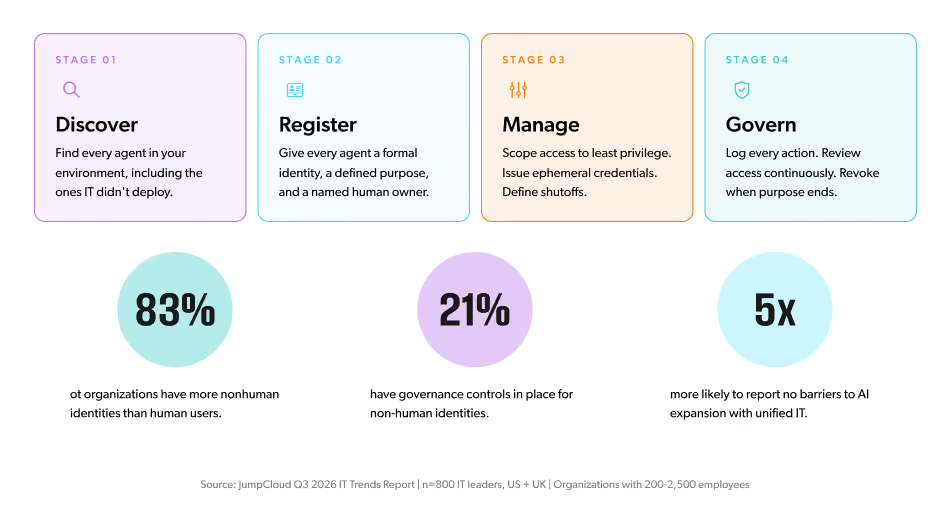
JumpCloud’s Q3 2026 research found that non-human identities now outnumber human users in 83% of organizations, and only 21% have implemented governance controls specifically for them. The framework below is designed to close that gap.

Graphic

Stage 1: Discover every agent operating in your environment

Governance starts with an accurate inventory, and most organizations are working with an incomplete one. AI agents are being deployed by product teams, operations leaders, and individual contributors who have both the tools and the motivation to move fast. IT inherits the governance responsibility after the fact, often without knowing the full scope of what has been deployed.

Shadow AI is the practical consequence: agents operating across production environments with no formal record, no defined owner, and no systematic way to stop them if something goes wrong. Discovering your agent population is an ongoing practice, not a one-time audit. Build an inventory across every environment where agents could be running: cloud platforms, managed devices, SaaS integrations, and on-premise systems. For each agent, document what it can access, what workflows it influences, and what triggers its actions. That inventory is the foundation everything else in this framework depends on.

Stage 2: Register every agent as a formal identity with a named owner

Every agent that operates in your environment should exist as a formal identity in your directory, with the same basic attributes you assign to any employee: a defined purpose, a scope of authorized action, and a named human owner who is accountable for its behavior.

This is the architectural decision that separates organizations that can govern their agents from those that cannot. Agents registered as proper identities can be assigned entitlements, subjected to conditional access policies, and included in access reviews. Agents that exist only as service account workarounds or API keys in environment variables are ungovernable by any systematic means.

Advertisement

Registration is also the mechanism for addressing Zombie Agents: agents that outlived their original purpose but kept running, kept accessing systems, and kept accumulating permissions. When every agent has a named owner responsible for its renewal, agents without active ownership naturally lose their access when that ownership lapses. The offboarding happens as a consequence of process rather than as a reactive cleanup after something breaks.

Stage 3: Manage agent access with least privilege and zero standing credentials

Registered agents need access to do their jobs. The governing principle for that access is least privilege: each agent should have entitlements scoped precisely to what its defined purpose requires, with access that is time-bounded wherever possible and revocable immediately if the agent’s behavior changes.

Standing credentials in environment variables are a persistent liability. Static API keys that never rotate are a persistent liability. In practice, managing agent access securely means issuing just-in-time credentials for privileged operations, building approval workflows that require human sign-off before agents reach sensitive systems, and maintaining emergency shutdown mechanisms that work at the speed the situation requires.

For agents that need access to privileged web applications, SSH servers, or databases, credential shielding is an additional requirement: the agent should be able to complete its task without the underlying credentials ever being exposed to the model running it. Every privileged session should be recorded and available for audit.

Advertisement

Stage 4: Govern agent behavior continuously, not just at deployment

The first three stages establish the controls. Governance is what keeps them current. It is the ongoing practice of verifying that what agents are actually doing matches what they are authorized to do, and course-correcting when those diverge.

Every agent action should be logged. Access reviews should happen on a regular cadence, evaluating whether each agent’s entitlements remain appropriate for its current purpose. When an agent’s behavior deviates from its defined scope, the anomaly should be detectable before it becomes an incident. When an agent’s purpose ends, access revocation should be a procedural step, not a reactive measure triggered by something going wrong.

Governance also means maintaining the audit trail needed to answer accountability questions: what did this agent access, what actions did it take, who authorized it, and what was the outcome? Organizations that cannot reconstruct that chain for any given agent are not governing their agents in any meaningful sense. They have deployed them and hoped for the best.

The foundation underneath all four stages

Each stage of this framework becomes significantly harder to execute when the underlying IT environment is fragmented. Identity, access, device management, and security controls spread across disconnected systems create the gaps where agent governance falls through, and organizations end up applying different policies in different places rather than consistent governance everywhere.

Advertisement

JumpCloud’s research found that organizations operating in fully unified IT environments are five times more likely to deploy agents in business-critical workflows than those running fragmented stacks. Whether the control layer is coherent enough to apply consistent policies across humans, devices, and agents simultaneously is what determines whether governance scales with AI adoption or lags behind it.

This is the core premise of Agentic IAM: that governing humans, devices, and agents through a single coherent control layer is what makes the framework above executable at scale rather than aspirational.

Securing every identity, human or not, is the operational foundation that makes AI safe to scale. Organizations that build it now will not just reduce risk. They will expand AI into more workflows, move faster, and do it with the confidence that comes from knowing every identity in their environment is known, governed, and accountable.


JumpCloud’s Q3 2026 IT Trends Research report (n=800 IT leaders, US + UK) is available here. The Agentic IAM lifecycle framework referenced in this article was developed by JumpCloud and is available here.

Advertisement

Greg Keller is CTO and Co-founder at JumpCloud.


Sponsored articles are content produced by a company that is either paying for the post or has a business relationship with VentureBeat, and they’re always clearly marked. For more information, contact sales@venturebeat.com.

Source link

Advertisement
Continue Reading

Tech

Think mode, more accurate, free chatting

Published

on

OpenAI continues to churn out upgrades to its various GPT models, the latest GPT-5.6 promises to be more succinct and provide confident wrong answers less often. Here’s what’s new.

Apple and OpenAI have a relationship where ChatGPT is an extension for the previous version of Siri, though that could come to an end soon. The latest updates don’t affect users of that specific function, but the Mac utilities and iOS app will gain new features and performance.

Now, we’re going to have to sift through OpenAI’s anthropomorphized language of its chatbot models to understand exactly what’s being introduced here. The press release says a lot about “thinking” versus instant answers, but always remember: artificial intelligence can’t think, reason, understand, or sympathize.

GPT-5.6 Sol appears to be a release hoping to address several concerns brought up by users of ChatGPT. They often complain it uses too many filler words, takes too long to get to the point, and provides affirming answers even when the user is wrong.

Advertisement

ChatGPT caveman

According to the release, GPT-5.6 Sol provides “more focused answers, adapts its level of detail to the question, avoids unnecessary formatting, and offers a helpful correction when simply agreeing wouldn’t be useful.” These problems have become so well known and bothersome users have turned to skills like “caveman” to force ChatGPT to be brief and direct.

SiriAI chat with weather information on the left and ChatGPT on the right side by side, showing hourly forecast, temperatures, wind details, and conversational guidance about rain, clothing, and conditions for the rest of the day

SiriAI gets to the point, while OpenAI does shows some restraint

The example provided by OpenAI looks incredibly similar to what a user might see when using Siri AI. A brief summary of a weather result with a weather widget is shown instead of a wall of text padded with filler.

Incredibly, the release mentions “more reliable facts.” Hallucinations are a part of AI no matter how many guardrails are introduced, so it’ll be interesting to see if OpenAI has actually accomplished this in a meaningful way.

Advertisement

For example, Siri AI tends to avoid hallucinations by not summarizing content when possible. When you ask a question, the source is quoted and linked directly, which ensures random incorrect information isn’t inserted. Of course, that’s only if the answer is correct in the first place.

While AI tools can be used for research, AppleInsider strongly urges users to avoid any AI-generated content from appearing in a finished work. Lawyers, doctors, and financial advisors have encountered horrific problems when relying too heavily on AI to perform their work.

No amount of promises and fixes from OpenAI will create a foolproof AI tool.

A “Think” button

If you’ve used Siri AI, you might notice that the same question can sometimes produce very different results in terms of detail. That’s because on-device models are much smaller and seek an end result that is much less computationally expensive versus server-side models.

Advertisement
Close-up of a sleek tablet corner showing colorful app icons and widgets on the screen, with a dark blurred background emphasizing the thin metallic edge

Apple and ChatGPT have similar ideas on how to approach AI chatbots

Apply that same idea to ChatGPT “Thinking” and Instant modes, and you’ll understand what’s happening. Previously, these two models would be so different that the answers would vary wildly in tone or style.

The names say what they do: Thinking takes longer with a heavier model while Instant is fast with a smaller model. There’s also a new “thought” slider.

This terrible naming convention is yet another attempt to humanize the chatbots, but basically, think of it as a compute slider. Lower means less compute, faster results, while higher means more compute, longer, more detailed results.

Advertisement

Obviously, OpenAI hopes users will change the slider for more simple queries that don’t need a lot of information resources. It’s computationally less expensive, uses less tokens on input, and likely means less tokens on output.

That’s likely going to be useful for private ChatGPT use, but corporate users never bother. Research shows that OpenAI’s most expensive ChatGPT users are in an office, choosing the most complex GPT version available, and doing so to convert a PDF into a slideshow.

It’s wasteful and expensive, especially for OpenAI, which is likely giving that compute time away at a bargain. Sliders would be helpful for the company that can’t turn a profit, but not if users just ignore them.

Free GPT

Free users are also getting an upgrade as everyone will default to GPT-5.6 Luna and gain a “Think” button for questions users believe are harder.

Advertisement
White smartphone lying face down on dark fabric, featuring a black circular pin with a colorful intertwined outline in pink, orange, yellow, green, and blue near the Apple logo

AI is a tool that is now easily found on your iPhone, which is a problem for OpenAI

Analyzing such an update can provide interesting insight into OpenAI. It’s priorities as a company providing AI to the masses while developing a HomePod that can wiggle is interesting. Especially given the Apple lawsuit.

One of the biggest reasons why OpenAI has such a large valuation is because it released a powerful technology and essentially gave it away for free. Like Spotify, the free use of this technology is draining the company and all that keeps them afloat are whales and investors.

The AI bubble is teetering on collapse, or is at least deflating, even as consumers tire of AI as a concept. It isn’t clear if OpenAI will find its footing before it runs out of cash sometime in 2028, or if everything comes crashing down around it.

Advertisement

As an Apple fan, the whole thing is a train wreck observed in real time. Sure, it took two years for Apple to find the right path forward with AI and execute that plan, but it spent pennies on that compared to its competitors.

Source link

Advertisement
Continue Reading

Tech

Flat-Top or Grated Grill? A Pitmaster Weighs In

Published

on

There are real draws to flat-top cooking. I asked an award-winning pitmaster for a breakdown of the trendy grill type.

Andrew Collins

Just when we all thought we had grilling figured out, flat-top grills burst on the scene and offered another buying decision for outdoor cooking. I grew up on grated grills, and they’re still the most widely used style in the US, whether powered by wood pellets, charcoal or gas, but this new flavor offers a slightly different take — and some real benefits — with regard to the time-honored summer tradition.

At its core, “grill” means the direct application of high heat even if it has become synonymous with a slatted cooking surface. If you’ve struggled with the feeling that you’re supposed to use a grill during warm months but find yourself looking for excuses not to use it — either because it’s too hard to clean or because you can’t seem to get it right — a flat-top model might be the answer.

The 9 Best Grills Out of 30 We Tested

The 9 Best Grills Out of 30 We Tested

Advertisement

So, is a flat-top grill worth it? I consulted a seasoned grillmaster, Erica Blaire. The former attorney and licensed sommelier is also a Food Network BBQ Brawl champion and voracious outdoor cooking ambassador. Blaire offered insight into the nuances of flat-top cooking and whether it might be right for you.

What is a flat-top grill and how does it work?

a large weber griddle anchors a serene patio

Flat-top grills have become popular. There’s less daily cleaning but slightly more ongoing maintenance to consider.

Weber

While the term may be obvious to some, many people associate flat tops with indoor cooking, such as on a griddle. “A flat-top grill is basically a griddle,” says Blaire. “You’re going to be searing. You’re not smoking, and you’re not grilling in the traditional sense,” she said. With a flat-top grill, “you are searing on a uniformly hot surface with no airflow underneath it.”

Flat-top grills feature a flat, solid metal cooking surface with zones powered by individual burners, depending on the model’s size. While many small griddles are available for indoor use, some of which can sit directly on your kitchen range for heat, outdoor flat-top grills are typically electric or gas-powered. 

What can you use a flat-top grill for?

weber griddle

Smashburgers, pancakes, and home fries are just a few flat-top grill foods you can make with ease.

Weber

Consider your typical grill fare or outdoor cooking needs, then ask yourself whether a griddle or flat top might be a better fit than a traditional grill.

Advertisement

“For a flat top, you’re thinking burgers — especially smashburgers — you’re thinking fajitas,” Blaire said, as well as other batch preparations that are entirely out of the grill’s league, like fried rice, eggs and anything that you’re worried would too easily slip through the grates or that which otherwise regularly misbehaves on a traditional grill. (Looking at you, salmon.)

“Because you’re getting such high temperatures and such uniformity on a flat-top surface, the sky’s the limit on what you can do,” she said, which of course also includes the ultimate grill expression: steaks.

Many chefs say cast iron the absolute best way to cook certain types of steaks, even during grilling season; an outdoor flat-top grill offers the same functionality, letting you really crank the heat without smoking up your whole kitchen.

“If you’re doing super thin cuts like a flank steak or a skirt steak, on a griddle, you’re able to get the outside perfectly seared but keep the inside super moist and have lots of flavor without worrying about drying it out,” Blaire said.

Advertisement
Blackstone breakfast set

You wouldn’t want to try pancakes on a grated grill.

Blackstone

What’s more, “with a traditional grill, you’re fighting against the open spaces,” said Blaire, “so all the sauces, those butters, and your herbs or other aromatics may end up in the void. With a griddle, you can put everything on there, and it’s going to stay.”

Maintaining and cleaning a flat top grill

A seasoned griddle sitting on a patio.

Flat-top grills need seasoning much like a cast-iron skillet.

Chris Wedel/CNET

Like a good cast iron, preparing a flat top by seasoning it goes a long way toward making your life easier every time you use it. “Using a thin layer of oil with a high smoke point, you turn up the heat until the oil smokes,” said Blaire, “then let it cool, and do it a few more times, wiping away any excess.” This essentially gives you a nonstick surface.

The particular challenge with a flat-top grill isn’t so much cleaning it, which can be extremely easy, especially if you’ve seasoned it; the challenge is timing the cleaning. “A lot of times after you use a flat top, you might just go eat, and think you’ll get to it later,” said Blaire, “but now you’ve ruined your life because it doesn’t have the holes and the void spaces in it, like a grill does.”

chicken cooking on griddle with grease pouring out

If you’re not ready to go full force, you can buy a griddle attachment for your grated grill.

David Watsky/CNET

A flat top really needs to be cleaned right away, or at least while it’s still warm, so you’ve got a moment to start enjoying the fruits of your flat top labor, but in the pause you risk forgetting about it until after it has cooled. “When a flat top dries and cools, everything is stuck on there,” Blaire says. “So you’re going to be having to take a scraper and use a lot of arm power, but if you clean your griddle as soon as you’re finished cooking, and while it’s still warm, you wipe it down and it’s done.” Most flat tops designed for outdoor cooking also have a small well or catcher for the bits and scraps that collect during the wiping-down process.

Advertisement

Read more: A Step-by-Step Guide to Griddle Cleaning

The cleaning factor is an important consideration for an outdoor cooking host, especially if you have a personality type that makes your life difficult every time you use the flat top. Basically, a flat-top grill can be much easier to clean than a grates grill, but it can also be much harder.

How much does a flat-top grill cost?

A flat-top grill ready to use with it's lid open.

Blackstone’s flat-top grills start at around $300.

Much like charcoal or gas grills, there’s a real range to what you can spend, depending on your size needs and budget. “It really depends on what you’re trying to get, because now every brand is making options in affordable tiers for all levels,” said Blaire.

A quick look at Amazon shows that many standing flat-top grills range in price from about $250 to $700, depending on what accessories you might want included, such as prep shelves and utensil hooks, with a little savings if you’re looking for a tabletop camping model.

Advertisement

Premium models, including complete outdoor flat-top cooking islands, can go from $700 and well beyond. The good news, according to Blaire, is that nearly any flat-top model will get the job done. “As long as all the burners work and the surface level gets hot, you’re good to go,” she said, whereas grated grills that include lids and multiple cooking levels have a lot more factors to consider in terms of value versus functionality.

So you know, for less than $100, you can even get a flat top surface to sit on top of your grated grill — in case you’re reading this and bemoaning the fact that you already own the wrong type for you.

Source link

Continue Reading

Tech

Security researchers scanned the Polish web and found courts, hospitals, and airports at risk of hacks

Published

on

Two Polish security researchers wanted to find out how vulnerable their country’s internet was to potential cyberattacks and quickly found that thousands of public agencies and websites were at risk of being hacked.

At the Def Con cybersecurity conference in Las Vegas on Friday, security researchers Robert Kruczek and Kamil Szczurowski said they wanted to understand the state of Poland’s public web out of a sense of patriotism and a desire to make it safer for everyone. 

Before long, the duo discovered more than 10,000 affected public entities with 250,000 websites with security flaws, including airports, hospitals, and government offices. 

The researchers found that some of the vendors’ buggy software, coupled with a lack of bug bounties and ways to report security flaws, are putting Poland’s public services at risk of hijacks and other attacks. The researchers also said that some bugs were incredibly easy to exploit but were not always taken seriously, with some vendors describing the bug reports as inconveniences.

Advertisement

The research comes as Poland is trying to shore up its cyber defenses after a wave of suspected Russian hacks targeting the country’s energy and water providers. Some of the hacks have been carried out by taking advantage of weak cybersecurity. 

Kruczek and Szczurowski found critical vulnerabilities in the widely used content management system Pad CMS, which allowed them to easily access over 300 public websites without needing a password. The software developer did not patch the software because it had become “end of life” and was no longer supported.

Another bug allowed them to gain access to the websites of some two-thirds of Poland’s judiciary, or about 245 courts, they said.

The duo reported their findings to the government through various official channels.

Advertisement

The researchers said during their talk that it was ultimately worth the hassle, saying that as a result we are “a little bit more safe.”

When you purchase through links in our articles, we may earn a small commission. This doesn’t affect our editorial independence.

Source link

Advertisement
Continue Reading

Trending

Copyright © 2025