Connect with us

Sports

“I would’ve knocked him out”: Fighter who retired undefeated says Manny Pacquiao avoided him

Published

on

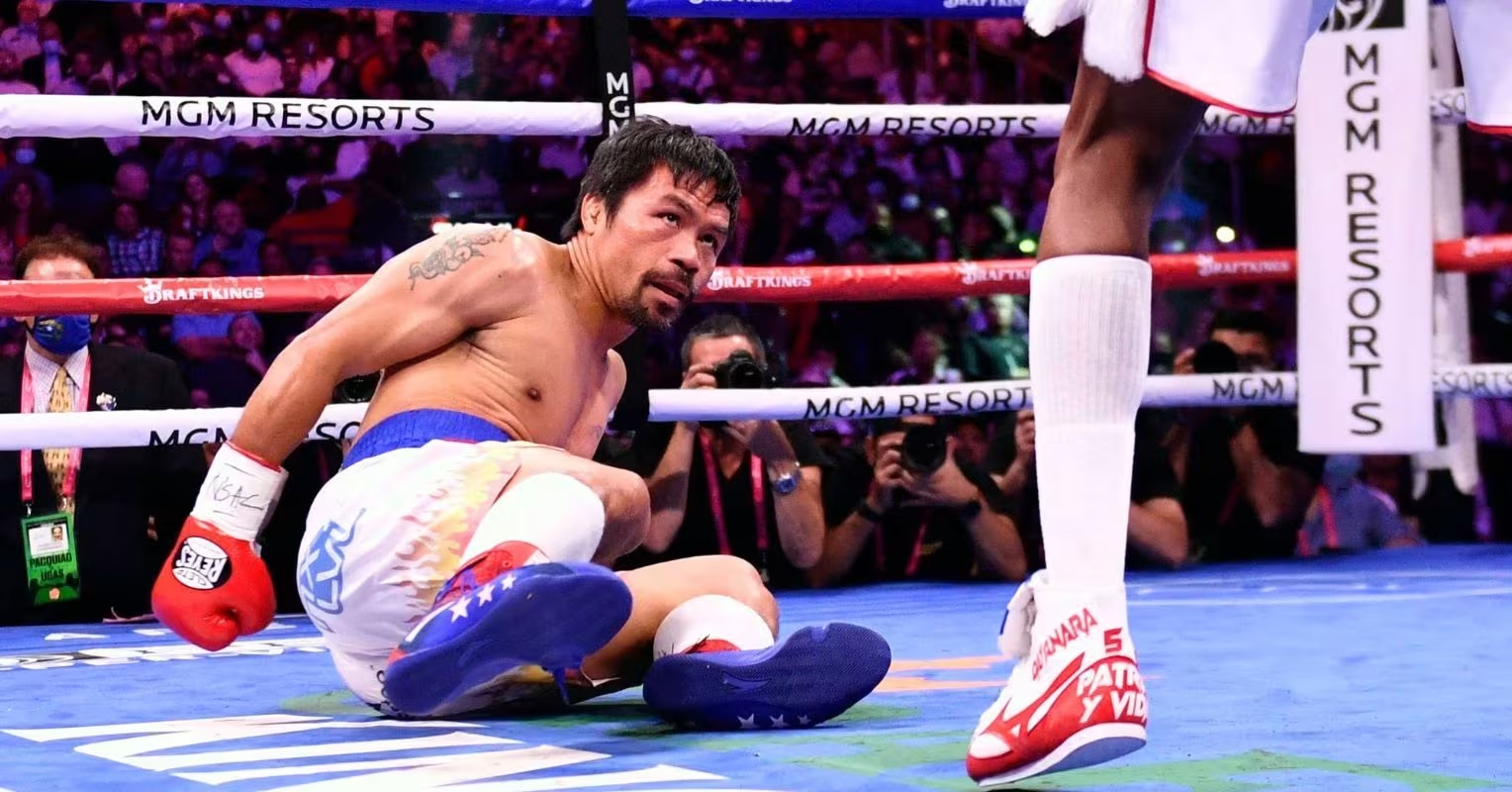
While never quite securing the opportunity to do so, a former world champion has claimed that he would have “1000%” knocked out Manny Pacquiao.

The Filipino icon was only stopped three times in his 73-fight Hall of Fame career, with the first two occasions arriving when he was competing down at flyweight.

After suffering a third-round stoppage defeat to Rustico Torrecampo in 1996, when he was just 17 years old, the eventual all-time great encountered the same fate in his WBC title challenge against Boonsai Sangsurat around four years later.

Advertisement

More notably, Pacquiao would eventually get knocked out by Juan Manuel Marquez in 2012, by which time he had already become an eight-division world champion.

But while ‘Pac Man’ was a typically durable customer throughout his career, Terence Crawford believes he would have become one of the very few to stop him.

The pair were actually in talks to collide in 2020, back when ‘Bud’ held the WBO welterweight title and Pacquiao was the WBA 147lb champion.

As it happened, though, Pacquiao was subsequently scheduled to face Errol Spence Jr in another unification match, only to lose his title to late replacement Yordenis Ugas after ‘The Truth’ pulled out with an injury.

Advertisement

Crawford has therefore told Above The Rim that, had their showdown come to fruition, it would have been him standing triumphant in the opposite corner, but still maintains that the Pacquiao team ‘didn’t want it.’

“That’s the only person I wish I would’ve got the opportunity to fight. [I would’ve] 1000% [knocked him out]. Numerous times, we were lined up to fight each other. They didn’t want it.”

Interestingly enough, Pacquiao has previously said that, while he would have loved to fight Crawford, it always felt as though Top Rank promoter Bob Arum was ‘preserving’ him.

Advertisement

Source link

Continue Reading
Click to comment

You must be logged in to post a comment Login

Leave a Reply

Sports

Eala and Bencic share a lot in common as far as their games go—but have vastly different crowd behavior preferences

Published

on

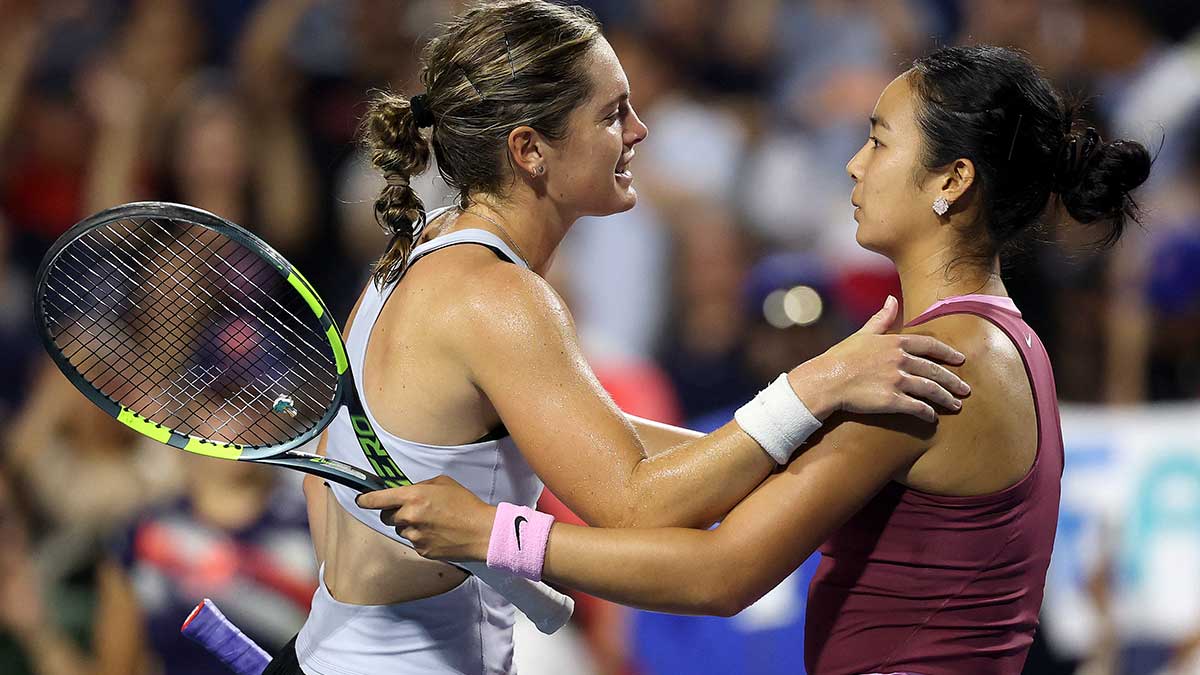
The world wondered what Caty McNally (left) told Alex Eala after their match. —AFP PHOTOThe world wondered what Caty McNally (left) told Alex Eala after their match. —AFP PHOTO

The world wondered what Caty McNally (left) told Alex Eala after their match. —AFP PHOTO

Alex Eala, that crowd-drawing, cheers-eliciting WTA star from the Philippines, and Switzerland’s Belinda Bencic have a lot in common as far as their game styles are concerned.

Both play with a lot of guile, like to take the ball extremely early, hit returns by using the incoming velocity against their foes and grind out points with torrid baseline games.

Article continues after this advertisement
Advertisement

That’s before what comes what they like—and hate—playing in the most.

While the 21-year-old Eala has transformed how tennis matches all over the world are now being watched—and how she fuels herself using the noise of the throng she commands—Bencic likes to play in a super-quiet atmosphere as they part ways on Monday morning in Manila in their round-of-16 clash in the National Bank Open in Toronto, Canada.

“I think it’s great,” Osaka had said of the Eala crowd in Washington after seeing a practice court filled to the brim because Eala was on it. “I think it’s really cool she’s building a new community [of fans].”

This preference of Bencic’s was known on the eve of their first clash, when videos of the Swiss despising crowds in one of her recent matches have made the rounds on social media. That patience of hers will be put to the test when she battles the red-hot Eala for a place in the quarterfinals of the WTA 1000 event.

Advertisement
Article continues after this advertisement

Bencic is a lone wolf in that regard, as a number of the game’s biggest stars see Eala as a blessing for their tour, with Caty McNally of the United States—though far from being the retired Serena Williams and four-time Grand Slam winner Naomi Osaka—making her feelings known when she lost to the Filipino ace in a party-like atmosphere on Saturday morning in Manila.

“She told me congratulations and she said, ‘thanks for letting me be a part of this,’ which is incredibly kind and gracious from her,” Eala said in a post-match conference after her 6-3, 5-7, 6-4 victory. “I think it’s super gracious and a lot of respect for Caty.

“I think there was a huge mutual respect for the great match that we had,” Eala said.

Advertisement
Article continues after this advertisement

“I think it was a really tough match today for many reasons, one being also that Caty is such a big fighter,” Eala went on in praise of McNally. “I think she’s got definitely some good weapons and, yeah, it was a tight one.”

Eala has won her last seven matches, the first five of those resulting in her first tour title in Washington after she came back from a set down to clip American Jessica Pegula in the Mubadala DC Open final.

Pegula later praised Eala and her rabid supporters, saying that such a thing is great for tennis, or something to that effect.

Advertisement


Your subscription could not be saved. Please try again.


Your subscription has been successful.

The popular Filipino will be coming into her match with Bencic still nursing the ill-effects of a slightly twisted ankle against McNally and two three-setters. Bencic will be the fresher of the two after playing a combined five sets in dispatching of Taylor Townsend and Sloane Stephens. INQ

Advertisement

Source link

Advertisement
Continue Reading

Sports

Football Transfers: Premier League leads record-breaking spending spree | Football News

Published

on


The summer transfer window has barely reached its climax, but European football has already witnessed a remarkable spending spree.


Premier League clubs, in particular, have once again dominated the market, accounting for a large share of the biggest deals completed so far. From record-breaking British transfers to ambitious moves involving Europe’s biggest clubs and the growing financial power of Saudi Arabia, the 2026 summer window has provided another reminder that football’s transfer market has become an industry of enormous numbers.


Advertisement


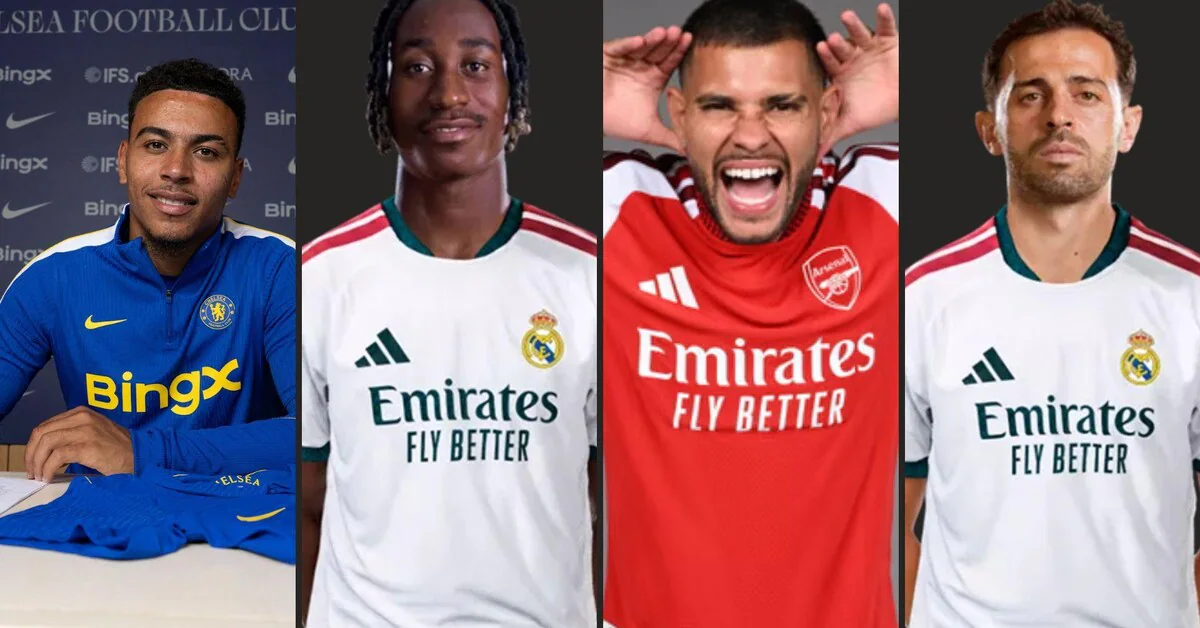
The biggest completed deals so far include Morgan Rogers’ £117 million move from Aston Villa to Chelsea, Elliot Anderson’s £116 million switch from Nottingham Forest to Manchester City and Sandro Tonali’s £92.5 million transfer from Newcastle United to Tottenham Hotspur.


But the headline figures only tell part of the story.


Advertisement


Behind the spending is a wider change in the way clubs are building squads, with midfielders commanding enormous fees, Premier League clubs increasingly selling players to one another for record amounts and clubs outside the Champions League refusing to sit quietly in the market.


Premier League money continues to dominate 


Advertisement


The Premier League’s financial strength remains one of the defining features of the transfer window.


Of the biggest deals completed so far, the overwhelming majority involve English clubs either buying or selling. That has created an unusual situation in which Premier League clubs are increasingly competing with, and sometimes outbidding, one another for players.


Advertisement


Chelsea’s £117m purchase of Rogers and Manchester City’s £116m deal for Anderson are the clearest examples.


Tottenham’s £92.5m move for Tonali and their £85m acquisition of Mateus Fernandes further demonstrate the willingness of English clubs to spend heavily even without the financial boost that comes from Champions League football.


Advertisement


The market has effectively created its own economy.


A player who might once have been sold to a European giant for a relatively modest fee can now command enormous money simply by moving from one Premier League club to another.


Advertisement


For selling clubs, that is difficult to resist.


For buying clubs, it means the cost of assembling a competitive squad continues to rise.


Advertisement


The era of the £100m transfer is no longer exceptional 


There was a time when a £100m transfer represented a once-in-a-generation event.


Advertisement


That threshold is beginning to feel less extraordinary.


The Rogers and Anderson deals have both crossed the £100m barrier, while Tonali’s move to Tottenham could reportedly rise towards that figure depending on the structure of the deal.


Advertisement


The most interesting aspect is not simply the amount being spent, but the positions clubs are willing to spend it on.


Midfielders have emerged as particularly valuable commodities this summer. Anderson, Tonali, Fernandes and Bruno Guimaraes are among the biggest deals on the list, reflecting how clubs increasingly view midfield control as the foundation of elite football.


Advertisement


The modern midfielder is expected to contribute in almost every phase of the game — build-up, pressing, ball recovery, chance creation and transition.


That versatility comes at a price.


Advertisement


Premier League clubs are also becoming Europe’s biggest sellers 


There is another side to the spending story.


Advertisement


English clubs are no longer simply the world’s biggest buyers. They are becoming increasingly powerful sellers too.


Newcastle’s departures illustrate this perfectly.


Advertisement


The club has reportedly collected enormous fees for players such as Tonali, Guimaraes and Anthony Gordon, allowing Newcastle to recycle their squad while generating substantial transfer income.


The same pattern can be seen elsewhere.


Advertisement


Chelsea have continued to operate a transfer model based partly on acquiring young players and subsequently generating significant fees through sales. Aston Villa, meanwhile, have been able to command a huge figure for Rogers.


That creates a fascinating cycle.


Advertisement


Premier League clubs buy expensive players from one another, those clubs then reinvest the money, and the spending continues circulating within the league.


The result is an increasingly expensive domestic transfer market.


Advertisement


Saudi Arabia remains an alternative to Europe 


Not every major transfer is about joining another European giant.


Advertisement


Crysencio Summerville’s £55m move from West Ham to Al Hilal is another indication of the changing football landscape.


Saudi clubs continue to offer players something European clubs often cannot match: extraordinary personal financial packages.


Advertisement


For a player in his mid-20s, moving to Saudi Arabia no longer necessarily represents the final stage of a career.


Summerville’s age makes his decision particularly interesting. A relatively short spell in Saudi Arabia could still leave him with the possibility of returning to European football later in his career.


Advertisement


That makes the Saudi market a more complicated proposition for European clubs.


It is no longer simply competing for ageing superstars.


Advertisement


It can compete for players who are still approaching their prime.


European giants are still shopping in the Premier League 


Advertisement


Despite the Premier League’s financial dominance, Europe’s biggest clubs continue to look towards England for talent.


Barcelona’s move for Anthony Gordon and Real Madrid’s signing of Marc Cucurella demonstrate the attraction of Premier League players outside England.


Advertisement


For European clubs, however, the economics are becoming increasingly difficult.


The Premier League’s television revenues, commercial income and wage structures mean that even established European giants can struggle to match English clubs financially. That creates an increasingly clear divide.


Advertisement


England has become the premium market, while clubs elsewhere have to be smarter about recruitment.


The World Cup has changed the timing of everything


Advertisement


The transfer window, however, is only one part of the story.


The 2026 FIFA World Cup has created another major challenge for clubs preparing for the new season.


Advertisement


The tournament ran from June 11 to July 19, meaning players who represented their countries deep into the competition had little time to rest before returning to their clubs.


Traditionally, a player finishing a major international tournament would have several weeks to recover before beginning a full pre-season. That luxury has largely disappeared this summer.


Advertisement


Players who reached the latter stages of the World Cup have had to move quickly from international football back into club preparations.


That could have a significant impact on the opening weeks of the season.


Advertisement


A short pre-season could change the start of 2026/27 


The problem is not simply fatigue. Footballers need time to recover physically, but they also need time to prepare tactically.


Advertisement


A new signing has to learn his manager’s system, understand his teammates’ movements and develop chemistry with the players around him.


For World Cup participants, that process has been compressed.


Advertisement


Managers may therefore have to approach the opening weeks of the campaign differently.


Some World Cup stars could start the season on the bench. Others may be given reduced minutes. Some clubs could rotate more aggressively than usual.


Advertisement


For players arriving at new clubs this summer, the challenge is even greater.


They have to recover from the World Cup while simultaneously adapting to a completely new environment. 
Deals done, deals brewing: The latest transfer moves 


Barcelona midfielder Rodri has emerged as one of the biggest names on the transfer radar, with Manchester City facing renewed interest from the Catalan club. Barcelona’s initial offer reportedly failed to impress City, but that has not deterred the Spanish side, who are expected to return with an improved proposal. Rodri’s desire to make the move could prove crucial if negotiations develop further, although Barcelona will have to convince City to part with their influential midfielder.

Advertisement


Liverpool, meanwhile, have strengthened their defensive options by reaching an agreement with Barcelona for Ronaldo Araujo. The deal gives the Reds the chance to assess the Uruguay international without committing to a permanent transfer immediately, with an option to sign him for around £47 million. Liverpool are expected to cover Araujo’s wages during his spell at the club, although his salary would reportedly still leave him outside their five highest earners. The defender is expected to arrive in Liverpool shortly as the move moves towards completion.


Another Barcelona player attracting significant interest is Ferran Torres, with Paris Saint-Germain reportedly pushing to sign the forward. Torres has agreed personal terms with the French champions, while discussions between PSG and Barcelona are understood to centre around a fee of approximately €50 million.

Advertisement


The potential departure comes at an interesting time for Torres. The 26-year-old had been pushing for greater involvement at Barcelona and appeared to have moved closer to becoming the club’s first-choice striker following Robert Lewandowski’s departure for Chicago Fire in MLS. Torres’ decision to pursue a move despite seemingly having a clearer route to regular football has therefore added another twist to his increasingly complicated Barcelona future.


When Europe’s top five leagues begin 

Advertisement


The timing of the domestic seasons makes the situation even more intriguing.


La Liga is scheduled to begin on August 15, 2026, making Spain’s top flight the first of Europe’s traditional big five leagues to return.

Advertisement


The Premier League and Ligue 1 then get underway on August 21.


Serie A follows on August 22-23, while the Bundesliga begins on August 28.

Advertisement


That means clubs in England and France have particularly little time to prepare their returning World Cup stars, while German clubs receive an additional week before their league campaign begins.


The Premier League has specifically adjusted its calendar following the World Cup, with the 2026/27 season beginning on August 21. The campaign is scheduled to finish on May 30, 2027.

Advertisement


Transfer spending could have another consequence


The biggest question now is whether all this spending will translate into better football.

Advertisement


Money can buy talent, but it cannot automatically create chemistry.


Clubs spending £50m, £80m or more on players are increasingly expected to produce results immediately. That pressure becomes even greater when those players arrive after a major international tournament and have only a few weeks to settle.

Advertisement


For managers, the first part of the 2026/27 season could therefore become an exercise in balancing ambition with caution.


The temptation will be to put the biggest summer signings straight into the starting XI. The reality may demand patience.

Advertisement


The transfer market has changed, and the numbers prove it


The most significant development of this summer is not necessarily that one particular player has moved for an extraordinary fee.

Advertisement


It is that extraordinary fees are becoming increasingly normal.


£100m transfers are no longer confined to the world’s most famous forwards. Midfielders and versatile attackers are commanding enormous sums, Premier League clubs are spending heavily on domestic rivals and Saudi Arabia continues to provide an alternative destination for elite talent.

Advertisement


At the same time, the World Cup has disrupted the traditional rhythm of the football calendar.


Clubs have spent huge sums to strengthen their squads, but some of the world’s best players will begin the new campaign with far less preparation than usual.

Advertisement


That combination could make the opening weeks of 2026/27 particularly unpredictable.


The transfer window has already delivered the money. Now the clubs have to make it count.

Advertisement

Source link

Continue Reading

Sports

Former PGA Tour player Matt McQuillan dies at 45 in Kingston, Ontario

Published

on

NEWYou can now listen to Fox News articles!

Advertisement

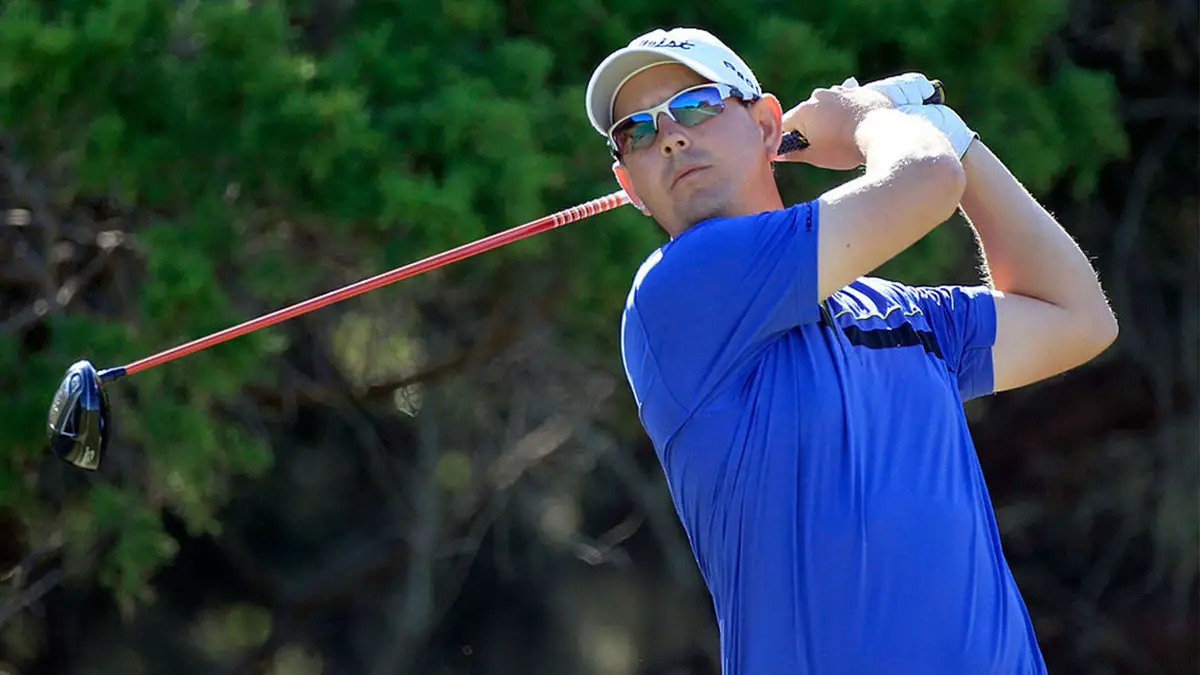
Former PGA Tour player Matt McQuillan has died at 45 years old.

The Canadian from Kingston, Ontario, died on Aug. 5 “surrounded by his family,” according to an obituary published in the Kingston Whig-Standard newspaper.

McQuillan earned a scholarship to play collegiately at Oklahoma State, where he began his college career in 2000 before later transferring to the University of Georgia. He turned professional in 2003 and ultimately played in 32 PGA Tour events, making the cut in nine of those starts.

Matt McQuillan of Canada

Matt McQuillan of Canada in action during the third round of the McGladrey Classic at Sea Island’s Seaside Course on October 15, 2011 in Sea Island, Georgia. (Photo by Sam Greenwood/Getty Images) (Sam Greenwood/Getty Images)

OUTKICK IS NOW ON THE FOX APP: CLICK HERE TO DOWNLOAD

Advertisement

McQuillan’s best finish on Tour came in 2011 when he finished T-3 at the John Deere Classic, which came in large part due to an impressive final round 64. He tied for third alongside two-time major champion Zach Johnson.

His most recent appearance in a PGA Tour-sanctioned event came on the PGA Tour Canada circuit in September 2016.

Matt McQuillan

Matt McQuillan of Canada hits his third shot on the sixth hole during the second round of The Greenbrier Classic at The Old White TPC on July 29, 2011 in White Sulphur Springs, West Virginia. (Photo by Hunter Martin/Getty Images) (Hunter Martin/Getty Images)

CLICK HERE FOR MORE SPORTS COVERAGE ON FOXNEWS.COM

According to the PGA Tour, McQuillan stayed connected in the game as a teaching professional in his hometown and introduced the game to the next generation of players across Canada.

Advertisement
Matt McQuillan of Canada

Matt McQuillan of Canada celebrates his par to finish two under for the day during round one of the RBC Canadian Open at the Shaughnessy Golf & Country Club on July 21, 2011 in Vancouver, Canada. (Photo by Harry How/Getty Images) (Harry How/Getty Images)

CLICK HERE TO DOWNLOAD THE FOX NEWS APP

“Matty was a respected golfer, devoted son, hilarious brother, and friend. His father, Mark, started teaching him how to swing the club at the young age of ten and his passion and talent grew immensely,” the Whig-Standard obituary reads.

“Starting as a junior on the Canadian Tour and making it to the PGA in 2011, Matt developed lifelong friendships while mentoring anyone who loved the game of golf. There will be a celebration of life held at the ANAF at a later date to be determined and announced by family. He will be deeply missed by many and his spirit, love and compassion will be remembered every day. Rest easy, Matty. We love you.”

McQuillan earned just under $604,000 during his PGA Tour career.

Advertisement

Source link

Advertisement
Continue Reading

Sports

“They like seeing us run good”

Published

on

Carson Hocevar is in the middle of a breakthrough NASCAR Cup Series season. The Spire Motorsports driver will enter Sunday’s Iowa Corn 350 fifth in the Cup standings, sitting ahead of all Hendrick Motorsports (HMS) cars.

Hocevar took his first Cup Series victory at Talladega Superspeedway in April. He beat Chris Buescher by 0.114 seconds in a three-lap shootout to get his first series win in his 91st start. He also won his second pole of the 2026 Cup season at Indianapolis Motor Speedway and led 31 laps before finishing ninth.

Ahead of qualifying for the NASCAR Cup race at Iowa Speedway, the 23-year-old broke down Spire’s close technical relationship with HMS.

Advertisement

“Hendrick and engine shop and everything they like seeing us run really good. I know Mr. H does it because he likes to see seven cars rather than just four and have shots,” Carson Hocevar said.

“They look at it like a seven car deal because of the close alliance and everything that they just get more shots to hopefully win races because it has Hendrick engines in it, Hendrick pit crews, and people he employs are on those cars. And obviously, Jeff’s like a son to him per se.”

Carson Hocevar is ahead of all four HMS drivers, including Chase Elliott, who sits sixth in the standings. Kyle Larson is eighth, William Byron 12th and Alex Bowman 29th.


“A live look at what me and my friends think is funny” – Carson Hocevar on his hour-long posting spree

Carson Hocevar (77) on the pit wall during qualifying for the Brickyard 400. - Source: ImagnCarson Hocevar (77) on the pit wall during qualifying for the Brickyard 400. - Source: Imagn
Carson Hocevar (77) on the pit wall during qualifying for the Brickyard 400. – Source: Imagn

Earlier in the week, Carson Hocevar was busy sharing multiple random thoughts. He also claimed that he lost a bet and had to tweet every 30 seconds.

On Saturday, the No. 77 driver said the mass posting spree was not part of any serious social media strategy. He was bored and having fun with his friends.

“Just started tweeting for an hour of how it used to be in the old Twitter. We had like Ratatouille up and we were making Ratatouille bits, and so I just started live-tweeting. You just basically got a live look at what me and my friends think is funny for an hour,” Hocevar said.

Meanwhile, Hocevar posted a 23.655-second lap around the 7/8-mile Iowa Speedway and qualified 18th. Hendrick Motorsports’ Larson qualified second, Byron 19th, Bowman 30th and Elliott 32nd.

The Iowa Corn 350 is scheduled to begin at 3:30 p.m. ET on the USA Network.

Advertisement