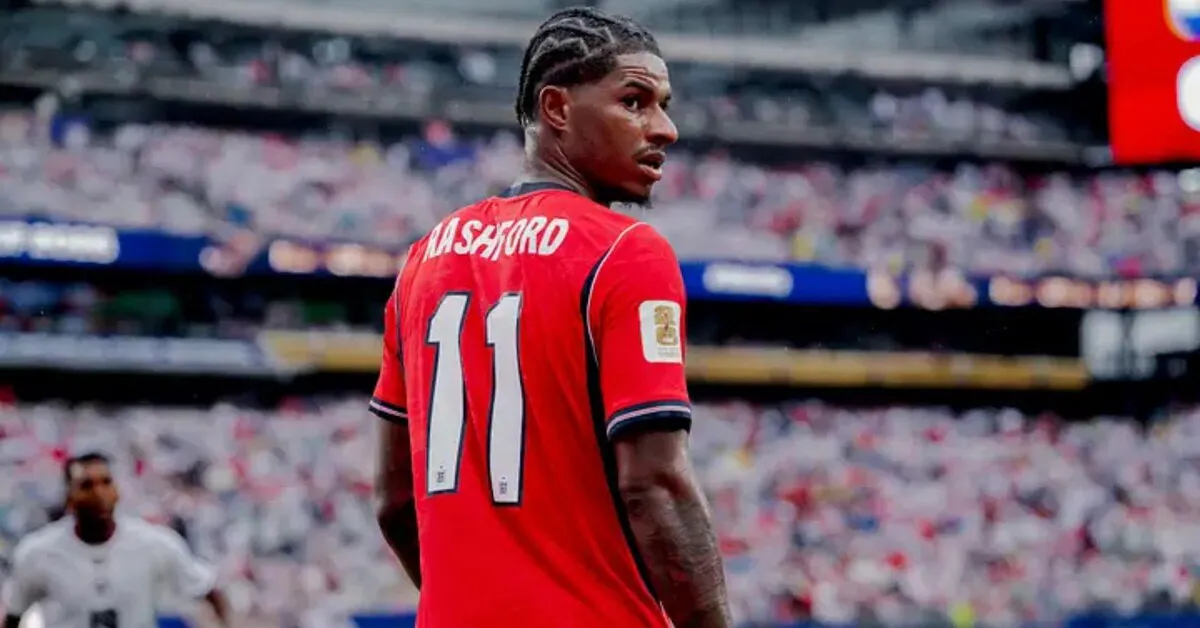
Marcus Rashford is heading back to Manchester United. But this is not simply a returning player reporting for pre-season. It is a reunion between a club, a player and a fanbase whose relationship has become increasingly complicated over the past two years.
Michael Carrick has confirmed that Rashford will join Manchester United’s squad in Dublin for the next stage of their pre-season preparations, alongside Kobbie Mainoo and Lisandro Martinez.
“We have got a full squad this week in Dublin. We fly straight there and have a few days where we have the whole group back together. Marcus is part of that, and Kobbie and Lisandro. We look forward to seeing them,” Carrick said.
Rashford could feature against Leeds at Croke Park before potentially making another appearance against AC Milan in Poland.
For Carrick, however, the real test will begin long after the pre-season fixtures are over. The question is not whether Rashford can still play football. He clearly can.
The question is whether he can become the kind of Manchester United player the club and supporters need him to be.
A return that would have seemed unlikely
Not long ago, Rashford’s Manchester United career appeared to be finished.
His relationship with the club had deteriorated dramatically after a series of disciplinary and performance issues, followed by his public declaration that he wanted a “new challenge”. Ruben Amorim responded by taking him out of the first-team picture.
The Portuguese manager made it clear that selection would be based on standards and application rather than reputation.
“When we want to change a lot of things, when people in the club are losing their jobs, they have to fight for their place in the team,” Amorim said after leaving Rashford out against Manchester City. Rashford chose a different route.
Rather than fighting his way back into the team, he eventually left on loan. That decision changed the trajectory of his career but also damaged his relationship with a section of the United fanbase.
Now, after spells at Aston Villa and Barcelona, he is back where it all began.
Carrick has inherited a different United
The biggest reason Rashford’s return is intriguing is that he is not coming back to exactly the same Manchester United environment that he left.
Carrick has taken charge and inherited a squad that has reportedly benefited from a significant change in culture.
That change was partly created by Amorim’s willingness to remove players he believed were not meeting his standards. Rashford was among those players.
So too were Antony, Jadon Sancho and Alejandro Garnacho. The departures and loans helped United reshape their squad and remove some of the internal tensions that had contributed to the club’s problems.
Amorim ultimately failed to deliver the footballing transformation United wanted, but his decision to establish clear standards appears to have had a longer-lasting effect. That is something Carrick must protect.
Bringing Rashford back cannot mean abandoning those standards.
The footballing case for Rashford is obvious
There is nevertheless a strong football argument for giving Rashford another opportunity. United still need attacking options.
Rashford can play from the left, operate centrally and provide a different kind of threat from players such as Matheus Cunha and Benjamin Sesko. At his best, he gives United pace, direct running and the ability to attack space behind defensive lines.
His best season remains 2022-23, when he scored 30 goals in all competitions. That version of Rashford would immediately improve United. The problem is that United have not consistently seen that version since.
Carrick’s task is therefore to determine whether the player who returns to Manchester is closer to the 30-goal Rashford or the frustrated, inconsistent figure who eventually forced his way out of the club.
Aston Villa showed there is still a player to work with
Rashford’s loan spell at Aston Villa offered evidence that his career was not beyond repair.
He recorded 10 goal involvements in 17 appearances and helped Villa progress in both the FA Cup and Champions League. His form was good enough to earn an England recall.
More importantly, he looked happier. “I missed a lot of football before joining up with them [Villa],” Rashford said at the time. “At the minute, my body feels good and I’m enjoying my football.”
But there was an uncomfortable side to that improvement.
Rashford’s immediate revival after leaving United inevitably raised questions about what had gone wrong at Old Trafford in the first place.
Villa ultimately decided against making his move permanent.
That left Rashford’s future uncertain.
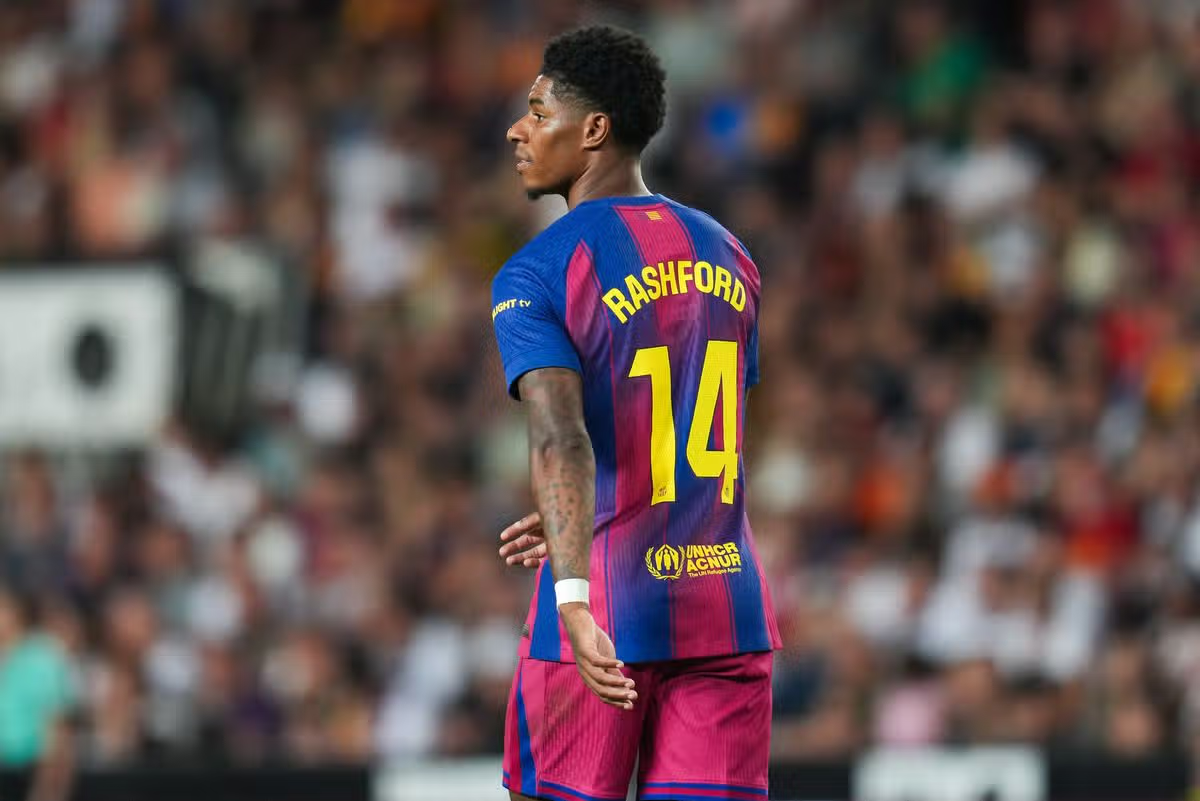
Barcelona proved Rashford can still contribute at the highest level
His next move was even more significant.
Barcelona took him on loan, giving Rashford the opportunity to play alongside some of Europe’s best attacking players.
He responded with 28 goal contributions in 49 appearances across competitions as Barcelona retained La Liga and the Spanish Super Cup.
There were also moments that reminded everyone why United had once considered him one of the brightest products of their academy.
His free-kick goal against Real Madrid was particularly memorable. Barcelona coach Hansi Flick also spoke positively about the forward.
“I appreciate working with him,” Flick said. “He is a fantastic player and a fantastic person.”
Yet Barcelona did not exercise their option to sign him permanently. That is an important part of the story.
Rashford’s performances were good enough to revive his reputation, but not convincing enough to make Barcelona believe he was indispensable.
His biggest battle will be rebuilding trust
This is where Rashford’s Manchester United return becomes more complicated.
His footballing ability is not the biggest question. Trust is. United supporters watched him develop from an academy graduate into one of the club’s most important players. They backed him through difficult periods and celebrated his best moments. His public push for a move therefore hit differently.
The perception among many supporters was that Rashford had chosen to leave rather than fight for his place at a time when United needed senior players to take responsibility.
That perception will not disappear simply because he has returned. Rashford cannot expect supporters to forget what happened. He will have to give them reasons to change their minds.
The dressing room will be watching too The same applies internally.
Carrick has reportedly benefited from greater harmony within the squad, and Rashford’s reintegration must not disrupt that.
The forward will need to accept that he is returning as one member of the squad rather than automatically reclaiming his old status. That could mean competing for his place.
It could mean starting some games from the bench. It could mean accepting a role behind other attackers when the tactical situation demands it.
For Rashford, that may be the most important test of all. A successful comeback will require him to demonstrate that he is prepared to put the team ahead of his own status.
Carrick must avoid making the return about sentiment
Carrick’s previous relationship with Rashford could be both an advantage and a potential problem.
The pair were teammates at United and Carrick later worked as part of the club’s coaching staff. He knows Rashford better than many managers would.
That should help him understand how to get the best out of the forward. But Carrick must also avoid giving Rashford preferential treatment because of their history.
The easiest way to damage the new culture would be to allow one player to bypass the standards expected of everyone else. Rashford should return because he earns his place, not because he is a famous academy graduate.
What should United expect from him?
The sensible expectation is not 30 goals immediately. It should be consistency.
If Rashford can train properly, accept competition, contribute defensively and maintain his intensity when things are not going his way, his footballing qualities can take care of much of the rest.
He does not suddenly need to become a completely different player. He needs to become a more reliable version of himself. The experience of playing for Aston Villa and Barcelona may help. He has experienced life away from United, worked under different managers and played in different tactical systems.
He has also seen what happens when he loses his place. That could make him a more mature player.
The first few months will tell the story
Rashford’s return should therefore be judged over time.
A good pre-season will not repair everything. A goal against Leeds will not erase the past. Neither will a strong opening month.
What United need to see is sustained professionalism.
If Rashford responds positively to Carrick’s demands, fights for his position and contributes consistently, supporters may gradually begin to accept him again. If old habits return, the club will have learned a very expensive lesson.
Because United cannot afford another cycle of disappointment in which player frustration becomes a bigger story than football.
A second chance, not a clean slate
Rashford’s return offers something that seemed almost impossible when he left Manchester: another chance at Manchester United. But it should not be confused with a clean slate.
The club has changed. The squad has changed. The standards have changed. Rashford now has to change with them. Carrick has the opportunity to turn one of United’s most complicated recent stories into a redemption arc.
But he cannot do it for Rashford. The forward has to earn it himself.
The first step is already confirmed: he is back with the squad. The much harder part starts when the competitive football begins.





;)
;)







































You must be logged in to post a comment Login