
Business
Sebi proposes raising annual ISIN limit for private debt securities to 17


Under the proposal, the maximum number of ISINs maturing in a financial year would comprise up to 12 ISINs for plain-vanilla debt securities, against nine currently, and up to five ISINs for structured debt securities, market-linked debt securities, Floating Rate Bonds (FRBs), Zero Coupon Bonds (ZCBs) and Debt Capital instruments (Tier-II bonds), the Securities and Exchange Board of India said in its consultation paper.
The existing framework allows a maximum of 14 ISINs maturing in a financial year – nine for plain-vanilla debt and five for structured and market-linked debt securities. In addition, six ISINs are available for capital-gains tax debt securities issued by authorised issuers under Section 54EC of the Income Tax Act.
On Monday, Indian government bonds remained stable following last week’s increases. The rise in oil prices countered some support from softer economic data from the United States. Traders are eagerly awaiting inflation reports from both India and the U.S., which will significantly influence bond market trends this week. Notably, ultra-long bonds saw a rise, likely driven by value purchases from insurers.
An ISIN, or International Securities Identification Number, is a unique 12-character code used to identify securities such as shares, bonds, warrants and commercial papers.
The proposal follows representations from market participants and other stakeholders seeking a review of the existing ISIN limits.

They have pointed out that the current limits may affect the funding requirements of Non-Banking Financial Companies (NBFCs), as bunching of liabilities could make liquidity management more difficult and increase refinancing risks, impacting asset-liability management.
The issue is also relevant for large corporates. Under Sebi’s framework for fund raising by large corporates, entities rated AA or higher and having outstanding long-term borrowings of Rs 1,000 crore or more are required to raise at least 25 per cent of their qualified borrowings through debt securities.Sebi said the existing restriction on the number of ISINs may impede such entities in meeting the regulatory requirement.
To provide flexibility to large issuers, Sebi proposed that once the total outstanding amount across the 12 ISINs maturing in a financial year reaches Rs 15,000 crore, one additional ISIN may be permitted. Thereafter, one additional ISIN may be permitted for every further Rs 3,000 crore of outstanding amount maturing in that financial year.
Sebi has also proposed excluding ISINs pertaining to Government of India-serviced/Extra Budgetary Resources (EBR) bonds from the prescribed ISIN limits.
It has further proposed that ISINs pertaining to ESG debt securities may not be counted towards the maximum number permitted to mature in a financial year, with the objective of encouraging ESG debt issuance.
Also, Sebi suggested removing the requirement for an issuer proposing to list its non-convertible debt securities to mandatorily list all outstanding unlisted NCDs issued on or after January 1, 2024.
The move is aimed at encouraging debt listing by allowing issuers to decide whether to list their earlier outstanding debt issues, which may involve high costs and operational challenges.
However, the requirement to list all subsequent debt securities issuances after the first listing would continue to apply.
Sebi noted that the share of listed debt in total debt issuance declined to 76.55 per cent as of June 30, 2026, from 80.81 per cent as of September 30, 2023, when the mandatory listing requirement was introduced.
It said the mandatory requirement to list past issues may be one possible reason for the decline.
Sebi has sought public comments on the proposals by August 31.


Digital sovereignty has gone – relatively quickly – from being a niche policy interest, to a mainstream business consideration across multiple regions of the world.
One of the most outspoken players has been the European Union, with its Gaia-X initiative, a wave of binding regulation, and a series of high-profile procurement decisions.
The combination of these changes made it unequivocally clear that the question of who controls critical data infrastructure is no longer a theoretical debate. Awareness of what has actually changed (and what this change means in practice) is becoming increasingly relevant for any business working across borders.
From summits to something tangible
The first European Summit on Digital Sovereignty was convened in November 2025 with the initiative of France and Germany. It brought in politicians, regulators, and industry leaders with the goal of mapping out concrete commitments instead of position papers.
A joint task force on digital sovereignty was produced as a result of this summit, due to report back in 2026. Meanwhile, Gaia-X released its Trust Framework 3.0 that enabled federated trust structures across borders and sectors.
The figures revealed during this summit are more telling than the announcement itself. Gaia-X now counts more than 15 operational data spaces, which is a noticeable difference from the long list of projects that were previously only known as “in preparation.” Cloud Temple became the first provider that got certified at the highest sovereignty label of this initiative.
Corporate procurement has also begun to follow the same route. Airbus issued a tender worth more than €50 million to migrate mission-critical environments to a sovereign European cloud. BMW continues its expansion of the Catena-X data-sharing network. Germany’s armed forces have signed a seven-year-long contract with the purpose of using an open-source alternative to replace Microsoft 365.
While none of this can be treated as the EU being on par with the American hyperscalers, it is an indication of procurement decisions and infrastructure investments being made based on security concerns, not just policy statements.
Why “stored in Europe” is not the same as “sovereign”
There is an important distinction relevant to this topic: where data is stored physically is not the same as whose laws govern it.
For example, AWS launched a European Sovereign Cloud in Brandenburg in January 2026. It’s structured as a standalone German entity with EU-based executives and an investment fund of several billion euros behind it. On paper, it resembles exactly the kind of cloud storage European regulators have been looking for. In reality, the parent company of AWS is still American, meaning that the US CLOUD Act still applies – allowing US authorities to compel American companies to hand over data they control at any point in time.
The chief executive of Gaia-X has been very blunt on this topic, clearly stating that the highest level of sovereignty can only be achieved by providers that have their headquarters on European soil. If the service is run by a US company (even with European staff and data centers), it’s still subject to American legislation.
This single factor cannot be considered a mere technicality. It’s significant enough to be the difference between a compliance checkbox and a genuine answer to a question of who can access this data and under what authority.
What it means for business decisions
Sovereignty is no longer a question that can be stalled indefinitely from the business side. Not only the EU Data Act has been in force since September 2025, but there are also multiple sector-specific rules (such as DORA for finances and NIS2 for critical infrastructure) that are tightening the same constraints, as well. None of these regulations treat sovereignty as optional.
According to survey data from Germany’s Bitkom, there are already many businesses around the globe that want independence from foreign infrastructure but have not acted on these wishes yet, despite the trust in some foreign providers having fallen sharply recently. This specific gap between intention and action is exactly where all the rushed and expensive decisions come from – mostly under regulatory pressure instead of a considered timeline.
In this context, there are a few basic questions that are worth raising as early as possible from the business side: where does data actually reside, and under whose jurisdiction; what do existing cloud contracts say about data access requests from foreign authorities; and were a rapid migration away from a provider necessary, would it actually be possible?
The recovery question most discussions overlook
Most discussions about digital sovereignty work from determining where data lives day by day: including specific cloud providers, specific data centers, and the specific jurisdiction it works under. These are legitimate questions, but they address only the visible layer of a much deeper dependency.
Sovereignty, properly understood, also requires control over what an organisation can recover from when infrastructure fails – and this dimension is one that policymakers have been slower to address than the infrastructure and regulatory questions that tend to dominate the conversation.
The gap is significant. Regulatory frameworks such as the EU Data Act, NIS2, and DORA establish requirements around data residency, access controls, and operational resilience, but they leave the specifics of backup architecture and recovery sovereignty largely to individual organisations to determine. A business can be fully compliant on paper while remaining entirely dependent on a foreign vendor’s proprietary backup infrastructure – one it cannot fully audit, migrate away from, or recover independently in a crisis.
This is precisely the argument that backup and recovery vendors have begun to make recently. Swiss company Bacula Systems describes this logic as “sovereign recovery” – the idea that a sovereign cloud strategy at a given moment is only going to be as resilient as the recovery infrastructure it works under.
Whenever a backup data is stored in an environment the organization does not have a full control over, created using formats that are problematic migration-wise, or tied to the infrastructure of an individual vendor – the validity of sovereignty claims becomes significantly less absolute and may not hold up under real pressure.
Irrespective of whether or not a given vendor’s approach is going to suit a particular organization, the overall point still stands. Cloud provider selection has been dominating the sovereignty conversation, while the recovery layer has received a lot less scrutiny in comparison.
The whiteboard phase is over
None of these arguments mean that all the existing infrastructure should be disassembled overnight. No serious case is being made for businesses to sever all ties with their current “foreign” technology. However, it does increase the likelihood that businesses treating digital sovereignty as someone else’s problem are the ones that are most likely going to have to make some rushed decisions under regulatory pressure within the next year or two.
The policy debate has finally moved on from abstract principles to creating practical operational data spaces, substantial procurement tenders, and binding regulations. This change is the reason why most businesses cannot simply consider sovereignty as an optional topic – as they now have to think whether they have established where their data resides, who has access to it, and what they are going to recover from if the need to do so arises.
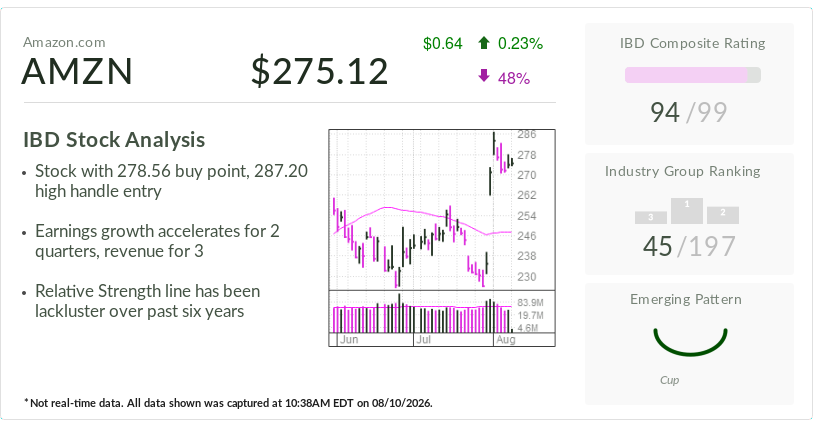
Amazon.com Amazon.com AMZN $ 275.12 $0.64 0.23% 48% IBD Stock Analysis Stock with 278.56 buy point, 287.20 high handle entry Earnings growth accelerates for 2 quarters, revenue for 3 Relative Strength line has been lackluster over past six years IBD Composite Rating 94/99 Industry Group Ranking 45/197 Emerging Pattern Cup Cup A cup-shaped pattern with no handle. Must be at…
Copyright ©2026 Investor’s Business Daily, LLC. All rights reserved. 87990cbe856818d5eddac44c7b1cdeb8
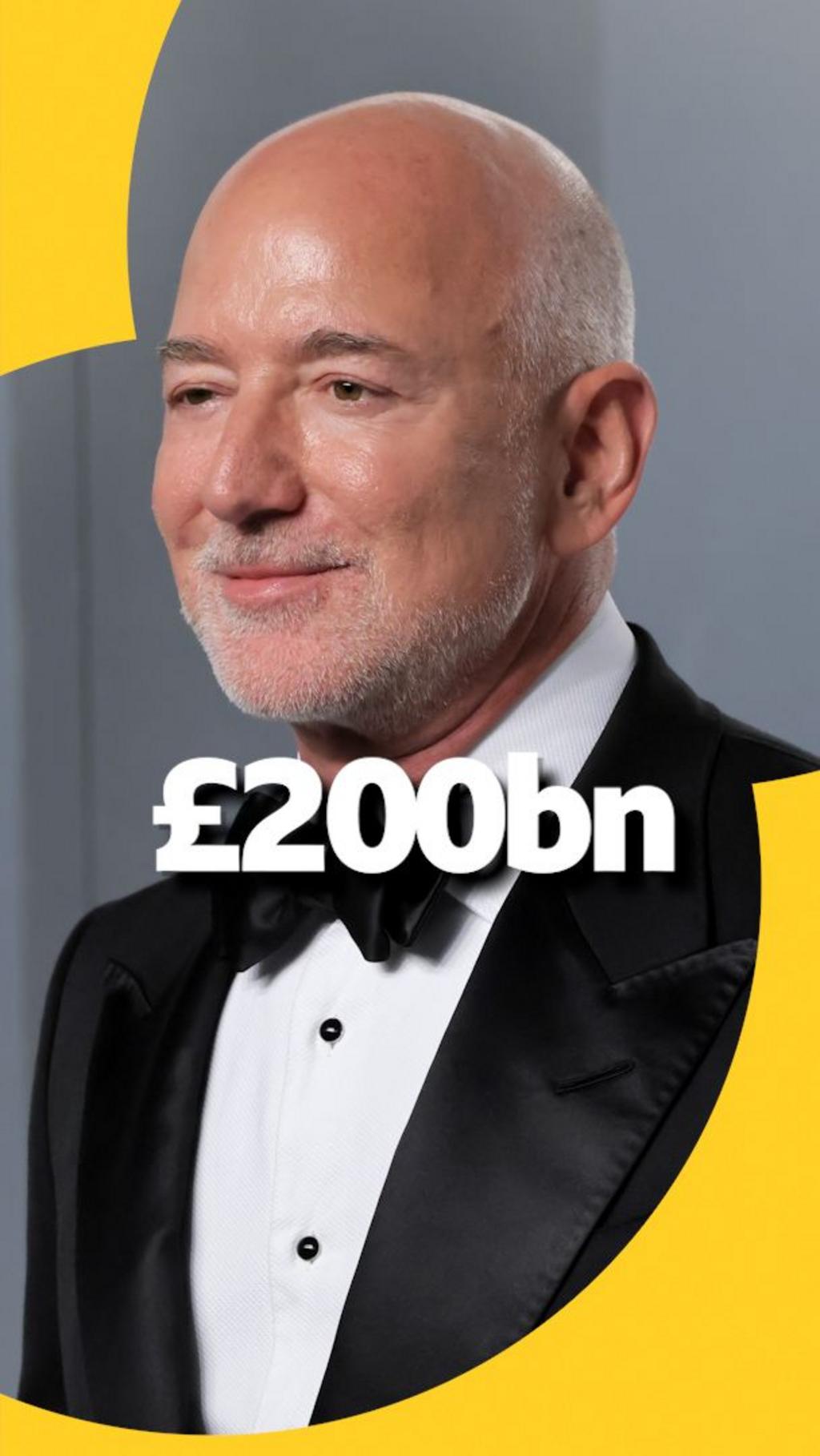
BBC Sport’s Sam Harris breaks down the potential new investment of Jeff Bezos into Liverpool.

Sandisk: All The Bad News Is Priced In

Recruitment of permanent staff stopped falling in July for the first time in nearly four years, according to the report on jobs from the Recruitment and Employment Confederation and KPMG, published on Monday.
The survey’s index of permanent staff placements reached 50 points, the level that separates growth from contraction. It had been below that mark every month since the autumn of 2022, the longest run of decline in the index’s history.
Maxine Bligh, the REC’s chief membership and innovation officer, said: “Rays of light are beginning to break through for the job market as employers revive hiring plans.
“Remarkably, this is the first month without a decline in permanent placements since Liz Truss resigned as prime minister in 2022, underlining just how prolonged the downturn in permanent hiring has been.”
Businesses in London took on new full-time staff at the quickest pace in nearly four years, the report showed. Permanent placements continued to decline in the north of England.
Callum Licence, group head of advisory at KPMG UK and Switzerland, said: “Over the past 45 months we have seen the longest recorded period of contraction in the permanent placements index, so to finally have it stable is a big milestone.”
The survey’s vacancies index rose to 47.1, its highest reading since September 2024, although it remains below the 50-point growth threshold. Vacancies for part-time roles increased at the fastest pace since August 2023, extending a trend picked up in June, when the same survey showed part-time hiring at a three-year high.
Pay growth for full-time staff reached a six-month high in July and has risen every month since March 2021, the survey found. That contrasts with official figures from the Office for National Statistics, which have shown private sector pay growth slowing to a six-year low. The latest ONS estimates showed unemployment stabilised at 4.9 per cent over the last quarter.
The REC-KPMG survey is closely watched as a gauge of labour market conditions because of concerns about the quality of official employment data.
The stabilisation follows a prolonged period of rising employment costs. Employer national insurance contributions were increased by £25 billion in Rachel Reeves’s 2024 budget, alongside rises in the minimum wage, while energy prices climbed after Russia’s invasion of Ukraine in 2022 and the war in the Middle East has pushed up oil prices. Over the same period, unemployment has risen to its highest level since the pandemic.
As recently as December, the same survey showed permanent and temporary hiring both falling, with permanent placements at a four-month low.
The figures will also be studied by the Bank of England, which has held interest rates at 3.75 per cent since December while inflation, at 2.6 per cent, remains above its 2 per cent target. Central banks monitor pay settlements closely because sustained increases can keep inflation above target.

Amy Ingham
Amy Ingham is a reporter at Business Matters, covering UK business news with a focus on breaking news, business policy, late payments and insolvency. She joined the magazine in 2026 after completing the NCTJ Diploma in Journalism at Harlow College’s journalism school. Her recent reporting includes British Steel’s nationalisation and its impact on SME suppliers, the decline in late payments by large firms, and Insolvency Service director disqualifications. Reach her at aingham@cbmeg.co.uk.
Business
Has Dalal Street’s near term outlook improved? HSBC lists 4 headwinds, 3 tailwinds to watch out for

HSBC expects India’s investment cycle to be on a medium-term uptrend supported by government investment in infrastructure, support to manufacturing and pickup in private investments. It added that announcements of potential trade deals with the European Union and US should also support exports.
India’s corporate earnings recovery continues with strong Q1 FY27 results growth till date and more earnings beat than misses over consensus estimates, HSBC noted, adding that Nifty valuations are now in-line with 10-year average. “We remain constructive on Indian equities on a longer-term basis. Near-term outlook is now also improving assuming no re-escalation of geo-political conflicts,” it added.
Explaining the macro-view, HSBC Mutual Fund said the re-escalations in the Middle East that effectively ended the interim ceasefire agreement spooked investors, while the disruption was compounded by a blockade in the Red Sea. With stable fiscal deficit for Q1 FY27, HSBC believes the government should be able to boost infrastructure spending in the second half of the ongoing FY27, although the full year may be flattish given the impact of the conflict on government finances.
Interest rate cuts by RBI, GST rate cut, and income tax rate cut announced by the Union government in FY26 should support consumption in FY27, according to the mutual fund house, which however noted that the risk of a below normal monsoon with negative consequences for food production and higher food inflation remains.
HSBC has listed 4 key headwinds to watch for Dalal Street’s trajectory in the future.
1) Global commodity pricesBenign global prices of crude oil and fertilisers have been a positive for India from inflation, fiscal deficit and corporate margins perspective in 2024 and 2025. However, HSBC said that these trends have now reversed due to geopolitical conflict.
This will likely be a headwind for India in 2026, according to the mutual fund house. This comes as oil prices remain elevated amid fresh escalations in the Middle East war, but sharply lower than the highs above $120 per barrel which were seen earlier this year during the raging war.
2) Weak global growth
Overall weak global growth is also likely to remain a headwind for India’s demand going forward, according to HSBC. It added that this is driven by a risk of tariffs, general policy uncertainty, mercantilist policies of certain countries and geo-political conflicts.
3) Below normal monsoon
Rainfall in July was 1% above the long-period average, but that recovery followed a severely deficient June. By July 31, cumulative rainfall since June 1 was still 12.6% below normal. While the trend is slightly changing, HSBC Mutual Fund said a below-normal monsoon can lead to higher food inflation.
This can have a negative impact on consumption and government budget, according to the mutual fund house.
Also read | The umbrella seller as economic forecaster
4) Sharp slowdown in government capex
Sharp slowdown in government capex was listed as another key prospective for headwinds for the Indian stock market.
Meanwhile, here are the 3 key tailwinds that HSBC sees for Dalal Street.
1) Corporate earnings recovery
Despite the latest worries around US-Iran tensions, the undertone of the market is mildly bullish, driven by the better-than-expected Q1 results. With the earnings season coming to an end this week, the vast majority of companies have reported earnings growth that has beaten expectations, according to analysts.
HSBC said that corporate earnings have seen consistent downgrades from the second half of FY25, driven by slowing government capex, liquidity tightening and consumption slowdown in key sectors. This was one of the key reasons for FII outflows over the past couple of years.
“With RBI’s regulatory easing, government measures on taxation (GST/ income tax) and lower tariffs by US, we see earnings growth recovering well,” the mutual fund house said.
2) Recovery in private capex
Industry capacity utilisation based on RBI survey data is at a reasonably high level and indicates potential for increase in private capex going forward, HSBC said while listing out a possible tailwind for the Indian stock market.
Also, it added that continued expansion of the Production Linked Incentive (PLI) scheme is likely to further increase private investments in targeted sectors. “We also expect higher private capex in renewable energy,” it said.
3) Trade deals
Potential trade deals with EU and US would be a tailwind for Indian manufacturing over the medium term and should encourage private sector investments, according to HSBC Mutual Fund.
It noted that Nifty now trades at 18.3x 1-year forward PE. This is now at a 6% discount to its 5-year average and a 2% discount to its 10-year average. IT, real estate and automobiles were named the best performing sectors in July. Healthcare also outperformed Nifty, while metals, FMCG, infrastructure, banks and telecom underperformed Nifty. Utilities, energy and industrials were the worst performing sectors.
Also read | CAS chaos splits Sensex and Nifty: How long will this last?
(With inputs from agencies)
(Disclaimer: Recommendations, suggestions, views and opinions given by the experts are their own. These do not represent the views of The Economic Times)


Plans call for expansion across three continents.

Attendees are greeted with”Eat Real Food” placards as they gather for U.S. Health and Human Services (HHS) Secretary Robert F. Kennedy, Jr. and Agriculture Secretary Brooke Rollins to announce new nutrition policies at the Department of Health and Human Services in Washington, D.C., U.S., January 8, 2026.
Jonathan Ernst | Reuters
The U.S. Department of Health and Human Services on Monday announced a policy proposal aimed at giving the federal government greater visibility into the nation’s food supply.
HHS proposed a requirement for manufacturers, like Pepsi or Nestle, to notify the Food and Drug Administration when they determine that an ingredient is “Generally Recognized as Safe,” or GRAS.
The department also said it and the U.S. Department of Agriculture submitted for final review the federal government’s first proposed definition of ultra-processed foods. Concerns have grown for years about the long-term safety of eating heavily processed foods, and the products have been a target of HHS Secretary Robert F. Kennedy Jr.’s “Make America Healthy Again” movement.
The proposals come as federal and state health officials grapple with a series of foodborne illness outbreaks this summer, including a multistate cyclospora outbreak linked to shredded iceberg lettuce and several other ongoing investigations. The FDA currently lists multiple active foodborne illness probes, including outbreaks involving salmonella and listeria.
U.S. Secretary of Health and Human Services Robert F. Kennedy Jr. speaks during a press conference discussing administration plans to lower drug costs, at the Department of Health and Human Services in Washington, D.C., U.S., Oct. 29, 2025.
Annabelle Gordon | Reuters
The announcements do not appear to address the key issues that experts said contributed to the food safety issues, but target broader criticisms of ingredient safety in the U.S.
“We believe that these initiatives will actually improve the FDA’s ability to effectively execute on its mission by having greater transparency into the number of ingredients in the food supply,” said acting FDA commissioner Kyle Diamantas on a call with reporters.
Under current law, substances intentionally added to food generally require FDA premarket approval unless they qualify for an exemption, including GRAS. An ingredient can qualify for GRAS status when qualified experts recognize it as safe in the context of its intended use.
The FDA has operated a voluntary GRAS notification program for years, but manufacturers have not been required to tell the agency when they determine themselves that an ingredient qualifies for the exemption. Under the proposed rule, manufacturers would have to notify the FDA when they reach that conclusion.
“GRAS reform is the preeminent regulatory reform that food advocates on both sides of the aisle have been saying is the most important food reform that the United States needs to do for the past 20 years,” a senior HHS spokesperson said.
The proposal would not create a premarket approval system for GRAS substances, meaning this process would not prohibit companies from entering the market. Instead, it would give the FDA greater visibility into ingredients entering the food supply.
That could become particularly significant as the administration develops its policy around ultra-processed foods.
HHS and the USDA filed a joint request for information in July 2025 seeking input from researchers, the industry and other stakeholders to define ultra-processed foods. Though the administration has submitted a definition for review, it did not say what that definition would be.
Ultra-processed foods can contain numerous ingredients, including additives and flavorings allowed to be included under GRAS rules.
“Nearly 60% of the American diet is made up of ultra-processed foods, and childhood obesity now affects more than one in five American children,” said HHS Secretary Robert F. Kennedy, Jr. in a press release. “We cannot reverse America’s chronic disease epidemic without transforming our food system.”
The GRAS proposal is subject to public comment and the federal rulemaking process before any requirements take effect.

Florida Chamber of Commerce CEO Mark Wilson speaks with Fox News Digital about the intention behind a new Times Square ad targeting Zohran Mamdani as businesses and wealth flee New York for Florida.
FIRST ON FOX: In the heart of Manhattan, at the corner of Broadway and West 43rd Street, a massive new billboard is sending a provocative message to New York leadership: “Thanks for the jobs!”
As America faces what business leaders call a historic choice between free enterprise and expanding government control, Florida is taking the ideological fight directly to the doorstep of Democratic socialism.
Armed with a $1.8 trillion economy and record-breaking wealth migration, the Florida Chamber of Commerce has officially launched a Times Square campaign naming New York City Mayor Zohran Mamdani Florida’s “Economic Developer of the Year” — a reminder, according to the Chamber, of how progressive taxes and socialist policies are driving wealth, businesses and families to the Sunshine State.
“We wanted to thank him for the jobs, the companies, the people that they’re pushing out of New York — and a lot of them are coming to Florida,” Chamber CEO Mark Wilson first told Fox News Digital on Monday.
“America is at a crossroads right now. I think everyone that’s paying attention knows that our country was built on freedom and free enterprise and people having the liberty to make their dreams come true,” he said. “And there’s a push in our country right now to take those liberties away and to attack free enterprise. And that’s never worked anywhere, and it won’t work in America.”
“What Mayor Mamdani is doing is dangerous for the country, right? It’s bad for New Yorkers. It’s bad for New York. It’s very harmful for the country,” Wilson continued. “We can choose free enterprise, which is what America was built on, or we can choose to destroy that, which is what the social[ist] policies do… And so, what we’re hoping happens from this campaign is that we refocus America on free enterprise.”

The Florida Chamber’s digital billboard can be found at 1500 Broadway and W. 43rd St. in Times Square. (Nikolas Lanum/Fox News Digital / FOXBusiness)
In addition to putting the onus on Mamdani, the Chamber’s campaign highlights its argument that lower tax rates yield higher total state revenues by incentivizing growth, while blue-state tax hikes trigger a tax-based exodus. According to the Chamber, citing IRS migration data, Florida gains approximately $2.4 million in net taxable income every hour, while New York loses approximately $1.1 million per hour. The Chamber also says Florida gains a net 551 residents daily, compared to New York losing 115 residents daily.
According to the Chamber’s press release, New York’s state budget is more than double Florida’s, and New York City’s municipal budget alone is more than $8 billion higher than the entire Florida state budget.
“What do people like Mayor Mamdani do? They want to then increase taxes on the people who are left, which just further accelerates people leaving places like New York,” Wilson explained.
Florida Chamber of Commerce CEO Mark Wilson said the billboard isn’t meant to pit New York and Florida against each other, but spotlight the winning “free enterprise” formula. | FOXBusiness
“Florida’s lowered taxes over 50 times in the last 15 years. And we have record revenues coming in because people want to be here. And when the economy grows, tax revenues grow. That’s how free enterprise works,” Wilson said.
“The socialist agenda sounds crazy because it is crazy, right? ‘Free Enterprise Florida’ is a way to highlight what happens in states like Florida — when we focus on less tax, less government, more freedom, more liberty — and what happens in places like New York when they increase taxes and regulation,” the CEO added. “So this is an opportunity for people in New York and people across the country to say, ‘Hey, we have a choice to make here.’”
“What we’re really trying to do here is remind people that America is an experiment. It’s 50 states competing for where do we take America going forward? And I think if you look at the scorecard of how Florida is doing compared to how New York is doing, we want to help New York follow in Florida’s footsteps.”
New York City Mayor Zohran Mamdani has previously criticized billionaires, including Ken Griffin, whom he recently thanked for supporting police. | Getty Images
According to Wilson, Florida is not seeking to tear down New York or “spike the football,” but rather wants every state to succeed by embracing free-market principles to boost overall U.S. GDP growth.
“Even though Florida is winning right now, we’re not looking for New York to lose. We’re hoping that these other states will say ‘no’ to this move towards socialism and say ‘yes’ to the very policies that our country was founded on,” he said. “This isn’t about spiking a football or looking at the scoreboard about Florida versus New York. This is really about trying to save our country from crazy.”
“We’re in a big competition with every other state, but it’s a competition for ideas. And we’re trying to highlight to the country that free enterprise wins every single time. It’s what’s best for customers, it’s what’s best for job creators. And if we focus on it in America, we can get back to that three-plus percent GDP growth, which is what our country really needs,” Wilson noted.
Florida is now the world’s 14th largest economy, bringing in $1.8 trillion in GDP. | Getty Images
Mayor Mamdani’s office did not immediately respond to Fox News Digital’s request for comment.
Wilson also outlined future targets for the “Free Enterprise Florida” campaign beyond Manhattan while highlighting decades of bipartisan and conservative governance that built Florida’s modern economic engine.
GET FOX BUSINESS ON THE GO BY CLICKING HERE
“We had to start in New York City because the mayor of New York City, obviously, is pushing that community into a direction that it’s not good for the people who live there,” the CEO said. “But there’s several runner-ups for this. When you look at Chicago, when you look at California, Minneapolis, there’s places all over the country that come in a close second to the movement in New York City. So we’re gonna continue to highlight what works.”
“Our country is celebrating 250 years this year, and it has a lot to do with our freedom, our faith and our free enterprise,” Wilson said. “And I think if we can focus on free enterprise for the next few years and make that what we base our decisions on, then this country can grow at 3% GDP, and we’ll once again get back on the track that we need to be.”
Business
Project Sudarsan: How Sebi is using AI to police finfluencers with 60% of investors trusting their advice

“Data has become a second layer of market infrastructure, making the quality of market data, the integrity of data systems and governance of data use central to investor protection,” it said.
The regulator said it has responded by investing in technology and data analytics as core supervisory tools, so that the investor protection framework scales along with the growth of the market.
A key part of this digital push is aimed at unregistered financial influencers, many of whom operate on social media without accountability or verified performance records. Sebi said its latest investor survey showed that 62% of investors are influenced by finfluencers, creating the need for stronger digital vigilance.
Project Sudarsan to track online advice
Sebi said it has launched Project Sudarsan, a tool developed to monitor unsolicited financial advice on social media. It has also rolled out Sebi R(AI)DAR, an AI-enabled platform to review advertisements.
Also Read: Info Edge Q1 Results: Standalone Profit falls 6% YoY to Rs 245 croreThe regulator said these tools will help it identify unauthorised digital activity and finfluencers who may mislead investors through unverified claims.
The action comes after a sharp rise in retail participation since the pandemic, especially in high-risk areas such as options trading.
Sebi chairman Tuhin Kanta Pandey earlier said that several retail investors were being influenced by such online personalities to enter the risk-prone derivatives market, often through claims that large money can be made from trading. Sebi has already removed more than 1.2 lakh misleading social media posts by unregistered finfluencers and is using AI tools to track violations in the digital space.
Fake apps also under watch
Sebi’s digital investor protection plan also covers payment verification and trading apps. The regulator has introduced Validated UPI handles and the Sebi Check facility, which allow investors to verify in real time whether a payment is going to a genuine Sebi-registered intermediary.
It has also partnered with Google Play for a verified app label initiative. This will give investors a visible signal that a stock trading app belongs to a genuine Sebi-registered broker. The move is aimed at tackling fake trading apps, fraudulent payment requests and impersonation of registered intermediaries.
Pandey had earlier said Sebi’s action against finfluencers is not a heavy-handed crackdown. He described it as a calibrated exercise aimed at identifying problem areas and dealing with them. “Market development is not about a sledgehammer approach but more like a surgeon’s knife — identifying problem areas and dealing with them,” he had said.
(Disclaimer: Recommendations, suggestions, views and opinions given by the experts are their own. These do not represent the views of Economic Times)

Turki Alalshikh’s takeover of Derby County falls through

Europe’s Digital Independence Drive Is Finally Moving Beyond the Whiteboard

Hormuz Nerves Cost Bitcoin $65,000 Mark Despite Solid Institutional Flows


-

 Fashion3 days ago
Weekend Open Thread: Mattifying Sunscreen
-

 Fashion3 days ago
Frugal Friday’s Workwear Report: Cap-Sleeve Pointelle Crewneck Sweater
-

 Sports5 days ago
Jordan Coyle & Cordiamo take Laya Arena Stakes at RDS
-

 News Videos2 days ago
Can Astrology Help Find Gold and Silver Trends? A Financial Astrology Guide
-
 Business5 days ago
US stocks: Dow closes at record on Mideast optimism; SpaceX, AMD drag Nasdaq
-
 Crypto World7 days ago
US Tech Stocks See Largest 5-Week Inflow in History: Can Nasdaq Break Its Downtrend?
-

 Politics4 days ago
Reform UK And Greens Sink To Lowest Favourability Ratings To Date
-

 Business6 days ago
Nvidia Stock Climbs 2.5% as Chip Sector Rally Builds Ahead of AMD Earnings, Nvidia’s Own Report Looms
-

 Crypto World6 days ago
Polymarket targets $20 billion valuation as competition heats up in prediction market sector
-

 Tech6 days ago
OpenAI, Anthropic AI agents targeted real people and systems in cyber tests
-

 Business5 days ago
Supply chain issues impact Ingredion
-
 Crypto World6 days ago
CLARITY Act Senate Vote Locked In, But 60-Vote Hurdle Looms Large
-

 Tech3 days ago
Rinn Pharma & Biopharma to join NordicPharmaTrain network
-

 Crypto World7 days ago
The Senate has one week: CLARITY’s last August window
-
 Crypto World6 days ago
Dow and S&P 500 Hit Records on AI Earnings: When Will the Bubble Burst?
-
 Crypto World7 days ago
California Wildfire Bets Expose Polymarket’s Dark Side
-

 Business2 days ago
How to Start a Cleaning Business: A Step-by-Step Guide
-

 Business1 day ago
Datadog: Best Of Breed For Multiple Reasons
-

 Business7 days ago
CNH Industrial Shares Jump Over 15% After Beating Estimates and Raising Full-Year Earnings Guidance
-

 Business2 days ago
BDC Weekly Review: Private BDC Q2 Numbers Are Strong
You must be logged in to post a comment Login