
Crypto World
Standard Chartered Sees $4T Tokenized RWA Boost for Chainlink to $200 by 2030

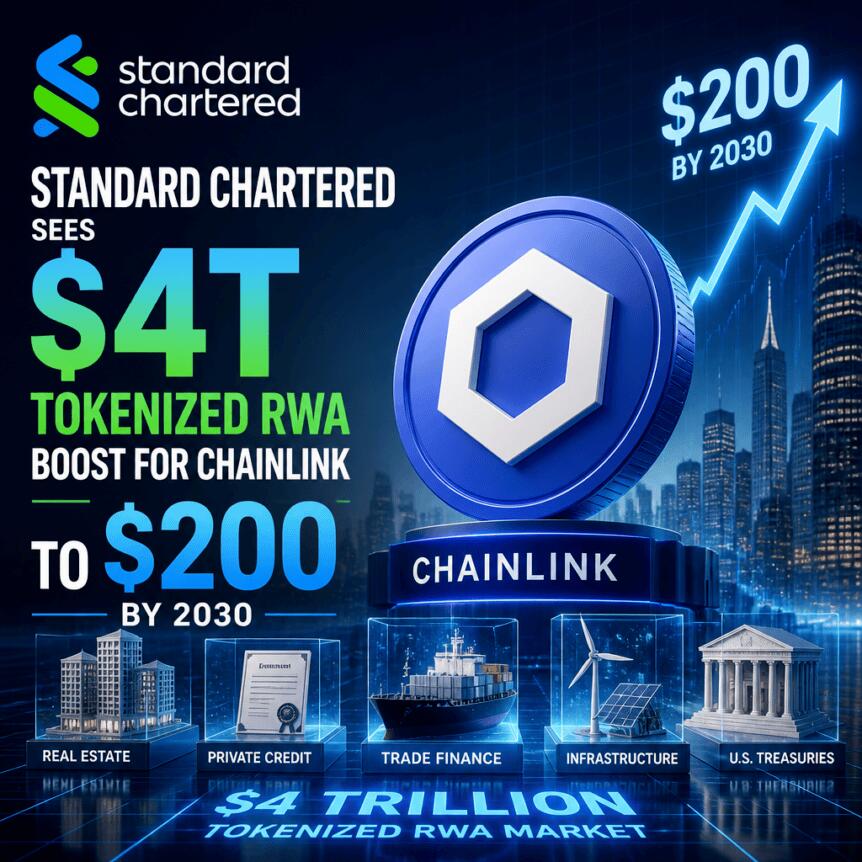
Standard Chartered’s Geoff Kendrick has laid out a bullish long-term case for Chainlink (LINK), tying potential LINK growth to the expanding tokenization of real-world assets (RWAs) and the infrastructure needed to make those assets work reliably on-chain.
In a report shared with Cointelegraph, Kendrick forecast that tokenized RWAs could reach $4 trillion by the end of 2028—creating a larger market for secure, verifiable external data. He argues this could translate into a major increase in Chainlink’s fee generation and ultimately push LINK to as high as $200 by the end of 2030, up from roughly $8 at the time of the report.
Key takeaways
- Standard Chartered expects tokenized RWAs to grow to $4 trillion by the end of 2028, expanding demand for secure on-chain data services.
- Kendrick links that demand to increased fee generation for Chainlink and a potential LINK price target of $200 by 2030.
- The forecast also projects tokenized and crypto-native decentralized finance (DeFi) assets rising to $2.7 trillion by 2030.
- Risks to the forecast include slower-than-expected institutional tokenization, competitive pressure from other oracle providers, and possible technical setbacks.
Why tokenized RWAs could boost oracle demand
Kendrick’s central point is that tokenized assets require more than just on-chain execution—they need trusted external information to be brought securely to blockchains. He said the growth of tokenized RWAs would increase the need for external data delivered “securely onchain,” which could support higher fee generation for Chainlink.
The report frames Chainlink as a key infrastructure layer for that process. By Kendrick’s account, tokenized ecosystems will need dependable data feeds, interoperability across networks, privacy-preserving compliance, and integration with established financial systems—requirements that he argues only Chainlink is currently positioned to provide.
From DeFi growth to a larger “data plumbing” market
The bullish thesis extends beyond RWAs. Standard Chartered also forecast a 37-fold increase in tokenized and crypto-native assets deployed in DeFi, projecting such assets could reach $2.7 trillion by the end of 2030.
That matters because DeFi participation often depends on continuous access to verified information—whether for pricing, settlement conditions, risk parameters, compliance-related checks, or cross-chain interoperability. Kendrick suggested these use cases will require trusted data delivery, privacy-preserving compliance, and system-to-system integration, creating broader demand for oracle services across multiple DeFi and tokenization workflows.
Signals from the market: tokenized RWA volumes are rising
The report arrives as on-chain tokenized-asset activity continues to expand. Cointelegraph noted that tokenized RWA trading on decentralized exchanges reached a new all-time high of $141 billion in July, according to CryptoRank data cited in the article. The same dataset indicated this represented a 19.5% month-over-month increase, with public equities identified as a major driver.
While a single month of DEX trading volume doesn’t automatically translate into future oracle revenue, it does reinforce the direction of travel: more tokenized assets are being traded onchain, and that usually implies a larger ecosystem of issuers, exchanges, custody and compliance providers, and the middleware needed to keep systems synchronized and verifiable.
Chainlink’s position—and the caveats
In the same coverage, Chainlink was described as the leading decentralized oracle provider for cross-chain communication, with $34.4 billion in total value secured, while Chronicle was cited as second with $7.36 billion. Those figures were attributed to DefiLlama’s oracle data.
At the same time, Standard Chartered’s Kendrick stressed that the LINK price path to his $200 target is not guaranteed. In the report, potential risks include slower-than-expected institutional tokenization efforts, competition from specialist oracle providers, and potential technical setbacks that could affect performance or adoption.
For investors and builders, the practical takeaway is that the thesis depends on execution on multiple fronts: tokenization must scale, institutional participants must move beyond pilots, and the required data and compliance tooling must work smoothly at real-world volume. If any of those steps stall, the timeline—and the magnitude—of the projected LINK upside could be pressured.
Readers should watch next how tokenized asset issuance and DEX/DeFi deployment evolve through the remainder of the decade, and whether oracle competitors gain traction. The most important variable will likely be whether tokenization growth keeps translating into sustained, verifiable on-chain data demands—the same mechanism Standard Chartered’s forecast is built on.


Strive has grown its corporate Bitcoin treasury once again this month. The asset manager purchased 147 BTC and pushed total holdings to 20,167 BTC. The move confirms the company’s steady push to build one of the largest corporate Bitcoin reserves.
Strive Adds 147 Bitcoin to Treasury
Strive bought the 147 BTC between August 3 and August 7, according to a recent filing. The company paid an average price of about $64,812 per Bitcoin for this batch. That brings the total value of its holdings to roughly $1.3 billion.
Chief Executive Officer and Chairman Matt Cole confirmed the update on X. He stated that Strive now holds 20,167 BTC in total. BitcoinTreasuries.NET also ranked the company as the seventh-largest public corporate Bitcoin holder worldwide.
This purchase continues a pattern of steady accumulation throughout 2026. Strive bought 1,109 BTC in May and followed with 2,500 BTC in June. Smaller purchases in July and early August kept the momentum going.
Strive Reports 24% Bitcoin Yield in Q2
Strive posted a Bitcoin yield of 24% for the second quarter of 2026. The figure rose to 38% when measured across the first half of the year. The company uses this yield metric to track Bitcoin growth against diluted shares outstanding.
The asset manager also retired its debt completely during the second quarter. Strive currently holds about $155 million in cash reserves. This combination gives the company flexibility as it continues expanding its Bitcoin position.
Strive also introduced SATA, a preferred stock product that pays daily dividends. The company positions this product as part of a broader financial strategy. Bitcoin holdings, cash reserves, and debt management now work together under one plan.
On August 10, Strive launched a new Bitcoin treasury dashboard and website. The platform gives the public real-time updates on the company’s holdings. This transparency effort supports the company’s ongoing communication around its Bitcoin strategy.
Bitcoin Strategy Expands After Semler Merger
Strive’s Bitcoin treasury grew sharply after its all-stock merger with Semler Scientific. The deal closed in September 2025 and reshaped the company’s balance sheet. Bitcoin holdings jumped from about 5,000 BTC to roughly 10,900 BTC almost overnight.
Additional purchases continued steadily through 2026, including the latest 147 BTC addition. Strive has kept its focus on increasing Bitcoin holdings while running its asset management business. The strategy blends traditional financial services with a long-term Bitcoin accumulation plan.
Some tracking services estimate Strive’s average purchase price across its entire treasury at about $94,700 per BTC. The latest purchase price of roughly $64,812 sits well below that broader average. This gap suggests Strive picked up its newest Bitcoin at a comparatively favorable price.
Strive’s leadership continues to frame Bitcoin as a core treasury asset rather than a side bet. The company pairs its Bitcoin strategy with debt discipline and new financial products like SATA. Together, these moves signal a company building its identity around Bitcoin accumulation and asset management growth.


Bitmine Chairman Tom Lee believes Robinhood Chain could become one of 2026’s biggest crypto success stories by connecting the brokerage’s 27 million customers with Ethereum-based financial services.
Summary
- Lee called Robinhood Chain one of crypto’s biggest success stories of 2026 after its July 1 launch.
- Robinhood’s customer base gives the network a potential market of more than 27 million funded accounts.
- Robinhood Chain has recorded nearly $9 billion in cumulative DEX volume, although memecoins drove most early trading.
- The Ethereum Layer 2 uses ETH for transaction fees and settles activity on the Ethereum mainnet.
Tom Lee sees Robinhood Chain accelerating ETH adoption
Lee, who chairs Ethereum treasury company Bitmine and co-founded Fundstrat, said Robinhood Chain’s reach could take blockchain activity beyond crypto-native users and into mainstream financial markets.
“One of the biggest crypto success stories in 2026 is the breakaway success of the Robinhood Chain L2 mainnet on July 1, built on Arbitrum,” Lee said in a Bitmine statement.
Lee initially cited more than $1 billion in dollar-denominated trading volume shortly after the launch. He argued that the activity demonstrated demand for applications built on Ethereum infrastructure.
Robinhood Chain is an Ethereum Layer 2 developed using Arbitrum’s technology. ETH serves as its gas token, while its transactions ultimately settle on Ethereum. That structure means greater activity on the network can generate additional demand for ETH, although only a fraction of Layer 2 fees flows directly to Ethereum.
“Robinhood Chain uses ETH as the native gas token. And transaction fees are denominated in ETH, and the finality is settled on Ethereum,” Lee said. “Robinhood’s 27 million users are paying crypto fees denominated in ETH. In other words, everyday users are starting to see ETH as money.”
The 27 million figure refers to Robinhood’s wider customer base rather than the number of confirmed Robinhood Chain users. Robinhood reported 27.4 million funded customers at the end of the first quarter, up 1.7 million from one year earlier.
Lee’s argument is that Robinhood already has the distribution needed to introduce blockchain services to those customers. Actual adoption will depend on product availability, regulatory restrictions, and whether customers use the chain instead of remaining within Robinhood’s traditional brokerage interface.
Robinhood Chain records strong early activity
Network data provides some support for Lee’s positive view. crypto.news previously reported that Robinhood Chain approached $9 billion in cumulative decentralized exchange volume within three weeks of its mainnet debut.
The chain had accumulated $431 million in total value locked, close to $400 million in stablecoins and more than 250,000 daily active users, according to figures cited by FalconX. It was also processing about 6 million transactions per day.
However, the composition of that activity presents a more mixed picture. Memecoins accounted for over 80% of cumulative DEX trading volume during the network’s early weeks, while Robinhood designed the chain primarily for tokenized stocks, real-world assets and decentralized financial services.
Temporary incentives may also have contributed to the surge. Robinhood waived gas fees during the network’s first 90 days, reducing the cost of trading and potentially drawing short-term activity that may not continue once users must pay transaction fees.
Liquidity was concentrated in a limited number of applications. Morpho emerged as one of the network’s largest protocols after institutional deposits helped push locked value higher. Robinhood Earn, tokenized stocks and decentralized exchanges provided other sources of activity.
Robinhood Chain generated more than $2 million in cumulative revenue during its opening weeks, with approximately $200,000 sent to the Arbitrum ecosystem. Under the Arbitrum Expansion Program, 10% of the network’s net protocol revenue goes to Arbitrum, divided between its DAO treasury and developer funding.
Tokenized stocks could connect finance with Ethereum
Robinhood launched the network with tokenized stocks as one of its main products. Eligible users can trade blockchain-based instruments linked to publicly traded companies around the clock and use them in supported decentralized finance applications.
The company describes the network as infrastructure for bringing financial assets onchain. Along with tokenized equities, Robinhood Chain supports lending, borrowing, swaps and perpetual futures through third-party applications.
Early holder data suggests Robinhood’s distribution strategy is attracting retail participation. Its stock-token product reached approximately 328,000 holders after launching on July 1, giving Robinhood a 44% share of the tracked tokenized-equity market.
Those holdings were worth only about $44 million, producing an average position of roughly $134 per holder. The gap between the holder count and total value indicates that Robinhood’s early tokenization growth came from many small retail positions rather than a limited number of institutional accounts.
The figure also counts blockchain addresses and does not necessarily represent unique verified users. Still, the distribution differs from tokenization platforms where a small number of institutions control most of the assets.
For Ethereum, the potential benefit extends beyond transaction fees. Robinhood Chain gives users access to Ethereum-compatible wallets, smart contracts, stablecoins and lending markets. Customers who begin with a tokenized stock could later interact with other Ethereum-based assets and applications.
It should be noted that this expansion is not guaranteed. Robinhood must convert existing brokerage customers into active blockchain users, while addressing risks involving smart contracts, token liquidity, custody and regulatory compliance.
US users face limits on Robinhood Chain products
Robinhood’s US presence makes its customer base central to Lee’s adoption case, but several of the chain’s products were unavailable to American users at launch.
Robinhood introduced its Layer 2 mainnet with tokenized stocks in more than 120 countries. The company’s disclosures said the new onchain stock tokens were not offered in the United States, Canada, the United Kingdom and several other restricted markets.
The tokens provide economic exposure to underlying shares but do not grant legal ownership or beneficial rights in those shares. That difference may attract regulatory scrutiny, especially when tokenized assets cross jurisdictions or trade continuously outside conventional exchange hours.
Perpetual futures offered through Robinhood Wallet were also unavailable in the US. American retail traders face tighter restrictions on offshore-style crypto derivatives, limiting their access to one of the network’s main sources of trading activity.
US customers can still gain indirect exposure to the company’s blockchain strategy by holding Robinhood shares or using crypto products offered through its regulated domestic entities. However, the restrictions mean Robinhood cannot immediately connect its entire customer base to every feature Lee discussed.
Robinhood shares traded near $93.67 on Aug. 10, little changed during the session, while Bitmine shares fell about 2.2% to $18.40. ETH traded near $1,625.
Robinhood Chain’s early volume, active-user figures and tokenized-stock adoption show that the network has attracted attention. Its longer-term importance to Ethereum will depend on whether activity remains strong after incentives end and whether Robinhood can expand compliant access to its mainstream customer base.


Crypto projects lost roughly $110 million to hacks in July as Immunefi recorded more confirmed bug bounty reports and found that audit competitions uncovered more serious vulnerabilities than private audits.
Summary
- Crypto hacks caused approximately $110 million in losses during July.
- Immunefi paid researchers $2.32 million for confirmed vulnerabilities during the month.
- Audit competitions found 6.2 serious bugs per engagement, compared with 1.5 in private audits.
- Immunefi projects 114 major hacks in 2026, potentially surpassing the previous annual record.
Crypto hacks put 2026 on course for a record
Immunefi recorded 164 crypto hacks through Aug. 3, including 67 incidents that each caused more than $1 million in losses, according to data published by the security platform.
The company projects that the number of hacks exceeding $1 million could reach 114 by the end of 2026. That would surpass the previous annual record of 72 major incidents set in 2024. Only 49 such incidents had been recorded by the same point that year.
July’s estimated $110 million total added to an already costly year for the industry. A recent Blockaid report found that crypto security losses reached $1.1 billion during the first six months of 2026.
Several large attacks contributed to the July total. Ostium lost 23.75 million USDC after an attacker compromised its off-chain infrastructure and manipulated price data used by the protocol.
AFX suffered a separate $24.15 million bridge exploit during the month. Together, the two incidents accounted for more than $47 million in losses.
Bug bounty reports and payouts increased
Immunefi said its researchers received $2.32 million for confirmed vulnerabilities in July. The number of reports that were both confirmed and paid rose 18% from the previous month.
Its bug bounty programs prevented 374 threats, up from 317 in June and 339 in May. Cumulative payments to security researchers reached $143.1 million, compared with $140.8 million at the end of June.
The rise comes as artificial intelligence tools make it easier for researchers to scan code and prepare vulnerability reports. crypto.news previously reported that AI had driven a sharp increase in bug bounty submissions, although project teams also faced more low-quality reports and false positives.
Institutional interest in preventive security has also grown. Anchorage Digital invested in Immunefi earlier this year as part of a strategic push into on-chain security infrastructure.
Audit competitions found more serious flaws
Immunefi reviewed 1,178 audits conducted by tier-1 security firms and found a median of zero critical or high-severity vulnerabilities. However, the company’s comparison with 58 competitive audits produced a different result.
Audit competitions identified an average of 6.2 serious vulnerabilities per engagement, compared with 1.5 in private tier-1 audits, Immunefi said. Competitive reviews involve multiple independent researchers examining the same code and receiving rewards based on the vulnerabilities they find.
The average cost of identifying a critical flaw through an audit competition was $6,548. It compared with about $66,000 through a private tier-1 audit and an estimated $24.5 million when an attacker discovered the vulnerability first.
Recent incidents have shown that completed security reviews do not guarantee that code is free from exploitable flaws. A crypto.news investigation into the Coldcard breach found that an AI-assisted audit identified another 85 critical bugs across Bitcoin-related projects after a firmware weakness exposed wallet users.
Immunefi’s findings suggest that projects may need continuous bug bounty programs and competitive reviews alongside conventional audits. With 2026 already approaching the record for major incidents, the cost gap between preventive research and live exploitation remains substantial.


Global crypto exchange-traded products drew a net $600 million in July, their first positive month since April, 21Shares said in a monthly flows report published Aug. 10. Ether-native products took $350 million of that, roughly twice the $176 million that went into bitcoin-native products. XRP… Read the full story at The Defiant
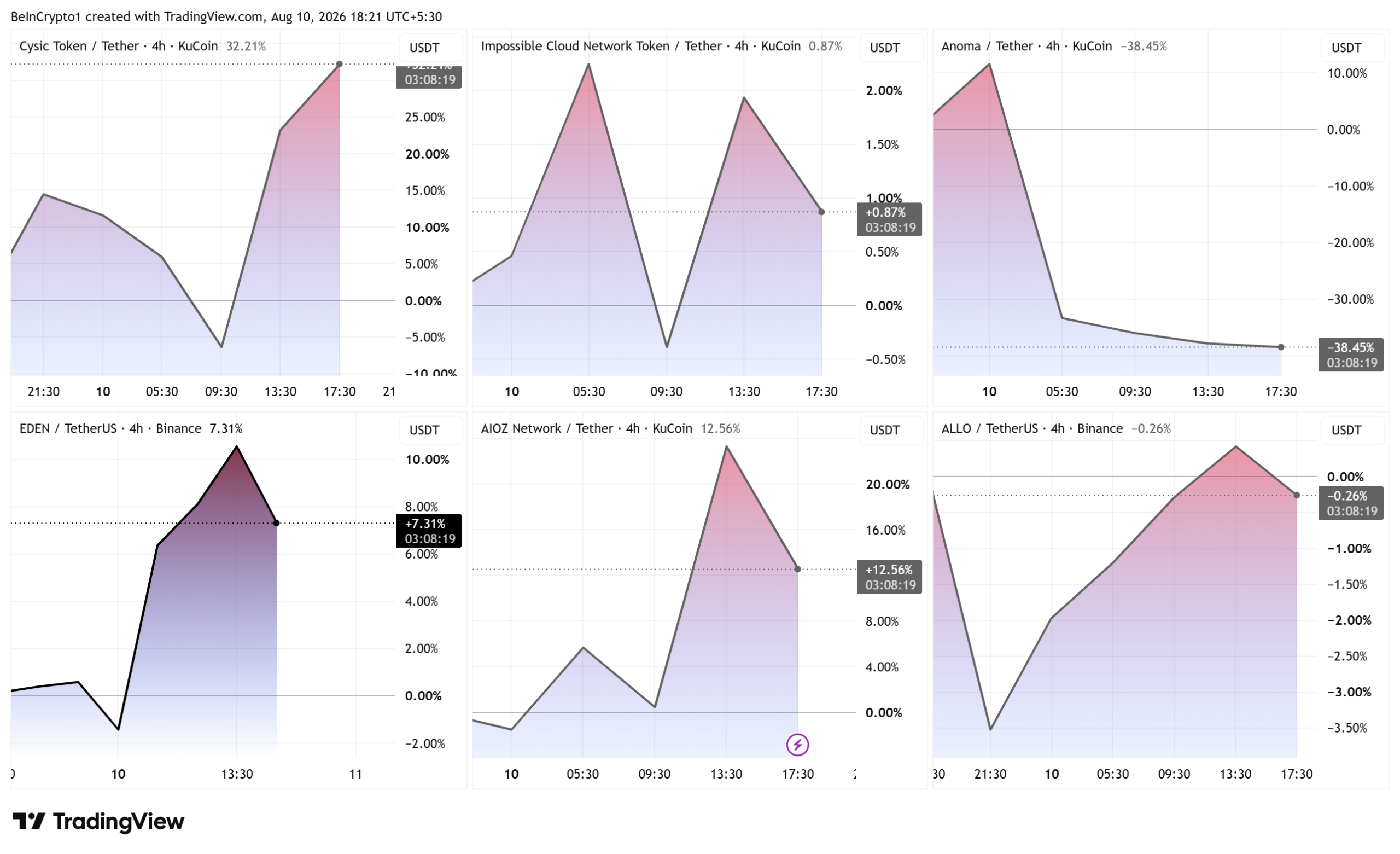
Traders delivered a split verdict on Monday’s new Upbit listings. Cysic (CYS) jumped 32% even as Upbit delayed its debut. Anoma (XAN) fell 38%, forcing an emergency cut to its minimum sell price.
South Korea’s largest exchange announced the six additions early Monday, then delayed the launch twice to 8 p.m. Korea time. The uneven reaction points to selective demand for compute and AI tokens rather than a broad listing rally.
A Chaotic Debut With Two Delays and Emergency Rule Changes
Upbit added Cysic, Impossible Cloud Network (ICNT), Anoma, OpenEden (EDEN), AIOZ Network (AIOZ), and Allora (ALLO) in a notice posted Monday morning. All six trade against Bitcoin (BTC) and Tether (USDT).
Trading was set for 2 p.m. Korea time but slipped to 5 p.m., then 8 p.m. Upbit then postponed the CYS launch outright, citing errors on the project’s bridge page and thin liquidity.
Minutes before the rescheduled open, the exchange also cut XAN’s minimum sell price to 0.01275 USDT. Sell orders more than 10% below that reference stay blocked for the first five minutes of trading.
Launch-day guardrails cover all six pairs. Buy orders stay disabled for roughly five minutes, and only limit orders clear during the first two hours.
Upbit decisions routinely move prices in both directions. The Bonk (BONK) meme coin slid to a near three-year low last week after the exchange announced its September delisting. Meanwhile, Morpho (MORPHO) whale activity hit multi-month highs in July after a new won pair opened.
Upbit Listings Split as Traders Back Compute and AI Plays
TradingView data shows CYS led the group with a 32% gain around the announcement. AIOZ and EDEN added 12.6% and 7.3%, ICNT rose under 1%, and ALLO closed flat. XAN sank 38.5%.

The gap maps onto each project’s pitch. Cysic builds a ComputeFi marketplace on Base that turns graphics cards and mining hardware into tradable compute power. The token now trades near $1.25, up 34% in 24 hours, with a market cap above $200 million.

AIOZ Network runs a decentralized physical infrastructure network (DePIN) for storage, streaming, and AI compute. It climbed nearly 20% over the past day.
OpenEden, which brings tokenized US Treasury products on-chain, gained 11% in 24 hours. That extends the run that made real-world assets July’s strongest crypto narrative.
Anoma found no such support. The project markets itself as a decentralized operating system that hides blockchain complexity behind one interface. XAN changed hands near $0.0123, down about 32% in 24 hours.

Impossible Cloud Network, a DePIN cloud project, and Allora, a decentralized machine intelligence network, drew little fresh demand despite the same Seoul exposure.
The next test arrives when CYS finally opens for trading. Whether the token defends its premium without a live Upbit order book should reveal how much of Monday’s move was listing hype.
The post 6 New Upbit Listings Fuel 30% Moves for Select Altcoins appeared first on BeInCrypto.
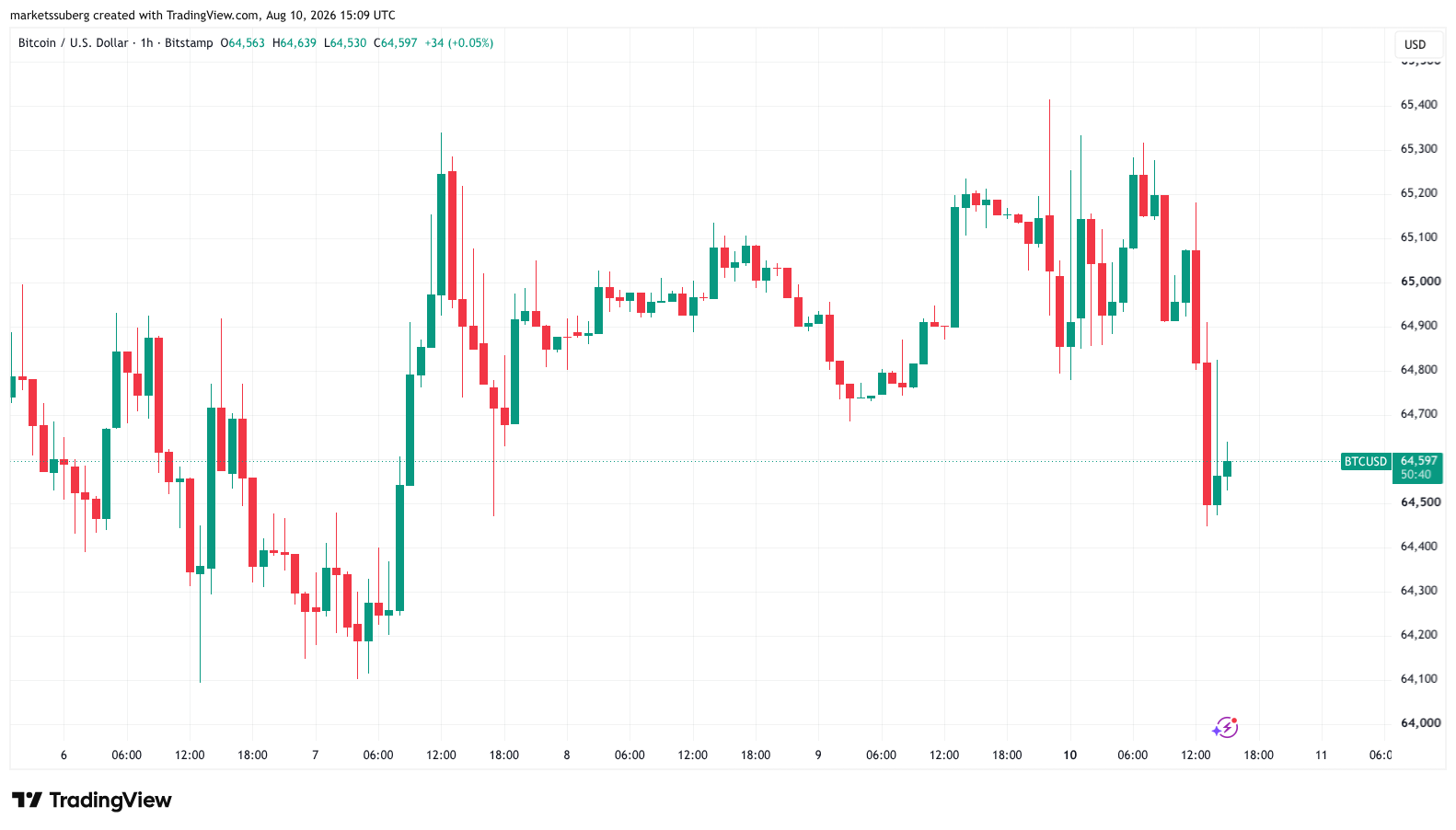
Bitcoin (BTC) slipped below $64,500 after Monday’s Wall Street open as markets digested more US-Iran uncertainty.
Key points:
- Bitcoin joins US stocks in selling off amid uncertainty over whether the Strait of Hormuz will reopen.
- The Japanese yen commands attention as it slides back toward historic lows against the dollar.
- Bitcoin analysis doubts market strength despite “exceptionally strong” institutional inflows.
Iran warns “no military solution” to Hormuz closure
Data from TradingView showed BTC/USD hitting $64,447 on Bitstamp, its lowest since Friday, before a modest rebound.
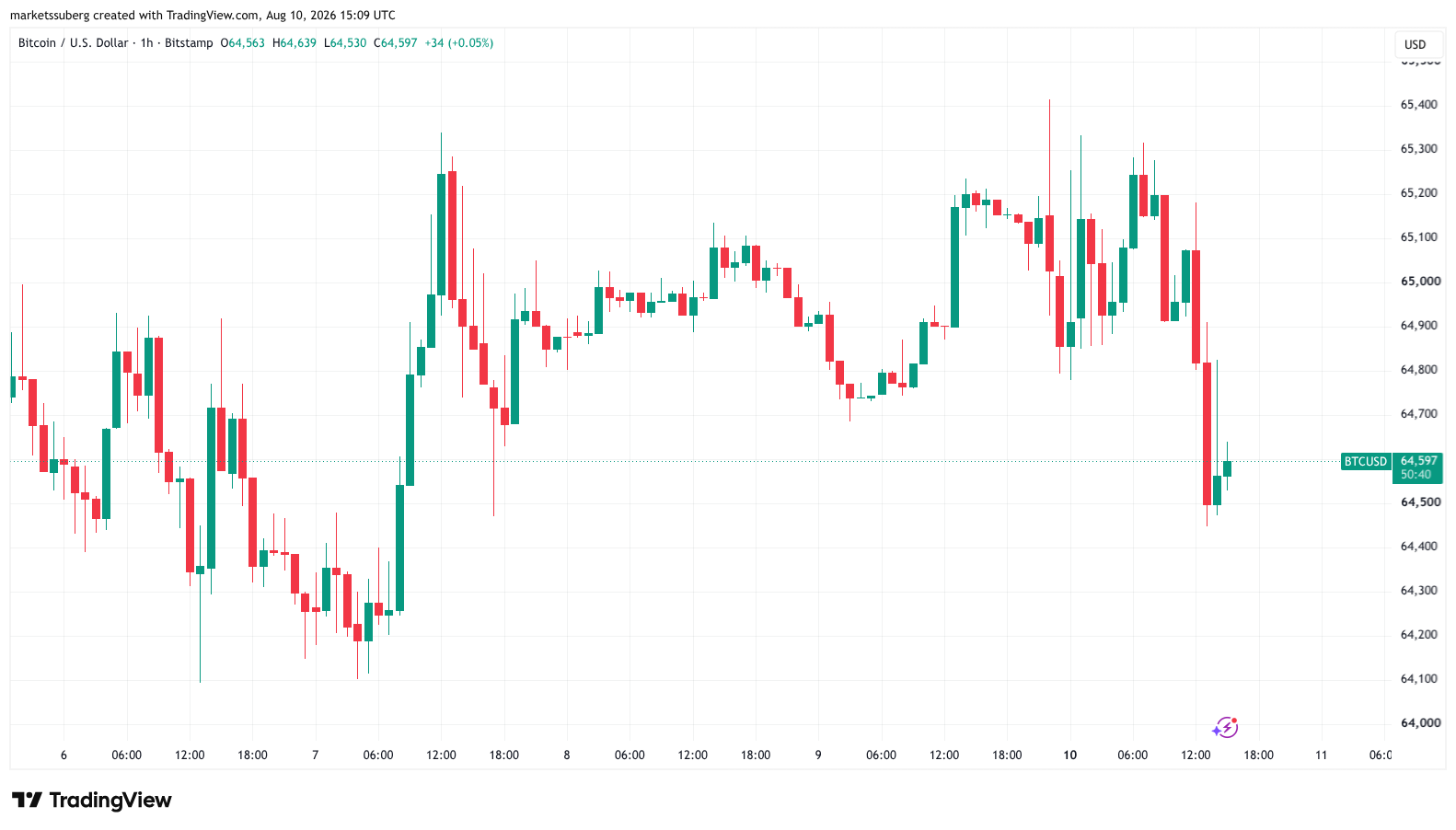
BTC/USD one-hour chart. Source: Cointelegraph/TradingView
This mirrored US stocks, which initially fell as the odds of the Strait of Hormuz oil route reopening appeared to fade.
Addressing Iran’s Islamic Consultative Assembly, deputy speaker Ali Nikzad said that the “opening of the Strait of Hormuz has no military solution,” as quoted by Al Jazeera and others.
US WTI crude oil was up by almost 5% on the day at $80.90 per barrel at the time of writing, while the S&P 500 index nonetheless reversed to turn green, still below Friday’s all-time highs.
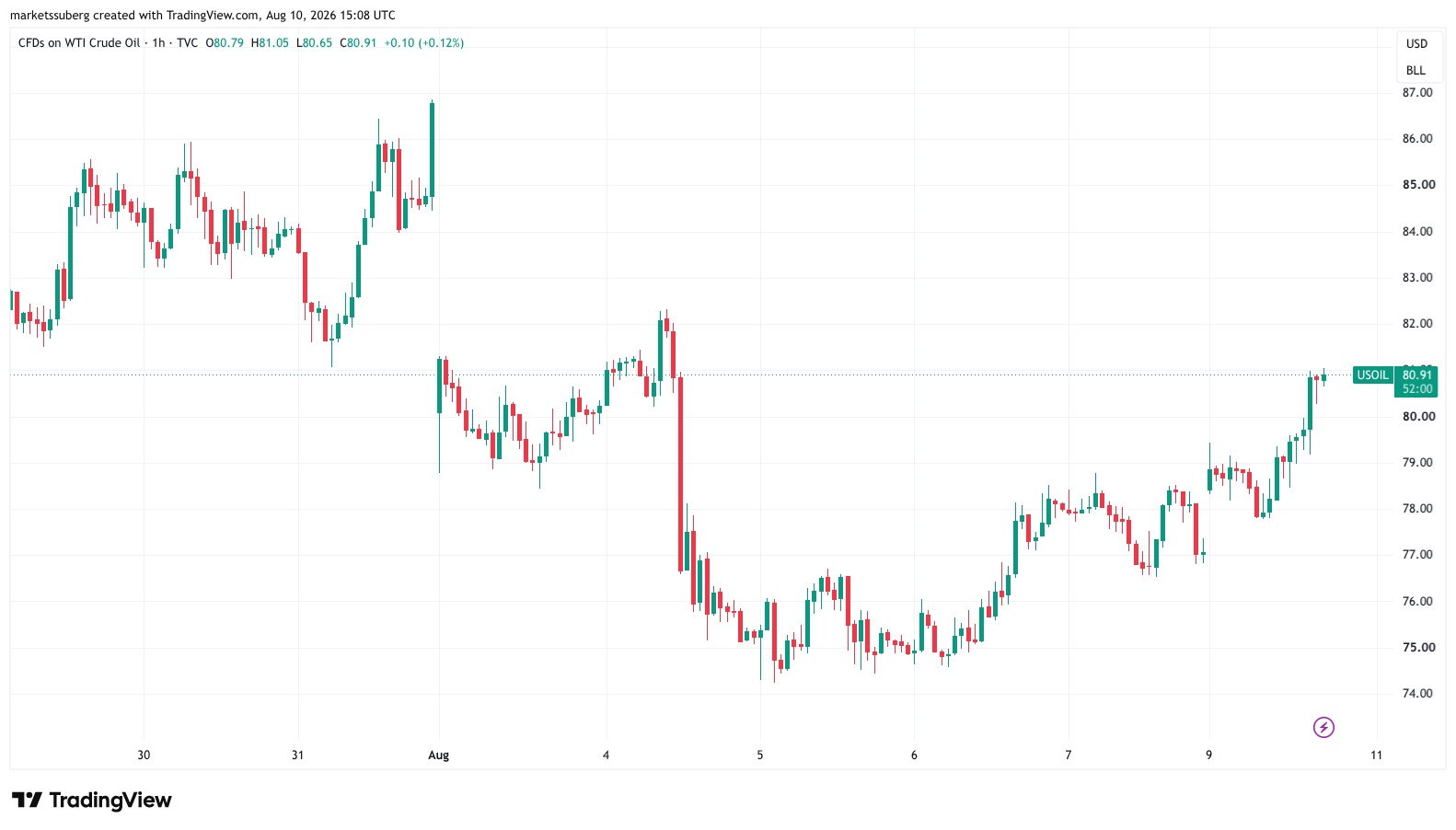
CFDs on US WTI crude oil one-hour chart. Source: Cointelegraph/TradingView
Attention also remained focused on the Japanese yen, which continued to weaken against the US dollar despite an earlier rare joint intervention by Japan and the US. USD/JPY hit 159 on Monday, nearing the psychological boundary of 160 before the end of the week’s first Asia session.
Economist Mohamed El-Erian warned that more decisive government policy action from the Japanese side would be required.
“The yen has been weakening gradually since the large joint Japan-US FX intervention, a sharp reminder that the key to fixing a currency ‘mispricing’ is getting the policy mix right. The longer Japan delays in doing so, the more elusive the goal of this historic intervention becomes,” he wrote in a post on X.
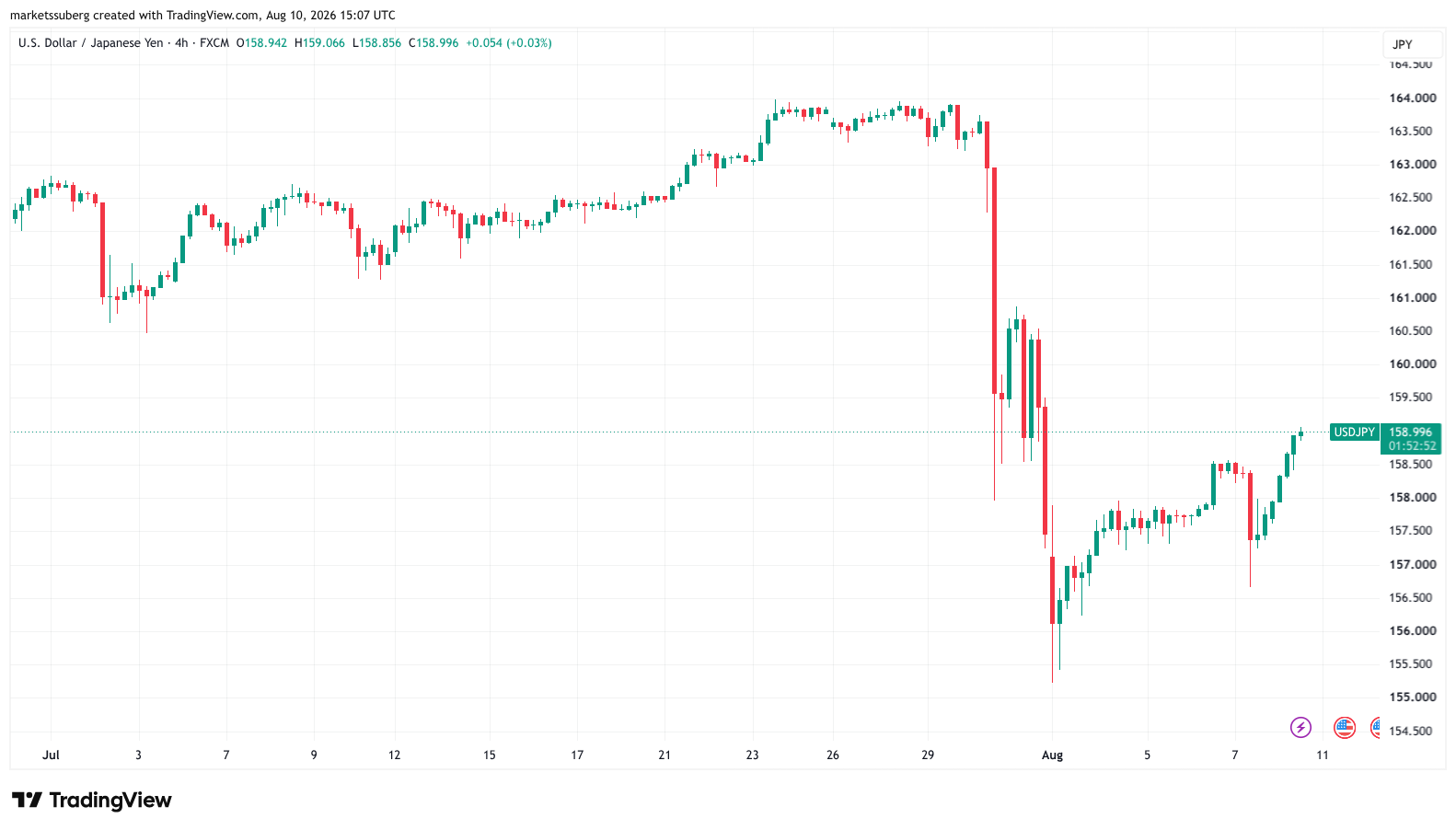
USD/JPY four-hour chart. Source: Cointelegraph/TradingView
Bitcoin comeback “tentative” despite $865 million ETF inflows
Bitcoin analysts warned that the attempted BTC price rebound “remains tentative” despite some promising signals.
Related: Markets flip for Fed rate-hike pause into CPI: Five things to know in Bitcoin this week
Glassnode’s latest Market Pulse update highlighted weak spot-market momentum as one key missing component of a sustainable recovery.
“Momentum has returned toward neutral and spot taker buying has accelerated sharply, but overall centralized exchange turnover remains subdued,” the onchain analytics platform said. It added:
“This divergence points to improving demand within a broader consolidation regime rather than a broad-based expansion in speculative activity.”
Among the positive catalysts were institutional inflows, which Glassnode noted were “exceptionally strong.” Last week, the US spot Bitcoin exchange-traded funds (ETFs) recorded net inflows of $865.3 million, per data from UK-based investment company, Farside Investors.
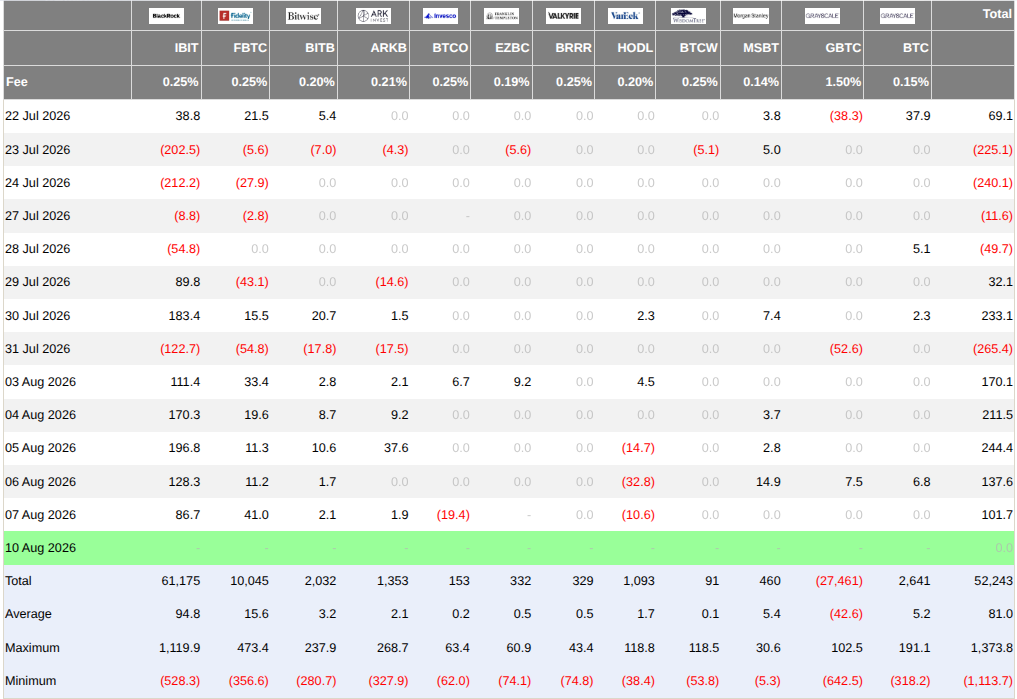
US spot Bitcoin ETF netflows (screenshot). Source: Farside Investors
Data from onchain analytics platform CryptoQuant, meanwhile, showed that hedge funds had flipped net long CME BTC futures — an event that CEO Ki Young Ju described as “rare.”
“The basis trade keeps them structurally short. That’s why this chart’s been red for years. You can’t carry trade into a net long. The suits are betting on upside,” he told X followers.
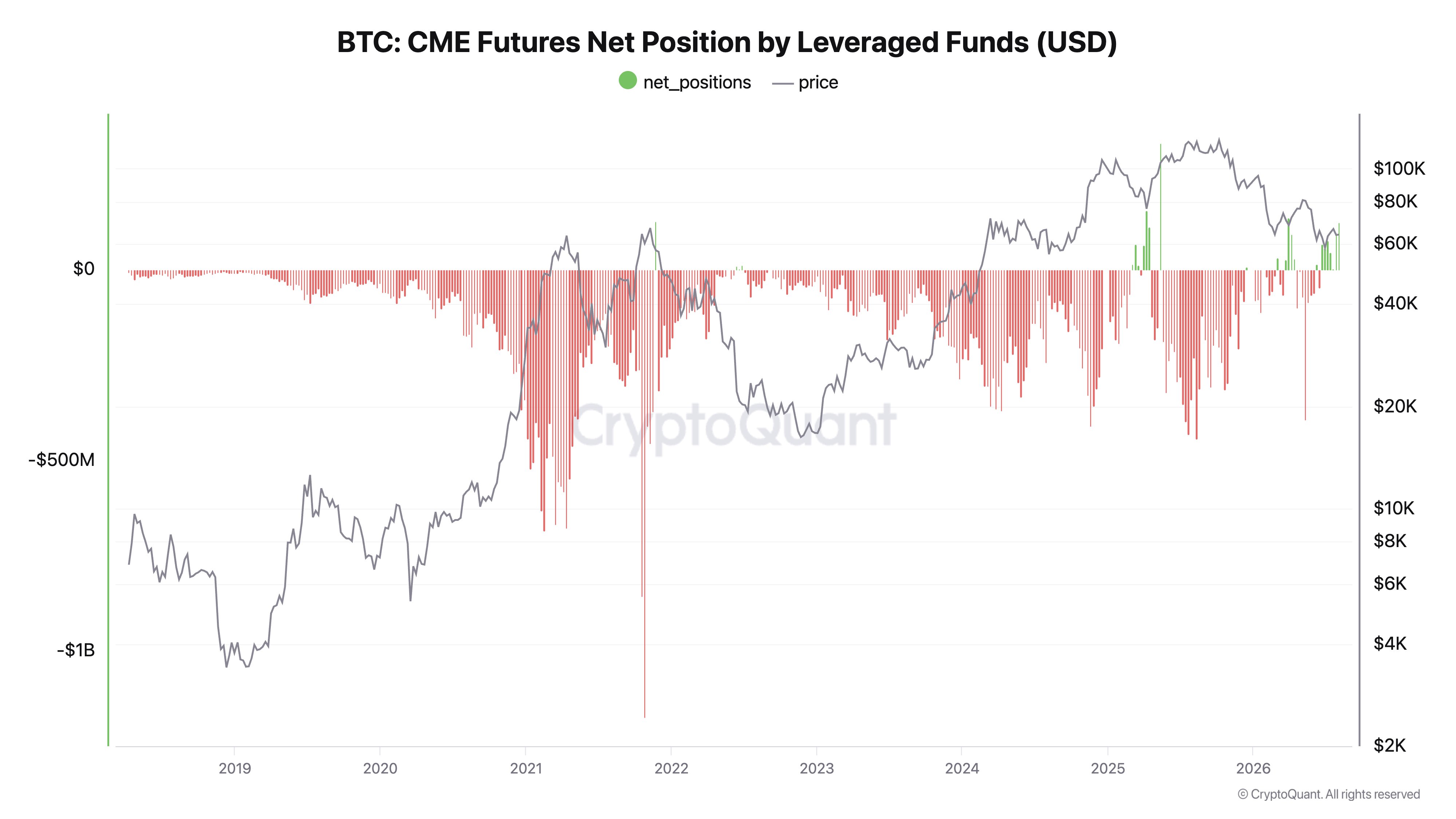
CME Bitcoin futures positioning data. Source: Ki Young Ju on X.com


BitMart customers are complaining that withdrawal requests are still pending weeks after the crypto exchange’s self-described “orderly wind-down” on July 26.
BitMart promised, “Withdrawal services will remain available.” Two weeks later, a customer who requested a withdrawal claims it still has his millions.
“WHERE IS OUR MONEY?” asked the customer. The appeal received over 150,000 views on Sunday. “$10.1 million on BitMart. Since July 26, I haven’t been able to withdraw single dollar.”
He also claims that his BitMart VIP manager, “Tony,” deleted his Telegram account on the day withdrawals stalled. He added, “Tens of thousands of people have been waiting for their funds since July 26.”
Smaller account holders have posted similar complaints on social media. Another customer said BitMart released just $5 of his roughly $24,000 withdrawal request on Saturday. He asked, “This is a joke, right?” and called the process “more like a letdown than a wind-down.”
Complaints extend well beyond individuals. Crypto project Gen6 said it filed a complaint with Hungarian police over some $80,000 in withdrawals requests “refused without explanation since Jul 26.”
Paxi Network demanded the exchange release its users’ and market makers’ funds, insisting, “These funds do not belong to BitMart.”
Scandic Coin reported three withdrawal requests submitted on July 26, including one for $21,898 worth of the USDT stablecoin, still allegedly unprocessed nearly eight days later.
Read more: Crypto exchange BitForex shuts down withdrawals and disappears
BitMart denies exit scam, asks for patience
On Saturday, BitMart founder Sheldon Xia broke two weeks of silence to deny that the exchange ran off with customer funds. He posted a four-point statement in Chinese, then posted an English version, “We have not disappeared, nor will we.”
Xia denied misappropriating assets or pulling funds out early.
Xia said the team is still tallying and consolidating what it holds, and floated the possibilty of “involving the courts and independent third-party auditors to provide a transparent report.”
The statement contained no figures, no timeline, and no proof of reserves. Curiously, the denial arrived on the final day BitMart gave US customers to get their crypto off the platform.
BitMart has an unfortunate history of deflecting withdrawal complaints. In May 2026, it blamed circulating claims that “BitMart cannot withdraw” on risk controls that intercepted “a malicious volume-farming group” running 239 linked accounts.
Two days before the wind-down announcement, BitMart fired its executive Nathan Chow, who said, “I was not involved in the decision announced today, not consulted on it, and not informed of it.”
On-chain data does BitMart no favors
Holdings by crypto wallets attributed to BitMart by Arkham Intelligence slid from about $102 million on July 6 to $69 million by July 27, while BMX, the exchange’s own token, crashed 81% in a week.
As of Sunday evening, Arkham’s tracker estimated the exchange held $59.3 million.
Unfortunately, BitMart’s largest tracked holding per Arkham is $22.5 million of a little-known token called Ten Best Coins, followed by $13.6 million of another obscure altcoin, WeFi.
In contrast, its tracked BTC totals a mere $300,000, alongside just $235,000 of ETH and $436,000 of USDC.
DefiLlama, which also monitors holdings of various entities, currently counts about $2.6 million worth of assets on the exchange — far below Arkham’s estimate.
BitMart survived another major crisis in December 2021 when hackers drained up to $196 million from its crypto wallets.
The exchange suspended withdrawals and pledged to compensate users from its own funds.
Nearly five years later, Xia is asking for patience and thanking users for their trust.
BitMart’s exchange token BMX has lost four-fifths of its value over the last month and currently trades more than 90% below its June 2024 all-time high.
Got a tip? Send us an email securely via Protos Leaks. For more informed news and investigations, follow us on X, Bluesky, and Google News, or subscribe to our YouTube channel.

Varex Imaging (VREX) soared over 48% after Teledyne Technologies (TDY) announced it will acquire the X-Ray company in a deal valued at about $1.1 billion. Teledyne shares edged higher, rising within a buy zone. Teledyne, part of IBD’s aerospace and defense industry group, agreed to pay $18.90 per share in cash, a premium of 52% from Varex’s closing price on…
Copyright ©2026 Investor’s Business Daily, LLC. All rights reserved. 87990cbe856818d5eddac44c7b1cdeb8
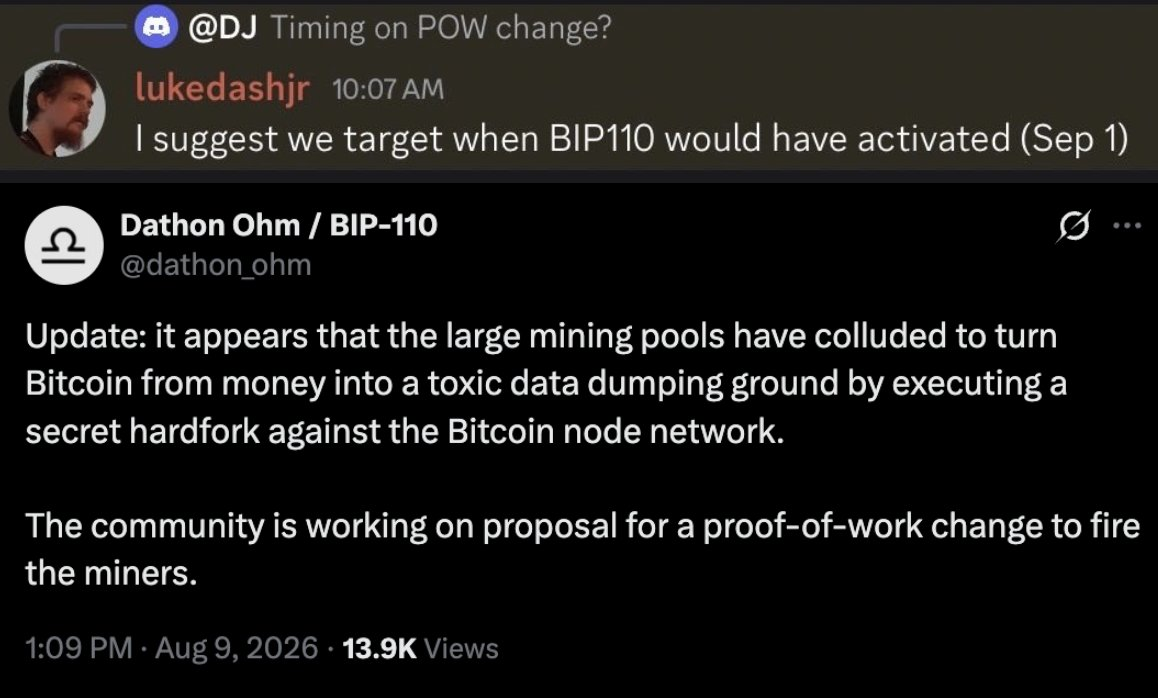
Bitcoin killed the BIP-110 fork in two blocks. Now its backers want out entirely. They are targeting September 1 for a proof-of-work change that would abandon Bitcoin’s miners and launch a separate coin.
The pivot turns a failed rule change into something much bigger. A movement that wanted to clean up Bitcoin now wants to leave it.
A Breakaway Coin by September 1?
BIP-110’s supporters spent the weekend watching their chain freeze. By Sunday, the proposal’s pseudonymous author, Dathon Ohm, had recast the defeat as an attack.
“Update: it appears that the large mining pools have colluded to turn Bitcoin from money into a toxic data dumping ground by executing a secret hardfork against the Bitcoin node network. The community is working on proposal for a proof-of-work change to fire the miners,” wrote Ohm.
Luke Dashjr went further. The Bitcoin Knots maintainer and OCEAN pool co-founder sits at the center of the movement. Asked about timing, he suggested September 1, the day BIP-110 would have activated.

A proof-of-work change swaps the puzzle that secures the chain. Every existing Bitcoin mining machine becomes useless on the new coin overnight. That ends any claim to a soft fork. It creates a rival coin living or dying on its own.
History offers a warning here. Bitcoin Cash broke away in 2017 with far more support and kept Bitcoin’s mining algorithm. Today, Bitcoin Cash (BCH) trades near $215, about 0.3% of Bitcoin’s price, per BeInCrypto data.

How Bitcoin Killed the BIP-110 Fork
The escalation follows a failure so fast it stunned even critics. BIP-110 proposed a temporary soft fork capping data sizes in transactions. The goal was to push Ordinals inscriptions and similar non-money content out of blocks.
The bar for activation was already low. Supporters cut the usual 95% miner approval threshold to 55%. Support still peaked at just 2.53%.
Then mandatory signaling began at block 961,632. Nodes enforcing the rules, shipped in Bitcoin Knots rather than Bitcoin Core, started rejecting blocks that did not signal. The network split exactly along the lines BeInCrypto flagged in its pre-fork holder warning.
Roughnecks, a small mining group on OCEAN’s platform, mined the fork’s only two blocks. It gave up on August 9 and told other miners to stop.
Tracking data from BIP110 Monitor shows the chain frozen at block 961,633, with Bitcoin now more than 240 blocks ahead.

Signaling in the current period sits at 0.00%. Worse, the fork kept Bitcoin’s full mining difficulty with almost no hashrate behind it. Each new block could take many hours.
Strategy executive chairman Michael Saylor, one of the proposal’s loudest critics, framed the outcome as proof the system works.
“Bitcoin worked exactly as designed. BIP-110 was free to fork, and the network was free not to follow. The result was decisive: about 99.85% of Bitcoin’s hashpower stayed with Bitcoin. The BIP-110 branch mined only two blocks and is already more than 80 blocks behind,” he wrote.
The gap has tripled since his post. Markets shrugged throughout. Bitcoin (BTC) trades near $64,722, up 0.6% in the past day, per BeInCrypto data.
Fallout Hits Dashjr and OCEAN
The wreckage now centers on one man. Murch, a Bitcoin Core contributor, filed a motion to strip Dashjr of his BIP Editor role. The motion accuses him of using editorial privileges to favor BIP-110 and cites conflict-of-interest concerns.
Dashjr did not immediately respond to BeInCrypto’s request for comment.
However, critics of the move argue it punishes an opinion rather than real process abuse. The fight revives a 12-year-old dispute over Dashjr’s place in the ecosystem.
His pool is in worse shape. OCEAN admitted it routed some customers’ hashrate to the minority chain for about 18 hours without clear consent. Its reported hashrate has since collapsed 96%. Angry miners now demand OCEAN leadership changes over the breach.
The fork question is closed. The harder ones are not. Bitcoin’s spam debate remains unresolved, and September 1 is now a live deadline. Whether a breakaway coin actually appears by then will show how far BIP-110’s backers are willing to go.
The post Bitcoin Killed the BIP-110 Fork: Breakaway Coin by September 1? appeared first on BeInCrypto.
Optimism will not commit to running its OP buyback beyond the program’s first 12 months, the Foundation told BeInCrypto. Monthly purchases have already fallen 87%.
The buyback is the main source of demand for OP. It bought 6.95 million tokens in March. The following month it bought 926,000.
The Optimism Buyback Is Shrinking Fast
Optimism buys OP each month using up to half of Superchain revenue. Superchain is the group of blockchains running Optimism’s software. The program runs for one year.
Three purchases are on record, published by the Foundation on August 7:
- January revenue bought 1.57 million OP.
- March revenue bought 6.95 million.
- April revenue bought 926,000.
Spending is settled in ether. It fell from 367.9 ETH in March to 50.2 ETH in April. That April purchase was worth about $95,000. The three months together come to 513.9 ETH, or roughly $975,000.
Timing matters. Coinbase’s Base network left the OP Stack in February. Base was the largest chain in the group. OP fell 23% on that news, and Optimism cut more than 20% of its staff weeks later.
Asked what that means for revenue, the Foundation declined to project. It also stopped short of committing to the buyback past its current term.
“We will re-evaluate the buyback at the conclusion of its 12-month program, with feedback from the community. Historically, the Foundation does not discuss Superchain revenue forecasts or projections,” the Foundation said in written responses to BeInCrypto.
216 Million Tokens Are Still Coming
Optimism also updated the supply table in its budget report. It now shows 2.288 billion OP in circulation, up from the 2.161 billion first published.
“Please note that the numbers published in the ‘Finance Overview’ table were slightly out of date. We’ve since updated the data to accurately reflect the numbers,” the team added.
Follow us on X to get the latest news as it happens
The Foundation named a separate tracker as the record readers should follow, and explained the timing behind the gap.
“Larger ticket items are added usually on the first week of every month, which explains the gap in numbers.”
It also said the forecast has to be read against its budget calendar, which does not follow the calendar year.
“Note that our Fiscal Year Four started in May 2025 and went through April 2026, and Fiscal Year Five goes from May 2026 to April 2027. This means that we are already in Fiscal Year Five.”
On that basis the Foundation put circulating supply at 2,231.5 million at the close of last year. This year adds 272.9 million, ending at 2,504.4 million. BeInCrypto confirmed those figures.
Counted from the updated August number, about 216 million tokens are still to come. That is worth roughly $19.7 million, or 9% of what the token is worth today.
Buybacks have absorbed 9.45 million OP so far. That covers 4.4% of the supply still ahead.
Retro Funding and Airdrops Stay at Zero
Retro Funding, the grants program paused in January, is set at zero this year. The Foundation said the pause runs on its own 12-month clock.
“Once that 12-month period expires, the Collective will re-evaluate the program and its connection to Optimism’s strategy. Historically, moreover, the Foundation doesn’t provide any guidance on airdrops.”
That review falls inside the current budget year. Two of Optimism’s biggest levers, the buyback and Retro Funding, now sit behind reviews rather than commitments.
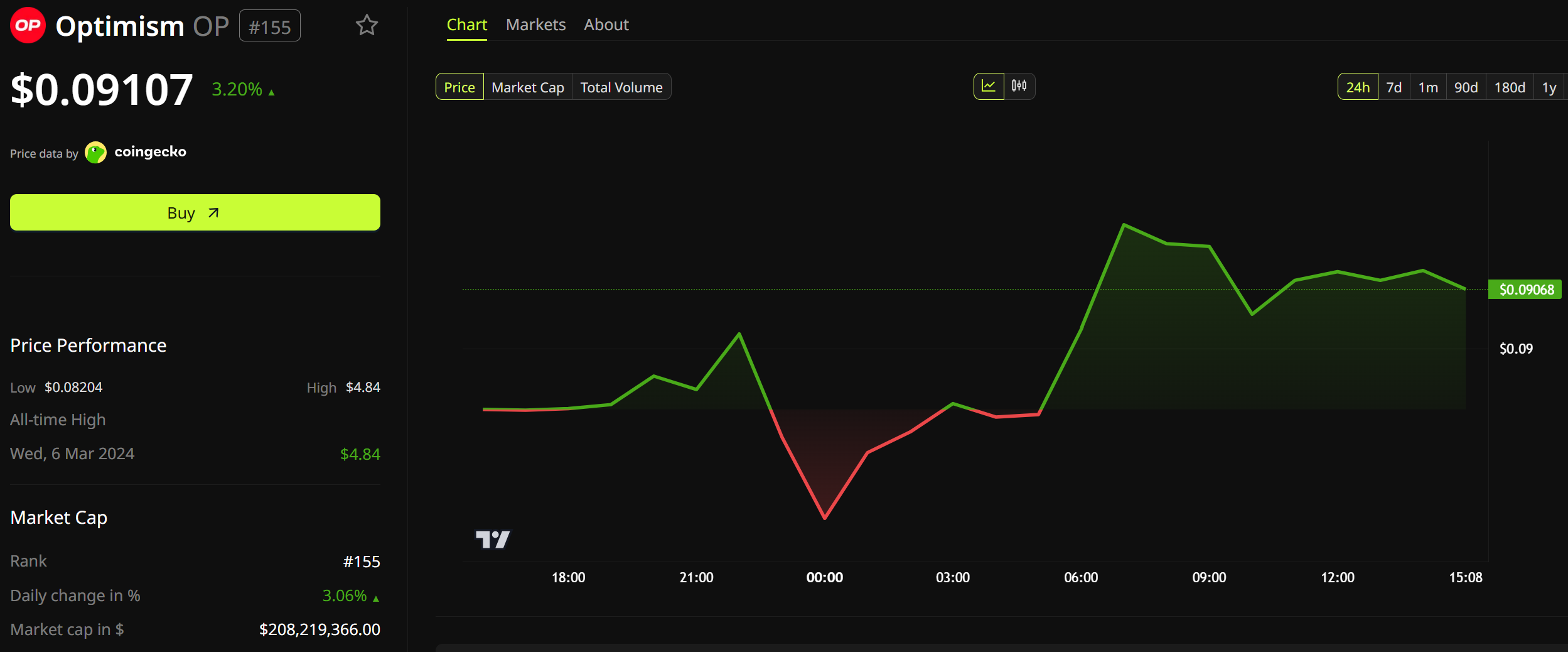
OP traded at $0.091 on Monday, up 3.1% on the day and about 12% over 30 days. The token is holding up. The question is whether it still does once the next tranche unlocks.

The post Optimism Won’t Commit to OP Buyback Beyond 12 Months as Purchases Fall 87% appeared first on BeInCrypto.

Emilio Gay: England opener set to be fit for first Pakistan Test

Google Stock Sputters, But These Catalysts Could Spark A Rebound

Strive Buys 147 More Bitcoin, Treasury Tops 20,167 BTC


-

 Fashion3 days ago
Weekend Open Thread: Mattifying Sunscreen
-

 Fashion3 days ago
Frugal Friday’s Workwear Report: Cap-Sleeve Pointelle Crewneck Sweater
-

 Sports5 days ago
Jordan Coyle & Cordiamo take Laya Arena Stakes at RDS
-

 News Videos2 days ago
Can Astrology Help Find Gold and Silver Trends? A Financial Astrology Guide
-
 Business5 days ago
US stocks: Dow closes at record on Mideast optimism; SpaceX, AMD drag Nasdaq
-
 Crypto World7 days ago
US Tech Stocks See Largest 5-Week Inflow in History: Can Nasdaq Break Its Downtrend?
-

 Politics4 days ago
Reform UK And Greens Sink To Lowest Favourability Ratings To Date
-

 Business6 days ago
Nvidia Stock Climbs 2.5% as Chip Sector Rally Builds Ahead of AMD Earnings, Nvidia’s Own Report Looms
-

 Crypto World6 days ago
Polymarket targets $20 billion valuation as competition heats up in prediction market sector
-

 Tech6 days ago
OpenAI, Anthropic AI agents targeted real people and systems in cyber tests
-

 Business5 days ago
Supply chain issues impact Ingredion
-
 Crypto World6 days ago
CLARITY Act Senate Vote Locked In, But 60-Vote Hurdle Looms Large
-

 Tech3 days ago
Rinn Pharma & Biopharma to join NordicPharmaTrain network
-

 Crypto World7 days ago
The Senate has one week: CLARITY’s last August window
-
 Crypto World6 days ago
Dow and S&P 500 Hit Records on AI Earnings: When Will the Bubble Burst?
-

 Business2 days ago
How to Start a Cleaning Business: A Step-by-Step Guide
-
 Crypto World7 days ago
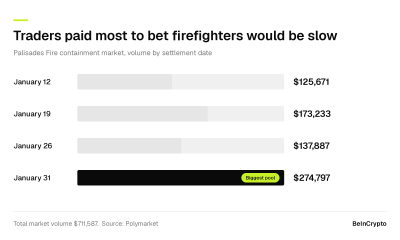
California Wildfire Bets Expose Polymarket’s Dark Side
-

 Business1 day ago
Datadog: Best Of Breed For Multiple Reasons
-

 Business7 days ago
CNH Industrial Shares Jump Over 15% After Beating Estimates and Raising Full-Year Earnings Guidance
-

 Business2 days ago
BDC Weekly Review: Private BDC Q2 Numbers Are Strong
You must be logged in to post a comment Login