

Politics
Thomas Heald: The Mandelson affair and the lessons it holds for Scotland

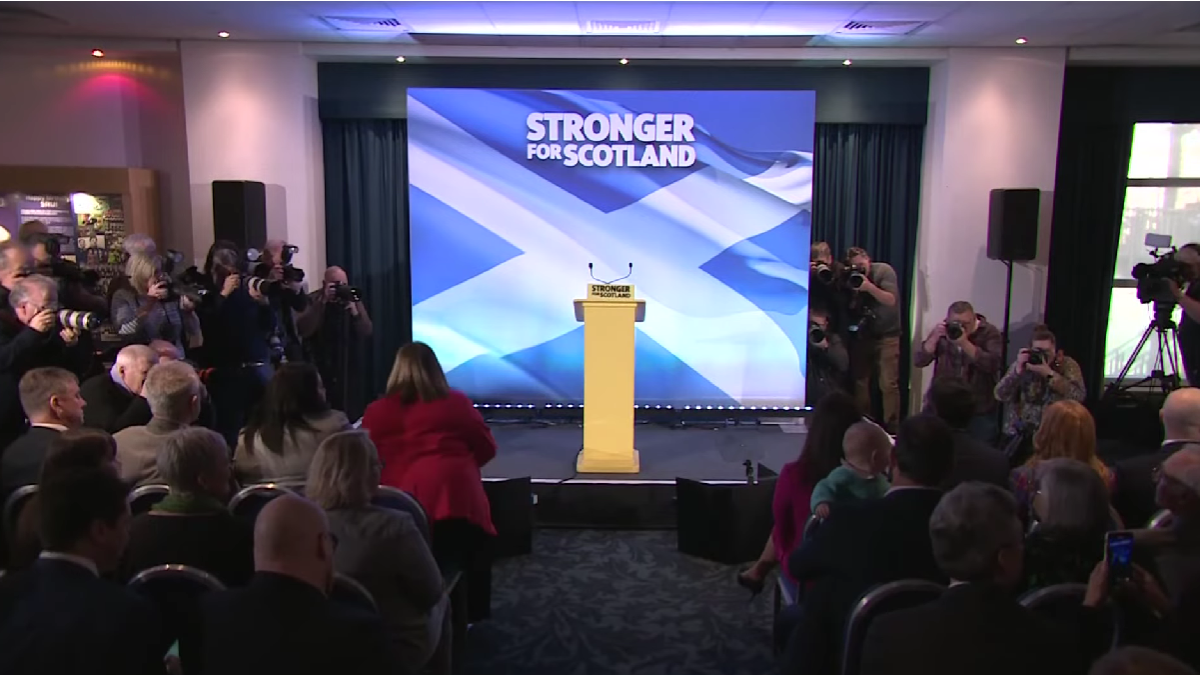
Councillor Thomas Heald is a Scottish Conservative councillor for Dunblane and Bridge of Allan, Scottish Conservative and Unionist candidate for Dunfermline and political advisor in the Scottish Parliament.
The controversy surrounding Lord Mandelson matters not because of personality, however objectionable, but because it exposes a recurring flaw in modern politics: the belief that trust can be restored simply by changing the people in charge.
That assumption was central to Keir Starmer’s pitch for office. Labour did not win on ideology or ambition, but on a moral claim that standards, judgement and seriousness would improve because different people were in power. The Mandelson affair tests that claim and suggests that trust cannot be rebuilt by intent alone.
This is not about a single controversy. It reflects a deeper tendency to confuse ethical language with ethical behaviour. Voters are repeatedly told that professionalism and experience will guarantee better outcomes. In practice, systems behave much as they did before.
Conservatives should be honest about our own record. The past decade damaged public confidence. Too often we appeared distracted or insufficiently serious about the responsibilities of office. Any attempt to rebuild trust must begin with acknowledging that failure. An acknowledgement which has quite rightly been at the forefront of Kemi Badenoch’s attempts to rebuild and remodel our party at a UK level.
But Labour’s difficulties point to a wider truth: trust is not restored by tone, presentation or moral claims. It is restored by conduct, particularly when that conduct is inconvenient or politically costly.
This lesson is especially relevant in Scotland.
For nearly two decades, Scottish politics has been dominated by a party that has framed itself as a moral alternative to its opponents. The SNP has claimed higher purpose and greater legitimacy, but long tenure has not produced improved outcomes. Educational standards have declined, public services are under sustained pressure and local government increasingly struggles to maintain basic infrastructure.
Council tax rises while roads and pavements deteriorate. Moral certainty has not translated into competent administration.
This is not unique to Scotland, but Scotland illustrates the danger clearly: when political authority rests on moral posture rather than accountability, standards erode quietly over time.
The Mandelson affair is a reminder that no party is immune to this dynamic. Power breeds defensiveness. Longevity dulls judgement. Promises to “do things differently” collapse unless they are backed by discipline and restraint.
Scottish voters are not hostile to politics, but they have too often been encouraged to substitute moral assertion for evidence of delivery. Repeated appeals to virtue, grievance and intent have been allowed to stand in for measurable improvement in schools, public services and local government. Over time, that has weakened scrutiny and lowered expectations — not because voters are disengaged, but because the political culture has rewarded rhetoric over results.
For Conservatives in Scotland, the implication is straightforward.
Rebuilding trust does not mean competing in the language of virtue. That road has failed repeatedly. Trust is rebuilt locally and incrementally: through competent councils, improved schools, maintained infrastructure, and politicians who explain difficult decisions rather than evade them.
The lesson of the Mandelson affair is not that trust in politics is impossible. It is that trust cannot be asserted, outsourced, or inherited. It is earned through discipline, restraint and visible competence, especially when those in power are tempted to excuse themselves. Scotland has lived for years under a politics that mistakes moral claims for delivery.
Conservatives should resist that temptation entirely. If trust is to be rebuilt, it will not come from saying we are different, but from governing differently, consistently, locally and without pretending that good intentions are a substitute for results.

Politics
Lord Ashcroft: The Gorton and Denton focus group -“Labour need to go back to the fundamentals and re-establish what they are about”

Lord Ashcroft KCMG PC is an international businessman, philanthropist, author and pollster. For more information on his work, visit lordashcroft.com
Last week I conducted focus groups among former Labour voters in the Gorton & Denton constituency to see what was on their minds as they prepared to vote in the by-election later this month.
There were mixed feelings about the decision to block Andy Burnham from standing as Labour’s candidate. Several said they had wanted him to stay as Mayor: “He’s done a good job, and he’s visible. He’s fought for us;” “I was like, I want him to stay for Greater Manchester. I don’t think his job is done here. It wasn’t about holding him back from Westminster and challenging Keir Starmer, it was more of the local ‘let’s make Manchester great’.”
Even so, they would have wished him well on his return to parliament: “I’d be quite happy for him to move on and share all that good work with the rest of the UK;” “He’s a very savvy operator and he would have taken that into the halls of Westminster. Let’s face it, Gorton and Levenshulme, Tameside, these places, then majority of politicians down in Westminster couldn’t pick them out on a map. He would have given the interests of those people more clout.”
“It’s quite evidently self-preservation… and now we’re going to get a Reform MP”
Some had positively wanted him to have the chance to mount a leadership challenge, without which they saw no chance for Labour at the next election: “I wanted him to get into power because I think Labour are a dead duck at the moment with Starmer. And I thought, maybe he can change things” (though others argued there was no guarantee that this would work: “I don’t think he could turn it around because Labour, the entity of the Labour Party, has lost its way”).
Whatever they thought about the chances of a Labour revival, nobody believed the reasons given for blocking Burnham: “I think they’ve cut their nose off to spite their face there because Starmer has obviously done it for self-preservation;” “He hasn’t got the party’s best interests at heart making a decision like that;” “They talk about money, but the Labour machine can make one phone call and raise the funds for that. It’s quite evidently self-preservation. He’s taken a ‘you problem’ and made it a ‘me problem’, and now we’re going to get a Reform MP.”
“We’re working harder and harder for less and less”
The Mandelson scandal, together with the Labour government’s record since the election, hardly created an ideal backdrop to the by-election. Though some said 18 months was not long, the sense of disappointment was unmistakeable. “When they came in, he was like, ‘we’re going to get rid of the sleaze, we’re going to be down the line’. And we’ve hit this already;” “It’s not so much the scandals for me. It’s the fact that they got a huge majority based on change, and what have you got?”
The groups felt nothing affecting them had changed for the better since they elected Labour or showed any signs of doing so. They detected no real plan to deal with the problems facing the country: “I would have expected him to work on energy bills and the cost of living. My and my husband’s wages have gone up, but we’re worse off than before because of the cost of everything. We’re working harder and harder for less and less;” “Fair enough, it might take a bit of time, but there’s no real indication that anything’s going to improve. That’s the problem;” “They’re winging it.”
“The leader that can’t lead, the decision maker that shies away from making decisions”
Though they debated whether Keir Starmer should be replaced imminently, few had any confidence in his ability to bring about meaningful change, or to win the next election for Labour: “He’s a cerebral thinker, and I really liked that about him. He didn’t get involved in that jokey pantomime that they cosplay at in the Houses of Parliament. But he’s suddenly become this leader that can’t lead, the decision maker that shies away from making decisions;” “I don’t think this is the moment for him to go. But he’s pissed me off royally;” “I don’t think he’s going to win anything. They need to make the move now to give whoever comes in enough time to steady the ship a little bit”. There was a widespread feeling that the problem went beyond the party leadership: “I feel like they’re beyond broken, if I’m completely honest. From someone who’s been Labour throughout my whole life, I feel like they need to go back to the fundamentals and reestablish what they’re about.”
“It seems like there’s someone who’s got my interests at heart”
For many of our 2024 Labour voters, the by-election was an opportunity to show how they felt about the Starmer government, and Reform UK were the ideal vehicle for doing so. However, most of those intending to back Reform spoke as though it was more than a one-off protest vote: “It’s just a party that kind of represents people who want to work hard and that there will be a reward for that. Whereas with Labour all the hard work just gets taken away from you. It seems like there’s someone who’s got my interests at heart and the effort I put in;” “I’ve had to look elsewhere because I can’t bring myself to vote Labour again. You’ve got to blame Labour for the rise of Reform, because Labour kicked the working man in the teeth. And then all it takes is a Reform wolf-whistle.” The absence of a track record did not deter these voters: “It’s for a brighter future, and we can see hope. And we’ve come to the conclusion that Labour is not giving us that hope. So if there is a glimmer of hope, it’s Reform that makes sense;” “It just feels like we’ve got nothing to lose.”
Reform’s Matt Goodwin was the best known of the by-election candidates in our groups: “He’s a host on GB News. Bit of an intellectual;” “He’s said some awful things but he’s a good communicator, he’s quite intelligent. I’ve seen him canvassing around, so he’s out there and they have put a big gun forward. His name came straight to my mind, and I still can’t think of the Labour candidate’s name.”
“I can’t bring myself to vote Labour again because of the way everything’s gone”
For some of our anti-Reform participants, the priority was to “stop the Farage bandwagon,” though by this stage our participants had no clear picture of which party was best placed to do so. Some said they would reluctantly stick with Labour in an effort to keep Reform out, but this was not a good enough reason for everyone – these others would rather vote positively for something, and didn’t want Labour to take their support for granted: “It’s that split between voting tactically and being authentic, and I have to be authentic. I can’t bring myself to vote Labour again because of the way everything’s gone;” “Something’s got to change with them for me. You can’t just keep relying on my vote.” Only one participant had any clear view about Angeliki Stogia, the Labour candidate: “She’s terribly middle class, although she cracks on, she’s not”.
Responding to Starmer’s campaign statement “It’s Labour versus Reform, and we will fight for renewal, for inclusive communities and bringing people together, and for true patriotism against the plastic patriotism of Reform,” one said: “It’s very well and good and poetic what Keir said there. But I think, show me, don’t tell me. In the last couple of years, I don’t think they’ve really shown me that they give a shit.”
“He’s visible and he’s a credible alternative”
Among these disgruntled Labour voters not tempted by Reform there was considerable interest in the Green Party: “They have been more of a possibility for me recently than ever. They’ve always been seen as a bit of a wasted vote. Whereas now with Zack Polanski, he’s credible. He’s visible and he’s a credible alternative.” Like our potential Reform voters, those attracted to the Greens wanted to do more than vote tactically or register a protest: “We never take that risk and try someone else. I would rather take that risk than stay safe and vote Labour;” “I wouldn’t like to think that was my main reason, to stop somebody else. I’d like to think it was because I believed in what I was voting for a hundred per cent.” Some had heard of Hannah Spencer, though most could not remember her name (and some had heard that one of the candidates was a female plumber but couldn’t remember which party she represented.
Focus groups are clearly not a quantitative exercise, but it was notable that whichever party they intended to support (and with a couple of weeks of campaigning still to go) most of our participants expected Reform to win the by-election, possibly by some margin: “I don’t think it’s going to be as close as people think. I think there are going to be secret Reform votes as well.” Some said this expectation actually made it easier for them not to stick with Labour: “Reform are going to win. That’s why I’m voting Green. I would rather fail and know I’d been true to myself than vote tactically.”

Let it never be said that Cardi B doesn’t know how to laugh at herself.
On Friday night, the Grammy-winning performer brought her Little Miss Drama tour to Paradise, Nevada, where she came a cropper during a rendition of her song Thotiana.
After running into some difficulty during a choreo section involving a metal chair, Cardi found herself tumbling backwards, and completing the rest of her verse flat on her back.
Upon finishing the song, she had a great one-liner for those in the audience, quipping: “That was the government.”
The WAP performer’s comment was a reference to the recent back-and-forth she had with the White House.
On the first night of her tour in Palm Desert, California last week, Cardi assured those in attendance: “Bitch, if ICE comes in here, we gon’ jump they asses.
“I’ve got some bear mace in the back! They ain’t taking my fans, bitch. Let’s go.”
Responding in a post on X, the US Department of Homeland Security said: “As long as she doesn’t drug and rob our agents, we’ll consider that an improvement over her past behaviour.”
Cardi has insisted she’s “not proud” of her past conduct, after previously admitting to drugging and robbing men earlier in her life when she was still working as a stripper.
Less than two hours after the DHS’ post, Cardi fired back to the White House: “If we talking about drugs let’s talk about Epstein and friends drugging underage girls to rape them. Why y’all don’t wanna talk about the Epstein files?”
When footage of her fall became more widely shared on social media, Cardi later joked: “Can someone put a community note on this? This video is clearly AI.”
Interestingly, this isn’t the first time in recent history that Cardi has been caught on camera hitting the deck – only to come back with a hilarious retort.
On Super Bowl Sunday, she was filmed in California giving “a lap dance” to a robot, but wound up falling down when she stumbled over her towering heels.
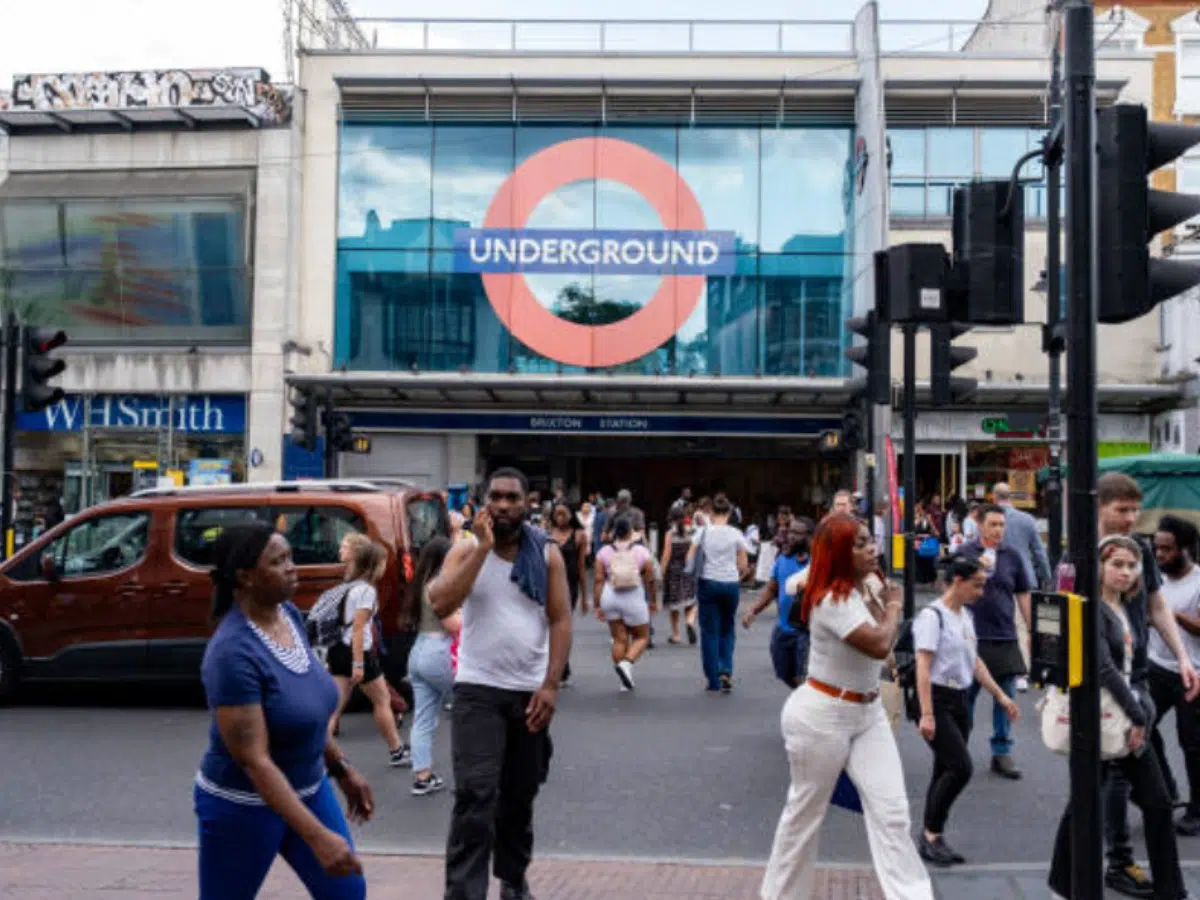
One of London’s last local newsagents has been forced to close, after Transport for London (TFL) raised its rent by over three times. Brixton News has operated within Brixton tube station for 36 years, until TFL skyrocketed their rent from £40,000 a year to £125,000.
TFL putting profit over people
Pritesh Patel, who owns and runs the kiosk with his brother, told The Londoner that the lease was originally £8,000 a year in 1990. Since then, it’s increased every three years.
Patel told The Londoner:
at some point, in five to ten years, we would have got to a point where we’d have to say, ‘we’ve got to walk away’, because the rents would’ve just kept increasing.
He explained that their profits aren’t enough to keep up with ever-increasing rents. Despite being a newsagent’s, most of their income comes from drinks and snacks. Which is also a sad statement about the decline of print media.
Patel said
You can’t pay stupid rent when you’re taking that.
While Brixton News stood alone until closure, it wasn’t always that way. When they first moved in there was also a record store, a camera and photo shop, a cafe, and dry cleaners within the ticket hall. Upstairs used to be home to an arcade which housed a Chinese supermarket, hairdressers, and a pharmacy.
This all changed in 2000 when TFL kicked out all of the businesses as part of the station’s redevelopment. Though the arcade upstairs has remained closed and empty. Brixton News was only allowed to stay because TFL shut the ticket hall, so passengers needed a place to top up their Oyster cards in person.
Pure greed
TFL have insisted that the rent hike was to accommodate an increase in premises size. This doesn’t appear to be something the Patels wanted or the kiosk needed.
TFL told The Londoner that they:
have the opportunity to increase the size of the retail unit currently occupied by the newsstand, and asked Pritesh in January 2024 if he’d be interested in the larger space. He decided not to stay, and we wish him all the best in his future endeavours and would welcome him elsewhere on our estate.
So basically, rather than keep a longstanding business in the station, they’re going to increase it anyway to see who else they can attract. Probably a big business that can afford the ridiculous rent.
Patel said:
I’ve interacted with nearly everyone in the area at some point: sometimes I’ve done them a favour, and we’ve chatted, we’ve talked. It’s just having somewhere you can come and have a conversation. Something local.
Because it’s more than just a kiosk, Brixton News is a focal point for the community of Brixton. Having been there so long, Pritesh knows the faces and the regulars. In turn, customers told The Londoner about their sadness at the shop’s closure.
Community is an obstacle for TFL
As London increasingly becomes a hollowed-out shell of faceless corporations, local run businesses that the community can trust are vital.
There’s no justification for taking away such an integral part of the community. Except for the fact that for a conglomerate like TFL, community gets in the way of profits. So instead of connection and sense of belonging, they see something that needs to be stamped out. Which is an absolutely vile way to run a company which is literally supposed to connect London.
Featured image via the Canary

The moment we saw the first trailer for Netflix’s new documentary Reality Check, exploring the highs and lows of America’s Next Top Model, we knew we were going to be glued to it once it actually began streaming.
Reality Check: Inside America’s Next Top Model features contributions from a series of former Top Model contestants, as well as judges, including Tyra Banks herself, reflecting on some of the show’s biggest controversies.
However, the doc also raises issues more casual fans might not be aware of, including one contestant’s allegation that she was sexually assaulted on camera during filming, and another claiming she was made to take part in a photo-shoot reminiscent of gun violence, despite producers being aware that she’d previously lost a family member in a shooting.
Since Reality Check premiered on Monday, many critics have said it will make for essential viewing for those who enjoyed America’s Next Top Model during its original run, although many also questioned just how probing it is as a documentary.
A three-star review in The Guardian said that Tyra “comes across as a real piece of work” in Reality Check, but laments that the documentary does the former Top Model contestants a “disservice by persistently framing Top Model as a product of its time”.
“For a show about beauty, Top Model was always ugly – but Reality Check’s conclusions are only skin deep,” they opined.
Metro gave the documentary the same score, with its critic admitting that it made them question “how I ever enjoyed [America’s Next Top Model] at all” due to its issues “ranging from the offensive to the disturbing”.
However, Metro’s review also agreed that “Reality Check doesn’t quite feel like the reckoning we were promised”, claiming there’s “nothing more shocking or revelatory here than the scenes from the show itself, which offer a depressing insight into what we were prepared to inflict on people for the sake of entertainment”.
In The Telegraph’s four-star review, it’s similarly pointed out that Reality Check is not “exactly an exposé, because we could all see that it was a hot mess”.
“But you will still goggle at this reminder of what ANTM served up each week for our entertainment,” the piece adds.
Australian outlet Mamamia called Reality Check a “must-watch”, with its review stating: “For her part, Banks has a few apologies to share, but overall, she reverts to the ‘times were different’ defence a bit too often to come across as fully accountable for her actions.”
New York magazine also published a review branding the show “both predictable and unsatisfying”, and criticising the “frustrating lack of contrition from most of the interviewees in the Netflix series”.
“If ANTM began with good intentions, then this docuseries demonstrates how quickly a show – and its creators – can be corrupted by success. Not that Banks sees it this way, even now,” they wrote.
Meanwhile, HuffPost US culture reporter Njera Perkins criticised Netflix’s three-part series for doing “very little to take those behind the show to task for the lasting harm inflicted on contestants in the name of entertainment”.
“To its detriment, Inside America’s Next Top Model relies more on aggrieved contestants to address the show’s controversies instead of holding those responsible accountable,” she wrote.
“Rather than focusing on where the show ultimately went wrong, the docuseries seems more interested in taking a nostalgic walk down memory lane.”
All three episodes of Reality Check: Inside America’s Next Top Model are now streaming on Netflix.
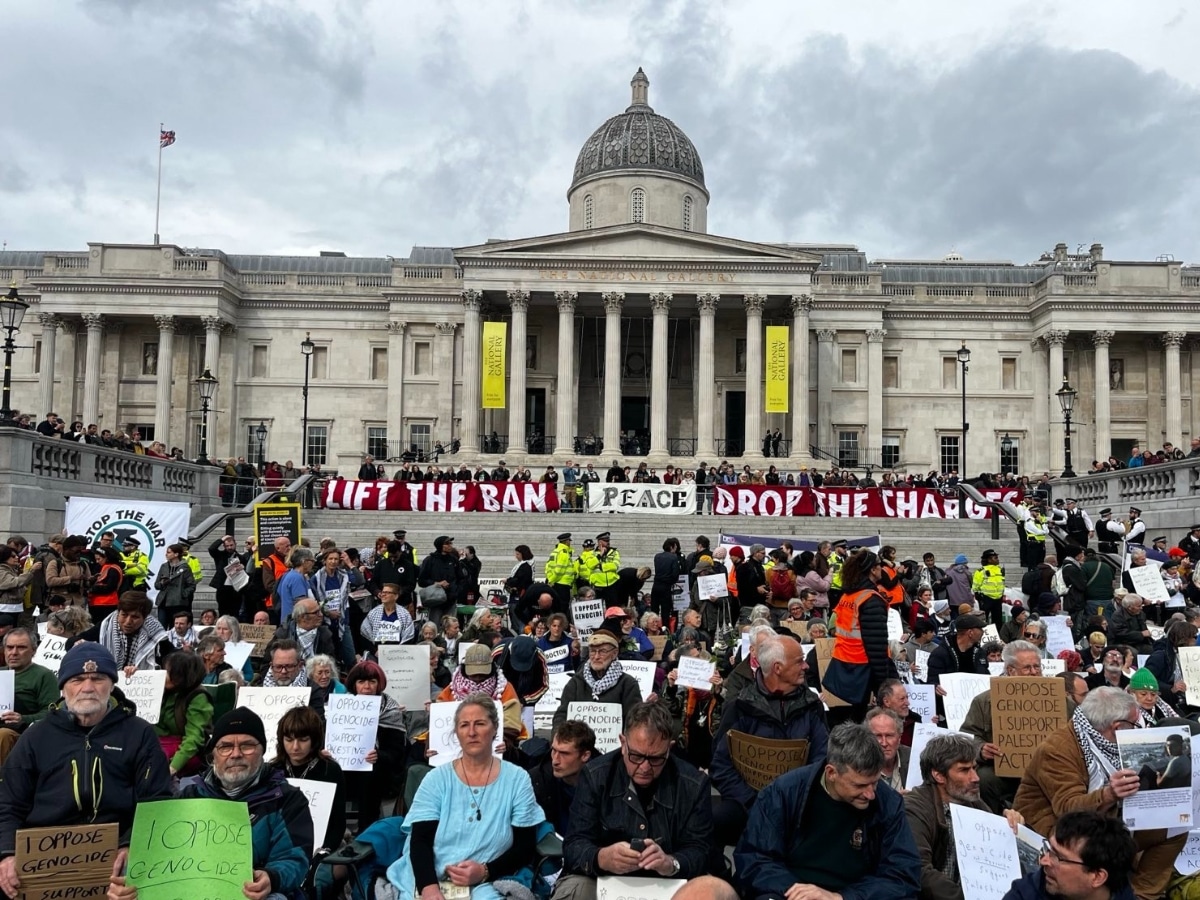
A group of Muslims, Jews, Christians and people of no religious faith will display placards outside the Supreme Court and the Home Office, in an act of peaceful civil resistance to injustice. They are calling for an end to the Genocide and an end to the government’s appeal of the judicial review ruling that the proscription of Palestine Action was illegal and disproportionate.
They stand as a group outside the Supreme Court at 1pm and the Home Office at 2pm on Monday 16 February.
Unity Against Genocide
As a multi-faith group, Unity Against Genocide stands in solidarity with the people of Gaza and the West Bank. Unity Against Genocide is standing in part to counter a narrative that seeks to divide us and silence opposition to the genocide.
Participants also continue to stress that the UK’s complicity in the continuing genocide of Gaza and annexation of the West Bank and Jerusalem must stop.
They support the thousands of people arrested after displaying signs in the Defend Our Juries campaign for the de-proscription of Palestine Action.
The Judicial Review ruled in favour of Palestine Action on 13 February. However the government has stated that it will appeal this decision.
Unity Against Genocide will stand outside the Home Office to send a clear message to Shabana Mahmood, that this appeal will be met by continued and escalated protest against the proscription of Palestine Action, and the unwarranted curtailment of free speech and for our right to jury trials.
Unity Against Genocide is separate from the group Defend Our Juries, which has taken regular action since the ban on Palestine Action was enforced. But the activists have taken a stand in solidarity against increasingly oppressive government legislation.
Holding the UK government accountable
Unity Against Genocide demands that the government:
- Drops the appeal against the judicial review which ruled in favour of Palestine Action.
- De-criminalises support for the rights of the Palestinian people.
- Issues immediate bail for the Filton 24.
- Stops foreign interference in government & institutions.
- Refuses to participate in Trump’s “Board for Peace” in Gaza.
Unity Against Genocide acts to hold the UK government accountable for war crimes. And it demands an end to the corrupting influence of Israeli lobbyists and their proxies on UK government policy.
Since 7 October 2023, over 71,000 Palestinians have been killed; some estimates give a far higher figure. While Hamas has released all hostages, Israel continues to detain nearly 10,000 Palestinians, including children and medical workers, most without charge.
Israel has violated the ceasefire more than 1,200 times, reduced Gaza to rubble, and escalated illegal settlement expansion and settler violence in the West Bank, displacing thousands and killing dozens.
Anti-Zionism is not antisemitism
In the UK, those who speak out against the gross human rights violations being committed by Israel continue to face growing censure. Journalists, academics, healthcare workers, teachers, and authors, among the many Jewish critics of Israel and Zionism, have been disciplined, dismissed, surveilled, and criminalised.
Criticism of Israel, or of the settler colonialist ideology pursued by its leadership, is being increasingly conflated with antisemitism by those seeking to silence dissent and erase legitimate political debate.
Dishonestly conflating anti-Zionism with antisemitism is clearly being deployed as a means of weaponising antisemitism and creating a tool to silence legitimate criticisim and condemnation of atrocities being committed by Israeli operatives.
Groups like Unity Against Genocide and Defend Our Juries are not the cause of increased antisemitism and Islamophobia; it is due to the genocide in Gaza and the West Bank.
There is a significant and growing number of Jewish people who define themselves as non- or anti-Zionist. They do not believe that Israel’s systematic commission of crimes against humanity have anything to do with Israel’s right to self-defence or protecting Jews in the diaspora.
Why take action?
The Jewish people taking part in this action say, loudly and clearly, “Not in our name!” To suggest, as some seek to do, that there is but one Jewish community and that community is composed entirely of supporters of Zionism, settler colonialism, illegal occupation, illegal annexation, ethnic cleansing of Palestinians from their homeland, infanticide, and genocide is, in itself, anti-Semitic.
Muslim people taking part in the action are standing in solidarity with those who have for decades in the UK been disproportionately stigmatised and targeted by terrorism legislation, being subjected to mass surveillance, ‘Prevent’ referrals, and policing that treats whole communities as inherently suspect. Presented as neutral security measures, these laws have normalised Islamophobia and caused lasting harm to Muslim communities.
We are witnessing a terrifying erosion of civil liberties in the UK. The continued imprisonment of the Filton 24, prolonged detention without trial, and the criminalisation of peaceful protest, mark a ratcheting up of authoritarianism and repression by the state.
Participants explain their motivation
Nasreen Ahmed:
As a Muslim I feel a strong responsibility to stand to stand against the genocide, especially when my government is complicit. If we do not continue to speak up, there is a real danger that all Palestine solidarity activism in the UK will be criminalised.
Mike Laywood:
It is so important as a Jew to not only be supporting Palestine Action and opposing genocide, but to be acting together with Muslims and Christians.
Rajan Naidu (75, Quaker):
It is our responsibility, as people who want justice and peace for all, to do all in our power, peacefully and determinedly, to end the genocide being inflicted on the Palestinian people of Gaza and the West Bank by the occupying forces of the State of Israel.
I concur with this statement, re Palestine Action, from Quakers in Britain.
The proscription of a direct-action protest group continues a worrying trend of state repression against dissent including the Police, Crime, Sentencing and Courts Act 2022 and the Public Order Act 2023. The UK is the only country in western Europe to have its civic freedom classed as “obstructed” by Civicus.
Featured image via Defend Our Juries

There’s nothing worse than grabbing a towel from your airing cupboard, only to find it smells about a thousand years old. (Nobody wants to get out of the shower and rub that across their clean body.)
But it turns out that musty, damp smell usually occurs because detergent hasn’t been washed out of the towel properly in the past.
When detergent or fabric conditioner isn’t rinsed out fully, it can create a greasy film that traps sweat and oils in the fibres, resulting in that unmistakable smell.
And thankfully, there’s a fairly easy way to get rid of it.
How to stop towels from smelling musty
A simple trick to stop towels from smelling unpleasant is to add half a cup of bicarbonate of soda to your wash to neutralise odours, according to Lottomart.
This pantry staple, which doubles up as a natural deodoriser, can be bought for as little as 60p, making it an incredibly cost-effective solution.
If you haven’t got bicarb to hand, you can also use two or three cups of white distilled vinegar in your wash to help strip away dirt and any bad smells.
Adding a few drops of tea tree or eucalyptus oil to your wash can also help to neutralise any odours. According to The Spruce, experts agree that these oils are best for deodorising and disinfecting laundry – especially sportswear.
And while you might often stick to a 30-degree wash as it’s better for the planet, your pennies and your clothes; sometimes sticking towels on a hot wash (think 60 degrees) can help strip away any detergent build-up, as well as nasty bacteria.
Just remember to avoid overloading the washing machine, as towels need space to move freely for proper rinsing.
Lastly, if you’re tempted to use fabric softener on your towels, experts generally advise against it. Professional cleaner Ann Russell previously noted that using fabric softener makes towels less absorbent – and essentially leaves them unable to do their job.
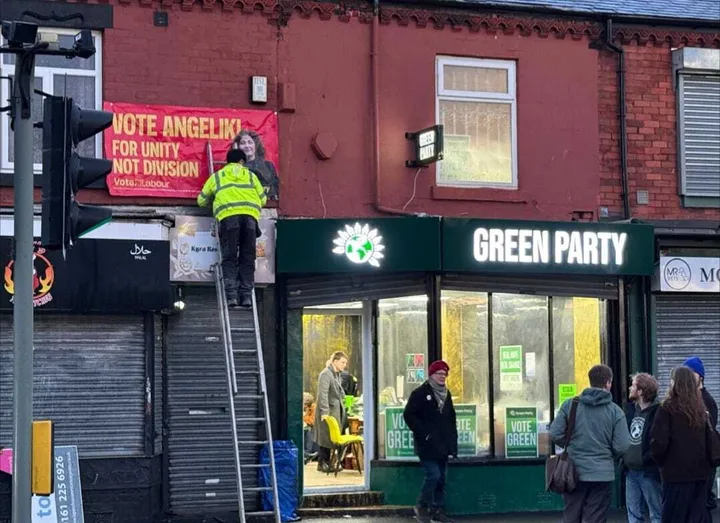
Labour’s supporters ended up in a battle over their by-election posters outside the Green Party office in Gorton and Denton, HuffPost UK understands.
With ten days to go until the electorate in the Greater Manchester constituency head to the ballot box to choose their new MP, Labour and the Greens continue their bitter fight over the left-wing vote against Reform UK’s rise.
Two terraced properties encapsulated this war perfectly over the weekend, as supporters for the two rival parties decorated the neighbouring houses with ads for different campaigns.
An advert for Labour candidate Angeliki Stogia was put up on the wall next to the Green Party offices by the neighbour, HuffPost UK understands.

But the Green Party later pointed out that fresh photos showing support for their candidate Hannah Spencer were put in the window of the same building, just below Stogia’s poster – supposedly by tenants of the same property.

Andrew Western – Labour’s political lead for the by-election and Stretford and Urmston MP – said the advertising for Stogia right next to the Greens HQ was a sign that it was over for the party.
“The writing’s literally on the wall,” he told HuffPost UK. “Even the Greens’ neighbours know only Labour can beat Reform.
“It’s time Zack Polanski stopped misleading voters and woke up to the fact that a vote for the Greens just risks letting Reform’s Tommy Robinson-backed candidate in through the back door.
“Only a vote for Labour’s Angeliki Stogia can bring people together in Gorton and Denton and stop Matthew Goodwin from driving a wedge through communities in Manchester.”
However a Green Party spokesperson said the property’s inhabitants still back their party.
They told HuffPost UK: “The landlord put it up, yet the tenants have Green posters in the window. It’s a sign of the state of politics now – Labour prioritises landlords and Greens prioritise tenants.
“Labour know this election is now Reform versus Green but of course they don’t want to lose too badly and they’re fighting for every vote, even if that means Reform win.”
The by-election is currently a three-horse race between Stogia, Spencer and Reform UK’s candidate Matt Goodwin.
Both the Greens and Labour have pitched themselves as the only way to stop the rise of right-wing Reform.

Sinners actor Wunmi Mosaku has shared that she has complicated feelings about her recent Oscar nomination as a result of the current political climate.
The British actor recently bagged her first Academy Award nomination for her performance as Annie in Sinners, one of a record-breaking 16 nods for Ryan Coogler’s hit movie at the upcoming Oscars.
Speaking to The Times, Wunmi shared that she actually missed the live announcement of her nomination due to a mix-up involving timings.
“I heard my husband on the phone and asked him why he was up,” she recalled. “He said, ‘Baby, you just got nominated for an Oscar’. I said, ‘No, the announcement’s at 8.30am’.”
Wunmi continued: “I’ve not been able to celebrate because of what’s going on right now, with the killings of Renée Good and Alex Pretti by ICE agents in Minnesota and the kidnapping of a five-year-old boy.
“It’s difficult to hold both the nomination and the news because one feels beautiful and one is so dark and heavy; truly dystopian – how can I possibly go out and buy some drinks and enjoy the moment?”

Later this week, Wunmi is expected to attend the 2026 Baftas, where she’s also nominated in the Best Supporting Actress category alongside Marty Supreme’s Odessa A’zion, Sentimental Value’s Inga Ibsdotter Lilleaas, One Battle After Another’s Teyana Taylor and fellow Brits Emily Watson and Carey Mulligan for Hamnet and The Ballad Of Wallis Island, respectively.
She’s also in the running in the same category at the recently-renamed Actors Awards, which will take place on 1 March, ahead of the Oscars two weeks later.
Wunmi previously told The Root: “For Annie to be the role that I get my first [Oscar] nomination with […] I’m so glad it was Sinners. I’m so glad it was Annie, I’m so grateful for this moment.”

Over the weekend, Brooklyn posted a black-and-white picture on Instagram of himself shirtless, while kissing his wife of almost four years.
“Happy Valentine’s Day baby,” he wrote in the selfie’s caption. “I am the luckiest person in the world to be able to call you my Valentines [sic] every year. I love you more than you know and I will forever protect and love you.”
She then reposted the same picture in colour, telling her husband: “I love you more everyday!! I’m so lucky I get to call you my forever Valentine. You’re the most beautiful human and I love doing life with you.”
Of course, Brooklyn’s latest post comes after a prolonged period in which his and Nicola’s names have not been far away from the headlines.
In a lengthy statement shared over a string of Instagram story posts, Brooklyn accused his parents of “controlling” and “performative” behaviour over the course of his life, as well as alleging that they have tried “endlessly to ruin my relationship” with Nicola, to whom he’s been married since April 2022.
Sir David and Victoria have remained tight-lipped on the claims so far, and have not returned HuffPost UK’s requests for comment.

The first candidate for this morning’s editorial was Labour’s proposal to change the way seat boundaries are calculated by introducing an ‘opt-out’ electoral register.
But as that will surely be an ongoing story, we’re instead going to take a peek under the bonnet of the Government’s recent court defeat over Palestine Action. Because R (Ammori) vs SSHD is an excellent example of how the courts have expanded their reach – and the extent to which politicians are (and in this case, are not really) to blame.
You can read the full judgement via the above link, but the critical passage to which I want to draw your attention is section 84:
“Drawing this together, the policy is an additional qualitative threshold to use of the power to proscribe. The policy requires the Home Secretary to assess the restrictions consequent on proscription of the organisation under consideration and determine whether they are, in a general sense, proportionate to the nature and scale of the threat presented by the organisation, to the extent that it is concerned in terrorism (and not by reference to other activities that it may undertake).”
Our specific concern is with this “additional qualitative threshold”. This refers to internal guidance published by the Home Office about the use of the power to proscribe. The High Court has ruled that the Home Secretary, in proscribing Palestine Action, did not adequately comply with this internal guidance, and thus the proscription was unlawful.
Which is, when you stop to think about it, extremely strange. The power of proscription is laid down in an Act of Parliament (the Terrorism Act 2000). The provisions of the Home Office’s internal guidance are not. So in reaching their decision, the High Court appears to have decided that the Home Office can, through the publication of internal documents, modify the provisions of an Act of Parliament.
This is not the first time this very radical notion has reared its head. Readers might remember the almighty row which followed the Conservatives’ decision to remove a stated obligation to comply with international law from the Civil Service Code. Notwithstanding that it is the United Kingdom, rather than individuals, which is subject to international law, there were in that case many commentators – including lawyers – whose distress at the move suggested they thought the prime minister had the power to impose or lift legal obligations via internally-published documents.
Yet if you were to ask those lawyers – or, one suspects, the judges of the High Court – if, in the abstract, they thought the executive has or ought to have the power to modify acts of parliament in this way, they would be horrified at the prospect. Much waving of shrouds and wailing about the rule of law would surely ensue.
Much of the expansion of the role of the courts into British governance is the fault of politicians. It is ultimately MPs who pass broadly or vaguely-worded legislation, or freight bills with endless ‘have regard’ clauses which provide them with a way of feeling like they have contributed without having to do any detailed work at the expense of providing fertile vectors for judicial review.
In this case, however, the finger of blame really does seem to point at the judges. One might suggest that government should stop publishing internal guidance that constrains ministers’ freedom of manoeuvre beyond the constraints imposed by Parliament, and as a practical adaptation to the status quo it would make sense to do so. But government should be able to adopt and publish internal guidelines without having them wrongly elevated to the status of law; whether or not a department has followed its internal guidance in implementing a policy is not the courts’ businesses.
Even so, responsibility for fixing the problem does rest with MPs. This is not the first time the judiciary has played fast and loose with the status of law – see its invention of so-called ‘constitutional statutes’ with special protections against implied repeal, which were never created by Parliament. Short of sacking judges or an unusually energetic and effective programme of appeals, the only way to reimpose the proper lines of constitutional authority is for Parliament to legislate against bad judgements.
I have previously suggested that this could take the form of a regular Bill of Clarification, tabled once per session or per parliament, which identified cases where the courts had interpreted the law contrary to the intentions of Parliament and laid down, in law, what the actual intention of Parliament was (and thus, what the actual law was).
Perhaps in this case the Court of Appeal will see sense and do the job of reminding the High Court what is and is not law. But if any government is to solve the problems that have led serious figures in both major parties to conclude that Britain is becoming impossible to govern, a reliable way must be found to prevent the judges randomly bestowing legal status on things which shouldn’t have it.

Samsung’s Galaxy S25 now hundreds cheaper as new Unpacked launch nears
Shares tumble at Newcastle skin health products firm amid investigation

$75K or Bearish Regime Shift? 5 Bitcoin Insights This Week


![“I’ve Never Seen A Setup Like This Before” Matt Hougan [NEW Bitcoin and Crypto Prediction 2026]](https://wordupnews.com/wp-content/uploads/2026/02/1771250244_maxresdefault-80x80.jpg)


-

 Sports5 days ago
Big Tech enters cricket ecosystem as ICC partners Google ahead of T20 WC | T20 World Cup 2026
-

 Tech5 days ago
SpaceX’s mighty Starship rocket enters final testing for 12th flight
-

 NewsBeat7 days ago
Mia Brookes misses out on Winter Olympics medal in snowboard big air
-
 Crypto World6 days ago
U.S. BTC ETFs register back-to-back inflows for first time in a month
-

 Tech1 day ago
Luxman Enters Its Second Century with the D-100 SACD Player and L-100 Integrated Amplifier
-

 Video3 days ago
The Final Warning: XRP Is Entering The Chaos Zone
-

 Crypto World6 days ago
Blockchain.com wins UK registration nearly four years after abandoning FCA process
-
 Crypto World2 days ago
Bhutan’s Bitcoin sales enter third straight week with $6.7M BTC offload
-
 Crypto World5 days ago
Pippin (PIPPIN) Enters Crypto’s Top 100 Club After Soaring 30% in a Day: More Room for Growth?
-
Sports7 days ago
Kirk Cousins Officially Enters the Vikings’ Offseason Puzzle
-

 Video4 days ago
Prepare: We Are Entering Phase 3 Of The Investing Cycle
-

 Crypto World6 days ago
Ethereum Enters Capitulation Zone as MVRV Turns Negative: Bottom Near?
-
 NewsBeat21 hours ago
The strange Cambridgeshire cemetery that forbade church rectors from entering
-

 Crypto World5 days ago
Crypto Speculation Era Ending As Institutions Enter Market
-

 Business4 days ago
Barbeques Galore Enters Voluntary Administration
-

 Crypto World4 days ago
Ethereum Price Struggles Below $2,000 Despite Entering Buy Zone
-

 Politics6 days ago
Why was a dog-humping paedo treated like a saint?
-
 NewsBeat23 hours ago
Man dies after entering floodwater during police pursuit
-
 Crypto World3 days ago
BlackRock Enters DeFi Via UniSwap, Bitcoin Stages Modest Recovery
-

 NewsBeat2 days ago
UK construction company enters administration, records show