
Crypto World
Bitcoin BIP editor seeks Luke Dashjr’s removal



Bitcoin BIP Editor Mark “Murch” Erhardt called for Luke Dashjr’s removal from the editorial team on Aug. 9, escalating a dispute over Dashjr’s handling of BIP110 and the proposal’s recent chain split.
Summary
- Murch proposed removing Luke Dashjr as BIP Editor, alleging procedural favoritism involving the contentious BIP110.
- Dashjr rejected the allegations, calling them false and arguing he consistently followed established BIP procedures.
- Several Bitcoin contributors backed removal, while others urged clearer procedures before changing Dashjr’s editorial access.
- BIP110’s enforcing branch stalled after two blocks while Bitcoin’s dominant chain continued advancing without support.
- BIP3 still lists Dashjr among six editors and provides no explicit procedure for removing one.
Murch posted the motion to the Bitcoin Development Mailing List and then opened GitHub pull request 2248 as a proposed implementation.
Dashjr rejected the allegations less than an hour after Murch’s mailing list post. As of Aug. 10, the removal PR remained open, while the current BIP3 document continued to list Dashjr alongside five other BIP Editors. No removal has taken place.
Murch ties the removal motion to BIP110’s editorial process
Murch alleged that Dashjr exercised his editorial authority inconsistently while being closely involved with BIP110. He cited an attempt to assign the proposal a BIP number publicly before mailing list discussion and a later merge completed within minutes of a related pull request opening. Murch also claimed Dashjr produced fewer than 1% of BIP Editor comments after additional editors began serving in April 2024.
The current BIP3 process says authors should present an idea and draft to the Bitcoin Development Mailing List before formal submission. Editors then check that the proposal received prior discussion, assign a BIP number in the pull request and merge it when ready. The document describes the position as administrative and editorial and says editors do not decide whether a proposal is likely to gain adoption.
Murch also alleged that communication between Dashjr and the other editors had broken down. He framed the matter as a conflict between Dashjr’s editorial responsibilities and his involvement in advancing BIP110. Those are Murch’s allegations, rather than findings from a formal Bitcoin governing body.
Dashjr denies claims as contributors debate removal
Dashjr disputed Murch’s account. “These are false accusations,” he wrote, adding that he had consistently followed the BIP process. Dashjr also challenged Murch’s account of their communication breakdown and argued that Murch should instead lose his editor position.
Other contributors backed the removal request. Bitcoin developer Matt Corallo supported removing Dashjr, while fellow BIP Editor Olaoluwa Osuntokun formally seconded Murch’s motion. Osuntokun said his support centered on what he viewed as bypassing editorial procedures rather than punishing a developer for advocating a controversial proposal.
However, the discussion also exposed a procedural gap. Jameson Lopp said there was no formal governance structure covering management of BIP Editors. Antoine Riard supported Dashjr stepping aside, potentially temporarily, but argued that contributors should allow time for a public response and establish clearer procedures before resolving the dispute.
BIP110 chain split adds pressure to the editor dispute
The dispute follows BIP110 entering mandatory signaling at block 961,632 on Aug. 8. Only 51 of the previous 2,016 blocks, or 2.53%, had signaled support. As crypto.news reported in coverage of the mandatory signaling split, enforcing nodes created a minority branch that produced two blocks before stalling.
A later snapshot covered in the branch’s widening gap showed the dominant Bitcoin chain 111 blocks ahead, with no BIP110 signals among its first 113 blocks of the new difficulty period. BIP110 itself is a temporary consensus proposal intended to restrict certain forms of arbitrary transaction data.
Murch said the project “appears to evolve into a hard fork,” but that description should not be treated as a confirmed next step. Experimental proof of work change code exists, but its maintainer Chris Guida has described it as contingency code and said no activation date has been set. Earlier coverage of Dashjr’s backing also documented his support for the proposal amid opposition from other Bitcoin participants.
What happens next for Dashjr and BIP110
The immediate issue is pull request 2248. It remains open and currently proposes removing Dashjr from BIP3’s list of editors. BIP3 still names six editors, including Dashjr, and describes the BIPs repository as a publication and archive rather than a governing body that decides Bitcoin development or adoption.
A second open proposal is addressing BIP110 itself. Pull request 2245 seeks to change its status from Complete through Deployed to Closed following the stalled activation attempt. The discussion remains unresolved, and the live BIP110 specification still labels the proposal Complete.
The two open requests now leave Bitcoin contributors with separate questions: whether BIP110 should be formally closed and whether Dashjr should retain editorial access. There is currently no published deadline for resolving the removal motion, and the mailing list discussion has not produced a formal decision.

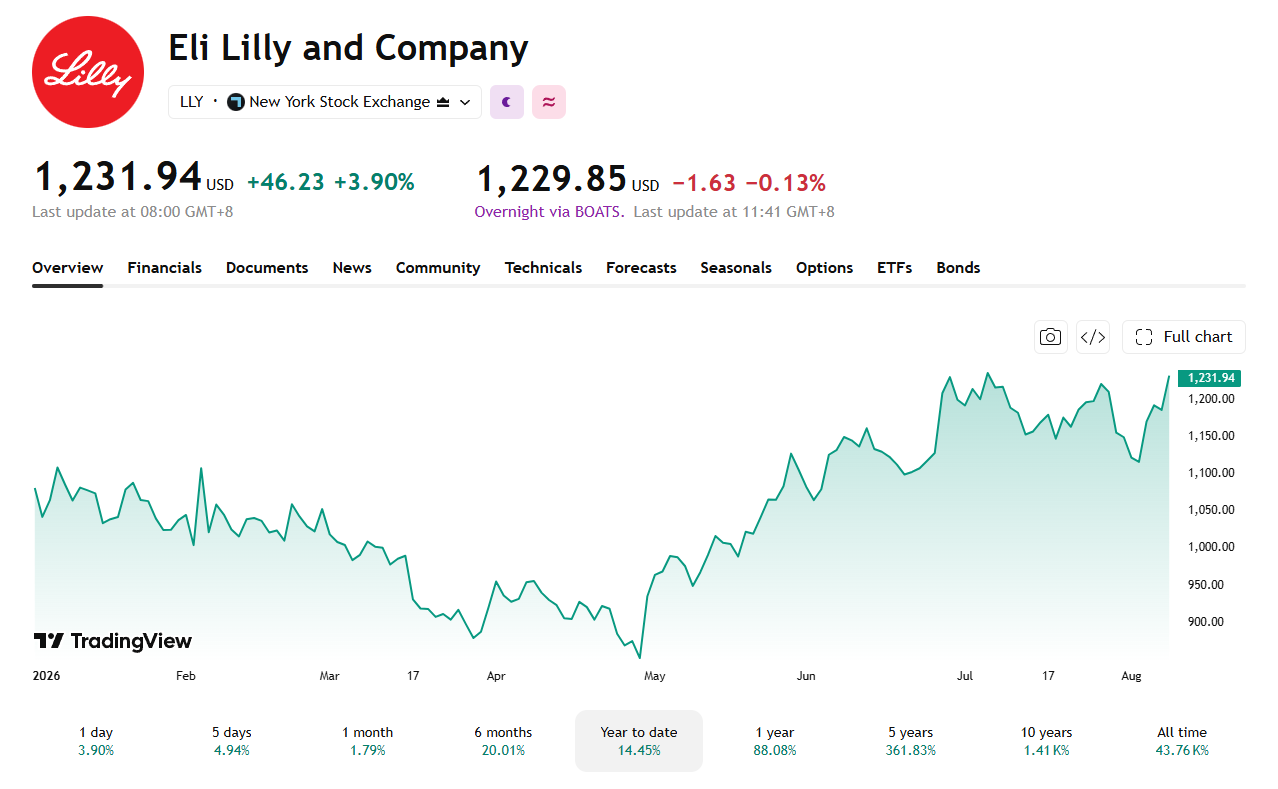
Eli Lilly (LLY) posted a blowout quarter, and Mad Money says the GLP-1 drugmaker’s stock story is far from over.
Jim Cramer and CNBC analyst Jeff Marks called Eli Lilly and Nvidia top momentum stocks.
Why Eli Lilly’s GLP-1 Stock Still Has Room to Run
The comment came during a viewer question about how price targets get set. Cramer raised Eli Lilly and Nvidia’s runs specifically when asking about the process.
Marks, the CNBC Investing Club’s portfolio analyst, said stocks like these need a longer time horizon than most.
“Stocks like that you also have to look out years out in advance, too. Especially in the case of Eli Lilly, where it’s more of towards the end of the decade is where it’s GLP-1 sales.”
— Jeff Marks, CNBC Investing Club portfolio analyst, on Mad Money
Eli Lilly’s second-quarter results back that framing. Revenue hit $23 billion, up 48% year over year. A 60% jump in sales volume offset a 13% drop in realized prices.
Management raised full-year revenue guidance to a range of $85 billion to $87 billion. Mounjaro sales rose 91% to $9.9 billion worldwide. Zepbound’s U.S. revenue grew 44% to $4.9 billion.
Cramer’s other 2026 stock picks lean on similarly durable, multi-year themes rather than short-term trades.
Global GLP-1 Demand Is Still Early
Eli Lilly’s international business is growing even faster than its U.S. business. Revenue outside the U.S. jumped 80% to $8.6 billion in the quarter, while volume surged 113%.

That growth came even as prices outside the U.S. fell 36%. The decline followed Mounjaro’s addition to China’s National Reimbursement Drug List (NRDL), a program covering drug costs under public insurance.
Lower prices widen access for millions of new patients, even as they compress near-term margins. Morgan Stanley expects the global obesity and diabetes drug market to nearly double by 2035.
The firm projects $190 billion in sales, up from $79 billion in 2025. Oral GLP-1 pills and expanding insurance coverage are the main drivers behind that forecast.
For Marks and Cramer, runway and scale are why Eli Lilly’s momentum looks built for years, not quarters.
The post Cramer’s Analyst Says Eli Lilly’s GLP-1 Stock Rally Has Years Left to Run appeared first on BeInCrypto.


Cointelegraph is committed to providing independent, high-quality journalism across the crypto, blockchain, AI, and fintech industries.
All news, reviews, and analyses are produced with full journalistic independence and integrity. For more details on our standards and processes, please read our Editorial Policy.
Crypto World
U.S. SEC sets meeting to propose Reg Crypto to support certain digital assets offerings


“We view this as the first of several rulemakings the SEC will undertake to provide regulatory certainty for crypto assets after the Senate failed before the August recess to advance the Clarity Act on crypto market structure,” TD Cowen analyst Jaret Seiberg wrote in a client note sent after the SEC’s notice.
The proposal is expected to give a path to crypto firms enabling them to raise capital for projects without triggering SEC registration requirements, and the businesses are also expected to be provided an exit path for getting clear of the agency’s jurisdiction when they’re not engaged in hands-on management of the projects anymore.
Before this, Atkins and the agency had rolled through a lengthy series of crypto policy statements meant to clarify its regulatory position on digital assets, but the staff statements have little long-term durability. A formal rulemaking would be more difficult to reverse in the future.
But the rule will likely take further months to develop and finalize. This first stage will come with a comment period — typically two or three months — and be followed by a potentially lengthy rewrite.
Reg Crypto would join some of the other significant steps the agency has taken or is still working on to foster the U.S. crypto industry. One of the major moves was a joint stance with the Commodity Futures Trading Commission on a “taxonomy” to define how they view various crypto assets and which jurisdictions they belong in. The agency is also still working on its tokenized securities approach, which Atkins routinely mentions as one of the SEC’s marquee crypto maneuvers.
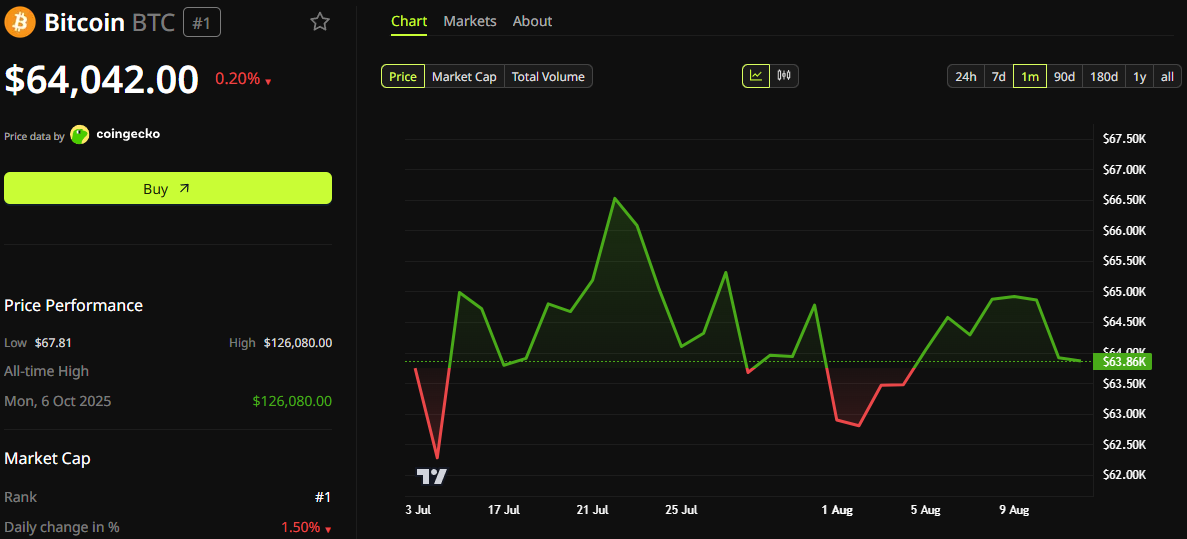
Arthur Hayes says a Fed plan to help Japan defend the yen will print new dollar liquidity, and he argues that liquidity will pump Bitcoin (BTC).
Hayes co-founded BitMEX and now runs the Maelstrom family office. He has built a reputation for macro calls that tie Fed and Treasury policy moves directly to crypto prices.
How A Yen Rescue Becomes Dollar Liquidity
The mechanism he describes is real, though its scale is not yet confirmed. It runs through the Foreign and International Monetary Authorities (FIMA) Repo Facility, a Fed program that lets foreign governments post US Treasuries as collateral for short-term dollar loans, instead of selling those Treasuries outright.
Treasury Secretary Scott Bessent has said Japan holds $1.143 trillion in US Treasuries. Under Hayes’ scenario, Tokyo repos part of that stockpile for dollars, sells the dollars for yen, and reinvests the yen into domestic bonds and stocks.
The Fed’s balance sheet grows to fund each loan, which is functionally similar to printing money, though the Fed frames it as a lending facility rather than quantitative easing (QE).
Hayes’ bet is that these dollars do not stay contained. BTC, in his view, is one of the most liquidity-sensitive assets in the market.

Why The Fed Balance Sheet Matters For Bitcoin
During the pandemic, the Fed’s balance sheet grew from roughly $4.2 trillion to nearly $8.9 trillion by early 2022, an increase of more than $4.6 trillion in asset purchases, according to Federal Reserve research.
Over that stretch, the Bitcoin price ran from under $10,000 to an all-time high near $69,000 in November 2021. Hayes treats that stretch as the template.
There is a second layer. The yen is the world’s cheapest major funding currency, meaning traders borrow yen cheaply to buy other assets. A sudden yen spike forces those trades to unwind fast, which dragged down stocks and crypto together in August 2024.
Hayes argues that routing the rescue through FIMA lets the unwind happen gradually. A sharp Bank of Japan (BOJ) rate hike, by contrast, risks a repeat of that 2024 shock, which he says makes FIMA the friendlier path for BTC.
The Administration Side Checks Out, So Far
Bessent asked the Fed to expand FIMA’s $60 billion lending cap. This was days after the US and Japan jointly intervened to support the yen. He called the facility an important backstop and said he wants its cap raised in the months ahead.
Not everyone agrees FIMA is the right tool. Brad Setser, a former Treasury official, has argued the facility was built to backstop lending in moments of market stress, not to fund currency intervention.
Any cap increase also needs sign-off from the Federal Open Market Committee (FOMC). Fed Chairman Kevin Warsh has not committed to a schedule. Hayes treats the expansion as close to certain. The Fed has not.
Hayes’ own newsletter discloses that Maelstrom is already long Bitcoin, Ether (ETH), and Ethena (ENA). These are the same assets he says this liquidity will lift.
The post Arthur Hayes Says Fed’s Japan Yen Plan Will Pump Bitcoin appeared first on BeInCrypto.


Trump Media said it plans to revamp its digital asset treasury strategy after unrealized losses on crypto and securities helped push the company to a $238 million net loss in the second quarter.
The company reported $190.4 millio n in unrealized losses across its digital assets, pledged digital assets and equity securities in its Q2 earnings release on Monday.
Trump Media said the new framework is intended to preserve its long-term digital asset exposure while managing volatility and improving the productivity of its balance sheet.
Trump Media is the publicly traded company behind Truth Social, Truth+ and financial services brand Truth.Fi. The company is tied to US President Donald Trump, who is the sole beneficiary of a trust that held about 41.1% of Trump Media’s voting power as of Feb. 25, according to its latest annual report.
Related: Trump Media sells Wall Street low-latency access to Trump posts
Its Q2 filing shows the company is already using options to manage Bitcoin volatility and generate premium income, while deploying some BTC through lending and other yield-generating arrangements.
The company also said it plans to direct more resources toward Truth Social, Truth+ and other parts of its media business as part of a broader shift in how it allocates capital.
Trump Media boosts Bitcoin holdings after Q2
Trump Media’s Bitcoin holdings were little changed during the second quarter before the company stepped up its direct Bitcoin exposure in July.
As of June 30, Trump Media held 9,477.16 Bitcoin, down from 9,542.16 BTC at the end of the previous quarter.
Separately, the company had pledged 2,077.34 BTC as collateral for its options strategy. Of its reported holdings, 4,260.73 BTC was serving as collateral for convertible notes.
Related: Strategy turns 1,690 BTC into $108.6M STRC buyback
In July, the company sold Bitcoin-related securities worth $159.6 million and used the proceeds to purchase Bitcoin.
By July 31, Trump Media reported holding approximately 14,139 BTC, including pledged Bitcoin, worth about $890.5 million at the time.
Trump Media flags risks from Bitcoin yield strategy
Trump Media also warned that its efforts to earn additional income from its Bitcoin carry counterparty credit risk and the potential loss of its assets.
The company said it has deployed a portion of its Bitcoin holdings to third parties through lending, placement and other yield-generating arrangements, which it described as relatively new strategies.
Some of those counterparties may not be rated by major credit rating agencies and could default during market downturns, liquidity crises or other financial distress.
If an arrangement is unsecured, the company said it may be unable to recover its Bitcoin if a counterparty becomes insolvent. Trump Media is also limited in its ability to sell or pledge Bitcoin while it is deployed, while counterparties may use those assets at their discretion.
Magazine: Bitcoin will never fall below $60K again: Nansen founder
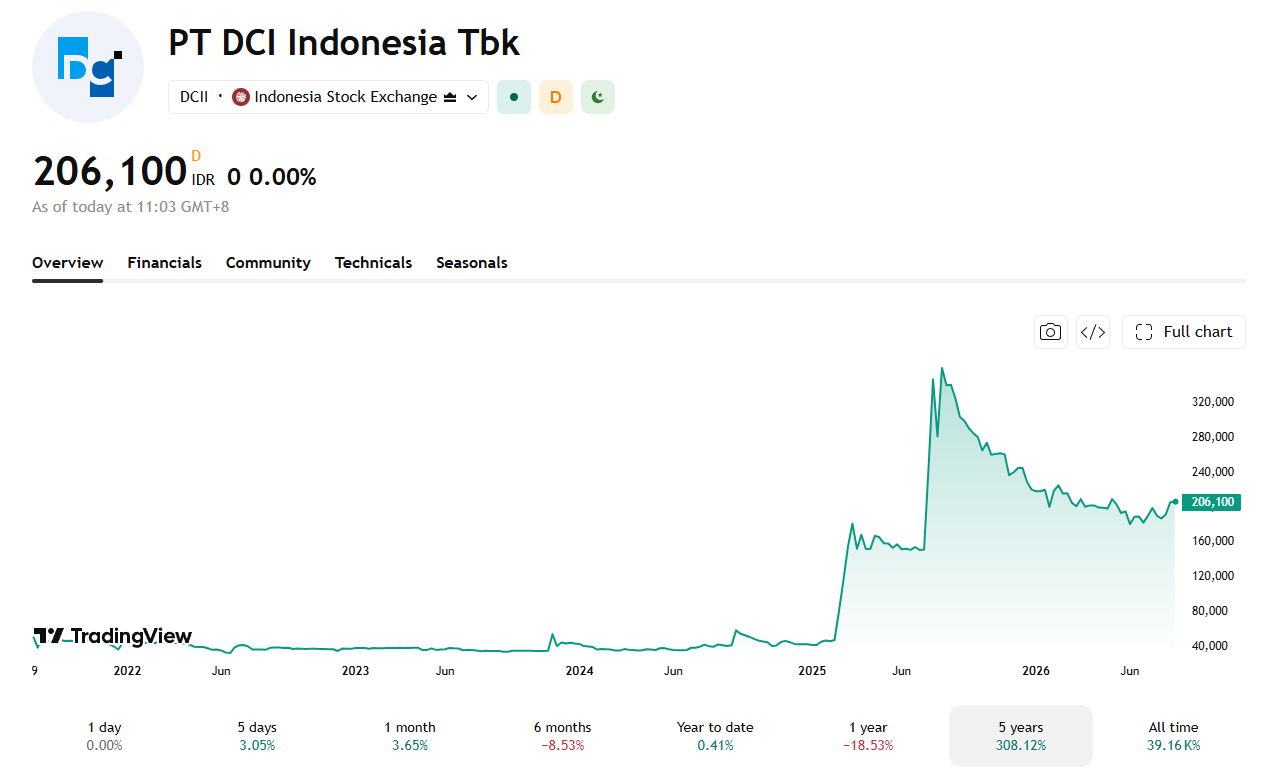
Indonesian stocks are edging back toward bull-market territory, and one of the rally’s clearest beneficiaries is an AU data center operator whose earnings are compounding regardless of what the rupiah does next.
The Jakarta Composite Index (JCI) has climbed 20% from its early-June low. That rebound follows a rough start to 2026, with the index still down 25% year to date, making it the worst-performing major benchmark globally.
The Rally’s Foundations
Bank Indonesia raised rates by a combined 100 basis points in May and June, MSCI postponed a planned review of the country’s market status until November, and S&P Global Ratings affirmed the sovereign credit rating.
President Prabowo Subianto’s decision to scale back a costly free-meals program has also eased fears of fiscal slippage. Indonesia’s economy grew 5.29% year over year in the second quarter, beating the 5.14% median estimate in a Bloomberg survey.
That backdrop is macro relief, not necessarily a structural bull case.
DCI Indonesia is where the two stories meet.
Where DCI Indonesia Fits
DCI Indonesia is the country’s largest listed data center operator has profited from the AI infrastructure boom and its first-half results show why investors keep buying it through the broader market’s turmoil. Net profit rose 18.7% year over year to Rp732.53 billion ($44 million), while revenue climbed 33.2% to Rp1.77 trillion, driven almost entirely by colocation services, which made up 94.5% of the total.

Just 2.1% of that revenue came from affiliated parties, meaning the growth reflects genuine third-party demand rather than internal deals.
The company has also started parking part of its balance sheet in the Patriot Bond, a debt instrument issued by Danantara, Indonesia’s sovereign wealth fund, carrying a 2% coupon. That holding now accounts for 6.3% of total assets, well above DCI’s historical allocation to marketable securities.
Ai Building in Asia
The demand DCI is capturing lines up with a broader regional shift. Southeast Asia’s AI buildout has increasingly become a physical infrastructure story rather than a software one, according to United Overseas Bank executives, and memory chip demand tied to AI has already driven record profit growth at Samsung elsewhere in the region.
Goldman Sachs, meanwhile, has flagged AI investment as a driver reshaping Asian markets, though it has notably not extended that bullishness to the rupiah.
That gap, a regional AI infrastructure boom that Goldman doesn’t yet credit to Indonesia’s currency, is worth watching. DCI’s own share price is still down roughly 18.6% over the past year even after this year’s bounce, meaning its earnings have been growing faster than its stock, the opposite of what tends to happen when a rally is running ahead of fundamentals.
Whether that combination, real profit growth outrunning a cautious share price, is enough to pull more of Jakarta’s market with it is the open question for the rest of 2026.
The post Indonesian Stocks Near Bull Market as DCI Indonesia Profit Jumps 19% appeared first on BeInCrypto.
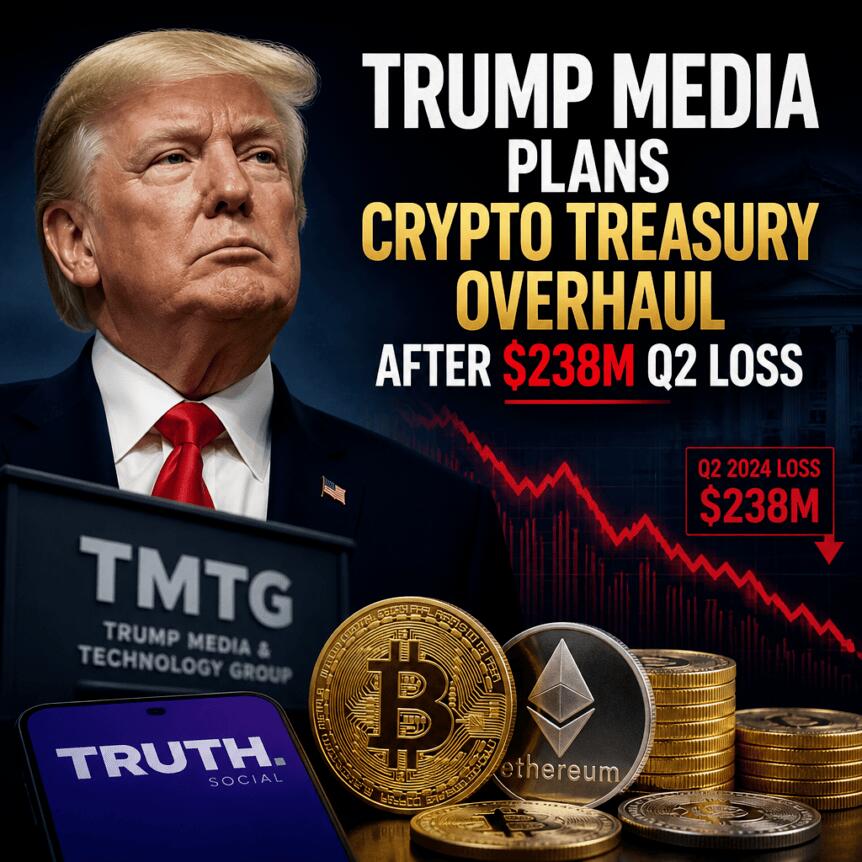
Trump Media says it will overhaul how it manages its digital-asset treasury after crypto and securities losses contributed to a $238 million net loss in the second quarter. In its Q2 earnings materials, the company attributed $190.4 million in unrealized losses to its mix of digital assets, pledged digital assets, and equity securities, while describing a plan aimed at keeping long-term Bitcoin exposure but reducing balance-sheet volatility.
The publicly traded company—best known as the parent of social platforms Truth Social and Truth+ and the financial services brand Truth.Fi—linked the strategy shift to the need for a more resilient framework. The company noted that the changes are meant to improve the “productivity” of its balance sheet without abandoning its core digital-asset positioning.
Key takeaways
- Trump Media reported $238 million net loss in Q2, with $190.4 million tied to unrealized losses across digital assets, pledged digital assets, and equity securities.
- A new treasury framework is planned to preserve long-term Bitcoin exposure while managing volatility and improving capital efficiency.
- Bitcoin use in hedging and yield activity is already in place, including options-based volatility management and deployments of some BTC to third parties.
- The company increased direct Bitcoin exposure in July, moving from 9,477.16 BTC at quarter-end to about 14,139 BTC by July 31, including pledged BTC.
- Counterparty and liquidity risks are explicitly flagged for Bitcoin-yield strategies, including default risk and limits on selling or pledging deployed BTC.
Why Trump Media is changing its digital-asset plan
Trump Media’s shift comes as investors focus on how publicly traded firms balance crypto exposure with the accounting swings that unrealized losses can create. In its second-quarter reporting, the company said its existing digital-asset and securities positions generated significant unrealized markdowns. Those losses, it said, were part of what drove the quarter’s large net loss figure.
Rather than retreating from Bitcoin, Trump Media emphasized that the revamp is intended to “preserve” long-term exposure while addressing volatility and making the balance sheet work more efficiently. The company also said it plans to direct more resources toward Truth Social, Truth+, and other media operations, framing the treasury shift as part of a broader capital allocation change.
Because the group is tied to former U.S. President Donald Trump, the broader context matters for market watchers. The filing notes that a trust holding roughly 41.1% of Trump Media’s voting power as of Feb. 25 remains the sole beneficiary of Trump Media voting power, according to the company’s latest annual report.
What the Q2 filing says about Bitcoin strategy
Trump Media’s Q2 documentation indicates it is not treating Bitcoin purely as a long-term spot holding. Instead, the company described a framework that already includes options to manage Bitcoin volatility and generate premium income. It also reported using part of its BTC in lending and other yield-style arrangements.
As of June 30, Trump Media held 9,477.16 Bitcoin, down slightly from 9,542.16 BTC at the end of the prior quarter. Separately, it reported pledging 2,077.34 BTC as collateral for its options strategy. The company also said 4,260.73 BTC was serving as collateral for convertible notes.
That structure shows a balancing act: maintaining Bitcoin exposure while ring-fencing assets for derivatives and financing obligations. It also highlights how pledged collateral can constrain a company’s flexibility during drawdowns or liquidity events.
July: Bitcoin-related sales followed by increased BTC exposure
While the second quarter itself left Trump Media’s direct Bitcoin holding relatively stable, the company later stepped up its Bitcoin exposure in July. By July 31, Trump Media said it held approximately 14,139 BTC, including pledged Bitcoin, which it valued at about $890.5 million at the time of reporting.
The path to that increase was tied to an intermediate step: the company said it sold Bitcoin-related securities worth $159.6 million in July and used the proceeds to purchase Bitcoin. This matters because it suggests the company viewed those securities as a temporary component in its capital deployment rather than a permanent replacement for direct BTC exposure.
For readers tracking how non-traditional crypto entrants manage treasury assets, the key takeaway is that Trump Media’s exposure management appears active rather than passive. The company is also maintaining a portfolio where some Bitcoin remains tied up—through pledges and other arrangements—while the headline BTC totals can rise through incremental purchases.
Risks Trump Media says it faces with BTC yield activities
Trump Media’s filings do not just outline how it earns additional income; they also provide a clear warning about the trade-offs. The company stated it deployed a portion of its Bitcoin holdings to third parties via lending, placement, and other yield-generating arrangements, describing these as relatively new strategies.
According to the company, some counterparties may not be rated by major credit rating agencies. That increases the risk that counterparties could default during periods such as market downturns, liquidity crises, or other financial stress.
Trump Media also warned that if an arrangement is unsecured, it may be unable to recover its Bitcoin in the event a counterparty becomes insolvent. It added that its ability to sell or pledge Bitcoin can be limited while assets are deployed, and that counterparties may use the assets at their discretion.
These disclosures are especially relevant when paired with the company’s decision to revamp its treasury strategy. The new framework is positioned as a way to maintain long-term exposure and reduce volatility, but the filings indicate the risk is not only market-driven. It is also operational and credit-driven—tied to whether deployed Bitcoin is recoverable and how counterparties behave under stress.
In other words, the company is trying to enhance balance-sheet performance while accepting that yield-style BTC deployments can introduce new failure modes that typical spot holding does not.
What investors should watch next
Trump Media has flagged both accounting volatility from unrealized losses and credit/liquidity risk from its Bitcoin-yield counterparties. Going forward, investors will likely focus on how the company implements its revamped treasury framework—particularly whether it changes the share of Bitcoin deployed to third parties versus retained as pledged collateral or held directly, and how those choices affect reported results in subsequent quarters.


Bitcoin’s elite holders are quietly loading up again.
The number of wallets holding at least 10,000 BTC has climbed back to 90, a six-month high, according to analytics firm Santiment. Over the past eight weeks alone, the count of these “whale” wallets has risen by six, a 7.1% increase.
The move builds on a broader accumulation trend first flagged four days ago. Since July 29, wallets in the 10–10,000 BTC range (whales and sharks) have accumulated BTC worth $1.5 billion. Santiment noted at the time that the pattern of larger players accumulating while smaller holders sell raised the odds of a move above $70,000 versus a drop below $60,000.
Meanwhile, “micro” wallets have been steadily shrinking throughout August. Santiment links this divergence to two recent catalysts of uncertainty and doubt: The Coldcard hardware-wallet exploit, which drained roughly $120 million worth of bitcoin, and continued delays to the U.S. Clarity Act, the long-awaited crypto market-structure bill that the Senate has now pushed to September.
These trends point to a classic supply rotation, with coins shifting from smaller holders into the wallets of the largest investors, the so-called “strong hands.”

Solana is currently trading above $76, following a recovery of more than 6% over the past week, along with the rest of the top crypto market.
With several bullish signals now aligning, one analyst believes SOL could be headed toward a level not seen since February 2026 if the current setup confirms a breakout.
Constructive Picture
According to Ali Martinez, Solana appears to be trading within a parallel channel, and $78 has emerged as an important level. A break above the mid-range near this level could push SOL toward the channel’s upper boundary around $100.
The analyst also identified a buy signal from the TD Sequential on the crypto asset’s daily chart. The setup typically anticipates a 1-4 candle upswing or the start of a new “bullish countdown.” The resistance trendline at $78.7 is near the mid-range, which makes it a crucial level for confirmation.
At the same time, the MACD has printed a golden cross, adding another sign that SOL may be approaching an upside breakout. If these signals are confirmed, Martinez says that the altcoin could be on its way to $100.
Trader Pepesso previously said that SOL had one of the cleanest setups in crypto. At the time, he pointed to the $45-$60 range as the area to watch, while explaining that the same zone had triggered the asset’s 2023-2024 bull run. A move back into that range would still fit the accumulation view, as long as $45 held on a retest. A decisive break below it would invalidate the setup.
On the upside, Pepesso identified $100 as the first major confirmation point. If SOL reclaimed that level, the $150-$200 range would come into focus, followed by a potential move toward the previous cycle high.
Big Moves
Away from the price chart, the blockchain had a busy week on the network side. For example, BlackRock also brought another investment product to Solana with the launch of BRSRV, a money market fund designed to support stablecoin reserves.
Meanwhile, Western Union’s launch of Stablecard also added another real-world use case for the blockchain. The digital wallet and Visa-secured credit card use USDPT, a US dollar-backed stablecoin issued by Anchorage Digital Bank on Solana.
Take-Two Interactive also brought tokenized TTWO shares to the network through Backpack Securities, with each token backed 1:1 by the underlying stock.
Additionally, Solana processed a record 1.01 billion non-vote transactions in a single week. Tokenized equities also recorded around $1.45 billion in volume in July, giving the network about 82% of the global market share.
The post Solana (SOL) Shows 3 Bullish Signals: $100 Target Is Back in Sight appeared first on CryptoPotato.
Crypto World
Trump Media killed the CRO treasury deal, and the entire crypto treasury boom may be next


Trump Media and Technology Group terminated its planned Cronos treasury venture with Crypto.com and Yorkville on August 7. The retreat signals that the corporate crypto treasury thesis, built on the premise that holding tokens is a balance sheet strategy, is running into the same saturation problem it was supposed to solve.
Summary
- Trump Media and Technology Group, Crypto.com, and Yorkville Acquisition Corp mutually terminated the CRO Strategy treasury venture on August 7, 2026, ending a deal announced in August 2025 that was billed as the first and largest publicly traded CRO treasury firm with an initial $6.42 billion war chest.
- Interim CEO Kevin McGurn told Axios that saturation among corporate crypto treasury companies drove the decision, not regulatory pressure, and that Trump Media will instead concentrate on Truth Social, data licensing revenue, and a pending merger with fusion energy company TAE.
- The original deal involved Trump Media purchasing approximately $105 million in CRO tokens (684.4 million tokens at roughly $0.153 each) while Crypto.com purchased $50 million in Trump Media shares, creating a cross-investment structure that tied both companies to CRO price performance.
- The retreat follows a $406 million quarterly loss driven by crypto asset markdowns, raising questions about whether token treasury strategies can survive extended periods of price stagnation or modest drawdowns in the assets they are designed to accumulate.
- CRO traded near $0.0513 on August 7 with a market capitalization of roughly $2.4 billion, ranking 38th overall, a fraction of the valuation environment that existed when the deal was structured and announced.
On August 7, 2026, Trump Media interim CEO Kevin McGurn told Axios that the company had terminated the CRO Strategy venture, the services agreement, and the digital asset product suite that accompanied the original deal. The companies also abandoned a related prediction market integration. Yorkville Acquisition Corp, the blank check vehicle created to take the treasury venture public, agreed to the termination. McGurn cited saturation. The treasury sector, he said, had become crowded.
The deal between Trump Media and Crypto.com was announced with the kind of numbers that attract headlines. A $6.42 billion treasury play. A branded entity called Trump Media Group CRO Strategy. A SPAC vehicle to take it public. The premise was simple: acquire CRO tokens at scale, hold them on a public balance sheet, and let market appreciation create shareholder value. The strategy echoed what MicroStrategy had done with Bitcoin, but applied to a token that was orders of magnitude smaller in market capitalization, less liquid, and tied to a single exchange ecosystem. The termination, coming less than a year after the announcement, is not just a deal falling apart. It is the first major public admission that the corporate crypto treasury model may have structural limits that its promoters did not advertise.
What the CRO Strategy deal was supposed to build
The original announcement in August 2025 outlined a multi-layered financial structure. Trump Media would purchase approximately $105 million in CRO tokens, acquiring 684.4 million tokens at a price of roughly $0.153 per token. Crypto.com would purchase $50 million in Trump Media shares, creating a reciprocal ownership link between the media company and the exchange. The two parties would then form Trump Media Group CRO Strategy, a dedicated entity designed to function as a publicly traded digital asset treasury.
Yorkville Acquisition Corp, a blank check company, would serve as the public listing vehicle. The SEC filing described the venture as the first and largest publicly traded CRO treasury firm, a designation that was accurate only because no one else had attempted the same structure with that specific token.
The deal also included a services agreement covering digital asset product development and a prediction market integration called Truth Predict, which would embed betting features inside Truth Social using Crypto.com Derivatives North America as the infrastructure provider.
The combined structure tied Trump Media to CRO price performance in multiple ways: through direct token holdings, through the treasury entity, through the SPAC listing, and through the product integrations that assumed continued engagement with the Cronos blockchain ecosystem. The multi-layered exposure was presented as strategic depth at the time of the announcement. In retrospect, it created a situation where CRO price weakness propagated through every component of the deal simultaneously, amplifying the downside in a way that a simpler structure would not have.
The valuation environment that produced the deal was also unusual. At the time of the announcement, corporate crypto treasuries were attracting premium multiples from investors who treated token accumulation as a growth strategy. Trump Media’s management appears to have structured the CRO Strategy venture to capture that premium. When the premium disappeared and the valuation environment shifted, the economic rationale for the deal evaporated alongside it.
Why the parties walked away
McGurn framed the termination around focus and saturation rather than failure. “We wanted to get focused,” Axios reported him saying. He characterized the crypto treasury sector as overcrowded, arguing that the competitive dynamics had shifted since the deal was announced.
The saturation claim has some factual basis. Between the second half of 2025 and mid 2026, more than 30 public companies announced crypto treasury strategies of various sizes. Most were modeled on the MicroStrategy template: issue equity or convertible debt, buy Bitcoin, and report the holdings as a core balance sheet item. The Trump Media venture stood apart because it targeted CRO rather than Bitcoin, but the underlying logic was the same.
What McGurn did not say is arguably more revealing than what he did. He did not claim the deal was restructured or paused. He confirmed mutual termination, meaning all three parties agreed that the venture no longer served their interests. The services agreement was also terminated. The prediction market integration was downgraded from a full product to a marketing arrangement.
McGurn added that staking CRO had become less central for Crypto.com itself, making a split logical for both sides. That detail matters. If the exchange that issues a token is de-emphasizing it, the case for a third party to build a treasury around it weakens considerably.
The $406 million loss that changed the math
The termination did not occur in a vacuum. Trump Media reported a $406 million quarterly loss earlier in 2026, driven primarily by markdowns on its digital asset holdings. The loss was not a realized trading loss in the traditional sense. It reflected the accounting treatment of crypto assets under fair value rules, where price declines flow directly through the income statement.
For a company with limited operating revenue, a nine figure markdown on token holdings is not a rounding error. It is a thesis test. The crypto treasury model assumes that holding tokens creates long term value for shareholders. But the same model forces the company to report price declines as losses, creating quarterly volatility that public market investors tend to punish.
MicroStrategy, the original corporate Bitcoin treasury, has navigated this problem by leaning into it. The company rebranded as Strategy, made Bitcoin accumulation its primary corporate identity, and attracted a shareholder base that understood and accepted the volatility. Trump Media was not positioned to make the same bet. Its core business is a social media platform. Its shareholders purchased the stock for reasons that included but were not limited to the crypto treasury thesis. When the token holdings produced a loss that exceeded the company’s operating revenue by orders of magnitude, the strategic case for continuing became harder to make.
The regulatory environment added complexity. While McGurn explicitly denied that regulatory pressure drove the termination, the broader landscape has shifted. The GENIUS Act and related legislative efforts have introduced new compliance requirements for companies holding digital assets at scale. Whether those requirements directly affected the CRO Strategy venture or simply increased the cost of maintaining it is an open question that the termination announcement did not address.
The accounting treatment itself deserves closer examination. Under ASC 820, crypto assets held at fair value require quarterly mark to market adjustments. When token prices rise, the company reports unrealized gains that flow through its income statement, inflating earnings in ways that may attract shareholders who mistake accounting gains for operating performance. When prices fall, the reverse occurs, and the company must explain why its core business lost hundreds of millions of dollars in a quarter where nothing operationally changed. The asymmetry between the two scenarios creates a ratchet effect: the company captures enthusiasm during price increases but faces existential questions during declines. For a company like Trump Media, whose operating revenue from Truth Social was in the low tens of millions annually, a $406 million markdown made the treasury strategy the dominant item on the income statement, overshadowing every other aspect of the business.
Truth Predict and the prediction market retreat
The CRO Strategy termination was not the only product that got scaled back. Truth Predict, the prediction market feature that Trump Media unveiled in October 2025, was also restructured.
The original plan embedded betting features inside Truth Social, powered by Crypto.com Derivatives North America. Users would trade prediction market contracts without leaving the social media platform. The integration assumed that Truth Social’s user base represented a captive audience for event contracts on politics, sports, and financial outcomes.
Under the new arrangement, the companies will pursue a marketing partnership rather than a full product integration. Crypto.com will promote its prediction products to Truth Social users, but Trump Media will not operate the back end infrastructure. McGurn argued that the space was already crowded with prediction market operators and that running infrastructure offered little return compared to simply distributing someone else’s product.
The reasoning reveals a broader shift in how Trump Media sees itself. The company is moving away from operating crypto infrastructure and toward licensing its brand and audience as distribution assets. That pivot is visible in its API business, which now serves roughly 10 customers (up from about five), most of whom are high frequency trading firms that feed Truth Social data into algorithmic strategies. McGurn said the company is also courting large language model developers and prediction market platforms as API customers.
The transition from infrastructure operator to data licensor is a meaningful strategic shift. It reduces Trump Media’s exposure to the operational risks of running crypto products while creating revenue streams that do not depend on token price performance. Whether the data licensing business can generate enough revenue to replace the value that was supposed to come from the treasury venture remains to be seen.
The prediction market landscape that existed when Truth Predict was conceived looked different from the one that emerged by mid 2026. At the time of announcement, Polymarket was the dominant player and the only U.S. focused platform with meaningful liquidity. By August 2026, Kalshi had expanded into event contracts for political and financial outcomes, Robinhood had added prediction market features to its mobile app, and several crypto native platforms had launched competing offerings. The window for Truth Social to capture a meaningful share of the prediction market audience had narrowed considerably, and the cost of operating back end infrastructure for a feature that would compete with well funded competitors no longer justified the investment when a simpler marketing arrangement could provide the same user exposure at a fraction of the cost.
The API pivot also reframes Truth Social’s value proposition. Under the treasury model, Truth Social was a distribution channel for crypto products. Under the data licensing model, it is a source of sentiment signals that have value to financial firms. The platform’s concentrated user base, which skews toward politically engaged American adults, generates text and engagement data that reflects a demographic segment that is underrepresented in other social media sentiment feeds. High frequency traders and LLM developers are willing to pay for access to that signal precisely because it is different from what Twitter, Reddit, or Stocktwits provides. The commercial value of the platform may ultimately have less to do with how many users it retains than with how unique the data those users generate is.
What happens to Yorkville and the SPAC structure
Yorkville Acquisition Corp agreed to the termination alongside the other parties. The blank check vehicle was created specifically to take the CRO treasury venture public. Without that venture, the SPAC’s original purpose no longer exists.
However, one piece of the Yorkville structure survives. Yorkville America’s America First ETFs, branded as Truth Social Funds, will continue operating. These funds existed as a separate product line from the SPAC and were not dependent on the CRO Strategy venture for their investment thesis.
The survival of the ETF products while the SPAC terminates illustrates the fragmented nature of the original deal. What was presented as a unified strategic partnership between Trump Media, Crypto.com, and Yorkville was in practice a collection of loosely connected agreements. The treasury venture, the services agreement, the prediction market integration, and the ETF products could be separated because they were never truly integrated at the operational level.
For the broader SPAC market, the termination adds another data point to an already difficult environment. Blank check companies that target crypto related ventures have faced elevated scrutiny from the SEC, and the completion rate for crypto focused SPACs has declined steadily since 2024. The Yorkville termination does not set a legal precedent, but it reinforces the pattern of crypto SPAC deals that announce with fanfare and unwind quietly.
The economics of the SPAC structure also contributed to the deal’s fragility. Blank check companies carry a deadline for completing their acquisition or merger, typically 18 to 24 months from IPO. If the deal is not completed within that window, the SPAC must return capital to shareholders. This deadline pressure means SPAC targets are selected and structured under time constraints that do not always align with the pace at which crypto markets evolve. When the CRO Strategy venture was designed, the crypto treasury thesis was still generating investor enthusiasm. By the time the SPAC needed to close, the market had moved on.
The corporate crypto treasury model under stress
The Trump Media termination arrives at a moment when the corporate crypto treasury thesis is being tested across the industry. The model, popularized by MicroStrategy’s multi-year Bitcoin accumulation campaign, rests on three assumptions. First, that the asset being accumulated will appreciate over time. Second, that public market investors will assign a premium to companies that hold the asset. Third, that the cost of capital used to acquire the asset (equity dilution, convertible debt, operating cash) will be lower than the asset’s long term return.
When those assumptions hold, the strategy works. MicroStrategy’s stock price outperformed Bitcoin itself during periods when all three conditions were met. But the model breaks when any of the three conditions fail. If the asset declines or stagnates, the balance sheet deteriorates. If investors stop assigning a premium, the stock trades at a discount to the value of its holdings. If the cost of capital rises, each new acquisition dilutes existing shareholders more than the asset appreciation can offset.
The Trump Media case exposed a fourth vulnerability specific to non-Bitcoin treasuries. CRO is not Bitcoin. It does not have the same market depth, the same institutional custody infrastructure, or the same regulatory clarity. A treasury strategy built around a mid-cap token tied to a single exchange ecosystem carries concentration risk that Bitcoin treasuries do not. When the issuing exchange itself begins de-emphasizing the token, the treasury holder’s position becomes structurally isolated.
The concentration risk extended beyond token price. CRO is the native token of the Cronos blockchain, which is operated by Crypto.com. Unlike Bitcoin, which has no single issuer or controlling entity, CRO’s value and utility are tied to the decisions of one company. If Crypto.com shifts its product strategy away from the Cronos chain, reduces staking incentives, or faces its own regulatory challenges, the token’s value proposition changes in ways that the treasury holder cannot influence. This dependency on a single counterparty’s strategic choices is a risk category that does not exist in Bitcoin treasury strategies, and it helps explain why the CRO Strategy venture was more fragile than its promoters acknowledged.
The question now is whether the Trump Media termination is an outlier or a leading indicator. At least a dozen other public companies have announced crypto treasury strategies since mid 2025. Most hold Bitcoin, which provides more liquidity and a deeper buyer base. But the smaller companies that adopted the model with limited operating revenue and concentrated token positions face the same pressures that led Trump Media to walk away: quarterly markdowns, shareholder skepticism, and the realization that holding tokens does not generate operating revenue on its own.
There is a structural irony in McGurn’s saturation argument. The treasury model was supposed to give companies a differentiated balance sheet strategy. When one or two companies hold crypto, it is a differentiator. When 30 companies adopt the same playbook, it becomes a crowd trade. The more firms that pile into the strategy, the less novel it becomes to investors and the more correlated the stock prices of those companies become to the underlying token price. At that point, an investor who wants crypto exposure can simply buy the token directly rather than paying a management overhead premium to hold it through a public company. The model works best when few firms use it and breaks down precisely when it succeeds in attracting imitators.
What to watch
CRO price and volume over 30 days. The token traded at $0.0513 on termination day, down roughly 66 percent from the $0.153 purchase price in the original deal. A continued decline would indicate that the treasury venture was providing structural demand that no longer exists.
Quarterly earnings from other crypto treasury companies. If more firms report significant markdowns on token holdings, the pattern of terminations or strategy shifts could accelerate. Watch for language changes in earnings calls, particularly around “strategic review” or “rebalancing” of digital asset positions.
Crypto.com’s Cronos ecosystem activity. McGurn’s comment that staking CRO has become less central for Crypto.com raises questions about the exchange’s own commitment to the token. Watch for changes in staking rewards, validator counts, or DeFi activity on the Cronos chain.
SPAC completion rates for crypto focused deals. The Yorkville termination adds to a growing list of crypto SPACs that failed to complete their intended transactions. A further decline in completion rates would signal broader market skepticism about the SPAC-to-crypto pipeline.
Trump Media’s data licensing revenue in subsequent quarters. The pivot to API sales and LLM partnerships is the replacement thesis. If Truth Social API revenue scales meaningfully, it validates the decision to abandon the treasury model. If it does not, the company will need yet another strategic direction.
The TAE Technologies merger timeline. Trump Media’s pending merger with fusion energy company TAE Technologies represents the next strategic bet after crypto. The valuation assigned to that merger, the SEC review timeline, and shareholder reaction will determine whether the company can execute a pivot away from digital assets without losing its investor base.
Crypto treasury company stock price correlations. If companies that adopted the treasury model begin trading with higher correlation to each other and to bitcoin, it would validate McGurn’s saturation argument. A cluster of small cap treasury companies moving in lockstep suggests that investors treat them as interchangeable bitcoin proxies rather than differentiated businesses, which removes the strategic rationale for the model.
Frequently asked questions
What was the Trump Media CRO Strategy deal?
Trump Media Group CRO Strategy was a planned joint venture between Trump Media and Technology Group, Crypto.com, and Yorkville Acquisition Corp. The venture would have created the first publicly traded company built around a treasury of CRO tokens, with Trump Media purchasing approximately $105 million in CRO and Crypto.com purchasing $50 million in Trump Media shares. Yorkville would have served as the SPAC vehicle to take the venture public.
Why did Trump Media terminate the deal?
Interim CEO Kevin McGurn cited saturation in the corporate crypto treasury sector. He said the competitive landscape had shifted since the deal was announced in August 2025, and that Trump Media wanted to focus on Truth Social, data licensing, and a pending merger with fusion energy company TAE rather than operating crypto infrastructure.
How much did Trump Media lose on its crypto holdings?
Trump Media reported a $406 million quarterly loss driven by markdowns on digital asset holdings. This was an accounting loss under fair value rules rather than a realized trading loss, but it demonstrated the balance sheet volatility that token treasury strategies create for public companies.
What happens to CRO after the deal termination?
CRO traded near $0.0513 on August 7, 2026, with a market capitalization of roughly $2.4 billion. The token was down approximately 66 percent from the $0.153 purchase price in the original deal. The termination removes a source of structural demand, but CRO remains the native token of the Cronos blockchain and continues to be used across the u003ca href=u0022https://crypto.news/kraken-xstocks-tokenized-equity-voting-rights/u0022 target=u0022_blanku0022u003eCrypto.com ecosystemu003c/au003e.
What is Truth Predict and is it still operating?
Truth Predict was a prediction market feature planned for Truth Social, powered by Crypto.com Derivatives North America. The full product integration was downgraded to a marketing arrangement. Crypto.com will promote its prediction products to Truth Social users, but Trump Media will not operate the infrastructure.
How does this compare to MicroStrategy’s Bitcoin treasury strategy?
MicroStrategy (now Strategy) built its treasury around Bitcoin, which has deeper liquidity, broader institutional custody, and clearer regulatory treatment than CRO. MicroStrategy also made Bitcoin accumulation its primary corporate identity, attracting a shareholder base that accepted the volatility. Trump Media’s core business is a social media platform, making the treasury strategy a secondary bet that was harder to sustain when token prices declined.
What is Yorkville Acquisition Corp and does it still exist?
Yorkville Acquisition Corp was a blank check (SPAC) company created to take the CRO Strategy venture public. The SPAC agreed to the mutual termination. However, Yorkville America’s America First ETFs, branded as Truth Social Funds, will continue operating as a separate product line.
Does the termination affect Trump Media’s stock price?
Trump Media trades under the ticker MCGA. The stock was down 0.10 percent on August 7. The longer term impact will depend on whether investors view the termination as a positive (reduced crypto exposure risk) or a negative (loss of a growth catalyst). The company’s pivot to data licensing and the TAE merger will shape the next phase of its valuation narrative. This is educational analysis, not investment advice.u003cemu003eDisclaimer: This article is for informational purposes only and does not constitute financial, investment, or legal advice. Cryptocurrency markets carry significant risk. Always conduct independent research before making investment decisions. Information is current as of August 8, 2026.u003c/emu003e

Carabao Cup second round draw in full: Chelsea FC to face Luton as Tottenham get home tie

Co3 reveals Charmene Yap and Cass Mortimer Eipper as new artistic directors

Cramer’s Analyst Says Eli Lilly’s GLP-1 Stock Rally Has Years Left to Run


-

 Fashion3 days ago
Weekend Open Thread: Mattifying Sunscreen
-

 Fashion4 days ago
Frugal Friday’s Workwear Report: Cap-Sleeve Pointelle Crewneck Sweater
-

 Sports5 days ago
Jordan Coyle & Cordiamo take Laya Arena Stakes at RDS
-

 News Videos3 days ago
Can Astrology Help Find Gold and Silver Trends? A Financial Astrology Guide
-
 Business5 days ago
US stocks: Dow closes at record on Mideast optimism; SpaceX, AMD drag Nasdaq
-

 Politics5 days ago
Reform UK And Greens Sink To Lowest Favourability Ratings To Date
-

 Tech6 days ago
OpenAI, Anthropic AI agents targeted real people and systems in cyber tests
-

 Business6 days ago
Nvidia Stock Climbs 2.5% as Chip Sector Rally Builds Ahead of AMD Earnings, Nvidia’s Own Report Looms
-

 Crypto World7 days ago
Polymarket targets $20 billion valuation as competition heats up in prediction market sector
-

 Business5 days ago
Supply chain issues impact Ingredion
-
 Crypto World7 days ago
CLARITY Act Senate Vote Locked In, But 60-Vote Hurdle Looms Large
-

 Tech3 days ago
Rinn Pharma & Biopharma to join NordicPharmaTrain network
-
 Crypto World6 days ago
Dow and S&P 500 Hit Records on AI Earnings: When Will the Bubble Burst?
-

 Business2 days ago
How to Start a Cleaning Business: A Step-by-Step Guide
-

 Business2 days ago
Datadog: Best Of Breed For Multiple Reasons
-

 Business2 days ago
BDC Weekly Review: Private BDC Q2 Numbers Are Strong
-
 Crypto World6 days ago
Dollar Index Trapped at 100 as Hawkish Fed Meets Official Selling
-

 Business6 days ago
McDonald’s (MCD) Q2 2026 earnings
-
Crypto World7 days ago
Trump Administration Plans Ban on New Chinese AI Data Center Components: Report
-

 Fashion6 days ago
The Bright Side of Black and White
You must be logged in to post a comment Login