
Crypto World
The five second trick that drained millions from Polymarket



Researchers found 821 accounts that made $8.2 million by manipulating bitcoin prices in the final seconds before Polymarket settled its short dated contracts. Polymarket has now replaced instant snapshots with time weighted averages, but the structural vulnerability they exposed is not unique to one platform.
Summary
- Polymarket replaced its instant price snapshot settlement mechanism with time weighted average prices on August 7, 2026, after a study identified 821 accounts that collectively made $8.2 million in settlement windows classified as likely manipulated across roughly two months of five minute bitcoin contracts.
- The manipulation worked by accumulating a large position on Polymarket, then placing unusually large orders on Binance in the final seconds before settlement to move the bitcoin price across the contract’s strike threshold, causing the contract to resolve in the manipulator’s favor before the price reverted.
- Excluding market makers, 93 percent of the losses in windows classified as manipulated fell on retail traders, and the researchers found that a bet the market treated as near certain was overturned one time in three during manipulated windows.
- Under the new system, five minute markets will use a 30 second average and 15 minute and four hour markets will use a 60 second average, with price data delivered through Chainlink Data Streams, and Polymarket committed $1 million in liquidity rewards across affected markets through August to cushion the transition.
- Rival platform Kalshi already uses a regulated CF Benchmarks price index with a 60 second moving average and reported conducting 150 to 250 material investigations per quarter with 40 to 50 CFTC referrals so far in 2026, highlighting the surveillance gap between DeFi native and regulated prediction market venues.
On August 7, 2026, Polymarket announced it would replace the single price snapshot it had used to settle short dated crypto contracts with a time weighted average price, known as a TWAP. The change followed months of trader complaints, public warnings from onchain analysts, and a peer reviewed study from researchers at Stanford University and Singapore Management University that documented how a small number of accounts systematically profited by moving bitcoin prices on Binance in the final seconds before Polymarket’s settlement windows closed.
The exploit was not a hack. No smart contract was compromised. No private key was stolen. The vulnerability was a design choice: Polymarket settled its short dated crypto markets using a single price at a single moment. Anyone who could move that price for a few seconds could change the outcome of the contract. The researchers called the vulnerability “structural,” and their language was precise. “An asset price contract settles on a financial price,” they wrote, “and that price can be moved by trading the underlying market itself.”
The finding raises questions that extend well beyond one platform. Prediction markets handled $50.6 billion in volume in July 2026 alone. As these markets grow, the intersection between prediction contract settlement and spot market manipulation becomes a systemic concern, not a niche complaint from retail traders who lost money on five minute bets.
The timing of the fix also coincides with Polymarket’s reported effort to raise $1 billion at a $20 billion valuation. For a platform seeking institutional capital, the public documentation of a manipulation vulnerability that went unaddressed for months creates a due diligence problem. Institutional investors do not merely evaluate growth metrics. They evaluate integrity infrastructure. The TWAP transition can be read as both a genuine security improvement and a necessary precondition for closing a fundraising round with investors who take market structure risk seriously.
How the manipulation worked
The mechanics were straightforward. A trader would accumulate a position on Polymarket’s five minute bitcoin up or down contract. These contracts pay out based on whether bitcoin’s price is above or below a specific threshold at the moment of settlement. The trader would then wait until the final seconds before settlement and place a large order on Binance, the world’s largest spot exchange by volume, to push bitcoin’s price across the strike threshold.
The order did not need to be large enough to sustain a price move. It only needed to last long enough for the settlement snapshot. Once the contract resolved, the manipulator would close the Binance position, often at a small loss, and collect the Polymarket payout. The Binance loss was the cost of doing business. The Polymarket profit was the payoff.
The strategy worked because five minute contracts have thin time horizons. Moving bitcoin’s price by a fraction of a percent for five seconds is expensive but achievable for a well capitalized trader with access to Binance’s spot order book. The study found that the manipulation was concentrated in the final seconds, with unusually large orders appearing just before settlement and rapid price reversals immediately after.
The cost structure made the trade attractive. A trader might lose $5,000 to $20,000 pushing bitcoin’s price on Binance, but collect $50,000 or more from the Polymarket payout. The spot market loss was predictable and bounded. The prediction market gain depended only on whether the price crossed the threshold at the exact moment of settlement. As long as the Polymarket position was large enough relative to the Binance cost, the combined trade was profitable regardless of where bitcoin’s price ended up minutes later.
The researchers noted that the manipulators showed increasing sophistication over the study period. Early instances involved crude large orders that were visible in the order book for several seconds. Later instances used more fragmented order placement, splitting the price push across multiple smaller orders that arrived in rapid succession during the final two to three seconds. This fragmentation made the activity harder to detect in real time, though the statistical signature in the settlement data remained clear.
The paper did not prove that the Binance orders and the Polymarket positions were placed by the same individuals. It could not, because Polymarket operates as a DeFi native platform where traders use pseudonymous wallets. But the statistical patterns were consistent with coordinated activity, and the timing correlations were tight enough for the researchers to classify specific settlement windows as “likely manipulated.”
What the research actually found
The study, published on arXiv by researchers from Stanford and Singapore Management University, analyzed roughly two months of five minute bitcoin contracts on Polymarket. The researchers identified 821 accounts whose trading activity was concentrated in windows where the statistical signatures of manipulation were present.
Those accounts collectively made $8.2 million during the study period. The losses came almost entirely from retail traders. After excluding market makers, who are structurally neutral and profit from spreads rather than directional bets, the researchers found that 93 percent of the losses in likely manipulated windows were borne by retail participants.
One finding stood out. In manipulated windows, “a bet the market treated as near certain was overturned one time in three.” This means that contracts priced at 90 percent or higher probability of resolving one way were flipped by last second price movements. For retail traders relying on market pricing as a signal of likelihood, this created a situation where the odds they saw on screen bore little relationship to the odds they actually faced.
The scale of the losses was asymmetric. A retail trader placing a $100 bet on a five minute bitcoin contract that was priced at 90 percent certainty expected to win $10 in profit nine times out of ten. When manipulation flipped the outcome, that trader lost $100. Across hundreds of settlement windows and thousands of participants, these small individual losses aggregated into the $8.2 million figure the researchers documented. No single retail trader lost a fortune. The damage was distributed across a large number of small participants, each of whom had no way to know that the odds they saw on screen had been distorted.
The researchers described the vulnerability as inherent to any event contract that settles on a real time financial price. The specific platform, the specific asset, and the specific contract duration all affect how easy the manipulation is. But the underlying dynamic, that the settlement price can be influenced by trading the referenced asset, applies to any platform using instant price snapshots.
The manipulators exploited a timing asymmetry that exists whenever a financial contract settles on a single price observation. In traditional futures markets, settlement prices are typically calculated from a volume weighted average of trades over a defined window, precisely to prevent the kind of end of period manipulation that Polymarket experienced. The fact that Polymarket launched with a single snapshot mechanism suggests either that the platform’s designers did not anticipate this attack vector or that they accepted the risk as a tradeoff for simpler oracle design. Either way, the result was a settlement system that rewarded traders who could move prices by small amounts for brief periods, a capability that requires modest capital relative to the profits available from correctly positioned prediction market contracts.
Why it took months to fix
The capital efficiency of the attack is what made it particularly difficult to detect through conventional surveillance. Each individual trade was small enough to look like normal market activity. The manipulators did not need to sustain the price movement for more than a few seconds, and the prediction market positions they held to profit from the manipulation were on a separate platform from the spot exchange where they moved prices. This cross platform structure meant that no single exchange could see both sides of the trade. Binance saw small orders that briefly moved bitcoin’s price. Polymarket saw contracts settling at prices that happened to favor certain accounts. Only by correlating the timing of trades across both platforms could the researchers identify the pattern, and that correlation required access to data from both systems and the statistical tools to analyze it. The attack surface existed not in any single platform’s code but in the gap between two platforms that each operated correctly in isolation but whose interaction created an exploitable seam.
Polymarket knew about the problem before the study was published. Onchain analysts raised concerns publicly as early as May 2026. Variance Lover, a pseudonymous analyst, posted an extensive breakdown on May 21 documenting the manipulation mechanism and identifying specific settlement windows where the patterns were visible.
“By now, most people are aware that market manipulation has become a major problem on Polymarket’s five minute crypto markets,” Variance Lover wrote. “The mechanism is simple: accumulate a large position on Polymarket, then move the price on Binance during the settlement window to force the market to resolve in your favor.”
A contributor who goes by the handle Christine on X noted on May 11 that the manipulation was becoming more severe, citing “precise reversals in the last few seconds.” Josh Stevens, a Polymarket developer, responded publicly: “We are looking into this a bit deeper. Do not worry.”
The gap between acknowledgment and action spanned nearly three months. During that time, the manipulation continued. The delay is notable because the fix Polymarket ultimately deployed, replacing a snapshot with a TWAP, is not a novel solution. Time weighted averages have been standard in DeFi oracle design for years. Uniswap V2 introduced TWAP oracles in 2020 specifically to prevent single block price manipulation. The concept was available off the shelf.
Polymarket has not publicly explained why the fix took as long as it did. One possibility is that switching the settlement mechanism required changes to the smart contracts that resolve bets, which need auditing and testing. Another is that the platform was reluctant to change rules midstream for live markets with open positions. A third, less charitable interpretation is that the manipulation generated volume and fees that the platform was not in a hurry to curtail.
The delay had real costs. Variance Lover estimated that manipulation continued throughout June and into July, with increasingly aggressive activity as manipulators learned they could operate without consequences. Several retail traders posted screenshots showing positions that should have been winners based on prevailing market prices but resolved as losers because of last second price spikes. The trust damage was compounding. Each manipulated settlement that went unaddressed made the next complaint louder and the platform’s credibility thinner.
How Polymarket’s fix compares to Kalshi
The fix Polymarket deployed mirrors safeguards that Kalshi, its regulated rival, already had in place. Kalshi resolves its short dated crypto markets using a CF Benchmarks price index, which aggregates prices from multiple regulated exchanges. It then applies a 60 second moving average, making it significantly harder to move the settlement price with a brief burst of trading on a single venue.
Kalshi also operates under CFTC oversight, which gives it enforcement tools that Polymarket lacks. A Kalshi spokesperson told CoinDesk that the platform has conducted 150 to 250 material investigations per quarter and made 40 to 50 referrals to the CFTC so far in 2026. Those figures cover all Kalshi markets, not just short dated crypto contracts, but they illustrate the surveillance infrastructure that comes with operating within a regulatory framework.
The structural difference between the two platforms matters. Kalshi requires identity verification for all traders. Polymarket’s DeFi version does not. When manipulation is detected on Kalshi, the platform can identify the trader, freeze the account, and refer the case to a regulator. When manipulation is detected on Polymarket, the platform can identify a wallet address but cannot easily connect it to a person.
Polymarket does operate a US regulated version under CFTC oversight, but its integrity and surveillance infrastructure has been developed largely in response to external pressure rather than as a foundational design choice. The company is reportedly seeking a $1 billion raise at a $20 billion valuation, and the manipulation episode highlights the tension between growing rapidly as a DeFi protocol and building the compliance infrastructure that institutional capital typically requires.
What the exploit reveals about prediction market design
The comparison between Polymarket and Kalshi illuminates a broader tension in prediction market design between decentralization and market integrity. Kalshi operates as a CFTC regulated exchange with centralized order matching, surveillance systems, and the ability to cancel trades that result from manipulation. Polymarket operates on Polygon with smart contract settlement that is transparent but largely automated. The transparency means that manipulation is visible to anyone who examines the blockchain, which is how the Stanford researchers identified the 821 accounts. But visibility is not the same as prevention. A centralized exchange can intervene in real time when it detects suspicious activity. A decentralized protocol must design its settlement rules to be manipulation resistant from the start, because retroactive intervention contradicts the trustless execution model that gives blockchain based markets their appeal.
The Polymarket manipulation exposed a broader design tension in prediction markets that settle on financial prices. These markets sit at the intersection of two trading systems: the prediction platform where bets are placed and the spot market where the referenced price is determined. When the two systems are connected but not coordinated, the cheaper market becomes a tool for profiting from the more expensive one.
In this case, moving bitcoin’s price on Binance for a few seconds cost less than the Polymarket payout it generated. The arbitrage was negative in the spot market and positive in the prediction market, creating a combined trade that was profitable as long as the settlement mechanism allowed it.
This is not a problem unique to Polymarket or even to prediction markets. It is a variant of the same cross venue manipulation that regulators have spent decades combating in traditional finance. The SEC’s Regulation SHO, the CFTC’s anti manipulation rules, and the EU’s Market Abuse Regulation all address scenarios where trading in one market is used to influence outcomes in another. The difference is that those frameworks assume centralized, identity verified markets with shared surveillance feeds. The prediction market version plays out across pseudonymous DeFi platforms and centralized exchanges in different jurisdictions.
The TWAP fix addresses the most obvious attack vector by making brief price spikes less effective. But it does not eliminate the underlying vulnerability. A well capitalized manipulator who can sustain a price move for 30 or 60 seconds rather than five can still influence settlement under a TWAP system. The cost is higher, but the attack is not impossible. The question is whether the increased cost makes the manipulation unprofitable, and that depends on the depth of the liquidity in the referenced market and the size of the positions available on the prediction platform.
The economics of the manipulation also raise questions about market depth. The reason five second price pushes were possible on Binance is that bitcoin’s order book, despite being the deepest in crypto, still has moments of relative thinness. During periods of lower activity, particularly around the clock during Asian or European off hours, the cost of moving bitcoin’s price by a fraction of a percent drops significantly. The manipulators timed their activity to coincide with these low liquidity windows, compounding the settlement vulnerability with a liquidity vulnerability. A TWAP reduces one problem but does not address the other.
As regulatory frameworks for prediction markets continue to develop, the settlement mechanism question will become more prominent. Platforms that want to offer contracts on financial prices will need to either use regulated price feeds, implement robust TWAP mechanisms, or accept that their markets will remain vulnerable to the same class of manipulation that Polymarket just addressed.
What to watch
Manipulation patterns after the TWAP transition. The 30 second and 60 second TWAP windows raise the cost of manipulation but do not eliminate it. Watch for evidence of sustained price pushes that last longer than the averaging window, which would indicate that manipulators are adapting to the new settlement rules.
Polymarket volume changes on short dated crypto markets. If volume declines significantly after the transition, it may indicate that a portion of the trading activity was driven by manipulators rather than genuine prediction market demand. A volume drop would validate the concern that the platform’s growth was partly artificial.
Regulatory response from the CFTC. The study provides a public, peer reviewed record of manipulation on a platform that overlaps with CFTC jurisdiction. Watch for formal inquiries, enforcement actions, or rulemaking proposals that address cross venue manipulation between prediction markets and spot exchanges.
Chainlink Data Streams performance. The TWAP mechanism depends on Chainlink for price data delivery. Any latency issues, outages, or oracle manipulation attempts would expose a new attack surface. The reliability of the data feed is now a critical dependency for Polymarket’s market integrity.
Kalshi and Polymarket competition for institutional capital. The manipulation episode and subsequent fix narrow the structural gap between the two platforms. Watch for whether Polymarket’s $1 billion fundraising effort is affected by the integrity concerns or whether the fix is treated as sufficient by prospective investors.
Copycat manipulation on other DeFi prediction platforms. The settlement vulnerability that Polymarket’s TWAP fix addresses exists on any platform that uses instant price snapshots. Smaller prediction market protocols with less liquidity and less sophisticated monitoring are potentially even more vulnerable. Watch for reports of similar manipulation patterns on competing platforms that have not yet adopted TWAP settlement.
Academic follow up research on TWAP effectiveness. The Stanford and Singapore Management University researchers documented the pre-fix manipulation in detail. A follow up study measuring whether manipulation persists or adapts under the TWAP regime would provide the first empirical test of whether the fix works in practice, not just in theory. The research community’s engagement with this question will shape regulatory confidence in TWAP as a sufficient safeguard.
Frequently asked questions
What happened on Polymarket with the five second exploit?
Traders accumulated positions on Polymarket’s five minute bitcoin contracts and then placed large orders on Binance in the final seconds before settlement to move bitcoin’s price across the contract’s strike threshold. The contract would resolve in the manipulator’s favor, and the price would revert immediately after settlement. Researchers identified 821 accounts that made $8.2 million using this pattern.
How did researchers discover the manipulation?
Researchers from Stanford University and Singapore Management University analyzed roughly two months of five minute bitcoin contracts on Polymarket. They found statistically significant correlations between unusually large Binance orders in the seconds before settlement and rapid price reversals after settlement. The study was published on arXiv.
Who lost money from the Polymarket exploit?
Excluding market makers, 93 percent of the losses in settlement windows classified as likely manipulated fell on retail traders. These were users who placed bets on five minute bitcoin contracts and lost when last second price movements changed the contract outcome.
What is a TWAP and how does it prevent manipulation?
A time weighted average price, or TWAP, averages the price over a window of time rather than using a single instant snapshot. Polymarket now uses a 30 second average for five minute markets and a 60 second average for 15 minute and four hour markets. This makes it more expensive to manipulate settlement because the attacker must sustain the price distortion for the entire averaging window rather than just a single moment.
Does Kalshi have the same problem?
Kalshi uses a regulated CF Benchmarks price index with a 60 second moving average and requires identity verification for all traders. A Kalshi spokesperson told CoinDesk that these safeguards make brief price manipulation u0022significantly harder and more expensive.u0022 However, a Kalshi user disputed this, claiming to have witnessed similar issues on the platform.
Is the TWAP fix enough to prevent future manipulation?
The TWAP raises the cost of manipulation but does not eliminate the underlying vulnerability. A well capitalized trader who can sustain a price movement for the full averaging window can still influence settlement. The fix is a significant improvement over instant snapshots but not a complete solution.
Why did Polymarket take three months to fix the problem?
Polymarket has not publicly explained the delay. Possible factors include the need to audit and test smart contract changes, reluctance to change rules on live markets with open positions, and the complexity of integrating Chainlink Data Streams as a price oracle. Onchain analysts raised concerns publicly starting in May 2026.
Can this type of manipulation happen on other prediction market platforms?
Yes. The vulnerability is structural to any event contract that settles on a real time financial price using an instant snapshot. Any platform, whether DeFi native or regulated, that uses single point price resolution is theoretically vulnerable. The difference is the cost of the attack and the surveillance infrastructure available to detect it. This is educational analysis, not investment advice.u003cemu003eDisclaimer: This article is for informational purposes only and does not constitute financial, investment, or legal advice. Cryptocurrency markets carry significant risk. Always conduct independent research before making investment decisions. Information is current as of August 8, 2026.u003c/emu003e


Trump Media said it is overhauling how it manages its digital-asset portfolio after unrealized losses on cryptocurrencies and securities pushed the company to a $238 million net loss in the second quarter. In its Q2 update released Monday, the business behind Truth Social and financial services brand Truth.Fi said it plans a “revamp” of its treasury approach aimed at keeping long-term crypto exposure while better controlling balance-sheet volatility.
The company attributed $190.4 million in unrealized losses across digital assets, pledged digital assets and equity securities. It also framed the changes as a way to improve the “productivity” of its balance sheet—an emphasis that suggests it intends to continue earning yield and structuring risk around Bitcoin, rather than simply holding spot exposure indefinitely.
Key takeaways
- Trump Media reported $190.4 million in unrealized losses tied to its digital assets, pledged holdings and equity securities during Q2.
- The company plans a new treasury framework to preserve long-term digital-asset exposure while managing volatility and improving balance-sheet efficiency.
- Trump Media’s Q2 filing indicates it already used options to manage Bitcoin volatility and to generate premium income, alongside deploying some BTC into yield arrangements.
- In July, Trump Media increased its Bitcoin exposure after selling Bitcoin-related securities worth $159.6 million and buying BTC with the proceeds.
- Trump Media warned that its Bitcoin yield/carry strategies introduce counterparty credit risk, including potential inability to recover Bitcoin if a counterparty becomes insolvent.
A larger rethink after a heavy Q2 loss
Trump Media said the portfolio losses were a key driver of its Q2 results, which ended in a $238 million net loss. Alongside the headline loss, the company disclosed a specific figure for unrealized drawdowns: $190.4 million spanning digital assets, pledged digital assets and equity securities.
Management’s stated intent for the “revamp” is not to eliminate crypto exposure, but to keep it while refining how the company absorbs and mitigates volatility. That framing matters for investors because it signals an ongoing commitment to crypto-linked strategies—particularly ones that may involve derivatives or lending structures—rather than a full shift toward holding only unencumbered assets.
Trump Media’s broader business context also provides a clue about the internal priorities behind the treasury shift. The company said it plans to direct more resources toward Truth Social, Truth+, and other media segments as part of a capital-allocation change.
Where the Bitcoin stood: little movement in Q2, a jump in July
According to the company’s Q2 reporting, its Bitcoin exposure was relatively stable throughout the second quarter. As of June 30, Trump Media held 9,477.16 BTC, down slightly from 9,542.16 BTC at the end of the prior quarter.
What complicates the picture is that the company also uses Bitcoin in collateral and structured strategies. In addition to its direct holdings, it pledged 2,077.34 BTC as collateral for its options approach. The filing also indicated that 4,260.73 BTC of reported holdings were posted as collateral for convertible notes.
The direction changed in July. Trump Media said it sold Bitcoin-related securities worth $159.6 million and used the proceeds to purchase Bitcoin. By July 31, the company reported holding approximately 14,139 BTC, including pledged Bitcoin, valued at about $890.5 million at the time.
For readers tracking crypto treasury behavior, the sequence is important: Q2 shows modest net spot movement, while July reflects a more decisive increase in aggregate BTC exposure—likely a response to how the company wanted to position itself after the earlier quarter’s unrealized losses.
Options and yield: how Trump Media says it manages volatility
In its Q2 filing, Trump Media described an approach that blends active derivatives management with yield-oriented deployment. The company said it is already using options to help manage Bitcoin volatility and to generate premium income. It also stated that it deploys some BTC through lending and other yield-generating arrangements.
This matters because options and yield structures can change the risk profile of a “Bitcoin holdings” headline. While spot exposure can be a straightforward mark-to-market asset, options premia and collateralized arrangements can introduce additional sensitivities—such as counterparty performance, liquidity, and constraints on how quickly the company can move or liquidate its BTC.
Trump Media also highlighted that the yield/carry strategies are relatively new. That qualifier suggests the company may still be learning how these structures behave under stress conditions, which lines up with its later risk disclosures about counterparties and recoverability.
Risk disclosure: counterparty credit exposure and operational limits
Trump Media warned that its Bitcoin yield strategy creates counterparty credit risk and the possibility of losing assets. The company said it has deployed part of its Bitcoin holdings to third parties via lending, placement and other arrangements designed to earn additional income.
According to the filing, some of these counterparties may not be rated by major credit rating agencies. In that scenario, the company said the counterparties could default during market downturns, liquidity crises or other periods of financial distress.
Trump Media also cautioned that if an arrangement is unsecured, it may be unable to recover its Bitcoin if a counterparty becomes insolvent. Beyond credit risk, it noted operational constraints: when BTC is deployed, the company may have limited ability to sell or pledge it, and counterparties may be able to use the assets at their discretion.
These are the kinds of details that can significantly affect investor expectations. Even if a treasury strategy is designed to reduce volatility or generate income, counterparty failure risk can turn income strategies into loss drivers—especially if recovery terms are weak or assets are not fully secured.
What to watch next
As Trump Media moves to implement its revamped digital-asset treasury framework, investors should focus on how the company structures options, how much BTC remains unencumbered versus pledged, and whether its new approach reduces reliance on unsecured or hard-to-recover yield arrangements during stress periods. The next quarterly filing will likely be the clearest window into whether the framework stabilizes results without increasing counterparty risk.
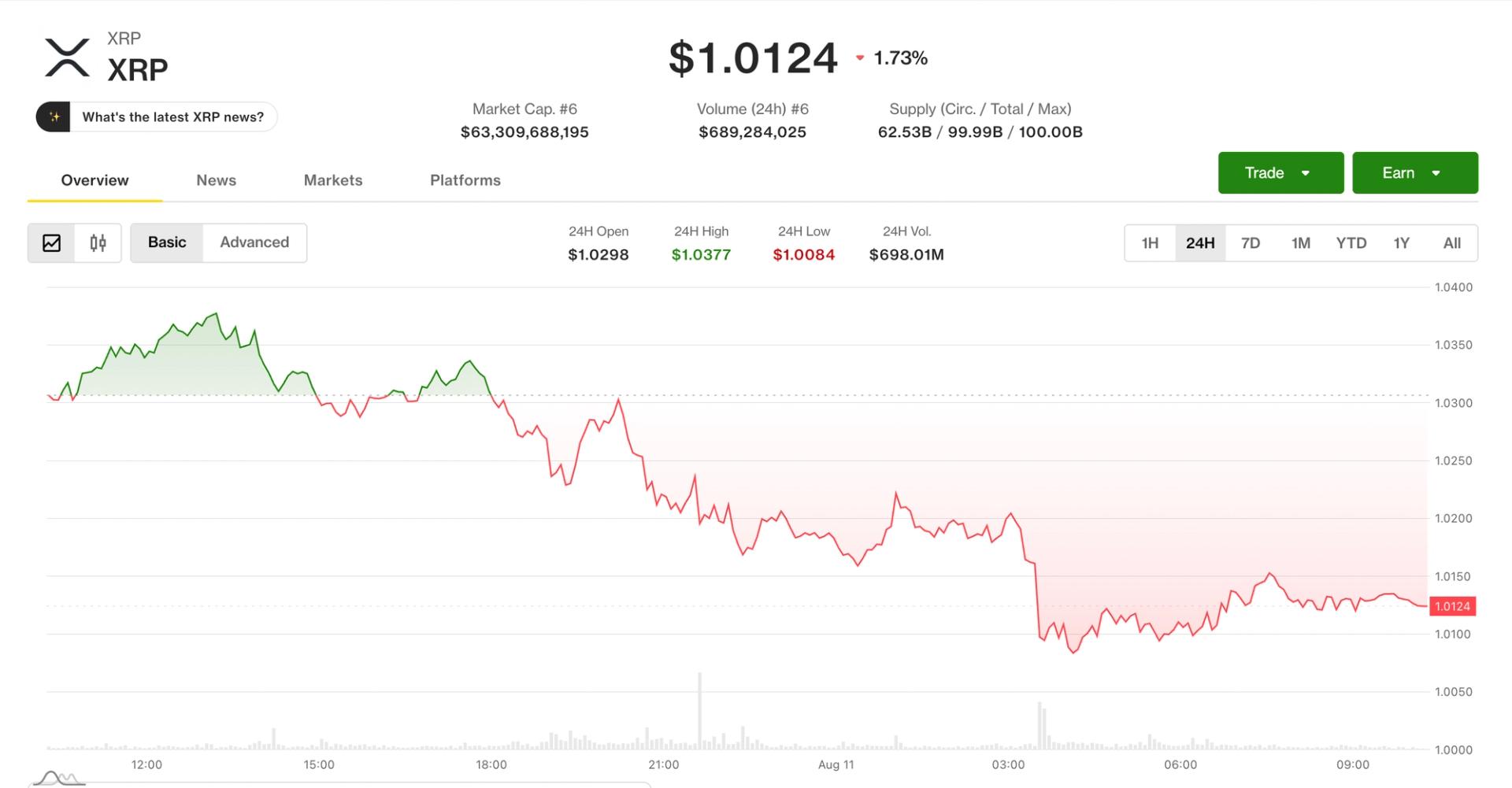
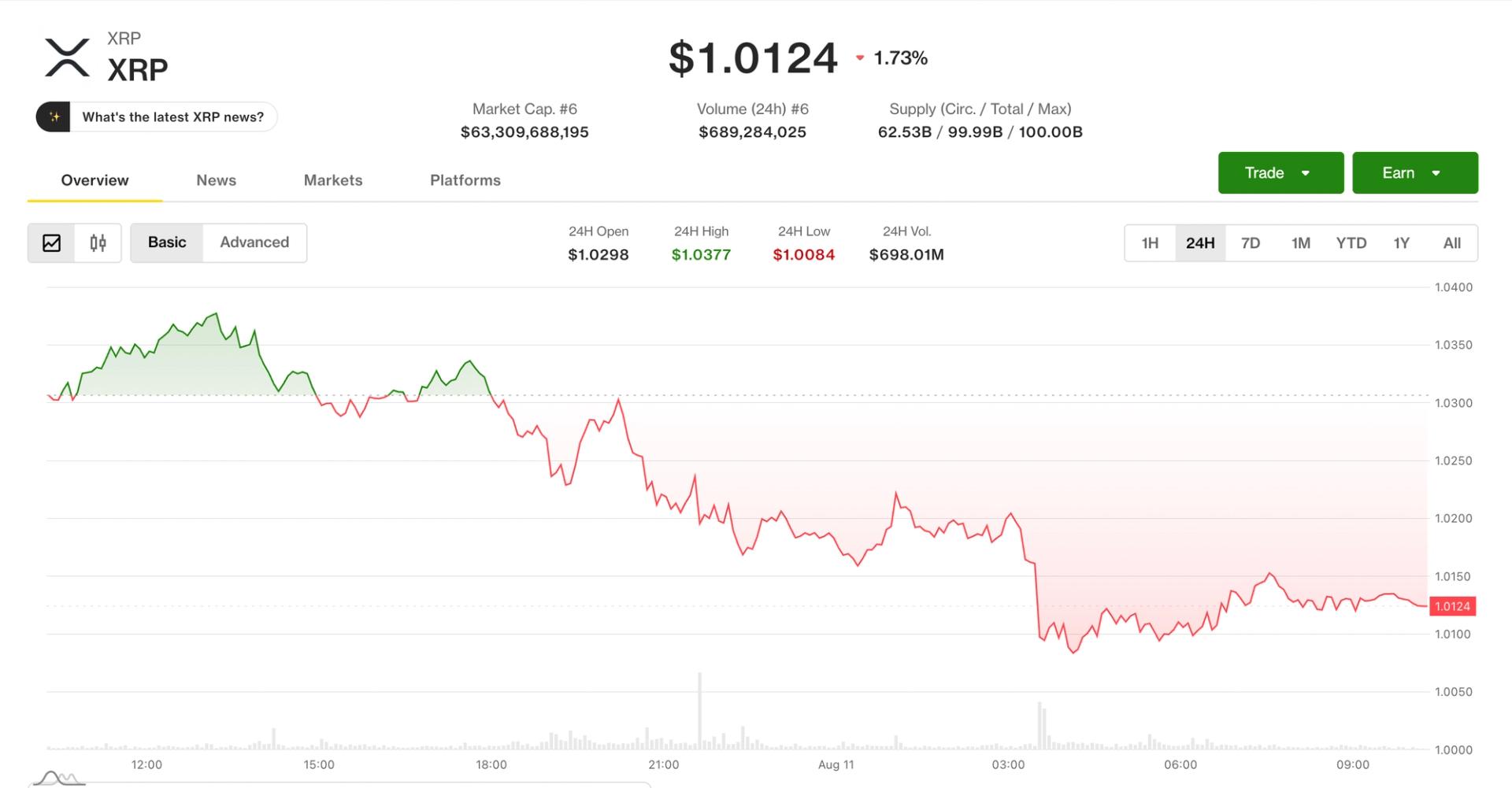
That makes $70,000 the next area to watch, another round number with the 200-day moving average sitting nearby. Clearing it would put bitcoin above the range where buyers and sellers fought through March and April, a move Kuptsikevich said would shift sentiment meaningfully.
Traders are not there yet. The crypto sentiment index sits at 30, in what is known as the fear zone, and has stayed there since mid-July with occasional dips toward extreme fear.
Bonds and oil set the tone in broader markets. U.S. 10-year Treasury yields rose six basis points on Monday to 4.71%, dragging Australian and New Zealand government bonds down with them, with no cash Treasury trading during Asian hours because of a public holiday in Japan.
Brent crude held at $87.73 a barrel after jumping 5% on Monday, when President Donald Trump made fresh demands on Iran and dimmed hopes of a deal to reopen the Strait of Hormuz. Gold rose for a third session above $4,400 an ounce.
Higher oil feeds into the inflation figures due Wednesday at 8:30 a.m. ET, which is why the rally is weighing on assets that do better when rate rises look less likely.
Fund flows had been running the other way until this week. U.S. spot bitcoin funds took in $865 million across five sessions through Aug. 7, before a provisional outflow of $91 million on Monday.


Keel Infrastructure has shut down all of its U.S. Bitcoin mining operations as the former Bitfarms business redirects its American power portfolio toward artificial intelligence and high performance computing data centers.
Summary
- Keel ended all U.S. Bitcoin mining operations on June 29 to prepare sites for HPC.
- Q2 revenue fell 50% yearly to $30 million as mining activity and Bitcoin prices weakened.
- Keel sold 1,085 BTC for $75 million, leaving 1,861 BTC on its balance August 7.
- $819 million in liquidity includes $698 million cash and $121 million in unencumbered Bitcoin reserves.
- U.S. sites in Washington and Pennsylvania have not yet generated any HPC data center revenue.
The company disclosed the transition on Aug. 10 alongside second quarter results showing revenue fell 50% from a year earlier to $30.4 million. Net loss reached about $65 million.
The move brings an end to Bitcoin mining at Keel’s sites in Washington and Pennsylvania, but it does not represent a complete exit from mining worldwide. The Delaware based company continues to operate legacy Bitcoin mining assets in Canada while pursuing approvals to convert more Canadian capacity toward HPC and AI workloads.
Keel Infrastructure ends U.S. Bitcoin mining
Keel’s SEC filing shows that the U.S. withdrawal happened in stages. Bitcoin mining at its Washington State site ended on April 28 as the company began converting the location into an 18 MW HPC data center. Mining then ceased at Panther Creek, Scrubgrass and Sharon in Pennsylvania on June 29.
The change is particularly relevant to Keel’s U.S. operations because the company is now trying to reuse power infrastructure originally built around cryptocurrency mining. Panther Creek and Scrubgrass continued selling electricity after their miners were switched off. They had about 60 MW and 63 MW of energized capacity, respectively, that had not been contracted under an electric supply agreement as of Aug. 7. Sharon is being prepared for a planned 110 MW HPC data center.
Keel has also changed its corporate center of gravity. The former Bitfarms completed its redomiciliation from Canada to the United States on April 1. Keel became a Delaware corporation, a U.S. domestic issuer and the ultimate parent of the Bitfarms business. Its common stock trades on Nasdaq under the KEEL ticker.
Bitcoin sales give Keel more cash for the AI shift
Keel’s latest release also shows its Bitcoin treasury continuing to shrink. Between April 1 and Aug. 7, the company sold 1,085 BTC for roughly $75 million. Its remaining balance stood at 1,861 BTC, valued by the company at approximately $121 million for liquidity purposes.
Management made clear that further disposals are planned. During its earnings presentation, Keel said its “intent is to liquidate our Bitcoin position in 2026.” That remains a management plan rather than a completed transaction, meaning the timing and proceeds from the remaining BTC are still dependent on future sales.
Total liquidity reached approximately $819 million as of Aug. 7, comprising $698 million of unrestricted cash and $121 million of unencumbered Bitcoin. That compares with about $533 million of liquidity reported in May, as previously reported in earlier earnings coverage.
Keel also raised $458 million through 1.25% convertible senior notes due in 2032 during the second quarter. Management said the capital is intended in part to support additional power capacity at its Pennsylvania properties, including Panther Creek and Scrubgrass.
Q2 losses show the cost of leaving Bitcoin mining
The transition is already visible in Keel’s financial results. Revenue from continuing operations fell to $30.4 million from $60.9 million a year earlier. Bitcoin mining revenue alone declined by $29.6 million as the company dealt with lower average Bitcoin prices, higher network difficulty and reduced U.S. mining activity.
The U.S. portion of the decline was substantial. U.S. operations generated 37% of second quarter revenue, down from 51% a year earlier. Revenue from U.S. operations fell by $19.9 million compared with Q2 2025, with Keel citing the Bitcoin market, higher network difficulty and the April shutdown in Washington.
Keel recorded a $141 million operating loss, compared with operating income of about $11 million one year earlier. Net loss was $65 million, while the loss from continuing operations was $64 million. The quarter also included large noncash depreciation charges tied partly to the retirement of mining infrastructure at Panther Creek and Scrubgrass.
General and administrative expenses increased to $31.3 million from $19.4 million. Keel attributed the rise partly to stock compensation, professional costs connected with its U.S. redomiciliation and hiring staff for its expansion into data center development.
The strategy follows a broader move by listed miners to reuse power intensive Bitcoin infrastructure for AI computing. In related broader industry coverage, several miners have redirected capital and electrical capacity toward AI hosting as mining economics weakened during 2026.
What happens next for Keel’s U.S. data centers
The next test is whether Keel can convert retired mining sites into contracted AI infrastructure. As of Aug. 7, the company had not begun HPC operations or recognized HPC data center revenue at the Washington site or its Pennsylvania properties. That makes the current transition primarily a development story rather than an established new revenue stream.
Keel says commercial talks are advancing. Chief executive Ben Gagnon said there were “multiple prospective tenants negotiating for each one” of the company’s three priority sites. However, Keel has not publicly named those prospective tenants or announced a signed customer lease for the sites in its latest results. The customer negotiations therefore remain a company reported commercial process rather than booked revenue.
Permitting is also unfinished. Panther Creek and Sharon have received zoning and land development approvals, while environmental permits remain in progress. Panther Creek has 350 MW of secured utility capacity, and management said its earliest expected ready for service date remains in 2027.
Keel has not abandoned Bitcoin mining everywhere. Its Canadian mining assets remain operational while it pursues further HPC conversions, including a proposed 96 MW data center campus in Sherbrooke, Quebec. Local approval has been obtained for the power transfer, although the change to HPC and AI use remains subject to provincial review.
For Keel, the U.S. pivot has therefore moved beyond planning: the miners are now off, mining equipment has been designated for sale and capital has been raised. The remaining milestones are more difficult to measure in advance. Permits must be completed, tenants must sign contracts, construction must proceed and the former mining sites must begin producing HPC revenue before the new model can be judged on operating performance.
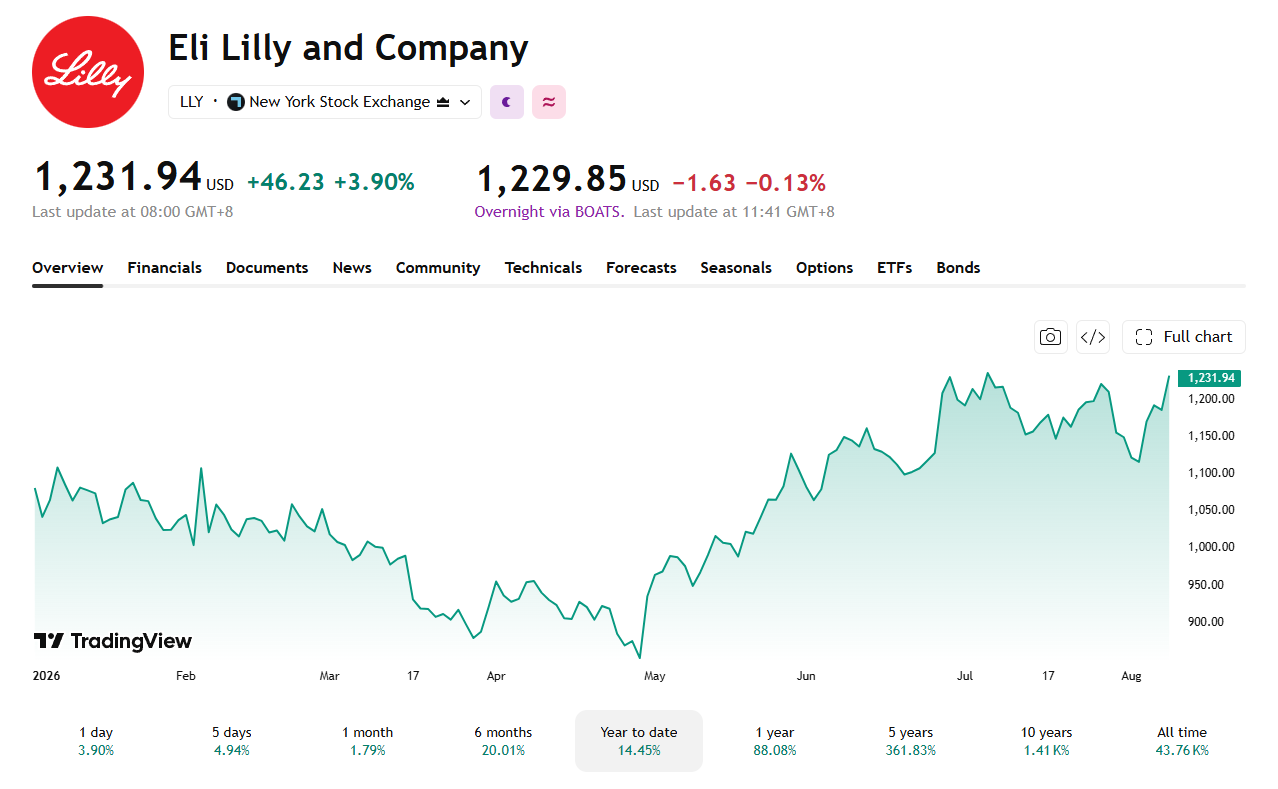
Eli Lilly (LLY) posted a blowout quarter, and Mad Money says the GLP-1 drugmaker’s stock story is far from over.
Jim Cramer and CNBC analyst Jeff Marks called Eli Lilly and Nvidia top momentum stocks.
Why Eli Lilly’s GLP-1 Stock Still Has Room to Run
The comment came during a viewer question about how price targets get set. Cramer raised Eli Lilly and Nvidia’s runs specifically when asking about the process.
Marks, the CNBC Investing Club’s portfolio analyst, said stocks like these need a longer time horizon than most.
“Stocks like that you also have to look out years out in advance, too. Especially in the case of Eli Lilly, where it’s more of towards the end of the decade is where it’s GLP-1 sales.”
— Jeff Marks, CNBC Investing Club portfolio analyst, on Mad Money
Eli Lilly’s second-quarter results back that framing. Revenue hit $23 billion, up 48% year over year. A 60% jump in sales volume offset a 13% drop in realized prices.
Management raised full-year revenue guidance to a range of $85 billion to $87 billion. Mounjaro sales rose 91% to $9.9 billion worldwide. Zepbound’s U.S. revenue grew 44% to $4.9 billion.
Cramer’s other 2026 stock picks lean on similarly durable, multi-year themes rather than short-term trades.
Global GLP-1 Demand Is Still Early
Eli Lilly’s international business is growing even faster than its U.S. business. Revenue outside the U.S. jumped 80% to $8.6 billion in the quarter, while volume surged 113%.

That growth came even as prices outside the U.S. fell 36%. The decline followed Mounjaro’s addition to China’s National Reimbursement Drug List (NRDL), a program covering drug costs under public insurance.
Lower prices widen access for millions of new patients, even as they compress near-term margins. Morgan Stanley expects the global obesity and diabetes drug market to nearly double by 2035.
The firm projects $190 billion in sales, up from $79 billion in 2025. Oral GLP-1 pills and expanding insurance coverage are the main drivers behind that forecast.
For Marks and Cramer, runway and scale are why Eli Lilly’s momentum looks built for years, not quarters.
The post Cramer’s Analyst Says Eli Lilly’s GLP-1 Stock Rally Has Years Left to Run appeared first on BeInCrypto.


Cointelegraph is committed to providing independent, high-quality journalism across the crypto, blockchain, AI, and fintech industries.
All news, reviews, and analyses are produced with full journalistic independence and integrity. For more details on our standards and processes, please read our Editorial Policy.
Crypto World
U.S. SEC sets meeting to propose Reg Crypto to support certain digital assets offerings
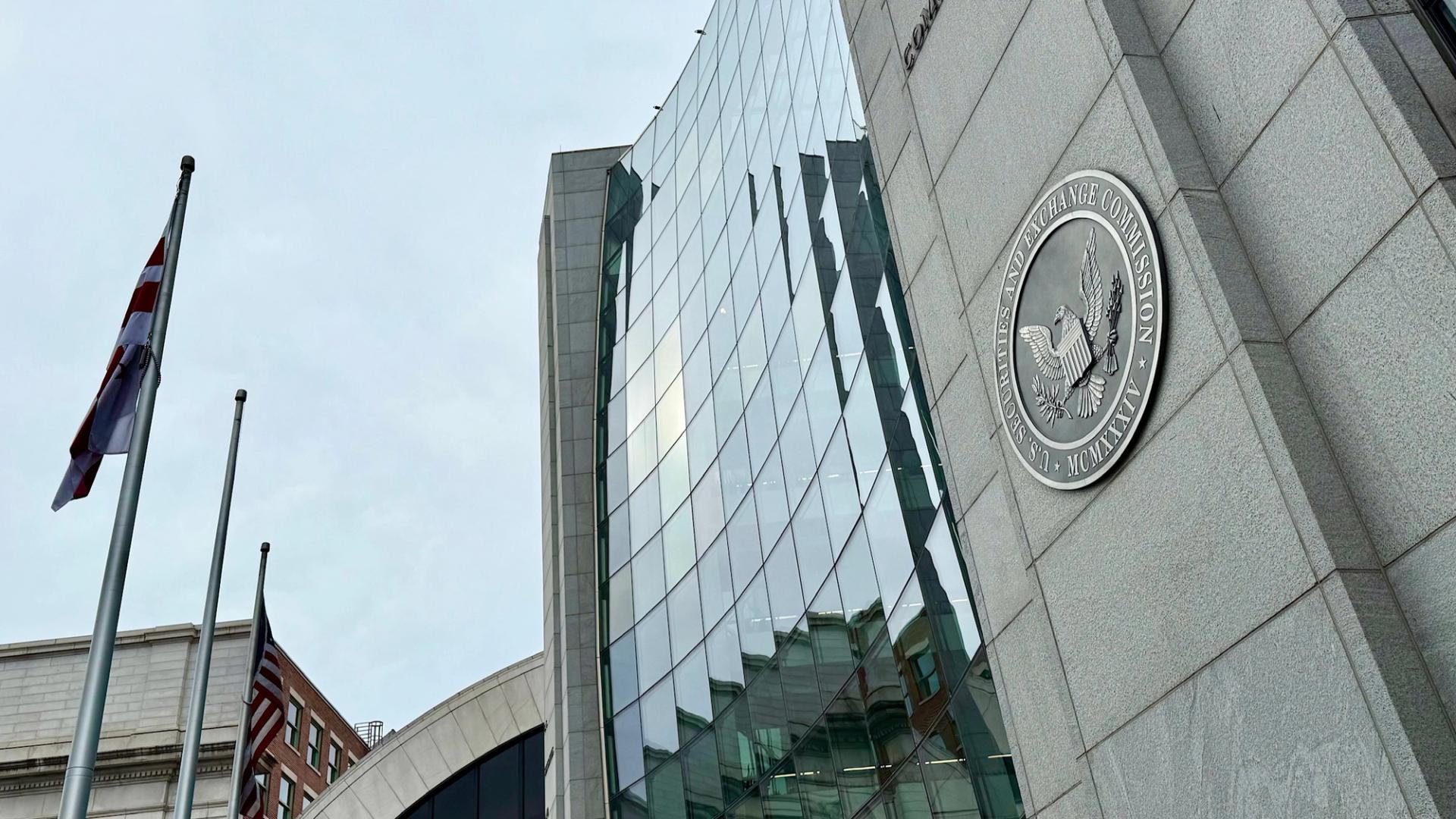
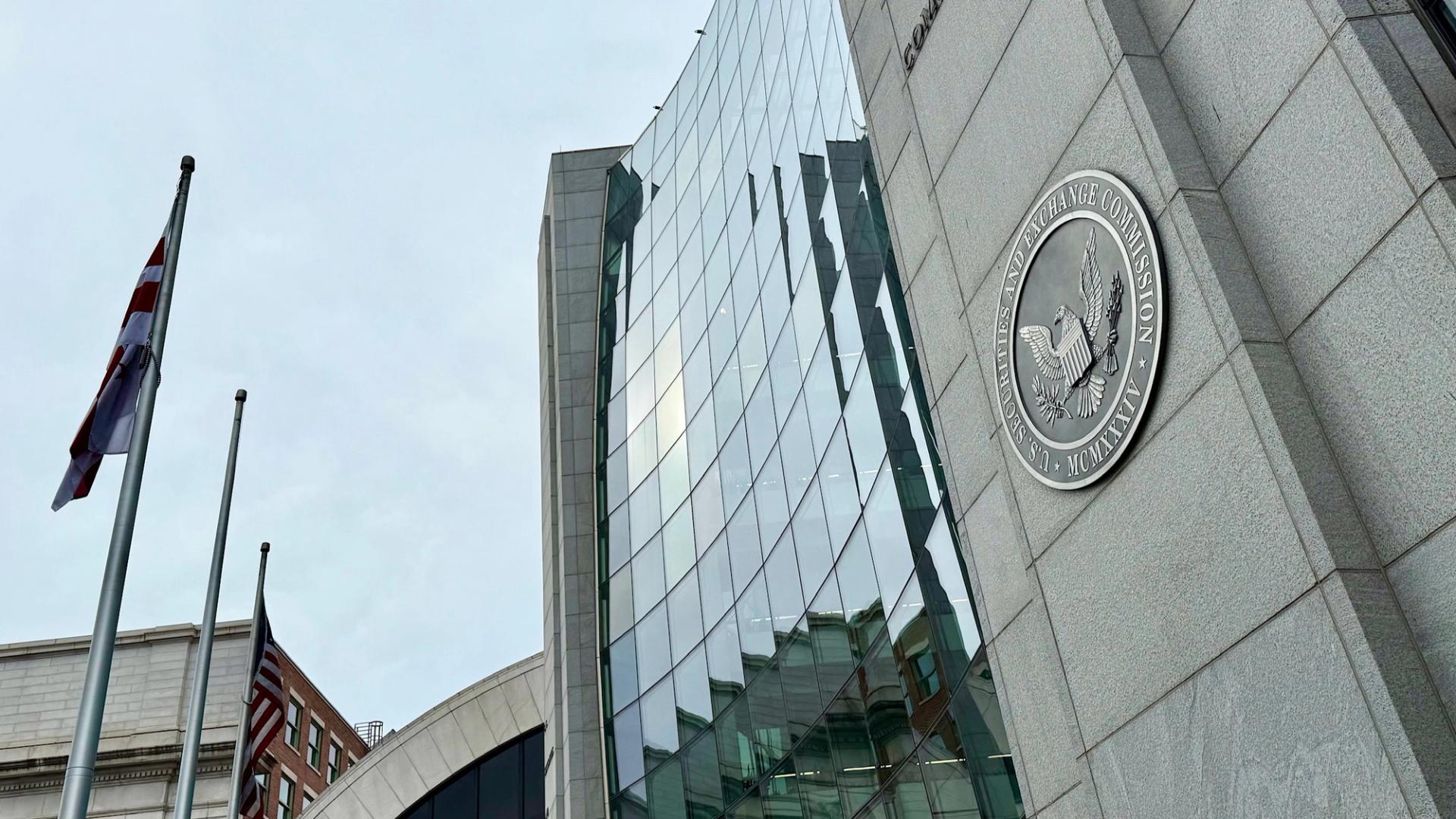
“We view this as the first of several rulemakings the SEC will undertake to provide regulatory certainty for crypto assets after the Senate failed before the August recess to advance the Clarity Act on crypto market structure,” TD Cowen analyst Jaret Seiberg wrote in a client note sent after the SEC’s notice.
The proposal is expected to give a path to crypto firms enabling them to raise capital for projects without triggering SEC registration requirements, and the businesses are also expected to be provided an exit path for getting clear of the agency’s jurisdiction when they’re not engaged in hands-on management of the projects anymore.
Before this, Atkins and the agency had rolled through a lengthy series of crypto policy statements meant to clarify its regulatory position on digital assets, but the staff statements have little long-term durability. A formal rulemaking would be more difficult to reverse in the future.
But the rule will likely take further months to develop and finalize. This first stage will come with a comment period — typically two or three months — and be followed by a potentially lengthy rewrite.
Reg Crypto would join some of the other significant steps the agency has taken or is still working on to foster the U.S. crypto industry. One of the major moves was a joint stance with the Commodity Futures Trading Commission on a “taxonomy” to define how they view various crypto assets and which jurisdictions they belong in. The agency is also still working on its tokenized securities approach, which Atkins routinely mentions as one of the SEC’s marquee crypto maneuvers.
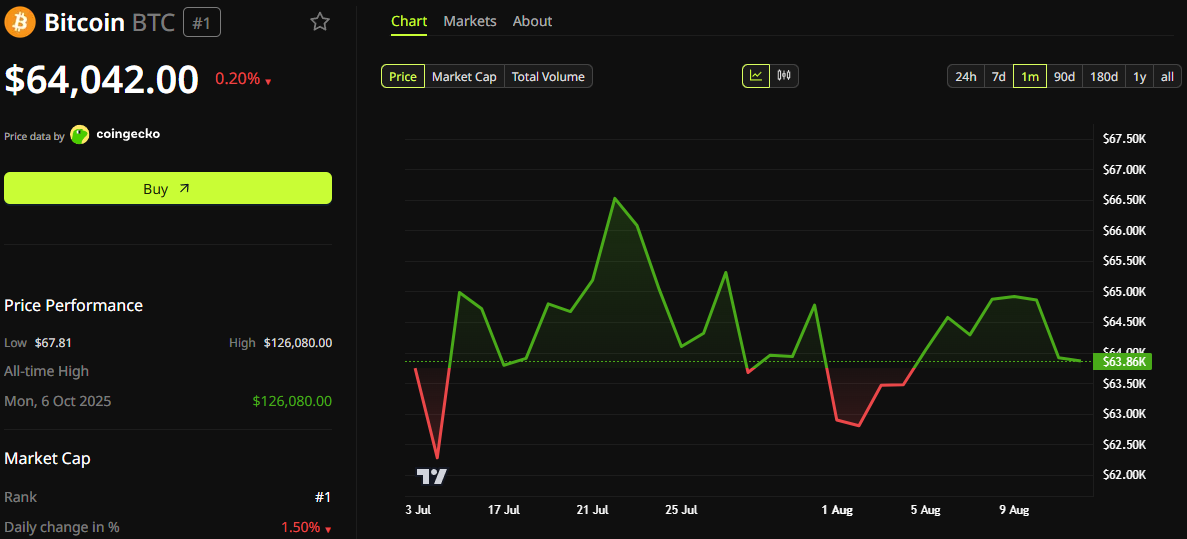
Arthur Hayes says a Fed plan to help Japan defend the yen will print new dollar liquidity, and he argues that liquidity will pump Bitcoin (BTC).
Hayes co-founded BitMEX and now runs the Maelstrom family office. He has built a reputation for macro calls that tie Fed and Treasury policy moves directly to crypto prices.
How A Yen Rescue Becomes Dollar Liquidity
The mechanism he describes is real, though its scale is not yet confirmed. It runs through the Foreign and International Monetary Authorities (FIMA) Repo Facility, a Fed program that lets foreign governments post US Treasuries as collateral for short-term dollar loans, instead of selling those Treasuries outright.
Treasury Secretary Scott Bessent has said Japan holds $1.143 trillion in US Treasuries. Under Hayes’ scenario, Tokyo repos part of that stockpile for dollars, sells the dollars for yen, and reinvests the yen into domestic bonds and stocks.
The Fed’s balance sheet grows to fund each loan, which is functionally similar to printing money, though the Fed frames it as a lending facility rather than quantitative easing (QE).
Hayes’ bet is that these dollars do not stay contained. BTC, in his view, is one of the most liquidity-sensitive assets in the market.

Why The Fed Balance Sheet Matters For Bitcoin
During the pandemic, the Fed’s balance sheet grew from roughly $4.2 trillion to nearly $8.9 trillion by early 2022, an increase of more than $4.6 trillion in asset purchases, according to Federal Reserve research.
Over that stretch, the Bitcoin price ran from under $10,000 to an all-time high near $69,000 in November 2021. Hayes treats that stretch as the template.
There is a second layer. The yen is the world’s cheapest major funding currency, meaning traders borrow yen cheaply to buy other assets. A sudden yen spike forces those trades to unwind fast, which dragged down stocks and crypto together in August 2024.
Hayes argues that routing the rescue through FIMA lets the unwind happen gradually. A sharp Bank of Japan (BOJ) rate hike, by contrast, risks a repeat of that 2024 shock, which he says makes FIMA the friendlier path for BTC.
The Administration Side Checks Out, So Far
Bessent asked the Fed to expand FIMA’s $60 billion lending cap. This was days after the US and Japan jointly intervened to support the yen. He called the facility an important backstop and said he wants its cap raised in the months ahead.
Not everyone agrees FIMA is the right tool. Brad Setser, a former Treasury official, has argued the facility was built to backstop lending in moments of market stress, not to fund currency intervention.
Any cap increase also needs sign-off from the Federal Open Market Committee (FOMC). Fed Chairman Kevin Warsh has not committed to a schedule. Hayes treats the expansion as close to certain. The Fed has not.
Hayes’ own newsletter discloses that Maelstrom is already long Bitcoin, Ether (ETH), and Ethena (ENA). These are the same assets he says this liquidity will lift.
The post Arthur Hayes Says Fed’s Japan Yen Plan Will Pump Bitcoin appeared first on BeInCrypto.


Trump Media said it plans to revamp its digital asset treasury strategy after unrealized losses on crypto and securities helped push the company to a $238 million net loss in the second quarter.
The company reported $190.4 millio n in unrealized losses across its digital assets, pledged digital assets and equity securities in its Q2 earnings release on Monday.
Trump Media said the new framework is intended to preserve its long-term digital asset exposure while managing volatility and improving the productivity of its balance sheet.
Trump Media is the publicly traded company behind Truth Social, Truth+ and financial services brand Truth.Fi. The company is tied to US President Donald Trump, who is the sole beneficiary of a trust that held about 41.1% of Trump Media’s voting power as of Feb. 25, according to its latest annual report.
Related: Trump Media sells Wall Street low-latency access to Trump posts
Its Q2 filing shows the company is already using options to manage Bitcoin volatility and generate premium income, while deploying some BTC through lending and other yield-generating arrangements.
The company also said it plans to direct more resources toward Truth Social, Truth+ and other parts of its media business as part of a broader shift in how it allocates capital.
Trump Media boosts Bitcoin holdings after Q2
Trump Media’s Bitcoin holdings were little changed during the second quarter before the company stepped up its direct Bitcoin exposure in July.
As of June 30, Trump Media held 9,477.16 Bitcoin, down from 9,542.16 BTC at the end of the previous quarter.
Separately, the company had pledged 2,077.34 BTC as collateral for its options strategy. Of its reported holdings, 4,260.73 BTC was serving as collateral for convertible notes.
Related: Strategy turns 1,690 BTC into $108.6M STRC buyback
In July, the company sold Bitcoin-related securities worth $159.6 million and used the proceeds to purchase Bitcoin.
By July 31, Trump Media reported holding approximately 14,139 BTC, including pledged Bitcoin, worth about $890.5 million at the time.
Trump Media flags risks from Bitcoin yield strategy
Trump Media also warned that its efforts to earn additional income from its Bitcoin carry counterparty credit risk and the potential loss of its assets.
The company said it has deployed a portion of its Bitcoin holdings to third parties through lending, placement and other yield-generating arrangements, which it described as relatively new strategies.
Some of those counterparties may not be rated by major credit rating agencies and could default during market downturns, liquidity crises or other financial distress.
If an arrangement is unsecured, the company said it may be unable to recover its Bitcoin if a counterparty becomes insolvent. Trump Media is also limited in its ability to sell or pledge Bitcoin while it is deployed, while counterparties may use those assets at their discretion.
Magazine: Bitcoin will never fall below $60K again: Nansen founder
Indonesian stocks are edging back toward bull-market territory, and one of the rally’s clearest beneficiaries is an AU data center operator whose earnings are compounding regardless of what the rupiah does next.
The Jakarta Composite Index (JCI) has climbed 20% from its early-June low. That rebound follows a rough start to 2026, with the index still down 25% year to date, making it the worst-performing major benchmark globally.
The Rally’s Foundations
Bank Indonesia raised rates by a combined 100 basis points in May and June, MSCI postponed a planned review of the country’s market status until November, and S&P Global Ratings affirmed the sovereign credit rating.
President Prabowo Subianto’s decision to scale back a costly free-meals program has also eased fears of fiscal slippage. Indonesia’s economy grew 5.29% year over year in the second quarter, beating the 5.14% median estimate in a Bloomberg survey.
That backdrop is macro relief, not necessarily a structural bull case.
DCI Indonesia is where the two stories meet.
Where DCI Indonesia Fits
DCI Indonesia is the country’s largest listed data center operator has profited from the AI infrastructure boom and its first-half results show why investors keep buying it through the broader market’s turmoil. Net profit rose 18.7% year over year to Rp732.53 billion ($44 million), while revenue climbed 33.2% to Rp1.77 trillion, driven almost entirely by colocation services, which made up 94.5% of the total.

Just 2.1% of that revenue came from affiliated parties, meaning the growth reflects genuine third-party demand rather than internal deals.
The company has also started parking part of its balance sheet in the Patriot Bond, a debt instrument issued by Danantara, Indonesia’s sovereign wealth fund, carrying a 2% coupon. That holding now accounts for 6.3% of total assets, well above DCI’s historical allocation to marketable securities.
Ai Building in Asia
The demand DCI is capturing lines up with a broader regional shift. Southeast Asia’s AI buildout has increasingly become a physical infrastructure story rather than a software one, according to United Overseas Bank executives, and memory chip demand tied to AI has already driven record profit growth at Samsung elsewhere in the region.
Goldman Sachs, meanwhile, has flagged AI investment as a driver reshaping Asian markets, though it has notably not extended that bullishness to the rupiah.
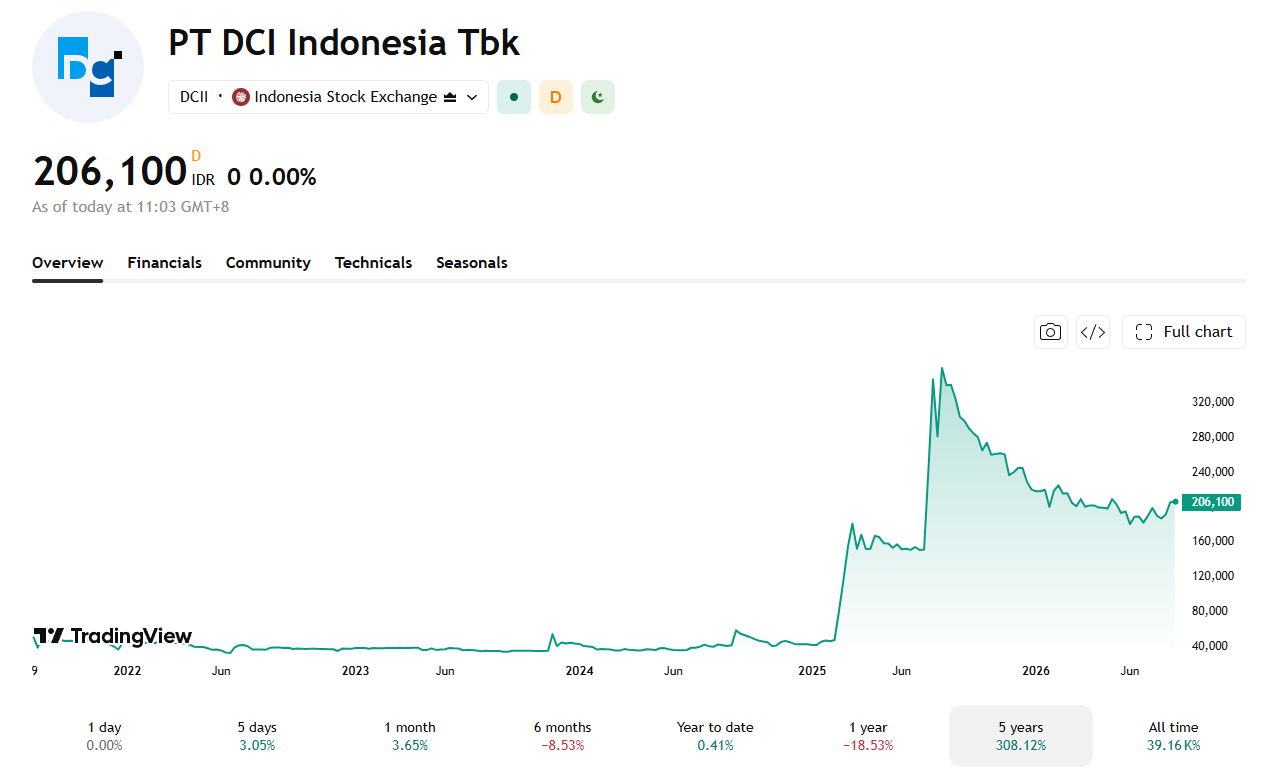
That gap, a regional AI infrastructure boom that Goldman doesn’t yet credit to Indonesia’s currency, is worth watching. DCI’s own share price is still down roughly 18.6% over the past year even after this year’s bounce, meaning its earnings have been growing faster than its stock, the opposite of what tends to happen when a rally is running ahead of fundamentals.
Whether that combination, real profit growth outrunning a cautious share price, is enough to pull more of Jakarta’s market with it is the open question for the rest of 2026.
The post Indonesian Stocks Near Bull Market as DCI Indonesia Profit Jumps 19% appeared first on BeInCrypto.

Trump Media says it will overhaul how it manages its digital-asset treasury after crypto and securities losses contributed to a $238 million net loss in the second quarter. In its Q2 earnings materials, the company attributed $190.4 million in unrealized losses to its mix of digital assets, pledged digital assets, and equity securities, while describing a plan aimed at keeping long-term Bitcoin exposure but reducing balance-sheet volatility.
The publicly traded company—best known as the parent of social platforms Truth Social and Truth+ and the financial services brand Truth.Fi—linked the strategy shift to the need for a more resilient framework. The company noted that the changes are meant to improve the “productivity” of its balance sheet without abandoning its core digital-asset positioning.
Key takeaways
- Trump Media reported $238 million net loss in Q2, with $190.4 million tied to unrealized losses across digital assets, pledged digital assets, and equity securities.
- A new treasury framework is planned to preserve long-term Bitcoin exposure while managing volatility and improving capital efficiency.
- Bitcoin use in hedging and yield activity is already in place, including options-based volatility management and deployments of some BTC to third parties.
- The company increased direct Bitcoin exposure in July, moving from 9,477.16 BTC at quarter-end to about 14,139 BTC by July 31, including pledged BTC.
- Counterparty and liquidity risks are explicitly flagged for Bitcoin-yield strategies, including default risk and limits on selling or pledging deployed BTC.
Why Trump Media is changing its digital-asset plan
Trump Media’s shift comes as investors focus on how publicly traded firms balance crypto exposure with the accounting swings that unrealized losses can create. In its second-quarter reporting, the company said its existing digital-asset and securities positions generated significant unrealized markdowns. Those losses, it said, were part of what drove the quarter’s large net loss figure.
Rather than retreating from Bitcoin, Trump Media emphasized that the revamp is intended to “preserve” long-term exposure while addressing volatility and making the balance sheet work more efficiently. The company also said it plans to direct more resources toward Truth Social, Truth+, and other media operations, framing the treasury shift as part of a broader capital allocation change.
Because the group is tied to former U.S. President Donald Trump, the broader context matters for market watchers. The filing notes that a trust holding roughly 41.1% of Trump Media’s voting power as of Feb. 25 remains the sole beneficiary of Trump Media voting power, according to the company’s latest annual report.
What the Q2 filing says about Bitcoin strategy
Trump Media’s Q2 documentation indicates it is not treating Bitcoin purely as a long-term spot holding. Instead, the company described a framework that already includes options to manage Bitcoin volatility and generate premium income. It also reported using part of its BTC in lending and other yield-style arrangements.
As of June 30, Trump Media held 9,477.16 Bitcoin, down slightly from 9,542.16 BTC at the end of the prior quarter. Separately, it reported pledging 2,077.34 BTC as collateral for its options strategy. The company also said 4,260.73 BTC was serving as collateral for convertible notes.
That structure shows a balancing act: maintaining Bitcoin exposure while ring-fencing assets for derivatives and financing obligations. It also highlights how pledged collateral can constrain a company’s flexibility during drawdowns or liquidity events.
July: Bitcoin-related sales followed by increased BTC exposure
While the second quarter itself left Trump Media’s direct Bitcoin holding relatively stable, the company later stepped up its Bitcoin exposure in July. By July 31, Trump Media said it held approximately 14,139 BTC, including pledged Bitcoin, which it valued at about $890.5 million at the time of reporting.
The path to that increase was tied to an intermediate step: the company said it sold Bitcoin-related securities worth $159.6 million in July and used the proceeds to purchase Bitcoin. This matters because it suggests the company viewed those securities as a temporary component in its capital deployment rather than a permanent replacement for direct BTC exposure.
For readers tracking how non-traditional crypto entrants manage treasury assets, the key takeaway is that Trump Media’s exposure management appears active rather than passive. The company is also maintaining a portfolio where some Bitcoin remains tied up—through pledges and other arrangements—while the headline BTC totals can rise through incremental purchases.
Risks Trump Media says it faces with BTC yield activities
Trump Media’s filings do not just outline how it earns additional income; they also provide a clear warning about the trade-offs. The company stated it deployed a portion of its Bitcoin holdings to third parties via lending, placement, and other yield-generating arrangements, describing these as relatively new strategies.
According to the company, some counterparties may not be rated by major credit rating agencies. That increases the risk that counterparties could default during periods such as market downturns, liquidity crises, or other financial stress.
Trump Media also warned that if an arrangement is unsecured, it may be unable to recover its Bitcoin in the event a counterparty becomes insolvent. It added that its ability to sell or pledge Bitcoin can be limited while assets are deployed, and that counterparties may use the assets at their discretion.
These disclosures are especially relevant when paired with the company’s decision to revamp its treasury strategy. The new framework is positioned as a way to maintain long-term exposure and reduce volatility, but the filings indicate the risk is not only market-driven. It is also operational and credit-driven—tied to whether deployed Bitcoin is recoverable and how counterparties behave under stress.
In other words, the company is trying to enhance balance-sheet performance while accepting that yield-style BTC deployments can introduce new failure modes that typical spot holding does not.
What investors should watch next
Trump Media has flagged both accounting volatility from unrealized losses and credit/liquidity risk from its Bitcoin-yield counterparties. Going forward, investors will likely focus on how the company implements its revamped treasury framework—particularly whether it changes the share of Bitcoin deployed to third parties versus retained as pledged collateral or held directly, and how those choices affect reported results in subsequent quarters.

LIVE TRADING NIFTY EXPIRY banknifty|| 11 AUG ||#livetrading#nifty #thetradingfemme

Was Bruce Willis at daughter Tallulah’s wedding? Action star, 71, appears absent in photos amid dementia fight

AAON, Inc. (AAON) Q2 2026 Earnings Call Transcript

Renter of Home in Anne Heche Crash Denies Settlement With Son

No Jackpot Winner as $257 Million Prize Rolls Over to $269 Million Monday Draw

Weekend Open Thread: Staud – Corporette.com
LIVE TRADING NIFTY EXPIRY banknifty|| 11 AUG ||#livetrading#nifty #thetradingfemme

Live GOLD and CRYPTO Scalping Trading | DAY 299 #goldtrading #cryptotrading #bitcoin

Rumus Financial Freedom #timothyronald #edukasi #keuangan
-

 Fashion3 days ago
Weekend Open Thread: Mattifying Sunscreen
-

 Fashion4 days ago
Frugal Friday’s Workwear Report: Cap-Sleeve Pointelle Crewneck Sweater
-

 Sports5 days ago
Jordan Coyle & Cordiamo take Laya Arena Stakes at RDS
-

 News Videos3 days ago
Can Astrology Help Find Gold and Silver Trends? A Financial Astrology Guide
-
 Business5 days ago
US stocks: Dow closes at record on Mideast optimism; SpaceX, AMD drag Nasdaq
-

 Politics5 days ago
Reform UK And Greens Sink To Lowest Favourability Ratings To Date
-

 Tech6 days ago
OpenAI, Anthropic AI agents targeted real people and systems in cyber tests
-

 Business6 days ago
Nvidia Stock Climbs 2.5% as Chip Sector Rally Builds Ahead of AMD Earnings, Nvidia’s Own Report Looms
-

 Crypto World7 days ago
Polymarket targets $20 billion valuation as competition heats up in prediction market sector
-

 Business5 days ago
Supply chain issues impact Ingredion
-
 Crypto World7 days ago
CLARITY Act Senate Vote Locked In, But 60-Vote Hurdle Looms Large
-

 Tech3 days ago
Rinn Pharma & Biopharma to join NordicPharmaTrain network
-
 Crypto World6 days ago
Dow and S&P 500 Hit Records on AI Earnings: When Will the Bubble Burst?
-

 Business2 days ago
How to Start a Cleaning Business: A Step-by-Step Guide
-

 Business2 days ago
Datadog: Best Of Breed For Multiple Reasons
-

 Business2 days ago
BDC Weekly Review: Private BDC Q2 Numbers Are Strong
-
 Crypto World6 days ago
Dollar Index Trapped at 100 as Hawkish Fed Meets Official Selling
-

 Business6 days ago
McDonald’s (MCD) Q2 2026 earnings
-
Crypto World7 days ago
Trump Administration Plans Ban on New Chinese AI Data Center Components: Report
-

 Fashion6 days ago
The Bright Side of Black and White
You must be logged in to post a comment Login