
Politics
Rod Stewart Cancels Second Live Show After ‘Minor Medical Procedure’

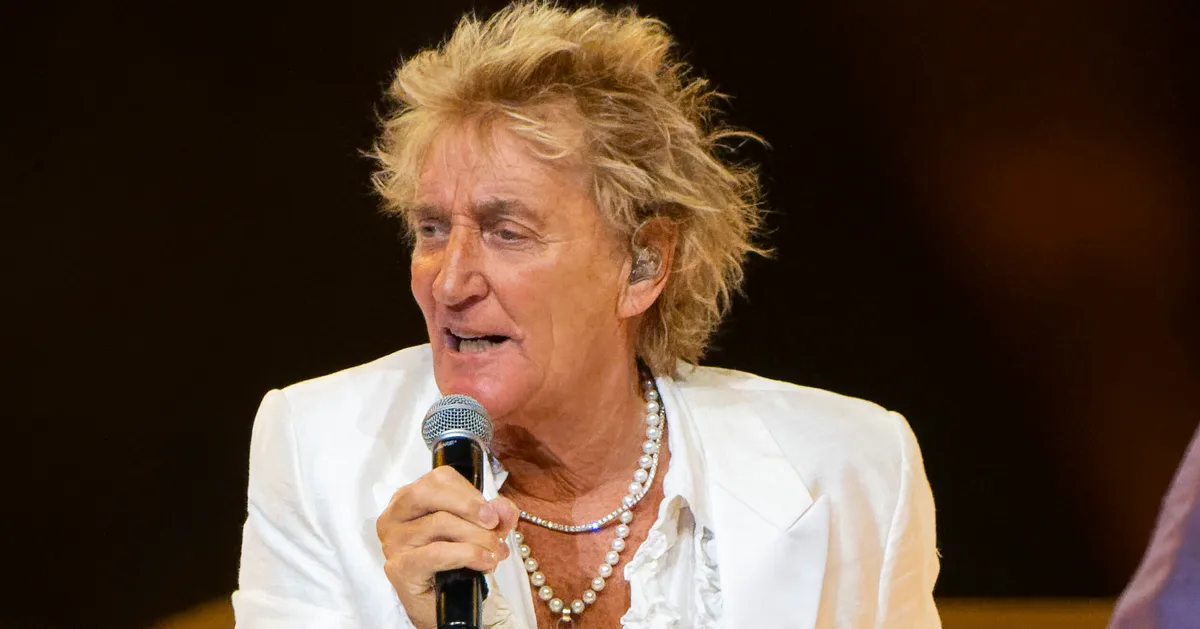
Sir Rod Stewart has pulled out of two live shows in the space of a week on medical grounds.
The 81-year-old crooner had been booked to perform in Cincinnati, Ohio on Sunday night, but postponed the show that morning “due to an unforeseen but minor medical procedure that required prompt attention”.
In a statement posted by the venue, it was said that “rescheduling is currently underway”, and that Sir Rod is “expected to make a quick recovery and looks forward to returning to Cincinnati”.
Following this, the Maggie May star also cancelled a show that was scheduled in Cleveland, Ohio on Tuesday night.
“Following a period of monitoring, doctors have advised Rod Stewart to rest for at least 48 hours,” Cleveland’s Rocket Arena said on their website, adding: “Rod is disappointed to miss the show and appreciates everyone’s understanding. He looks forward to returning to the stage soon.”
HuffPost UK has contacted Sir Rod Stewart’s team for comment.
Sir Rod is currently in the middle of his One Last Time tour, which has taken him across Europe and the US.
In 2024, he maintained that he has “no desire to retire” but told fans this would probably mark the end of him performing “large-scale world tours”.
He wrote on social media: “I love what I do, and I do what I love. I’m fit, have a full head of hair, and can run 100 meters in 18 seconds at the jolly old age of 79.
“I’d like to move onto a Great American Songbook, Swing Fever tour the year after next-smaller venues and more intimacy…”
“But then again, I may not,” he added, signing off his message: “The ambiguous Sir Rod Stewart.”
The Grammy winner previously teased to TalkSport that he’d be taking part in a UK tour in 2027, including a date at London’s iconic O2 Arena, “and that’ll probably be it, I think”.
Back in June, Sir Rod was forced to briefly pause a live performance in West Valley City, Utah so he could be administered with an oxygen mask.


Anne Hathaway is shrugging off the internet’s latest wild rumour about her.
The Devil Wears Prada star is having an absolutely massive 2026, with no fewer than five films hitting cinemas in the space of a year.
If that wasn’t exciting enough, the Oscar winner also recently confirmed that she and her husband Adam Shulman are expecting another baby.
Unfortunately, social media being the way it is in 2026, the US actor has recently found herself at the centre of speculation, mostly from bored TikTok users, suggesting that she’s actually faking her pregnancy.
It seems that Anne herself may have caught wind of this conversation, which she appeared to effortlessly shut down in a new Instagram post.
Sharing behind-the-scenes footage of herself at the premiere of her new film The End Of Oak Street, she joked in the caption: “Fake hair, real bump.”
“Enjoy the [End Of Oak Street] Block Party chaos with me as my outfit literally melts in the heat!!” she quipped.
So far this year, Anne has already received praise for her work in Mother Mary and The Devil Wears Prada 2, and she can currently be seen in action in one of the year’s biggest movie events, The Odyssey, in which she stars as Penelope, opposite Matt Damon, Tom Holland, Robert Pattinson and Mia Goth.
During an interview with Extra while promoting her latest project, she said with a laugh that “two of the movies have done unbelievably well”, while the other was “very well-respected”.
Before the end of the year, Anne is also due to appear in Verity, a dark thriller based on the book of the same name by Colleen Hoover.
Even then, she’s not done, as next year she’s set to star alongside Adam Driver in the military drama Alone At Dawn, which is already in the post-production phase.
Politics
Progressives could score a huge Wisconsin win Tuesday. Some national figures don’t want to touch it.

MADISON, Wisconsin — Progressives believe they are on the cusp of another major victory against the establishment in the Wisconsin governor primary Tuesday — one that could pave the way for the movement in 2028 and beyond.
But so far, many national progressive leaders want nothing to do with the race.
A win by front-runner and democratic socialist Francesca Hong over Gov. Tony Evers’ handpicked successor David Crowley would be a major shockwave, setting up a key opportunity for the progressive movement to show its brand of politics can succeed in one of the most cutthroat battleground states. Some progressive organizers also argue that a Hong win serves as a test run of sorts for potential 2028 presidential contenders like Rep. Alexandria Ocasio-Cortez (D-N.Y.).
But the stars of the left like Ocasio-Cortez and Sen. Bernie Sanders (I-Vt.) have not endorsed Hong despite having hit the trail for other prominent candidates, including Michigan Senate nominee Abdul El-Sayed. And a few have privately raised questions about the sharpness of Hong’s messaging and electability, as she navigates a series of controversies over her old social media posts advocating for canceling Thanksgiving and defunding the police — comments she now calls “bad takes” that she says she has learned from.
And other leaders say they aren’t familiar with who she is, underscoring the work Hong has ahead of her if she wins Tuesday.
“I don’t know her,” Sen. Elizabeth Warren (D-Mass.) said in a brief hallway interview.
Sanders has said he would not endorse Hong and declined to comment when asked by POLITICO about the race last Friday on Capitol Hill. Two people close to the senator, granted anonymity to discuss the private conversations, said that even as Hong has invoked Sanders’ name and political ideology on the campaign trail, he doesn’t know her personally. Sanders has acknowledged he’s met Hong before, but indicated that’s the extent of their relationship.

Those two people added that Hong is less vetted and not as sharp on some of her messaging than other candidates — presenting more of a risk for Sanders, who has already been burned by endorsing Graham Platner in the Maine Senate race.
Ocasio-Cortez also declined to endorse Hong. “My focus has been in winning back the Congress, winning back the House, and positioning ourselves to have the best chance possible to win the Senate,” Ocasio-Cortez said in a recent interview on ABC’s “This Week.”
Both Sanders and Ocasio-Cortez, along with their advisers, say they’re more focused on control of Congress, and rarely endorse in state-level contests. But their lack of involvement, or even public encouragement of Hong’s campaign, could foretell just how immense a task Hong faces as she tries to convince moderate Democrats, independents and even people within her own progressive movement that she’s electable in November against Donald Trump-backed Republican Rep. Tom Tiffany.
General elections in the battleground state have been determined by extremely narrow margins in recent years. Trump won the battleground state in 2024 by just shy of 30,000 votes. Joe Biden won it by fewer than 21,000 votes in 2020.


Some Democratic officials in Wisconsin privately note Republicans have a big opportunity to hammer Hong on democratic socialism, which had a net negative rating among all registered voters in a July Marquette Law School poll.
But in spite of the hesitation from some top leaders of the left, a number of progressive groups are on board with her campaign.
“If Francesca Hong is elected the governor of Wisconsin, people are going to see somebody working very, very rigorously as the governor, like [Zohran] Mamdani is as the mayor of New York, to pursue a set of policies that people are rapidly going to recognize are in their best interests,” said Alan Minsky, executive director of Progressive Democrats of America. “They’re going to embrace [Hong] as much as they have Mamdani, whose popularity right now is off the charts.”
On whether she can dispel electability criticisms that moderate Democrats often lob at progressives, Minsky said: “The proof will be in the pudding in November.”
A few federal-level progressive lawmakers have traveled to Wisconsin to campaign with Hong, including Rep. Ilhan Omar (D-Minn.). Hong has also channeled progressive star power in other ways: leftist influencer Hasan Piker rallied with her in Milwaukee earlier this month. Rep. Ro Khanna (D-Calif.) has also endorsed Hong.

Republicans in Wisconsin and at the national level are also already planning coordinated attacks against Hong for signing a questionnaire from the Madison-area Democratic Socialists of America stipulating candidates uphold the DSA platform and “view themselves as socialist organizers first, and legislators second,” as well as attacking her for her deputy campaign manager, a sex worker advocate named Renee Faust, having an OnlyFans account.
The Hong campaign pushed back on those attacks. “Renee Faust is a licensed mental health clinician who has spent her career providing care to trafficking survivors. She has helped build the largest grassroots campaign in Wisconsin history. The right-wing politicians attacking her are the same ones who want government dictating women’s health care decisions,” a Hong spokesperson said.
Hong’s allies privately attribute the lack of national endorsements from leading progressives to Sanders’ decision to stay out of the state-level race, arguing that others have taken a cue from him. However, the Vermont senator did endorse Troy Jackson for governor of Maine before Graham Platner dropped out.
Interviews with voters on the ground in Wisconsin show Hong has been able to tap into voters’ frustrations with party leaders and lean into local policies around cost of living to rally a strong enough base heading into Tuesday’s primary: She’s led Crowley by double digits in recent polls, though he’s been making gains.


If she can make it through the primary and general election against a Donald Trump-backed Republican, then she will force the Democratic establishment, and leading national progressives, to take notice.
“I feel like we’re at a point in our policies where Democrats are very happy to just kind of stay focused on being centrist,” Paige Gerber, a 33-year-old Hong supporter, said in an interview after running into Crowley at an ice cream shop campaign stop in Sheboygan. “And that’s where we’re losing in so many spaces, especially as we get more and more destitute in the economy. People are hurting, and people are really looking for … policies that are really for the people.”
Wisconsin Democratic officials are already planning a unity tour across the state with the governor and lieutenant governor nominees immediately following Tuesday’s primary, to try to turn the page from intense Democratic infighting between Hong’s allies and establishment Democrats in the state during the primary, according to three people with direct knowledge of the matter. State party chair Devin Remiker will join nominees on the tour.
Evers in an interview last Friday did not commit to endorsing or campaigning for Hong, should she win. But Democrats involved expect both he and Crowley would join the unity tour at some point ahead of November.
Still, many senior Democrats in the state believe Hong will need the help to convince enough voters in the purple state to turn out for her in November. They’re deeply concerned Hong isn’t running the kind of disciplined campaign that can defeat Tiffany.
“Socialism scares the shit out of the persuadable voters we routinely need to win here,” said one longtime Democratic campaign operative in the state, granted anonymity to speak candidly. “And the unforced errors will be deadly if she doesn’t sharpen some of her answers … for her past tweets and positions.”
A Democratic staffer who is supporting Hong said she “needs to be more on message about what actually matters,” adding: “ I don’t think she has to moderate her policies … she is just going to have to be more precise.”

Wisconsin’s lone Democratic Sen. Tammy Baldwin, who hasn’t endorsed in the race, said in an interview last Friday she “decided not to put my thumb on the scale,” though she does plan to back whoever wins.
When asked about Hong’s electability as a democratic socialist in a general election, Baldwin pivoted to an attack on Republicans.
“I’m preparing to bring up Trump’s record on the same things,” she said. “Look, this is a referendum this fall about whether we’re going to elect MAGA people or whether we’re going to stand up for health care, stand up for SNAP benefits. Those are the issues before the state.”


Credit: Adobe Stock

Professor Ben Bridgewater, Executive Chair, Health Innovation Network and Chief Executive, Health Innovation Manchester
| AbbVie
Why health innovation partnerships matter for growth, productivity and better health
This article has been commissioned and funded by AbbVie UK. Health Innovation Manchester had editorial control. This article is intended for UK parliamentarians, policy makers, and members of the general public with an interest in health policy
The UK faces a productivity challenge that extends far beyond health and economics. Sluggish growth affects living standards, public finances and the sustainability of essential public services. At the same time, rising demand for healthcare, workforce pressures and an ageing population are placing unprecedented strain on the NHS.
These challenges are often discussed separately, but in reality, they are deeply interconnected.
A healthier population is a more productive population. Equally, a more productive health and care system is essential to creating the capacity needed to improve patient outcomes, reduce waiting times and support a healthy workforce and economic growth. Innovation sits at the heart of both.
In our recently published national Health Innovation Network Prospectus1 we make the case that innovation is no longer a “nice to have”. It is an economic and social necessity. Its analysis suggests that innovation across technology, service redesign, prevention, diagnostics and data-driven care could generate up to £278bn in value for the UK economy, while improving patient outcomes and making better use of scarce NHS resources.
The challenge is not and has never been a lack of innovation.
The NHS is home to world-leading researchers, pioneering clinicians, innovative businesses and breakthrough technologies. The challenge is ensuring that innovations which have been proven to work are adopted and implemented consistently and at scale. Too often, promising innovations remain trapped in pilots, local programmes or isolated pockets of excellence rather than reaching the millions of patients who could benefit.
This is increasingly recognised in national policy. Both the Government’s Life Sciences Sector Plan and the NHS 10 Year Health Plan place innovation at the centre of their ambitions for economic growth and healthcare transformation. They recognise that faster adoption of innovation is critical not only for improving healthcare, but also for strengthening the UK’s productivity and global competitiveness.
What is often less understood is that adoption does not happen by itself.
Innovation succeeds when organisations that traditionally operate separately come together around a shared purpose and goal. NHS organisations, industry, universities, local government, charities and patient groups all bring different expertise, incentives and perspectives. Connecting these partners in a way that builds trust, aligns priorities and delivers public value requires collective leadership.
This is where the Health Innovation Network plays a unique role.
As England’s health innovation networks, we act as trusted, impartial convenors and honest brokers between the NHS, industry, academia and wider partners. We help identify shared challenges, evaluate solutions, generate evidence and create the conditions for innovation to be adopted and implemented responsibly and at scale.
Our role is not to promote individual products or technologies. Our role is to help health and care systems identify what works or does not work, assess the evidence and make decisions based on this evidence to support the redesign of meaningful changes to the healthcare system. But it does not stop there. We also work alongside our entire ecosystem to implement the changes and ensure that innovations are delivering meaningful benefits for patients, staff, taxpayers and the wider ecosystem.
Since 2020, health innovation networks across England have helped innovations reach more than seven million patients, released over 740,000 hours of NHS staff capacity, contributed more than £4.4bn to the UK economy and supported over 12,600 jobs.2
These outcomes illustrate what is possible when innovation is systematically supported and scaled.
Nowhere is this more evident than in Greater Manchester.
For many years, Greater Manchester has demonstrated what has become known as “Manchesterism” – a distinctive approach built on collaboration, local leadership, civic partnership and a willingness to work across organisational boundaries to solve complex challenges. Rather than waiting for solutions to be imposed from elsewhere, Greater Manchester has consistently brought together health services, local government, academia, businesses and communities to develop practical solutions to shared problems.
This collaborative culture has created one of the most advanced health innovation ecosystems in the country. Greater Manchester’s integrated health and care system, strong academic base, data, rich analytical capabilities and commitment to partnership make it an ideal environment in which to test, evaluate and scale innovation at pace.
The lesson for the rest of the country is not that every place should become Manchester. Rather, it is that every region can and should benefit from adopting the same principles: shared purpose, trusted partnerships including local government, local leadership and a relentless focus on equity and delivering measurable impact for its citizens.
A good example of this approach is our collaborative working project with pharmaceutical industry partner AbbVie UK: to develop a clearer understanding of the societal, clinical and economic burden of migraine and to identify opportunities to improve care in Greater Manchester.3
Migraine is one of the most common yet misunderstood neurological conditions with 1 in 7 adults in the UK living with migraine.4 Migraine is often dismissed as “just a headache”, but it has a significant impact on the UK’s productivity. Approximately 86 million workdays are lost each year, costing approx. £8.8bn due to lost productivity via absenteeism and presenteeism (working while physically or mentally unwell), placing real pressure on people, employers and the wider economy.5
Despite affecting millions across the UK, migraine is still largely absent from national policy, leading to inconsistent diagnosis and treatment care, poor outcomes, and a strain on NHS services. Without proper recognition, millions of people continue to face barriers to appropriate care.
The collaborative programme combines real-world data analysis, health economics, patient pathway analysis and stakeholder engagement to build a clearer picture of migraine’s impact. Importantly, the project is not focused solely on healthcare utilisation. It also examines the wider effects on employment, productivity and economic participation. This reflects that health challenges cannot be viewed solely through a healthcare lens.
AbbVie contributes disease-area expertise, co-investment and engagement across a global network. Health Innovation Manchester contributes deep knowledge of the local health and care system, real-world evidence generation, trusted methodology, health economics and stakeholder engagement. As an independent, trusted intermediary, we bring together NHS leaders, local and national government, clinicians, analysts, patients and industry partners to establish a shared evidence base and identify opportunities for system improvement. Together, these capabilities enable a more comprehensive understanding of migraine’s impact than either organisation could achieve independently.
This collaboration serves as a reminder that innovation is not simply about new technologies. It is about creating effective partnerships, generating actionable evidence for change and building the trust required to move from promising ideas to widespread adoption and implementation.
The stakes are high.
Poor health continues to be one of the biggest barriers to economic participation and productivity across the UK. If we can help people get and stay healthier for longer, identify conditions earlier, personalise care, reduce pressure on NHS services and keep more people economically active, the benefits will extend far beyond healthcare now and in the future.
We create a virtuous circle in which better health drives productivity, productivity supports economic growth, and economic growth provides the resources needed to invest further in innovation and public services, like the NHS.
The solutions already exist in communities across the country. The challenge now is to scale them.
This programme with AbbVie shows what can be achieved when organisations work together around a common purpose. Through the Health Innovation Network, we have an opportunity to spread those lessons nationally, ensuring that successful innovations and partnerships do not remain local success stories, but become national improvements for the benefit of patients, communities and the economy.
If we are serious about improving productivity, delivering sustainable healthcare and unlocking growth, we must do more than what we are currently doing. We need to invent the future. We must build the partnerships and the adoption frameworks that enable innovation to reach every patient who stands to benefit.
Date of Prep: July 2026 Job bag: UK-ABBV-260235
References
- https://thehealthinnovationnetwork.co.uk/prospectus-2026/
- https://thehealthinnovationnetwork.co.uk/news/unlocking-the-health-innovation-prize-introducing-the-health-innovation-network-prospectus/
- Collaborative working project launched by Health Innovation Manchester and AbbVie aims to transform migraine care in Greater Manchester | Health Innovation Manchester
- Stigma of migraine being ‘just a headache’ leading to thousands being dismissed and struggling without care – The Migraine Trust
- https://www.lancaster.ac.uk/media/lancaster-university/content-assets/documents/lums/work-foundation/SocietysHeadacheTheSocioeconomicimpactofmigraine.pdf

As the south of England enters the fifth (!!) heatwave of the year, you might be looking at your garden wondering whether some major changes are due in the years to come.
British summers are only going to get hotter and drier if Met Office data is anything to go by. The national weather and climate service noted the top five warmest summers on record have all happened since 2003.
Bone-dry lawns, withered shrubs and unbearably sunny spots are likely to become the norm in some gardens – especially in the south of England, which is currently facing hosepipe bans amid a persistent period of drought.
If you’re thinking about making a few changes to your yard so you can enjoy the outdoors come rain or extreme shine, three gardening experts have shared their top tips to heatwave-proof your outdoor space.
1. Create shade
“Providing shade in gardens is going to be vital in hot summers to come to reduce temperatures and provide environments for other plants to grow at their bases,” Kate Gould, a landscape designer, told HuffPost UK.
Small trees are great for creating shade, she said, recommending: Malus sylvestris (European Crab Apple), Lagerstroemia indica (Crepe Myrtle) and Hibiscus syriacus, which can grow up to 4m tall.
Garden designer Agata Henderson recommends Japanese maples and ornamental cherries, too.
Parasols, pergolas and retractable awnings can also help offer much-needed shade.
2. Opt for natural, lighter-coloured materials
If you’re looking to keep your back yard cool, Henderson recommends steering clear of artificial grass and composite decking or fencing which “retain a huge amount of heat”.
“Where possible, choose natural materials such as natural lawn, stone, gravel, bark mulch and timber fencing,” she said. “Not only do they stay noticeably cooler, but they also create a far more natural and wildlife-friendly garden.”
Similarly, if you’re planning a patio, steer clear of dark-coloured slabs. “Dark porcelain, black slate and other very dark materials absorb significant amounts of solar heat. During hot weather they can become so warm that walking barefoot becomes uncomfortable and, in extreme cases, may even cause minor burns,” she said.
“Lighter shades of natural limestone, sandstone or porcelain in soft beige and grey tones remain considerably cooler while creating a brighter, more inviting outdoor space.”

Oscar Wong via Getty Images
3. Give your soil some (organic) TLC
Kate Gould noted soil preparation is “the key ingredient to a flourishing garden”.
As summers warm up (and winters potentially get wetter), “adding structure in the form of organic matter [manure, compost, etc] to the soil will help retain moisture as well as the nutrients required for strong plant growth,” she added.
Rebecca Bevan, a garden researcher, shared with the National Trust that adding a 5cm deep layer of organic mulch to the surface of your soil when it’s moist in spring “will help conserve water in summer”.
4. Get a water butt
In addition to using mulch to keep soil moist, Andy Simms, of MyBuilder.com, recommends investing in a water butt – especially as hosepipe bans become more common.
“They collect water during rainy periods, which you can use for your plants during periods of a potential hosepipe ban,” he explained.
Here’s our pick of some of the best water butts on the market.
5. Plant drought-resistant shrubs and grass
Simms also suggested planting drought-resistant plants which “typically need much less water to survive than regular plants, and instead rely on special deep-root features to keep themselves going”.
“Lavender and rosemary are two common drought-resistant plants which are readily available, and should be planted around early spring, for full growth by summer,” he added.
Similarly, he advises considering drought tolerant grass. “It’s also worth remembering that most traditional garden lawns are quite thirsty, and may take up a lot of your attention during hot weather,” he added.
“Drought-tolerant grass, however, is available. Festuca arundinacea – or tall fescue – is particularly effective during dry periods due to its long roots, which can stretch to water sources beyond the reach of other grasses.
“Try to replace your grass before the hot season, though. While the job itself should only take a few days, you’ll need to water it every day for two weeks afterwards to help it establish new roots.”
6. Design your garden around the sun
As a garden designer, Henderson said one of the biggest mistakes she sees is “placing the main seating area in the sunniest part of the garden”.
If you’re thinking about landscaping in the coming months, observe where the sun and shade fall throughout the day – and think about when you’re most likely to use the garden.
“For many families, the garden is used most after work, making an evening sun terrace far more practical than a patio that bakes in full sun all afternoon,” she said. “As we get older, many of us also become less tolerant of prolonged heat, making shaded seating areas increasingly valuable.”
Make sure your garden has a mix of both sunny and shades places to sit. If you’re planning on getting a new lawn laid, the expert suggests doing it in spring – or “a month of two before the heatwave destroys it” – so that it stands a chance of growing back when the rain hits come autumn.

Listen, before we get started… we’re about to get into some major spoilers. Proper big ones.
So, if you still haven’t watched the House Of The Dragon finale yet, what we’d recommend is popping a little bookmark on this page, and coming back once you have. See you in a bit!
OK, for everyone else, let’s get into it.
As you’ll now know, the most recent instalment of House Of The Dragon, which brought an end to the third season, was a particularly action-packed one, setting the scene nicely for the fourth and final run, which we can probbaly expect to hit our screens in 2028.
One such example would be the death of Phia Saban’s character Helaena Targaryen, who jumped to her own death after being imprisoned by Rhaenyra (and, in a particularly gruesome touch, died after being impaled by spikes at the bottom of her fall).
During a subsequent interview with Entertainment Weekly, Phia revealed that she got a call from the Game Of Thrones prequel’s showrunner Ryan Condal to warn her about her character’s fate.

“I sort of saw it coming, really,” she admitted. “And also, I think I was having less formal conversations with the people who make the show and was being like, ‘Come on, I know when I’m gonna die’. And they were like, ‘Yeah’.”
She continued: “But Ryan did give me the official call, which is quite exhilarating and exciting, really, because you know that you’re building towards something.
“And also, I feel quite honoured to die on TV in this universe. So it’s a bit of a bucket list.”
Variety reported that Ryan Condal recently told the press that he’d been “taking time off” from the fantasy world of Westeros while season three was airing, as he “needed to step away from all of this”.
However, he noted that he’s already handed a first draft of the season four opener to HBO, insisting: “We have an incredible season coming. As crazy and big as season three was, I think season four is going to be even bigger.”
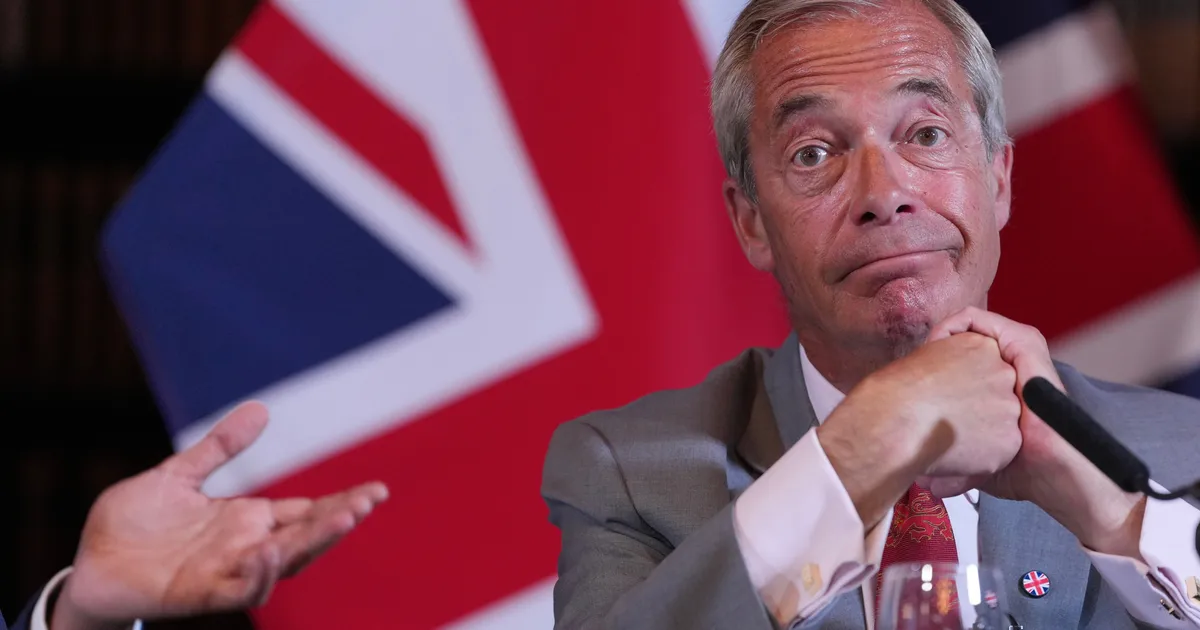
Reform UK has slumped to third place in a new opinion poll.
In a fresh blow to Nigel Farage ahead of Thursday’s by-election in Clacton, the Lord Ashcroft survey showed support for the party has fallen to 18%.
That is down 3 points on the Tory peer’s previous poll a month ago.
At the same time, the Conservatives have gone up by 2 points to 23%, while Labour is up 6 points to 27%.
The poll is further evidence that Labour is enjoying a bounce in popularity under new prime minister Andy Burnham.
It will also be welcomed by Tory leader Kemi Badenoch, who has won praise in recent weeks for her improved performance.
But the poll is a further reality check for Reform, who have come under pressure over the financial arrangements of both Farage and the party itself.
It emerged in April that Farage had not declared a £5 million gift he received from Thailand-based crypto billionaire Christopher Harborne shortly before he ran for parliament in 2024.
Parliment’s standards commissioner launched an investigation, but that was put on hold when Farage resigned as MP for Clacton to trigger a “people versus the establishment” by-election in the seat.
He is expected to be re-elected when that takes place on Thursday, although his only serious rival is Count Binface after Labour, the Tories, the Lib Dems and Restore Britain all refused to put up candidates.
Assuming he makes it back to Westminster, the standards probe will then re-start, which could see him suspended from parliament if he is found to have broken the rules.
The Lord Ashcroft poll confirms a trend which has seen Reform slip from top spot since Burnham became PM.
A poll of polls compiled by Election Maps UK puts Labour on 25.6%, with Reform second on 24.3%.
It is a far cry from the start of the year, when Reform led Labour by 10 points.
Both parties were neck-and-neck on July 24, but since then a succession of polls have put Labour in the lead.
A new poll released by YouGov on Tuesday put Labour up 2 points to 24%, with Reform down a point on 22% and the Tories also up 2 points to 21%.
Listen to Commons People, the podcast that makes politics easy. Every week, Kevin Schofield and Kate Nicholson unpack the week’s biggest stories to keep you informed. Join us for straightforward analysis of what’s going on at Westminster.

Andy Burnham has ordered one of his top ministers to find a way to keep the killers of PC Andrew Harper in prison.
The prime minister wants justice secretary Alex Norris to “work through further options” to prevent the early release of Jessie Cole and Albert Bower.
They were sentenced to 13 years for manslaughter in 2000, but are due to be freed in January under controversial measures to stop prisons running out of spaces.
Burnham has been hit with a furious backlash since it emerged that Norris and Cole would benefit from the early release scheme.
On Monday, Downing Street said it was “not possible” to exempt “one or two offenders” convicted of manslaughter from the scheme.
However, Norris will now look at ways to keep “a greater number of the the most serious offenders” behind bars.
A government spokesperson said: “The prime minister has asked the justice secretary to work through further options to keep a greater number of the most serious offenders in prison, including the killers of PC Harper.”
PC Harper was fatally injured when he got caught in a strap attached to the back of a car and was dragged down a country road as the killers fled the scene of a quad bike theft in Sulhamstead, Berkshire, in 2019.
Burnham announced he was pausing the early release scheme two weeks ago following public anger.
It was then announced that those convicted of rape, serious child sex offences and grooming offences would not be included in the scheme – but that meant that Cole and Bower would still be released.
Last week, the PM said he had “pushed to the very limits of what is possible to do without risking the prison system reaching capacity and collapsing”.
However, more than 880,000 people have signed a petition calling for PN Harper’s killers to remain in jail.
A government source told The Times: “[Burnham] has never accepted that he would be forced to choose between perpetrators of rape, grooming and the killers of police officers.
“The public wasn’t satisfied with that answer and neither was he.
“He has never accepted the line that it is impossible to prevent the release of the most serious offenders and has continued to push the system on a daily basis.
“He is now increasingly confident that a solution can be found to prevent the release of the killers of PC Harper.
“He has asked the justice secretary to present a plan to parliament that keeps a greater number of the most serious offenders in prison, including the killers of PC Harper.”
The early release changes were part of the Sentencing Act passed earlier this year that cut the minimum amount of time many offenders would have to spend in prison.
Those freed will face tougher probation conditions, including electronic monitoring, random drug testing and possible bans from driving, pubs and events such as football matches.
Listen to Commons People, the podcast that makes politics easy. Every week, Kevin Schofield and Kate Nicholson unpack the week’s biggest stories to keep you informed. Join us for straightforward analysis of what’s going on at Westminster.
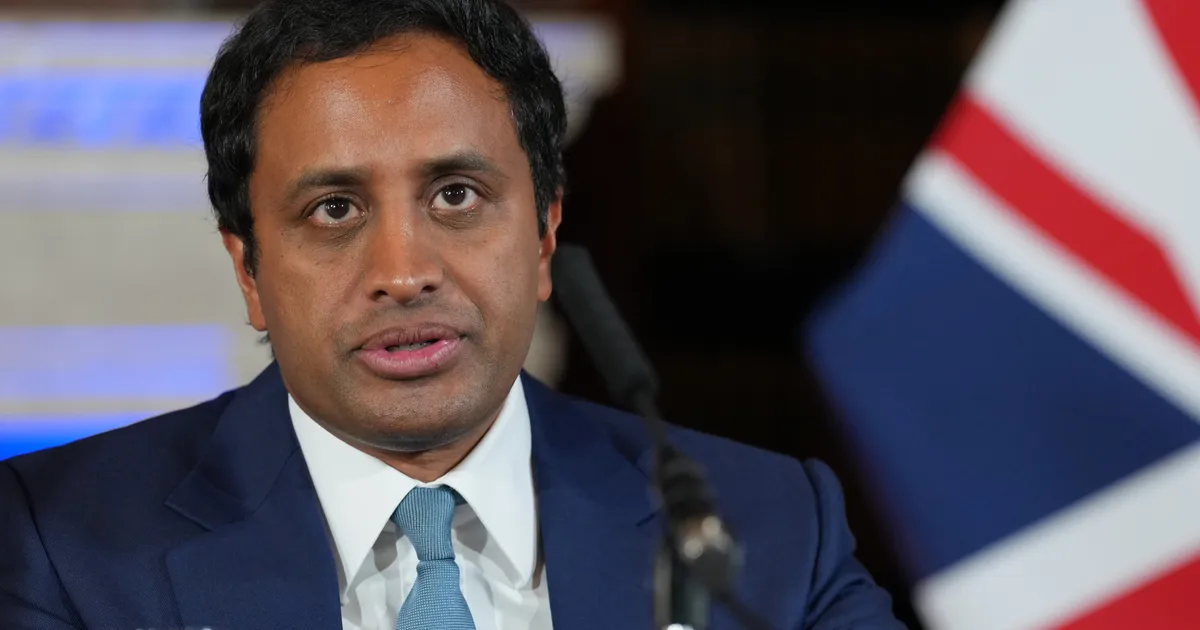
A senior Reform UK figure has condemned Zia Yusuf for calling a former Tory cabinet minister who served in the Army “a traitor to Britain”.
In a further sign of the tensions at the top of the party, Tim Montgomerie went public to say Yusuf’s comments were “inappropriate and counter-productive”.
Yusuf, Reform’s home affairs spokesman, hit out at former defence secretary Ben Wallace after he criticised the party’s plan to fix the shortage of prison spaces by sending foreign criminals abroad.
Writing on X, he said: “Incredible that this moron was defence secretary.
“Our policy today is in direct response to your government’s failures.
“If their home countries won’t take back, their citizens that are languishing in our jails, we are renting spaces in countries like El Salvador to put them.
“They will serve their full jail terms there, and will be banned from ever coming back to Britain.
“They may well include some of the thousands of Afghans you imported, including those who had not been vetted properly and including Taliban fighters (!).
“You know, the ones you took a super injunction out to keep secret from the British people? That’s why I call you a traitor to Britain. You fit the dictionary definition.”
But Wallace hit back: “Oh look a lesson from a man who never put a uniform on…just worked at bank.
“A man who is literally making policy and facts up.”
Commenting on the spat on X, Montgomerie – a leading political commentator who quit the Tories to join Reform – said Yusuf’s language “isn’t acceptable”.
He said: “I don’t agree with Ben Wallace on this issue but Zia’s language and attitude towards any opponent is inappropriate and counter-productive.
“Opponents are opponents… they aren’t enemies… or “moron”s. One of the biggest question marks over Nigel Farage’s leadership is whether he brings Zia under control.
“ZY is a man of huge talents but too much of his social media output is intemperate and reinforces Reform’s number one problem: our negative tactical voting challenge.”
Montgomerie went on to say that he had raised the issue of Yusuf’s language “privately and repeatedly” with both him and Farage.
But despite his comments, Yusuf doubled down on his attack on Monday night.
Responding to Wallace on X, he said: “You imported thousands of Afghans to Britain without proper vetting, at a cost of billions to the British taxpayer.
“Some were literal Taliban fighters, others were kicked out of the Afghan army for sexual misconduct. You flew them to Britain in secret. You took out a superinjunction to keep the British people in the dark.
“PS: you want to talk about banks? You have made vast sums by hawking yourself out to private banks – where you then viciously attack Nato allies. Your actions constitute treachery, and many serving in the military use that word to describe you.”
Following the alleged murder of Ann Widdecombe, Yusuf called for an end to the “hostility” aimed at Reform, which he said was putting their politicians at risk.
Listen to Commons People, the podcast that makes politics easy. Every week, Kevin Schofield and Kate Nicholson unpack the week’s biggest stories to keep you informed. Join us for straightforward analysis of what’s going on at Westminster.

President Donald Trump is facing criticism for using the press and others aboard Air Force One as decoys last month when he faced a threat from Iran ― all while reportedly dodging that threat himself.
The Washington Post and The New York Times on Monday reported that last-minute travel changes on July 8, as the president left a Nato summit in Ankara, Turkey, were far more extensive than the public had been led to believe.
Trump had arrived in Turkey on his new plane, a $400 million gift from Qatar. On departure, however, he sent that plane ahead to a US military base in the United Kingdom. Trump, his staff and the media then boarded an older Air Force One plane.
But Trump was not on that older Air Force One plane when it took off.
Right after boarding, he hid in a catering container truck, which took him to a third aircraft ― a US military C-32A ― while the press and some of his staff stayed aboard the previous Air Force One, all while letting them remain under the impression that he was aboard as well.
Once all three planes were on the ground in the UK, Trump secretly returned to the older Air Force One aircraft and exited as if he had been there the whole time. Everyone then returned to the Qatar-gifted jet to complete the journey back to the United States, according to the reports.

Trump not only didn’t disclose the ruse to the media on the plane he left behind, but later made light of the situation when reporters asked why they had to keep the shades down when the plane was in Turkey. He said it was because they had been aboard a “dangerous flight” due to the threats he was facing from Iran.
“But if I go, you go. Right?” Trump said. “So perhaps someday you want to change professions.”
Critics called out the president for placing the press and others aboard the original plane at risk while dodging the danger himself via his catering truck swap:
“Lots of people like reshuffles, but they like them because it’s news for a week… then they get bored afterwards” were Kemi Badenoch’s words on whether we could expect a reshuffle in light of Burnham’s accession to Number 10.
She was right. Lots of people do like reshuffles, but a group who most definitely do not are our members. Our latest survey shows that respondents are largely in favour of Badenoch’s top team – with all the Shadow Cabinet members sitting within positive territory.
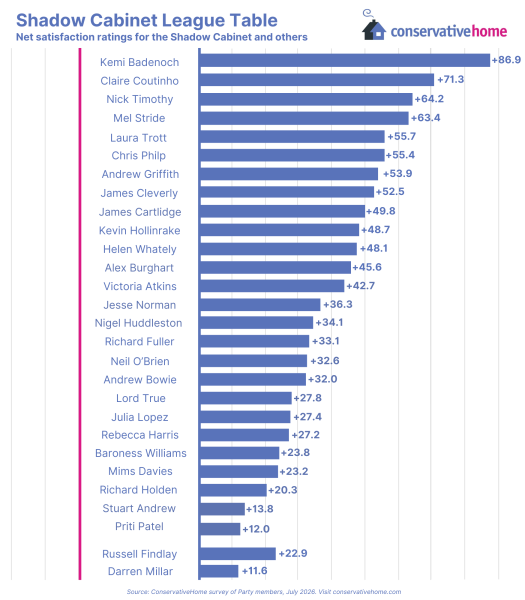
Badenoch, rather unsurprisingly, tops the poll with an approval rating of +86.9, her highest on record and a jump of +2 since May. She’s followed by the usual ensemble of Claire Coutinho and Nick Timothy, who sit on +71.3 and +64.2 respectively. The two have switched places since our last poll, perhaps a nod to the greater focus being paid to the North Sea as of late.
Heading down the list we see Shadow Chancellor Mel Stride come in at fourth place, with a rating of +63.4 followed by Shadow Education Secretary Laura Trott on +55.7 and Shadow Home Secretary Chris Philp on +55.4. Braving French gunfire does wonders for one’s popularity.
Then follows an array of MPs who occupy the middle ground of the poll, sitting around the +40 and +50 mark. Griffith and Cleverly fall just north of +50, whilst the likes of Atkins, Burghart and Cartlidge are perched in the +40s, seeing very little change from the previous ranking.
Heading further down the list and into the territory of +30 comes individuals such as Neil O’Brien, Andrew Bowie and Nigel Huddleston – with the latter two seeing a slight bump in their score since May.
Yet further down and approaching the single digits are Shadow Foreign Secretary Priti Patel and Shadow Health Secretary Stuart Andrew, who are on +12 and +13.8 respectively. It’s an improvement for Andrew, who in May ranked last with +9.4 – the only Shadow Cabinet member in the single digits at the time. Patel, meanwhile, has seemingly soured with members – dropping from her previous rating of +15.7.
Burnham’s reshuffle was seen by many as having provided a green light for Badenoch, and for her to move people around without fear of too significant an amount of bad blood. But she opted not to pull the trigger, and the membership appears rather content with her decision.
Her position at the top of the table is unsurprising, and reinforces the narrative that she will lead the Tory charge into the next general election, whenever one comes. Her ‘say it how it is’ attitude is resonating with the membership, and her hardline stance on the ECHR and net-zero has only served to improve her standing with them.
Whether these numbers will hold up going into our next survey remains an open question. Badenoch’s decision to stand by Joshua Bonehill-Paine, alongside her ill-received letter to the residents of Clacton were uncharacteristic, unforced errors, that may well eat into her favourability come next month.
For now, however, she remains ever popular with the membership and retains a net positive favourability rating – the Keminisation of the party appears to be well underway…
The post Shadow Cabinet League Table: Badenoch storms yet further ahead appeared first on Conservative Home.

Meghan Markle Accused Of Copying Kate Middleton’s Cape Dress Style At Recent Canada Gala Event Today

Sec Reg Crypto Proposal What the Aug 14 Sec Vote Means for Crypto

Anne Hathaway Dismisses Speculation Her Pregnancy Bump Is Fake


-

 Fashion4 days ago
Weekend Open Thread: Mattifying Sunscreen
-

 Fashion4 days ago
Frugal Friday’s Workwear Report: Cap-Sleeve Pointelle Crewneck Sweater
-

 Sports5 days ago
Jordan Coyle & Cordiamo take Laya Arena Stakes at RDS
-

 News Videos3 days ago
Can Astrology Help Find Gold and Silver Trends? A Financial Astrology Guide
-
 Business5 days ago
US stocks: Dow closes at record on Mideast optimism; SpaceX, AMD drag Nasdaq
-

 Politics5 days ago
Reform UK And Greens Sink To Lowest Favourability Ratings To Date
-

 Business6 days ago
Nvidia Stock Climbs 2.5% as Chip Sector Rally Builds Ahead of AMD Earnings, Nvidia’s Own Report Looms
-

 Tech6 days ago
OpenAI, Anthropic AI agents targeted real people and systems in cyber tests
-

 Crypto World7 days ago
Polymarket targets $20 billion valuation as competition heats up in prediction market sector
-

 Business5 days ago
Supply chain issues impact Ingredion
-
 Crypto World7 days ago
CLARITY Act Senate Vote Locked In, But 60-Vote Hurdle Looms Large
-

 Tech4 days ago
Rinn Pharma & Biopharma to join NordicPharmaTrain network
-

 Business2 days ago
How to Start a Cleaning Business: A Step-by-Step Guide
-
 Crypto World6 days ago
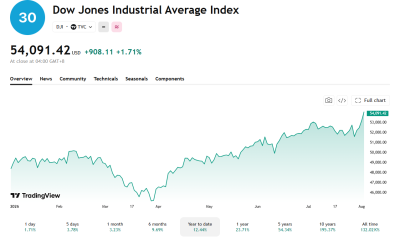
Dow and S&P 500 Hit Records on AI Earnings: When Will the Bubble Burst?
-

 Business2 days ago
Datadog: Best Of Breed For Multiple Reasons
-

 Business2 days ago
BDC Weekly Review: Private BDC Q2 Numbers Are Strong
-
Crypto World7 days ago
Trump Administration Plans Ban on New Chinese AI Data Center Components: Report
-
 Crypto World6 days ago
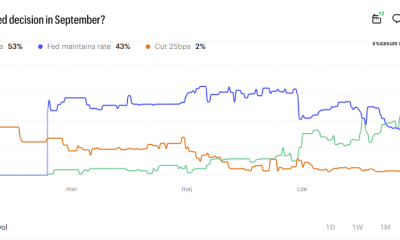
Dollar Index Trapped at 100 as Hawkish Fed Meets Official Selling
-

 Business6 days ago
McDonald’s (MCD) Q2 2026 earnings
-

 Fashion6 days ago
The Bright Side of Black and White
You must be logged in to post a comment Login