Connect with us

NewsBeat

Dustbowl Britain: Heat health alerts issued for all of England as 36C heatwave arrives and almost three-quarters of country is plunged into drought

Published

on

The Met Office forecast for London shows highs of 34C tomorrow and 35C on Thursday

Britain’s sixth heatwave of the year will build from today to a 36C peak this Thursday – with no rain in the forecast and almost three-quarters of England now in drought.

UK Health Security Agency (UKHSA) amber heat health alerts will be active for most of England from this morning until Friday evening, warning of a ‘rise in deaths’.

The Government urged people to stay safe by drinking plenty of water, checking on vulnerable friends and family and avoiding the sun at the hottest part of the day.

Highs of 26C in London, 28C in Manchester and 29C in Cardiff are expected today, before the mercury soars in some areas to 34C tomorrow and 36C on Thursday. Friday is likely to hit at least 30C, before a slight drop to 26C across this weekend.

Advertisement

The Met Office is considering issuing an extreme heat warning, after doing so in the June heatwave – which was the first time such an alert had been issued in four years.

It comes as the Environment Agency (EA) said 71 per cent of England is experiencing a ‘flash drought’ as a dry start to August followed the country’s driest July on record.

While there is no meaningful rain in this week’s forecast for drought-hit areas of England, meteorologists have spotted early signs that showers could move across the country on Sunday – bringing the first proper rain to southern areas in two months.

Met Office chief forecaster Jason Kelly said: ‘Heat will gradually build this week, with temperatures reaching into the mid-30Cs in what will be a fairly widespread heatwave for England and Wales.

Advertisement

The Met Office forecast for London shows highs of 34C tomorrow and 35C on Thursday

Dry grass surrounds Brockwell Lido in south London yesterday amid the ongoing hot weather

Dry grass surrounds Brockwell Lido in south London yesterday amid the ongoing hot weather

Met Office satellite view from May 23
Met Office satellite view from yesterday

Met Office satellite views show the transformed landscape from May (left) to yesterday (right)

Advertisement

Advertisement

A UK Centre for Ecology and Hydrology map shows the extent of the drought across England and Wales, by displaying current soil moisture levels compared to the historical average

A UK Centre for Ecology and Hydrology map shows the extent of the drought across England and Wales, by displaying current soil moisture levels compared to the historical average

Advertisement

‘The driver for this week’s heat is high pressure, this becoming dominant over the next day or so, bringing plenty of sunshine and allowing temperatures to build day-by-day. 

‘Southerly or southeasterly winds will also tap into the hot conditions over Europe, meaning we’re looking at further notable heat for many this week, likely peaking on Thursday.’

UKHSA amber heat health alerts have been issued for the Midlands, South East, North West and South West of England, while a yellow alert will be in force for the North East.

The amber alerts warn of ‘significant impacts’ across health and social care services due to the heat. This includes a ‘rise in deaths, particularly among those aged 65 and over or with health conditions’. 

Advertisement
TOP TEN HOTTEST DAYS IN BRITAIN – INCLUDING TWO IN JUNE 2026
1 40.3C July 19, 2022 Coningsby, Lincolnshire
2 38.7C July 25, 2019 Cambridge
3 38.5C August 10, 2003 Faversham, Kent
4 38.2C July 18, 2022 Pitsford, Northamptonshire
5 38.0C June 26, 2026 Lingwood, Norfolk 
6 37.8C July 31, 2020  London Heathrow
7 37.1C August 3, 1990 Cheltenham, Gloucestershire
8= 36.7C August 9, 1911 Raunds, Northamptonshire
8= 36.7C July 1, 2015 London Heathrow
8= 36.7C June 25, 2026 Merryfield, Somerset

The latest heatwave is set to subside over the weekend and bring fresher air and rain – although this is not expected to make up for the shortfall in recent months.

Sarah Davies, head of environment and energy at the Met Office, said: ‘Forecasts for the remainder of August and into September suggest a good deal of dry weather is expected, mixed with some unsettled spells.

‘While some areas may see useful rainfall at times, there is currently no strong signal for a sustained period of widespread rainfall, with below-average rainfall more likely than above-average for the period as a whole.’

Examining the possibility of rain later week, BBC lead weather presenter Simon King wrote: ‘We have to look towards Sunday, where there are some signs of some rain coming into the UK from the Atlantic.

Advertisement

‘Low pressure bringing rain-bearing weather fronts will move in across Wales and southern England and – for some – a spell of rain.

‘While this does not currently look to be particularly heavy or persistent, there could be the first bit of proper rain for many in nearly two months.’

This summer has been one of extreme heat and dry conditions, with two record-breaking heatwaves in May and June that led to the deaths of more than 2,800 people.

This was followed by two further heatwaves in July, and a fifth was confirmed last week.

Advertisement
An aerial view of the dry grass at Radnage Recreation Ground in Buckinghamshire yesterday

An aerial view of the dry grass at Radnage Recreation Ground in Buckinghamshire yesterday

Dried and yellowed grass at Parliament Square in London yesterday amid drought conditions

Dried and yellowed grass at Parliament Square in London yesterday amid drought conditions

The artificial hockey pitch at Marlow Hockey Club and the desiccated cricket pitches yesterday

The artificial hockey pitch at Marlow Hockey Club and the desiccated cricket pitches yesterday

The UK has been struggling with the impact of extreme weather including drought, heatwaves and wildfires.

Advertisement

Some 45million people are in drought-stricken areas, and 27million customers are under hosepipe bans as rivers and reservoirs run low.

Rainfall in July ranged from 1 per cent of the average in the South East to 26 per cent in the North West. Some parts of Hampshire, Isle of Wight and West Sussex have not had rain for 59 days.

Farmers have warned of a ‘brutal harvest’ for crops and a lack of feed for livestock, and there have been warnings of food price inflation shocks later in the year as a searing summer across Europe feeds through from fields to supermarket shelves.

Meanwhile firefighters continue to battle a series of fires across the UK, including one in the New Forest National Park which began in a van and spread to nearby heathland.

Advertisement

Families were forced to abandon their cars on Sunday and flee for their lives after police feared the fuel-laden vehicles could become ‘bombs’ if caught in the flames, and told occupants to flee to ‘stay alive’.

Dozens of fire crews fought to control the blaze, which leapt through acres of ‘tinderbox bracken’ by the A31 near Ringwood in Hampshire.

The area hit by the blaze is protected heathland and home to a number of rare species. Hampshire Fire and Rescue Service said crews had worked overnight as more than 120 firefighters attended the scene.

Elsewhere, South Wales Fire and Rescue Service said crews were attending ‘multiple wildfire incidents’, including at Cwmavon Woods in Blaenavon, Wattsville in Sirhowy Valley and Abernant in Aberdare.

Advertisement
Advertisement

The EA said yesterday that the East Midlands, Lincolnshire and Northamptonshire, Kent and East Sussex, and Solent and the South Downs have become the latest areas to move into drought.

A ‘flash drought’, which the country is experiencing, is one which develops very quickly because of a combination of very low rainfall and high temperatures.

The announcement came after a meeting of officials, water companies and farming leaders under the National Drought Group, which warned that all regions of the country are experiencing pressure on their water resources, with impacts on agriculture, public water supplies and the environment.

Last week, the EA said half of England had plunged into flash drought – one which develops very quickly because of a combination of very low rainfall and high temperatures – and the latest announcement means 71.3 per cent of the country is in drought.

Advertisement

Water firms imposing hosepipe bans in 2026

  • Affinity Water
  • Anglian Water
  • Cambridge Water
  • Dŵr Cymru Welsh Water
  • Essex and Suffolk Water
  • Southern Water
  • South East Water
  • South West Water
  • Thames Water

<!- – ad: https://mads.dailymail.co.uk/v8/de/news/none/article/other/mpu_factbox.html?id=mpu_factbox_1 – ->

The North East and Yorkshire have moved to ‘prolonged dry weather’ status, the stage before drought, and nowhere in England is in ‘normal’ status, the EA said.

Downing Street defended the Government’s response to the heatwave and wildfires, insisting it was focused on the immediate response and long-term resilience to increasing extremes, from working with the National Drought Group to backing major investment in infrastructure such as reservoirs.

After the latest meeting of the National Drought Group, its chairman Tony Grayling, strategic drought lead at the Environment Agency, said: ‘Drought conditions are worsening and will continue to do so until we see significant and sustained rainfall.

Advertisement

‘We know the hot and dry weather is taking a real toll on farming and there will be long-lasting impacts on our environment.

‘We want everyone to stay safe and hydrated over the summer, but we need everyone’s help in using a little less water to make sure our current water reserves last. Every drop we can save is a drop more for your local farmers, local wildlife and local rivers.’

Water minister Emma Hardy, who attended the National Drought Group, said: ‘We know how challenging this summer has been, especially for our hard-working farmers who are at the sharp end of climate change and an increasing number of floods and droughts.’

The UK Health Security Agency (UKHSA) has issued amber heat health alerts across England

The UK Health Security Agency (UKHSA) has issued amber heat health alerts across England

Advertisement
A UK heatwave is official when a location records at least three consecutive days of daily maximum temperatures which meet or exceed a specified threshold - which varies by region

A UK heatwave is official when a location records at least three consecutive days of daily maximum temperatures which meet or exceed a specified threshold – which varies by region

She said the Government was working to make it easier for farmers to build more onsite irrigation reservoirs – something farming leaders have been calling for – and was delivering ‘long-term change’ in the water industry to reduce leaks and deliver nine new reservoirs.

‘As we move through this period of drought, I expect water companies to take every available step to minimise leakage and support customers in using water wisely,’ she said, as she thanked people for abiding by the hosepipe bans.

The EA said rivers, reservoirs and groundwater continue to decline, water temperatures are rising, leading to more fish rescues, 245 wildfires have been reported on protected sites this year, and important wetland and peatland habitats are drying out.

Advertisement

Only 14 per cent of rivers are at normal levels and more than a fifth (22 per cent) are exceptionally low, including the Avon, Wye, Ely, Ouse and Exe, while reservoir levels have fallen to 69 per cent – well below normal for the time of year.

The agency added that the latest drought is the third in the past five years, after 2022 and 2025, and mainland Europe is also struggling with heatwaves, dry weather and low river flows.

Meanwhile, Chessington World of Adventures Resort will reopen today after being forced to shut yesterday due to a water outage.

Thousands of disappointed families were turned away from the theme park in Surrey after a burst water main forced it to close in the middle of the summer holidays.

Advertisement

Thames Water, which supplies Chessington, said engineers worked to fix a burst main on a road leading into the attraction that was affecting customers in the KT9 area.

Households across 10 postcode areas in east London and Essex also faced water disruption after a large Thames Water main burst in South Woodford on Sunday morning.

Pipe damage left some homes and businesses across the E4, E18, IG2, IG4, IG5, IG6, IG7, IG8, IG9, and RM4 postcodes facing low water pressure or no running water.

Thames Water apologised and said it was carrying out emergency repair work.

Advertisement

Source link

Continue Reading
Click to comment

You must be logged in to post a comment Login

Leave a Reply

NewsBeat

Woman, 20, whose ‘crippling’ pain was dismissed by doctors after holiday is left fighting for life

Published

on

Manchester Evening News

Lottie Perks went on a family holiday to Brazil – but within days she was struck down with what seemed like a stomach bug

A mum says medical professionals ‘dismissed’ her concerns as ‘overly anxious’ behaviour before her daughter’s supposed holiday tummy bug proved to be a ruptured appendix – and life-threatening sepsis.

Advertisement

Now 20-year-old Lottie Perks had recently started university and had been looking forward to a much-needed family getaway. However, just days into the trip, she started suffering ‘crippling’ stomach pain and vomiting.

Yet 24 hours afterwards, she had recovered and the family resumed enjoying their holiday in Brazil. After returning home, though, it became obvious Lottie, from London, still wasn’t right.

Click here to get the biggest stories straight to your inbox in our Daily Newsletter

“She began shaking uncontrollably and I noticed her lips, hands and feet were freezing cold,” her mum, Laura, said.

Advertisement

“Her feet were white and her lips were blue. And her temperature was weirdly very low. Her face and limbs were swollen and flushed. I had been trying to trust the doctors before this and convince myself they were right.

“But, at this point, it was clear something was very wrong. I was terrified. And then, she collapsed in my arms as her eyes rolled back in her head. Her blood pressure plummeted and her heart rate raced dangerously high. I thought this was the end.”

‘They said they’d done all they could’

Laura had experienced a bout of sickness after returning from the trip in April 2025, too. And so, the family simply assumed Lottie had contracted the same bug.

But just hours after coming home, the stomach pain and vomiting started up again, coupled with bleeding and diarrhoea. They went to A&E, concerned, but nothing was found to be wrong.

Advertisement

Laura said: “She was very pale, weak and physically could not stop vomiting even though there was nothing left in her.

“Lottie was placed on an IV drip for three hours while being observed, but was ultimately discharged with a gastro bug, as her blood tests showed normal levels of inflammation. That night, and the next day, she didn’t improve and became much weaker.

“I called the hospital and asked if it could be appendicitis, but they said everything was fine.”

Advertisement

Still worried, Laura rushed her daughter back to hospital and begged for her to be seen again. Doctors allegedly claimed she was simply dehydrated and that they needed to leave the hospital – until an unusual rash was spotted.

After further checks, Lottie’s legs had started to turn a mottled purple and her body was severely swollen. A CT scan was ordered and it was found that her appendix had burst, causing sepsis.

Laura said: “I knew something was clearly wrong and before they took me seriously, I felt powerless. She had emergency surgery, but it was too late, the sepsis had spread. When she collapsed in my arms, that was her going into septic shock.

Advertisement

“And the start of her organs ceasing to work. I thought she’d be OK after the operation But the look on the surgeon’s face afterwards told me otherwise. When they explained about the sepsis and septic shock, and said they’d done all they could do, I felt powerless.”

Doctors rushed to give Lottie antibiotics, as there was a one hour window before her organs would start to fail completely. As nothing else could be done, it was a waiting game for a week. Luckily, the teen recovered and was slowly taken off medication, as well as machines, keeping her alive.

And, despite her life being on the line, she managed to return to university and pass her first year with flying colours. Now, she still suffers with bouts of sickness, stomach pain, dizziness, fatigue and difficulty keeping warm.

Advertisement

‘Sepsis can become fatal so quickly’

The emotional toll is felt by not just Lottie, but her mum, too. To help raise awareness, the pair are working with Sepsis Trust to warn others of the signs to look out for.

And, to never dismiss whether worrying symptoms could be sepsis.

Laura added: “Sepsis doesn’t need a cut, injury or an appendix bursting. It can be from something as simple as a virus. The symptoms are so subtle and confusing; but can become fatal so quickly.

“Having that one question in your mind when advocating for a loved one could save their life. We both suffer from nightmares following the experience. It’s difficult to look at photos from that time.

Advertisement

“And it’s hard not to associate the trip with what happened. We’ve always enjoyed relatively adventurous holidays and discovering further away places. But this has definitely put on the radar the possibility of a medical emergency while we’re away.

“And so, as a family, we haven’t been away too far since. We’re trying not to let the worry and her vulnerability take over too much from enjoying life.

“It’s forever changed us, but we’re so incredibly lucky to have caught it just about in time. I was treated like an overly anxious mother – but that’s what saved my daughter’s life.”

Lottie added: “Initially, I was very scared. I tried to stay calm and thought it was probably a gastro bug or food poisoning.

“It quickly turned into frustration because I was in so much pain and it was clearly where my appendix was. There was a lot of fear; I was terrified. Genuinely feeling like you’re dying and can’t explain or get anyone to understand was [infuriating].

“I still don’t think I really understood what was happening while I was in the ICU. I remember being frustrated that I couldn’t go up to the normal ward. But this was obviously because my organs weren’t fully functioning on their own still.

“Another part of the recovery that was quite frustrating was the loss of all my muscle. I remember just doing one lap of the ICU when I was well enough and being completely exhausted and my legs feeling so tired.

Advertisement

“Going from being someone quite active, and having to come to terms with this new situation, was quite a shock. Looking back on it now, I just feel incredibly lucky and almost proud of my body for managing to push me through it.

“But that gratitude and appreciation also comes with a huge frustration that it could’ve been avoided or acted upon sooner. And I wouldn’t have had to have been in that position in the first place.

“But it taught me a lot and I’m obviously very grateful for all the doctors and nurses that helped me. I have learned to advocate for myself better and to speak out when something isn’t right.

“I also felt frustrated as just being young and female meant that so many things masked it – from doctors thinking I could be pregnant, toxic shock syndrome, period cramps. I wanted to explain that as women, we know what’s normal for us, and this clearly wasn’t normal.

Advertisement

“I understand that various possibilities needed to be ruled out; but I wish someone had considered rapidly progressing sepsis as one of those a little sooner.

“That said, I am well aware that I am one of the very lucky ones. I’ve been shocked to read all of the ways it could have ended differently.”

Source link

Advertisement
Continue Reading

NewsBeat

Octopus Energy tells customers to avoid using electricity during the eclipse as solar power generation plummets

Published

on

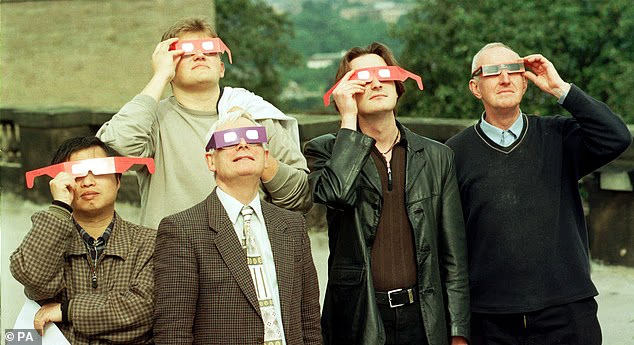
Spectators at Edinburgh's Royal Observatory view the last total solar eclipse in August 1999

The UK’s biggest energy supplier is encouraging Brits to use less electricity during the solar eclipse tomorrow, because solar power generation will plummet.

Octopus Energy urged its eight million customers to delay using their washing machines, ovens, dishwashers and other plug-in devices between 6pm and 8pm.

Tomorrow’s hotly-anticipated eclipse will see solar generation plunge at a crucial time of day when electricity demand rises as millions of people come home from work.

Octopus told customers that the eclipse will ‘briefly knock out a chunk of Britain’s solar power’ and possibly require more fossil fuel power generation.

Advertisement

Spain, a country which gets more than half of its electricity from wind and solar, was plunged into blackouts in April 2025. Critics initially blamed a sudden plunge in solar power generation, but experts later put it down to so-called ‘voltage control issues’.

The National Energy System Operator, which runs the UK grid, said the eclipse could cut supply by up to 1.3 gigawatts tomorrow – enough to power about 500,000 homes.

Extra gas power stations may therefore have to be fired up, but Octopus said this need will be reduced if enough households delay using electricity for a short time.

The London-based company is therefore asking people to use less energy to avoid putting extra pressure on the grid at that point and increasing carbon emissions.

Advertisement

As an incentive, Octopus said those who use less electricity than usual during the two-hour window would get one hour of free daytime electricity this Sunday.

Bosses said solar power generated a record 14.4 per cent of Britain’s electricity last month, meaning two hours without sunshine will ‘leave a gap that has to be filled’.

The moon will obscure more than 90 per cent of the sun between 6.17pm and 8.06pm tomorrow, the most it has been blocked above the UK since the 1999 total eclipse. 

Advertisement

Spectators at Edinburgh’s Royal Observatory view the last total solar eclipse in August 1999

Advertisement

Octopus said it will monitor usage during the ‘Eclipse Session’ from customers’ smart meters tomorrow, and will then email successful participants on Saturday with the exact time – which will be at some point ‘in the late-morning, early-afternoon’.

Its chief customer officer Rebecca Dibb-Simkin said: ‘Many of us will be looking up at the sky on Wednesday evening to experience this once-in-a-generation event. But as the sun disappears, so will some of Britain’s solar generation, just as demand peaks.

‘By shifting everyday tasks like the washing machine or dishwasher until later, households can help reduce the need for gas power stations – and earn rewards for doing their bit.’

The company added that solar power generated a record 14.4 per cent of Britain’s electricity last month, meaning a ‘couple of hours without sunshine can leave a gap that has to be filled’.

Advertisement

Customers can also enter an Octopus photo competition showing what they did during the eclipse instead of being inside at home, with the chance to win free solar panels and installation or £12,000 in cash instead.

Neso said it has been planning for the solar eclipse for more than a year, ‘helping keep the electricity system balanced while the nation looks to the skies’.

Meanwhile the Met Office revealed Devon, Cornwall and the westernmost parts of Pembrokeshire in Wales are set to see the eclipse at its fullest, with a range of 94 per cent to 96 per cent of the sun obscured by the moon.

Plymouth in particular is forecast to see the moon cover 94.66 per cent of the sun at 7.16pm.

Advertisement

The rest of Wales, Northern Ireland, parts of the West Midlands and the South West, and the westernmost parts of Scotland can expect to see 92 per cent to 94 per cent solar coverage.

The Daily Mail's front page on August 12, 1999 following the last total solar eclipse

The Daily Mail’s front page on August 12, 1999 following the last total solar eclipse 

Another total solar eclipse visible from the UK in 1927 – pictured in Stoneyhurst, Lancashire

In Cardiff, the moon is forecast to obscure 93.24 per cent of the sun at 7.13pm while in Belfast it will cover 93.09 per cent of the sun at 7.08pm.

Advertisement

Skygazers in the rest of the UK will likely see the moon obscure 90 per cent to 92 per cent of the sun – with 91.79 per cent expected in Birmingham at 7.12pm, 91.41 per cent in London at 7.13pm, 90.74 per cent in Inverness at 7.03pm, 90.71 per cent in Edinburgh at 7.06pm and 90.22 per cent in Newcastle at 7.07pm.

Those most keen to catch a sight of the fullest possible solar eclipse should avoid the easternmost parts of the UK, where only 88 per cent to 90 per cent of solar coverage is expected.

These include the coasts of Norfolk, Yorkshire and Aberdeenshire, as well as the Orkney and Shetland Islands.

When will the eclipse be visible in the UK?

When to see the solar eclipse  
Location Eclipse starts  Maximum eclipse  Eclipse ends  
Edinburgh 18:08 19:05 20:00 
Glasgow 18:08 19:05  20:06 
Dublin  18:12  19:10  20:04 
Manchester  18:13  19:10 20:04 
Liverpool  18:13 19:10  20:04 
Birmingham  18:15 19:11  20:04 
Bristol  18:17 19:12  20:06 
London   18:17 19:12  20:06 
Cardiff  18:17 19:12  20:06 
Truro  18:18 19:16  20:10 


Advertisement

<!- – ad: https://mads.dailymail.co.uk/v8/de/news/none/article/other/mpu_factbox.html?id=mpu_factbox_1 – ->

Eye doctors urged people to avoid looking directly at the sun, with even brief exposure causing lasting vision damage.

Experts have warned that only special solar eclipse glasses that are ISO 12312-2 certified for the safest eye protection should be used to view the eclipse. But they have all but sold out online, or carry hefty delivery fees to arrive in time.

Advertisement

The Royal Greenwich Observatory told the public that regular sunglasses are not a safe enough method to view the cosmic phenomenon.

So-called eclipse glasses that do not carry the safety standards, or ordinary sunglasses, no matter how dark, should never be worn to view an eclipse, as they reduce glare, making it feel more comfortable to look at the sun for longer, but still allow harmful solar radiation to reach the retina.

Following the 1999 eclipse, the Royal College of Ophthalmologists reported around 70 cases of people experiencing vision problems after watching the eclipse. Around 40 per cent had looked at it for less than a minute.

The next time the moon obscures as much of the sun will be in 2081 and the next total solar eclipse in the UK will be in 2090.

Advertisement

Reykjavik in Iceland and Spanish cities A Coruna, Oviedo, Zaragoza, Bilbao and Valencia will see a total eclipse tomorrow, in which the moon fully obscures the sun.

In an added bonus for stargazers, the annual Perseid meteor shower reaches its peak tomorrow night. The shower is produced as Earth ploughs through a stream of dust left behind by Comet Swift–Tuttle.

Each tiny grain strikes Earth’s atmosphere at about 60km per second (37 miles per second), burning up in a brief flash that takes the appearance of a shooting star.

Source link

Advertisement
Continue Reading

NewsBeat

Molly-Mae Hague vows ‘this will be my last child’ and says she’s in ‘absolute survival mode’ as she details son Midas’ heartbreaking feeding issues

Published

on

Molly-Mae Hague has vowed her son Midas, 10 weeks, will 'be her last'

Molly-Mae Hague has vowed her son Midas, 10 weeks, will ‘be her last’. 

The influencer, 27, is already mother to daughter Bambi, three, with partner Tommy Fury – however, in her latest YouTube vlog, she insisted she will stop at two children due to the fact she is ‘in survival mode’ with a toddler and newborn. 

In the video, which was released on Monday, she revealed that Midas is struggling with feeding issues, leaving him ‘screaming’ in intense pain. 

Speaking on camera to her 2.09 million YouTube subscribers, she said: ‘I just, to be honest, I just feel so bad for mine just because this reflux thing is actually becoming like a massive issue for me – I’ve never, ever heard a baby scream like that.’

Advertisement

Reflux occurs when stomach contents flow back up into the food pipe, causing a baby to spit up milk during or shortly after a feed. 

Molly-Mae Hague has vowed her son Midas, 10 weeks, will ‘be her last’

In the video, which was released on Monday, she revealed that Midas is struggling with feeding issues, leaving him 'screaming' in intense pain

In the video, which was released on Monday, she revealed that Midas is struggling with feeding issues, leaving him ‘screaming’ in intense pain

Advertisement

Molly-Mae has been candid about her struggles with motherhood, frequently shedding light on Bambi’s behaviour. 

Since welcoming Midas in early June, she admits her baby days will be over as she is juggling her relationship while parenting a toddler and newborn. 

She said: ‘Like, peace and love and prosperity and all of that, but it’s just a lot, like, obviously, and I’m, like, I feel like I’m showing a lot of, like, oh, you know, I’m coping, I’m good, but also…

‘I’m having moments where I’m thinking 100 per cent, like, I’m so blessed and so lucky, but this will be my last child.’

Advertisement

Molly-Mae went on: ‘One for the books is to remember like that having a 10-week-old and a three-and-a-half-year-old, like is something that a lot of mums are doing and they have more children. I am so aware of that, but it is a little bit savage…

‘Obviously, it would be so not realistic of me to not talk about the highs and the lows, and yeah, I need you guys to understand that.’

On her battles to feed Midas, she lamented his struggles with reflux. 

She said: ‘I’ve never, ever heard a baby scream like that. And it like literally makes me want to cry. Like he’s crying, I want to cry…

Advertisement
The influencer, 27, is already mother to daughter Bambi, three, with partner Tommy Fury – however, in her latest YouTube vlog, she insisted she will stop at two children due to the fact she is 'in survival mode' with a toddler and newborn

The influencer, 27, is already mother to daughter Bambi, three, with partner Tommy Fury – however, in her latest YouTube vlog, she insisted she will stop at two children due to the fact she is ‘in survival mode’ with a toddler and newborn

She discussed the situation in the video

She discussed the situation in the video 

‘And it’s so just a lot like having a baby when it’s hard enough as it is, and then add like feeding digestive issues on top of that. And it’s just, it is a lot, but anyway.’

She admitted that the attempts at balancing the two kids meant she and Tommy are forced to spend their time apart until bed time.

Advertisement

She said: ‘I’m trying to get him in a routine, I’m trying to do the best thing for him, but equally, like, that’s not the best thing for Bambi…

‘[But] that means that we’re all tied to the house, unless we literally just do separate things with the kids, which is what we’re doing…

‘This is what I mean about just like, separate, being separate all the time, doing separate things with the kids, because it’s just, it’s not fair, I’m trying to get him in a routine, and this is where I’m like so torn.’ 

Source link

Advertisement
Continue Reading

NewsBeat

Three sports groups using movement to tackle isolation

Published

on

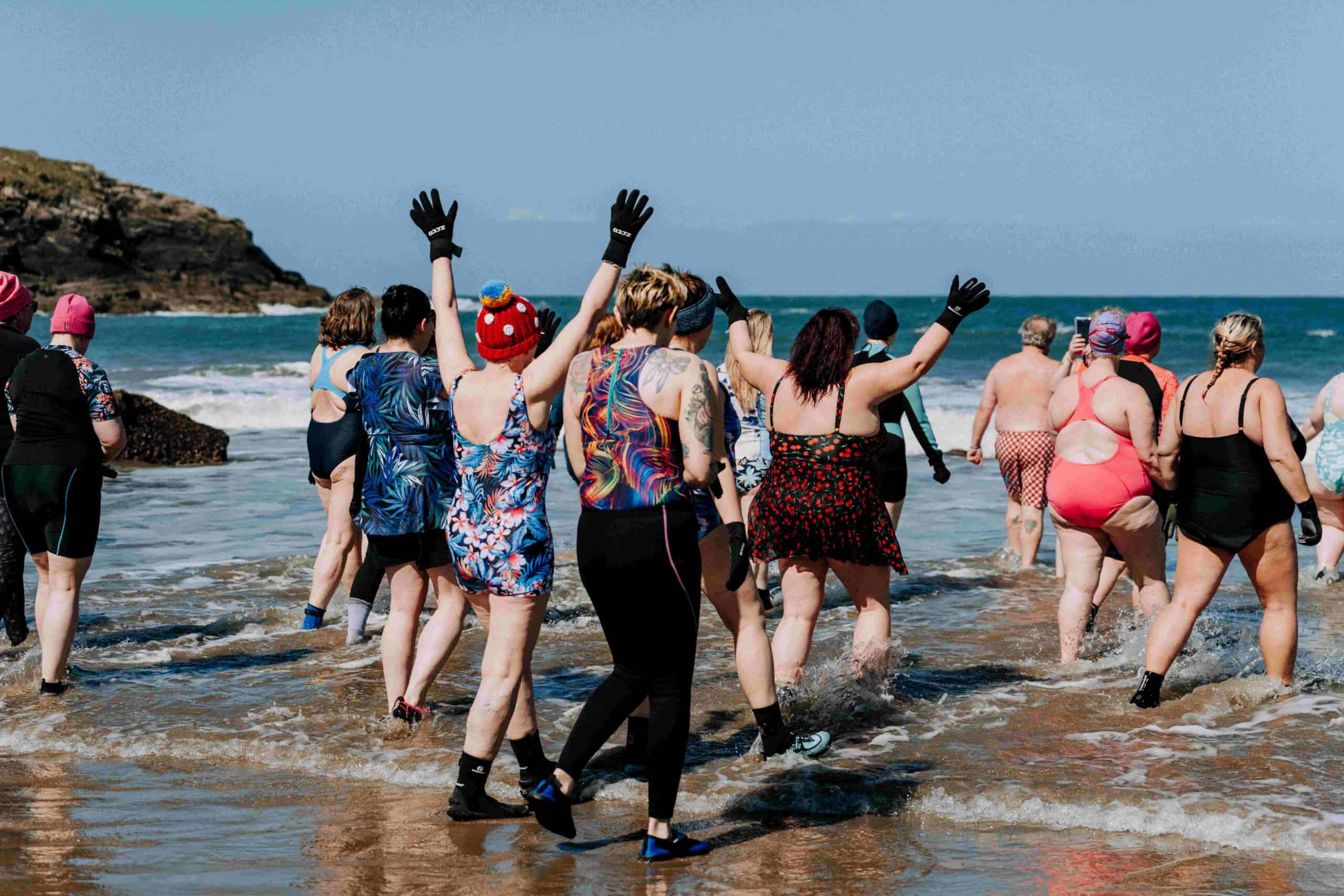
Three sports groups using movement to tackle isolation
3. GoodGym

GoodGym turns exercise into practical community action. Its members run, walk or cycle to help local projects and isolated older people, whether that means clearing a garden, sorting donations at a food bank or helping someone with a task they can no longer manage alone.

“GoodGym was founded on a simple idea that we could use being active to help people and strengthen communities, Ed Field, head of operations, said. “What we’ve seen is that the benefits go both ways and that the people participating feel healthier, more connected and more purposeful through helping others.”

Each session combines movement with usefulness, giving people a reason to get active and to keep showing up, while turning exercise into something that reaches beyond the person doing it.

Advertisement

Image: Laura Lewis
Main image: Ella Richardson

Source link

Advertisement
Continue Reading

NewsBeat

Firefighters to remain on scene of nature reserve fire for ‘days to come’

Published

on

Cambridgeshire Live

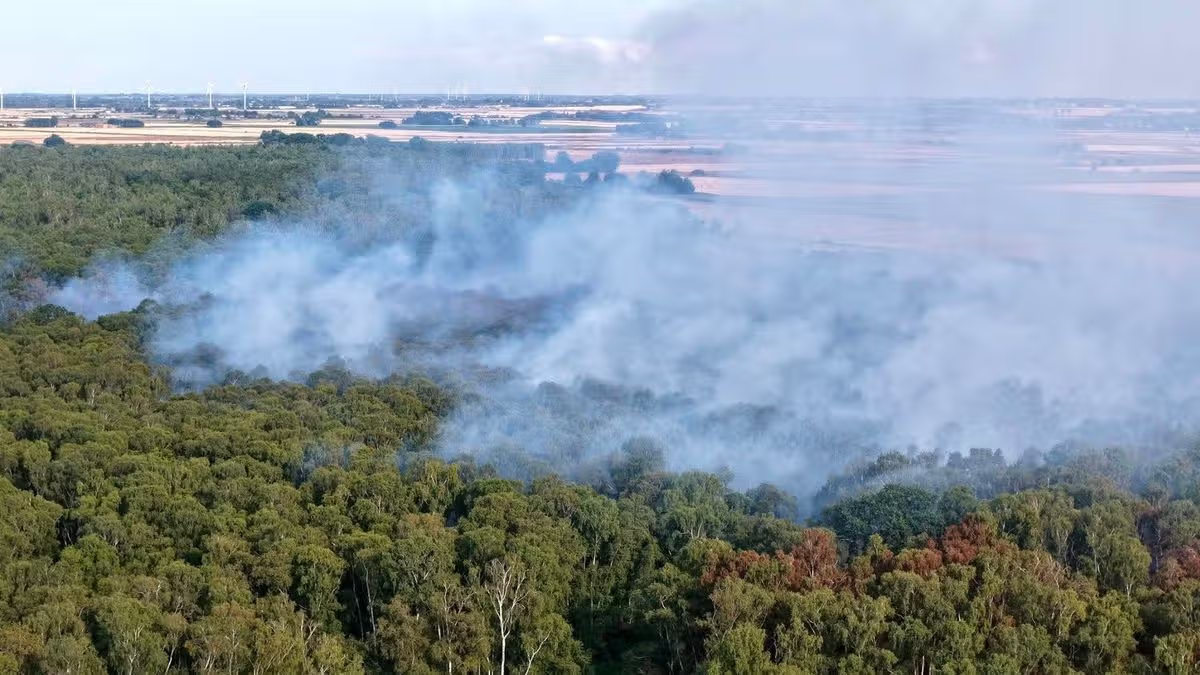
This is the second fire at the nature reserve within two weeks

Firefighters are expected to remain at the scene of a nature reserve fire for “days to come”. Cambridgeshire Fire and Rescue were called to a fire at the Holme Fen Nature Reserve on Saturday (August 8) at around 10.24am.

Advertisement

Firefighters have been continuing to tackle the fire over the last few days. Crews remain at the scene today (Tuesday, August 11).

A fire spokesperson said: “Firefighters have been at the scene overnight continuing to tackle the fire. Crews will remain on the scene throughout the day, and for days to come.”

This is the second fire within two weeks that firefighters have dealt with at Holme Fen. The cause of the first fire was deliberate.

Advertisement

The cause of the second fire hasn’t yet been determined.

Do you want more of the latest Cambridgeshire news as it comes in from across the county? Sign up to our dedicated newsletter to make sure you never miss a big story from Cambridge or anywhere else in the county. You can also sign up to our dedicated Traffic and Crime newsletters for the latest updates on the topics you are most interested in.

Source link

Advertisement
Continue Reading

NewsBeat

Trump hidden in catering truck in secret plane swap over Iran threat, reports say

Published

on

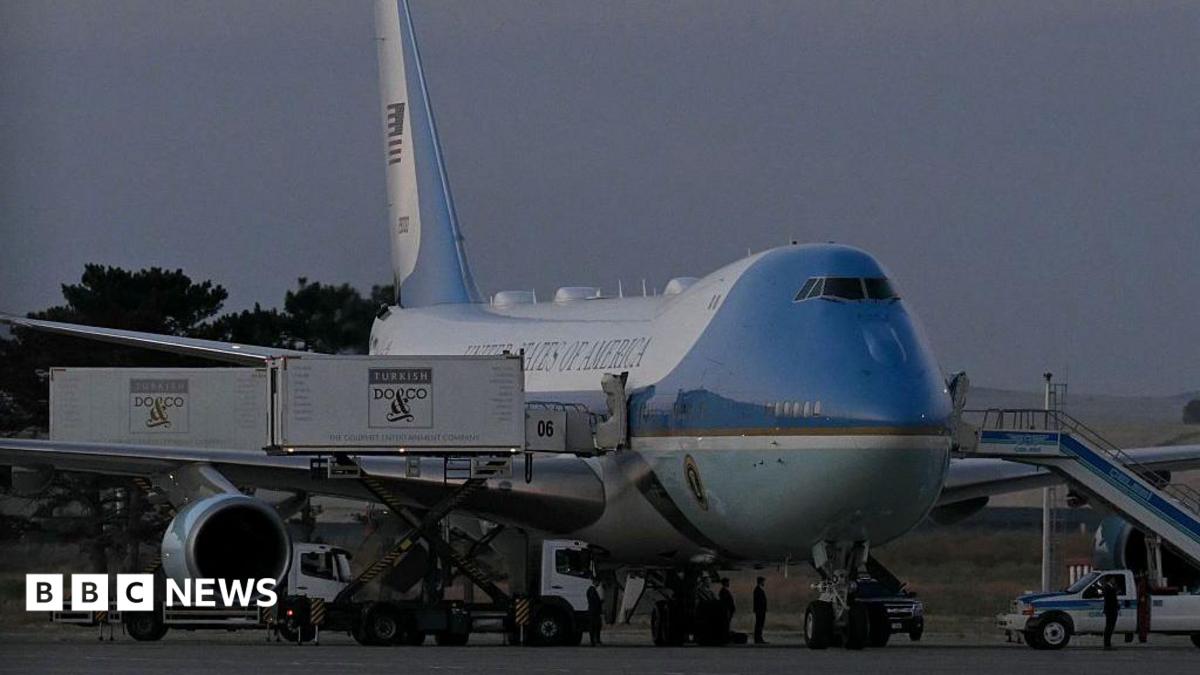
A catering truck parked alongside the old Air Force One jet prior to departure from Ankara

Donald Trump secretly swapped planes as he left a Nato summit in Turkey last month in response to a possible Iranian threat, US media report.

The US president boarded Air Force One in view of television cameras before being smuggled onto an elevated airport catering truck and transported to a military aircraft, without journalists and some White House staff on board knowing, the Washington Post said.

Officials told the BBC’s US partner CBS News that the US had detected a credible Iranian threat to fire a missile at the plane. The White House has not confirmed the secret switch.

Trump had earlier said he was Iran’s “number one target” during the summit in Ankara.

Advertisement

The clandestine manoeuvre came a day after the US renewed military strikes on Iran following a breakdown of negotiations between Washington and Tehran to end the war.

Trump had arrived in Turkey aboard a newer Boeing 747-8 donated by Qatar, but announced that he would leave on the old Air Force One “for old time’s sake”.

On 8 July, footage showed him boarding the presidential jet at Ankara airport. But according to the Washington Post, he was then secretly taken to a smaller C-32A military aircraft – a modified Boeing 757 often used by the vice president – via a catering truck which had been elevated to plane level on the opposite side to where he had boarded.

Defense Secretary Pete Hegseth boarded the C-32A separately using external stairs in an effort to make the flight appear normal, according to the newspaper.

Advertisement

Journalists and some White House staff boarded Air Force One and were reportedly told to close their window shades. They were unaware the president was no longer on board.

Trump then flew to the UK en route to the US, where he reboarded the old Air Force One and was seen descending from the aircraft after it landed at RAF Mildenhall. It is unclear how he moved from the C-32A back to the legacy jet.

Source link

Advertisement
Continue Reading

NewsBeat

Young man and woman killed in Gorton crash named for first time as suspect to appear in court

Published

on

Manchester Evening News

The man and woman were killed in the smash on Hyde Road

A young man and woman who died in a crash on a main road in Gorton have been named for the first time as Jack Cartwright and Natasha Denman.

Advertisement

The pair lost their lives in the crash on the A57 Hyde Road on August 5. Emergency services were called to the road, near the junction with Clumber Road, after a car hit a stationary digger at around 9.35pm.

Four people were inside the car at the time, a Greater Manchester Police spokesperson said previously. A young man and a woman, aged 23 and 24, sadly died at the scene.

Click here to get the biggest stories straight to your inbox in our Daily Newsletter

The man has now been named on official court documents as Mr Cartwright, while the woman has been named as Ms Denshaw. The car involved the crash has been identified in the court documents as being a Skoda Fabia.

Advertisement

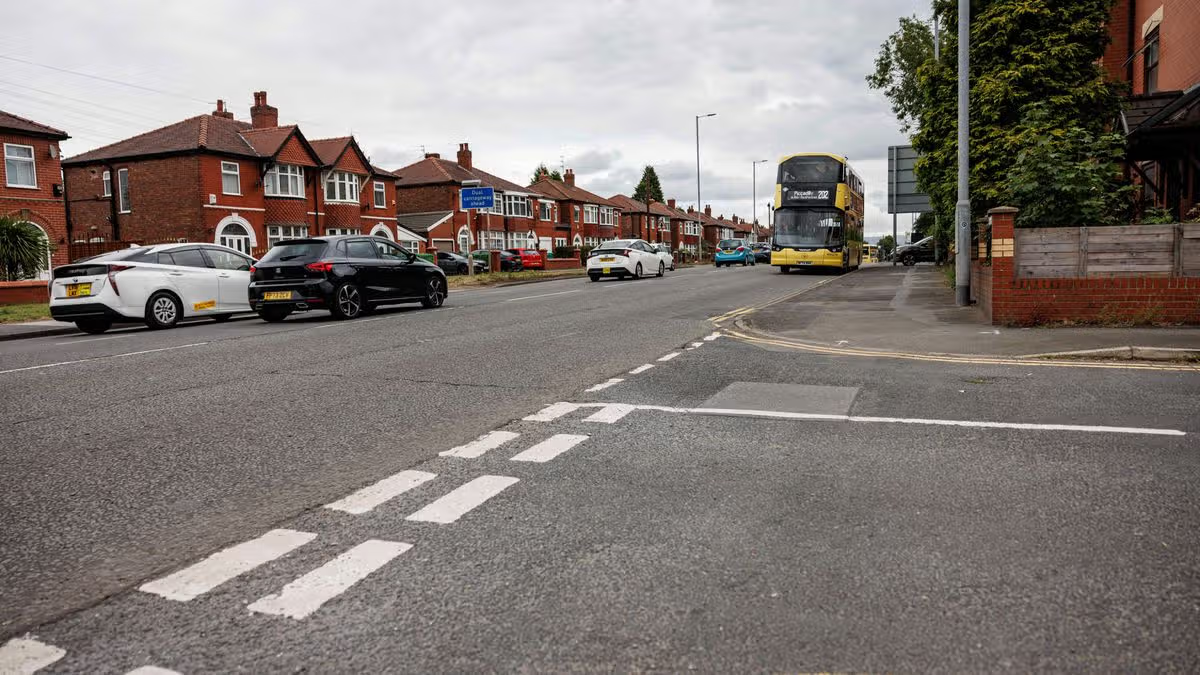
Apollo Simms, 26, of Tealby Road, Manchester, has been charged with two counts of death by dangerous driving and failing to provide a sample for analysis. He is due to appear at Manchester Magistrates’ Court today (August 11).

Another man who was arrested has been released on bail, police confirmed.

Source link

Advertisement
Continue Reading

NewsBeat

Andy Burnham government hit with major backlash after announcing student loan changes

Published

on

Manchester Evening News

The Government has announced major changes for those paying off student loans

The Prime Minister should consider scrapping student debt or making interest payments interest free to encourage more people into higher education, M.E.N readers have said.

Advertisement

Yesterday, the Government announced major changes to interest rates and repayment thresholds for anyone with a student loan.

The Department of Education published its new interest rates for undergraduate and postgraduate loans; the new repayment thresholds for Plan 1 loans; and the interest rates and deferment threshold for Mortgage Style Student Loans.

Click here to get the biggest stories straight to your inbox in our Daily Newsletter

The new interest rates are set to affect the RPI rates for student loans – the base inflation measure. The government uses the RPI figure from March each year to set the baseline for student loan interest rates starting in September.

Advertisement

Depending on which plan you are on, you will be charged RPI plus up to an extra 3%. In the update issued yesterday, it has been confirmed that RPI rates are 4.1% for anyone paying back their loan from September 1. The repayment threshold for Plan 1 loans has also been affected.

You can see a full breakdown of changes to the student loan repayment plans here.

‘This is so wrong’

Following the announcement, M.E.N. readers expressed their views on the current student loan system on our Facebook page.

Ellen Vdk said: “Make it 0% and then the government has more chance of getting the full amount back.”

Advertisement

Su Bo expressed a similar view, adding: “Make it interest free or very very low interest. Those are the only sensible options. We want to encourage people to continue to go into higher education not put them off.”

Michelle Lindsay commented: “This is so wrong… why are we not trying to help students and our young people, on one hand we talk about NEET getting out of control and then on the other hand we’re putting up the interest rates for student loans, honestly the mind baffles!

“No wonder we have a shortage of teachers / nurses / doctors etc. because people can’t afford to pay the fees, living expenses etc etc.”

Tasha Hodrien shared her own story of the student loan system, saying: “When I left uni in 2018 my student loans totalled about £40k, I am a low earner so my repayments are low or £0 each month. With the interest adding in the last 8yrs mean my student loan is now almost £75k. I’m 50 and will probably never clear this debt.”

Advertisement

Natasha Burr also shared her personal story on experiencing student debt, saying: “I started paying my SL [student loan] back in 2016, it sat at 25K. I had only a small amount of time where I wasn’t paying anything back, I’m now down to 22K. Nearly 10 years paying it back, most months I pay back £200 something but interest is £100.”

Fiona Stewart compared the lower rates of student debt in Scotland compared to England. Eligible Scottish students receive free tuition funded by the government, while English students face tuition fees up to £9,790 per year.

Fiona said: “If Scotland can offer tuition fees for free why can’t the rest of the UK? Our domestic students are our next generation of innovators, health care professionals, SME’s, scientists.”

Irene Counsell expressed frustration at the different changes to the repayments on the various student loan plans.

Advertisement

Irene said: “Why is it so complicated? Just set a low fixed rate from the outset, or better still interest free.”

While Hannah Sofia Hulme said simply: “He [Andy Burnham] should be scrapping student debt.”

Source link

Advertisement
Continue Reading

NewsBeat

UK weather: Next heatwave begins with amber heat health alerts in place

Published

on

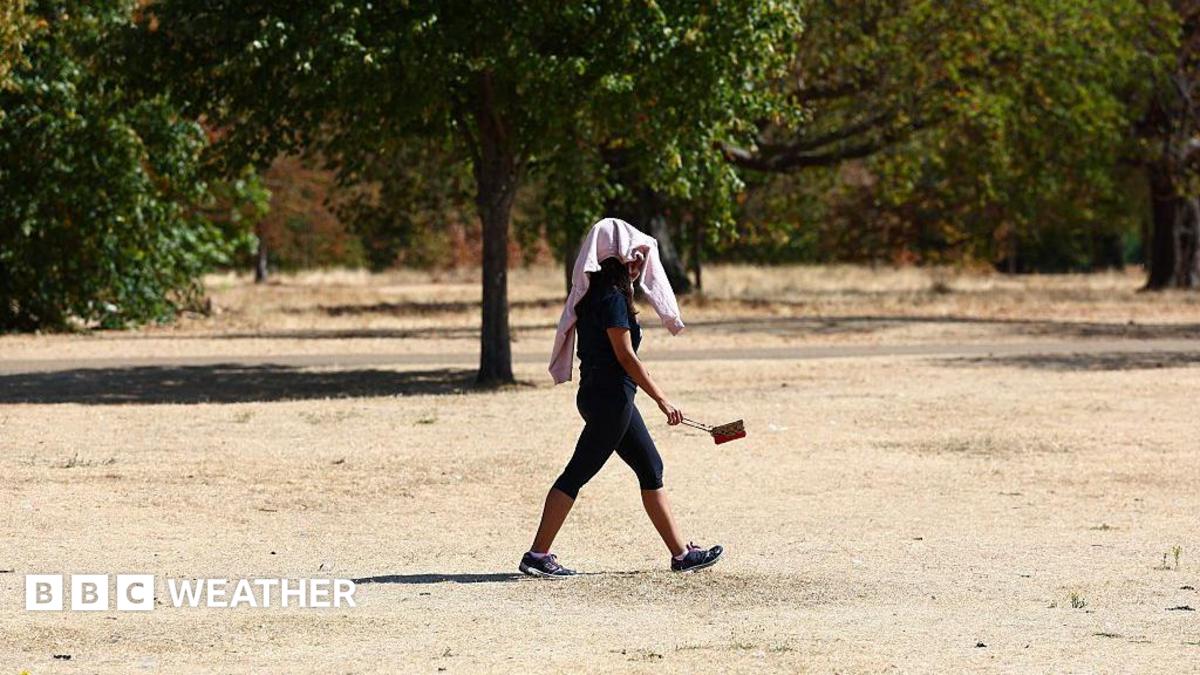
Person walking across a very dry and brown park with a towel over their head, providing shelter from the hot weather

The hot weather will intensify and be more widespread on Wednesday.

In an area from South Yorkshire to east Wales, Somerset and east across England temperatures will be in excess of 30C.

Some of the warmth will spread further north into northern England, Scotland and Northern Ireland with temperatures into the low to mid-20s.

The hottest weather will be around the Midlands and south-east England with 31 to 33C.

Advertisement

By Thursday and Friday, extreme heat is most likely in parts of the Midlands, eastern and south-east England where temperatures could be as high as 35 or 36C.

As heat builds throughout the week, overnight temperatures will stay relatively high bringing some uncomfortable nights for sleeping.

Minimum temperatures may not go lower than 16 to 18C across England and Wales.

There is also a possibility of a “tropical night” – where temperatures remain above 20C all night – in south-east England.

Advertisement

While the heat will not be quite as intense or feel as humid as the heatwaves in June and July, the BBC understands the Met Office may be considering issuing extreme heat warnings.

That would suggest that, as well as health impacts, there could be some concerns about infrastructure such as the transport network and power lines.

The highest temperatures in June and July were 38C and 35.5C respectively.

For the first time in recorded history we are expecting a temperature higher than 35C to have been recorded in the UK for four consecutive months – underlining that this has been a year like no other.

Advertisement

Source link

Continue Reading

NewsBeat

How to make a pinhole projector to view the solar eclipse

Published

on

How to make a pinhole projector to view the solar eclipse

Taking place on Wednesday (August 12) the eclipse will be the most coverage seen in the UK since 1999, when most of Cornwall and Devon experienced total coverage.

With most eclipse glasses sold out across the country, a pinhole projector offers a simple, homemade alternative to safely view the event.

Here is how to make one at home so you can still enjoy this week’s eclipse.

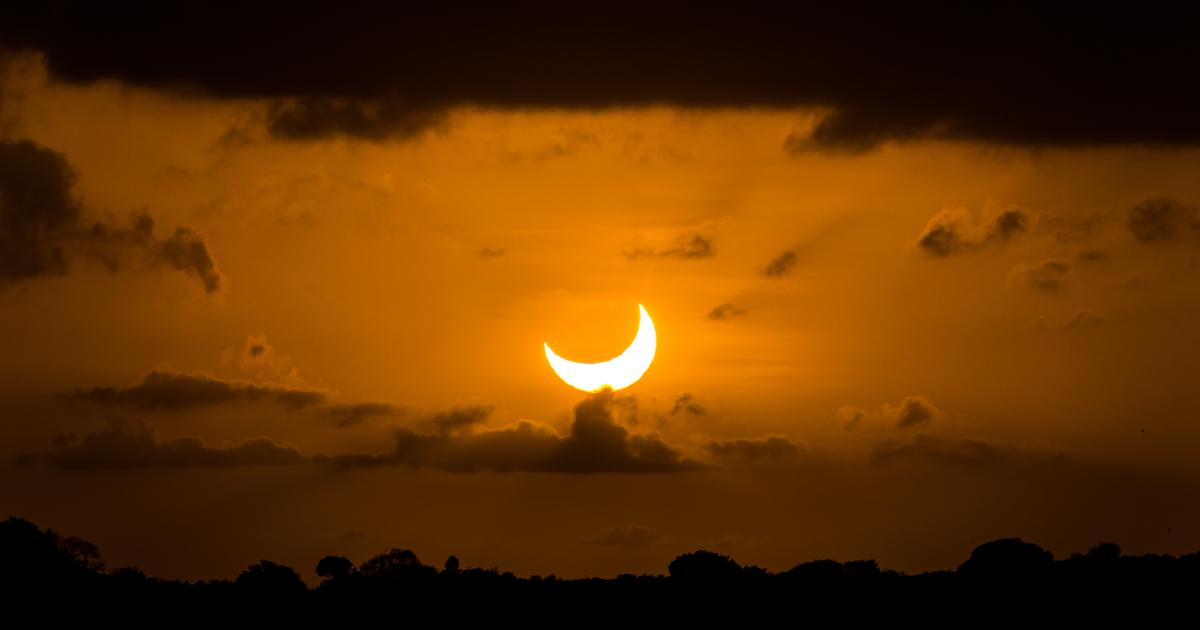
A partial solar eclipse as seen from the UKA partial solar eclipse will be visible in the UK this week (Image: Getty Images/iStockphoto)

How to make a pinhole projector for the solar eclipse

A pinhole projector, which can be assembled using everyday materials, allows people to observe the eclipse indirectly by projecting an image of the Sun onto a surface, making it safe for the eyes.

Advertisement

The method works best for partial eclipses, where the Sun takes on a crescent shape as the Moon moves across it.

To make a basic pinhole projector, all you need is two pieces of white card.

Poke a small hole in one piece and hold it above the other, with your back to the Sun.

The sunlight passing through the hole will project a small image of the Sun onto the second card.

Advertisement

During the eclipse, the shadow of the Moon will be visible within this tiny, projected disc.

A colander or even the gaps between tree leaves can serve the same purpose, casting multiple crescent shapes onto the ground.

For those looking for a slightly more involved project, a box pinhole projector can also be constructed for a steadier view.

Advertisement

Where to buy solar eclipse glasses in the UK

You can buy certified solar eclipse glasses in the UK from reputable astronomy retailers, specialised online distributors, or general online marketplaces such as Amazon UK.

However, many retailers are seeing shortages in stock as people across the country rush to secure them ahead of the event on Wednesday evening.

People have been warned not to look at the eclipse without glasses, as they block out the Sun’s harmful rays.

Regular sunglasses are not safe to use, as they don’t have adequate UV protection to protect your eyesight.

Advertisement

Adequate glasses should have safety certification ‘ISO 12312-2′ or ‘ISO 12312-2:2015’ printed somewhere on them.

There are other ways of viewing it, such as a solar telescope or watching official live streams, one of which is being run by the Royal Museums Greenwich (RMG).

What time will the solar eclipse be in the UK?

What time the solar eclipse will peak will depend on where you are in the UK, but it will be somewhere between 7.02pm and 7.16pm.

Here are the estimated eclipse times for areas across the UK, according to the RMG:

  • Edinburgh and Glasgow – begin at 6.08pm, peak at 7.05pm, end at 8pm
  • Manchester and Liverpool – begin at 6.13pm, peak at 7.10pm,  end at 8.03-04pm
  • Norwich and Birmingham – begin at 6.15pm, peak at 7.11pm, end at 8.04pm 
  • London, Bristol and Cardiff – begin at 6.17pm, peak at 7.12pm, end at 8.06pm
  • Truro, Cornwall – begin at 6.18pm, peak at 7.16pm, end at 8.10pm

Recommended reading:


At its peak, enough of the Sun will be covered to make a noticeable difference in the temperature and light levels.

Advertisement

However, unlike with a total eclipse, the sky will not become dark – it will feel more like a cloudy day or close to dusk or dawn.

Will you be watching the solar eclipse this week? Let us know in the comments.

Source link

Advertisement
Continue Reading

Trending

Copyright © 2025