SEOUL — South Korea’s benchmark Kospi index climbed further Tuesday, extending a rebound from last month’s steep selloff as strong gains in Samsung Electronics and other chipmakers lifted the broader market.
The Kospi rose 0.73%, or 45.87 points, to close at 6,345.53, according to trading data. The index opened at 6,240.06, touched an intraday high of 6,405.81 and dipped to a low of 6,213.78 before settling higher for the session. Trading unfolded in a quieter regional backdrop, with Japanese markets closed Tuesday for the Mountain Day public holiday.
Samsung Electronics led the advance, with shares climbing 4.13%, while SK Hynix also edged higher as investors continued rewarding the country’s dominant memory chip producers. The gains extended a broader rebound in Korean chip stocks, which have remained a central focus for investors throughout 2026 amid strong global demand for memory chips tied to artificial intelligence infrastructure spending.
SK Hynix disclosed progress on its next-generation DRAM research and development efforts, saying it had integrated extreme ultraviolet lithography upgrades and new materials into its production process following the company’s adoption of High-NA EUV equipment, a more advanced lithography technology used to manufacture smaller, more powerful memory chips. The announcement added to investor optimism around the company’s ability to maintain its competitive position in the global memory chip market.
Separately, the South Korean government said it plans to legislate so-called “super special zones” within the next year to support large-scale industrial projects, including semiconductor clusters, a move aimed at bolstering the country’s competitive standing in the global chip supply chain. The announcement was seen as part of a broader push by Seoul to support the domestic semiconductor industry amid intensifying global competition for chip manufacturing investment.
Tuesday’s gains build on a recovery that has taken hold in recent sessions following a punishing stretch for Korean equities last month. The Kospi suffered a roughly 22% wipeout in July, its worst monthly performance since 2008, driven in part by a sharp unwind of leveraged trading positions tied to major chipmakers. That selloff followed an extraordinary run earlier in the year, during which the index doubled in value over just a few months, climbing from around 5,000 to more than 9,000 points at its peak in June, a rally driven almost entirely by explosive gains in memory chip heavyweights Samsung Electronics and SK Hynix.
Market analysts have said the most severe phase of that turmoil appears to have passed, with forced liquidations of leveraged positions largely working their way through the market in recent weeks, helping stabilize volatility even as the index remains well below its June peak. The Kospi’s 52-week high stands at 9,385.59, reached on June 19, underscoring the scale of the pullback that followed the market’s summer volatility.
Even with the recent turbulence, the Kospi remains dramatically higher than year-ago levels, reflecting the extraordinary scale of this year’s rally in Korean equities even after last month’s sharp correction. Goldman Sachs has maintained a bullish long-term outlook on Korean stocks despite the recent volatility, with the bank’s strategists citing a memory chip supercycle driven by record shortfalls in chip supply, strong demand from hyperscale data center operators, and continued growth in artificial intelligence computing needs as key drivers of further potential gains.
Tuesday’s session also came against a backdrop of anticipated monetary policy tightening in South Korea. The Bank of Korea’s outgoing deputy governor said Tuesday that the central bank is likely to raise interest rates further in response to persistent inflationary pressures, a signal that could shape investor expectations heading into the bank’s coming policy decisions.
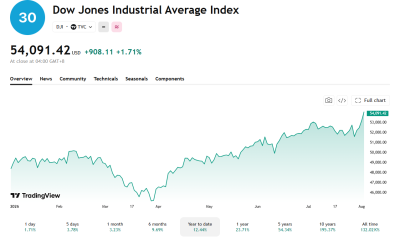
Elsewhere in the region, broader Asian equity markets showed a mixed picture Tuesday, with some markets tracking Wall Street’s recent strength while others, including South Korea’s Kospi and Singapore’s benchmark index, led gains as investors weighed the interplay between technology-sector momentum and shifting expectations around global monetary policy. On Wall Street, major U.S. indexes closed mostly lower Monday, with the S&P 500 slipping slightly, the Dow Jones Industrial Average dipping modestly and the Nasdaq Composite falling further, even as the broader market remained near record territory following a strong run over the preceding weeks.
South Korean equities have drawn particular international attention this year given the scale and speed of both the rally and subsequent correction in chip-heavy names, a dynamic that has drawn comparisons to historic market run-ups, including the technology-driven Nasdaq rally that preceded the dot-com crash in the late 1990s. Despite last month’s sharp pullback, the semiconductor sector has continued to anchor sentiment toward the broader Korean market, with Tuesday’s gains in Samsung Electronics and SK Hynix reinforcing the extent to which chip stocks remain the primary driver of the Kospi’s day-to-day performance.
Looking ahead, investors are likely to continue monitoring developments in the global memory chip market, along with any further policy signals from the Bank of Korea regarding the pace and timing of potential interest rate increases. With the government’s newly announced semiconductor cluster initiative still in its early legislative stages, market participants are also expected to watch for further details on how the plan might translate into concrete support for the country’s chip industry in the months ahead.














































You must be logged in to post a comment Login