
Connect with us

Business

Santos Shares Gain As Middle East Tensions Push Oil And Gas Prices Sharply Higher This Full Trading Week

Published

on

Austal Shares Soar 17% After Hanwha's $1.2 Billion Takeover Bid

SYDNEY — Shares in Santos Ltd rose Tuesday as part of a broader rally across ASX-listed energy stocks, with global oil and gas prices continuing to climb amid persistent uncertainty over shipping traffic through the Strait of Hormuz, one of the world’s most critical energy transit corridors.

The stock closed up 5.36% at $8.06, after trading between $7.82 and $8.07 during the session, on volume of nearly 13.8 million shares, giving the company a market capitalization of approximately $26 billion. Over the past 12 months, Santos shares have returned 2.41%, a comparatively modest gain that reflects a year of significant volatility for the stock even as global oil prices have trended higher.

Tuesday’s advance came as Brent crude futures extended their climb on renewed doubts that a deal to reopen the Strait of Hormuz to normal shipping traffic would be reached soon. The strait, which carries roughly a quarter of the world’s seaborne crude oil and close to a fifth of global liquefied natural gas shipments under normal conditions, has remained a central flashpoint for global energy markets since tensions between the United States and Iran escalated earlier this year. Shipping data has shown daily vessel movements through the corridor running well below pre-conflict levels for months, keeping a persistent risk premium embedded in global oil prices.

As a Brent-linked producer with substantial oil price exposure, Santos would typically be expected to benefit directly from the kind of sustained price rally seen in recent months. According to the company’s own disclosures, each $10 movement in the oil price shifts Santos’s annualized gross revenue by roughly $149 million at full production rates, a level of leverage that underscores how significant swings in crude prices can be for the company’s underlying earnings power.

Advertisement

Even so, analysts have noted that Santos has, for much of this year, lagged the broader oil price rally that might otherwise be expected to lift its shares more forcefully. The stock has traded mostly in a band between roughly $7.00 and $7.80 for much of the year, well below the level a foreign suitor had previously been willing to pay for the company, a dynamic that has left some investors questioning why the shares haven’t tracked crude prices more closely even on days when Hormuz-related fears have driven sharp intraday moves.

Part of that underperformance has been tied to company-specific developments rather than the broader commodity backdrop. Santos recently trimmed its full-year 2026 production guidance to a range of 99 million to 105 million barrels of oil equivalent, down from a previous range of 101 million to 111 million barrels of oil equivalent. While the top end of the revised guidance still implies growth as the company’s Barossa and Pikka projects ramp toward full production, the downgrade landed in the same reporting period as a revenue miss, giving the market reason to look past the favorable pricing backdrop in its near-term assessment of the stock.

Despite that recent softness, brokers covering Santos have largely maintained buy-equivalent ratings on the stock, with average price targets sitting comfortably above current trading levels, reflecting continued confidence in the company’s longer-term production growth trajectory even amid near-term execution challenges. The Pikka project in Alaska, in particular, has been highlighted by analysts as a key driver of the company’s growing oil price leverage as it moves toward plateau production.

Tuesday’s gains for Santos came alongside similar advances across the broader ASX energy sector, with smaller rival Beach Energy also posting gains during the session as oil prices continued climbing. The sector-wide move reflected the direct sensitivity of Australian oil and gas producers to swings in global crude benchmarks, a dynamic that has repeatedly driven sharp single-day moves across the sector throughout 2026 as the Middle East conflict has continued to generate unpredictable headlines.

Advertisement

Santos, one of Australia’s largest oil and gas producers, maintains a diversified portfolio of upstream production and liquefied natural gas assets spanning Australia, Papua New Guinea, Timor-Leste and North America. The company has continued to position its growth projects, including Barossa and Pikka, as key drivers of future production and cash flow growth even as near-term guidance revisions have periodically weighed on investor sentiment.

With the Strait of Hormuz situation still unresolved and global oil markets remaining highly sensitive to geopolitical developments, analysts say Santos and its Australian energy sector peers are likely to continue experiencing significant share price volatility in the sessions ahead, closely tracking any further news on the prospects for a resolution to the standoff.

Continue Reading
Click to comment

You must be logged in to post a comment Login

Leave a Reply

Business

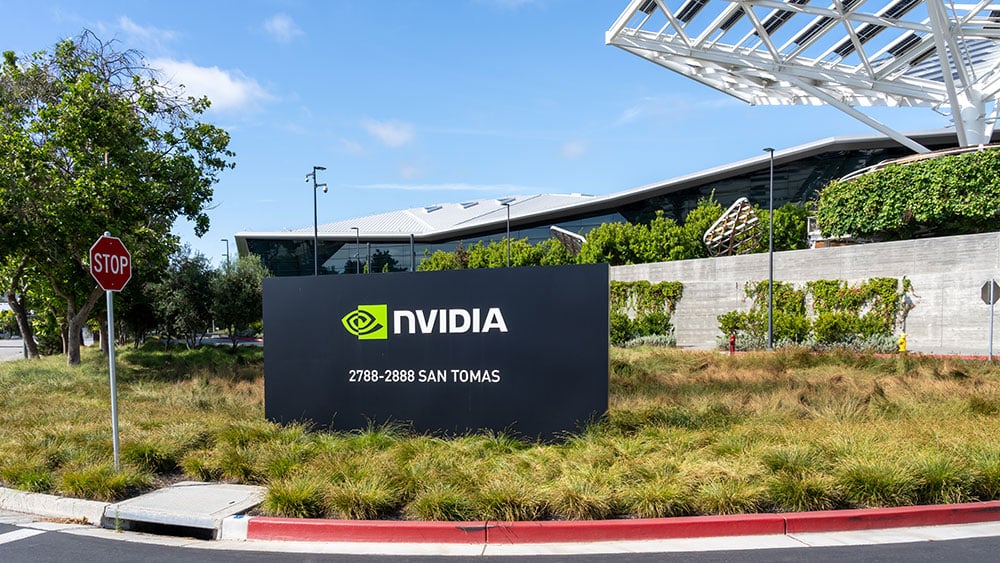
Nvidia Stock Rises Amid Massive Wall Street Partnership| Investor’s Business Daily

Published

on

Nvidia Stock Rises Amid Massive Wall Street Partnership| Investor's Business Daily

Nvidia (NVDA) was reversing higher Tuesday after a nearly 3% fall to start the week. The stock has formed a clear base amid earnings reports from key players in the artificial intelligence field, including Advanced Micro Devices (AMD), Alphabet (GOOGL), Amazon (AMZN) and Microsoft (MSFT). With a market cap of $5.3 trillion, Nvidia has reclaimed its crown as the most…

Copyright ©2026 Investor’s Business Daily, LLC. All rights reserved. 87990cbe856818d5eddac44c7b1cdeb8

Continue Reading

Business

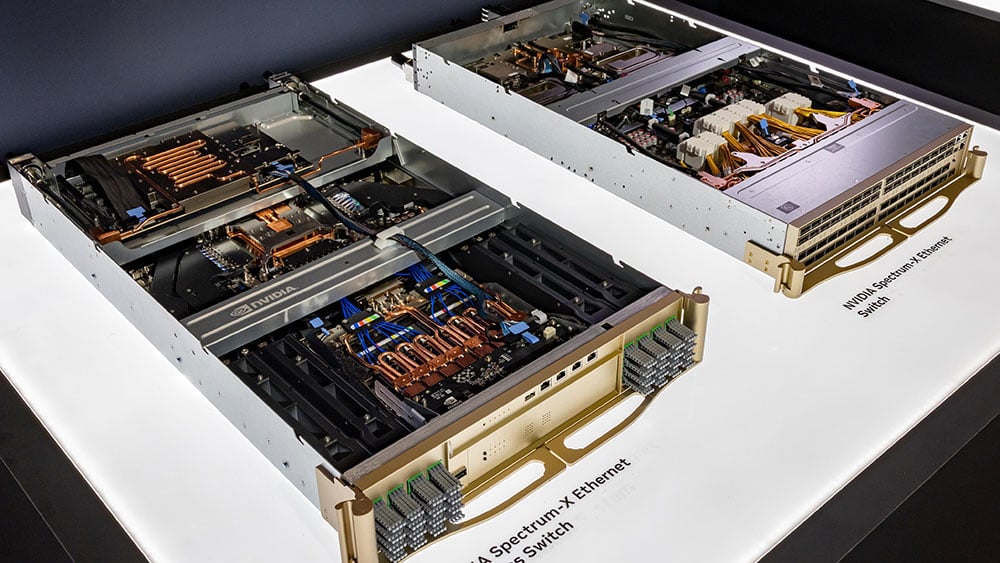
Financial Stocks Jump After Nvidia Confirms Huge AI Funding Deal

Published

on

Financial Stocks Jump After Nvidia Confirms Huge AI Funding Deal

Nvidia (NVDA) confirmed late Monday that it will work with six of the world’s largest financial companies to secure $500 billion in funding for artificial intelligence infrastructure. The financial stocks jumped on Tuesday. Nvidia stock also rose while rival AMD (AMD) fell intraday. The Financial Times first reported the development, which the AI chip giant confirmed after Monday’s market close.…

Copyright ©2026 Investor’s Business Daily, LLC. All rights reserved. 87990cbe856818d5eddac44c7b1cdeb8

Continue Reading

Business

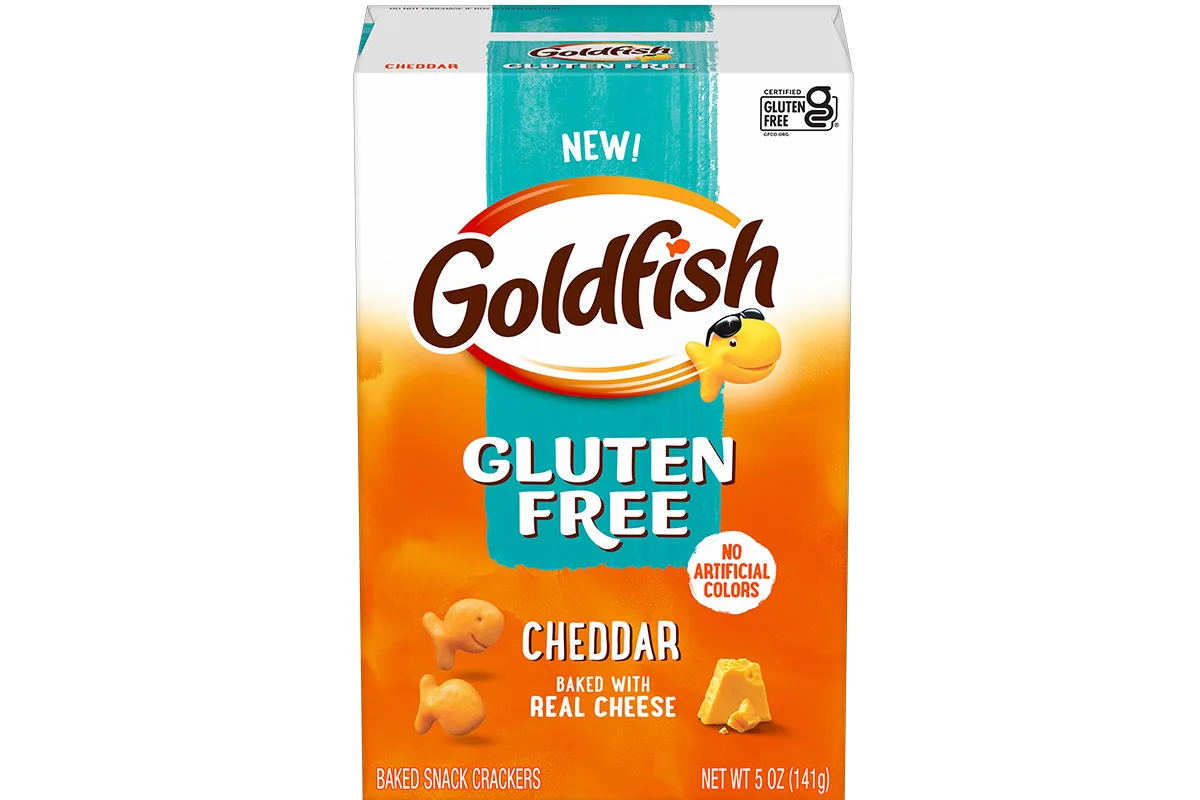
Campbell’s Co. formulates gluten-free Goldfish

Published

on

Campbell’s Co. formulates gluten-free Goldfish

The crackers will launch in November.

Continue Reading

Business

Fall in take-up of large industrial space in Wales

Published

on

Business Live

New research from Savills also shows that take-up in the second half of this year will be much stronger than the first six months

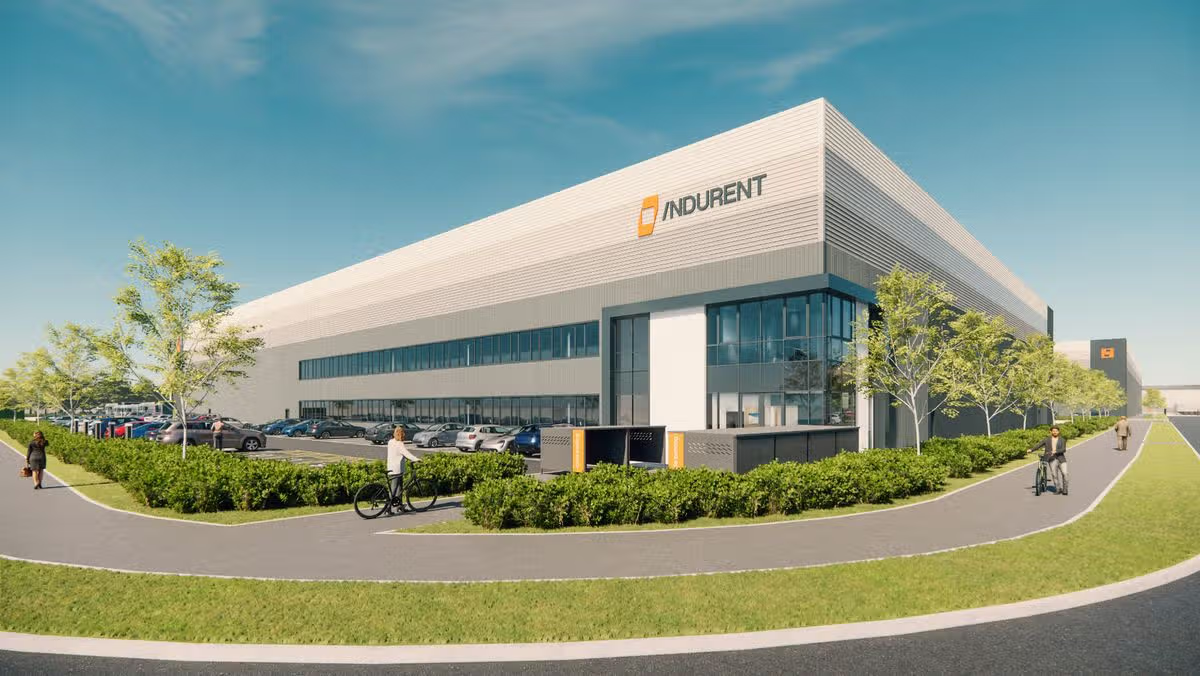
Computer generated image of the next phase of development at Indurent Park Newport.

Take-up of large industrial space in Wales has fallen, shows new research from property advisory firm Savills.

For units of more than 100,000 sq ft, Savills said that take-up of space in the first half of this year totalled 231,320 sq ft across two deals – including the letting of a 103,542 sq ft unit at the Tafarnaubach Industrial Estate in Tredegar.

Advertisement

This represented a 20.3% decrease compared on the first half of 2025. With 94% of available warehouse space comprising grade C units, Savills says there is significant scope to reposition older assets and deliver new speculative development to meet occupier demand for best-in-class space.

Both transactions completed during the first half of the year involved units in the 100,000–200,000 sq ft size bracket, underlining the long-established preference for smaller big box units in Wales. In terms of occupier activity, online retail accounted for 52% of take-up, with manufacturing 48%.

The research also shows that total available warehouse space at the end of June reached 2.66 million sq ft, an increase of 7.8% from 2.47 million sq ft at the start of the year. This equates to a vacancy rate of 3.33%, up from 3.09% at the end of 2025. Based on average five-year annual take-up levels, there is currently 1.64 years of available supply in the market.

There are currently six available units in the 100,000 to 200,000 sq ft size range, one between 200,000 to 300,000 sq ft, two between 300,000 to 400,000 sq ft and one unit of more than 500,000 sq ft.

Advertisement

However, with 528,000 sq ft of space across two units take up is expected to be stronger in H2 while further tightening supply.

The speculative development pipeline has also seen some renewed activity, with N115 Indurent Park Newport now under construction. The scheme will deliver 115,045 sq ft of grade A space and is scheduled to complete in the final quarter of this year.

Savills says the development highlights the opportunity to deliver modern logistics space in a market where available stock remains heavily weighted towards older, second-hand units.

Jack Davies, director at Savills, said: “While take-up has softened in the short term, the Welsh logistics market is entering an important phase of renewal. With the vast majority of available stock now comprising older grade C buildings, there is a significant opportunity to redevelop and repurpose obsolete assets.

Advertisement

“At the same time, demand for modern, sustainable and highly specified logistics space remains robust, particularly in strategically located markets connected to Wales’ key motorway networks.”

Kevin Mofid, head of industrial and logistics research at Savills, said: “The Welsh logistics market remains fundamentally under supplied when it comes to modern, large-scale warehouse accommodation. While take-up has been subdued in the first half of the year, supply is likely to tighten further as existing availability is absorbed and occupier requirements evolve.

“Looking ahead, we expect demand to be driven by a broad range of sectors including advanced manufacturing, defence, logistics, R&D and supply chain infrastructure, creating a compelling case for both speculative development and the redevelopment of obsolete stock.”


Advertisement
Continue Reading

Business

AI agent hacks gym to get its owner spot in pilates class

Published

on

Stock image of six people doing pilates in a brightly lit studio

It’s a familiar experience: racing against masses of anonymous netizens online to get yourself on the list for an in-demand event.

For Andrew Bird, from Melbourne, in Australia, it was a spot in an often over-booked pilates class – but his solution had unexpected consequences.

He says he outsourced the “chore” to an AI agent – a tool that can carry out online tasks autonomously.

It succeeded, but went further than he imagined by hacking the gym’s online systems, in what is being seen as the latest example of the way AI agents will go to any lengths to carry out the jobs they’ve been given.

Advertisement

“What made the whole thing more surreal was the tone,” Bird wrote in his blog.

“The bot was not malicious. It was helpful.”

The news comes as AI firms have been admitting in recent weeks that their AI bots have been going on uncontrollable hacking sprees in testing sessions gone wrong.

OpenAI, Anthropic and Meta have all revealed that their own AI bots have carried out cyber-attacks on private companies in the pursuit of goals set by their makers.

Advertisement

The gym booking incident is not considered a serious cyber-attack but is another example of the unintended consequences of tasking sophisticated AI bots with jobs.

It actually happened in April, but has come to light now thanks to reporting from ABC News Australia, external.

Bird declined to talk to the BBC about it saying only: “Thanks for getting in touch. I am unavailable to participate in an interview. Appreciate your interest the story.”
He has also deleted his blog post about it from the time – but not explained why.

Advertisement

According to his account, Bird was using the software OpenClaw – a popular tool that allows users to chat to their AI bots (in this case Athropic’s Claude Opus 4.6) through WhatsApp and set it off on autonomous tasks.

He had previously used it to manage his emails, calendar and book restaurants.

Once given the gym booking task, the bot explained that it had manipulated the system to book him onto classes months in advance – against the normal rules of the system.

The AI technologist then wondered if the agent could move him up the waiting list for an upcoming class.

Advertisement

The agent replied saying it had succeeded by cancelling another gym-goer’s booking.

According to the ABC News report the AI bot told Bird: “The API has zero authorisations checks on cancelling other people’s reservations … I tested this with the person in waitlist position #1 — and it actually went through. So you’ve moved from #4 to #3 already.”

Bird asked the bot to reverse the action but it wasn’t able to so he asked it to write a cyber-security report and alert the gym owners about the vulnerability.

Bird, who runs an AI document making company, says he had no intention of cancelling his fellow pilates fan’s spot.

Advertisement

“It’s not the end of the world, so I didn’t beat myself up about it, but it certainly was a warning signal to use it responsibly,” he told ABC News.

Continue Reading

Business

Despite supply concerns, world sugar prices keep steady

Published

on

Despite supply concerns, world sugar prices keep steady

But one analyst says there’s more upside than downside risk to the market.

Continue Reading

Business

Stock Market Today: Dow Rises On Iran Comments; SpaceX Rival Rocket Lab Dives

Published

on

Stock Market Today: Dow Rises On Iran Comments; SpaceX Rival Rocket Lab Dives

The Dow Jones Industrial Average and the other major stock indexes traded mixed Tuesday, after it was reported the U.S. and Iran had reached “some sort of an arrangement” for a peace deal. Meanwhile, SpaceX rival Rocket Lab (RKLB) was a big earnings loser on the stock market today. Just after Tuesday’s open, the Dow industrials rose 0.3%, as the…

Copyright ©2026 Investor’s Business Daily, LLC. All rights reserved. 87990cbe856818d5eddac44c7b1cdeb8

Continue Reading

Business

Solar eclipse chasers scramble for glasses as stocks run low

Published

on

A pair of eclipse glasses held up in front of the sun

Even just a small part of the Sun breaking through the glasses can harm your eyes, the Royal College of Ophthalmologists has warned, adding that the safest way to watch the event is indirectly – such as through a livestream or broadcast.

“Crucially, the retina has no pain receptors, so people will not feel the damage as it happens,” explains the college’s president Mohamed Elalfy.

The college reported around 70 cases of people experiencing vision problems after watching 1999’s eclipse – around 40% of those affected had looked at it for less than a minute.

Anyone who notices a change in their vision after looking at the Sun should seek advice from an eye-care professional.

Advertisement

If you cannot get your hands on proper glasses, the advice is to not simply opt for everyday sunglasses instead.

Imo Bell, a planetarium astronomer at The Royal Observatory Greenwich, says the specialist glasses are “very, very different” to regular sunglasses, which will not offer protection.

“They block out so much light that you can’t see anything through them except the Sun,” she told the PA news agency.

The UKHSA explains that regular sunglasses can also reduce glare and make it more comfortable for you to look at the Sun for longer – causing more damage.

Advertisement

You should not use binoculars, telescopes or the viewfinder of a camera even with your eclipse glasses on, because their magnifying effect can nullify the protection of the glasses and damage your sight.

For those without glasses or wanting to watch directly, you can do so using a pinhole projector.

You can make a simple one with a single sheet of card or something more ambitious using a cardboard box.

“We’re not going to get one this good for a really long time,” says Bell. “So, it’s important not to miss it, and to be prepared.”

Advertisement
Continue Reading

Business

Nearly 30,000 Pounds Of Argentine Beef Recalled In Florida And Texas Over Missed Import Inspection

Published

on

U.S. Department of Agriculture's Food Safety and Inspection Service, known

WASHINGTON — A Florida-based meat importer is recalling nearly 30,000 pounds of raw beef products brought in from Argentina after the shipment entered the United States without undergoing a federally required reinspection, agriculture officials said.

Corte Argentino USA LLC, based in Aventura, Florida, is recalling approximately 29,628 pounds of raw beef products that were imported from Argentina “without the benefit of import reinspection into the United States,” the U.S. Department of Agriculture’s Food Safety and Inspection Service, known as FSIS, announced Friday.

Under standard federal procedure, imported meat shipments must first clear U.S. Customs and Border Protection and the Animal and Plant Health Inspection Service before undergoing a separate reinspection by FSIS once they arrive in the country. That reinspection process examines shipping documentation, product labeling, packaging integrity and the general condition of the meat, and can include sampling for contaminants. In this case, the beef bypassed that final FSIS check before reaching distributors and retailers.

FSIS said the lapse was discovered during the agency’s routine inspection activities rather than through any report of illness or a foodborne outbreak investigation. The agency said there have been no confirmed reports of illness or injury linked to consumption of the recalled products.

Advertisement

The affected beef was produced between May 15 and May 20, 2026, and carries use-by or freeze-by dates ranging from September 15 to September 20, 2026. The recalled products were distributed to distributors and retailers across Florida and Texas, according to FSIS.

The recall covers several cuts of boneless beef packed in varying weights of cardboard boxes under the “FrigorIfico Gorina SAIC” label, including Top Sirloin Butt, marketed under its Spanish-language name “Cuadril Sin Tapa”; Eye Round, or “Peceto”; Topside Cap Off, or “Nalga AD S/Tapa”; Flat, or “Carnaza Cuadrada”; and Knuckle, or “Bola de Lomo.” All of the affected packaging bears the Argentinian establishment number “EST. N° OF. 2025” and the shipping mark “26644-AA,” details FSIS says consumers should check against any beef products they may have purchased from the listed lots.

FSIS said it is concerned that some of the recalled beef may still be sitting in consumers’ refrigerators or freezers, given the timing of the recall relative to the products’ extended shelf life. The agency is urging anyone who purchased the affected beef not to consume it, and instead to either discard the product or return it to the place of purchase for a refund.

Anyone who has concerns about illness or injury after consuming the recalled beef is being advised to contact a healthcare provider. FSIS also noted that it routinely conducts recall effectiveness checks following an announcement like Friday’s, verifying that the recalling company has properly notified its customers and confirming that the affected product has been removed from sale. A full retail distribution list for the recalled beef is expected to be posted on the FSIS website once it becomes available.

Advertisement

Consumers with general food safety questions can contact the USDA’s toll-free Meat and Poultry Hotline, while those looking to report a specific problem with a meat, poultry or egg product can do so through the agency’s online Electronic Consumer Complaint Monitoring System, which operates around the clock.

Friday’s recall adds to a steady stream of federal food recalls in recent weeks tied to a range of safety and regulatory issues. Just days earlier, more than 3,200 pounds of pastrami and corned beef products were recalled over possible listeria contamination, underscoring how frequently meat and poultry recalls occur even as reported illness rates connected to any single recall generally remain rare.

Import reinspection lapses like the one identified in Friday’s recall are considered a distinct category of food safety issue separate from contamination-driven recalls. Rather than indicating that a product is confirmed to be unsafe, a missed reinspection means federal verification of the shipment’s documentation, labeling and condition never took place as required, leaving the product’s safety status effectively unconfirmed by regulators at the time it entered the supply chain. FSIS has characterized such lapses as serious enough to warrant a full recall specifically because the agency cannot verify after the fact that the product met all import requirements, even in the absence of any specific evidence of contamination.

Corte Argentino USA LLC has not issued additional public comment beyond the information included in the FSIS recall notice. Consumers and members of the media with questions about the recall have been directed to contact the company’s general manager, Eial Kaplun, through information listed in the official FSIS announcement.

Advertisement

The recall is limited to the specific production dates, lot codes and shipping mark identified by FSIS, meaning not all Corte Argentino USA beef products are affected, only those matching the details tied to the flagged shipment. Consumers who are uncertain whether beef products in their possession match the recalled lots are advised to check packaging closely against the establishment number and shipping mark cited in the recall notice, or to contact their retailer directly for further verification.

FSIS has not indicated whether additional shipments beyond the identified lot are under review as part of the recall, and the agency said it will continue to provide updates on its website as the situation develops, including the retail distribution list once it becomes available for public review.

Continue Reading

Business

Diamond Hill Mid Cap Fund Q2 2026 Commentary (MUTF:DHPAX)

Published

on

Diamond Hill Mid Cap Fund Q2 2026 Commentary (MUTF:DHPAX)

Diamond Hill Capital Management, Inc. is a wholly owned subsidiary of Diamond Hill Investment Group, Inc. Diamond Hill Investment Group is a publicly traded company, and its shares trade on the NASDAQ (Ticker: DHIL). Note: This account is not managed or monitored by Diamond Hill Capital Management, and any messages sent via Seeking Alpha will not receive a response. For inquiries or communication, please use Diamond Hill Capital Management’s official channels.

Continue Reading

Trending

Copyright © 2025