
Business
Santos Shares Gain As Middle East Tensions Push Oil And Gas Prices Sharply Higher This Full Trading Week


SYDNEY — Shares in Santos Ltd rose Tuesday as part of a broader rally across ASX-listed energy stocks, with global oil and gas prices continuing to climb amid persistent uncertainty over shipping traffic through the Strait of Hormuz, one of the world’s most critical energy transit corridors.
The stock closed up 5.36% at $8.06, after trading between $7.82 and $8.07 during the session, on volume of nearly 13.8 million shares, giving the company a market capitalization of approximately $26 billion. Over the past 12 months, Santos shares have returned 2.41%, a comparatively modest gain that reflects a year of significant volatility for the stock even as global oil prices have trended higher.
Tuesday’s advance came as Brent crude futures extended their climb on renewed doubts that a deal to reopen the Strait of Hormuz to normal shipping traffic would be reached soon. The strait, which carries roughly a quarter of the world’s seaborne crude oil and close to a fifth of global liquefied natural gas shipments under normal conditions, has remained a central flashpoint for global energy markets since tensions between the United States and Iran escalated earlier this year. Shipping data has shown daily vessel movements through the corridor running well below pre-conflict levels for months, keeping a persistent risk premium embedded in global oil prices.
As a Brent-linked producer with substantial oil price exposure, Santos would typically be expected to benefit directly from the kind of sustained price rally seen in recent months. According to the company’s own disclosures, each $10 movement in the oil price shifts Santos’s annualized gross revenue by roughly $149 million at full production rates, a level of leverage that underscores how significant swings in crude prices can be for the company’s underlying earnings power.
Even so, analysts have noted that Santos has, for much of this year, lagged the broader oil price rally that might otherwise be expected to lift its shares more forcefully. The stock has traded mostly in a band between roughly $7.00 and $7.80 for much of the year, well below the level a foreign suitor had previously been willing to pay for the company, a dynamic that has left some investors questioning why the shares haven’t tracked crude prices more closely even on days when Hormuz-related fears have driven sharp intraday moves.
Part of that underperformance has been tied to company-specific developments rather than the broader commodity backdrop. Santos recently trimmed its full-year 2026 production guidance to a range of 99 million to 105 million barrels of oil equivalent, down from a previous range of 101 million to 111 million barrels of oil equivalent. While the top end of the revised guidance still implies growth as the company’s Barossa and Pikka projects ramp toward full production, the downgrade landed in the same reporting period as a revenue miss, giving the market reason to look past the favorable pricing backdrop in its near-term assessment of the stock.
Despite that recent softness, brokers covering Santos have largely maintained buy-equivalent ratings on the stock, with average price targets sitting comfortably above current trading levels, reflecting continued confidence in the company’s longer-term production growth trajectory even amid near-term execution challenges. The Pikka project in Alaska, in particular, has been highlighted by analysts as a key driver of the company’s growing oil price leverage as it moves toward plateau production.
Tuesday’s gains for Santos came alongside similar advances across the broader ASX energy sector, with smaller rival Beach Energy also posting gains during the session as oil prices continued climbing. The sector-wide move reflected the direct sensitivity of Australian oil and gas producers to swings in global crude benchmarks, a dynamic that has repeatedly driven sharp single-day moves across the sector throughout 2026 as the Middle East conflict has continued to generate unpredictable headlines.
Santos, one of Australia’s largest oil and gas producers, maintains a diversified portfolio of upstream production and liquefied natural gas assets spanning Australia, Papua New Guinea, Timor-Leste and North America. The company has continued to position its growth projects, including Barossa and Pikka, as key drivers of future production and cash flow growth even as near-term guidance revisions have periodically weighed on investor sentiment.
With the Strait of Hormuz situation still unresolved and global oil markets remaining highly sensitive to geopolitical developments, analysts say Santos and its Australian energy sector peers are likely to continue experiencing significant share price volatility in the sessions ahead, closely tracking any further news on the prospects for a resolution to the standoff.


The Dow Jones Industrial Average and the other major stock indexes traded mixed Tuesday, after it was reported the U.S. and Iran had reached “some sort of an arrangement” for a peace deal. Meanwhile, SpaceX rival Rocket Lab (RKLB) was a big earnings loser on the stock market today. Just after Tuesday’s open, the Dow industrials rose 0.3%, as the…
Copyright ©2026 Investor’s Business Daily, LLC. All rights reserved. 87990cbe856818d5eddac44c7b1cdeb8
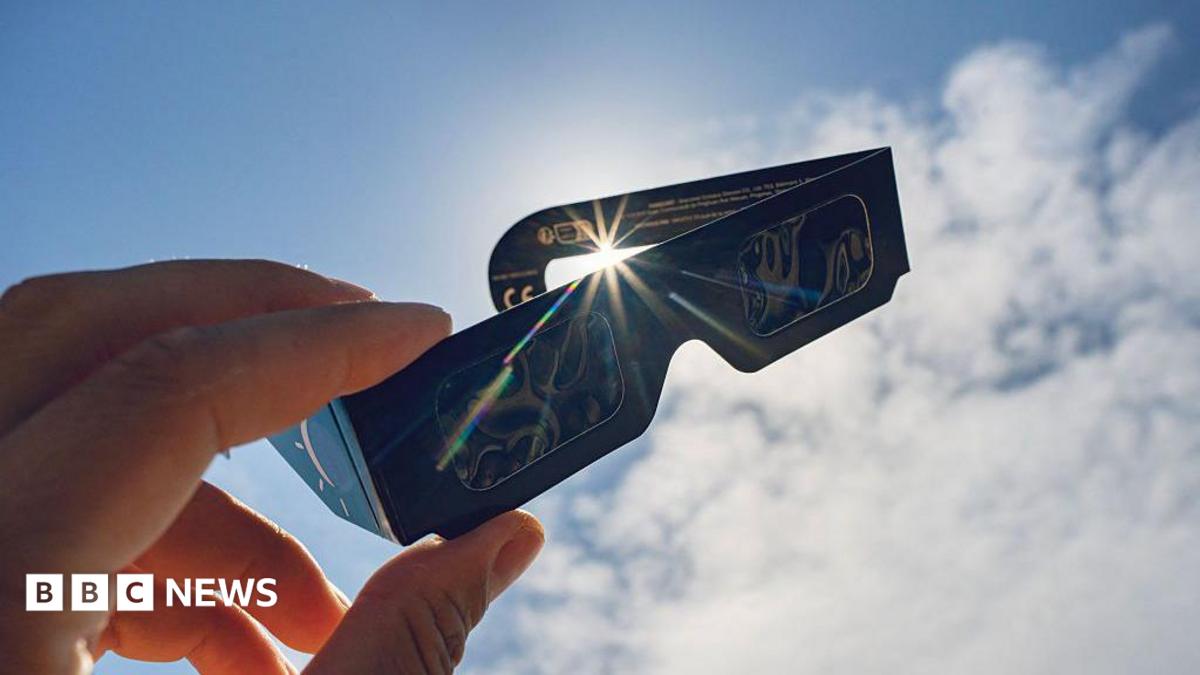
Even just a small part of the Sun breaking through the glasses can harm your eyes, the Royal College of Ophthalmologists has warned, adding that the safest way to watch the event is indirectly – such as through a livestream or broadcast.
“Crucially, the retina has no pain receptors, so people will not feel the damage as it happens,” explains the college’s president Mohamed Elalfy.
The college reported around 70 cases of people experiencing vision problems after watching 1999’s eclipse – around 40% of those affected had looked at it for less than a minute.
Anyone who notices a change in their vision after looking at the Sun should seek advice from an eye-care professional.
If you cannot get your hands on proper glasses, the advice is to not simply opt for everyday sunglasses instead.
Imo Bell, a planetarium astronomer at The Royal Observatory Greenwich, says the specialist glasses are “very, very different” to regular sunglasses, which will not offer protection.
“They block out so much light that you can’t see anything through them except the Sun,” she told the PA news agency.
The UKHSA explains that regular sunglasses can also reduce glare and make it more comfortable for you to look at the Sun for longer – causing more damage.
You should not use binoculars, telescopes or the viewfinder of a camera even with your eclipse glasses on, because their magnifying effect can nullify the protection of the glasses and damage your sight.
For those without glasses or wanting to watch directly, you can do so using a pinhole projector.
You can make a simple one with a single sheet of card or something more ambitious using a cardboard box.
“We’re not going to get one this good for a really long time,” says Bell. “So, it’s important not to miss it, and to be prepared.”
Business
Nearly 30,000 Pounds Of Argentine Beef Recalled In Florida And Texas Over Missed Import Inspection

WASHINGTON — A Florida-based meat importer is recalling nearly 30,000 pounds of raw beef products brought in from Argentina after the shipment entered the United States without undergoing a federally required reinspection, agriculture officials said.
Corte Argentino USA LLC, based in Aventura, Florida, is recalling approximately 29,628 pounds of raw beef products that were imported from Argentina “without the benefit of import reinspection into the United States,” the U.S. Department of Agriculture’s Food Safety and Inspection Service, known as FSIS, announced Friday.
Under standard federal procedure, imported meat shipments must first clear U.S. Customs and Border Protection and the Animal and Plant Health Inspection Service before undergoing a separate reinspection by FSIS once they arrive in the country. That reinspection process examines shipping documentation, product labeling, packaging integrity and the general condition of the meat, and can include sampling for contaminants. In this case, the beef bypassed that final FSIS check before reaching distributors and retailers.
FSIS said the lapse was discovered during the agency’s routine inspection activities rather than through any report of illness or a foodborne outbreak investigation. The agency said there have been no confirmed reports of illness or injury linked to consumption of the recalled products.
The affected beef was produced between May 15 and May 20, 2026, and carries use-by or freeze-by dates ranging from September 15 to September 20, 2026. The recalled products were distributed to distributors and retailers across Florida and Texas, according to FSIS.
The recall covers several cuts of boneless beef packed in varying weights of cardboard boxes under the “FrigorIfico Gorina SAIC” label, including Top Sirloin Butt, marketed under its Spanish-language name “Cuadril Sin Tapa”; Eye Round, or “Peceto”; Topside Cap Off, or “Nalga AD S/Tapa”; Flat, or “Carnaza Cuadrada”; and Knuckle, or “Bola de Lomo.” All of the affected packaging bears the Argentinian establishment number “EST. N° OF. 2025” and the shipping mark “26644-AA,” details FSIS says consumers should check against any beef products they may have purchased from the listed lots.
FSIS said it is concerned that some of the recalled beef may still be sitting in consumers’ refrigerators or freezers, given the timing of the recall relative to the products’ extended shelf life. The agency is urging anyone who purchased the affected beef not to consume it, and instead to either discard the product or return it to the place of purchase for a refund.
Anyone who has concerns about illness or injury after consuming the recalled beef is being advised to contact a healthcare provider. FSIS also noted that it routinely conducts recall effectiveness checks following an announcement like Friday’s, verifying that the recalling company has properly notified its customers and confirming that the affected product has been removed from sale. A full retail distribution list for the recalled beef is expected to be posted on the FSIS website once it becomes available.
Consumers with general food safety questions can contact the USDA’s toll-free Meat and Poultry Hotline, while those looking to report a specific problem with a meat, poultry or egg product can do so through the agency’s online Electronic Consumer Complaint Monitoring System, which operates around the clock.
Friday’s recall adds to a steady stream of federal food recalls in recent weeks tied to a range of safety and regulatory issues. Just days earlier, more than 3,200 pounds of pastrami and corned beef products were recalled over possible listeria contamination, underscoring how frequently meat and poultry recalls occur even as reported illness rates connected to any single recall generally remain rare.
Import reinspection lapses like the one identified in Friday’s recall are considered a distinct category of food safety issue separate from contamination-driven recalls. Rather than indicating that a product is confirmed to be unsafe, a missed reinspection means federal verification of the shipment’s documentation, labeling and condition never took place as required, leaving the product’s safety status effectively unconfirmed by regulators at the time it entered the supply chain. FSIS has characterized such lapses as serious enough to warrant a full recall specifically because the agency cannot verify after the fact that the product met all import requirements, even in the absence of any specific evidence of contamination.
Corte Argentino USA LLC has not issued additional public comment beyond the information included in the FSIS recall notice. Consumers and members of the media with questions about the recall have been directed to contact the company’s general manager, Eial Kaplun, through information listed in the official FSIS announcement.
The recall is limited to the specific production dates, lot codes and shipping mark identified by FSIS, meaning not all Corte Argentino USA beef products are affected, only those matching the details tied to the flagged shipment. Consumers who are uncertain whether beef products in their possession match the recalled lots are advised to check packaging closely against the establishment number and shipping mark cited in the recall notice, or to contact their retailer directly for further verification.
FSIS has not indicated whether additional shipments beyond the identified lot are under review as part of the recall, and the agency said it will continue to provide updates on its website as the situation develops, including the retail distribution list once it becomes available for public review.

Diamond Hill Capital Management, Inc. is a wholly owned subsidiary of Diamond Hill Investment Group, Inc. Diamond Hill Investment Group is a publicly traded company, and its shares trade on the NASDAQ (Ticker: DHIL). Note: This account is not managed or monitored by Diamond Hill Capital Management, and any messages sent via Seeking Alpha will not receive a response. For inquiries or communication, please use Diamond Hill Capital Management’s official channels.
Business
10 Reasons Buyers May Want To Wait For Apple’s Rumored Foldable iPhone Instead Of Galaxy Z Fold 8 Now

Samsung’s Galaxy Z Fold 8 hit store shelves this month, but with Apple widely expected to unveil its first foldable iPhone within weeks, tech analysts say shoppers weighing a premium foldable purchase face a genuine timing question.
Samsung unveiled the Z Fold 8 lineup at a Galaxy Unpacked event in London on July 22, restructuring its foldable strategy in the process. The company split its flagship foldable into two models: a wider, more compact Z Fold 8 starting at $1,899.99 for 256GB, and a taller, more traditional Z Fold 8 Ultra starting around $2,099. Both became available for purchase in early August. Meanwhile, Apple has not yet confirmed its own foldable device, but a wide range of supply-chain analysts and industry reporters expect the company to unveil what is widely being called the iPhone Fold, or possibly iPhone Ultra, at a September event alongside the iPhone 18 lineup.
Here are 10 reasons analysts and reviewers say some buyers may want to hold off on Samsung’s device and wait to see what Apple brings to market.
First, Apple’s foldable is expected to arrive within roughly six to eight weeks of the Z Fold 8’s launch, according to multiple supply-chain reports, meaning buyers on the fence face a relatively short wait rather than a year-long gap.
Second, reporting from analysts including JPMorgan’s Samik Chatterjee points to a starting price of around $1,999 for Apple’s device, positioning it competitively against Samsung’s lineup rather than at a significant premium, based on currently available leaks.
Third, multiple outlets, including MacRumors and Macworld, report Apple is targeting a crease-free inner display, an engineering goal the company has reportedly pursued “regardless of cost,” according to supply-chain sourcing. Visible creases remain one of the most commonly cited complaints about existing foldable phones, including Samsung’s lineup, making a crease-free panel a potentially meaningful differentiator if Apple delivers on the claim.
Fourth, Apple’s foldable is rumored to feature a titanium-and-aluminum body engineered for a closed thickness competitive with the thinnest foldables currently on the market, addressing another common criticism of the category: that folding phones remain noticeably bulkier than standard smartphones when closed.
Fifth, buyers loyal to Apple’s ecosystem, including iMessage, FaceTime, AirDrop and continuity features across Mac and iPad devices, would gain access to a foldable form factor without leaving the platform, a factor that matters significantly for a large segment of premium smartphone buyers who have little interest in switching to Android regardless of hardware specifications.
Sixth, rumored specifications point to a roughly 7.8-inch inner display and 5.5-inch outer display for Apple’s device, dimensions comparable to Samsung’s more traditional Z Fold 8 Ultra model, meaning buyers would not necessarily sacrifice screen real estate by waiting.
Seventh, Apple’s foldable is expected to run on the company’s A20 or A20 Pro chip alongside a new Apple C2 modem, giving it access to Apple’s latest silicon rather than a chip shared with a prior generation of standard iPhones, according to spec leaks compiled by multiple outlets.
Eighth, some reports indicate Apple’s device will feature dual 48-megapixel rear cameras, a notable upgrade path for a first-generation foldable and one that would put its rear camera resolution on par with Samsung’s current flagship foldable offerings.
Ninth, Apple has historically waited to enter established hardware categories until it believes it can meaningfully differentiate its product, a pattern reflected in its approach to smartwatches, wireless earbuds and tablets. Analysts covering the foldable space have noted that Apple’s decision to enter the category years after Samsung suggests the company believes it has solved specific engineering problems, such as the crease and hinge durability, that have persisted across earlier generations of foldable phones from multiple manufacturers.
Tenth, buyers focused specifically on long-term software support may also factor in Apple’s typical multi-year update commitment for iPhones, which has generally extended longer than the support windows offered on most Android devices, including Samsung’s foldables, though Samsung has also expanded its own software support commitments in recent years.
Reviewers have also cautioned that waiting carries its own risks. Because Apple’s foldable would be a first-generation product, some analysts expect early units to face the kind of growing pains common to first-generation hardware, including limited initial stock tied to reported production yield issues and a smaller app ecosystem optimized for the folding form factor compared with Samsung’s more mature software experience, refined across eight generations of Z Fold devices since 2019.
Pricing also remains a genuine unknown for Apple’s device until the company confirms it directly. While a $1,999 starting price has been the most frequently cited figure across recent analyst notes, some earlier reports had suggested a range as high as $2,399, and Apple has not disclosed any details on trade-in or carrier promotions that could meaningfully offset the cost for buyers switching from an existing device.
For now, neither Apple’s final pricing, exact launch date, nor full specifications have been officially confirmed, and all comparisons between the rumored iPhone Fold and Samsung’s already-released Z Fold 8 remain based on leaks and analyst projections rather than confirmed details from Apple itself. Industry watchers say Apple’s September event, where the company is widely expected to unveil its full iPhone 18 lineup alongside its first foldable device, should resolve most of the remaining uncertainty for buyers deciding between the two ecosystems.

Earnings call transcript: Fennec beats Q2 2026 estimates as shares jump premarket


If enacted, the proposal would do away with self-affirmed process.


I’m a seasoned financial analyst with a passion for puzzling out the complexities of the financial world. As a former writer for Fade The Market on Seeking Alpha, I diligently worked to provide insightful analysis and well-researched articles on various investment opportunities. However, I am no longer involved in analyzing, submitting, or commenting on articles for Fade The Market. With a vast experience, I have honed my expertise in evaluating market trends, analyzing investment opportunities, and providing strategic recommendations to optimize financial portfolios.
Analyst’s Disclosure: I/we have a beneficial long position in the shares of MSFT either through stock ownership, options, or other derivatives. I wrote this article myself, and it expresses my own opinions. I am not receiving compensation for it (other than from Seeking Alpha). I have no business relationship with any company whose stock is mentioned in this article.
Seeking Alpha’s Disclosure: Past performance is no guarantee of future results. No recommendation or advice is being given as to whether any investment is suitable for a particular investor. Any views or opinions expressed above may not reflect those of Seeking Alpha as a whole. Seeking Alpha is not a licensed securities dealer, broker or US investment adviser or investment bank. Our analysts are third party authors that include both professional investors and individual investors who may not be licensed or certified by any institute or regulatory body.

Earnings call transcript: AECOM Q3 2026 revenue tops forecasts, EPS misses

Bain Capital Specialty Finance, Inc. 2026 Q2 – Results – Earnings Call Presentation

Stock Market Today: Dow Rises On Iran Comments; SpaceX Rival Rocket Lab Dives

Bitcoin (BTC) price stuck below $65,000 as Iran stalemate, Strategy sale squeeze market

Demi Lovato Confirms Cameo as Mitchie in Camp Rock 3


-

 Fashion4 days ago
Weekend Open Thread: Mattifying Sunscreen
-

 Fashion4 days ago
Frugal Friday’s Workwear Report: Cap-Sleeve Pointelle Crewneck Sweater
-

 Sports5 days ago
Jordan Coyle & Cordiamo take Laya Arena Stakes at RDS
-

 News Videos3 days ago
Can Astrology Help Find Gold and Silver Trends? A Financial Astrology Guide
-
 Business6 days ago
US stocks: Dow closes at record on Mideast optimism; SpaceX, AMD drag Nasdaq
-

 Politics5 days ago
Reform UK And Greens Sink To Lowest Favourability Ratings To Date
-

 Business7 days ago
Nvidia Stock Climbs 2.5% as Chip Sector Rally Builds Ahead of AMD Earnings, Nvidia’s Own Report Looms
-

 Tech6 days ago
OpenAI, Anthropic AI agents targeted real people and systems in cyber tests
-

 Crypto World7 days ago
Polymarket targets $20 billion valuation as competition heats up in prediction market sector
-

 Business6 days ago
Supply chain issues impact Ingredion
-

 Tech4 days ago
Rinn Pharma & Biopharma to join NordicPharmaTrain network
-

 Business2 days ago
How to Start a Cleaning Business: A Step-by-Step Guide
-
 Crypto World7 days ago
Dow and S&P 500 Hit Records on AI Earnings: When Will the Bubble Burst?
-

 Business2 days ago
Datadog: Best Of Breed For Multiple Reasons
-

 Business2 days ago
BDC Weekly Review: Private BDC Q2 Numbers Are Strong
-
 Crypto World7 days ago
Dollar Index Trapped at 100 as Hawkish Fed Meets Official Selling
-
 Business6 days ago
McDonald’s (MCD) Q2 2026 earnings
-

 Fashion6 days ago
The Bright Side of Black and White
-

 Fashion6 days ago
Suit of the Week: Me + Em
-
Sports6 days ago
Spider-Man: Brand New Day ending explained: Is Peter Parker alive?
You must be logged in to post a comment Login