The music industry has a problem it rarely discusses without wrapping it in words like “innovation,” “engagement,” and “creativity”: once hundreds of millions of people are already paying every month to stream virtually every song ever recorded, where does the next pile of money come from? Raising subscription prices only gets you so far, advertising has its limits, and convincing people to buy music they effectively already rent has become rather difficult. Enter generative AI, which offers Spotify and the record labels something irresistible: an entirely new way to monetize the same catalog all over again.
Spotify users and musicians should therefore pay very close attention to what comes next. Spotify is preparing to let subscribers use generative AI to create covers and remixes of commercially released music, with Universal Music Group already onboard and Merlin joining the party on August 4. The feature is expected to become an additional paid option for Premium subscribers, which is a rather elegant way of saying that after charging you to hear the original recording, the music industry has discovered it might also be able to charge you to mess with it.
Somebody in a boardroom will undoubtedly call it “unlocking value” without being struck by lightning.
Related Reading:
What Exactly Is Spotify Building?
Spotify’s forthcoming tool will allow users to create AI-generated covers and remixes using music from participating artists and songwriters. The company first announced licensing agreements with Universal Music Group and Universal Music Publishing Group in May, followed by a separate agreement with Merlin in August. Pricing and a firm launch date have not been announced, but Spotify has made clear that the feature is intended to become another paid layer within its Premium ecosystem.
Advertisement
Spotify says participating artists and songwriters will receive credit and compensation, and that consent will be fundamental to the model. Merlin has been even more explicit, stating that artists represented through its participating labels will have the option to take part. That matters because this is not being presented as open season on every recording sitting inside Spotify’s servers.
So no, you should not assume that Spotify is about to hand you “Seven Nation Army” and let you turn it into Bavarian techno because you had three beers and discovered a BPM slider. Nor should we assume that The Cure’s “A Forest” will suddenly become available for someone to transform into a 160 BPM EDM anthem until Robert Smith’s head explodes. Those recordings would have to be part of the participating catalog, and Spotify has not announced either one.
Do Artists Actually Get a Say?
According to Spotify and Merlin, they do, and that distinction is important. Spotify repeatedly describes the system as involving participating artists and songwriters, while Merlin specifically says its artists will have a choice. That already puts the proposed service on firmer ethical ground than the Wild West model of generative AI, where a voice gets cloned, a composition gets mangled, and everyone starts asking questions after the streams have already accumulated.
The unanswered question is how that consent works once actual music-industry contracts enter the room. Recorded music involves separate rights in the sound recording and underlying composition, and those rights may be controlled or administered by artists, labels, songwriters, publishers, or some combination of all four. An artist may control one thing, a label another, and a publisher something else entirely.
That is where Spotify still owes listeners and musicians a much clearer explanation. Does the artist personally approve participation? Can a label authorize certain uses of a master under an existing recording agreement? Can a publisher approve uses of the composition without the songwriter making an individual decision each time? What happens when the performer, songwriter, label, and publisher are all different parties and one of them looks at your death-metal interpretation of “Dancing Queen” and sees nothing but incremental revenue?
Advertisement
Those are not insignificant contractual details. They determine whether “artist consent” means genuine creative control or merely that someone legally entitled to license the work has signed the correct piece of paper.
Spotify AI Labeling (beta)
There Is Actually a Good Version of This
There is a legitimate argument for what Spotify is trying to build. AI covers and remixes are not going away, and a licensed system that identifies the original creators, compensates rights holders, and restricts participation to approved works is preferable to an unregulated platform where somebody clones a voice, copies a composition, uploads the result, and waits for a lawyer to notice.
Advertisement. Scroll to continue reading.
There is also nothing inherently offensive about remix culture. Hip-hop, electronic music, dub, dance music, and countless other genres have spent decades sampling, reshaping, and reconstructing existing recordings. Some of the most influential music ever made emerged from artists taking existing sounds apart and putting them back together in ways nobody expected.
Advertisement
The difference is that doing it well traditionally required some degree of talent, judgment, taste, and technical ability. Generative AI is about to drop that barrier through the floor. That could produce genuinely fascinating creative work, but it will also produce a tidal wave of absolute rubbish because there is no technological breakthrough capable of curing bad taste.
And Here Comes the Money
This is where the warm feeling starts to disappear. Spotify is not building this purely because it wants listeners to discover their inner Quincy Jones. The remix capability is being positioned as another paid product, while the labels and rights holders involved are openly discussing new forms of monetization and compensation. Businesses are allowed to make money, obviously, but the music industry has become remarkably talented at turning every new technological shift into another opportunity to charge somebody for interacting with recordings that already generate revenue.
We have spent years watching streaming turn ownership into access, access into subscriptions, subscriptions into multiple tiers, and those tiers into increasingly elaborate packages. Now the industry has identified another product hiding inside the music it already licenses: your ability to modify it.
The original recording makes money. The AI remix can make money. The tool required to create the remix can make money. The labels and publishers can collect licensing revenue from the process. And if somebody eventually takes that AI remix and presses it onto a $45 PETG record, we will have achieved the perfect circle of modern music economics: take somebody else’s song, run it through artificial intelligence, charge the listener to alter it, monetize the derivative version, and then sell them a physical copy of the result.
Advertisement
Suno must be furious it didn’t invent the entire chain first.
From AI Sludge to AI Remixes
That is what makes Spotify’s announcement such a useful companion to the Suno vinyl story. Suno is attempting to give AI-generated music the physical legitimacy of a record, even if the “record” happens to be made from PETG and the music might have been generated while somebody waited for the microwave to finish.
Spotify is approaching the problem from the other end. It starts with legitimate, copyrighted, commercially released music and offers AI as the means to mutate it into something new. In both cases, the sales pitch wraps itself around creativity and access, but there is a very obvious commercial engine underneath.
Labels spent years fighting piracy because they were losing control over copying. They fought streaming until they figured out how to monetize it. They spent the early AI era warning about unauthorized training, cloning, and derivative works. Now that licensing structures are beginning to emerge, the language is changing very quickly from existential threat to exciting new revenue stream.
Advertisement
Funny how that happens.
The Real Test Is Artist Control
Spotify deserves some credit for attempting to build licensing, attribution, and compensation into this system before releasing it. That is considerably more responsible than dumping an unrestricted AI generator onto hundreds of millions of users and asking the legal department to hide under a conference table.
But the phrase that matters here is not AI-powered. It is artist-approved. If Robert Smith can say no and “A Forest” remains “A Forest,” fine. If Jack White decides that “Seven Nation Army” has already endured enough football stadiums without being transformed into yacht rock by someone named Chad in Scottsdale, even better.
Advertisement. Scroll to continue reading.
Advertisement
The problem begins if “consent” ultimately means that somebody holding sufficient contractual rights inside a multinational music company can approve the use because another revenue stream looked attractive during an earnings call. At that point, we should stop calling it fan empowerment or participatory creativity.
Target has named Lowe’s executive Chandhu Nair as its first chief AI officer, starting August 24. IBM research puts the share of organisations with a chief AI officer at 76% this year, up from 26% in 2025.
Target has appointed its first chief AI officer. Chandhu Nair joins from Lowe’s on August 24 as senior vice president and chief AI officer. The retailer also named Purvi Shah senior vice president of user experience.
Nair was senior vice president of stores, data, AI and innovation at Lowe’s, and has previously worked at Staples and Gap. He said his focus at Target is a “more coordinated approach” to the technology, covering inventory management and faster decision-making.
“The most meaningful AI stories won’t be about what happens in a lab,” Nair said in a statement. “They’ll be about what happens on the front line, how we make shopping easier for a guest, give a team member a better tool, make a business decision with more confidence or bring a new idea to market faster.”
Advertisement
Target is not early to this. IBM’s Institute for Business Value found that 76% of organisations it surveyed had a chief AI officer in 2026, up from 26% a year earlier, and that those with one reported 5% higher returns on their AI spending. The job is now close to standard, and one of the job titles AI created.
The hire lands while Target is trying to win back shoppers and investors. It has been putting money into generative AI, including a tool called Target Trend Brain that forecasts the styles, colours and materials customers will search for. Last holiday season it launched a conversational feature to help shoppers pick gifts.
Its rivals have moved on similar lines. Walmart has been rolling out AI tools and agents across its stores and supply chains, Gap struck a partnership with Google’s Gemini this year, and Best Buy has arrangements with both OpenAI and Google.
The pressure has reached the top job. Former Walmart chief executive Douglas McMillon told CNBC in December that he handed over to someone “faster” who could use AI to accelerate the business, and John Furner took the role in February.
Advertisement
“About a year ago, I really started feeling like this next run, you could see what agentic commerce was going to look like, the vision for AI shopping, and I started thinking about everything that needs to happen over the next few years, and it really caused me to think that now was the right time,” McMillon said. Stripe’s John Collison has made a similar argument, that agentic commerce will transform shopping.
That shift is further along elsewhere. Alibaba, Meituan and JD.com are already deploying shopping agents at scale in China, replacing the search bar rather than decorating it.
Forget the European summer lull: startups can’t afford to stay still, and Brussels is following suit. In the middle of peak vacation time, the European Commission announced that the Scaleup Europe Fund was fully operational, with investments “expected in the coming weeks.” But its first deal was actually made public the very next day.
ICEYE, a Finnish satellite intelligence company now valued above $11 billion, is the first startup backed by this unique public-private vehicle, which co-led its Series F. Similar deals should follow soon; Scaleup Europe plans to deploy €5 billion ($5.7 billion) into growth-stage startups based in the EU or partnering countries and operating in strategic sectors.
“Space-based intelligence is becoming critical infrastructure for governments, and the Scaleup Europe Fund exists so companies like ours don’t have to leave Europe to compete globally,” ICEYE CEO Rafal Modrzewski (pictured above) wrote on LinkedIn.
Even in less critical sectors, helping Europe build scaleups and keep them is key for its competitiveness and tech sovereignty — and that’s also the fund’s raison d’être. With the conviction that Europe misses out when its deep tech talent lacks late-stage funding or only finds it abroad, the Commission took the matter into its own hands, but it also partnered up.
Advertisement
Unlike other programs that are managed directly by European institutions and handing out public monies, Scaleup Europe is backed by private investors and run by Swedish asset manager EQT, which was selected via an open call to “experienced fund managers.”
Other candidates reportedly included Eurazeo, Northzone and Vitruvian Partners, with Atomico as final challenger. While it has offices across Europe, the firm may have been hindered by having its headquarters in London. But having pointed out the growth funding gap for years, still described Scaleup Europe as “urgent and necessary” when EQT was announced as the winner.
As for EQT, it described the initiative as a “big moment for Europe.” “Europe has proven its ability to create successful early-stage technology companies, the challenge is now to scale those businesses into becoming global leaders while maintaining their European roots,” EQT CEO and managing partner Per Franzén commented in a statement.
Notably, the Commission has given the fund manager some leeway as to where to invest — with a mandate “including but not limited to deep tech, life sciences, clean tech, advanced manufacturing, and digital technologies.” For EQT, this will overlap with the likes of AI, biotech, energy, robotics, semiconductors and space — as shown by ICEYE.
Advertisement
With ties to the Wallenberg family, which was initially listed as a potential anchor investor of the fund, EQT was arguably a front runner to run Scaleup Europe. With more than $300 million in assets under management, it will also be tasked with helping the fund reach its total fundraising target — starting with a “significant commitment” of its own capital.
It is unclear how much capital Scaleup Europe has raised so far, but its first closing was anchored by a €1 billion investment from the Commission (approximately $1.15 billion) investing alongside institutional investors from all across Europe, credited as “founding investors.”
According to public information, these founding investors include German insurance giant Allianz; APG, representing Dutch pension fund ABP; Spanish bank-affiliated funds CriteriaCaixa and Santander-owned Mouro Capital; Italy’s Fondazione Compagnia San Paolo, Intesa Sanpaolo and Fondazione Cariplo; and Denmark’s EIFO and Novo Holdings.
Scaleup Europe’s fundraising is expected to extend into 2027, with a second fundraising round described as potentially open to non-European investors, as long as these are aligned with Scaleup Europe’s objectives.
Advertisement
This might be a necessary compromise to raise the kind of capital Scaleup Europe is seeking. According to reports, the Commission suggested it could eventually expand to €25 billion ($28.9 billion). If it does, it would start belonging to the same category as Asian and U.S. growth funds.
As it stands, Scaleup Europe’s €5 billion target already makes it an outlier in the EU — VC firms in continental Europe typically manage millions, rarely billions. But with the EIF’s European Tech Champions Initiative actively backing growth-stage VC firms as a fund-of-funds, this could quickly change. In other words, Scale Europe may soon just be there to fill the gap.
When you purchase through links in our articles, we may earn a small commission. This doesn’t affect our editorial independence.
Get ready to unleash your inner demon when Overwatch Season 4 begins on Aug. 11. The Blizzard game’s next chapter brings new tank hero D.Mon, who comes from the same robot suit-piloting Meka Squad as launch hero D.Va but brings a different style of gameplay to the hero shooter’s tank roster.
Yuna “D.Mon” Lee enters the roster as the first new tank hero since Domina back in February. The mech pilot has been in the lore since 2018, when she appeared in D.Va’s Shooting Star cinematic, and the community has been begging for more mech heroes ever since.
And here she is: the new leader of South Korea’s Meka Squad. D.Mon is an “untouchable, cool ice queen,” according to Eleni Rivera, a narrative designer for Overwatch. That’s an interesting contrast to the Meka team’s former leader, as mentioned in the lore, who was much louder and more in your face. D.Va was a bit more of an individualistic leader, doing her own thing, Rivera said, whereas D.Mon is much more about being a cool, collected team player.
In a group media interview, Lead Hero Producer Kenny Hudson said, “The story of this hero has been great attention to detail, and pride in the craft.” Much like the rest of the community, the Overwatch team has had high expectations for this hero for years.
Advertisement
Updates to maps, battle passes and in-combat UI
D.Mon is the headliner for season 4, but the roster isn’t the only thing changing. A handful of maps have been updated, including control map Busan, the home base of D.Mon and her Meka Squad. Hybrid maps Eichenwalde and Paraiso have also been refreshed for the new season.
Battle passes are getting a revamp, with a new interface and the ability for premium pass owners to swap legendary rewards for other options from a pool of seasonal replacements. At midseason, the game will also bring back some previous battle passes that you can unlock if you missed them, or continue your progress if the season ended before you earned the rarest player titles.
The traditional kill feed, which shows when players are eliminated and by whom, is being reworked into a system called In Combat Feedback. Changes include a new team status indicator, making it easier to identify when you’re running in 1v5 and when allies will respawn.
Advertisement
The new system also adds a “protect” stat for tanks, showing when they’ve mitigated otherwise lethal damage to an ally, and new visual effects for healing and health bars to more clearly identify everything happening with your health at any given time. The activity feed will also show damage contributions to eliminations, making it clearer when someone just swooped in to secure the final blow after you did 99% of the work.
While numbers never tell the full story in a game as complex as this, and I’m sure some people will use the new stats to flame teammates, I like that the devs are trying to find ways to better capture the variety of contributions that happen during a game of Overwatch. I’m hopeful that the new team status indicator will make fights feel more consistent by helping people group up to take teamfights.
D.Mon design and gameplay
The big story of season 4 is the new tank hero, D.Mon.
Advertisement
In contrast to D.Va’s design, which fulfilled a more ballistics-based mech fantasy, D.Mon brings agile, sci-fi sword and shield gameplay to Overwatch. Referencing the popularity of the game’s iconic, hammer-swinging tank, Reinhardt, Hudson said the team wanted to expand the melee tank roster, aiming to “give those players who like to play up-close and personal with their tanks more to choose from.”
D.Mon’s primary fire swings a plasma sword in an arc in front of her, while her secondary fire pulls up a shield. While the shield is up, you can activate primary fire to lunge forward with the sword, dealing damage and knocking back enemies. She also has a Fusion Repeater ability that gives her a few seconds of ranged damage and a resource-based horizontal dash ability that boosts her quickly along the ground.
D.Mon’s Fusion Repeater allows her to deal early damage or finish off low-health enemies as they flee.Blizzard
Hudson said D.Mon’s design was partly inspired by the team wanting to see what happens when you have a melee tank with more mobility. As a result, she’s able to dash around while holding up her shield, giving her a distinct feel from other melee tanks, who generally lack movement abilities.
Her ultimate ability, called Limit Break, charges up the plasma sword before swinging through a wide arc. The maneuver grants D.Mon overhealth, and any enemies hit take damage from the swipe while also receiving increased damage from other attacks for a brief duration.
Like D.Va, D.Mon switches to pilot form if her mech is destroyed and can build up ultimate charge to call down a new mech. When she does, nearby enemies take damage and are knocked back.
Advertisement
Hudson said that, based on internal playtests, D.Mon is very effective at taking space and works well in rush compositions that feature speed boosts from supports like Lúcio or Juno. Her ultimate ability also pairs well with other damage hero ultimates, thanks to the damage amplification element, Hudson said, while noting that D.Mon had to play heavily around cooldowns — especially the fuel for her dash.
D.Mon’s fending off the enemy team with her Limit Break ultimate.Blizzard
Brainstorming D.Mon team compositions
I’m interested to see where D.Mon fits into the overall roster. While her design has echoes of Reinhardt, D.Mon appears to be significantly more maneuverable, though she lacks Reinhardt’s raw melee damage and larger team-friendly shield. And unlike her Meka Squad teammate, D.Mon can’t boost into the air to quickly claim high ground or circumvent shields. Instead, she’ll have to rely on the quick bursts of horizontal movement to circle around (or maybe plow straight through) enemy teams.
Her dash ability and melee weapon should be a tough matchup for tanks like Domina and Sigma, who rely on barriers and distance to stay safe. I also imagine her being effective against low-mobility heroes like Cassidy, Ana and Illari, who might not be able to escape a D.Mon dashing in with shields up.
D.Mon’s sword hits enemies a few meters in front of her.Blizzard
A team of D.Mon along with flankers, like Shion, Tracer or Genji, and a backline of healers, with Juno, Ana or Kiriko, sounds good to me on paper. The flankers can match D.Mon’s engagement, especially with the help of a speed-boosting Hyper Ring, and can help the tank burst down key targets. A similar team with one flanker subbed out in favor of someone like Cassidy or Sojourn may also work, with D.Mon and the flanker causing havoc and creating space for the ranged damage player to do their thing.
At the same time, I imagine D.Mon having trouble against an enemy team full of ranged damage heroes that can maintain their distance, especially on maps with high ground, or against highly mobile teams that are hard to pin down. D.Mon seems like she would struggle against a Winston or Wrecking Ball with Tracer, Echo or Pharah dealing damage from afar and extremely mobile supports like Kiriko, Lúcio and Jetpack Cat, all of whom would be hard to pin down with a plasma sword.
D.Mon might pull me back into playing tank
Exciting new tank heroes are the best thing Overwatch can add to the game. The tank role is the least popular because it’s the one that most challenges your map knowledge, macro strategy and — based on personal experience — overall mental fortitude. Most players, me included, generally find it more fun to just run around shooting things or healing teammates.
Advertisement
With a good team, though, playing tank can feel electrifying. The glory of being the team leader, drawing enemy attention and clearing space for your teammates is a unique type of thrill in Overwatch. Sadly, it’s too often undermined by any combination of uncoordinated teammates, enemy counter-swapping or just generally having every single resource and crowd-control ability thrown in your direction.
My tank hero pool in one image.Blizzard
Junker Queen has become my go-to tank because she’s a little more self-sufficient, thanks to her damage abilities’ bonus self-healing — and because she depends on smart use of those abilities. A Junker Queen who lands every knife and axe swing will dominate a lobby; one who misses most of them will immediately crumple.
I’m hoping that D.Mon offers a similar experience. Her Fusion Repeater can get bonus damage on a head shot, rewarding precise aim, and I’m hoping that her dash ability supports enough skill expression to reward practiced and creative uses. I can already envision the thrill of turning a losing fight with a well-timed Limit Break, keeping D.Mon alive with sudden overhealth while helping your team cut through the remaining enemies.
I’ve been playing more tank for the past week just in anticipation of D.Mon’s release, and seeing her kit in detail has only made me more excited about yeeting myself into the frontlines. That may or may not last over the course of the season, but it’s the first time since Junker Queen launched in 2022 that I’ve been excited about playing tank, and that itself is an achievement.
See you on the battlefield.
Advertisement
Adam Benjamin
Managing Editor
Adam Benjamin has helped people navigate complex problems for the past decade. The former digital services editor for Reviews.com, Adam now leads CNET’s services and software team and contributes to its game coverage.
See full bio
Models launched on or after 2 August will support machine-readable content marking.
Anthropic’s new models will begin watermarking content in the EU, as strict obligations from the bloc’s landmark legislation on AI start taking effect.
New transparency rules under the EU AI Act came into force earlier this month and require certain AI systems to tell users when they are interacting with AI and how the content they are consuming is generated or altered by it.
The Claude maker is one of around 200 signatories of the Act’s Code of Practice on Transparency of AI-Generated Content – a voluntary tool aimed at helping businesses comply with the sweeping laws. Several major AI providers – including OpenAI, France’s Mistral, Meta and Microsoft – are also signatories.
Advertisement
Anthropic said that models launched on or after 2 August will support machine-readable content marking, meaning files generated by its AI will include digitally signed provenance metadata such as embedded watermarks on text complying with Coalition for Content Provenance and Authenticity (C2PA) standards.
The watermarks will only appear when supported Claude models are accessed through cloud partners Amazon Web Services, Google Cloud or Microsoft Foundry, Anthropic said. The company is also working on adding watermarking capabilities to its older models.
“Watermarking will be applied at the model level, which means it will be present no matter which Claude product or surface the text comes from,” Anthropic explained. “If a signed metadata label is present, it signals that a file was processed by Claude and lets you detect whether the file has been tampered with.”
AI labelling has emerged as a way to for users to detect artificially altered content as the technology advances to produce near-realistic outputs.
Despite these measures, content created or altered using AI is going increasingly undetected.
Anthropic said that it is “working” to enable users and other third parties to detect Claude’s embedded watermarks and provenance metadata, but did not specify how.
Advertisement
Meanwhile, the company acknowledged several pitfalls to content marking. It explained that Claude-generated content may not carry a watermark if text has been heavily edited, paraphrased, or translated; if the generated passage is too small; or if a file’s metadata was forcibly stripped through conversion or screenshots.
At times, the model’s watermark may appear on human-generated content if it was processed through Claude for reading or summarising, Anthropic said.
Don’t miss out on the knowledge you need to succeed. Sign up for the Daily Brief, Silicon Republic’s digest of need-to-know sci-tech news.
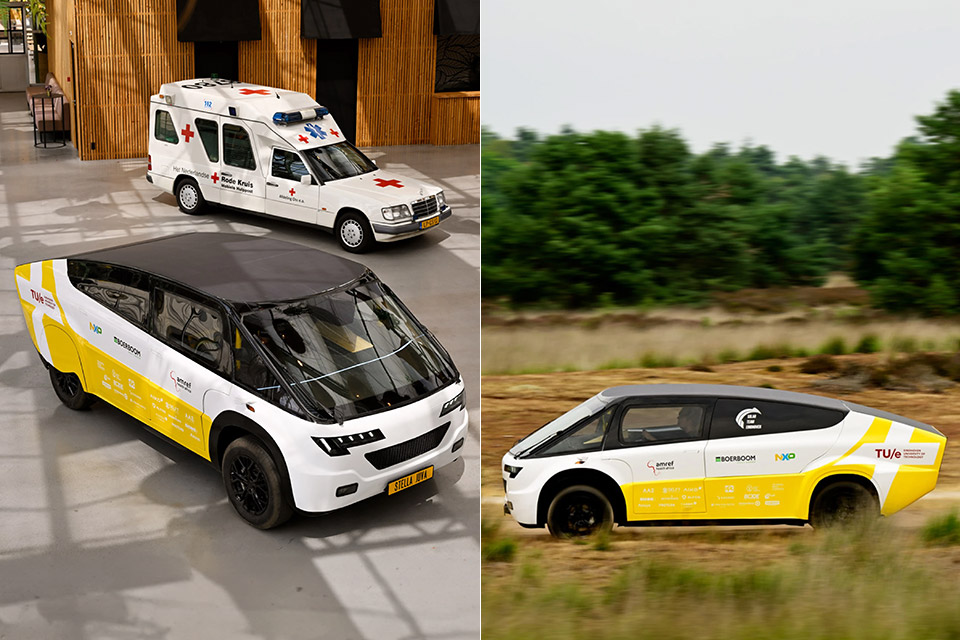
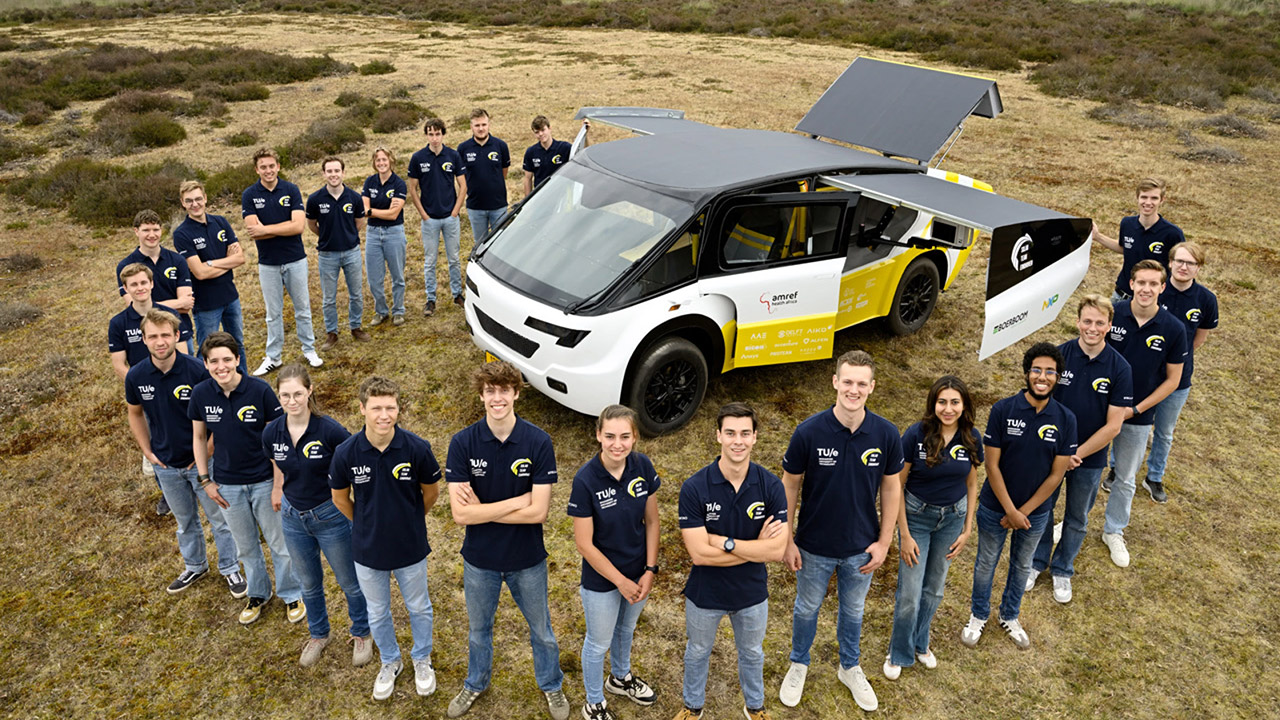
Twenty-three university students in the Netherlands spent a full year away from their regular classes and delivered something no one else had managed. On a July afternoon in 2026 they rolled out Stella Juva, a two-seat ambulance that generates its own electricity from the sun and uses that power both to move across difficult ground and to run a full set of medical tools. The project comes from Solar Team Eindhoven at Eindhoven University of Technology, the same group that previously built a solar family car, a solar camper, and an off-road solar vehicle that crossed Moroccan desert terrain.
Stella Juva is five meters long and slightly less than two meters wide. A carbon fiber composite keeps the overall weight to 1,350 kg, which is nearly half that of a traditional ambulance. The body is sleek and aerodynamic, designed to cut thru the wind with little resistance. A simple electrical speed limiter will keep things stable at 120 km/h, which is the maximum speed. Inside, there are only two seats, which is insufficient for a crew, but the vehicle’s back holds a medical suite rather than a stretcher. The reasoning is that it is far preferable for the vehicle to be able to travel to the patient rather than transporting them all the way to the hospital.
Simultaneously Charge 6 Devices: The BLAVOR solar charger is your ultimate charging solution! With its 4 built-in cables (including 2 USB-C, 1 iOS…
High Battery Capacity and Fast Charging: Say goodbye to low battery anxiety! The BLAVOR solar power bank packs a whopping 20000mAh battery capacity…
7 Ingenious Accessory Functions: Prepare to be amazed by the BLAVOR solar panel charger’s versatility! It’s not just about charging; it’s about…
The top of the vehicle is covered with 542 solar cells from the Chinese manufacturer AIKO. 326 of these cells are mounted flush with the roof and body. The remaining 216 are installed on fold-out panels that extend while the vehicle is parked. These are ‘All Back Contact’ cells, which keep all electrical connections on the back, leaving the front side of the panel free of any wiring that could impede light. The designers employed copper interconnects and unique silver-free metallization to assist the panels resist the hard abuse this device will receive. The solar cells are connected to a bespoke inverter built by the students; it is extremely efficient, 97% in fact, and outputs electricity in a lovely pure sine wave that the sensitive medical equipment can handle, with no unexpected voltage drops.
Advertisement
A 50 kWh battery is used to store electricity for the night, when the sun comes out, or when medics must perform an energy-intensive task. The power management is divided into two zones, so if the stored power runs low, the medical component is automatically prioritized over the motors. This maintains the air comfortable and ensures that vaccines and medicines remain chilled even when it is extremely hot outside. The crew has a variety of essential equipment on board, including an X-ray device for TB screening, an ultrasound scanner for pregnancy checks, fast malaria tests, blood-pressure and temperature monitors, an automatic defibrillator, and several outlets for using other first aid equipment.
On a good day, the team believes Stella Juva can travel up to 715 kilometers on paved roads without needing to recharge, thanks to its solar panels that are always producing power and the battery that still has some energy in it. Off-road, it will most likely be closer to 360 kilometers, depending on the surface. That’s still a major accomplishment, because it means the vehicle can keep running without having to stop for a charge or a fuel stop. The team is quick to point out that all of this is still very theoretical, and that only real-world testing will provide them with the true data.
As for how the idea came about, the team collaborated closely with Amref Health Africa from the outset. They were aware that health personnel in some of the most remote areas are frequently forced to commute by bicycle or on foot due to high gasoline costs and frequent power outages. Stella Juva is intended to be a self-contained unit capable of arriving, screening, treating, and vaccinating before departing. In August 2026, the team intends to transport the prototype to Kenya and conduct field testing at two distinct locations, treating TB cases and performing a variety of other checks while logging some serious kilometers in real-world settings. [Source]
I’ve caught myself scrolling past an artist photo on Spotify assuming there was an actual human behind it, only to later find out I was wrong. That has been happening a lot lately. That guessing game is about to end.
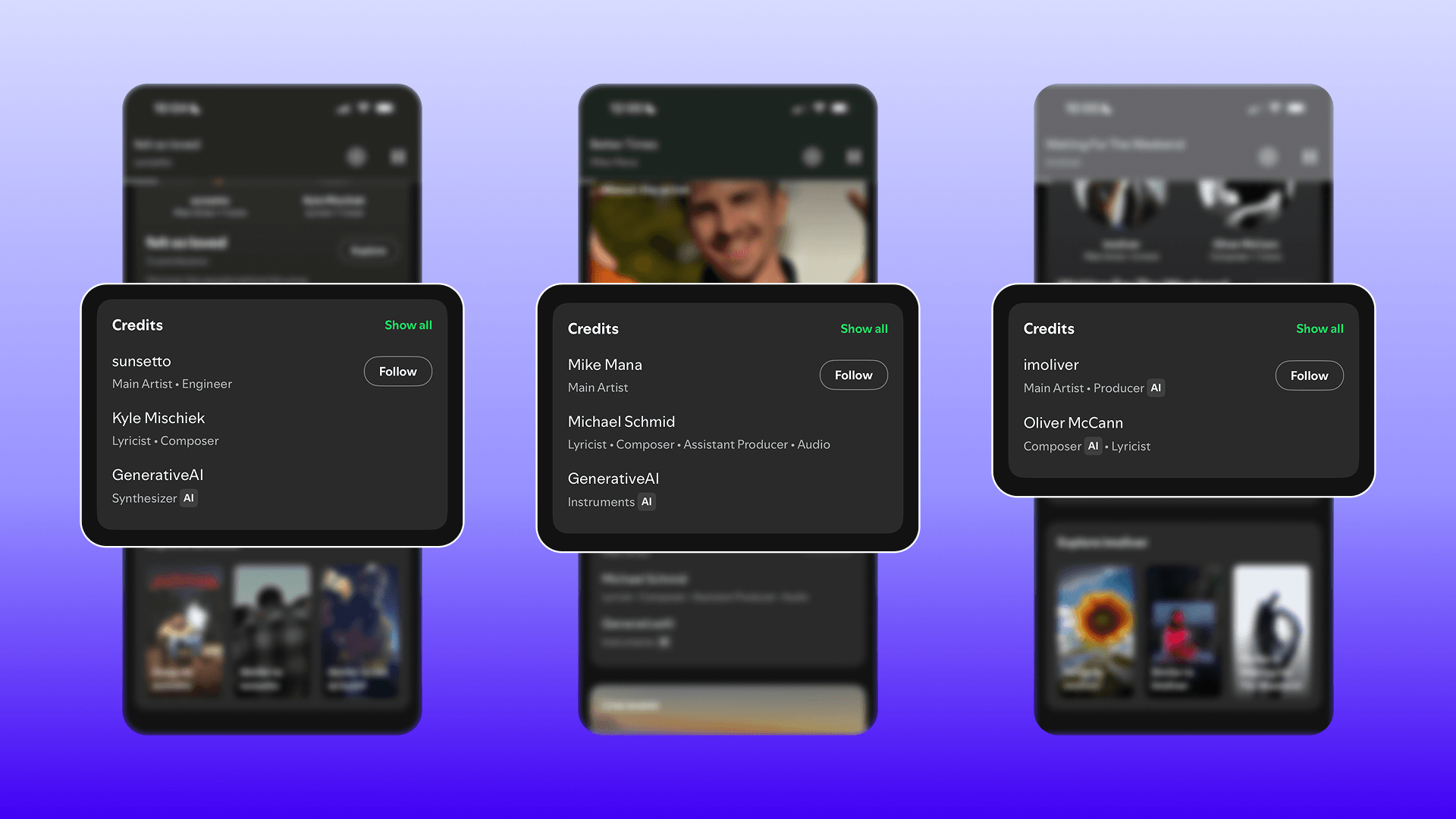
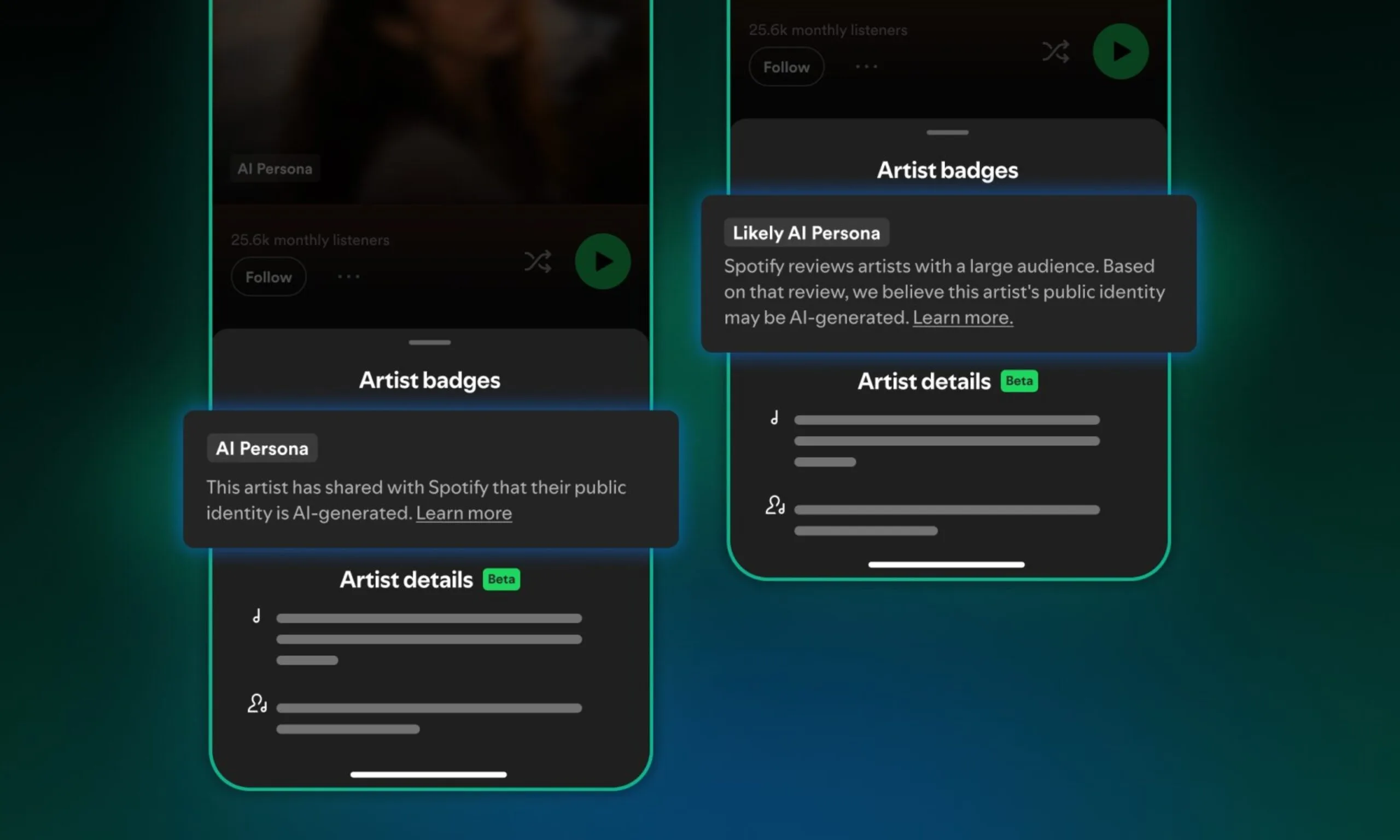
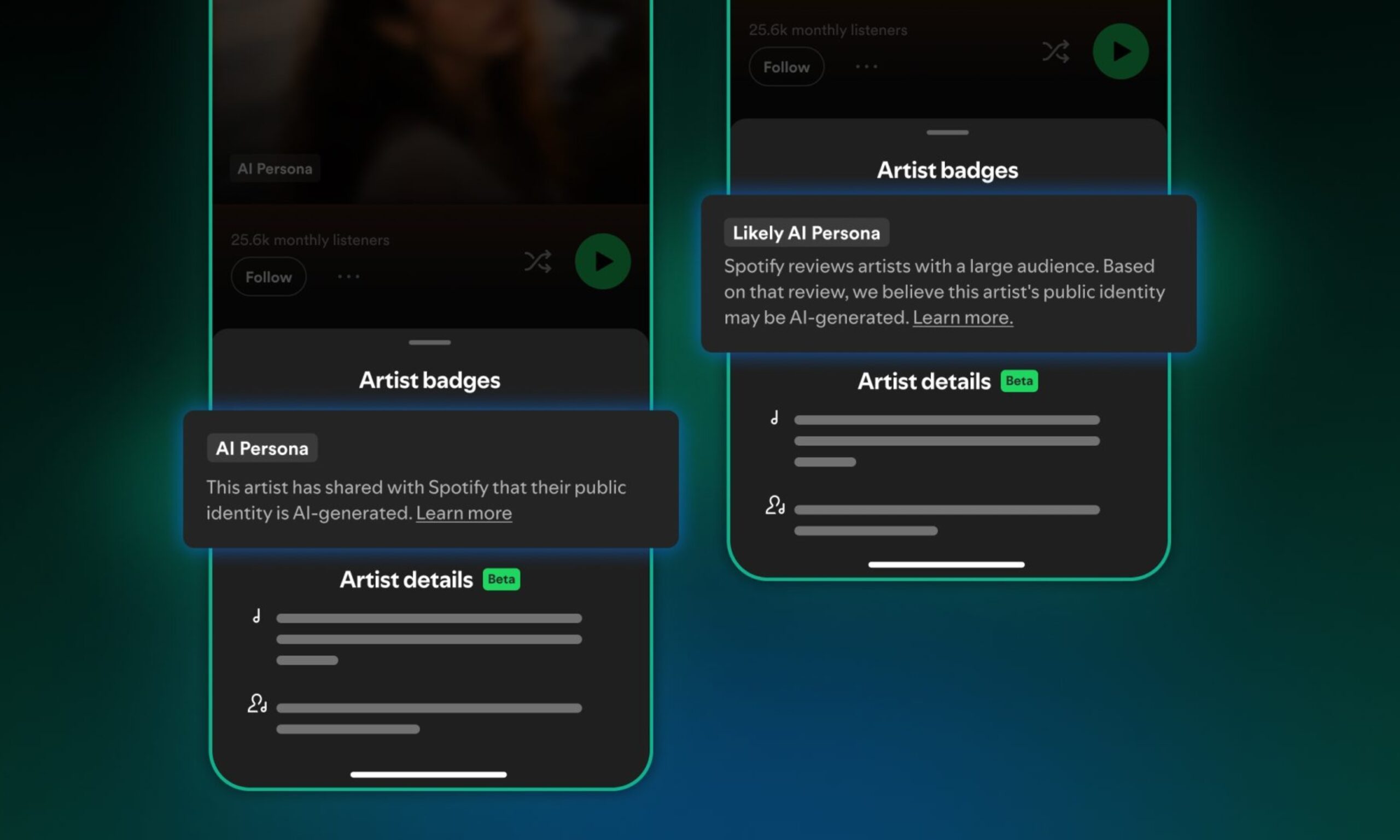
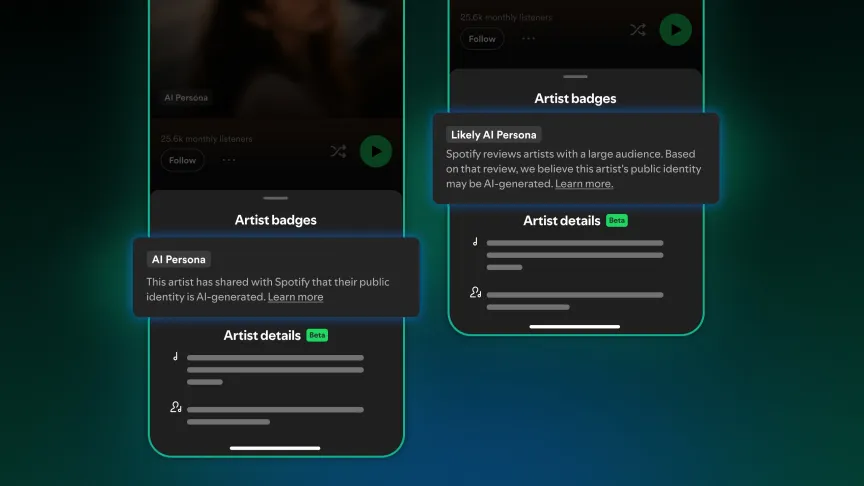
Spotify is rolling out a new “AI Persona” badge, which is designed to flag artist profiles built around AI-generated identities (anything from the name, face, bio, and visual image) rather than real people. The label will go live across the app starting in mid-September.
Spotify
So how exactly will this badge work?
Starting today, artists can voluntarily flag their profile with the “AI Persona” badge through Spotify for Artists. That’s the part where the streaming service is going easy on creators. However, it’s not like Spotify is leaning entirely on creators’ honesty.
The platform also has its own review process. It combines human moderators and AI detection tools to catch photorealistic AI-generated identities that haven’t been disclosed voluntarily. Reviews are beginning with artists who’ve already crossed certain listener thresholds.
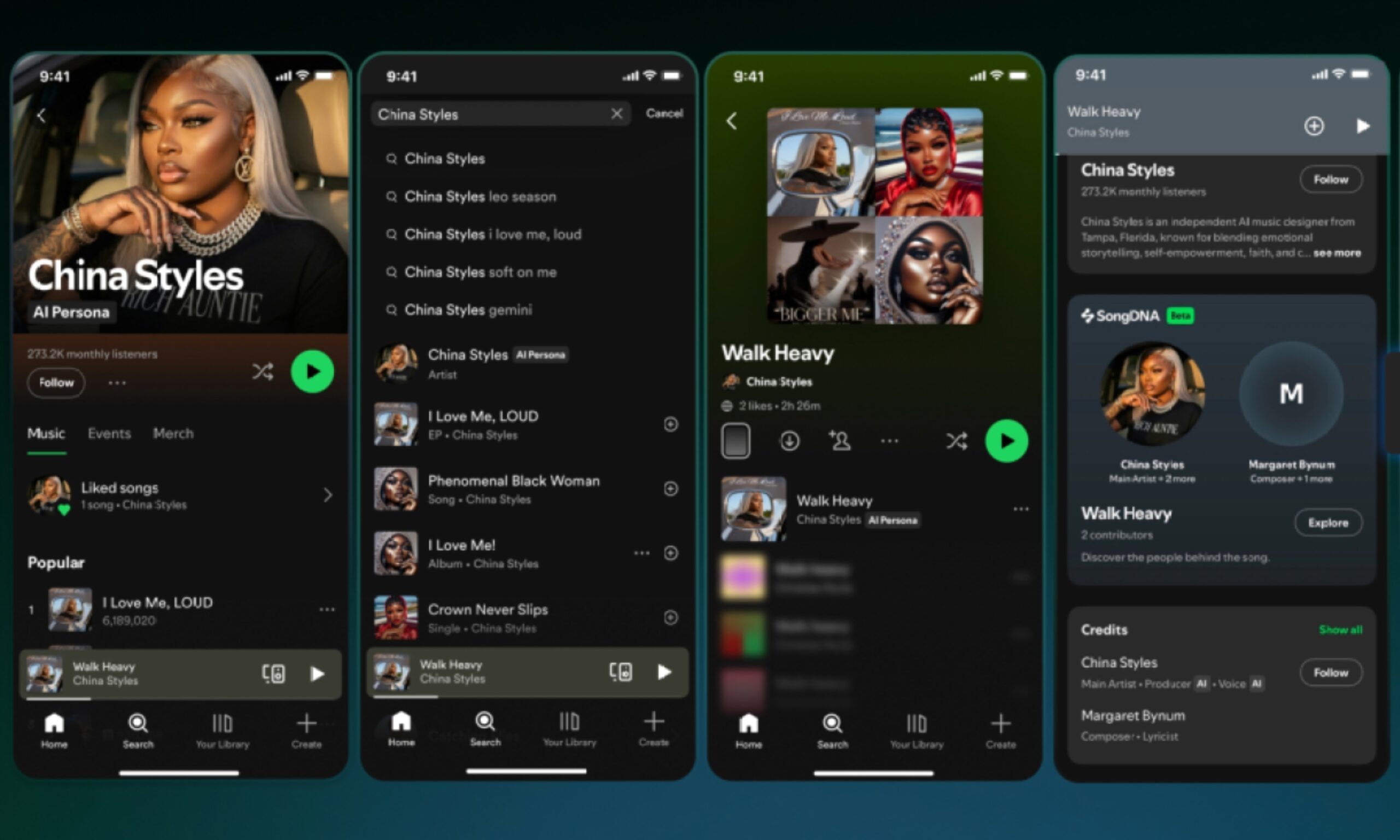
Spotify plans to complete the process by mid-September. Post that, the AI Persona badge will start showing up directly on the artist’s profile banner, the About section, inside Search results, and even on track listings within playlists. Basically, it will show up everywhere where listeners come across a creator’s profile.
Advertisement
If Spotify’s own review team applies the label rather than the artist disclosing it, that artist gets notified. Then, they can either confirm it or file an appeal with the platform.
Spotify
What happens to their music once they’re labeled?
Here’s the part with real teeth. Spotify isn’t just trying to flag identities that are created using AI. In the process, it’s also trying to bump up the reach and discoverability of organic content. Once a profile carries the AI Persona badge, its music is excluded from personalized recommendations, unless a listener specifically chooses to follow that artist.
That said, I also want you to know that the badge only addresses whether the artist’s public identity is genuinely human, not whether AI played a role in actually producing the song. That bit is already covered separately through Spotify’s existing AI Credits and SongDNA features.
This fits into a broader trust push Spotify’s run all year, including its Verified by Spotify badge.
While tech leaders continue to debate the merits and pitfalls of open-weight AI models, developers aren’t slowing down. LTX on Tuesday released the newest version of its open world model, called LTX-2.5.
LTX-2.5 is an open world model, which is different from most AIs you probably know. While LLMs are good at generating text, world models are complex webs that translate the physical world into a language that generative AI can understand. The idea is that the model has a grounded understanding of our world, so it hallucinates less. Think about robots that can navigate a room without bumping into anything, or AI video clips that know to have people walk around objects rather than fade through them like a poltergeist. You can use world models to simulate digital environments, generate content and help program robots.
The new model has improvements to reduce the number of visual artifacts (or errors) the AI makes, better consistency across generations thanks to a new pixel diffusion process. Because it’s an open model, companies can download and customize the model for their own needs; that helps keep their intellectual property safe. So a movie studio could use LTX-2.5 to create and edit video clips featuring their characters. LTX-2.5 is optimized for local inference on Nvidia’s RTX GPU, which means developers can run it on their own hardware and keep their work away from cloud-based AI services.
LTX-2.5 is available to download and use now on sites like HuggingFace and ComfyUI.
Advertisement
LTX is one of the most popular developers of open-weight AI models. LTX’s models have been downloaded more than 33 million times by HuggingFace users, including those who made their own versions based on LTX’s blueprints. OpenAI and Google each have a family of open-weight models, GPT-OSS and Gemma 4, respectively, though the companies’ number of closed models far outnumbers their open-weights ones. Anthropic has no open Claude models.
Open-source advocates have long argued that the best way forward is for tech companies to make public disclosures about how their tools work. That debate has only intensified in the AI era. Popular Chinese models are being released in open formats, like the new Kimi 3 from Moonshot, which gives developers, researchers and cybersecurity experts insights into how it works. When the Trump administration was reportedly considering banning Chinese and other foreign AI models in July because it was worried about cybersecurity threats, many industry leaders spoke up, saying such a move could actually threaten cybersecurity.
While most AI leaders say open-weights models shouldn’t be banned, the big players aren’t rushing to release many of these kinds of models. Meta CEO Mark Zuckerberg is encouraging more open AI. He published a lengthy essay on Monday outlining his position that open-weight models will bring the “benefits of AI” to more people. Meta also released a new open-weights model called Muse Glimmer and promised to release the weights of another recent model, called Spark 1.2.
LTX has a similar philosophy. Neither government nor private companies would be good stewards of private AI models, CEO and co-founder Zeev Farbman wrote in a recent post. One is primarily motivated by ever-shifting political goals and the other by pure profit.
Advertisement
“It shouldn’t sit with a small number of decision makers, regardless of whether they’re in government or a limited number of powerful companies,” Farbman writes. “Decisions belong with the end users, through models they can control and inspect for themselves.”
Katelyn Chedraoui
Reporter 2
Katelyn is a reporter with CNET covering artificial intelligence, including chatbots, image and video generators. Her work explores how new AI technology is infiltrating our lives, shaping the content we consume on social media and affecting the people behind the screens. She graduated from the University of North Carolina at Chapel Hill with a degree in media and journalism. You can reach her at kchedraoui@cnet.com.
See full bio
Someone has ported Word for Windows 1.1a to Windows 11
It’s a fully native port
It’s not easy to get it up and running on your system — should you wish to — but there are other alternatives to the feature-creep of Notepad
Somebody has taken a version of Word from 1990 and created a fully functional port for Windows 11 — and as you might imagine, this is a word processor with an incredibly light footprint.
Tom’s Hardware noticed this feat, which was achieved by Justin Marshall, who’s the developer behind the ‘Microsoft Word for Windows 1.1a’ project on GitHub.
As Marshall explains, this is not an emulator or some kind of fudge, rather it’s a “fully working native Windows x64 port” of Word for Windows 1.1a which was codenamed ‘Opus’ back in the day.
Latest Videos FromTechRadar
Advertisement
This port was possible because Microsoft released the source code for the app (over 10 years ago), and Marshall took that code and ran with it. (As Tom’s notes, it’s available from the Computer History Museum).
Marshall explains that the project builds on that original Word source code (and complementary resources) with “modern replacements for the 16-bit assembly, segmented-memory, and Win16 platform boundaries”.
The result is a very simple word processor that takes the idea of a streamlined app to new levels. Indeed, this modern take on Word for Windows 1.1a can fit in less than 1MB of RAM in Windows 11. How’s that for lean? And there’s not a drop of AI in sight…
Advertisement
Analysis: Word up
(Image credit: Elnur / Shutterstock)
Can those fed up with Microsoft’s feature-creep in Notepad, or other bloat, go and pick up this spin on Word from 1990 for a breath of fresh air in terms of a lightweight word processor? No, unfortunately, as there’s no installation package to simply download and fire up.
Sign up for breaking news, reviews, opinion, top tech deals, and more.
That’s because, as Marshall points out, the “historical source files retain their original Microsoft and third-party copyright notices”, which means that commercial use or even sharing copies on the web isn’t permitted.
Advertisement
This is why if you want to use Word for Windows 1.1a on your modern PC, you’ll need to get it up and running by following the instructions on GitHub. This isn’t for the technically faint-of-heart, as you might guess, and you’ll need Visual Studio 2022 with Desktop development with C++, a Windows 11 (or 10) SDK installed through Visual Studio, as well as CMake 3.25 (or newer) and PowerShell.
In short, it’s unlikely that many people will go to the effort, but it’s not surprising that a fair bit of interest has been stoked in this project simply because of not just the novelty — although that’s obviously the driving factor — but also as it’s an illustration of how far Word can be stripped back, running with such a tiny footprint and resource usage.
One Redditor commenting on this simply said: “Not all heroes wear capes.”
Advertisement
Another observed: “For the curious, Microsoft Office 97 will install and run on Windows 11 with no hassle. I’ve been using it for years now just for the fun of it.”
Bear in mind, of course, that should you take that approach, you’ll be lagging behind considerably for supported file formats, and also in the security stakes (that’s the main drawback with using apps that haven’t been updated in a long time, and lack patches against exploits that have since popped up).
If you are keen on a lightweight alternative to Notepad, then take a look at TinyRetroPad, which is built very much in the same vein as the original Microsoft text editor, and is just as tiny as the name suggests.
Music fans who are seeking to pin down AI artists versus human creatives on Spotify will soon have a new tool at their disposal. On Tuesday, the music streamer shared that it’s adding an “AI Persona” label to the platform as another way to help fans — and artists — identify AI creators. The badge will start appearing in profiles, songs, search results and in an artist’s About section in mid-September.
If you’re worried about those tracks popping up in your finely tuned algorithm, don’t. Spotify explained that AI Personas will automatically be excluded from your personalized recommendations by default, unless you choose to follow the AI Personas account or a specific AI music profile.
How will the streamer pinpoint which accounts are AI? Starting Aug. 11, accounts can self-report via Spotify for Artists, but Spotify will also conduct its own reviews and tag profiles with the AI Persona label. According to the streamer, it will check “artist profiles and identify those whose public identity — the identity an artist presents on their profile, including name and imagery — appears to represent photorealistic AI-generated identities.” To take it a step further, when you, as a listener, click the badge, you’ll be able to see whether the artist disclosed their AI identity themselves or if Spotify classified them as an AI artist.
Spotify
During the coming months, the streamer will enable listeners to flag suspected AI profiles. Artists can appeal if they think they’ve been incorrectly designated as AI. The company clarified that the move is about verifying an artist’s authentic identity, not about how the music was made.
It’s one of the latest ways Spotify is aiming to help listeners distinguish between AI and human artists. While the streaming service has a range of AI tools that let subscribers curate their listening experience, it’s also launched artist profile protection, verification badges and policies to crack down on deepfakes.
Advertisement
Kourtnee Jackson
Senior Editor
Kourtnee covers streaming services and entertainment. She previously worked as an entertainment reporter at Endgame 360, where she wrote about film, television, music, celebrities and streaming platforms.
See full bio
Really, the shape is ideal for long-term use. It’s fairly ergonomic, and it’s easy enough to lay your hand across with a relaxed grip. I found it to be a great option for raid nights in Destiny 2 (with as many as five or six Crota runs in one night) and more chill games like The Big Walk, where precision and agility take a bit of a back seat to consistency and comfort.
While the Naga V3 Pro weighs 116 grams with the heaviest twelve-button side panel (the six-button panel is 115 grams, and the two-button is 113), the mouse doesn’t feel particularly heavy. The weight is all kept fairly low, and is distributed well across the mouse. Compared to some older mice with high-up batteries and nose-heavy shapes, the Naga hardly feels like its weight; I would’ve guessed it was below 100 grams if I hadn’t checked. You’ll notice the added heft if you’re switching directly from a 60 gram gaming mouse, but otherwise, this mouse manages its mass very well.
One downside to its old-school vibe is the limited color options. Black is the only version available, and while that’ll always be the most popular (especially for Razer), a more niche mouse like the Naga V3 Pro could have definitely benefitted from another color.
Advertisement
So Many Buttons
This mouse has an absurd number of buttons. I found myself struggling to use all of them, but I’m sure there are quite a few people who still won’t think it’s quite enough.
Like the Logitech MX Master 4, the Naga incorporates a customizable mouse wheel with options for smooth or ratcheting operation, along with a “precision tactile” mode that decreases the space between each of the scrolling steps. The wheel also has a tilt function for horizontal scrolling; it’s ideal for spreadsheets and multimedia work that requires two axes of movement, but can just as easily be remapped to any number of macros (I could see it being useful for leaning to the left or right in a tactical shooter like Rainbow Six: Siege).
Drawing further comparisons to the MX Master line, I really found this mouse to be good for everyday work. The comfortable shape and extensive navigation capabilities made it great for multimedia work, and the number pad was ideal for mapping software-specific functions, especially for photo and video editing software that can require some repetitive and complex inputs.
Despite the sheer number of buttons, I really found that they never got in the way when not in use. All of them are placed in such a way to be easily accessible without disrupting the basic left and right click functionality. The only button I found myself regularly pressing on accident was the third click button, which can be locked entirely using a switch on the underside of the mouse.




























































You must be logged in to post a comment Login