PM scrapping Blair-era planning rule and requiring planning permission for e-cigarette outlets on the high street
Nina Lloyd Press Association Political Correspondent
11:34, 11 Aug 2026
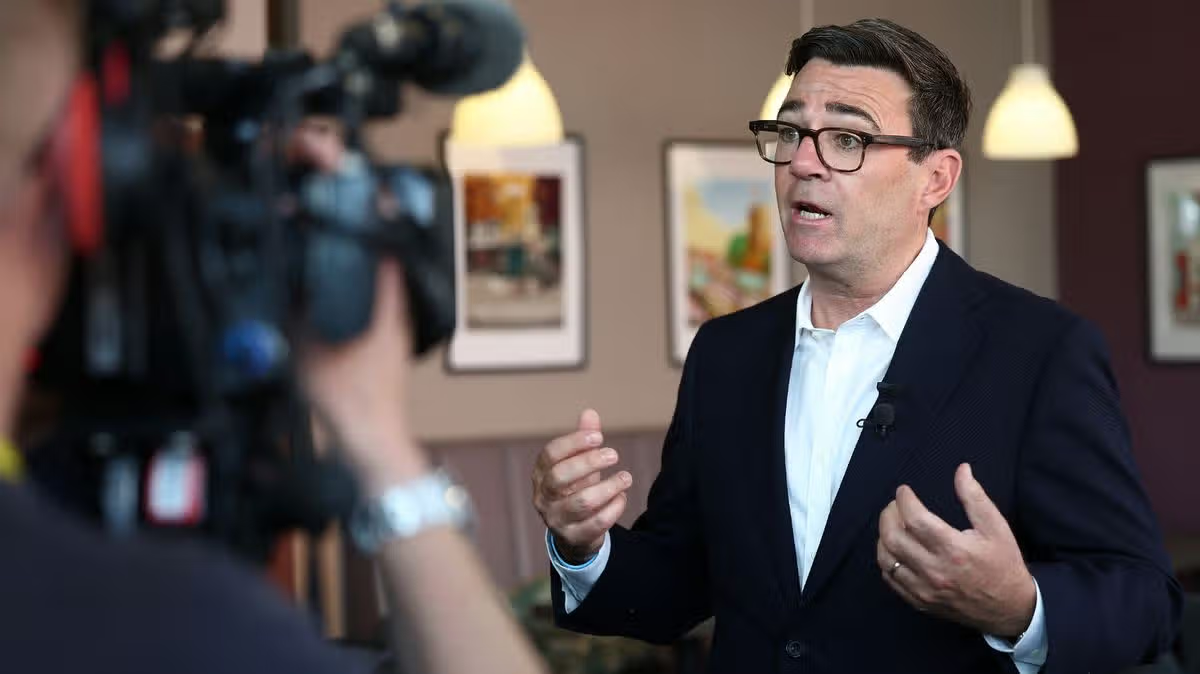
UK Prime Minister Andy Burnham speaks during a TV interview at The Hub cafe following a visit on August 11, 2026 in Ilkeston, Derbyshire(Image: Getty Images)
Andy Burnham has vowed to grant councils greater powers to block new bookmakers and vape shops in a bid to revive Britain’s “hollowed-out high streets”.
The Prime Minister intends to abolish the so-called “aim to permit” rule, which restricts the ability of local authorities to prevent betting shops and 24-hour slot machine venues from opening in their area.
Planning permission will also be required for outlets selling e-cigarettes, as part of wider efforts to give communities a stronger voice under the proposed changes.
The formal definition of a vape shop will be tightened to prevent businesses circumventing the new rules by claiming to be a “convenience store or a retailer”, officials confirmed.
Adult gaming centres offering up to 24 hours of access to slot and fruit machines will likewise require planning permission under the shake-up, which is expected to come into force at the start of next year.
Under proposals first announced by Sir Keir Starmer’s government, police will also be empowered to shut down “dodgy” barbers, vape shops and nail salons for up to a year.
The maximum duration of so-called “closure orders” will be extended from six months to 12, affording officers more time to investigate premises linked to organised crime.
Officials added that the Government would also establish clearer expectations for the design of high-street shop fronts, with the aim of improving their appearance and heading off complaints about “garish neon signs” and “oversized logos.”
Working alongside local authorities, the Government will publish “practical guidance” for councils on how to make town centres more appealing, officials confirmed.
The “aim to permit” policy was introduced when Sir Tony Blair’s Labour government, in which Mr Burnham served as a minister, liberalised gambling legislation in 2005.
The Prime Minister, having taken a holiday just over a fortnight into his tenure, is set to spend much of the remainder of August travelling across the country consulting people on how the Government can better their lives.
Officials have indicated he will be in “listening mode”, with a particular focus on rejuvenating high streets and addressing the cost of living.
However, he faces mounting pressure over his management of the prisoner-release row, as two of Pc Andrew Harper’s killers are still to be freed early despite Mr Burnham’s review of the proposals.
Mr Burnham said Tuesday’s announcement would help put local communities “back in control”, enabling councils to curb the proliferation of unwanted shops and breathe new life into town centres.
He said: “For many people, the high streets they grew up with have been hollowed out and become unrecognisable over decades of decline.
“The rise of vape shops, betting shops and rogue operators have replaced the shops, services, and community spaces that people are crying out for.
“That’s not on. I said we would improve Britain’s high streets, and that’s exactly what we are starting to do.”
He added: “High streets are the beating heart of local communities, but for too long Westminster has stood by while they have been in decline. This Government is committed to restoring our high streets and bringing back hope across Britain.”
The Centre for Social Justice think tank, which has conducted analysis revealing that Britain has lost nearly 1,800 pubs and bars while vape and tobacco shops have grown in number to almost 2,200 since 2016, welcomed the proposals.
Joshua Nicholson, head of housing and communities at the think tank, said: “The Government is right to give councils new powers to say no to these dodgy shops. High street renewal is vital to restoring security within our communities.”
However, the Betting and Gaming Council challenged any suggestion that betting shops were proliferating unchecked, insisting the real threat to high streets was “more empty units and fewer local jobs, not businesses rooted in the communities they serve”.
A spokesperson for the industry body said: “We support tough action against criminal operators and agree local people should have a proper say over their high streets. But the suggestion that betting shops are spreading unchecked is simply wrong.
Prime Minister Andy Burnham speaking in Derbyshire today
“Betting shop numbers have fallen by over a third since 2019. Around 3,000 shops have closed and over 15,000 jobs have already been lost.
“It is wrong to lump highly regulated, licensed betting shops together with rogue or criminal businesses. Betting shops still support 37,500 jobs, bring vital footfall to neighbouring businesses and, for many customers, are valued community hubs.”
Eamonn O’Brien, chairman of the Local Government Association, said: “It is positive that councils and communities will get a greater say on what shops and services are found on their high streets through these changes to the Use Class Order which will require vape shops to acquire planning permission.”
He added: “Extra powers will help councils in revitalising high streets and shaping their communities, particularly in regulating betting and vaping shops, while also breathing new life in to empty premises.”
Gillian Golden, chief executive of the Independent British Vape Trade Association, said: “Rogue vape traders on the high street have been a blight on the legitimate sector, so we welcome measures such as extending closure orders on dodgy shops.
“For too long the media have conflated organised criminal networks with law abiding vape businesses, when in fact these criminals just see illicit vapes as a commodity in the same way as illicit tobacco or counterfeit goods. That has damaged the public’s understanding of our sector.
“Research has shown that if even half of England’s current adult smokers were to switch to vaping, it would save the NHS £0.5 billion. Vaping will be soon be subject to excise duty, which HM Treasury estimates will bring in £0.2 billion in its first partial financial year (2026–27) and £0.6 billion per year by 2030. Cutting out illegal trade in vapes will be key in ensuring Vaping Products Duty contributes to the UK economy rather than reinforcing an existing illicit sector.”
Opposition critics have attributed the high street’s decline to the burden of business rates and called on Labour to introduce more ambitious reforms.
Shadow communities secretary Sir James Cleverly said: “Everyone can see what has happened to our high streets, with once-treasured shops being replaced by a smattering of rogue operators, many of which have links to organised crime and fraud.
“Labour’s business rates hikes have hollowed out our high streets, driving out the shops people want and leaving empty units for whoever is left standing to fill.
“Conservatives would cut business rates for high street firms and back the small businesses that give a town centre its character.
“Unless the Government takes steps to support the high streets and hard-working businesses, Labour’s increases in planning regulation will just mean more empty and boarded-up shops.”
Reform UK Treasury spokesman Robert Jenrick stated: “Until this Government scraps the jobs tax, addresses sky-high business rates and provides real, fundamental support for high street businesses, this policy will only create even more empty shops on our high streets.
“Preventing businesses from opening only works if the Government and local councils make it attractive for the right kind of shops to open in their place.
“Labour is doing the opposite by making life harder for small, legitimate businesses to operate on our high streets.”
Liberal Democrat home affairs spokesperson Max Wilkinson remarked: “Unless he beefs up powers to properly crack down on vape shops and dodgy operators, Burnham’s plans could go up in a puff of smoke.
“Our high streets are in crisis, so rolling the dice and keeping his fingers crossed these minor changes are enough simply won’t win the hand.
“He should scrap the failed business rates system and urgently give sweeping new powers to councils so high streets can prosper and trading standards officers can permanently shut repeat offenders.”






















































You must be logged in to post a comment Login