Connect with us

Tech

Workers at OpenAI, Anthropic, and Meta say AI is making their jobs harder, not easier

Published

on

The big picture: AI tools are being sold as a way to make work faster and easier. But employees at some of the companies building those tools say the opposite is happening inside their own workplaces. Current and former workers at OpenAI, Anthropic, Meta, and Google told the BBC that developing AI often involves long hours, weekend shifts, and constant pressure to meet product deadlines.

At OpenAI and Anthropic, some employees said major development pushes can last for weeks and involve more than 90 hours of work per week.

One former OpenAI technical employee said they worked at least 70 hours most weeks before leaving the company last year. They now work at another AI startup and said their schedule is closer to 50 to 60 hours a week, except during intense release periods known as sprints.

“You go in on Saturday or Sunday just to catch up or make sure things aren’t broken,” the person said.

Advertisement

That experience does not line up with the public message from many AI leaders. Google predicted several years ago that AI could help make a four-day workweek possible. Earlier this year, OpenAI encouraged companies to experiment with four-day schedules without cutting pay, saying AI would soon accelerate much of the work people do.

The former OpenAI employee said the company did not try a four-day workweek while they were there. Instead, they described regular “crisis meetings,” weekend work and “super cut-throat” performance reviews that could lead to sudden layoffs. OpenAI and Anthropic did not respond to the BBC’s requests for comment.

The workload is partly a result of the pace of the AI race. Companies are trying to improve models, build more computing infrastructure, and add AI features to products at the same time. That creates pressure on engineers, researchers and product teams to move quickly and fix problems as they arise.

Anthropic has said its Claude tool can work independently for seven hours on some tasks. Meta CEO Mark Zuckerberg has said AI will allow smaller teams to do more work. Yet employees say these systems are not reducing the amount of work expected from them. In many cases, they are simply being asked to produce more.

Advertisement

Meta workers described being moved onto AI teams with little warning. A current employee and a former employee told the BBC that workers called the process being “drafted.” The former employee said people often had little meaningful choice about joining an AI project.

“They just move you over,” the former employee said. “You can’t say no – or if you do, you have to quit.”

Those teams are working on AI systems for software engineering and other tasks, along with infrastructure that measures how well models can perform work typically done by people. The former employee said the work had no clear endpoint.

“You’re literally working in teams of people trying to replicate humans doing jobs,” the person said.

Advertisement

Meta has reportedly softened its reassignment approach, but workers said many employees had already been placed on AI projects. They described late nights, weekend work, and a feeling that they remained on call even when they were not actively working. A Meta spokesperson declined to comment.

The strain is not limited to people directly building AI models. Amin Shali, a former Google employee, said he left the company in May after seeing internal engineering systems fail more often. He said Google had shifted key resources, including processing units and memory storage, to AI projects, leaving other teams dealing with disruptions.

Shali said the problems often required engineers to work through the night. Since leaving Google, he said his sleep and health have improved. He said heavy use of AI tools at large companies “creates a bad culture with excess pressure on engineers.” A Google spokesperson declined to comment.

Research from UC Berkeley suggests that AI can increase workloads even when it makes individual tasks faster. The study followed hundreds of workers at a US tech company for eight months and found that employees using AI worked at a faster pace, handled more tasks and worked later into the day. They also had to spend time checking AI-generated output.

Advertisement

Neil Thompson, an innovation scholar at MIT, said companies are unlikely to give workers more free time when AI creates efficiency gains. Instead, those gains often lead to new tasks, more oversight, and higher expectations.

“People assume that 20% less work means four-day weeks,” Thompson said. “But new work emerges.”

Source link

Advertisement
Continue Reading
Click to comment

You must be logged in to post a comment Login

Leave a Reply

Tech

Bumble Changes the Feature That Made It Different From Other Dating Apps

Published

on

Launched in 2014, Bumble rose in popularity as a unique alternative among dating apps with a policy requiring women to message first in matches between men and women. With Tuesday’s update, Bumble will let either person in a match send the first message.

The app’s previous requirement that matches must respond within 24 hours, or the match would expire, has been extended to 72 hours. 

“While women making the first move was a radical idea, being women-first was never about prescribing just one way to connect. It was about designing an experience with women’s needs in mind to create better outcomes for everyone,” Bumble CEO Whitney Wolfe Herd said in a statement (PDF).

“Today, our community is asking for more flexibility, less pressure and more opportunities to create real, meaningful connections and that is what this new experience provides. This evolution isn’t a departure from our founding vision, but the realization of it.”

Advertisement

CNET reached out to Bumble for comment on how it plans to stand out from other dating apps, including Hinge, Tinder, Match.com and OkCupid. 

Why is Bumble changing its chat experience?

The company said the changes reflect “member-backed insights around how dating has grown over the past decade.” 

The company said a recent survey of users found that nearly two-thirds (66%) of women preferred that men send the first message, and that more than half of those surveyed said that increasing the reply window from 24 hours would improve their experience. 

The survey also found that expectations in dating are evolving, with 62% of respondents saying they are more confident when given flexibility in how and when to begin a conversation with a match. 

Advertisement

The company says these changes build on other updates “to improve every stage of the dating journey.” For instance, Bumble is one of many dating apps that incorporate AI-powered features such as AI-generated prompts and profile feedback.

Source link

Advertisement
Continue Reading

Tech

Zoom Screen-Sharing Bug Let People Fully Take Over Other Devices On A Call

Published

on

Cybersecurity researchers discovered a fairly insidious bug in Zoom that lets people quite literally take control of someone else’s device. This is done by exploiting a flaw in the screen-sharing function. The vulnerability has been found in the Zoom Workspace app for Windows, Mac, iOS Android and Linux.

Attacks do not require the victim to do anything and there’s no visible warning. When someone launches the annotation tool while sharing the screen, the vulnerability lets bad actors remotely execute malicious code for access.

However, it remains to be seen if this vulnerability has ever been used in the wild. The researchers that found it used AI prompts to develop the screen-sharing exploit in under 24 hours, illustrating how AI could assist in cyberattacks.

Advertisement

“This class of capability would previously have only been available to nation-state threat actors, but the model requiring elite teams, months of effort and weapons-grade budgets has collapsed,” the cybersecurity company wrote in a blog post. “Today, a single researcher was able to develop a nation-state-level exploit in less than a day.”

Zoom was notified about the bug and has deployed various fixes to mitigate the threat. It says “users can help keep themselves secure by applying the latest updates.” The vulnerability exists in all Zoom Workspace versions prior to the latest updates.

Something similar just happened to Apple computers, forcing the company to issue various macOS updates. The newest versions, including Tahoe 26.6.1, Sequoia 15.7.9 and Sonoma 14.8.9 are all safe.

Advertisement

Source link

Continue Reading

Tech

Turning A Toy Game Boy Into A Real Game Boy

Published

on

In the world of children’s toys there are many offerings which are meant to look like devices used by older kids or even adults, with the Fisher Price Laugh & Learn Lil’ Gamer toy bearing quite the resemblance to Nintendo’s iconic Game Boy. Although this factoid could be filed away as amusing trivia before passing said toy to a child for its requisite physical abuse by said child, a purported adult can still have a lot of fun with this toy by modding it into a real Game Boy, as [KOUZEX] recently did.

Part of the challenge here is to not just treat it as an unconventional replacement shell for a genuine Game Boy, but to retain as much of the child toy’s look and feel as possible. This includes things like buttons and even the weird sliding blocks on the side.

For the functional components a Game Boy Color with a busted screen was chosen as a donor, with the GBC mainboard fitting almost perfectly inside its new shell. Wires were then soldered to bridge Nintendo’s PCB with the toy’s PCB to make the original buttons and speaker work. After blowing a fuse on the GBC mainboard due to likely some power back feeding, the toy’s PCB had its non-essential parts stripped, but fortunately without further damage to the grafted in electronics.

Advertisement

Most of this mod is quite straightforward, just with some creativity required to add a Select and Start button as these were notably absent from the original. The new, rather large replacement OLED screen is a nice upgrade too and actually fits pretty well with the chunky look of the child’s toy. Even as mostly a joke mod, it seems surprisingly functional.

Advertisement

Source link

Continue Reading

Tech

The Censorship Industrial Complex Didn’t Exist Until The People Who Invented It Took It Over

Published

on

from the nonsense-peddlers-peddling-nonsense dept

For many, many years now we’ve been calling out how the entire narrative around the “censorship industrial complex” was absolute bullshit, made up by a group of either deliberate misinformation peddlers or confused “contrarian” journalists too stupid to understand how basic things work. And I say that as someone who has long been critical of efforts to “ban disinformation” online, and especially of attempts to regulate mis or disinformation.

So when the whole narrative of the “censorship industrial complex” came about, you’d think that I would have been on board, having called out years of efforts by politicians to pressure companies into removing certain speech along with a moral panic about “disinformation.”

But, reality matters. And that’s why, when stories started popping up about a vast collaboration between tech companies and governments to “censor” people based on ideological viewpoints, I looked at the details — and it was basically all bullshit.

The reality is that there are efforts at spreading disinformation and propaganda. And while I’m skeptical about how powerful or successful those can be… ironically, the one example that has caused me to reconsider my position is the success of the blatant lie about the “censorship industrial complex.”

Advertisement

Type Investigations and the MIT Tech Review teamed up to put together a deeply researched article highlighting how a group of bullshit peddling right-wing influencers basically invented the entire concept of the “censorship industrial complex” and were able to mainstream it across the right-wing mediasphere, deep into the Trump White House, and are likely a big part of the reason Elon Musk focused on killing USAID in his early days at DOGE. It’s quite a report. The key thing, though, is that a bunch of motivated propagandists took any effort at making internet websites safer… and insisted that they were about censorship. And then they would put together conspiracy cork boards insisting that these efforts were really controlled by the government.

The second Trump administration’s war on censorship has contributed to the dismantling of numerous government agencies, like the Cybersecurity and Infrastructure Security Agency at the Department of Homeland Security, the FBI’s Foreign Influence Task Force, and the US Agency for International Development (USAID), among others. It’s razed the infrastructure that tracks and counters attempts by foreign powers to influence elections and popular opinion. It has also been used to justify sweeping travel bans and sanctions on targeted individuals and entire industries. It’s provoked tensions with the European Union over its tech regulations, which these critics say silence Americans. And it’s even reshaped US national security strategy.

Its reach, though, isn’t limited to US bureaucracy, academia, or civil society groups. The weaponization of ideas about censorship also affects the billions of people globally who get information, or interact with each other, online—which is to say, just about everyone. 

Much of what has been characterized as censorship is really part of an effort to make the internet safer. This could include work quantifying just how often people online have generated nonconsensual sexualized content of women and children; helping victims of online stalking, doxxing, and other crimes seek justice; or identifying whether someone we are interacting with online is genuine and not, say, a foreign agent posing as an American voter. 

At the center of it all is a dude named Mike Benz, who was outed as a racist internet troll who spent years pushing the “great replacement theory” and screaming about “white genocide,” who reinvented himself from a low level Trump staffer in Housing and Urban Development into a self-styled “cyber expert” in the State Department who claimed he had inside knowledge on the whole “censorship industrial complex.” The reality is that Benz worked in the State Department for just a few months after Donald Trump lost the 2020 election, and already had a history of insisting that basic trust & safety work — including fact checking, let alone limiting or banning someone for violating a site’s terms of service — was “censorship.”

Advertisement

At the center of this effort is Mike Benz, Rubio’s interview partner last April. Benz served a brief stint in Donald Trump’s first administration but has largely remained unknown, even as some of his ideas—including the conspiracy theory that Taylor Swift was a NATO asset and the pro-white-identity content he published anonymously before he joined the government—have gained followers. Our analysis uncovers just how integral he in particular was to spreading the CIC theory: We found him to be the most prolific creator of related content online, which was in turn picked up by right-wing media outlets and podcasts and eventually reached the highest echelons of power in the US. His work prompted congressional—and eventually presidential—action and generated both attention and financial benefits for Benz personally. (Benz did not respond to multiple requests for comment.)

Last April, near the end of the interview at the State Department, Rubio shot Benz a friendly finger gun. 

“Thanks for your attention to this topic,” Rubio said. “I know you’ve been on this a long time.”

Benz spent much of the Biden administration trying to convince everyone of this vast censorship industrial complex. Notably, just days before this Type Investigations piece came out, Renee DiResta (who Benz and others falsely insist was a key player in this mythical censorship industrial complex) published a recording and transcript of the Twitter Spaces where a very credulous Matt Taibbi fell for Benz’s bullshit, leading to years of Taibbi spewing complete nonsense about the so-called “Twitter Files.”

Benz did not mention that he was appointed to this portfolio in November 2020. The Trump administration ended on January 20, 2021. His State Department tenure lasted roughly two months…over the holidays.

Taibbi bit immediately. He told Benz he’d sent him a DM, adding: “I’m very anxious to talk to you in a longer setting if that’s possible.” Benz, he said, “could probably be invaluable” to a huge project he was launching to map the same world.

Advertisement

Benz continued listing his bona fides: there was no close second with his knowledge, he said. He had delivered “eight or nine congressional briefings,” spoken with “four or five senators,” and briefed House and Senate committees. If Taibbi would talk to him privately, Benz said, he could describe “every single individual, institution, the chronology, the pretexts that were used, all of the dirty little tricks that were done each step of the way.”

“I can tell you literally everything,” he said.

“That’s great,” Taibbi replied.

As this new report points out, once Benz reached Taibbi (and via him, Michael Shellenberger), combined with Rep. Jim Jordan, you had a closed loop of utter bullshit, with each of them egging the others into deeper conspiracy theories on a foundation of confirmation bias and not bothering to check.

Advertisement

In a 2023 podcast interview, Shellenberger credited Benz with opening his eyes to the full extent to which conservative voices were being silenced. “We basically went from being concerned about bad forms of censorship by Twitter and other social media platforms to being concerned about government censorship,” Shellenberger said.

“We were, like, proverbially touching the elephant. We didn’t understand what the elephant was [until] we discovered your work, Mike.”

And it’s one thing if the damage to this were just about disinformation research. All that effort absolutely kneecapped the ability of the US to deal with foreign misinformation (and it’s mildly amusing watching MAGA folks now freaking out about how the US is so bad at responding to foreign influence campaigns, when they’re the reason that we destroyed our capacity). But as the Type Investigations article shows, the machinery Benz had spent two years building was also a big part of why Elon Musk shut down USAID, likely leading to hundreds of thousands of deaths. Benz deserves some of the credit for that apparently:

The agency had been a longtime obsession for Benz, who argued that it was an instrument of censorship as early as FFO’s first report in July 2022. An effort in Brazil to limit the spread of disinformation on messaging apps like WhatsApp and Telegram, FFO alleged, was a form of censorship financed by USAID and others. Later that year, Benz also accused USAID of funding what he called a “Countering Disinformation Guidebook for Digital Censorship.” In reality, it was a USAID primer for its overseas staff on how to recognize disinformation campaigns in the foreign countries where the agency operated. 

Our analysis shows that Benz and FFO were the dominant voices promoting conspiracy theories around USAID and censorship from 2022 until late 2024, when Benz talked about it on Rogan’s podcast. “USAID is effectively a ‘switch player’ to assist the Pentagon on the national security front, to assist the State Department on the national interest front, or to assist the intelligence community on a sort of clandestine operation front,” Benz alleged.

His appearance drew millions of viewers, including Musk. The trillionaire retweeted an X user’s glowing summary of the interview. “Mike Benz just revealed everything,” the user wrote, including “how ‘democracy’ was redefined to silence you.” 

Advertisement

This marked the first time Musk, newly installed at DOGE, had posted specifically about USAID. But Benz and Musk were already acquainted. The two had exchanged tweets and threads about censorship and other conspiracy theories for years.

Oh, and it should be mentioned that Marco Rubio hired Benz to spend his time sorting through what’s left of USAID to try to justify his bullshit claims, just as Musk had Taibbi and Shellenberger sniff through Twitter’s internal docs in the hopes that they would craft a narrative to support his prejudices.

The incredible bit to me here is that in both the Twitter Files nonsense and with the US government, Musk was always in a position where he could look at the source documents and details himself. He could speak to actual experts. Instead, he took the kook conspiracy theories from nonsense peddlers, assumed they were true because they fed into what he wanted to believe, and ran with them — with every bit of available evidence saying he was just swallowing propaganda.

The article also details the plumbing: how a small, heavily interconnected — and largely commonly funded — slice of the right-wing media ecosystem pumped these ideas back and forth until they looked like consensus:

Advertisement

In each case, our analysis found, CIC-related conspiracy theories on social media were supported by a number of conservative groups; key among them were FFO and AFL, which played a crucial role in obtaining government records they claimed showed evidence that conservatives were censored. FFO then used these documents to write exhaustive reports supposedly connecting the dots to explain how the censorship industry worked. AFL also instigated a number of lawsuits against supposedly CIC-implicated individuals and organizations. 

These materials were then amplified by a slew of right-wing media outlets, many with shared funding.

Much of that financing was funneled through the Informing America Foundation (IAF), a media-oriented grant-making organization that John Solomon helped to launch after leaving his position at The Hill back in 2019, following public scrutiny of columns about the Bidens and Ukraine. IAF funds a network of podcasts called Real America’s Voice, which includes shows run by key Trump allies like Steve Bannon, Jack Prosobiec, and the late Charlie Kirk, as well as Solomon himself. It also finances a network of what media scholars call “pink slime” websites, which are designed to look like nonpartisan local news but have a partisan slant. Benz appeared regularly on these podcasts and in these outlets, further embedding the CIC narrative in the right-wing information ecosystem—while simultaneously enhancing his own profile and revenue streams on X Premium and other platforms. 

As the article also notes, all of these jackasses pushing nonsense about a non-existent censorship industrial complex have basically all been either entirely silent or — worse — have effectively cheered on examples of the Trump administration actively censoring speech of critics. But, as free speech expert David Kaye mentions in that article, it seems like the claims about the censorship industrial complex is all fluff and nonsense to distract from the very real censorship of the Trump administration:

That’s why it’s important to look beyond the political narratives themselves and consider actions, says David Kaye, a law professor at the University of California, Irvine, and a former UN special rapporteur for free speech. “The administration probably realizes that … Americans do not generally feel censored by Europe or Brazil,” he says. But by focusing on Europe, Brazil, and the broader CIC idea, it hopes to “distract” from the fact that “Americans are definitely facing the most substantial censorship in, I don’t know, 100 years,” he adds—though “it’s actually the Trump administration” that is responsible.

The notion of a censorship-industrial complex is proving again and again to be a convenient and powerful pretext for silencing the loudest critics of those in power. “The very thing that they are accusing people of—censoring—is something that they’re now perpetuating,” says Jankowicz.  

Advertisement

And as the article points out, Benz is 100% on board with using the government to stifle speech. Just so long as it’s the speech of his ideological foes.

That, of course, may have been the goal all along. From the stage of the Heritage Foundation back in 2024, Benz spoke of the CIC as having its hand on a “God button” giving it the power to “control discourse on every political issue.” Now conservatives can wield that power themselves.

“Democracy is about the hearts and minds of the people,” he told the audience. “If you can simply shut off the ability to influence hearts and minds through censorship, you win by default.”

There’s much more in the article (also available at MIT Tech Review), and you should read it — not because you need convincing that Mike Benz is full of shit, but because bits of this conspiracy theory have leaked well outside of MAGA world. I still regularly run into perfectly reasonable non-MAGA people who believe some version of “the Biden administration worked with social media to silence conservatives.” It didn’t. But the story was told loudly enough, for long enough, by enough people who had a financial and/or political interest in telling it, that it became accepted wisdom among many.

And look at where it landed. The State Department shut down the office that tracked foreign influence operations, and Rubio announced it in a friendly video chat with the guy who spent a decade inventing the reason to shut it down. Rubio then banned five Europeans from entering the United States for the crime of advocating for content moderation rules he doesn’t like — calling them “agents of the censorship-industrial complex” — until a judge blocked it as “likely viewpoint discriminatory.” The State Department launched a website, freedom.gov, whose entire purpose is to relitigate other countries’ moderation decisions. And, of course, you have the Trump FCC chair going after broadcasters for airing jokes about the president and for platforming Democratic candidates.

Advertisement

Every one of those is actual censorship. Every one is the government using state power to punish speech it dislikes. None of those are a trust & safety team enforcing violations of its terms of service on its own private property.

So it was a disinformation campaign so successful that it kneecapped our ability to fight disinformation campaigns. That would be bad enough on its own. But the more lasting damage is that the censorship-industrial complex Benz spent a decade describing didn’t exist when he started describing it. But it exists now, and it’s controlled by Marco Rubio, Elon Musk… and Mike Benz.

Filed Under: censorship industrial complex, disinformation, jim jordan, marco rubio, matt taibbi, michael shellenberger, mike benz, misinformation, trust & safety, usaid

Advertisement

Source link

Continue Reading

Tech

Intel upsizes stock sale to $20B with spending plans still fuzzy

Published

on

SYSTEMS

Semiconductor giant says opaquely it will use the proceeds for ‘general corporate purposes’

Intel stands to raise $20 billion from a public offering of common stock after increasing the deal from the $15 billion announced on Monday, although analysts disagree over what the chip giant wants the cash for.

The Santa Clara biz initially announced a $15 billion offering before pricing the shares at $95 apiece and increasing the deal to $20 billion.

Advertisement

Intel is offering 210,526,315 shares at a price understood to represent a 6.5 percent discount to Friday’s closing level. It has also granted underwriters a 30-day option to purchase up to 31,578,947 additional shares at the same price.

The CPU maestro said the net proceeds from the offering would go toward “general corporate purposes,” which may include, but are not limited to, capital expenditures and working capital.

It also mentioned emerging areas including physical AI, purpose-built silicon, advanced packaging, and external wafers, all of which it sees as representing significant growth opportunities for Intel.

Reports suggest Chipzilla wants the money to help build Intel Foundry into a full-fledged contract chipmaking business.

Advertisement

The firm has been working toward this goal for some time, but has found it more costly than expected. Some observers believe the silicon supremo is taking advantage of the recent rise in its share price to raise extra cash.

But others expressed doubt, especially as chipmakers typically seek tens if not hundreds of billions for any significant expansion.

“The use of funds is not well-defined in any of the announcements (not unusual), and not all that much money for a semiconductor company,” said Gartner VP analyst for AI Infrastructure, Semiconductors and Quantum, Gaurav Gupta.

“Of course, this makes it easier for Intel to create new fabs, pursue M&A, and fund other activities, as it provides cash to the balance sheet. It is opportunistic as their market capitalization is up year-on-year,” he told The Register.

Advertisement

“I won’t read too much into this public offering of common stock as confidence in getting external customers – it could well be to fund fabrication capacity for internal products due to increased demand for CPUs (agentic AI workloads),” Gupta added.

Posting on social media site X, Moor Insights & Strategy founder and CEO Patrick Moorhead likewise commented that “it absolutely looks like more WFE,” meaning wafer fabrication equipment, implying that the money is for extra fabrication capacity to meet an expected increase in demand.

Moorhead later added that “demand is off the charts for this Intel offering,” and declared it a vote of confidence in Intel Foundry.

Intel declined to comment when we asked for an explanation.

Advertisement

Earlier this year, the firm disclosed that it had started “risk production” using 18A-P, the first of its planned enhancements for its cutting-edge 18A fabrication process, and potentially the first to be used for commercial customers of its foundry biz.

Intel will be hoping it has finally turned the corner after a dismal period in the company’s history. The chipmaker lost $267 million on revenues of $52.9 billion during 2025, compared to an $18.8 billion loss the year before that.

Last year, Intel agreed to give the Trump administration a roughly 10 percent stake in exchange for $8.9 billion in government funding, much of it previously allocated under the CHIPS and Science Act. ®

Source link

Advertisement
Continue Reading

Tech

Target appoints its first chief AI officer as retailers scale up AI spending

Published

on

Target has named Lowe’s executive Chandhu Nair as its first chief AI officer, starting August 24. IBM research puts the share of organisations with a chief AI officer at 76% this year, up from 26% in 2025.

Target has appointed its first chief AI officer. Chandhu Nair joins from Lowe’s on August 24 as senior vice president and chief AI officer. The retailer also named Purvi Shah senior vice president of user experience.

Nair was senior vice president of stores, data, AI and innovation at Lowe’s, and has previously worked at Staples and Gap. He said his focus at Target is a “more coordinated approach” to the technology, covering inventory management and faster decision-making.

The most meaningful AI stories won’t be about what happens in a lab,” Nair said in a statement. “They’ll be about what happens on the front line, how we make shopping easier for a guest, give a team member a better tool, make a business decision with more confidence or bring a new idea to market faster.

Advertisement

Target is not early to this. IBM’s Institute for Business Value found that 76% of organisations it surveyed had a chief AI officer in 2026, up from 26% a year earlier, and that those with one reported 5% higher returns on their AI spending. The job is now close to standard, and one of the job titles AI created.

The hire lands while Target is trying to win back shoppers and investors. It has been putting money into generative AI, including a tool called Target Trend Brain that forecasts the styles, colours and materials customers will search for. Last holiday season it launched a conversational feature to help shoppers pick gifts.

Its rivals have moved on similar lines. Walmart has been rolling out AI tools and agents across its stores and supply chains, Gap struck a partnership with Google’s Gemini this year, and Best Buy has arrangements with both OpenAI and Google.

The pressure has reached the top job. Former Walmart chief executive Douglas McMillon told CNBC in December that he handed over to someone “faster” who could use AI to accelerate the business, and John Furner took the role in February.

Advertisement

About a year ago, I really started feeling like this next run, you could see what agentic commerce was going to look like, the vision for AI shopping, and I started thinking about everything that needs to happen over the next few years, and it really caused me to think that now was the right time,” McMillon said. Stripe’s John Collison has made a similar argument, that agentic commerce will transform shopping.

That shift is further along elsewhere. Alibaba, Meituan and JD.com are already deploying shopping agents at scale in China, replacing the search bar rather than decorating it.

Source link

Advertisement
Continue Reading

Tech

What’s Scaleup Europe, the $5.7B fund that just backed satellite company ICEYE?

Published

on

Forget the European summer lull: startups can’t afford to stay still, and Brussels is following suit. In the middle of peak vacation time, the European Commission announced that the Scaleup Europe Fund was fully operational, with investments “expected in the coming weeks.” But its first deal was actually made public the very next day.

ICEYE, a Finnish satellite intelligence company now valued above $11 billion, is the first startup backed by this unique public-private vehicle, which co-led its Series F. Similar deals should follow soon; Scaleup Europe plans to deploy €5 billion ($5.7 billion) into growth-stage startups based in the EU or partnering countries and operating in strategic sectors.

“Space-based intelligence is becoming critical infrastructure for governments, and the Scaleup Europe Fund exists so companies like ours don’t have to leave Europe to compete globally,”  ICEYE CEO Rafal Modrzewski (pictured above) wrote on LinkedIn.

Even in less critical sectors, helping Europe build scaleups and keep them is key for its competitiveness and tech sovereignty — and that’s also the fund’s raison d’être. With the conviction that Europe misses out when its deep tech talent lacks late-stage funding or only finds it abroad, the Commission took the matter into its own hands, but it also partnered up.

Advertisement

Unlike other programs that are managed directly by European institutions and handing out public monies, Scaleup Europe is backed by private investors and run by Swedish asset manager EQT, which was selected via an open call to “experienced fund managers.”

Other candidates reportedly included Eurazeo, Northzone and Vitruvian Partners, with Atomico as final challenger. While it has offices across Europe, the firm may have been hindered by having its headquarters in London. But having pointed out the growth funding gap for years, still described Scaleup Europe as “urgent and necessary” when EQT was announced as the winner.

As for EQT, it described the initiative as a “big moment for Europe.” “Europe has proven its ability to create successful early-stage technology companies, the challenge is now to scale those businesses into becoming global leaders while maintaining their European roots,” EQT CEO and managing partner Per Franzén commented in a statement.

Notably, the Commission has given the fund manager some leeway as to where to invest — with a mandate “including but not limited to deep tech, life sciences, clean tech, advanced manufacturing, and digital technologies.” For EQT, this will overlap with the likes of AI, biotech, energy, robotics, semiconductors and space — as shown by ICEYE.

Advertisement

With ties to the Wallenberg family, which was initially listed as a potential anchor investor of the fund, EQT was arguably a front runner to run Scaleup Europe. With more than $300 million in assets under management, it will also be tasked with helping the fund reach its total fundraising target — starting with a “significant commitment” of its own capital. 

It is unclear how much capital Scaleup Europe has raised so far, but its first closing was anchored by a €1 billion investment from the Commission (approximately $1.15 billion) investing alongside institutional investors from all across Europe, credited as “founding investors.”

According to public information, these founding investors include German insurance giant Allianz; APG, representing Dutch pension fund ABP; Spanish bank-affiliated funds CriteriaCaixa and Santander-owned Mouro Capital; Italy’s Fondazione Compagnia San Paolo, Intesa Sanpaolo and Fondazione Cariplo; and Denmark’s EIFO and Novo Holdings.

Scaleup Europe’s fundraising is expected to extend into 2027, with a second fundraising round described as potentially open to non-European investors, as long as these are aligned with Scaleup Europe’s objectives. 

Advertisement

This might be a necessary compromise to raise the kind of capital Scaleup Europe is seeking. According to reports, the Commission suggested it could eventually expand to €25 billion ($28.9 billion). If it does, it would start belonging to the same category as Asian and U.S. growth funds. 

As it stands, Scaleup Europe’s €5 billion target already makes it an outlier in the EU — VC firms in continental Europe typically manage millions, rarely billions. But with the EIF’s European Tech Champions Initiative actively backing growth-stage VC firms as a fund-of-funds, this could quickly change. In other words, Scale Europe may soon just be there to fill the gap. 

When you purchase through links in our articles, we may earn a small commission. This doesn’t affect our editorial independence.

Source link

Advertisement
Continue Reading

Tech

Overwatch Season 4 Adds New Tank Hero D.Mon, Tweaks Maps and Systems

Published

on

Get ready to unleash your inner demon when Overwatch Season 4 begins on Aug. 11. The Blizzard game’s next chapter brings new tank hero D.Mon, who comes from the same robot suit-piloting Meka Squad as launch hero D.Va but brings a different style of gameplay to the hero shooter’s tank roster.

Yuna “D.Mon” Lee enters the roster as the first new tank hero since Domina back in February. The mech pilot has been in the lore since 2018, when she appeared in D.Va’s Shooting Star cinematic, and the community has been begging for more mech heroes ever since.

And here she is: the new leader of South Korea’s Meka Squad. D.Mon is an “untouchable, cool ice queen,” according to Eleni Rivera, a narrative designer for Overwatch. That’s an interesting contrast to the Meka team’s former leader, as mentioned in the lore, who was much louder and more in your face. D.Va was a bit more of an individualistic leader, doing her own thing, Rivera said, whereas D.Mon is much more about being a cool, collected team player.

In a group media interview, Lead Hero Producer Kenny Hudson said, “The story of this hero has been great attention to detail, and pride in the craft.” Much like the rest of the community, the Overwatch team has had high expectations for this hero for years. 

Advertisement

Updates to maps, battle passes and in-combat UI

D.Mon is the headliner for season 4, but the roster isn’t the only thing changing. A handful of maps have been updated, including control map Busan, the home base of D.Mon and her Meka Squad. Hybrid maps Eichenwalde and Paraiso have also been refreshed for the new season.

Battle passes are getting a revamp, with a new interface and the ability for premium pass owners to swap legendary rewards for other options from a pool of seasonal replacements. At midseason, the game will also bring back some previous battle passes that you can unlock if you missed them, or continue your progress if the season ended before you earned the rarest player titles.

The traditional kill feed, which shows when players are eliminated and by whom, is being reworked into a system called In Combat Feedback. Changes include a new team status indicator, making it easier to identify when you’re running in 1v5 and when allies will respawn.

Advertisement

The new system also adds a “protect” stat for tanks, showing when they’ve mitigated otherwise lethal damage to an ally, and new visual effects for healing and health bars to more clearly identify everything happening with your health at any given time. The activity feed will also show damage contributions to eliminations, making it clearer when someone just swooped in to secure the final blow after you did 99% of the work.

While numbers never tell the full story in a game as complex as this, and I’m sure some people will use the new stats to flame teammates, I like that the devs are trying to find ways to better capture the variety of contributions that happen during a game of Overwatch. I’m hopeful that the new team status indicator will make fights feel more consistent by helping people group up to take teamfights.

D.Mon design and gameplay

The big story of season 4 is the new tank hero, D.Mon.

Advertisement

In contrast to D.Va’s design, which fulfilled a more ballistics-based mech fantasy, D.Mon brings agile, sci-fi sword and shield gameplay to Overwatch. Referencing the popularity of the game’s iconic, hammer-swinging tank, Reinhardt, Hudson said the team wanted to expand the melee tank roster, aiming to “give those players who like to play up-close and personal with their tanks more to choose from.”

D.Mon’s primary fire swings a plasma sword in an arc in front of her, while her secondary fire pulls up a shield. While the shield is up, you can activate primary fire to lunge forward with the sword, dealing damage and knocking back enemies. She also has a Fusion Repeater ability that gives her a few seconds of ranged damage and a resource-based horizontal dash ability that boosts her quickly along the ground.

D.Mon using her Fusion Repeater ability.
D.Mon’s Fusion Repeater allows her to deal early damage or finish off low-health enemies as they flee.Blizzard

Hudson said D.Mon’s design was partly inspired by the team wanting to see what happens when you have a melee tank with more mobility. As a result, she’s able to dash around while holding up her shield, giving her a distinct feel from other melee tanks, who generally lack movement abilities.

Her ultimate ability, called Limit Break, charges up the plasma sword before swinging through a wide arc. The maneuver grants D.Mon overhealth, and any enemies hit take damage from the swipe while also receiving increased damage from other attacks for a brief duration. 

Like D.Va, D.Mon switches to pilot form if her mech is destroyed and can build up ultimate charge to call down a new mech. When she does, nearby enemies take damage and are knocked back.

Advertisement

Hudson said that, based on internal playtests, D.Mon is very effective at taking space and works well in rush compositions that feature speed boosts from supports like Lúcio or Juno. Her ultimate ability also pairs well with other damage hero ultimates, thanks to the damage amplification element, Hudson said, while noting that D.Mon had to play heavily around cooldowns — especially the fuel for her dash.

D.Mon using her Limit Break ultimate ability.
D.Mon’s fending off the enemy team with her Limit Break ultimate.Blizzard

Brainstorming D.Mon team compositions

I’m interested to see where D.Mon fits into the overall roster. While her design has echoes of Reinhardt, D.Mon appears to be significantly more maneuverable, though she lacks Reinhardt’s raw melee damage and larger team-friendly shield. And unlike her Meka Squad teammate, D.Mon can’t boost into the air to quickly claim high ground or circumvent shields. Instead, she’ll have to rely on the quick bursts of horizontal movement to circle around (or maybe plow straight through) enemy teams.

Her dash ability and melee weapon should be a tough matchup for tanks like Domina and Sigma, who rely on barriers and distance to stay safe. I also imagine her being effective against low-mobility heroes like Cassidy, Ana and Illari, who might not be able to escape a D.Mon dashing in with shields up. 

D.Mon facing off against Wrecking Ball.
D.Mon’s sword hits enemies a few meters in front of her.Blizzard

A team of D.Mon along with flankers, like Shion, Tracer or Genji, and a backline of healers, with Juno, Ana or Kiriko, sounds good to me on paper. The flankers can match D.Mon’s engagement, especially with the help of a speed-boosting Hyper Ring, and can help the tank burst down key targets. A similar team with one flanker subbed out in favor of someone like Cassidy or Sojourn may also work, with D.Mon and the flanker causing havoc and creating space for the ranged damage player to do their thing.

At the same time, I imagine D.Mon having trouble against an enemy team full of ranged damage heroes that can maintain their distance, especially on maps with high ground, or against highly mobile teams that are hard to pin down. D.Mon seems like she would struggle against a Winston or Wrecking Ball with Tracer, Echo or Pharah dealing damage from afar and extremely mobile supports like Kiriko, Lúcio and Jetpack Cat, all of whom would be hard to pin down with a plasma sword.

D.Mon might pull me back into playing tank

Exciting new tank heroes are the best thing Overwatch can add to the game. The tank role is the least popular because it’s the one that most challenges your map knowledge, macro strategy and — based on personal experience — overall mental fortitude. Most players, me included, generally find it more fun to just run around shooting things or healing teammates. 

Advertisement

With a good team, though, playing tank can feel electrifying. The glory of being the team leader, drawing enemy attention and clearing space for your teammates is a unique type of thrill in Overwatch. Sadly, it’s too often undermined by any combination of uncoordinated teammates, enemy counter-swapping or just generally having every single resource and crowd-control ability thrown in your direction. 

D.Mon shielding Juno fighting against Junker Queen and Junkrat on Busan.
My tank hero pool in one image.Blizzard

Junker Queen has become my go-to tank because she’s a little more self-sufficient, thanks to her damage abilities’ bonus self-healing — and because she depends on smart use of those abilities. A Junker Queen who lands every knife and axe swing will dominate a lobby; one who misses most of them will immediately crumple. 

I’m hoping that D.Mon offers a similar experience. Her Fusion Repeater can get bonus damage on a head shot, rewarding precise aim, and I’m hoping that her dash ability supports enough skill expression to reward practiced and creative uses. I can already envision the thrill of turning a losing fight with a well-timed Limit Break, keeping D.Mon alive with sudden overhealth while helping your team cut through the remaining enemies.

I’ve been playing more tank for the past week just in anticipation of D.Mon’s release, and seeing her kit in detail has only made me more excited about yeeting myself into the frontlines. That may or may not last over the course of the season, but it’s the first time since Junker Queen launched in 2022 that I’ve been excited about playing tank, and that itself is an achievement.

See you on the battlefield.

Advertisement

Source link

Advertisement
Continue Reading

Tech

Anthropic pledges to watermark AI content in EU

Published

on

Models launched on or after 2 August will support machine-readable content marking.

Anthropic’s new models will begin watermarking content in the EU, as strict obligations from the bloc’s landmark legislation on AI start taking effect.

New transparency rules under the EU AI Act came into force earlier this month and require certain AI systems to tell users when they are interacting with AI and how the content they are consuming is generated or altered by it.

The Claude maker is one of around 200 signatories of the Act’s Code of Practice on Transparency of AI-Generated Content – a voluntary tool aimed at helping businesses comply with the sweeping laws. Several major AI providers – including OpenAI, France’s Mistral, Meta and Microsoft – are also signatories.

Advertisement

Anthropic said that models launched on or after 2 August will support machine-readable content marking, meaning files generated by its AI will include digitally signed provenance metadata such as embedded watermarks on text complying with Coalition for Content Provenance and Authenticity (C2PA) standards.

The watermarks will only appear when supported Claude models are accessed through cloud partners Amazon Web Services, Google Cloud or Microsoft Foundry, Anthropic said. The company is also working on adding watermarking capabilities to its older models.

“Watermarking will be applied at the model level, which means it will be present no matter which Claude product or surface the text comes from,” Anthropic explained. “If a signed metadata label is present, it signals that a file was processed by Claude and lets you detect whether the file has been tampered with.”

AI labelling has emerged as a way to for users to detect artificially altered content as the technology advances to produce near-realistic outputs.

Advertisement

OpenAI’s now defunct image generating model Sora, for example, was outfitted with C2PA mechanisms, as are other major platforms such as TikTok and YouTube.

China, meanwhile, rolled out a new law last year that forced social media companies in the country to label all AI-generated content, including text, images, video and audio.

Despite these measures, content created or altered using AI is going increasingly undetected.

Anthropic said that it is “working” to enable users and other third parties to detect Claude’s embedded watermarks and provenance metadata, but did not specify how.

Advertisement

Meanwhile, the company acknowledged several pitfalls to content marking. It explained that Claude-generated content may not carry a watermark if text has been heavily edited, paraphrased, or translated; if the generated passage is too small; or if a file’s metadata was forcibly stripped through conversion or screenshots.

At times, the model’s watermark may appear on human-generated content if it was processed through Claude for reading or summarising, Anthropic said.

Don’t miss out on the knowledge you need to succeed. Sign up for the Daily Brief, Silicon Republic’s digest of need-to-know sci-tech news.

Advertisement

Source link

Continue Reading

Tech

Sunlight on Call, How a Student-Built Solar-Powered Ambulance Aims to Reach the Places Hospitals Cannot

Published

on

TU Eindhoven First Solar-Powered Ambulance Vehicle
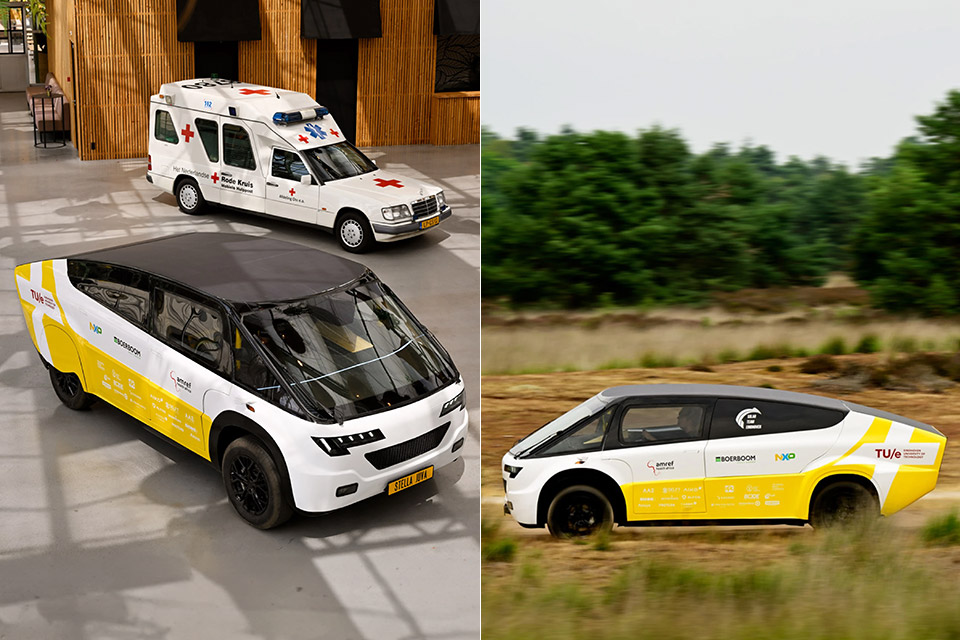
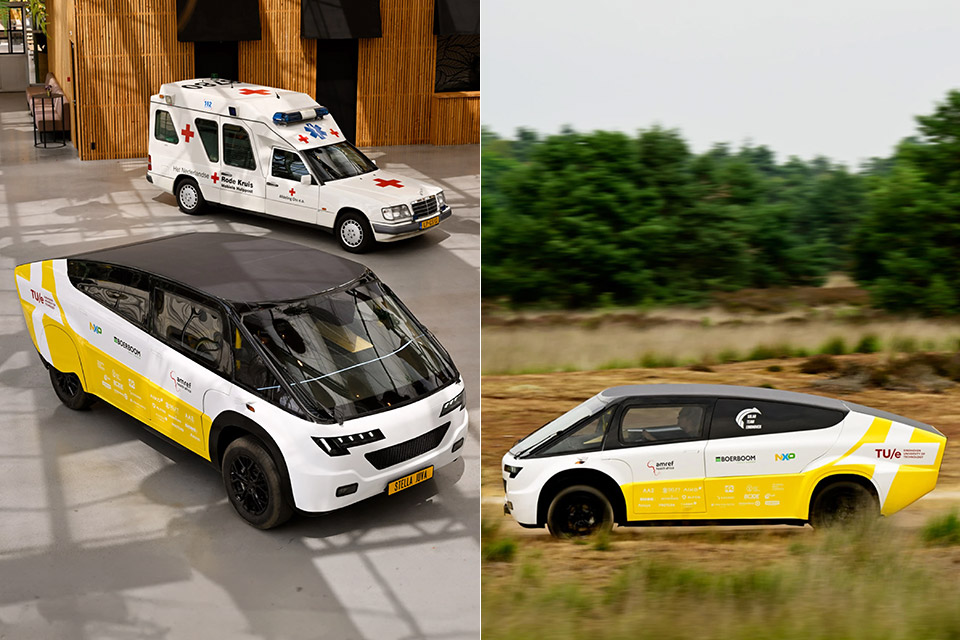
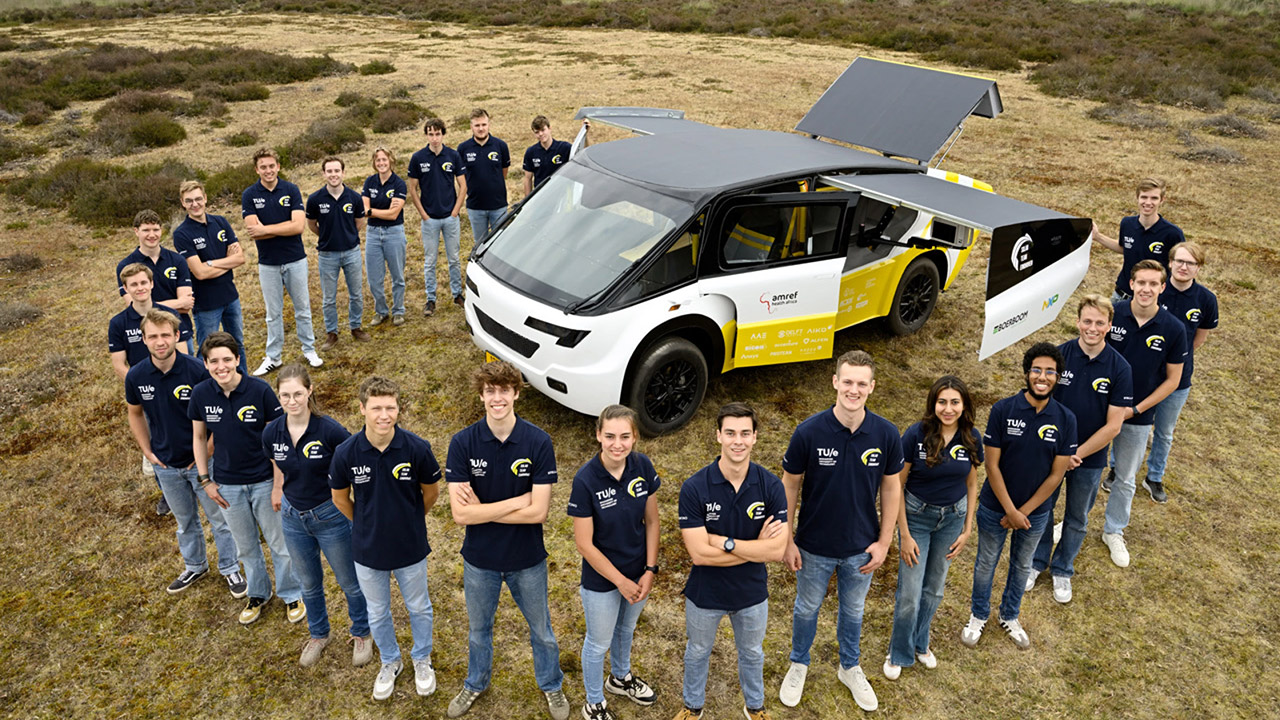
Twenty-three university students in the Netherlands spent a full year away from their regular classes and delivered something no one else had managed. On a July afternoon in 2026 they rolled out Stella Juva, a two-seat ambulance that generates its own electricity from the sun and uses that power both to move across difficult ground and to run a full set of medical tools. The project comes from Solar Team Eindhoven at Eindhoven University of Technology, the same group that previously built a solar family car, a solar camper, and an off-road solar vehicle that crossed Moroccan desert terrain.


Stella Juva is five meters long and slightly less than two meters wide. A carbon fiber composite keeps the overall weight to 1,350 kg, which is nearly half that of a traditional ambulance. The body is sleek and aerodynamic, designed to cut thru the wind with little resistance. A simple electrical speed limiter will keep things stable at 120 km/h, which is the maximum speed. Inside, there are only two seats, which is insufficient for a crew, but the vehicle’s back holds a medical suite rather than a stretcher. The reasoning is that it is far preferable for the vehicle to be able to travel to the patient rather than transporting them all the way to the hospital.

Sale


BLAVOR Solar Power Bank 20000mAh Built-in Cables, Wireless Charger for Phones & Apple Watch, 20W Fast…
  • Simultaneously Charge 6 Devices: The BLAVOR solar charger is your ultimate charging solution! With its 4 built-in cables (including 2 USB-C, 1 iOS…
  • High Battery Capacity and Fast Charging: Say goodbye to low battery anxiety! The BLAVOR solar power bank packs a whopping 20000mAh battery capacity…
  • 7 Ingenious Accessory Functions: Prepare to be amazed by the BLAVOR solar panel charger’s versatility! It’s not just about charging; it’s about…

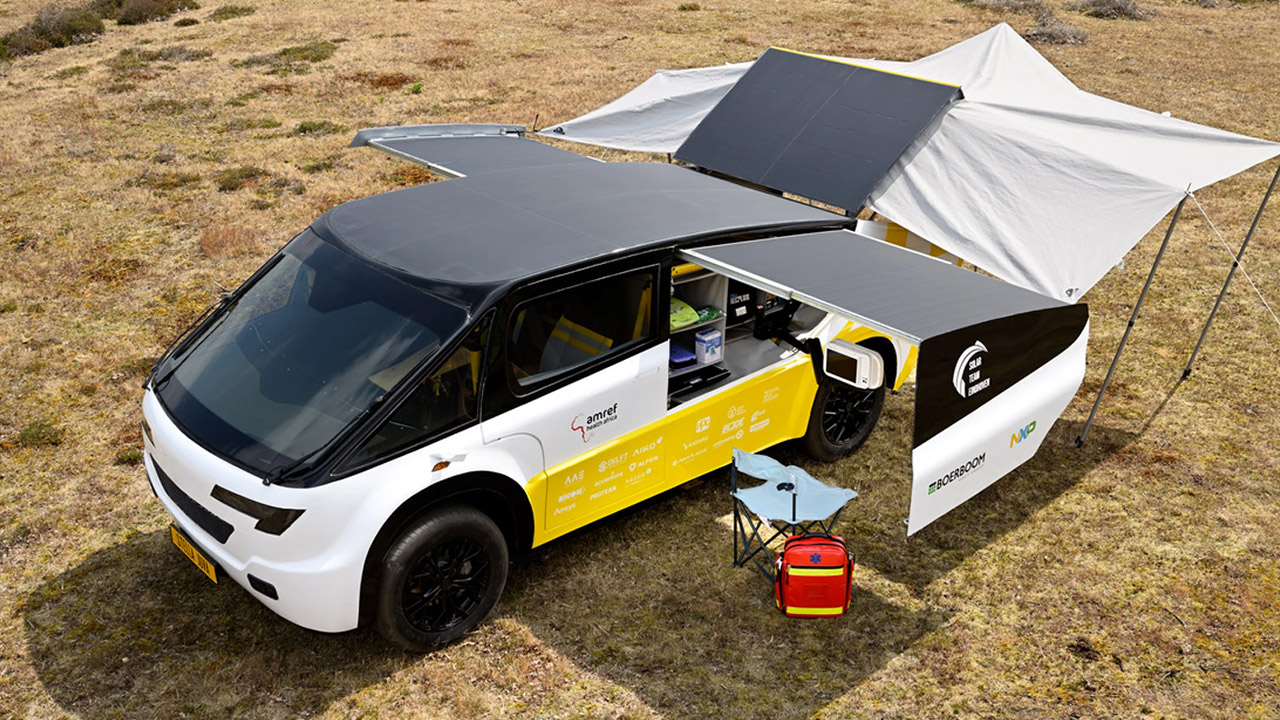
The top of the vehicle is covered with 542 solar cells from the Chinese manufacturer AIKO. 326 of these cells are mounted flush with the roof and body. The remaining 216 are installed on fold-out panels that extend while the vehicle is parked. These are ‘All Back Contact’ cells, which keep all electrical connections on the back, leaving the front side of the panel free of any wiring that could impede light. The designers employed copper interconnects and unique silver-free metallization to assist the panels resist the hard abuse this device will receive. The solar cells are connected to a bespoke inverter built by the students; it is extremely efficient, 97% in fact, and outputs electricity in a lovely pure sine wave that the sensitive medical equipment can handle, with no unexpected voltage drops.

Advertisement

TU Eindhoven First Solar-Powered Ambulance
A 50 kWh battery is used to store electricity for the night, when the sun comes out, or when medics must perform an energy-intensive task. The power management is divided into two zones, so if the stored power runs low, the medical component is automatically prioritized over the motors. This maintains the air comfortable and ensures that vaccines and medicines remain chilled even when it is extremely hot outside. The crew has a variety of essential equipment on board, including an X-ray device for TB screening, an ultrasound scanner for pregnancy checks, fast malaria tests, blood-pressure and temperature monitors, an automatic defibrillator, and several outlets for using other first aid equipment.

On a good day, the team believes Stella Juva can travel up to 715 kilometers on paved roads without needing to recharge, thanks to its solar panels that are always producing power and the battery that still has some energy in it. Off-road, it will most likely be closer to 360 kilometers, depending on the surface. That’s still a major accomplishment, because it means the vehicle can keep running without having to stop for a charge or a fuel stop. The team is quick to point out that all of this is still very theoretical, and that only real-world testing will provide them with the true data.

TU Eindhoven First Solar-Powered Ambulance
As for how the idea came about, the team collaborated closely with Amref Health Africa from the outset. They were aware that health personnel in some of the most remote areas are frequently forced to commute by bicycle or on foot due to high gasoline costs and frequent power outages. Stella Juva is intended to be a self-contained unit capable of arriving, screening, treating, and vaccinating before departing. In August 2026, the team intends to transport the prototype to Kenya and conduct field testing at two distinct locations, treating TB cases and performing a variety of other checks while logging some serious kilometers in real-world settings.
[Source]

Source link

Advertisement
Continue Reading

Trending

Copyright © 2025