
Politics
KPop Demon Hunters Star Blames Leonardo DiCaprio For Baftas Mishap

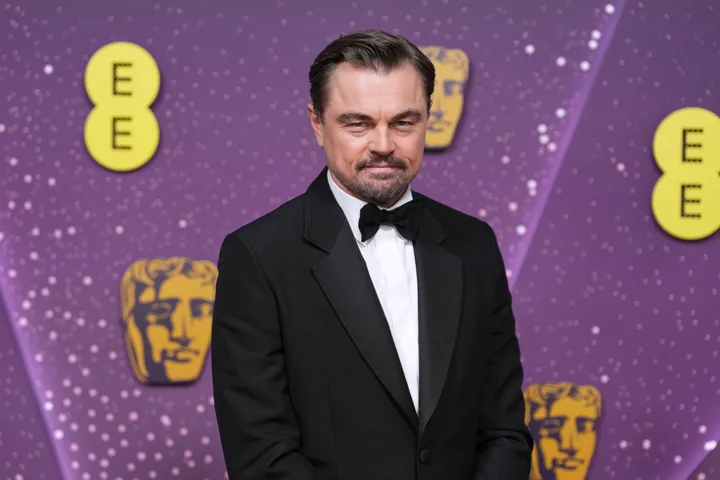
KPop Demon Hunters performer Ejae has claimed the sight of Leonardo DiCaprio was enough to cause her to make a mistake during the band’s performance of Golden at the Baftas.
Back in February, Ejae took to the stage at this year’s Baftas ceremony alongside fellow performers Audrey Nuna and Rei Ami, but has admitted she wasn’t entirely happy with how things went.
“The Baftas haunt me,” the singer – who provides the singing voice of Rumi in the Netflix phenomenon – told The Times in a new interview. “I made mistakes. I cracked a little bit on the high notes.”
During the trio’s first performance outside of the US, Ejae kicked things off from the stage at the London Festival Hall solo, before Audrey and Rei emerged from the crowd.
The Oscar winner noted that she was “put off” a high note in the song when she spotted the One Battle After Another star sitting in the audience in front of her, particularly as “he was not smiling”.
“He made me so nervous,” she admitted. “It was already so nerve-racking to be in front of all these celebrities, and then I look up and lock eyes with Leonardo DiCaprio? Come on…”
Leonardo had gone viral earlier in awards season when, at the Golden Globes, he animatedly spoke to his co-star, Teyana Taylor, about the animated fantasy film.
The Titanic actor also became a meme at this year’s Academy Awards after he enthusiastically waved a synchronised K-pop lightstick during the band’s performance of Golden.

Ejae skyrocketed to fame last year after providing vocals for the animated musical, which follows K-pop band Huntr/x, who use secret identities to protect their fans from supernatural threats.
KPop Demon Hunters became Netflix’ most-watched film of all time, winning an Oscar, Golden Globe, Critics’ Choice Award and Grammy.
“It’s still crazy to me,” Ejae told The Times of her film’s success. “I was a nobody and suddenly I’m a something.”

Controversially, the film was ruled out of a Best Animated Film nod at the Baftas because it did not have a qualifying theatrical release – but the band still appeared in one of the evening’s feel good moments.
“Performing at the EE Bafta Film Awards is a golden moment that our younger selves could never have imagined,” the trio said in a statement when their performance was first announced.
“We’re so proud to represent Netflix’s KPop Demon Hunters and spread the film’s positive message to fans around the globe,” the statement added.

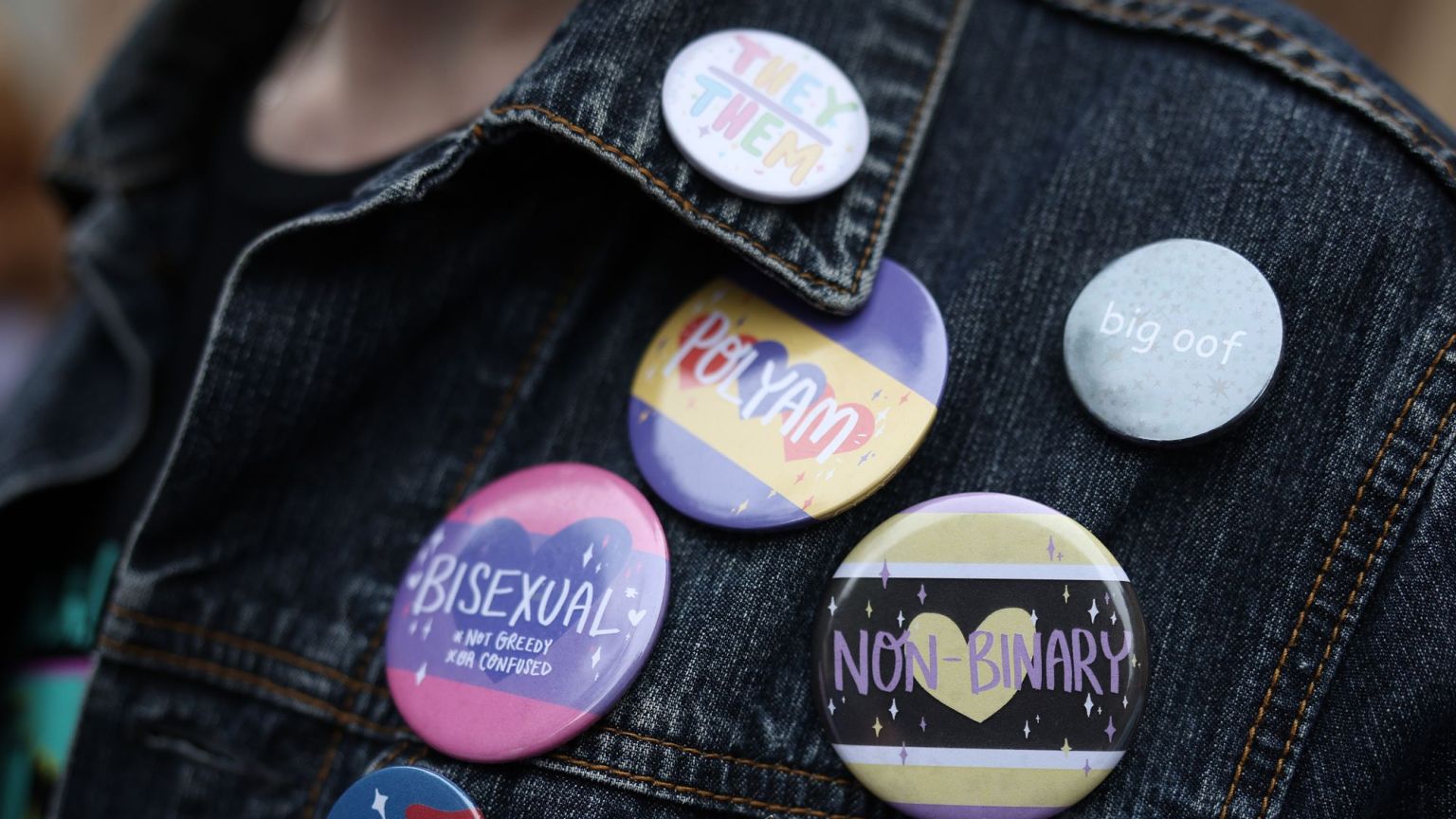
In recent decades, and especially in recent weeks, we have heard much about the plight of victimised, marginalised minorities, and the belief that they ought to be afforded special treatment and extra privileges by way of recompense. The Jason Arday debacle is a reminder of this chronic state of affairs.
Many white people without mental-health issues will have looked on with envy and resentment at the attention lavished on this black, autistic sociology professor. And with marginalised status seeming to bequeath myriad advantages, such as elevated social standing, it’s no wonder others might want to get a piece of the action by believing, proclaiming or pretending that they too are disabled and disadvantaged.
That is plausibly one reason for our mental-health crisis. Many causes have been advanced for the exponential rise in people suffering from mental-health issues in recent years, such as the rise of social media and smartphones, better diagnosis and wider acceptance of neurodiverse conditions or the Covid-19 lockdowns. But one statistic published last week seems to confirm what many have long suspected: that it represents a hysterical epidemic, one spread through social contagion, legitimised by our culture and medical establishment, and turbocharged by identity politics.
According to an essay by Uta Frith published in Psychological Medicine, primary-care diagnoses of autism increased ninefold from 1998 to 2018. That trend, which began before smartphones or lockdowns, correlates with the dual ascendancy of our therapy culture and identity politics. The trend has continued to this day, to such a degree, says Frith, that autism has become an inflated ‘catch-all diagnosis’ that risks becoming useless.
This is no idle claim by Dame Uta Frith, emeritus professor at the Institute of Cognitive Neuroscience at University College London, the person who pioneered much modern-day research into autism. As she elaborated in an interview in The Times on Monday, for many people, such a diagnosis ‘does give some kind of privileges. They can tell other people to “jolly well take account of my disability”, except they don’t want to call it a disability. It’s “my difference, and you should be nice to me”.’
The idea that mass delusions can have a political catalyst is not new. In her 1997 book, Hystories: Hysterical Epidemics and Modern Culture, Elaine Showalter not only noted that ‘hysterical epidemics require at least three ingredients: physician-enthusiasts and theorists; unhappy, vulnerable patients; and supportive cultural environments’, but also that ‘syndromes multiply as they interact with social forces’ such as religious beliefs or political agendas.
In our case, that political agenda is a quest for minority status and victimhood; those forces are an Instagram culture of narcissistic exhibitionism; and there is an even longer-standing pressure felt by young people to dwell on their problems, believe themselves to be fragile and vulnerable, and seek sympathy from strangers for their predicament. This would explain why referrals for ADHD have risen by more than 400 per cent in the past five years. It would also account for an associated new fashion, highlighted by Kathleen Stock last week, for ostensibly healthy young women now to use walking sticks.
Our ‘mental-health crisis’ should be seen in the context of the trans hysteria of the past decade, another part-political fashion transmitted through social contagion and enabled by those in positions of authority. Claiming mental ill-health now provides an opportunity for many people to become honorary disabled or metaphorically black.
In praise of doubt
It has become common these days to deride the New Atheism that was all the rage in the Noughties. One frequently hears it dismissed as a facile episode typified by juvenile invectives that themselves had a whiff of religious fervour. New Atheism – so often directed against poor old, harmless, hopeless Christianity – did nothing to confront the Islamic fanaticism that only worsened in the 2010s, critics say. And was clueless in foreseeing or gainsaying the new wave of irrationalism then insidiously corroding the West from within: woke hyperliberalism.
There was an unmistakable air of bellicosity about the New Atheists, it is true, and this was easily mistaken for dogma. And the death last week of the philosopher Anthony Kenny, at the age of 95, is a reminder of the value of employing and demonstrating another, more amenable, sentiment: doubt.
Kenny’s 1979 book, The God of the Philosophers, re-examined the conflict between free will and divine omniscience, revisiting the quandary first attributed to Epicurus: how can an all-loving, all-powerful God let evil happen? God can be one or the other – all-loving but impotent, or all-powerful but indifferent – but He cannot be both. As Kenny argued:
‘If God is to be omniscient, and to have infallible knowledge of future human actions, then determinism must be true. If God is to escape responsibility for human wickedness, then determinism must be false. Hence in the notion of a God who foresees all sins but is the author of none, there lurks a contradiction.’
As he concluded: ‘There cannot, if our argument has been sound, be a timeless, immutable, omniscient, omnipotent, all-good being.’
It was through such patient logic that Kenny, who had been a Catholic priest, lost his faith. At the same time, he preferred to call himself an agnostic rather than an atheist, as the former label was more appropriate to his doubting method. In a world full of too much certitude, it was an admirable stance.
Why we miss Rod Liddle
Many people who don’t pay close attention to politics may have been surprised at the abundance of tributes to the late Rod Liddle. I dare say even he might have found the outpouring of grief ‘mawkish’, or ‘a moronic inferno’. But he was loved by many because he was that rare combination in a columnist: he dared to tell the truth, he wrote beautifully and he made people laugh.
In my lifetime I can count only two other columnists who met those three criteria: Auberon Waugh and Michael Wharton (aka ‘Peter Simple’), both of the Daily Telegraph. Like Rod, they could be vituperative and unpredictable, could goad and enrage exactly the right type of sanctimonious prigs, and could make the reader feel that he or she was not alone in a world seemingly gone mad. Rod belonged to that elite who could be simultaneously flippant and earnest.
Whereas Wharton railed against the Hampstead socialists, Liddle similarly became my friend in print – and I dare say many of yours – for inveighing against our asinine, faux-left, north London bien pensants. In that respect, he represented a strange sort of continuity.
While Rod was a rarity, he wasn’t a one-off. Here’s hoping we’ll see his type again soon.
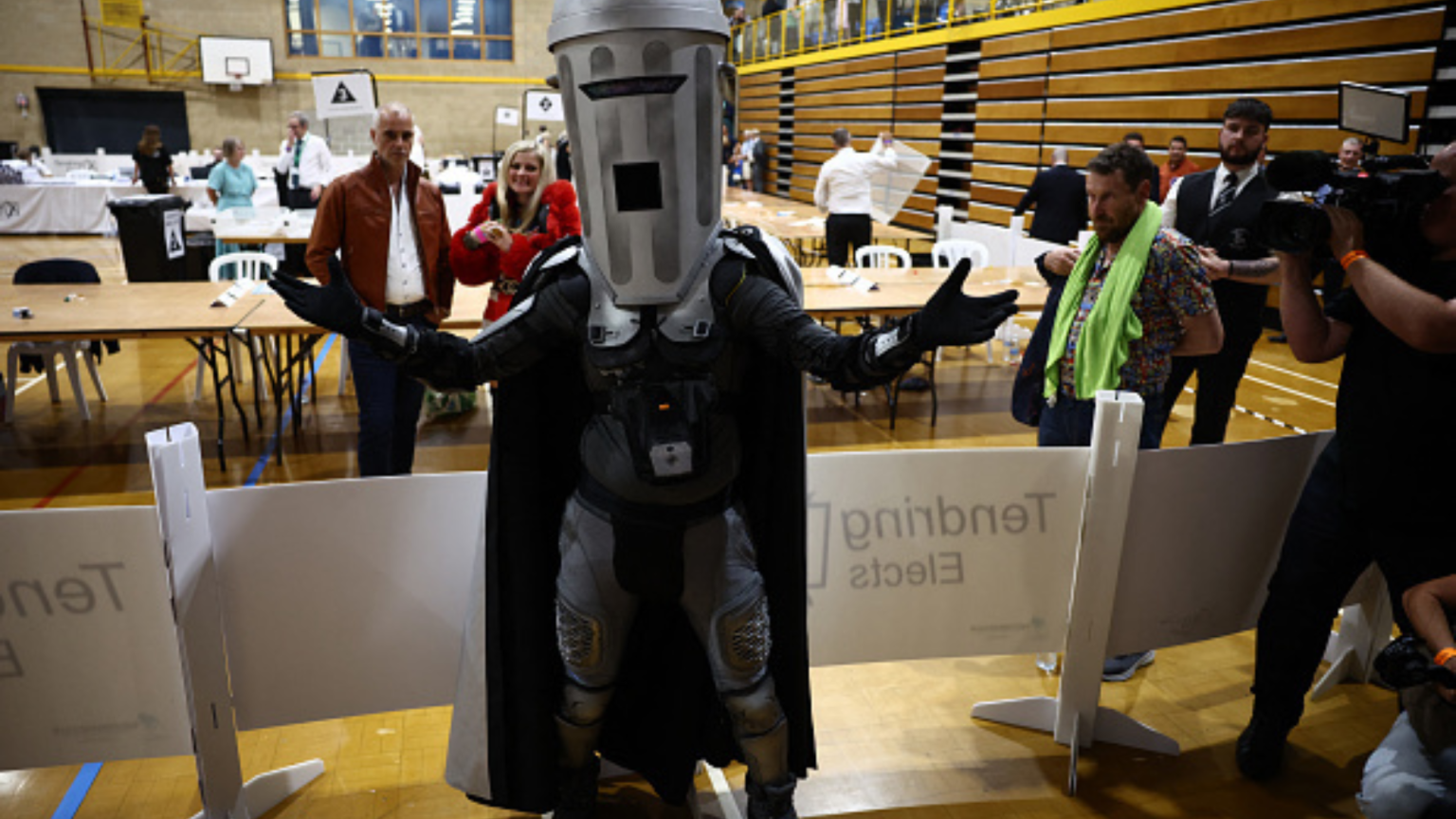
So the bin has been put out. Count Binface – the Oxbridge-educated cracker of shite jokes who gets a weird kick from standing in elections – has lost to Nigel Farage in the Clacton by-election. As every sane person knew he would. Commiserations to the not-so-sane who swell the ranks of the tosserati, like the windbags over at academic mag The Conversation, who got craft-beer Britain jizzing with eager glee with their headline: ‘Could Count Binface actually win?’ When did the educated become so dumb? Come get your trash, Remoaners, he’s cooked.
The result is exactly as those of us whose brains weren’t melted by Brexit expected. Farage, leader of Reform UK, retook the seat with 63 per cent of the vote. He secured the ballots of 22,239 people, a thousand more than he got in the General Election in 2024. Binface won 9,455 votes, which has caused excitement in that section of society that donates to Wikipedia and tweets ‘DYING’ about every Marina Hyde column. ‘What a slap in the face for Farage!’, they’re probably saying on Bluesky. Dream on. What the Clacton spat really revealed is the staggering lameness of the flagging anti-populist crusade.
That Count Binface got fewer than 10,000 votes is hilariously underwhelming when you consider the entire cultural establishment waved pom poms for him. The by-election was triggered by Farage himself. In response to media stories about his allegedly shady finances, he stood down in Clacton in order that he could stand again, his point being that it should be voters, not SW1 dirt-diggers, who decide his fate. In a shameful snub to the people of Clacton, the other parties refused to stand. Instead they threw their weight behind a man with a bin on his head. He became the running dog of the elite, and still he couldn’t break 10k.
Binface was the ideal mouthpiece for Britain’s death-rattling political class. His real name is Jonathan David Harvey. He’s 46 (maaate). He went to Oxford. He’s a longstanding regime comedian, penning safe gags for knackered shows like Have I Got News For You. He poses for selfies with Ian Hislop for heaven’s sake. And – you won’t believe this – he hates Brexit. One of his policy proposals is to have a referendum on whether we should have another referendum. My splitting sides. Little wonder this state-sanctioned edgelord, this lapdog in a leather cape, was embraced by the elite as the ideal shit-stirrer to send down to Clacton.
The chattering-class swooning over Binface was insane. ‘I am supporting Count Binface’, said Lib Dem leader Ed Davey. The then PM, Keir Starmer, backed him too. Then there was all the maniacal cackling in the ‘liberal’ media. Every bald podcast dad frothed over the prospect that Farage might ‘lose to a bin’. Is Binface ‘the hero the country needs?’, wondered a nutter at the Guardian. Alastair Campbell and Rory Stewart – the kings of turbo-smug centrism – gushingly interviewed him, which I guess is a step up from gushingly interviewing former psycho jihadists whose armies butchered ‘infidels’. Better a man in a bin talking shit than a man in a mask slaughtering Christians.
Binfacemania went global. The New York Times ran piece after piece on the ‘trashcan’ threatening to unravel Mr Brexit. Time did a fawning interview. What united the Binface fanatics, from Westminster to Manhattan, was the dream of giving British populism a black eye. They hoped the trashcan piss-taker would dent Reform and rap the knuckles of the knuckle-draggers who vote for it. Some said Binface was the ‘anti-establishment candidate’. LOL, he was the precise opposite. He was the tinman mercenary of an establishment that dreads nothing more than the anger of working-class voters.
There was something breathtakingly classist in the Binface spectacle. Sending an Oxbridge comic and loather of Brexit to a working-class seaside town where close to 70 per cent of people voted Leave – it wasn’t even subtle, was it? (During his Rest is Politics interview, Binface quoted The Iliad in its original Homeric Greek, and quick as a flash the hosts said: ‘I don’t think you should go round the streets of Clacton spouting [Greek], ha ha.’) To turn Clacton into a stage for bourgeois snark, and its inhabitants into NPCs in an Oxford graduate’s elaborate and unfunny joke, was pretty sick-making actually. It was snobbery in the rags of satire. The working classes are more than the fleshy punchline to woeful middle-class humour.
The bin metaphor was perfect, because that’s what these people would like to do with working-class votes for populism – bin them. Indeed, Starmer openly said to the people of Clacton: ‘Put your vote in the bin.’ He meant ‘Vote Binface’; he really meant ‘Stop casting your ballots for things that I disapprove of, you morons’. It was anti-populism summed up: swarms of sarcastic grads telling working-class people to flush their stupid views down the toilet. But it didn’t work. Count Binface might have honked the moral horn of the transatlantic haters of populism but he ran aground against the common sense of the good people of Clacton. Who’s laughing now?
spiked is funded by readers like you. Only 0.1% of regular readers currently support us. If just 1% did, we could grow our team and step up the fight for free speech and democracy.
Become a spiked supporter and enjoy unlimited, ad-free access, bonus content and exclusive events – while helping to keep independent journalism alive.


2 min read
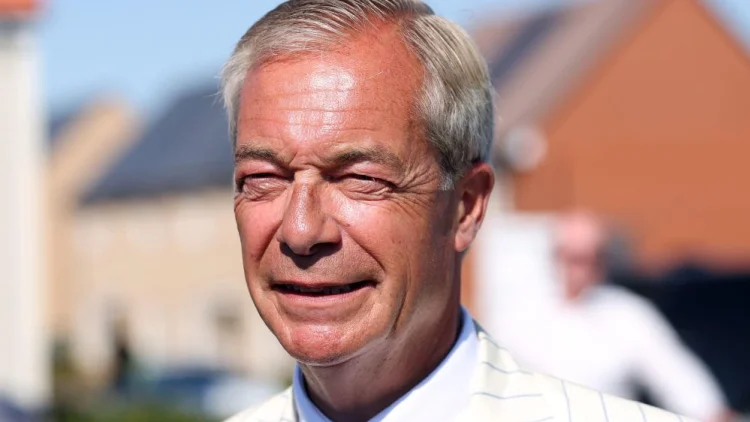
Nigel Farage will continue as the MP for Clacton after winning the by-election he triggered.
Farage secured a comfortable victory in the Essex constituency, winning around 63 per cent of the vote.
Novelty candidate Count Binface came second with 26 per cent of the vote.
Farage resigned as an MP and triggered the by-election in July amid growing pressure over a £5m donation he received from crypto-billionaire Christopher Harborne weeks before announcing his intention to run in the 2024 general election.
His failure to declare the donation led to an investigation by the parliamentary standards watchdog.
The investigation is set to continue once Farage returns to Parliament, and could result in suspension and another by-election if he is found to have broken the rules.
Speaking in July, Farage described the by-election as “people versus the establishment”, adding that the “people of Clacton” would be “the judges” of his actions.
“It’s a chance to stick two fingers up to the entire establishment, to frankly tell them where to go, and that is why I will be putting my name forward to stand in this by-election,” he said.
A Farage victory in Clacton was widely regarded as almost certain despite his personal ratings taking a hit in recent weeks. The seaside town is often described as one of the most right-wing constituencies in the country and a major Reform stronghold.
Labour, the Conservatives and the other mainstream political parties announced early in the campaign that they would not stand candidates to go up against Farage, arguing that the by-election was unnecessary and a waste of money.
That left a long list of independent and novelty candidates, including Binface, whose policies included hosting Eurovision 2028 in Clacton and relocating Parliament to the Essex village of Weeley, the Monster Raving Looney Party and Everyone Is God Party.
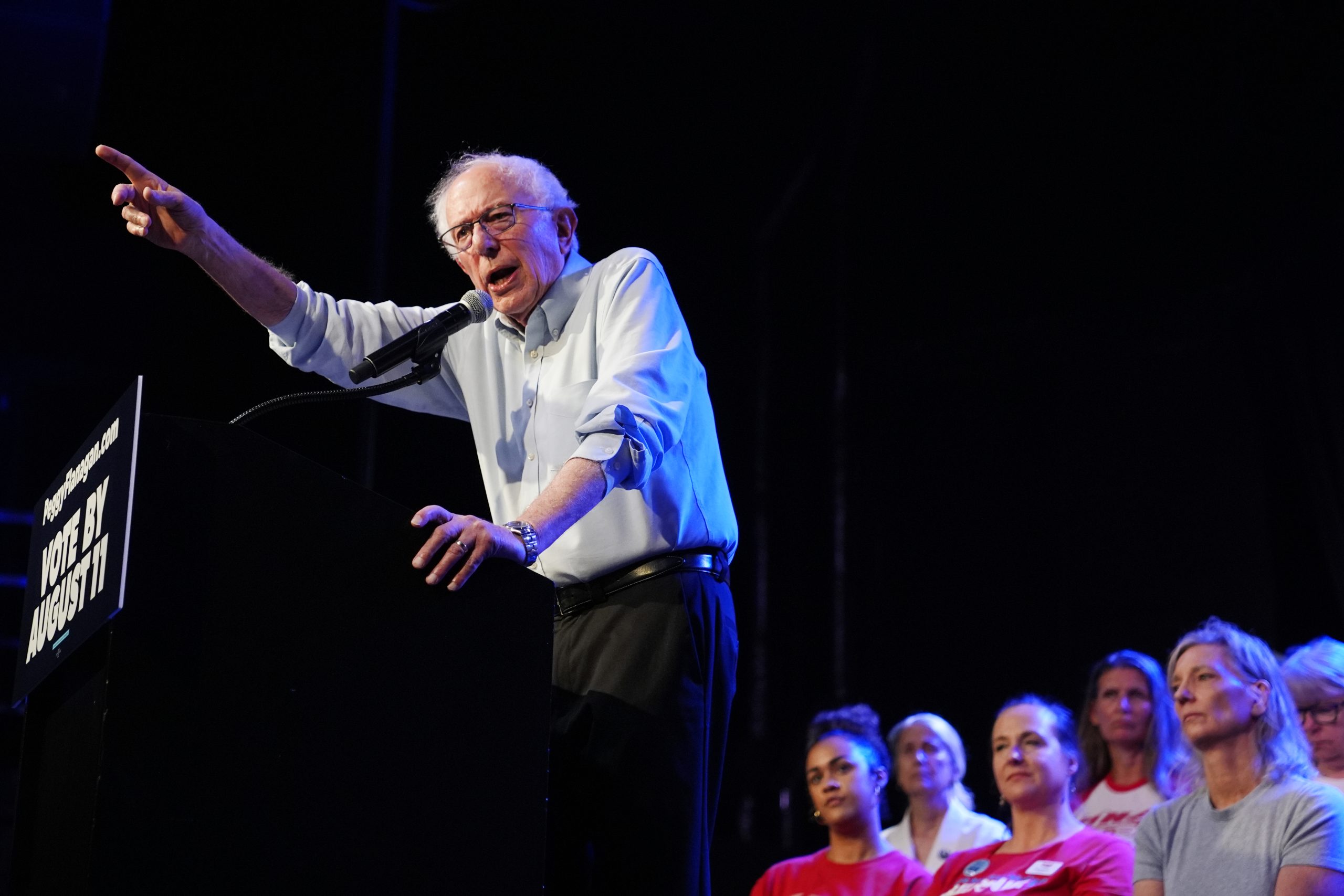

Sen. Bernie Sanders says he can’t be everywhere at once — even though some of his allies want him to be.
Democratic socialist Francesca Hong lost by less than 4,000 votes in Wisconsin’s gubernatorial primary, an outcome several high-profile progressives are blaming on Sanders and other top national progressive leaders for staying out of the race. Some said his endorsement alone could have helped bring in badly needed resources for Hong. Others said the Vermont senator has a responsibility to play widely across the battle map.
Sanders, in an interview, touted a series of progressive wins Tuesday night and brushed off the criticism.
“My response is that we have limited resources and capabilities, and there are a lot of really great candidates who have run for office who we have not endorsed,” Sanders told POLITICO on Wednesday.
“We can’t endorse every single candidate,” he added. “So, you know, we have to pick and choose and I think that Hong ran a very, very great, and very strong, grassroots campaign, got a lot of people involved and I applaud her for that.”
Hong ultimately lost to Milwaukee County Executive David Crowley, a major victory for establishment Democrats who worried she wouldn’t be able to win a general election in a top battleground. It was a notable blow for the far left that overshadowed progressive Lt. Gov. Peggy Flanagan’s win in the Minnesota Senate race the same night.
Sanders and other progressive leaders “have a responsibility, whether they like it or they don’t,” to help steer candidates in the movement, said Cenk Uygur, a progressive activist who co-founded the Young Turks and Justice Democrats. “If they endorse people, it makes a difference. If they don’t endorse people these days, sometimes it makes a bigger difference. Because there’s a certain expectation, and when they don’t deliver on that expectation, it gives people pause. So it feels like, to some degree, they’re shirking their responsibility.”
Uygur also criticized Sanders for saying on a podcast ahead of the primary that he was “not that familiar” with the Wisconsin race.
“I love Bernie, but that’s not true. Sorry, brother, but you have a giant team. Of course somebody on your team knows who’s running for governor in Wisconsin.” Uygur told POLITICO on Thursday.
One Democratic operative working on progressive campaigns, granted anonymity to speak candidly about the electoral dynamics, also rejected Sanders’ argument, noting the senator won Wisconsin’s presidential primary in 2016.
“He knows Wisconsin very well,” the operative said, adding: “What resources? You’re not cutting checks. [Sanders] endorsing somebody raises the money.”
Sanders in the interview noted primary wins from Flanagan, Rebecca Cooke in Wisconsin’s 3rd District and Matt Little in the crowded race for Rep. Angie Craig’s Minnesota seat — all Democrats he endorsed.
“Needless to say, I’m feeling really very good,” Sanders said. “The American people are catching on that we have an economy that is rigged, the very rich are getting richer while working families are struggling.”
But the Wisconsin governor primary result Tuesday exposed a critical vulnerability for a movement that has largely relied on Sanders and a handful of other headline-grabbing stars, such as Rep. Alexandria Ocasio-Cortez (D-N.Y.), to help seal the deal in contentious races as progressives look to prove they can play in competitive seats. The underdog wing of the party, some progressives argue, can’t be selective about where it’s playing if they want to take on a vast and well-funded establishment.
The bulk of the blame is being laid at Sanders’ feet in part because the movement he turbocharged in 2016 has struggled to land on a clear successor. Some progressives argue there’s an overreliance on Sanders and leaders such as Ocasio-Cortez.
Our Revolution, a group born from Sanders’ 2016 campaign but that the senator no longer associates with, blasted the broader progressive ecosystem for not doing more for Hong in a post early Wednesday morning, as the returns in Wisconsin showed Crowley was poised to defeat Hong. Several groups that have backed insurgent progressives in other races declined to join Our Revolution in getting involved in the governor’s race.“We cannot build progressive power while gatekeeping our own movement through the eyes of the establishment,” the group posted.
Sanders pushed back: “Our Revolution is an organization I’ve not had any interaction with, any participation with … for I think nine years,” he said in response. “They do what they want and they say what they want. They have nothing to do with me.”
Our Revolution declined comment on Sanders’ remarks and on its post.
Nina Turner, a former Our Revolution leader and Sanders 2020 co-chair who had backed Hong, said support from “more well-known, more popular, actively elected progressive types … probably would have” made a difference in Hong’s race. She declined to call anyone out specifically for not getting involved.
“The progressive movement is going to have to reckon with how we continue to win around certain personalities,” Turner said. “I don’t think the movement should put all our hopes and dreams on certain personalities to come out or to not come out, because it is their choice and they have a right to their choice, even if I don’t agree with it.”
Rep. Ro Khanna (D-Calif.) was one of the few national progressive figures who had endorsed Hong. He has employed a far more aggressive endorsement strategy than Sanders this primary season and said he sees an advantage to backing candidates early, despite the potential headwinds facing long-shot contenders, as long as they align with him on policy.
But he wasn’t willing to play the blame game in the aftermath of Wisconsin’s primary, saying in a text message that: “We have so many candidates running and I believe progressive leaders have been doing an extraordinary job lifting them up.”
A spokesperson for Ocasio-Cortez, who has also faced criticism for not backing for Hong, declined to comment.
Not everyone on the left believes Sanders and other progressive stars could have swung a race in which several other factors were working against Hong. The candidate did very little traditional advertising. She faced a barrage of negative press over controversial past social media comments that put her on defense over everything from public safety to Thanksgiving. Several candidates likely siphoned away votes from both Hong and Crowley — including two who dropped out after voting began: Lt. Gov. Sara Rodriguez and former Lt. Gov. Mandela Barnes.
Dillon Sheehan, the chapter secretary for the Madison Area Democratic Socialists of America, which endorsed Hong, said “it’s entirely possible” big-name progressives like Sanders could have “put her over the edge.”
But “we need candidates who can win without Bernie’s endorsement, he’s not going to be able to endorse forever,” Sheehan said. “I think what this shows is that even without his endorsement, without Alexandria Ocasio-Cortez’s endorsement, [Hong] did fantastic.”
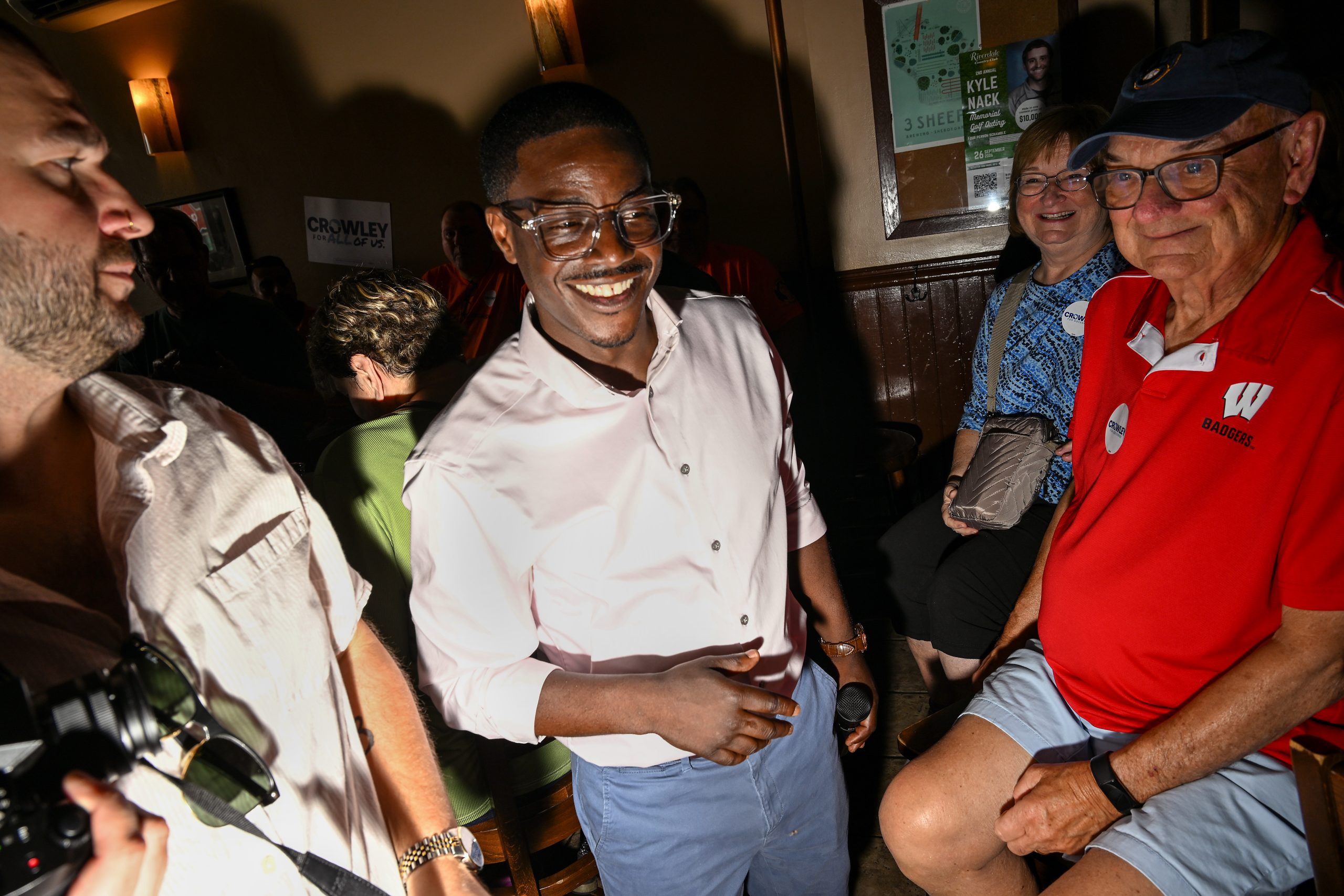

David Crowley has a strategy to win over the voters who backed democratic socialist Francesca Hong on Tuesday: make the governor’s race an existential fight against “MAGA extremism.”
Wisconsin Democrats have spent the past day scrambling to unite the far left and centrist factions of the party after a bitter primary battle defined by questions of electability and how far left of an ideology to pursue. The same is happening in Michigan, where the party has just three months to mend broken fences and get progressive Abdul El-Sayed elected in another competitive state this November.
Crowley told POLITICO he plans to use GOP Rep. Tom Tiffany and President Donald Trump as the foils that bring everyone together.
“We’re not all going to agree on everything. But I think we agree that the ultimate goal is making sure that we don’t have a MAGA extremist and congressman Tom Tiffany sitting in the governor’s office,” Crowley said in an interview Thursday, adding that the state “has a grand opportunity in putting some level of check on Trump’s agenda” amid the “affordability crisis.”
Democrats view holding onto the governor’s mansion in Wisconsin — a top battleground state that Trump won by just shy of 30,000 votes in 2024 — as critical for acting as a bulwark against Trump. They’re hoping to secure a governing trifecta in the state for the first time since 2010.
Crowley, the Milwaukee County executive who was hand-picked by current Gov. Tony Evers, said he plans to not only fold in the left flank, but also reach out to independents and previous GOP voters who “feel rejected by this current Republican party.” Evers himself ousted GOP then-Gov. Scott Walker in 2018 thanks to a coalition that cut across Democratic strongholds, independents and some Republican-leaning voters.
Crowley also said he’s already talked to “some Republicans who are more interested in defeating Tom Tiffany.”
Trump’s approval rating has been continually slipping, and Crowley’s advisers believe focusing on the cost of living under the Trump administration amid an unpopular Iran war is a sweet spot to hit a broad cross-section of voters.
But even as he committed to reaching out to voters who had backed Hong, Crowley told POLITICO he would not campaign with some of her top surrogates on the trail — and demurred when asked whether he’d bring on any Hong allies to staff his general election campaign, saying everyone is “welcome” at the table.
When asked whether he would campaign with controversial, leftist social media influencer Hasan Piker, Crowley responded: “No.”
“I don’t know Hasan, but I always want to be focused on Wisconsin voters,” he added.
Hong has committed to hitting the trail with Crowley ahead of November, but many of his allies see her as too much of a political liability to be directly involved. They’re worried her brand of democratic socialism — and past controversial social media posts about defunding the police and canceling Thanksgiving — could affect Crowley’s wider appeal.Crowley also isn’t budging on a key campaign policy issue that divided the primary: He will not embrace the moratorium on data center development that Hong ran on.
“No moratorium,” Crowley said in the interview, adding he and Hong do agree on adding “guardrails” on data center development and operation via a package of legislation.
“I let folks know exactly where I stood on data centers,” he said. “That’s why we were able to not only consolidate many of those undecided voters, but get many rural communities to support us as well, because we have a common-sense approach to make sure that we’re protecting our environment, protecting our water, and protecting ourselves … when it comes down to these data centers.”
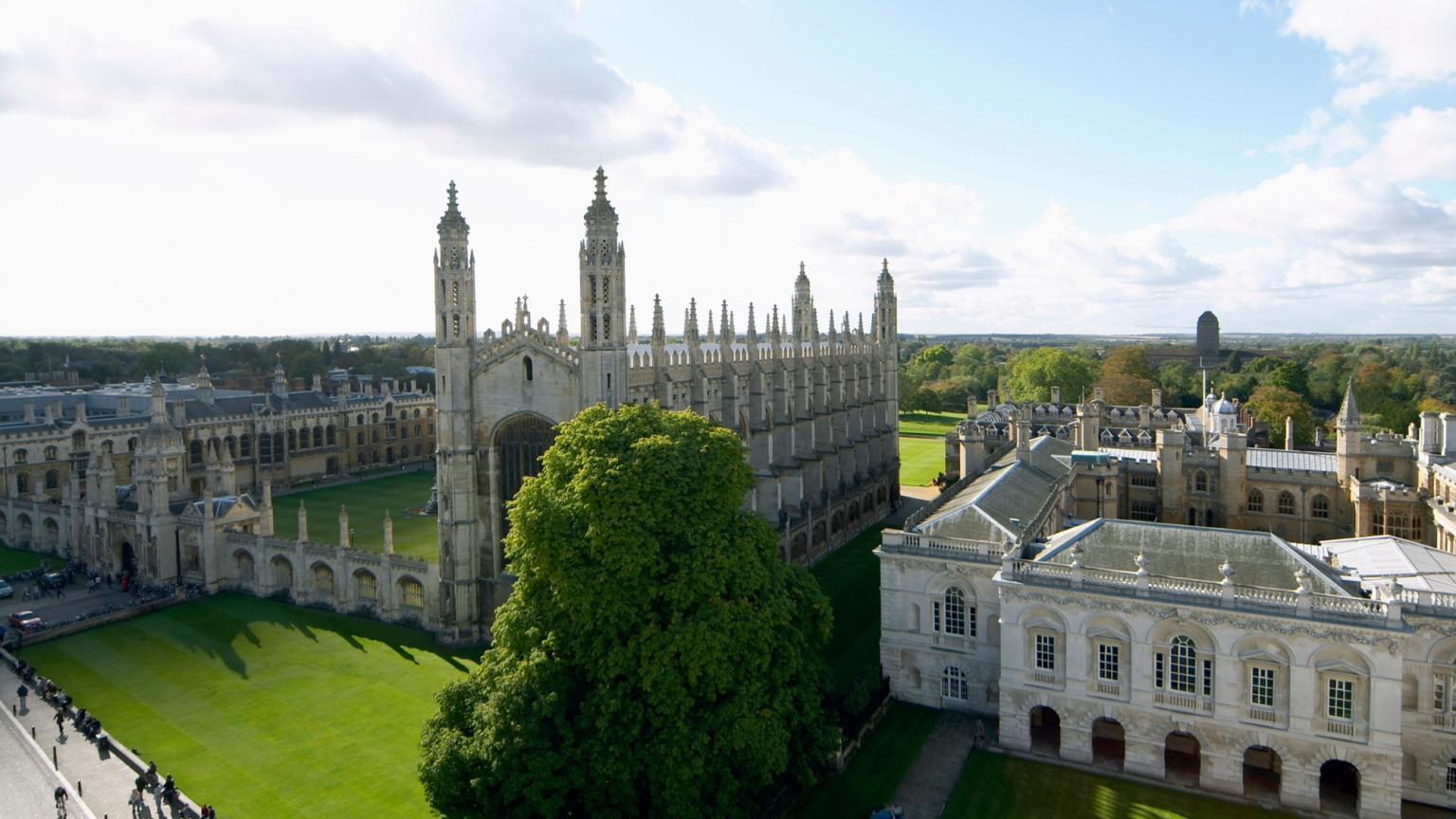
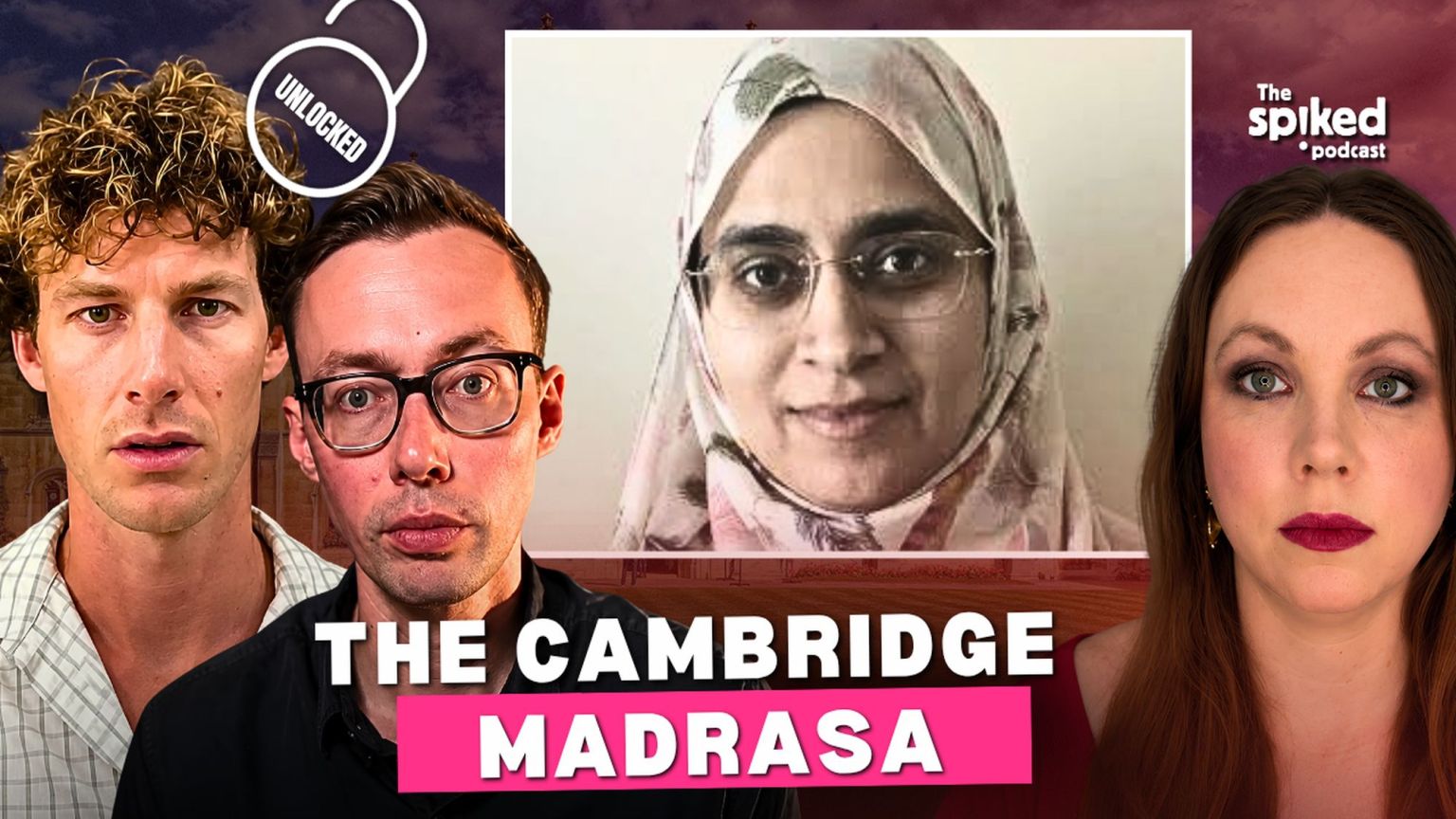
Think Jason Arday’s appointment was a stain on the University of Cambridge? Meet Farah Ahmed, Arday’s colleague in the faculty of education until his resignation last week. Now an assistant research professor, Ahmed once supported the now-proscribed Islamist terror group Hizb ut-Tahrir, and remains an outspoken critic of ‘Western education’.
Arday’s outlandish claims have provided a hilarious backdrop to this long, hot summer. His seemingly tall tales of athletic and charitable feats achieved despite a series of extraordinarily unfortunate events – such as running umpteen marathons with a broken leg and completing a PhD viva days after an operation to remove a brain tumour – have given us all a good laugh. Ahmed’s past is altogether more troubling. She was promoted to assistant research professor in 2025 after spending the previous six years at Cambridge, employed as a research associate specialising in Islamic education. Before that, she was head of an Islamic primary school and contributed to a book, Education and Identity, published by Hizb ut-Tahrir in 2002 and republished in 2017. The organisation was banned in the UK in 2024.
Arday’s alleged plagiarism exposes his lack of intellectual credibility and points to the low expectations of an appointment committee, seemingly in thrall to diversity, equity and inclusion. Ahmed’s Hizb ut-Tahrir book chapter revealed her view that ‘Western education’ should be condemned as a ‘threat’ to the ‘beliefs and values’ of the Muslim community. Her promotion suggests not just a few oddball dons but also a broader culture sympathetic to her criticisms of British schooling and Western values.
As Andrew Gilligan notes in the Spectator, Ahmed’s 2002 book chapter attacked the national curriculum as a system for indoctrinating Muslim children into accepting the principles of a secular capitalist society. She criticised schools for teaching that ‘polygamy or marriage under the age of 16’ is ‘archaic and discriminatory to women’. And she condemned teachers who espouse the virtue of democracy, which she described as a ‘corrupt tradition’, where if ‘decision makers decide to make bombing Iraq or homosexuality legal, as they currently have, there is nothing anyone can do about it’.
Ahmed also attacked religious education in Britain for the heinous crime of promoting ‘religious tolerance’, because ‘Islam is taught as a religion like any other, putting its value on the same level as Christianity, Buddhism, Judaism, Hinduism, Sikhism and the like’. She attacked English literature, ‘one of the most damaging subjects’ a school can teach, because too many stories ‘reflect secular and immoral beliefs, which contradict the viewpoint of Islam’. And she condemned the teaching of science, especially evolution, because ‘Muslim children will be exposed to ideas that contradict Islam’.
It seems that Ahmed’s biggest problem was not with the content of education but with the way that schools are run. Integration was a particular bugbear in this book chapter. Teachers often expect boys and girls to work together, but Ahmed complained that, ‘As Muslim parents we try to protect our children from the rubbish that Western society encourages’. And then there’s the risk of integration with non-Muslim children, in playgrounds ‘full of the competitiveness and individualism that Western culture encourages’, which ‘moulds their personalities away from Islam’. Integration, she argued, is an attempt by schools to ‘produce new generations that reject Islam’.
Over the past few weeks, Jason Arday has been ridiculed for the inanity of his output. In speeches, interviews and academic papers alike, he spouts forth a garbled mixture of song lyrics, bizarre platitudes about the importance of knitting the world together through love, and woke buzzwords like ‘white privilege’ and ‘oppression’. It is word salad with extra dressing, and Cambridge University fully deserves to be criticised for elevating someone so intellectually vacuous to such a lofty position. But there is no lack of clarity when it comes to Ahmed’s past words. Her loathing of Britain’s schools and Western values is clear for all to see.
Ahmed’s views may well have changed in the years since she wrote the book chapter. Indeed, Ahmed has since distanced herself from Hizb ut-Tahrir. In 2010, the then headteacher told a Charity Commission investigation into Hizb ut-Tahrir’s alleged links to the Islamic Shakhsiyah Foundation (ISF), which runs primary schools in Slough, that she was no longer involved with the group. She said that she did not agree with ‘all of Hizb ut-Tahrir’s views as a political organisation’.
Still, it’s worth noting that last year Ahmed co-authored ‘How Islamic is my school?’, a toolkit for school leaders wanting to ‘evaluate and create a development plan’ for ‘educators seeking to centre the Islamic worldview in their schools and classrooms’.
According to the Spectator, Ahmed continues to be director of the Islamic Educator Learning Community (IELC), which, in 2023, co-hosted a conference Ahmed helped to organise on Islam, science and education. The event aimed to ‘recognise the role of science as part of a wider modernist and colonial project’, and to encourage participants to ‘consider challenges’ to the view that ‘sees science as “objective knowledge”’. That same year, Ahmed also helped organise a conference designed to help attendees ‘unlearn conventional teacher education and move toward Islamically grounded teacher development’ in order to prepare Muslim learners for ‘the akhira‘, or everlasting life after death.
Cambridge University’s Faculty of Education knew that Ahmed was organising these events. More than that, it provided institutional sponsorship, both branding and resources, for work that challenged the underlying academic and social principles of British schooling. Ahmed’s promotion shows that her work was celebrated.
Cambridge may try to convince the world that it was taken in by Arday’s improbable claims and seductive life story. But Ahmed’s hiring potentially reveals a far more disturbing truth: that those at the very top of our academic institutions seemingly have contempt for education and a deep-rooted loathing of all that Britain stands for.
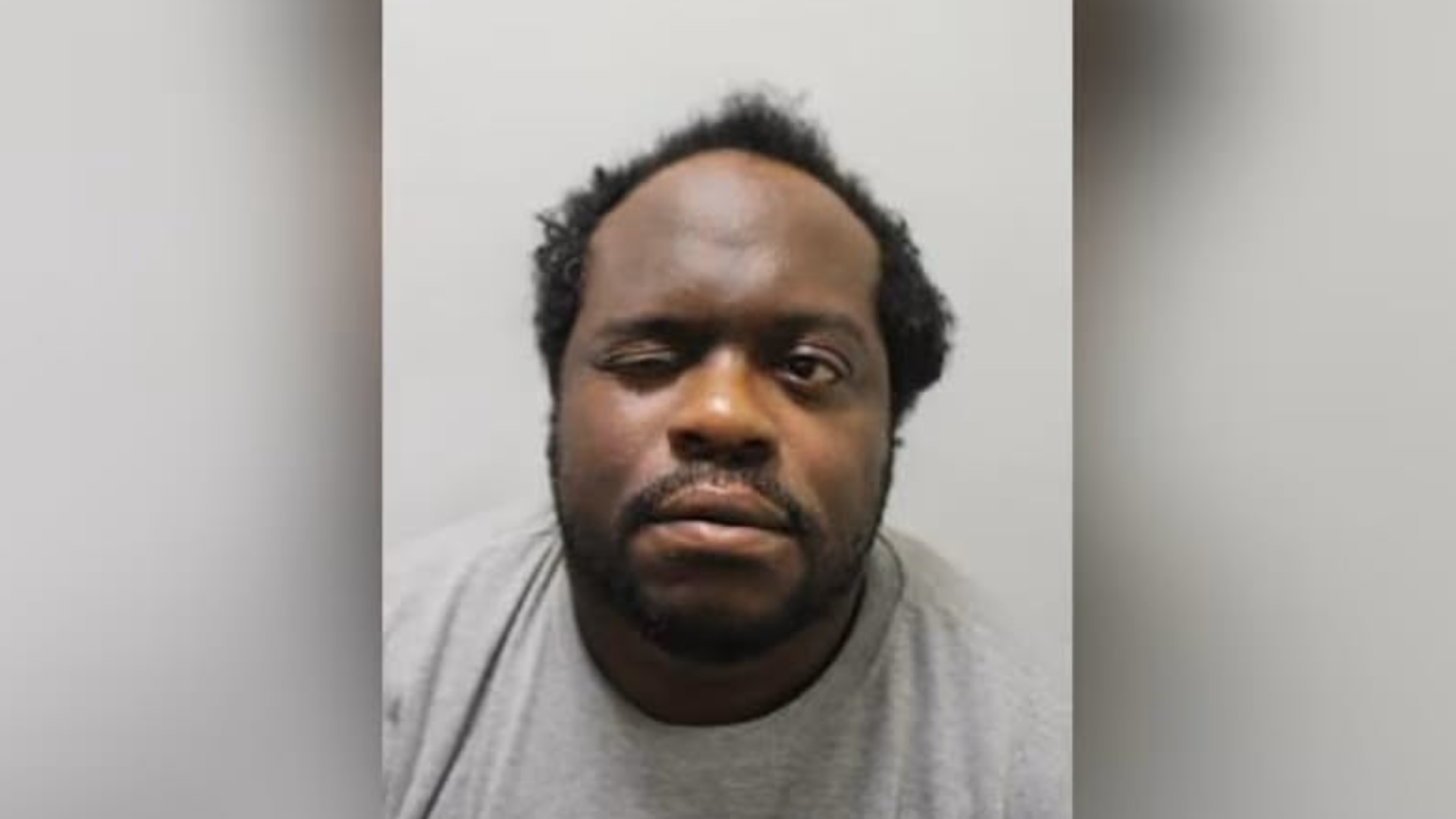
The recent history of policing in England has been one of startling incompetence. The most obvious consequence is an atmosphere of creeping lawlessness and a grim acceptance among the public that most crimes won’t be investigated. All this is bad enough. But what about when police ineptitude kills innocent people?
At the Old Bailey last week, a jury found Simon Levy guilty of murdering two women, two counts of rape, grievous bodily harm and intentional suffocation. On Wednesday, he was sentenced to an indefinite life order for these crimes. Rightly, he will never again see the light of day.
What is so horrifying about Levy’s case isn’t just the fact that he is a sadistic sexual predator. It is a sad truth that such people have always existed in our society. What hasn’t always existed – and what is possibly the most wretched aspect here – is a criminal-justice system so inept that he was repeatedly given a free pass to do it.
Levy’s offending began in 2018, when he molested two women. In September 2021, he was sentenced to three years in prison for these crimes. Despite a report that he had sexually assaulted a prison guard in 2022 (an offence he was later convicted of), Levy was released in February 2023, after serving just 17 months. A breach of his licence sent him behind bars again in May 2024 to serve the final three months of the original sentence. When freed, he was inexplicably downgraded from a high-risk individual to low-risk, with his monitoring conditions relaxed accordingly.
Levy started to reoffend almost immediately. He sexually assaulted three women on the Tube in October and November 2024, and one of the attacks was filmed. Considering the extent of surveillance on London’s public transport, particularly the Underground, one would hope that this would be a relatively easy crime to prosecute. Not so. Levy was ‘interviewed under caution’ before he appeared to be forgotten about.
A few months later, in January 2025, Levy violently raped a sex worker in a car park in Tottenham. The woman fractured her right shoulder and was choked unconscious. The victim gave an accurate description of Levy and even told police where he lived. Yet the investigation was closed in a matter of months. The victim, meanwhile, was charged with breaching a community-protection notice that prevented her from being in the car park where she was attacked.
It gets worse. In March of that year, Levy murdered Colombian grandmother Carmenza Valencia-Trujillo on the steps of an apartment block in south London. He was arrested after his DNA – including blood and semen – was found at the scene. Incredibly, he was interviewed only to be released without charge. Investigators even refused to classify the death as murder and the case was never passed to the homicide squad. A short time later, Levy was at liberty to sexually assault another woman on the Tube.
Levy was charged for this assault (along with earlier sex offences), only to be bailed again. And, a few months later, in May and June, he sexually assaulted more women on public transport. Once again, he was charged and, once again, he was released on bail.
It is hardly a surprise that, by now, Levy had such contempt for the English justice system – if it can even be called that – that he didn’t bother to attend his two pre-trial hearings (the police issued no warrant for his arrest for this either). And so he was allowed to commit his final crime.
In August, Levy murdered Sheryl Wilkins in the same car park in Tottenham where he had previously committed rape. In September, he was finally arrested, charged and – this time – denied bail. But it was too little, too late.
Such rank incompetence from the police and the judiciary should be beneath contempt. Yet criminals are routinely slipping out of the authorities’ hands, only to commit even more despicable crimes. Jihad al-Shamie was on bail for an alleged rape when he attacked a Manchester synagogue in October last year, resulting in the death of two Jewish men. Paranoid schizophrenic Valdo Calocane had an outstanding arrest warrant for assaulting a police officer when he killed Barnaby Webber, Grace O’Malley-Kumar and Ian Coates in Nottingham in 2023. The phrase ‘known to the authorities’ continually reappears in the news coverage high-profile cases like these.
By now, everyone is familiar with the scourge of two-tier policing, but it seems we have a two-tier bail system too. It is worth contrasting Levy’s treatment – being bailed repeatedly – with those whose ‘crime’ was to have promoted distasteful or controversial political views. Lucy Connolly was arrested and charged for an intemperate tweet she posted in July 2024. ‘Set fire to all the fucking hotels full of the bastards for all I care’, she posted at the height of the Southport riots. She deleted the post in a matter of hours. But it didn’t matter – the police and prosecutors were determined to get their woman, even if she was the primary carer for her 12-year-old daughter and had never committed a crime before. Connolly was effectively forced to plead guilty, denied bail twice, sentenced to 31 months and spent 10 months in HMP Peterborough.
Then there’s the case of Jamie Michael in Wales. Like Connolly, he had taken to social media to share his thoughts on immigration amid the Southport riots. In a video posted on Facebook, Michael said the UK was ‘under attack’ from immigrants. He was charged and immediately imprisoned, only to be granted bail after spending 17 days in jail. A jury later acquitted him in a matter of hours.
So what do those who are responsible for letting Simon Levy loose on the streets of London have to say for themselves? Not much, it seems. The Met’s deputy assistant commissioner, Kevin Southworth, has described Levy’s case as ‘tragedy beyond words’ and a ‘collective system failure’ for the police. But this isn’t good enough. Two women are dead and another has been raped. These were entirely preventable crimes, not unfortunate tragedies. Each individual decision to let Levy go or to release him on bail has played its own grim role.
There must be consequences for Simon Levy’s enablers, not just a collective shrug of the shoulders. The indifference and incompetence of the justice system are now literally costing lives.
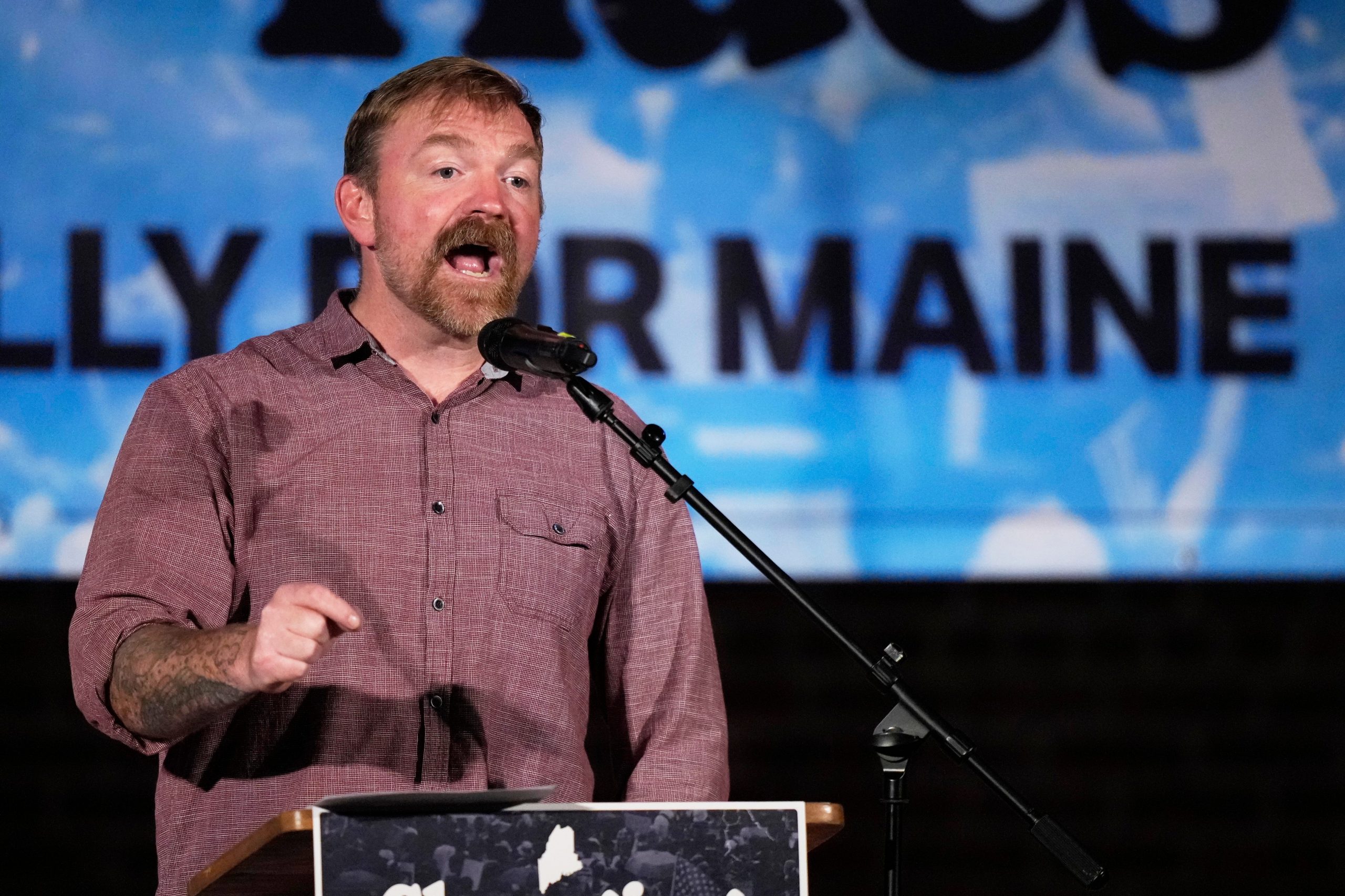

Former Maine Senate candidate Graham Platner, who dropped out of the race last month amid sexual assault allegations, was announced as a speaker for a Labor Day event in Ellsworth, Maine, next month.
The event was organized by the groups Hancock County Activists and Acadia Action Peacemakers, according to information shared with the Hancock County Democratic Party. Both have been behind “No Kings” protests and other organized events in the area since the start of last year. Neither responded immediately to inquiries about the event on Thursday.
Platner, who is from nearby Sullivan, Maine, dropped out of the Senate race following a July POLITICO report that a woman he dated accused him of sexually assaulting her in 2021. Platner denied the allegation.
Marcia Myers, the chair of the Hancock County Democratic Party, said the event set to feature Platner was not a sanctioned party event but that the party often shares information about activist-led events in the area. The county party’s Facebook and Instagram posts mentioning Platner’s event were deleted, though the event was still listed on the party’s website.
Platner did not immediately respond to an inquiry about the event on Thursday.
Platner was replaced in the Senate race by former Maine Senate President Troy Jackson, as Democrats are seeking to take on GOP Sen. Susan Collins in an election of high importance to both parties nationally.
Outside groups supporting Collins have sought to tie Jackson to Platner, noting Jackson, who previously ran for governor, endorsed Platner’s campaign and appeared at rallies for him. Jackson called for Platner to drop out of the race after the sexual assault allegation.
Jalen Beckford contributed to this story.
spiked is funded by readers like you. Only 0.1% of regular readers currently support us. If just 1% did, we could grow our team and step up the fight for free speech and democracy.
Become a spiked supporter and enjoy unlimited, ad-free access, bonus content and exclusive events – while helping to keep independent journalism alive.

Austria and Greece play a part in push to get US and Iran to negotiate
Derek Tran from California’s 45th district sells Litecoin via Coinbase

Bitcoin’s $116M Self-Custody Push Signals a Shift in Crypto Custody


-

 News Videos6 days ago
Can Astrology Help Find Gold and Silver Trends? A Financial Astrology Guide
-

 Business5 days ago
Datadog: Best Of Breed For Multiple Reasons
-

 Tech7 days ago
Rinn Pharma & Biopharma to join NordicPharmaTrain network
-

 Business6 days ago
How to Start a Cleaning Business: A Step-by-Step Guide
-

 Business6 days ago
BDC Weekly Review: Private BDC Q2 Numbers Are Strong
-
 NewsBeat3 days ago
Communication cards help banking customers access services or report scams
-
 Business4 days ago
Oil Price Today (August 11): Crude oil rises to $88 after Trump’s compensation demand dents Hormuz opening. Here’s why
-
 Entertainment7 days ago
10 R-Rated Drama Movies That Can Be Called Masterpieces
-

 Fashion5 days ago
Amazon Sundays: Closet Care Before Fall
-

 Business7 days ago
SharkNinja Keeps Eating
-

 Politics6 days ago
Be quiet, Miriam! – spiked
-

 Business6 days ago
Mutual Fund Manager Scoops Up Beaten-Down Stocks
-

 Business5 days ago
5 Things You Must Know About Jorge Messi, the Father and Longtime Agent Who Shaped Lionel Messi’s Career
-

 Politics5 days ago
Ben-Gvir’s crocodile project halted but abuses at Ketziot Prison continue
-

 Tech7 days ago
Metabase SQLi zero-day exploited in customer data-theft attacks
-
 Politics5 days ago
The Church of England’s ruinous reparations racket
-
 Crypto World4 days ago
Why Did Nvidia Stock Fall on Monday Despite a $500 Billion Wall Street AI Deal?
-
 Politics6 days ago
Calls to permanently pedestrianise central Belfast following festival success
-

 Crypto World6 days ago
A Deep Dive Into One Of The Most Significant Hacks In Recent Memory
-

 Crypto World6 days ago
Bitcoin ETFs draw $853.5M in five-day inflow streak
You must be logged in to post a comment Login