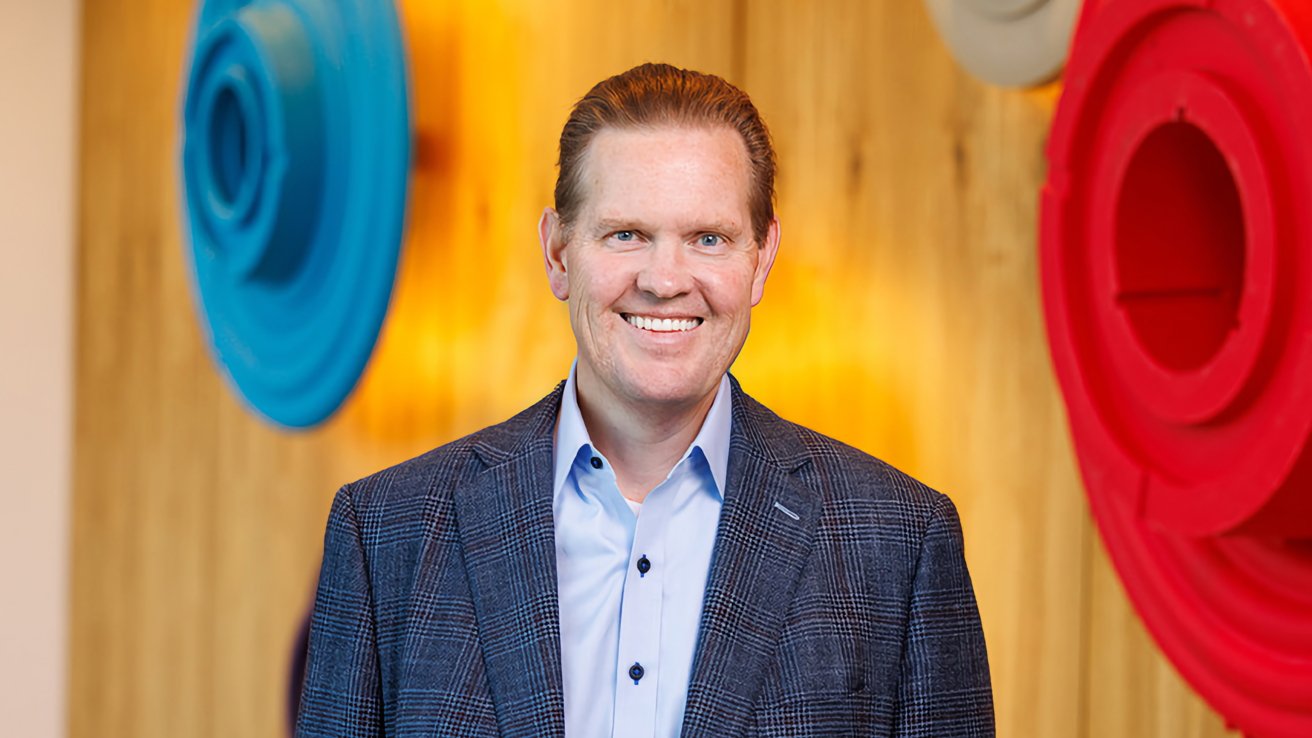
Apple has signed Nate Gatten to become its new head of government affairs, a move that could help the company work more with the Trump administration.
Apple is undergoing several changes in the short term, in preparation for the CEO transition from Tim Cook to John Ternus on September 1. One day before the switch, Apple will be installing a new vice president.
According to a memo from SVP and General Counsel Jennifer Newstead seen byBloomberg, Nate Gatten will be taking over as vice president of Government Affairs. Gatten will take the role on August 31, the memo states.
Current head of government affairs Nick Ammann will move down the corporate ladder one rung and report to Gatten. Tim Powderly, Matt Brown, and Mike Orgill will also report to Gatten.
Advertisement
Kate Adams, previously the legal chief, will be in an advisory role until her retirement on October 1.
Gatten comes from American Airlines Group, where he held the same role for almost a decade. Previously, he led the global government relations and policy teams at JPMorgan Chase.
Newstead describes Gatten as a “thoughtful, strategic leader with deep experience navigating complex policy environments.”
As a Republican, people familiar with the decision to hire Gatten say he will hopefully align with the Trump administration. While at Fannie Mae, he also oversaw a team that worked with Republican members of Congress, which is a seemingly similar situation.
Advertisement
It’s not just a political play by Apple. Gatten’s previous experience in real estate may also be a bonus as Apple expands its operations with new stores and offices.
For decades, building a proper home theater required a fairly predictable piece of hardware sitting somewhere beneath the television. The AV receiver accepted all of your sources, decoded the soundtrack, powered the speakers, managed the subwoofer, corrected for the room and generally acted as traffic cop for everything involving sound. The television mostly knew its place.
That relationship is changing rather quickly. TV manufacturers are increasingly turning the display into something far more important than the final stop for the picture. Samsung, LG and TCL are moving speaker coordination, room optimization and immersive audio processing directly into their television ecosystems, while Sony has already turned compatible BRAVIA TVs into active participants in its home theater systems. Apple and Google are approaching the same problem from another direction, shifting much of the responsibility into their streaming platforms.
None of this means the AV receiver is about to disappear. Someone running an Anthem AVR with seven passive speakers and four ceiling channels isn’t unplugging it tomorrow. The family buying a 77-inch OLED who wants Dolby Atmos without speaker wire, an equipment rack and a Saturday afternoon spent deciphering channel assignment menus? That’s the customer the industry is coming for, and there are millions more of them.
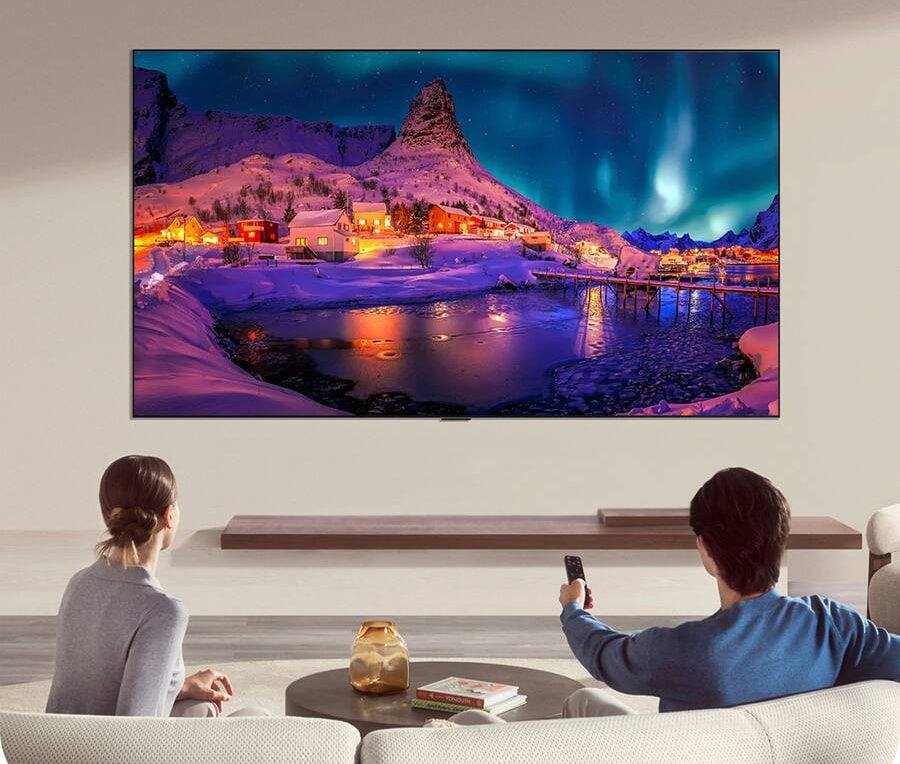
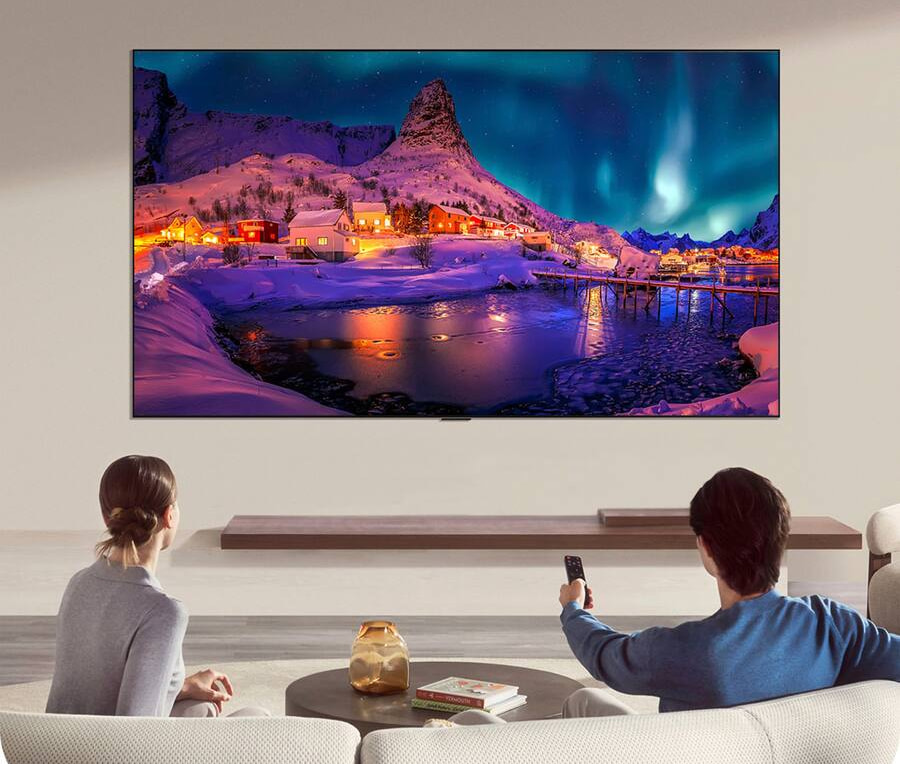
2026 LG G6 OLED TV
The TV Is No Longer Just Passing the Sound Along
The important distinction here is control. A television connected to an AVR through HDMI eARC is still largely handing audio responsibility to another component. The receiver determines how the soundtrack is decoded, how speakers are configured, where bass gets redirected and how the system interacts with the room.
Advertisement
The newer wireless ecosystems begin moving some of those decisions upstream. Compatible televisions can identify speakers, coordinate their output with the TV’s internal speakers, compensate for placement and distribute different parts of an immersive soundtrack around the room. Streaming apps are already inside the display, HDMI sources are connected directly to it, and increasingly the audio system is configured through the television’s interface or companion app.
The television isn’t becoming an AV receiver in the traditional hardware sense, but it is starting to perform some of the jobs that made the AV receiver necessary for mainstream users in the first place. That’s an important distinction because the disruption isn’t really about replacing a Denon, Marantz or Anthem feature for feature. It’s about removing enough complexity that millions of people decide they never needed one to begin with.
Samsung Has Been Quietly Building This for Years
Samsung’s Q Symphony originally looked like a clever way to stop customers from wasting the speakers already inside their expensive television whenever they added a soundbar. The 2026 version is considerably more ambitious.
Compatible Samsung TVs can now coordinate with as many as five Samsung audio devices through Q Symphony, including soundbars and Wi-Fi speakers, while automatically adjusting how the system behaves based on speaker placement. SmartThings provides another layer of system management for playback and audio settings. In other words, the television isn’t merely outputting Dolby Atmos to another box; it is becoming an active participant in the system.
Samsung’s Music Studio 7 can operate independently or become part of a larger Q Symphony installation with compatible Samsung televisions, soundbars and wireless speakers. The company’s 2026 Neo QLED and OLED televisions continue pushing Q Symphony deeper into the television lineup as well.
Advertisement
There is, however, a rather large Samsung shaped catch: it is still Samsung. Q Symphony remains a proprietary ecosystem. Buy the television and the appropriate Samsung audio products and the integration can be compelling. Decide two years later that you prefer speakers from somebody else and the doors to the clubhouse become considerably less welcoming. That isn’t necessarily a deal breaker, but consumers need to understand what they’re buying into.
Related Reviews:
Dolby Atmos FlexConnect Could Change the Rules
Dolby Atmos FlexConnect Diagram
Dolby Atmos FlexConnect is potentially much more disruptive because the long term goal isn’t supposed to be another closed ecosystem. The technology allows a compatible television or soundbar to work with wireless speakers placed around a room and then automatically determines their locations, calibrates the system and adjusts how Dolby Atmos content is reproduced.
Advertisement. Scroll to continue reading.
Precise symmetry is no longer mandatory, which matters in actual homes where one surround speaker ends up beside a bookcase, another gets moved because somebody objected to its presence next to the sofa, and the architect apparently designed the room without consulting Dolby Laboratories.
TCL was first out of the gate with commercial FlexConnect support. Its compatible TVs can integrate their own speakers with Z100 wireless speakers, using processing to compensate for imperfect placement and create immersive audio without conventional speaker wiring. We heard the technology at CEDIA Expo and found that it produced convincing positional effects even when the physical speaker arrangement wasn’t ideal.
Advertisement
TCL has continued the technology into its 2026 lineup. The QM8L, for example, supports FlexConnect configurations with the Z100 speakers and Z100 SW subwoofer, while the flagship X11L expands the same idea around its integrated Bang & Olufsen audio system. This is much closer to the television becoming the audio system’s conductor rather than merely feeding a signal to something else.
LG Takes the Idea Even Further
LG Sound Suite at CES 2026
LG’s 2026 Sound Suite makes the same argument from another direction. The H7 soundbar, M5 and M7 wireless speakers and W7 subwoofer use Dolby Atmos FlexConnect to create a modular system that can grow from a relatively simple arrangement into something LG describes as a 13.1.7 channel configuration. More importantly for this discussion, FlexConnect is also being integrated into LG’s premium televisions.
At CES 2026, we heard the system progress from the television’s internal speakers to the TV combined with a pair of M7 wireless speakers, and finally to a much larger configuration incorporating the H7, subwoofer and additional M7 speakers. Automatic calibration compensated for the physical layout and created a genuinely immersive presentation without conventional speaker wiring.
That demonstration gets directly to the point: you don’t necessarily need a soundbar sitting beneath the television just to begin building the system anymore. You can start with the TV and add components around it, which represents a fairly profound change in architecture.
There is also an important caveat surrounding Dolby’s promise of interoperability. FlexConnect is designed to be brand agnostic, which theoretically opens the door to compatible televisions and wireless speakers from different manufacturers. We have not yet seen enough real world cross brand interoperability, however, to declare the walled gardens demolished.
Advertisement
Can an LG FlexConnect television eventually work seamlessly with a TCL speaker? Will another loudspeaker manufacturer be able to enter the ecosystem without requiring its own television platform? Those questions matter enormously, and until that actually happens, brand agnostic remains the destination rather than proof that we’ve arrived.
Sony Is Heading in the Same Direction but Isn’t There Yet
With Sony Bravia Acoustic Center Sync speakers behind the screen on select Sony TVs improve the center channel.
Sony presents another variation on the idea. Acoustic Center Sync allows compatible BRAVIA televisions to become the center channel in systems built around products such as the BRAVIA Theater Bar 9 or Theater Quad. Dialog originates at the screen while the external audio system handles the surrounding information.
We’ve found the implementation quite effective with the BRAVIA 8 II and Theater Bar 9. Dialog became better anchored to the image and the television behaved like another active component in the overall loudspeaker system.
This is not quite the same architecture as TCL or FlexConnect because the external Sony audio product remains essential, and the television isn’t taking over the entire processing and distribution role. Sony nevertheless reinforces the broader point: the television speaker is no longer something manufacturers necessarily expect you to turn off the moment you buy better audio hardware. It is becoming part of the home theater.
Apple and Google Move the Hub Into the Streamer
Apple HomePods setup as a stereo pair with Apple TV 4K.
Apple and Google complicate the argument in a useful way because neither makes the television itself the center of the system. They make the streaming platform the center.
Advertisement. Scroll to continue reading.
Advertisement
One or two Google Home Speakers can pair wirelessly with the Google TV Streamer. Two speakers create genuine physical stereo separation and Google’s Spatial Audio processing can simulate a broader surround presentation. There is an important limitation, however, that we’ve already highlighted in our coverage.
Google has not confirmed that the Home Speaker pair constitutes a Dolby Atmos playback system, even though the Google TV Streamer itself supports Dolby Atmos. Google describes the speaker implementation as Spatial Audio rather than confirmed Atmos reproduction. It also hasn’t documented an equivalent to Apple’s eARC arrangement for routing sound from external devices such as a game console or Blu ray player through the Google speakers.
Apple goes further. A full size HomePod or stereo pair connected to Apple TV 4K can reproduce Dolby Atmos, Dolby Digital 7.1 and Dolby Digital 5.1. Apple TV’s eARC support can also accept audio originating from other devices connected to the television and send it to the HomePods.
In Apple’s world, therefore, the Apple TV increasingly behaves like a miniature wireless home theater processor. It’s a different architecture, but the trajectory is the same: the dedicated box filled with speaker terminals is no longer mandatory for everyone.
Advertisement
Where the AV Receiver Still Wins and It Isn’t Close
Before anybody starts boxing up their Denon, Marantz, Anthem, Yamaha or Onkyo, there are some rather substantial differences between these systems and a traditional AVR.
An AV receiver provides real amplification for passive loudspeakers and considerably greater flexibility for speaker selection, subwoofer integration, source connectivity, surround formats, bass management, channel assignment and system expansion. A conventional 7.1.4 Dolby Atmos installation also uses actual loudspeakers positioned around and above the listener.
No amount of spatial processing changes the physical reality that discrete speakers placed in the correct locations can create localization, scale and dynamics that a handful of wireless speakers attempting to generate phantom channels may struggle to equal.
We saw exactly that kind of compromise during our Sony BRAVIA Theater Bar 9 testing. The soundbar by itself delivered impressive spaciousness but lacked convincing deep bass and benefited substantially from adding the dedicated subwoofer and rear speakers. We also noted that a component based system at roughly the same total price could provide higher overall performance, albeit with greater complexity.
There is another distinction that marketing departments tend to whisper: wireless speakers are usually wireless for the audio signal. They still need electricity. You may have eliminated speaker cable running across the room, but four powered speakers and a subwoofer can still require five convenient AC outlets. David Copperfield has not joined the engineering department. The wires have not vanished entirely.
Advertisement
The Biggest Advantage Is Simplicity
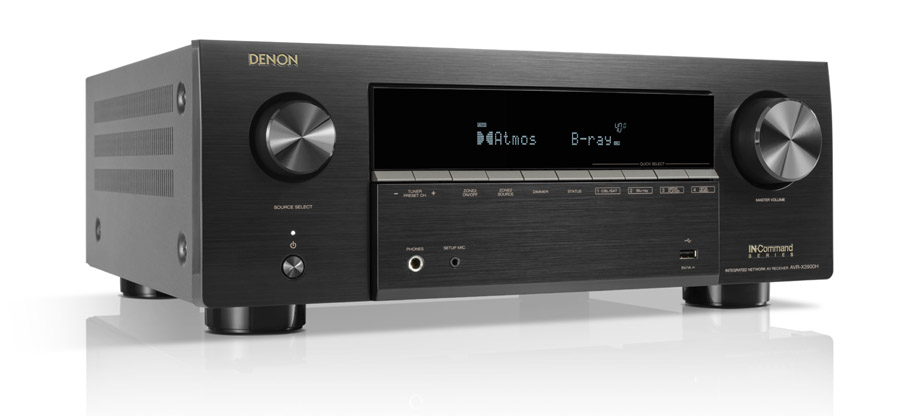
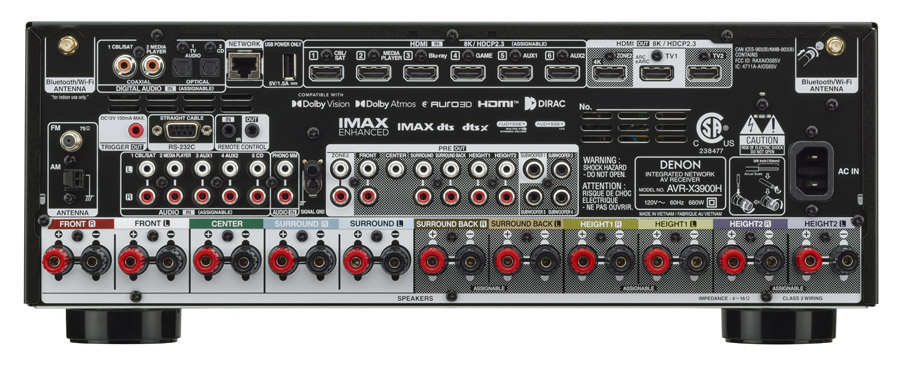
2026 Denon AVR-X3900H A/V Receiver (rear)
This is where the traditional home theater industry needs to pay attention. Most consumers don’t want to learn what an 11.2 channel receiver actually means, determine crossover frequencies, assign height channels, understand HDMI handshake problems or wonder why the streaming box suddenly produces sound but the PlayStation doesn’t. They want to turn on the television and have everything work.
If the TV detects two or four wireless speakers, measures where they are, determines what each one should reproduce and automatically configures an immersive soundtrack, that’s enormously attractive. FlexConnect also allows unconventional placement, which matters outside dedicated theater rooms. Apartments, open concept living spaces, bedrooms and multipurpose family rooms rarely permit the kind of symmetrical loudspeaker layout installers would choose if given a blank sheet of paper.
Software can compensate for some of that. Not perfectly, but possibly well enough, and well enough plus vastly easier has destroyed more than one consumer electronics category.
Advertisement. Scroll to continue reading.
The Pros and Cons
For mainstream consumers, these TV centered and platform centered systems offer some very real advantages: far less speaker wiring, fewer components beneath the television, automatic speaker detection and room calibration, greater freedom with placement, easier expansion and tighter integration between the television and external speakers. They also make considerably more sense in apartments and multipurpose rooms where a traditional component system simply isn’t practical.
Advertisement
The tradeoffs are just as real. Many of today’s ecosystems remain proprietary, wireless speakers still require AC power, and ultimate output, bass extension and dynamics can trail a good component system. Virtual channels are not identical to correctly positioned physical speakers, input and codec support vary wildly between platforms, and network reliability suddenly becomes part of the audio chain.
There is also a longer term issue that deserves far more attention than it receives: software support. A pair of passive loudspeakers bought in 1996 can still work perfectly with an amplifier purchased this afternoon. Nobody has to maintain a cloud service so that your KEFs remember how to reproduce the left channel. Whether today’s networked wireless speaker ecosystems demonstrate that kind of longevity remains to be seen.
Who Is This Really For?
If you own a dedicated theater, care deeply about channel separation, use multiple subwoofers, want Dirac Live or similarly sophisticated room correction, own high quality passive speakers or regularly upgrade individual parts of your system, the AVR isn’t going anywhere. Keep it.
The new model makes far more sense for the much larger audience that wants better home theater audio without turning the living room into a rack of electronics. Buy the television, add two wireless speakers and decide six months later that you want surrounds and a subwoofer. Let the system find them, measure them and figure out what to do.
Advertisement
That’s a far easier proposition to sell at Best Buy than explaining why somebody needs eleven channels of amplification when they’re still trying to determine which HDMI port says eARC.
The Bottom Line
The AV receiver isn’t dying, but it is being pushed toward the enthusiast, performance and custom installation markets where its flexibility, amplification and upgradeability still matter enormously. What’s changing is everything underneath that market.
Samsung’s expanding Q Symphony ecosystem, TCL and LG’s embrace of Dolby Atmos FlexConnect, Sony’s integration of BRAVIA displays into the speaker system and the increasingly sophisticated Apple and Google streaming ecosystems all point toward the same destination: fewer boxes, fewer cables and more of the home theater being controlled by software.
The television doesn’t need to become a literal AV receiver to threaten the receiver’s position in the living room. It only needs to make millions of consumers ask a much more dangerous question: Do I still need one?
Advertisement
For an increasing number of people, the answer may soon be no.
By any metric, the horror film Obsession has been one of the most extraordinary Hollywood success stories of 2026.
Made on a budget of around $750,000 and released in May, it went on to earn $488 million worldwide, catapulting 26-year-old director and screenwriter Curry Barker—originally known for his YouTube sketch comedy—to the top of the industry’s “it” list.
So why, you might ask, are people creating a stink over Universal Studios, the international distributor of Obsession, adding its lead female character, Nikki, to the cast of the Halloween Horror Nights event at its Hollywood theme park? Even though the actor who plays her seems very much on board? To answer that, one has to review three months of fierce and enduring debate.
Since the movie hit theaters, fans and critics have been at odds over a thorny question: Who is the victim in Obsession? The plot concerns an awkward, painfully insecure young man, Bear (Michael Johnston), who yearns to be in a romantic relationship with his friend, the seemingly unattainable Nikki (Inde Navarrette). In a moment of frustration, he snaps something called a “One Wish Willow”—believing it to be a whimsical and harmless novelty gift—and voices his desire that she love him more than anyone else in the world.
Advertisement
From that moment forward, Nikki is an unnatural version of herself, moving as if controlled by another consciousness. Her need to be with Bear around the clock is marked by increasingly alarming performances of total devotion that finally escalate to murder. Bear recognizes almost right away that something is wrong but cannot resist acting out his fantasy with the helpless and brainwashed woman who has taken to his bed.
As a consequence, there’s been a lot of hand-wringing as to whether viewers understood that Nikki was not the true villain or monster of the story, regardless of the acts she was cursed to commit. “Nikki was the victim and only Nikki,” insisted one representative X user in a viral post in June, adding that it would be “delusional” to apply the same label to Bear.
Whether anyone did try to defend Bear (as, for example, a guy who had no idea he was casting a real magic spell) seemed beside the point. Commentators wanted to hammer home that Nikki was robbed of her autonomy and that she was effectively raped due to her inability to consent to sex. Again and again, they invoked some theoretical viewer who saw her as the monster in the situation, decrying this reading of the film.
Then, on Monday, Universal Studios Hollywood officially announced that an actor portraying Nikki would haunt the park during its upcoming Halloween Horror Nights, which will run from late September 3 to November 1 and will also feature attractions like a haunted house based on Sinners. Mentioning the addition of Nikki to the event in a press release, Universal teased that “guests may find themselves face-to-face with the latest victim of the One Wish Willow’s terrifying curse,” apparently agreeing with the consensus that the character is at the mercy of a paranormal force rather than intentionally malicious.
Advertisement
It didn’t matter. X users called it a “catastrophically bad idea,” said it was in poor taste to portray “a victim of sexual assault” as a frightening figure, and worried about the actor’s safety as they interacted with park guests. A few argued that it should be Bear wandering the park, overlooking the problem that the character has no distinguishing visual shorthand, whereas Nikki, as in the climax of the film, will be “all bloody,” with tattoos scribbled on her body, according to John Murdy, the creative director and executive producer of Halloween Horror Nights.
An anonymous reader quotes a report from Ars Technica: On Monday, passengers aboard Delta flight 591 going from Las Vegas to Atlanta allegedly spoofed the onboard Wi-Fi, raising the attention of federal law enforcement. The incident came one day after the DEF CON security conference concluded in Las Vegas, and was first described on social media accounts that follow publicly available air-to-ground messages, known as ACARS.
According to the “ACARS Drama” account, a message was sent by pilots from the plane stated: “NO INFO AS OF NOW WE HAVE A BUNCH OF PAX THAT WERE AT A CYBER CONFERENCE IN LAS THEY WERE ABLE TO JAM OUR WIFI AND BROADCAST THEIR SIGNAL.” A description of the incident posted to Reddit further stated that these passengers created a fake hotspot (“Delta WiFi Fast”), with a phishing landing page “designed to harvest passengers’ personal credentials.”
This technique, sometimes known as an “evil twin” attack, has been long-known to the IT security community. It involves setting up a fake Wi-Fi network and then capturing login credentials and other data. “One initial finding is an unauthorized WiFi network, which was not provided, operated, or supplied by Delta, was present onboard the aircraft for a short time during the flight,” said a Delta spokesperson. Delta further noted that the flight’s safety was “never in question and no aircraft operating systems were affected,” and that no emergency was declared.
Ars notes that the “actual onboard Wi-Fi was disabled for 30 minutes.”
Schools are navigating a steady stream of change, from new technologies to shifting expectations about what students need to know and be able to do. Yet anticipating change is different from knowing how to prepare for it.
A classroom teacher early in her career, Katie King has spent the last decade helping educators think about that challenge. Now senior director of strategic engagement at KnowledgeWorks, she works at what she describes as “the intentional intersection of futures thinking and education,” helping schools and systems consider possible futures and what those possibilities mean for decisions they make today.
EdSurge spoke with King about futures thinking, the forces shaping the next decade of education and how educators can turn long-term reflection into practical action.
EdSurge: What are the most significant forces shaping the future of learning right now, and how do they show up in your work with educators and systems?
Advertisement
King: The first is AI and integrating with AI, how the next generation of artificial intelligence, which is coming ever more rapidly, has the potential to change how humans think and feel, challenging our current notions of skill development and human relationships.
The second is disruption and its potential to upend daily life in school and learning environments. Our traditional approaches to managing our day-to-day lives and creating change in education really feel insufficient in the face of this very volatile environment.
The third driver is a lack of trust in public institutions: declining confidence, economic constraints and just more market-based competition in education. The good news is that most surveys show that people do have trust in their local schools and their teachers, so I think public education has an opportunity to leverage that by thinking creatively about who they can be in this community.
The fourth driver is the gap in education relevance. The education system faces this urgent need to integrate students’ emerging needs, concerns and aspirations into what they’re learning. The world that they’re living in today and going out into is different from the one schools are setting them up for.
Advertisement
When you talk about “futures thinking,” how is that different in practice from forecasting or strategic planning in education?
Futures thinking is a disciplined research and strategy practice: noticing change, examining assumptions, exploring possibilities and making future-informed decisions — building our mental muscles to avoid making predictions. In futures thinking, we’re actually saying, “We don’t know. Let’s explore a lot of possibilities and then use that range to make informed decisions.” I think when people build these skills and mindsets, they become more flexible and nimble, more attuned to change as it’s happening. I think it’s an avenue toward more proactive leadership than crisis response.
Katie King, Senior Director of Strategic Engagement at KnowledgeWorks
How do you think about forecasts in education, and what role are they meant to play for school and system leaders?
The purpose of a forecast is to synthesize research, trends and emerging issues affecting education. It’s meant to boil it down to some digestible ideas that leaders can then use. We do that by exploring forces that are already affecting education, from AI and workforce changes to shifting expectations of learners, and then how those changes could evolve and shift over time.
Advertisement
We’re hoping our publications [futures forecast and strategy guide] will help people step back from the day-to-day pressures, see the larger patterns shaping the future, and begin to think about how things might be different. What should that mean about what we’re doing today?
AI is one of the forces reshaping education. What does it reveal about how educators can plan in the face of uncertainty?
I think AI is the perfect topic to test how willing we are to avoid predicting the future and instead get comfortable with uncertainty and accept that there is a range of possibilities. We do not have any facts about the future; that is the core tenet. So, when we’re faced with that level of uncertainty about AI, what do we do? In our view, we can plot out as many possibilities and ideas as we can. Then we can decide what we want to do that’s most aligned with our vision.
A recurring challenge in your work seems to be moving from big-picture futures conversations to concrete decisions. What does it take to make that shift effectively in schools and districts?
Advertisement
Try not to resolve uncertainty by moving to strategy too quickly; sometimes a sense of urgency can backfire when we haven’t allowed for the possibilities, contradictions and questions. It can’t be, “Let’s have one big conversation about the future, set our five-year strategic plan and then be done.”
Make sure you have a vision for your school or district that’s more than words on the website. Once you’ve thought about the longer-term future and considered many possibilities, you can use that vision as a filter and revisit decisions as the landscape evolves.
We’re constantly saying: “What have we learned when we’re looking out for the future? And what does that mean for what we do today?”
How can schools balance immediate day-to-day priorities with longer-term futures work in meaningful ways?
Advertisement
We wanted our most recent publication to be concrete, so it focuses on three practical calls to action:
Remake your role by connecting leaders, educators and everyone in the system to their personal vision.
Turn down the noise by creating transparency and clarity so schools can focus on shared goals for young people.
Seed new systems by piloting new approaches and doing small experiments that can grow over time.
None of those are about changing everything at once. They focus on shifting what educators are already doing in ways that support longer-term transformation.
Recommended Resources
Portrait of a Leader, Second Edition
Advertisement
Laying the Foundations for Systems Change
Envisioning Educator Roles for Transformation
Charting a New Course for Education
Watch this video:
Advertisement
This article was sponsored by KnowledgeWorks and was produced by the Solutions Studio team.
The inline six-cylinder engine that revs the highest, as indicated by its amazing 7,900 rpm redline, is the BMW S54. This 343-hp naturally aspirated engine, produced from 2000 through 2008, powered a variety of BMW models, including the E46 M3, the Z3 M Coupe and Roadster, and the Z4 and Z4 M Coupe and Roadster. It was even used by Germany’s Weismann for its MF3 model retro sports car. A later, upgraded version with 360 hp, thanks to an improved intake manifold and camshafts, was called the S54B32HP and appeared in the E46 M3 CSL. And while the BMW S54 engine may not quite rank up there with the highest-revving engines ever released in a production car, it is definitely one of BMW’s iconic inline six engines, ranked by horsepower.
One of BMW’s primary goals with the S54 engine was to create a powerplant that could support an output of 100 hp per liter. They achieved this goal, as its 343 hp generated by a 3.2-liter displacement comes out to 107 hp per liter, which increased to over 112 hp/liter with the higher-output S54B32HP version. Mission accomplished.
The BMW S54 engine featured an iron block combined with an aluminum head and individual throttle bodies. It used dual overhead camshafts to activate its four valves per cylinder. New technology (for the year 2000) added to the S54 included new engine management software making 25 million calculations each second while controlling its cooling system, fuel injection, and timing of the ignition. Forged connecting rods and pistons completed the package.
Advertisement
What else should you know about BMW’s S54 engine?
While the BMW S54 engine was designed for high performance, it requires a scrupulous approach to maintenance, having some well-known, long-term weaknesses. One is its virtually guaranteed-to-fail cooling system. Its cooling system is virtually guaranteed to fail, due to BMW’s use of plastic end tanks on the radiator. Its water pump is also known to have a short lifespan. A service interval of just 60,000 to 80,000 miles for thermostat, expansion tank, and coolant hose replacement is recommended. The S54 is also prone to excessive wear of the connecting rod bearings, with preventative replacement suggested every 60,000 to 100,000 miles.
Advertisement
Another area of concern with the S54 engine is the VANOS variable valve timing system, which is subject to wear and breakage. It should be serviced every 80,000 miles. Other S54 trouble areas include the throttle actuators, the coil packs, and the spark plugs.
If you own a BMW with an S54 engine sitting under the hood, it is not an engine you can just forget about. Changing the oil regularly with a good synthetic and checking it frequently is a good start. Maintain its individual systems, particularly those that can fail. Take care of your S54 and it will take care of you, especially if you happen to be a track rat. The S54 engine powers one of the legendary vehicles that were powered by inline-six engines. It will always be remembered as one of the final high-redline BMW engines that was made before BMW made the switch to turbocharged engines for its lineup of M vehicles.
Google has unveiled the $29 Pixel Tag, its long-awaited AirTag rival that combines UWB with Bluetooth 6.0 Channel Sounding for two forms of precision tracking. It launches November 11. The Verge reports: The Pixel Tag is a slim oblong device available in one grayish color — Fog — that weighs about 12g, or 0.4oz. Like the AirTag, it has no built-in hooks or clips for attaching to objects you want to track. There’s a single button that will trigger a sound on your phone, for the rare occasion when you’ve got the Tag but have lost your main device. It also has an IP67 rating, so it should be safe from dust and rain. As for the battery, the Pixel Tag takes CR2032 coin batteries, and says one battery should last for over a year.
Naturally, it’ll be compatible with Google’s Find Hub network, which leverages the Bluetooth capabilities of Android devices worldwide to help locate lost objects. […] Once you’re close enough to the Pixel Tag, UWB lets the Find Hub app display the distance and direction to the tracker, so long as you’re using a phone with a UWB chip. Channel Sounding is a newer development that can display the exact distance, but not direction, and it will work with any phone or tablet that includes Bluetooth 6.0. The Moto Tag 2 is the only other tracker to currently support it.
In this era of consumer-grade FDM printers that have automatic bed levelling, automatic pressure advance tuning, automatic temperature regulation and so on buttoned away behind bullet-proof presets and automation, something as archaic as manual filament tuning does seem a bit out of place. Unless you’re running that hot rod Voron FDM printer, does it make sense to ‘waste time’ with manual tuning your off-the-shelf FDM printer? In a recent video [MandicReally] argues that it still makes sense to unlock more performance.
Up front it’s made clear that these auto-tuned configurations are perfectly fine for the average user, who will be perfectly happy with something like a ‘generic PLA’ preset combined with whatever auto-configuration the printer did. That said, not every filament is the same, nor is each heating element, nozzle and feeding system. In that sense it can be worth it to take a deeper look.
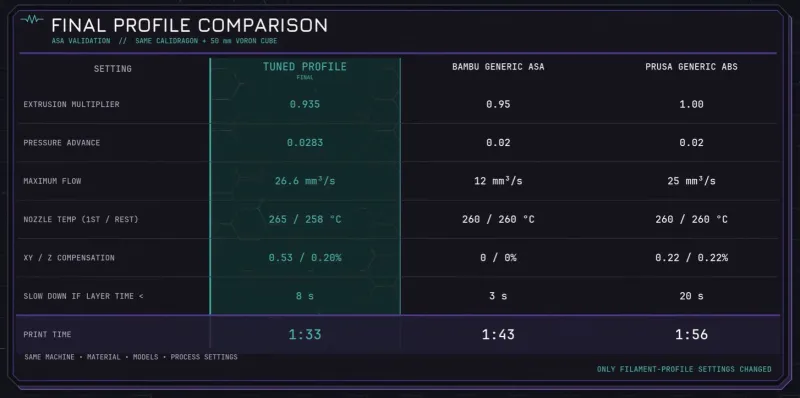
In the video basic aspects like preparing the material, such as properly drying, are looked at, before running through tests for temperature, flow ratio and rate, pressure advance, retraction speeds, material shrinkage etc. before doing a test between such a tuned profile versus a generic preset for ASA filament.
Advertisement
Although the difference isn’t night and day, the tuned profile was faster due to less conservative settings and had better accuracy on the final print due to taking the target FDM printer’s performance into account. Even if not something that the average hobbyist would be interested in, if you’re doing something like production runs with FDM, this might be something you’d want to look at.
The three different profiles used in the test. (Credit: MandicReally, YouTube)
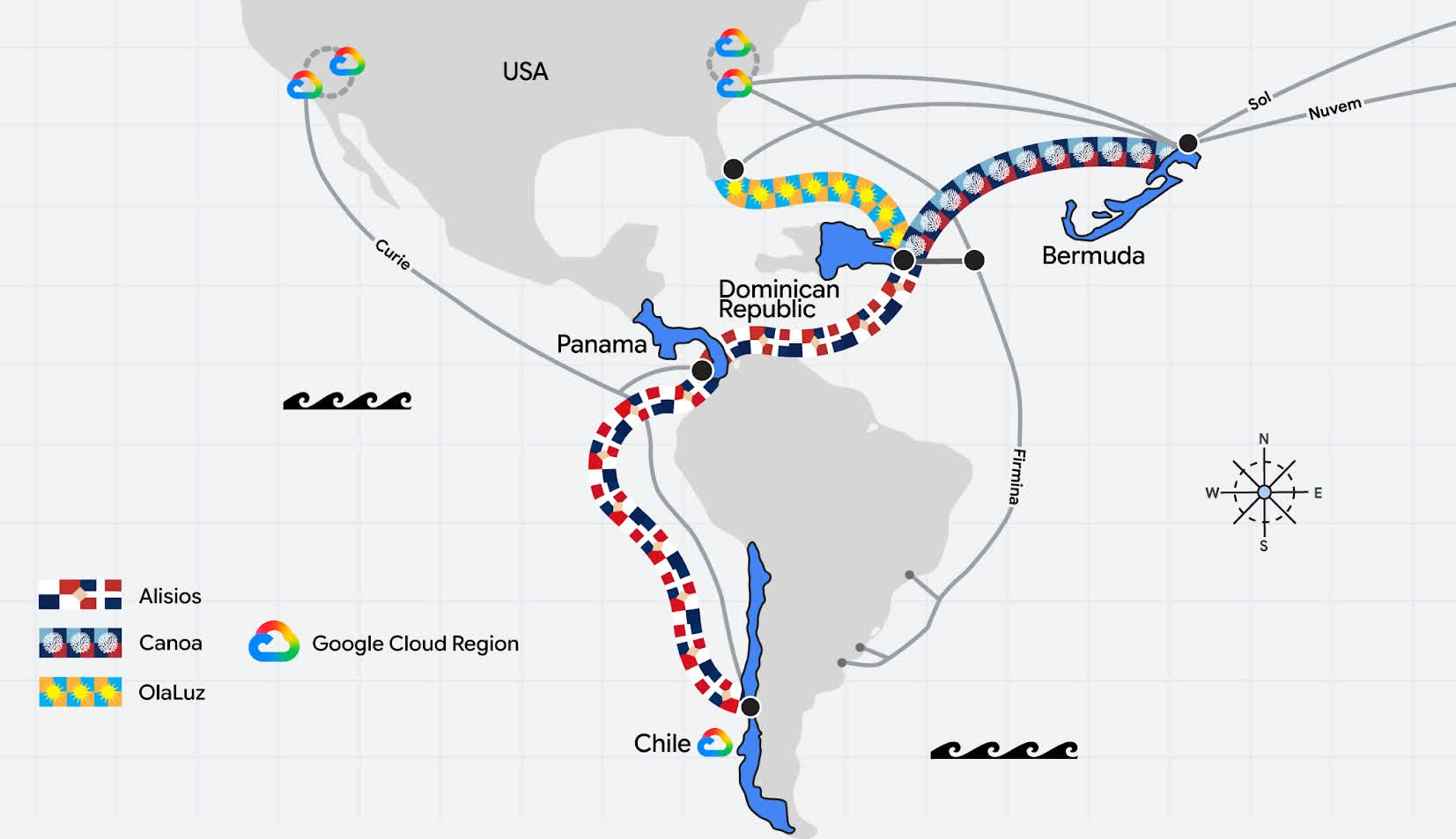
In a nutshell: Google plans to build three new subsea cable systems in the Americas, creating direct links between Chile, Panama, the Dominican Republic, Bermuda, and Florida. The projects are part of Americas Connect, a broader expansion of Google’s network infrastructure in the region. The company said the cables, along with a new branch on its Firmina system and existing investments in Curie, Nuvem, and Sol, will add capacity and provide its network with more alternative routes.
One of the new systems, Alisios, will connect the Dominican Republic, Panama, and Chile. The route will link Panama and Chile on the Pacific side while also connecting Panama with the Dominican Republic in the Caribbean.
Google said the Pacific portion of the network will create a ring between Chile and Panama, with a third connection running from Panama to the US West Coast. The routes will connect to Google Cloud regions in Chile, Los Angeles, and Las Vegas.
In the Caribbean, Alisios will connect to a separate ring running from the Dominican Republic to the US East Coast. That network will provide access to Google Cloud regions in South Carolina and Virginia.
Advertisement
The company is also building Canoa, a cable between the Dominican Republic and Bermuda. Combined with Google’s Nuvem and Sol systems, Canoa is expected to create more direct connections between Latin America and the Caribbean, North America, and Europe.
A third cable, OlaLuz, will connect the Dominican Republic with Florida. Google said the route will increase capacity between the Caribbean and the US East Coast while providing another path for data traffic in the region.
Google is also adding a new branch to Firmina that will land in the Dominican Republic. Firmina was originally built to connect North and South America. The new landing will extend the network into the Caribbean and provide an additional link for the country.
The company’s focus is on redundancy and capacity. The planned systems will also give Google more direct routes between its cloud regions in the Americas.
Advertisement
Chile is a key part of the expansion. The country has sought to become a regional digital hub, supported by its fiber-optic network, existing subsea cable links, and renewable energy resources. Google is also backing the Humboldt cable project, which will connect Chile and Australia across the Pacific.
A few weeks ago, we put out the call for participation for this year’s 2026 Hackaday Supercon, taking place in Pasadena, CA this November. Today was going to be the deadline, but like you, we often let things pile up and put things off, so we’re extending another two weeks until August 26th.
Which is not to say that we haven’t heard from a ton of you! We’re psyched to see so many familiar Supercon regulars on the list, but we also love to see first-timers give talks. We try to make sure that new folks get their time to shine, so if you’ve never given a Supercon talk before, or if it’s been a few years, take this as your cue to present in front of the friendliest audience of like-minded hackers around.
This year is Hackaday’s tenth in-person Superconference, and to celebrate we’ve gotten a larger venue, so more folks can watch the talks live. We’ll be running two tracks as always, and you have your choice of a 20-minute or 40-minute slot. Presenters get in free, and we’ll get you an early-bird ticket rate the submission, so don’t delay and register for your slot today! Or at least before August 26th, because we won’t extend the deadline twice.
Advertisement
Oh, and if you’re interested in tickets, swing by Hackaday about this time tomorrow — we’ll have some news for you.
A German digital-rights group has filed a criminal complaint against Meta, Ray-Ban parent EssilorLuxottica, and several retailers over Meta’s AI smart glasses, arguing the devices can enable covert recording in violation of German privacy law. Prosecutors have begun a preliminary review, while Germany’s network regulator says smart glasses are legal “as long as the recording function is clearly visible.” Reuters reports: “There’s no place to escape from smart glasses. You have to expect at any moment to be filmed and then exposed on the internet,” said HateAid managing director Josephine Ballon. The organization reported the management of Meta, units of spectacles maker EssilorLuxottica including Ray-Ban, as well as retailers Fielmann, Apollo-Optik, Mister Spex and MediaMarkt to the Frankfurt-based digital crime prosecution unit ZIT. HateAid said its complaint was based on a federal digital data protection law that prohibits the sale of communication devices designed to film people without them noticing.
ZIT confirmed it received a complaint from HateAid invoking that law, saying it would routinely investigate on a preliminary basis whether there are grounds for a deeper probe. MediaMarktSaturn Retail Group said it was taking the complaint very seriously, adding that its suppliers had contractual obligations for all goods to be compliant with the law. Mister Spex said it had not been officially notified of a complaint and that it was taking protection of privacy very seriously.
















































You must be logged in to post a comment Login