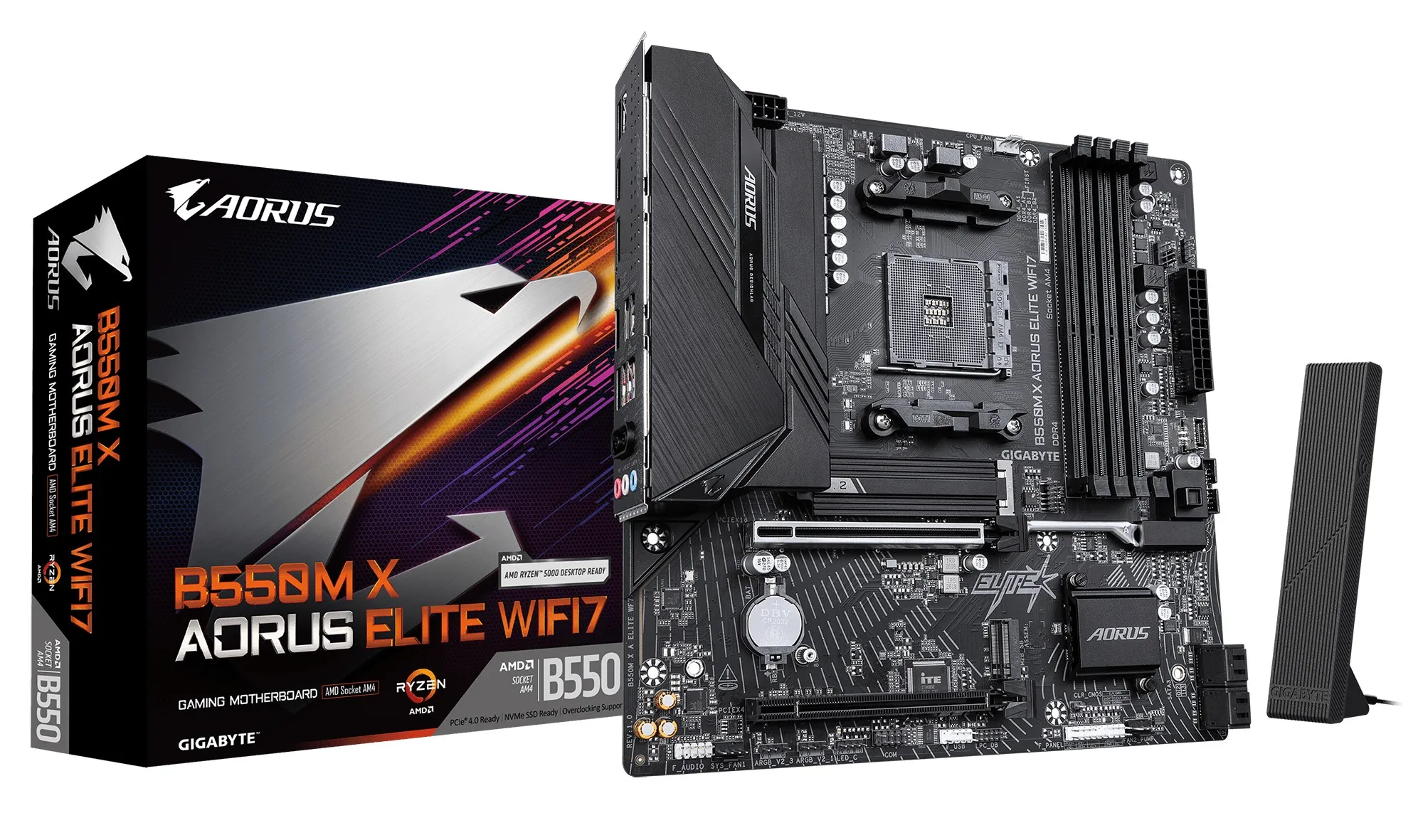
PC gaming sites and social media discussions were buzzing this week after a report from a Chinese forum claimed PC motherboard prices could soon rise significantly.
Websites including VideoCardz, Guru3D and Digital Foundry, among others, cited what appears to be a supply chain report on a Chinese forum called Boards Channels, suggesting that PC motherboard makers could raise prices for consumers as material costs climb by as much as 50% in the coming months.
The link to the Board Channels report no longer seems to work, but a screenshot posted on these sites suggests that Taiwanese motherboard manufacturers, including ASUS, Gigabyte and MSI, will be trying to address the effects of rising component costs.
Whether the report is legitimate or not, we have some bad news, especially if you plan to build a PC or perform an upgrade. PC gamers, builders and upgraders have already seen the price of hard drives and SSDs skyrocket following massive cost jumps for RAM (dubbed by some as RAMageddon) over the last year due to AI data center needs and component shortages. Experts consulted by CNET said the implications of the Board Channels report for motherboard pricing are not only credible but also highly likely to materialize.
Advertisement
Why these price increases could happen
One reason analysts believe motherboards are likely to go up in price is that practically all electronic components are being affected by the AI data boom, with data centers gobbling up memory and storage products, creating supply constraints. There is also a reduced supply of materials such as copper, as well as chemicals manufactured in parts of the Middle East, said Cassandra Cummings, CEO of the electronics design and manufacturing company Thomas Instrumentation Inc.
“You can’t make PC motherboards without memory chips or copper, so its base pricing will follow what’s happening in those markets,” Cummings said in an email.
The war in Iran is also hurting supply chains.
“Some of those factories have been damaged in the war, and shipping logistics are struggling, so I believe those chemicals are also in short supply these days, causing more cost increases for the industry,” Cummings said.
Advertisement
Gaming enthusiasts may also be competing for motherboard parts with big PC makers, such as Dell and Apple, which could have a lock on certain supplies and components from some of the same motherboard manufacturers.
Joshua Goshorn, senior director at Quandary Peak Research, said in an email that he found the Board Channels report credible.
“With so much demand generally for PCBs (printed circuit boards) and materials and processes needed to create the PC motherboard, it seems reasonable that the cost of the PC motherboard from MSI, ASUS, etc. will increase,” he said.
But Goshorn believes those cost increases could be modest compared to the increases the market has seen in RAM and hard drive prices.
Advertisement
Companies that make PCs have an advantage over solo builders and upgraders because they have access to volume purchasing, and some of them have stockpiles of components ahead of any price shifts.
Although he hears that production of circuit boards is continuing to ramp up, that may not mitigate the rising cost of materials.
“I don’t believe that pricing relief to the consumer will come any time soon,” Goshorn said.
Calm before the storm
PC component costs don’t just affect DIY PC owners; they also create cost headaches for companies that make pre-built PCs for gamers and power users. The head of one of those custom builders, Maingear, says that while we haven’t seen a cost jump for motherboards just yet, it could be coming.
Advertisement
“Motherboards have stayed relatively flat” compared to storage and memory,” William Santos, CEO at Maingear, said in an email. “If you’re looking into upgrading your PC, we recommend acting sooner rather than later to avoid the next component cost increase. Waiting doesn’t seem to pay off in this market.”
Apple can usually make suppliers bend the knee. It buys components in volumes few consumer technology brands can match and has built a supply chain that rivals spend decades trying to copy. However, that leverage has now run into a memory manufacturer willing to say no.
Apple reportedly approached China’s CXMT as an additional DRAM supplier and asked for lower prices. CXMT instead quoted figures comparable to or even higher than Samsung and SK Hynix. Huawei, Xiaomi, and other Chinese manufacturers have already locked up much of its output through higher-priced long-term deals, leaving the company with little reason to accept Apple’s terms.
I felt a much smaller version of the same crisis recently. A failing Corsair Vengeance LPX 8GB DDR4-3200 stick made my aging PC unstable, so I had little choice but to replace it. The same module should have cost around 1,500 INR, or roughly $16, before the RAM crisis. I paid 8,000 INR, around $84.
Paying more than five times the sensible price for old DDR4 hardware is absurd. Apple has billions of dollars and purchasing power that I obviously do not. Yet in today’s market, even Apple is learning that scale may secure memory supply without necessarily making it affordable.
Advertisement
CXMT
Apple’s supply-chain muscle has finally hit a wall
CXMT’s growing influence should eventually be good for the memory industry. It gives device makers another serious supplier beyond Samsung, SK Hynix, and Micron, potentially reducing their dependence on the three companies that have dominated DRAM for years.
More competition usually leads to better pricing. Unfortunately, CXMT is expanding into a market where nearly every available memory chip already has a buyer waiting for it. Samsung and SK Hynix are investing heavily in high-bandwidth memory for AI accelerators, where the profit margins are far higher than those of ordinary consumer DRAM. Chinese smartphone and computer manufacturers are securing CXMT’s conventional memory before it leaves the factory. Apple cannot use one supplier to pressure another when all of them are already struggling to meet demand.
The company has reportedly asked the US government to let it source DRAM from CXMT and NAND storage from YMTC for products sold outside the country. Approval would likely help Apple secure enough memory, but it may do little to bring down what the company pays. CXMT has already shown that it does not intend to become Apple’s bargain supplier, weakening the company’s hopes of using another manufacturer to rein in rising memory costs.
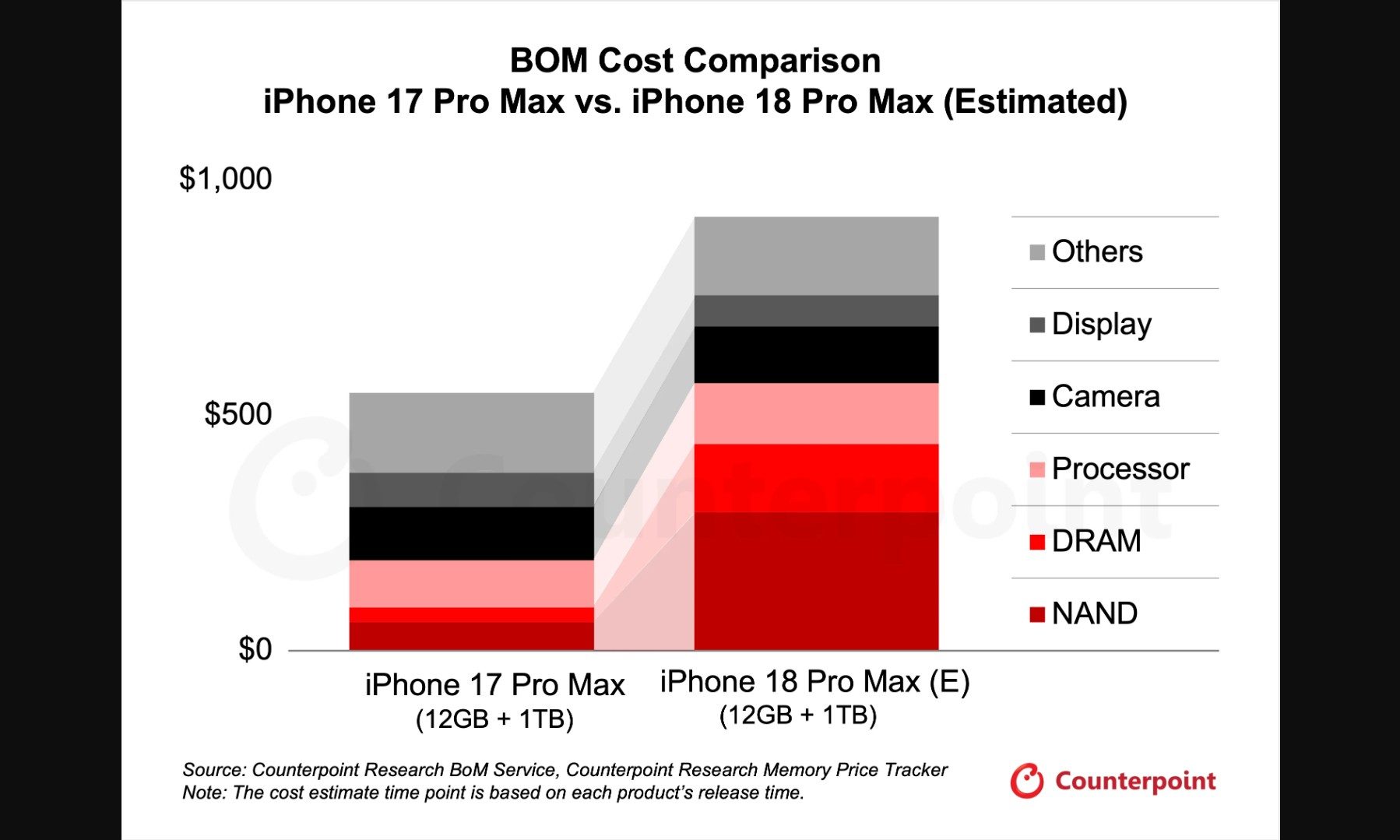
Apple can absorb the increase, accept lower margins, reduce memory or storage configurations, or pass the cost on to buyers. We have already seen which option it picked for Macs and iPads. The iPhone may not remain protected for much longer.
The blame game is in full swing, but it won’t lower your bill
Micron has its own explanation for the current mess. The company claims a couple of major customers used their purchasing power during the previous memory downturn to secure rock-bottom prices. Those prices supposedly made expansion difficult to justify, leaving manufacturers unprepared when demand returned. Micron did not publicly identify Apple, although reports have connected the remarks to the company.
I find Micron’s argument a little ridiculous.
A company placing massive, predictable orders will always expect a volume discount. Apple does not buy DRAM at retail, and Micron, Samsung and SK Hynix were not producing millions of components for one of the world’s most profitable companies as a charitable exercise. I also find it difficult to accept that Micron continued serving Apple for years without earning enough money to keep the relationship viable. If the contracts were genuinely unsustainable, Micron had the option to renegotiate them or sell its production elsewhere.
Memory is one of the most cyclical parts of the technology industry. Manufacturers expand production when prices are high, excess supply pushes prices down, investment slows, and the next shortage sends them back up. Blaming customers for negotiating during the low part of that cycle feels awfully convenient now that suppliers have regained pricing power.
Micron does not have a spotless history here, either. A former Micron sales manager pleaded guilty to obstructing the US Justice Department’s DRAM price-fixing investigation after withholding and altering subpoenaed documents. Samsung and Hynix later pleaded guilty to participating in the conspiracy, paying fines of $300 million and $185 million, respectively. None of that proves anything illegal is happening today, but it gives me little reason to accept its version without question.
Still, Micron is right about one part of the crisis. AI companies are buying huge quantities of highly profitable HBM, and memory manufacturers have every reason to prioritize those customers. Conventional RAM for phones, laptops, consoles, and PC repairs is left competing for what remains.
CXMT
CXMT’s rise could eventually loosen the grip of the established memory manufacturers, but more competition needs more production before buyers see any relief. For now, the new player has entered the same expensive market rather than disrupted it.
Apple will pay more, device makers will pass those costs along, and customers will delay upgrades or accept higher prices. Others, like me, will pay $84 for an 8GB DDR4 stick because an aging PC suddenly leaves them with no other choice.
The Shards review: Ryan Murphy and Bret Easton Ellis are a match made in heaven in Hulu’s stylish, blood-soaked new show about privileged teenagers stalked by a serial killer
We spend hours testing every product or service we review, so you can be sure you’re buying the best. Find out more about how we test.
The Shards is guaranteed to have audiences talking, for better or for worse, as Bret Easton Ellis’ controversial semi-autobiography comes to the small screen.
But, in my opinion, Ryan Murphy teaming up with Ellis has given him the chance to shine once again. Fans of Murphy’s work were left disappointed and baffled in recent months after his abysmal Hulu series All’s Fair aired, which has a seriously low Rotten Tomatoes score of just 6%.
Advertisement
Thankfully, The Shards feels closer to what Murphy was doing with the anthology series American Horror Story, and the result is an addictive, bloody and over the top series which shows that Murphy and Ellis are an excellent creative duo.
Latest Videos FromTechRadar
The Shards is certainly not for everyone, but I’m sure it will find a dedicated audience among Hulu subscribers. Those who can put up with intentionally insufferable protagonists are rewarded with a stylish, tasty peek into life as a privileged student in the 1980s, set in a sunny LA neighborhood.
The nine-part series follows a fictionalized version of Bret Easton Ellis, who is 17 and in his final year at the elite Buckley prep school. Igby Rigney, known for his work on Netflix’s Midnight Mass, plays this version of the thriller author.
Advertisement
We open with Bret going to see The Shining, smoking a cigarette and driving a convertible, as he narrates all the luxury clothing he’s wearing. Rigney’s almost bored-sounding narration would feel out of place anywhere else, but here it fits perfectly as he talks about his life, one that many viewers will never have and might desperately covet. Despite having everything, there’s no enthusiasm to his voice at all.
Opposite Rigney, Homer Gere stars as Robert Mallory, a new arrival at Buckley whose unsettling presence coincides with the activities of a serial killer known as The Trawler. Gere is fantastic in The Shards, dominating every scene he’s in, and making us feel very uncomfortable from the moment we see him.
Sign up for breaking news, reviews, opinion, top tech deals, and more.
The unsettling dynamic between Bret and Robert forms much of The Shards, supported by an equally good cast playing fellow students around them. Susan Reynolds (Kaia Gerber), is a popular girl and cheerleader who soon develops a thing for Robert, much to the annoyance of her long-term boyfriend Thom (Graham Campbell).
Advertisement
Bret’s girlfriend, Debbie (Hayes Warner), is a teen rebelling against her movie director father, adding to the already complex layers of this dysfunctional friend group.
The Shards | Official Trailer | Igby Rigney, Kaia Gerber, Hayes Warner | FX – YouTube
The first two episodes were released together, but unfortunately it’s a weekly release from then on. I have a feeling some people might be gutted they can’t binge-watch it because it’s easy to become invested in what’s happening. The Shards is a dazzling experience where you feel like a fly on the wall watching these spoiled teens, wondering what’s going to happen to them next, even if you probably should look away.
It’s a visceral, no-holds-barred look into this 80s society which finds itself rapidly torn apart, sometimes literally. Indeed, those looking for Bret Easton Ellis’ brand of gratuitous violence will find it here, making The Shards an interesting blend of teen drama and horror movie, with some grisly results.
Even if you haven’t read The Shards, if you know you’re a fan of Ellis’ other works like American Psycho, I think this will be right up your alley. It ticks all the right boxes for what we’d expect from him, after all.
Advertisement
At the time of writing, The Shards season 2 has not been confirmed, which means the season finale’s ending will prove frustrating if we don’t get more. Though Ellis’ book has a similar ending, I’m hopeful that The Shards will choose to take the story further as it feels like it’s been written with a second season in mind.
As a standalone season though, it’s entertaining and shocking in equal measure. The Shards is a welcome addition to Ryan Murphy’s filmography, and I hope he does more like this because I have certainly missed him when he’s at his bloody best.
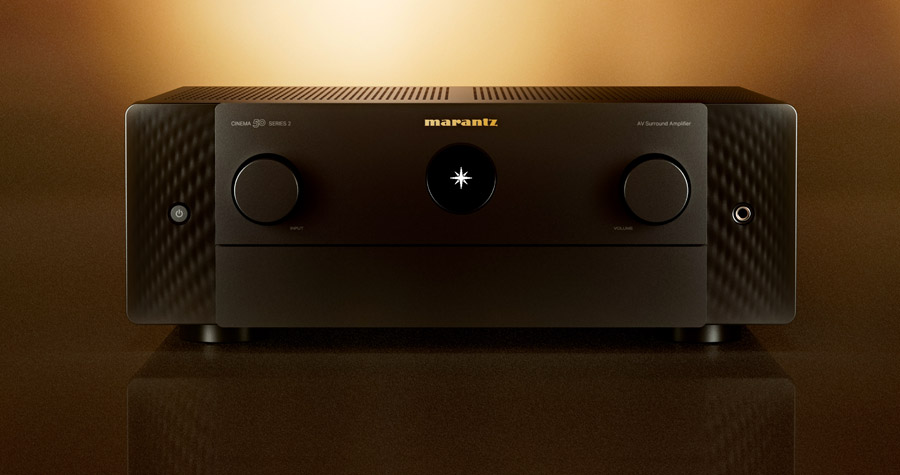
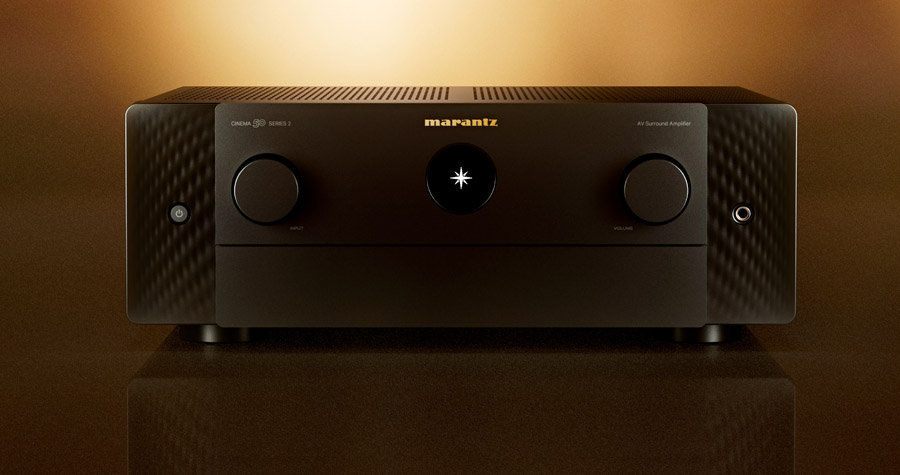
While sister company Denon revealed a pair of new receivers earlier this year, Marantz has taken a bit more time to unveil its first new A/V receivers since 2022. And today’s the day they’re making their debut. The company has just unveiled a new “Series 2” version of three of its AV Receivers: the Cinema 50 Series 2, Cinema 60 Series 2 and Cinema 70s Series 2. A version of the CINEMA 60 called the CINEMA 60 DAB Series 2 will be available in Europe only. We got a peek at these earlier this year in the company’s headquarters in Kawasaki, Japan and they looked pretty impressive.
While all three models are getting an updated and improved version of the HEOS music streaming module as well as new eight-channel 32-Bit DACs, the step-up Cinema 50 Series 2 is getting the biggest upgrades of the three.
Marantz CINEMA 50 SERIES 2 AVR will be available in any color you want, as long as you want black.
What’s new in All CINEMA Series 2 Series Receivers?
On-screen Channel Level Monitoring feature – this can show you, in real time, what signal each speaker channel is receiving, so you can confirm that everything is working properly.
New Web Control 2.0 Interface – the new receivers can be remotely configured and set-up from a phone, tablet or PC with a slick, modern web-based interface
New Improved 32-Bit, 8-Channel DAC (Digital Audio Converter) – New High Resolution DACs offer higher quality digital audio reproduction across all speaker channels. The Cinema 50, Series 2 actually gets two of these 8-channel DACs to handle all 15 channels of processing (11 full range channels and four subwoofer channels).
Advertisement
Low-Latency Bluetooth LE Audio (coming soon via free OTA software update) – Bluetooth LE reduces wireless listening delay with compatible headphones and mobile devices
Upgraded HEOS module and platform – the new HEOS wireless multi-room music platform delivers a more responsive streaming experience while expanding multi-room functionality.
1440p / AMD FreeSync compatibility – Gamers will appreciate support for enhanced big screen gaming. As with the previous generation, all HDMI ports support HDMI 2.1 for the greatest performance and flexibility.
DIRAC Live room correction (optional upgrade) – the Cinema 60 Series 2 and Cinema 70s Series 2 now have the option to be upgraded to use DIRAC Live room correction. The Cinema 50 Series 2 (like its predecessor, the Cinema 50) can also be upgraded to use DIRAC Live, DIRAC Live Bass Control or DIRAC Live ART (Active Room Treatment), also at an additional cost.
Advertisement
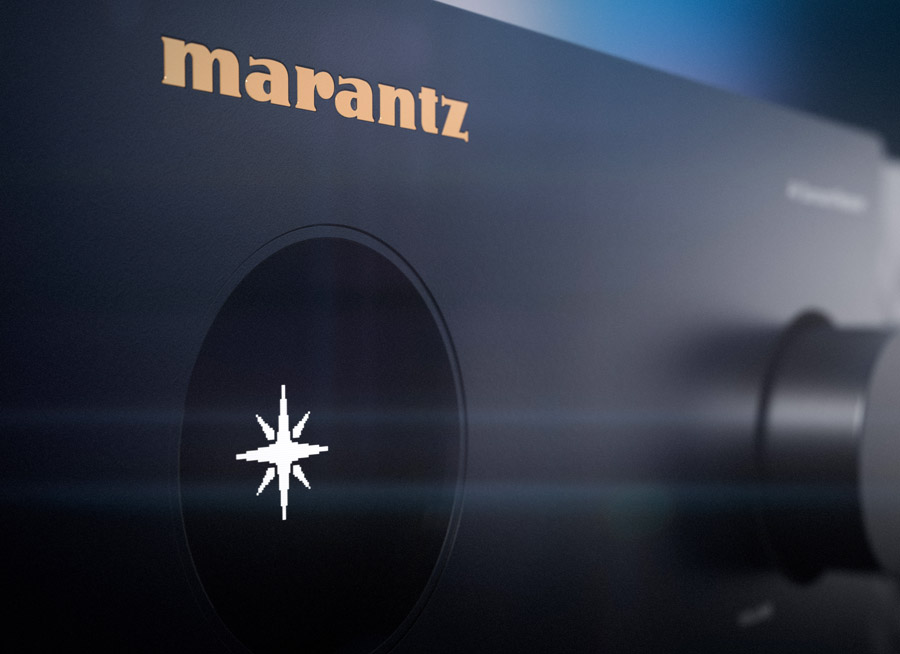
Marantz CINEMA Series 2 receivers pay homage to the earliest Marantz products with the porthole design and Marantz star logo.
What’s New (And Exclusive) in CINEMA 50 Series 2?
The Cinema 50 Series 2 gets all of the updates described above plus:
Dolby Atmos Channel Expander – an enhancement to the Dolby Surround upmixer, the Dolby Atmos Channel Expander makes sure all of your speakers are actively being used on Dolby Atmos channel-based content, creating a more immersive surround soundstage. It also enhances the immersiveness of 2-channel and 5.1-channel content when engaged
Advertisement. Scroll to continue reading.
Center Channel Bi-Amp Mode – in addition to the existing front L/R bi-amp mode, the Cinema 50 Series 2 can now dedicate two of its internal amplifiers to the center channel for expanded performance and dynamic range
Dual 32-bit Eight-channel high resolution DACs (Digital Audio Converters) – Each of the receiver’s 15 channels (eleven main channels plus four subwoofers) gets its own DAC for improved sound and coherence across multi-channel speaker implementations.
Advertisement
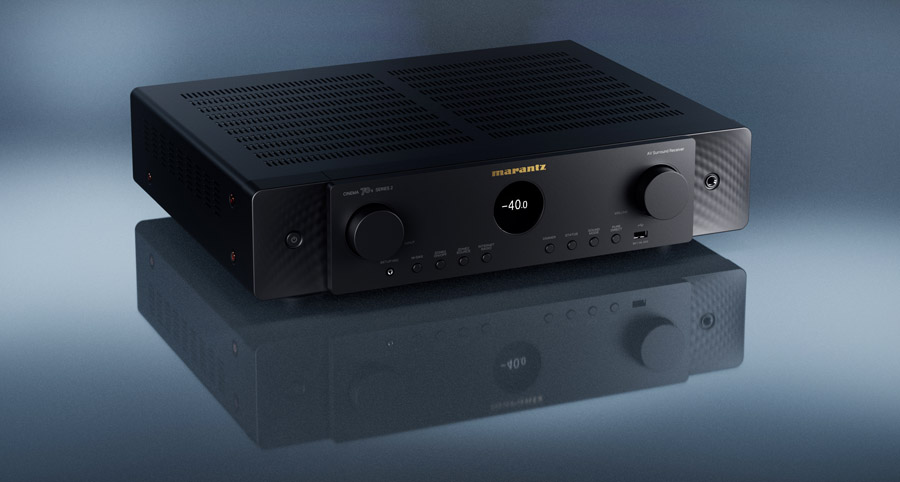
The Model 70s Series 2 packs Marantz multi-channel performance into a slim compact package.
The cosmetic design of the Series 2 receivers hasn’t changed much since the previous iteration, maintaining a sleek elegant look. And the 70s Series 2 keeps its slimline design for use in tighter spaces or where a big grey or black box – even one as elegant as a Marantz receiver – would look unseemly.
Sound Master Approved
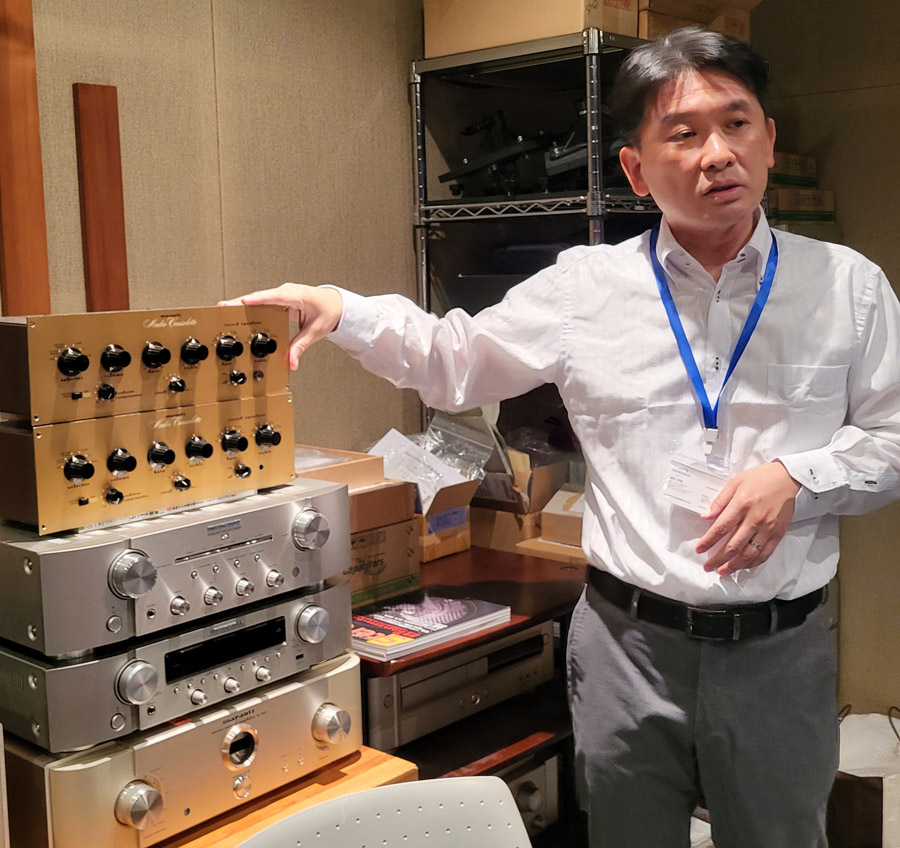
As with all Marantz receivers, the new Series 2 receivers have been carefully tuned by the Marantz Sound Master, Yoshinori Ogata. Ogata-san listens to each new component throughout its development, suggesting improvements along the way and, ultimately, certifying that each new design carries forward the legacy of Marantz sound, first established by Saul Marantz himself in the earliest days of the company’s history. We sat in on a few listening sessions with Ogata-san in Japan and found his attention to detail and accurate sound quite impressive.
Marantz Sound Master Ogata-san shows off the classic Marantz gear that still inspires the company’s product designs to this day.
The new 32-Bit eight-channel DAC featured in the Series 2 receivers is said to offer “greater precision, improved imaging, enhanced dynamic expression and more coherent surround performance throughout the listening environment.” Processing every channel simultaneously reduces timing errors while simplifying the signal path for greater consistency and reliability. The Cinema 60 Series 2 and Cinema 70s Series 2 each include one of these new 8-channel DACs while the Cinema 50 Series 2 includes two.
The new Channel Level Monitoring feature provides real-time visualization of channel activity across all CINEMA Series 2 models, making it easier to verify speaker operation and system performance. And Dolby’s Channel Expander in the CINEMA 50 Series 2 ensures that every speaker in your system contributes toward the immersive sound, even when there are more speakers in the room than there are channels in the original content.
Both the Cinema 60 Series 2 and Cinema 70s Series 2 include seven channels of amplification, so you can choose a 5.1.2 channel immersive surround system or go with a main system that’s 5.1 channels and use the additional amplifiers for music in a second zone.
The CINEMA 50 Series 2 and CINEMA 60 Series 2 both include Marantz proprietary HDAM amplifier modules in place of standard op amps, for improved dynamic range and lower overall noise.
The flagship CINEMA 50 Series 2 offers nine channels of amplification, but can be expanded to eleven channels by adding a separate power amplifier. The Cinema 50 Series 2 includes four independently controlled subwoofer outputs so you can tweak the performance for optimized bass response in virtually any listening position. This gives you the option for 5.1.4 or 7.1.2 Dolby Atmos or DTS Sound using the built-in amps, or up to 7.1.4 channels when you add a 2-channel power amp. And in all cases you can use anywhere from one to four subwoofers, each independently controlled. The Cinema 50 Series 2 includes a complete set of preamp outputs so you can upgrade any or all of the channels with external power amps.
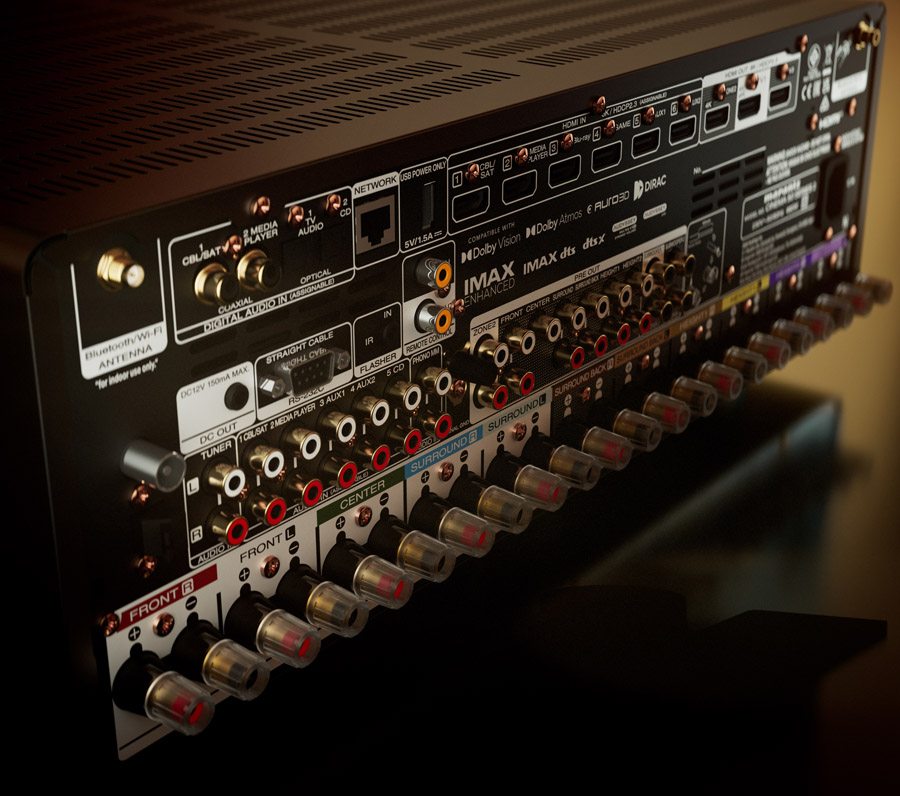
The Marantz CINEMA 50 Series 2 can power a full 7.1.4-channel surround system and includes six HDMI 2.1 ports and three HDMI outputs and a wealth of additional analog and digital inputs and outputs.
Pricing & Availability
Marantz CINEMA 50 Series 2 – $3,000 at Best Buy | $4,000 CND | €2,100 | £1,850
Marantz CINEMA 60 DAB Series 2 – €1,450 | £1,250 –
Available August 12. 2026 (Europe)
Marantz CINEMA 70s Series 2 – $1,500 at Best Buy | $2,000 CND | €1,100 | £950
Available September 15, 2026
The Bottom Line
While the Series 2 upgrade may seem more evolutionary than revolutionary, there are some important upgrades here, including an all new multi-channel DAC infrastructure, as well as an upgraded HEOS module that should improve the overall responsiveness and execution of the HEOS whole-home wireless music platform. Also, by including the new HEOS chip, these receivers could potentially be upgraded at some time in the future to offer multi-channel Dolby Atmos music within the HEOS platform, which is already available on the latest Home series speakers from sister company Denon but is not yet available on any AVRs.
As fans of high quality music and movie reproduction at home, we at eCoustics are happy to see that the company is committed to continuing to advance the performance and usability of their A/V receivers. Because sometimes a soundbar – or even a budget AVR – just isn’t good enough.
AI usage is evident but isn’t yet a serious problem
The 35th USENIX Security Symposium (USS), which takes place next week in Baltimore, Maryland, hit an all-time high for paper submissions.
While some of that increase has been aided by the availability of AI tools, those managing the conference say abuses were minimal due to defensive measures. But they’re also trying not to look too closely in order to preserve trust within the security research community.
Advertisement
“This year’s conference has received ~3,030 valid submissions (~1,280 in Cycle 1 and ~1,750 in Cycle 2),” explained Ben Stock, tenured faculty at the CISPA Helmholtz Center for Information Security and USS program co-chair, in an email to The Register. “This is up from the previous year, which had ~2,400 submissions in total.”
Stock said that the entire security community has seen growth of this sort and pointed to the Network and Distributed System Security Symposium (NDSS), which saw its paper submission count jump from 694 in 2024 to 1,311 in 2025 and 1,481 this year.
“So, I would not call the growth unprecedented, even though the number of submissions has reached a high point compared to previous years,” he said. “This is something we had expected and scaled our Program Committee (PC) accordingly.”
Sussing out unacceptable uses of AI
A paper published in April, “More Versus Better: Artificial Intelligence, Incentives, and the Emerging Crisis in Peer Review,” found that since the release of ChatGPT in 2022, submission volume at major academic journals has increased 42 percent.
Advertisement
In the USENIX Security ’26 transparency report, issued in January between the first and second paper submission cycles, Stock and fellow co-chair Elissa Redmiles, assistant professor of computer science at Georgetown University, detail how they’ve developed tools and policies to account for the possibility of AI usage, both for paper submissions and in paper reviews.
“The proliferation of readily-available LLMs to aid in writing and developing code is not unknown to the community,” their report says. “However, we see an alarming trend of AI usage in key areas of the scientific process. Therefore, we took actions against two types of identifiable actions which violate the scientific process in our minds: non-existing (possibly hallucinated) references and usage of AI in the review process.”
After identifying and rejecting a paper that contained nonexistent references, the report explains, the conference organizers developed tooling “to extract references from the submitted PDFs, query well-known sources such as DBLP and arXiv, and manually confirm invalid references.”
The org rejected papers containing three or more hallucinated references, a policy that impacted 21 of the 1,181 first round submissions (1.78 percent).
Advertisement
“We have rejected papers for the repeated presence of nonexistent references,” said Stock. “We cannot say with certainty that these were AI-hallucinated, but nevertheless considered these papers to be problematic and thus rejected them.”
The report notes that more than 100 additional papers contained at least one reference that reviewers could not confirm. Aware that some of these might simply be false positives due to name spelling differences or missing citations, conference officials opted not to investigate these in order not to further burden staff.
Conference organizers draw the line at using AI for bibliography preparation. “We believe that it is critical to halt this trend that threatens scientific integrity before it grows further,” the report states.
However, limited use of AI to polish human-written text is expected, and that extends to those reviewing submitted papers, up to a point.
Advertisement
“We have not set a dedicated AI policy, but have made it clear to our PC members that usage of [AI] services to write reviews is not permitted, in particular also because this violates confidentiality,” said Stock.
“We have detected a tiny number of cases where we have reached sufficient confidence that AI was used and took appropriate actions, including removal of the members from the PC and allowing affected authors to resubmit.”
Under that policy, USS asked five of 496 reviewers to cease participation.
“We have not seen evidence that leads us to believe that AI generated submissions have become a significant challenge for the security community,” said Stock. “This does not mean that AI hasn’t been used in parts of these submissions, though.” ®
The programme aims to teach professionals to use generative AI tools effectively, safely and responsibly at work.
A new, fully funded course designed to help professionals develop their practical AI prompt engineering skills for use within their organisations is to be offered by CeADAR, Ireland’s national centre for applied AI.
Developed by CeADAR’s European Digital Innovation Hub (EDIH), the Prompt Engineering for You programme aims to teach professionals to use generative AI tools effectively, safely and responsibly in real-world settings.
Funded by the European Commission and Enterprise Ireland, and aligning with the Department of Enterprise, Tourism and Employment’s ‘AI – Good for Business’ initiative, the course will teachhands-on skills via five modules that explore what prompt engineering is, relevant techniques, and how to design clear and effective prompts.
Advertisement
The course can be engaged with flexibly, is aimed at professionals at any stage of their AI journey, and does not require a technical or coding background. Once the course has been finished, participants will receive a certificate of completion from CeADAR’s EDIH for AI programme.
CeADAR’s director of innovation, development and EDIH for AI, Ricardo Simon Carbajo, said, “With so much noise surrounding AI, it can be difficult for people and organisations to know where to turn for trusted guidance.
“At CeADAR, our goal is to cut through that clutter and help organisations navigate as they adopt AI. Building on the success of our AI for You course, CeADAR is now releasing Prompt Engineering for You to continue equipping organisations to confidently live and work alongside these technologies.”
The announcement of the new course comes at the same time as a report showing that Ireland remains one of the EU’s strongest digital performers.
Advertisement
The European Commission’s ‘2026 Digital Decade Country Report for Ireland’ indicated that the country now ranks second in the EU for basic digital skills, with 83pc of the population possessing at least basic digital skills, compared with an EU average of 60pc.
The report also ranked Ireland fifth in the EU for generative AI adoption, at 45pc, significantly above the EU average of 33pc.
Commenting on the report, Minister for Enterprise, Tourism and Employment Peter Burke, TD said, “The Digital Decade report confirms Ireland’s position as one of Europe’s leading digital economies. Our strong performance reflects sustained investment in digital infrastructure, skills and innovation.
“As Ireland holds the Presidency of the Council of the European Union, we welcome the progress being made across Europe towards the Digital Decade 2030 targets and look forward to working with our European partners to strengthen Europe’s digital competitiveness and AI ambitions.”
Advertisement
Minister of State for Trade Promotion, AI and Digital Transformation Niamh Smyth, TD added, “Ireland’s strong performance reflects the progress we are making through sustained investment in skills, connectivity and innovation. It is particularly encouraging to see strong levels of AI adoption among Irish businesses.”
Don’t miss out on the knowledge you need to succeed. Sign up for the Daily Brief, Silicon Republic’s digest of need-to-know sci-tech news.
The wireless headphone market has become a knife fight, with Sony, Apple, Sennheiser, Bowers & Wilkins, and Bose all competing for the same premium buyers. The newly announced Bose QuietComfort Headphones 2nd Gen enter that battle by borrowing one of the QuietComfort Ultra 2nd Gen’s biggest features, further blurring the line between Bose’s two flagship noise-cancelling models.
Built around the company’s long-running noise-reduction platform, the QC Gen 2 combines a refreshed industrial design with Bose TrueSpatial technology and three Immersive Audio modes: Still, Motion, and Cinema. The result is a more modern version of one of the most recognizable wireless headphones on the market, although Bose may now have to explain why some buyers should still pay more for the Ultra.
Related Reviews:
Bose QuietComfort (2nd Gen)
Immersive Audio Is No Longer Reserved for the Ultra
Bose TrueSpatial technology is the most significant upgrade, bringing three Immersive Audio modes—Still, Motion, and Cinema—to the standard QuietComfort line for the first time.
Unlike spatial-audio systems that require content mixed in Dolby Atmos or another immersive format, Bose Immersive Audio can process conventional stereo from virtually any source. Its digital signal processing moves the presentation outside the listener’s head and creates the impression of listening to a pair of stereo loudspeakers positioned in front of them.
Still Mode: Anchors the virtual soundstage in front of the listener. As the listener turns their head, the apparent position of the music remains fixed in the room, similar to listening to stationary loudspeakers.
Advertisement
Motion Mode: Keeps the virtual soundstage aligned with the listener’s head as they move. It is intended for walking, commuting, and other situations in which a room-anchored presentation could become distracting.
Cinema Mode: Expands the perceived soundstage for movies, television, and spoken-word content while keeping dialogue focused in the center. Background effects are distributed more broadly to create a larger, more theatrical presentation without requiring a native surround or spatial-audio soundtrack.
The important distinction is that Bose is not adding more channels to the original recording. TrueSpatial uses processing and head tracking to reinterpret two-channel audio as a wider, externalized listening experience.
Sound Design
The QuietComfort Gen 2 retains Bose’s proprietary SoundDesign digital signal processing, but adds lossless wired playback over USB-C at up to 24-bit/48 kHz. The distinction matters: lossless audio is available through the USB-C connection, not over Bluetooth.
Advertisement
Noise Cancellation That Adapts to the Fit
Bose has renamed its noise-cancellation platform QuietControl, but the QuietComfort Gen 2 also introduces several meaningful refinements over the first-generation model.
New adaptive feedforward controls are designed to improve performance when the earcups cannot form a perfect seal, which can happen when listeners wear glasses, hats, or have hair trapped beneath the cushions.
Advertisement. Scroll to continue reading.
The six-microphone system can now better compensate for those small gaps, helping the headphones maintain more consistent noise cancellation under less-than-ideal fit conditions.
Advertisement
Bose has also refined ActiveSense in Aware Mode. The system applies noise cancellation more smoothly and naturally when sudden sounds occur, reducing sharp spikes from passing trains, traffic, or other loud interruptions without completely shutting out the listener’s surroundings.
For a more traditional listening experience, noise cancellation can be adjusted manually or switched off entirely through the Bose app for Android and iOS.
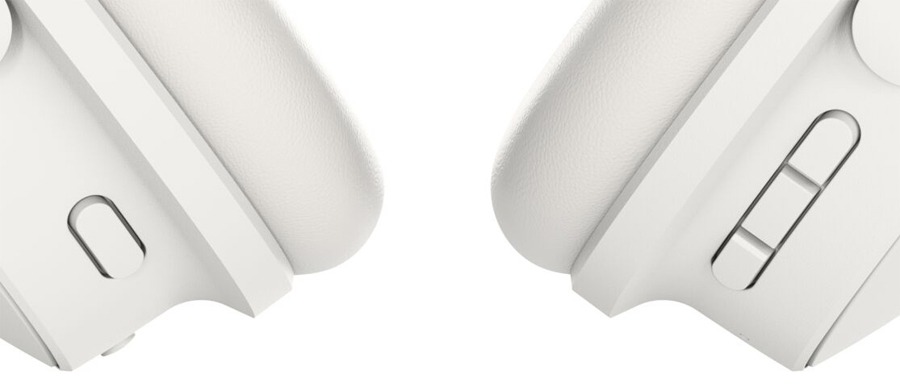
Listeners can also create Custom Modes that combine their preferred levels of noise cancellation and acoustic transparency. These settings can be cycled quickly using the action button on the left earcup.
Refined Comfort and Style
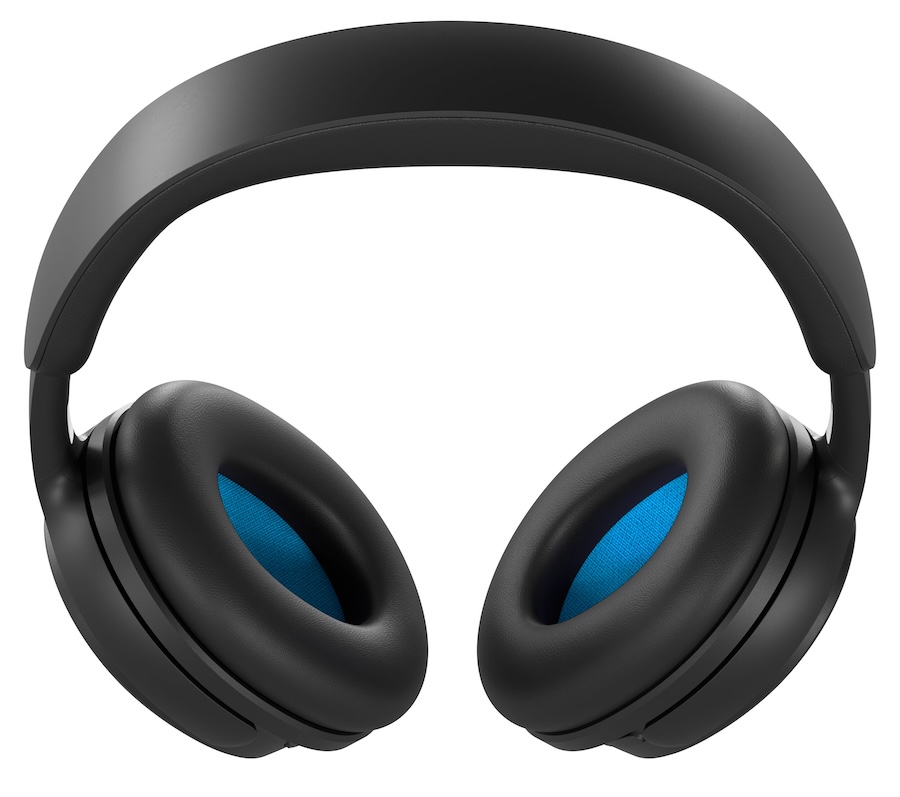
The QuietComfort Gen 2 features a redesigned headband with smoother adjustable sliders and softer synthetic leather cushioning that rests more comfortably against the head.
Advertisement
Bose has also optimized the clamping force to provide a secure fit without making the headphones feel heavy or overly tight. Newly shaped oval earcups are designed to follow the natural contours of the listener’s head and improve long-term comfort.
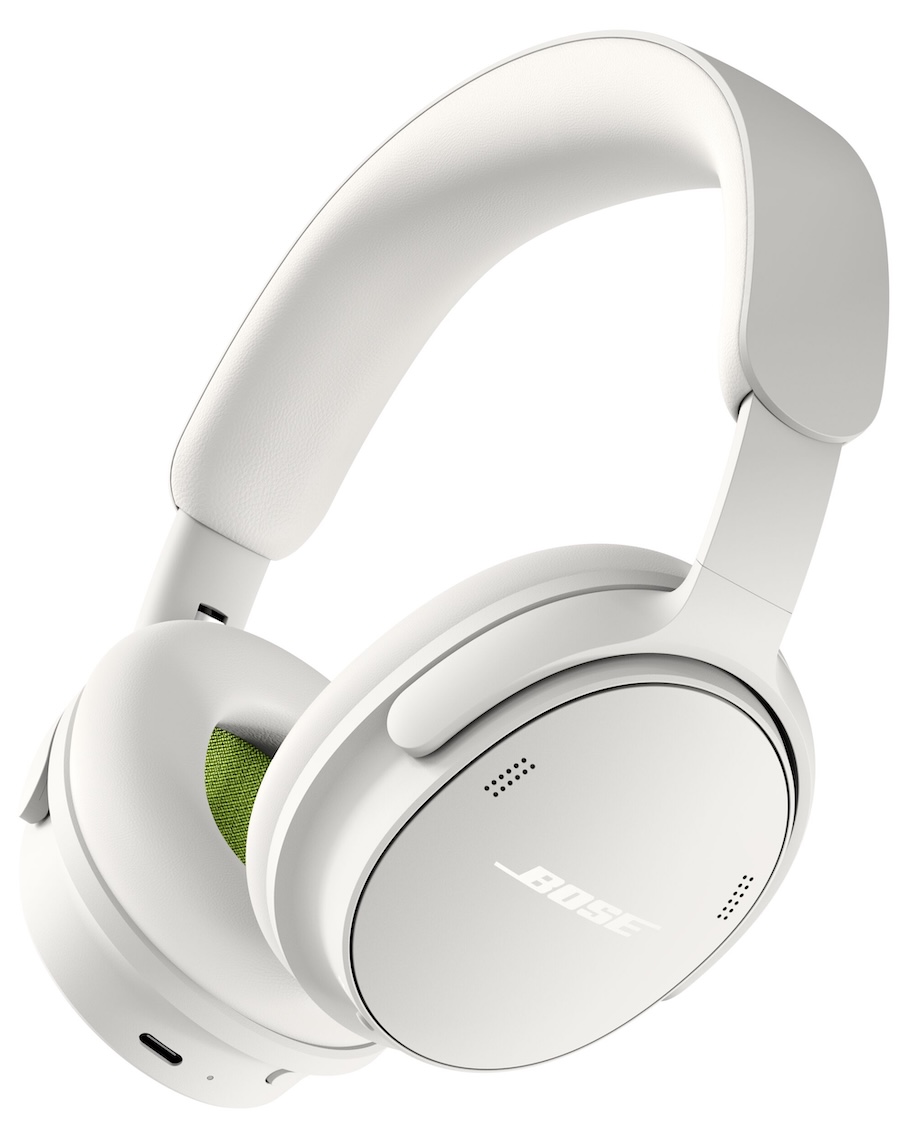
Contrasting color accents inside the earcups add a subtle two-tone look that gives the familiar QuietComfort design a more modern appearance.
New Colors
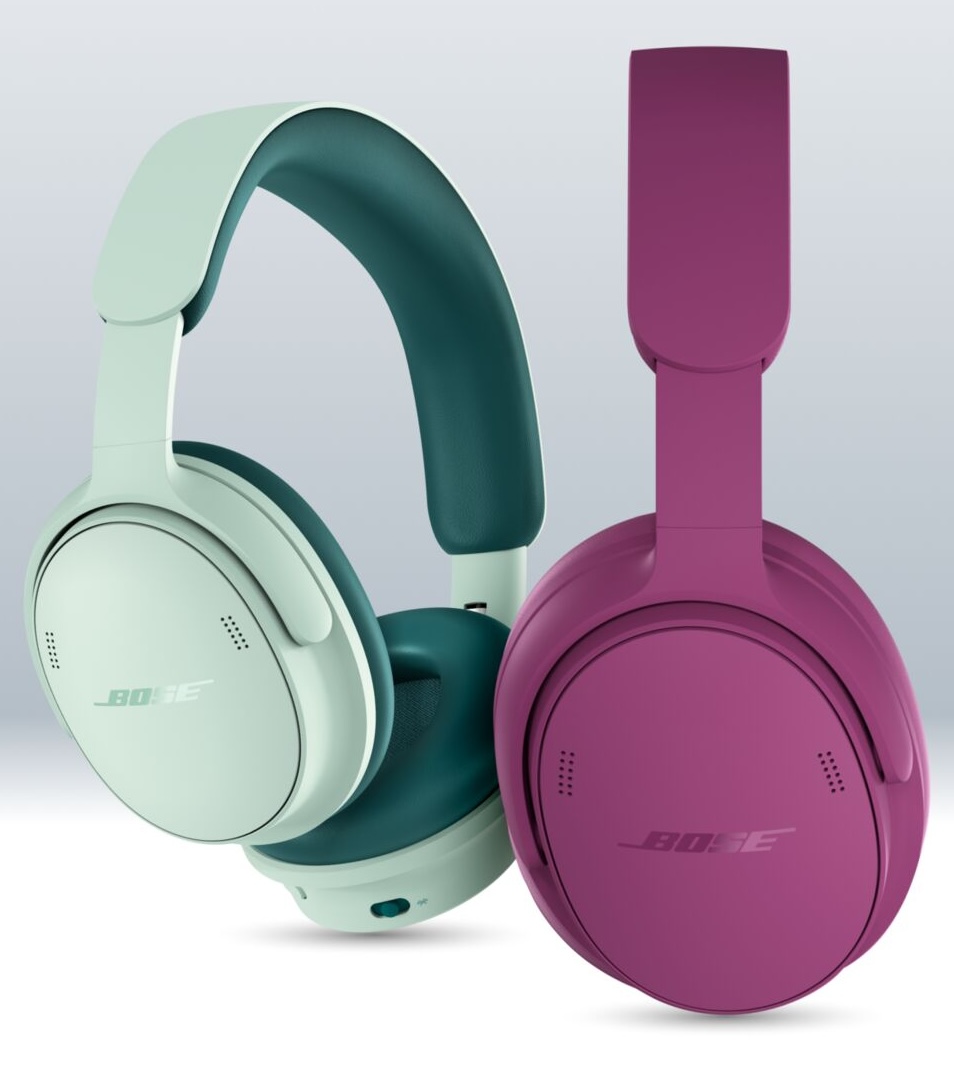
Alongside the standard Black and White Smoke finishes, Bose is offering three limited-edition color options:
Eucalyptus Green: A muted, nature-inspired green with warm yellow undertones, designed to complement current fashion and interior color trends.
Dewdrop Mint: A playful 1990s-inspired finish that combines a soft mint exterior with teal accents inside the earcups.
Rosewood Mauve: A deeper, more expressive option that pairs a rich mauve finish with vibrant fuchsia accents for a bold two-tone appearance.
Controls
The QuietComfort Gen 2 uses physical buttons positioned on both earcups, allowing listeners to control playback, calls, and listening modes without reaching for their phone.
Buttons on the right earcup handle primary functions, including play/pause, volume adjustment, and answering or ending calls. A dedicated button on the left earcup cycles through listening modes and can be assigned as a shortcut for the connected device’s voice assistant or Spotify Tap.
Spotify Tap should not be confused with Spinal Tap, although Bose has yet to confirm whether the volume control goes to 11.
Connectivity
Wireless connectivity for the QuietComfort Gen 2 is provided by Bluetooth Core 5.4 with multipoint connectivity that allows seamless switching between two connected devices. This makes it easy to move between music, calls, and more. Android users can also take advantage of Google Fast Pair for simplified setup.
Advertisement
Advertisement. Scroll to continue reading.
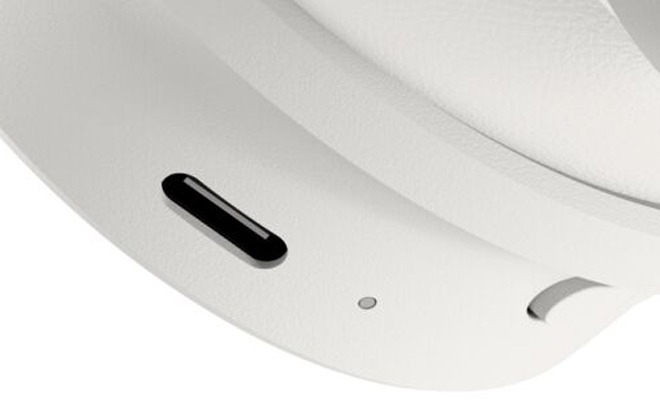
Two-way USB-C audio supports both high-quality wired playback and voice input through the headphones’ microphones, making the QuietComfort Gen 2 suitable for calls and videoconferencing through apps such as Zoom and Microsoft Teams.
Bose also includes a USB-C-to-3.5 mm cable for connecting the headphones to analog sources, including seatback entertainment systems on aircraft.
Battery Life
The QuietComfort Gen 2 provides up to 24 hours of listening time, dropping to 18 hours when Bose Immersive Audio is enabled. That places it ahead of the AirPods Max 2, which delivers up to 20 hours with Active Noise Cancellation, but behind the Sony WH-1000XM6 and its 30-hour rating with noise cancellation switched on. Apple’s 20-hour estimate includes Spatial Audio, however, giving it a slight advantage when Bose’s comparable Immersive Audio processing is active.
Bose allows the headphones to continue playing while they are being charged, so a depleted battery does not have to end a wired listening session. A 15-minute quick charge provides up to 2.5 hours of additional playback.
Advertisement
Bose App
The Bose app for Android and iOS provides a three-band equalizer, customizable listening modes, and configurable shortcut controls. Users can also manage connected Bluetooth devices, install firmware updates, and adjust additional headphone settings from one central interface.
Rigid hard-shell EVA foam core wrapped in a durable, color-matched woven fabric exterior and finished with a soft fabric interior lining
Ear Cushion Material
Not specified
Protein Leather
Protein Leather
Rechargeable
Yes
Yes
Yes
Battery Life
Up to 24 hours* (18 in Immersive)
Up to 24 hours
Up to 30 hrs (23 with Immersive Audio, 45 with ANC off)
Battery Charge Time
Fully charge in 3 hours
Advertisement
15-minute quick charge provides 2.5 hours
Charge over USB while using the headphones.
Full Charge 2.5 hours
15-minute quick charge provides 2.5 hours
Advertisement
3 hrs full charge
15 min quick charge provides 3 hrs playback
USB-C charging (usable while charging)
Auto power-off/low-power modes
Advertisement
Charging Accessory included
Yes
Yes
Yes
Charging Interface(s)
USB
USB
USB
Wireless Connectivity
Bluetooth 5.4 with multipoint
Spotify Tap
Google Fast Pair
Bluetooth 5.1
Bluetooth 5.4 with multipoint
Advertisement
Spotify Tap
Google Fast Pair
Wired Connectivity
Lossless audio via USB
Yes
Yes
Bose App
Yes
Yes
Yes
Colors
Black
White Smoke
Advertisement
Eucalyptus Green
Dewdrop Mint
Rosewood Mauve
Black
Advertisement
White Smoke
Moonlight Grey
Cypress Green
Twilight Blue
Advertisement
Ice Blue
Sandstone
Petal Pink
Black
Advertisement
White Smoke
Midnight Violet
Driftwood Sand
What’s In The Box
QuietComfort Headphones (2nd Gen)
Advertisement
Carry case
USB-C to C cable (39 in (1m))
3.5mm to USB-C Aux audio cable (39 in (1m))
Safety Sheet
Advertisement
Bose QuietComfort Headphones
Carry Case
3.5 mm to 2.5 mm audio cable
USB-C (A to C) cable (12″)
Advertisement
Safety Sheet
Bose QuietComfort Ultra Headphones (2nd Gen)
Carry case
3.5 mm to 2.5 mm audio cable
Advertisement
USB-C (C to C) cable (39″)
Safety sheet
USB charger requirement
The Bottom Line
Bose built its reputation on noise-reducing headphones, and the QuietComfort 2nd Gen continues that tradition. It also enters one of the most competitive segments of the wireless headphone market, facing the Sony WH-1000XM6, Apple AirPods Max 2, Sennheiser MOMENTUM 5 Wireless, and Bowers & Wilkins Px7 S3 at nearby premium price points.
Bose and Sony remain the strongest choices for buyers who prioritize noise cancellation and travel comfort, while AirPods Max 2 will have considerable appeal for listeners already invested in Apple’s ecosystem. Those who place sound quality ahead of maximum noise isolation should also audition the Px7 S3 and MOMENTUM 5 Wireless, both of which offer compelling alternatives without moving into a substantially higher price category.
Advertisement
That brings us to the $450 question that will matter most to potential buyers: if the QuietComfort Gen 2 now includes Bose Immersive Audio, USB-C lossless playback, and many of the features that once separated the two models, does spending more on the flagship still make sense?
Bose has not announced a QuietComfort Ultra 3rd Gen, but the shrinking feature gap raises an obvious question: how long can the current Ultra remain sufficiently different to justify its higher price?
For now, the QuietComfort Ultra 2nd Gen remains Bose’s flagship over-ear model and retains several meaningful advantages:
A more premium design with polished metal components and softer cushioning
Bose’s most advanced over-ear noise-cancellation performance
CustomTune technology, which calibrates the sound and noise cancellation to the listener’s ears
On-head detection with automatic Bluetooth standby and a low-energy deep-sleep mode
A capacitive touch strip for volume adjustment
Snapdragon Sound support, including lossless wireless playback with compatible Android devices
Those extras make the Ultra the stronger choice for frequent travelers, Android users with compatible Snapdragon Sound devices, and buyers who want the best noise cancellation Bose currently offers.
For everyone else, the QuietComfort Gen 2 may now represent the better value. It delivers the core Bose experience, including Immersive Audio, physical controls, USB-C audio, and adaptive noise cancellation, without charging buyers for every premium feature in the cabinet.
Advertisement
Advertisement. Scroll to continue reading.
That leaves Bose with a positioning problem. The QuietComfort Ultra remains more luxurious and technically complete, but it no longer feels like an entirely different class of headphone. Whether its stronger noise cancellation, CustomTune processing, premium construction, and lossless wireless support are enough to justify the higher price will ultimately depend on real-world performance.
eCoustics Headphone Editor Will Jennings is currently testing our review pair, so we should have answers to those questions rather soon.
Price & Availability
The new Bose QuietComfort Gen 2 Headphones will open for preorder beginning August 8 on Bose.com and through select resellers for $359, and will start shipping on August 13. Available in Black, White Smoke, or three new limited-edition colors: Eucalyptus Green, Dewdrop Mint, and Rosewood Mauve.
Advertisement
The previous Bose QuietComfort headphones are priced at $359 at Amazon, but are likely to go on sale as phased out.
The Bose QuietComfort Ultra Gen 2 headphones are priced at $449 at Amazon
Earlier this week, the AI startup Liquid, formed in 2023 by former MIT computer scientists, debuted LFM2.5-2.6B, a new open-weight language model designed specifically for agentic workloads.
In release materials and a recent interview with VentureBeat, Liquid’s researchers said LFM2.5-2.6B can run entirely on local hardware — from smartphones and laptops down to a Raspberry Pi — without relying on cloud inference or GPUs, unlocking edge AI applications and giving more options to enterprises working in regulated industries or with sensitive information they don’t want to send up to the cloud.
It’s best suited for high-volume, well-defined agentic tasks that run locally — tool calling, document management, calendar and workflow automation, and always-on background routines — and for connectivity-limited environments like vehicles and robotics, though coding-heavy work is better left to larger models.
Even for those businesses without such concerns, the appeal of running performant, task-specific agents at the cost of essentially electricity, may be enough to make the new model quite appealing.
LFM2.5-2.6B contains 2.6 billion parameters, supports a 128,000-token context window, and includes native tool calling. The somewhat tricky name is explained by the generation of model (2.5) combined with the parameter count (2.6B).
Both the post-trained model and a base checkpoint (LFM2.5-2.6B-Base) for developers who want to fine-tune it are available now on Hugging Face, with day-one support for major inference stacks including llama.cpp, MLX, vLLM, SGLang, and ONNX — positioning it for deployment across consumer hardware, enterprise infrastructure, and embedded systems.
Liquid also offers an open source fine-tuning framework, LEAP.
Advertisement
Rather than positioning LFM2.5-2.6B as a competitor to the largest frontier models, the company is making a different argument: that a sufficiently capable small model can unlock categories of enterprise applications where latency, privacy, deployment flexibility, or inference costs matter more than absolute benchmark leadership.
“I do also believe that the best models will be in the cloud, and there’s no problem with that,” Maxime Labonne, Liquid AI’s head of post-training, told VentureBeat in an interview following the launch. “We want to make models for another type of user, and the best way of describing it is: you should use [edge AI] when you can’t use a cloud model.”
Small enough for a Raspberry Pi
Asked about the minimum viable hardware, Labonne said the model runs “very, very well” on CPUs — and that the LFM2 architecture underlying the model was explicitly designed around real-world CPU performance rather than GPU benchmarks.
“I think the best example is a Raspberry Pi,” he said. “We have a lot of demos that show that actually, it works pretty fast on the Raspberry Pi.”
Advertisement
Company-reported measurements indicate decoding throughput of approximately 220 tokens per second on an Apple M5 Max and 113 tokens per second on an AMD Ryzen AI Max+ 395, while using less than 2.5 GB of memory — and around 30 tokens per second on a smartphone. Users can try the models on their phones through Apollo, Liquid AI’s mobile app.
At the other end of the deployment spectrum, Liquid AI reports the model reaches nearly 15,000 output tokens per second on a single Nvidia H100 GPU under sustained concurrent load — roughly 1.3 billion tokens per day on one card. These figures are vendor benchmarks and have not been independently verified.
For Labonne, memory footprint and speed are not conveniences but hard constraints that determine what can be deployed at all.
“What we want to show is that it’s a really good trade-off, because you get the level of quality that you get with much bigger models, but in a tiny, tiny form factor,” he said. “You can deploy it in target devices where you are not able to deploy the other ones at all.”
Advertisement
Trained for agents instead of chatbots
Liquid AI says LFM2.5-2.6B was developed around the assumption that language models are increasingly consumed through agent frameworks rather than traditional conversational interfaces.
“Models are not consumed in chatbots anymore. They’re really consumed through agentic harnesses, like OpenClaw, like Hermes Agent,” Labonne said. “We wanted to make sure that this model is not just good at math or at code, but it’s good at using tools.”
The model is pretrained on approximately 34 trillion tokens, with a vocabulary doubled to 128K to better support non-Latin scripts and a dedicated mid-training phase to extend the context window to 128K tokens for long-running agent workflows.
Post-training follows a four-stage pipeline: supervised fine-tuning, teacher specialization (training separate expert models for domains like instruction following, math, code, and tool use), multi-domain on-policy distillation (MOPD) to merge those experts’ capabilities back into a single student model, and finally agentic reinforcement learning.
Advertisement
During that last stage, the model was trained directly inside production agent harnesses — including Hermes Agent and OpenClaw — on realistic productivity tasks involving research, coding, document management, tool invocation, and workflow automation, exposing it to those harnesses’ actual tools, system prompts, and interaction patterns.
Labonne described the pipeline overhaul as producing a “happy accident”: gains that extended well beyond the agentic targets.
“Through these new training techniques, we also got a lot better at everything. We got better at math, at instruction following. We’ve never been good at code, actually — and with this, we even got really good at code,” he said.
Building the model — and the harness
Notably, Liquid AI also built its own agent harness rather than relying solely on existing frameworks, and demonstrated the model running inside it on a phone, planning and calling tools entirely on-device.
Advertisement
“This is a harness running on a phone, and I don’t know if there’s any other harness running on a phone,” Labonne said.
The company had two reasons, he explained. The first was necessity — no phone-native harness existed. The second is a different interaction model: today’s harnesses wait for a prompt, and Liquid AI wants assistants that act on their own.
“We want proactive agents. We want agents that run in the background, check what you’re doing, check your calendar, and based on this context, do tasks,” he said. “That doesn’t exist today, really.”
Co-designing the harness and model also lets the software compensate for the model’s weak spots. “Everything that the model is bad at, the harness should help the model with — provide as much assistance as possible to make it more reliable,” Labonne said. “End users don’t care if it’s the model or the harness. What they want is that the task is achieved at the end of the day.”
Advertisement
The model nevertheless works out of the box with established harnesses including Hermes Agent, OpenClaw, and Pi, served behind any OpenAI-compatible endpoint.
Swap the harness, not the model
For enterprise deployment, Labonne argued the release marks a shift in what small models can be used for. Until now, he said, local models made economic sense mainly as narrowly fine-tuned specialists — trained to do one thing at cloud-model quality, much faster and cheaper. Agentic capability changes that calculus, because the same model can be repurposed by changing the tools around it rather than the model itself.
“You can have a calendar assistant, and you can reuse the same model and make a meeting assistant that will record what everybody said and summarize it — a bit like Granola, for example,” he said. “You don’t change the model; you just change the harness. You just change the tools around it. This gives much more generalizability, and it’s a lot easier to do and a lot cheaper as well.”
He still recommends fine-tuning for production deployments whenever feasible: “If you don’t fine-tune it, you leave some quality on the table. If you fine-tune it well, it’s going to match the performance of GPT and Claude — really, if your task is not the most complex task in the world,” he said, adding that the barrier to entry has collapsed: “The bar to be able to do fine-tuning now is super low. It’s very accessible to everyone.”
Advertisement
How it stacks up against DeepSeek-V4-Flash, Google’s Gemma and Alibaba’s Qwen
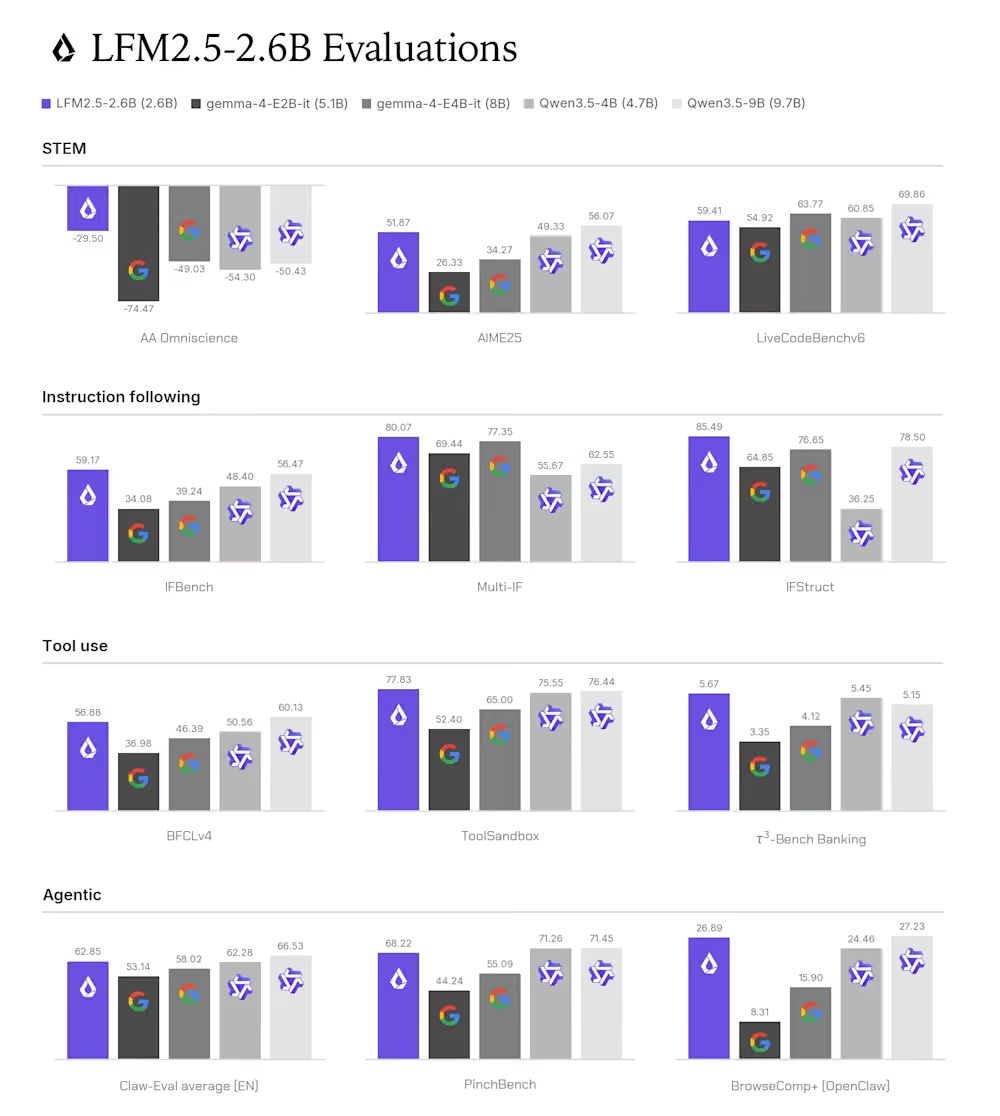
Liquid AI released its own benchmark comparison charts pitting LFM2.5-2.6B against the models enterprises are most likely to shortlist for the same edge deployments: Google’s Gemma 4 E2B (5.1B parameters) and E4B (8B), and Alibaba’s Qwen3.5-4B (4.7B) and Qwen3.5-9B (9.7B).
A separate test by local AI client platform Atomic Chat found that LFM2.5-2.6B completed 35 tool calls to complete three tasks (checking weather and local time in six cities, converting one budget into six currencies, checking four hotels and booking for a date) 3.7 times faster than DeepSeek-V4-Flash (a whopping 284B parameters), the model has skyrocketed to the top of OpenRouter since its release last week.
Gemma 4’s small models are multimodal generalists, accepting image and audio input alongside text, and use a Per-Layer Embeddings design that keeps only a fraction of their weights active per token — which is why Google markets them by “effective” size (2.3B and 4.5B) despite total footprints of 5.1B and 8B. Alibaba’s Qwen3.5 small series, released in March, is natively multimodal from 4B up and leans on scaled reinforcement learning to chase frontier-style reasoning — Alibaba touts the 9B model as matching or beating OpenAI’s far larger gpt-oss-120B on reasoning benchmarks.
LFM2.5-2.6B takes a narrower path: it is text-only, dense, and specialized for agentic work, with Liquid AI shipping separate vision and audio variants of the LFM family rather than folding everything into one checkpoint.
Advertisement
Where Qwen’s post-training reinforcement learning targets reasoning, Liquid’s targets tool use inside real agent harnesses.
The result, per the company’s published numbers, is that the smallest model in the comparison leads every instruction-following benchmark (IFBench, Multi-IF, IFStruct) and nearly every tool-use benchmark — 77.83 on ToolSandbox versus 76.44 for Qwen3.5-9B, a model nearly four times its size — trailing only that 9B model on BFCLv4.
On agentic evaluations it beats both Gemma models across the board and essentially ties the Qwens: 26.89 on BrowseComp+ versus 27.23 for Qwen3.5-9B. It also posts the best score on AA Omniscience, a knowledge benchmark that penalizes hallucination.
The Qwen models keep the edge where their training focus lies: math (Qwen3.5-9B leads AIME25) and coding, where larger models retain an advantage on LiveCodeBench — though Labonne noted the gap is smaller than the parameter counts would suggest.
“With LiveCodeBench v6, we might not be the best among these models, but we’re also by far the smallest. Showing that we’re competitive with them is already quite a big win for me,” he said.
Meanwhile, Liquid AI’s revenue-gated license (detailed below) asks larger companies to strike a commercial deal. Enterprises above the threshold are effectively trading license friction for footprint and tool-use performance.
Licensing reflects a commercial middle ground
LFM2.5-2.6B is distributed under the LFM Open License v1.0, which permits use, modification, and redistribution — including commercial use — for organizations with less than $10 million in annual revenue. Commercial use by larger companies is not covered by the license, requiring a separate arrangement with Liquid AI; qualified nonprofits are exempt from the threshold for non-commercial and research purposes.
Labonne framed the structure as a way to sustain model development — “the models are really the moats, so we need to be sensible in the way that we license them; otherwise, we cannot make money, so we can’t make more models” — while characterizing the threshold as a light-touch mechanism in practice.
Advertisement
Asked how the company would even know if a large enterprise quietly deployed the open weights, he was candid: “I think this is a question for our legal team, but personally, I don’t know. And even if you’re above $10 million, the only thing that we ask you is to contact us.”
The company pairs its licensed model releases with freely published research, he added, including new structured-output evaluations and a training technique that mitigates the repetition loops common in small models — a failure mode he noted Qwen models are “kind of guilty of.”
Small model, big enterprise implications
The launch coincided with an announcement from MacPaw, the Ukrainian software company behind CleanMyMac and Setapp, of a long-term strategic partnership with Liquid AI to build an on-device AI stack for the Mac.
Liquid AI will design and fine-tune foundation models for Eney, MacPaw’s macOS assistant, running locally on Apple silicon through MacPaw’s Elix inference engine and Mnemos memory layer, with results expected later this year.
Advertisement
Labonne pointed to the deal as a concrete validation of the size argument: “One of the reasons why they chose us is also because the model is quite small, and they don’t have all the memory budget to run the other models.”
The release arrives as hardware vendors, operating system developers, and enterprise software companies increasingly invest in local AI execution — and as agent harnesses proliferate across the industry. Liquid AI’s bet is that deployment economics, not raw scale, will define an important segment of that market: agents running continuously, everywhere, at zero marginal token cost.
Whether small, highly optimized agent models become a significant segment of enterprise AI will ultimately depend less on benchmark scores than on operational reliability. But Liquid AI’s latest release suggests the next competitive frontier is no longer simply building larger models — it’s building models small enough, and capable enough, to run wherever enterprise workflows already live.
A New Mexico court ordered (PDF) Meta to create a $567 million fund to address harms linked to youth mental health and child sexual exploitation after finding its platforms constituted a public nuisance. “In sum, the Court finds that New Mexico is in the midst of a teen mental health crisis affecting public health and public safety in and throughout the state, and that Meta’s platforms are a significant contributing cause to the crisis,” wrote Chief Judge Bryan Biedscheid in the decision. The fund comes on top of $375 million in civil penalties, though the judge declined to mandate changes to features such as infinite scroll and autoplay, citing potential First Amendment and Section 230 concerns. Tech Policy Press reports: The decision follows the second phase of in the State of New Mexico v. Meta Platforms Inc., which consisted of a bench trial. Its central question was whether Meta’s platforms amounted to a public nuisance in New Mexico, and, if the court found that they did, what remedy would be needed to address it. In March, a Santa Fe jury found Meta liable for violations of New Mexico’s Unfair Practices Act, awarding $375 million in civil penalties. The jury deliberated less than a day following that nearly seven-week trial. The $567 million abatement fund would be in addition to the civil penalties, according to today’s decision.
New Mexico Attorney General Raul Torrez sued Meta in December 2023, alleging the company made false public statements about the safety of its platforms while knowing internally that its products facilitated child sexual exploitation. The court denied Meta’s Section 230 defense in May 2024. In today’s decision, the court again asserted that “Section 230 does not preclude the State’s public nuisance claim,” but the decision attempted to thread the needle on issues that the court determined might have run “afoul” of the statute, or of the First Amendment, such as issuing remedies around any particular product feature.
More details continue to trickle out about OpenAI’s mysterious new hardware device — described previously as an AI-fueled smart speaker that will be the “physical manifestation” of ChatGPT.
Bloomberg now reports that the device will be “donut-shaped,” designed thusly to allow users to carry it around their home and place it in different locations, like a bedside table or a kitchen counter.
It will be constructed from “high-quality metal,” have a “premium look,” and (in a detail that mystifies) will have distinct “moving parts,” sources told Bloomberg.
It also could be slightly more expensive than your average smart speaker, perhaps $300 to $400 per unit, according to this report. For comparison, most of Amazon’s smart home speakers range in price from $40 on the low end to $240 on the high end.
Advertisement
So, to sum up: an expensive talking AI donut that has … moving parts? OpenAI releasing a smart home device has a certain logic to it, in that it would further integrate ChatGPT into users’ lives. However, historically speaking, smart speakers have not always been profitable and may prove a difficult market to break into. The potentially high price point also might not help.
The device, which is being developed in partnership with LoveFrom, the design studio founded by famous former Apple developer Jony Ive, will likely be released at some point in 2027, Bloomberg writes.
WeatherNext can deliver a 15-day forecast predicting storms’ track and intensity.
Google
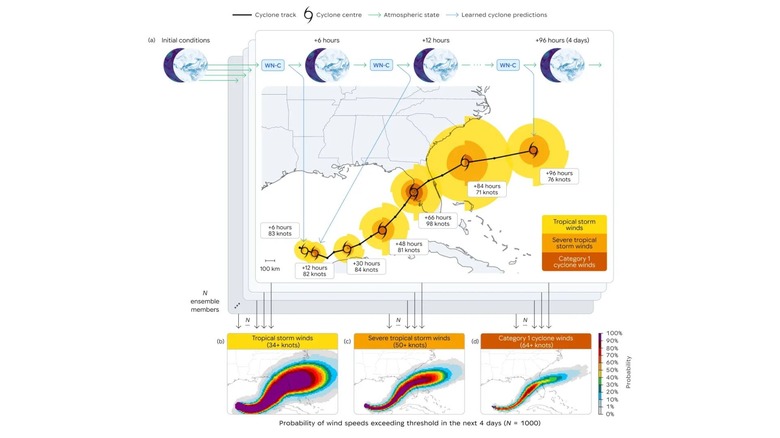
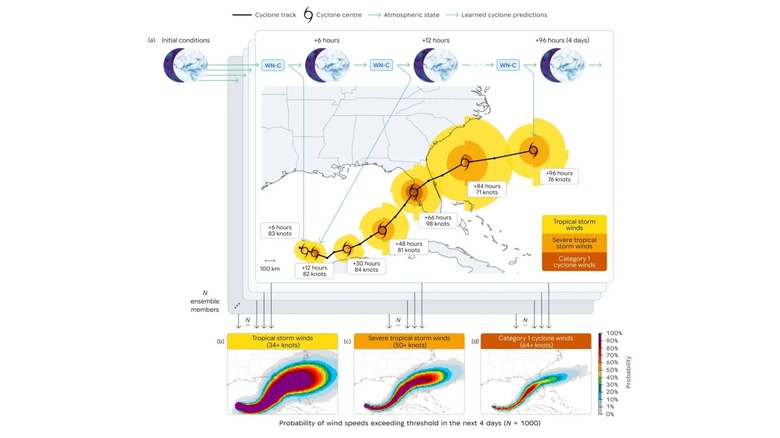
Researchers from the Google DeepMind and Google Research teams have helped train the WeatherNext AI weather prediction model to offer improved cyclone warnings. The National Hurricane Center, the Cooperative Institute for Research in the Atmosphere, the UK Met Office and other weather agencies around the world also contributed to the model’s development. Both the code and the model weights behind the project are being made open source on GitHub, so other scientists can also take advantage of this work.
A study about WeatherNext was published in the journal Nature, and a more layperson version was also shared in a blog post from Google. Tropical cyclones, also known as hurricanes or typhoons depending on where you are in the world, pose a unique challenge to predict because global atmospheric currents that determine a storm’s path have traditionally been best analyzed by coarser global models. In contrast, a storm’s intensity is best predicted by specialized local models that can assess the thermodynamics processes at the cyclone’s core. WeatherNext trained on nearly 20 terabytes of global atmospheric data and historic information collected by the International Best Track Archive for Climate Stewardship to predict both a cyclone’s track and intensity with a single model.
“We can now generate a single 15-day forecast in less than a minute on a TPU, empowering forecasters to quickly evaluate the probability distribution of potentially devastating tail-risks,” the WeatherNext researchers wrote.
Advertisement
Google introduced the second generation of WeatherNext last year. The company’s research teams have also worked on using AI to help predict flash floods.


























































You must be logged in to post a comment Login