
Politics
For the love of God, stop the boats


Nine hundred and eleven. That’s how many people have illegally intruded into our country since Sunday. Just shy of a thousand foreigners, mostly blokes, sailed on to our shores and met not so much as a cough of opposition from border guards. An unresisted tide of newcomers washing upon a sleeping nation. It is intolerable. It is a grotesque insult to the hard-won liberty of this kingdom that armadas of men from distant, regressive lands are permitted to come, week after week after week. For the love of God, stop these boats.
We are witnessing the fatal haemorrhaging of British sovereignty. That’s what the ‘small boats’ crisis speaks to: the deracinated state of British nationhood following years of technocratic rule. The brutish reduction of Britain to little more than an administrative zone, unmoored from its history by bloodless bureaucrats. This is why the public is enraged by the boats crisis – not because they’re ‘racist’, but because they are appalled at the reckless gutting of our sovereign integrity and the consequences it will have for their own liberty, dignity and security.
The gaslighting we have been subjected to over the boats crisis is extraordinary. Even now, even following the arrival on Monday of a mega-dinghy containing a record 230 people, they are waging psychological warfare against us. It was put to Angela Rayner, the housing secretary, that ordinary people will feel ‘rage’ over the government’s gutless unwillingness to defend the borders. ‘Well’, she said, puffing herself up with phoney virtue, ‘these are desperate, vulnerable people…’. They are often ‘women and children’, she said.
They’re lying to us. As I listened to Rayner trot out that knackered line about hard-done victims from overseas scrambling for the sanctity of our shores yada yada, I was looking at a photo of the mega dinghy. I saw man after man – fit, able, strong blokes from distant climes. Rayner’s doublespeak would make Orwell blush. ‘Women and children’, she yelps, as we all watch with our own eyes the arrival of yet more fighting-age men. They hold us in such depthless contempt they don’t even bother to make their bullshit believable.
Or look at the media coverage of the mega-dinghy. ‘Asylum seekers’, they’re all saying. Are we still playing this game? Are we still trying to dazzle and pacify the public with linguistic trickery? Every free-thinking soul knows that the twentysomething Eritrean fella who treks through safe country after safe country to get to Blighty is seeking not asylum but economic opportunity. It’s brazen. It’s undeniable. And yet you risk expulsion from polite society if you say it.
The elites thuggishly police our language on the immigration issue. You’re damned as racist if you use phrases like ‘illegal immigrant’, ‘swarm’ or ‘surge’, and you’re hailed as righteous if you propagate the establishment’s cherished untruths about ‘refugees’ and ‘women and children’. This muzzling of what we are permitted to say is fundamentally about controlling what we are allowed to think. It is a tyrannical effort to bury the truth about the elites’ craven surrender of our borders. It is an attempt to dress up treason as virtue.
It’s the fatalism on the boats crisis that is most galling. Consider Andy Burnham’s insistence this week that the leafier parts of Britain must start taking their share of these ‘refugees’. ‘We cannot have a situation where it’s only the poorest communities in the country that receive [them]’, he said. Now, it’s true that it has been ‘left-behind’ Britain that’s been forced to accept hundreds of foreign men into their local hotels, while the well-off ‘Refugees Welcome’ mob scurry back to their plush communities where the only migrant they ever meet is the Pole who fixes their plumbing. Yet the idea of ‘sharing out’ the burden of illegal immigration – Burnham is implicitly admitting it’s a burden – is predicated on the batshit belief that there is nothing we can do to stem the daily arrivals.
It is a toxic mix of ideological derangement and outright moral cowardice that leads the political class to think the daily breaching of our borders is a fait accompli. Drunk on the Kool-Aid of globalism, bewitched by the bourgeois cult of pooled sovereignty, our politicians fundamentally think our borders aren’t worth defending. Their fealty is less to the little people they rule over than to the high-minded international treaties Britain has signed up for. The concerns of working-class Brits count for shit in the face of the ‘refugee’ diktats issued by the soulless ghouls of globalist institutions.
Then there’s the spinelessness. We all know what must be done to defend a nation’s borders. We’ve known for centuries. Forces must be mobilised, rules strictly enforced, intruders sent packing. It’s not a lack of know-how that has let the sacred perimeters of our nation go to rack and ruin – it’s a lack of will. When the government fails to fight for its nation’s borders, what it’s saying is that there is nothing in the nation worth fighting for. Our identity, our history, our communities: it is their staggering disregard for the very lifestuff of Britain that leads them to abandon Britain’s perimeters.
All we get is deflection. Both Burnham and Rayner are blaming ‘criminal gangs’ for ferrying ‘asylum seekers’ across the Channel. Others blame the French for letting the boats set sail in the first place. But it is not France’s job to secure the sovereignty of the United Kingdom. The truth is that it is Britain’s own snivelling liquidation of its sovereign rights that entices foreign opportunists to encroach upon our lands. They know they will be provided with a hotel room and food and pocket money. They know they will not be deported. They know they will be permitted to disappear into the black economies of our self-ravaged half-nation. The criminal gangs who oversee the Channel crossings are merely parasites on the carcass of our own surrendered sovereignty.
The ‘racist’ libel won’t work anymore. The working classes are at breaking point and they won’t be silenced by a turbo-smug activist class that cynically derives both virtue and servants from out-of-control immigration. They are fuming about the border crisis, not because they hate foreigners, but because they love sovereignty and the things it protects: national identity, democratic rights, the social contract itself. They know the nation that can’t even prevent the arrival of 230 men is a nation in name only, one that prefers the suicide pact of globalism to the virtuous ideal of independence. Enough is enough – stop the goddamn boats.

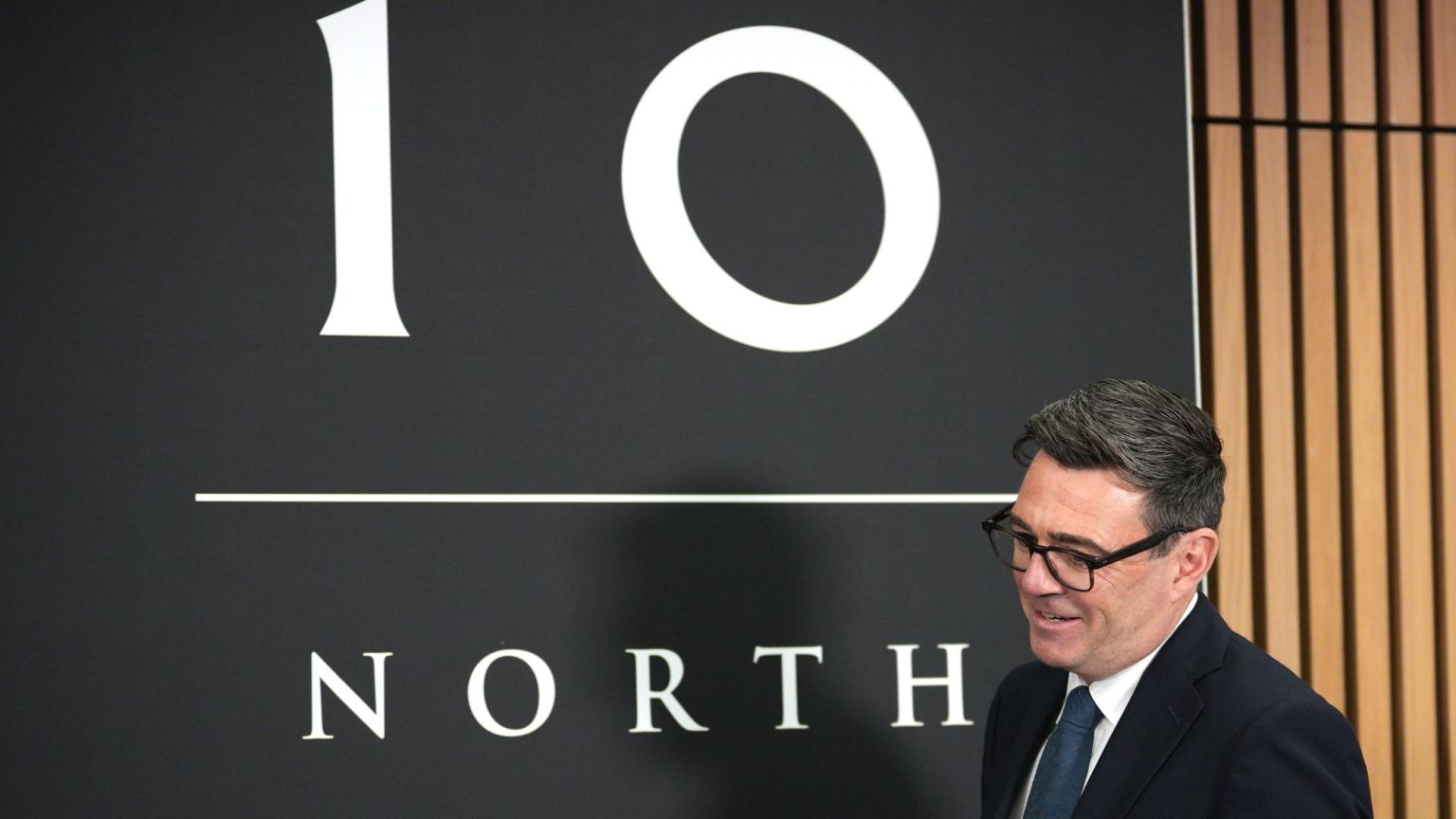
Alarm bells are now ringing loudly over new prime minister Andy Burnham’s lack of any detailed vision for Britain. Yet amid the vague promises of ending the politics of division, and the usual platitudes that Burnham has somehow managed to rebrand as ‘doing politics differently’, he has offered one relatively clear new proposal. Namely, that the UK would have a second No10 in Manchester, and Whitehall’s power would be decentralised and dispersed across the regions. It is, in short, a vision of a devolved and federalised English state.
This is a peculiar prescription for the nation’s ills. No one has asked for such a radical constitutional shake-up. Nearly 30 years of national devolution in the UK have achieved little beyond emboldening regional nationalists who loathe England and Westminster intensely. And beyond Andy Burnham himself, few see local government as benevolent, and certainly don’t want to give it more power.
Indeed, local government is renowned among the British public for its inefficiency, unaccountability and pettiness. I speak daily to hundreds of members of the public in my job in broadcast media, and people certainly get vexed by, say, the senseless handing over of the Chagos Islands, or the appointment of Peter Mandelson as US ambassador. But it’s the issues that materially affect people’s day-to-day lives that really get people angry: infrequent bin collections, overzealous parking restrictions sold off to detestable third-party enforcers, 20mph zones, ULEZ, low-traffic neighbourhoods (LTNs) and being fined for pouring coffee down a drain. And yet it’s the bodies responsible for these policies that are to be given more control over our lives under Andy Burnham’s Labour.
I suspect that there are very few members of the general public who want to increase local-government power. Once people realise that Burnham’s devolution plans entail exactly that, they will soon run out of patience with a PM who promises to do things oh-so differently.
Burnham’s plans for English devolution will also further fragment the nation, one already struggling with regional disparities in industry, population, wealth and resources. The reasons why certain towns and areas are poorer than others are complicated, multifaceted and historic. It’s not clear how Burnham’s devolution vision will change this. What sets back Middlesbrough, Blackpool and Redcar now will not change when councils or regional mayors have the ability to tax local residents further.
Furthermore, the consultation process for councils to inform and ask the public what they think of the proposals is desperately wanting. Councils are not required to advertise the consultations, nor are they legally bound to follow the public’s findings. A broken local-media landscape means there will be even less accountability.
Britain is in trouble. The economy is seemingly endlessly stagnant, and sources of common national identity are increasingly thin on the ground. Devolution for Scotland and Wales, and the endless erosion of England’s institutions, mean there is even less to unite the regions today. Burnham’s ultra-regionalised national project will surely only make that situation worse.
The risks of these devolution plans are myriad. If MPs want to get a sense of them, they could do worse than look at the fate of the Federal People’s Republic of Yugoslavia over three decades ago. While Britain and England are very different historically, culturally and politically to Yugoslavia, the break-up of the latter during the 1990s should still serve as a partial warning.
In the mid-to-late 20th century, Yugoslavia faced some of the same problems that England faces today. As the Yugoslav economy struggled during the 1960s, Yugoslavia’s leader, Marshal Tito, set up a centrally planned federal wealth fund which slowly ate the country alive from the inside. Wealthier regions paid extra in taxes to give dispensation to the poorer regions. Over time, this simply increased the gap between the rich and poor. Moreover, the wealthier regions of Slovenia and Croatia began to resent the poorer eastern and southern provinces, where abject poverty persisted. By 1980, Tito was dead, and with him a belief in Yugoslavia, and its regional and federalised structure. He left a nation whose constituent parts were increasingly at odds with each other. The writing was on the wall, long before the bloody break-up of the 1990s.
And so a nation vanished, amid economic decline and a rapid deindustrialisation that the state could no longer support. The People’s Republic failed its people and gave way to a vicious ethno-nationalism.
Burnham, of course, is no Marshal Tito, and Britain and England are not Yugoslavia. But in an economically challenged nation, riven with regional disparities and tensions, Burnham’s plan for devolution is only likely to power those forces that would tear us apart.
There is one line in the Home Office fact sheet on this year’s figures for Prevent – the UK’s counter-radicalisation referral scheme – that is more informative than the rest of the report combined: referrals for ‘fascination with extreme violence or mass-casualty attacks’ peaked at 286 between April and June, before falling to 183 over the summer. The Home Office’s explanation? The schools broke up.
Nothing about the threat actually changed (unsurprisingly) with the fact that the sun comes out in July. All that happened is that children went home – and, with them, so did much of Prevent’s ability to see the threats in our midst.
I know this system from the inside. From 2015 to 2018, I worked as a Prevent practitioner in London and later as a counter-extremism coordinator. Prevent is often spoken about as if its figures provide an insight into extremist trends in the UK. That isn’t right, though: it’s a referral system that relies disproportionately on schools, as these are one of the few places where people encounter the state every day. In doing so, it misses the real Islamist threat the UK faces and paints a picture that the most radical people in our society are 11- to 15-year-olds.
Schools generated 34 per cent of Prevent referrals (3,496 in total) in the past year, more than any other source. Those aged 11 to 15 accounted for 36 per cent of all referrals and 37 per cent of cases taken on for deradicalisation through Channel, the government’s follow-up support programme for referred individuals.
So when the report says extreme right-wing concerns once again outnumber Islamist ones (just eight per cent of referrals were for Islamism), it reflects the machinery we’ve built to observe extremism, rather than the true picture of the country. Of course right-wing extremism is real and growing. Think of the neo-Nazi jailed last year for stabbing an asylum seeker or the attempts to burn down a Rotherham asylum hotel during the 2024 summer riots. But this is nowhere close to the majority of extremism cases. Indeed, MI5 says around three-quarters of its counter-terrorism caseload relates to Islamist terrorism. The government’s own counter-terrorism strategy, Contest, attributes 67 per cent of attacks since 2018 to Islamist terrorism, against around 22 per cent to the extreme right.
Schools miss a lot, and through fear or political sensitivity, avoid dealing with a lot more. Take the fact that, according to the latest figures, Islamist referrals peak among those aged 31 to 40. Incel referrals peak at 18 to 21. Left-wing referrals peak at 26 to 30. Extreme right-wing radicalisation, meanwhile, is picked up disproportionately among the young (and online) – where schools are, of course, most likely to encounter it.
Then there’s the issue of who gets referred. It isn’t exactly easy to refer a suspected Islamist, not least as Islamists are well versed in intimidating schools (as we’ve repeatedly seen in places like Birmingham). There is also a factor of white guilt: a white teacher may feel far more comfortable referring pupils for far-right sympathies than children from a minority-ethnic background for beliefs they claim are part of their faith.
Then there’s the fact that Islamist extremism is often concealed in the language of human rights or legitimate political activism, or in personal religiosity that people often feel should not be challenged, making it harder to recognise and harder for teachers to police. The average teacher is primed to notice far-right anti-migrant sentiment or white supremacism, but not to notice when Islam, an already unfamiliar faith, becomes politicised.
One thing the Prevent numbers miss completely, as there is no box for it, is anti-Semitism, which arguably should be measured in its own right. It is a hatred that unites Islamist, extreme right-wing and extreme left-wing ideologies, and may be easier for a teacher to spot than the ideology from which it stems. When anti-Semitism is at a record sustained high, and a Jewish person is more likely than any other minority to face violence for their faith, this is an unforgivable blind spot.
Some of the rising figures may also reflect better awareness of Prevent, rather than a rise in extremism as such. Referrals rose 39 per cent to 10,293, the highest on record. The proportion reaching a Channel panel went from 13 to 21 per cent, the proportion adopted for support went from 11 to 18 per cent against a long-run average of 13 per cent, and the number of people adopted more than doubled. Of closed cases, 85 per cent exited with no further radicalisation concern. Much of these rises reflect the aftermath of the Southport attack working through the system. The Home Office credits public awareness of Prevent after the attack, and Lord Anderson traced the record January quarter to publicity around Axel Rudakubana’s trial. There is some good news here. Infamously, Rudakubana was referred three times and his case was closed three times, with no ideology identified. That is the category the system used to ignore: referrals for fascination with extreme violence reached 818 this year, and adoptions by Channel in that category rose from 19 in late 2024 to 88 by mid-2025.
What we need is better training for schools on the ideologies they are missing, and other institutions trained to refer as readily as schools do – primary care, mental-health services and probation are all trained in spotting radicalisation, but not nearly as often. They are obvious places to increase support. If radicalisation doesn’t respect the school calendar, neither should our safeguarding system.
When schools refer an Islamist case, they need to know the government will do more than it has done when schools face extreme anti-blasphemy protests or anti-LGBTQ+ protests. With teachers still in hiding or without their jobs following these incidents, there is zero incentive to ensure such referrals are made.
This Prevent data release is not a map of the extremist threat but a map of the system and its vulnerabilities – it should be a wake-up call to upskill public-sector workers and improve what forms of extremism the risk list can identify. What it absolutely does not show is that the far right poses a greater threat than Islamism.
Politics
Solar Eclipse 2026: The UK Is Seeing The Largest Solar Eclipse In 25 Years – Here’s How To See It

According to the experts at BBC Science Focus, we have around two solar eclipses per year. Which might sound staggering because from our perspective, they are incredibly rare, right? How many times in your life can you say you’ve seen one compared to lunar eclipses?
Dr Alistair Gunn, a radio astronomer at the Jodrell Bank Centre for Astrophysics at the University of Manchester, explained: “A lunar eclipse, when the Moon moves through the shadow of the Earth, is visible from wherever the Moon is above the horizon, which is over half of the Earth.
“However, when the Moon appears to move in front of the Sun during a solar eclipse, the shadow cast by the Moon is much smaller than Earth. It’s only about 480km (300 miles) wide when cast onto the Earth’s surface.
“Solar eclipses are therefore only visible from within a narrow path across the Earth, making it difficult to get to a location to see one. This is why they are visible less often from any given location.”
However, some parts of the UK are set to experience the largest solar eclipse in over 25 years on 12 August.
Where to see the August solar eclipse in the UK
The solar eclipse will be visible across the whole of the UK, according to the UK Health and Security Agency (UKHSA).
“People watching in the South West are likely to see the greatest proportion of the Sun covered by the Moon… this will be the most coverage seen from the UK and Ireland since the 1999 solar eclipse – which was total from most of Cornwall and Devon – making it a genuinely special occasion,” added the UKHSA.
In fact, the BBC states that people in Bristol, Somerset, Gloucestershire and Wiltshire are expected to see around 90% of the Sun obscured, while Cornwall and the Isles of Scilly should get some of the best views anywhere in the UK with 95%.
How to safely watch the solar eclipse
You can actually buy solar eclipse glasses! If you are looking to purchase these, the UKHSA advises ensuring the ones you buy have specially designed filters that meet the international safety standard ISO 12312-2:2015(E).
Alternatively, they advise, you can watch the eclipse indirectly without any specialist equipment at all. Safe options include:
- a pinhole viewer, which you can easily make at home
- viewing the Sun’s image projected through a colander or the gaps between tree leaves
- projecting the Sun’s image onto a sheet of paper using a simple pinhole projector.
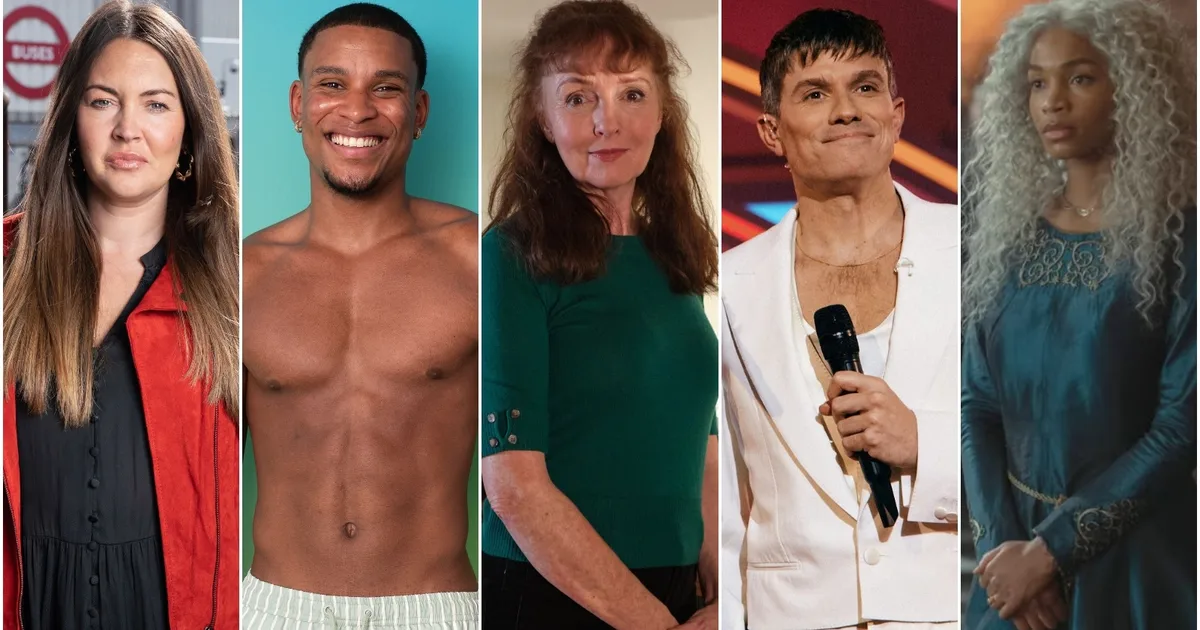
It’s not even September yet, but we already know the full cast for this year’s Strictly Come Dancing.
After months of speculation and teasing, the line-up has now been confirmed in full, consisting of big names from around the world of sport, soaps, fashion and beyond, who are ready to compete for that illustrious glitterball when the show returns to our screens.
If you’re already looking forward to Strictly’s return, here’s our quick guide to the full line-up competing in 2026…
Lacey Turner
The first 2026 cast member unveiled was EastEnders star Lacey Turner, in a surprise to fans as the announcement came much earlier in the year then usual.
Lacey is best known for playing Stacey Slater in the BBC soap on-and-off since 2005, and has also starred in the military drama Our Girl and appeared in Call The Midwife.
“I am so excited to be making my way to the dance floor this year to be a part of Strictly Come Dancing! I am a huge fan and can’t quite believe I will be taking part and not watching at home this year!” she said when her Strictly stint was confirmed by the BBC in mid-June.
The soap star added: “I look forward to meeting everyone and learning a new skill!”
Dani Dyer
Dani Dyer was originally booked for last year’s season of Strictly – even taking part in its pre-recorded launch show – but was forced to pull out due to injury just days before the first live show.
She was replaced in the cast by fellow Love Island winner Amber Davies, who made it through to the 2025 final.
Almost a year later, Dani is now getting a second chance at nabbing the coveted Glitterball trophy.
She said: “I am so excited to be back in the ballroom this September! I just cannot wait to get my dancing shoes back on and hopefully this time around I can actually make it to week one!
“I’m just over the moon and cannot wait to find out who else is doing it!” Dani added.
Delta Goodrem
Although best known as a singer thanks to hits like Born To Try and Lost Without You, Australian performer Delta Goodrem first found fame playing Nina Tucker in Neighbours, a role she held for around three years in the mid-2000s.
She’s also no stranger to reality TV, having served as both a coach on The Voice and The Voice Kids in her home country.
Delta’s Strictly stint comes off the back of her success at this year’s Eurovision Song Contest. During the live final in Vienna back in May, she represented Australia with her song Eclipse, finishing in fourth place overall.
When announced as taking part in Strictly, she beamed: “I’ve been incredibly honoured to perform on many different stages throughout my career – from TV, theatre, film sets, to touring my own shows around the world.
“There is, however, one stage I’ve never stepped onto and that is the ballroom floor! I’m absolutely thrilled to be joining Strictly and can’t wait to get started!”
Chris Appleton
The first man confirmed for the Strictly 2026 cast was Chris Appleton, hairstylist to the stars and the man behind some of Kim Kardashian’s most famous red carpet hairdos.
Chris has earned a following online for his hair tutorials, as well as his collaborations with A-list clients like Britney Spears, Jennifer Lopez and Ariana Grande.
The UK-born stylist said: “I’m thrilled to be joining Strictly Come Dancing and coming home to the UK for this incredible experience.
“I’ve always believed that the best things happen when you take a chance and try something new. I may know my way around a salon floor, but the dance floor is a whole different story – and I can’t wait to get started.”
Cach Mercer
Cach Mercer is the second Love Islander to sign up for Strictly this year – and like fellow alum Dani Dyer, he won the series back in 2025.
The model, DJ, social media star and dancer enthused: “I have grown up watching Strictly with my family and am so excited to now be part of the cast.
“Dancing is a huge passion of mine and I can’t wait to learn ballroom and do the Foxtrot for the first time!”
Will Best
Will Best is a presenter most famous for fronting ITV’s Big Brother reboot and Hits Radio’s daily breakfast show.
He admitted: “I can’t quite believe it… I’m doing Strictly! What an absolute dream. Albeit a pretty terrifying one.”
“I’ve been lucky to do lots of live telly before, but absolutely nothing like this,” he claimed, adding: “I cannot wait!”
Dame Sarah Storey
Dame Sarah Storey is a 19-time gold medallist and the most successful British Paralympian of all time, so she is more than prepared to handle the pressure that comes with competing on Strictly.
The decorated cyclist retired from the sport in June, but doesn’t have any intention of taking it easy as she makes history as the first Dame to hit the ballroom.
Sarah was inspired to take on the new challenge by her ballroom-dancing daughter, Louisa.
“Embarking on a new challenge so soon after stepping down as an athlete is hugely exciting,” the Paralympian said.
She added: “I have always loved watching Strictly and my daughter Louisa is a very talented dancer, so to be able to learn from the best and hopefully understand even more about her world, is incredibly motivating! I can’t wait to get started!”
In 2024, the 30-time medallist was booked to compete on Dancing On Ice, but had to pull out due to fracturing her ankle during rehearsals.
Jaime Winstone
Jaime Winstone was the eighth addition to the BBC show’s line-up.
Daughter of fellow actor Ray Winstone, Jaime is best known for her roles in Kidulthood, Made In Dagenham and the 2018 reboot of Tomb Raider.
She also won acclaim for her performance as Dame Barbara Windsor in the 2017 TV biopic Babs, later playing the late actor’s character Peggy Mitchell in a special flashback episode of EastEnders.
Strictly isn’t her first reality TV appearance, as the actor appeared on ITV’s The Masked Singer as Firework back in 2022.
“I am no stranger to a dance floor, but the ballroom is a whole new world for me,” she said when announced for the show.
She added: “I love a challenge though, so can’t wait to enter my showgirl era and get super sparkly!! Let’s get physical – see you on the dance floor!”
Bethany Antonia
House Of The Dragon star and musical theatre actor Bethany Antonia was the ninth star revealed for this year’s Strictly.
Alongside playing Lady Baela Targaryen in the Game Of Thrones prequel, Bethany has appeared in the Harlan Coben adaptation Stay Close, ITV biopic Nolly and the 2025 Doctor Who episode The Well.
She is also currently appearing as Eurydice in the Tony Award-winning musical Hadestown in the West End.
“I can’t quite believe that I will be heading to the Strictly ballroom this September! I have grown up watching Strictly, and I am so excited to take the challenge on and (hopefully!) learn a new skill. See you on the dancefloor!” she told the BBC.
Shaun Wright-Phillips
Shaun Wright-Phillips is a former England footballer and pundit.
During his career, Shaun had 36 caps for England, as well as playing for Manchester City, Chelsea and Queens Park Rangers, before moving to the USA and joining the New York Red Bulls and Phoenix Rising FC.
The son of football icon Ian Wright, Shaun now works with BBC, ITV and Sky Sports as a pundit.
Shaun told the BBC: “Dancing is in my blood—but mainly at family events! Strictly is definitely outside my comfort zone, but I’m super excited to get started and really looking forward to the challenge!”
The sportsman told The Sun that he joined Strictly and appeared on 2021’s Cooking With The Stars because he wanted to learn new skills.
“Don’t get me wrong, I’m really nervous – it’s out of my comfort zone,” he admitted. “I know the hard work the dancers put into it but I’m excited for the journey and want to come out of it as a ballroom dancer,” the former footballer added.
Graeme Hall
Known to fans as “The Dogfather”, Graeme Hall is a respected canine expert who has been offering dog owners advice on both TV and in print for years.
He has fronted Dogs Behaving (Very) Badly on Channel 5 since 2019 as well as The Dog Hospital.
Graeme also regularly pens articles for The Times, and is an author of three adult books, including the Sunday Times Bestseller All Dogs Great And Small.
He admitted he “can’t believe” that he’s landed a spot on this year’s Strictly line-up, enthusing: “I have always loved dancing, so to have the opportunity to learn from the best in the business is a dream come true.
“I have watched the show for years, so to be a part of it feels like a very exciting challenge, albeit more than a bit nerve-wracking! I can’t wait to get started.”
Lawrence Robb
Scottish actor Lawrence Robb is best known for playing Mackenzie “Mack” Boyd in Emmerdale, now a member of the iconic Dingle dynasty.
He also appeared alongside Billie Piper in an episode of I Hate Suzie.
Outside of his TV work, Lawrence has on-stage experience, appearing as Rapunzel’s Prince in Into The Woods, the Prince in Cinderella and in Legally Blonde The Musical.
“I don’t know who’s more excited about this, me or my Mother,” he joked to the BBC. “I can’t quite believe that I am going to be getting my dancing shoes on this September on one of my favourite shows of all time! It’s a dream come true, and I can’t wait to bring my all to ballroom.”
“Wish me luck, and any advice is very welcome – trust me I’ll need it!” he added.
Tabby Stoecker
Olympic gold medallist Tabitha “Tabby” Stoecker is a skeleton racer who most famously won gold at the 2026 Winter Olympic Games.
She is also a World Cup race winner, a double World Championship medallist and a European Championship medallist.
The athlete said she was “over the moon” at joining the cast of the BBC show, adding: “I’ve had the wildest year of my life so far, so to be rounding it off with a childhood dream of dancing in the Strictly ballroom is surreal and I can’t wait to get stuck in!”
John Nellis
Football content creator John Nellis has more than 20 million followers across social media.
He has amassed billions of views for his videos featuring global football stars such as Cristiano Ronaldo, Kylian Mbappé and Lionel Messi.
Most recently, John collaborated with Norwegian football star Erling Haaland, with content from the duo earning more than 60 million views across social media.
The former air traffic controller said he was “a little nervous” because he has never danced before.
He added: “It’s such an incredible opportunity, and I’m going to throw myself into every moment. I can’t wait to meet everyone, learn a new skill and, hopefully, be much better at family parties by the end of it!
Melanie Walters
The Welsh actor is best known for playing Gwen West, the doting mum of Joanna Page’s Stacey in the BBC sitcom.
She has also appeared in Hollyoaks and, more recently, the 2025 crime mystery Death Valley.
Melanie explained: “Performing in Pantomime for the last 15 years, my Strictly ‘fix’ has always been watching in a dressing room rather than my front room,” so she is delighted to swap her “fairy wand for sequinned dance shoes.”
She added: “I cannot wait to take part in this absolutely iconic show, it’s so exciting. See you in September!”
Strictly Come Dancing will return to our screens in the autumn.
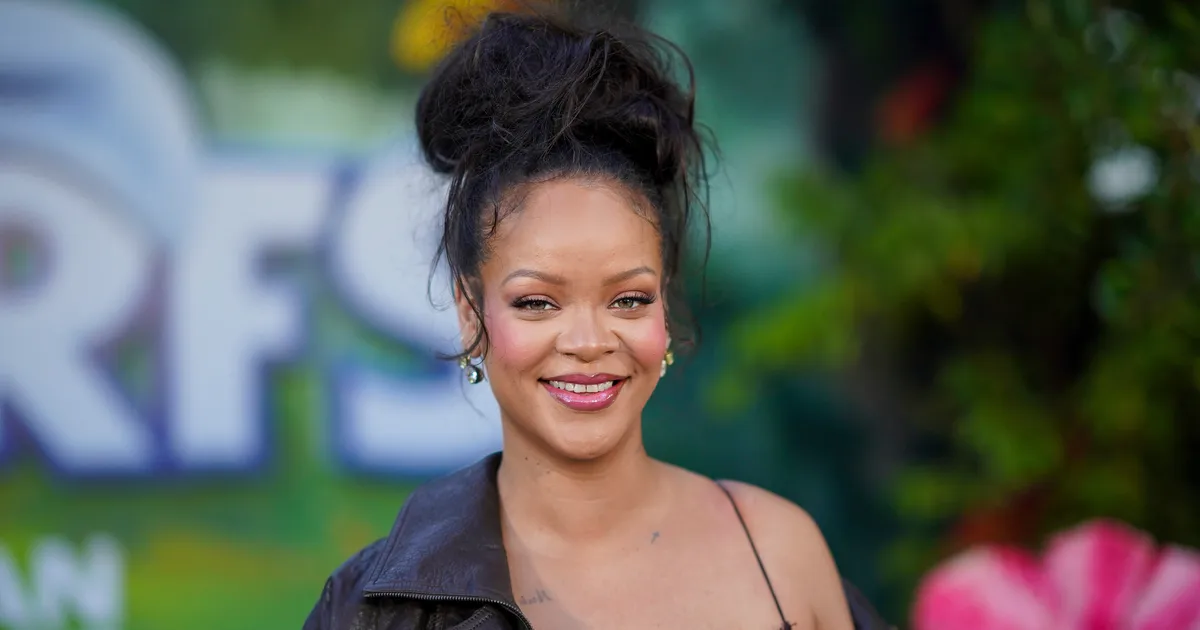
Rihanna took a moment to reflect during a recent trip to Barbados with her three children.
On Tuesday, the Grammy-winning star shared a rare family photo with her sons and daughter, after revisiting the street where she was born, which is now named after her.
She enthused: “One minute I feel like that kid from Westbury… the next minute I’m bringing my own kids back to ‘Rihanna Drive’. Trippy how life works!”
The We Found Love singer added: “And the glory still and will always belong to the Almighty Creator!!!”
Rihanna and her partner, fellow musician A$AP Rocky, welcomed their first child, a son named RZA, in May 2022.
A year later, Rihanna announced she was pregnant for the second time during her headlining performance at the Super Bowl Halftime Show, and later welcomed another son, Riot.
Last year, she disclosed that she was expecting another child while walking the Met Gala red carpet, before welcoming a baby girl – who she and her partner named Rocki, in an apparent nod to her father’s stage name – in September 2025.
Earlier this year, the A-list couple formally introduced their daughter to the world with a photo spread in W magazine, which saw the whole family sporting head-to-toe Dior (right down to Rocki’s nappy).
In the accompanying article, A$AP Rocky said: “[Rihanna] has changed a lot [in the time we’ve known each other] because she became a mother in that time span, and that certainly changes you. But this woman has always been magic.
“Philosophically, the way she operates is on another level. She is the most charming and genuine person on Earth. Her energy is unmatched – one of a kind. I just adore her.”
More recently, it was suggested that Rihanna was back working on new music, with a decade having now passed since the release of her last album, Anti.
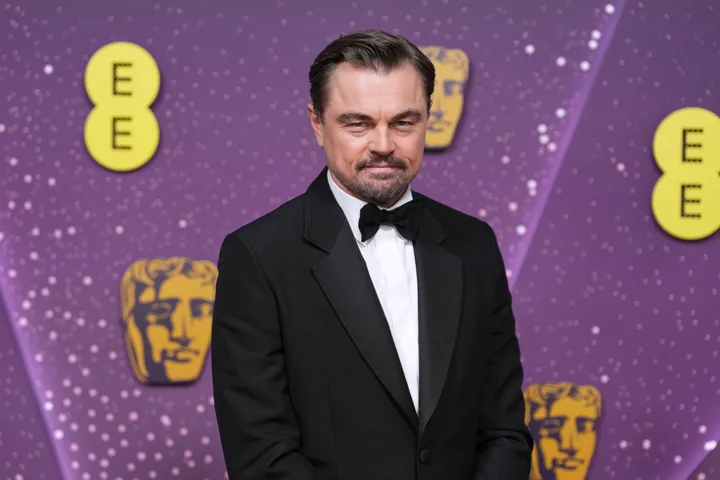
KPop Demon Hunters performer Ejae has claimed the sight of Leonardo DiCaprio was enough to cause her to make a mistake during the band’s performance of Golden at the Baftas.
Back in February, Ejae took to the stage at this year’s Baftas ceremony alongside fellow performers Audrey Nuna and Rei Ami, but has admitted she wasn’t entirely happy with how things went.
“The Baftas haunt me,” the singer – who provides the singing voice of Rumi in the Netflix phenomenon – told The Times in a new interview. “I made mistakes. I cracked a little bit on the high notes.”
During the trio’s first performance outside of the US, Ejae kicked things off from the stage at the London Festival Hall solo, before Audrey and Rei emerged from the crowd.
The Oscar winner noted that she was “put off” a high note in the song when she spotted the One Battle After Another star sitting in the audience in front of her, particularly as “he was not smiling”.
“He made me so nervous,” she admitted. “It was already so nerve-racking to be in front of all these celebrities, and then I look up and lock eyes with Leonardo DiCaprio? Come on…”
Leonardo had gone viral earlier in awards season when, at the Golden Globes, he animatedly spoke to his co-star, Teyana Taylor, about the animated fantasy film.
The Titanic actor also became a meme at this year’s Academy Awards after he enthusiastically waved a synchronised K-pop lightstick during the band’s performance of Golden.

Ejae skyrocketed to fame last year after providing vocals for the animated musical, which follows K-pop band Huntr/x, who use secret identities to protect their fans from supernatural threats.
KPop Demon Hunters became Netflix’ most-watched film of all time, winning an Oscar, Golden Globe, Critics’ Choice Award and Grammy.
“It’s still crazy to me,” Ejae told The Times of her film’s success. “I was a nobody and suddenly I’m a something.”

Controversially, the film was ruled out of a Best Animated Film nod at the Baftas because it did not have a qualifying theatrical release – but the band still appeared in one of the evening’s feel good moments.
“Performing at the EE Bafta Film Awards is a golden moment that our younger selves could never have imagined,” the trio said in a statement when their performance was first announced.
“We’re so proud to represent Netflix’s KPop Demon Hunters and spread the film’s positive message to fans around the globe,” the statement added.
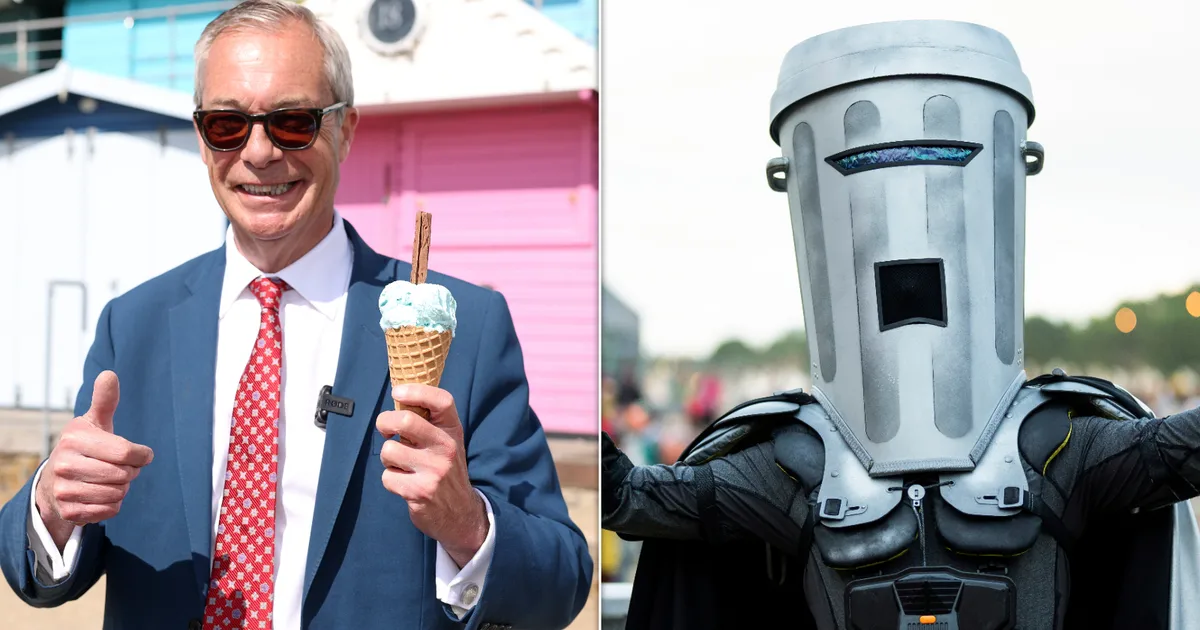
British voters want Count Binface to beat Nigel Farage in Thursday’s Clacton by-election, a new poll has revealed.
The survey, by the More in Common think-tank, found that 37% of the public want the comedy candidate to win in a head-to-head contest with the Reform UK leader.
By contrast, just 32% of Brits would want Farage to win.
A majority of Labour, Lib Dem and Green Party voters want Count Binface to win, although Farage is backed by Tories and, unsurprisingly, Reform supporters.
He quit as Clacton’s MP last month amid the furore over a £5 million gift he received from Thailand-based crypto billionaire Christopher Harborne shortly before he became an MP two years ago.
Farage said he is the victim of a “witch-hunt” and was therefore triggering a “people versus the establishment” by-election.
An investigation by parliament’s standards watchdog into Farage’s failure to declare the money was immediately put on hold, but it will start again if he wins the contest.
A total of 34 candidates are taking part in the by-election, even though Labour, the Tories, the Lib Dems Greens and Restore Britain all refused to put up candidates.
Despite the seeming popularity of Count Binface in the UK at large, Farage is expected to be comfortably re-elected in a seat he won with a majority of 8,405 at the 2024 general election.
It may not be the last by-election in the seat this year, however.
If the standards commissioner finds that Farage broke Commons rules by not declare his £5m gift, and he is suspended as an MP for more than 10 days, a recall petition will be held which could lead to another by-election being held.
Listen to Commons People, the podcast that makes politics easy. Every week, Kevin Schofield and Kate Nicholson unpack the week’s biggest stories to keep you informed. Join us for straightforward analysis of what’s going on at Westminster.

4 min read
Millions of people on both sides of the Atlantic are dealing with the worsening consequences of climate change.
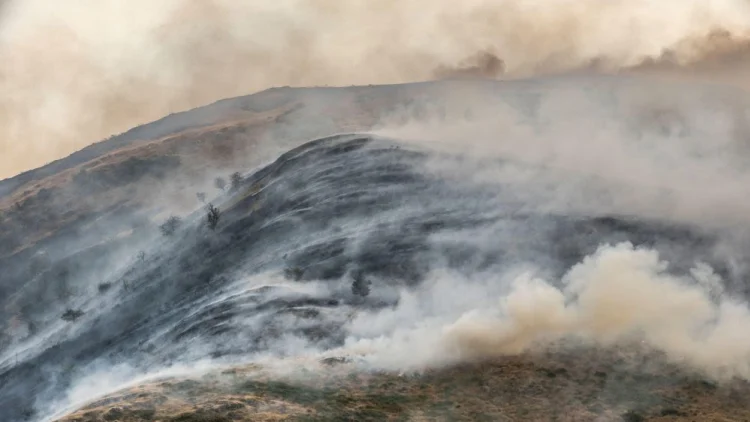
For nearly eight decades, the United States and United Kingdom have recognised that we share the same fundamental geostrategic and national security interests, as recognised in NATO’s founding treaty. Today, the greatest threats to our nations’ security are no longer confined to the battlefield. As millions of Brits and Americans wrestle with the worsening impacts of a warming planet – with both Southern England and Oregon contending with unprecedented wildfires – climate change is reshaping what it means to keep our people safe.
Last year, the UK’s National Security Strategy identified the potential for climate change to have “a significant effect on the lives of British people”. The British intelligence community also warned that the UK’s food security is under threat and that ecological collapse risks “conflict and military escalation will become more likely”. Similar warnings have been voiced in the US. In 2022, the Joe Biden Administration stated that “of all the problems we face, climate change is the greatest and perhaps existential”, while Jim Mattis, President Donald Trump’s first Secretary of Defence, has said that “climate change is impacting stability in areas of the world where our troops are operating today.”
As lawmakers on either side of the Atlantic, we believe that climate change represents a security challenge and public health crisis that needs to be met with robust global and multilateral action. The only way to stop and reverse the worsening consequences is to reach global net zero emissions by the middle of this century. The longer we delay, the worse things will get and the greater the risk we breach “tipping points” that could cause irreversible feedback loops, accelerating climate change.
The good news is progress is being made. Despite the Trump administration withdrawing the US from the Paris Climate Agreement, across America, city and state governments, corporations, and ordinary citizens are rolling up their sleeves to maintain momentum in the fight against climate change. Meanwhile, the UK continues to show global leadership, helping to corral action at the international level, despite the absence of its closest ally.
This drive towards domestic renewables is improving our nations’ energy security. From the Covid-19 pandemic to the energy crisis that followed the Russian invasion of Ukraine, we’ve learned how vulnerable our globalised economies are to system-wide shocks. Economic security is foundational to national security, and we will remain exposed to global headwinds outside our control so long as volatile fossil fuels continue to dictate energy prices. Rising geopolitical tensions lend new urgency to a renewables transition. This would fundamentally reshape our energy systems so that they’re more decentralized and resilient to acts of sabotage, and insulate our national economies from future price shocks.
As we navigate a world that is becoming less certain every day as a consequence of our warming planet, our two nations must continue to learn from each other.
That means understanding what each country is getting right and going wrong.
For people in the US, the UK’s historic tradition of cross-party consensus on climate change provides an example to aspire to. As that cross-party consensus fractures, it’s important that British politicians now learn from the American experience. President Trump has pursued a policy that prioritises fossil fuel extraction while attempting to halt the development of new renewables which offer genuine energy security. Far from delivering the affordable and abundant energy he offered the American people, it has instead left them more vulnerable to the aftershocks of his war in Iran, while undermining the US’ long-term ecological, economic, and national security.
As Britain wrestles with the question of how to assure its own long-term security in a century that threatens to be as unstable as the last, it must ask itself: is this an example it really wants to follow?
Pippa Heylings is the Liberal Democrat MP for South Cambridgeshire and Maxine Dexter is a Democratic US representative for Oregon
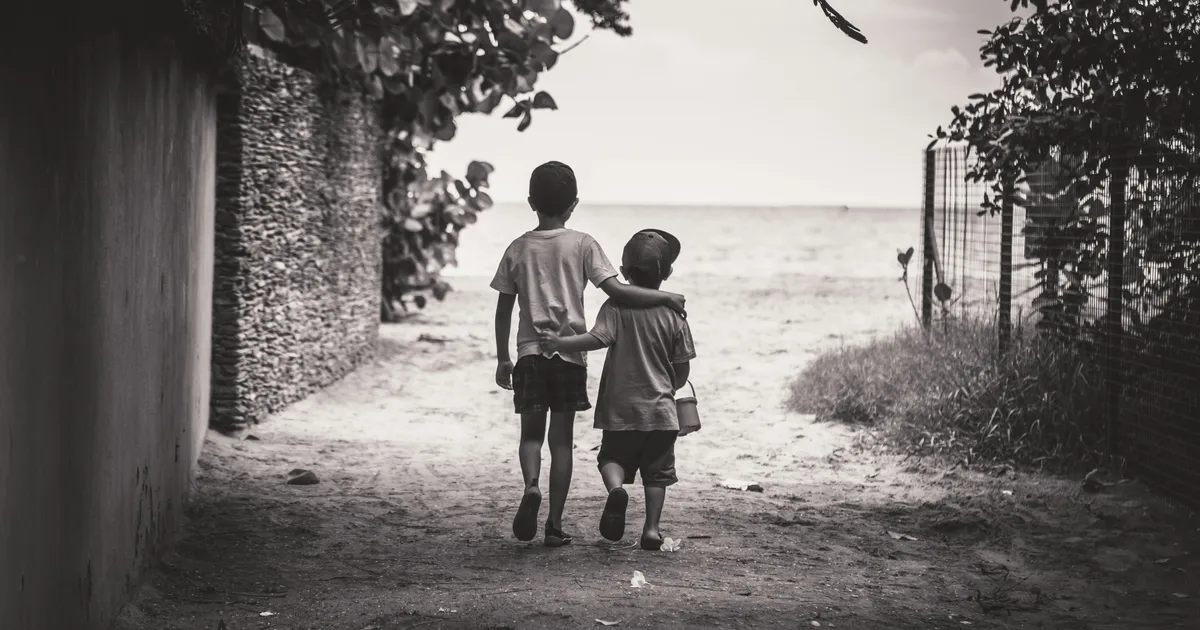
If you grew up with siblings, you might have noticed your family either adhering to or defying birth order tropes – think “the responsible eldest daughter” or “the invisible middle child”.
As it turns out, scientists reckon birth order might actually affect your health, wealth, and even IQ.
Here’s what the research says:
How does birth order affect wealth, IQ, health, and more?
Some data suggest that first-borns are 13% less likely to smoke than fifth-borns, while first-borns are “more likely to be overweight, to be obese, and to have high blood pressure and high triglycerides”.
Meanwhile, first-borns seem likelier to have ADHD and/or autism than those born later. They’re also at a higher risk of food allergies and hayfever.
And second-borns may be more prone to substance abuse, migraines, shingles, and gut issues.
Firstborns seem to perform higher on IQ tests than their younger siblings, even in tests conducted as early as one year old.
Some think that might explain why oldest children could end up more successful and rich, too. A 2014 study found that eldest daughters are the most likely to succeed out of any sibling type; a 2012 study suggests first borns are more likely to hold leadership roles.
Last-borns seemed to be the most social and resilient, followed by first-borns, middle-borns, and only children in a study that quizzed parents on their kids’ qualities.
In the same research, middle-borns appeared the least happy.
Why might birth order affect us?
Some think it might have to do with how parents treat each new child – perhaps the eldest gets the most emotional investment. “Firstborn kids get the undivided attention of their parents, whereas kids born later are often competing for parental time and resources,” NPR suggested.
Then, there are the peer groups of each sibling to consider. An only or eldest child looks up to their parents, while a younger sibling might “have role models who are slightly irrational two-year-olds, you know, their older siblings”.
With that said, birth order traits are far from universal, and not everyone agrees on how much of a difference it makes to things like intelligence and personality.
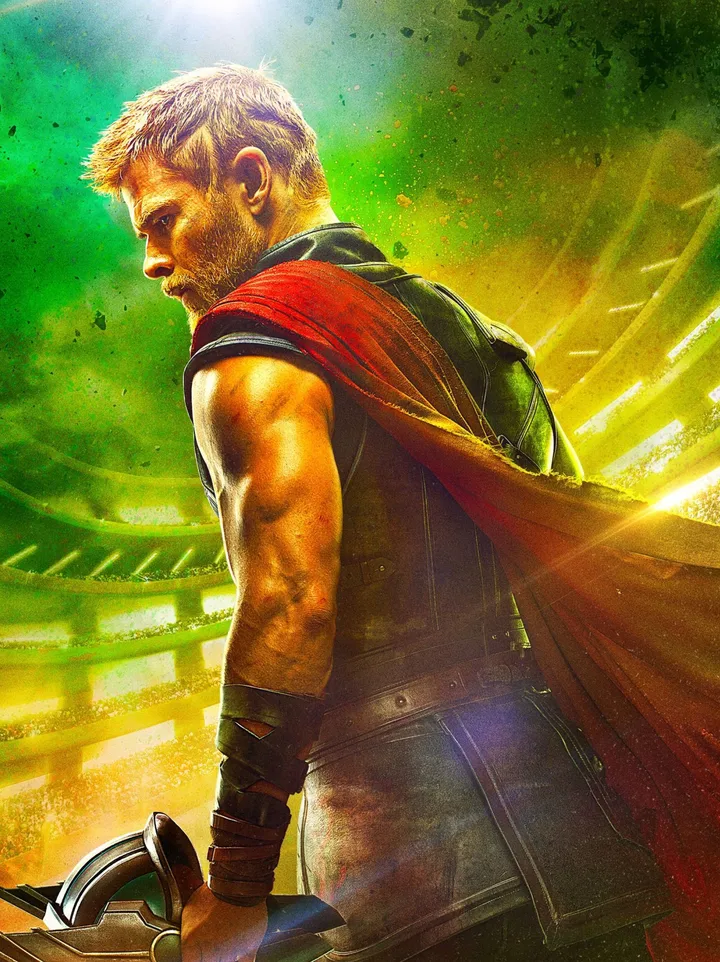
Actor and model Kellan Lutz has opened up about the “pressure” he felt while auditioning for Marvel films after his work in the Twilight movies.
In the latest instalment of the Inside Of You podcast, Kellan reflected on the period of his career after appearing in the billion-dollar-making franchise alongside Robert Pattinson and Kristen Stewart, in which he played the vampire Emmett Cullen.
During the interview, he revealed he was, at different stages, in the running to play Marvel superheroes Thor and Captain America after the Twilight franchise came to an end with the fifth film, Breaking Dawn – Part 2, in 2012.
“There were times even post Twilight when I was, you know, going out for Captain America and Thor and the pressure was really, really on,” he recalled of the iconic roles, which went to Chris Evans and Chris Hemsworth, respectively.
“I was like, I need to be so regulant and strict, and do this and do that. And then I’d get so bummed on myself.”

J Boland/Marvel Studios/Kobal/Shutterstock
Kellan also shared that around this time in his career, he was feeling personally adrift.
“I lost Kellan. I lost that light,” he recalled about constantly chasing new roles once he was done with Twilight.
He shared that he became so “stressed and desperate” in this stage of his career that he lost sight of what was important to him. At one point, he even started talking with a deep voice to replicate his idol, Jason Statham.
“I would go into auditions thinking my voice was deep like that and sexy like that,” he admitted, before someone on his team pulled him aside to call him out.
Elsewhere in the conversation, Kellan claimed he had no idea how big Twilight would be when he first signed up to appear in it, and stated that he’s “grateful” that he got to even “taste of the dragon” and enjoy a level of fame many of his peers would dream of.
“A lot of people strive for that,” he claimed. “I still have friends who unfortunately… They gave up their families [to pursue a career in acting] They’ve sacrificed a lot – in unhealthy ways – to still chase this dragon of fame.”
Kellan concluded that he was happy with his current life, even if he has never donned a spandex suit to play an MCU hero.
“I like what I get to do. I like playing characters. It’s adult make-believe and I really do love it,” he told podcast host Michael Rosenbaum.

Marvel/Disney/Kobal/Shutterstock
After the Twilight saga, Kellan appeared in 2014’s The Legend Of Hercules and The Expendables 3, in which he starred alongside his role model Jason Statham.
He also appeared in the crime drama FBI as Special Agent Kenny Crosby and the Taraji P Henson comedy What Men Want for Netflix.
In 2024, Kellan told Comic Book Movie: “I [would] love to do Marvel or The Avengers. I auditioned for Thor and Captain America. I got pretty close to those ones, but obviously Chris and Chris are brilliant for those.”
He added: “I don’t think I’ve auditioned again for a Marvel one, but I’d be open to doing another big franchise.”

SEC-CFTC Crypto Map Advances as Clarity Act Stalls

Warren Hudson, Jax Pitalo, Morgan Talk Tow Audio

Farnworth’s Diane Morgan reveals grisly dentistry story


-

 Fashion5 days ago
Weekend Open Thread: Mattifying Sunscreen
-

 Fashion5 days ago
Frugal Friday’s Workwear Report: Cap-Sleeve Pointelle Crewneck Sweater
-

 News Videos4 days ago
Can Astrology Help Find Gold and Silver Trends? A Financial Astrology Guide
-

 Sports7 days ago
Jordan Coyle & Cordiamo take Laya Arena Stakes at RDS
-
 Business7 days ago
US stocks: Dow closes at record on Mideast optimism; SpaceX, AMD drag Nasdaq
-

 Politics6 days ago
Reform UK And Greens Sink To Lowest Favourability Ratings To Date
-

 Business7 days ago
Supply chain issues impact Ingredion
-

 Tech5 days ago
Rinn Pharma & Biopharma to join NordicPharmaTrain network
-

 Business4 days ago
How to Start a Cleaning Business: A Step-by-Step Guide
-

 Business3 days ago
Datadog: Best Of Breed For Multiple Reasons
-

 Business4 days ago
BDC Weekly Review: Private BDC Q2 Numbers Are Strong
-
 NewsBeat18 hours ago
Communication cards help banking customers access services or report scams
-
Sports7 days ago
Spider-Man: Brand New Day ending explained: Is Peter Parker alive?
-
 Fashion7 days ago
Suit of the Week: Me + Em
-

 Tech6 days ago
Price Hikes May Be Coming for PC Motherboards Next
-
 Business6 days ago
Brightwater secures funding for WA-first dementia projects
-
 Crypto World6 days ago
Galaxy Digital Stock Slides 14% as Crypto Prices Hit Earnings
-
 Politics7 days ago
The Not-So Talented Mr Arday
-
 Business2 days ago
Oil Price Today (August 11): Crude oil rises to $88 after Trump’s compensation demand dents Hormuz opening. Here’s why
-

 Business6 days ago
SpaceX Shares Plunge 13.6% After First Public Earnings as AI Capex Surge and Lockup Spark Selloff
You must be logged in to post a comment Login