Connect with us

Business

SK Hynix ADR Surges 8% as AI Memory Demand and Seoul Chip Rally Fuel Investor Buying

Published

on

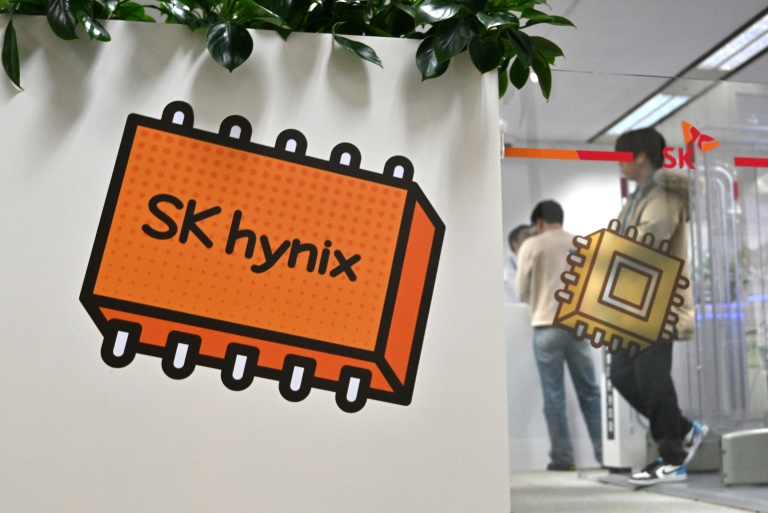
South Korea is home to the world's largest memory chip maker Samsung, and largest memory chip supplier SK Hynix

NEW YORK — Shares of SK Hynix Inc. American depositary receipts rose sharply on Wednesday, climbing 8.02% to $153.02 as of late morning Eastern time, extending a rebound in the South Korean memory chipmaker amid sustained optimism over artificial intelligence-related demand.

The Nasdaq-listed ADRs, trading under the ticker SKHY, gained $11.37 on the session. The move tracked strength in the company’s primary Seoul-listed shares and broader gains across South Korean semiconductor stocks that helped lift the KOSPI index more than 3% to close near 6,579.

SK Hynix is a leading supplier of high-bandwidth memory chips critical to advanced AI processors. Its products have benefited from heavy spending by technology companies building data centers and AI infrastructure. The ADRs began trading on Nasdaq in July after the company raised approximately $26.5 billion in what ranked as the largest first-time U.S. share sale by a foreign company.

The offering priced the ADRs at $149 each. Each receipt represents one-tenth of a common share traded in Seoul. Demand for the sale was reported as more than seven times oversubscribed. Proceeds are earmarked for capacity expansion and equipment purchases as the company seeks to meet elevated orders for advanced memory.

Advertisement

In South Korea on Wednesday, SK Hynix shares advanced more than 5% while rival Samsung Electronics rose more than 6%. Foreign and institutional buyers provided support, according to market reports, with the session including a brief program trading halt after rapid gains. Analysts cited solid semiconductor export data and follow-through buying after recent strength in the U.S.-listed ADRs.

The company reported record second-quarter results at the end of July. Revenue reached 79.32 trillion won, up 257% from a year earlier. Operating profit climbed 557% to 60.54 trillion won, producing an operating margin of 76%. Net profit came in at 93.92 trillion won. Management attributed the performance to higher prices and expanded sales of high-value products, including high-bandwidth memory, AI server DRAM and enterprise solid-state drives.

SK Hynix said it began mass shipments of its HBM4 product in the second quarter and planned to increase production in the second half of the year. Samples of the next-generation HBM4E have been delivered to customers, with volume production targeted for 2027. The company has secured long-term supply agreements with around 10 major customers and continues discussions on additional multiyear contracts.

Capital spending for 2026 is projected in the high-40-trillion-won range as the company expands production capacity. Cash and cash equivalents stood at 88 trillion won at the end of the second quarter. Management has previously indicated plans to enhance shareholder returns through a combination of dividends, buybacks and share cancellations, though specific details of a broader program remain pending.

Advertisement

At the July listing ceremony, SK Hynix Chief Executive Kwak Noh-Jung described the day as historic for the company and stated that high-bandwidth memory sits at the core of the AI revolution. The firm has repeatedly emphasized that AI infrastructure investment and resulting memory demand are expected to remain robust beyond the current year, with supply constraints limiting the risk of near-term oversupply.

Brokerages initiated or resumed coverage of the ADRs after the post-listing quiet period expired in early August, issuing predominantly positive ratings. Price targets from some firms ranged as high as $320, reflecting expectations that the U.S. listing could support a valuation re-rating closer to global peers and longer-term visibility tied to AI end markets.

The stock has experienced significant volatility since the U.S. debut. Early trading featured sharp swings, with periods of premium for the ADRs relative to the Seoul shares driven by restrictions on convertibility and differences in investor bases. Broader semiconductor sector fluctuations, including profit-taking after strong runs and shifting expectations around the duration of AI spending, have also influenced prices.

SK Hynix operates as the world’s second-largest memory chipmaker by many measures and holds a leading position in the high-bandwidth memory segment used in Nvidia and other AI accelerators. Industry participants have described ongoing supply tightness for advanced memory, with fulfillment rates constrained relative to demand and capacity additions taking time to come online.

Advertisement

Market participants continue to weigh the company’s earnings power against elevated capital expenditure plans and the competitive landscape, including advances by peers in next-generation products. Samsung has reported progress on its own HBM yields in the push to narrow gaps in the high-end segment.

Wednesday’s gains occurred against a mixed backdrop in U.S. equity markets, where major indexes closed modestly lower the prior session. The focus for SK Hynix remains on execution of its expansion plans, delivery of higher volumes of advanced memory, and any forthcoming details on capital returns to shareholders.

Trading volumes in the ADRs have been elevated at times since the listing as global investors gained more direct access to the stock. The company’s market value has fluctuated with the AI narrative, having previously exceeded $1 trillion on the strength of its Seoul listing before the secondary offering.

As of the latest available data, SK Hynix continues to highlight structural demand growth linked to AI adoption across servers and related applications. Both DRAM and NAND pricing trends supported the strong second-quarter results, according to the company, with high-value product mix contributing to peak margins.

Advertisement

Investors will monitor upcoming quarterly updates, progress on HBM4 ramp-up, and any announcements regarding the shareholder return framework for further direction. For now, the combination of robust AI memory fundamentals and coordinated buying across Asian and U.S. markets has supported the latest advance in the ADRs.

Continue Reading
Click to comment

You must be logged in to post a comment Login

Leave a Reply

Business

InvestingPro’s Fair Value spotted UTI’s 46% drop before it happened

Published

on


InvestingPro’s Fair Value spotted UTI’s 46% drop before it happened

Continue Reading

Business

BofA cuts WeRide stock price target to $10.70 on valuation

Published

on


BofA cuts WeRide stock price target to $10.70 on valuation

Continue Reading

Business

Yorkshire and Humber economy buoyed by stablisation of orders, survey finds

Published

on

Business Live

The NatWest survey of private businesses has the region’s economy close to growth

Leeds city centre

Leeds city centre

The Yorkshire and Humber private sector is close to a return to growth after a stabilisation of new orders during July, a new survey suggests.

The NatWest Regional Growth Tracker, which measures the output of the region’s manufacturing and service sectors, rose to 49.1 in July from 45.5 in June. Scores above 50 denote when the economy is in growth.

New orders were little changed in Yorkshire and Humber during July, the survey found, with a number of respondents indicating that customer confidence remained subdued amid market uncertainty. Non-replacement of departing staff as part of efforts to limit costs resulted in a further fall in employment, now marking 20 months of decreases in the regional workforce.

Companies reported sharp rises in input costs, particularly fuel oil and raw materials. The rate of inflation slowed markedly from the previous month, however.

Advertisement

Business confidence in Yorkshire and Humber fell slightly in July amid ongoing uncertainty and worries about geopolitics. But firms in the region were broadly optimistic overall for the prospects in the coming year, which was reflected in investment plans, the survey found.

Malcolm Buchanan, chair of the NatWest North regional board, said: “There were some encouraging signs from the latest Yorkshire and Humber Growth Tracker, particularly with regards to customer demand which stabilised following a period of decline amid geopolitical issues. Although still muted, the inflow of new orders was such that firms posted softer reductions in output and employment levels as the second half of the year began. Adding to the alleviation of headwinds facing firms, inflationary pressures also cooled.

“While conditions looked to be moving positively in July, firms remained only cautiously optimistic regarding the future as geopolitics continues to loom over the global economy and has the potential to throw the nascent recovery off course.”

Advertisement
Continue Reading

Business

Meta glasses banned from courts in England and Wales

Published

on

Meta glasses banned from courts in England and Wales

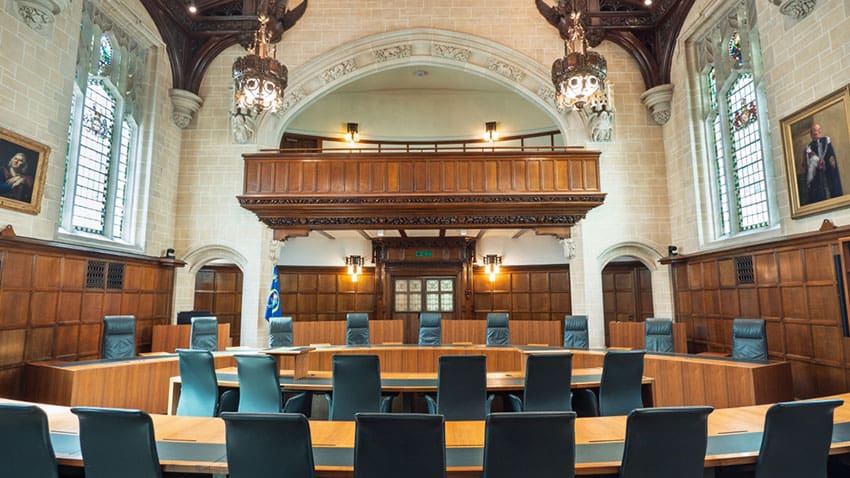
His Majesty’s Courts and Tribunals Service has banned Meta smart glasses from court buildings across England and Wales, with security staff instructed to confiscate the devices on entry and return them when the wearer leaves.

“There are clear restrictions on taking images or videos within courts and tribunals which is why the use of Meta glasses is prohibited,” an HMCTS spokesperson said.

HMCTS runs the criminal, civil and family courts in England and Wales. Smartphones remain permitted in court buildings, provided they are not used to record hearings. HMCTS is not extending that exception to smart glasses because the glasses can record while being worn.

Section 41 of the Criminal Justice Act 1925 prohibits taking a photograph, or making a portrait or sketch, of judges, jurors, witnesses or parties to proceedings. The prohibition applies in the courtroom, in the building, in the precincts of the building and to images of a person entering or leaving. Section 9 of the Contempt of Court Act 1981 covers sound recordings made in court. Unauthorised recording can result in contempt of court proceedings.

The issue has already surfaced in a UK courtroom. Earlier this year a claimant in a High Court case was accused of using smart glasses to receive coaching while giving evidence under cross-examination. He denied the allegation and said the glasses were not connected to his phone.

Advertisement

The HMCTS decision follows a comparable restriction introduced by New York’s court system last month.

Meta’s Ray-Ban glasses take photographs and record video while worn. Meta says a pulsing LED activates during recording and that tamper-detection technology stops users covering it. The company has shipped more than seven million pairs, and the devices account for more than 80 per cent of the global AI eyewear market, figures reported as the glasses became the centre of a widening privacy row.

Clara Westbrook, partner and head of privacy at Arbor Law, said the ban points to a gap between the technology and the rules governing it. Westbrook has more than 20 years’ experience advising organisations on European and English data protection law, was previously a director in the international privacy centre at Warner Bros. Discovery, and has held senior data protection roles at Yum! Brands and Richemont. She holds a part-time senior counsel position at Burberry.

“This week’s court ban shows how far behind the law is on this technology,” Westbrook said. “Most people in a meeting, a client office or a public space have no way of knowing someone nearby is recording, these glasses look like ordinary eyewear. That’s a real problem for data protection: if personal data is captured and stored without people’s knowledge, that’s potentially unlawful processing under UK GDPR, and it can breach a company’s own confidentiality and IT policies.”

Advertisement

She added: “It also creates a headache few organisations have thought through, footage sitting on someone’s wearable is personal data too, and it could fall within scope of a subject access request. Courts moving to ban them outright is a sign other institutions and employers need to get ahead of this now, not after something goes wrong.”

Under the Information Commissioner’s Office guidance on the right of access, organisations must provide personal information held on staff personal equipment where they remain the controller, and must supply a copy of footage containing a requester’s data unless an exemption applies. The ICO says footage that identifies other people will usually need to be redacted.

The court ban lands in a year in which UK firms have been warned about tightening rules on data and AI, and follows the introduction of a statutory data protection complaints process under the Data (Use and Access) Act 2025, which took effect on 19 June 2026.

Advertisement

Continue Reading

Business

Bullish 2026 Q2 – Results – Earnings Call Presentation (NYSE:BLSH) 2026-08-14

Published

on

OneWater Marine Inc. (ONEW) Q1 2026 Earnings Call Transcript

This article was written by

Seeking Alpha’s transcripts team is responsible for the development of all of our transcript-related projects. We currently publish thousands of quarterly earnings calls per quarter on our site and are continuing to grow and expand our coverage. The purpose of this profile is to allow us to share with our readers new transcript-related developments. Thanks, SA Transcripts Team

Continue Reading

Business

Royal Show cuts poultry competition over bird-flu concerns

Published

on

Royal Show cuts poultry competition over bird-flu concerns

The Royal Agricultural Society of WA has moved to cancel the Perth Royal Show’s poultry competition over concerns it could become a bird flu super-spreader event.

Continue Reading

Business

Cloudflare: I Was Wrong, A 'Palantir' Moment Is Coming (Upgrade)

Published

on

Cloudflare: Flawless Execution Meets Mathematically Impossible Valuation (NYSE:NET)

Cloudflare: I Was Wrong, A 'Palantir' Moment Is Coming (Upgrade)

Continue Reading

Business

Why is AP Moeller – Maersk stock surging today?

Published

on


Why is AP Moeller – Maersk stock surging today?

Continue Reading

Business

Formica narrows losses as sales rise in UK and Europe

Published

on

Business Live
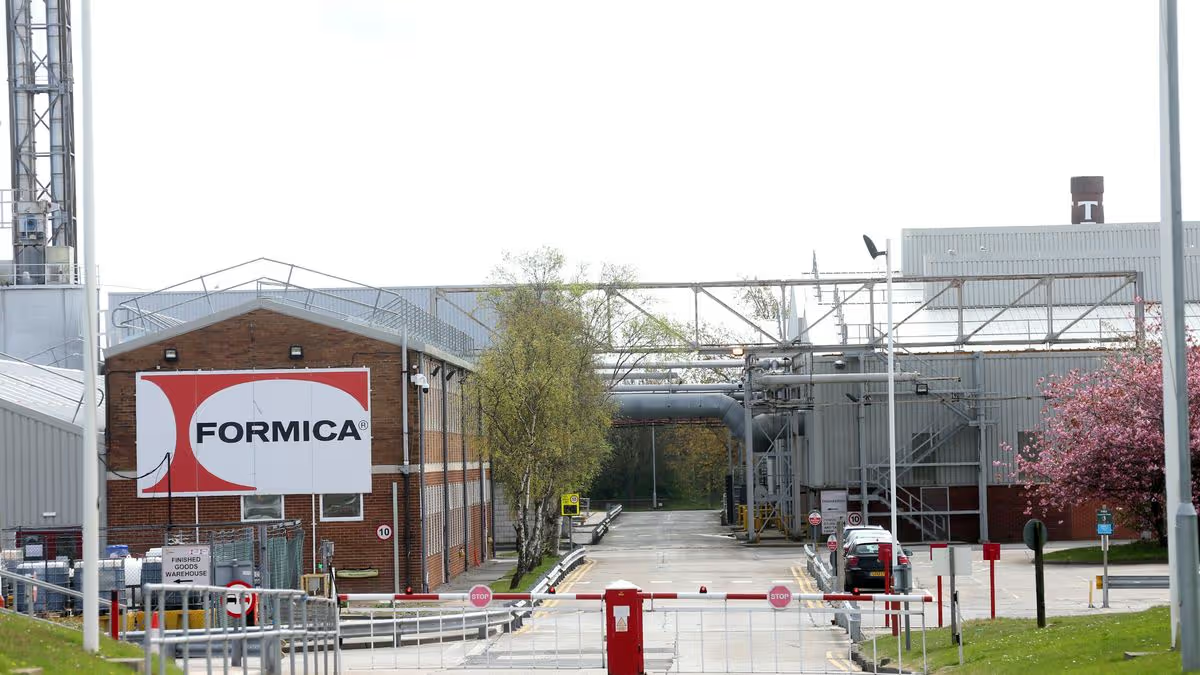
Formica near North Shields, North Tyneside

Formica near North Shields, North Tyneside

Plastic manufacturer Formica has reported an improving financial picture despite falling to a fifth consecutive year of losses.

The North Shields company – which has been a fixture on the Coast Road for more than 70 years – has released accounts for 2025 in which its revenues increased from £35.7m a year earlier to £41.4m. Over the same period, the company’s operating loss narrowed from £8.3m in 2024 to £5.7m.

A breakdown of sales shows that more than half the company’s income (£28.1m) came from exports to Europe, with £13.2m of sales in the UK.

Formica has been restructuring its operations in the North East over the last few years, with headcount at the factory more than halving since 2018. The new accounts put the company’s employee numbers at 232, a slight rise on the previous period.

Advertisement

The company has also been remodelling the Coast Road site, knocking down a number of buildings that are no longer in use. Restructuring costs of £300,000 are recognised in the accounts that relate to the demolition of the Finished Goods Warehouse at North Shields.

In the accounts, the company says it is “continuing to focus on its North Shields facility”, adding that “whilst reducing the factory footprint we believe through modernisation and centralisation we will be able to support future growth in a controlled manner and therefore benefit from an improved operating leverage.”

The directors add: “Formica Limited has completed a number of projects as part of a significant investment programme at its North Shields site, resulting in a reduced cost footprint. Meanwhile, the company has taken steps to strengthen its commercial margin.

“Along with other actions such as administrative cost reductions and commercial and operational synergies with sister companies in the group, the financial run-rate of the company is improving and is expected to continue to improve, driven by the market demand as well as ongoing commercial and marketing initiatives.”

Advertisement

The Formica product dates back to 1913 when an employee of US-based Westinghouse filed a patent for process to make laminated insulators.

The North Shields plant has been part of the Dutch Broadview Holdings group since 2018 after it was bought in an $840m deal from previous owners Fletcher Building, which is based in New Zealand. In March, Formica’s third party UK sales business was also sold to Broadview.

Continue Reading

Business

Two Cottesloe homes to sell for $23m

Published

on

Two Cottesloe homes to sell for $23m

Homes in the western suburbs of Perth continue to sell at a rapid pace, with one Cottesloe mansion set to sell for $11.75 million and another selling for $11 million.

Continue Reading

Trending

Copyright © 2025