


Connect with us

Business

SMCI options activity: call volume surges as implied volatility hits 82.6%

Published

on

Continue Reading
Click to comment

You must be logged in to post a comment Login

Leave a Reply

Business

G Mining Ventures Corp. (GMIN:CA) Q2 2026 Earnings Call Transcript

Published

on

OneWater Marine Inc. (ONEW) Q1 2026 Earnings Call Transcript

Conference Call Participants

Ralph Profiti – Stifel Nicolaus Canada Inc., Research Division
Andrew Mikitchook – BMO Capital Markets Equity Research
Anita Soni – CIBC Capital Markets, Research Division
Raymond McCormick
Rabi Nizami – National Bank Financial, Inc., Research Division

Presentation

Advertisement

Operator

Good morning, and welcome to G Mining Ventures Second Quarter 2026 Results Conference Call. [Operator Instructions] Please note that today’s call is being recorded.

I will now turn the call over to Jean-Francois Lemonde, Vice President, Investor Relations.

Advertisement

Jean-Francois Lemonde
Vice President of Investor Relations

Thank you, operator, and good morning to everyone joining G Mining’s 2026 second quarter operational and financial results conference call. In addition to myself, we have on the line Louis-Pierre Gignac, Chief Executive Officer; and Julie Lafleur, Chief Financial Officer and VP Finance. I would like to remind everyone that after management’s remarks, the call will be followed by a Q&A session.

As we will be making forward-looking statements during this call, please refer to the cautionary notes and risk disclosure in our MD&A and on Slide 2 of the webcast presentation. Also, please bear in mind that all dollar amounts mentioned during the call are in U.S. dollars unless otherwise noted.

Now I will turn the call over to Louis-Pierre Gignac to provide an overview of the quarter.

Advertisement

Louis-Pierre Gignac
President, CEO & Director

Good morning, and thank you, JF, and thank you, everyone, for joining us today. I want to start by recognizing the dedication of our teams across all our sites, whose commitment to safety, operational excellence, and responsible mining continues to drive our success. Q2 2026 was a strong quarter for GMIN, operationally, financially, and strategically. Tocantinzinho delivered

Advertisement
Continue Reading

Business

Finbar’s $265m West Leederville apartments approved

Published

on

Finbar’s $265m West Leederville apartments approved

Finbar is one step closer to building apartments in West Leederville after an assessment panel’s tick of approval, with the developer estimating the project’s end value at $265 million.

Continue Reading

Business

Harvey Nichols bought by owner of Sports Direct

Published

on

People walking past a luxury department store in Knightsbidge, London

Dubbed “Harvey Nicks” by Edina and Patsy from Absolutely Fabulous, the two often found an excuse to nip into the department store for a spot of shopping and a long liquid lunch in the heyday of the 1990s.

But Catherine Shuttleworth, retail expert and boss of Savvy Marketing, said: “If you go into a Harvey Nicks store – and I did last week – they look terrible, they look really tired and basically they’ve suffered from a lack of investment.”

She told BBC Wake Up to Money that department stores “are cash-hungry monsters, they need investing, they need to look good and if you’re at the top of the luxury market that’s got to be constant”.

Harvey Nichols chief executive Julia Goddard said the deal marked “an important milestone” for the company and “provides a strong platform for the next phase of the business’s evolution”.

Advertisement

“Over the past year, we have made significant progress in repositioning this iconic business, investing in our flagship store, broadening our customer proposition, and strengthening the brand DNA,” she added.

As well as Sports Direct, Frasers has bought up a huge number of retailers and their brands over the years. These include upmarket fashion chain Flannels, Savile Row tailor Gieves & Hawkes and luxury lingerie firm Agent Provocateur.

It also owns Jack Wills and House of Fraser.

Shuttleworth said Frasers’ boss Murray has “got his finger right on the pulse of how those [young] shoppers shop”.

Advertisement

“If you look at what the group have done with Flannels, [Harvey Nichols] is going to be more Flannel-esque than it is going to be Sports Direct-esque,” she said.

Fraser Group’s purchase of Harvey Nichols is part of its strategy to increase its presence in the luxury section.

It recently launched a takeover approach for German brand Hugo Boss, which it has a stake in already.

Advertisement
Continue Reading

Business

Jungbunzlauer names new EVP of operations

Published

on

Jungbunzlauer names new EVP of operations

Marcus von Twistern succeeds Michael Pohlscheidt.

Continue Reading

Business

Opinion: Political courage needed on housing

Published

on

Opinion: Political courage needed on housing

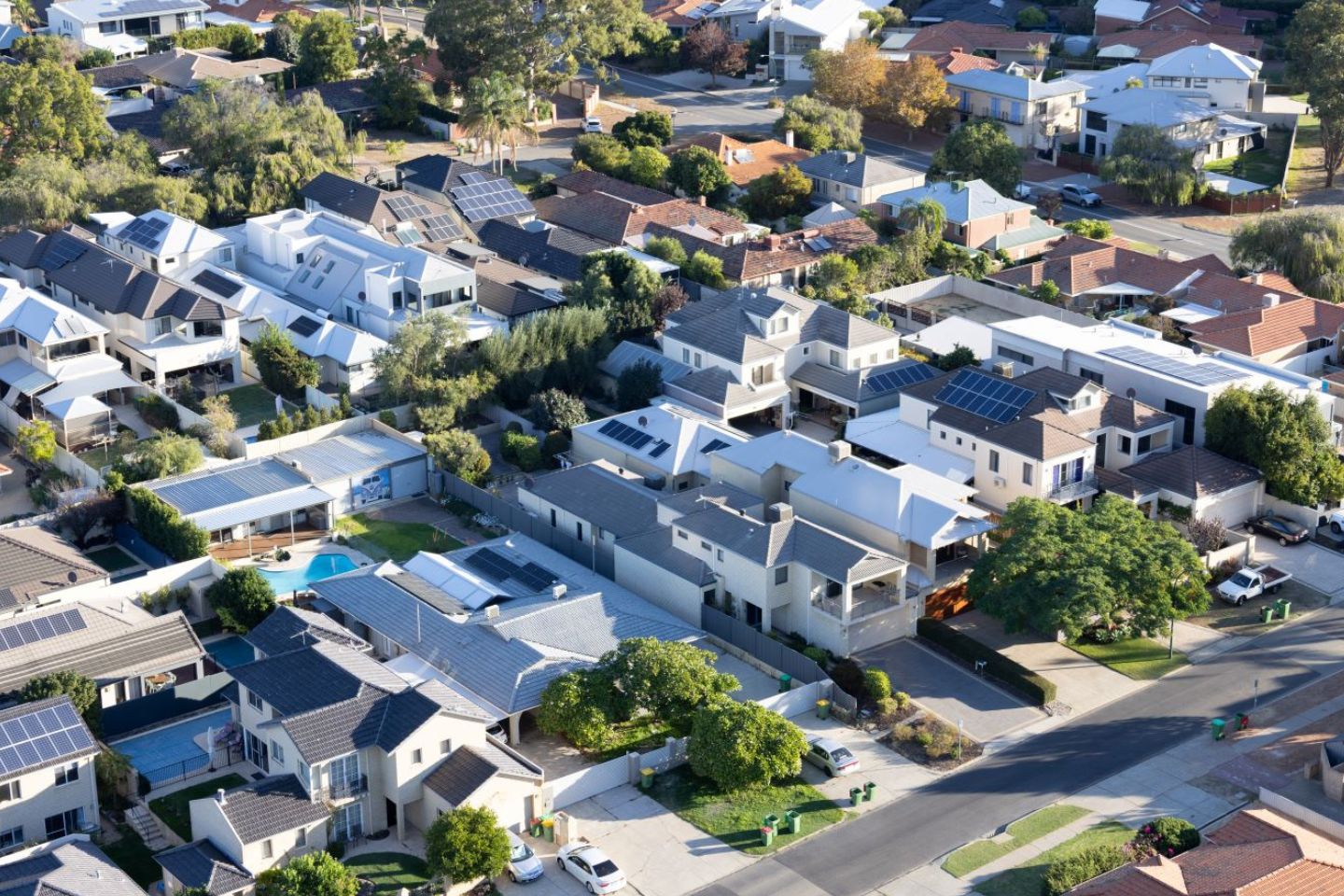
OPINION: It’s time everybody faced up to a simple reality about Australia’s housing affordability crisis.

Continue Reading

Business

Tesla Shares Climb Nearly 3% to $336 as Robotaxi Gains and AI Push Offset Profit Pressure

Published

on

Xiaomi YU7 GT Electric SUV

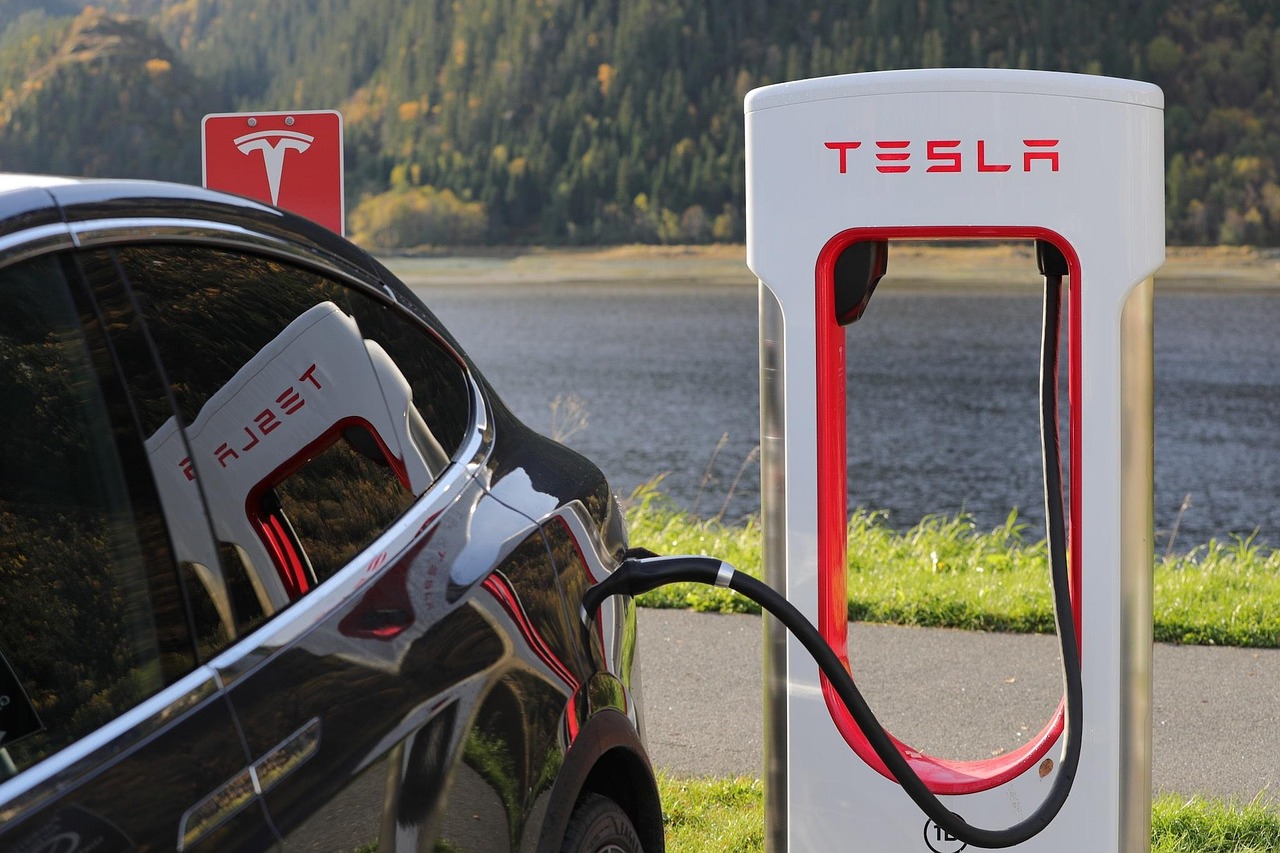
Tesla Inc. shares advanced nearly 3% on Thursday, reclaiming ground after a volatile stretch, as investors weighed the electric-vehicle maker’s record vehicle deliveries against thinner margins and heavy spending on autonomy and artificial intelligence.

The stock rose $8.93, or 2.73%, to $336.44 in afternoon trading on the Nasdaq, according to market data as of 1:20 p.m. EDT on Aug. 13. The move extended a recent rebound that has partially erased losses from a sharp sell-off following second-quarter results. Tesla remains well below its 52-week high near $499 and is down substantially for the year, reflecting ongoing debate over the pace of its transition from pure automaker to a company centered on robotaxis, humanoid robots and energy storage.

In the second quarter ended June 30, Tesla delivered a record 480,126 vehicles, a 25% increase from a year earlier and well ahead of its own earlier guidance. Model 3 and Model Y accounted for the vast majority of those deliveries. Total revenue climbed 26% to $28.24 billion, the first time the company generated more than $100 billion on a trailing twelve-month basis. Energy storage deployments reached 13.5 gigawatt-hours, up 41%, while services and other revenue jumped 50% to a record $4.58 billion.

Profitability told a different story. Adjusted earnings came in at 33 cents per share, missing Wall Street estimates that had clustered around 50 cents. Operating income fell sharply and free cash flow turned negative by more than $1 billion as capital spending surged. Regulatory credit revenue, once a reliable profit contributor, dropped significantly. The company has guided for more than $25 billion in capital expenditures this year, roughly triple historical levels, directed at expanding battery capacity, AI compute, Cybercab production and Optimus manufacturing lines.

Advertisement

Tesla said Cybercab, its purpose-built autonomous vehicle without steering wheel or pedals, began production at Gigafactory Texas. Engineering test drives on public roads started, and employee rides were underway on the Texas campus. The unsupervised Robotaxi service expanded to seven major U.S. metros, including new Florida cities, with the company reporting hundreds of thousands of unsupervised miles and no notable safety incidents in the period. Full Self-Driving subscription adoption continued to rise, with more than half of North American deliveries including the feature at the time of purchase.

Construction of Optimus production lines advanced at the Fremont factory after the company decommissioned Model S and Model X assembly there. Tesla Semi volume production remains on track for later this year at a new Nevada facility. Megafactory Texas, focused on energy storage, neared completion. In early August, Tesla and SpaceX jointly announced plans for Terafab, a large semiconductor facility in Grimes County, Texas, with an initial investment of $16.8 billion aimed at producing AI chips for vehicles, robots and data centers.

China remained a mixed picture. Tesla’s retail sales there have faced pressure even as the broader battery-electric vehicle market expanded, with recent monthly figures showing a notable year-over-year decline for the company while overall EV demand rose. International markets outside China, including parts of Asia, Europe and Latin America, posted record deliveries in several countries during the quarter.

Chief Executive Elon Musk, speaking on the second-quarter earnings call, emphasized the company’s dual focus on near-term execution and longer-term autonomy and robotics. “We’re super excited about our autonomy and robotics roadmap,” Musk said. “There is so much awesome stuff coming that it is difficult to squeeze everything into an earnings call. We will have a lot of product announcements. This is going to be a great year for Tesla … one of our best years ever and I think next year will be even better.”

Advertisement

Musk also noted shifting customer behavior around Full Self-Driving. “In fact, a lot of people are buying Tesla full self-driving with the car attached, as opposed to a car with FSD,” he said. On Optimus, he described the humanoid robot as potentially the biggest product the company has ever pursued while acknowledging the difficulty: “It is a very complex problem to solve … No one’s ever achieved this.”

Analysts remain divided. Consensus ratings lean toward Hold, with an average price target in the low $400s, implying meaningful upside from current levels if the company can demonstrate sustained progress on Robotaxi utilization, Optimus production and margin recovery. Valuation remains elevated relative to traditional automakers, reflecting the premium investors assign to Tesla’s AI and autonomy ambitions. High capital intensity and the need to convert software and robotics investments into recurring high-margin revenue continue to dominate the debate.

The broader electric-vehicle landscape has grown more competitive. Global EV sales continued rising in 2026, yet U.S. demand has faced headwinds after the expiration of certain incentives. Chinese manufacturers have gained share in key markets. Tesla’s ability to differentiate through software updates, energy products and autonomous services will likely determine whether the current recovery in the share price can extend.

Tesla next reports third-quarter results in late October. Until then, investors will watch weekly Robotaxi metrics, battery production progress, any further regulatory developments on unsupervised driving, and signals on Optimus timelines. The stock’s recent bounce shows willingness to look past near-term margin compression toward those longer-term catalysts, but the path remains sensitive to execution and broader market sentiment toward high-growth technology names.

Advertisement

Market participants also noted recent comments from Musk on broader mobility visions, including a brief social-media remark that flying cars would eventually arrive. Such statements keep attention on Tesla’s expansive technological agenda even as day-to-day trading focuses on deliveries, cash flow and the pace of autonomy commercialization.

For now, the Aug. 13 advance leaves Tesla shares trading with a market capitalization around $1.3 trillion to $1.4 trillion, still reflecting substantial optimism about the company’s ability to scale beyond traditional vehicle sales. Whether that optimism proves durable will hinge on the coming quarters of operational progress in robotaxis, energy storage and humanoid robotics.

Continue Reading

Business

Sustainable fashion firm WAWWA creating jobs and tripling turnover after digital investment

Published

on

Business Live

Manchester fashion firm backed by Made Smarter project

Manchester-based WAWWA has created 20 jobs in two years while modernising its factory

WAWWA has created 20 jobs in two years while modernising its factory(Image: WAWWA)

Clothing firm WAWWA has created 20 jobs and is expecting turnover to triple after launching a digital transformation project with Government backing.

Manchester’s WAWWA invested £120,000 in two projects, backed by £60,000 in grants from Made Smarter, to modernise the way it designs and makes clothes.

WAWWA was founded in 2015 and its production processes grew organically along with the business. Manufacturing processes remained largely manual, with patterns on cardboard templates, production managed on whiteboards and sticky notes, and layouts marked on fabric by hand.

WAWWA first worked with Made Smarter in 2024 through a Digital Transformation Workshop. A £10,000 Made Smarter grant then supported a £20,000 investment in a Vetigraph CAD/CAM system to replace manual pattern work with a digital process, allowing WAWWA to operate more efficiently and to add more styles.

Advertisement

Next WAWWA worked with Made Smarter technology partner the Northern Engineering and Robotics Innovation Centre to secure a £50,000 grant towards a £100,000 Assyst Bullmer fabric spreading and cutting system. That work is set to cut the amount of time spent laying and cutting fabric by 90%, and will also almost halve fabric waste while allowing WAWWA to bring more manufacturing work in-house.

WAWWA is continuing to work with Made Smarter on digital investment while the clothing firm is also considering expanding its retail presence in Manchester and beyond.

Charlie Pyatt, production manager at WAWWA, said: “Technology has been a big part of the journey, but that’s only one piece of it. Made Smarter gave us the time and support to step back, understand the business better and focus on the changes that would have the biggest impact.

“It’s helped us become better leaders, build relationships with other manufacturers and experts, and given us a roadmap that’s still shaping where we go next.”

Advertisement

More than 2,500 manufacturers have worked with Made Smarter North West since the programme launched in 2019.

Donna Edwards, director of Made Smarter North West, said: “WAWWA is a fantastic example of what can be achieved when a manufacturer takes a long-term, strategic approach to digital transformation.

“Our partnership has evolved from understanding the business and developing a roadmap, through technology investment and leadership development, to identifying the next opportunities for growth and improvement.

Manchester-based WAWWA has created 20 jobs in two years while modernising its factory

One of the team at WAWWA in Manchester(Image: WAWWA)

“What’s particularly pleasing is how WAWWA has embraced the wider support ecosystem. We’ve brought together Made Smarter’s expertise with NERIC’s technology specialists and peer learning with manufacturers such as Lusso, giving the business the right expertise and experience at each stage of its journey.

Advertisement

“Tripling turnover and growing the workforce threefold is a tremendous achievement, and it’s exciting to see WAWWA continuing to invest, innovate and build its manufacturing capability.”
Continue Reading

Business

Major AI infrastructure investment at South Wales data centre campus

Published

on

Business Live

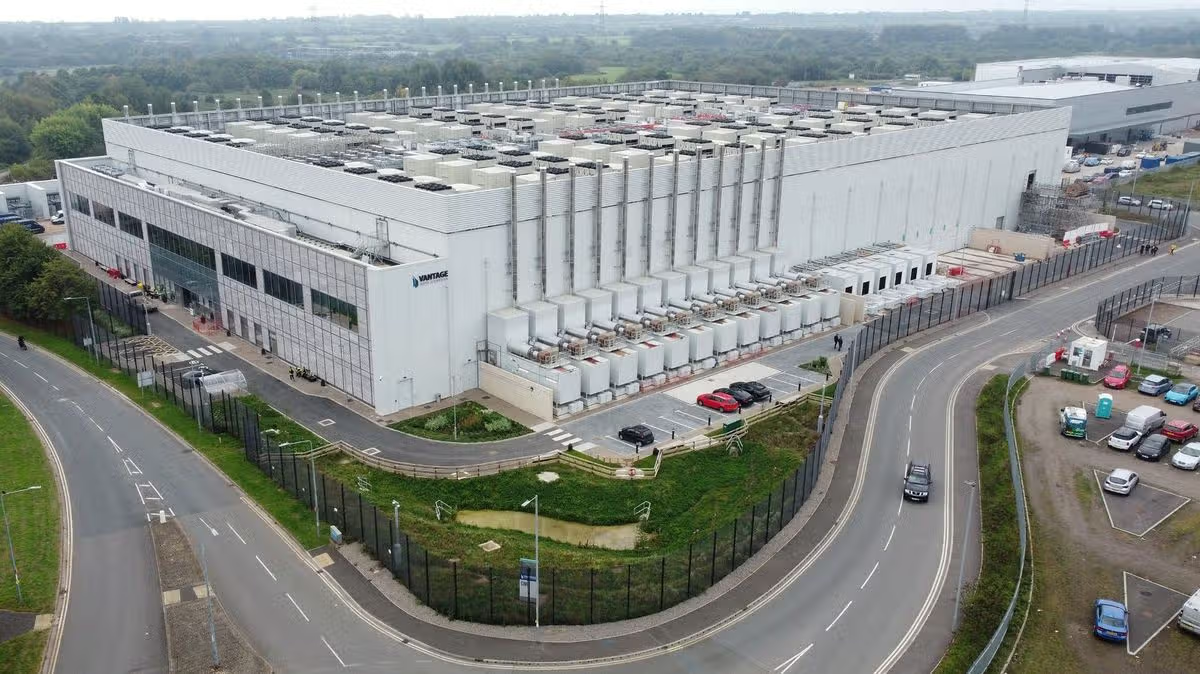
Vantage Data Centers has struck a major deal with Nebius for its CWL1 campus in Newport

Newport CWL1 campus of Vantage Data Centers.

A US hyperscale data centre firm has confirmed a major AI infrastructure investment at its Newport campus.

Vantage Data Centers has struck an agreement with Nasdaq listed AI cloud company Nebius to deploy high-density, Nvidia-powered AI infrastructure at its CWL1 campus.

Advertisement

The deployment represents the first announced commercial capacity commitment in the South Wales AI Growth Zone and will support growing UK demand for domestic AI compute capacity.

Under the agreement, Nebius will lease high-density capacity at CWL1 to support AI training, inference, agentic AI and enterprise AI workloads, serving enterprises, researchers, startups and public sector organisations seeking access to advanced AI infrastructure.

This capacity is part of Nebius’ broader UK expansion and commitment to scale domestic AI compute capacity. In June, the company announced approximately £1.7bn of committed capacity buildout across four UK sites.

The agreement builds on Vantage’s long-standing presence in Newport and reinforces the role hyperscale data centers play in enabling the UK’s AI economy. O

Advertisement

perational since 2010 and one of Europe’s largest data center campuses, the CWL1 campus provides the scale, connectivity and power infrastructure required for high-density AI workloads and serves a diverse base of hyperscale, enterprise and public sector customers.

Its electricity consumption is matched with 100% certified renewable energy, and its newest facilities are designed to minimise operational water consumption through a closed-loop cooling system that recirculates water rather than evaporating/

South Wales was designated as a UK AI Growth Zone in recognition of its concentration of digital infrastructure, fiber connectivity to London, high-capacity electricity grid infrastructure and strong industrial base.

The region is also home to the UK’s largest cluster of semiconductor businesses, creating a growing ecosystem for advanced technology, AI infrastructure and high-value digital investment.

Advertisement

CWL1 is part of Vantage’s multi-billion-pound investment strategy across South Wales, where the company expects to deliver more than 1GW of AI-ready capacity across Newport, Bridgend (where work is under way at the former Ford engine factory site) and the Welsh Government-owned Bro Tathan business park in the Vale of Glamorgan where it has planning for a major campus.

“This is an important milestone for South Wales and for the UK’s AI infrastructure ambitions,” said David Howson, Europe, the Middle East and Africa (EMEA) president for Vantage Data Centers.

He added:“Nebius is scaling AI cloud infrastructure in the UK at a time when demand for domestic compute capacity continues to accelerate. Vantage’s Newport campus provides the scale, connectivity and operational excellence needed to support that growth, and we’re proud to help establish South Wales as a leading destination for AI investment.”

General manager for EMEA at Nebius, Gary Tierney, said“The UK is one of the places where AI is being built, deployed and adopted by startups, enterprises and the public sector.

Advertisement

“Vantage’s Newport campus gives us a strong foundation to expand access to Nvidia-powered AI infrastructure in the UK and support customers building the next generation of AI applications.”

Kanishka Narayan, the Vale of Glamorgan MP

Kanishka Narayan, the Vale of Glamorgan MP(Image: Laurie Noble Photography / Houses of Parliament)

UK AI Minister and MP for the Vale of Glamorgan Kanishka Narayan said: “This government (UK)wants to put AI to work as a tool for renewing Britain and delivering new jobs. It is central to our mission to reindustrialise the country, drive good growth in every postcode and ensure our public services match-fit for the decades ahead.

“Making that happen relies on having cutting-edge compute–the horsepower that makes AI possible–here on home shores. The infrastructure at Newport will create new high skilled jobs in South Wales and help British businesses and innovators using AI to solve some of the toughest problems.”

Adam Price, Cabinet Minister for Enterprise, Connectivity and Energy, said: This announcement marks an important milestone for the South Wales AI Growth Zone and demonstrates Wales’ growing reputation as a strategic location for the infrastructure that will power the AI economy.

Advertisement

“Nebius and Vantage’s investment will help unlock new economic opportunities, support highly skilled jobs and reinforce Wales’ position as a leading destination for advanced digital investment.

“We look forward to working with partners to maximise the benefits of this investment for businesses, communities and the wider Welsh economy.”

Continue Reading

Business

Tata Motors PV Q1 Results: Net profit plunges 80% YoY to Rs 775 crore, revenue rises 9%

Published

on

Tata Motors PV Q1 Results: Net profit plunges 80% YoY to Rs 775 crore, revenue rises 9%
Tata Motors Passenger Vehicles on Thursday reported a consolidated net profit of Rs 775 crore for the April-June quarter of FY27, marking more than 80% year-on-year decline from the Rs 3,924 crore reported in the same period last year, amid supply constraints, including a fire at a key component supplier, Middle east conflict and planned Jaguar wind-down.

The company’s revenue from operations increased over 9% YoY to Rs 95,799 crore during the quarter, from Rs 87,677 crore reported in the year-ago period. Its EBITDA margin contracted by 130 basis points to 7.4%.

The net profit reported by the company for the first quarter of FY27 included an exceptional loss of Rs 32 crore, while the same for the first quarter of FY26 stood at Rs 47 crore. The company’s earnings per share reduced to Rs 2.10 per share, from Rs 6.84 per share reported in the year-ago period.

Jaguar Land Rover Q1 financials

Jaguar Land Rover (JLR) saw a 9% YoY drop in wholesales, as volumes were impacted by temporary supply constraints, including a fire at a major component supplier at the start of the quarter, market disruption linked to the conflict in the Middle East and planned wind-down of outgoing Jaguar models ahead of the launch of Jaguar Type 01.
Consequently, the company’s revenue dropped nearly 10% YoY to £6 billion during the quarter under review. In addition to the impact of reduced volumes, profitability was impacted by market conditions pushing retail VME up from 4.1% to 7.1%, the company said.

Advertisement


Jaguar Land Rover’s profit crashed 73% YoY to £66 billion during the first quarter. Despite the supply constraints and market disruption faced by the business, the first quarter has been profitable, the company said.
“JLR delivered first quarter profits of £109m and an adjusted EBIT margin of 2.8%. Despite the near-term industry challenges, we continue to see strong demand for our brands and look forward to the launch of four sensational new products in the coming months: Range Rover Electric, Range Rover Sport Electric, Range Rover GT and Jaguar Type 01. I would like to thank all our people, suppliers and retail partners for their continued dedication, resilience and support,” said Jaguar Land Rover CEO PB Balaji.

Tata Motors PV segment Q1 financials

Tata Motors PV segment saw volumes sharply rise by 46% YoY, which the company said significantly outperformed the industry. Electric vehicle volumes meanwhile rallied 112% YoY, backed by a comprehensive portfolio, new launches and leveraging demand growth post West Asia conflict. The segment saw a 65% YoY growth in revenue.

However, the impact of strong revenue growth was partially diluted by adverse FX and commodities, Tata Motors PV said. “Q1 FY27 marked a strong start to the year for Tata Motors PV, with industry-beating 46% YoY volume growth driven by robust customer demand and the success of our recent launches…While supply constraints affected Sierra volumes during the quarter, customer interest remains strong and the Sierra.ev has seen a positive response. In Q1 FY27 we delivered a resilient financial performance while being impacted on account of elevated levels of commodity and forex,” said Shailesh Chandra, Managing Director & CEO of Tata Motors Passenger Vehicles.

Supported by a strong order book, exciting product pipeline, sustained demand, and focused margin improvement initiatives, Chandra said the company is confident of maintaining growth momentum and delivering sequential improvement through the rest of the year.”

Advertisement
Continue Reading

Business

Earnings growth to play larger role in determining portfolio returns than valuation re-rating: Nilesh Shah

Published

on

Earnings growth to play larger role in determining portfolio returns than valuation re-rating: Nilesh Shah
Earnings growth is likely to play a larger role in determining portfolio returns than valuation re-rating in the near term, as valuations of Indian equities remain neither cheap nor expensive, according to Nilesh Shah, Managing Director, Kotak Mahindra Asset Management Company.

In an exclusive conversation with ANI, Shah said the first-quarter earnings season has been broadly positive, with companies reporting results that were either ahead of expectations or broadly in line with them.

“So the first quarter numbers came reasonably ahead of expectations or in line with expectations. There were very few disappointments,” Shah said.

He noted that the overall earnings growth figure was affected by the performance of oil marketing companies. However, excluding these companies, he said the broader economy delivered fairly good results.

Advertisement

“The aggregate earnings growth was obviously impacted by oil marketing companies’ results, but excluding them, the entire economy delivered fairly good numbers,” Shah said.


According to Shah, the market’s future performance will depend increasingly on whether companies can deliver sustained earnings growth. He said investors should not expect valuation expansion to be the main source of returns at the current stage.
“We still believe that despite a strong set of numbers, market returns will still be linked with earnings growth,” he said.Shah described current market valuations as balanced, saying they are not at levels that can be considered particularly cheap, but neither are they excessively expensive.

“Valuations are fair, not cheap, not expensive,” he said.

Against this backdrop, Shah expects earnings growth to contribute more to portfolio returns than a further increase in valuation multiples.

“At this point of time, it looks like that earnings growth will be a bigger contributor to portfolio returns than valuation re-rating, and earnings growth looks like it is coming in low double-digit numbers,” he said.

Advertisement

His comments come amid continued activity by both domestic and foreign investors in Indian equities. Shah said foreign portfolio investors (FPIs) have turned buyers in July, with August also broadly moving in a similar direction. However, he cautioned investors against looking only at aggregate FPI flow figures.

He said FPIs have been selling large-cap stocks, particularly banks and IT companies, while buying small and mid-cap stocks. More than 100 small and mid-cap companies, according to Shah, have recorded all-time-high FPI holdings.

He also pointed to continued foreign investor participation in the primary market. While FPIs have been sellers in the secondary market, they have been buyers in IPOs.

“They have been sellers in the secondary market, but they are buyers in the primary market. Every single IPO in which we wanted to invest, we had to compete with the FPI for anchor allotment,” Shah said.

Advertisement

Shah said this shows why investors need to look beyond headline market-flow numbers and understand the underlying movement of money.

“Don’t look at just the headline number; focus on the nuances because underlying currents many times are very different,” he said.

Overall, Shah’s assessment suggests that with valuations at fair levels, the ability of Indian companies to deliver low-double-digit earnings growth could become a more important driver of investor returns than further valuation re-rating.

Advertisement
Continue Reading

Trending

Copyright © 2025